
Most people who try a portable basketball hoop end up replacing it within a season. The base drags across the driveway, the rim sways when you shoot, and the whole thing has to be moved every time anyone wants to play. An in-ground system fixes all three problems permanently, which is why searches for the best in ground basketball hoops for homes keep climbing every spring. The cost is that you only get one shot at placing it, and the concrete job is permanent in a way a portable base never is.
We compared twelve in-ground systems across every tier a homeowner actually shops, from a detachable-base budget crank model to a 72 inch regulation-geometry goal. Every system below adjusts from 7.5 feet to 10 feet, every one uses an 18 inch rim, and they differ most in backboard material, pole construction, overhang and warranty length. Our top pick is the Silverback Height Adjustable system, which pairs a tempered glass board with a pro-style breakaway rim and more owner ratings than anything else we reviewed.
We last reviewed these systems in September 2026, and we worked from published specifications, owner review patterns and the recurring questions that show up in the r/BasketballTips and r/kansascity threads about installation. Specifications change between model years, so confirm the numbers on the listing before you dig anything.
Table of Contents
Top 3 In Ground Basketball Hoops for Homes (October 2026)
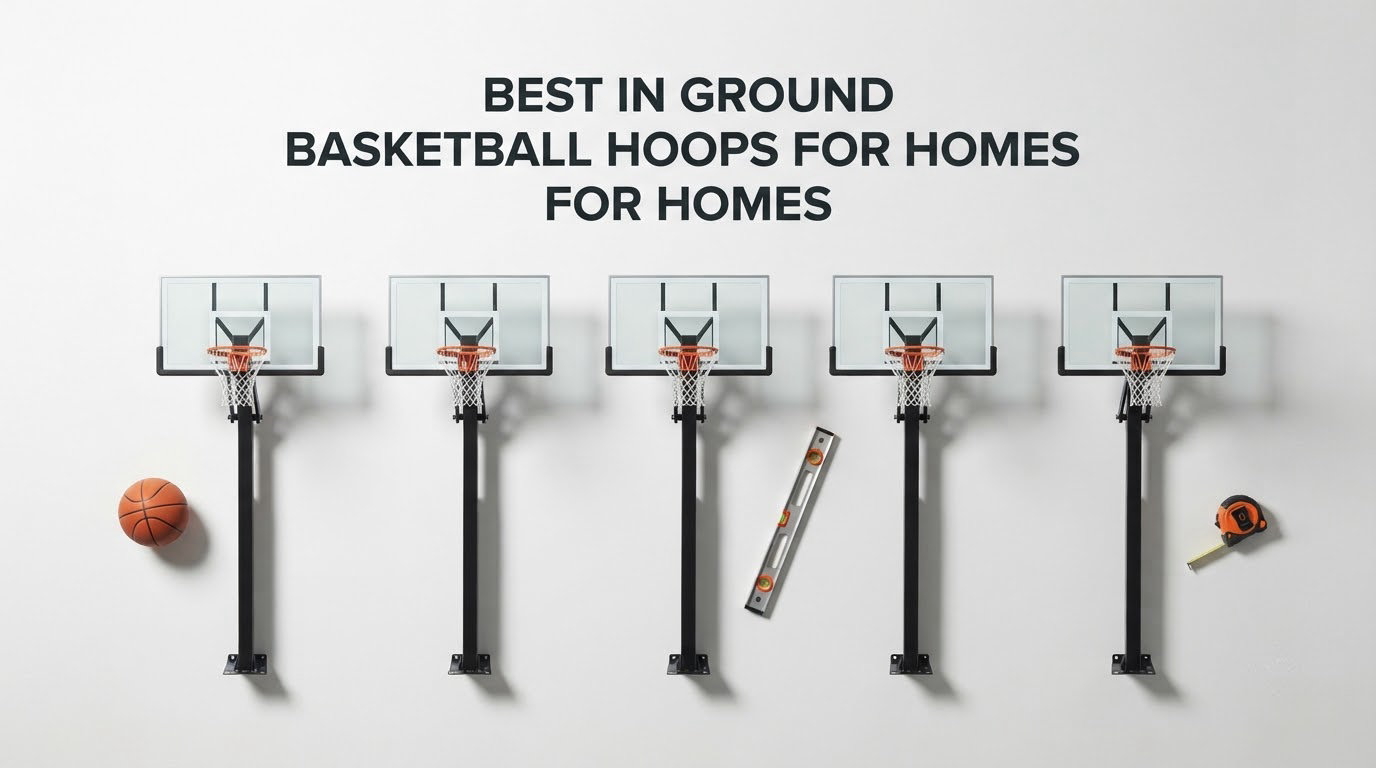
The best in-ground basketball hoop overall is the Silverback Height Adjustable system with the tempered glass board, because it is one of only a few in this group that pair a pro-style breakaway rim, a 7.5 to 10 foot steel actuator and 5 year limited coverage with a volume of owner feedback large enough to trust. For a tighter budget, the Silverback NXT54 gives you the same adjustment range and rim feel on a 54 inch board. If your household is mostly young players and you would rather not think about cracked glass, the Lifetime 71281 is the safer pick.

Silverback Height Adjustable
- Tempered glass backboard
- 7.5-10 ft steel actuator
- pro-style breakaway rim
- backboard and pole pads
Silverback NXT54
- 54 inch Infinity Edge backboard
- 7.5-10 ft actuator
- breakaway rim
- concrete-set pole

Lifetime 71281 Power Lift
- 52 inch shatterproof polycarbonate board
- squeeze handle lift
- 84 lb system
- 5 year warranty
12 Best In Ground Basketball Hoops for Homes (October 2026)
| Product | Specs | Action |
|---|---|---|
| Silverback Height Adjustable Glass |
|
Check Latest Price |
| Silverback NXT54 |
|
Check Latest Price |
| Lifetime 71281 Power Lift |
|
Check Latest Price |
 Lifetime 1084 Lifetime 1084 |
|
Check Latest Price |
 Yohood Crank Hoop Yohood Crank Hoop |
|
Check Latest Price |
 G GX9 Adjustable Hoop G GX9 Adjustable Hoop |
|
Check Latest Price |
 Goalrilla GS54 Goalrilla GS54 |
|
Check Latest Price |
 Lifetime Crank Adjust Glass 54 Lifetime Crank Adjust Glass 54 |
|
Check Latest Price |
 Goalrilla FT54 Goalrilla FT54 |
|
Check Latest Price |
 Ironclad Game Changer 60 Ironclad Game Changer 60 |
|
Check Latest Price |
 Dominator 72 Inch Goal Dominator 72 Inch Goal |
|
Check Latest Price |
 IGL 52 Inch Hoop IGL 52 Inch Hoop |
|
Check Latest Price |
1. Silverback Height Adjustable In-Ground Hoop: Best Overall
Silverback Height Adjustable In-Ground Basketball Hoop with Tempered Glass Backboard, Pro-Style Breakaway Rim & Backboard Pad, Black
Tempered glass backboard
Stainless steel frame
7.5-10 ft actuator
5 year limited warranty
Pros
- Pro-style breakaway rim that flexes like a gym rim
- Tempered glass board with a real gym rebound
- Smooth 7.5 to 10 ft steel actuator adjustment
- Backboard pad and pole pad both included
- Over 1500 owner ratings to draw on
Cons
- 198 lb weight means several adults for assembly
- Instructions can understate how much concrete is needed
- 2.5 inch overhang is short for a driveway
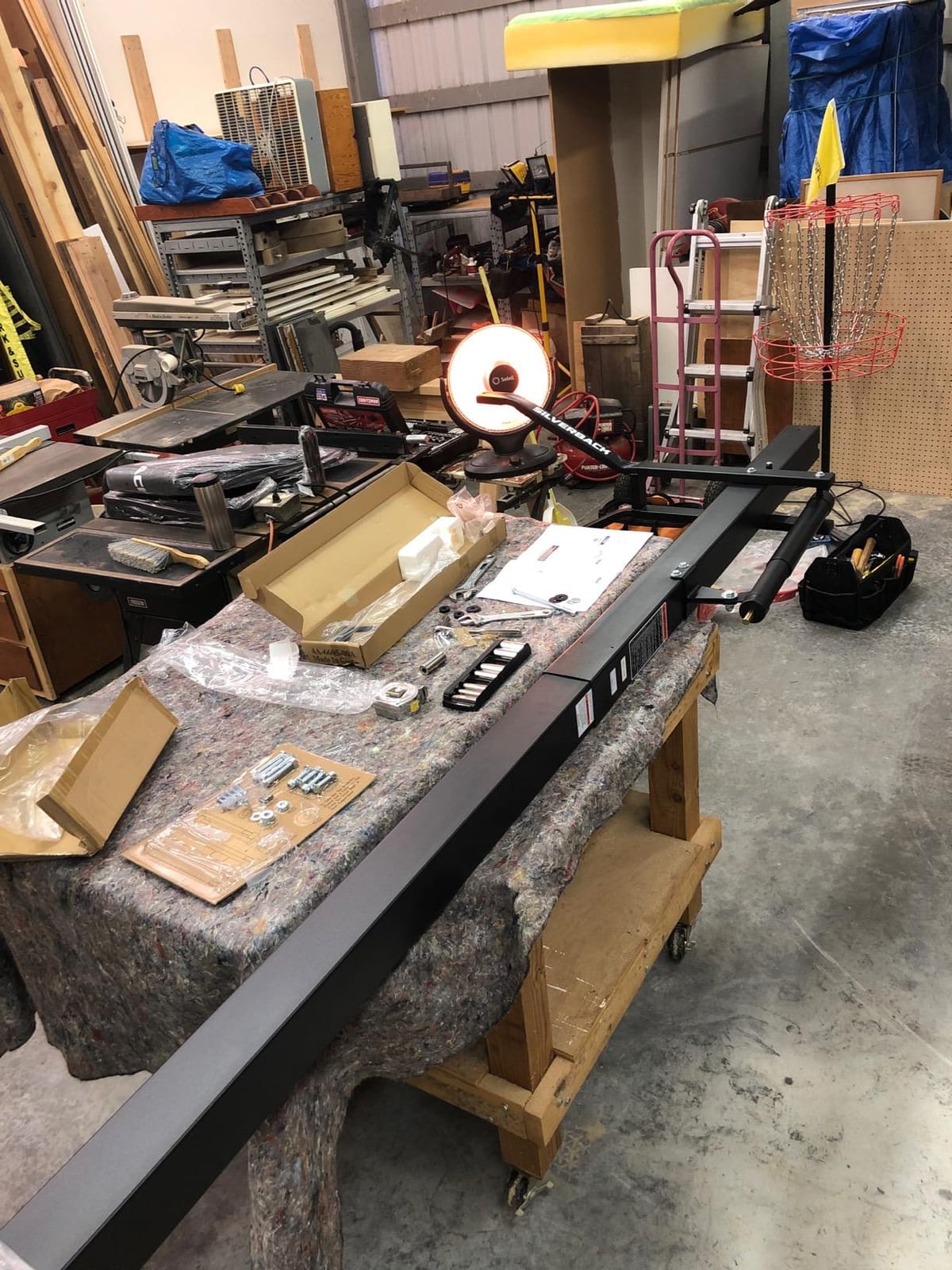
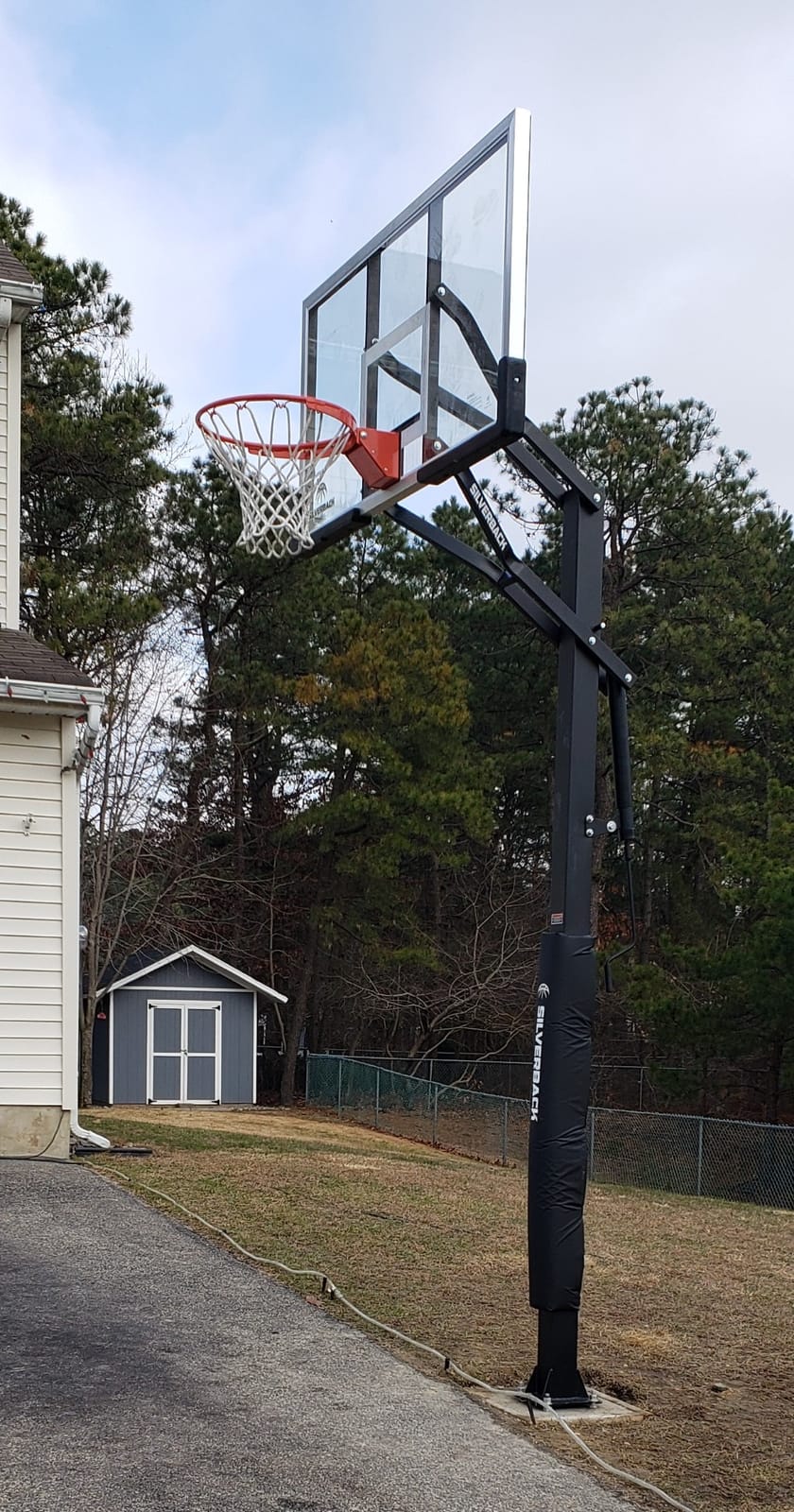
This is the system we kept coming back to while working through the list. The SB60 model pairs a tempered glass board with a stainless steel frame, and the actuator moves the rim through the full 7.5 to 10 foot range without a fighting sense of resistance. Both the backboard pad and the pole pad come in the box, which is not true across every system at this level.
What sold us was the rim. It is a pro-style breakaway rim that genuinely flexes when you dunk or hang on it, then returns to shape, and owners consistently describe the shot feel as gym-like rather than backyard. The quick-play design with preassembled parts also means the assembly is less of a puzzle than most systems at this weight.
The 5 year limited warranty is not the longest in this roundup, and that is the honest catch. The Goalrilla FT54 and the Dominator both carry limited lifetime coverage, so you are trading a longer warranty for a lighter system and a shorter overhang.
At 198 pounds the unit is genuinely heavy, and the backboard alone is an awkward lift. Buyers report that multiple adults are needed and that the manual understates the amount of concrete the hole actually needs, so plan on buying extra bags rather than trusting the stated figure.
Who this hoop suits
This is the pick for a family that plays year-round and wants the rim to behave like a gym rim without moving up to the lifetime-warranty tier. A 2.5 inch overhang is tight, so put it where the playing surface is already paved and you are not relying on extra deck space behind the board.
When to pick something else
If your runup space is long and open, the short overhang leaves shooting area unused and a 60 inch board would suit you better. If you want the strongest warranty in the category, look at the Goalrilla FT54 instead and accept a heavier install.
2. Silverback NXT54: Best Value 54 Inch System
Silverback NXT54 54″ Height Adjustable In-Ground Basketball Hoop
54 inch Infinity Edge board
Alloy steel pole
7.5-10 ft actuator
30 day warranty
Pros
- Infinity Edge board wraps the edges for extra rigidity
- Pro-style breakaway rim that flexes under play
- Same 7.5 to 10 ft actuator range as the flagship
- Pole set into concrete inside the ground mount
- Quick-play assembly with preassembled parts
Cons
- Only 30 days of coverage
- Listing describes polycarbonate while the highlight text mentions tempered glass
- Occasional pole or backboard damage reported on arrival
The NXT54 uses the same mechanical idea as our top pick: an all-steel actuator, a pro-style breakaway rim and a pole that goes into concrete inside the ground mount for stability. The 54 inch Infinity Edge backboard wraps its edges around the back, which stiffens the whole panel and is the reason it feels less springy than a flat board of the same width.
Owners like the wide adjustment range and the rim feel, and the 73 percent five-star share reflects that. The board is listed as polycarbonate in the specification block, while the item highlight text mentions tempered glass, so check the listing carefully before you assume what you are getting.
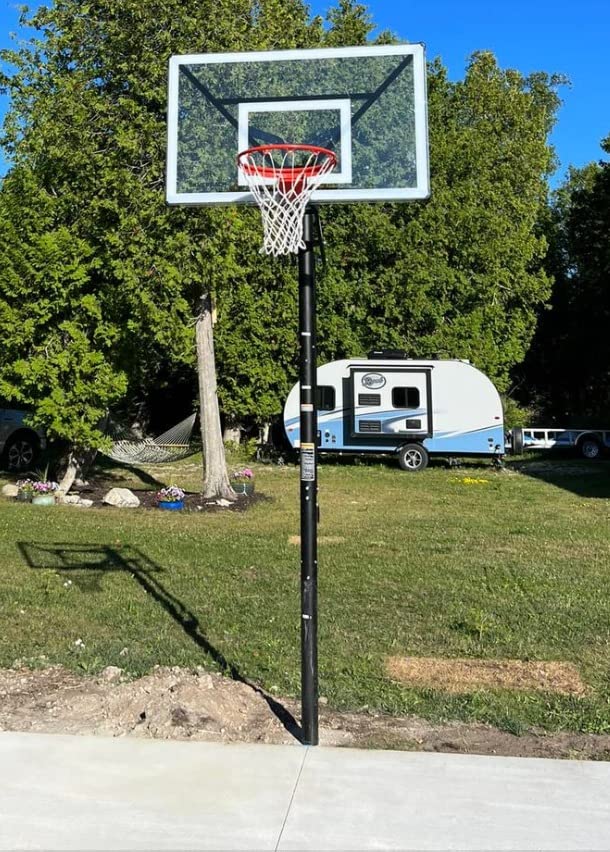
The 30 day warranty is the shortest in this roundup by a wide margin. It is not a defect signal, and the hardware itself does not seem to be the problem, but it does mean you are on your own for anything that goes wrong after the first month.
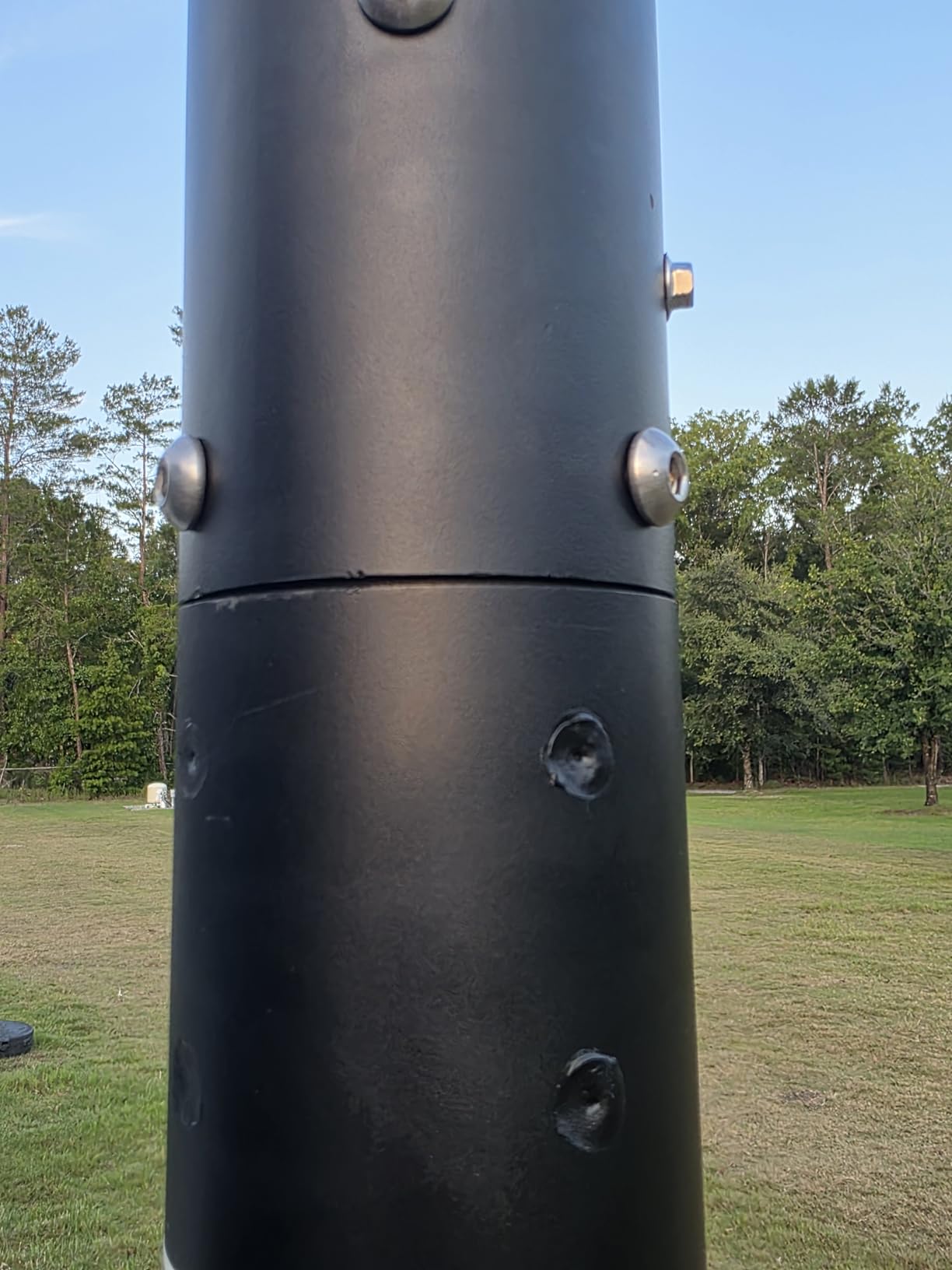
Around 8 percent of ratings are one star, and the pattern in those reviews is transit damage to the pole or backboard rather than long-term failure. Inspect the panels and count the hardware against the manual before you start assembly, and photograph the packaging.
Who this hoop suits
This one makes sense for a household that wants a proper breakaway rim and 7.5 to 10 foot range on a 54 inch board without moving up to the premium tier. It is also a good match for a driveway where the shooting area is already paved edge to edge.
When to pick something else
Skip it if warranty length matters to you, because 30 days is effectively no coverage after delivery. If glass rebound is the priority, the Goalrilla GS54 gives you a true tempered board in the same general footprint.
3. Lifetime 71281 Power Lift: Best for Families with Young Players
Lifetime Outdoor Basketball Hoop System – 52 in Shatterproof Backboard
52 inch shatterproof polycarbonate
3.5 in three-piece pole
7.5-10 ft squeeze handle
5 year warranty
Pros
- Steel-framed polycarbonate board that resists shattering
- Power Lift squeeze handle changes height quickly
- Three-piece 3.5 in round pole with friction-weld joint
- Powder-coated steel and UV-protected finish
- 5 year limited manufacturer warranty
Cons
- Polycarbonate rebound is harder and flatter than glass
- 52 inch board is narrower than the 54 to 72 inch options
- Squeeze handle changes are less precise than a crank
This is the pick we recommend for a yard with a lot of children running under the rim. The board is a 52 inch steel-framed polycarbonate panel, which will not produce the dangerous shards a damaged glass board can, and the whole system weighs 84 pounds, roughly half of the premium glass options.
The Power Lift mechanism moves the rim from 7.5 to 10 feet using a squeeze handle, so a child can make the change without an adult standing there. The three-piece 3.5 inch round pole uses a friction-weld joint, which is the detail that most separates a system that stays rigid from one that develops play at the joints.
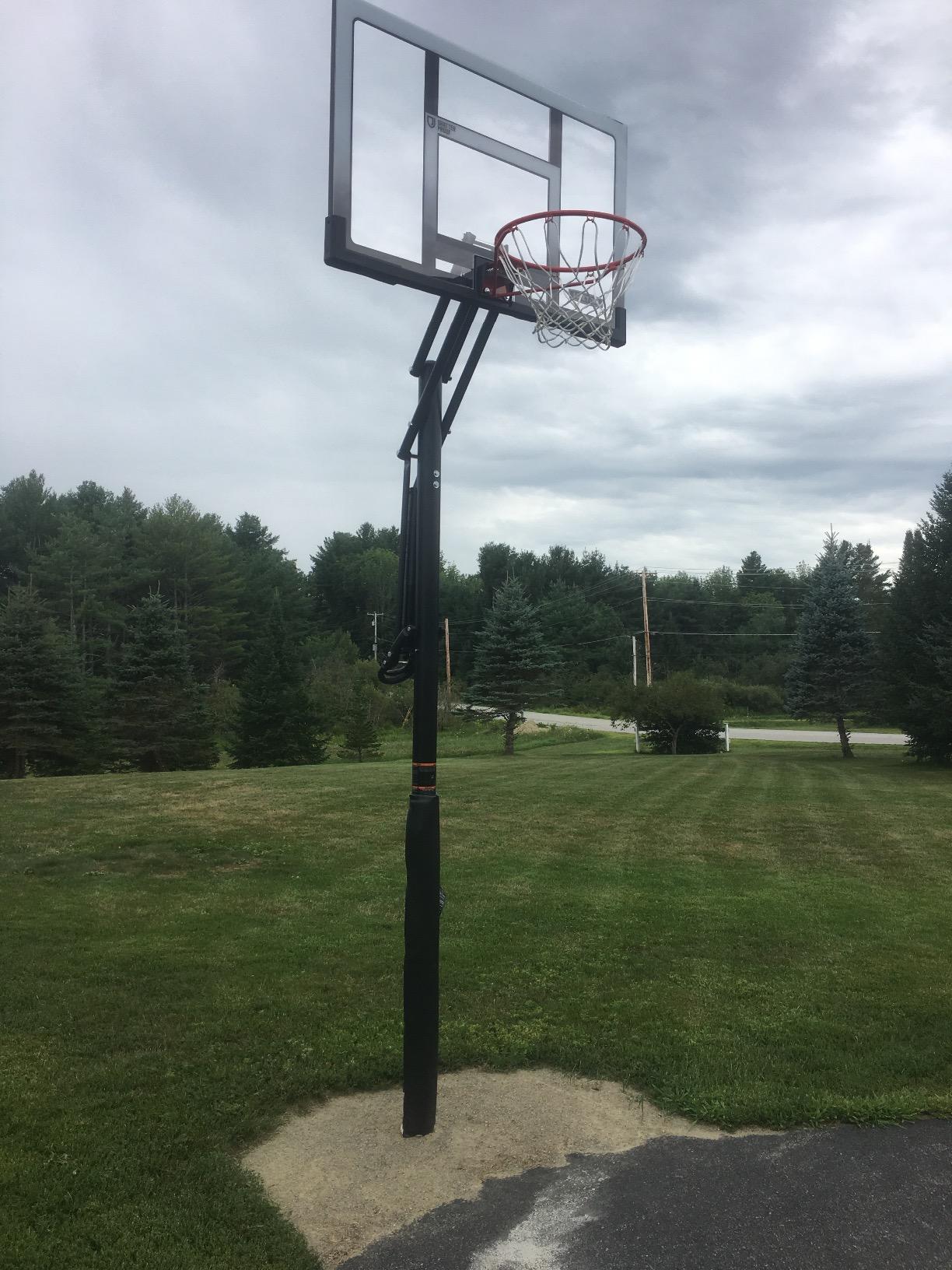
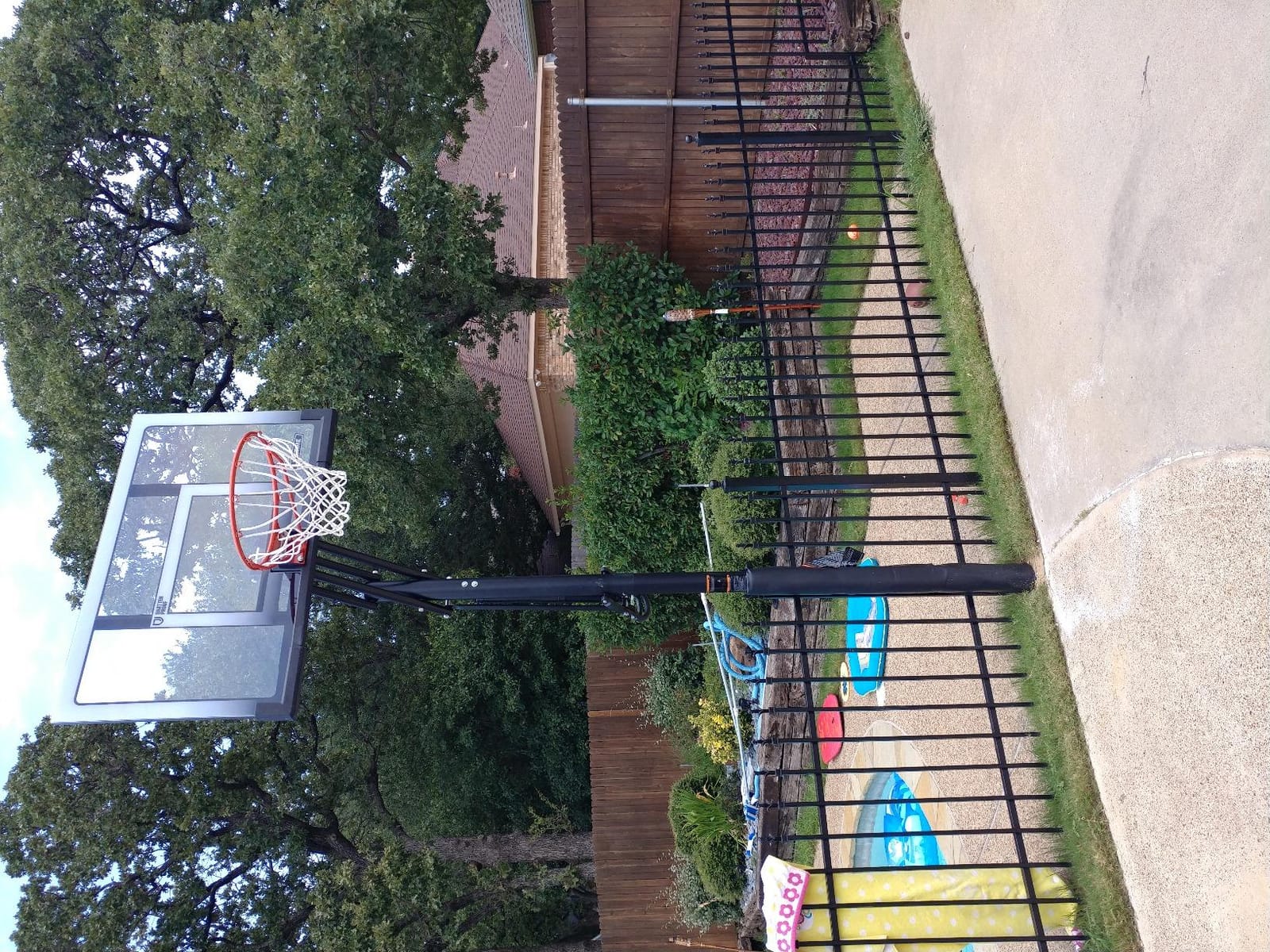
Owners consistently rate the build quality highly, with 80 percent five-star ratings and only 2 percent one-star, and the praise lands on the weather resistance as much as on the hoop itself. The powder coating and UV-protected materials are what keep it from fading and rusting across seasons.
The trade is rebound feel. Polycarbonate is a harder surface than glass, so a bank shot comes off flatter and the ball rings less. If your household is mostly adults shooting recreationally, that difference is real and you will feel it.
Who this hoop suits
Best for a family with kids in the 7.5 to 9 foot range, a poolside or coastal yard, or anyone who would rather not think about glass safety. At 84 pounds it is also the lightest system we reviewed, by some distance from the 198 pound glass options.
When to pick something else
Pass on it if shooting feel is the priority or if you have a genuinely large paved area where a 54 inch or wider board would not crowd the edges. Also pass if you want to move the system later, because this one is cement-set.
4. Lifetime 1084: Best for Small Yards
Outdoor Lifetime Basketball System 1084 50-in. Shatter Guard Backboard
50 inch shatterproof Fusion board
Action Grip one-hand lift
45 lb system
5 year warranty
Pros
- One-handed Action Grip adjustment from 7.5 to 10 ft
- Shatterproof Fusion board with an unbreakable frame
- 18 in rim with double horizontal springs
- Three-piece powder-coated round steel pole
- UV-protected graphics and an all-weather net
Cons
- 50 inch board is the smallest shooting area here
- Polycarbonate feels stiff on rim shots
- Action Grip lever needs occasional re-tensioning after weather
When the yard is the constraint, this is the honest answer. A 50 inch board on a 45 pound system means a smaller post footprint and far less overhang crowding the playing area, which matters on a narrow lot or a side driveway where runup space is already tight.
The Action Grip mechanism uses counterbalance springs so one hand can move the rim anywhere from 7.5 to 10 feet, and reviewers single out how much easier that is than a crank for a younger player. The 18 inch rim carries double horizontal springs, which gives it the Slam-It feel people associate with playground hoops.
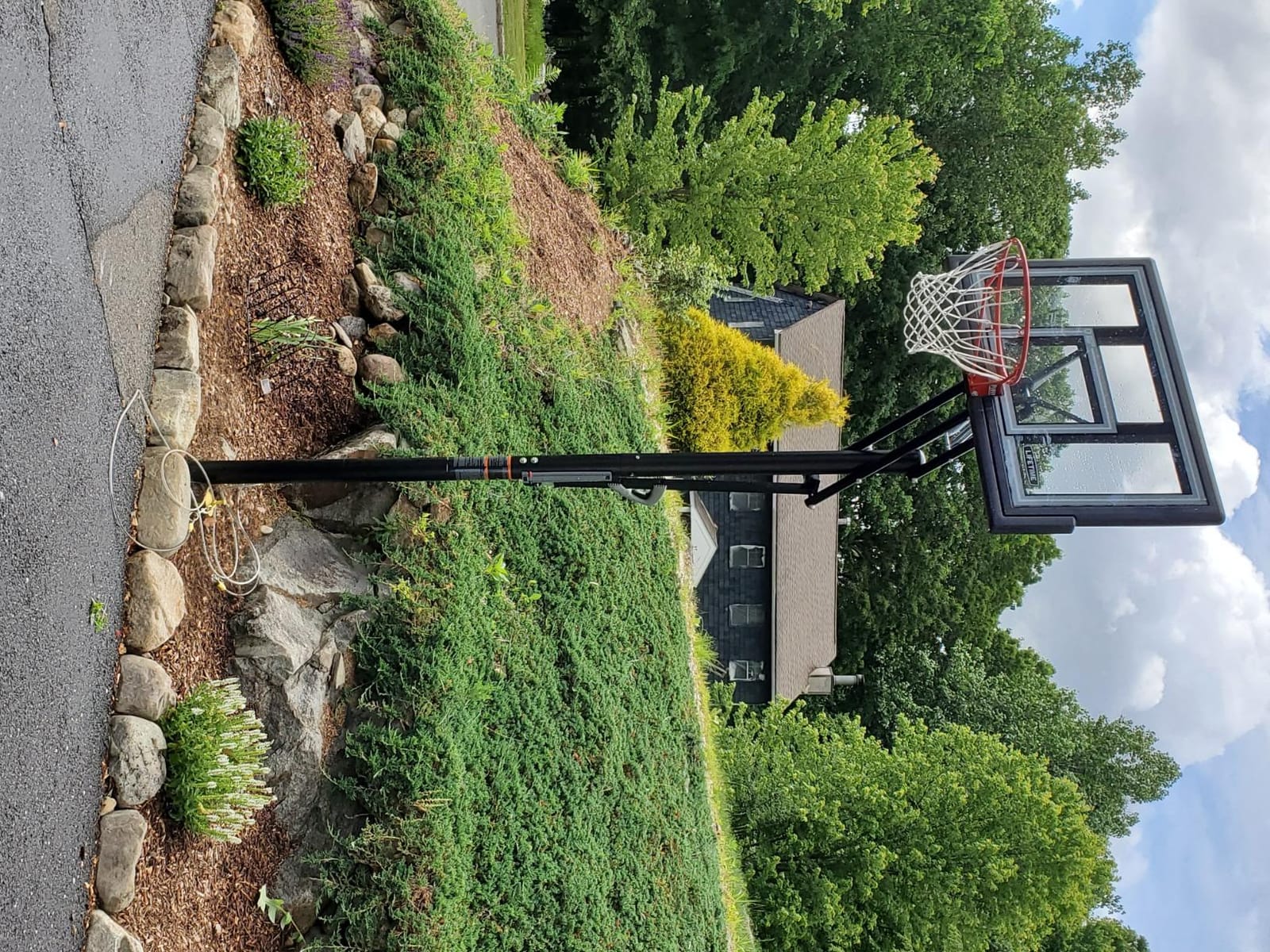
Specs are clean here: a 50 inch shatterproof Fusion backboard with a polycarbonate playing surface inside a polyethylene frame, a three-piece powder-coated round steel pole, and 5 year limited coverage. The target for this system is parents, and the design choices follow that brief closely.
Two practical notes from owners. The lever does need occasional re-tensioning once it has been exposed to weather for a season or two, and the polycarbonate surface is noticeably stiffer on rim shots than any glass board here.
Who this hoop suits
Small lots, side-yard installs, townhouse driveways and any family that wants a permanently placed hoop without losing usable ground to the system itself. At 45 pounds it is also the easiest of the heavier designs to handle during assembly.
When to pick something else
If you have a full-size driveway and enough clear space, a 54 inch board gives you a meaningfully larger target. The 50 inch width is the limiting factor here, not the height range.
5. Yohood Crank System: Most Versatile with a Detachable Base
Yohood In Ground Basketball Hoop Outdoor 10FT Adjustable Height with Crank
50 inch polycarbonate board
Stepless crank lift
Detachable expansion-bolt base
1 year warranty
Pros
- Stepless manual crank adjustment from 7.5 to 10 ft
- 18 in NBA-grade solid steel rim
- Detachable base avoids a large cement pour
- Aluminum-framed polycarbonate board resists rust
- Printed manual plus online videos and 24 hour support
Cons
- Only 1 year of coverage
- 50 inch board is small for older players
- Removable base can rock more if the anchor loosens
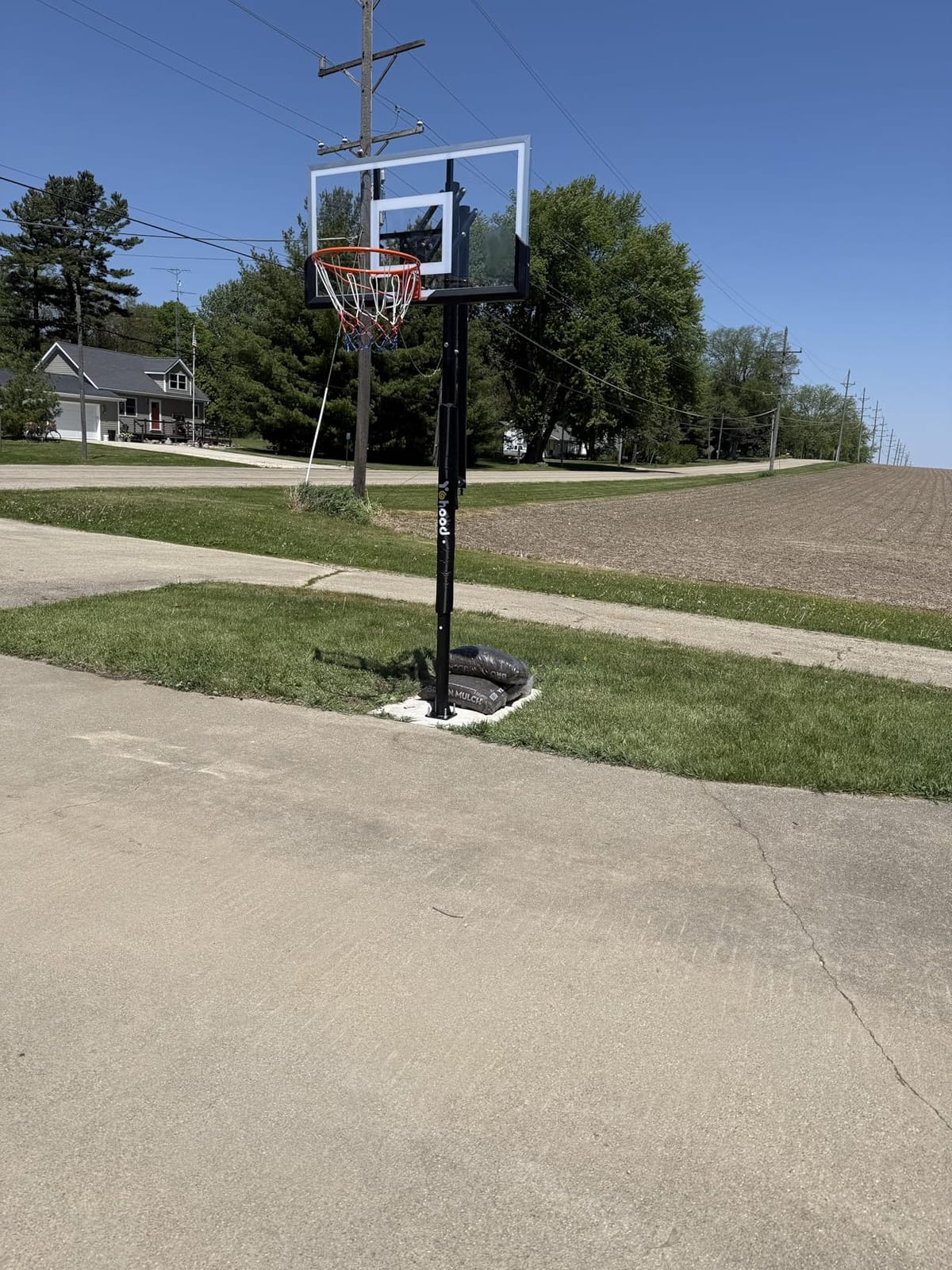
This is the only system here that does not require a full concrete pour. The base is detachable and fixed with expansion bolts, which turns a two-day job into an afternoon and means the whole hoop can be taken up and moved if you relocate.
The crank adjustment is stepless rather than stepped, so a parent can set the rim at any height between 7.5 and 10 feet instead of hunting for a notch. The 18 inch rim is described as NBA-grade solid steel, and the 50 inch polycarbonate board sits inside a high-strength aluminum frame that will not rust.
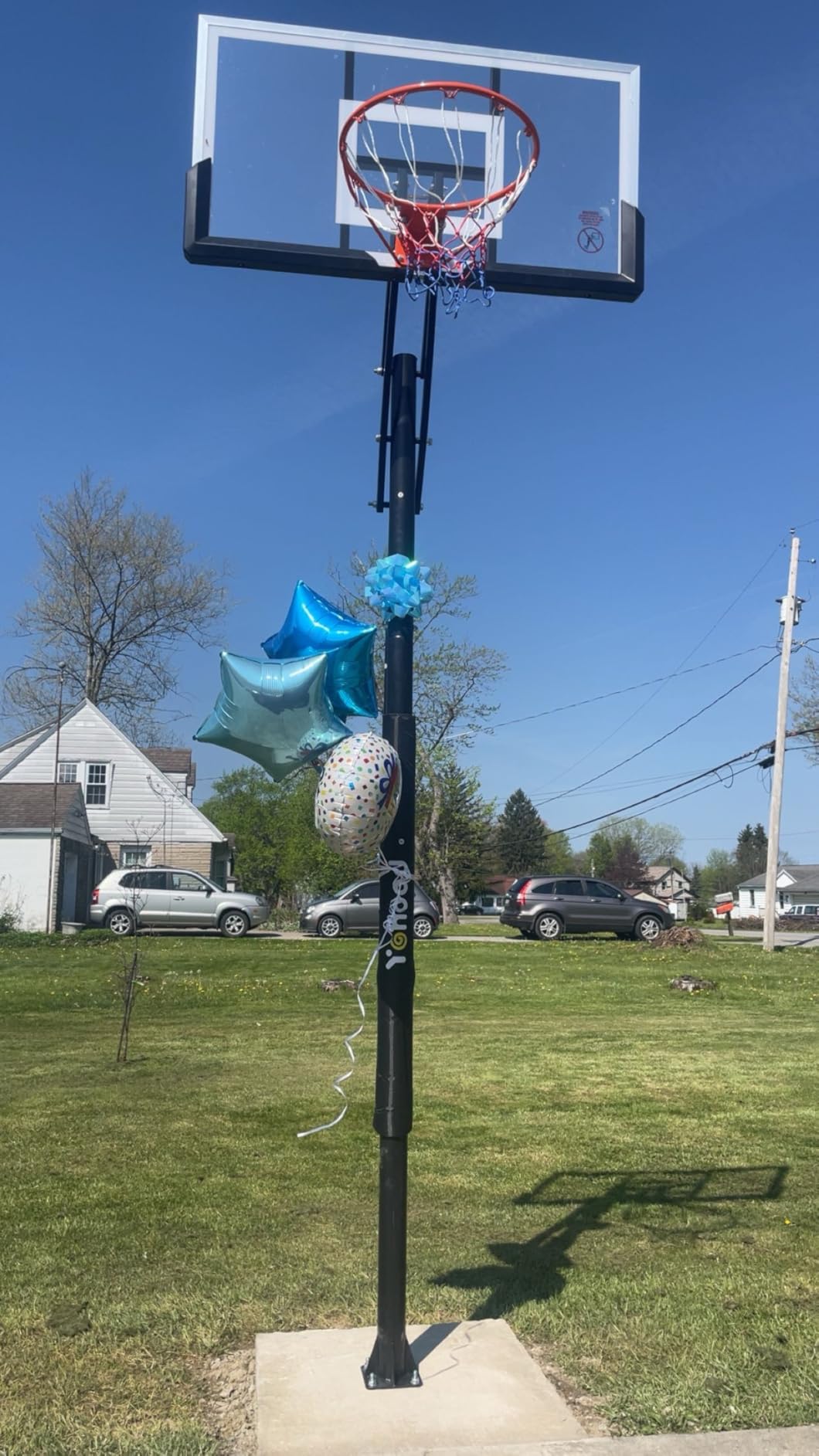
At 67 pounds it is one of the lighter systems, and the box includes a printed manual plus online installation videos and 24 hour support. Owners point to that support channel as often as they point to the hardware, which says something about where the value sits.
The 67 percent five-star share is the lowest of the four-and-above rated systems, and the complaints cluster around the one year warranty and a lighter rim feel. There is also a structural trade: a detachable base will rock more than a fully concreted pole if the anchor ever loosens.
Who this hoop suits
Renters, homeowners planning to move, and anyone who wants a permanent-looking hoop without a concrete job or a call to a utility locate service. It is the sensible pick if you are not sure this is where you will stay in five years.
When to pick something else
If you want zero play no matter what, cement-set the pole instead and pay for the rigidity. If older players are the main users, a 50 inch board leaves a lot of rim out of reach on a driveway.
6. G GX9 Adjustable System: Best for Narrow Driveways
G GX9 In-Ground Basketball Hoops 7-10ft Adjustable with Crank, Outdoor Inground Basketball Goal System with 45 Inch Shatterproof Backboard
45 48 and 54 inch boards
Crank 7.5-10 ft
Concrete anchored 2-3 ft
1 year warranty
Pros
- Seamless crank adjustment across 7.5 to 10 ft
- Backboard offered in 45 48 and 54 inch widths
- High-strength steel with weather-resistant coatings
- Pole anchored 2-3 ft into concrete
- No bulky wheeled base once installed
Cons
- Only 1 year of warranty
- Polycarbonate rebound feels harder and less lively
- Sizes top out at 54 inch
- Variant naming differs between listing and marketing copy
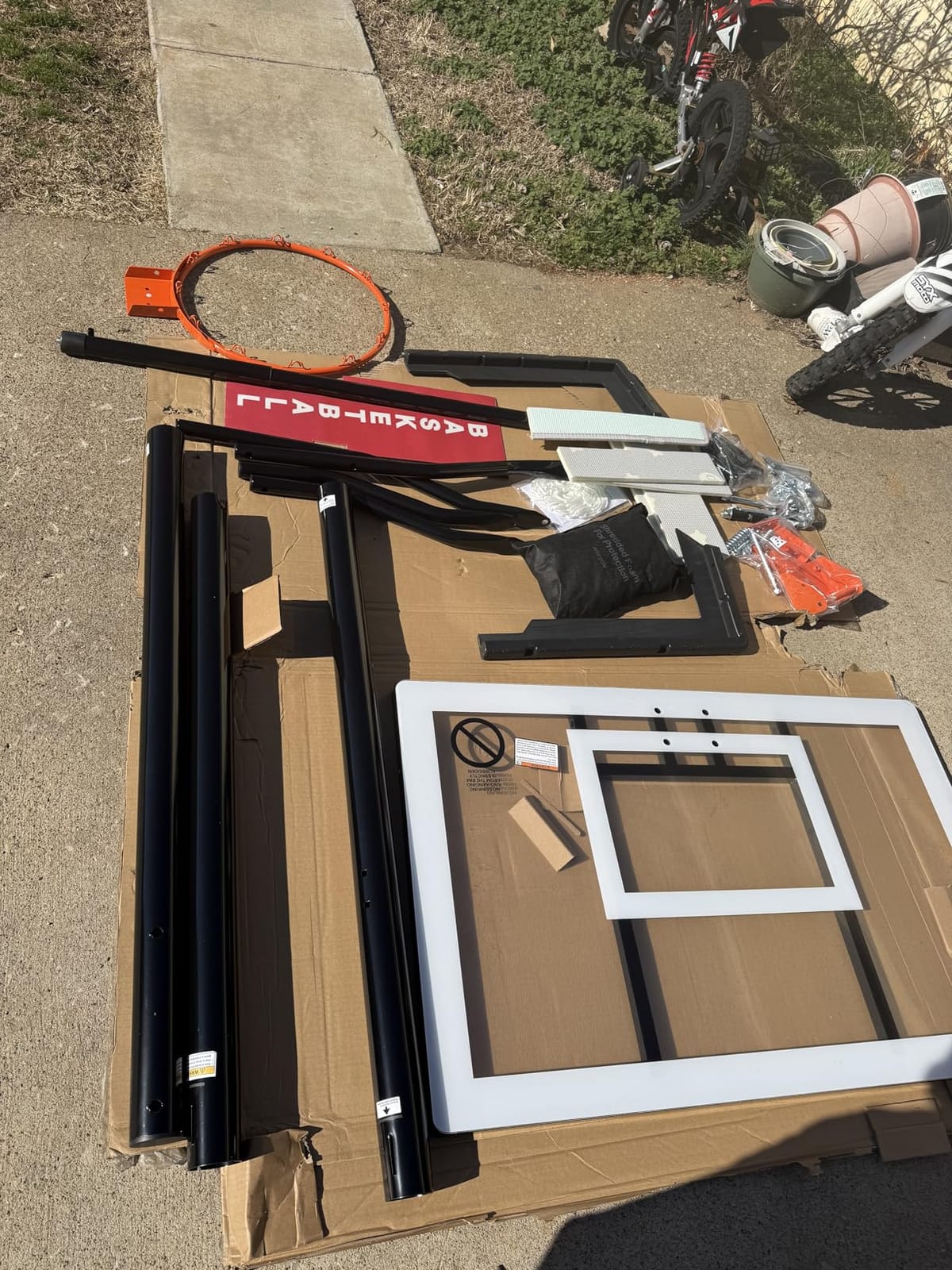
Most in-ground systems come in one width. This one is offered in 45, 48 and 54 inch shatterproof backboards, which makes it the practical answer on a narrow driveway where a 60 inch board would overhang the pavement on both sides.
The crank gives seamless 7.5 to 10 foot adjustment, and the pole is anchored two to three feet into a concrete foundation, so once the cure is done there is no wheeled base taking up court space. Reviewers report solid stability after anchoring and painless height changes.
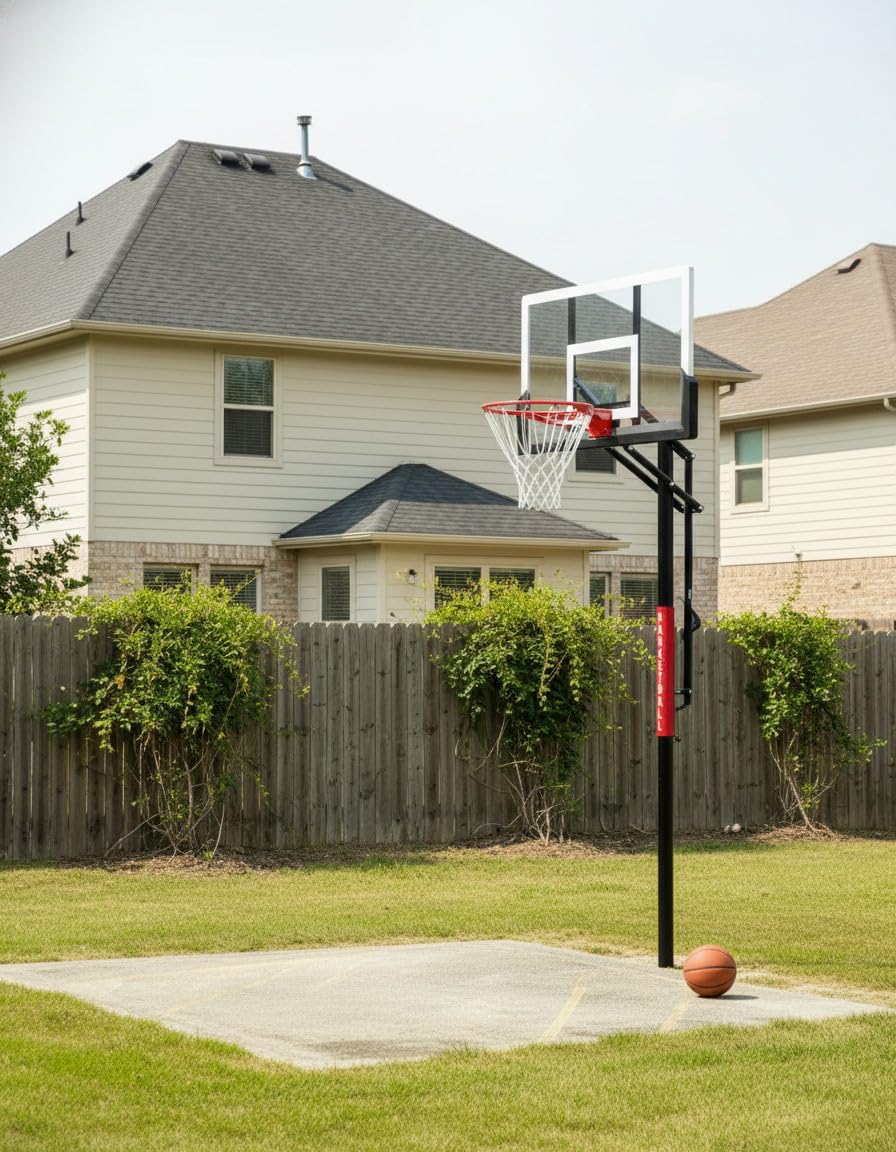
Weather coatings on the high-strength steel are rated against rain, snow and sun, and the 18 inch shock-absorbing rim is included. At 24 kilograms the system is light enough for two people to handle, unlike the 300-plus pound glass units.
Two cautions. The polycarbonate board gives a harder, less lively rebound than glass, which is the same trade every plastic board here makes. And the listing title spans 45 to 54 inch while the marketing copy points at a 45 inch board, so confirm which variant you are actually ordering.
Who this hoop suits
Condo associations, side-yard installs, townhouses and anyone whose driveway is narrower than the system they thought they wanted. The 48 inch option is the interesting one for a tight lot, and few competitors offer it.
When to pick something else
Only 146 ratings sit behind this system, so there is less long-term data than the Silverback and Lifetime options. If warranty length and review depth both matter to you, the mid-tier Silverback NXT54 carries more feedback.
7. Goalrilla GS54: Best for Wide Driveways
Goalrilla GS54 In Ground Basketball Hoop with Adjustable Height Backboard and Pro-Style, Breakaway Rim
54 inch tempered glass board
One-piece steel pole
34 inch overhang
5 year warranty
Pros
- True tempered glass rebound that feels like a gym
- One-piece main pole adds strength over two-piece rivals
- Crank actuator moves the breakaway rim 7.5 to 10 ft
- Concrete anchor system allows the goal to be unbolted and moved
- Very little shake during shooting
Cons
- 357 lb weight needs two or three people and a truck bed
- Instructions understate the concrete requirement
- Transit damage to the pole or backboard is the top complaint
The GS54 is the pick for a household with real paved runup space, and its 34 inch overhang is the widest in this roundup. Paired with a 54 inch tempered glass board, it gives you a target that feels like a gym goal rather than a backyard toy.
Two construction details justify the weight. The main pole is one piece rather than a two-piece design, and the concrete anchor system is meant to be unbolted, so the goal can be moved later if you change yards. Owners describe very little shake during shooting, and the anchor kit is included.
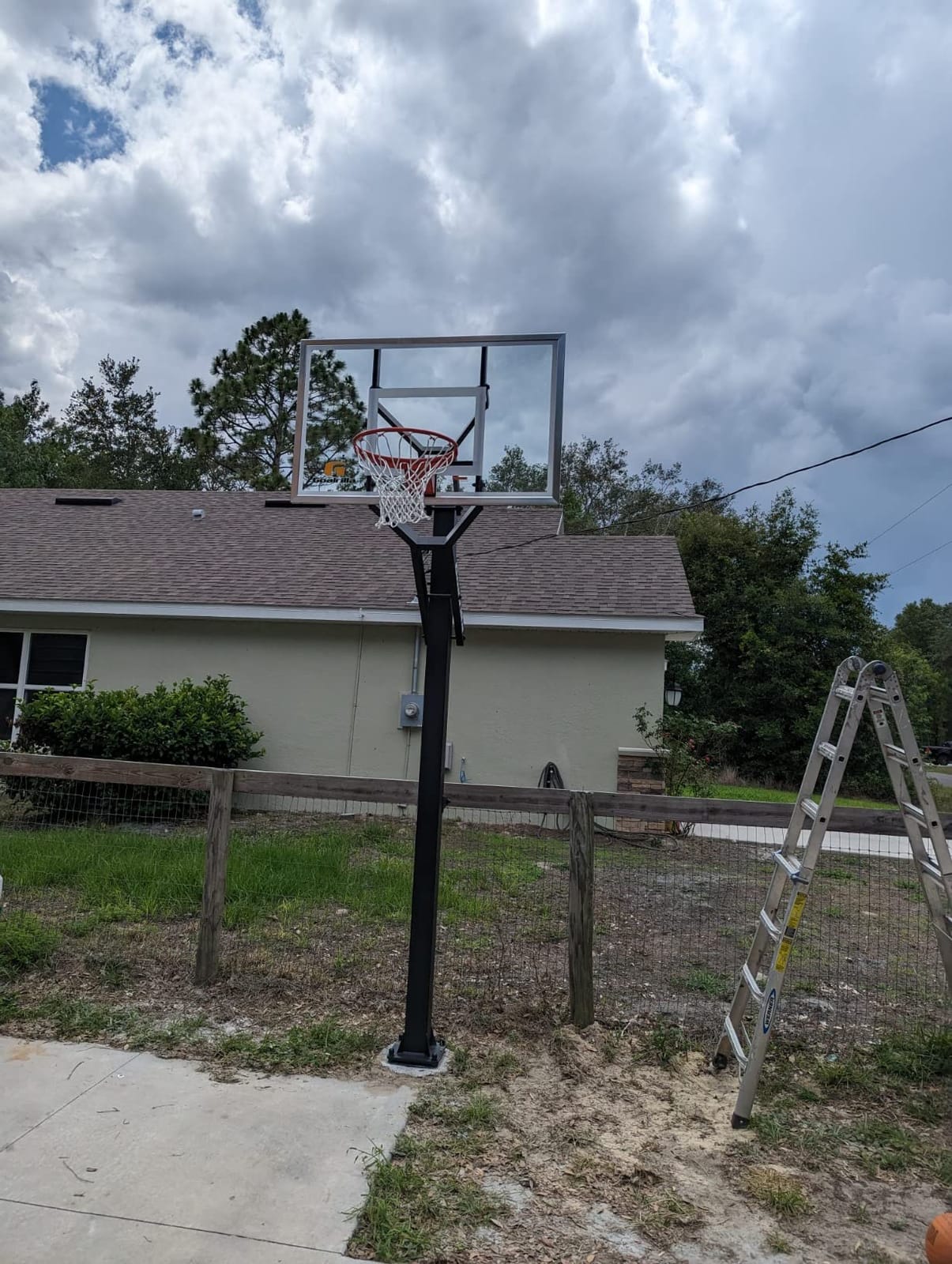
Specification-wise it is a 54 inch glass board on an alloy steel frame with an 18 inch rim, a 357 pound total weight and 5 year coverage. The crank actuator raises the breakaway rim from 7.5 to 10 feet, and the system arrives in three separate cartons.
Owners consistently praise the playing feel and single out installation as the hard part. At 357 pounds the backboard and pole need two or three people and a truck bed or ladder to mount, the manual understates how much concrete the hole needs, and damage in transit shows up often enough that inspection on arrival matters.
Who this hoop suits
Adults and teens who want to shoot recreationally, anyone with a long driveway, and buyers who prefer glass rebound but do not need a limited lifetime warranty. The unbolt-and-move anchor is a genuine advantage for a household that might relocate.
When to pick something else
The 5 year warranty is modest for the weight and effort involved, and the install is a multi-person concrete job. Buyers who want the strongest coverage should step up to the Goalrilla FT54.
8. Lifetime Crank Adjust 54 Inch Glass: Best for Moving Later
Lifetime in Ground Basketball Hoop, 54-Inch Tempered Glass Backboard, Crank Adjust, Bolt Down, Clear
54 inch 3/8 inch tempered glass
Two-piece square pole
Bolt-down anchoring
5 year warranty
Pros
- 3/8 inch tempered glass fused to a heavy duty steel frame
- Crank moves the goal 7.5 to 10 ft with a removable locking handle
- Height indicator sticker for setting ages quickly
- Two-piece powder-coated square pole with bolt-down anchoring
- Slam It Ultra rim with UV resistant graphics
Cons
- Needs at least 1040 pounds of concrete and 72 hours of curing
- 160 lb backboard needs three adults to set up
- Only 24 inch overhang
- Two-piece pole is slightly less rigid than one-piece
The 3/8 inch tempered glass board is the residential benchmark for a reason, and this system pairs it with a heavy duty steel frame for a consistent rebound across the whole panel. The crank moves the goal from 7.5 to 10 feet and the handle locks the rim where you set it.
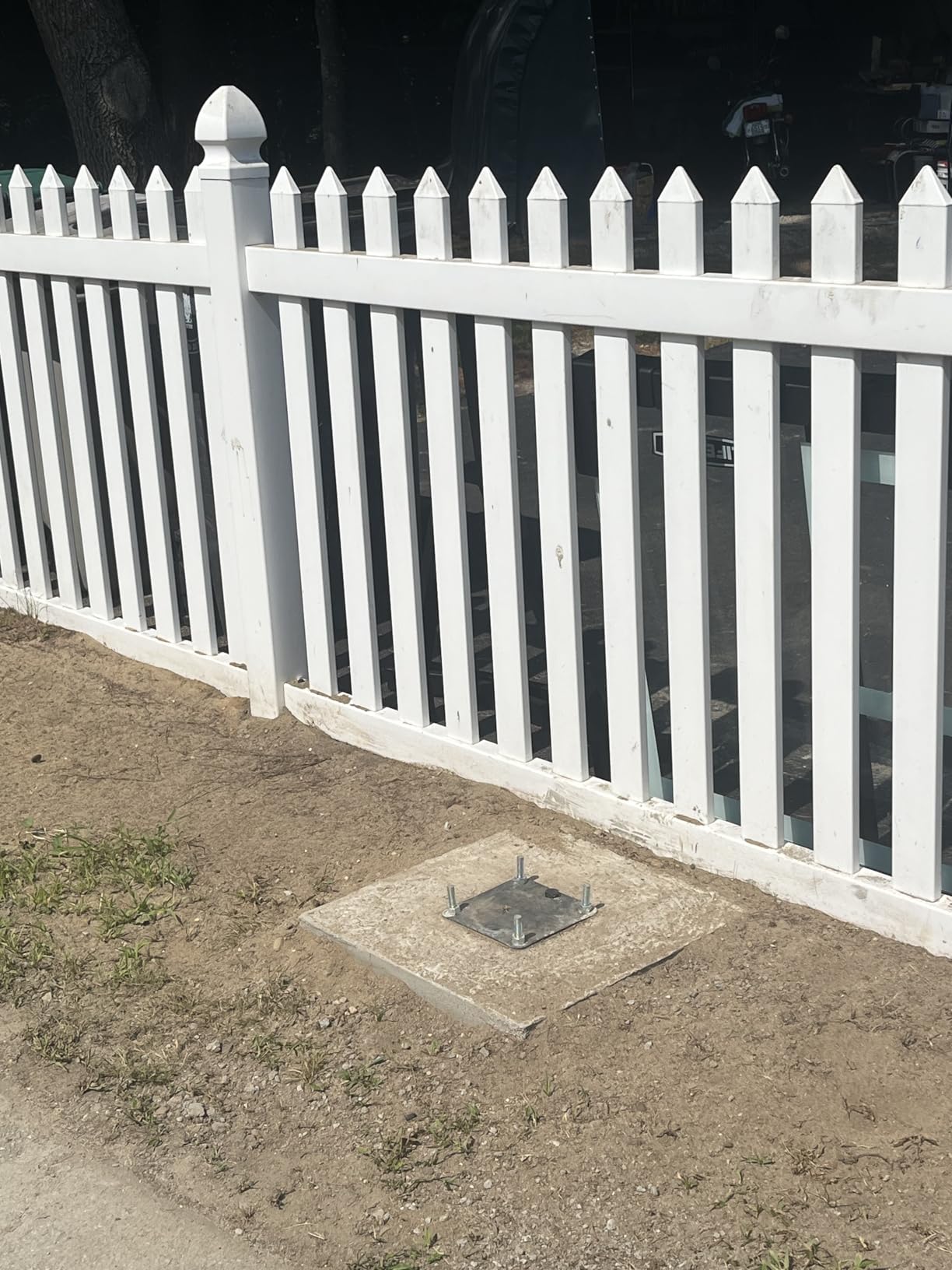
What makes this one different from the cement-set designs is the bolt-down anchoring on a two-piece powder-coated square steel pole. That combination gives you accurate levelling and the option to unbolt and relocate, and the height indicator sticker is a small touch that matters when three different ages use the hoop in one week.
The 18 inch Slam It Ultra rim, durable net and UV resistant graphics are specified for year-round outdoor use. Its 24 inch overhang is the narrowest in this roundup, so plan the siting around the pole rather than the board.
Owners rate the glass feel and the smooth crank highly, and the recurring theme in reviews is the install. The published requirement is at least 1040 pounds of concrete, a 72 hour cure, and three to four hours of assembly, and the 160 pound backboard should be handled by three adults.
Who this hoop suits
Homeowners who may move within a few years, and buyers who want tempered glass without a limited lifetime warranty commitment. The two-piece square pole is also easier to level accurately than a one-piece design, which some installers prefer.
When to pick something else
The concrete volume is substantial and the cure time is three days, so this is not a weekend project. If you want maximum rigidity at height, a one-piece pole design such as the GS54 or FT54 is the better long-term bet.
9. Goalrilla FT54: Most Compact with Limited Lifetime Warranty
Goalrilla Basketball Hoops with Tempered Glass Basketball Goal Backboard, Black Anodized Frame, and In-ground Anchor System
Clear View tempered glass
Black anodized frame
One-piece Three-Point pole
Limited lifetime warranty
Pros
- Highest rated system in this roundup at 4.7
- Clear View tempered glass with pro-style rebound
- Black anodized frame for an arena look
- One-piece main pole with Three-Point Technology
- Limited lifetime warranty is the strongest coverage here
Cons
- Heaviest premium tier at 327 lb and a multi-person install
- Arrives as three separate cartons needing delivery coordination
- Anchor kit and backboard pad are separate setup steps
The FT54 is where a purchase stops being a yard project and starts being a build. The Clear View tempered glass board delivers pro-style rebound, and the black anodized frame is the reason it looks like it belongs in a gym rather than behind a house.
Its 4.7 rating is the highest of any system we reviewed, with 88 percent five-star ratings from 218 owners. The one-piece main pole uses Three-Point Technology, and the in-ground anchor kit cured into concrete can be unbolted if you relocate, so the build quality is not the weak point.
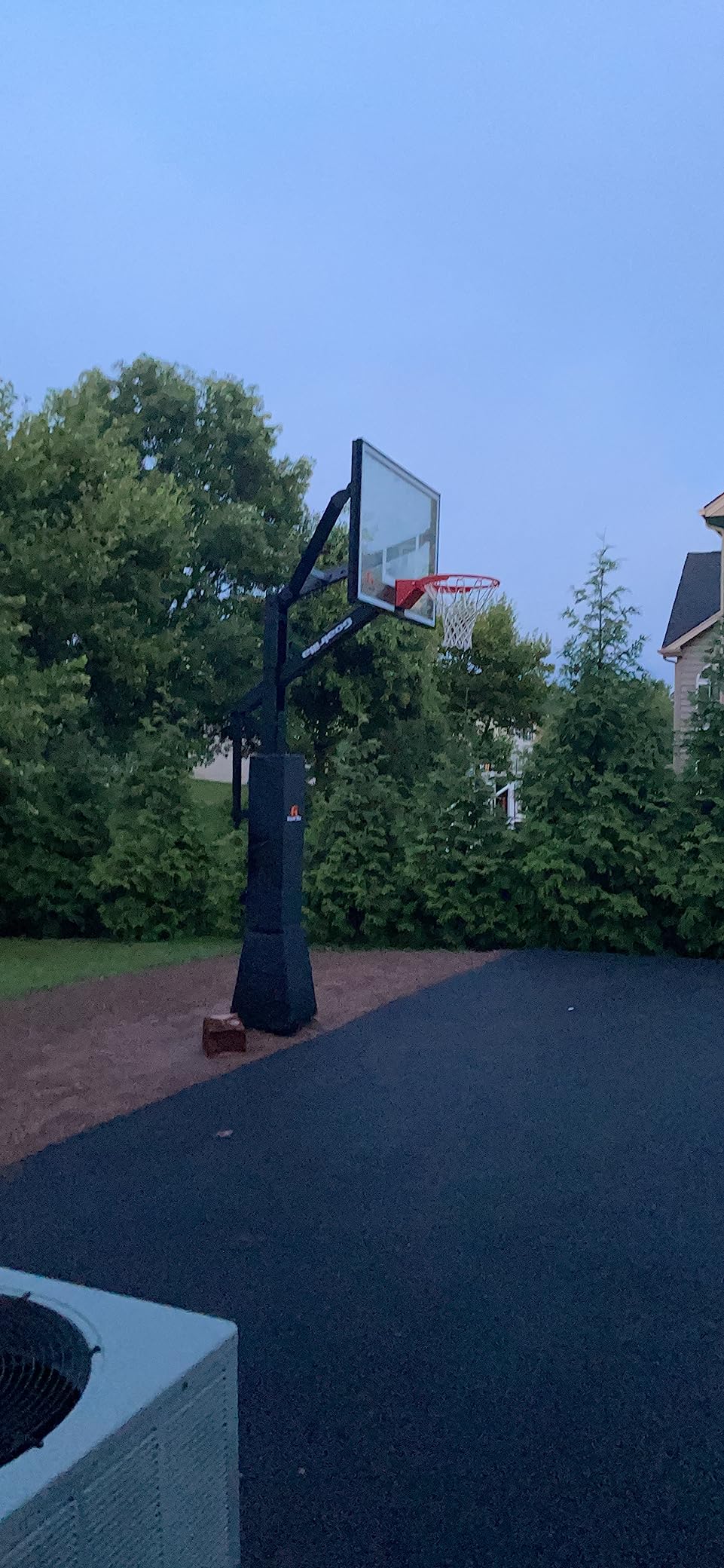
The limited lifetime warranty is the strongest coverage in this group and is treated by owners as a proxy for build quality even though it is rarely claimed. The same model family is available in 54, 60 and 72 inch widths, which makes it the natural starting point for a buyer who may grow into a larger board.
At 327 pounds this is one of the heaviest systems we reviewed, it arrives in three separate cartons that need delivery scheduling, and the anchor kit plus backboard pad are separate steps some owners overlook during setup.
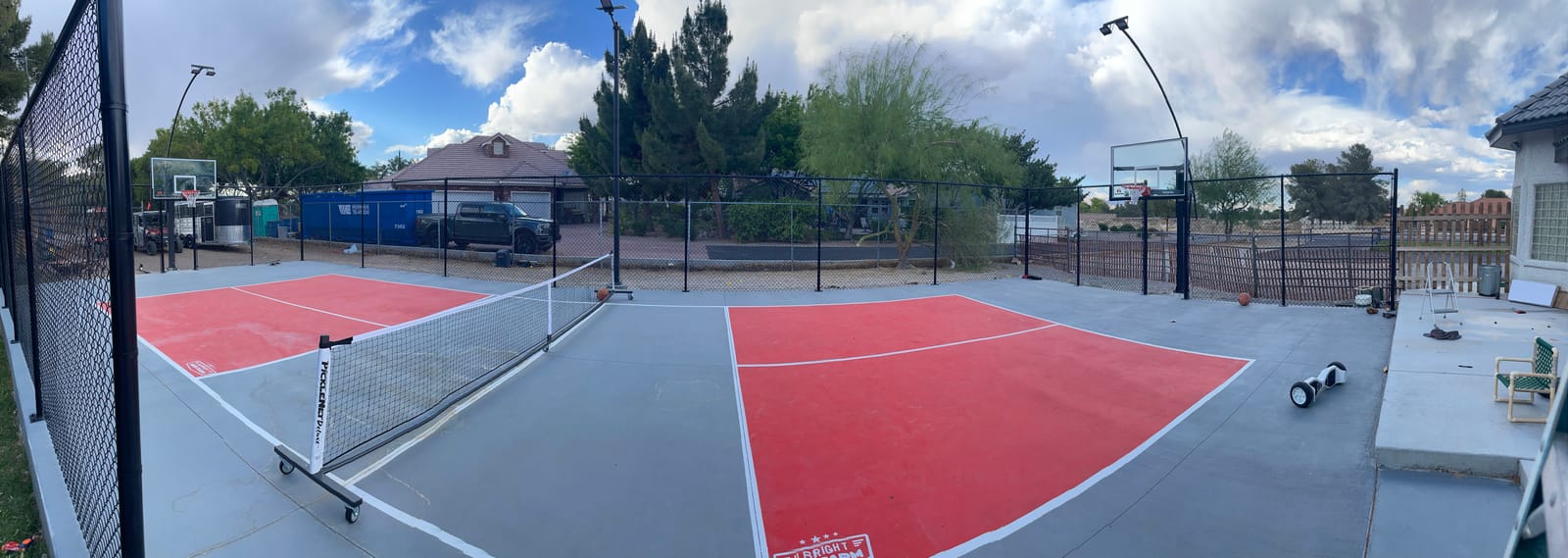
Who this hoop suits
Buyers who plan to keep one hoop for a decade or more, want the arena look, and are willing to arrange a professional install or a crew of adults. It is also the one to buy if warranty length is a deciding factor.
When to pick something else
If the install is going to be a weekend DIY project, this is too much. The Silverback Height Adjustable system gives you glass at a lighter 198 pounds and still includes both pads, at the cost of a shorter warranty.
10. Ironclad Game Changer 60: Best 60 Inch Glass System
Game Changer in-Ground Adjustable Basketball Goal Hoop with 60″ Glass Backboard System for Outdoor Basketball Courts with Post & Backboard Pad
60 inch 5/16 inch glass board
30 inch pole offset
Included post and backboard pads
7.5-10 ft
Pros
- Thick 5/16 inch glass gives a strong bounce for driveway play
- 30 inch offset keeps players clear of the pole
- True gymnasium quality breakaway rim and net
- Adjusts from 10 ft down to 7.5 ft
- Post pad and backboard pad are both included
Cons
- Heavy glass board needs at least two people and a truck bed
- Several owners hired a professional installer
- Freight delivery requires appointment coordination
- Only 81 ratings sit behind it
This is the 60 inch answer, and the r/BasketballTips thread comparing 60 inch systems with tempered glass and a two-piece pole is where owners argued it out. The board is 36 by 60 inches of 5/16 inch glass in an aluminum frame, which gives a noticeably livelier rebound than the plastic boards elsewhere in this roundup.
The 30 inch offset between backboard and post is the detail that separates it from cheaper 60 inch systems, because it stops players from running into the pole on a layup. The included post pad and pre-installed backboard pad are items that are often sold as add-ons elsewhere, and the breakaway rim and net are described as true gymnasium quality.
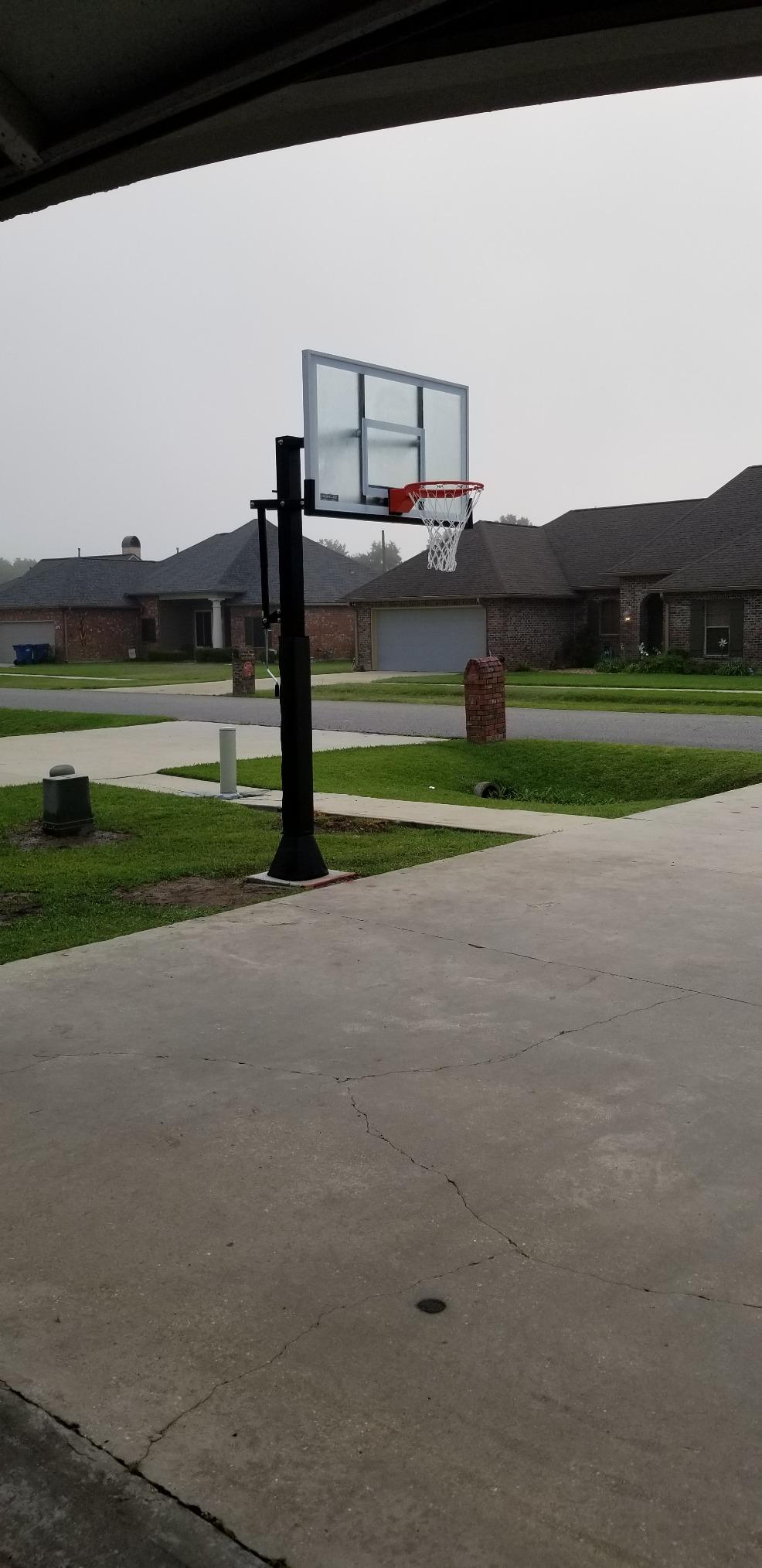
It has the highest average rating in the group at 4.8, with no one-star ratings at all in the 81 recorded. Height runs from 10 feet down to 7.5 feet, so a family with a wide age spread can still use it.
The compromise is handling and support. The glass board is heavy and awkward to reach and bolt, so owners commonly brought in a professional installer, and freight delivery of that size needs appointment coordination rather than a drop at the door.
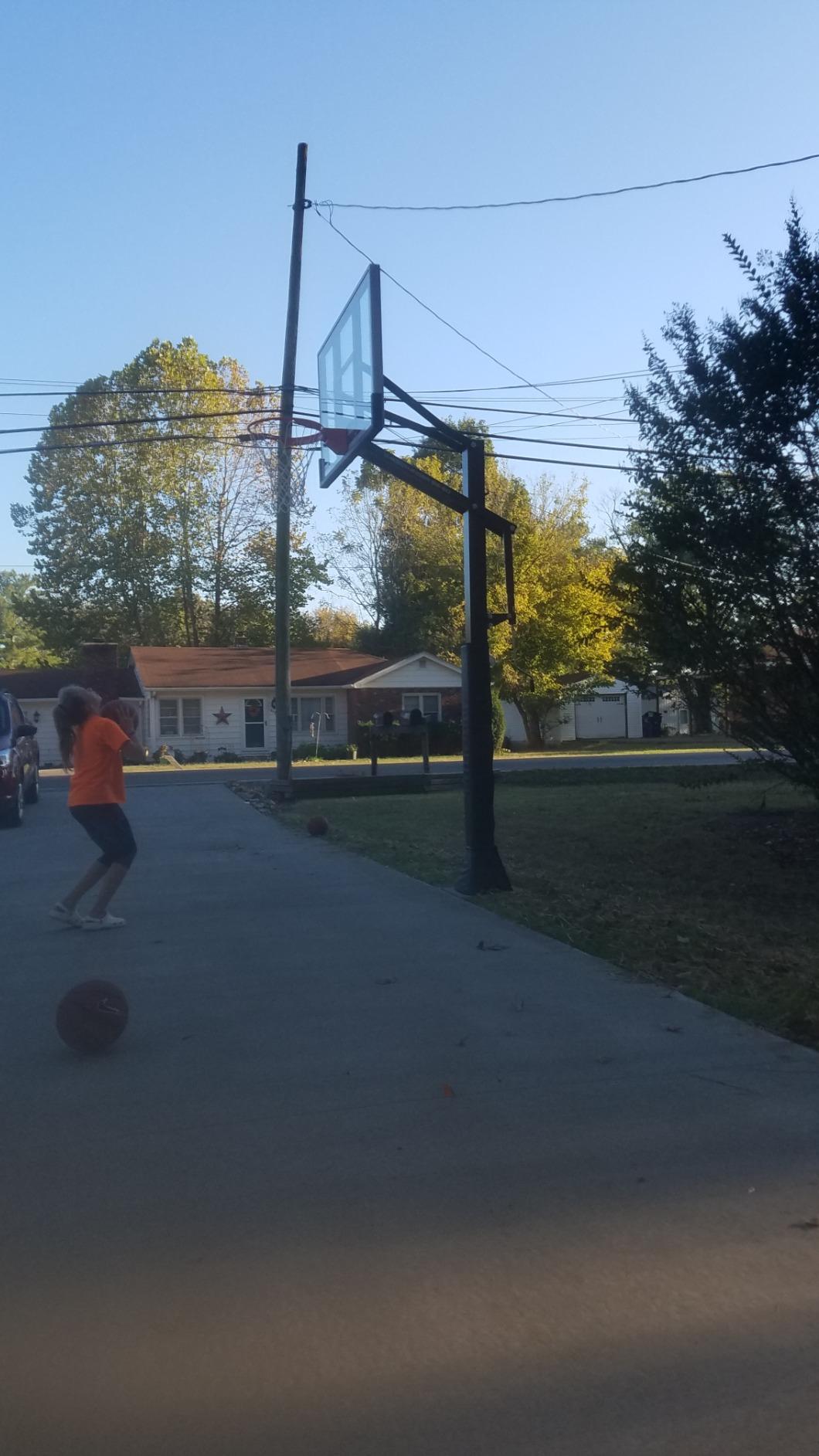
Who this hoop suits
Buyers with a deep driveway or a properly sized court who want 60 inches of glass and the pole offset that makes it playable. Having both pads supplied in the box saves a separate purchase and a trip.
When to pick something else
Only 81 ratings support it, so there is less long-term data than the Silverback and Lifetime options. Anyone who cannot recruit two people for the lift or arrange a professional install should stay at the 54 inch tier.
11. Dominator 72 Inch Goal: Best for Full Size Courts
Dominator 72″ In ground Basketball Hoops Outdoor – 72″ Backboard w/ 4′ Overhang – Outdoor NBA/NCAA Regulation Adjustable Basketball Goal – Adjusts from 7′-10′ – Made of Heavy Duty Rust Proof Aluminum
72 inch board with 4 ft overhang
6061 T6 aluminum post
7-10 ft telescoping
Limited lifetime warranty
Pros
- Largest playing surface in this roundup at 72 inch with a true 4 ft overhang
- Rust proof 6061 T6 aluminum post and stainless hardware
- Telescoping pole keeps a constant 4 ft overhang at every height
- Four-piece assembly takes under an hour after the bolts are set
- Limited lifetime warranty
Cons
- 72 inch glass board is extremely heavy and best handled by three people
- Heaviest system here at 400 pounds
- Base anchor bolt threads are not protected and strip easily
- Only 58 ratings for long-term data
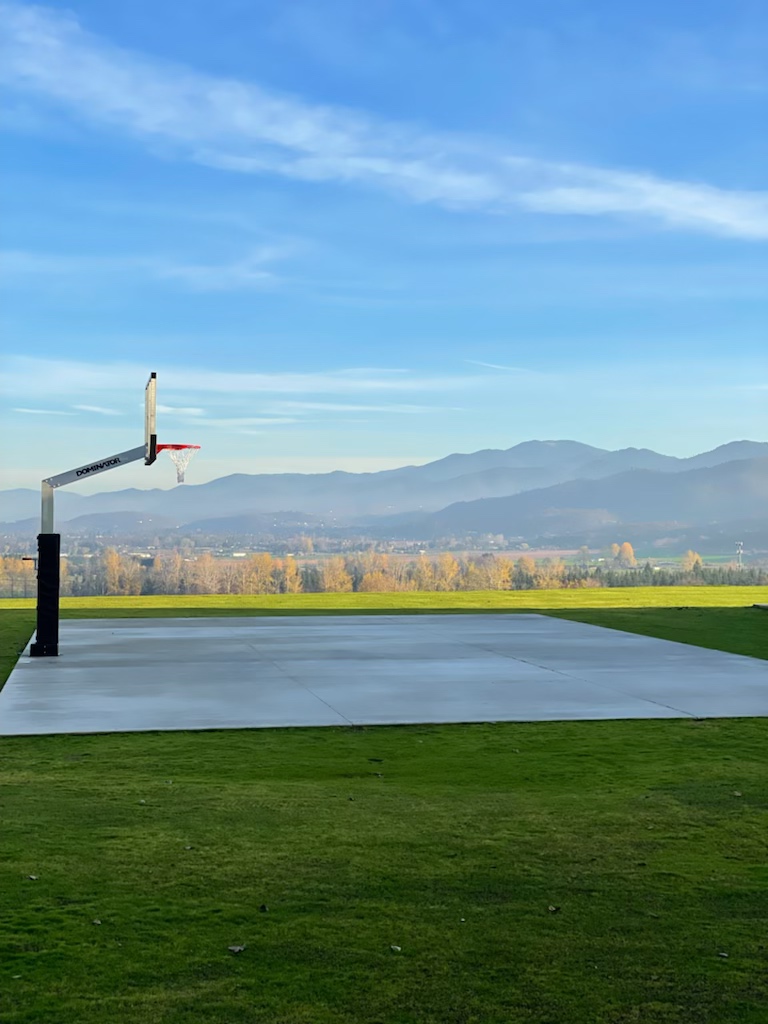
Almost nobody who owns a suburban yard needs a 72 inch board, and if you do, this is the one built for it. The 72 inch tempered glass backboard with a full 4 foot overhang replicates NBA and NCAA regulation goal geometry, which is why it shows up on real half courts and school-adjacent driveways.
The post is 6061 T6 aluminum with stainless hardware, so the whole structure is rust proof, and owners in coastal and poolside settings mention that specifically. The telescoping pole keeps a constant 4 foot overhang at every height from 7 to 10 feet, and a child can operate it alone.
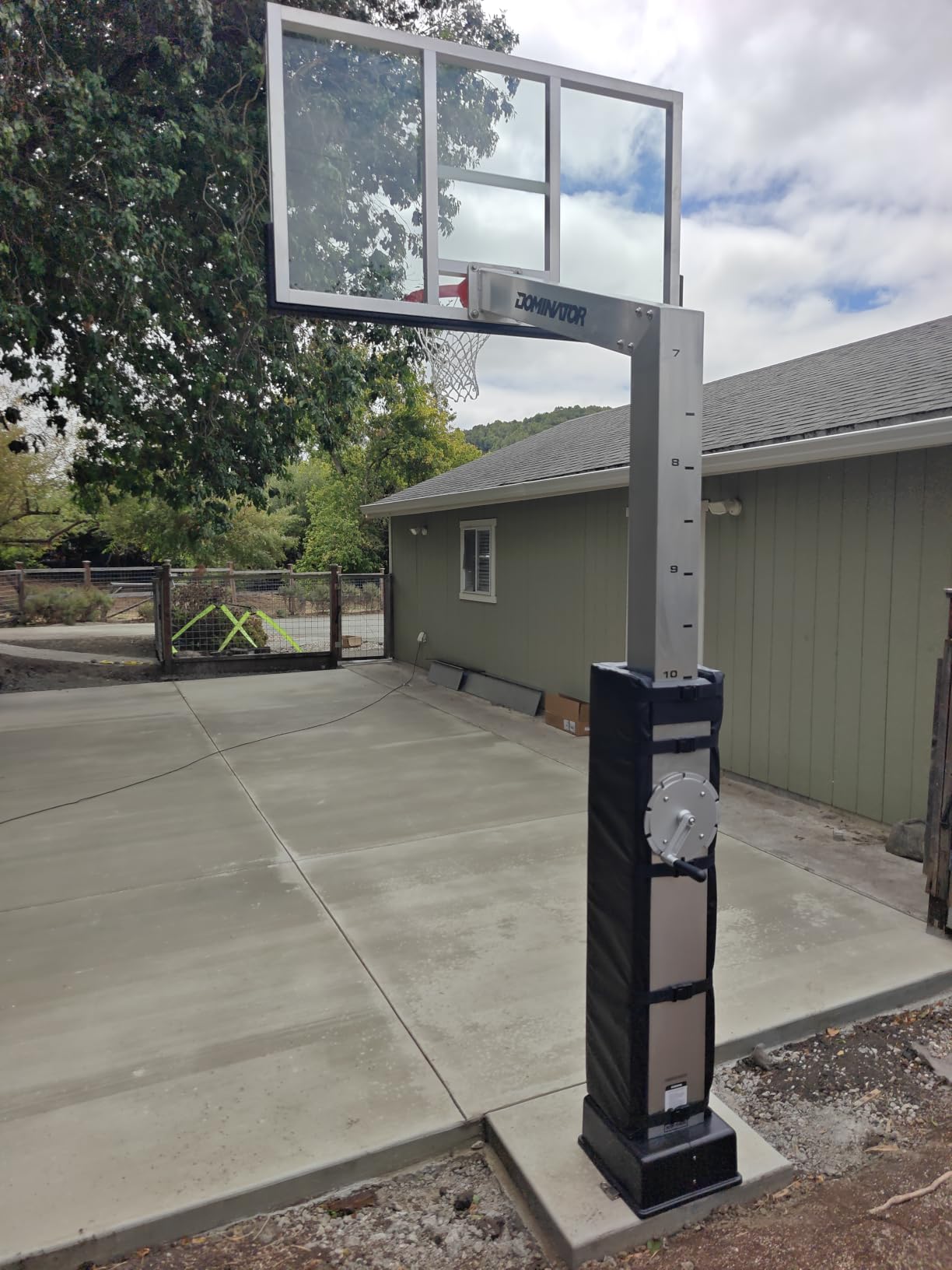
Assembly is unusually simple for a system this size. After the anchor bolts are set in concrete, the goal comes together from four pieces in under an hour, and the breakaway rim, pole pad and height lock are included under a limited lifetime warranty.
At 400 pounds this is the heaviest system in the roundup, and the 72 inch glass board is best handled by three people. One practical note from owners: the base anchor bolt threads are not protected, so it is easy to strip them while setting the bolts into the concrete.
Who this hoop suits
Buyers with a genuinely large paved area, a shared court situation, or a coastal or poolside location where rust is the deciding factor. The rust proof aluminum and stainless build is the strongest in this group.
When to pick something else
If your runup space is a normal driveway, a 72 inch board mostly adds overhang you cannot shoot at and 400 pounds you must install. The Ironclad 60 gives regulation-feel geometry at a fraction of the handling burden.
12. IGL 52 Inch System: Best for All-Weather Use
IGL In Ground Basketball Hoops Outdoor, 7.5-10ft Adjustable Basketball Goal
52 inch shatterproof board
7.5-10 ft quick adjust
Stainless steel poles
1 year warranty
Pros
- 52 inch shatterproof backboard built for durability
- Quick-adjust handle moves the rim 7.5 to 10 ft with no tools
- Prefabricated mounting kit speeds up the in-ground install
- Windproof and waterproof tested
- US-based support with 24 hour response
Cons
- 66.2 lb weight means you need help to install
- In-ground install still means digging and concrete
- Only one colour option
- One year warranty
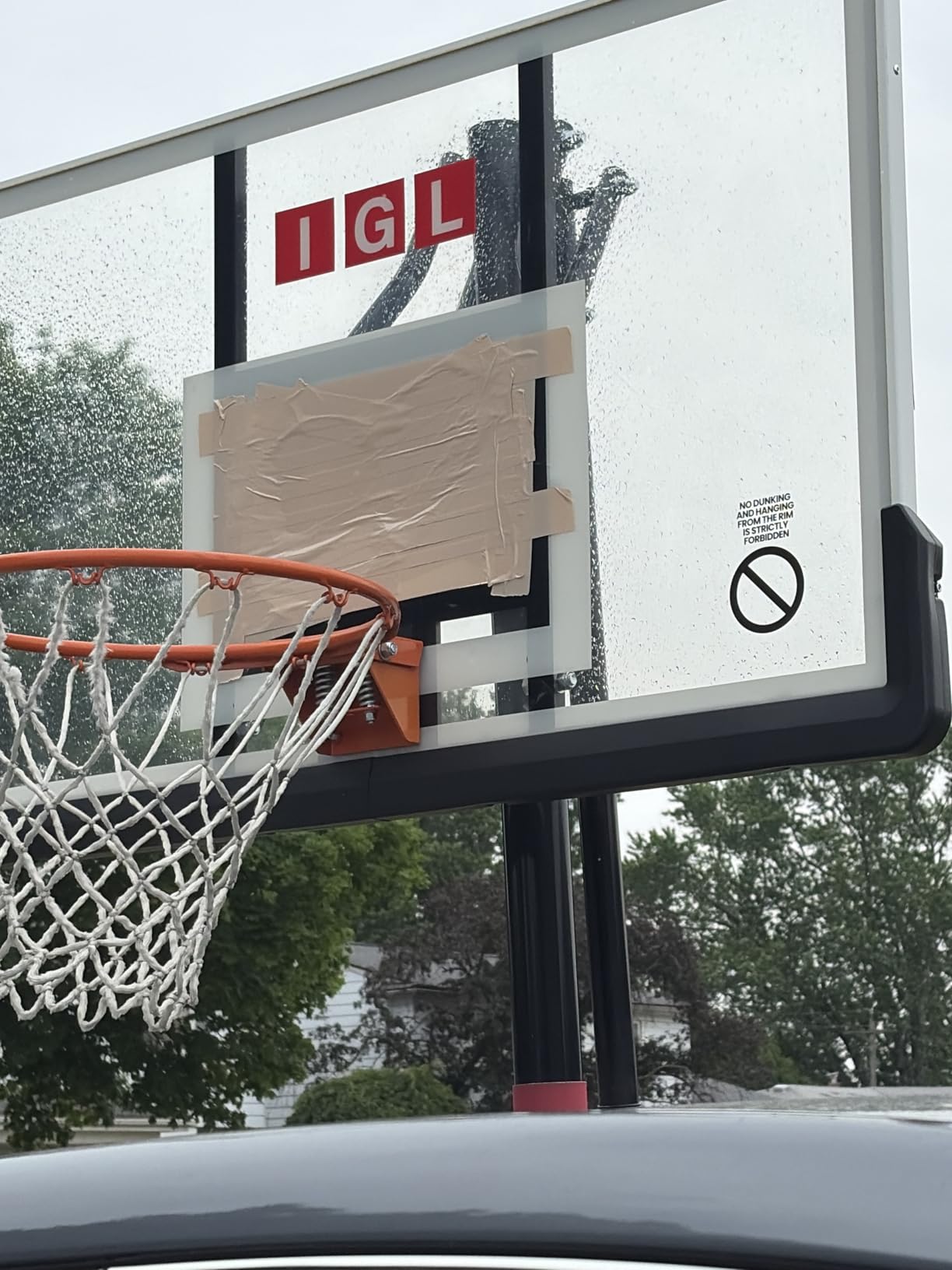
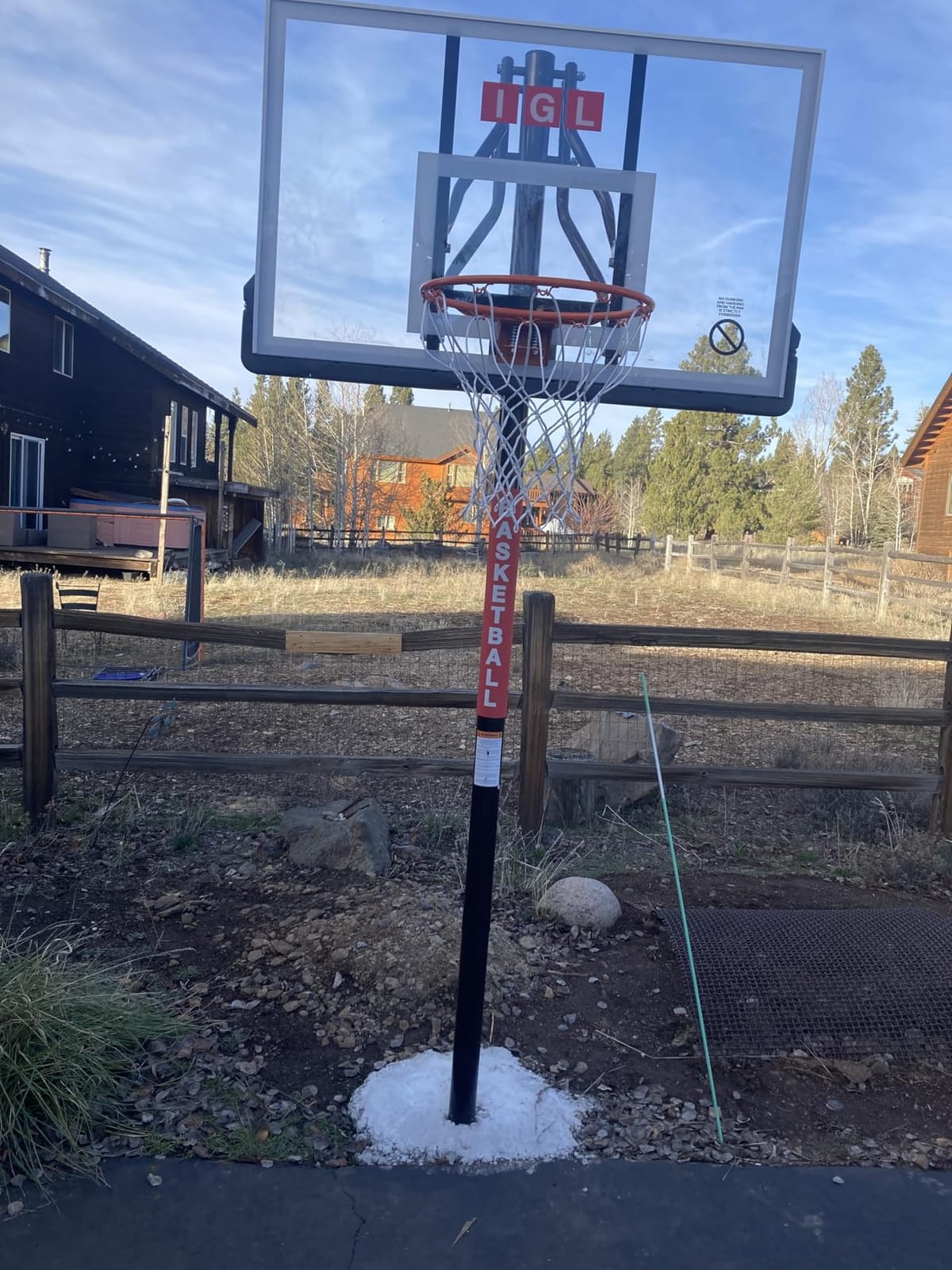
The IGL is the one to consider in a climate that punishes everything else. The frame uses stainless steel poles rather than powder-coated alloy, and the system is described as windproof and waterproof tested rather than merely weather resistant, with fade resistance listed among its features.
Height adjustment runs 7.5 to 10 feet on a quick-adjust handle that needs no tools, and the mounting kit is prefabricated, which owners say makes the in-ground install faster than a traditional pour. The 18 inch breakaway rim is the pro-style type rather than a fixed steel ring.
Support is worth noting for a system at this level: a US-based team with a stated 24 hour response, plus a visual step-by-step installation manual. That matters more than it sounds when you are standing in a yard wondering which bracket goes where.
The 4.2 rating is the lowest of the twelve, and the warranty is one year. The physical limits are honest ones: at 66.2 pounds it needs help to install, and the in-ground process still means digging and mixing concrete.
Who this hoop suits
Coastal, high-wind and high-rain locations, and anyone who has watched a cheaper coated system start to pit and fade after one season. The stainless poles and tested weather rating are the reason to choose it.
When to pick something else
The one year warranty is the shortest meaningful coverage here, and there is only one colour option. If you want a longer horizon, the Lifetime 71281 gives you the same shatterproof approach with 5 year coverage.
Are In-Ground Basketball Hoops Worth It?
Yes, for most homeowners. An in-ground system holds a true 10 foot rim with no wobble, needs no moving, and lasts far longer than a portable base you drag across the driveway. The catch is that the install is permanent and adds concrete, tools and a weekend of work, and a portable system is the smarter call if you rent or expect to move within a few years.
The cost comparison is straightforward. A portable system with a weighted base and wheels costs less up front and can be moved by one person, but it drifts, rocks and has to be repositioned for every session. An in-ground system adds concrete and possibly a professional install to a higher purchase price, and in exchange you are not touching it again for the life of the pole.
One hidden cost people forget is handling. The listed weights of the glass systems here run from 198 pounds on the top pick to 400 pounds on the Dominator, and the Lifetime crank model alone specifies 1040 pounds of concrete and a 72 hour cure. Budget a crew of two or three adults, or pay someone to do it.
How to Choose a Backboard Size and Material
Choose the backboard width based on how much paved runup you actually have, not on how big you want the target to look. A board wider than your clear space overhangs onto grass, sits behind a car line, or forces you to shoot from the street.
A 50 or 52 inch board is right for small lots and side-yard installs where every foot of play area matters. A 54 inch board is the residential sweet spot and the most common choice here, because it gives a large target without demanding a deep driveway. A 60 inch board needs a genuinely deep runup area to be worth the extra overhang, and a 72 inch board is a court-scale purchase that only makes sense on a large paved surface.
On material, tempered glass gives the truest rebound and the most consistent response off the square, and it is the choice most buyers converge on once they understand the difference. Polycarbonate will not shatter and is the right answer for a yard full of young players or a poolside install, but the surface is harder and the ball rings off it less. Acrylic and fiberglass sit in between, and the specifications on cheaper listings are often vague about which one you are getting.
Two of the twelve systems here list a backboard material that conflicts with their own marketing text, so check the specification block rather than the highlight bullet. The NXT54 in particular is described as polycarbonate in the specs and tempered glass in the highlight, and that gap matters to how the hoop feels.
Height Adjustment, Pole Design and Safety
The most valuable feature for a family is a 7.5 to 10 foot height range, because it is what lets one hoop serve a five year old and an adult. Every system in this roundup reaches 10 feet, and most start at 7.5 feet, with the Dominator telescoping design reaching down to 7 feet.
Three mechanisms appear in this group. A hand crank gives stepless control but takes an adult to turn. A squeeze handle or lever uses counterbalance springs so one hand can do it, which is the most child-operable design. An assisted lift is the simplest of all to operate, at the cost of more moving parts to maintain.
Pole construction is the second thing that determines whether a hoop still feels solid at 10 feet. One-piece poles, as on the Goalrilla GS54 and FT54, are stiffer than two-piece designs that join in the middle. Square poles resist twist better than round ones, and thicker gauges hold up better, which is why the 3.5 inch three-piece pole on the Lifetime 71281 is worth noticing.
On safety, a breakaway rim flexes under load instead of transferring it into the backboard, and every system here uses one. For a mixed-age household, check whether the pole pad and backboard pad are included rather than sold separately, because the Ironclad and Silverback systems include both and several others do not.
What to Check Before You Buy
Check your HOA rules and local ordinances before anything else, because an in-ground system is a permanent structure and both can restrict where a pole may sit. Setback distances from property lines and the street are the two rules that most often stop a project, and neighbours are easier to deal with than a violation notice.
Confirm the frost line depth for your area and dig past it, and never site a hoop in a low-lying spot that collects water. Water pooling at the base of a pole is the failure mode that shows up three winters later, and sloping the surrounding surface away from the post costs nothing.
Run a utility locate service before you dig, and measure your paved runup area in both directions. A household that also has pets will be tracking mud indoors from that court, which is worth factoring in alongside a washable rug guide for homes with pets and a robot vacuum comparison for multi-pet homes so the cleanup does not become the reason you regret the install.
Finally, think about whether the structure suits the household it sits inside. A hoop 20 feet from a bedroom window is a daily negotiation with whoever sleeps there, and homes with a busy entryway off the court may want an entryway mat picked for mud traffic, the kind of decision covered in our orthopedic dog bed guide for family homes if pets share the yard.
How In-Ground Installation Actually Works
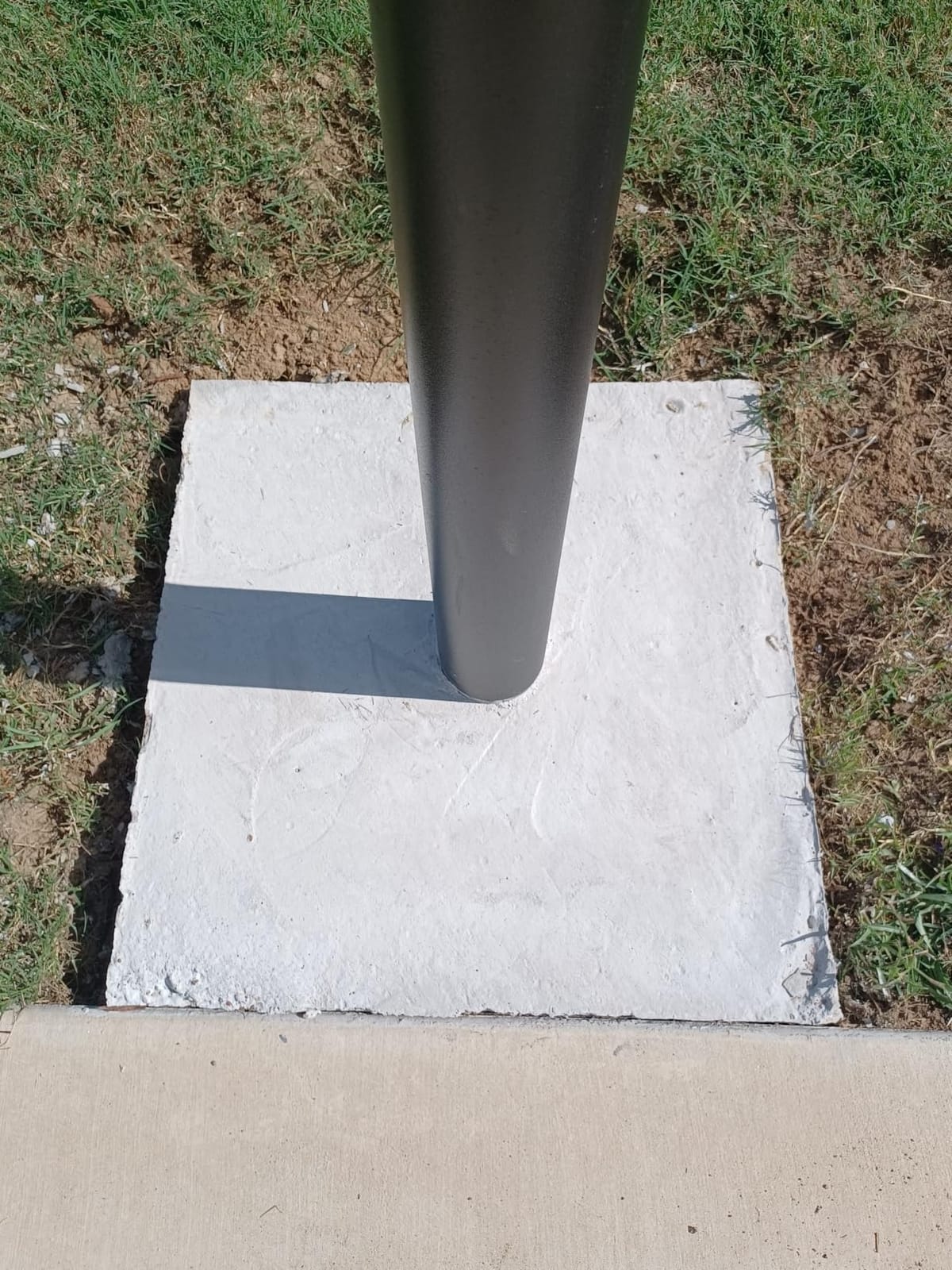
There are two installation architectures, and they decide whether you can move the hoop later. A cement-set post means the pole is buried and surrounded by concrete, which is the most rigid option and the most permanent. A bolt-down anchor means the pole is set into concrete and then bolted through an anchor plate, so it can be unbolted and relocated, which is what the Goalrilla GS54 and FT54 and the Lifetime crank model use.
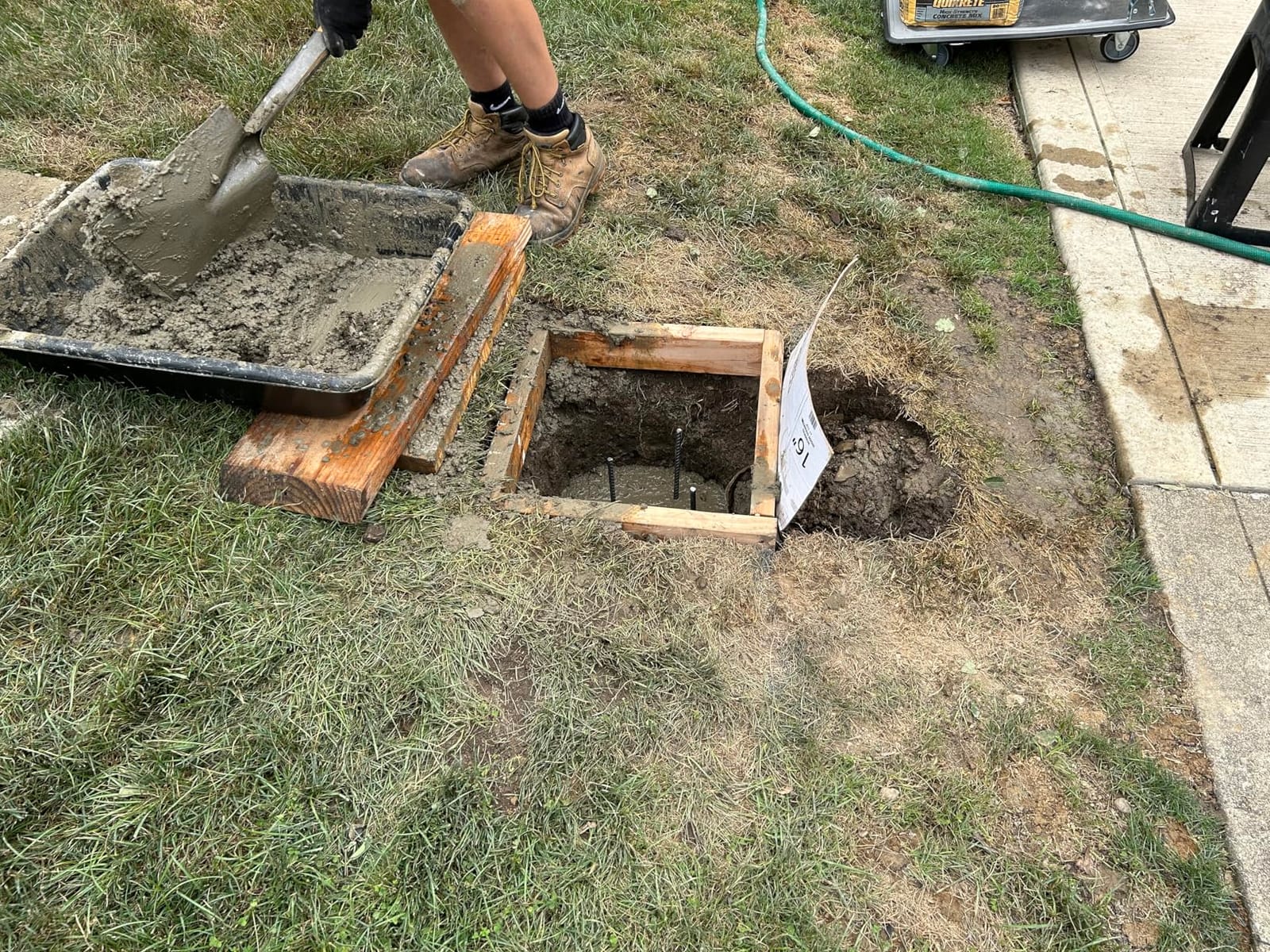
The job itself runs in a fixed order. Mark the spot, run a utility locate, dig the hole to the depth the manual specifies, set the post plumb and brace it, pour the concrete, crown the top of the hole so rain runs off, let it cure, then assemble the backboard and rim and level the whole system.
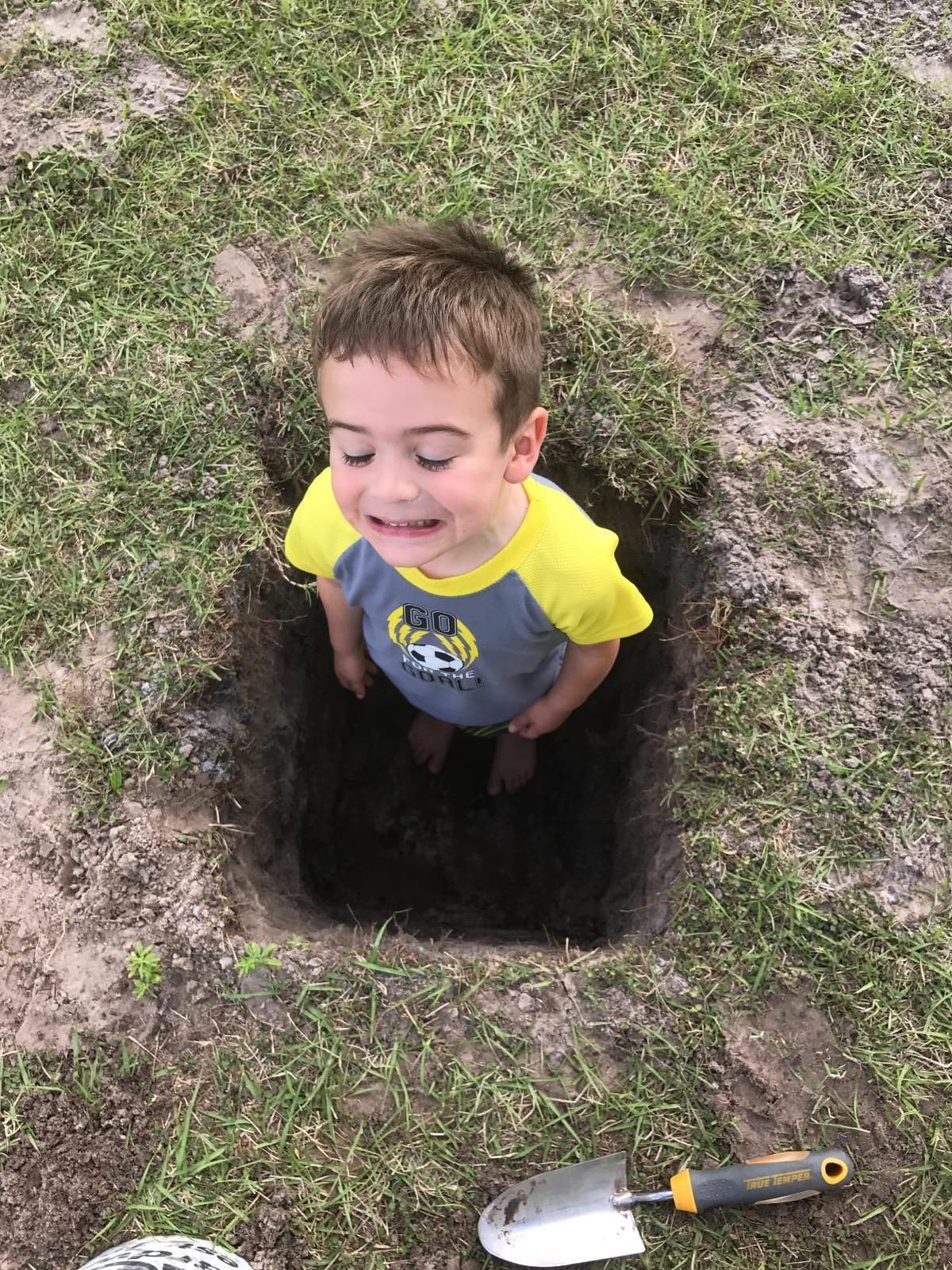
Depth follows the pole rather than the backboard. A typical residential hole is dug roughly 24 to 36 inches deep depending on whether you hit a frost line, with a diameter a few inches wider than the pole itself. The Lifetime crank model is the only one here that states its figure outright: 1040 pounds of concrete and a 72 hour cure, which works out to 13 bags of 80 pound mix for a single post.
Two installation tips save real time. Buy more concrete than the manual states, because underfilling is the single most common owner complaint we found across the reviews, and check the pieces against the parts list before you start, because several brands are noted for incomplete or unclear instructions.
If you would rather not do any of that, a professional install is straightforward to arrange. Owners in the r/kansascity and r/Eau_Claire threads broadly agree that quotes vary widely by region, so get two or three written estimates before you commit.
Who Makes What: Goalrilla, Silverback and the Rest
Yes, Silverback is a Goalrilla division, which is why the two brand names show up so often together and why the systems share design language. Silverback covers the mid and upper mid range, and Goalrilla covers the premium tier including the limited lifetime warranty models.
Lifetime sits in the accessible mid range, and its systems are the ones most often chosen for polycarbonate boards and one-handed height adjustment. Goaliath, Goalsetter and First Team occupy similar ground, and the smaller brands such as Ironclad, Dominator, Yohood, G GX9 and IGL are where you find specific features like a 48 inch board, a rust proof aluminum post or a detachable base.
None of these relationships is a secret and none of them should change your decision. Judge the system on backboard material, pole design, adjustment range and warranty, then buy the one that fits your yard.
Warranty, Longevity and the Three Complaints Owners Have
Warranty length on these systems ranges from 30 days to a limited lifetime, and that spread is the most useful single signal of how each brand builds. The Silverback NXT54 carries 30 days, the Yohood, G GX9 and IGL systems carry one year, the Silverback flagship, the Lifetime systems and the Goalrilla GS54 carry 5 years, and the Goalrilla FT54 and Dominator 72 carry limited lifetime coverage.
Owners treat a limited lifetime warranty as a proxy for build quality even though they rarely claim it, and the reason is that a fixed five year term on a 350 pound unit reads as a soft spot. Check whether the brand requires registration and whether commercial or multi-family use is excluded, because several fine print terms target exactly the buyers least likely to read them.
The three complaints that recur across owner feedback are consistent enough to plan around. The first is wobble and pole flex once the rim is cranked to 10 feet, which is a function of pole gauge and piece count more than brand. The second is concrete volume, with nearly every review noting that the manual understates how much the hole needs. The third is assembly instructions, where several brands are called out for shipping paperwork that two adults need a full day to work through.
Rust at the ground line is a fourth issue that shows up on coated steel in wet climates, and it is the reason the IGL stainless pole design and the Dominator aluminum build are worth a look if you live somewhere with salt air or a lot of rain. A seasonal check of the coating at the base, a net swap when the weave breaks down, and a wipe-down of the board will keep a good system playable for years.
Frequently Asked Questions
Are in-ground basketball hoops worth it?
Yes, for most homeowners. An in-ground system holds a true 10 foot rim with no wobble, needs no moving between sessions, and lasts far longer than a wheeled portable base. The trade-off is a permanent install that adds concrete, tools and a weekend of work, so renting households or anyone likely to move within a few years is better served by a portable system.
Should I buy a 54 or 60 inch basketball hoop?
Buy the 54 inch board unless you have a genuinely deep paved runup area. A 60 inch board adds shooting area you can only use from further back, and its extra overhang crowds the edges of a normal driveway. Upgrade a 54 inch board only if you already shoot from beyond 15 feet or if your court area is a full driveway plus patio.
How deep should you put a basketball hoop in the ground?
Dig to the depth your manual specifies and always past your local frost line, which is commonly 24 to 36 inches in cold regions. The hole diameter should be a few inches wider than the pole. Set the post plumb and brace it before pouring, and crown the top of the hole so rain runs off rather than pooling against the pole.
How many bags of concrete do I need for a basketball hoop?
Most residential systems need between eight and thirteen 80 pound bags, depending on hole depth and pole diameter. As a reference point, the Lifetime crank model specifies at least 1040 pounds of concrete with a 72 hour cure. Buy more than the manual states, since underfilling the hole is the most common owner complaint across these systems.
What type of concrete is best for installing a basketball hoop?
Use standard post-setting concrete rather than a high-early-strength mix, and choose a fast-setting formula only if you need the rim playable within a day. The concrete needs no reinforcement, because the load comes through the pole into the soil rather than into a slab. Always check the cure time on the bag against the assembly instructions before bolting on the backboard.
Is Silverback the same as Goalrilla?
Yes. Silverback is a Goalrilla division, which is why the two names appear together so often and why their systems share design language. Silverback covers the mid and upper mid range, while Goalrilla covers the premium tier that includes the limited lifetime warranty models. Judge any system on backboard material, pole design, adjustment range and warranty rather than on the brand label.
The Best In Ground Basketball Hoop for Your Yard
The best in ground basketball hoops for homes in 2026 come down to how much paved space you have and who is shooting. The Silverback Height Adjustable system is the best overall choice, pairing a tempered glass board with a pro-style breakaway rim, a 7.5 to 10 foot steel actuator and 5 year coverage, and it carries more owner feedback than anything else we reviewed.
Pick the Lifetime 71281 if young players dominate and you would rather not manage glass. Pick the Lifetime 1084 or the G GX9 in 48 inch if your runup space is tight. Step up to the Goalrilla FT54 if you want a limited lifetime warranty and the arena look, to the Ironclad Game Changer 60 if your court is genuinely deep, and to the Dominator 72 if you are building a real half court in a coastal or poolside setting.
Whichever one you choose, sort out the HOA, the setback rules, the utility locate and the drainage before the system arrives. That single afternoon of planning is what separates a hoop that still plays straight in a decade from one that leans after the first winter.