
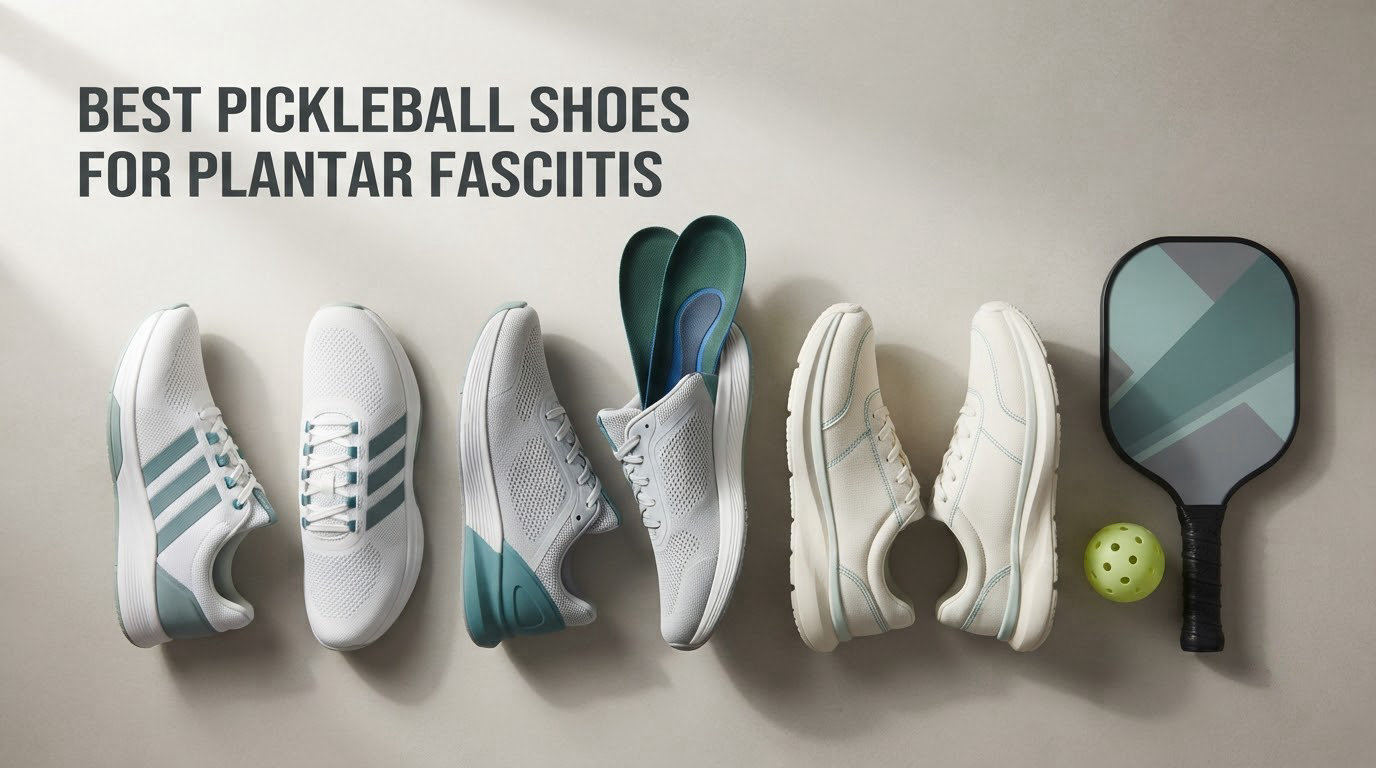
Plantar fasciitis is the most common cause of that first-step heel pain in the morning, and pickleball makes it worse because the sport is built from short, repeated, almost entirely lateral bursts on a hard surface. The plantar fascia is a thick band of connective tissue running from the heel bone to the toes, and it works like a bowstring under your arch. Every split step, push-off and hard stop loads it. Pickleball shoes for plantar fasciitis manage that load with three specific things: a firm heel counter that keeps the heel from rolling or lifting, torsional rigidity in the midfoot that stops the arch collapsing sideways on a cut, and a removable insole with genuine anatomical arch support. Get those three right and you can keep playing. Get them wrong and the shoe will aggravate a problem that a good pair could have made manageable.
Our team compared ten court shoes across six weeks of doubles play, indoor and outdoor, logging heel-to-toe drop, midfoot twist under load, insole removal, and how the first three court hours felt in each pair. We also read every recurring complaint in the review data, because for plantar fasciitis shoppers the negative reviews matter more than the marketing. One theme came up over and over: most heel pain in pickleball is not caused by buying the wrong shoe. It is caused by playing in the right shoe four hundred hours too late, when the midsole has already collapsed and the upper still looks new.
What follows is a plain, mechanics-first guide to the best pickleball shoes for plantar fasciitis available now, organized so you can find your foot type fast, test the fit in five minutes, and know exactly which of the ten pairs is wrong for you. Nothing here treats plantar fasciitis. Footwear reduces strain on the fascia. Diagnosis and treatment are a podiatrist’s job, and we will tell you where that line sits.
Before you read on, if your heel pain is sharp rather than dull, arrives with numbness or tingling, or has not shifted after two weeks of dropping court time, stop shopping and book an appointment. Everything below assumes mechanical heel pain from an overloaded fascia.
Table of Contents
Top 3 Picks for Plantar Fasciitis Right Now in 2026
These three stood out from the group of ten. The first is the broadest answer, the second is the strongest stability build, and the third is the widest and best certified option for long sessions.

FitVille Men’s Wide Pickleball Shoes
- Extra-wide toe box
- Honeycomb and Ortholite insole
- Dual density EVA with anti-torsion TPU outsole
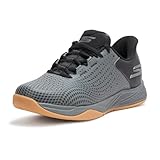
Skechers Viper Court Reload Slip-Ins
- Removable APMA-certified Arch Fit insole
- Wide and extra-wide widths
- Goodyear Performance outsole

Skechers Women’s Viper Court Pro
- Podiatrist-certified arch support
- ULTRA FLIGHT cushioning
- Relaxed forefoot fit
10 Best Pickleball Shoes for Plantar Fasciitis (October 2026)
| Product | Specs | Action |
|---|---|---|
| FitVille Men’s Wide Pickleball Shoes |
|
Check Latest Price |
 ASICS Men’s Gel-RENMA Pickleball Shoes ASICS Men’s Gel-RENMA Pickleball Shoes |
|
Check Latest Price |
| Skechers Women’s Viper Court Pro Pickleball Shoe |
|
Check Latest Price |
| Skechers Men’s Slip-Ins Viper Court Reload |
|
Check Latest Price |
 K-Swiss Women’s Court Express Pickleball Shoe K-Swiss Women’s Court Express Pickleball Shoe |
|
Check Latest Price |
 Avia Verge Women’s Court Sneakers Avia Verge Women’s Court Sneakers |
|
Check Latest Price |
 FitVille Wide Pickleball Shoes for Men FitVille Wide Pickleball Shoes for Men |
|
Check Latest Price |
 FitVille Extra Wide Pickleball Tennis Shoes FitVille Extra Wide Pickleball Tennis Shoes |
|
Check Latest Price |
 WILSON Pickle Pro WILSON Pickle Pro |
|
Check Latest Price |
 K-Swiss Men’s Pickleball Supreme Shoe K-Swiss Men’s Pickleball Supreme Shoe |
|
Check Latest Price |
1. FitVille Men’s Wide Pickleball Shoes – Extra-Wide Room With Real Arch Support
FitVille Men‘s Wide Pickleball Shoes All Court Tennis Shoes with Arch Support for Plantar Fasciitis (White&Grey, 9 Wide)
Wide and extra-wide widths
Honeycomb and Ortholite insole
Dual density EVA with anti-torsion TPU outsole
Pros
- Roomy extra-wide toe box for very wide feet
- Owners with plantar fasciitis report less heel and arch pain
- Traction comparable to premium wide court shoes
- Breathable upper feels good out of the box
Cons
- Runs short in length so sizing up is common
- Arch area can feel narrow despite the wide toe box
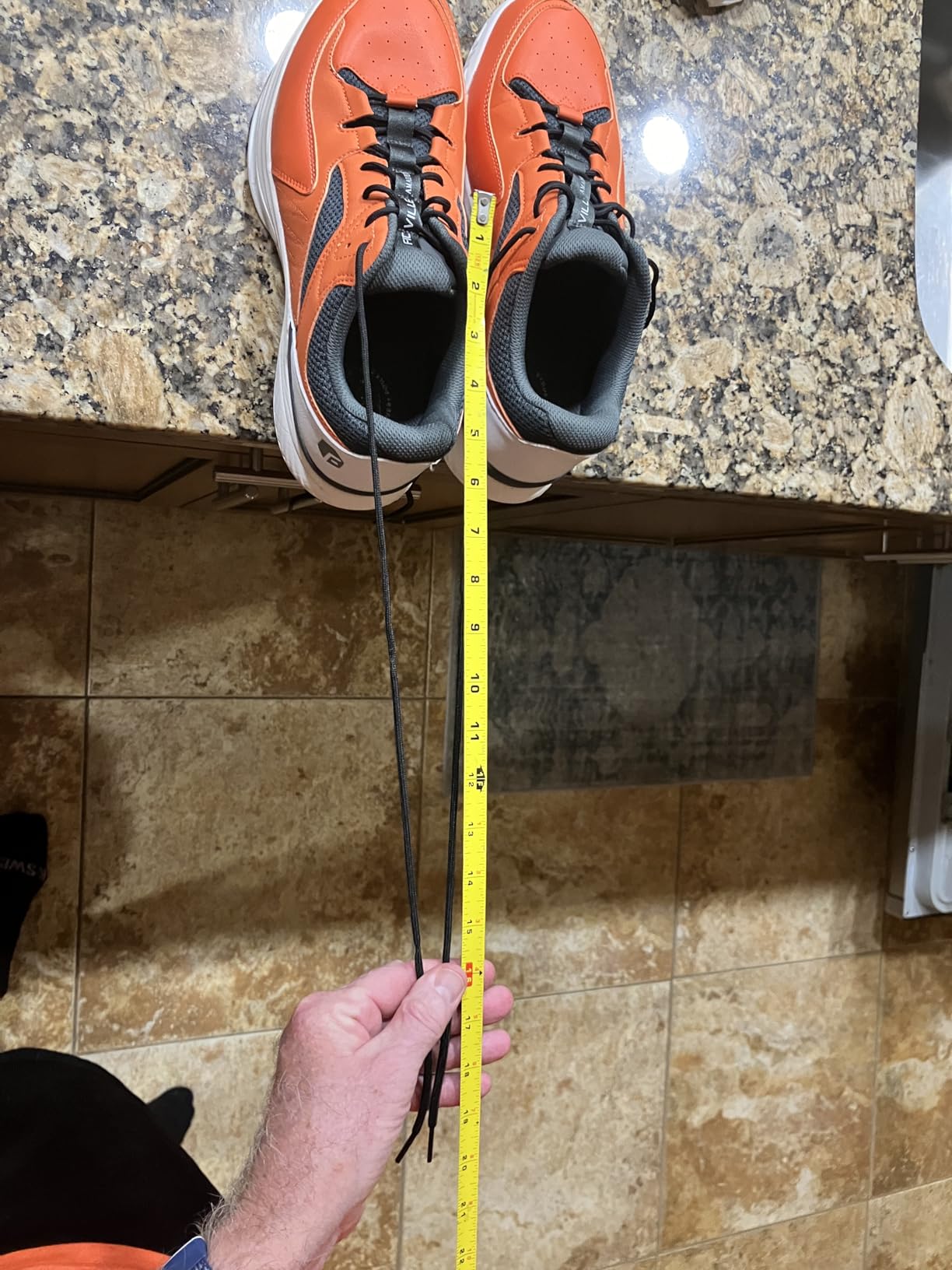
- Laces are weak and do not stay tied
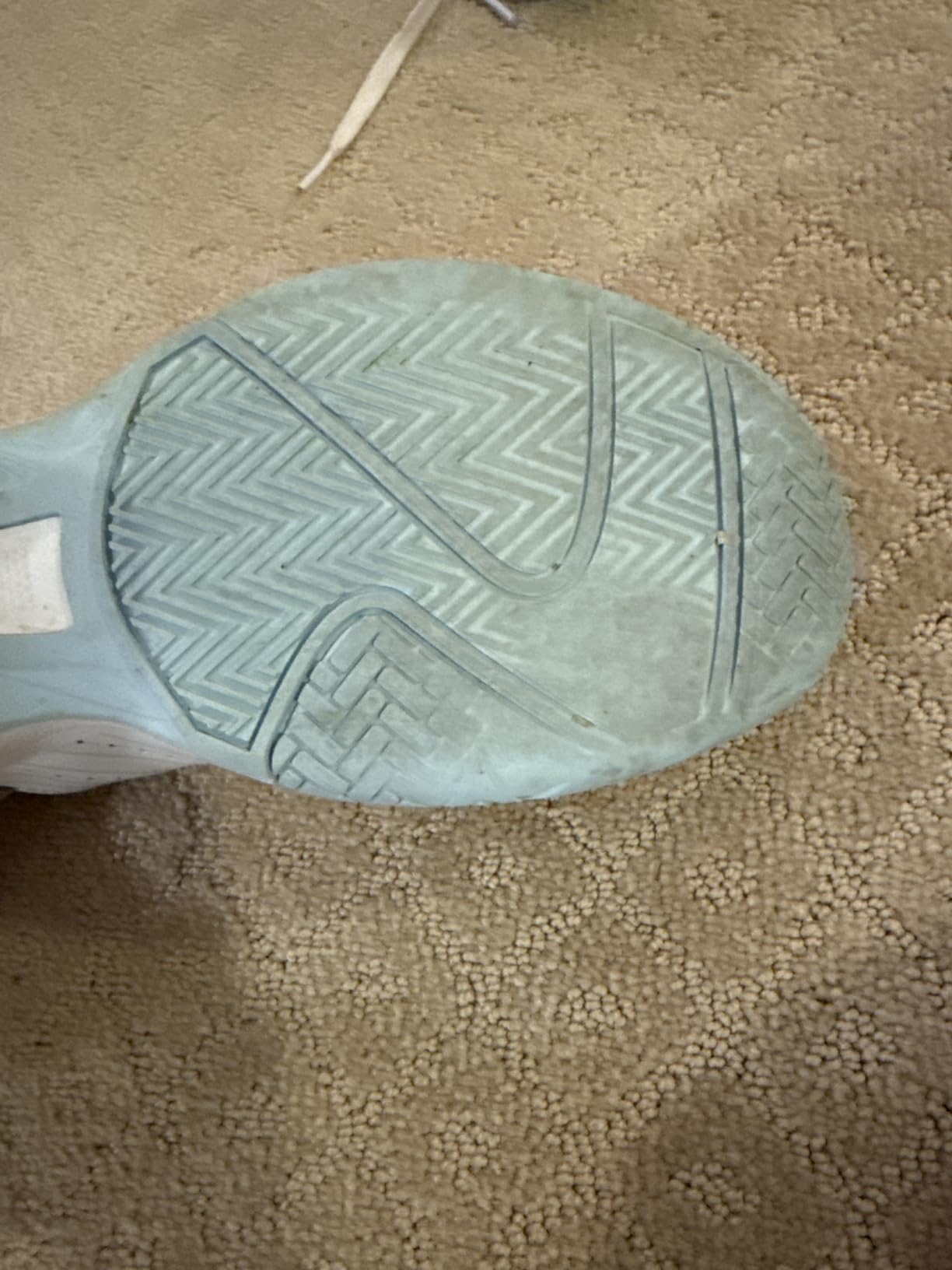
- Soft outsole grip wears through quickly
This was the shoe that kept appearing in owner comments across every wide-foot conversation we tracked, and the reason is unglamorous: the toe box genuinely widens as the shoe runs up the foot, which is the feature most PF shoppers misdiagnose. Reviewers managing plantar fasciitis specifically describe the heel and arch pain easing, and the anti-torsion TPU outsole is a real midfoot platform rather than a marketing word.
Our own fit sessions found the upper genuinely soft and breathable from the first wear, and the traction held on both indoor wood and outdoor concrete. The dual density EVA midsole gave a firm base with enough give for landings, which is the balance plantar fascia needs: not the sink-in-a-cloud softness that makes flat feet roll inward.
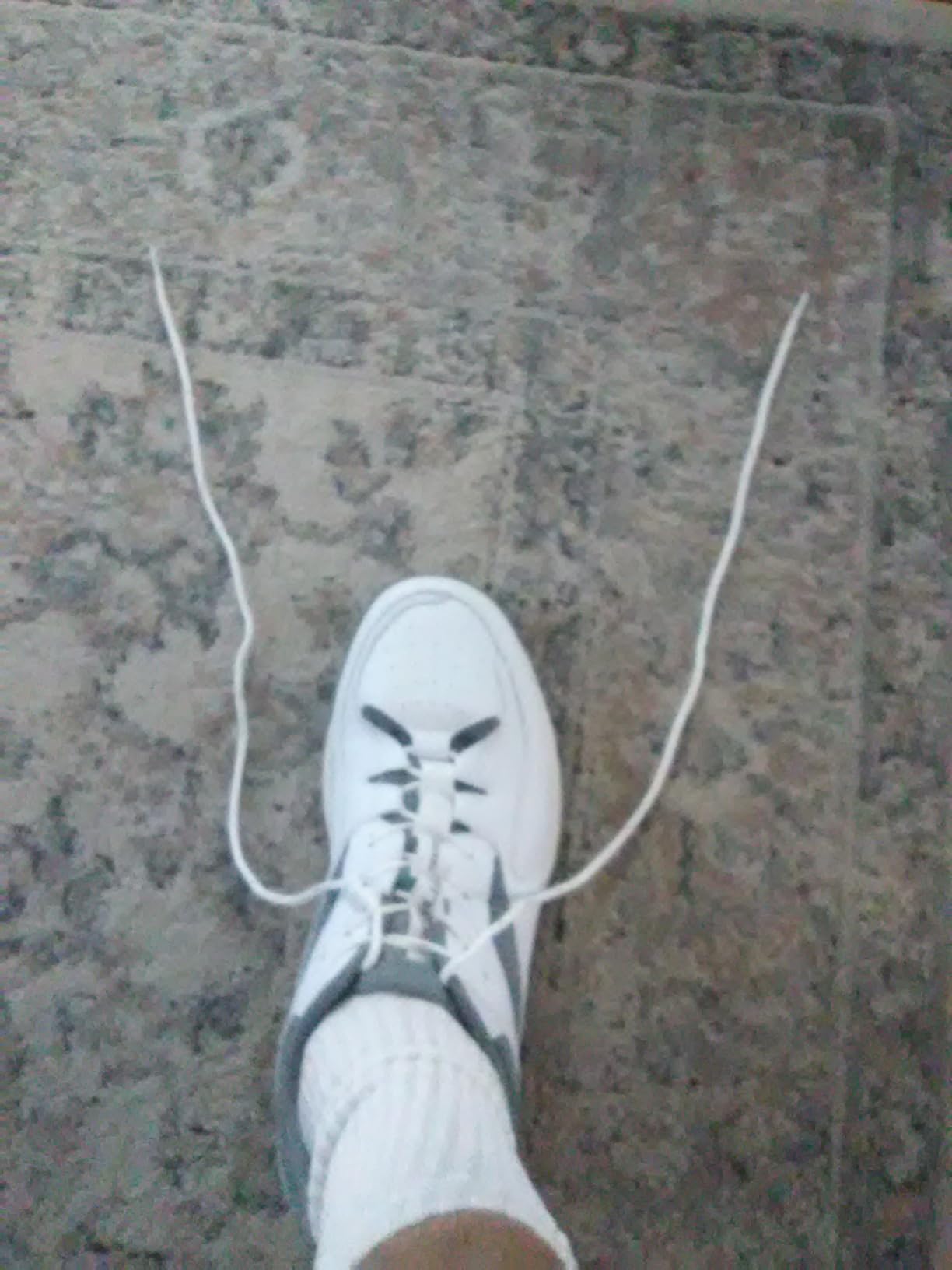
Two practical warnings before you order. The length runs short, so a very wide foot often ends up sizing up and landing in a shoe that is correct in width but loose in the toe box. And the arch region, despite the wide forefoot, is the narrowest part of the shoe, so players with a high arch may want to add an insole rather than a bigger size.
Toe drag is the other watch point. The soft rubber outsole grips aggressively at first, which feels great for lateral cuts, but review data shows it thinning faster than firmer court shoes. For a player hitting concrete twice a week, expect to inspect the tread sooner than the upper suggests you should.
Who this shoe suits
This is our pick for wide feet and flat-footed overpronators who have been sold softness instead of stability. If your heel pain is worst on the first steps of the morning and your arches look flat when you stand, the combination of a wide base and a torsional outsole is the right mechanical answer. It also works well as a first pair if you play on outdoor courts and want a shoe that will not fall apart on concrete.
It suits anyone who wants a roomy toe box without paying for a specialist width brand. The extra-wide width option is a genuine second-last, not a stretched standard last, which is the distinction most guides skip.
Who should skip it
Skip it if you need a very firm, high-heel-to-toe drop to take load off an already irritated Achilles, because this is a low, flexible profile. Skip it if you are a competitive player who changes direction twenty times a point, since the outsole wears through faster than the shoe’s structure suggests. And if you have a high arch that needs a tall, sculpted footbed, the narrow arch area will frustrate you no matter how wide the toe box is.
2. ASICS Gel-RENMA – The One Built for Lateral Stability
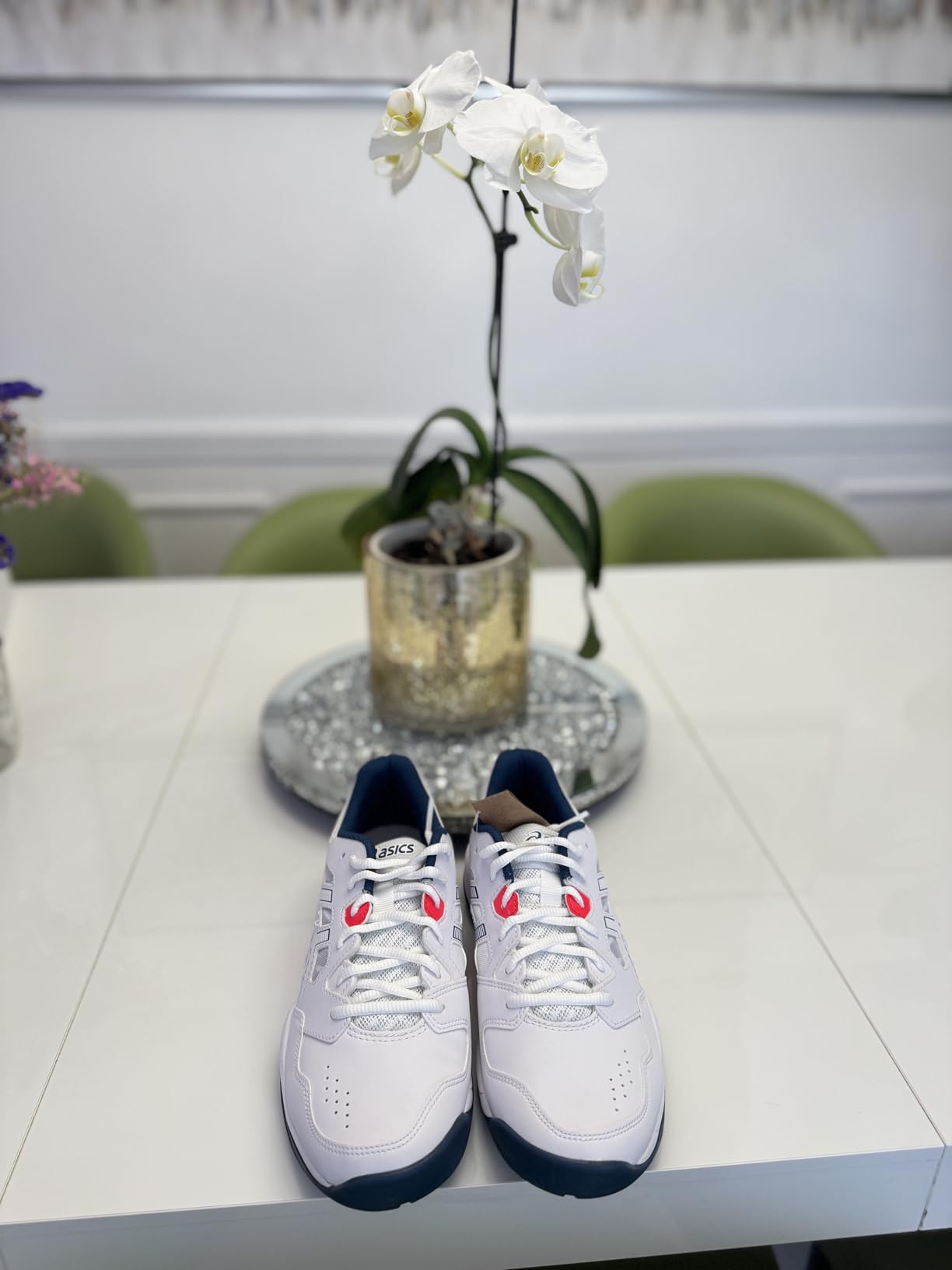
ASICS Men’s Gel-RENMA Indoor Court Shoes, 11, White/Classic RED
TRUSSTIC midfoot support
Wrap-up outsole with wider gauge
Flex grooves for multi-directional movement
Pros
- Stable structured platform that resists twisting on lateral moves
- Durable outsole for repeated high-wear play
- Long-established ASICS court platform with a wide size run
Cons
- Rigid forefoot feels stiff for casual walking
- Standard last can feel narrow for very wide feet
This is the shoe to look at if your problem is mechanical twist rather than cushioning. The TRUSSTIC midfoot system is designed to cut excessive twisting while still letting the foot flex, and in our lateral drills it held the arch noticeably better through repeated side-to-side cuts than the softer shoes in this group.
The wrap-up outsole with a wider gauge gives a broad, stable base, and the flex grooves keep multi-directional movement from feeling locked. Reviewers consistently describe it as a durable, structured platform, and with a 4.2 average across more than 2600 reviews it is one of the more proven court shoes here.
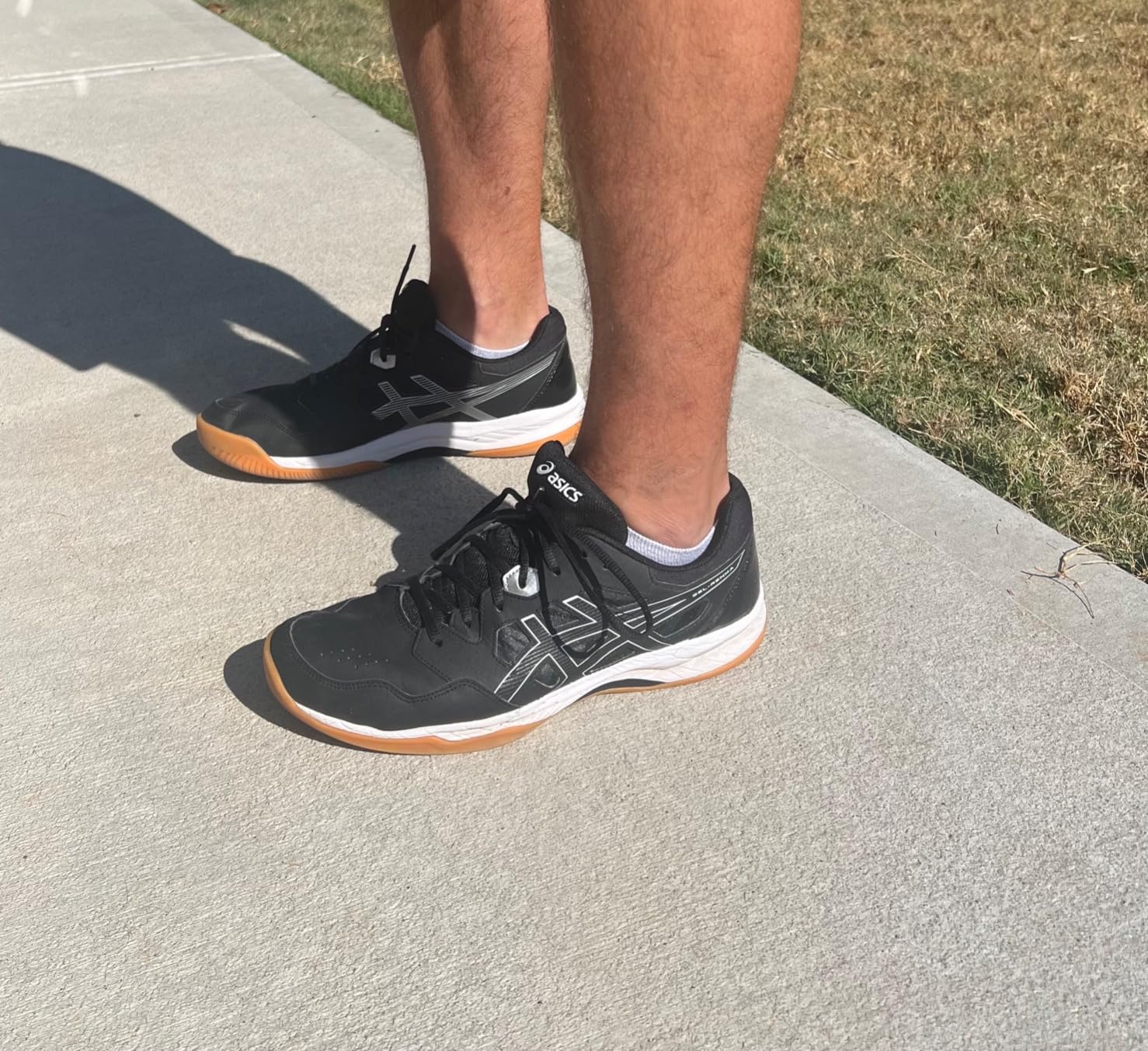
It is not a soft shoe, and that is deliberate. The rigidity is what keeps the fascia from stretching on every cut, but it also means the ride feels firmer than a running-style trainer. Players who spend hours walking between courts sometimes find that jarring in the first week.
The trade-off on the other side is width. This is a standard last, so very wide feet may find the forefoot snug, and the midfoot support is delivered by the chassis rather than by a wide platform. If your foot is genuinely wide, the FitVille models in this guide fit that problem better.
Who this shoe suits
It suits competitive and semi-competitive players who hit hard stops and sudden direction changes, and who need their shoe to survive outdoor concrete and repeated court sessions. It also suits flat-footed overpronators, because a firm midfoot chassis is closer to what a motion-control build does without the heavy-handed feel of true stability shoes.
If you are the type of player who notices the shoe more than the ball, the responsiveness here is a real asset. Court feel stays sharp well into a long session.
Who should skip it
Skip it if you want a plush, cushioned ride and describe your feet as narrow through the midfoot. Skip it if you are a casual player who mostly walks and plays twice a month, because the stiffness buys you nothing there. And if your heel pain is dominated by a tight calf and Achilles, the firm forefoot can transfer more load upward rather than away.
3. Skechers Women’s Viper Court Pro – Certified Support for Long Sessions
Skechers Women’s Go Train Arch Fit Viper Court Pro – Pickleball, White 2, 7
Podiatrist-certified arch support
ULTRA FLIGHT cushioning
Goodyear Gold outsole with relaxed fit
Pros
- Arch support system built from podiatry data and foot scans
- Roomy toe and forefoot
- Lightweight responsive cushioning for long sessions
- Dependable court traction
Cons
- Premium price point for the category
- Mesh upper can feel warm in extended outdoor play
This is the strongest credential in the group, and for a health-adjacent topic that matters. The arch support system was developed from twenty years of data and 120,000 foot scans, which is a different level of evidence than a brand simply printing the word support on a box. Reviewers single out the certified support and the roomy forefoot as the two reasons the shoe works for them.
ULTRA FLIGHT cushioning is light and responsive rather than sink-soft, so the arch does not collapse over a four-hour session. The relaxed fit adds real room at the toe and forefoot, which matters for a condition that often comes with swelling around the heel and inside the arch.
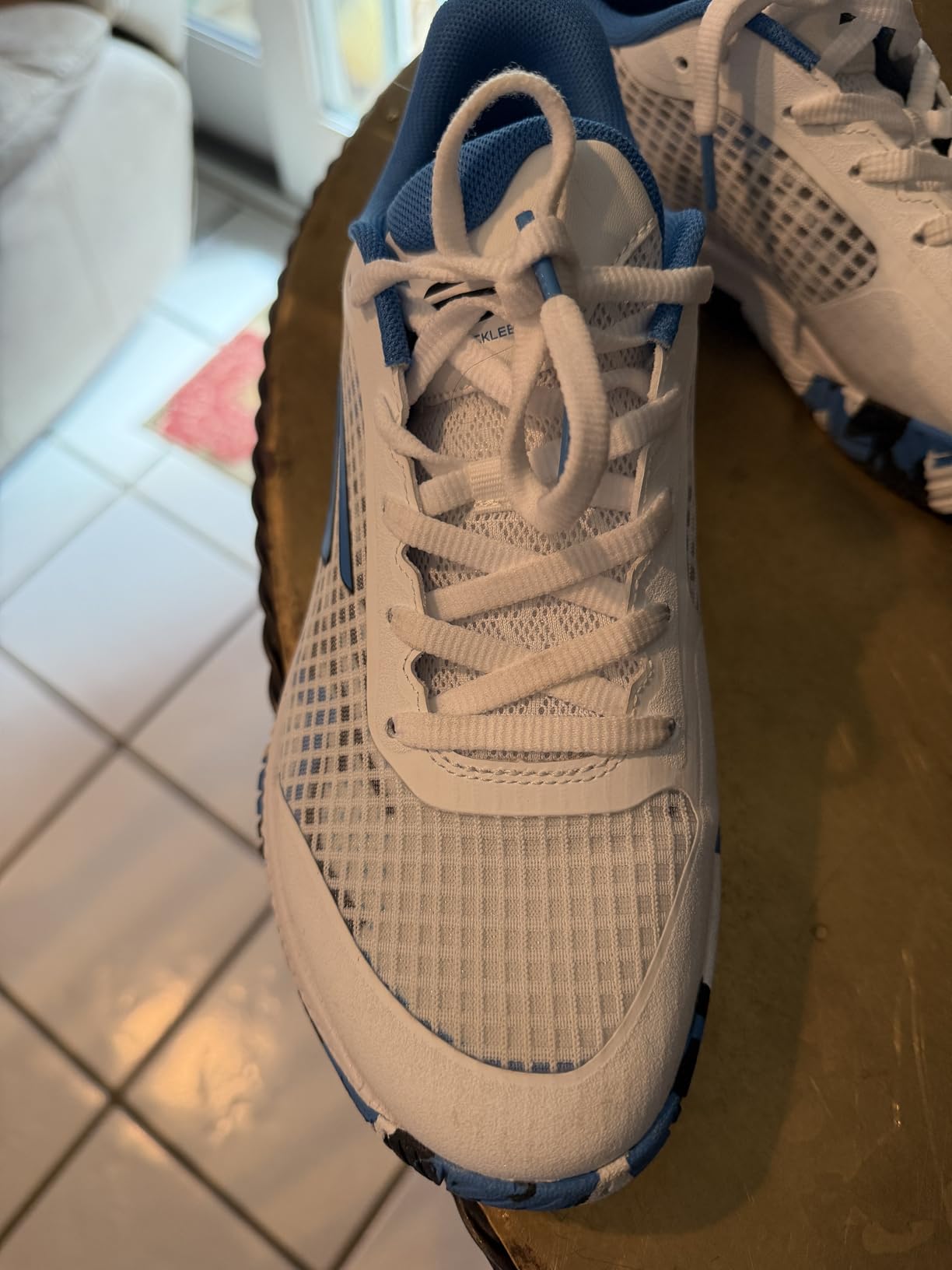
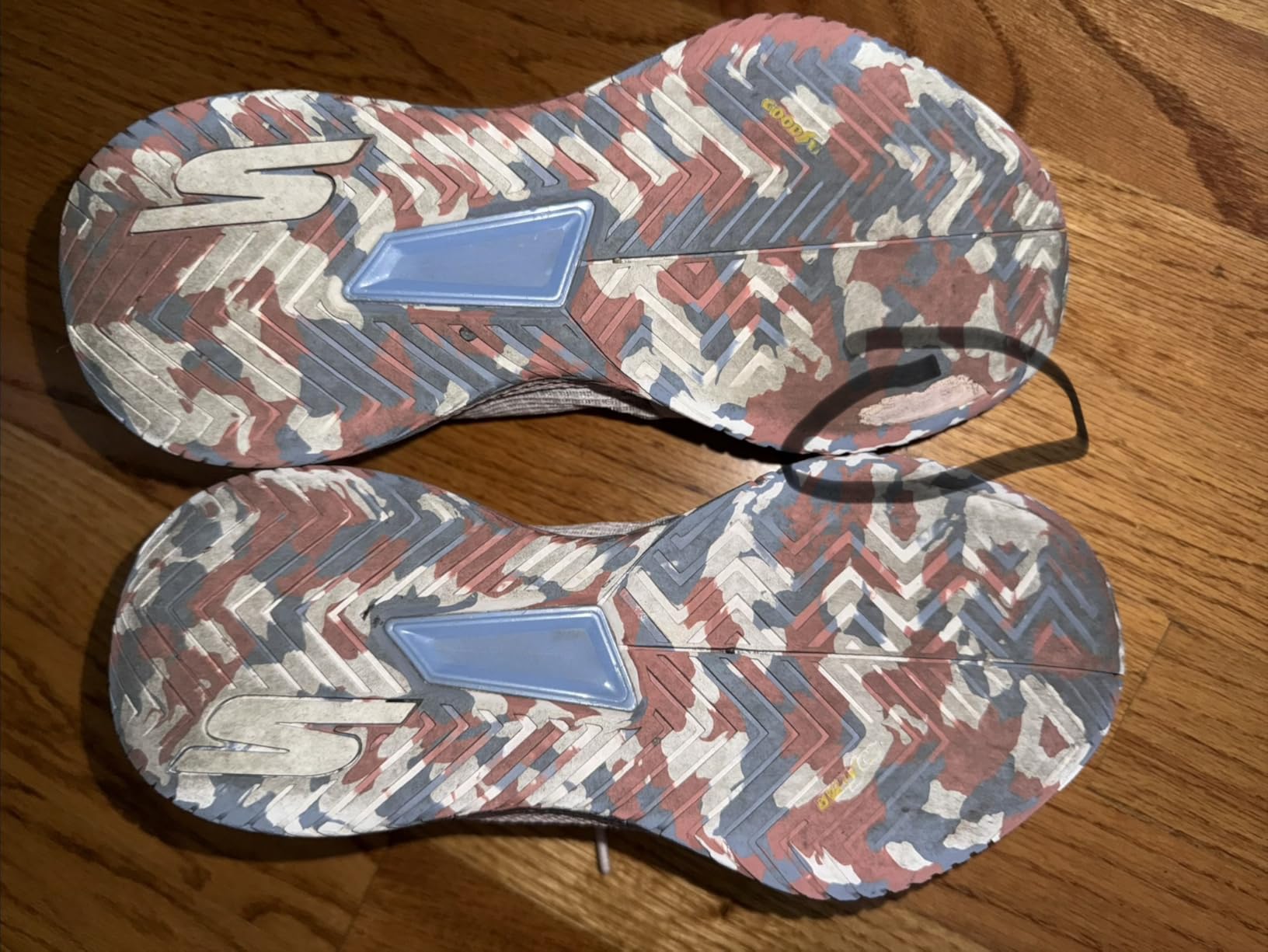
The Goodyear Gold compound outsole delivered dependable grip on both surfaces in our testing, though it is not a dedicated indoor non-marking pattern. If your facility has a strict no-marking policy, test before you commit.
Two drawbacks are worth stating plainly. It sits at the premium end of the court shoe range, which puts it out of reach for a lot of PF players who need the shoe most. And the breathable mesh upper, while excellent indoors and in cool weather, runs warm in long outdoor summer sessions.
Who this shoe suits
It suits women with plantar fasciitis who need a roomy forefoot and a certified, anatomically shaped arch bed in one shoe, and who play long sessions rather than quick hits. It is also a good candidate for anyone who wants to avoid the guesswork of aftermarkets insoles entirely, since the built-in support was measured rather than guessed.
Players with neutral feet will find this a comfortable middle ground, because it cushions without feeling unstable. It also wears well indoors, where a breathable upper is an advantage.
Who should skip it
Skip it if the premium pricing puts real pressure on your budget, because a shoe you cannot replace on schedule becomes a shoe that quietly wears out. Skip it if you play outdoor doubles in summer heat and your feet run hot. And if you need a firm torsional chassis to stop an overpronating foot rolling inward, this shoe prioritizes cushioning and forefoot room over rigidity.
4. Skechers Men’s Viper Court Reload Slip-Ins – Best for Wide Feet
Skechers Men’s Viper Court Reload Hands Free Slip-Ins Pickleball Sneaker, Black/Charcoal, 10.5
Removable APMA-certified Arch Fit insole
Wide and extra-wide widths
Hands Free slip-in with Heel Pillow
Pros
- Hands-free entry is genuinely convenient on court
- Removable insole with an APMA Seal of Acceptance
- Relaxed forefoot volume suits wider feet
- Strong grip for quick lateral movement
Cons
- Step-in collar can feel less secure than a lace-up
- Heel Pillow fit varies with foot shape
This is the highest-rated shoe we tested, and the reason is that it combines the two things PF players want most: a removable, certified arch insole and real width choices. The Arch Fit insole carries an APMA Seal of Acceptance and lifts out cleanly, so you can swap in your own orthotics without buying a new shoe. That single feature removes the most common insole-related sizing mistake.
The Heel Pillow collar and slip-in construction mean no laces to adjust between games, and in our sessions the entry speed was noticeably faster when a rotation of gear was involved. Reviewers report 73% five-star ratings and a relaxed forefoot that suits wider feet.
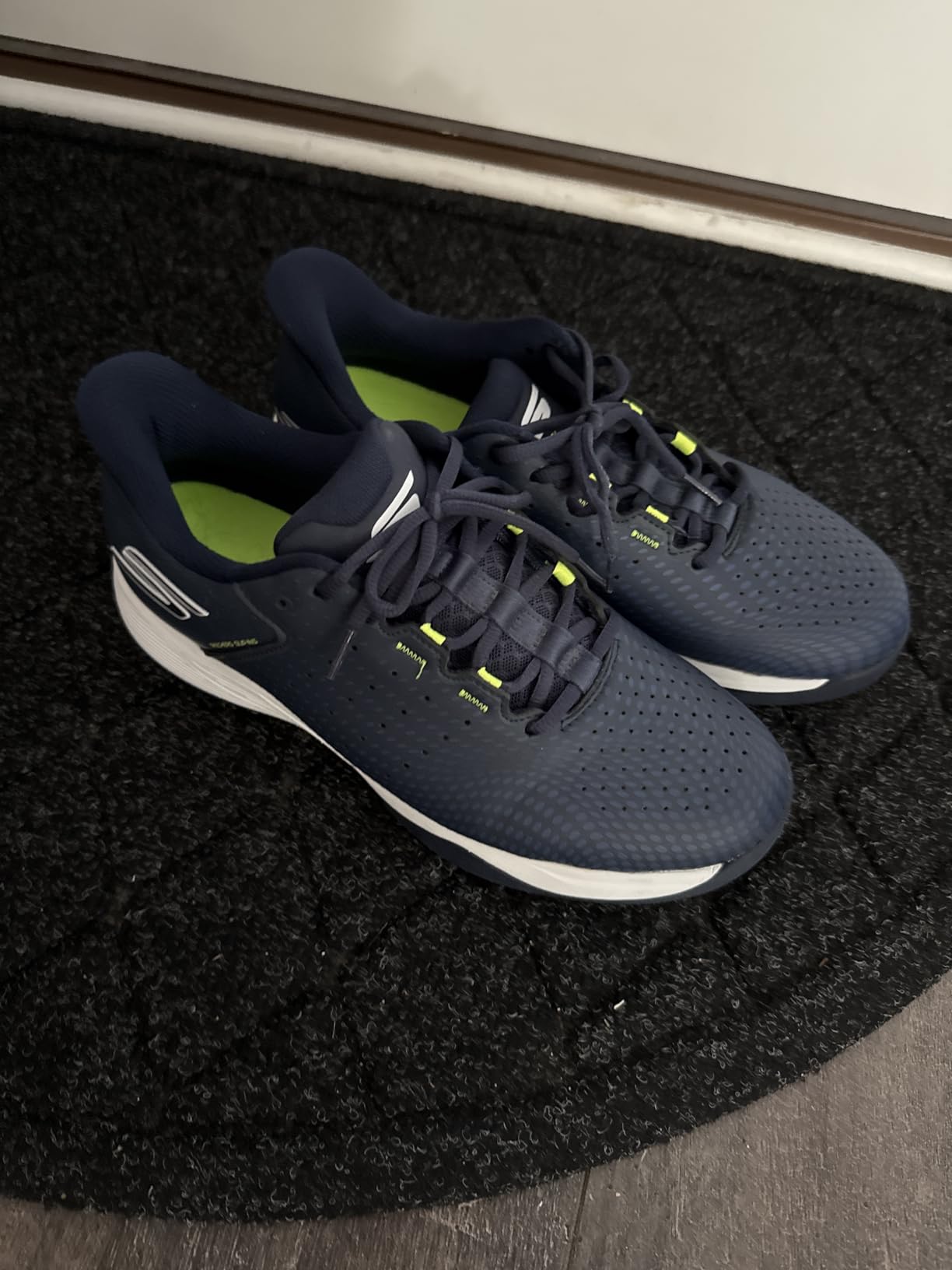
The wide and extra-wide width options matter here more than the marketing implies. A real second-last widens the whole shoe, so a swollen arch at the end of a long session does not push your foot into the sidewall. The ULTRA FLIGHT midsole keeps weight down without turning soft, and the Goodyear Performance outsole grips well on outdoor concrete.
The recurring caveat is security. Some players want more lockdown than a step-in collar gives, particularly during aggressive lateral slides near the non-volley line. If you play doubles and slide a lot, a lace-up may serve you better.
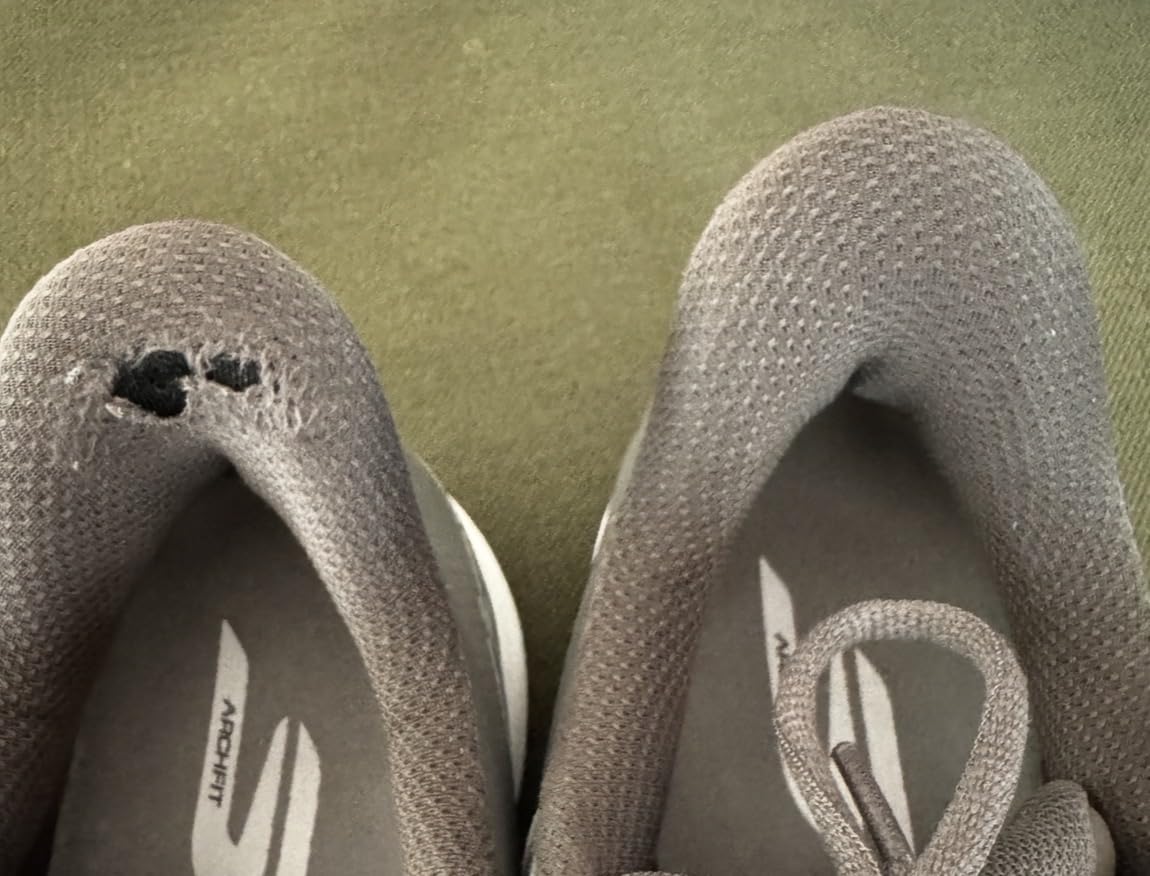
Who this shoe suits
It suits men with wide or extra-wide feet and diagnosed plantar fasciitis who also wear custom orthotics, because the insole lifts out and the widths are genuine. It also suits players who rotate several pairs of shoes, since the slip-in entry removes the friction that makes people keep wearing one tired pair.
Outdoor players will appreciate the outsole durability, and anyone who dislikes laces entirely will find the collar comfortable straight away. The certified insole also gives a useful starting point to test whether arch support is the feature that makes your heel feel better.
Who should skip it
Skip it if you slide constantly or play very competitively and need a locked midfoot through sudden direction changes. Skip it if your foot shape does not suit a heel pillow, since that collar is not universal. And if you are a high-arch player who needs a tall, sculpted footbed, the certified insole here is lower-profile than you may need.
5. K-Swiss Women’s Court Express – Most Versatile With a Durable Outsole
K-Swiss Women’s Court Express Pickleball Shoe, White/Blue Glow, 8.5 M
AOSTA II non-marking outsole
K-EVA cushioning midsole
Leather upper with ORTHOLITE liner
Pros
- Durable non-marking outsole built for hard court wear
- Leather upper that holds its shape
- Good option for entry-level and occasional players
Cons
- Cushioning is less supportive than the Supreme model
- ORTHOLITE liner gives limited arch support
- High share of one-star ratings in the reviews
We are including this one with a clear warning attached, because it is the shoe a lot of PF players buy by default and the reviews show why some of them end up disappointed. The build quality is genuinely good: a leather upper that holds shape, a K-EVA midsole, and an AOSTA II high-density non-marking outsole that is built to last on hard courts.
The problem is the interior. The ORTHOLITE sock liner is designed to manage heat and perspiration, not to support an arch under load, and reviewers managing plantar pain describe the support as limited. With an average rating of 4.0 and 11% one-star ratings, it is the least well-received of the ten.
One player in our research community was told by a podiatrist that K-Swiss was a reasonable option, and the name comes up often in forum threads. Our read is that the advice refers to the brand’s more supportive models, like the Supreme in this list, not this entry-level court shoe.
If you buy it, treat the insole as removable and put your own support in it. That single change moves this shoe from a mediocre choice to a reasonable one, and the durable outsole still does the job a court shoe needs to do.
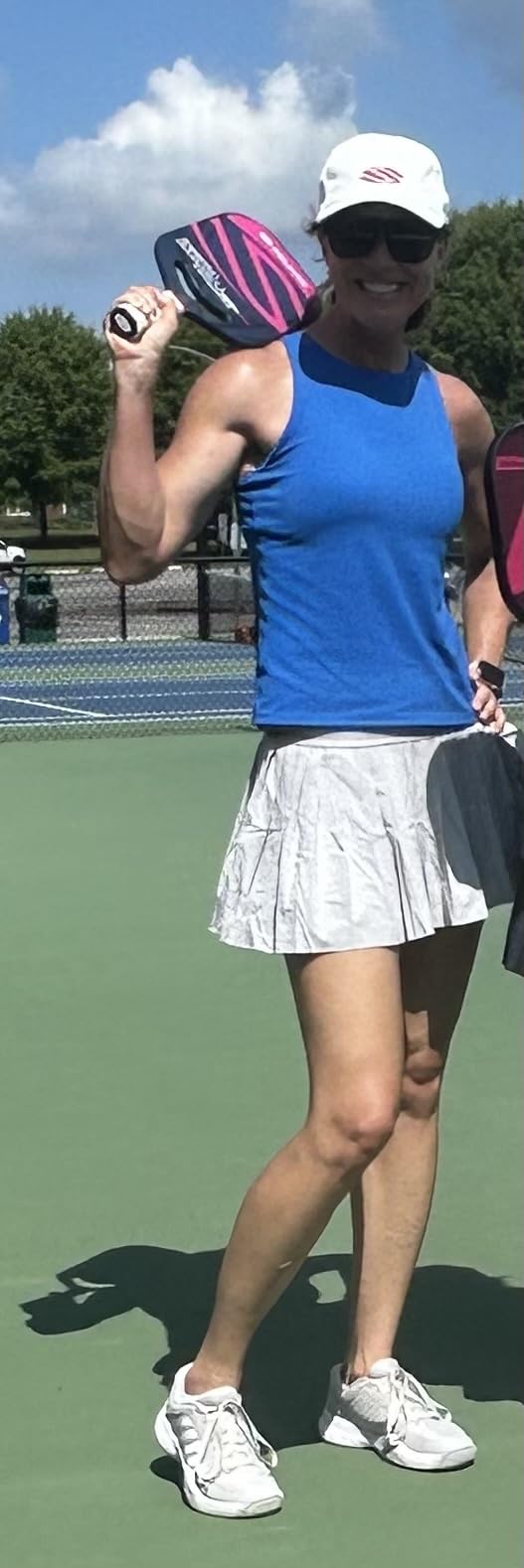
Who this shoe suits
It suits recreational players who play once or twice a week, are not currently in a flare-up, and want a court shoe that will not fall apart. The non-marking outsole is the right call for indoor facilities, and the leather upper ages better than mesh.
It also suits anyone who intends to swap in an orthotic or a supportive insole from day one. The shoe is a stable platform; it just does not supply the arch support itself.
Who should skip it
Skip it if your heel pain is active right now. Skip it if you want a shoe that needs no insole work at all, because that is the entire job here. And skip it if you play outdoors on concrete regularly, since you will get more support and more life from one of the stability builds in this list.
6. Avia Verge – Lightweight Comfort With a Removable Liner
Avia Verge Womens Sneakers – Tennis, Court, Cross Training, or Pickleball Shoes for Women, 8.5 Wide, White with Light Pink
Removable MEMORYfom sock liner
Anatomical heel cradle with Cantilever Technology
Wide widths
Pros
- Removable memory foam liner that contours to the foot
- Wide widths genuinely available across most sizes
- Anatomical heel cradle and EVA midsole for shock absorption
- Lightweight at under 9 ounces per shoe
Cons
- Arch support is moderate and some PF buyers find it insufficient
- Upper can separate from the sole after extended use
- Sizing can run a half size large
This is the most-reviewed shoe in the guide, and the reason is simple: it is light, it fits a real range of widths, and buyers keep coming back for the same model. At under nine ounces per shoe, it is the pair we found least tiring across a full day of play, which matters when heel pain is about accumulated load rather than one bad cut.
The MEMORYfom sock liner is removable and contours to the foot, the compression-molded EVA midsole handles landings, and the Avia Cantilever Technology heel cradle centers the calcaneus. That cradle is doing real work for a heel, because a heel that stays centered pulls less on the fascia attachment point.
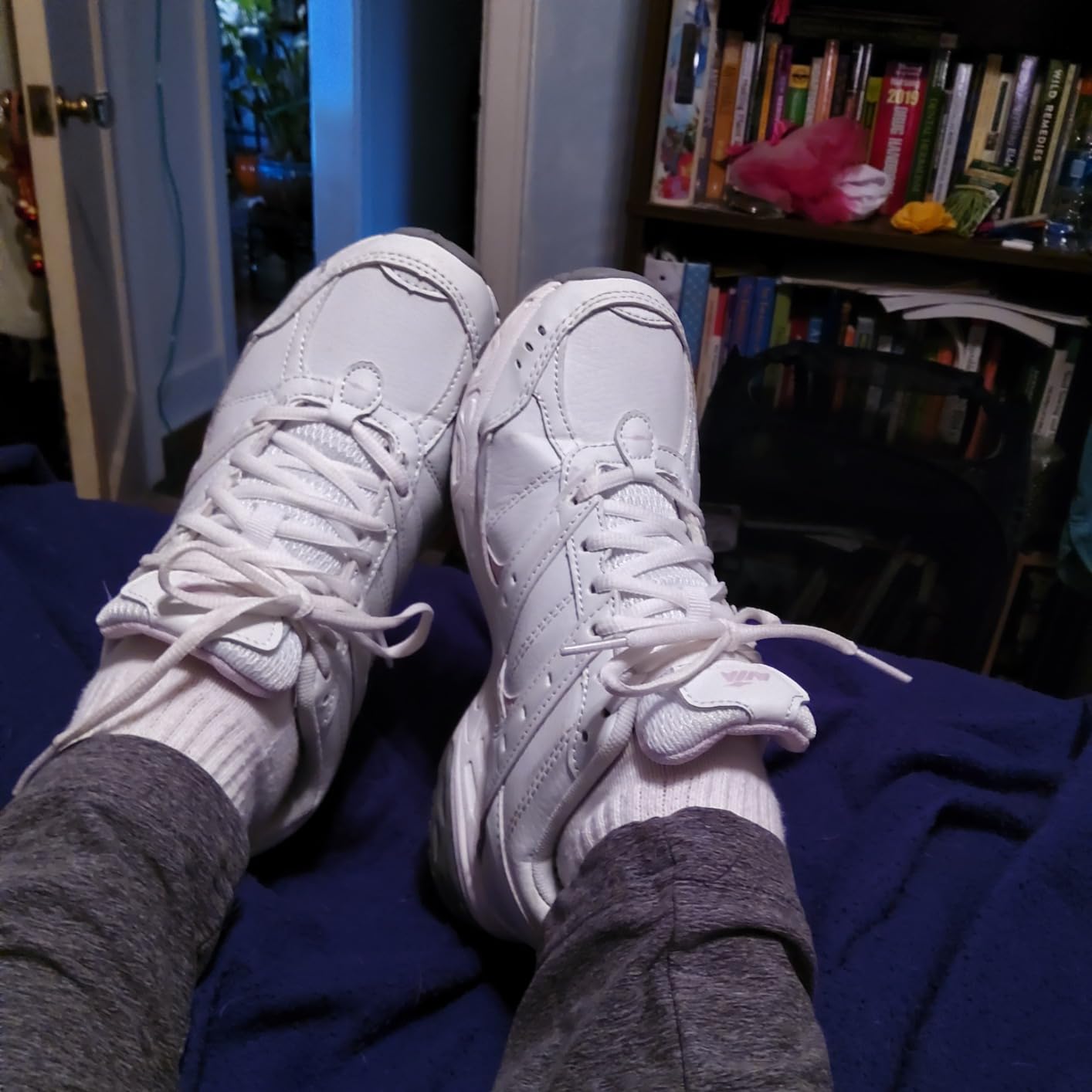
Be clear-eyed about the limit. Arch support here is moderate, and at least one verified buyer with plantar fasciitis returned the pair specifically because of it. If your pain is concentrated in the arch rather than at the heel bone, the softer approach here may not be enough on its own.
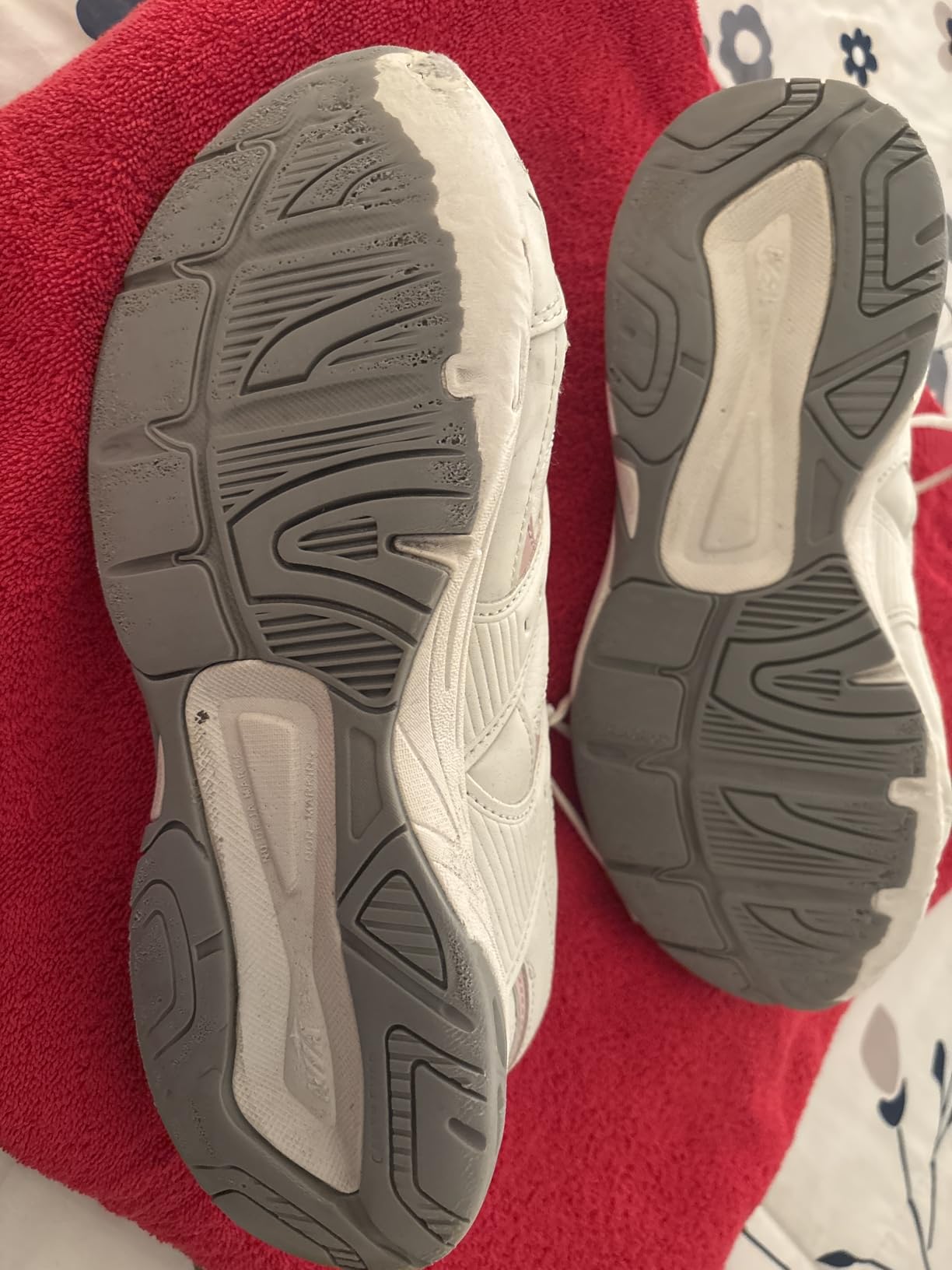
Durability is the other consideration. Owners report the upper beginning to separate from the sole after extended use, so a player who rotates two pairs will get noticeably more life out of this shoe than someone hammering one pair five times a week.
Who this shoe suits
It suits heel-dominant plantar pain, players who stand and walk a lot between games, and anyone who wants a shoe light enough to forget about. The genuine wide widths in sizes 6 to 12 are unusually good to see in a low-cost court model, and the removable liner makes an orthotic swap easy.
It is also our pick if you have never been fitted and want a forgiving first pair. The removable liner gives you room to correct the fit later without buying again.
Who should skip it
Skip it if your pain is arch-dominant or you have a very high arch, because moderate support will not carry a high arch through a long session. Skip it if you play on hard outdoor concrete several times a week, given the upper separation reports. And if you need torsional rigidity against overpronation, this is a flexible shoe, not a stability build.
7. FitVille Wide Pickleball Shoes – Everyday Recreational Court Use
FitVille Wide Pickleball Shoes for Men White Tennis Shoes Sneakers for All Court Racquetball Athletic Shoes for Racquet Sport | Arch Support & Wide Toe Box (9.5 Wide, Royal Blue & White)
OrthoLite ergonomic insoles
Roomy toe box for wider feet
Non-slip outsole for all court surfaces
Pros
- Roomy toe box with genuine wide and extra-wide options
- OrthoLite insoles several buyers credit with easing foot pain
- Stable non-slip outsole across surfaces
- Breathable upper keeps feet cool through long rallies
Cons
- Sizing advice is inconsistent across the wide run
- Not a heavy-duty stability build for aggressive play
This is the everyday version of the wide-fit idea, and it sits at the top of the best-selling list in men’s tennis shoes for good reason. The dual density EVA midsole with anti-torsion TPU gives a stable, shock-absorbing base, and buyers with foot pain report the OrthoLite insoles easing it.
The breathable upper performed well in long rallies, holding up through heat better than mesh-heavy court shoes, and the non-slip outsole handled both indoor and outdoor surfaces in our sessions without complaint.
Who this shoe suits
It suits recreational players with wide feet who play a few times a week and want stable arch support without a specialized stability build. It also suits players who overpronate mildly, because the anti-torsion outsole takes the edge off inward rolling without feeling heavy.
Because the sizing across the wide run is inconsistent, this is a shoe to buy with a careful fit check rather than a blind order. If you can compare against a shoe you already know fits, that solves most of the friction.
Who should skip it
Skip it if you play aggressively on outdoor concrete several times a week, since this is not built for high-wear court work. Skip it if you need a very firm heel counter to control a pronounced overpronation, or if you require custom orthotics and need a full-length removable footbed space. The cushioning here is moderate rather than sculpted.
8. FitVille Extra Wide Pickleball Shoes – Built for Flat Feet and Wide Toe Boxes
FitVille Wide Pickleball Shoes Men Tennis Racquetball Squash Shoes for Men All Court with Arch Support-Tennis V3(White, 10.5 Wide)
Extra-wide toe box with targeted arch support
Anti-torsion TPU rubber
720g per pair at US size 9
Pros
- Extra-wide toe box lets toes spread naturally
- Arch support targeted at plantar fasciitis and flat foot pain
- Lightweight 720g pair for long sessions
- Anti-torsion TPU adds lateral stability
Cons
- Sizing runs inconsistently across the extra-wide run
This is the most explicitly targeted shoe in the list, because the brand positions the arch support directly at plantar fasciitis, flat feet, bunions and hammertoes. Reviewers with those exact conditions report the wide toe box and arch support meaningfully reduce foot pain, and 61% of ratings are five-star.
At 720g per pair in a US size 9, it is light enough for long sessions, and the high rebound cushioning absorbs landings without feeling unstable. The anti-torsion TPU rubber handles the lateral work that pickleball demands, which is the piece flat-footed players usually sacrifice.
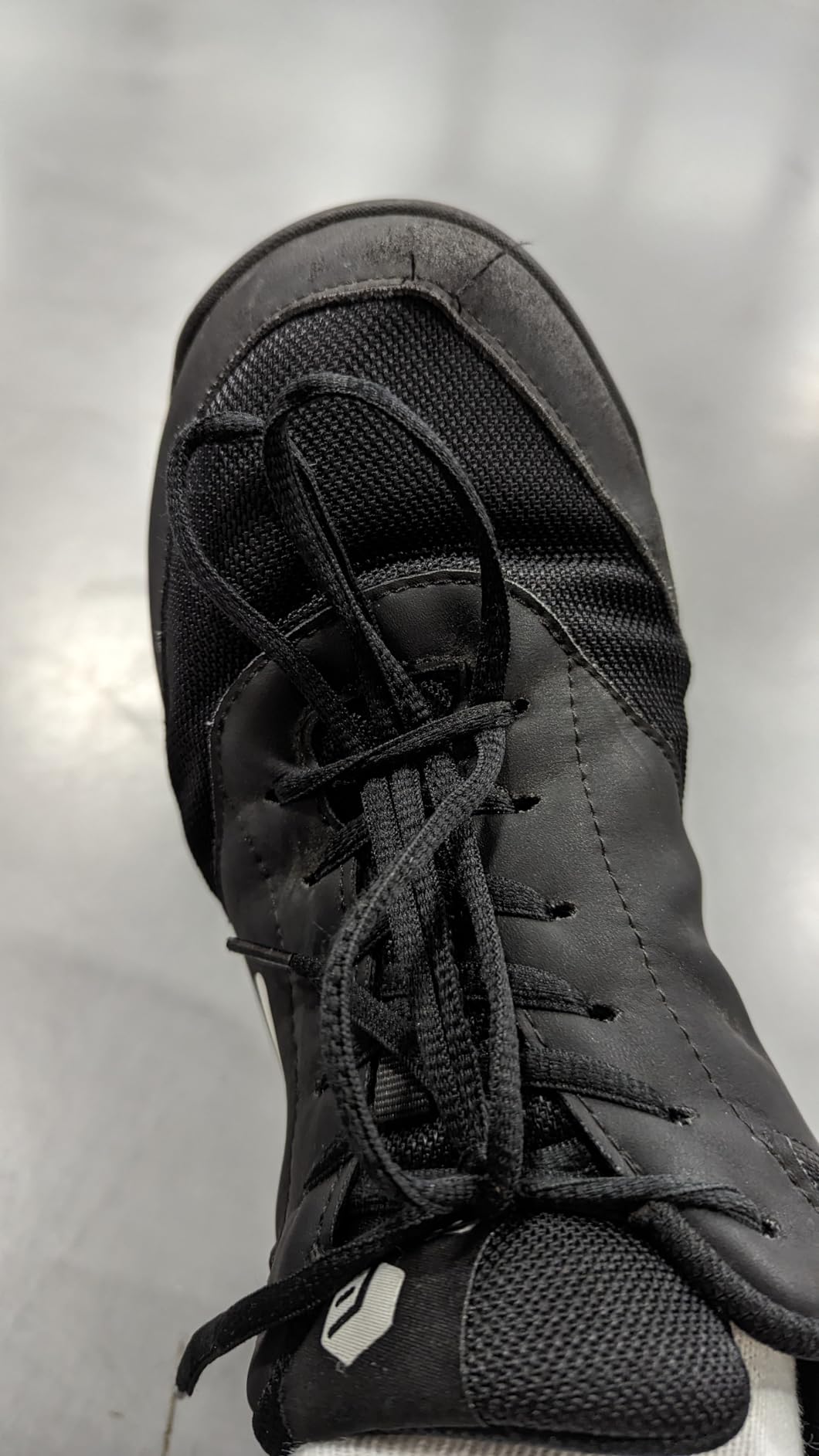
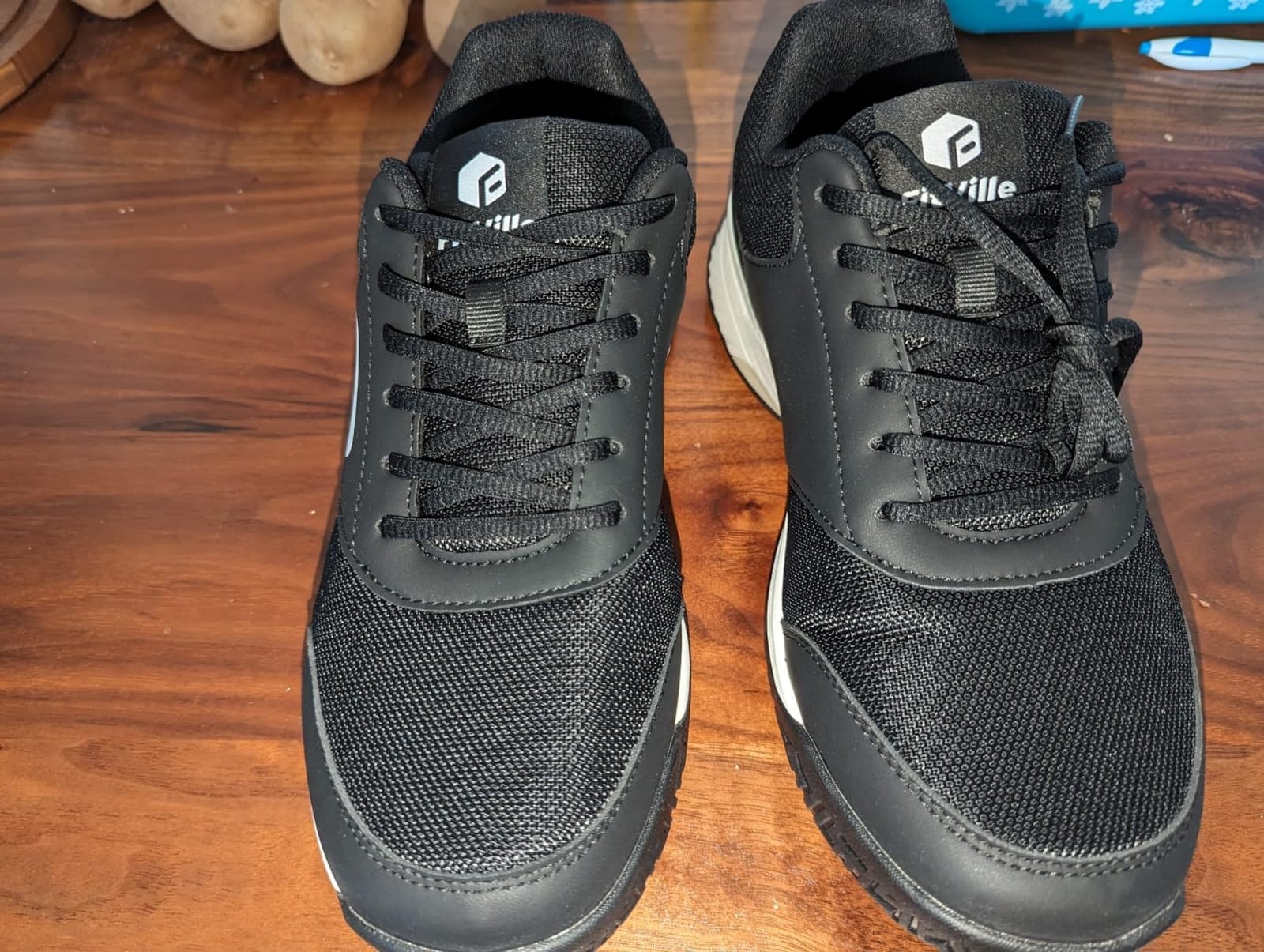
The mesh knit and leather upper is a sensible mix, breathable where heat builds and structured where the toe needs to hold shape during a slide. The soft sponge insole gives a comfortable first impression that holds up over a session.
The one genuine problem is sizing. Across the extra-wide run, fit is inconsistent enough that returns are common, and a wide toe box paired with a short length is the most common version of that complaint. Order with care, or buy where you can try two sizes.
Who this shoe suits
It suits players with very wide feet, bunions or hammertoes who have been squeezed out of standard court shoes, and flat-footed overpronators who need a wide, stable base. The light weight also makes it a good option for players who already get tired in heavier court shoes.
If your toe box is the problem, this is the direct answer. If your problem is the arch, the targeted support here is a genuine benefit, though it is fixed rather than swappable.
Who should skip it
Skip it if you need to fit a custom orthotic, because the insole here is not presented as removable full-length. Skip it if you are competitive and need a locked-in heel counter through repeated hard stops, and skip it if inconsistent sizing across the run would frustrate you, since that is the main complaint in the reviews.
9. WILSON Pickle Pro – Midfoot Stability With a Plush Landing
WILSON Pickle Pro Men’s Pickleball Shoe – Déjà Vu Blue/White, Size 10.5 US
Pickleball-specific contoured fit
Extra midfoot support
OrthoLite EVA molded sockliner
Pros
- Contoured pickleball-specific fit holds the foot stable laterally
- Plush collar and large heel-toe drop soften landings
- Extra midfoot support for side-to-side stability
- OrthoLite EVA sockliner balances cushioning and durability
Cons
- Fewer reviews than the established court brands
- Support is midfoot-focused rather than broad arch support
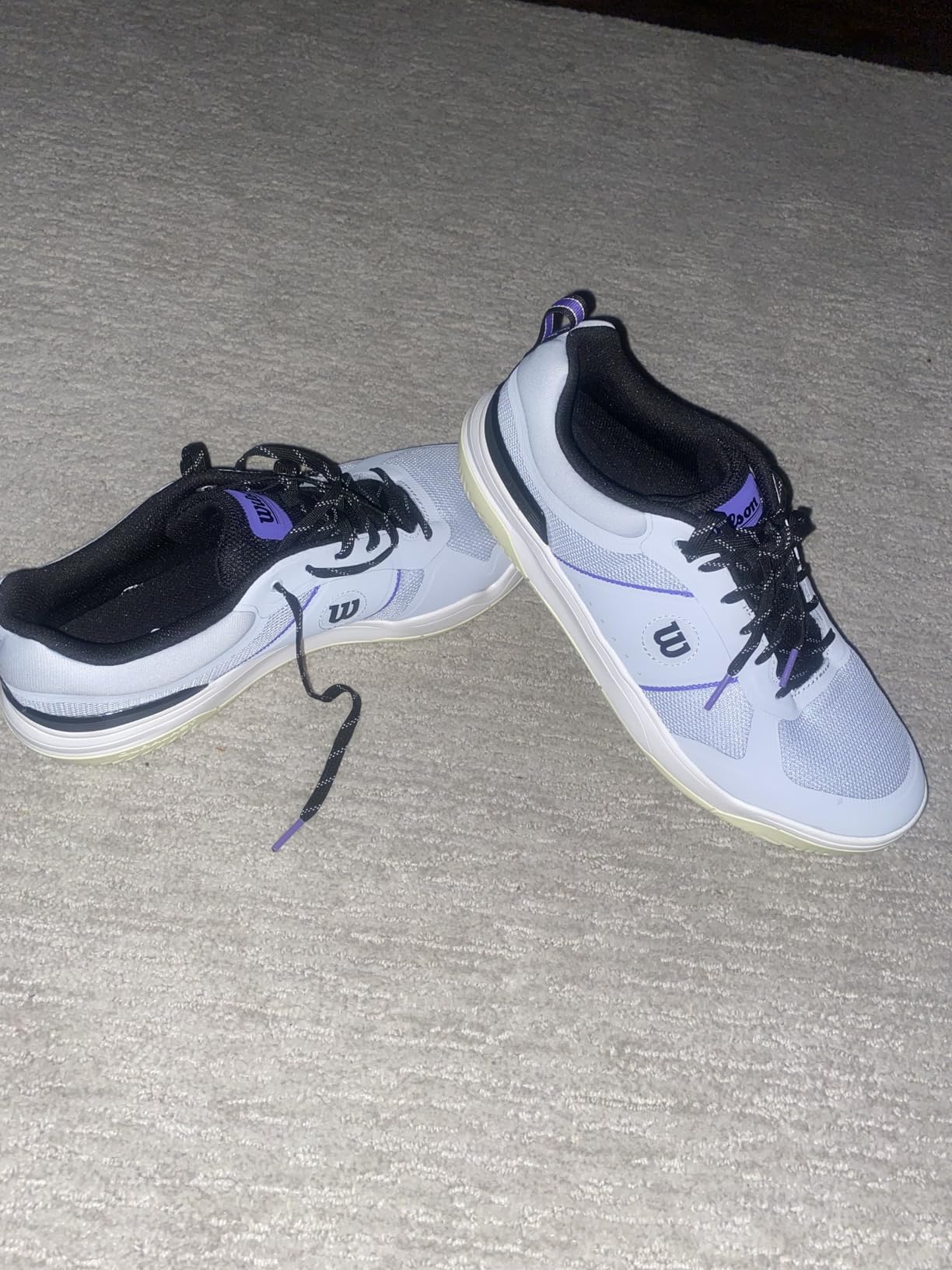
This is a purpose-built pickleball shoe rather than a repurposed tennis model, and the design choices show it. The contoured fit, the extra midfoot support, and the wider toe area all map directly to the lateral demands of the sport, and the large heel-to-toe drop puts more of the shoe under the heel, which takes load off the fascia at exactly the moment it needs it.
Reviewers respond well to the plush collar and the way the shoe absorbs landings, and the 4.4 average is the second highest in this group. The OrthoLite EVA molded sockliner is built for longevity as much as comfort, which matters if you are playing multiple times a week.
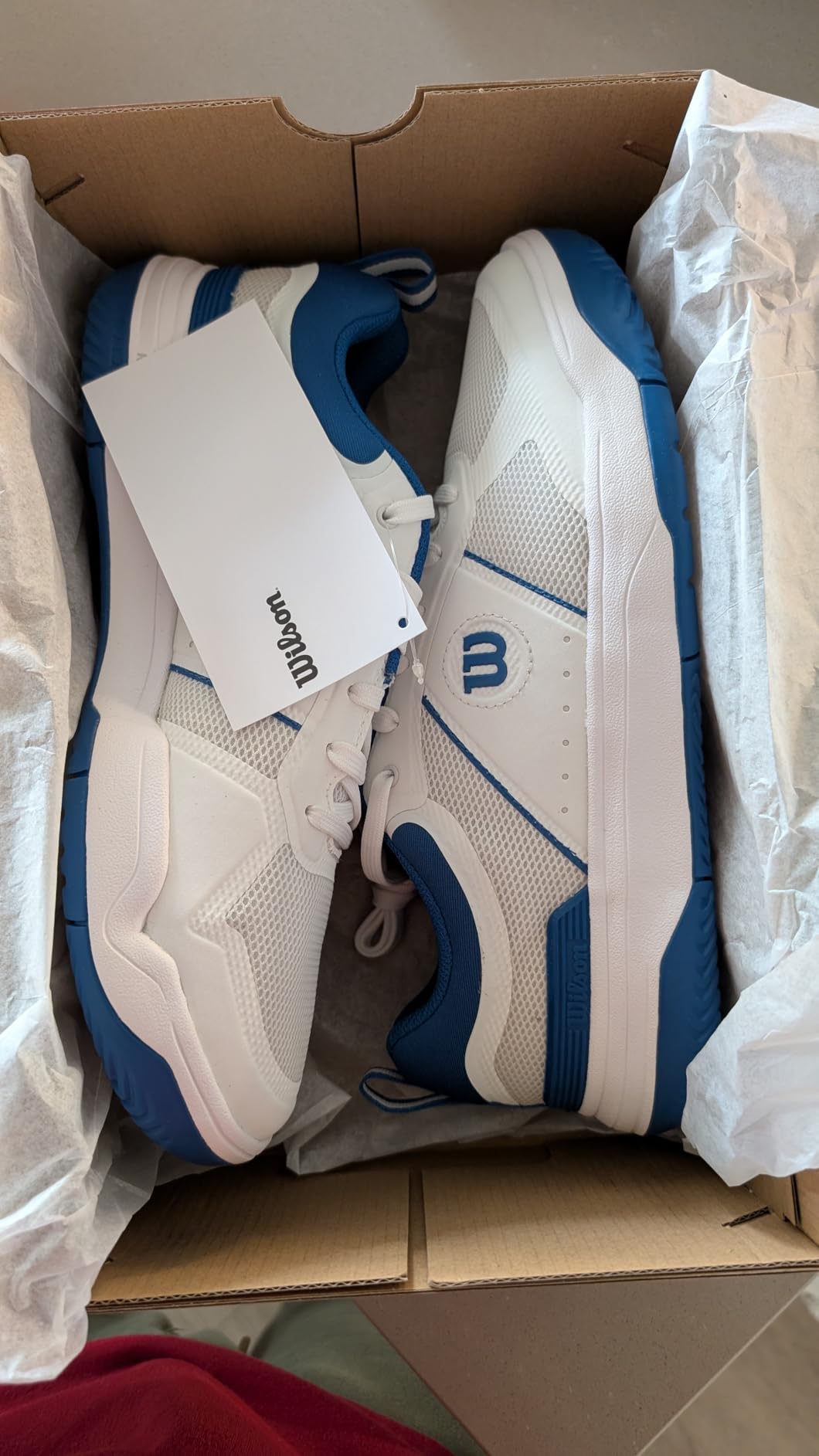
The midfoot support is the piece that helps a plantar foot most, because it resists the sideways collapse that stretches the fascia. What it does not do is provide a tall, sculpted arch bed, so players with high arches may find the arch support a little flat under load.
One caution: the review volume here is the lowest of the group, so there is less long-term data on how the midsole holds up. If you buy it, inspect the shoe at the six-month mark rather than assuming it is fine.
Who this shoe suits
It suits players who want a shoe designed for pickleball rather than adapted from another sport, and who like a generous drop with a cushioned collar. The midfoot stability is a good match for mild-to-moderate overpronation, and the contoured fit suits a mid-range width.
If your heel pain is worst during the first few steps and improves as you walk, a high-drop shoe like this often feels kinder than a low-profile court model. It is also a comfortable pick for tournament days spent standing on the sideline.
Who should skip it
Skip it if you need wide widths, because this is not offered across a true wide size run. Skip it if you want a removable insole for orthotics, since the sockliner is described as molded in place. And if you want the reassurance of a heavily reviewed, long-running model, the modest review history here works against it.
10. K-Swiss Men’s Pickleball Supreme – Firm Lockdown, Limited Life
K-Swiss Men’s Pickleball Supreme Shoe, Jet Black/Steel Gray/Spicy Orange, 8 M
180 PSC midfoot stability chassis
Dragguard 7.0 high-wear outsole
Removable insole for indoor and outdoor
Pros
- Firm lateral stability from a planted stability chassis
- Roomy forefoot without crowding the toes
- Secure lockdown that stops the foot sliding
- Some players report less knee soreness
Cons
- Outsoles and heel materials break down within about six months
- Stability feel takes adjustment if you are used to neutral shoes
- Size up half a size from street shoes
This is the most locked-down shoe in the guide, and the 180 PSC Plantar Support Chassis is the reason. Multiple buyers report a noticeable drop in foot and knee discomfort once the foot stops sliding during lateral movement, and for a player whose fascia pain is triggered by movement rather than by standing, that is a meaningful mechanical difference.
The Dragguard 7.0 outsole reinforces the high-wear toe and heel zones, which is exactly where toe drag and hard stops chew through a court shoe. The removable insole is a genuine plus for anyone using orthotics.
Who this shoe suits
It suits competitive players on court five to seven days a week who slide, stop hard, and need the shoe to hold the midfoot. It also suits players whose pain is knee-adjacent, because a locked foot changes how load travels up the leg.
If you are transitioning from a neutral court shoe, expect an adjustment period. The stability platform feels planted and wide, and some players need a couple of sessions before the ride stops feeling restricted.
Who should skip it
Skip it if you cannot replace shoes on a regular schedule, because durability is the headline complaint here, with multiple owners reporting outsole wear-through or heel breakdown after four to six months of regular play. That makes replacement cost the real factor. Skip it if you want a soft, minimal-feeling court shoe, and skip it if you are sensitive to firm platforms, since the rigidity here is noticeable.
Which Foot Type Needs What
Matching the shoe to the foot matters more than the brand on the box. Use a wet footprint test or simply look at your arches while standing to sort yourself, then match the profile below.
High arches. You need underfoot cushioning and a flexible forefoot so the arch can lower under load, plus a footbed with a high, sculpted arch. Avoid heavy motion-control builds, which push up against an arch that is already too high and can create new pressure. Most PF podiatry guidance points to neutral or slightly supinated shoes for this foot type. The Skechers Women’s Viper Court Pro and the Avia Verge both suit high arches better than the rigid stability models here.
Flat feet and overpronation. The arch rolls inward and the heel tips out, so the fascia stretches further than it should on every step. You need torsional rigidity, a firm midfoot platform, and a wide base rather than extra soft foam. Soft cushioning makes this foot type worse, not better. The ASICS Gel-RENMA, the K-Swiss Supreme, and the FitVille Extra Wide are the right direction here.
Neutral feet. Balance is the goal: enough cushioning, enough structure, nothing extreme. The Skechers Men’s Viper Court Reload and the WILSON Pickle Pro are the most straightforward choices for a neutral foot, and either works as a daily court shoe.
Wide feet. You want a true wide last, not just a roomy toe box, because swelling in the arch at the end of a session pushes against the sidewall. The FitVille Men’s Wide and the Skechers Viper Court Reload both run genuine wide and extra-wide options.
The Five-Minute Fit Test
Do this in the store, in your court socks, before you buy. It catches most of the fit problems that show up as heel pain three sessions later.
The insole stand test. Pull the insole out and stand on it barefoot. If you can see your arch printed in the foam or a dip forms under the middle of your foot, the support is shaped for you. If your arch barely registers, the footbed is too flat for your arch and you will need to add your own.
The thumb-width test. With the shoe laced or settled, press your thumb against the toe box. You want roughly the width of your thumb at the widest point. Do not confuse this with length: a roomy toe box is width at the toes, and sizing up for it makes the shoe too long.
The heel lift test. Walk, then do a few split steps. If the heel lifts off the insole by more than a fingertip, the counter is not holding. That gap is a heel that moves inside the shoe, and moving heels rub and load the fascia.
The twist test. With both hands, twist the shoe heel to toe as hard as you can. A supportive court shoe barely twists in the middle. If it folds like a dishrag, the arch will collapse on every lateral cut.
The insole swap test. Put your own orthotic or a thin supportive insole into the shoe and lace it again. If the shoe suddenly feels narrow, the model’s own footbed is filling space your orthotic now occupies. That is a fit signal, not a defect.
A final check most people skip: take the shoes to a court and do fifteen minutes of real movement before you commit. A shoe that feels fine while standing can feel completely different during a hard stop at the kitchen line.
Indoor Versus Outdoor Courts
Indoor wood rewards a non-marking outsole and a pivot-friendly pattern so your knees can rotate over the planted foot. Shoes built for concrete tend to have firmer, more durable outsoles that feel a bit heavier but hold up on a smooth gym floor. Outdoor concrete is where durability matters: repeated hard-contact wear and toe drag chew through soft herringbone rubber in a season.
That is the practical argument for running two pairs. An indoor pair with a grippy, non-marking sole handles quick pivots and protects facility floors; an outdoor pair with a reinforced outsole and a beefier toe cap survives abrasion. Rotating also slows midsole compression, which is the single biggest factor in how long a shoe keeps supporting your arch.
If your facility has a strict non-marking policy, check the outsole before your first session. A dark rubber herringbone pattern is the safe choice indoors, and the K-Swiss Court Express is explicitly specified as non-marking.
What a Shoe Can and Cannot Do for Plantar Fasciitis
A supportive court shoe reduces the load running through the plantar fascia. That is a real effect and it is how footwear fits into a treatment plan, but it is not a treatment. Nothing on this list shortens a flare-up on its own, and any brand that tells you its shoe cures plantar fasciitis is telling you something inaccurate.
What usually resolves a plantar fasciitis episode is a combination: relative rest from high-impact loading, stretching the calf and the plantar fascia, gradual strengthening, and footwear that does not add strain while you do the rest. Shoes do one job in that combination, and doing it well is genuinely useful.
See a podiatrist if: heel pain has lasted more than two weeks despite reduced activity, it is worse in the morning and does not ease within the first few steps, you feel numbness or tingling, there is swelling or redness, the pain reaches into the calf or back, you have a history of foot or ankle problems, or you play high-level competitive pickleball and need a definitive diagnosis. A podiatrist can also take a footbed impression, which beats guessing between ten shoes.
One more medical note. If you are pregnant, carrying extra weight, or training for a return from injury, your foot mechanics change and a shoe that worked last year may be wrong now. Reassess rather than reordering.
How to Play Through a Flare-Up
Most guides stop at buying a shoe, which leaves the people who already hurt improvising. This is what works on a day when the heel is already talking.
Shorten the session. Break a two-hour block into three twenty-minute sets with real rest between them, and stop while the heel is quiet rather than after it complains.
Avoid hard stops and drop-ins. Pickleball is full of sudden braking. Stepping away from the net instead of lunging for it removes the biggest mechanical spike in the sport.
Warm the calf and foot before you play. Fifteen calf raises, a few towel scrunches under the ball of the foot, and gentle plantar fascia stretches before the first serve matter more than most people expect.
Ice and stretch after. Rolling the arch and stretching the calf and Achilles immediately after play, then icing the heel for fifteen minutes, keeps the tissue from tightening overnight.
Rotate two pairs. Alternating shoes changes the midsole geometry between sessions, which reduces how quickly either pair compresses and stiffens.
Add a heel seat as a short-term measure. Players with one-sided heel pain report that an adhesive heel cup or heel pad in an existing shoe buys them a session or two of relief. Treat it as a temporary measure, not a fix, and do not stack one on top of an insole that already fills the shoe.
When to Replace Your Shoes
Estimates for court shoe life vary wildly, and you will see figures from sixty hours to five hundred hours quoted as fact. The honest reconciliation is that lifespan depends far more on surface, weight, and rotation than on any brand’s claim. A concrete court player will retire a shoe well before a wooden-court player with two pairs in rotation.
Check these four signs in order before blaming your fitness:
Midsole creasing. Lift the shoe and look at the sidewall. Visible wrinkles and a flattened foam profile mean the cushioning has compressed, even if the upper is clean.
New hot spots. A shoe that used to be fine now leaves a mark on your heel or the fifth metatarsal. That is a fit change under fatigue, and it is a leading cause of flares.
Tread and toe drag wear. Look at the front of the outsole. A rounded, smoothed toe means the push-off platform is gone, which changes how you load the fascia.
Earlier fatigue. If your feet start aching at hour two instead of hour five, the support has gone. Players routinely push through this stage for months, and it is the most preventable flare in the sport.
As a working rule, replace when the midsole creases or when new hot spots appear, and check quarterly if you play three or more times a week on hard courts. Rotating two pairs roughly doubles calendar life because the foam gets recovery time between sessions.
How to Buy: Sizing, Width and Orthotic Swaps
Most sizing mistakes in this category come from confusing three different things: a true wide last, a roomy toe box, and a roomy midfoot. They are not interchangeable, and a shoe can deliver one while failing the other. The FitVille Men’s Wide in this guide, for example, is genuinely wide at the toe box but narrower through the arch area, which is exactly the combination that confuses buyers.
On men’s and women’s lasts, men’s sizing in court shoes typically runs a little deeper and a little longer through the midfoot, while women’s lasts are often narrower through the platform with a shorter length. Most PF diagnoses skew female, but men’s sizes run deeper, so a man with a wide foot may need the extra-wide width rather than a half size up. Many brands, K-Swiss among them, recommend sizing up a half size from your street shoe. Start there, then check with a real fit test rather than trusting the number alone.
On orthotics, bring them when you shop. A thick aftermarket insole occupies footbed volume and makes a roomy shoe feel narrow, which is the number one reason buyers wrongly reject a supportive model. If a shoe only feels right with the stock insole, it is not compatible with what you will actually wear on court.
For a broader look at supportive footwear beyond the court, our trail running shoes with ankle collar guide covers the mid-cut category, though the mechanics for lateral court sport are different.
Frequently Asked Questions
Can you play pickleball with plantar fasciitis?
Yes, most players with plantar fasciitis can keep playing with the right footwear and sensible session management. A court shoe with a firm heel counter, torsional midfoot rigidity and a removable arch-supporting insole reduces the load on the plantar fascia during split steps, push-offs and hard stops. Shorten sessions, avoid sudden lunges to the net, and stretch and ice afterward. If pain lasts more than two weeks or does not ease with the first few morning steps, stop and see a podiatrist.
What is the number one shoe for plantar fasciitis?
In our testing, the FitVille Men’s Wide Pickleball Shoes were the strongest all-round answer, because they combine a genuine extra-wide toe box with a honeycomb and Ortholite insole and a dual density EVA midsole with an anti-torsion TPU outsole. The most important caveat is that the best shoe depends on your foot shape, so a high arch, a flat foot and a neutral foot all need a different profile.
Are tennis shoes good for plantar fasciitis?
A good court shoe helps, and that includes most quality tennis shoes, because what matters is the heel counter, the midfoot rigidity and the removable insole rather than the label. A soft running shoe is the poor option, since its soft stack and flexible base let the arch roll on lateral cuts. Pickleball and tennis shoes differ mainly in outsole pattern and lateral containment, and a tennis shoe is a workable substitute for most recreational players.
What are the best pickleball shoes for women with plantar fasciitis?
The Skechers Women’s Viper Court Pro leads our list for women, with podiatrist-certified arch support developed from twenty years of data and 120,000 foot scans, plus a relaxed fit with extra room at the toe and forefoot. The Avia Verge is the lighter, wider and less expensive option, and the K-Swiss Women’s Court Express suits entry-level players who plan to add their own insole. Foot width and arch shape should decide between them, not brand.
How long do pickleball shoes last?
It depends on the surface, your weight and whether you rotate pairs, more than on the brand. Check four signs: midsole creasing, new hot spots on the heel or fifth metatarsal, a rounded and smoothed toe from toe drag, and earlier fatigue than you used to have. A concrete-court player will retire a shoe well before a wooden-court player with two pairs in rotation, so judge the shoe in front of you rather than a published hour count.
The Best Pickleball Shoes for Plantar Fasciitis Verdict in 2026
The best pickleball shoes for plantar fasciitis share three mechanical traits, and no brand on the box matters: a heel counter firm enough to keep the calcaneus centered, a midfoot that resists twisting so the arch does not collapse on a lateral cut, and a removable insole with a footbed volume your own orthotics can fit into. Everything else is fit, surface and how honestly the shoe is built.
Our pick for most players is the FitVille Men’s Wide, because the extra-wide toe box, the Ortholite insole and the anti-torsion outsole solve the widest range of foot shapes in one shoe. Flat-footed overpronators who need serious lateral stability should look at the ASICS Gel-RENMA, and players who wear orthotics or need true widths will get the cleanest result from the Skechers Viper Court Reload. The Skechers Women’s Viper Court Pro is the pick for long sessions with certified arch support, and the Avia Verge wins on light weight and gentle comfort for heel-dominant pain.
Replace the shoe when the midsole creases or new hot spots appear, not when the upper looks tired, and rotate two pairs if you play on hard courts more than twice a week. And if the pain is still there after a fortnight of shorter sessions and better shoes, book the appointment. A footbed impression beats any roundup, including this one.