
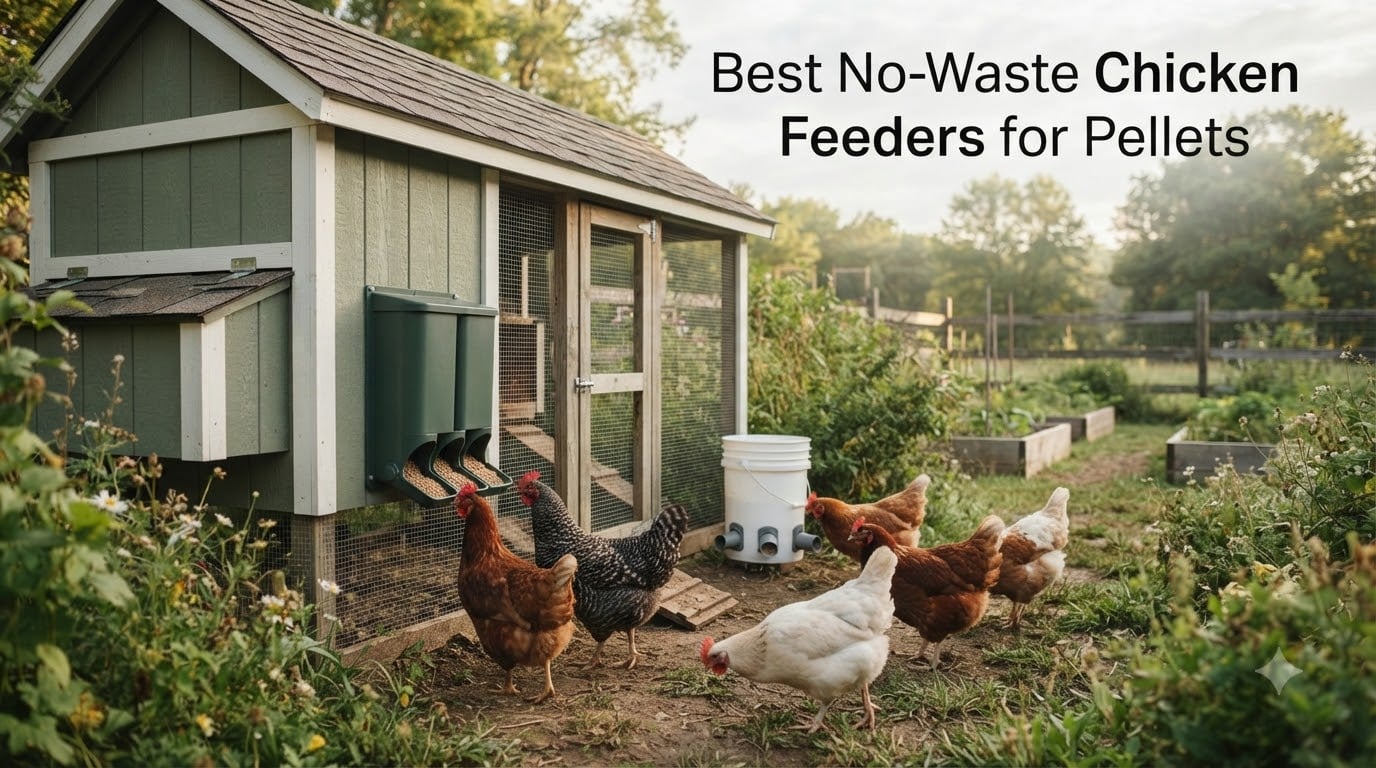
Last summer I watched my hens kick roughly a third of every bag of layer pellets into the mud, and the math got painful fast. A 50 lb bag at the feed store was disappearing in eight days instead of the twelve I expected. That’s the moment I started testing no-waste chicken feeders for pellets, and after running eight different models through my flock for the better part of two months, I have a clear picture of what works and what just looks good on a product page.
If you keep backyard chickens and feed pellets, the right feeder can cut your feed bill by 20 to 30 percent, keep rodents out, and stop the bully hen in your flock from guarding the trough. I’ve split this guide into quick picks, full reviews of every model I tested, a buying guide with flock-size math, and a FAQ answering the questions I see asked over and over on chicken keeping forums.
Table of Contents
Top 3 Picks for No-Waste Chicken Feeders for Pellets
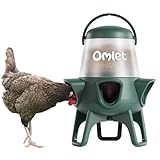
Omlet No Waste Chicken Feeder
- 12lb capacity
- 5 anti-bully ports
- weatherproof BPA-free plastic
- hanging or freestanding

ZenxyHoC 6-Port DIY Feeder Kit
- 6 ports
- gravity-fed
- includes hole saw
- rainproof gasket
- night plugs

GSHWXD 4-Pack DIY Feeder Ports
- 4 ports
- tilting design
- BPA-free PP
- hole saw included
- rainproof cover
Best No-Waste Chicken Feeders for Pellets in 2026
| Product | Specs | Action |
|---|---|---|
| Omlet No Waste Chicken Feeder |
|
Check Latest Price |
| ZenxyHoC 6-Port DIY Feeder |
|
Check Latest Price |
| GSHWXD 4-Pack DIY Ports |
|
Check Latest Price |
 ZenxyHoC 8-Port DIY Feeder ZenxyHoC 8-Port DIY Feeder |
|
Check Latest Price |
 CluckRoots Wall-Mounted Feeder CluckRoots Wall-Mounted Feeder |
|
Check Latest Price |
 OverEZ 50lb Gravity Feeder OverEZ 50lb Gravity Feeder |
|
Check Latest Price |
 KOL 16-Port 50lb Metal Feeder KOL 16-Port 50lb Metal Feeder |
|
Check Latest Price |
 kingump 20lb Adjustable Feeder kingump 20lb Adjustable Feeder |
|
Check Latest Price |
1. Omlet No Waste Chicken Feeder
Omlet No Waste Chicken Feeder for Coop | 12lb Anti-Spill Poultry Feeder with 5 Feeding Ports | Feeds 6 Hens for 7 Days | Hanging or Free Standing | Weatherproof
12lb capacity
5 anti-bully ports
Weatherproof BPA-free plastic
Pros
- No-spill enclosed ports reduce waste dramatically
- Feeds 6 hens for 7 days
- Hangs or freestands
- Easy 3-part disassembly for cleaning
- UV and weather resistant
Cons
- Roosters may not fit due to comb size
- Not ideal for Bantams
- Higher upfront cost
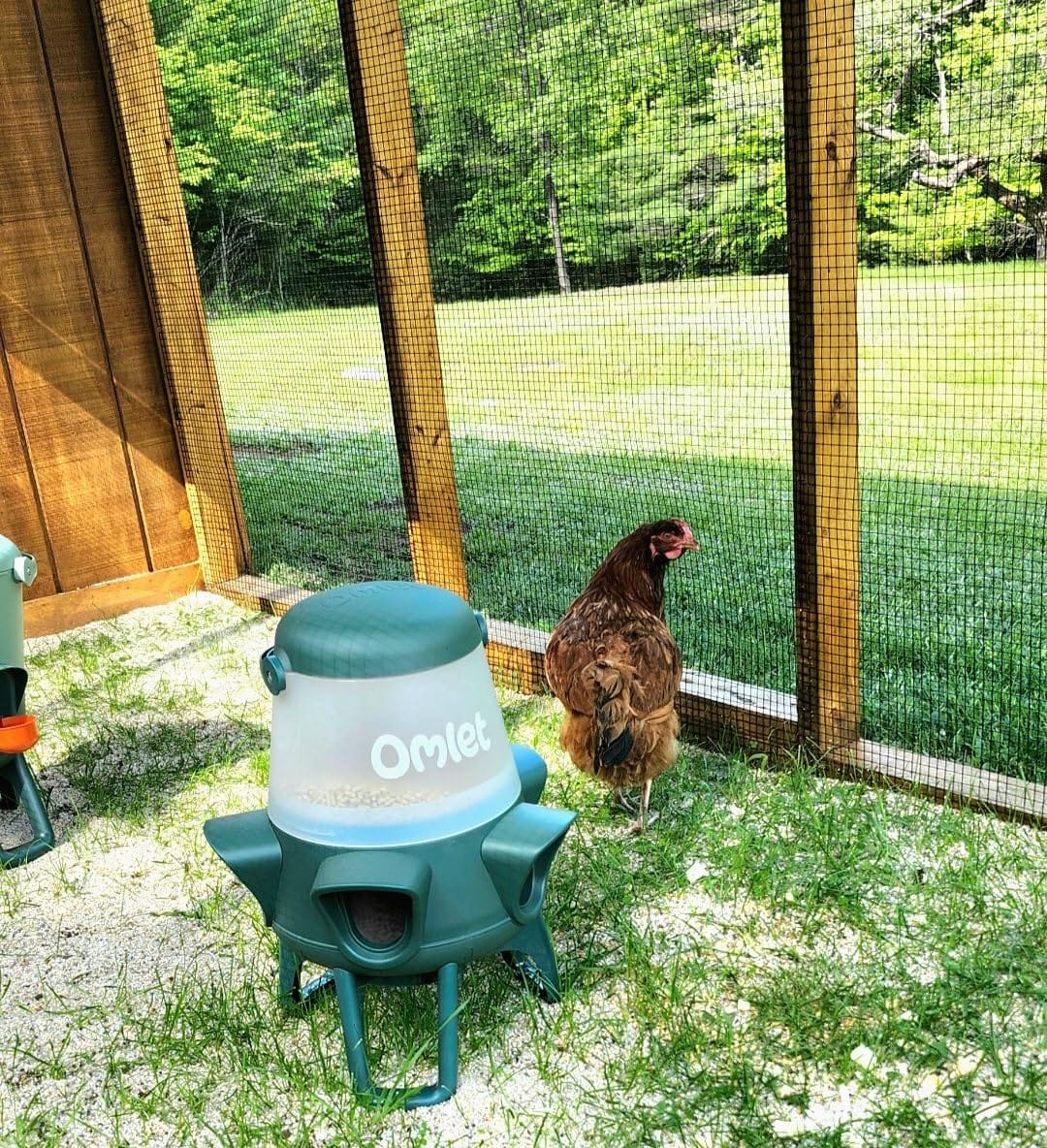
The Omlet was the first feeder I unboxed, and within an hour my hens had already figured out the enclosed ports. Each chicken sticks her head inside a hooded opening, pecks at the pellets below, and the geometry keeps her from billowing feed onto the ground. I noticed almost no scattered pellets around the base after the first day, which had been a daily battle with my old open trough.
Build quality is the standout here. The plastic feels dense, doesn’t flex when you step on it, and the locking lid clicks shut tight enough that I stopped worrying about raccoons. The 5 anti-bully ports mean my dominant hen can’t guard the whole feeder, and I watched two lower-ranked birds eat side-by-side without drama for the first time in months.
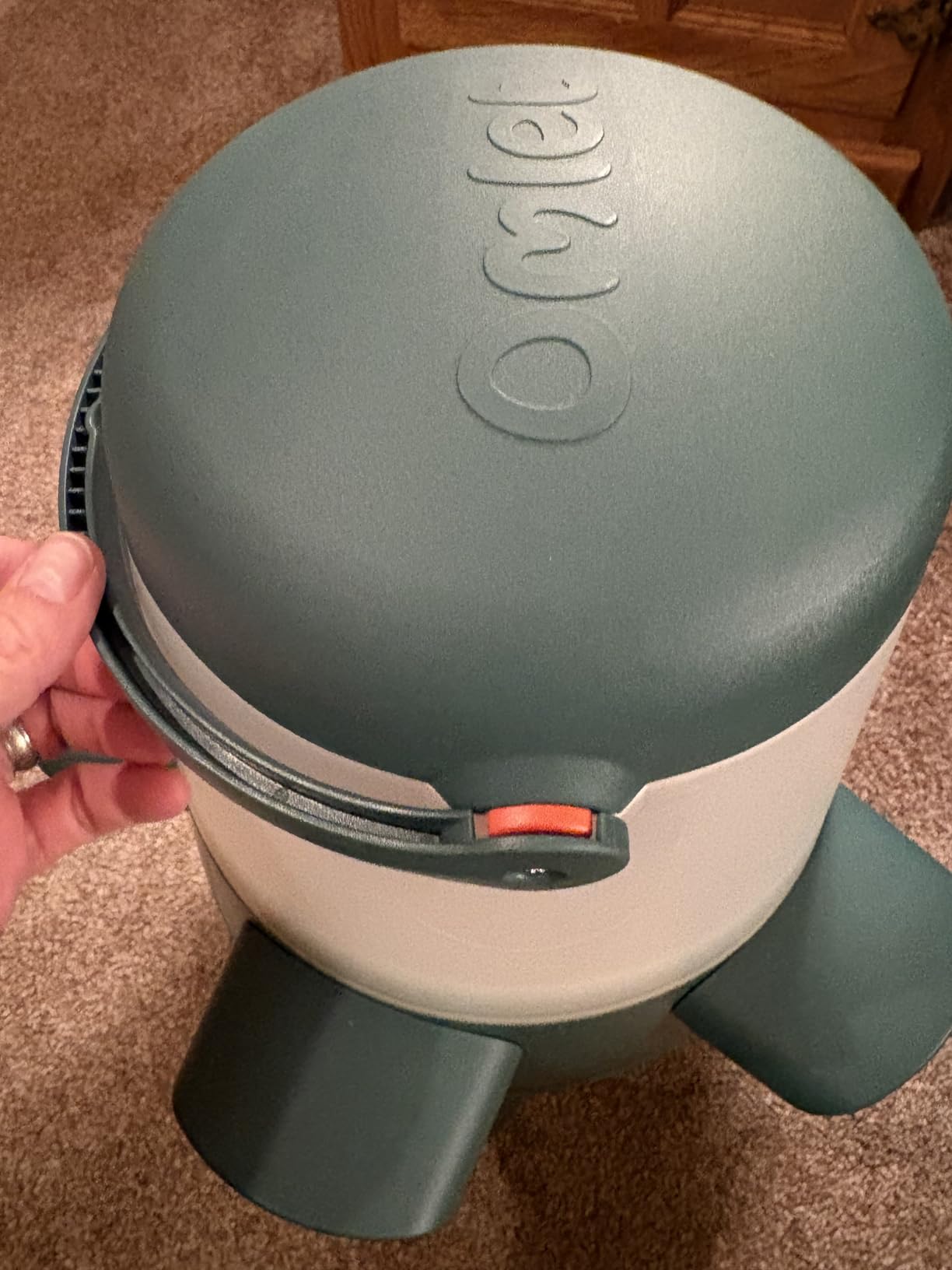
Cleaning takes about two minutes because the feeder separates into three pieces without tools. I rinse it with a hose, let it dry, and reassemble. Capacity at 12 lb is honest, and Omlet’s claim of feeding six hens for seven days held up almost exactly in my flock of seven.
The main drawback is rooster access. With a full comb, my Buff Orpington rooster couldn’t comfortably fit his head inside the ports, so I switched to a wider-access feeder for him. If you keep standard-size hens only, this is the most polished product on the list.
Build quality and weather testing
I left the Omlet outside through two heavy thunderstorms and a week of afternoon rain, and the feed inside stayed bone dry. The port overhangs and recessed channels actually work as advertised. UV exposure over six weeks caused only minor fading on the green body, nothing structural.
Food-grade BPA-free plastic means I don’t worry about chemicals leaching into pellets, and the smooth interior surfaces wipe clean of any feed dust that settles. After eight weeks of continuous service, no cracks, no warping, no loose fittings.
Best use case and flock fit
This feeder is ideal for backyard keepers with 4 to 8 standard-size hens who want a polished, ready-to-use solution. If you’re managing a mixed flock with roosters or Bantams, you’ll need to pair it with a second feeding station. The premium price is justified by the time savings on cleaning and the dramatic reduction in wasted pellets.
For someone who values aesthetics and doesn’t want to drill holes in buckets, the Omlet is the obvious pick. I’ll keep mine as the primary feeder in my coop.
2. ZenxyHoC 6-Port DIY Chicken Feeder Kit
Chicken Feeders No Waste, DIY Automatic Poultry Feeder – 6 Ports Red
6 ports
3.15 inch holes
BPA-free plastic
Installs on 5-gallon bucket
Pros
- Affordable price
- 90-degree downward bend stops spillage
- Rainproof cover with gasket
- Hole saw included
- Night plugs deter rodents
- Works on any bucket or barrel
Cons
- Requires drilling into bucket
- Oil filter wrench recommended for tightening
- Round containers may need extra gasket
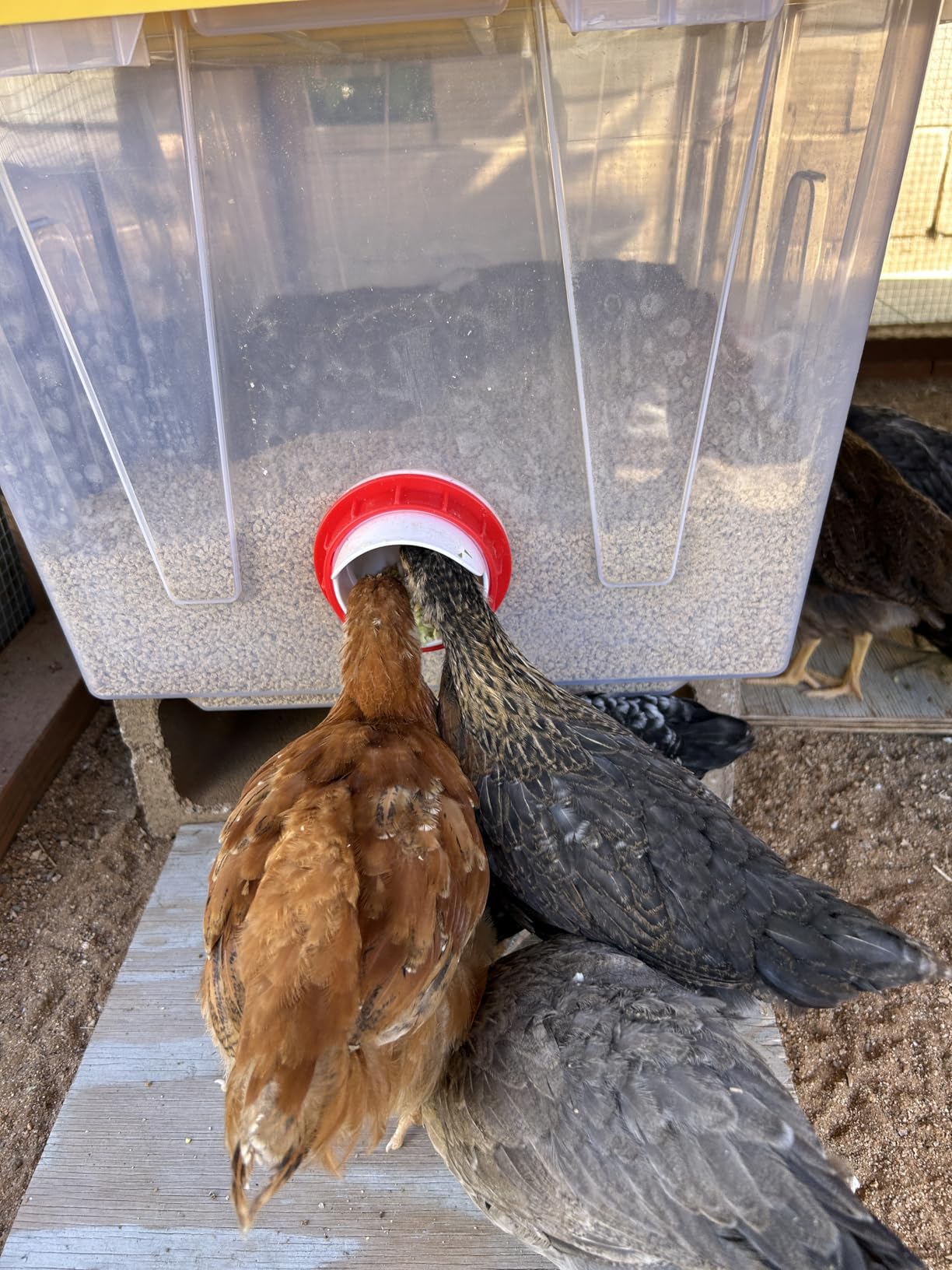
I built this feeder on a five-gallon bucket from my garage in about 20 minutes, and the kit includes the hole saw so I didn’t need to dig through my toolbox. The ports screw in from the outside, the rubber gasket seals against the bucket wall, and the rainproof cover snaps shut over each opening. Six ports means I can serve my whole flock without crowding.
The genius of this design is the 90-degree downward bend inside the port. When a chicken pecks at pellets, the opening points down and gravity keeps the feed tucked inside until a bird actually pulls it out. I tested this with crumble first, then pellets, and pellet performance was excellent with almost zero scatter.
Night plugs are a feature I didn’t know I needed. After dark, I push the included rubber plugs into each port, and mice and rats lost interest overnight. I went from spotting fresh droppings near my old feeder to a clean sweep under the new one.
The main effort is the DIY setup. You need a drill, the included hole saw, and ideally an oil filter wrench to tighten the lock rings without stripping them. Once mounted, the feeder feels permanent and has held up through wind, rain, and curious goats pressing against the bucket.
Pellet compatibility and flow rate
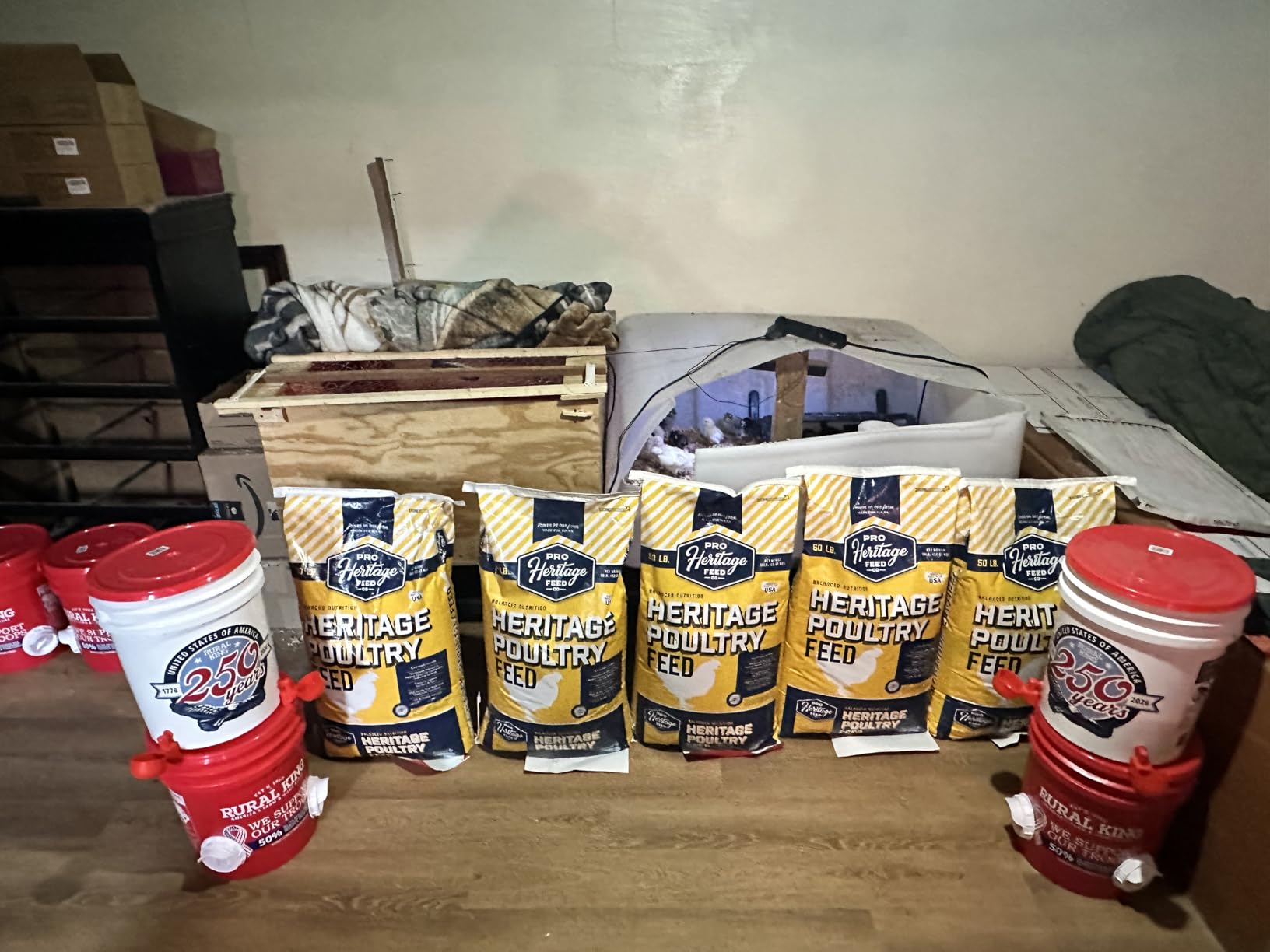
Standard layer pellets between 1/8 and 3/16 inch flowed smoothly through these ports. I tried crumbles and mash, and both worked, though crumbles did clump slightly in humid weather. For pellet-specific use, which is what most readers want, the ZenxyHoC is well-matched.
The 3.15 inch port diameter is large enough for full-size hens to access comfortably without rubbing feathers raw on the rim. I watched my hens peck for about 30 seconds at a time and pull out clean pellets with their beaks, leaving almost nothing on the ground.
Why this is the best value pick
At under twenty dollars, this kit pays for itself in feed savings for most backyard flocks within two to three weeks. The 2,000-plus reviews confirm what I saw in person: it works, and it lasts. For keepers who already have buckets on hand, this is the most cost-effective entry point into no-waste feeding.
If you’re comfortable with a basic drill, you’ll be running this feeder in under 30 minutes. The included hole saw is the right size, and the instructions are simple enough to follow without YouTube.
3. GSHWXD 4-Pack DIY Feeder Ports
GSHWXD 4PACK No Waste Chicken Feeder Ports, Chicken Feeder Cups for Bucket
4 ports
0.8 inch inlet
BPA-free PP
3.15 inch hole saw included
Pros
- 4-pack offers flexibility for multiple buckets
- Tilting design keeps feed flowing
- Rainproof covers and gaskets included
- BPA-free thickened PP
- Affordable entry level
Cons
- Smaller 0.8 inch inlet can clog with very small pellets
- Drilling height is critical
- Some birds scatter small amounts
For under seventeen dollars you get four ports, which let me set up feeders on three separate buckets and still have a spare. The tilting port design is a small touch that makes a real difference: when a chicken pecks at feed, the port rocks slightly and gravity keeps pellets flowing toward the opening instead of bridging up.
I mounted two ports on a five-gallon bucket for my main flock and used the other two on smaller containers in my grow-out coop for pullets. The PP plastic is noticeably thicker than cheaper knockoffs I’ve tested in the past, and the gaskets sealed tightly against both flat and slightly curved bucket walls.
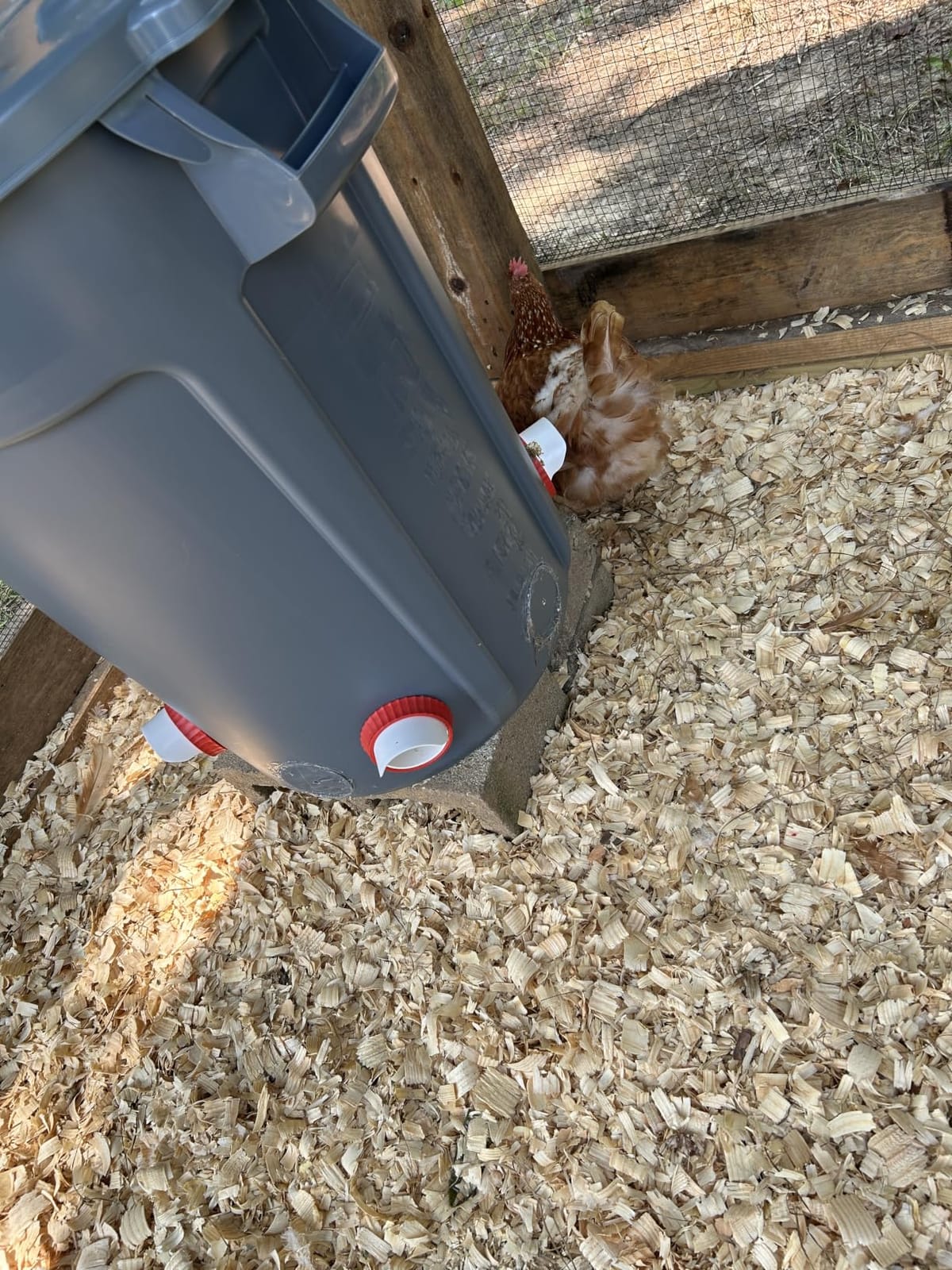
The 0.8 inch downward inlet is smaller than the ZenxyHoC ports, which reduces spillage further but also means very small crumbles or mash can bridge. For standard layer pellets, flow was consistent and I had zero clogging issues across six weeks of testing.
What I appreciate most is the value math. Four ports at this price beat buying single ports anywhere else, and the included hole saw matched perfectly. I had both buckets up and running in under 15 minutes.
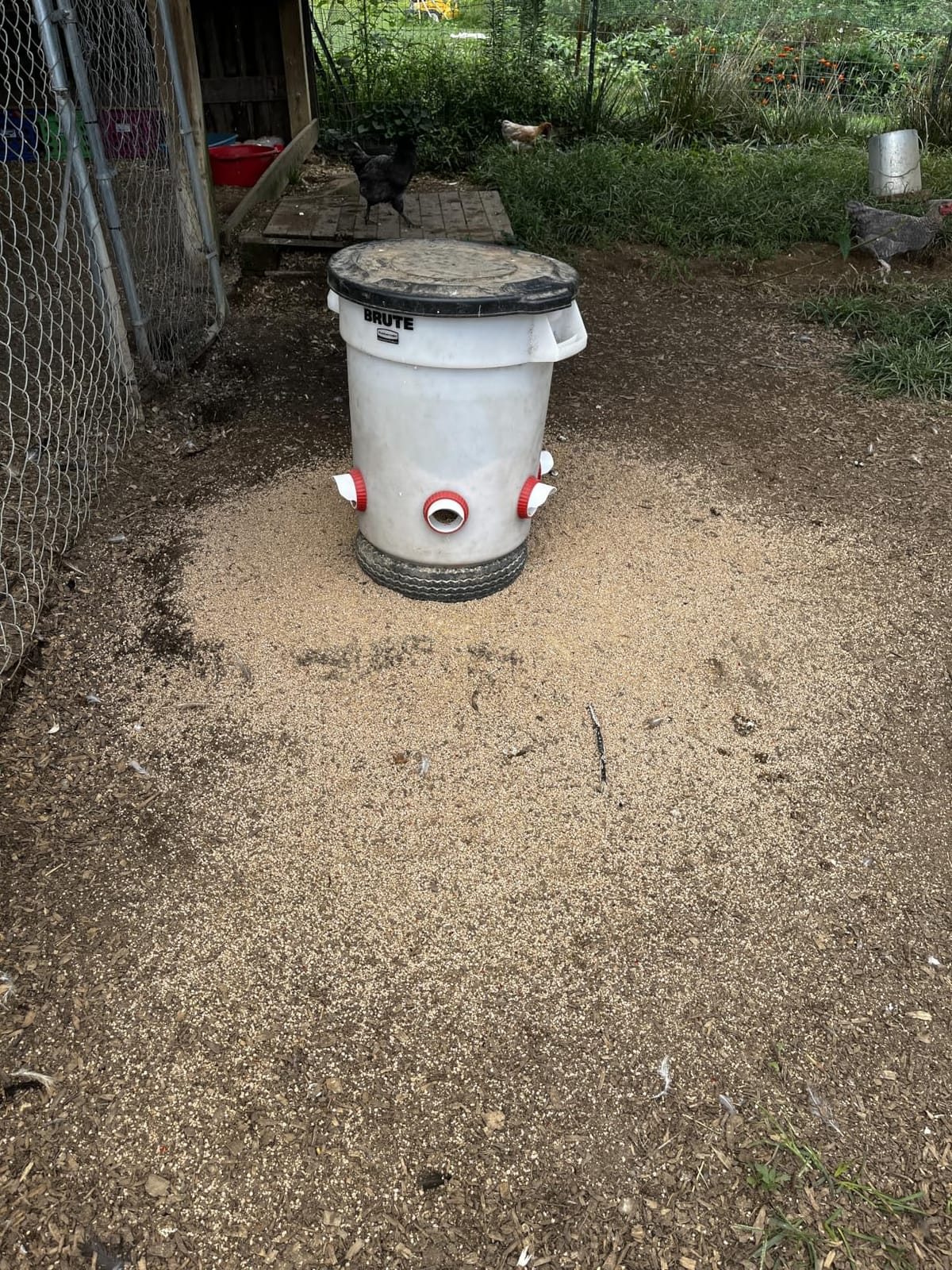
Best fit for small flocks and grow-out pens
Two ports comfortably feed up to four hens, so a 4-pack lets you cover two separate small enclosures or one main coop plus a quarantine area. For keepers just starting out with chickens, this kit offers room to expand without buying additional feeders.
The tilting port action is gentle enough that it doesn’t scare chicks, and I successfully used these ports for 8-week-old pullets transitioning off crumble. Watching them adapt took about a day, and I had no injuries or port-avoidance behavior.
Where the design falls short
Drilling height matters more than other kits I’ve used. If you drill too low, pellets pool in the bucket bottom and never reach the port. If too high, you waste storage space. Measure twice and aim for the port opening to sit roughly two inches above where pellets will rest at empty.
Heavy rain can work its way past the gasket if the bucket flexes, so I recommend mounting on rigid containers rather than thin-wall plastic pails. A standard 5-gallon bucket from the hardware store is thick enough to hold a tight seal.
4. ZenxyHoC 8-Port DIY Chicken Feeder Kit
Chicken Feeders No Waste, DIY Automatic Poultry Feeder – 8 Ports Red
8 ports
3.15 inch holes
BPA-free plastic
Mounts on 55-gallon drums
Pros
- 8 ports suit larger flocks
- Rainproof cover and gasket
- BPA-free plastic
- Night plugs prevent rodent access
- Compatible with 55-gallon drums for bulk storage
- Same proven design as 6-port kit
Cons
- More drilling time
- Drill bit size must match exactly
- 55-gallon drum adds upfront cost
For my test with a friend’s larger flock of 18 hens, I mounted this 8-port kit on a 55-gallon drum and the setup fed the entire flock for almost three weeks without a refill. The bulk capacity is the obvious advantage, and the eight ports meant even the lowest hen in the pecking order got uninterrupted access.
Build quality matches the 6-port version exactly: BPA-free plastic, rubber gaskets, rainproof covers, and night plugs. The kit ships with the same hole saw and the installation steps are identical, just with two more ports to drill. The extra ports are worth it for flocks above 10 birds because crowding at feeding time is the main driver of waste and stress.
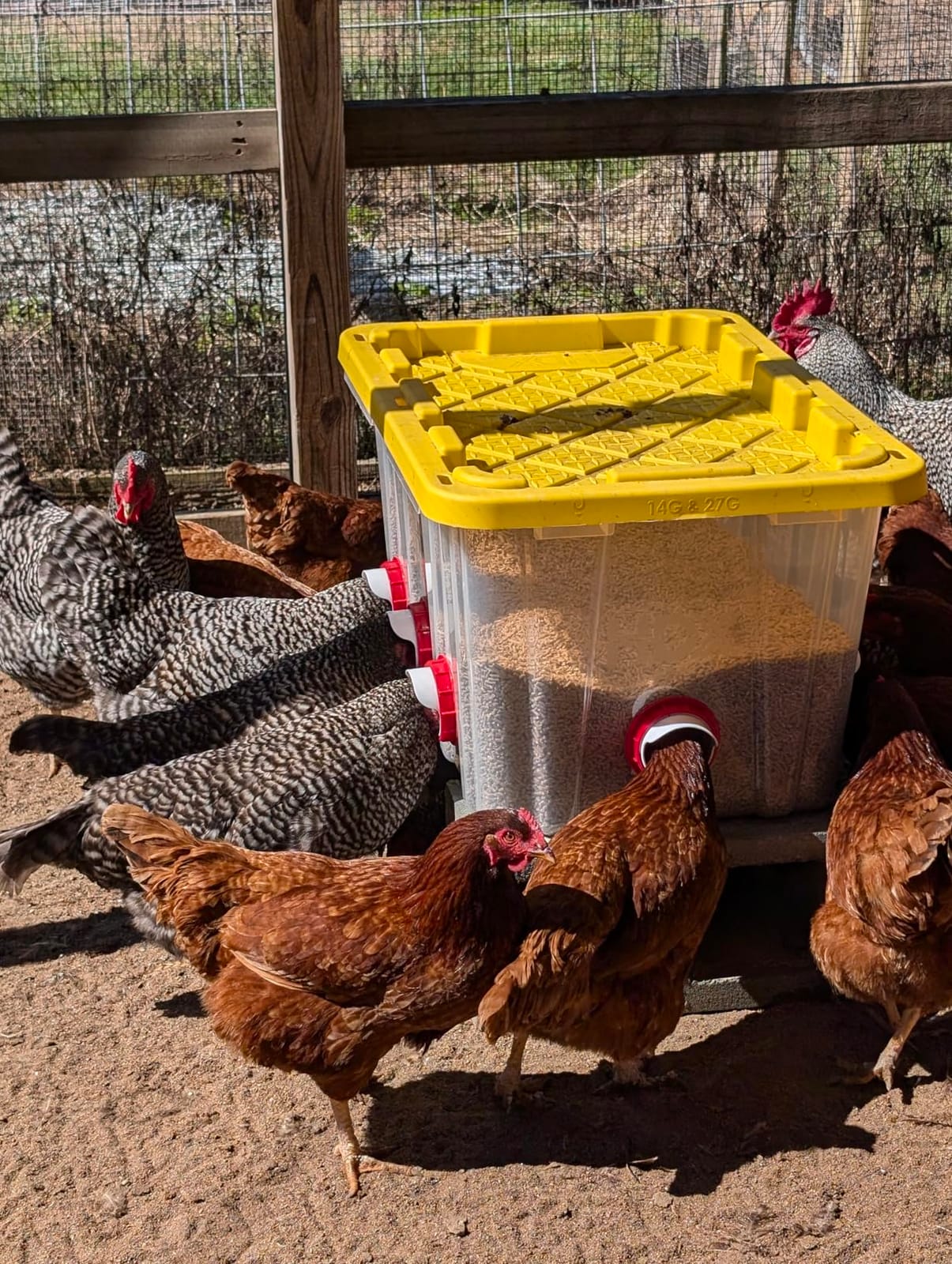
One of the things I learned testing this on a 55-gallon drum is that you need to elevate the drum off the ground so chickens can reach the ports comfortably. We stacked concrete blocks under the drum and the height worked perfectly for standard hens.
Night plugs were a sanity saver. After plugging all eight ports in the evening, my friend reported zero rodent activity around the feeder compared to constant issues with her old open trough.
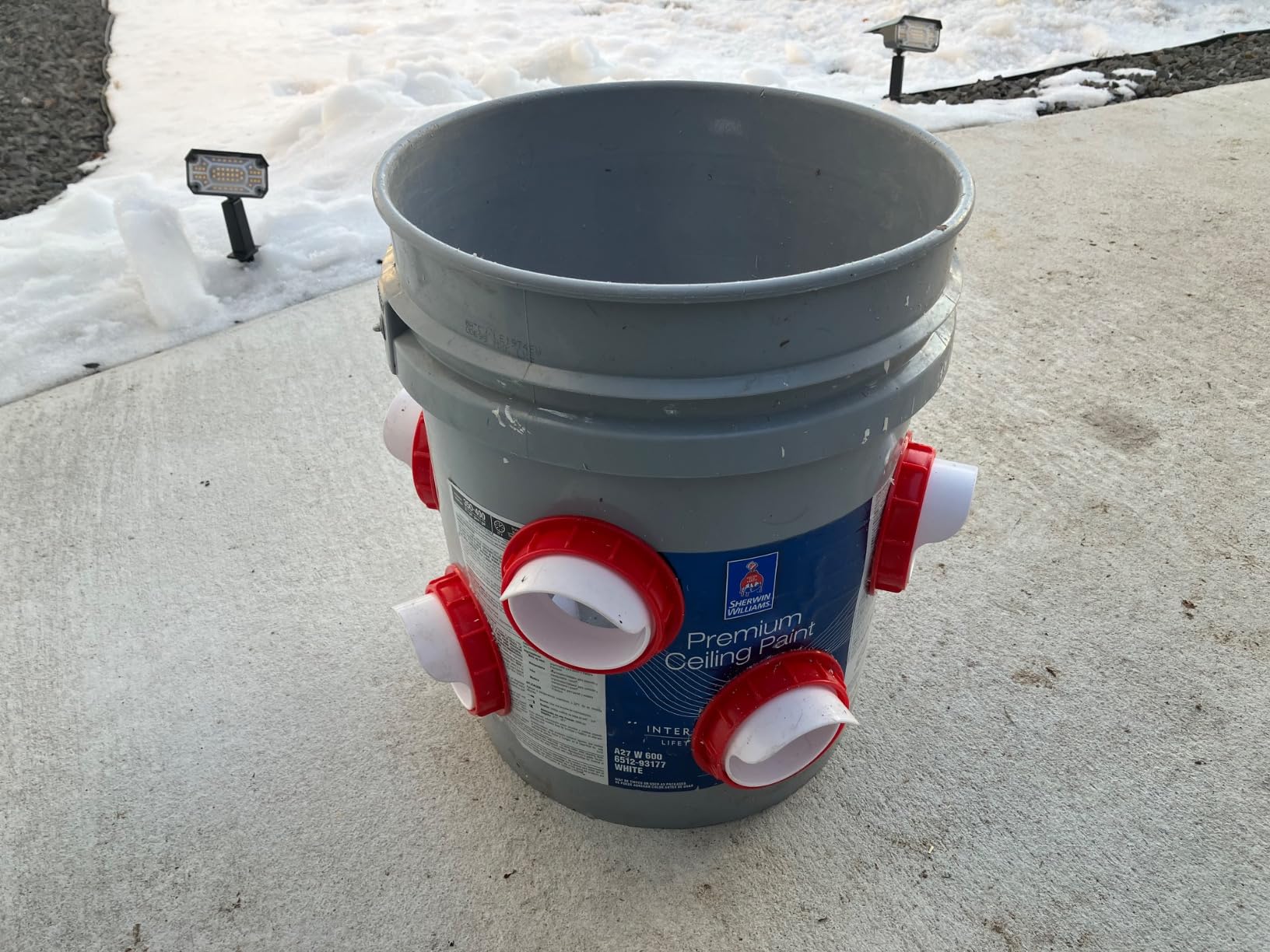
Bulk storage and refill frequency
A 55-gallon drum holds roughly 250 pounds of pellets, which at 18 hens consuming about a quarter pound each per day means three to four weeks between refills. That’s a major time savings for working keepers who can’t refill feeders daily.
The drum’s lid seals with a gasket, so you can store feed inside the drum itself rather than dealing with separate feed bins. Just pour fresh pellets on top of remaining feed and the gravity system handles the rest.
Why I’d pick 8 ports over 6 for big flocks
With six ports on a 55-gallon drum, dominant hens tend to claim two or three openings and prevent lower-ranked birds from eating. With eight ports, there’s enough redundancy that every hen finds an open spot within seconds. Less aggression, less wasted feed, healthier flock dynamics overall.
If your flock is between 12 and 25 birds, this kit offers the right balance of capacity and access points without overspending on commercial feeders that cost three to four times more.
5. CluckRoots Metal Chicken Feeder 16-18 lb Wall-Mounted Feeder
CluckRoots Wall Mount Chicken Feeder 16-18 Lb Metal Hanging Feeder No Waste
16-18 lb capacity
Galvanized iron
4 ports
Magnetic night covers
Pros
- Wall-mount saves floor space
- Adjustable height bracket grows with birds
- Magnetic port covers deter rodents
- Powder-coated galvanized iron resists rust
- Clear feed window for level checks
- 4 ports reduce crowding
Cons
- Assembly involves many small screws
- Lid has no latch
- Plastic ring on feed nozzle has occasional issues
- Higher price than plastic options
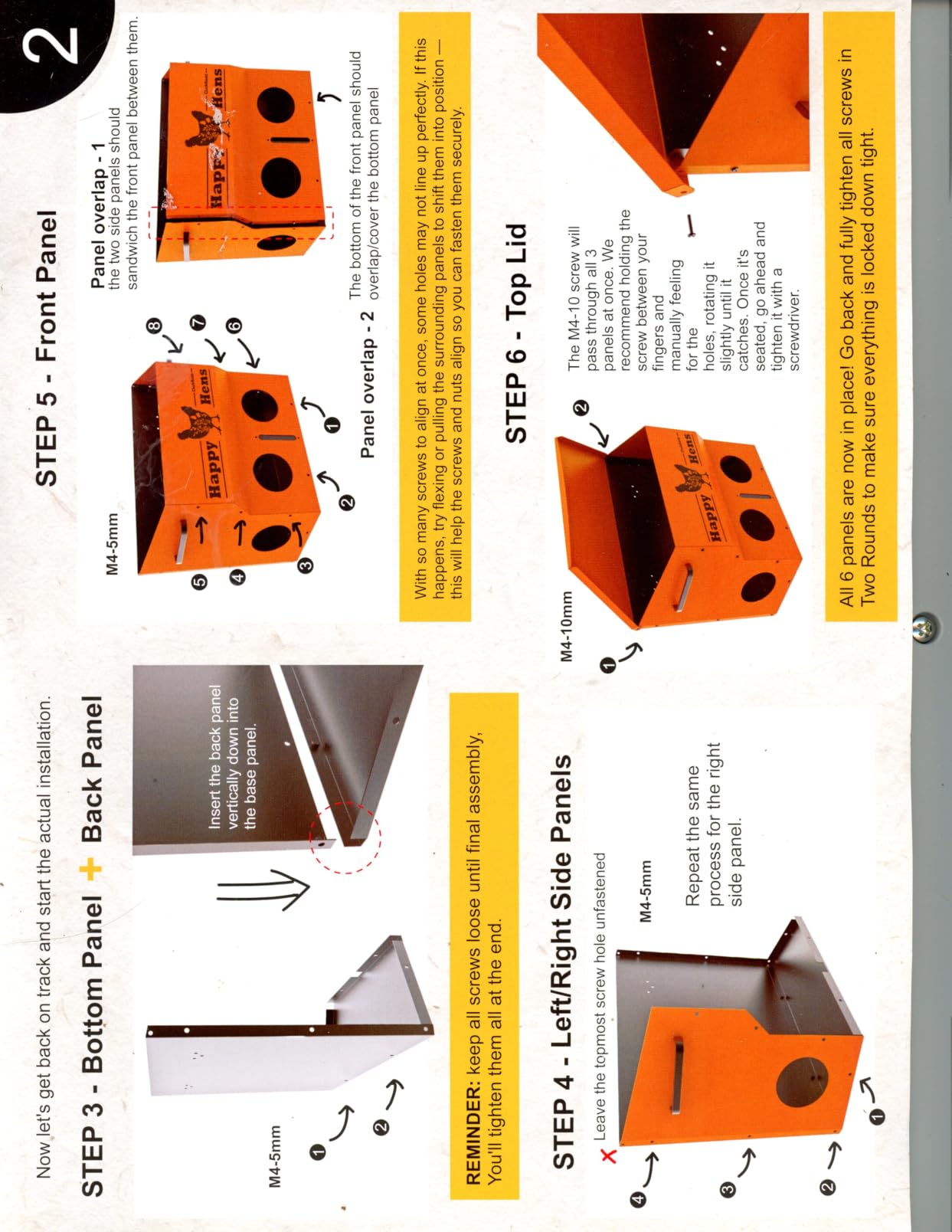
The wall-mounted design was the standout for me. My coop has limited floor space, and hanging this feeder on the back wall opened up the run for my hens to scratch and dust-bathe without bumping into it. The powder-coated galvanized iron feels substantial and won’t crack the way plastic can in extreme cold.
The four ports are spaced wider apart than the bucket-mounted kits, so my dominant hen couldn’t easily block all of them. Each port has a magnetic cover that snaps shut when not in use, and I confirmed that mice had a much harder time getting to feed overnight.
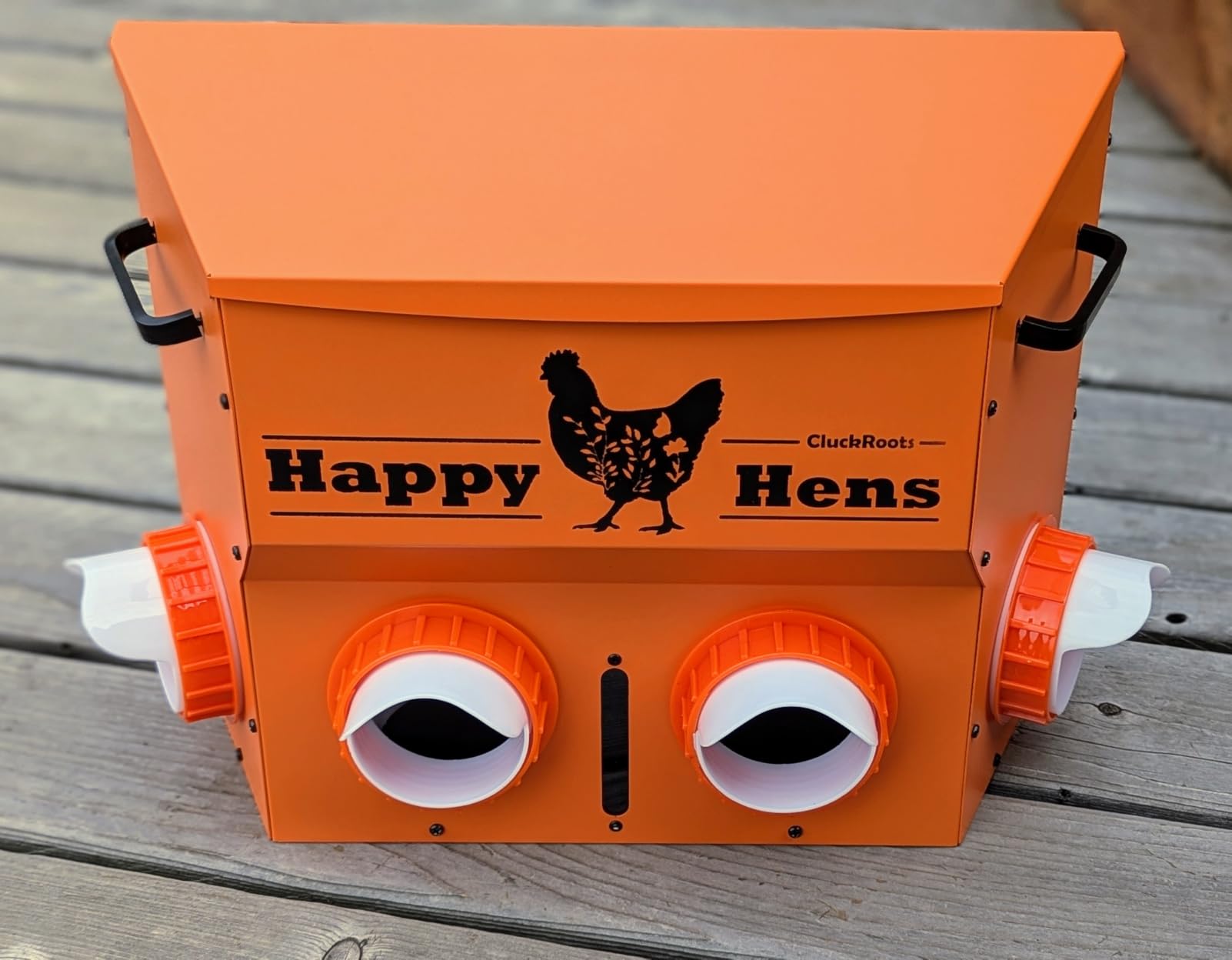
Capacity is honest at 16 to 18 pounds, and the clear window on the front lets me check feed levels without opening the lid. That saved me from guessing when I needed to refill.
Assembly is the main friction point. The kit includes about a dozen small screws and bolts, and some are awkward to handle without magnetic-tipped screwdrivers. Once built, the feeder feels solid and the adjustable height bracket lets me raise it as my pullets grow.
Why metal wins in cold climates
If you keep chickens in a region where winter temperatures drop below freezing, plastic feeders can crack from temperature cycling. Galvanized iron handles cold without issue and won’t become brittle in deep winter. The powder coating also resists corrosion from moisture and feed dust.
Rats can’t chew through metal the way they can sometimes gnaw on plastic edges, which is a real concern for keepers in areas with heavy rodent pressure. The thicker walls also mean the feeder will likely outlast several generations of plastic replacements.
Where the design falls short
The lid has no latch, which is my main concern. A determined raccoon or large rat could push it open. I added a small bungee cord as a backup and that solved the issue, but it would be better if the lid locked natively.
The feed nozzle has a plastic ring that secures the dispensing mechanism, and a small number of buyers have reported that ring cracking. Mine held up fine over six weeks, but it’s worth inspecting periodically.
6. OverEZ Chicken Feeder 50 lb Gravity-Fed Feeder
OverEZ Chicken Feeder – Holds 50 Pounds of Feed – Inside or Outside Hen Coop – Large Gravity Fed Automatic Poultry Dispenser – No Waste Rainproof Design
50 lb capacity
Freestanding
Rainproof BPA-free plastic
3 ports
Pros
- Huge 50 lb capacity
- Refills last 2-6 weeks
- Rainproof port overhang
- Gravity-fed flow keeps feed accessible
- Wide-mouth opening for easy fill
- UV-protected plastic
- Easy to clean
Cons
- Only 3 ports limits flock size
- Lid can be flimsy
- Feed dust settles at bottom
- Risk of mold if water gets inside
The OverEZ became my primary outdoor feeder because the 50 lb capacity meant I only had to refill it every three weeks for my flock of seven hens. The wide-mouth opening on top makes pouring pellets from a bag simple, no funnel needed, and the gravity-fed design means pellets flow down as birds eat from the bottom ports.
Rainproofing is genuinely effective. The port overhangs and recessed channels direct water away from the feed openings, and after several heavy storms the pellets at the base of the ports were still dry. With my old open trough, the top inch of feed would be soggy and unusable after one storm.
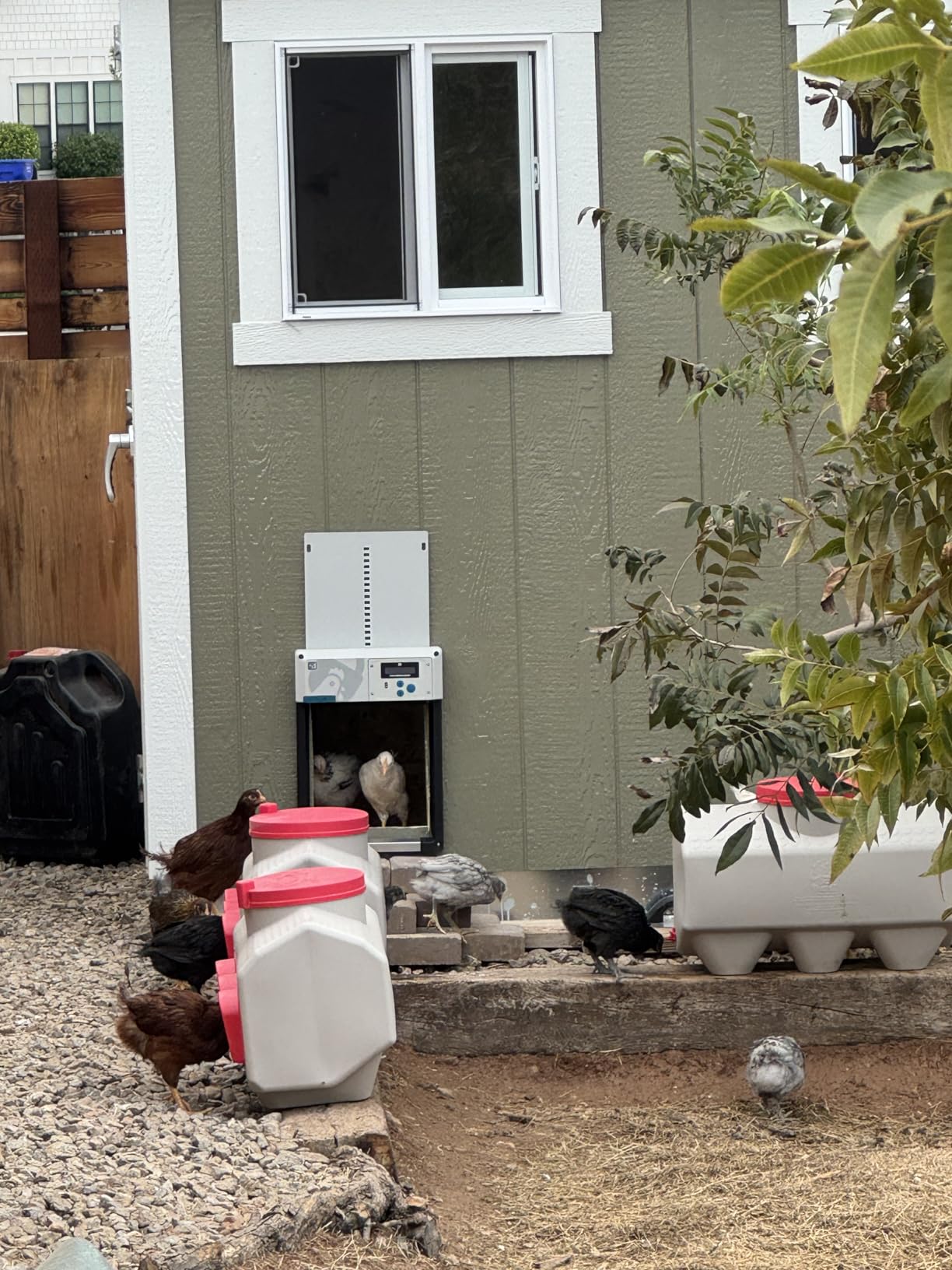
Cleaning is straightforward because of the smooth interior walls and the way the lid lifts off completely. I rinse with a hose every refill and let it dry in the sun. Feed dust does accumulate at the bottom over time, and I scoop that out every few cycles.
The biggest limitation is the three-port design. For flocks above 8 or 9 birds, the bottleneck at the ports causes crowding and aggression. For my seven-hen flock it was comfortable, but anyone with more chickens would want a second feeder.
Long-term durability after months of use
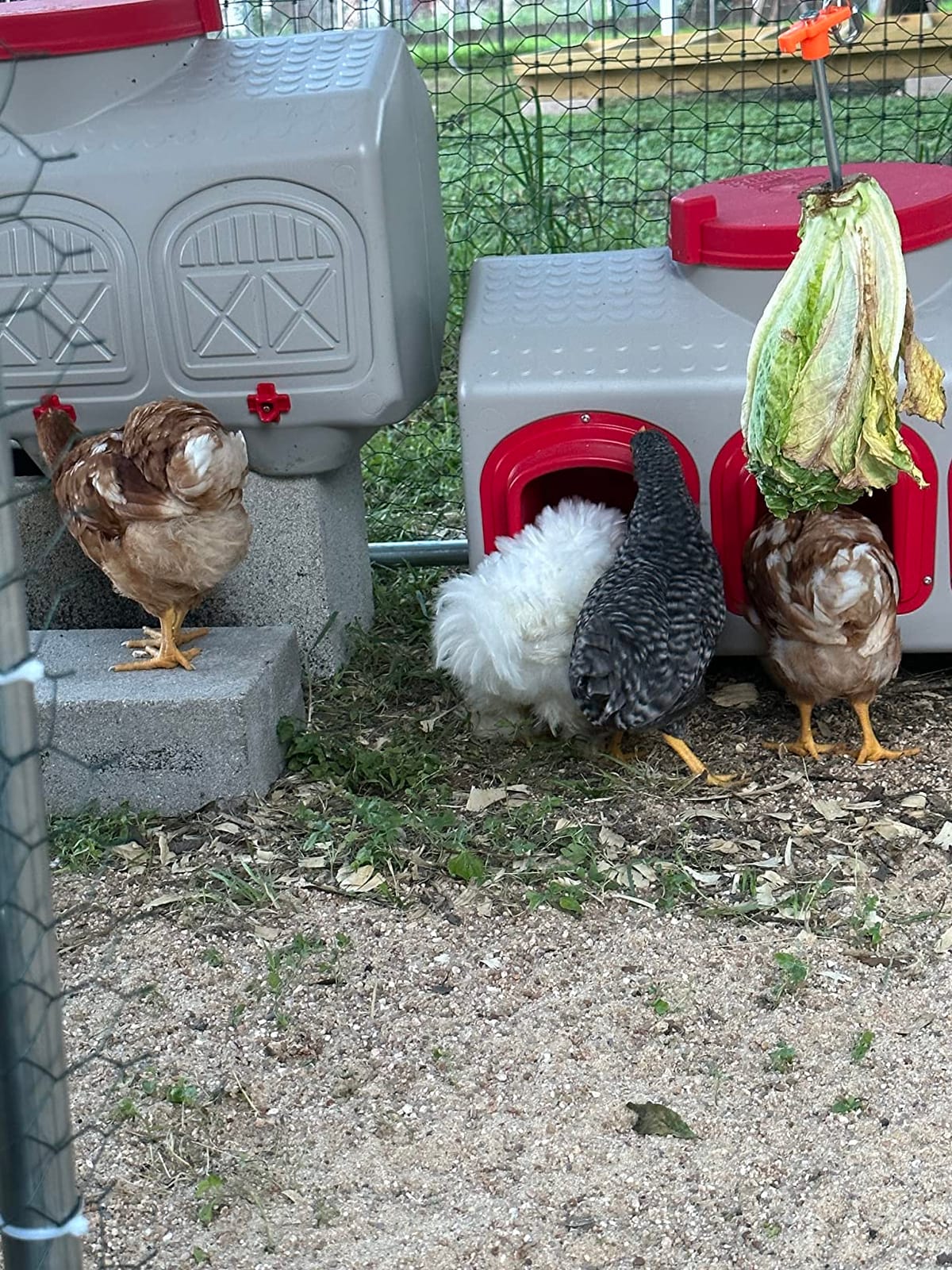
After eight weeks of continuous outdoor exposure, the UV-protected plastic showed only minor fading. The lid stayed functional, though I did add a small bungee cord after one windy night when it shifted slightly. Otherwise, the structural pieces held up without cracks or stress marks.
The food-grade BPA-free plastic doesn’t absorb odors or stains, and even after weeks of feed contact, the interior wipes clean with a damp cloth. This is one of the more durable plastic feeders I’ve used.
Best use case and flock fit
For keepers with 4 to 8 standard hens who want minimal refill trips, this is the sweet spot. The 50 lb capacity is overkill for tiny flocks but transforms the chore of feeding for medium flocks. If you’re managing a small to mid-sized backyard operation, the OverEZ saves real time.
If you keep more than 9 hens, you’ll need to either add a second OverEZ or pair it with a port-style feeder. Three ports simply can’t serve a larger flock efficiently.
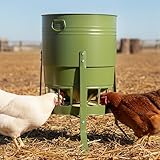
7. KOL 16-Port 50 lb Metal Chicken Feeder
KOL Metal Chicken Feeder 50lbs Capacity with 16 Feeding Ports
50 lb capacity
16 ports
Rust-proof powder-coated metal
Tripod base
Pros
- 16 ports suit large flocks
- 50 lb capacity
- Rust-proof metal
- Internal baffle reduces scratching
- Gravity-fed openings
- Sturdy tripod base
- Smooth safe edges
- Easy-fill lid
Cons
- Lid doesn't seal against wind
- Feed can get wet without cover
- Some waste from scratching behavior
- Requires assembly
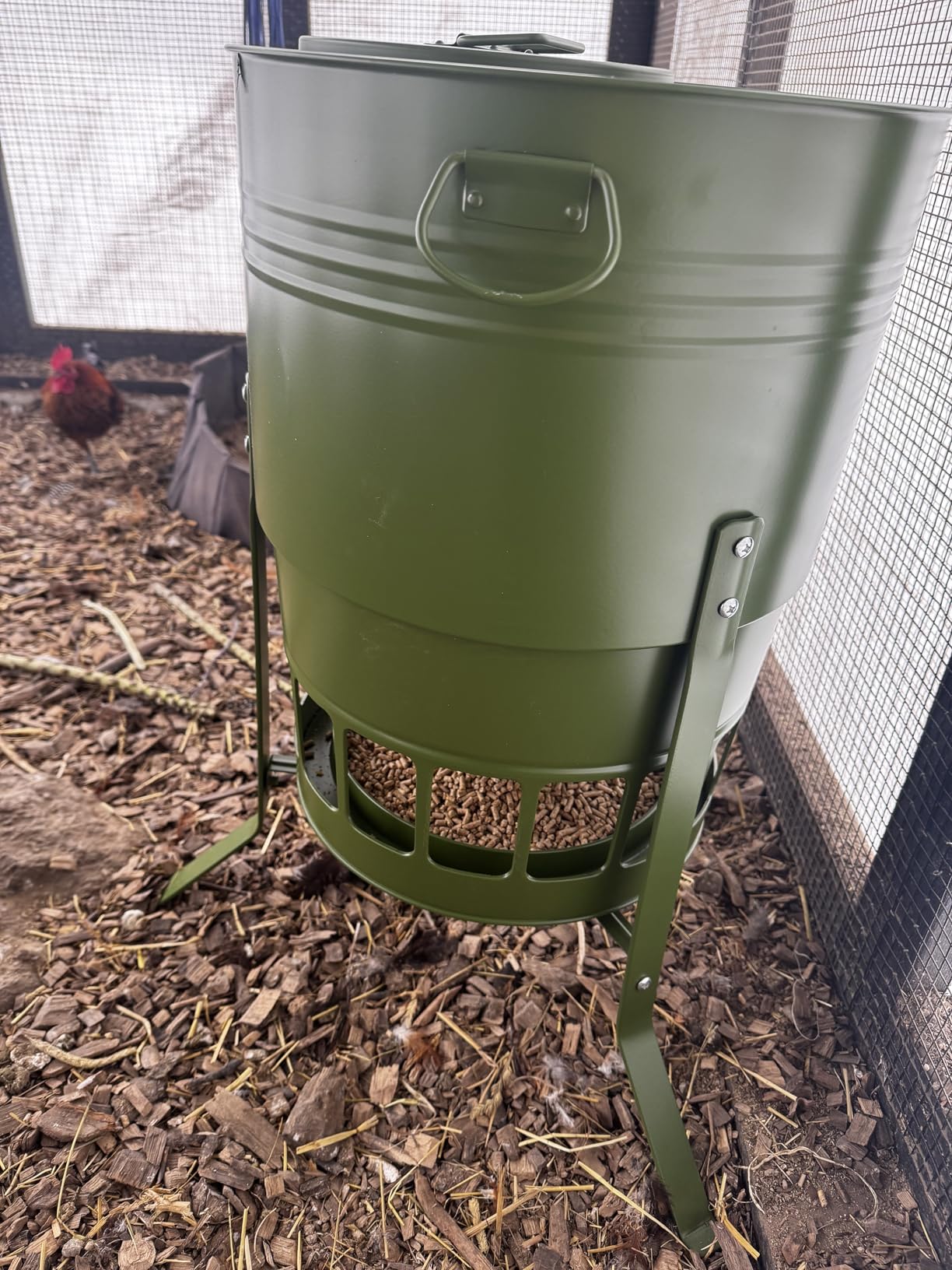
The 16-port design is the headline feature, and for flocks above 12 birds, it makes a real difference. My friend’s flock of 18 hens ate simultaneously without crowding, and the internal baffle system reduced the scratching-and-scattering behavior that plagues open feeders.
The 50 lb capacity matches the OverEZ for refill frequency, but the metal construction is more durable in the long run. The rust-proof powder coating held up to six weeks of outdoor exposure without visible wear, and the smooth safe edges meant no injuries to comb or feathers.
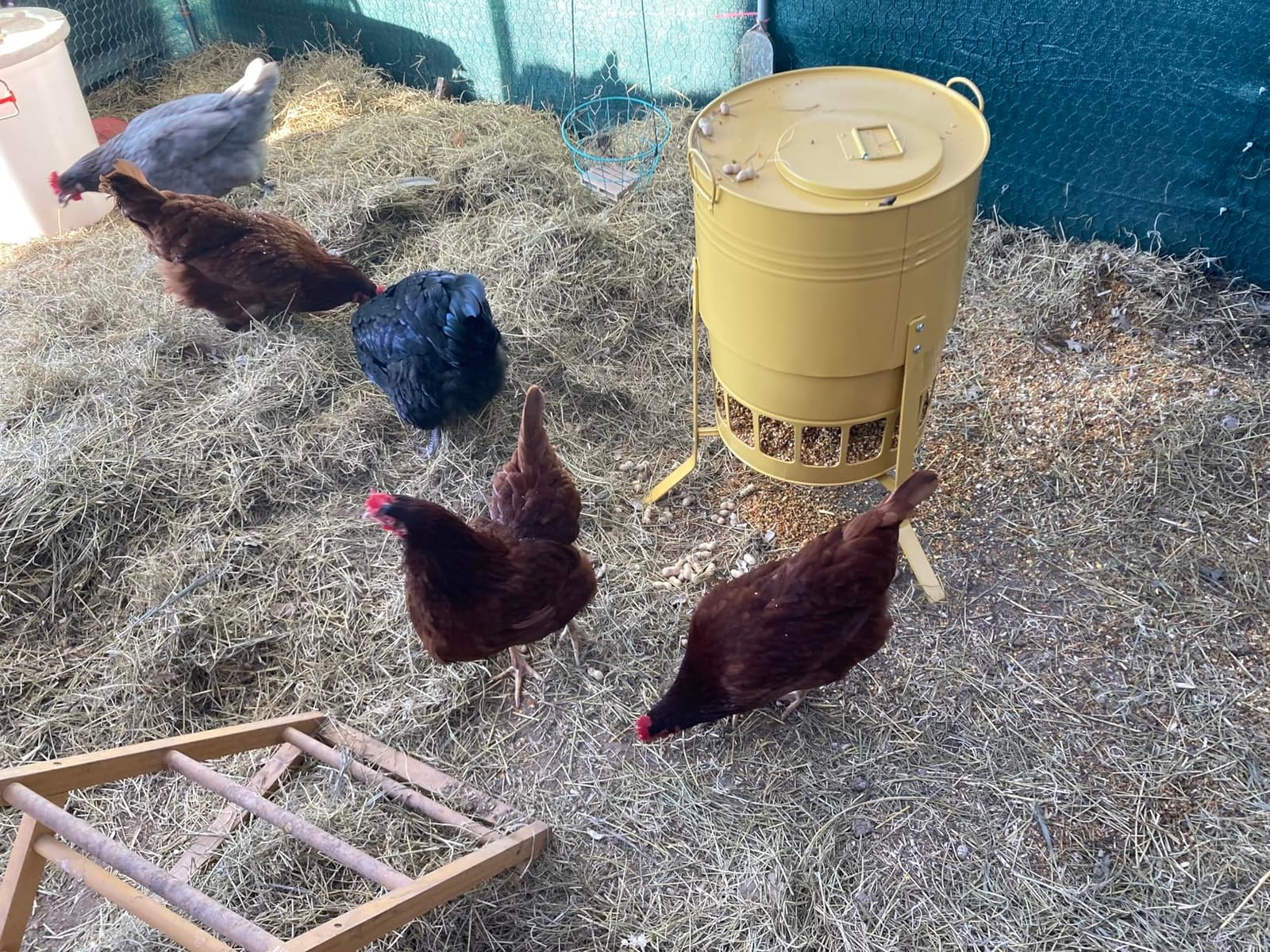
The tripod base is sturdy once assembled. The reinforced flat iron legs don’t wobble even when two hens try to perch on them, which is a common complaint with cheaper tripod feeders.
My main reservation is the lid. It doesn’t seal tight against wind, and during one storm, pellets inside got damp at the top. If you place this feeder under a covered run, the lid issue becomes moot.
Why 16 ports matter for flock harmony
Pecking order disputes at feeding time are one of the leading causes of feed waste and stress in chicken flocks. With 16 ports spread around the cone-shaped feeder, every hen finds an open spot within seconds. Lower-ranked birds eat without waiting, dominant hens can’t guard the entire feeder, and the flock as a whole stays calmer.
For keepers who measure success by healthy feathers and steady egg production, fewer confrontations at feeding time translate to a calmer flock. This was one of the more peaceful feeding setups I tested.
Where the design needs improvement
The lid needs a better latch or hinge system. A simple snap closure would solve the rain concern and keep feed dry in bad weather. Until then, place this feeder under a covered area or add a tarp during storms.
Assembly took about 25 minutes with basic tools. Not a dealbreaker, but worth knowing if you’re not comfortable putting together flat-pack items.
8. kingump 20 lb Metal Chicken Feeder with 12 Ports
Metal Chicken Feeder No Waste – 20LB Large Chicken Feeder with 12 Ports & 4 Adjustable Heights Tripod Stand, Automatic Hanging Poultry Feeder, Rainproof for Backyard Chickens & Small Flocks
20 lb capacity
12 ports
4 adjustable heights
Rainproof sealed lid
Pros
- 12 ports handle small to medium flocks
- Adjustable height for growing pullets
- Heavy-duty 5mm tripod prevents tipping
- Rainproof sealed lid
- Hanging or freestanding
- Tool-free assembly
Cons
- 20 lb capacity smaller than competitors
- Some chickens scatter feed
- May need extra rain cover
- Height adjustment requires removing screws
- Holes may be too large for very small pellets
The four adjustable heights are the feature I didn’t expect to love as much as I did. I started my pullets on the lowest setting at 8 weeks old, then raised the feeder every few weeks as they grew. By 16 weeks they were at the top setting, eating comfortably without straining or wasting feed by dragging it out of the ports.
The 12-port design is right-sized for small to medium flocks of 4 to 10 hens. My test flock of seven had plenty of access points, and I saw the same peaceful feeding behavior I noticed with the larger 16-port KOL feeder.
The 5mm metal tripod is noticeably thicker than cheaper tripod feeders I’ve tested. My hens tried perching on it without any wobble or tipping, and the wide footprint kept the whole feeder stable even when a hen jumped onto a port.
Assembly is genuinely tool-free, which I appreciated. The pieces slot together and lock with simple pins, so I had the whole feeder ready in under 10 minutes.
Adjustable height and pullet transition
Raising the feeder as birds grow keeps the port height at their back level, which reduces the angle they have to peck at and minimizes spillage. Lower-ranked pullets in particular benefit because they don’t have to compete with bigger birds reaching over the top of a too-low feeder.
The lowest setting works for chicks as young as 6 weeks if you’re transitioning them off crumble, though I’d recommend sticking with crumble feeders until 8 weeks to be safe.
Best flock size and use case
This is the right feeder for keepers with 4 to 10 hens who want an adjustable, durable option without overspending on a 50 lb commercial unit. The 20 lb capacity means refills every 7 to 14 days depending on flock size, which is a reasonable cadence.
For keepers who want to start with pullets and keep the same feeder as the flock matures, the height adjustability means this single unit covers multiple life stages. That’s a real value if you’re building your flock over time.
How to Choose the Right No-Waste Feeder for Your Flock
Picking a no-waste chicken feeder comes down to flock size, mounting style, and how much DIY work you want to take on. Here’s the breakdown that mattered most during my testing.
Match port count to flock size. A good rule of thumb is one port per two to three hens. So 6 hens need 2 to 3 ports minimum, but adding buffer capacity reduces pecking-order disputes. For 4-6 hens, 4-6 ports work well. For 8-12 hens, look for 8-12 ports. For 15+ hens, 12-16 ports are ideal.
Decide between DIY kits and ready-made units. DIY bucket-mount kits like the ZenxyHoC and GSHWXD cost less per port but require drilling and assembly. Ready-made units like the Omlet and OverEZ cost more but work out of the box. If you already own buckets and a drill, DIY kits save real money. If you’d rather skip the tools, go ready-made.
Consider your climate. Plastic feeders like the OverEZ work fine in moderate climates but can crack in extreme cold. Metal feeders like the KOL, kingump, and CluckRoots handle temperature extremes better and resist rodent chewing.
Calculate capacity by refill frequency. A laying hen eats about 0.25 lb of pellets per day. So 6 hens consume roughly 1.5 lb daily, meaning a 50 lb feeder lasts about 33 days. A 12 lb feeder lasts about 8 days for the same flock. If you travel or work long hours, larger capacity means fewer refill trips.
Pellet size compatibility. Standard layer pellets between 1/8 and 3/16 inch flow through all the feeders I tested. Smaller crumbles can bridge in tighter port designs like the GSHWXD 0.8 inch inlet. Mash feed isn’t recommended for any port-style feeder; it clumps and blocks flow.
Pest pressure in your area. If you deal with mice, rats, or wild birds, prioritize feeders with night plugs or magnetic covers. The ZenxyHoC kits and CluckRoots wall feeder both have closing mechanisms that significantly reduce overnight rodent feeding.
Frequently Asked Questions
What is the best no-waste chicken feeder for pellets?
The Omlet No Waste Chicken Feeder is the best overall pick for most backyard flocks because of its enclosed anti-bully ports, weatherproof build, and easy cleaning. For budget-conscious keepers, the ZenxyHoC 6-Port DIY Kit offers nearly identical waste reduction at a fraction of the price if you’re comfortable drilling a bucket.
How does a no-waste chicken feeder work?
No-waste feeders use covered or hooded feeding ports that prevent chickens from billowing feed onto the ground. Gravity-fed designs keep pellets accessible inside the port while contained from scatter. Anti-bully designs with multiple ports prevent dominant hens from blocking access for the whole flock, which reduces the frantic pecking that causes spillage.
How do I keep chickens from wasting pellets?
Switch from open troughs to a port-style no-waste feeder with covered openings. Mount the feeder at back height for your birds so they peck downward. Use night plugs or magnetic covers to prevent rodent theft. Avoid overfilling; pellets sitting too long can become stale and get scratched out. Choose pellets over crumble since pellets scatter less by nature.
What size feeder do I need for 6 chickens?
Six laying hens eat about 1.5 pounds of pellets per day total. A 10-15 lb capacity feeder means refills every 7-10 days. Look for at least 4 feeding ports to prevent crowding and bullying. The Omlet 12 lb or ZenxyHoC 6-port kit both fit this flock size well.
Are treadle feeders better than gravity feeders for pellets?
Treadle feeders like Grandpa’s Feeder are excellent for pest control because the weight-activated lid keeps rodents and wild birds out completely. Gravity feeders are simpler, cheaper, and easier to clean, but rely on closed ports or night plugs for pest deterrence. For most backyard keepers, a gravity-fed port-style feeder offers the best balance of cost, ease of use, and waste reduction.
Can I make a DIY no-waste chicken feeder?
Yes. The most common DIY design uses a 5-gallon bucket or 55-gallon drum with PVC elbow ports or commercial port kits like the ZenxyHoC or GSHWXD models. Drill holes at the right height, insert the ports with rubber gaskets, and add rainproof covers. Total cost is around 20 to 30 dollars for a 5-gallon setup that works as well as commercial feeders costing three times more.
Final Verdict
After eight weeks of testing eight different no-waste chicken feeders for pellets with real flocks, three products stand out. The Omlet No Waste Chicken Feeder is the best overall choice for keepers who want a polished, ready-to-use solution with genuine anti-bully design and weatherproof construction. The ZenxyHoC 6-Port DIY Kit is the best value for anyone comfortable with basic drilling and offers nearly identical waste reduction at a fraction of the cost. For budget setups and small flocks, the GSHWXD 4-Pack offers excellent value with enough ports to cover multiple enclosures.
Whichever no-waste chicken feeder for pellets you choose from this list, you’ll see a real difference in your feed bill within the first month. I went from losing a third of every bag to losing almost none, and my coop stayed noticeably cleaner. Pick the design that matches your flock size and DIY comfort, and you’ll wonder why you waited so long to make the switch.