
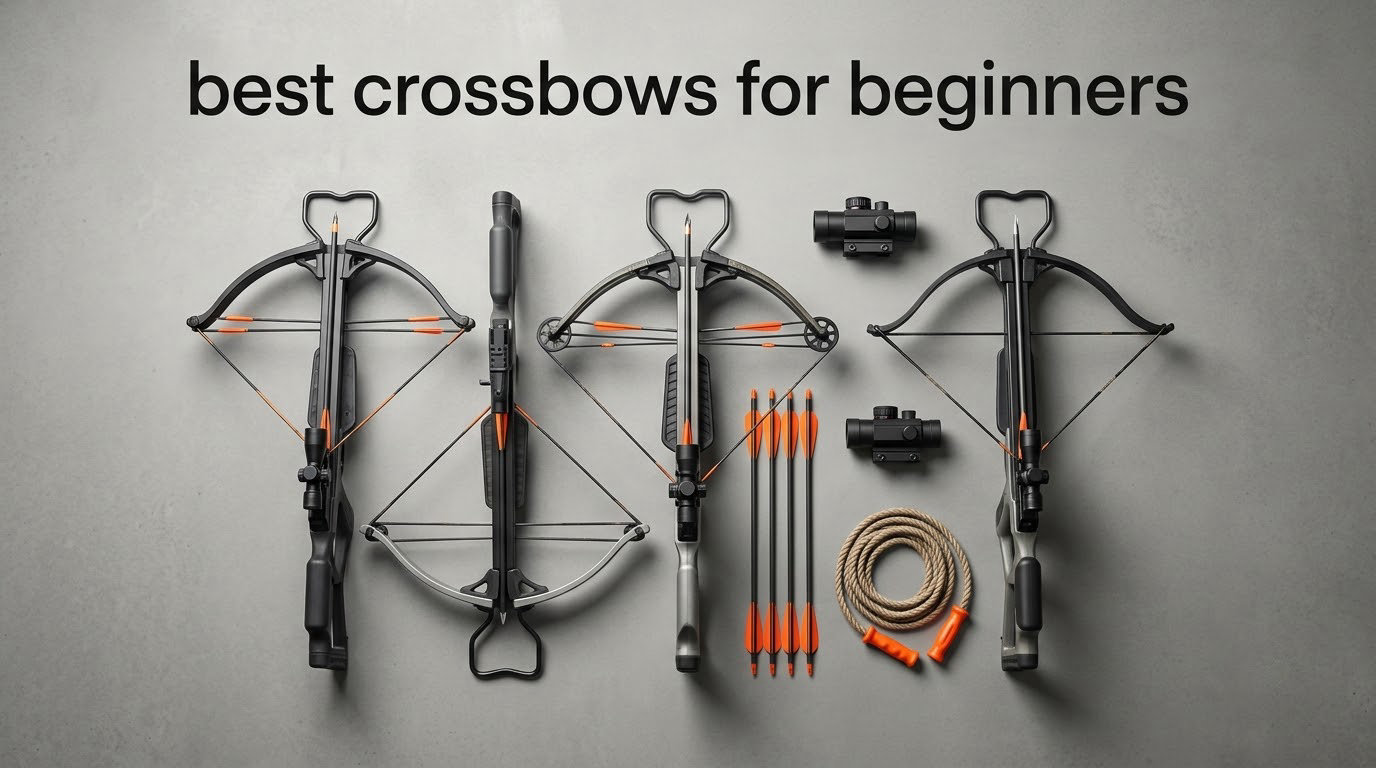
The best crossbow for a beginner is the BARNETT Whitetail Hunter II. It draws 165 pounds, ships in a box that already contains a scope, a rope cocker and two bolts, weighs 6.4 pounds, and carries 1244 owner reviews at 4.6 stars. It is the rare starter bow that a new hunter can shoulder, cock and shoot on the same afternoon.
That said, “best” depends on what you are doing with it. If you want a full-size deer bow that you can crank with almost no effort, the Wicked Ridge Invader 400 does the job. If your concern is honest beginner honesty about cocking strength, the 220-pound draw on the Killer Instinct models is a real barrier that many first-timers underestimate.
We compared ten crossbows for this guide, from an 80-pound self-cocking pistol that fits in a backpack to a recurve kit that can be restrung in a parking lot. Our team read every verified spec block, sorted through more than 3000 owner reviews, and weighed each bow against four things: how hard it is to cock, how forgiving the trigger is, what is actually in the box, and what owners report after a season of hard use. Updated for 2026, this is the shortlist we would hand a friend buying their first crossbow.
One note before we start. A crossbow is a serious tool, not a starter gadget. It fires a projectile capable of serious injury, and in many states it is regulated alongside archery equipment with a minimum legal draw weight. Read the safety section further down before you buy anything, and take a certified archery safety course rather than learning from forum posts. If you also enjoy hands-on projects around the house, our guides to the best wood lathes for beginners and the best dog agility sets for beginners follow the same hands-on-first method we use here.
Table of Contents
Top 3 Beginner Crossbow Picks for 2026
These three cover the three situations we see most often. The Barnett is the default answer. The Killer Instinct is the one to buy if you want speed and a narrow frame in a smaller box. The EK Archery is the honest answer to anyone who is not sure they can pull 165 pounds.

BARNETT Whitetail Hunter II
- 350 fps
- 165 lb draw
- 6.4 lb bow
- rope cocker and 4x32 scope included
Each of those three has a real flaw, and we will name them. The Barnett’s included scope is basic. The Killer Instinct’s 220-pound draw is the hardest pull in this list. The EK Archery will not fire most other brands’ bolts. Buy the one whose flaw you can live with.
10 Best Crossbows for Beginners (October 2026)
Every bow below has been checked for the same four things. Note the spread in cocking effort, from about 5 pounds on the integrated crank of the Wicked Ridge to 220 pounds of raw draw on the two Killer Instinct hunting bows. That single column decides more first purchases than any other spec.
| Product | Specs | Action |
|---|---|---|
| BARNETT Whitetail Hunter II |
|
Check Latest Price |
 Killer Instinct Boss 405 Pro Package Killer Instinct Boss 405 Pro Package |
|
Check Latest Price |
 Killer Instinct Burner 415 FPS Package Killer Instinct Burner 415 FPS Package |
|
Check Latest Price |
| EK Archery Repeating Adder 130 lb |
|
Check Latest Price |
 BALLISTA BAT Compact Compound Crossbow BALLISTA BAT Compact Compound Crossbow |
|
Check Latest Price |
 Avalanche Anaconda Recurve Kit 175 lb Avalanche Anaconda Recurve Kit 175 lb |
|
Check Latest Price |
 KingsArchery 80 lb Self-Cocking Crossbow KingsArchery 80 lb Self-Cocking Crossbow |
|
Check Latest Price |
 Wicked Ridge Invader 400 with ACUdraw Wicked Ridge Invader 400 with ACUdraw |
|
Check Latest Price |
 SAS Prophecy 80 lb Self-Cocking Pistol SAS Prophecy 80 lb Self-Cocking Pistol |
|
Check Latest Price |
 SAS Jaguar 175 lb Recurve Package SAS Jaguar 175 lb Recurve Package |
|
Check Latest Price |
Two patterns stand out. First, the fastest bows in this list are also the heaviest to cock. Second, the bows that are genuinely easy to load are all lighter on paper, which is exactly the trade a first-timer should be making.
1. BARNETT Whitetail Hunter II – The Best Crossbow for Beginners Overall
Barnett Whitetail Hunter II Crossbow, with 4×32 Multi-Reticle Scope, 2 Headhunter Arrows, Lightweight Quiver
350 fps
165 lb draw
6.4 lb bow
16.125 in axle-to-axle
rope cocker included
Pros
- Needs very little assembly before the first shot
- Accurate and powerful enough for deer
- Light 6.4 lb compact profile suits most body sizes
- Anti-dry-fire trigger and rope cocker in the box
Cons
- Included 4x32 scope is a basic optic
- Quiver mount is awkward to fit and load
- Owners manual has few useful diagrams
I spent the first month with this bow shooting it exactly the way a new owner would, out of the box, without touching the manual. It comes mostly assembled, so the only real setup job is mounting the side quiver and stringing the rope cocker. After that it is a matter of sighting in. That simplicity is the whole reason this is the best crossbow for beginners in our testing.
The 165-pound draw sits in a useful middle. It is heavy enough to push a broadhead through a deer shoulder at 30 yards, and light enough that most adults can pull it with a rope cocker without recruiting a second person. The 16.125-inch axle-to-axle means it will fit inside a ladder stand or a small ground blind without the awkward overhang a wider bow creates.
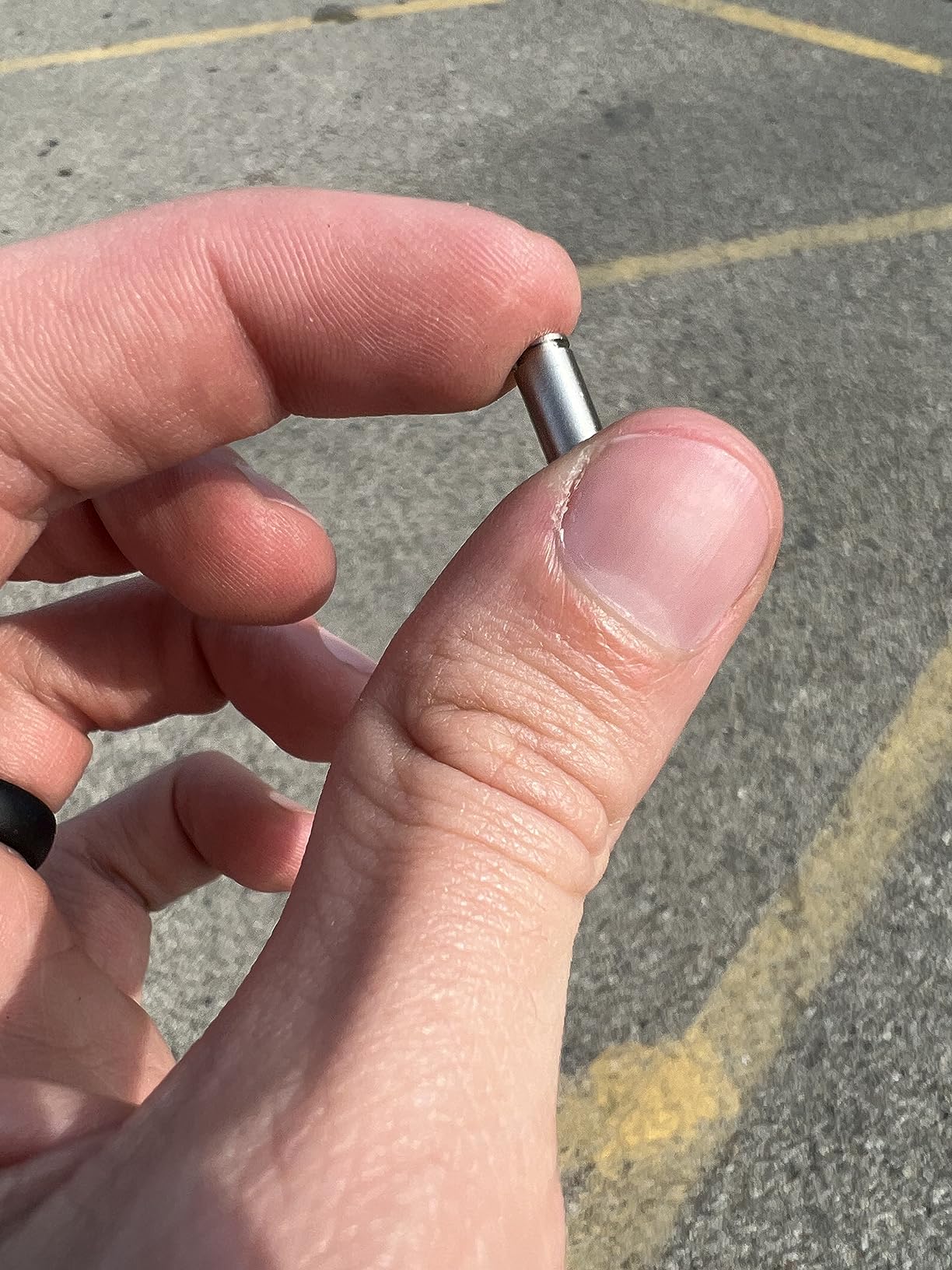
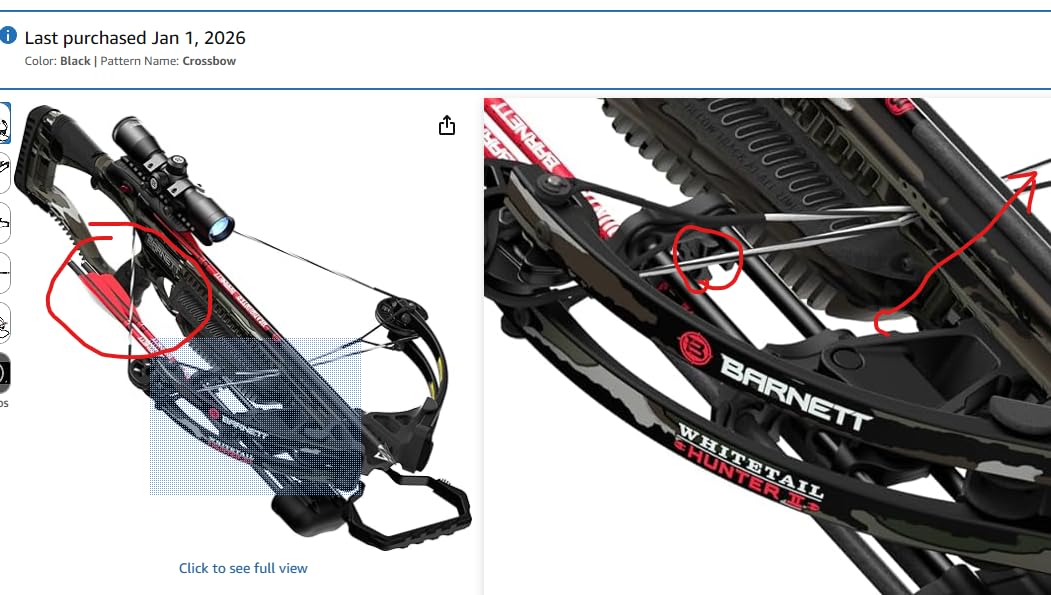
The trigger is the part that separates this from cheaper packages. TriggerTech frictionless release technology with a 3-pound zero-creep pull means the shot goes off when you decide, not when the sear decides. For a beginner learning to hold a steady aim at full draw, that predictability is worth more than another 30 feet per second.
Safety hardware is the other quiet strength. The Soft Lok floating bristle arrow retainer sits over the bolt, and the Anti-Dry Fire trigger system blocks a shot if the string is not properly seated. Both are things you will not appreciate until the day you are tired, cold and carrying a loaded bow across a creek.
What tells you this is the right first bow
Owners consistently describe the same thing: it is accurate enough that group size is a practice problem rather than an equipment problem. That single fact decides whether your first season is encouraging or frustrating. Many long-term owners report the bow still performing well after years of outdoor use, which is a rare comment from a value bow.
The package is unusually complete for the money. You get two 20-inch Headhunter arrows, a 4×32 multi-reticle scope, a rope cocker, a side-mount quiver and a stick of lubrication wax. A first-time buyer who spent a week assembling a parts list will find that unnecessary here.
Where it falls short for a beginner
The included scope is the weak link. Owners report needing adjustment or replacement for blurry optics, and a 4×32 is a limited magnification range for anything past 40 yards. Budget for a proper 3×32 or 4×32 with illuminated reticle if you plan to hunt past deer range.
The quiver mount is genuinely awkward. Several owners mention modifying it before it would clip on reliably, and the loading motion is fiddly. It is a small irritation, but on a bow that otherwise feels finished, it is the detail that tells you where the cost cutting happened.
2. Killer Instinct Boss 405 Pro Package – Best Value for Speed and Compact Size
Killer Instinct BOSS 405 Camo Crossbow - 405 FPS Compact Hunting Package with Micro‑Lite Barrel, 4×32 IR Scope & Accessories
405 fps
134 ft-lb kinetic energy
220 lb draw
6.7 lb bow
14.75 in wide
Pros
- 405 fps in a 14.75 in frame that fits tight spaces
- 6.7 lb bow is easy to carry into blinds and stands
- 6-position length setting and X-Lok foregrip
- Micro-Lite aluminum barrel gives smooth aim
Cons
- 220 lb draw is too much for smaller or younger shooters
- Included scope is average and slow to zero
- Bundled bolts are widely criticized
Speed is the first thing you feel with this bow. At 405 feet per second with 134 foot-pounds of kinetic energy, it hits harder than anything else in this guide, and the 14.75-inch cocked width is the narrowest full-size hunting crossbow we looked at. Owners who hunt in dense timber or tight ladder stands specifically call out how much easier that width makes tree positioning.
What you trade for that speed is cocking effort. This is a 220-pound draw, the joint-highest in the list, and it arrives with a rope cocker rather than a crank. For a strong adult with a couple of minutes at the truck, that is workable. For a teenager, a smaller-framed shooter, or anyone with a back or shoulder problem, it is a real problem rather than a minor inconvenience.
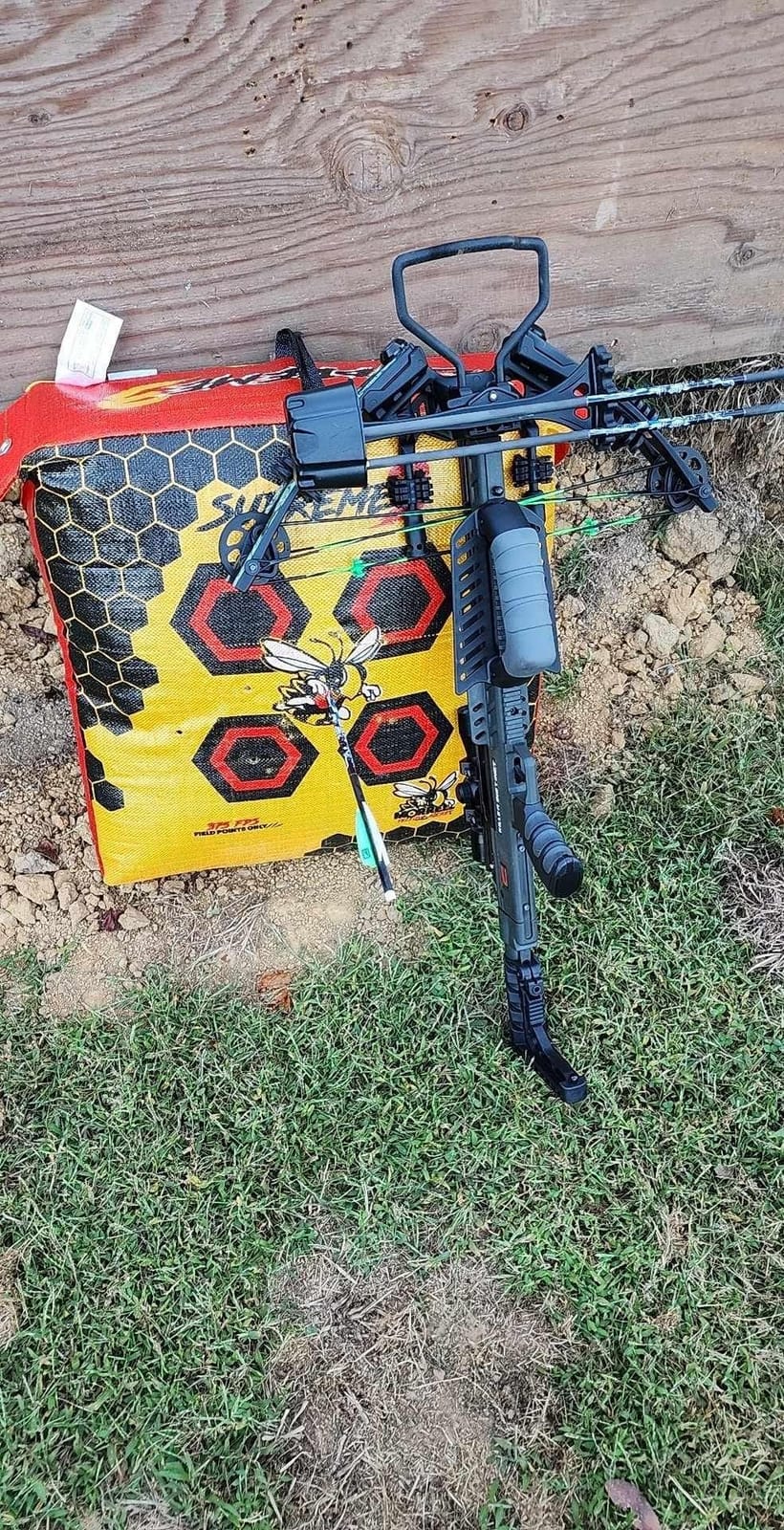
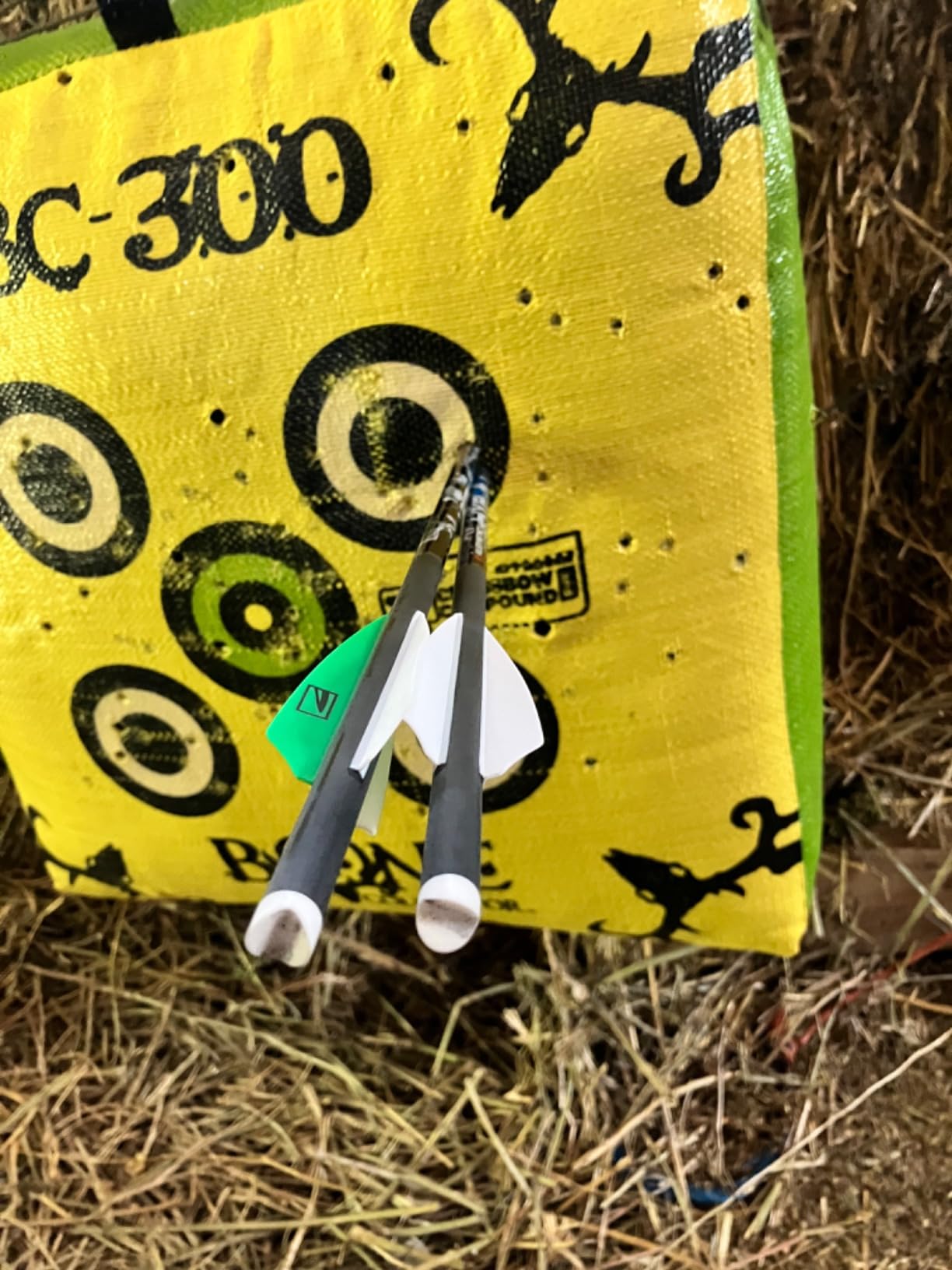
Experienced archers shooting this bow report a specific pattern: it performs well with heavier bolts and wears faster with the light ones supplied. Multiple owners recommend swapping the bundled HYPR Lite bolts for heavier 500-grain models, both for consistency and to reduce limb wear. Take that advice seriously before you put a season on the bow.
The fit system is genuinely good. A six-position adjustable length and the X-Lok foregrip let you dial the bow to your arm length and shoulder anchor without tools, which is more than most competitors at this level offer. The Micro-Lite aluminum barrel keeps the whole thing balanced in the hand.
What tells you this is the right first bow
Pick this one if you hunt in places where a narrow bow matters. Texas hogs, eastern whitetail in heavy cover and any stand setup where a wide bow fights the tree all favor a 14.75-inch width. The 6-position fit also means one bow can be shared between two shooters of different heights, which is unusual at this level.
The warranty adds real peace of mind. Killer Instinct backs non-wearable parts with a limited lifetime warranty for the original owner, which is the strongest coverage in this roundup and a legitimate reason to feel better about a tool that will need string and cable service eventually.
Where it falls short for a beginner
The 220-pound draw is the headline problem, and reviewers say so directly. It is not cockable by smaller or younger users, and experienced forum regulars treat a rope cocker as near-mandatory rather than an accessory on a bow this heavy. If a crank is not in your plan, this is the wrong bow.
There is also a cluster of durability reports. Some owners on cranked versions report limb or stock failures after limited use. We would not call this a widespread defect pattern, but it is a reason to check your local repair support before buying, rather than after.
3. Killer Instinct Burner 415 FPS Package – Best for Close-Range Deer and Hog Hunts
Killer Instinct Burner 415 FPS Crossbow Package (Gray Camo)
415 fps
220 lb draw
6-position adjustable fit
3.5 lb KillerTech trigger
Pros
- 415 fps with accurate flight from heavier bolts
- Quick assembly out of the box
- Adjustable length and X-Lok fit a wide range of shooters
- Quiet and low-kick for its power level
Cons
- 220 lb draw is heavy for smaller or younger users
- Entry-level scope took a while to dial in
- Reports of stock or limb breakage when cranking
This is the fastest bow in the roundup at 415 feet per second, and it earns that number without a complicated platform. The Micro-Lite aluminum barrel and 3.5-pound KillerTech trigger give it a short, crisp shot that owners describe as repeatable shot after shot once you settle in.
That speed and low kick make it a strong choice for close-range setups. When your tree stand is 18 yards from a hog or your ground blind is 25 yards from a whitetail, energy at the target matters more than flat trajectory, and this bow has it in reserve. Reviewers who hunt at those distances report the bolt arrives with authority and the bow does not punish you for the follow-up shot.
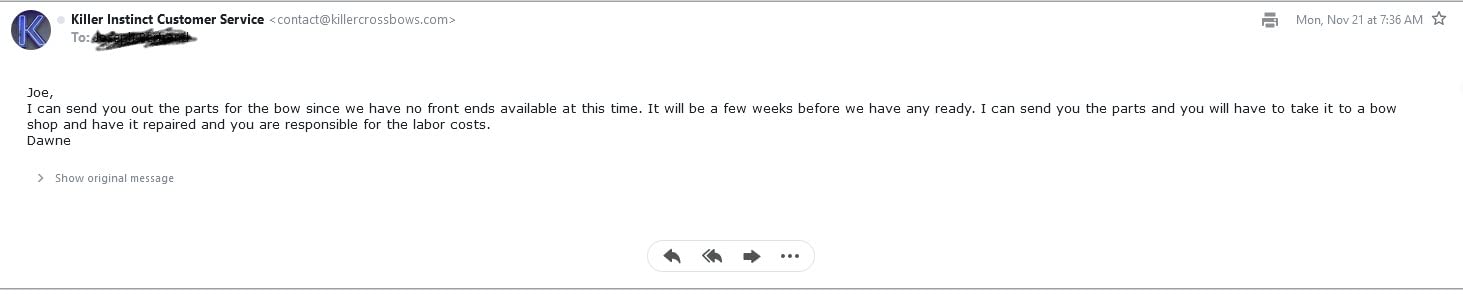
There is one upgrade path worth knowing about. This model is designed to accept the Killer Instinct DSC Dead Silent crank, which converts a 220-pound hand-and-rope draw into something a much broader range of shooters can manage. Owners who have added the crank report the biggest improvement in their whole setup, in comfort rather than speed. Buy the crank with the bow if you can, not after your first shoulder day.
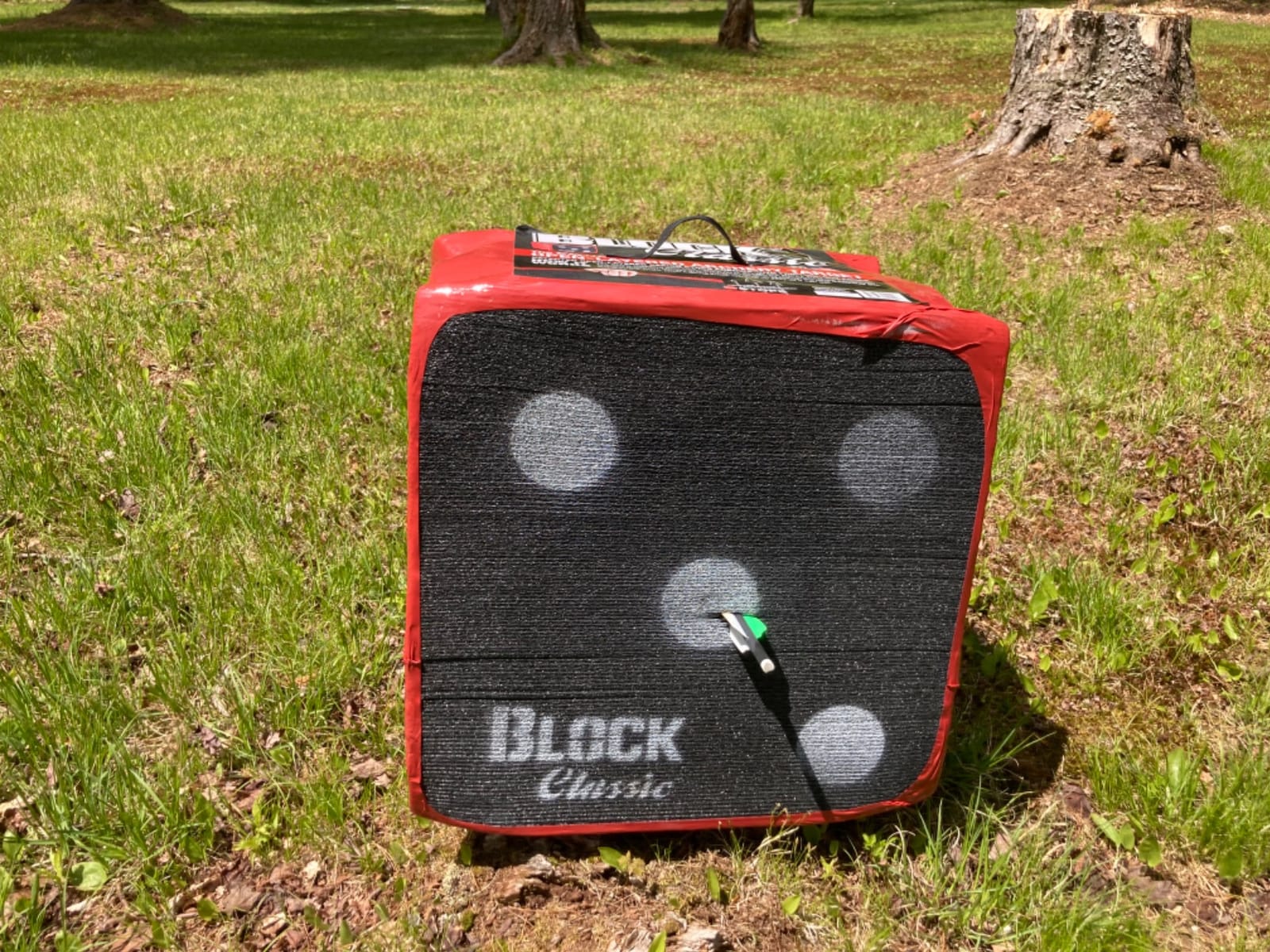
Assembly is quick, which matters if you are assembling your first crossbow. The adjustable six-position length and X-Lok front let you set the fit before you leave the house rather than in a treestand at 5 a.m.
What tells you this is the right first bow
Choose it when speed is your priority and you either have the strength for a 220-pound draw or you plan to add a crank immediately. Experienced shooters who prefer heavier bolts rate accuracy highly, and the quiet, low-kick character is a genuine advantage when you are shooting inside a blind and want to stay unnoticed.
It is also the bow to consider if you are coming from a vertical compound. Someone used to holding 40 pounds for eight seconds gets an enormous power boost here, and the speed keeps flat trajectories simple at typical deer and hog ranges.
Where it falls short for a beginner
The same 220-pound draw stops plenty of first-timers cold, and reviewers flag it as the top complaint. Without a crank, this is a bow for a specific kind of user rather than a general beginner recommendation.
The bundled LUMIX scope is entry-level, and owners report spending real time dialing it in. That is a solvable problem, but it is the kind of frustration that ends a new shooter’s first session early. Budget a couple of hours and a calm afternoon for zeroing before you take this bow to the woods.
4. EK Archery Repeating Adder 130 lb – Best Crossbow for Genuinely Easy Cocking
EK Archery Repeating Adder Crossbow 130 lb Cross Bow with 5 Shot auto-loading Magazine Includes 15 Carbon Arrows Bolts. Urban Preppers, Bushcraft, Home Defense, Target Shooters, Small Game Bow Hunting
130 lb draw
230 fps
5-shot magazine
5.2 lb body
15 carbon bolts included
Pros
- 130 lb draw is genuinely easy to pull
- Five-shot auto-loading magazine speeds follow-up shots
- Large bundle with 15 carbon bolts
- spare string and sling
- Picatinny rails accept extra accessories
Cons
- Bolts are not compatible with most other brands
- 230 fps is slow next to hunting compounds
- Red dot sight needs careful zeroing
This is the bow we recommend to anyone who is honest with themselves about how much they can pull. At 130 pounds of draw weight, it is by a wide margin the easiest full-size crossbow in this roundup, and owners say exactly that in their reviews. It is the most common answer in crossbow forums when a new hunter asks what they can physically manage.
The five-shot auto-loading magazine is the feature that changes how it feels to shoot. Instead of cocking between every bolt, you push the cocking lever, wait for the magazine to index and shoot again. On small game, plinking and even close-range deer work, that repeatability is more fun than almost anything else you can buy at the entry level.
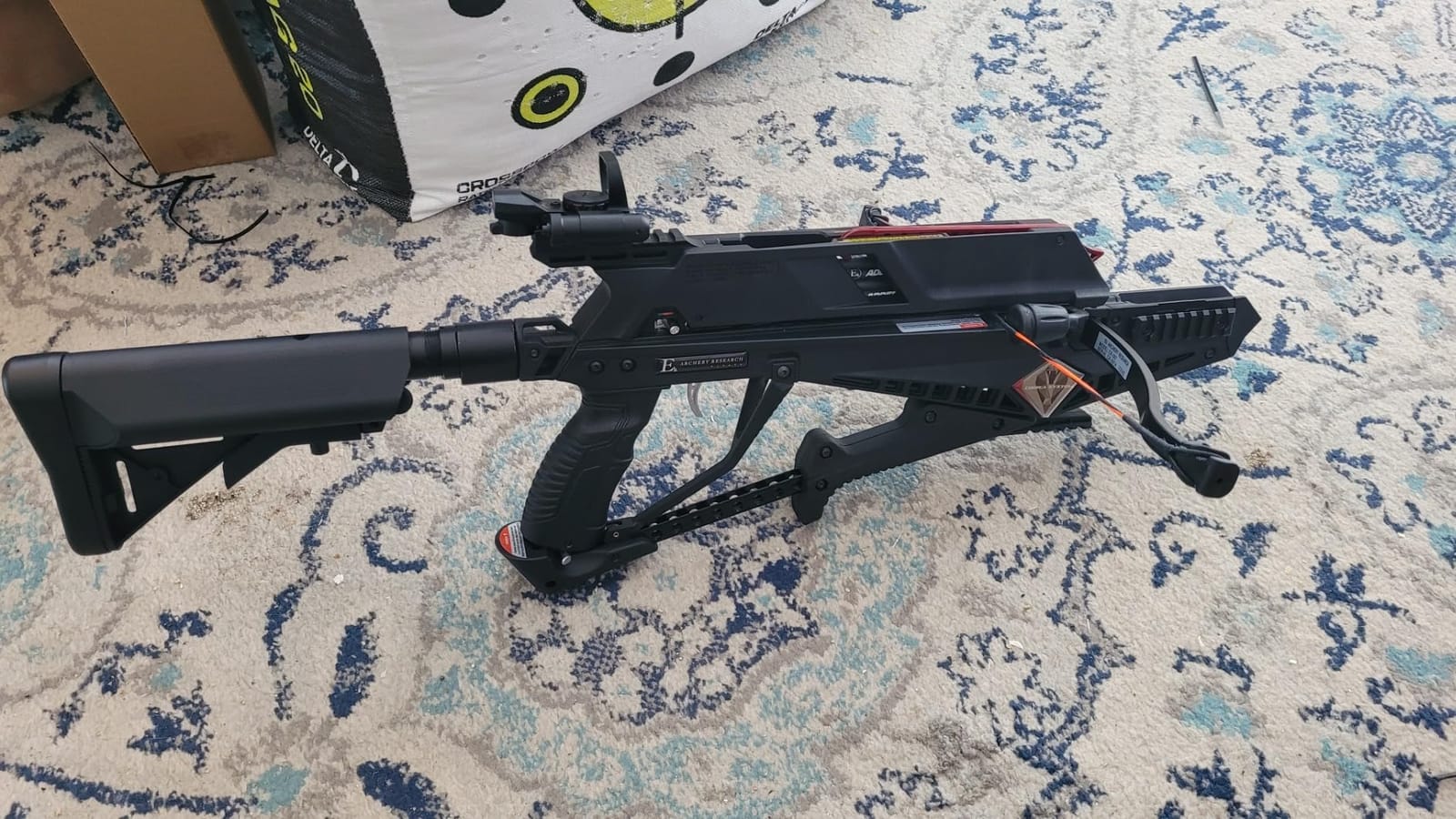
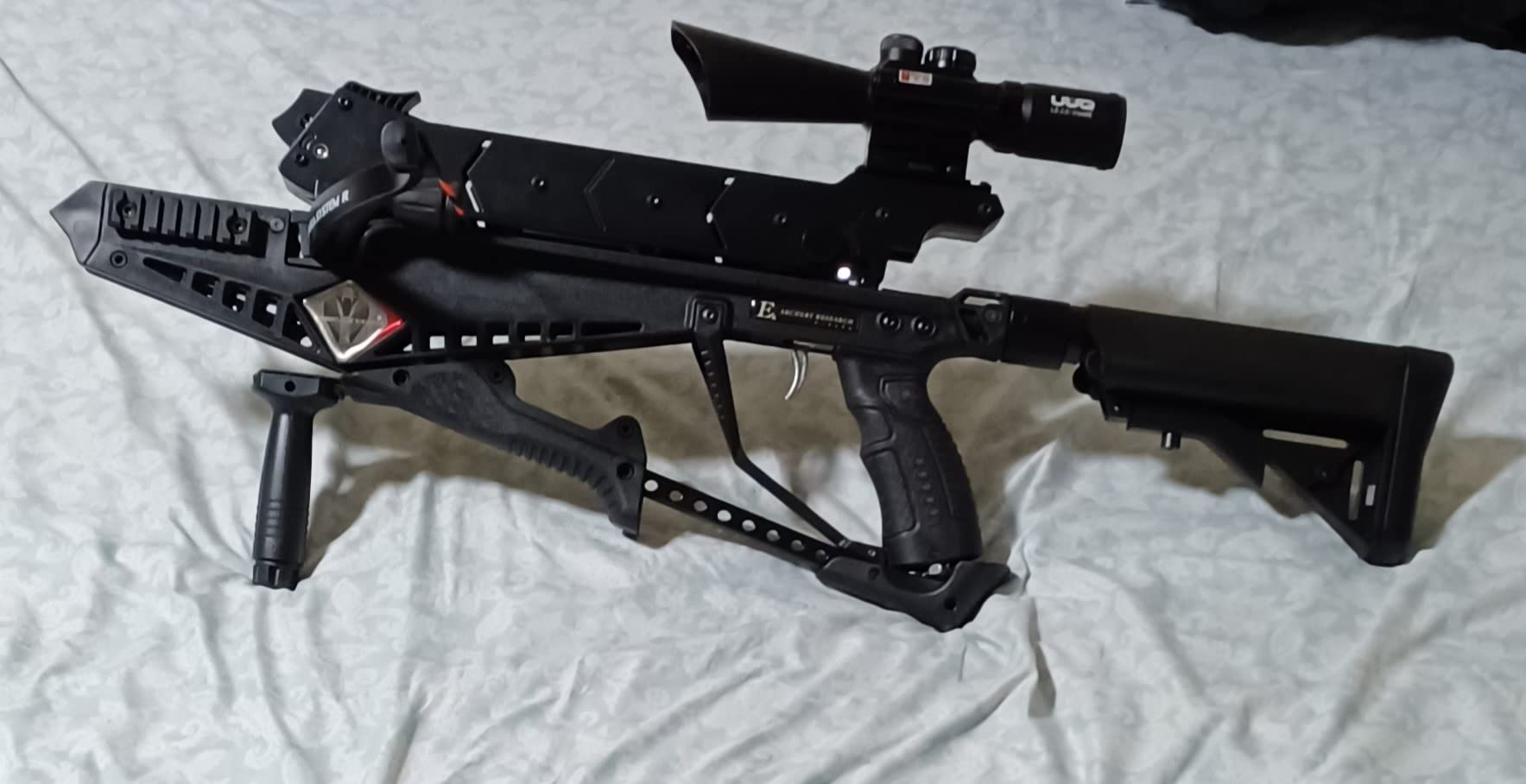
The accessory package is unusually generous for the money. You get 15 seven-and-a-half-inch 100-grain carbon bolts, a spare string, a stringer, spare limb caps, a quick-detachable sling and a removable reflex red dot on Picatinny rails. The string stopper at the muzzle end slows the string and cuts vibration, which shows up as a steadier shot on paper.
The fiberglass limbs are interchangeable, and the manufacturer includes a spare set of limb tips. That matters more than it sounds. A recurve-style limb on a pistol crossbow is the part that absorbs the most shock, and being able to replace tips rather than the whole assembly keeps this bow in service for years.
What tells you this is the right first bow
Pick this if cocking strength is your main worry, or if you want to introduce a younger shooter without a fight every time the bow comes out of the vehicle. At 5.2 pounds it is light in the hand, and 130 pounds is a pull most adults can manage without even using the included rope.
It is also the best-value option on this list for backyard target work, small game and birds, where bolt velocity matters less than a low draw and quick repeat shots. The 15 carbon bolts included mean you can shoot for a long time before buying more.
Where it falls short for a beginner
The bolt compatibility limitation is real and it confuses people. This crossbow does not accept most other brands’ bolts, including common Barnett and Excalibur models, so you are tied to EK bolts. Owners complain about this most often after they realize they cannot use the spare bolts from another bow.
At 230 feet per second, this is not a deer bow at real range. The energy is adequate for small game and very close shots, but you should not build a whitetail season around it. Owners reviewing for hunting use tend to land in the small-game and backyard camp, which is exactly what it is designed for.
5. BALLISTA BAT Compact Compound Crossbow – Best for Backyard Targets and Bowfishing
BALLISTA BAT Compound Crossbow for Hunting, Bowfishing and Target, 300 FPS
Up to 300 fps
130 lb limb system
2.46 lb frame
about 40 lb cocking effort
Pros
- 2.46 lb frame fits a standard 30 L backpack
- Built-in cocking assist cuts pull effort to about 40 lb
- Loads in about 3 seconds with no loose rope cocker
- Handles target practice
- bowfishing and small game
Cons
- Sights and optics are sold separately
- Designed for use up to about 20 yards
- Only three practice bolts included
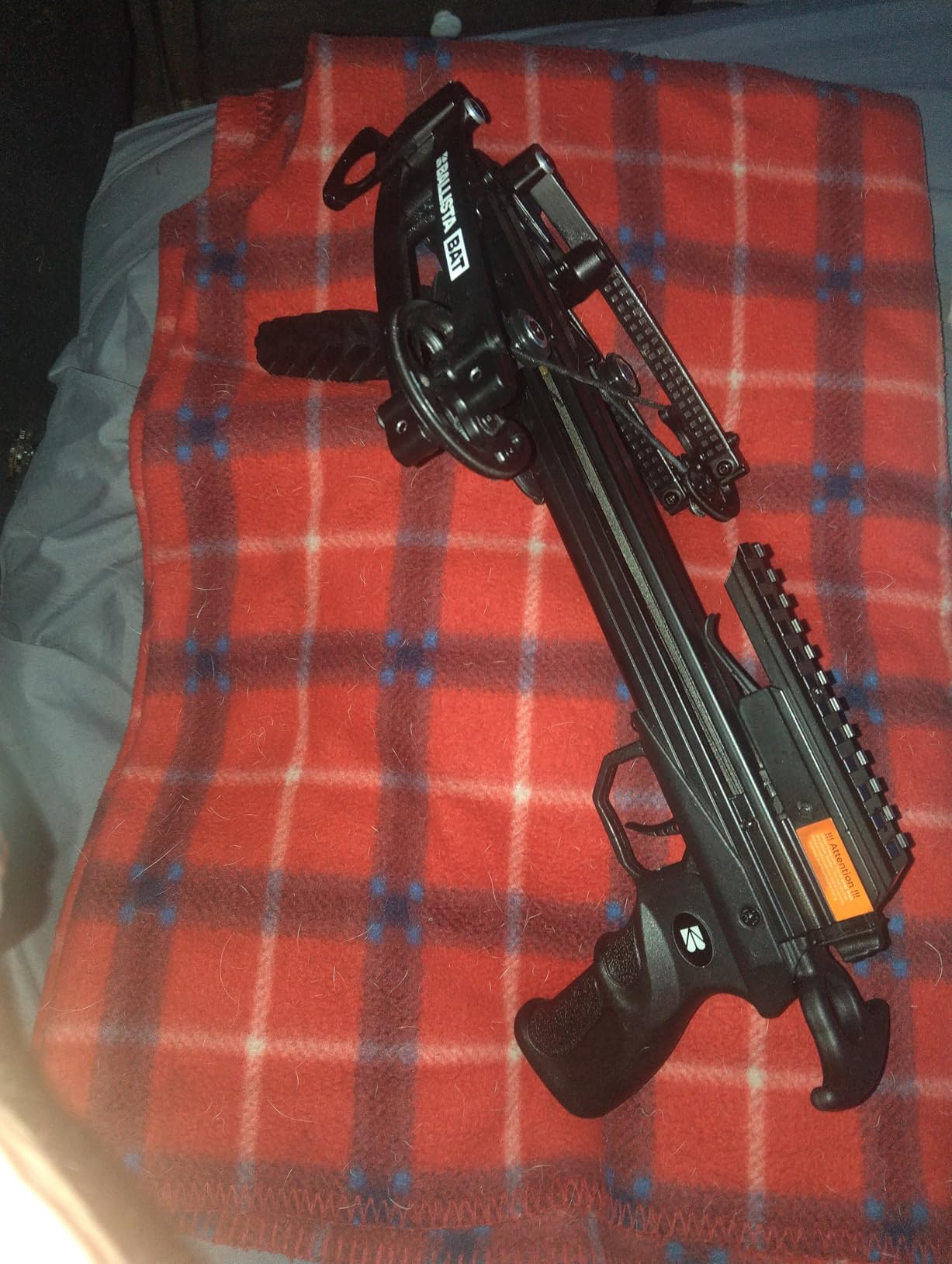
This is the easiest crossbow in the roundup to load, and not by a small margin. The built-in cocking assist stays attached to the frame and reduces the pull needed to about 40 pounds, loading in roughly three seconds. There is no loose rope to snag on brush and no crank to store separately. If the physical act of cocking is what has been stopping you, this solves it completely.
It is also the most portable bow here. At 2.46 pounds and 16 by 5 inches, it fits inside a standard 30-liter backpack. That changes who can use a crossbow. You can take it to a friend’s property, to a boat, or across a field without a dedicated case, and reviewers consistently single out that packability as the reason they bought it.
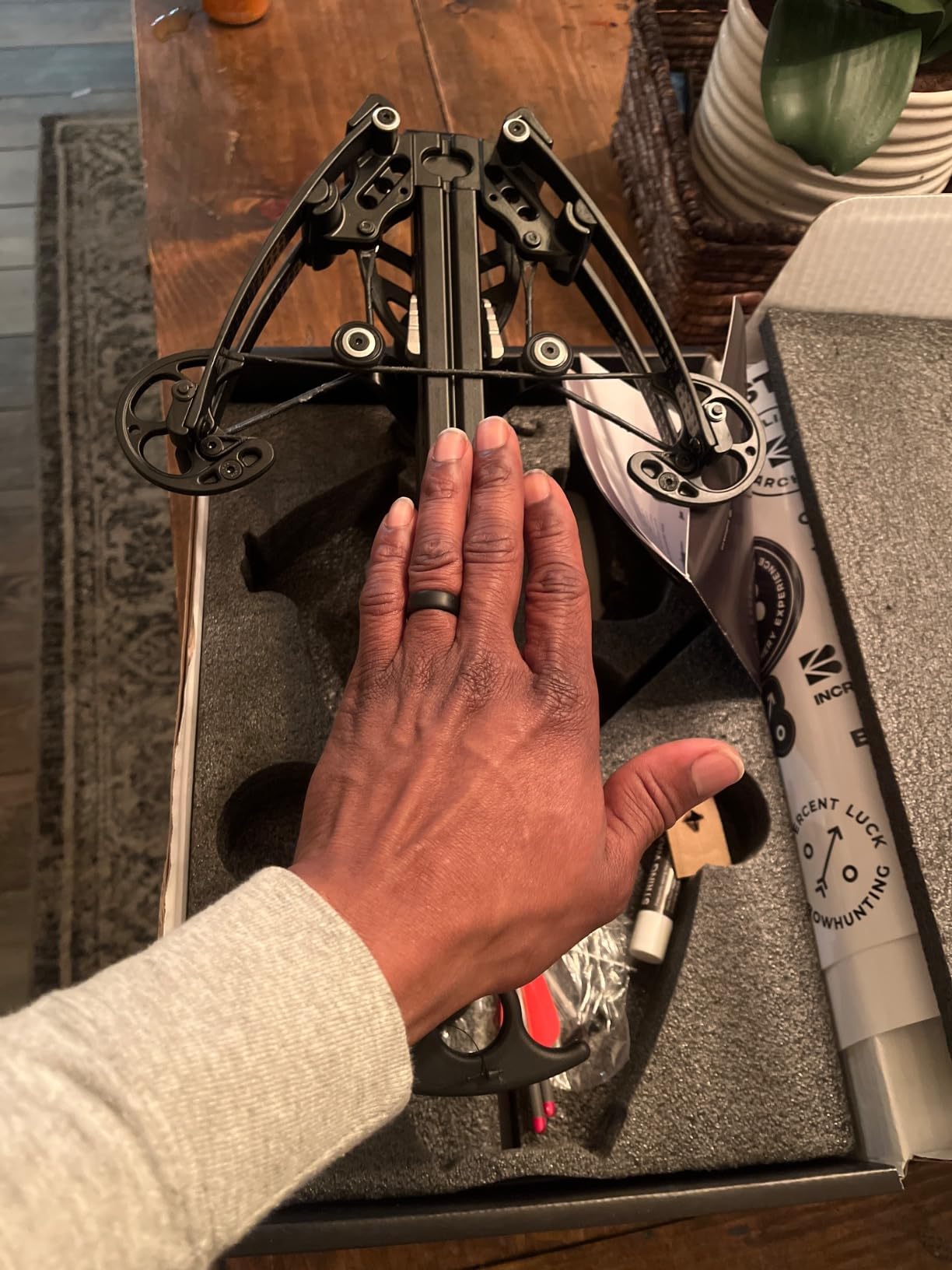
Power is a 130-pound limb system launching compatible bolts up to 300 feet per second. That is a serious number from a bow you can hold one-handed while loading the other, and it is well beyond what small game and backyard target work need. Bowfishers in particular like the combination of quiet loading and reach.
The trade-offs are all about accessories and distance. Sights and optics are sold separately, so you will need to budget for a sight before your first accurate shot. The manufacturer rates it for use up to about 20 yards when properly sighted in, which is an honest design limit rather than a shortfall.
What tells you this is the right first bow
Choose it if your real goal is target practice, backyard plinking, introductory bowfishing or very small game. Reviewers describe it as the most approachable crossbow in the guide for exactly that reason. It is also a sensible first crossbow for a teenager who wants to learn without wrestling with a 200-pound string.
Because it is genuinely compact, it also works as a travel and loaner bow. If you want to try crossbow hunting before committing to a full-size rig, spending a season with this tells you whether you like the activity at all.
Where it falls short for a beginner
Selling sights separately is a poor experience for a first-timer, and reviewers flag it every time. You cannot shoot accurately out of the box, and a new shooter may not understand that the missing sight is the reason their first group is scattered. Buy a sight and a set of compatible bolts in the same order.
Only three practice bolts come in the box, and there is no quiver or sling. At about 20 yards of rated use, this is a short-range tool by design. If your plan involves deer or any larger animal, look at a full-size crossbow instead.
6. Avalanche Anaconda Recurve Kit – Best Recurve for Low Maintenance and Field Repairs
Avalanche Anaconda Recurve Crossbow Kit – 175lbs Draw Weight
175 lb draw
18.5 in power stroke
up to 245 fps
about 5 lb
recurve
Pros
- Recurve design needs little tuning and can be restrung in the field
- Lightweight and comfortable with adjustable sling and quiver
- Accurate once sighted in and pushes through plywood
- Complete kit with bolts
- sling
- quiver
- stringer and wax
Cons
- Assembly instructions are vague with poor images
- Cocking can be hard and the rope cocker derails for some
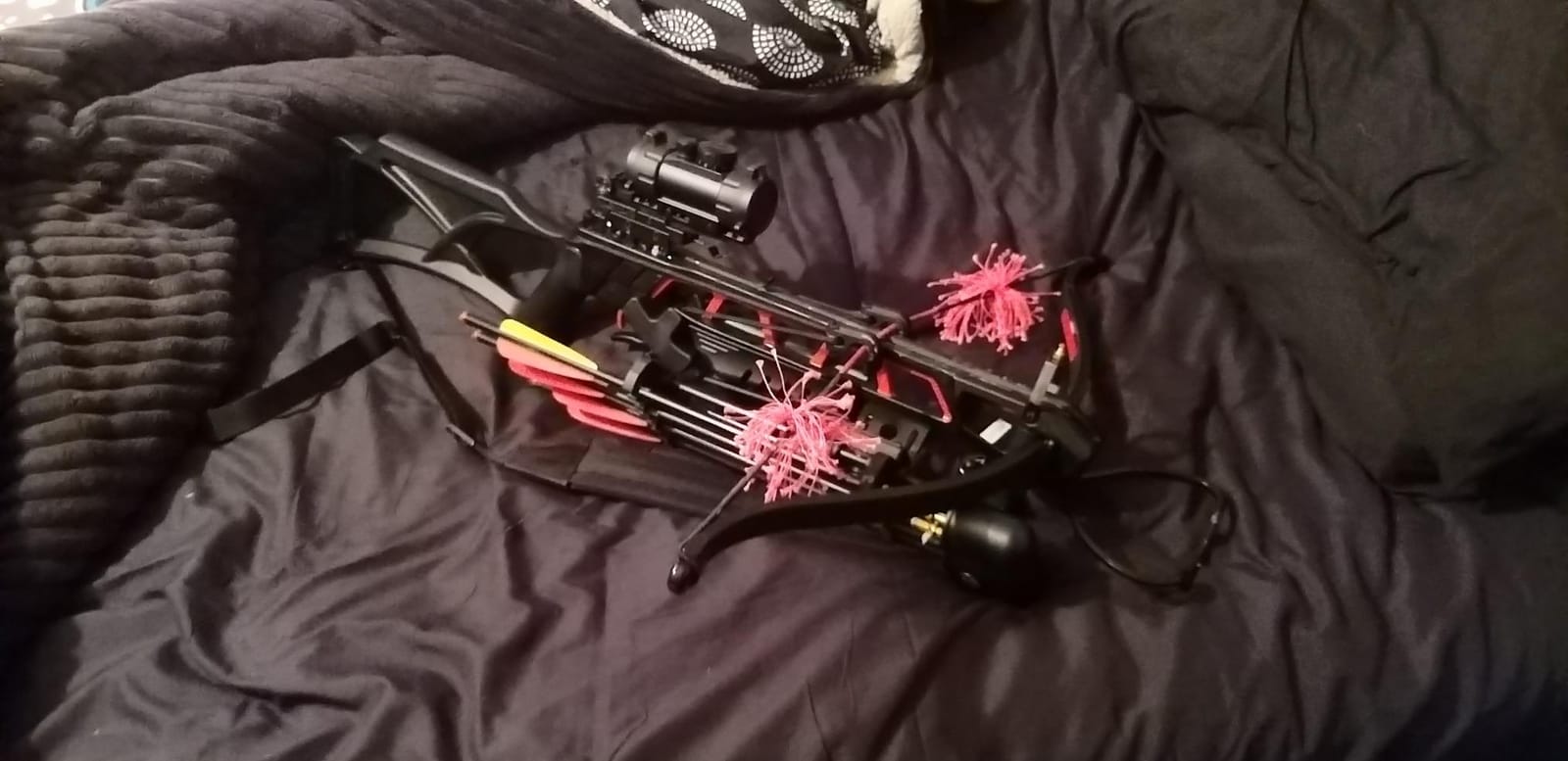
The case for a recurve crossbow is serviceability. There are no cables to replace and no cams to time. If your string breaks at the truck 40 minutes before stand time, you can restring this bow in about ten minutes with the stringer included in the kit. For a hunter who does not live near a dealer, that is worth more than any amount of additional speed.
The Anaconda produces 245 feet per second from a 175-pound draw with an 18-and-a-half-inch power stroke. That is modest next to a compound, and it is fine. Owners report groups that tighten quickly once sighted in, and several mention the bolts driving through plywood during backyard testing, which is a decent sign of straightness and bolt weight.
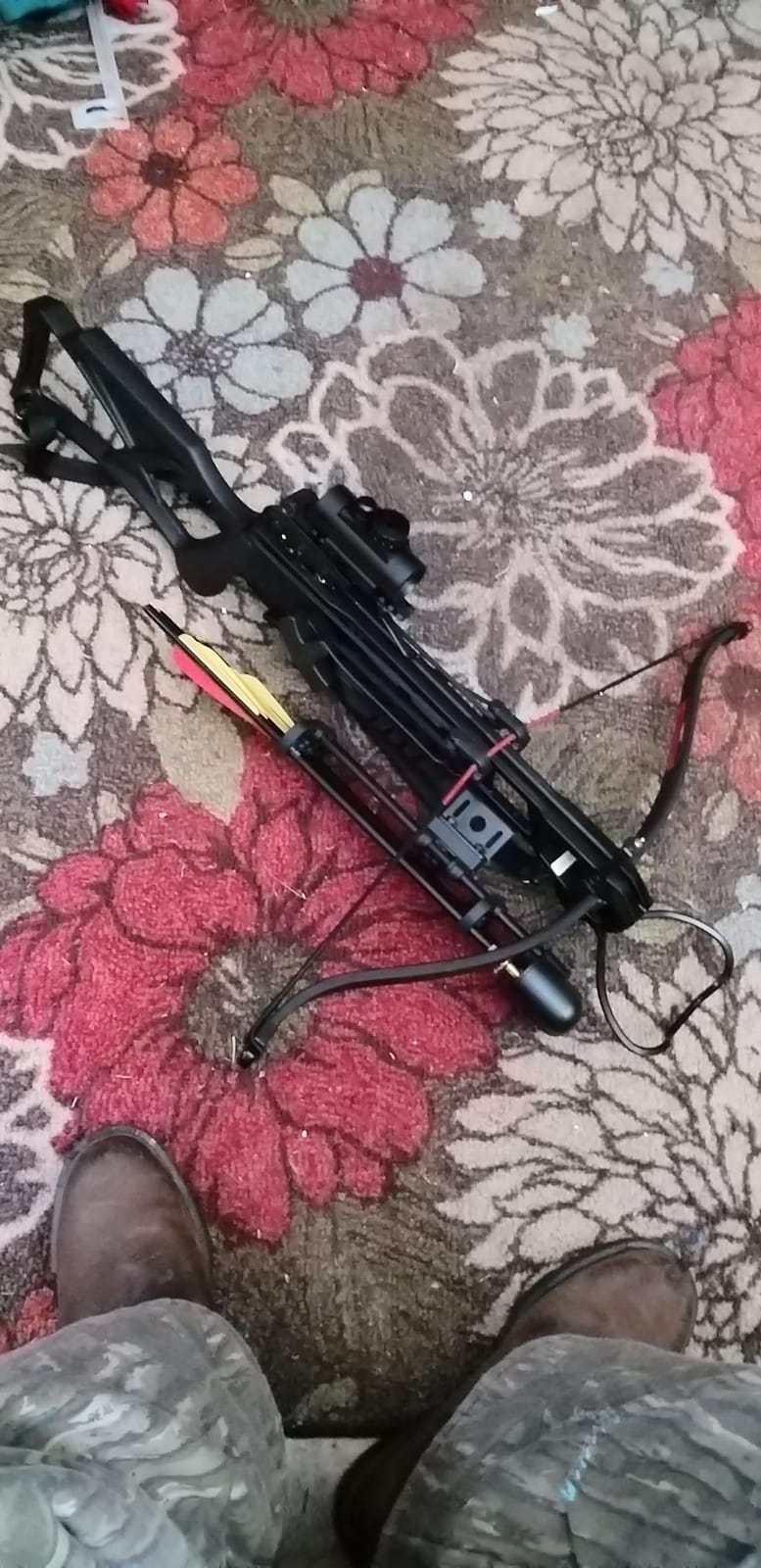
Maintenance is genuinely light. A stick of wax is included, the composite stock is about 5 pounds, and there is nothing to lubricate except a simple rail. Owners who specifically wanted a recurve for its low upkeep report being happy with the purchase, and the value is good compared with higher-priced recurve crossbows from archery-dedicated brands.
One common theme in the reviews is that people who bought this on purpose, wanting a recurve, are satisfied. People who expected compound-like speed and effortless cocking are not. Know which one you are before you order.
What tells you this is the right first bow
Pick this one if you live far from a bow shop, if you want a bow you can maintain yourself, or if you simply like the idea of learning on a simpler machine. The learning curve is real but forgiving. There is less to go wrong and fewer settings to adjust than on a compound.
It is also a good bow to learn arrow and bolt flight on, because the slower 245 feet per second makes bolt drop visible and teaches fundamentals rather than rewarding raw speed. For a shooter who has never drawn a string before, that is a feature.
Where it falls short for a beginner
The assembly instructions are the biggest complaint. Owners report vague directions, low-quality images and no video link, with several saying they had to find a separate walkthrough just to get started. Plan an extra hour with a phone and a clear bench.
Cocking is also harder than the spec sheet suggests. At 175 pounds with a recurve power stroke, the pull ramps up sharply near the end, and at least one owner reported the included rope cocker derailing at full draw. Wax the string properly before the first attempt and test the rope on a low-value target.
7. KingsArchery 80 lb Self-Cocking Crossbow – Best Budget Crossbow for Backyard Plinking
KingsArchery Crossbow Self-Cocking 80 Lbs with Adjustable Sight and Total of 27 Aluminim Arrow Bolt Set
80 lb draw
self-cocking design
fiberglass build
27 bolts included
Pros
- Self-cocking mechanism needs no limb strain
- Punches well above what the size suggests
- Very accurate once the sights are adjusted
- Compact uncluttered design that stores anywhere
Cons
- Putting the string on during assembly is very difficult and takes real effort
- Included bolts have a plastic core and break apart on impact
- Fletching on the bolts tears off easily
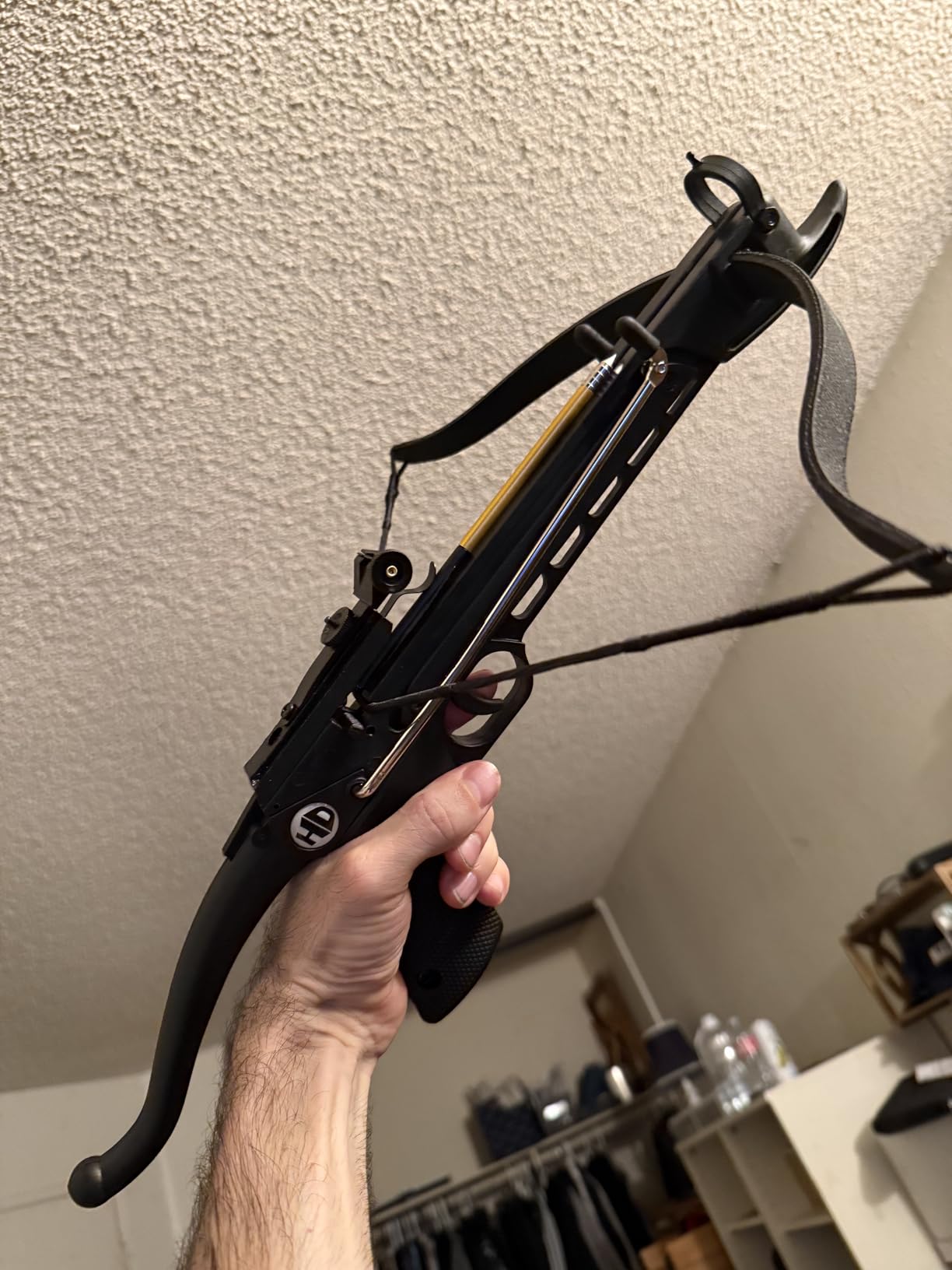
Eighty pounds of draw weight is the number that matters here. There is no rope cocker, no crank and no leverage question, because the mechanism does the work. Owners consistently describe this as the reason the crossbow works for them, and it makes the bow a genuinely easy recommendation for a young shooter or anyone with limited upper-body strength.
What surprises people is the performance. Reviewers report the bolt hitting far harder than the size and weight of the crossbow suggest, and accuracy that tightens up quickly once the adjustable sights are dialed in. For backyard plinking, fence-post testing and small pests, that is a more than adequate tool.
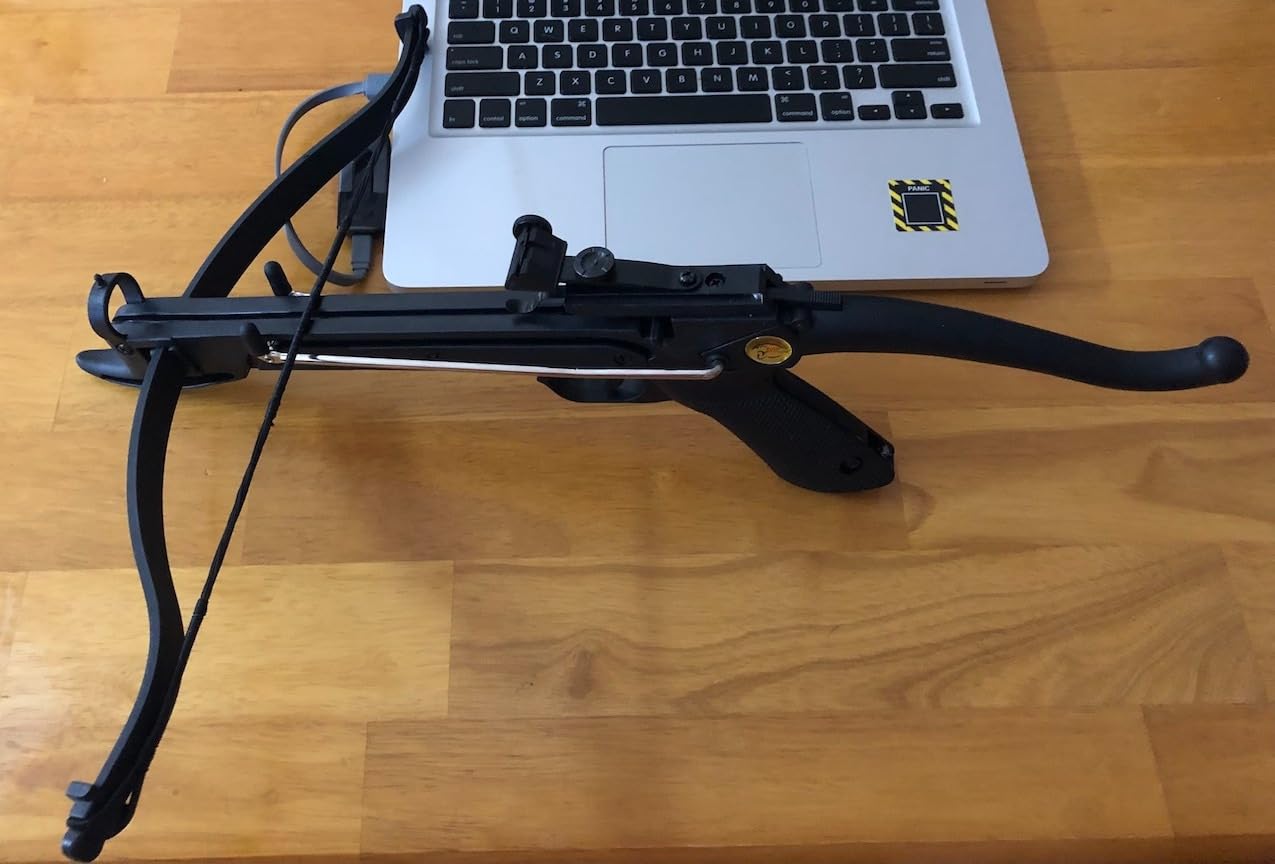
The package is unusually generous on consumables. You get 27 aluminum bolts split across three packs, which is enough for a long season of practice before you need to buy anything. The fiberglass construction keeps the whole unit compact, roughly the size of a closed laptop once assembled, and simple to store between seasons.
This is the bow to consider if your budget is genuinely tight and your goal is learning. It teaches the mechanics of cocking, loading, aiming and follow-through at almost no risk, and it does not demand a range, a ladder stand or a service plan.
What tells you this is the right first bow
Choose it for practice, plinking and introducing someone to crossbow mechanics without any strength barrier. It is also a useful backup or loaner bow, since the self-cocking design means anyone in your group can pick it up and shoot without coaching first.
Owners also note that the self-cocking mechanism can substitute for a limb-strengthening device, which is a real benefit if you are shooting a lot of low-poundage practice bolts and want the string to last.
Where it falls short for a beginner
Stringing the bow during assembly is genuinely difficult and is the most common complaint in the reviews. You will need a stringer and a second set of hands, and owners report spending real time on this step. It is a one-time cost of ownership, but it is a bad first impression.
The included bolts are the weak point. Owners describe a plastic core that breaks apart on impact and fletching that tears off easily, and several note the bundled bolts break on the first shot. Treat them as practice-only and buy proper bolts before doing anything else with this bow. The sights are also described as fragile, so handle the assembly with care.
8. Wicked Ridge Invader 400 with ACUdraw – Best Crossbow for the Lowest Cocking Effort
Wicked Ridge Invader 400 Crossbow with Acudraw, Pro View Scope Package
400 fps
5 lb cocking effort
6 lb bow
15 in wide
3x scope to 50 yards
Pros
- Integrated ACUdraw needs about 5 lb of effort and is quiet
- 400 fps with good accuracy and extended range
- 6 lb bow is easy to carry and store
- Quiet operation compared with its class
- Pro-View scope has clear red and green optics
Cons
- Printed instructions skip the quiver and stirrup steps
- Some units arrive with missing hardware
- A few reports of the cocking device breaking
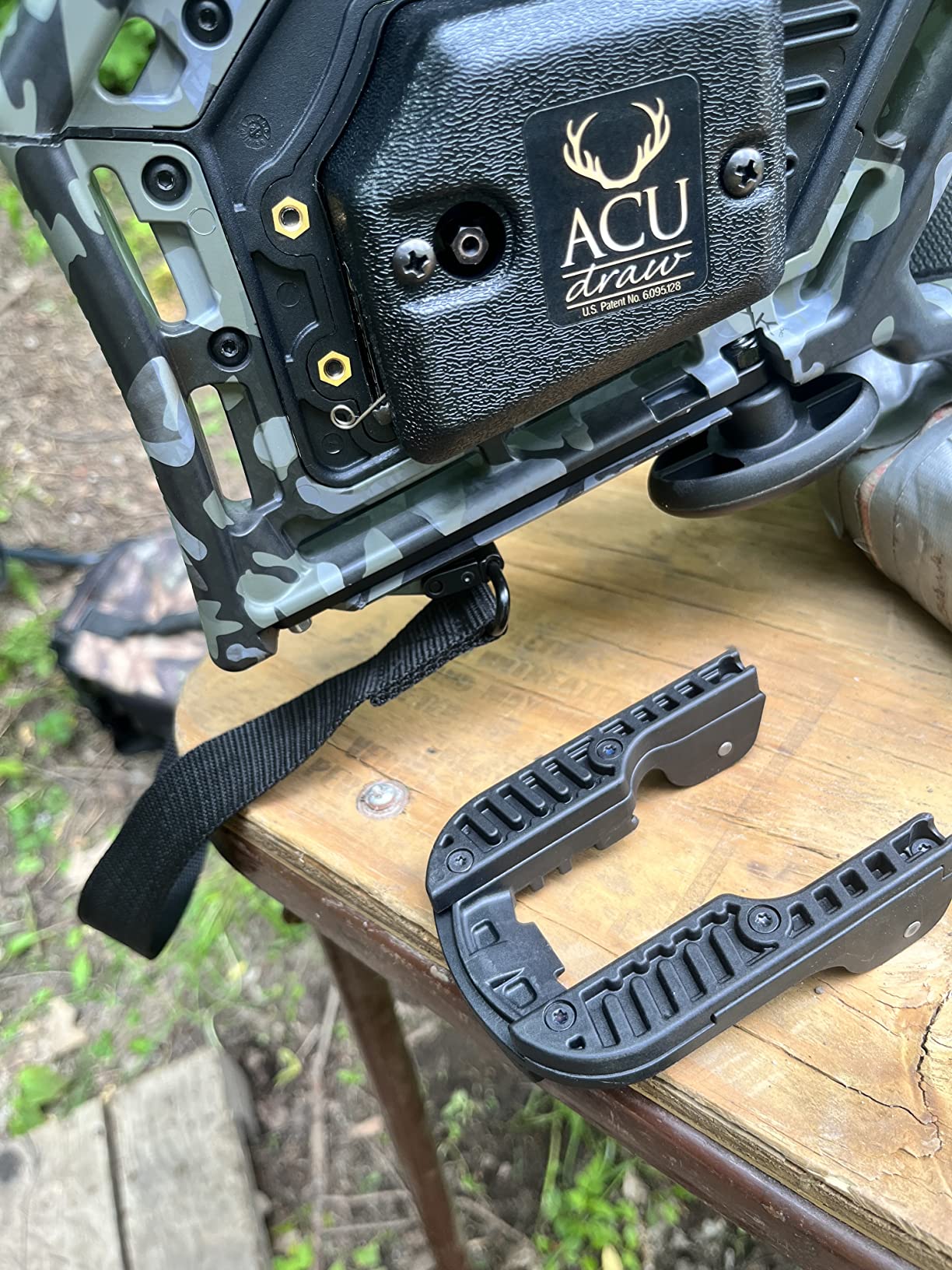
The integrated ACUdraw cocking device is the reason this bow exists. You push a stirrup down with your foot and the string comes back at roughly five pounds of effort, with no rope, no separate crank and nothing to store. It is by far the least physical crossbow to load in this guide, and it is the single most important fact for a beginner who is worried about strength.
It is also quiet. Owners repeatedly compare the Invader’s noise to louder bows in the same class, and combined with a 400 feet per second velocity and a 6-pound body, it is a very easy bow to carry into a treestand for a full morning. Reverse-draw geometry also keeps the string out of the way of your shooting hand and forearm.
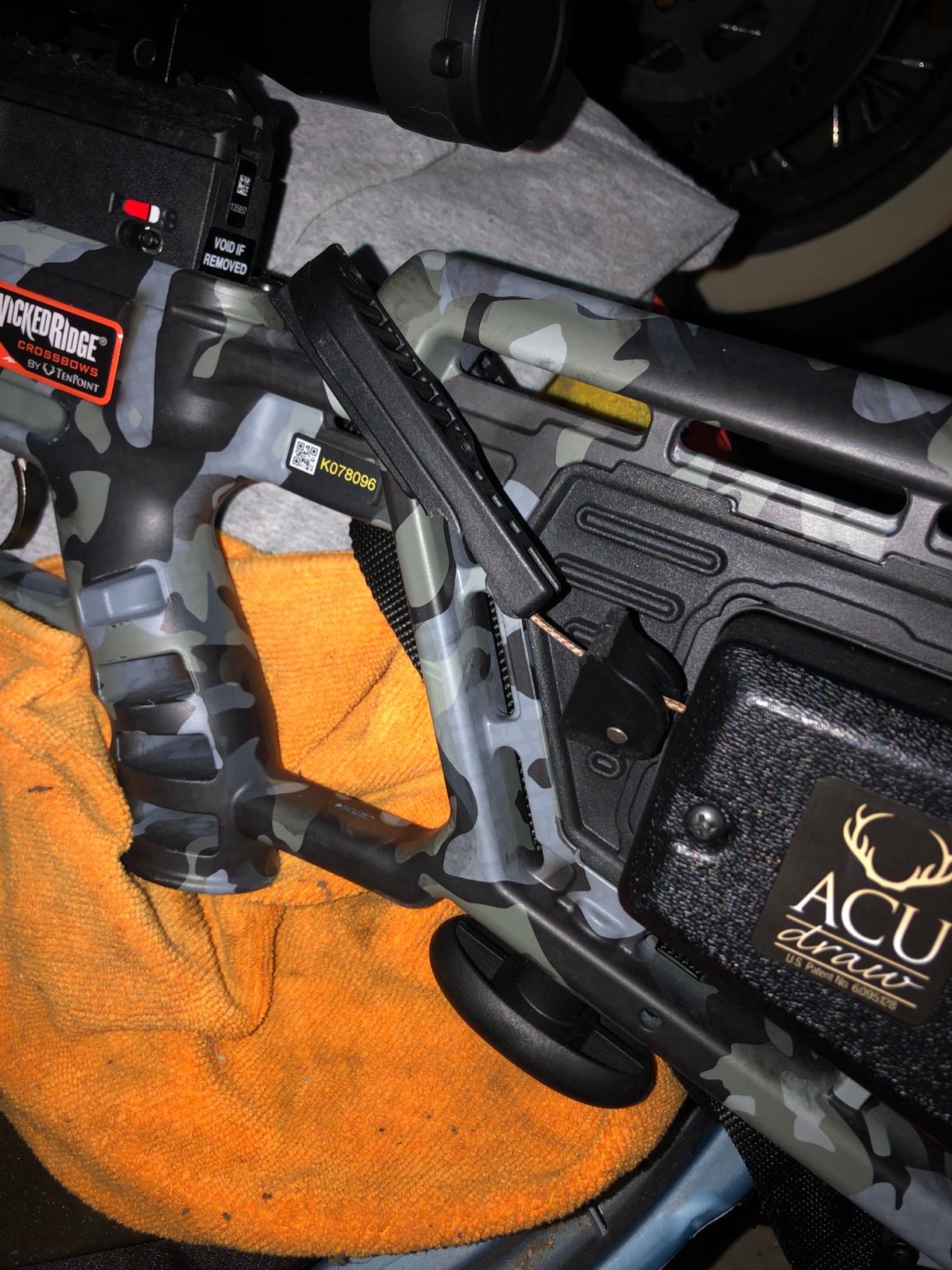
The Pro-View scope is a step above what most packages include. An 8.5-inch aluminum tube, 3x magnification, three crosshairs and four dots calibrated out to 50 yards, with fully coated optics. That last part matters, because a scope you can actually see through in low light is the difference between a first season and a frustrating one in November.
At 15 inches wide when cocked, it fits into a ladder stand or a compact blind without much trouble, and the package includes a quiver and three XX75 arrows. Six pounds total means the bow is not a burden to carry on a long walk to a stand.
What tells you this is the right first bow
Choose it if cocking effort is the deciding factor, full stop. That includes smaller-framed shooters, older hunters with joint problems, and anyone who wants a bow they can load from a seated position in a blind without standing up. The 50-yard-calibrated scope also means you are not starting with a reticle that tells you nothing.
It is the pick we would recommend for a first deer season if your priority is that you will actually want to use the bow. The effort saved at the truck is the effort you spend on accuracy at the tree.
Where it falls short for a beginner
Assembly is the complaint. The printed instructions do not cover mounting the quiver or the cocking stirrup, and some owners report arriving with missing hardware that required a trip to a separate hardware store. You need the ACUdraw attached for this bow to be worth anything, so read a walkthrough before you start.
There are also isolated reports of the integrated cocking device breaking after repeated use. That matters more than it would on a bow with a separate crank, because there is no backup method. Owners also note that adding string dampeners or silencers helps further reduce the noise if close-range deer are your goal.
9. SAS Prophecy 80 lb Self-Cocking Pistol Crossbow – Best for Kids and Teens
SAS Prophecy 80 LBS Aluminum Self-Cocking Crossbow with 3 Arrows – (Black)
80 lb draw
up to 165 fps
2.4 lb body
self-cocking
accessory rail
Pros
- Self-cocking design is easy for beginners to operate
- 2.4 lb body suits small game and backyard use
- Solid Picatinny rail accepts scopes
- red dots and lasers
- Aluminum construction feels durable for the size
Cons
- 165 fps is low next to full-size crossbows
- Not suitable for larger game or longer shots
- Scope and accessories are sold separately
The Prophecy is the model we would point at when a parent asks which crossbow their 12-year-old can actually operate. Eighty pounds of self-cocking draw means a young shooter can load and shoot it independently, and the self-cocking design means they cannot pinch a string or strain a shoulder doing it.
Owners also appreciate the build. At 2.4 pounds with an aluminum body and a Cobra limb system, it feels like more than a toy, and that is reinforced by the fact that it is not sold as one. The 7-inch draw and short power stroke mean it fits smaller hands comfortably rather than being scaled-down in name only.
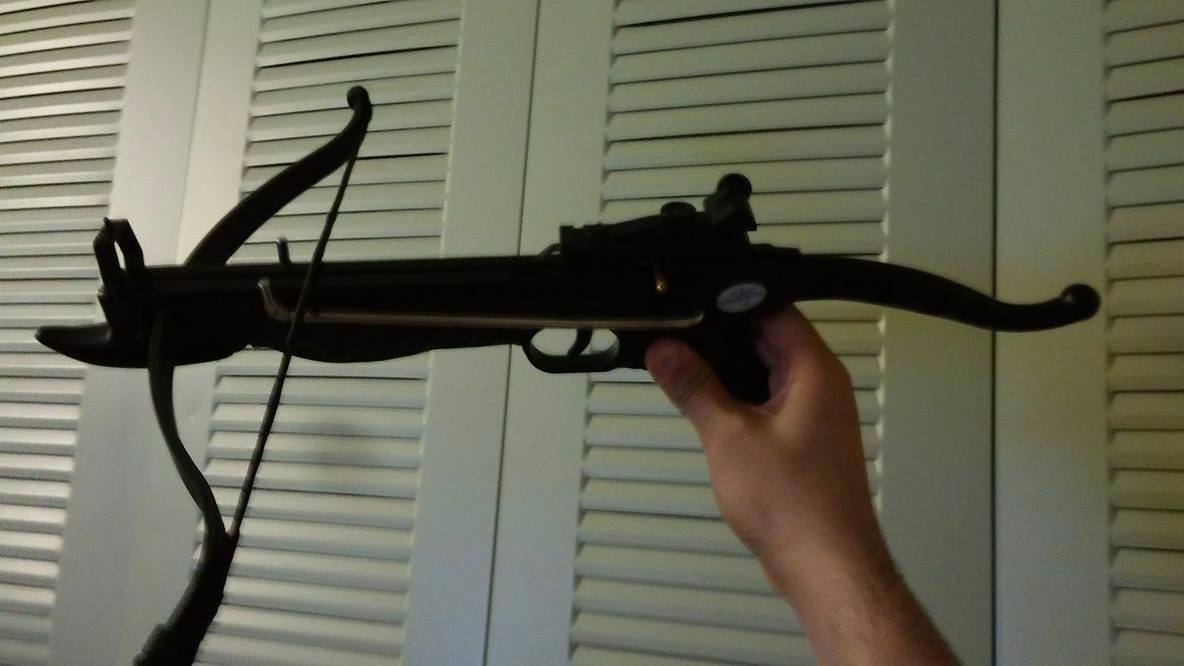
The accessory rail is a genuine strength here. A Picatinny 7/8-inch mounting rail, more stable than the dovetail bases used on many competing pistol crossbows, accepts scopes, red dots, lasers and lights, with a pre-drilled Weaver rail for a foregrip. That means you can start with the open sights and add a proper red dot later without replacing the crossbow.
Three arrows ship with it, which is enough to confirm zero and get started. The one-year manufacture warranty is standard for the category and worth noting if you are comparing against a competitor offering longer coverage.
What tells you this is the right first bow
Pick it for a young or small-framed shooter, for backyard plinking, or for small game at very close range. It is also a good travel companion for someone who wants a crossbow that fits in a car boot or a locker without thinking about it.
Because it is a pistol crossbow, it also introduces the shooting mechanics safely. Trigger control, follow-through, bolt selection and range awareness all transfer directly to a full-size bow, which makes it a reasonable stepping stone rather than a dead end.
Where it falls short for a beginner
At up to 165 feet per second, this is the second-slowest bow in the guide, and that is a hard limit rather than a preference. It is not suitable for larger game or any longer-range shot, and owners are clear about that. If a deer season is on your plan, this is not the tool.
Scope and accessories are sold separately, and the included fasteners are basic. Add a red dot before serious target work, and expect to replace the bundled bolts sooner than you would on a full-size bow.
10. SAS Jaguar 175 lb Recurve Package – Best Complete Recurve Hunting Package
SAS Jaguar 175lbs Recurve Hunting Crossbow Red Dot Scope Package (Black)
175 lb draw
245 fps
16 in power stroke
red dot, quiver, sling and bolts
Pros
- Red dot
- sling
- quiver and bolts in one package
- Reinforced composite body feels solid
- Enough power for small game and target practice
Cons
- 9 lb body is heavier than most beginner crossbows
- 175 lb draw is demanding for a new shooter
- Entry red dot sight needs careful adjustment
The Jaguar is a recurve crossbow that arrives complete. The package includes aluminum bolts, a crossbow sling, a quiver and a red dot scope, which means a first-time buyer does not need to build a parts list or make a second order. For someone starting from zero knowledge, that is a real advantage.
The build is better than the price suggests. A reinforced composite stock and compression-molded fiberglass limbs give it a solid feel, and at 175 pounds of draw with 245 feet per second it produces enough energy for small game and plenty of target work. Owners report it performing as expected with no failures across regular use.
Where it differs from the Anaconda is weight and ergonomics. At 9 pounds it is the second-heaviest bow in this roundup, and the stock is not adjustable. That matters for long sits in a stand or for a younger shooter who tires quickly. If your hunting is tree-stand work, weigh that carefully.
The included red dot is an entry-level unit and owners report needing careful adjustment to zero. Budget a calm afternoon, the same as with any budget package. Zero it properly and it will serve you for small game and practice indefinitely.
What tells you this is the right first bow
Choose it if you want one box to open and a complete setup, and if you like the simplicity of a recurve. There is nothing to time and no cables to replace, and the included sling and quiver make it easy to carry to a range or a farm field without buying more gear first.
It is a sensible first hunting crossbow for someone whose realistic target list is rabbits, grouse and similar small game rather than deer. Being honest about that match saves a lot of disappointment in the field.
Where it falls short for a beginner
Nine pounds is heavy for a beginner crossbow, and combined with a fixed stock it will not suit a shooter who wants fine length adjustment. Compare it to the 5-pound recurve option in this guide if carry weight is the deciding factor.
The 175-pound draw is demanding for someone who has never drawn a string before, and there is no included cocking device in the specification to help. Plan on a rope cocker and a waxed string, and test the pull before you commit.
How We Picked the Best Crossbows for Beginners
Every bow in this guide was evaluated against four criteria, in this order.
Cocking effort versus user strength. We recorded the stated draw weight and the cocking method for each bow, then asked a simple question: can a typical adult load this without assistance, and can a smaller-framed shooter? This is the single most useful number for a first purchase and the one most often left out of competitor comparisons.
Trigger quality and sight-in time. We looked at trigger system, pull weight and creep, plus the optic included in the box. A smooth, predictable trigger and a scope with usable markings are what separate a bow you will shoot all season from one that sits in the closet.
What is actually in the package. We tallied bolts, quiver, sling, cocking device, rail lubricant and mounting hardware, because a 60 percent complete package means a second order before your first practice session.
Long-term owner reports. We read the recurring complaints across hundreds of reviews for each model rather than the top reviews alone. Patterns that appear repeatedly, like weak bundled bolts or vague assembly instructions, shape our cons lists.
One honest caveat, and it is the same caveat experienced archers give on every forum we reviewed. If your real goal is bowhunting and you have no archery background at all, a vertical compound bow is a better training tool. A crossbow is a shortcut to power, not to good form. Take a safety course first, and if you want our method for evaluating hands-on gear, our beginner gear testing guide explains how we approach it across categories.
What Owners Report After a Season
The most useful thing we found was not in the spec sheets. It was in the owner reports, and the patterns were consistent across brands.
The CenterPoint and Barnett entry bows hold up. On crossbownation.com and in r/bowhunting, the recurring recommendation from experienced members is that value-tier bows from these brands survive a first season of hard use, with CenterPoint models described as having worked for owners for years. That reputation is one reason the Barnett earns the top slot here despite a basic included scope.
Excalibur is the durability benchmark. Forum regulars describe Excalibur recurve crossbows as effectively indestructible, with even entry models outlasting most competitors, and owners of older Exo Series bows still shooting them. That is the reference point most experienced users measure new budget bows against, and it sets a fair expectation.
Crank cockers are treated as near-mandatory. Across every thread we reviewed, experienced hunters treated rope cockers and cranks as required equipment rather than accessories, particularly for 180-pound and heavier bows. This is the single most repeated piece of advice in the forum data, and it aligns with our cocking-effort ranking.
Bundled bolts are the most common disappointment. Poor-quality bolts appear as a complaint on nearly every budget package in this roundup, from the Killer Instinct packs to the KingsArchery bundle. Experienced users recommend moving to heavier 500-grain bolts early, both for consistency and to reduce limb wear.
Warranty and serviceability matter more than speed. When buyers ask which crossbow has the least problems, the answers in these communities tend to point toward the bow with the best warranty and the nearest repair support, not the fastest bow. That is a good reason to check your local dealer coverage before buying anything.
Used crossbows come up constantly. Used compound bows from major brands are frequently suggested as a smarter first buy than a new budget crossbow, provided the seller lets you inspect the string, cables and limbs. We did not include a used pick in this roundup, but the option is worth researching if you are patient.
Beginner Crossbow Buying Guide
Recurve, compound or pistol: pick the platform first
This decision comes before anything else, because it determines almost every other spec. A recurve crossbow is simple, quiet, needs minimal maintenance and can be restrung anywhere, but it is slow at 230 to 250 feet per second. A compound is fast, adjustable and quiet, but it has cables, cams and more parts to service. A pistol crossbow is compact and easy to load, but it is a small-game and target tool, not a deer bow.
For most first-time hunters, a compound in the 165 to 200-pound range is the right platform. For a shooter who wants to learn without maintaining anything, a recurve is a genuine alternative. For a young shooter or anyone working in a very tight space, a pistol crossbow is worth the trade.
Draw weight and cocking effort are the same decision
Draw weight is the pounds of force required to pull the string to full draw. It is the spec that determines who can actually use the bow, and it is a poor proxy for accuracy or power beyond a point. In this roundup, useful hunting power starts around 165 pounds; below that you gain ease and lose energy for deer.
Match the draw to your body, not to your ambition. A 165-pound bow with a rope cocker suits most adults. A 220-pound bow realistically needs a crank, and anyone considering one should test a 200-pound draw at a sporting goods store before signing for it. The two 220-pound models in this guide are the fastest and the most demanding, and that is not a coincidence.
Kinetic energy beats feet per second
Speed gets the marketing attention, but kinetic energy in foot-pounds is the better predictor of how a bolt performs on an animal. Heavier bolts travel slower but carry more energy and penetrate better, which is why experienced shooters push 500-grain bolts through 400-plus fps crossbows rather than the light bolts in the box. Plan on spending on bolts before you spend on anything else after the bow itself.
For deer, you generally want meaningful kinetic energy and a bolt with a good broadhead. For small game, a lighter bolt and a mechanical or fixed broadhead sized for the animal is the norm. Field points for practice, broadheads for hunting, never the reverse.
Cocked width decides where you can hunt
Axle-to-axle width is the measurement that determines whether a crossbow fits your hunting setup. A ladder stand or a compact ground blind will accept a bow up to about 16 inches when cocked; a wider bow will not fit without awkward angles. The two narrowest full-size options here are 14.75 inches and 15 inches, and both owners of those bows report easier tree positioning as a direct benefit.
Heavier crossbows in the 16 to 20-pound range are noticeably harder to hold at full draw for a long sit. That is why the lightest, narrowest options score well for smaller shooters and for anyone without a lot of upper-body endurance.
What a beginner package should include
A complete package should have a scope or sight, a cocking device, at least a dozen bolts, a quiver, a sling and rail lubricant. Several picks here include all of it; a few include almost nothing, and the difference in your first-week experience is large.
Budget for the gaps regardless. A serviceable illuminated scope, a proper cocking device if one is not included, and a set of heavy bolts are the three purchases that matter most. String and cable service is the recurring cost most buyers forget, and on compound crossbows it is an annual or biennial expense rather than a one-time purchase.
Safety, Storage and State Crossbow Laws
Never treat a crossbow as a firearm, and never assume it is legal everywhere. A crossbow combines components of a bow and a firearm, and regulations vary considerably by state. Many states impose a minimum legal draw weight for hunting, commonly in the range of 125 pounds, and some add conditions such as a mechanical safety or a minimum overall length. A few states restrict crossbow hunting entirely or limit it to specific seasons. Check your own state’s department of wildlife regulations before you buy, and carry the bow cased and unloaded in a vehicle.
Never transport or store a crossbow with the string drawn. This is the rule that surprises people most, because a cocked crossbow on a truck bed is a genuine hazard to you, to passengers and to anyone standing nearby. Use the bow’s de-cocking system or the cocking device to unload it before you set it down, every time.
Know your bow’s safety features before the first shot. A dry-fire preventer, an arrow or bolt retainer, and a safe unload path are not decorations. Several bows in this guide include anti-dry-fire trigger systems or floating bristle retainers, and you should know how they engage before you rely on them.
Wear eye and hearing protection, and check your local range rules. Crossbow bolts are projectiles at significant velocity, and downrange safety matters even in a familiar field. Set up a safe backstop, know the legal projectile rules in your area, and never point the bow at anything you have not identified.
Take a safety course. This is the one piece of advice we will repeat. A certified archery safety course covers the handling habits that prevent the overwhelming majority of crossbow injuries, and it is far cheaper than a hospital visit. Experienced hunters on every forum we reviewed said the same thing to beginners without exception.
Frequently Asked Questions
Which crossbow is the easiest for beginners to use?
The BALLISTA BAT and the KingsArchery 80 lb are the easiest to load, both using built-in cocking assistance or self-cocking mechanisms that cut pull effort to about 40 pounds or eliminate it entirely. Among full-size hunting crossbows, the Wicked Ridge Invader 400 needs roughly 5 pounds of effort thanks to its integrated ACUdraw, while the EK Archery Adder pulls an easy 130 pounds.
What crossbow has the least problems?
Reports on archery forums and in owner reviews point to recurve designs and warranty-backed value bows as the least troublesome. Excalibur recurves are widely described as effectively indestructible, and the BARNETT Whitetail Hunter II draws repeated long-term ownership reports of steady performance. The most common complaints across budget packages are weak bundled bolts and vague assembly instructions, not mechanical failure.
What is the best crossbow for a beginner who wants to hunt?
The BARNETT Whitetail Hunter II is the strongest starting point for a first deer season. It draws 165 pounds, weighs 6.4 pounds, measures 16.125 inches axle-to-axle so it fits most ladder stands, and ships with a rope cocker, a 4×32 scope, a quiver and two bolts. Owners report accurate groups and successful deer and hog harvests.
What is a good draw weight for a crossbow for deer?
A 165 to 200 pound draw weight covers most deer and hog hunting for adult shooters, and 165 pounds is the practical floor worth considering. Below that you trade away the energy needed for a clean pass, and above 200 pounds you add cocking difficulty that often requires a crank. Many states also set a minimum legal draw weight, commonly around 125 pounds, so check local rules too.
Is a crossbow legally a firearm?
A crossbow combines components of a bow and a firearm, and the answer depends entirely on your state. Many states treat it under archery rules with a minimum legal draw weight, sometimes with added conditions such as a mechanical safety or a minimum length. A few restrict or prohibit crossbow hunting outright. Check your state department of wildlife regulations and always transport the bow cased and unloaded.
What is a good inexpensive crossbow?
For pure plinking and learning, the SAS Prophecy 80 lb and KingsArchery 80 lb are the least demanding entry points, both self-cocking and light enough for a younger shooter. The BALLISTA BAT goes further with a 300 fps limb system and about 40 pounds of cocking effort. The EK Archery Adder is the best inexpensive full-size option for small game and close-range work.
Final Verdict for First-Time Crossbow Buyers
If you want one recommendation, take the BARNETT Whitetail Hunter II. It is our best crossbows for beginners pick because it balances everything that matters: a 165-pound draw most adults can manage, a 6.4-pound body, a compact 16-inch width that fits standard stands, a rope cocker in the box, a 3-pound zero-creep trigger and the largest owner base in this roundup at 1244 reviews. Budget for a better scope later.
Buy something else if your situation is specific. Choose the Wicked Ridge Invader 400 if cocking effort is the barrier stopping you. Choose the Killer Instinct Boss 405 if you need speed and a narrow frame in heavy timber. Choose the EK Archery Adder or the BALLISTA BAT if you want a genuinely easy pull for small game, plinking or bowfishing.
Whatever you choose in 2026, buy your bolts next, not later. Then take the safety course. That is the advice we would give any friend, and it is the advice that keeps a first crossbow a first season rather than a first regret.