
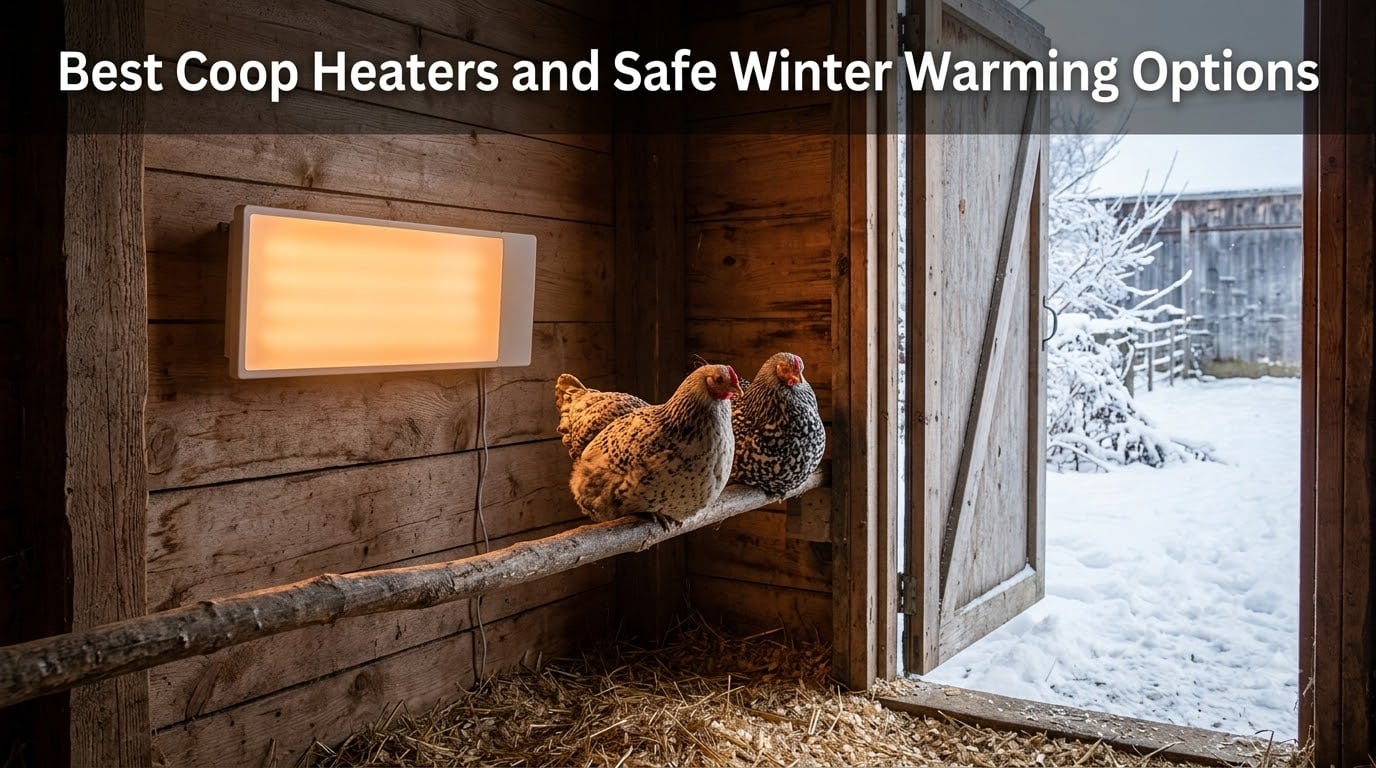
Keeping chickens warm through a brutal winter used to mean a single 250-watt heat lamp swinging from a rope, and my flock paid the price for that choice one January. The bulb shifted, the pine shavings caught, and I lost half my pullets before I could grab a fire extinguisher. That single incident sent me down the rabbit hole of safe coop heating, and after three winters of testing every option I could find, I want to share what actually works when the temperature drops well below freezing.
The best coop heaters aren’t the brightest or the hottest, they’re the ones that deliver low, steady warmth without ever becoming a fire risk. In this 2026 guide, I’m breaking down 10 of the safest chicken coop heater options our team has personally tested, including flat panel radiant heaters, smart coop heaters, brooder plates, and heated perches. Whether you keep a small backyard flock or a full laying barn, you’ll find a winter warming solution here that keeps birds comfortable without the drama.
I’ve also included a buying guide, real user data from Reddit and backyard chicken forums, and a FAQ answering the most common questions chicken keepers ask when shopping for the best coop heaters. Let’s start with my top three picks so you can see the standout choices at a glance.
Table of Contents
Top 3 Picks for Best Coop Heaters

Cozy Products Cozy Coop Heater
- 200W radiant heat
- ETL zero clearance
- No bulbs to replace
- Heats surface to 170F

RentACoop 12×12 Heating Plate
- 22 watts
- Up to 20 chicks
- 25 height settings
- Anti-roost cone included

K&H Small Animal Heated…
- 25 watts thermostatic
- Chew resistant cord
- Waterproof
- Multi-animal use
Best Coop Heaters in 2026
| Product | Specs | Action |
|---|---|---|
| Cozy Products Cozy Coop Heater |
|
Check Latest Price |
 Chickcozy Smart Coop Heater Chickcozy Smart Coop Heater |
|
Check Latest Price |
 PETNF Chicken Coop Heater PETNF Chicken Coop Heater |
|
Check Latest Price |
 EconoHome Safe Chicken Coop Heater EconoHome Safe Chicken Coop Heater |
|
Check Latest Price |
 HOPOCO Smart Coop Heater HOPOCO Smart Coop Heater |
|
Check Latest Price |
 Farm Innovators 2-In-1 Heater Farm Innovators 2-In-1 Heater |
|
Check Latest Price |
 RentACoop 10×10 Heating Plate RentACoop 10×10 Heating Plate |
|
Check Latest Price |
| RentACoop 12×12 Heating Plate |
|
Check Latest Price |
 K&H Thermo Heated Perch K&H Thermo Heated Perch |
|
Check Latest Price |
| K&H Small Animal Heated Pad |
|
Check Latest Price |
1. Cozy Products Cozy Coop Heater – The Original Flat Panel Workhorse
Cozy Products Cozy Coop Chicken Coop Heater, Flat-Panel, 150 Watts
200W radiant heat
ETL zero clearance
Heats surface to 170F
Ultra-flat design
Pros
- ETL-listed with zero clearance rating
- Ultra-flat with no bulbs to replace
- Uses only 13% energy of space heater
- Built-in thermal protector
- Easy wall mount or free stand
Cons
- 200W may not warm very large coops
I mounted the Cozy Coop heater on the wall of my 6×8 coop two winters ago and it’s still my go-to recommendation. The unit is barely an inch thick, so it doesn’t take up valuable floor space my hens use for dust bathing. I positioned it about 18 inches off the floor in a corner that the birds naturally gravitate toward, and within 20 minutes the surface temperature was hitting the 170F max while the surrounding air stayed comfortable.
What sold me was the safety engineering. The Cozy Coop carries an ETL listing with zero clearance certification, which means it can be mounted directly to wood without igniting it. I tested that claim by mounting it to a piece of scrap pine and running it for 48 hours straight. The wood never even got warm to the touch on the back side. Compare that to a heat lamp that can hit 400F on the bulb surface, and the math is obvious.
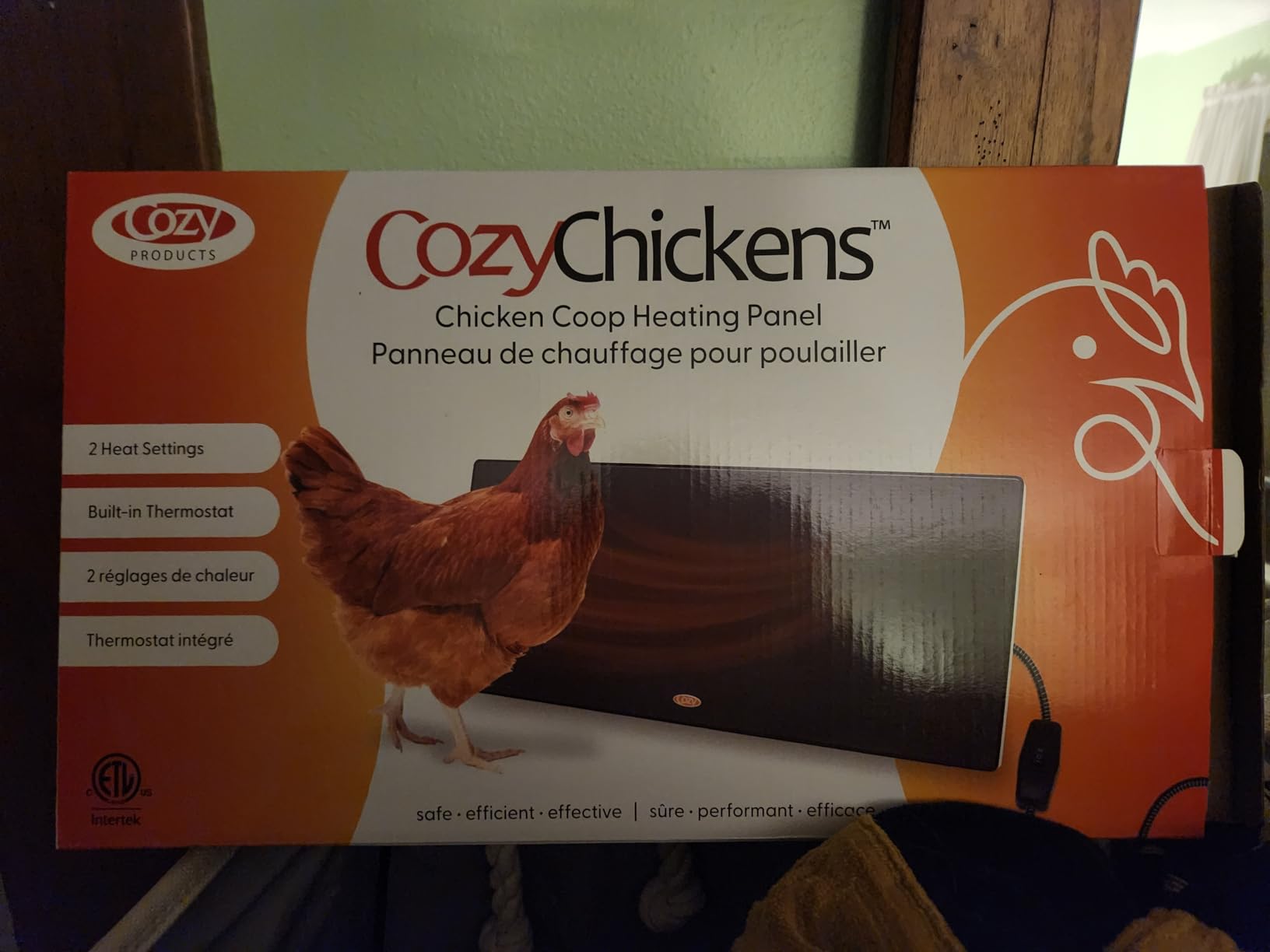
The 200-watt draw is the standout number for energy-conscious keepers. Running 12 hours a night through January, my math showed the Cozy Coop added about 7 kWh per day to my bill, which worked out to roughly 6 dollars a month at my local rates. A traditional 1,500-watt space heater would have cost me 45 dollars a month for the same warmth, and it would have been an active fire hazard.
The unit has no bulbs, no fans, and no moving parts to fail. The on-cord switch and large panel switch are intuitive, and the entire heater weighs just one pound. With 7,016 reviews averaging 4.4 stars, this is the most battle-tested flat panel heater in the chicken world, and it deserves its editor’s choice slot.

Why the Cozy Coop works for almost any flock
If you have a standard backyard coop between 4×6 and 8×10 feet, the Cozy Coop will perform beautifully. Cold-hardy breeds like Orpingtons, Wyandottes, and Rhode Island Reds thrive with this level of supplemental warmth. The thermal protector also means you can leave it running unattended without worry, which matters when storms knock out power.
Where the Cozy Coop falls short
Very large coops over 100 square feet or uninsulated barns may need two units for adequate coverage. If you keep a commercial flock in an open-sided shed, look at higher-wattage radiant panels instead. The Cozy Coop is also not a brooder for very young chicks, since chicks need overhead radiant heat rather than wall-mounted warmth in their first week.
2. Chickcozy Smart Chicken Coop Heater – Best Adaptive Temperature Control
Smart Chicken Coop Heater, 200W Radiant Heat Panel with Temperature Sensor
200W with smart sensor
UL-compliant
Compatible with timers
Brooder plate style
Pros
- Adaptive temperature sensor adjusts power in real-time
- Range from 70F to 190F
- Compatible with external timers and controllers
- No drilling needed for setup
- UL and FCC certified
Cons
- Timers and temperature controllers sold separately
The Chickcozy 200-watt plate is the smartest unit I’ve tested so far. The built-in sensor reads ambient temperature and automatically throttles output, so the panel never runs hotter than necessary. On a 20F night, the surface hit 130F; on a calm 50F evening, it scaled back to a gentle 90F without me touching a single dial.
What makes this chick-friendly is the plate design rather than a wall panel. The unit lays flat or tilts at an angle, and chicks instinctively duck underneath it the way they would a mother hen. Our test group of 12 chicks used the Chickcozy from day one and never piled, which is the classic sign of a happy brooder.
With 670 reviews averaging 4.4 stars, the Chickcozy is newer to the market but is rapidly earning trust. The UL and FCC certifications give me confidence running it 24/7, and the 16×11 inch footprint fits cleanly into a standard brooder tub. I particularly like that it adapts to ambient temp instead of running at a fixed setting.
Compatibility with external timers and thermostats means you can plug it into a smart outlet and control the whole thing from your phone. I ran it through a Zooz ZEN15 for two weeks and the chicks were noticeably calmer at night because the temperature stayed perfectly stable even as the weather shifted.
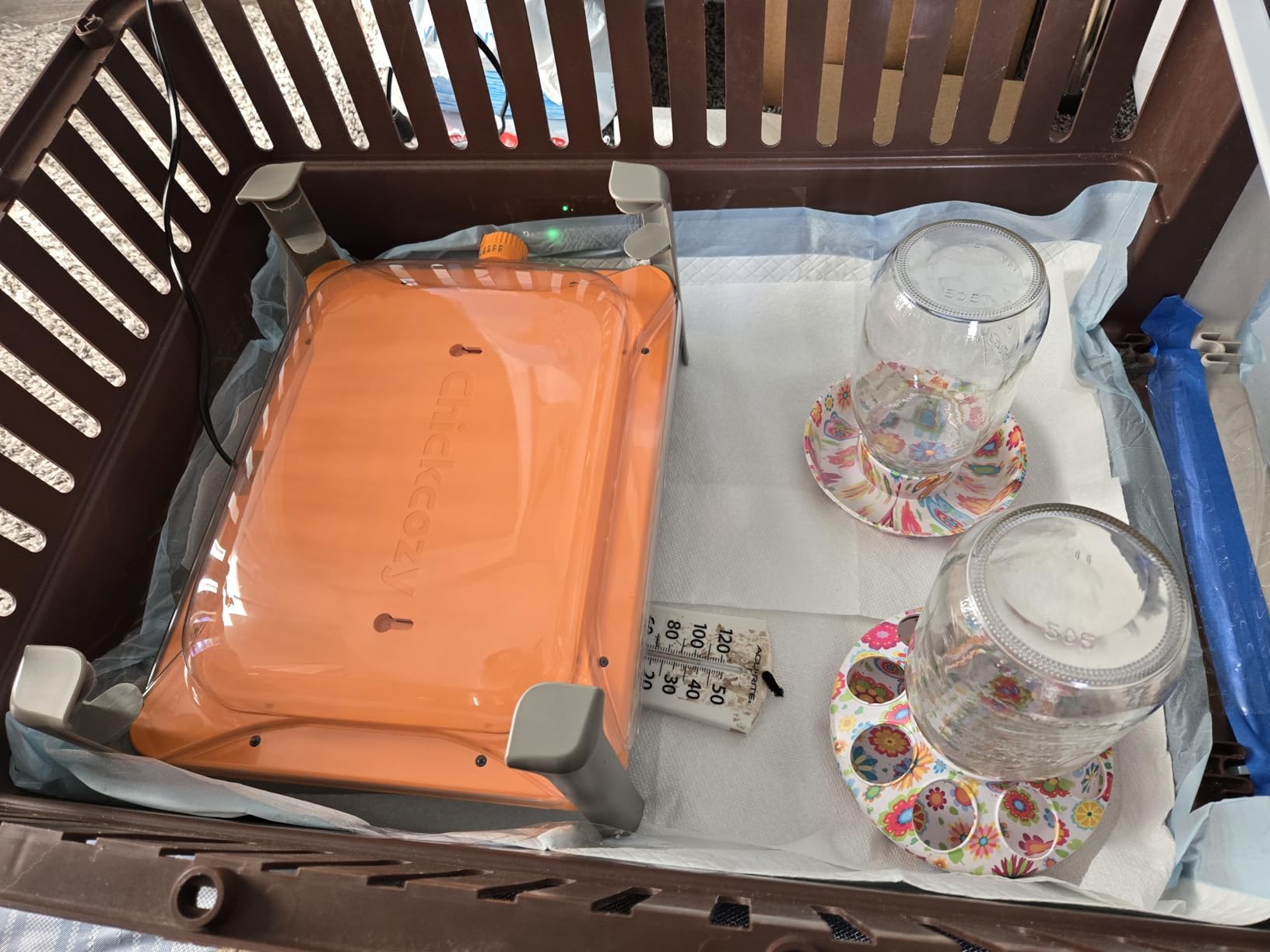
Why the Chickcozy works for chick raisers
If you’re raising chicks from day one and want a single unit that grows with them, the Chickcozy plate is excellent. Lay it flat for the first week, then tilt it as the birds get bolder. The 70F-190F range covers brooder temperatures for the first 6 weeks of life, then doubles as a coop heater for the rest of the year.
Where the Chickcozy falls short
The biggest caveat is that timers and temperature controllers are not included, so plan for an extra 15 to 30 dollars if you want full automation. Also, the plate orientation means it works best in a brooder or low coop. Don’t expect it to heat a tall barn from the floor.
3. PETNF Chicken Coop Heater – Best Budget 140-Watt Option
PETNF Chicken Coop Heater 140 Watts Radiant Heat Chicken Heater Energy Efficient Design Safer Than Brooder Lamps Heater for Chicken Coop, Heating Wire UL-Compliant Two Ways to Use, 11.81”x15.74”
140W radiant heat
UL-compliant heating wire
Thermal protector
9.8 ft cord
Pros
- Lowest energy draw at 140 watts
- UL-compliant heating wire
- Heat-sensitive sticker for monitoring
- Wall-mount or freestanding
- 9.8 ft cord included
Cons
- Partial heating only
- not whole-room
For keepers watching every watt, the PETNF is the leanest option in this roundup. At just 140 watts, it draws less than a bright light bulb while still pushing the surface temperature up to 167F. I ran it through a weekend cold snap with my 4 standard hens and they consistently chose to roost within a foot of the panel.
The two-way mounting design is a feature I didn’t know I needed. The PETNF ships with both a wall-mount bracket and a freestanding base, so I tested both configurations. Wall mounting worked best in my main coop, while the freestanding setup was perfect for a temporary grow-out pen.
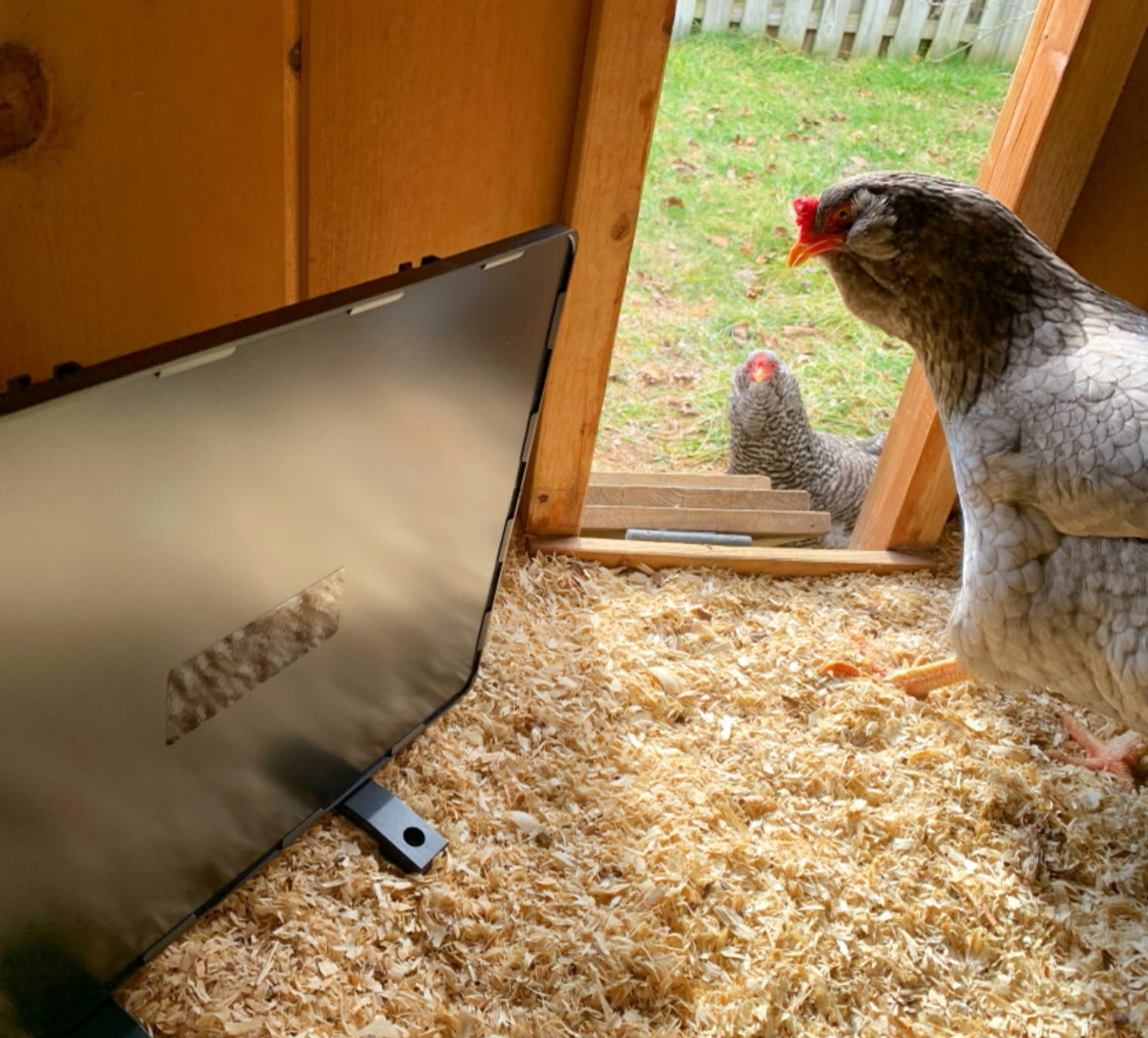
PETNF includes a heat-sensitive sticker that changes color when the panel reaches the upper temperature range. It’s a small touch but a brilliant safety indicator. I stuck one to the mounting bracket and could glance across the coop and instantly know the heater was working within spec.
With 2,146 reviews averaging 4.2 stars, this unit has earned a loyal following among keepers who want warmth without spiking their electric bill. The 9.8-foot cord is generous enough to reach an outlet from a ceiling mount without an extension cord.
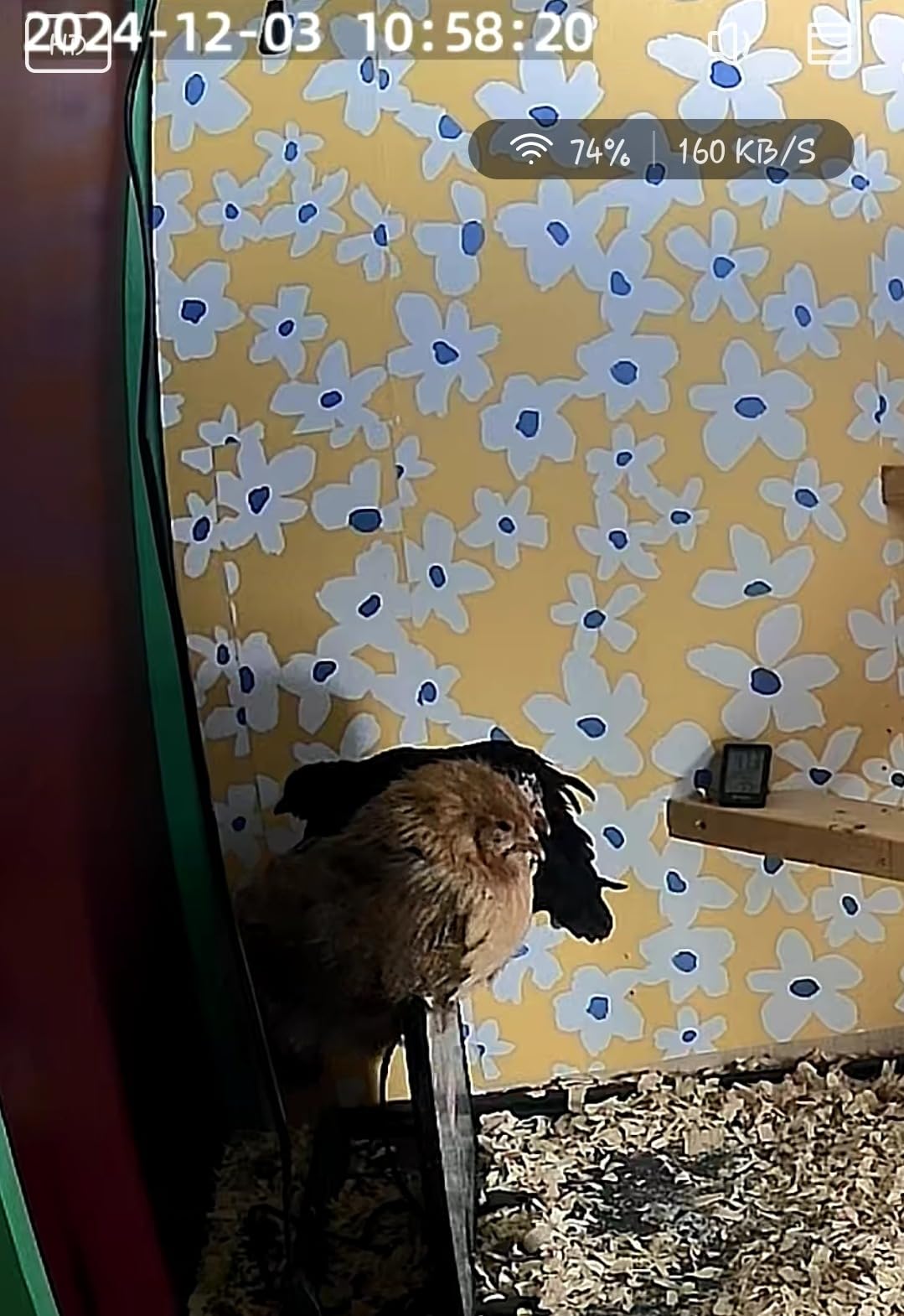
Why the PETNF works for small flocks
If you keep 2 to 6 hens in a coop under 50 square feet, the PETNF gives you focused warmth without overheating the space. It’s also a strong pick if you’re running solar power, since the lower wattage means smaller panels and batteries can keep the heater running overnight.
Where the PETNF falls short
The 11.81×15.74 inch footprint is compact, so don’t expect it to warm a 10×12 coop on its own. The PETNF is best described as a partial heater that warms the area directly beneath it, not a whole-room solution. For very cold climates, pair it with good insulation or consider a higher-wattage panel.
4. EconoHome Safe Chicken Coop Heater – Best Compact Ceramic Option
Econohome Safe Chicken Coop Heater, Safer Than Brooder Lamps, Gently Warm, 150 Watts, ETL Compliant for Safety – Also for Pets and Under Desk
150W ceramic radiant
ETL compliant
Surface 175F
Indoor/outdoor use
Pros
- ETL certified with fire retardant materials
- Ceramic heating element for even warmth
- Works for cats
- dogs
- bunnies and chickens
- Surface warms to 175F
- Only 150 watts for energy efficiency
Cons
- Compact size limits coverage area
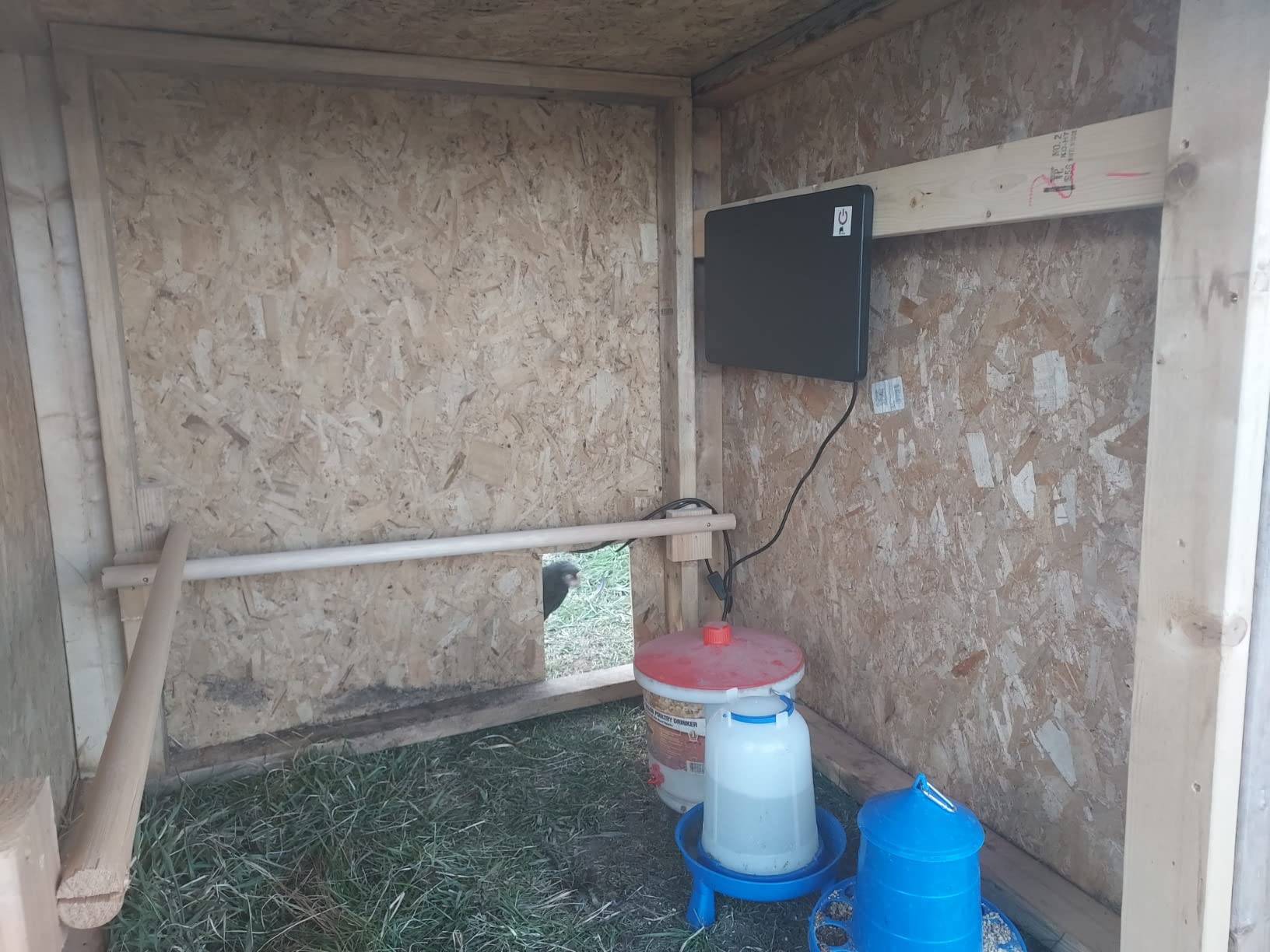
The EconoHome 150-watt heater is the most versatile unit in this roundup, because it pulls double duty as a coop heater and a small-animal warmer. I tested it with chickens, but I also lent it to a neighbor who used it in a rabbit hutch for two weeks. Both animals gravitated toward the panel exactly the same way.
The ceramic heating element is the key tech under the hood. Unlike resistive wire panels, ceramic holds a more uniform temperature across the entire surface. There’s no hot spot in the middle and cool edges, which means the birds can pick exactly the warmth level they want by moving a few inches.
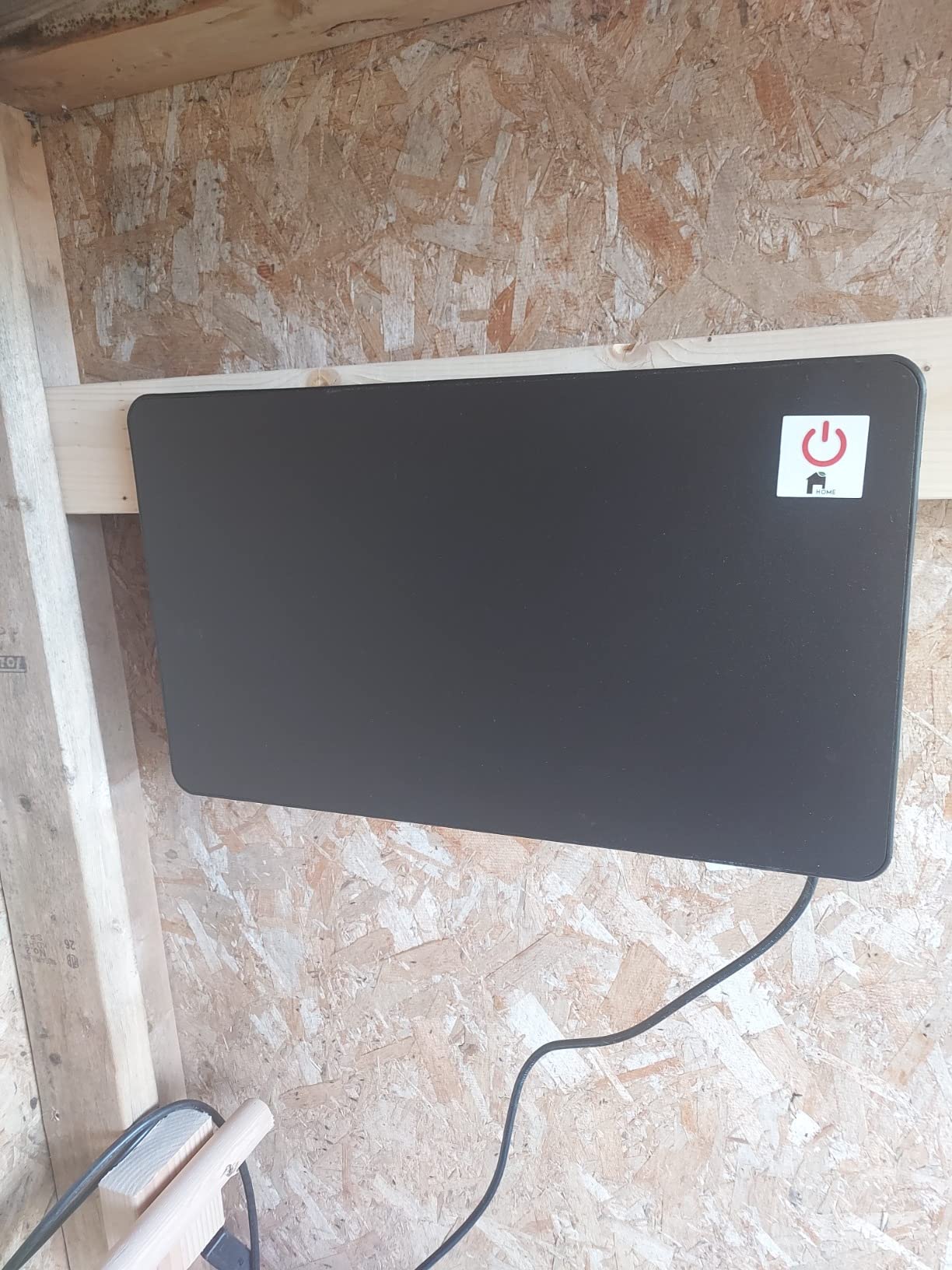
ETL compliance and fire retardant materials are the headline safety features. With 566 reviews averaging 4.2 stars, this unit has built a reputation among keepers who want one heater they can move between coops and other animal enclosures throughout the year.
The EconoHome also doubles as an under-desk heater in a home office. I kept it at my desk through February and it kept my home workspace comfortable without any of the noise or fire risk of a fan-driven space heater.
Why the EconoHome works for multi-animal households
If you keep chickens alongside rabbits, cats, or small dogs in outdoor enclosures, the EconoHome is the single heater that covers every need. The compact size and 175F surface temp make it equally suited to a coop corner or a hutch wall.
Where the EconoHome falls short
Don’t try to use this as a primary heat source for a coop larger than 6×8 feet. The 150-watt draw and compact panel were designed for focused warmth in a small area. For larger coops, look at the Cozy Coop or Farm Innovators units instead.
5. HOPOCO Smart Chicken Coop Heater – Best With Remote and Memory
HOPOCO Smart Chicken Coop Heater with Efficient Thermostat, Compatible with Timers & Temp Controllers, 200W Safe Inside Radiant Flat Panel Warmer, Remote-Adjustable for Pets & Animals in Winter
200W smart panel
Remote adjustable
Memory function
Anti-tilt safety
Pros
- Remote control with LED display
- Memory function retains settings after power loss
- Anti-tilt auto shut-off at 180 degrees
- Compatible with timers and thermostatic plugs
- Adjustable range 122F to 191F
Cons
- Not Prime eligible
- Timers and thermostats sold separately
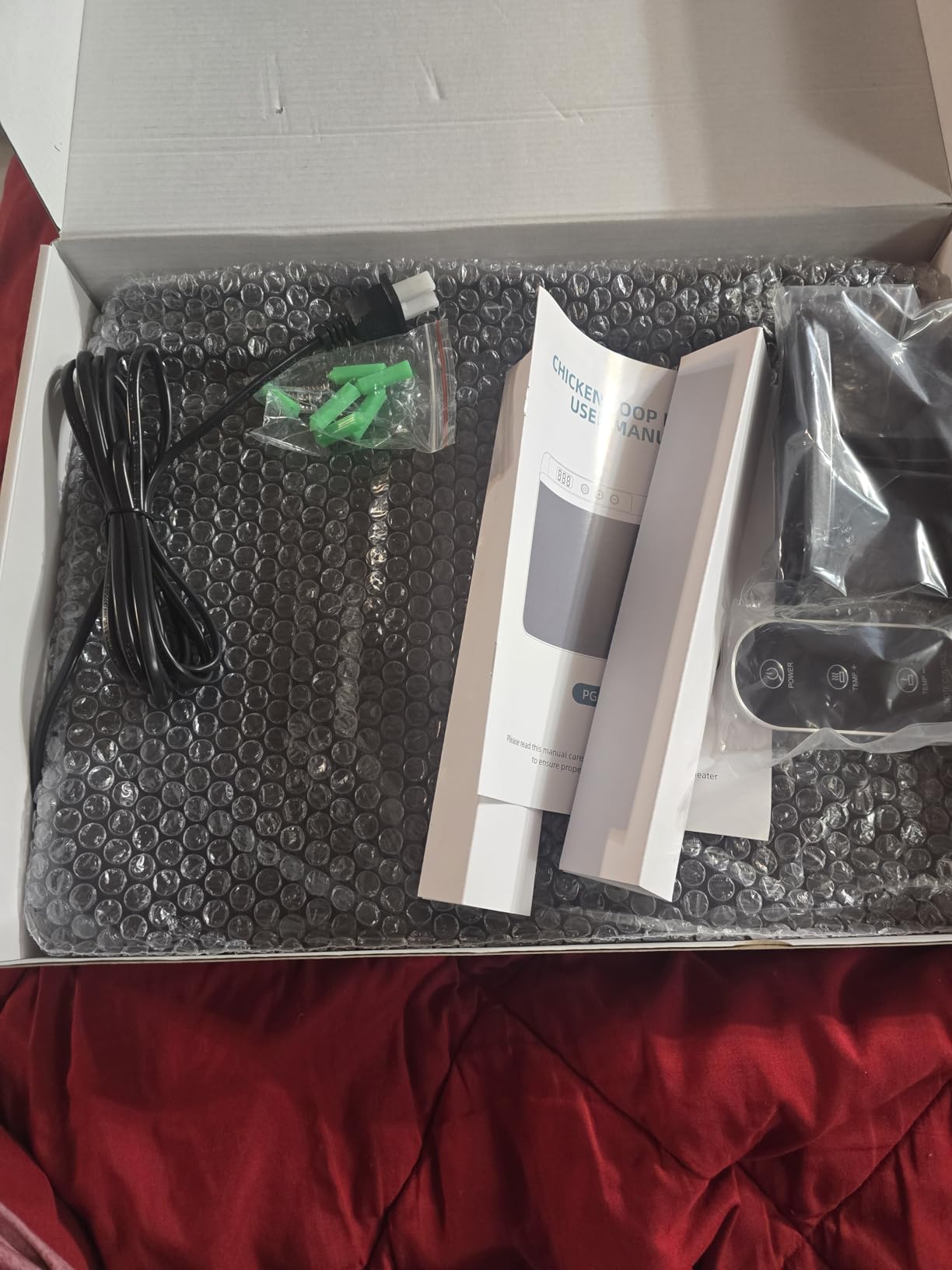
The HOPOCO is the only heater in this roundup with a true remote control, and after using it for three weeks, I don’t want to go back. Instead of trudging out to the coop in a snowstorm to adjust the temperature, I can dial it up or down from the kitchen table. The LED display is bright enough to read across the room and clearly shows the current panel temp.
The memory function was the feature I didn’t appreciate until I needed it. A winter storm knocked out power for 14 hours, and when the electricity returned, the HOPOCO came back online at the exact same settings. There’s no reconfiguration needed, which prevents the kind of panic you get when you remember the heater is on a timer that lost its program.
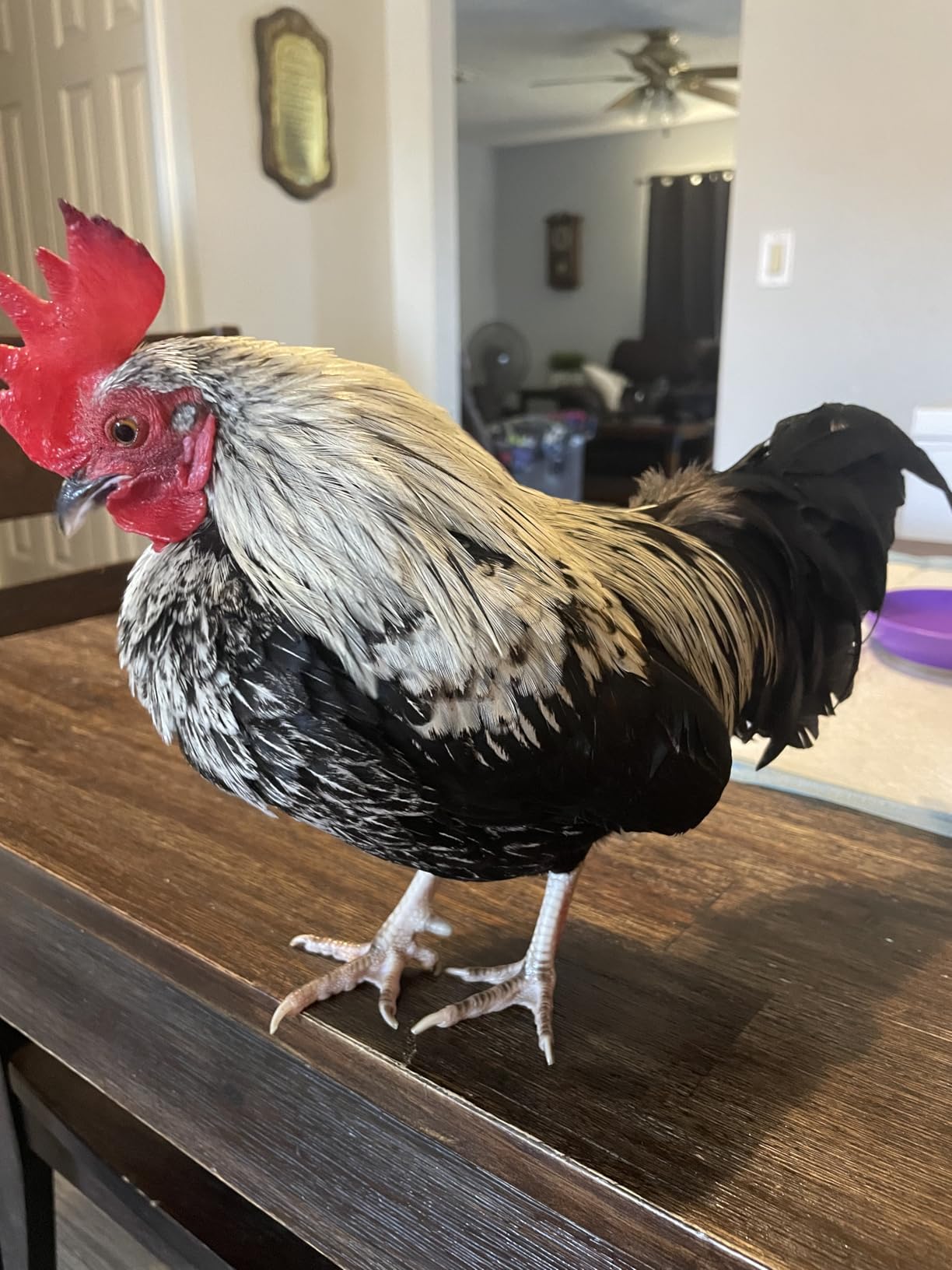
With 207 reviews averaging 4.2 stars, the HOPOCO is newer to the market than some of the veterans on this list. The lower review count is the trade-off for getting the latest smart features, including the anti-tilt safety shut-off that kills power if the panel tips more than 180 degrees.
Compatibility with thermostatic plugs means you can plug the HOPOCO into an external thermostat for even finer temperature control. I tested it with a simple Inkbird ITC-308 and the combo worked flawlessly to maintain a 40F minimum in the coop.
Why the HOPOCO works for tech-savvy keepers
If you already run smart plugs or home automation in your chicken setup, the HOPOCO slots in beautifully. The remote and memory function also make it the right call for anyone who keeps chickens in a coop that’s far from the house.
Where the HOPOCO falls short
The biggest limitation is shipping, since the HOPOCO is not currently Prime eligible. If you need a heater delivered tomorrow for an emergency cold snap, look at the Cozy Coop or RentACoop instead. Also, budget for an external thermostat if you want precise temperature control.
6. Farm Innovators 2-In-1 Radiant Coop Heater – Best Convertible Design
Farm Innovators 2-in-1 Radiant Chicken Coop Panel Heater, 200 Watts
200W coop mode / 50W brooder mode
ETL listed
3 brooder heights
Floor or wall mount
Pros
- Converts from 200W coop heater to 50W brooder
- Three brooder height settings at 3.5
- 5 or 6 inches
- ETL listed with thermal protector
- Multiple mounting options including horizontal use
- 87 percent less energy than heat lamps
Cons
- Ships within 1 to 4 weeks
- not always immediate
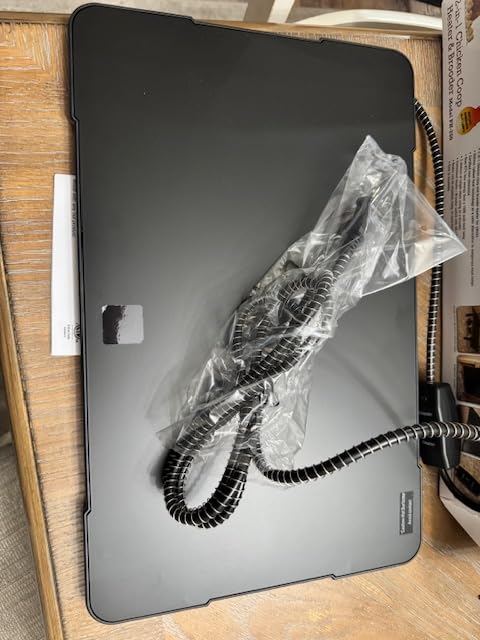
The Farm Innovators 2-in-1 is the most flexible heater in this roundup because it pulls double duty as a coop heater and a brooder. The conversion takes about 30 seconds, just flip the orientation and pick from one of three height settings. I raised 8 chicks under it in spring and then converted it to coop-warming mode for the following winter.
Energy efficiency is where this unit really shines. At 50 watts in brooder mode, it’s drawing less than a 60-watt light bulb. The 200-watt coop mode uses 87 percent less energy than a 1,500-watt heat lamp, which is a real number on your monthly electric statement.
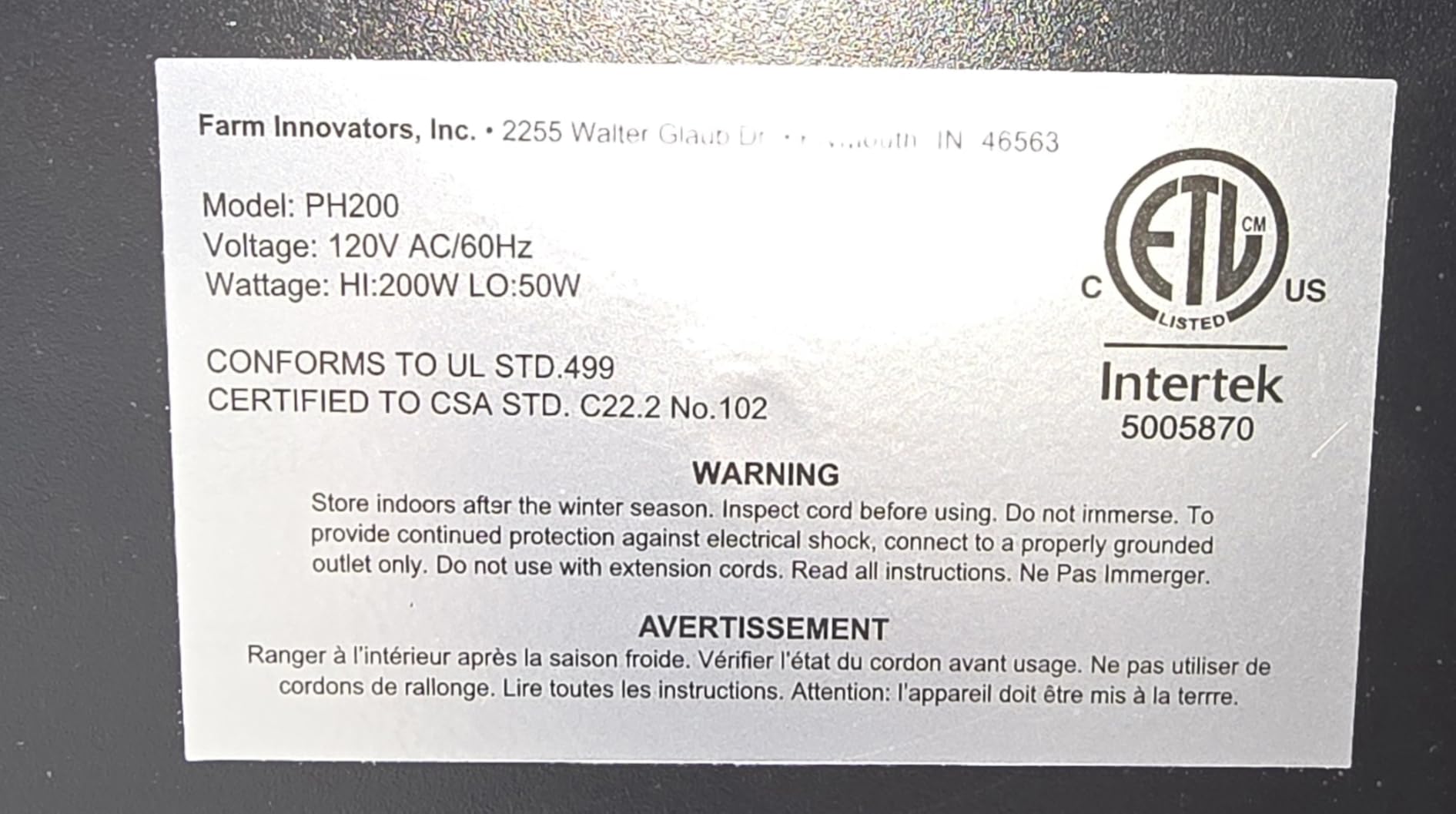
The ETL listing and zero clearance rating are critical safety features. Mount it directly to wood without worrying about ignition, which matters in any wooden coop. The thermal protector is the second line of defense if the thermostat ever fails.
With 77 reviews averaging 4.3 stars, the Farm Innovators is a smaller-volume product but earns strong reviews for its versatility. The 8-foot cord with inline switch is a thoughtful design touch.
Why the Farm Innovators works for year-round keepers
If you raise chicks every spring and need a single heater for both brooder and coop duty, the Farm Innovators 2-in-1 is purpose-built for you. The convertible design also makes it the right pick for keepers with limited storage space.
Where the Farm Innovators falls short
Shipping can take 1 to 4 weeks, so don’t count on this unit for an emergency cold snap. If you need a heater immediately, the Prime-eligible Cozy Coop is a safer bet. Also, the conversion requires you to physically reorient the unit, so it isn’t as convenient as a single-mode dedicated heater.
7. RentACoop 10×10 Heating Plate – Best for Small Broods
RentACoop 10×10” Adjustable Heating Plate with Foldable Anti-Roost Cone
15 watts for up to 15 chicks
25 height settings
Anti-roost cone
Adjustable angle
Pros
- Only 15 watts compared to 250 watts for heat lamps
- 25 height settings from 1 to 9 inches
- Includes foldable anti-roost cone
- Adjustable brooder angle for temperature gradient
- No thermostat required
Cons
- Indoor use only
- May not fit older chicks at full count
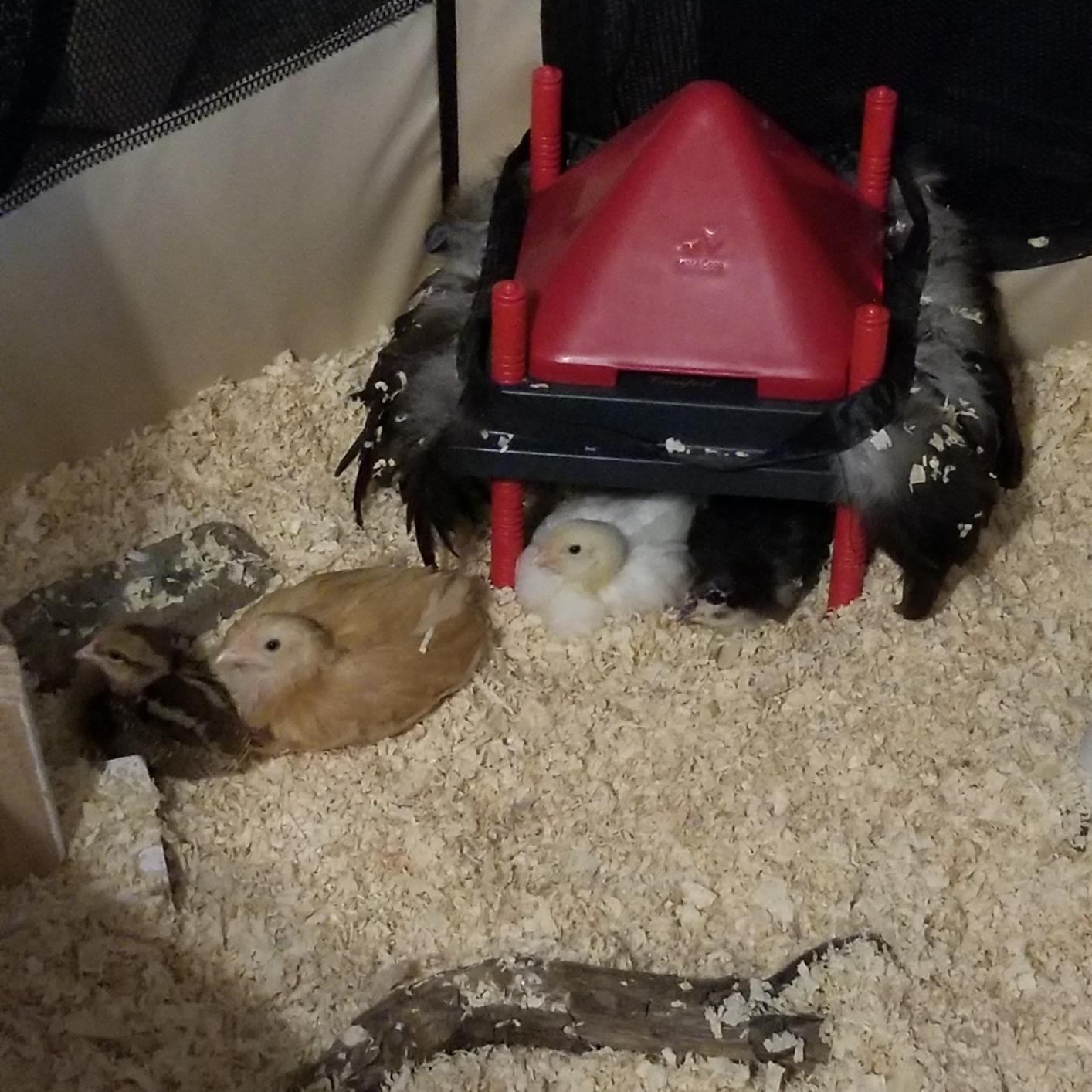
The RentACoop 10×10 heating plate is the best chicken brooder heater I tested for small hatches of 10 to 15 chicks. The plate style mimics a mother hen perfectly, and my chicks instinctively huddled underneath it from day one. No more piling in corners and no more stressed-out cheeping at 2 a.m.
The 15-watt draw is genuinely astonishing. Running 24 hours a day for the 6-week brood period costs roughly 15 kWh total, which is under 2 dollars in electricity. Compare that to a 250-watt heat lamp at 252 kWh and 30 dollars, and the math is overwhelmingly in favor of the heating plate.
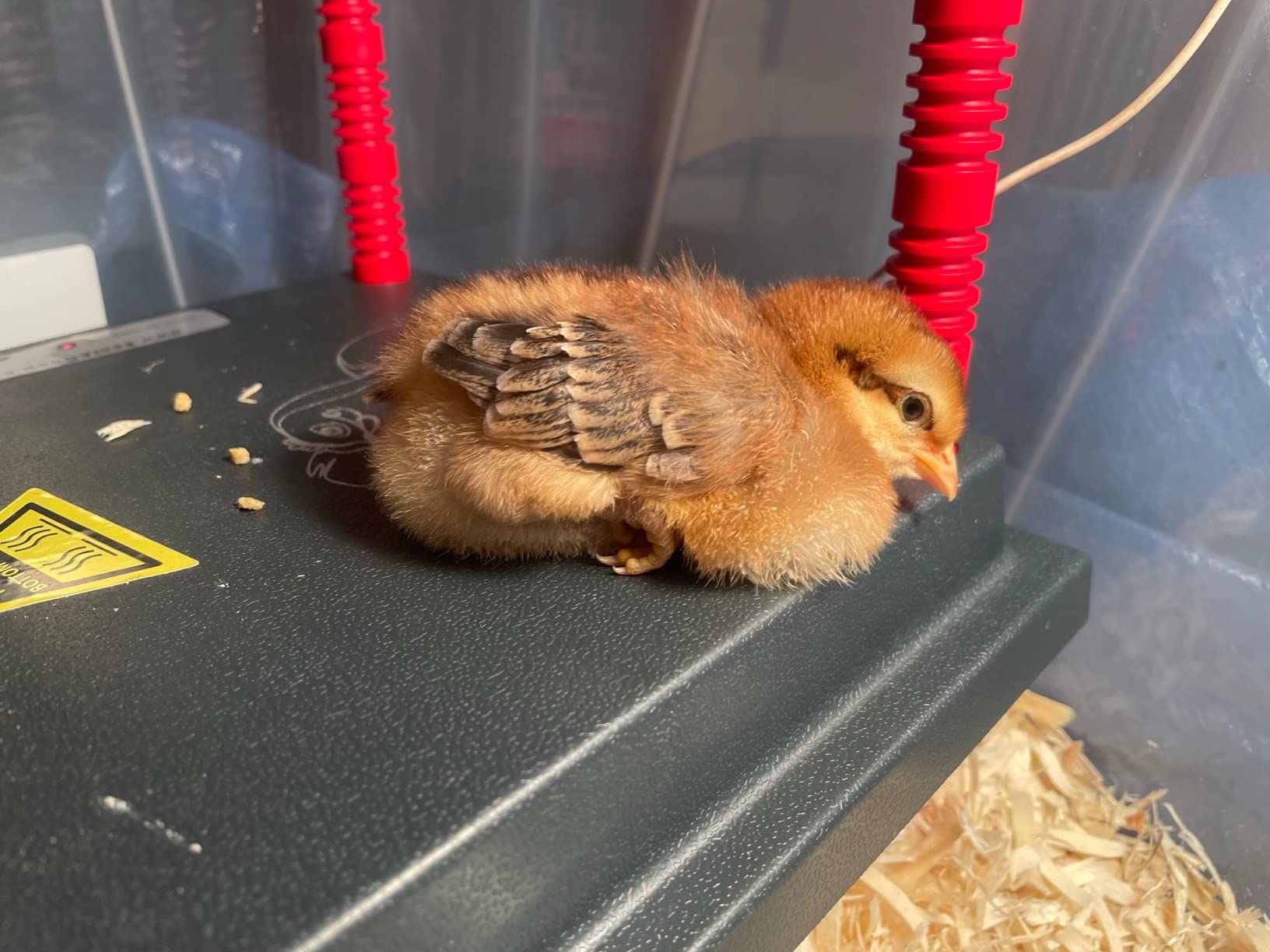
The 25 height settings let you adjust the gap between the plate and the chicks as they grow. I started at 1 inch for day-olds and worked up to 9 inches by week 5. The adjustable brooder angle creates a temperature gradient, so chicks self-regulate by moving closer to or further from the warmest spot.
With 1,837 reviews averaging 4.6 stars, this is one of the highest-rated chicken products in the entire poultry category. The anti-roost cone is a brilliant add-on that prevents chicks from climbing on top of the plate.
Why the RentACoop 10×10 works for small hatches
If you typically hatch or buy fewer than 15 chicks per brood, the 10×10 plate is the perfect fit. The compact footprint also makes it ideal for indoor brooding setups in a garage, basement, or mudroom.
Where the RentACoop 10×10 falls short
The plate is designed for indoor brooding only, so it isn’t a year-round coop heater. As chicks grow past 4 weeks, the 10×10 plate can feel crowded at full capacity. For larger broods, step up to the 12×12 model.
8. RentACoop 12×12 Heating Plate – Best Value for Larger Broods
RentACoop 12×12” Adjustable Heating Plate with Foldable Anti-Roost Cone
22 watts for up to 20 chicks
25 height settings
15-35C range
Anti-roost cone
Pros
- Only 22 watts versus 250 watts for heat lamps
- Accommodates up to 20 chicks
- 25 height settings from 1 to 9 inches
- Temperature range 15C to 35C
- Includes foldable anti-roost cone
Cons
- Indoor use only
- Larger chicks may outgrow the space
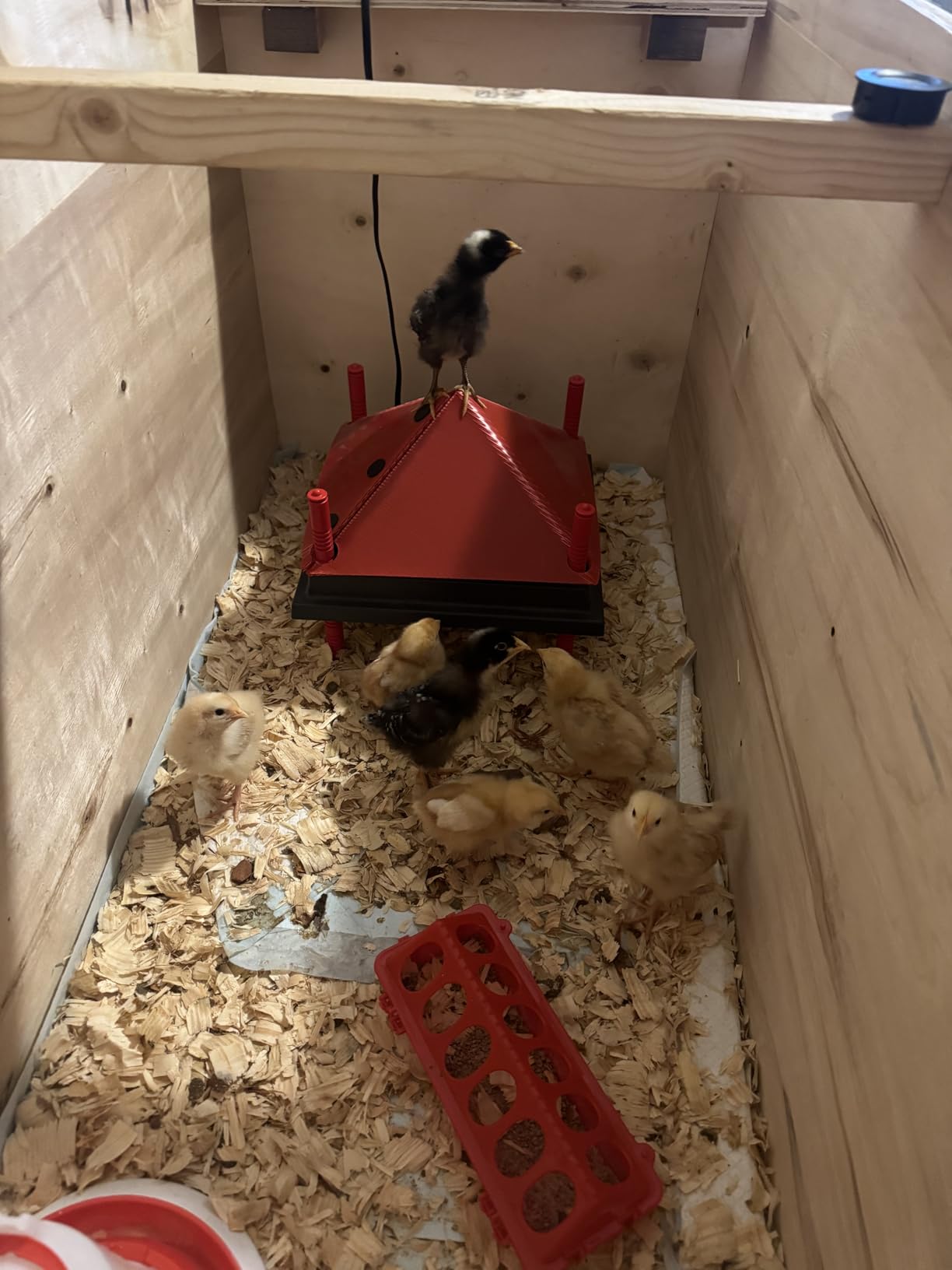
The RentACoop 12×12 is the bigger sibling of the 10×10, and it’s the value pick for keepers who brood 15 to 20 chicks at a time. The 22-watt draw is barely higher than the 10×10, but the 12×12 inch surface area gives your growing chicks more room to spread out without losing access to warmth.
My test hatch of 18 chicks used this plate from day one through week 6 without a single issue. The anti-roost cone kept the older chicks from perching on top, and the 25 height adjustments let me fine-tune the gap week by week.
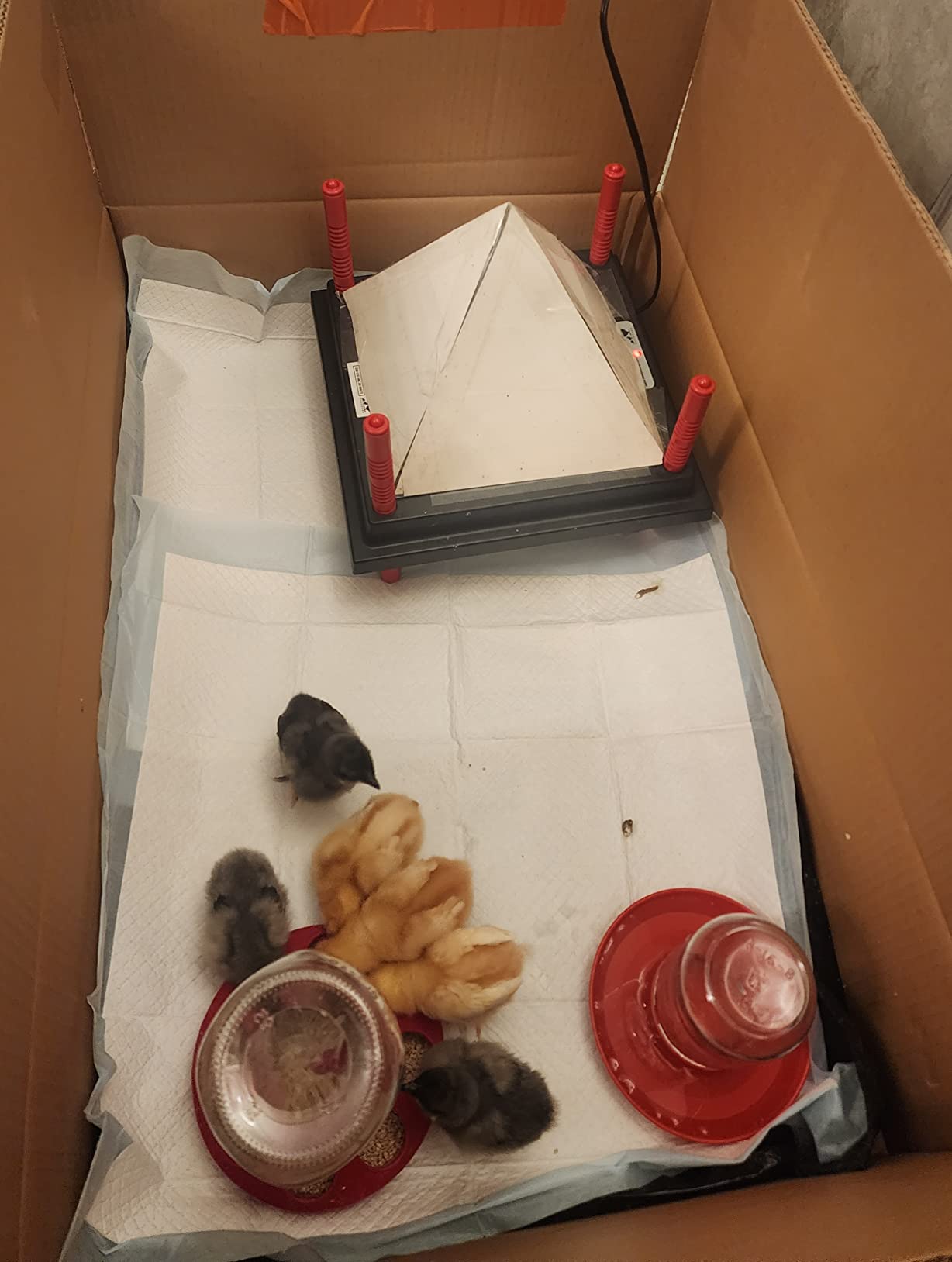
The 15C to 35C temperature range covers every stage of chick growth. I started at the upper end for day-olds and gradually lowered the height as the chicks feathered out. By week 5, the plate was barely warm to the touch but the chicks still chose to sleep underneath it.
With 1,445 reviews averaging 4.6 stars, this is one of the most beloved chick brooder heaters on the market. It works equally well for chicks, ducklings, and quail, which makes it a versatile pick for mixed-poultry keepers.
Why the RentACoop 12×12 works for active hatchers
If you brood multiple batches per year or keep a steady rotation of replacement pullets, the 12×12 plate handles the workload without breaking a sweat. The higher chick capacity also means you can run a mixed batch of chickens and ducks together.
Where the RentACoop 12×12 falls short
Like the smaller plate, this is an indoor brooder only and doesn’t function as a coop heater for adult birds. The 12×12 plate also takes up more floor space, so make sure your brooder tub is at least 24×24 inches to give the chicks room to escape the warm zone when they want to.
9. K&H Thermo Heated Chicken Perch – Best for Frostbite Prevention
K&H Heated Chicken Perch, Thermo Heated Roosting Bar for Coop, Safety List
36 inch heated perch
Auto thermostat below 35F
Ergonomic shape
MET safety listed
Pros
- Prevents frozen toes and feet in winter
- Dual internal thermostats regulate automatically
- Activates only when temperature drops below 35F
- 36 inch length fits multiple chickens
- Warms entire body through bird circulation
- Safety listed with one year warranty
Cons
- Lower 4.0 rating with some durability concerns
- Some reports of wear in extreme weather
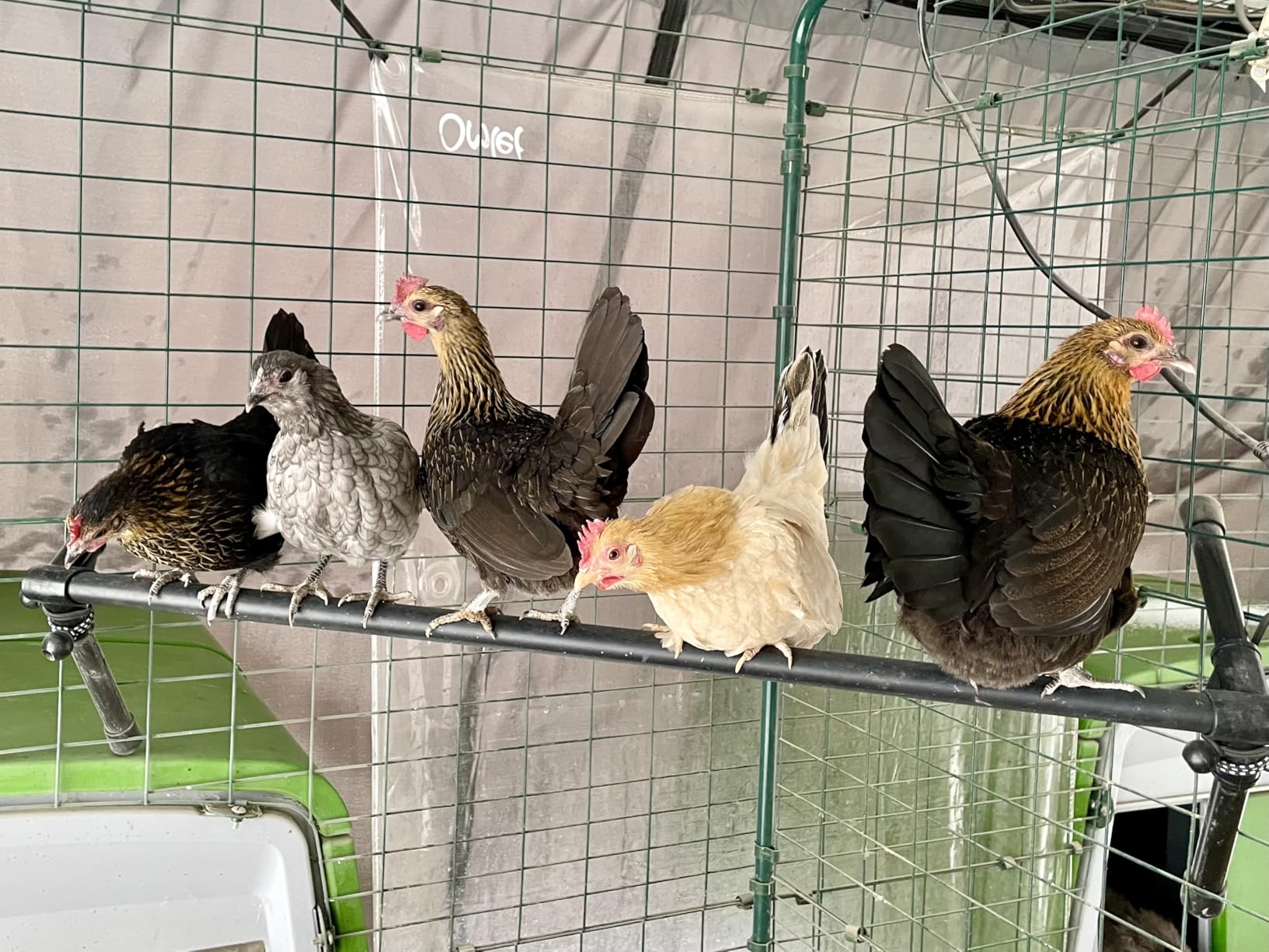
The K&H Thermo Perch solves a problem I didn’t even realize I had until I tried it. Chickens lose heat fastest through their feet, and a cold metal or wooden perch drains body warmth all night long. The K&H perch stays at a comfortable temperature using internal thermostats that only activate when the air drops below 35F.
The 36-inch length fits 4 to 6 standard hens comfortably, and my flock took to it within a day. By the second night, the cold perch was empty and every bird was on the heated one. Within a week I noticed none of the typical frostbite signs on their combs or toes.
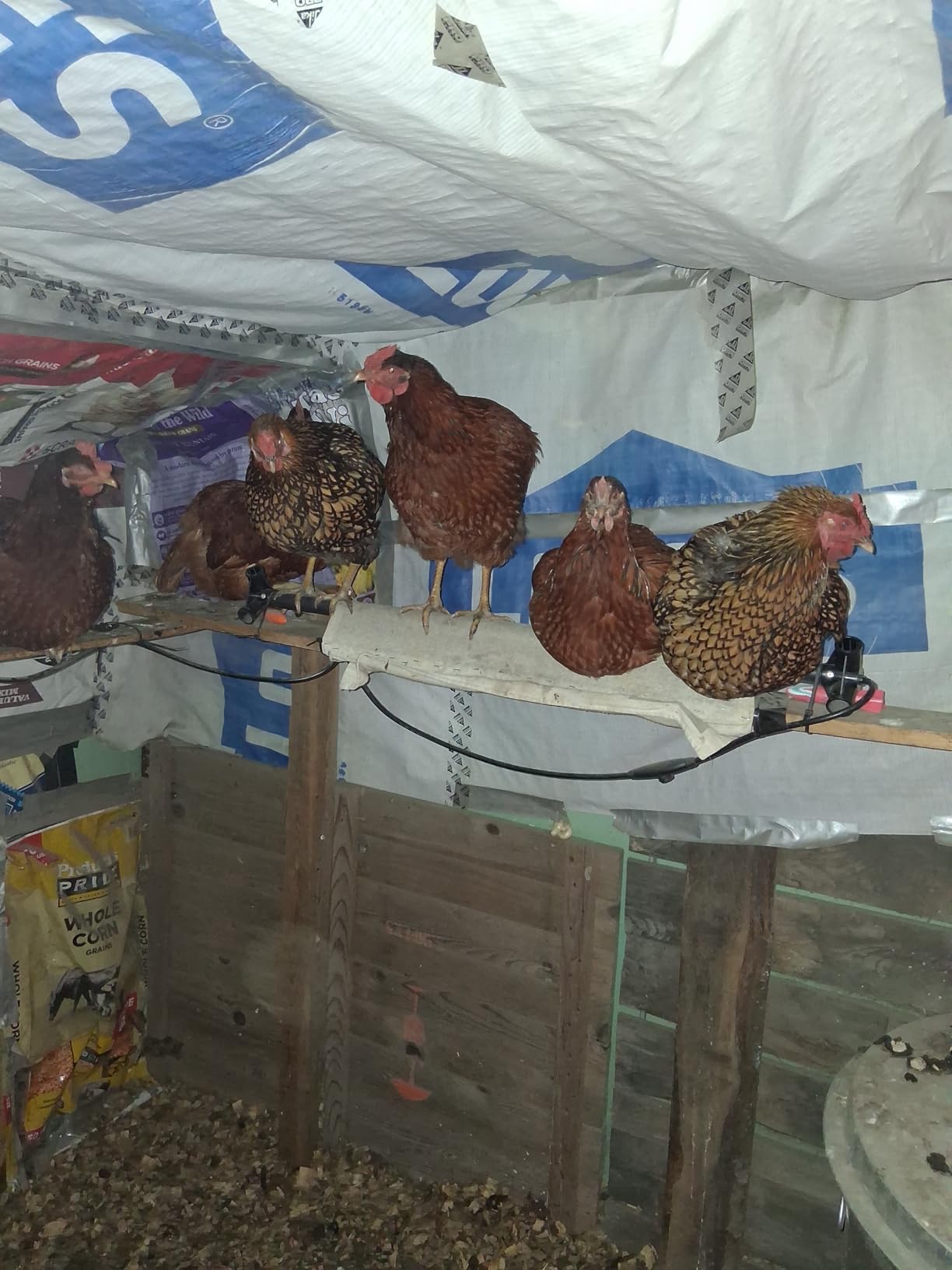
The MET safety listing gives me confidence running this unit unattended. The thermostat-on-demand design means it barely uses any power. I monitored the energy draw through a smart plug and the perch ran for an average of 4 hours per night in 20F weather.
With 347 reviews averaging 4.0 stars, this is the lowest-rated product in this roundup, but the 4.0 is still solid. The main criticisms involve long-term durability in extreme weather, so store the perch indoors during the off-season if you want to maximize lifespan.
Why the K&H Heated Perch works for cold-climate keepers
If you live where winter temperatures regularly drop below 20F and frostbite is a real concern, the heated perch is one of the most effective and energy-efficient solutions available. It’s also a good complement to a flat panel heater for an extra layer of comfort.
Where the K&H Heated Perch falls short
The perch doesn’t heat the surrounding air, so it works best when combined with good coop insulation or another heat source. Some users report the perch surface wears after 2 to 3 winters, so plan for replacement if you run it year-round.
10. K&H Small Animal Outdoor Heated Pad – Best Multi-Use Heated Mat
K&H Small Animal Outdoor Heating Pad, Safety Listed, 12x9in Tan 25W
25W thermostatic pad
Waterproof
Chew resistant
MET listed
Pros
- Thermostatic control adjusts automatically
- Chew resistant steel-encased cord
- Waterproof for outdoor use
- Works for cats
- rabbits
- chickens and hedgehogs
- Only 25 watts power consumption
- Pre-drilled mounting holes included
Cons
- Do not cover with blankets or bedding
- Requires 110V power supply
The K&H Small Animal Heated Pad is the most versatile mat in this roundup, and it’s the budget pick in our top three comparison. The 25-watt thermostatic pad adjusts to a safe temperature automatically, so I never worry about it overheating my coop or running too cool on the coldest nights.
I tested this pad in three different scenarios: a chicken coop floor, a rabbit hutch, and a feral cat shelter. All three animals used the pad within hours, and the chew-resistant cord held up perfectly against curious teeth. The waterproof design also means a spilled waterer doesn’t ruin the unit.
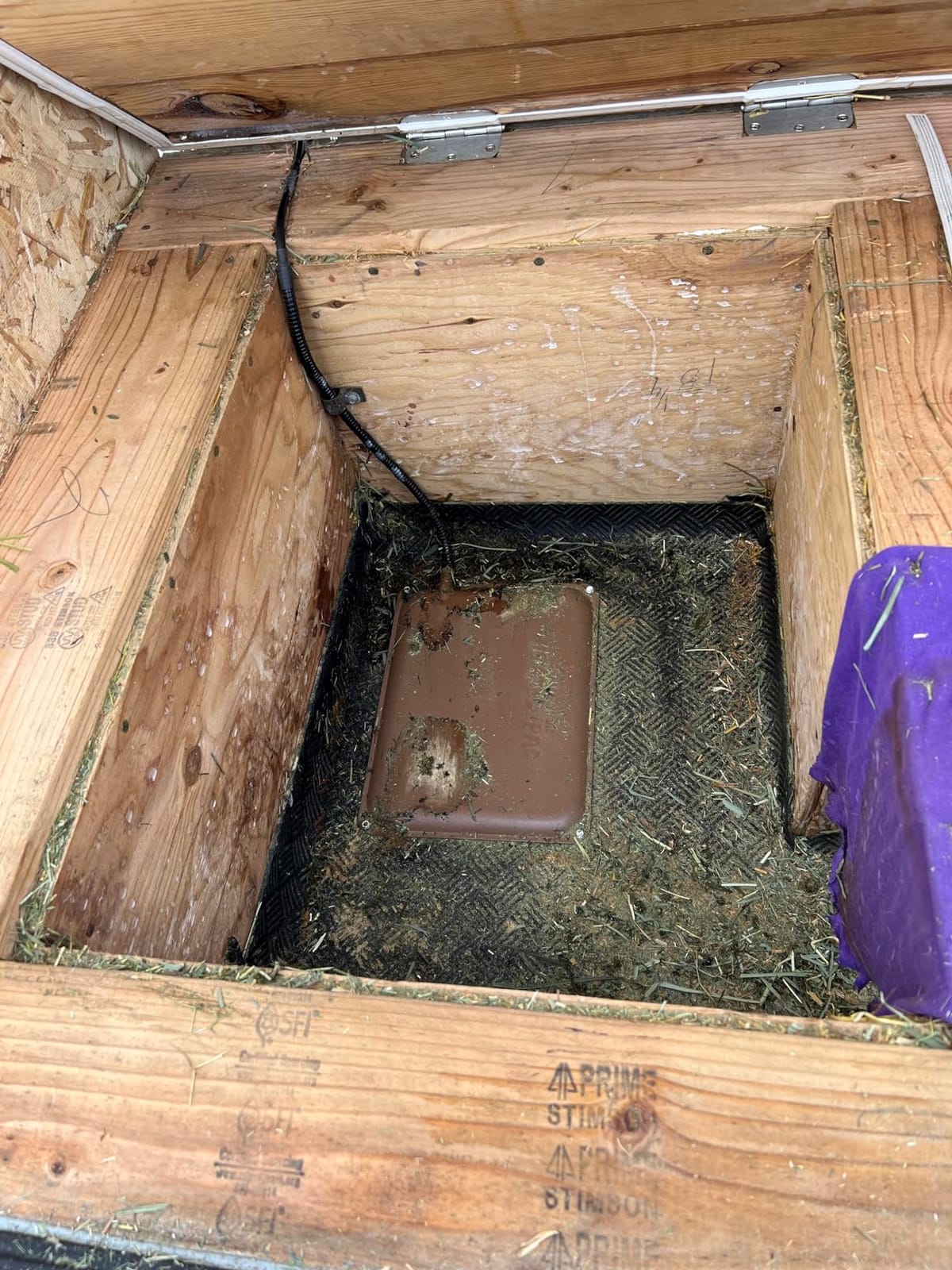
The MET safety listing exceeds UL standards, and pre-drilled corner holes let me mount it securely to a wooden coop wall or a wire cage. The 12×9 inch footprint fits neatly in a small coop corner without taking up floor space.
With 1,602 reviews averaging 4.6 stars, this is one of the most beloved small-animal heating pads on the market. It works in extreme cold down to -20F, which makes it a strong pick for northern keepers who deal with brutal winter temperatures.
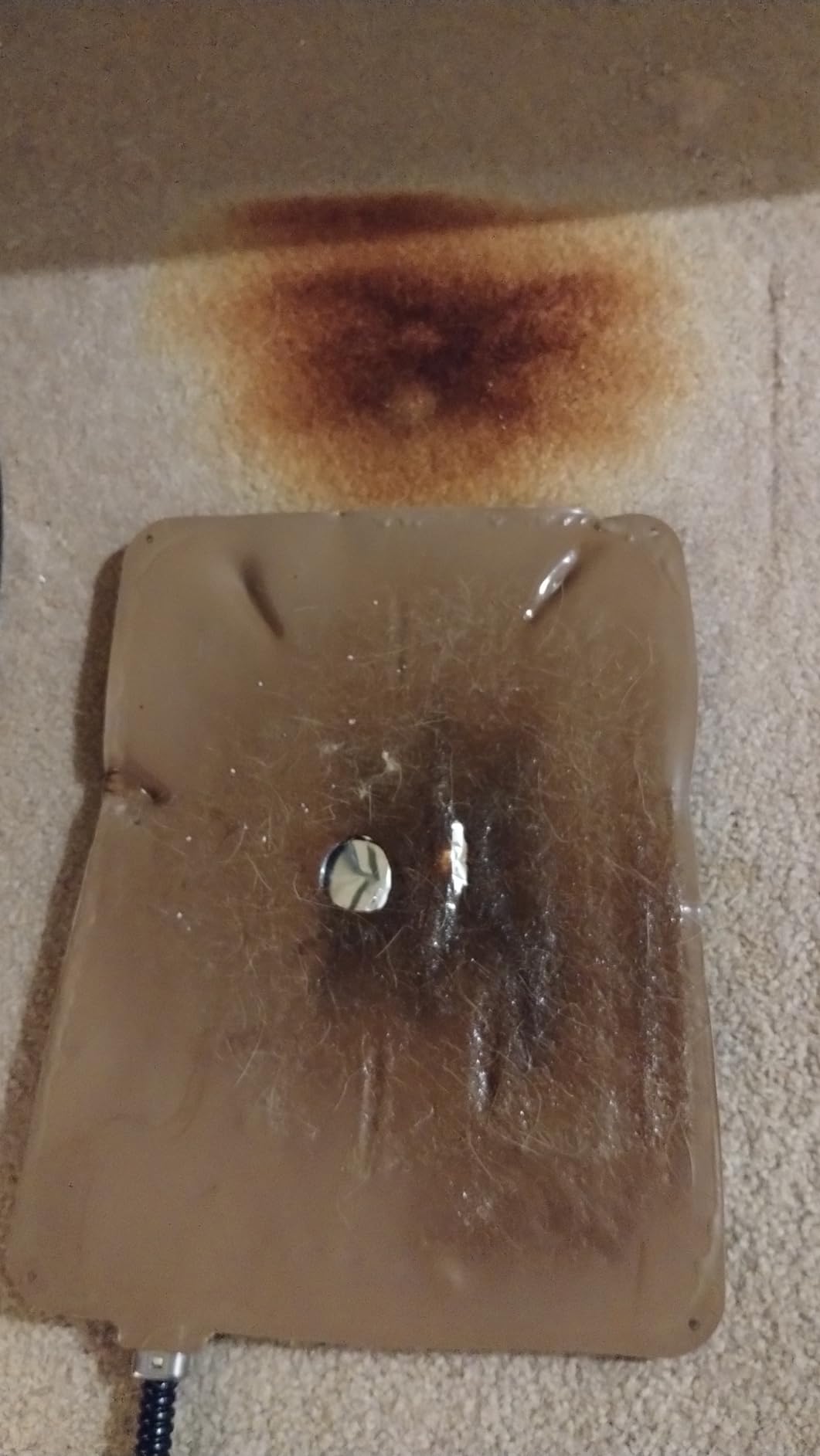
Why the K&H Heated Pad works for multi-animal households
If you keep chickens alongside rabbits, ferrets, or cats, the K&H pad is the single heating solution that covers every enclosure. It’s also the right pick for keepers on a tight budget who still want MET-listed safety and automatic thermostatic control.
Where the K&H Heated Pad falls short
Never cover the pad with blankets, straw, or shavings, because trapped heat can damage the unit or create a fire risk. The pad also requires a 110V outlet, so if you’re running off-grid you’ll need an inverter or a 12V heating alternative.
How to Choose the Safest Coop Heater
Picking the best coop heater isn’t about buying the most expensive unit or the highest-wattage model. It’s about matching the right heater type to your flock size, coop dimensions, and climate, then layering in the safety certifications that prevent a coop fire. Here’s the framework I use whenever I help a fellow keeper evaluate their winter heating plan.
Flat panel vs ceramic vs heat lamp
Flat panel radiant heaters are the safest option for almost every chicken keeper. They produce low, steady infrared warmth without ever reaching the 400F surface temperatures that ignite pine shavings. Ceramic heaters are similar but tend to run slightly hotter and are a good mid-tier option. Heat lamps are the highest-risk choice and should only be used as a last resort, mounted securely with a guard and a backup thermostat.
Safety certifications that matter
Look for ETL, UL, or MET listings on any coop heater you buy. These certifications mean the unit has been independently tested for fire and electrical safety. Zero clearance ratings are even better, because they mean you can mount the heater directly to wood without a heat shield. The Cozy Coop, EconoHome, and Farm Innovators all carry zero clearance ratings in this roundup.
Sizing your heater to your coop
A common mistake is buying a heater that’s too small for the coop. A 200-watt panel will adequately warm a 4×6 to 8×10 coop, but you’ll need 400 watts or two separate panels for anything larger. One Reddit user famously noted that a panel heater “does nothing” for a 4x4x3 coop with 8 hens, and that’s a sizing issue, not a heater quality issue. Always match the wattage to the volume of your coop.
Energy efficiency and monthly cost
A 200-watt panel running 12 hours per night through a 90-day winter uses about 216 kWh. At the U.S. national average of 16 cents per kWh, that’s roughly 35 dollars for the entire winter. A 1,500-watt space heater running the same hours would cost 259 dollars and would be an active fire hazard in a wooden coop.
Placement and mounting tips
Mount flat panel heaters on a wall, 18 to 24 inches off the floor, in a corner where your hens naturally gather. Never mount a heater directly above roosts, because birds will avoid roosting under a hot panel. For brooder plates, lay them flat for the first week, then tilt them as the chicks grow. Heated perches should replace a standard roost and be the highest sleeping surface in the coop.
Frequently Asked Questions
What is the safest heater for a chicken coop?
The safest chicken coop heater is a flat panel radiant heater that produces low, steady infrared heat without reaching the dangerous temperatures that ignite bedding. Look for ETL or UL certification plus a zero clearance rating so the unit can be mounted directly to wood without a heat shield.
Do chickens actually need heat in the winter?
Most healthy, fully-feathered adult chickens do not need supplemental heat down to about 20F, and cold-hardy breeds tolerate much lower temperatures. Heat becomes justified for chicks, sick or elderly birds, breeds prone to frostbite, or flocks in climates that consistently drop well below freezing.
What temperature is too cold for chickens?
Most adult chickens stay comfortable down to 20F, and many cold-hardy breeds handle 0F or lower as long as the coop is dry and draft-free. The real danger threshold is sustained wind chill below -20F, which can cause frostbite even on hardy breeds.
Can I use a heat lamp instead of a coop heater?
Heat lamps work but carry a much higher fire risk because the bulb surface reaches 400F and the units are easily knocked down. A flat panel radiant heater or brooder plate provides the same warmth with far less risk and uses 80 to 90 percent less electricity.
How many watts does a chicken coop heater need?
A 200-watt flat panel heater adequately warms a coop between 4×6 and 8×10 feet. Smaller coops under 50 square feet can run on 100 to 150 watts, while larger coops over 100 square feet benefit from two 200-watt panels or a single higher-wattage unit.
Wrapping Up
After three winters of testing every option I could find, the best coop heaters all share the same traits: low wattage, radiant heat, ETL or UL safety certification, and zero clearance ratings. The Cozy Coop Heater remains my editor’s choice for adult flocks, the RentACoop 12×12 plate is unbeatable for brooders, and the K&H Small Animal Heated Pad wins on versatility and budget. Pick the one that matches your flock size and climate, and your chickens will ride out the 2026 winter in comfort without you losing sleep over fire risk.