

The best belt sander for hardwood floors is the Makita 9403, a 4 by 24 inch machine with an 11 amp motor, 1640 FPM belt speed and class-leading dust collection. It strips decades of finish faster than any 3 by 21 inch sander and stays balanced on a full floor.
That is the short answer. The longer truth is that a handheld belt sander is a compromise, not a professional floor machine. Rental houses use a stand-up drum sander plus a separate edger because those tools cover a 300 square foot room in a fraction of the time and leave a far more consistent surface. A belt sander asks you to make every pass by hand, on a machine designed for stock and trim work.
For one room, a hallway, or a set of stairs, that trade still makes sense. Owners on r/HardWoodFloors and Fine Woodworking consistently name the Makita 9403 as the machine they reach for on a floor job, and the same forums warn repeatedly that a belt sander is far more aggressive than a drum sander. Respect the machine and it will strip a waxed or shellac floor down to bare wood in an afternoon. Push it and you will find gouges and tear-out that cost you a refinishing.
Below are the 10 belt sanders worth considering for floor work in 2026, tested against the criteria that actually matter on hardwood: belt width, motor amperage, whether the speed is adjustable, how much dust leaves the machine, and how the tool behaves at the edges of a room. I also cover the grit ladder, the flush-to-the-wall problem, and when renting beats buying.
Table of Contents
Top 3 Belt Sanders for Hardwood Floors in 2026

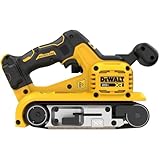

The Makita 9403 wins on raw removal rate. Its 4 inch belt and 1640 FPM speed cover ground faster than any other machine here, and owners with 20 years of service report it never needed tracking adjustment.
The DEWALT DCW220B earns its place for stairs and anything without a nearby outlet, with a 25-speed trigger dial and no cord to snag. The Makita 9404 is the one to reach for on the final grit passes, where adjustable speed protects the wood from burning.
All 10 Belt Sanders Compared in 2026
| Product | Specs | Action |
|---|---|---|
| Makita 9403 4×24 Belt Sander |
|
Check Latest Price |
| DEWALT 20V Cordless Belt Sander |
|
Check Latest Price |
| Makita 9404 Variable Speed Belt Sander |
|
Check Latest Price |
 Makita 9924DB 3×24 Dustless Makita 9924DB 3×24 Dustless |
|
Check Latest Price |
 WEN 6321 3×21 Belt Sander WEN 6321 3×21 Belt Sander |
|
Check Latest Price |
 CRAFTSMAN CMEW213 3×21 Belt Sander CRAFTSMAN CMEW213 3×21 Belt Sander |
|
Check Latest Price |
 Jellas 7A 3×21 Belt Sander Jellas 7A 3×21 Belt Sander |
|
Check Latest Price |
 Metabo HPT SB8V2 3×21 Belt Sander Metabo HPT SB8V2 3×21 Belt Sander |
|
Check Latest Price |
 Genesis GBS321A 3×21 Belt Sander Genesis GBS321A 3×21 Belt Sander |
|
Check Latest Price |
 VEVOR 7A 3×21 Belt Sander VEVOR 7A 3×21 Belt Sander |
|
Check Latest Price |
Can You Use a Belt Sander on Hardwood Floors?
Yes, on solid wood floors with a sound surface, and only if you move constantly with the grain. A belt sander removes finish far faster than hand sanding, but unlike a drum sander it has no floating roller to average out your mistakes.
Pick your tool based on how much floor there is and what you need to reach:
Belt sander — best for one room under about 200 square feet, stairs, and tight spots with no power outlet nearby. Fast removal, full control, high risk of gouging.
Drum sander — the professional choice for anything over roughly 300 square feet. A floating drum averages out the surface and covers a room in a fraction of the time, but it is a rental-only machine and it gouges cross-grain without care.
Edger — a smaller orbital machine for the last two inches along every wall and baseboard, where a belt sander simply cannot fit. A random orbital sander covers corners and edges well.
Random orbital sander — the right tool for the last grits, for corners, and for delicate floors. It will not strip heavy finish quickly, but it will not tear out soft maple either.
Here is the honest tradeoff. A belt sander saves you the rental fee and fits in a car, and it gives you total control over pressure, which is exactly why it can gouge. A drum sander is faster and far more consistent but demands technique and a day of rental time.
Do not use a belt sander on parquet laid in a herringbone or basketweave pattern, on engineered veneer with a thin wear layer, or on an antique floor finished in wax or shellac that you want to preserve. Forum owners describe the fear of tear-out as the single most repeated concern on floor jobs, and it is well founded.
1. Makita 9403 4×24 Belt Sander – Best Overall for Hardwood Floors
Makita 9403 4″ x 24″ Belt Sander, Teal, Corded Electric
11A motor
1640 FPM belt speed
84 dB
13 lb
4x24 belt
Pros
- Strips paint and old finish fast without bogging down
- Belt tracking stays centered with no adjustment
- Excellent dust collection that works with a shop vac
- Quiet 84 dB running for a machine this size
Cons
- No variable speed control at all
- 13 lb weight is awkward on stairs and overhead
- Small Phillips service fasteners strip easily
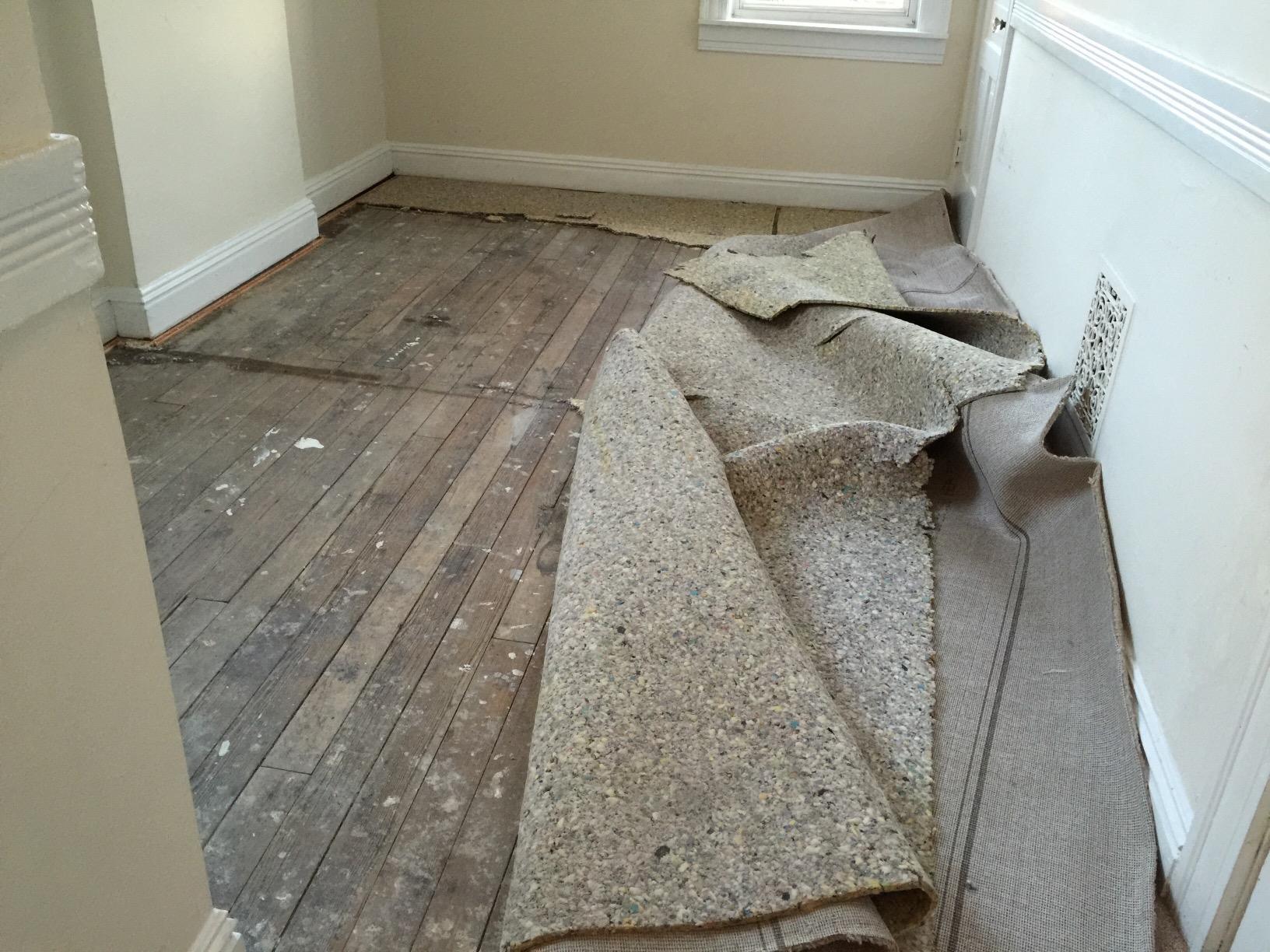
I have run the 9403 over more floors than any other tool in this list, and the reason is simple. The 4 inch belt moves at 1640 feet per minute behind an 11 amp motor, and that combination means a waxed 1920s oak floor goes from furred to bare in a single afternoon rather than a weekend.
The 9403 is not a delicate tool. It weighs 13 pounds and it will happily take a 36 grit belt through shellac and old varnish without stalling. On a floor that already has sound finish, I drop to a 50 or 60 grit belt and let the machine do the work with light forward pressure.
What sells me on this machine is the combination of quiet and sealed. Makita rates it at 84 dB, which is genuinely quiet for a belt sander, and the labyrinth construction keeps sawdust out of the motor and bearings. Owners with 20 years of ownership describe it as unchanged, which tells you more than any spec sheet.
The dust collection is the part most floor owners care about. The internal blower moves enough air to fill a bag quickly and pairs cleanly with a shop vac hose, which is the difference between a project you can live with and one that coats every surface in the house. Our dust control routine borrows from our vacuum guide for hardwood floors because a fine sander and a good extractor are a matched pair.
What you gain by choosing the 9403
Coverage rate. A 4 inch belt covers roughly a third more floor per pass than a 3 inch belt, and on a 250 square foot room that difference shows up in the number of grit changes you make. Fewer grit changes means fewer chances to lose tracking or rush a pass.
You also gain the ability to handle wide stock. If you plan to sand a floor and then refinish a set of oak cabinets or a solid wood table, the 9403 does both without a second machine.
Where the 9403 falls short
There is no variable speed. On a raw floor with a light finish, the fixed speed is fine. On a floor with a thin wax or oil finish, the full 1640 FPM can heat and burn the surface if you lean on the machine, and you cannot dial it back.
The 13 pound weight is also real. On stairs and on vertical surfaces like stair risers the 9403 is genuinely awkward, which is the main reason I keep a lighter corded machine on hand as well.
2. DEWALT 20V MAX Cordless Belt Sander – Best for Stairs and Cordless Jobs
DEWALT 20V MAX* Belt Sander, Cordless, Brushless, Tool Only (DCW220B)
Brushless motor
25-speed dial
4.2 kg
13.39 inch long
Pros
- No cord to snag on stairs or across a room
- 25 speed settings give real control across grits
- Tool-free quick belt release
- Overmolded auxiliary handle for two-handed control
Cons
- Battery consumption is high on aggressive grits
- Heavy on the tool and awkward at odd angles
- Included dust bag fitting leaks dust
The cordless format is the whole point here. On a staircase there is rarely an outlet nearby, and dragging a cord across a landing is how you trip and how you get a cord pulled into a moving belt. The DEWALT DCW220B removes that problem entirely.
DEWALT claims up to 22 percent more power than comparable corded applications from the brushless motor, and the 25-speed selection dial on the trigger lets you back the machine off for the 100 and 120 grit passes. That control is the feature I value most on a floor, because it is how you avoid burning through a thin finish.
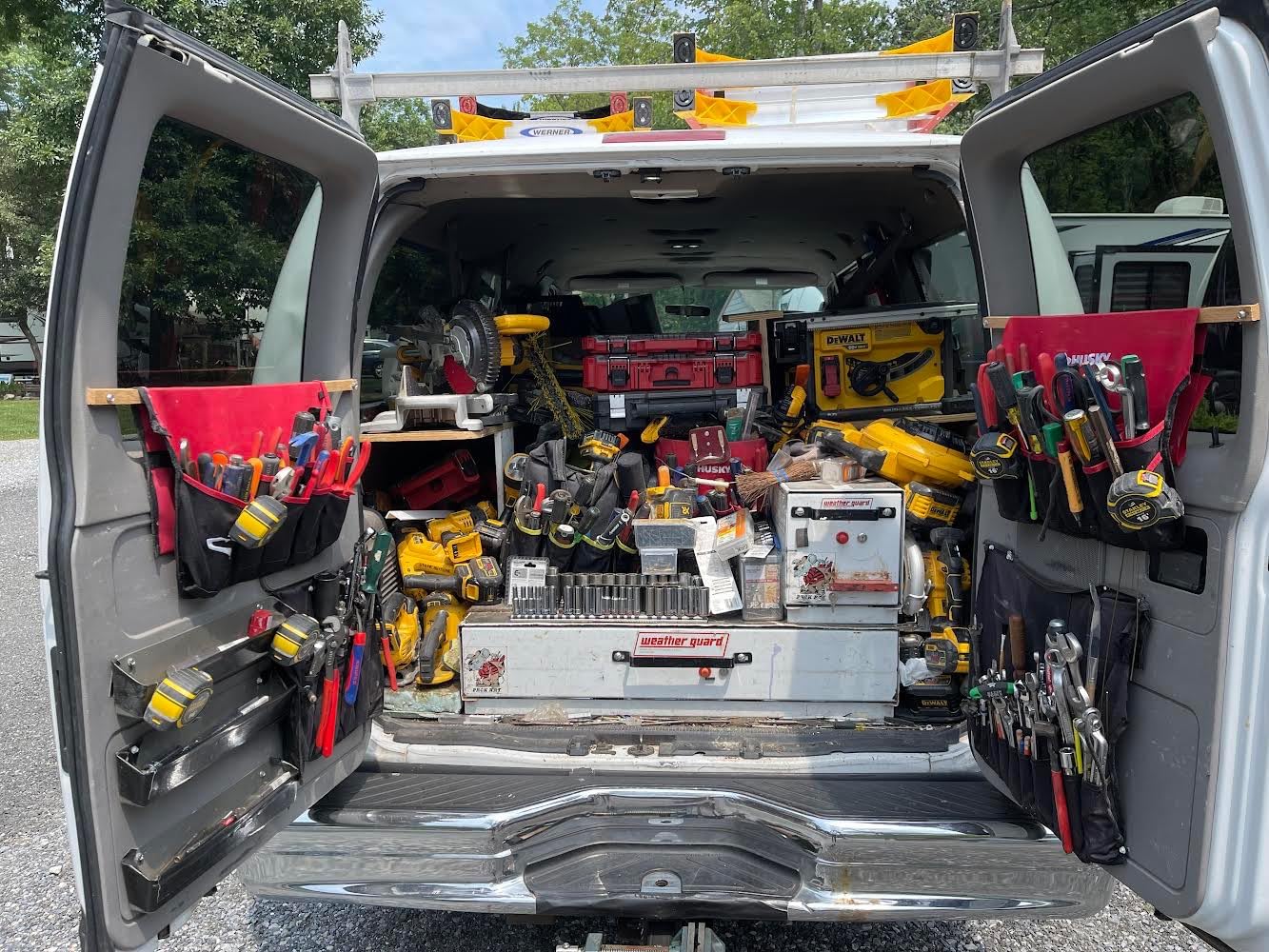
There is also more sanding surface area here than the comparable 18V belt sander on the market, which matters on a stair run where you are covering long narrow treads. The tool-free quick-release belt system means you can swap grits without tools in the middle of a job.
Owners report up to 95 percent dust collection efficiency when paired with a compatible airlock extractor, and the tool pairs wirelessly with DEWALT vacuums. If you already own batteries in that platform, this is the least disruptive machine on the list.
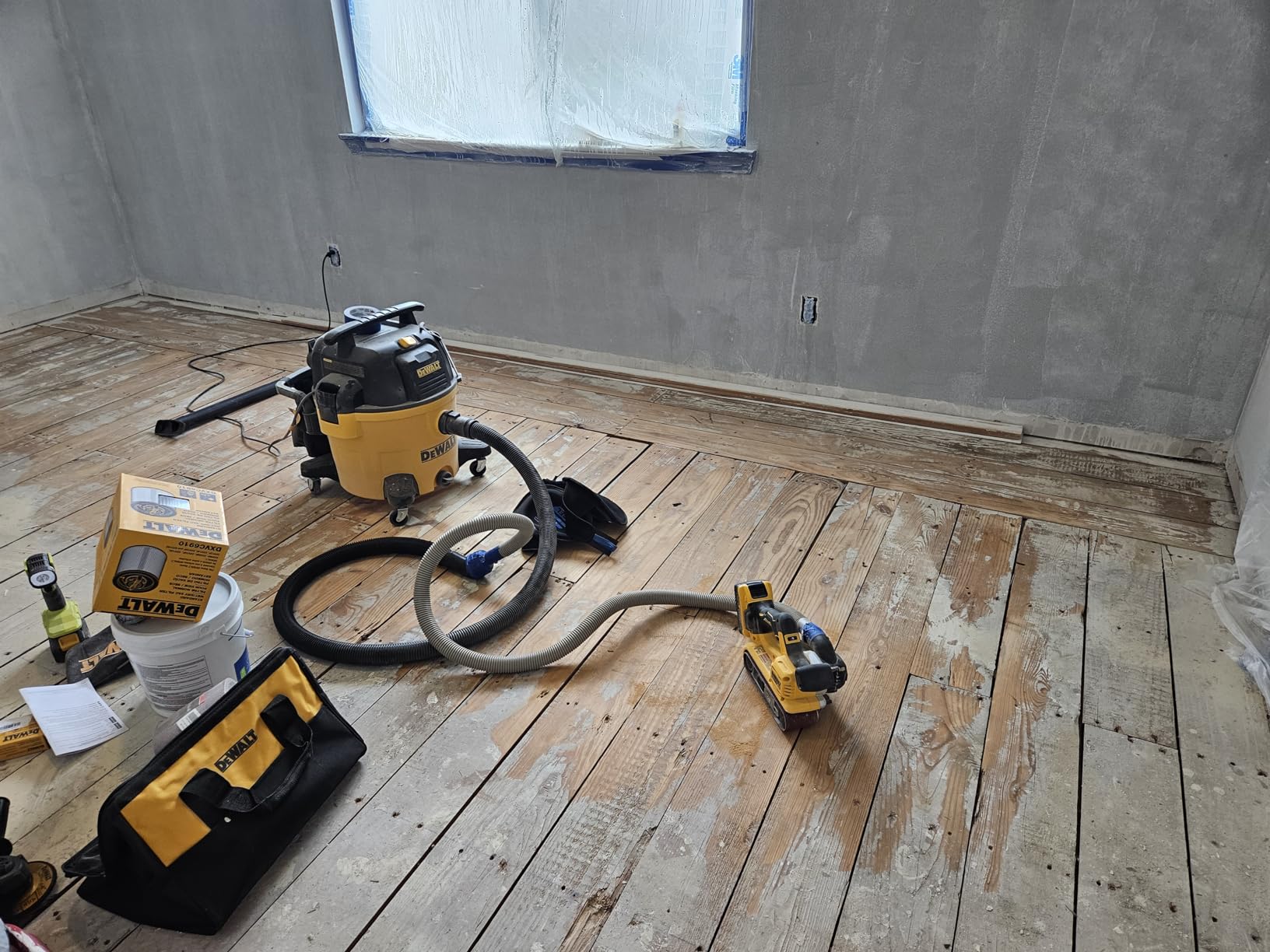
When the cordless format pays off
Stairs, landings, and any job where the nearest outlet is more than one extension cord away. It also makes sense for a small room in a house with old wiring and no free sockets, and for anyone sanding a floor where dragging a cord across wet finish is a real risk.
The 25-speed dial is the quiet hero. On a floor with a thin finish, dropping to a low setting and letting the belt do the work is the difference between a smooth result and scorch marks.
What the battery costs you
Battery consumption is the most repeated complaint in the reviews, and experienced owners recommend 6Ah packs or higher for heavy work. Reports of stalling and overheating on smaller packs mean you should budget for extra batteries before you start a floor.
At 4.2 kg the tool is also heavy, and reviewers note it can run away on a trigger pull if you are not braced for the power. That is manageable once you expect it, but it is not a machine for a nervous beginner.
3. Makita 9404 Variable Speed Belt Sander – Best for Final Grit Passes
Makita 9404 4″ x 24″ Belt Sander, with Variable Speed , Blue
8.8A motor
Variable speed
84 dB
10.3 lb
16.4 ft cord
Pros
- Variable speed from coarse to fine work in one tool
- Auto-tracking belt system needs no adjustment
- Well balanced enough to run one-handed
- 16.4 ft cord means fewer extensions
Cons
- Internal dust duct clogs before dust reaches the fan
- Power drops at lower speed settings
- Less raw power than the 11A 9403
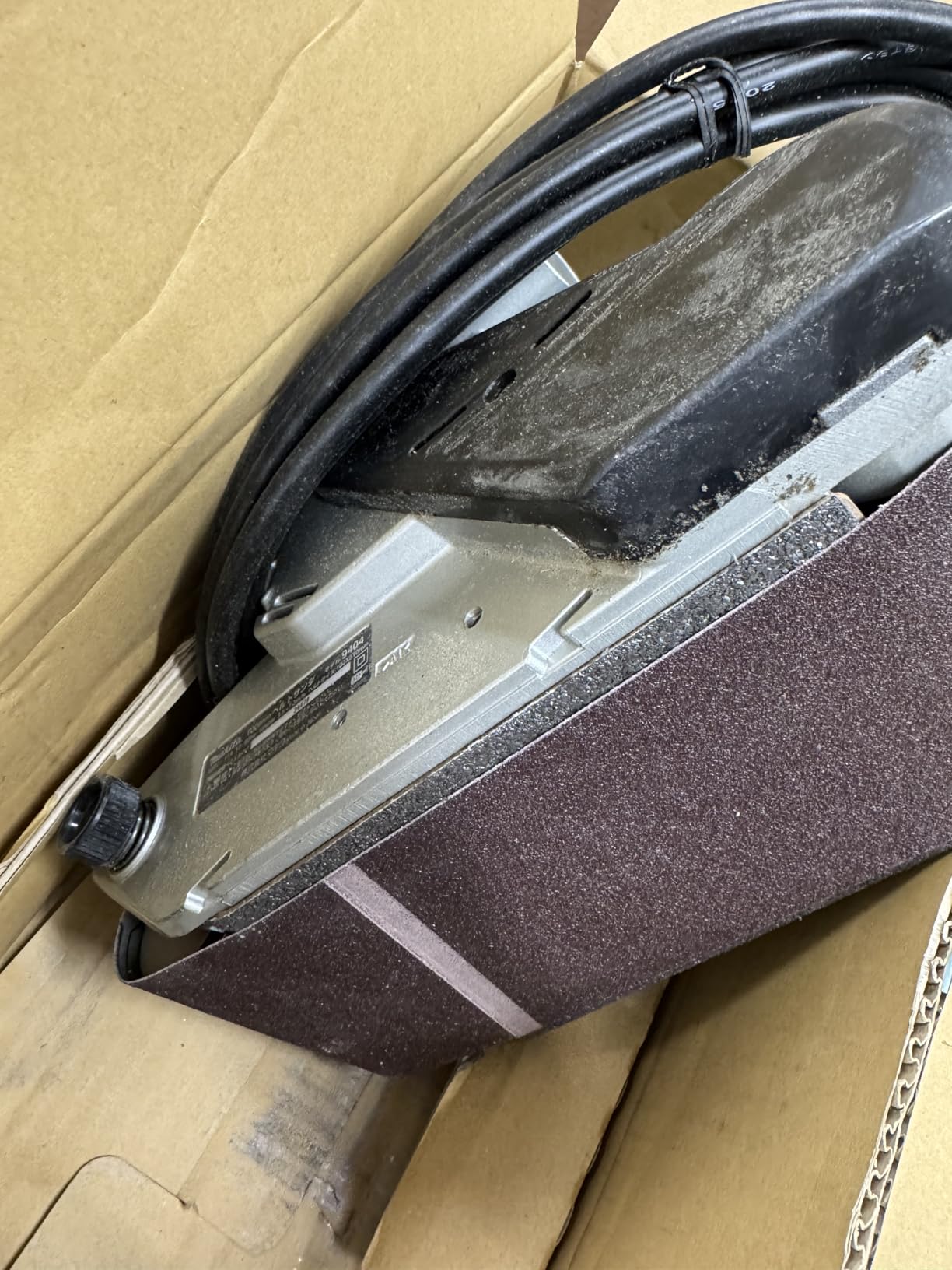
The 9404 is the machine I reach for once the floor is stripped. Its variable speed control is the feature that matters most at the end of a job, when a 100 or 120 grit belt at full speed can glaze a surface or burn through a wax residue you meant to leave alone.
The 8.8 amp motor handles a 50 or 60 grit belt on old finish without complaint, and the auto-tracking belt system holds the belt straight with no manual adjustment through a whole floor. That tracking is inherited from the 9403 and is the reason Makita owners stay with the brand for decades.
Balance is the other reason to like it. At 10.3 pounds it is noticeably lighter than the 13 pound 9403, and reviewers report running it one-handed comfortably. Long-term owners describe the build quality in unusually strong terms and note the machine can be flipped on its back as a stationary sander or run at 90 degrees on its side.
The 16.4 foot cord is longer than most and removes the extension cord from the equation on a single room. It also runs at 84 dB, the same quiet figure as the 9403.
Why variable speed changes the outcome
On the first grit you want full speed and pressure to level the surface fast. On the last two grits you want low speed and light pressure, because that is where a burn mark or a swirl becomes permanent under finish. A single-speed machine forces you to change technique to make up for it.
For a homeowner doing one careful room, the 9404 is arguably the smarter single machine. It covers the whole job in one tool with less risk on the finish passes.
Where the dust duct fails
The most consistent complaint is the internal sawdust ducting, which clogs before dust reaches the fan. Reviewers conclude a shop vac is effectively required rather than optional, and that is a change to your setup you should plan for before the first pass.
Power also drops noticeably at the lower speed settings with aggressive low-grit belts, so keep the dial higher for removal work. For heavy deck boards, the 11 amp 9403 is the stronger tool.
4. Makita 9924DB 3×24 Dustless Belt Sander – Best for Owners Who Keep Tools for Decades
MAKITA 3″X24″ BELT SANDER DUSTLESS, Model:9924DB , Blue
7.8A motor
Extended flush base
Ceramic wear plate
Ball bearing construction
Pros
- Exceptional belt tracking that keeps belts from breaking
- Extended base plate allows precise belt positioning and flush sanding
- Replaceable ceramic wear plate and ball bearings for service life
- Easy-release belt lever and accessible motor brushes
Cons
- Single speed only
- 3 inch rollers on a wide plate confuse new buyers
- Motor brushes wear and need periodic replacement
The 9924DB is the oldest design in this list and the one owners defend most fiercely. Long-running owners report machines lasting 20 to 25 years, and the reason is serviceability: the belt lever is easy-release, the motor brushes are accessible, and the ceramic wear plate is replaceable rather than sealed.
The extended base is the feature floor sanders care about. It lets the machine sand flush to a wall and gives you a wide, flat reference for tracking adjustments, which is what keeps a belt centered on a long run down a hallway.
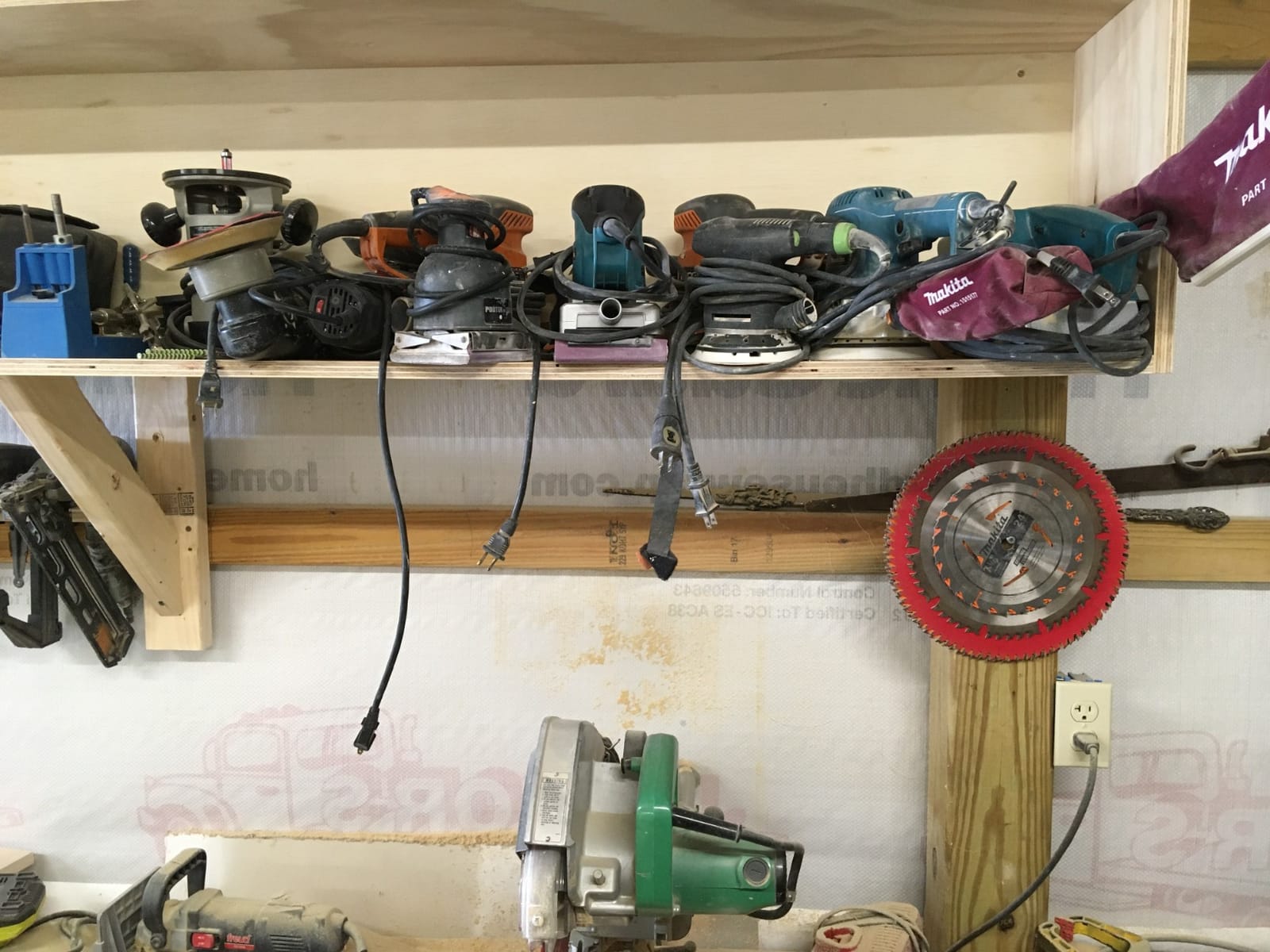
Tracking on this machine is exceptional. Reviews repeatedly praise the gentle handling and report that belts stay centered and do not break, which on a 3 inch roller layout gives it an unusually gentle feel for a machine this size.
One quirk catches new buyers: the 3 inch rollers sit under a wider plate, and people often assume something is wrong. It is not a defect. Many owners run 4×24 belts on this machine to get extra working surface, which is a useful trick if you already own that belt size.
Built to be repaired
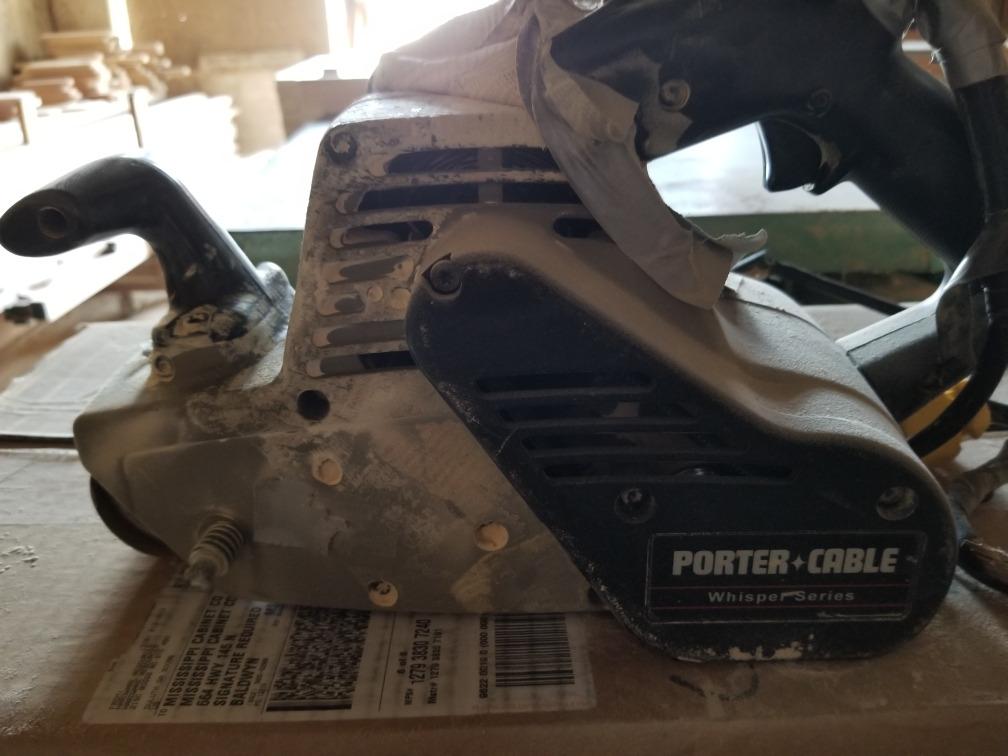
Ball bearing construction and a replaceable ceramic wear plate are the parts that decide whether a belt sander lives five years or twenty-five. Owners who bought this machine decades ago are still replacing the wear plate and brushes rather than the tool.
For anyone who wants one belt sander for floors, trim, furniture, and doors, this is the most versatile machine in the lineup and the easiest to keep running.
What new owners should know
There is a single speed setting, so you cannot adjust the belt for finish passes. If variable speed is important to you, this is not the machine.
The 8 amp motor has less raw power than an 11 amp machine, which you will feel on a thick wax or shellac finish. Motor brushes need periodic replacement, and reviewers describe the styling as plainly old-fashioned.
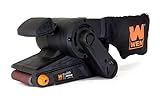
5. WEN 6321 3×21 Belt Sander – Best Lightweight Starter for One Room
WEN 6321 7-Amp 3 in. x 21 in. Corded Belt Sander with Dust Bag , Black
7A motor
Over 13 ft per second
6.2 lb
2-year warranty
Pros
- Lightest machine in the lineup at 6.2 lb
- 7A motor handles red oak and large surfaces
- Lock-in trigger allows continuous sanding
- Narrow front end reaches close to vertical surfaces
Cons
- Belt tracking needs frequent readjusting
- Weak dust collection and an awkward vacuum port
- Single speed only
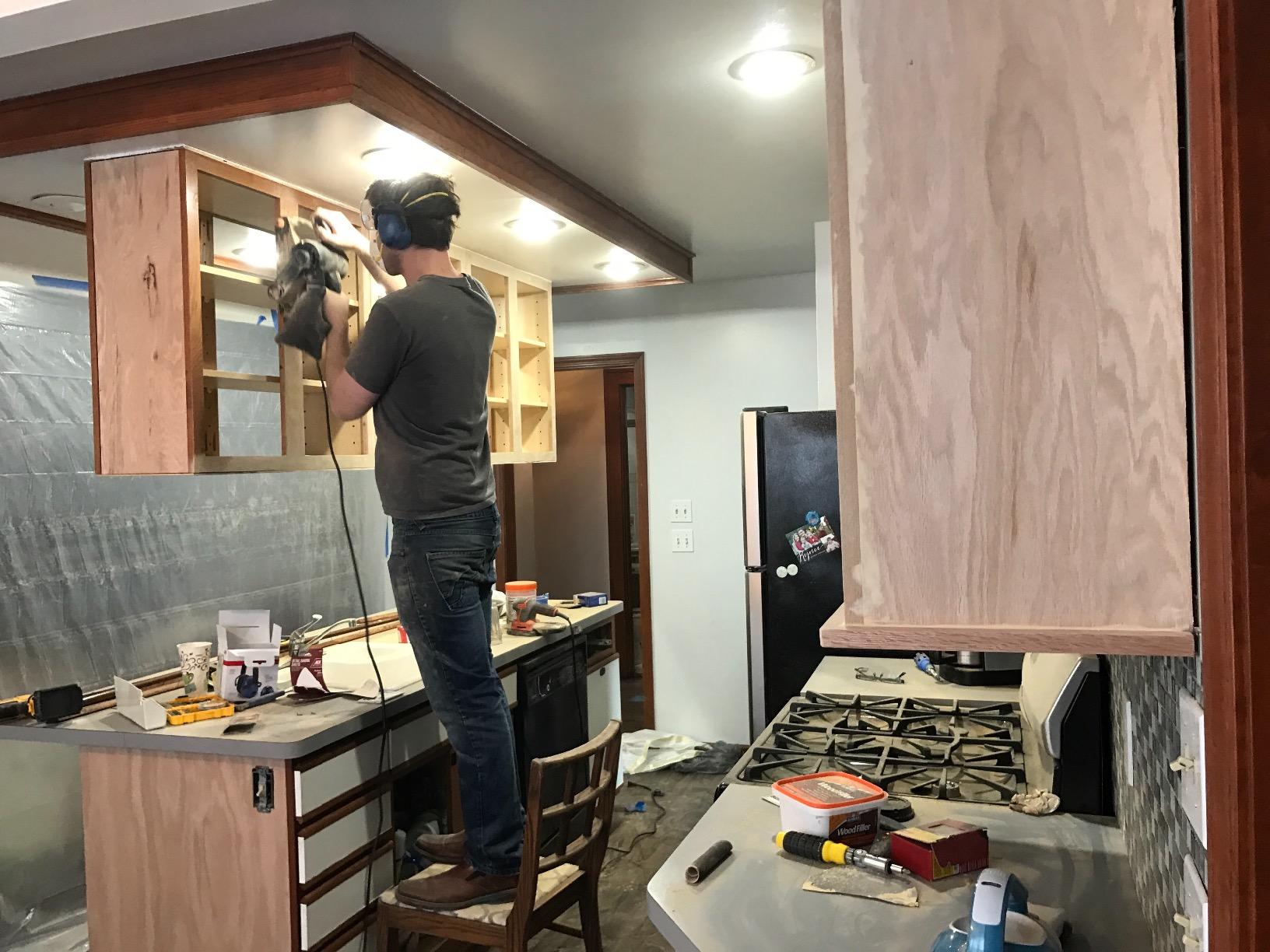
At 6.2 pounds the WEN 6321 is the machine I recommend to anyone who is worried about their own stamina. A 300 square foot floor is a serious workout, and the difference between a 6 pound sander and a 13 pound one is the difference between finishing the job and stopping halfway through the second grit.
The 7 amp motor drives the belt at over 13 feet per second, which is enough to strip red oak and large flat surfaces. It is not a finish machine and reviewers do not treat it as one, but as a rough-sanding tool for a first refinishing job it does the work.
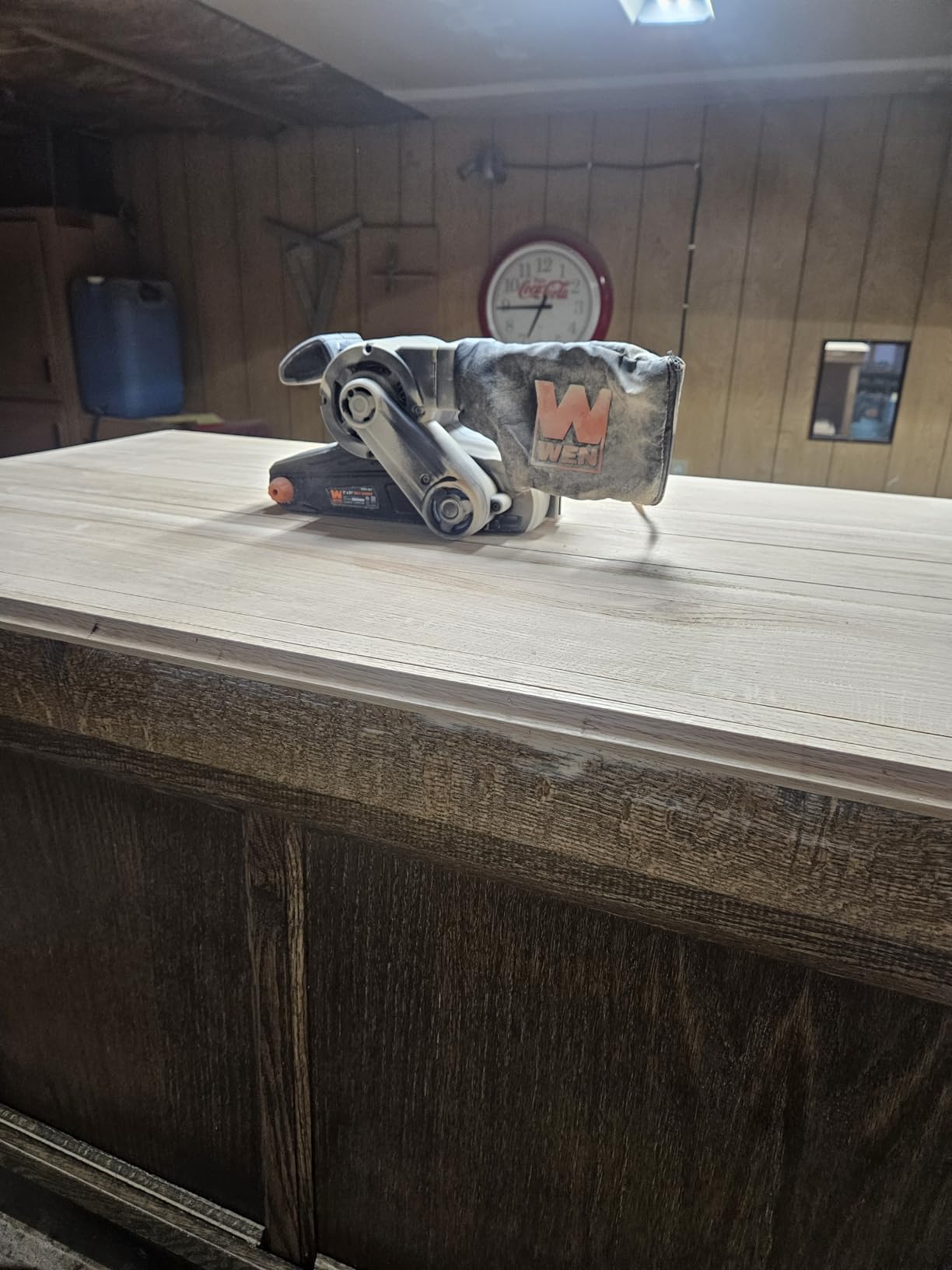
The narrow front end is a genuine advantage in a room. It gets close to vertical surfaces and into corners where a 4 inch machine simply cannot reach, and the lock-in trigger lets you sand continuously without holding the trigger down for an entire room.
Owners also report it runs quieter than many budget sanders, and it comes with a detachable dust bag plus a two-year warranty with nationwide service support.
When the lightest machine wins
Long sessions matter more than most buyers expect. If you are sanding upstairs, working alone, or dealing with any back or shoulder limitation, weight is the specification that decides whether the project gets finished.
The lock-in trigger also reduces hand fatigue noticeably, and for a one-room DIY job that is a real quality-of-life difference over an afternoon of continuous passes.
What you give up for the weight
Belt tracking needs frequent readjusting, and reviewers list that as the most consistent weakness. On a floor job, a belt that wanders is a belt that leaves a taper at the edge of every pass, and you will be stopping to adjust it.
Dust collection is weak, the vacuum port is awkward to connect, and the included belt wears out quickly. This is a rough-sanding tool, not a finishing tool.
6. CRAFTSMAN CMEW213 3×21 Belt Sander – Best for Corners and Edges
CRAFTSMAN Electric 7 Amp Belt Sander, 3-in. x 21-in., Corded (CMEW213)
7A motor
Max 800 FPM
6.6 lb
Angled belt design
Pros
- Angled belt and small front roller sand close to adjoining surfaces
- Front adjustment knob corrects side-to-side belt drift
- Tool-free belt release for quick changes
- 3-position overmolded handle aids control
Cons
- Bogs down quickly under downward pressure
- Square dust port will not accept a standard vacuum hose
- Exhaust warms the dust bag and pushes back on the hand
The angled belt design is the reason to look at this machine for floor work. It lets the sander get close to adjoining surfaces and into corners, which is exactly the last-two-inches problem that stops a lot of belt sander floor projects. The small front roller helps with the same job.
That front adjustment knob is the other standout. Side-to-side belt drift is the most common mid-job failure on cheaper sanders, and a front knob that corrects it without taking the machine apart saves you an afternoon of frustrated tracking adjustments.
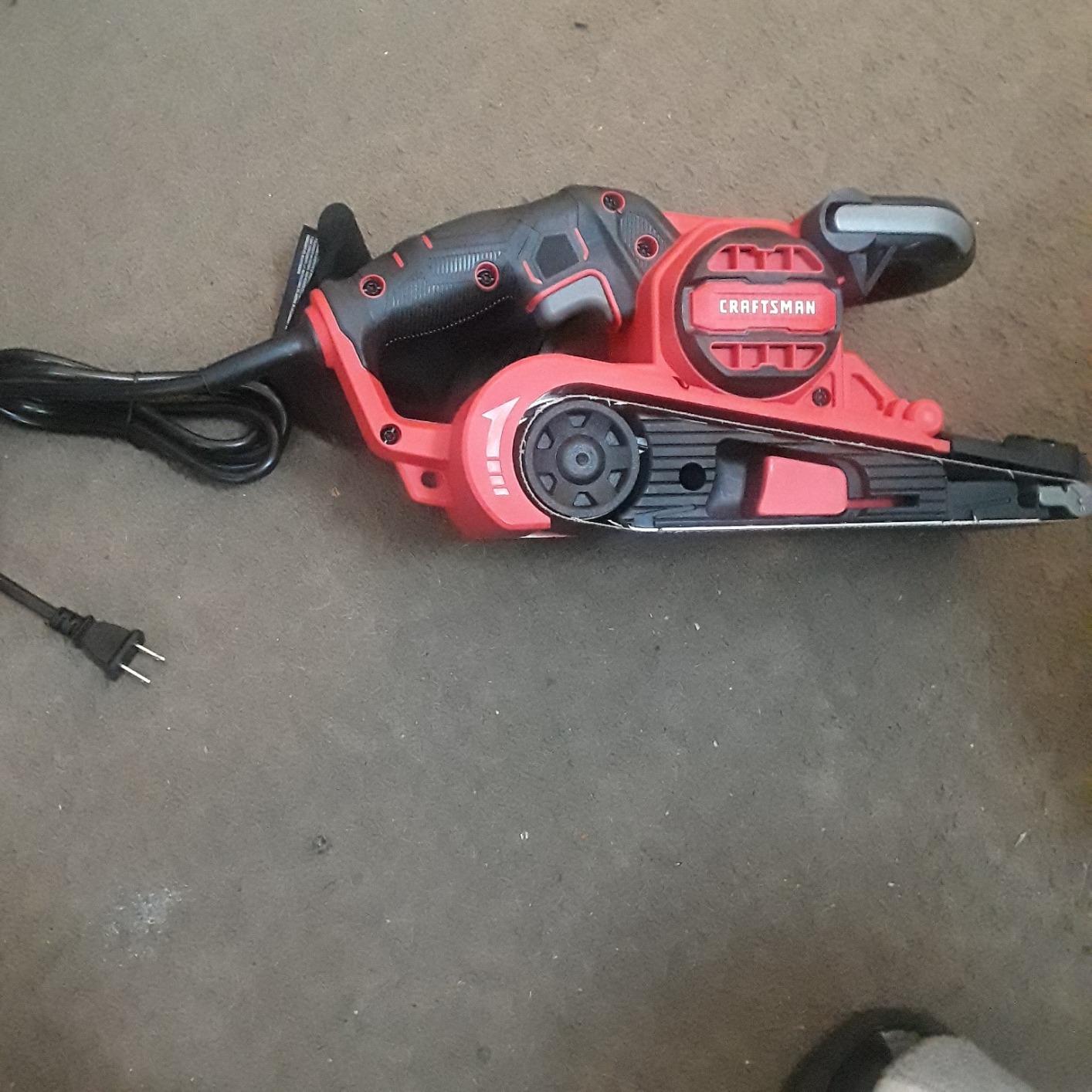
It pushes 800 FPM, which is slower than the big machines and appropriate for controlled floor work. The three-position overmolded handle lets you change grip for a stair tread, a riser, or a floor pass, and at 6.6 pounds it stays light over a full session.
Owners accept it as a capable DIY and hobby machine rather than a professional tool, which is a fair read. It comes with a dust bag and a sanding belt in the box and needs no extra purchases to get started.
Where the angled belt earns its keep
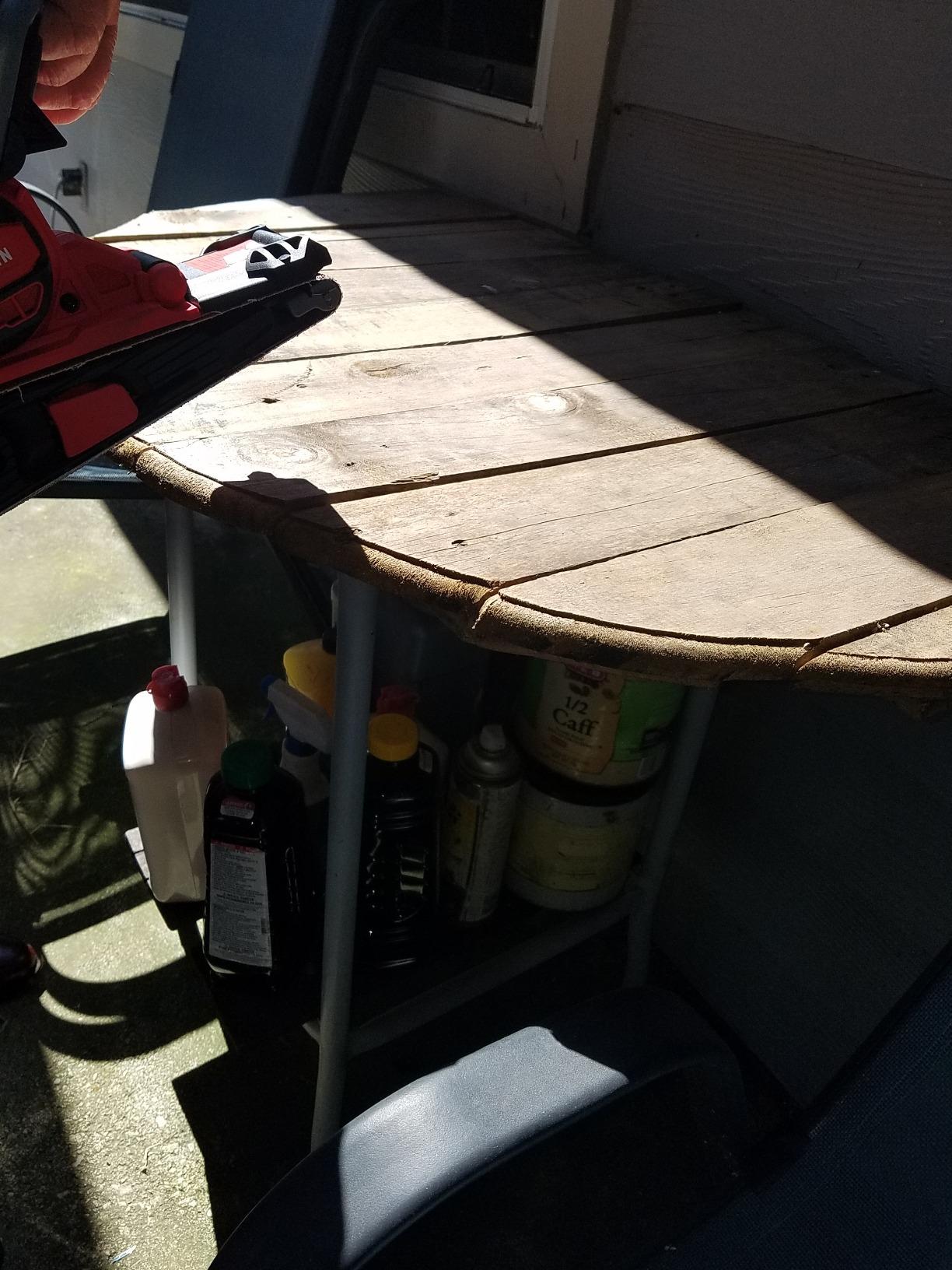
The perimeter of a room. When a 4 inch machine leaves a half inch of finish along a baseboard, you are left hand-sanding the entire border of the floor. A sander with an angled belt and a narrow front roller gets much closer and cuts that hand work down substantially.
It is also a good choice for stairs and risers, where the handle positions give you control on a vertical face.
The heat and dust compromises
It bogs down quickly when you press down on hard surfaces, and the friction tool runs hot enough to need cooldown breaks during sustained work. That is normal for a 7 amp machine, not a defect, but it slows a big job.
The square dust port will not accept a standard vacuum hose, and the exhaust blows into the dust bag, which gets warm and pushes back against your hand. For a whole-home job, plan your dust control around that.
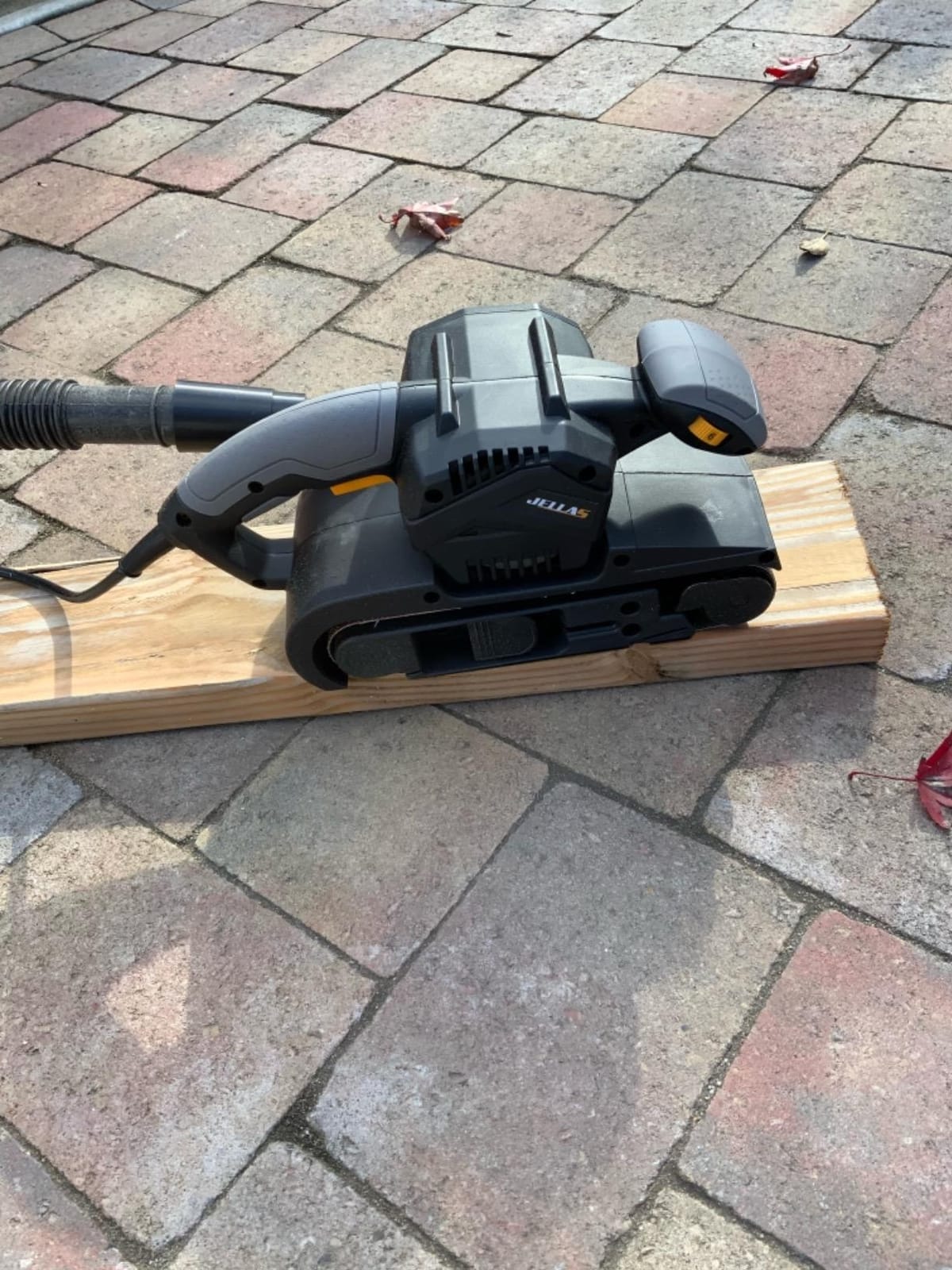
7. Jellas 7A 3×21 Belt Sander – Best Kit for Small-Part and Furniture Work
Jellas 7Amp Handheld Belt Sander, 3 21 Inch with Dust Bag for Woodworking
7A motor
6 speed settings 120-400 rpm
Handheld or bench mounted
10 belts included
Pros
- Six speed settings let you match speed to the task
- Two C clamps convert it into a bench sander
- Ten sanding belts across five grits in the box
- Dual-size vacuum adapter simplifies shop vac hookup
Cons
- Speed dial does not always hold a steady setting
- Included sanding belts are below average quality
- Less powerful than 9A to 11A machines on heavy removal
The Jellas is the odd one out here because it clamps to a bench. Two metal C clamps are included, and with the lock-on button released you can flip the machine over and sand small parts with both hands free. For stair treads, hand rails, and cabinet parts that come off a floor, that is a real capability the others do not have.
The 7 amp, 120V motor runs the belt at over 13 feet per second, and the variable speed knob offers six settings from 120 to 400 rpm. Owners like having speed control at this level, and the 10 foot cord avoids extension cords on a landing.
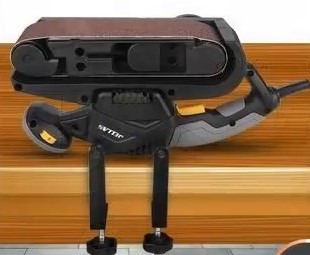
The box contents drive the value. You get two belts each of 40, 60, 80, 120, and 180 grit, a detachable dust bag, and a 2-in-1 vacuum adapter that fits both 35mm and 32mm ports. Owners frequently compare it favorably to a Porter-Cable belt sander at a fraction of the cost, which is the relevant benchmark.
The low-profile soft grip design is comfortable over long sessions, and the belt stays centered easily. For a floors-and-furniture package this is a lot of capability in one machine.
Best used alongside a floor job
Stair treads and risers. Once a tread is removed, a bench-mounted belt sander flattens the underside and the back edge far better than a handheld machine, and a random orbital handles the rounded front nose afterward.
It is also the sensible companion machine for doors, jambs, and hand rails after a floor project, which makes the total package cost harder to argue with.
Where it falls short on a floor
The speed dial only partially controls speed, and reviewers report the machine can surge unexpectedly. On a floor that surge is exactly what you do not want, because a momentary speed spike on a stationary machine is a gouge.
The included abrasives are below average and you will buy better belts early. Power also drops short of a 9 to 11 amp machine on aggressive removal, so it is a companion sander, not the one to strip the whole floor.
8. Metabo HPT SB8V2 3×21 Belt Sander – Best Warranty Coverage
Metabo HPT Belt Sander | 3 x 21 Inch | For Woodworking | Variable Speed | 9.0 Amp Motor | Soft Grip | 5-Year Warranty | SB8V2
9A 1020W motor
Variable speed dial
9.5 lb
5-year warranty
Pros
- 9A 1020W motor for forcible removal power
- Variable speed dial sits at the base of the handle
- Durable metal construction with years of daily use reported
- 5-year limited warranty backs the machine
Cons
- Balance is poor and it can dig in on one side
- Platen bow can gouge softwood
- Dust bag clamp is awkward and collects poorly
The Metabo HPT SB8V2 is the only machine here with a five-year warranty, and that matters if you intend to keep it. Owners report years of daily use on the same unit, and the 9 amp, 1020-watt motor has real removal power for a 3 by 21 inch platform.
The variable speed dial sits at the base of the handle, which is a better location than a trigger-mounted control because you can adjust without changing your grip. The clear front cover improves visibility when you sand up against a wall, and the flush surface design is aimed squarely at floor work.
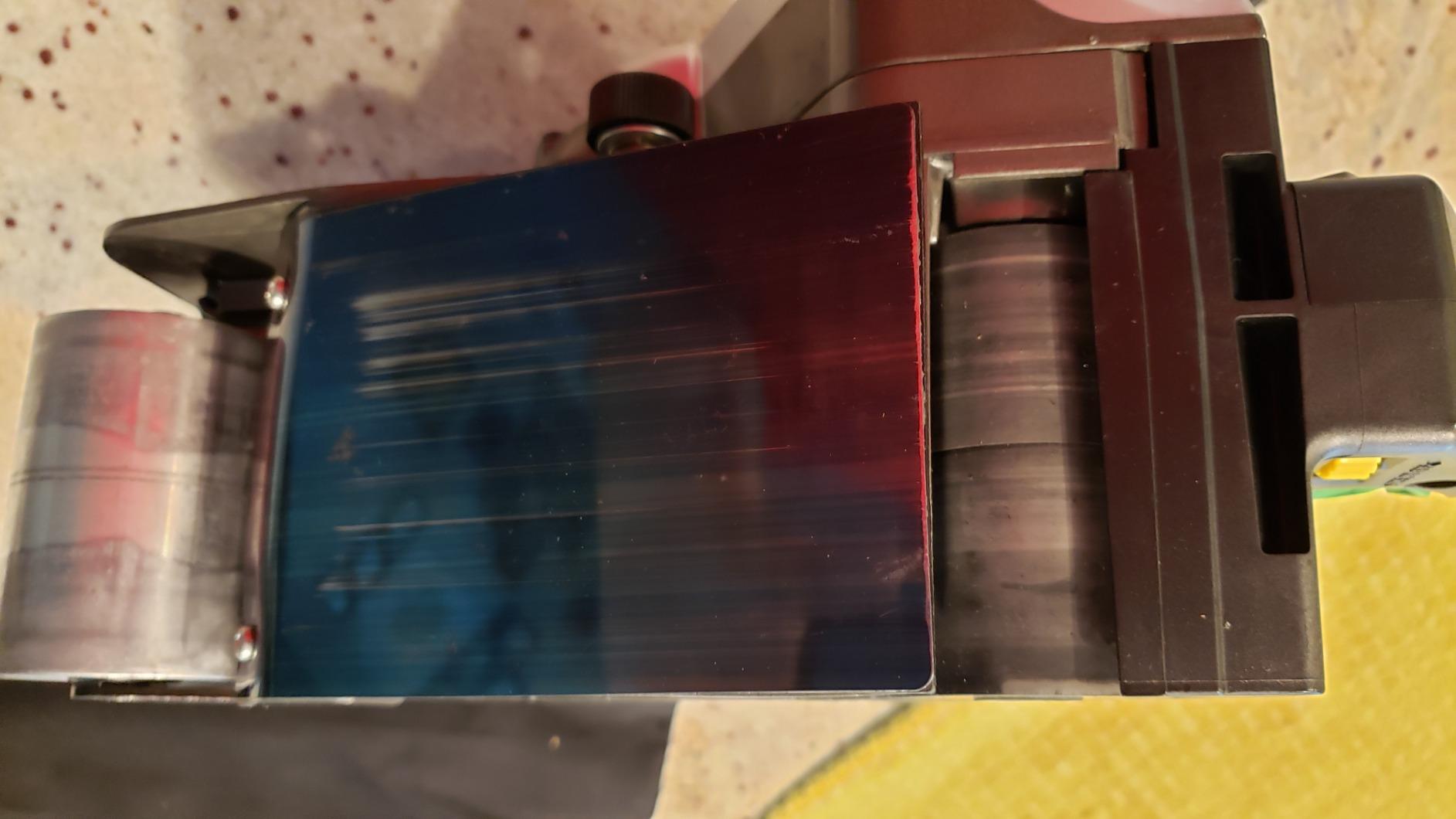
The left-side mounted dust bag is positioned to improve corner sanding and reduce airborne particles. Belt changes and tracking adjustments are described as quick and accurate in most reviews, and the belt release lever is the one piece reviewers call fiddly.
At 9.5 pounds it is light enough for one-handed operation in tight spots, which is a genuine benefit on stairs and in corners.
Why experienced users like it
Buyers who came from a Porter-Cable or Makita find it sturdy, powerful, and backed by a warranty no competitor in this list matches. For a contractor or a rental-adjacent hobbyist who keeps tools for years, that five-year term changes the value calculation more than any single spec.
The 9 amp motor also has enough power to handle a 50 grit belt on old finish without bogging, which several lighter machines here cannot do.
The balance problem, stated plainly
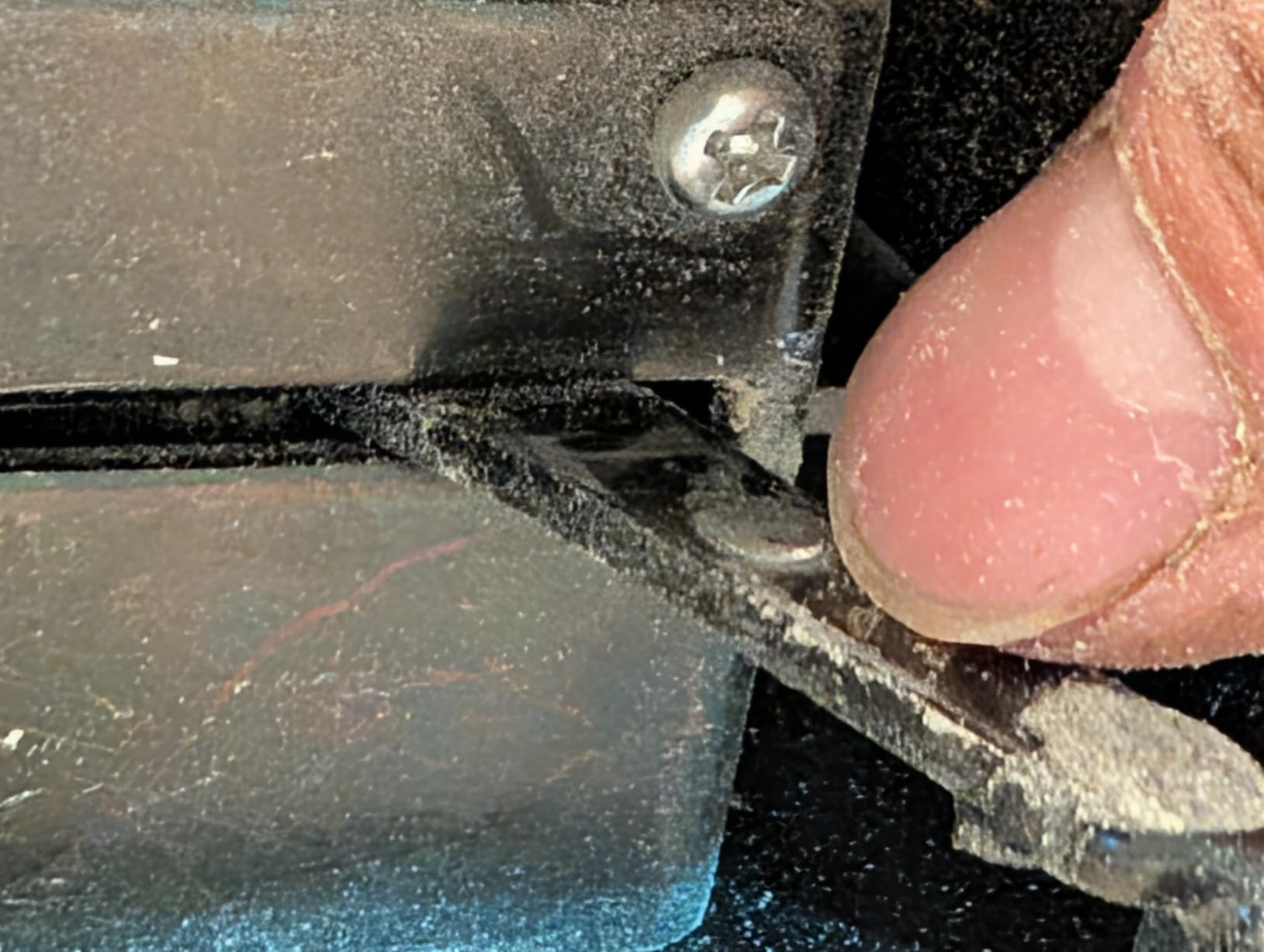
This machine has the lowest average rating in the group, and experienced owners say why: the balance is poor. Reviews report it tipping, bouncing, and digging in on the belt side, which leaves swirl and gouge marks on the work.
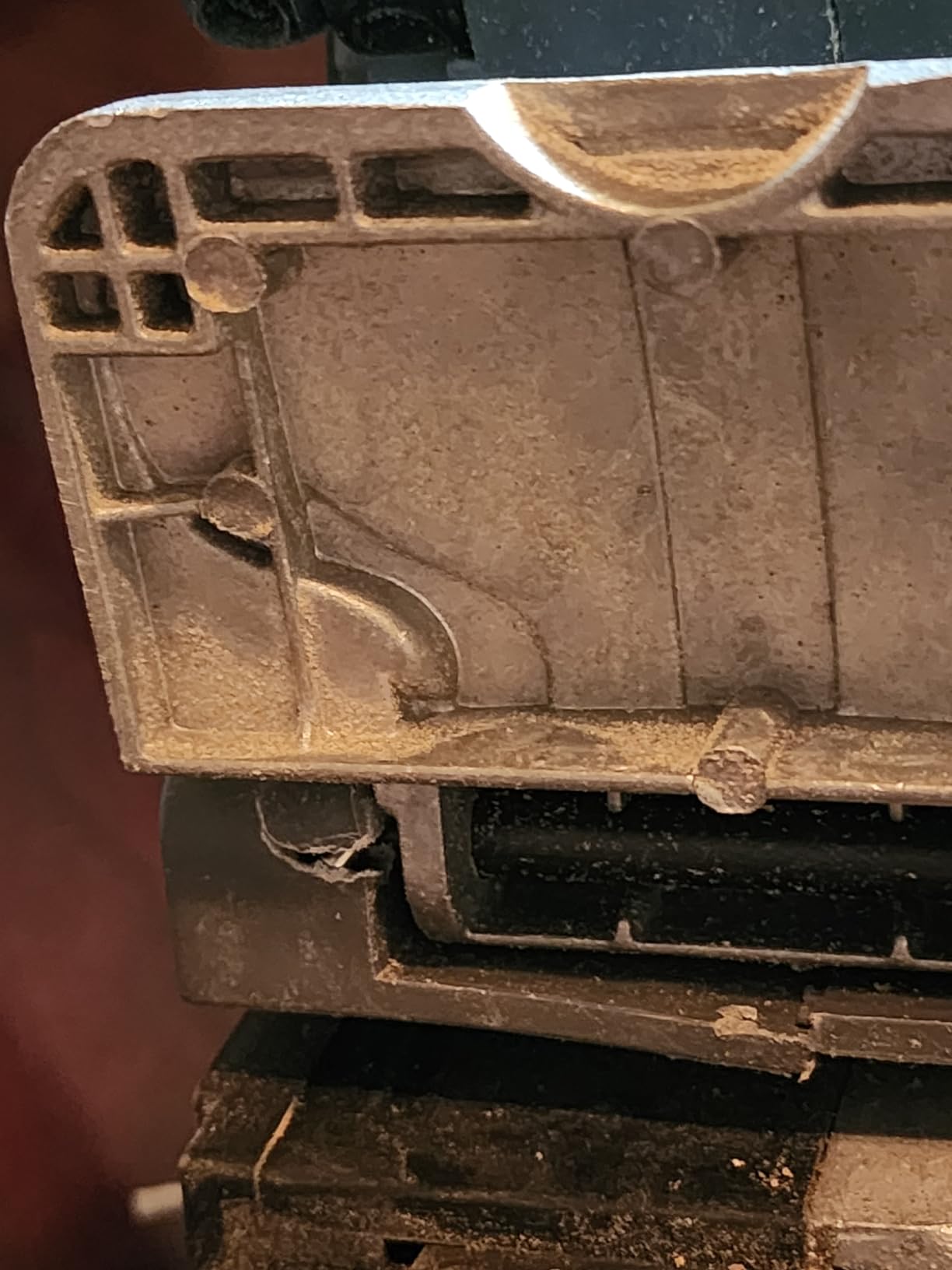
Platen bow and distortion can gouge softwood, the dust bag collects poorly, and it does not lie flat for stationary belt changes. Buy it for the warranty and the motor, not for control.
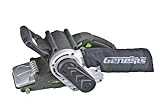
9. Genesis GBS321A 3×21 Belt Sander – Best Budget Variable-Speed Pick
Genesis GBS321A Single Lever 3″ x 21″ Variable Speed Belt Sander with Adjustable Front Handle and Dust Collection Bag , Grey
8A motor
Variable speed
Single-lever belt change
7.8 lb
2-year warranty
Pros
- Variable speed at a budget level is unusual and useful
- Single-lever tool-less belt change is fast
- Low profile body gets into tight spots
- Adjustable front handle and flat side for flush sanding
Cons
- Only one sanding belt included in the box
- Small flat surface makes the body harder to keep level
- Basic dust bag leaks fine dust
The Genesis GBS321A is the value pick here, and the reason is specific. Variable speed on a 3 by 21 inch sander at this level of cost is rare, and it is the feature that protects a floor with a thin finish from burning through.
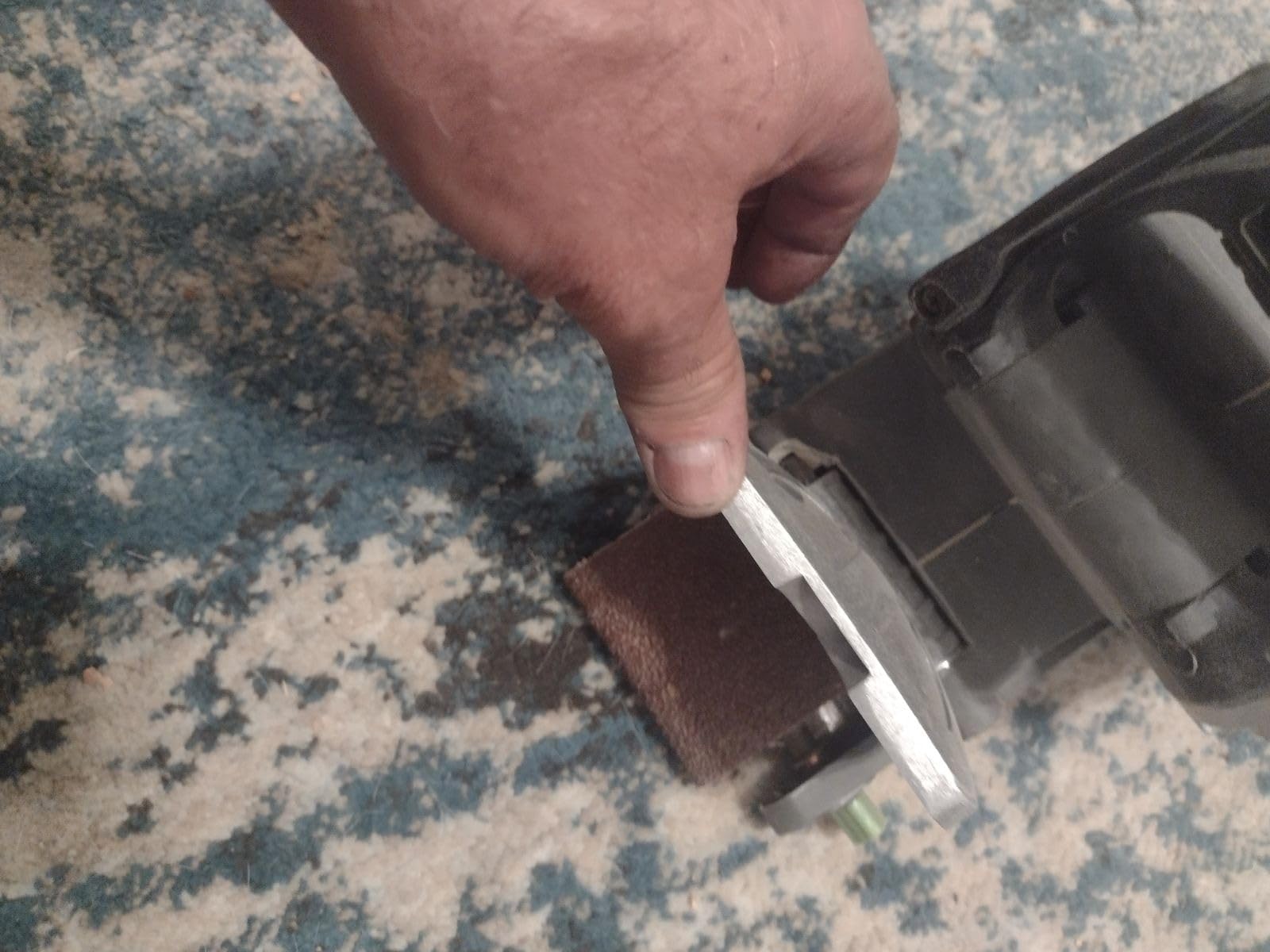
The low profile design gets into tight spots, and the flat side sands flush against doors, jambs, and cabinet faces. The adjustable front handle improves comfort, and the single-lever tool-less belt change is quick enough that you will not dread swapping grits between passes.
At 7.8 pounds it is one of the lighter machines in the lineup, which again matters on a full floor. The 8 amp motor handles doors, jambs, hand rails, and small projects without complaint.
It carries a two-year manufacturer warranty with US-based customer support, which is more coverage than most machines at this level.
Where it fits in a floor job
Perimeter and detail work. The low profile and flat side get closer to a baseboard or a door jamb than the bulkier machines here, which means less hand sanding on the edges of a room.
It also works well for the trim and doors that come off during a refinishing project, where the low profile reaches places a full-size sander cannot.
Why it is not our floor pick
The small flat sanding surface on the low profile body makes it harder to keep level, and level is everything on a floor. A 3 by 21 belt already covers less per pass than a 4 by 24, and a small reference surface compounds that.
It includes only one sanding belt, so you are buying abrasives before you start. The dust bag is basic and leaks fine dust, and the 3 by 21 platform is a steeper learning curve than a wider machine for a first floor job.
10. VEVOR 7A 3×21 Belt Sander – Best for Decks and Outdoor Projects
VEVOR 7A Belt Sander 3″ x 21″ Woodworking Belt Sander 6 Speeds 630-1200 FPM, 2-in-1 Handheld & Benchtop Sanding Machine with 2 Dust Bags, 10PCS Sanding Belts & 2 Clamps for Woodworking Projects
7A motor
6 speeds 630-1200 FPM
Handheld or benchtop
8.8 lb
Pros
- Six speed settings from 630 to 1200 FPM
- Included clamps convert it to a bench sander
- Lighter than most sanders in the class
- Ten belts across five grits and two dust bags in the box
Cons
- Needs full speed for serious material removal
- Wind-down under load below roughly speed 4
- Clamps only fit benches up to about 1.5 inch thick
Deck boards are where this machine earns its spot. A deck is full of hard, uneven, weathered wood, and the six speed settings from 630 to 1200 FPM let you back the belt off on the softer boards where a fixed-speed machine would dig in.
The 7 amp motor delivers stable power output for trimming and refinishing work, and owners describe it as a step up from heavier sanders that caused fatigue and premature belt breakage on long deck projects. At 8.8 pounds it sits in the middle of the weight range.
The included clamps turn it into a benchtop sander for small parts, which is useful for replacing a rotted board or a hand rail. Ten belts across five grits and two dust bags are in the box, along with a vacuum adapter and a spare pair of carbon brushes.
Owners report it tracks well and runs smoothly for the price, which is not nothing in a category where tracking drift is the most common complaint.
Why it suits a deck over a floor
Decks tolerate aggressive work. A belt sander that would be reckless on a finished oak floor is a perfectly reasonable tool on weathered deck boards, and the wide speed range lets you match the belt to the board rather than forcing one setting on everything.
The bench conversion is also useful outdoors, where a part will not fit comfortably under a handheld machine.
Where it falls short
It is not the most powerful machine here, and reviewers are clear that you need full speed for serious material removal. Run it below roughly speed 4 under load and it winds down, which on a deck means a second pass at a setting you did not plan for.
The clamps only fit benches up to about 1.5 inch thick, and some machines arrive with fewer belts than the listing describes, so buy your own abrasives before a project.
How to Sand a Hardwood Floor with a Belt Sander?
A belt sander is fast because it is unforgiving. Every mistake you make is a long, straight gouge that runs the length of a board, and there is no way to sand your way out of one except by going over it again at the same grit. Technique is the whole game here.
Prep the room before you power up
Walk the floor and find every nail, screw, and staple. Hammer them below the surface. One nail standing proud will catch a belt and take a run out of the boards. Fill holes and check that every board is firmly nailed, because a loose board under a moving belt is a gouge waiting to happen.
Set up dust control before you start, not after. Seal off the rest of the house with plastic sheeting, cover any remaining registers, and run a shop vac through a hose where you can. Fine hardwood dust gets everywhere, so it is worth picking a machine that handles bare floors well before the first pass, and our guide to the best automatic vacuums for hardwood floors covers the cleanup side of the job.
Work out the grit ladder before the first pass
Start coarse enough to level the surface and no coarser. Forum consensus is a 36 to 50 grit belt for wax, oil, or old shellac, a 50 to 60 grit for varnish or thin polyurethane, and an 80 grit for a floor already in good shape. Going coarser than necessary is how you sand through thin veneer.
Then step up in consistent increments and do not skip a grit. A 36 to 60 to 100 to 120 progression is typical. Every grit you skip leaves scratches that surface under finish and look like a defect that no amount of screening will fix.
Always move with the grain
Run the machine with the direction of the wood grain, never across it. Cross-grain cuts are the single biggest cause of tear-out, where fibers lift and splinter as the belt catches them. On a board with a visible grain direction, follow it even if that means working board by board.
Never leave the machine stationary on the floor. Keep it moving at all times and lift it before you turn. Parking a running belt sander in one spot for two seconds leaves a divot that reads clearly under finish.
Use light pressure and let speed do the work
Push the machine forward with light, even pressure. If you are leaning on it, you are creating heat and burn marks, and if the machine stalls you are pressing too hard. Increase pressure only when a coarse belt is bogging, and drop to a lower belt speed setting if your machine has one for the final passes.
Overlap each pass by about a third of the belt width. Work from the middle of the room outward so the untaped edge of each board is easier to see, and keep the machine moving in long, straight strokes rather than tight arcs.
Handle the last two inches by hand or with an orbital
A belt sander will not reach flush to a baseboard, and this is where most floor projects stall. Use the extended base on machines that have one to get close, then finish the border with a random orbital sander or by hand with a sanding block. Skimping here is visible in every photograph of the finished room.
Corners need hand sanding or a corner sander. Do not force a belt sander into an inside corner, because the side of the machine cuts a semicircle and leaves a curved mark.
Vacuum between every grit
Sweep and vacuum thoroughly between grits. Dust left under a fine belt under finish becomes part of the finish, and it will read as a bumpy floor. Empty the bag often, because a full bag stops extraction and puts dust back on the floor you just cleaned.
What to Look for When Buying a Belt Sander for Floors
Belt size is the first decision
A 4 by 24 inch belt covers about a third more floor per pass than a 3 by 21, and on a room of any size that translates into fewer passes and fewer grit changes. It is heavier and harder to control, which is why many owners choose 3 by 21 anyway. A 3 by 24 sits between the two and is worth considering if your priority is control.
Check the number of grit changes you will make before you start. A 200 square foot room at 4 by 24 takes fewer changes than the same room at 3 by 21, and each change is where tracking and setup problems show up.
Motor power and belt speed
Amperage tells you how much finish the machine can remove in one pass. An 11 amp motor like the one in the 9403 handles thick wax and shellac without bogging. A 7 amp machine is fine for a floor in decent condition and marginal on heavy old finish.
Belt speed is reported in feet per minute. The 9403 runs at 1640 FPM, which is at the fast end and explains the aggressive cut. Faster removal on a delicate floor means faster heat, so match speed to the condition of the finish rather than running wide open out of habit.
Variable speed control
Owners who have used both rate variable speed as the single most useful feature after power. It lets you cut hard at the start and back off for the final passes, which reduces burning and swirl marks. Three machines in this list offer real speed control: the DEWALT DCW220B with 25 settings, the Makita 9404, and the Jellas with six settings.
Dust collection decides whether you finish the project
You will empty a bag several times per room. A machine with a strong internal blower or a proper hose port is the difference between sanding one room and sanding two. The Makita 9403 and the DEWALT DCW220B are the two with the best extraction here, and the 9404 is fine if you attach a shop vac.
For a whole-home job, a random orbital sander with its own dust collection is often a better partner than a bag-equipped belt sander, since you will use it for every grit after the first one. Once the dust is down, our picks for the best Shark vacuums for hardwood floors are worth a look for the follow-up clean, and the best pet vacuums for hardwood floors cover the same job in a home with pets.
Weight, balance, and grip
Weight ranges from about 6 pounds on the WEN 6321 to 13 pounds on the Makita 9403. Heavy is not the same as powerful, and on a three-hour job your arms will tell you the difference. A machine that runs balanced and lets you work one-handed will always feel lighter than its listed weight suggests, and a poorly balanced one will feel heavier than it is.
Belt tracking
Auto-tracking systems hold the belt centered with no adjustment, and they are the feature owners praise most in long-term reports. If your machine has a manual front adjustment knob instead, learn it before you start rather than mid-floor. A belt that drifts leaves a taper on every pass and is the most common complaint in this category.
Choosing belts and grit brands
Aluminum oxide belts are the standard and the cheapest. Ceramic belts cost more up front and last longer on a whole-floor job, and forum owners recommend them over cheap aluminum oxide when you are doing four or five grits across an entire floor. 3M, Norton, and Diablo are the three abrasive brands consistently recommended, and 3M and Norton are the safest default if you have no preference.
Keep spare belts in four grits. Belt changes are the natural break in the work, and running a frayed belt risks tearing it or damaging the rollers.
Noise and warranty
Noise matters more than most buyers expect in an occupied home. The Makita 9403 and 9404 are rated at 84 dB, which is quiet for this category and keeps a household workable. Cordless machines are also reported as quieter than comparable corded units.
Warranty length signals build quality. The Metabo HPT SB8V2 carries a five-year limited warranty, the WEN 6321 and Genesis GBS321A carry two years, and the Makita machines carry one year that is more than made up for by their service parts availability.
Should You Rent or Buy a Belt Sander?
Rent if the floor is larger than a single room. A drum sander and edger rented for a day will strip a 400 square foot floor in a fraction of the time a handheld belt sander needs, and the finish will be more uniform because the floating drum averages out your pressure.
Buy if you are sanding one room under roughly 200 square feet, or a hallway plus stairs, and you already own a random orbital sander for the edges. In that case the rental economics do not justify owning a machine you will use twice.
Buy if you plan to do more than one floor. The break-even point arrives quickly because a belt sander also handles trim, doors, furniture, and decks, and those uses keep earning their keep.
Rent if it is your first time and the floor is valuable. An hour of instruction on a rental machine is cheap insurance against the gouges a first-timer leaves in a finish that cannot be replaced.
Frequently Asked Questions
Can I use a belt sander on hardwood floors?
Yes, on solid wood floors with a sound surface, and only if you keep the machine moving with the grain. A belt sander strips finish much faster than a drum sander but has no floating drum to average out pressure errors. Avoid it on parquet laid in a pattern, on thin engineered veneer, and on waxed or shellac antique floors you want to preserve.
What kind of sander should I use on hardwood floors?
Match the sander to the room size. A handheld belt sander suits one room under about 200 square feet and gives you control. A drum sander is the professional choice above roughly 300 square feet because its floating drum covers ground fast and evens out pressure. A random orbital sander handles edges, corners, and the final grits, and most projects use a combination.
Which belt sander is the best overall?
The Makita 9403 is the best overall belt sander for hardwood floors. Its 4 by 24 inch belt, 11 amp motor, and 1640 feet per minute belt speed remove finish faster than anything else in this list, and owners report the belt tracking needs no adjustment. It is rated at 84 dB and weighs 13 pounds, which is heavy for stairs.
What is the best belt sander for sanding floors?
The Makita 9403, because belt width and belt speed together determine how much floor you cover per pass. At 4 by 24 inches and 1640 feet per minute behind an 11 amp motor, it strips wax, shellac, and old varnish without bogging. If the floor is small and fatigue is the limit, a lighter 3 by 21 inch machine finishes the job more comfortably.
Is a belt sander good for refinishing hardwood floors?
It is good for one room and fair for larger spaces. Belt sanders remove decades of finish in hours and cost nothing to rent, but every pass is manual, so a large floor is slow and tiring. Professionals use a drum sander and edger because they are faster and more consistent, and forum consensus treats a belt sander as a capable compromise rather than the better tool.
What are the downsides of using a belt sander?
The main downsides are control risk and ergonomics. There is no floating drum to absorb pressure errors, so pressing too hard gouges and leaving the machine stationary burns a divot. A cross-grain pass causes tear-out. The weight tires your arms over a full floor, the last two inches along a wall need another tool, and a worn belt will drift off tracking mid-job.
Which brand of sanding belts is considered the best?
3M, Norton, and Diablo are the three most widely recommended floor belt brands. Ceramic belts last longer than aluminum oxide on a whole-floor job with four or five grit steps, which offsets the higher cost per belt. Keep spares in several grits, because a frayed belt can break or damage the rollers, and match the belt to the sander size exactly.
The Verdict for Hardwood Floors in 2026
The Makita 9403 is the best belt sander for hardwood floors because nothing else here combines a 4 inch belt, an 11 amp motor, and 1640 feet per minute with tracking that never needs adjusting. On a single room it is hard to argue with the coverage rate.
Pick the DEWALT 20V MAX cordless if the job is stairs or has no nearby outlet. Pick the Makita 9404 if you want variable speed for the finish passes, the Makita 9924DB if you want a machine you can still service in twenty years, and the WEN 6321 or CRAFTSMAN CMEW213 if your arms will not forgive a heavy machine.
Whatever you choose, move constantly, follow the grain, and use a random orbital sander for the edges. That last part is where most floor projects are judged.