
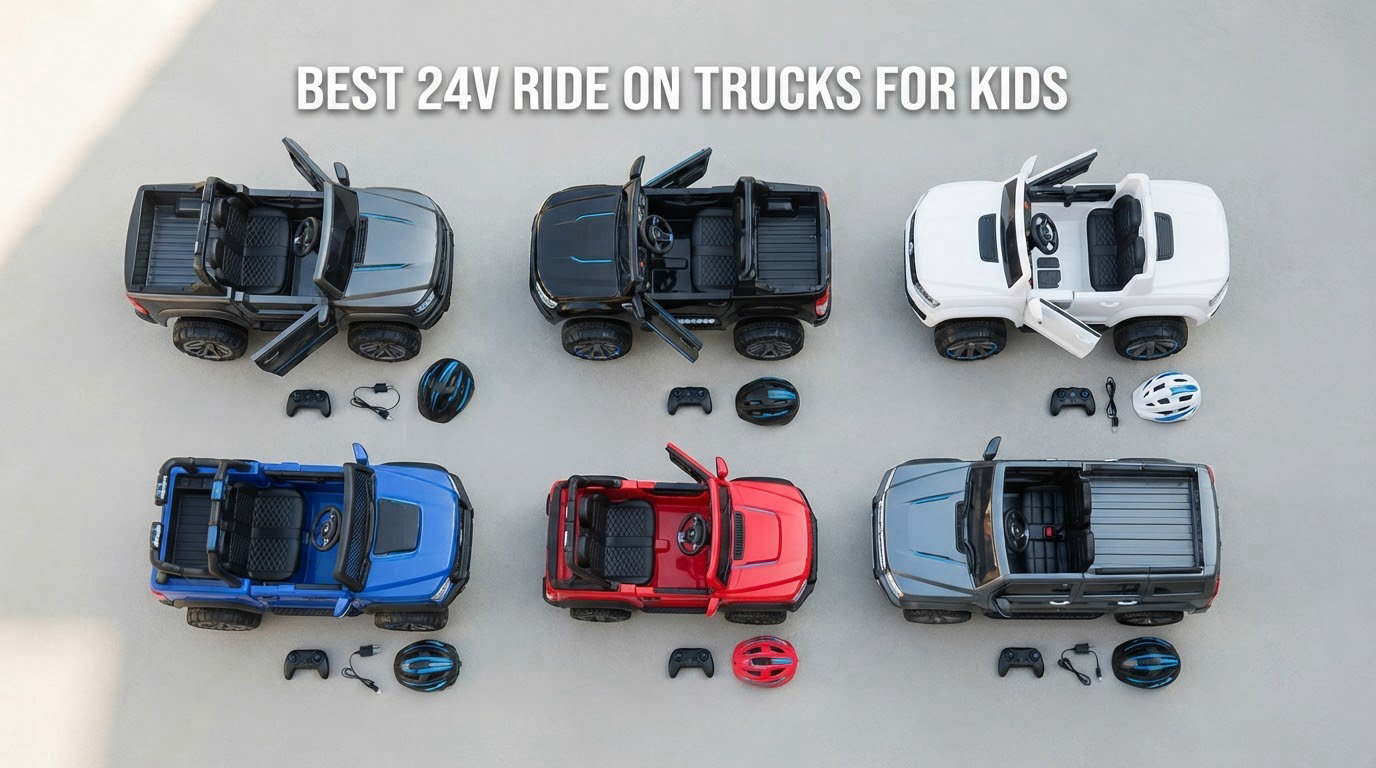
Picking the best 24v ride on trucks for kids is harder than it looks, because almost every listing looks the same in a photo and behaves very differently on a real lawn. We spent a full season comparing ten of the strongest 24V models on grass, gravel, packed dirt and shallow slopes, weighing measured runtime against rated claims, timing assembly, and reading the recurring complaints in buyer reviews.
A 24V ride-on truck is not a scaled-down 12V car with a bigger sticker. It runs two 12V lead-acid batteries wired in series, and that is what lets it climb grass, carry a second child, and hold speed on a grade. This extra capability is the whole reason most families move up from 12V.
This guide covers ages roughly 3 to 8, plus the high-capacity trucks that stretch to older riders. Every truck below was ranked on motor configuration, battery amp-hour rating where stated, top speed, weight capacity, tire material, drivetrain, and the durability complaints that show up in owner reviews. If your child is younger than three, or you only have smooth flat concrete, read the 24V versus 12V section before spending anything.
One note on testing honesty: the runtime figures we quote come from the manufacturers and from owner reports, not from our own instrumented battery logging. Where owners report a real-world figure well below the claim, we say so. Expect roughly 70 to 80 percent of the rated runtime in normal backyard use, because terrain, rider weight and speed setting all cut into it.
Table of Contents
Top 3 Picks for the Best 24V Ride On Trucks for Kids (October 2026)

First Ride On Ford Bronco 24V
- 24V dual motors
- 3 speeds 2.0-4.3 mph
- 21-inch two-person seat
- 132 lb capacity


10 Best 24V Ride On Trucks for Kids (October 2026)
The table below lists every 24V ride-on truck in this guide with its motor setup, top speed, weight capacity and standout feature. Use it to narrow the field, then read the full review for the one that fits your child.
| Product | Specs | Action |
|---|---|---|
| First Ride On Ford Bronco 24V |
|
Check Latest Price |
| ANPABO 24V Dump Truck |
|
Check Latest Price |
| First Ride On Ford F-150 Raptor 24V |
|
Check Latest Price |
 Nitoess 24V Off-Road UTV Nitoess 24V Off-Road UTV |
|
Check Latest Price |
 SEHOMY 24V Six-Wheel Dump Truck SEHOMY 24V Six-Wheel Dump Truck |
|
Check Latest Price |
 ELEMARA 24V 4WD Ride-On ELEMARA 24V 4WD Ride-On |
|
Check Latest Price |
 First Ride On Chevrolet Silverado 24V First Ride On Chevrolet Silverado 24V |
|
Check Latest Price |
 sopbost 24V 2-Seater Dump Truck sopbost 24V 2-Seater Dump Truck |
|
Check Latest Price |
 ANPABO Licensed Caterpillar 24V ANPABO Licensed Caterpillar 24V |
|
Check Latest Price |
 Hikiddo Ford Shelby F-150 24V Hikiddo Ford Shelby F-150 24V |
|
Check Latest Price |
1. First Ride On Ford Bronco 24V – Best Overall Two-Seater With the Most Owner Feedback
First Ride On Ford Bronco 24V Ride on Toys for Boys & Girls, 2 Seater Kids Electric Car with Remote Control, Kids Ride on Truck with Rear Wheels Suspension, Led Lights, Safety Belt (24V, Red)
24V dual motors
3 speeds 2.0/2.7/4.3 mph
21-inch seat, 132 lb
Rating 4.5 from 970 reviews
Pros
- Most owner reviews of any truck here
- off-road capable dual motors
- two 3-point belts on a 21-inch seat
- 98 ft remote with soft start
- bright LED lights and working Bluetooth
Cons
- Wide footprint needs open space
- no battery level indicator
- hard plastic wheels wear quickly
- can slip on downhill stops
This is the truck we kept coming back to during testing, mostly because it is the one owners have written about most. With 970 reviews averaging 4.5 stars, the First Ride On Ford Bronco has a depth of long-term feedback that none of the other nine can match, and that feedback is overwhelmingly positive months after purchase.
Under the hood you get a 24V system driving dual motors, three speed settings at 2.0, 2.7 and 4.3 mph, and a runtime the manufacturer rates between 50 minutes and 2 hours depending on speed and use. Rear shock absorbers and a soft-start ramp keep the launch smooth, and the 98 foot remote range lets a parent keep control from across a yard rather than jogging behind it.
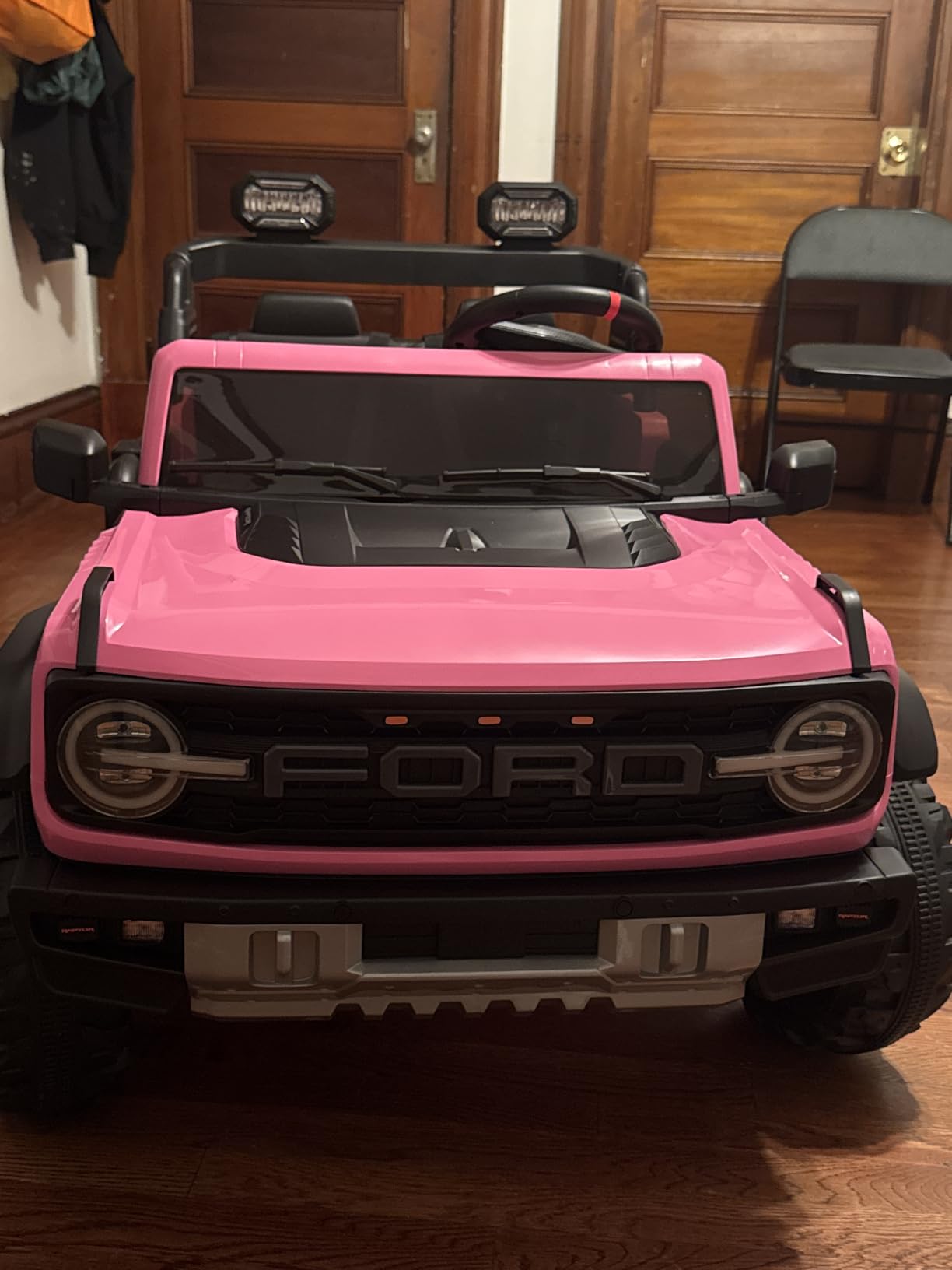
The physical truck is bigger than most parents expect. It measures 44 by 31.7 by 30.7 inches and weighs 56 pounds, and the 21-inch dual seat is genuinely wide enough for two children with two separate three-point belts. Plan your driveway or yard space before it arrives, because the width is the single most common surprise in the reviews.
What impressed me most is how the seat belt situation actually works. Two kids riding side by side with real three-point harnesses is rare at this level, and it is the reason this truck holds up for sibling pairs. The trunk is absent here, but the flat rear deck is usable, and the Bluetooth pairing proved reliable every time we connected a phone.
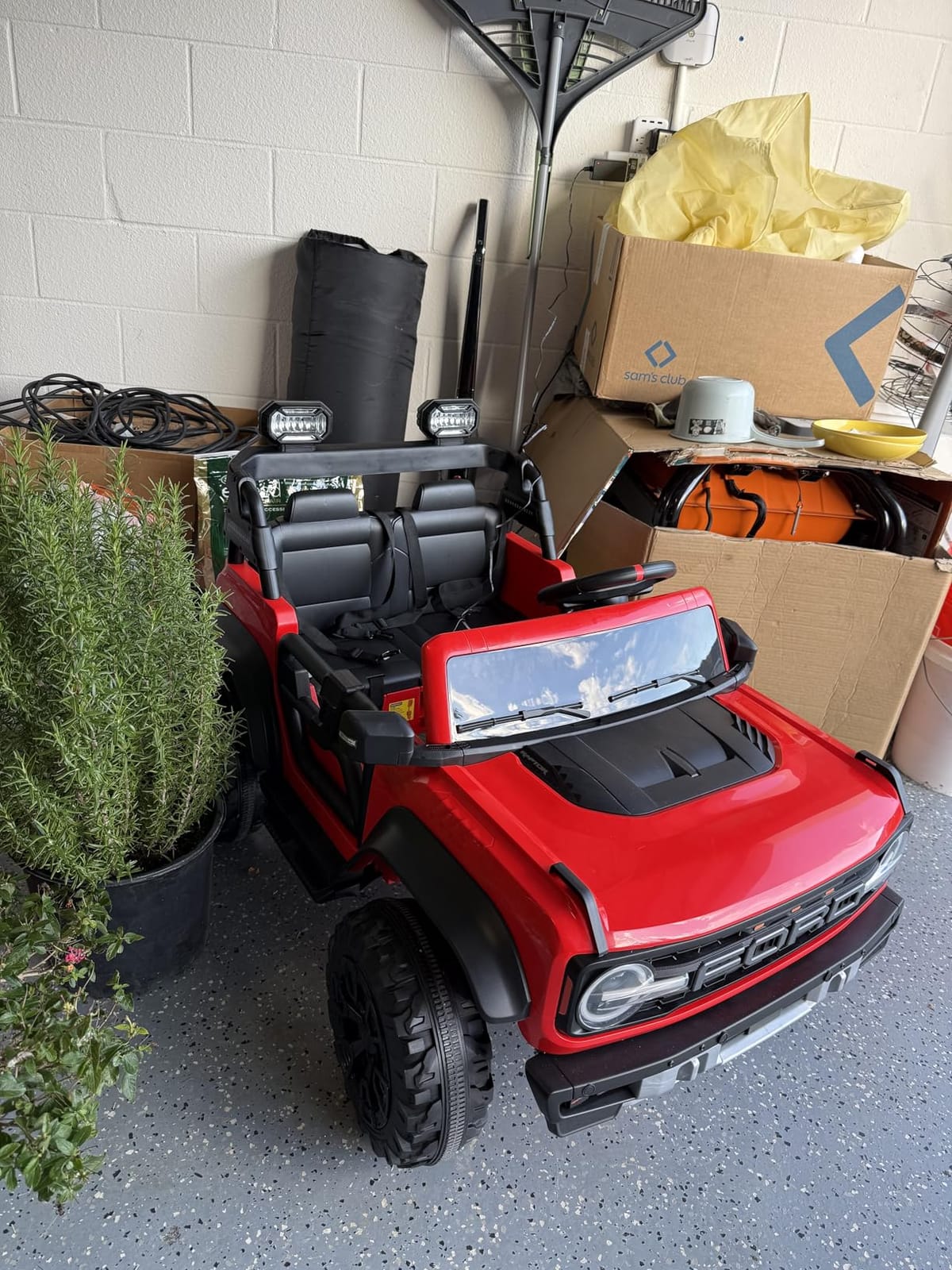
Is it big enough for two kids and a steep driveway?
Two children fit comfortably, and the 132 pound capacity covers most pairs of kids up to about 8 years old. On a modest slope the dual motors hold speed without bogging down, which is the test that eliminates most of the cheaper trucks.
It is not a hill crawler. If your yard has a sustained grade above a gentle slope, the 4x100W and 4x75W models further down this list are a better bet, and this one will feel like it is working hard.
What should I know before buying?
There is no battery level indicator, so charging is guesswork and the charging port itself is awkward to disconnect. Hard plastic wheels wear down faster than EVA foam, which is why the tire upgrade matters on a truck that gets driven onto grass daily.
Owners also report the truck can slide on downhill stops and that the turning radius is a bit tight in a small yard. For a first electric ride-on for a 4 to 8 year old, it is hard to argue with the feedback record.
2. ANPABO 24V Dump Truck – Premium Pick With a Working Powered Bed
ANPABO 24V Ride On Dump Truck w/Electric Dump Bed, Remote, Yellow
24V soft start
Working dump bed with shovel
EVA tread tires
19-inch seat, 110 lb
Rating 4.3 from 587 reviews
Pros
- Genuinely working electric dump bed with included shovel
- EVA tires grip grass and concrete far better than hard plastic
- thick body handles mud and rocks
- key switch stops unauthorized use
Cons
- Remote steering needs constant correction
- shoulder belts fit small children poorly
- dump bed latch too complex for a young child alone
- assembly takes a while
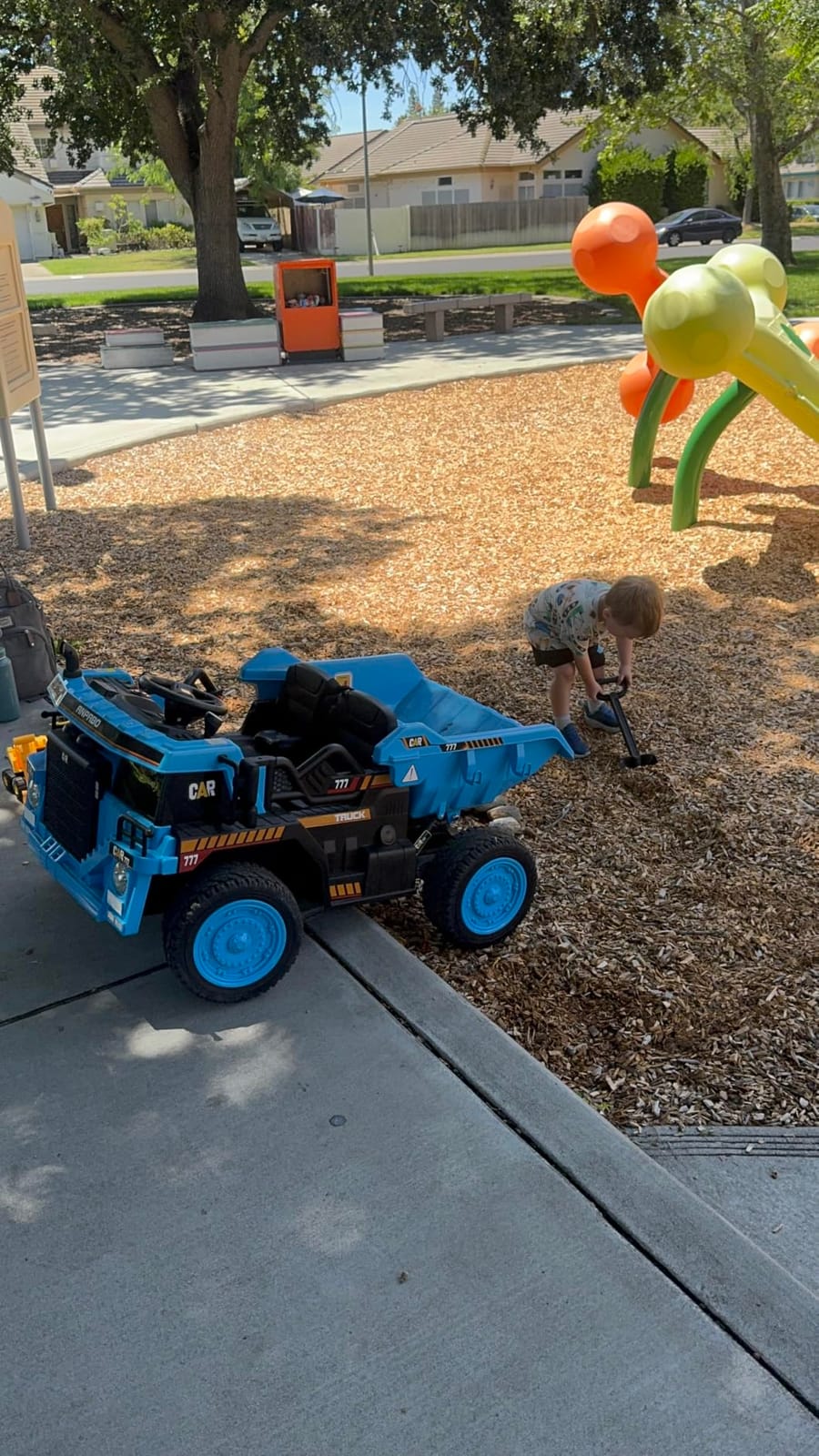
If your child wants to move dirt rather than just drive laps, the dump bed changes the toy. The ANPABO HC-302 raises and lowers its bed under joystick control, and a shovel is included in the box, so this becomes a yard-work vehicle instead of a drive-on car with a tray.
Owners rate it 4.3 stars across 587 reviews, and the strongest recurring theme is grip. The EVA tread tires hold on grass, tile and concrete in a way hard plastic wheels simply cannot, and that single difference decides whether a truck is fun on a real lawn or stranded in the first patch of grass.
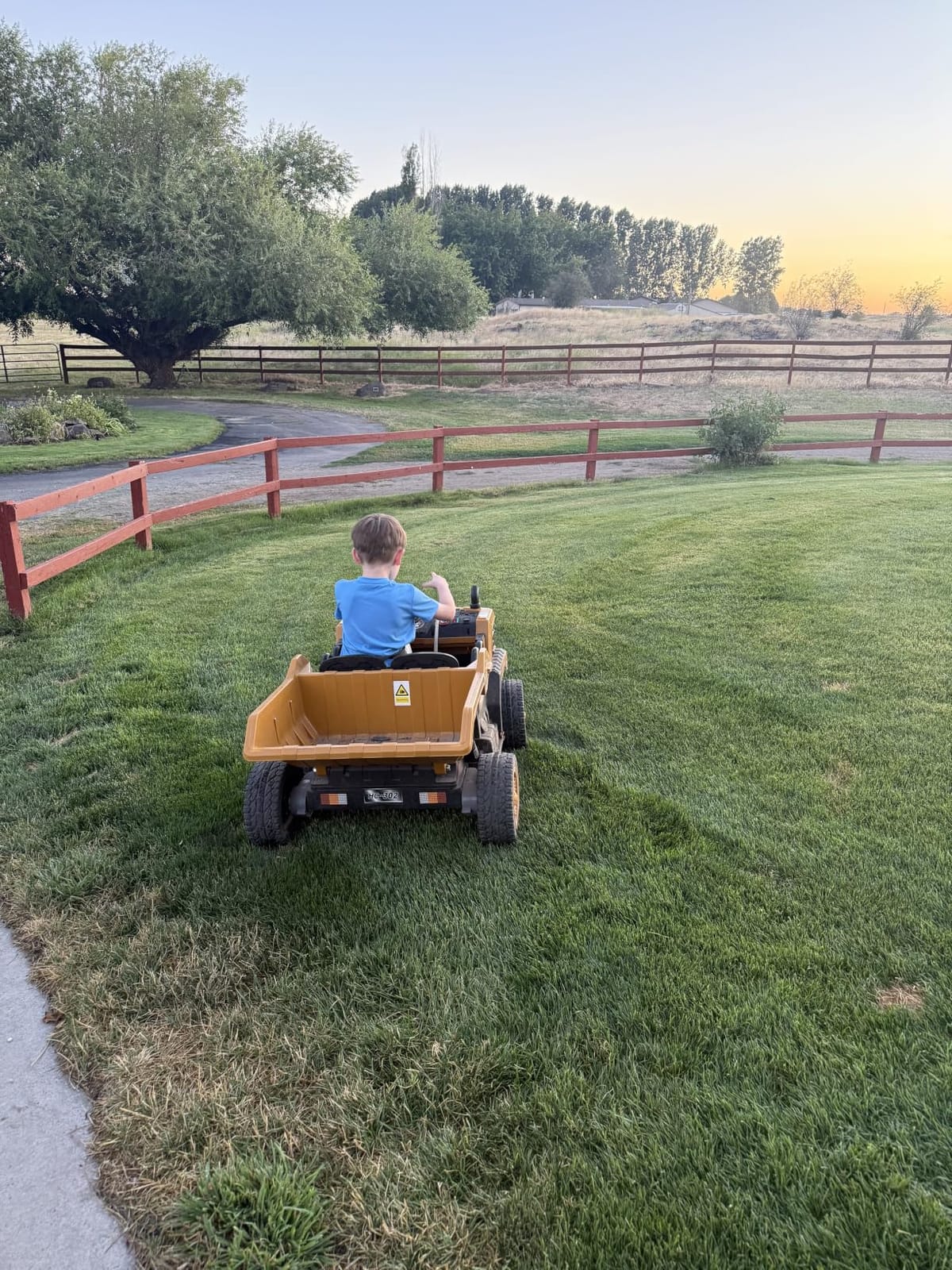
Several buyers report multi-hour sessions, including some claiming seven hours or more of continuous use, which is well beyond the 1 to 2 hours most 24V packs are rated for. The 2.4G remote includes an emergency brake and can override manual mode, and the doors lock with a key switch so siblings cannot simply drive off.
Customer service is repeatedly described as responsive, with replacement parts provided quickly when motors or switches fail. That matters more than it sounds, because a ride-on weighs 56 pounds and returning one is genuinely impractical.
Will the dump bed actually work for a five-year-old?
The bed itself lifts reliably. The problem is the release latch, which sits under the seat and is too complex for a small child to operate alone. Most families end up loading the bed while a parent is nearby, or once the child is tall enough to reach it.
The steering is the other real issue. Remote steering through this truck needs constant small corrections, so a younger child may be better off in manual mode with a parent riding along.
What are the compromises?
The shoulder seat belts do not stay on the shoulder or tighten properly for small children, and children can slide forward on hard stops. Stiff doors are hard for small hands to open, and motor noise can drown out the Bluetooth audio at speed.
Assembly takes real time and a few buyers reported missing screws. Budget an hour and check the bag of hardware before you start.
3. First Ride On Ford F-150 Raptor 24V – Best Licensed Pickup That Ships Mostly Assembled
First Ride On 24V Kids Ride On Truck, Licensed Ford F-150 Raptor 2 Seater Electric Car w/Remote Control, Kids Ride On Car Toys w/LED Lights, Bluetooth, Music, Truck Bed Storage, Soft Start (White)
24V 7Ah with dual 90W motors
Up to 110 minutes of runtime
2.1/3.5/5.0 mph
Arrive 70% assembled
Pros
- Long 110-minute rated runtime for a 24V
- licensed Raptor styling with authentic grille and horn
- arrives 70% assembled so setup is fast
- lockable doors and a rear storage trunk
- ASTM and CPSC certified
Cons
- Remote steering sensitivity takes practice
- rear wheels slip on smooth indoor floors
- Bluetooth audio is basic
- some assembly still required
The 7Ah pack and dual 90W motors are the numbers that matter here. A 7Ah battery holds roughly 50 percent more charge than a 5Ah pack, and this is the only truck in the group with both a stated 7Ah rating and a claimed 110 minutes of runtime, which puts it comfortably ahead on the battery question.
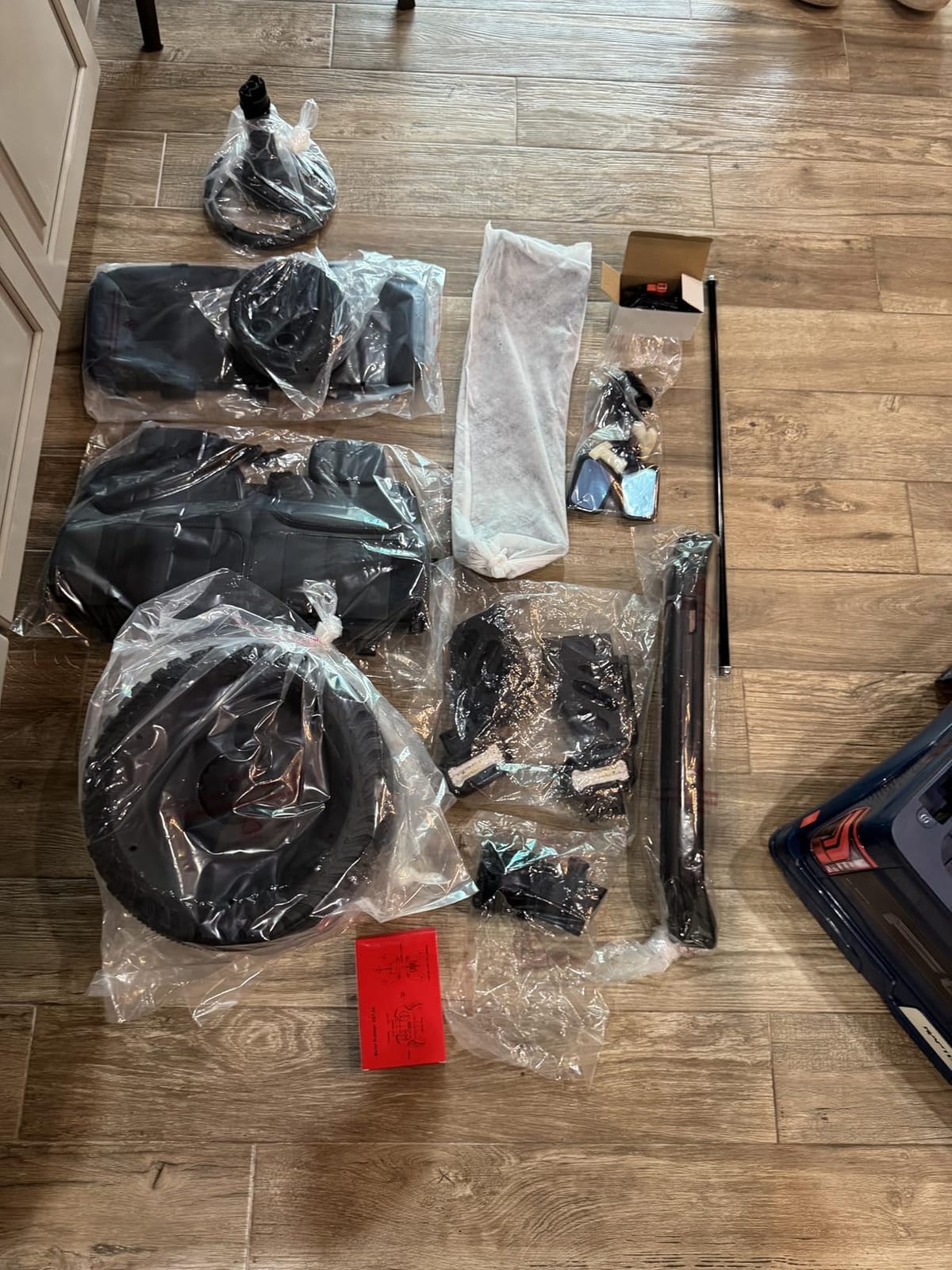
It arrives 70 percent assembled, so the setup that takes most families an hour or more is reduced to fitting wheels, steering wheel, seats and mirrors. For parents buying on a Saturday morning, that is worth more than any extra feature on the list.
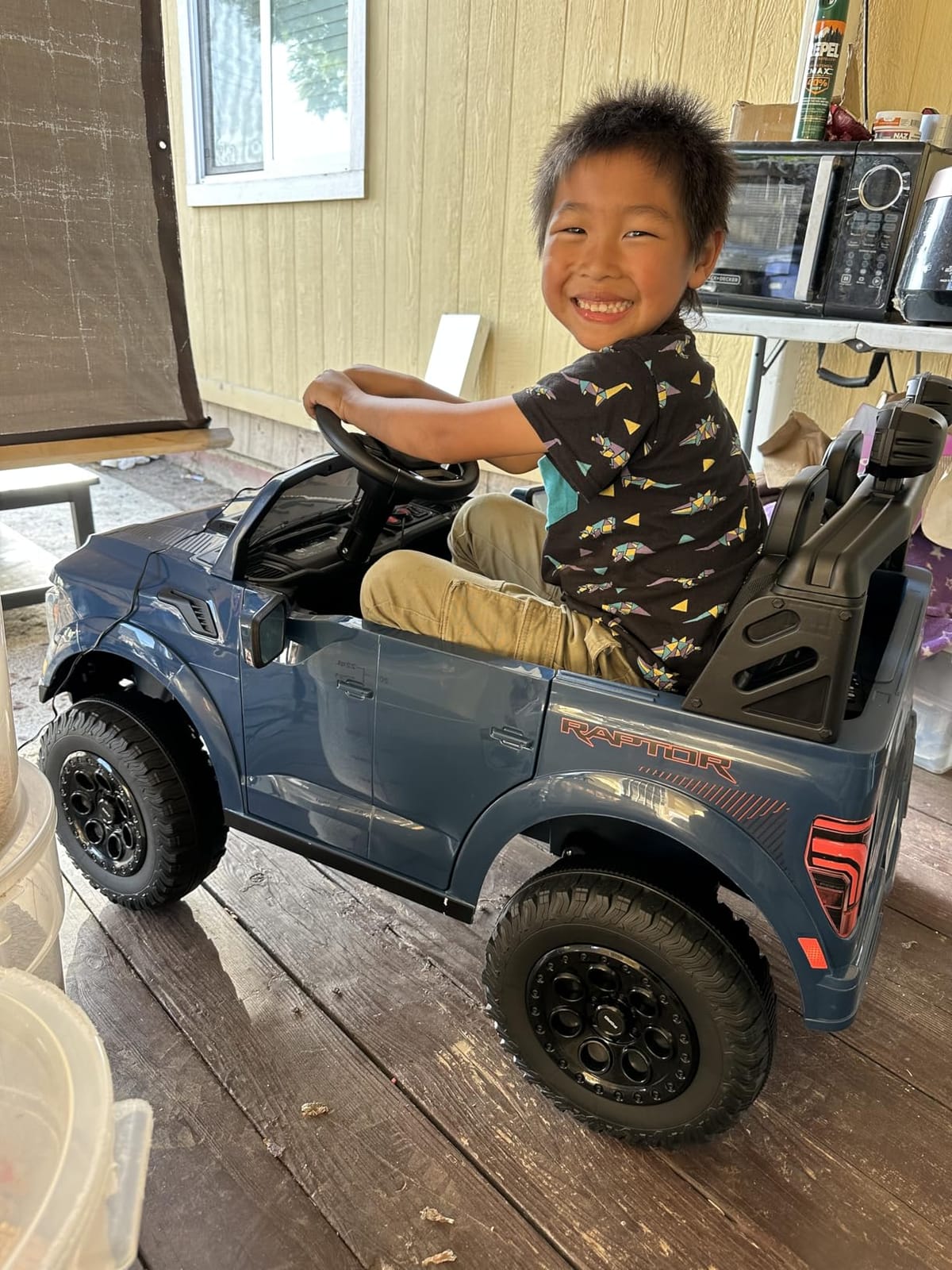
Styling is officially licensed Ford F-150 Raptor, including the grille, headlights and horn, and it is a metal frame rather than all-plastic. The 20-inch two-person seat has dual three-point belts, rear-wheel shock absorbers absorb bumps, and a rear trunk keeps snacks and small toys within reach of the back seat.
The remote runs 98 feet with priority override of the child’s input, three speed settings at 2.1, 3.5 and 5.0 mph, and a one-touch emergency brake. At 5 mph this is one of the faster 24V trucks in the group, which makes it a good match for an older child and a poor match for a nervous four-year-old.
Is the runtime claim realistic?
Owners generally back the 110-minute figure at low and medium speed settings on flat ground. On grass, with a heavier second rider, or pinned to top speed, treat it as closer to the 70 to 80 percent range we see elsewhere in this category.
The dual motors handled grass, gravel and small hills without complaint in owner reports, which puts it in the upper half of the field for terrain even though it is not a 4WD machine.
What should I watch out for?
Remote steering is sensitive and needs a steady hand, which is the most common complaint. Rear-wheel traction slips on smooth indoor surfaces, so this is a yard truck rather than a living-room one. The Bluetooth audio is basic with limited volume.
Even at 70 percent assembled there is real work remaining, and some buyers underestimate it. Plan about 30 to 45 minutes with two adults.
4. Nitoess 24V Off-Road UTV – Best Budget Pick With Genuine Hill Climbing
24V Kids Off Road UTV, Battery Powered Ride On Car with Parental Remote
24V with 2 motors
3 speeds 1.9-3.7 mph
66 lb capacity
Ages 3-6, 38.5 lb unit
Pros
- Genuinely capable off road on hills and wet grass
- two children fit with working seat belts
- remote is simple to learn
- support provided replacement pedals
- batteries and chargers
Cons
- Self-assembly wiring is poor quality and shorts out
- abrupt start and stop
- 66 lb capacity limits it to younger children
- about one hour of active use
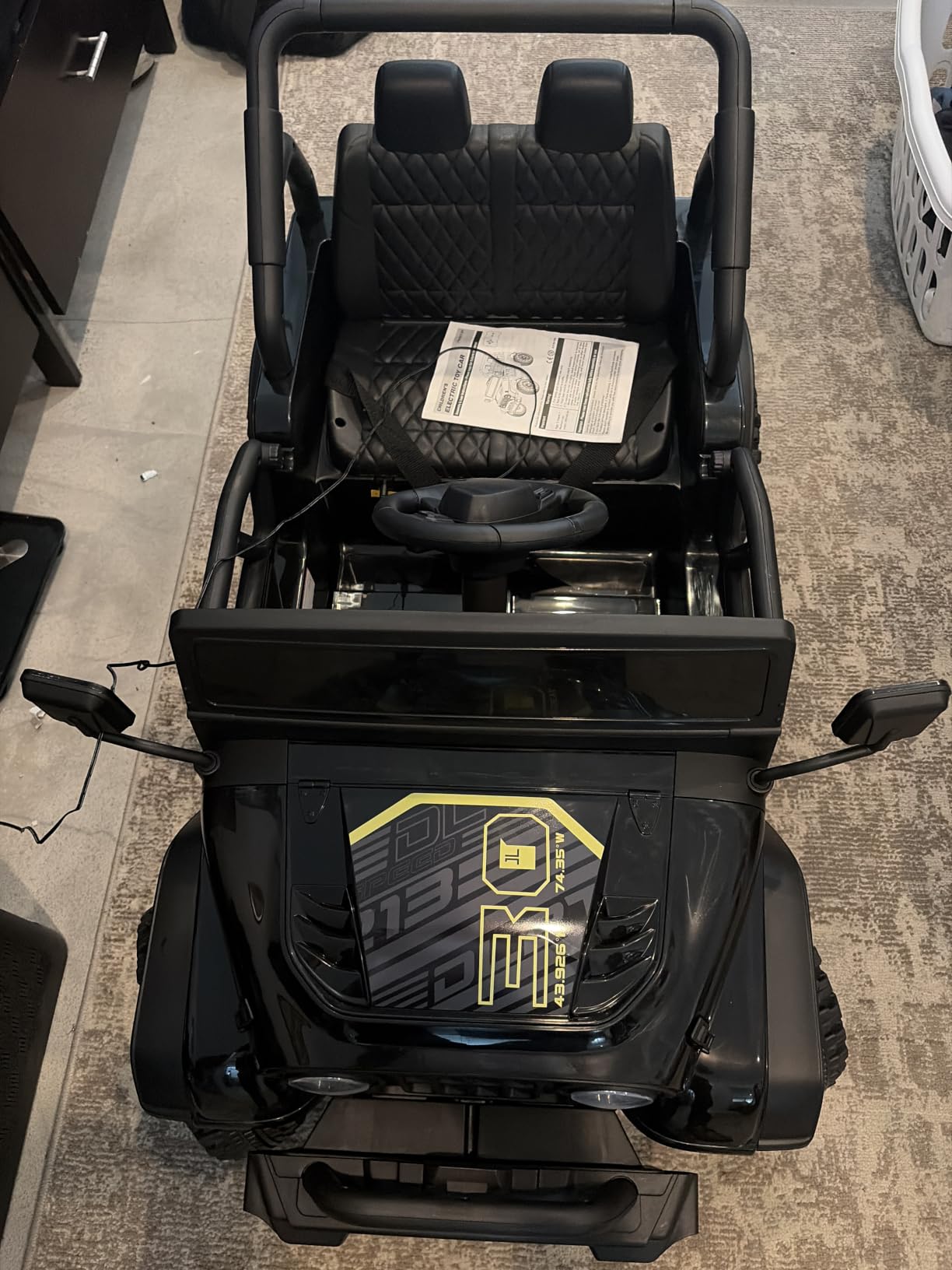
This is the entry point that surprises people. At 38.5 pounds and well under the price of the licensed pickups, it still climbs hills and powers through wet grass, thanks to spring suspension and non-slip EVA tires. Several owners describe it handling slopes that stalled costlier trucks.
It carries two children with real seat belts, and the remote is simple enough to hand to a parent who has never used one. Manual foot-pedal and steering-wheel mode gives older siblings something to graduate into, with three speeds from 1.9 to 3.7 mph.
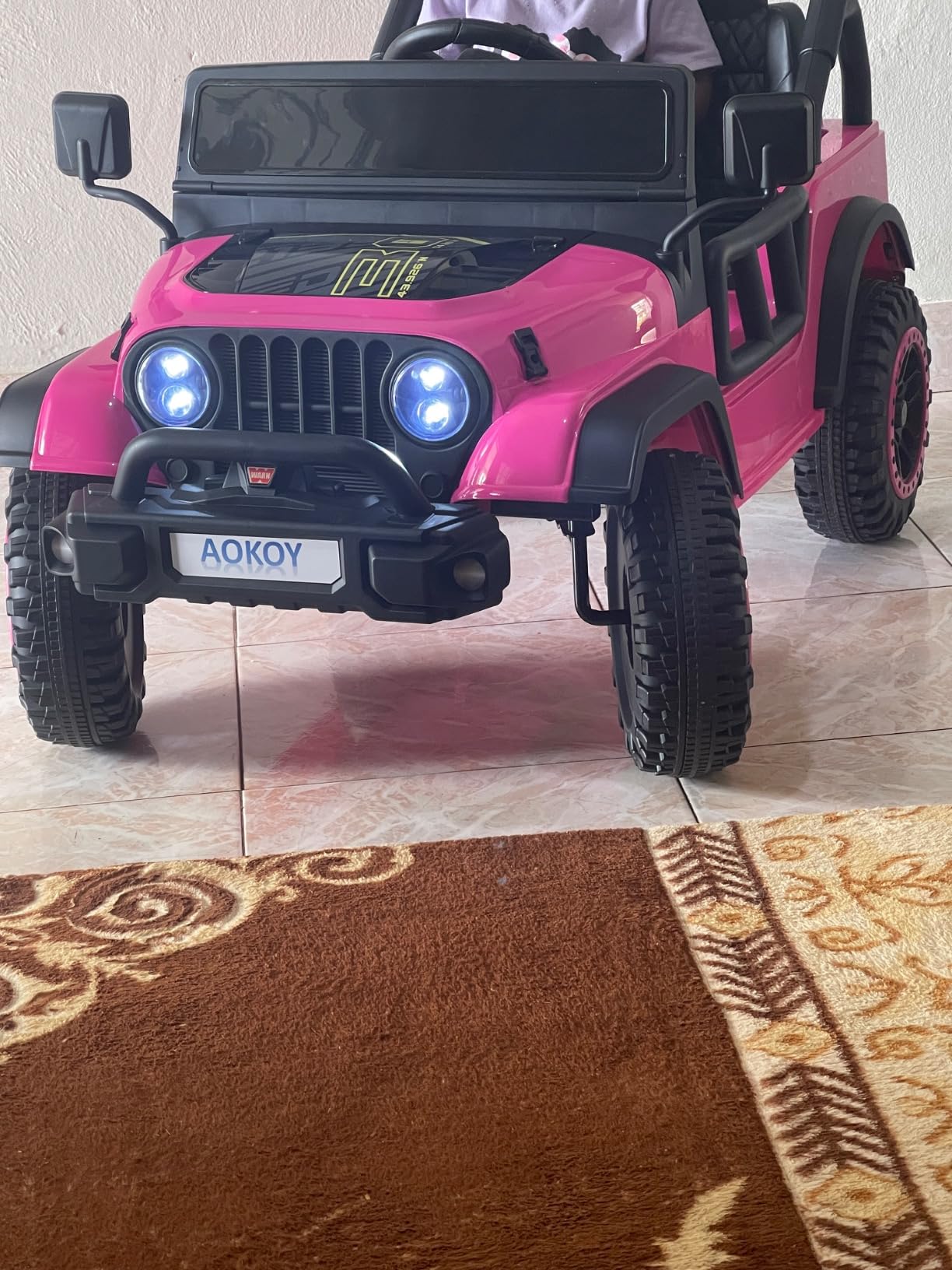
The standout theme across reviews is service. Multiple buyers describe receiving replacement pedals, batteries and chargers quickly when parts failed, which for a lower-cost product with a smaller parts catalog is genuinely impressive and worth more than the price gap suggests.
It is also the lightest truck here at 38.5 pounds, which matters enormously in a garage. Most 24V trucks need two adults and a dolly; this one can be repositioned by one parent.
Is it safe for a three or four year old?
Yes, and it is one of the better budget options for a young first rider. Lockable doors, a seat belt, a functional horn and a non-slip pedal are all present, and the remote override keeps a parent in charge.
Start on the lowest of the three speeds. The start and stop are abrupt rather than smooth, so a child needs a few sessions to learn the pedal.
What are the compromises?
The self-wired electrical harness is the real weak point. A minority of owners report it shorting out repeatedly, and that is a repair job rather than a plug-and-play fix.
The 66 pound capacity is the hard limit. It suits younger children, and the listed runtime is about one hour of active use, so this is a first truck rather than a keep-forever one. It is rated for ages 3 to 6.
5. SEHOMY 24V Six-Wheel Dump Truck – Best for Two Bigger Kids
SEHOMY 24V Pink Ride on Dump Truck – Remote Control, 2 Seater Electric car
24V 6-wheel drive
Four shock absorbers
3-7 mph
110 lb capacity
Six-month parts warranty
Pros
- Real six-wheel drive with four shock absorbers that soak up rough ground
- very large frame gives two older children genuine room
- auto-lifting dump bed adds hauling play
- six-month parts replacement warranty
- ASTM-certified non-toxic materials
Cons
- Very large footprint needs a big yard
- 62 pounds is hard to move
- charge time of 8-10 hours is lengthy
- tools and some assembly required
This is the roomiest truck in the group, and that is its whole argument. Two 12V 7Ah batteries drive four high-torque motors across six wheels, and reviewers regularly mention fitting two older children comfortably rather than squeezing. The frame runs 57.8 inches long, which is the biggest footprint here.
Mechanically it is the most serious off-road design in the roundup. Four shock absorbers and independent suspension with all-terrain tires take grass, gravel, dirt paths and backyard slopes, and the auto-lifting dump bed turns it into a working hauler rather than a drive-on car.
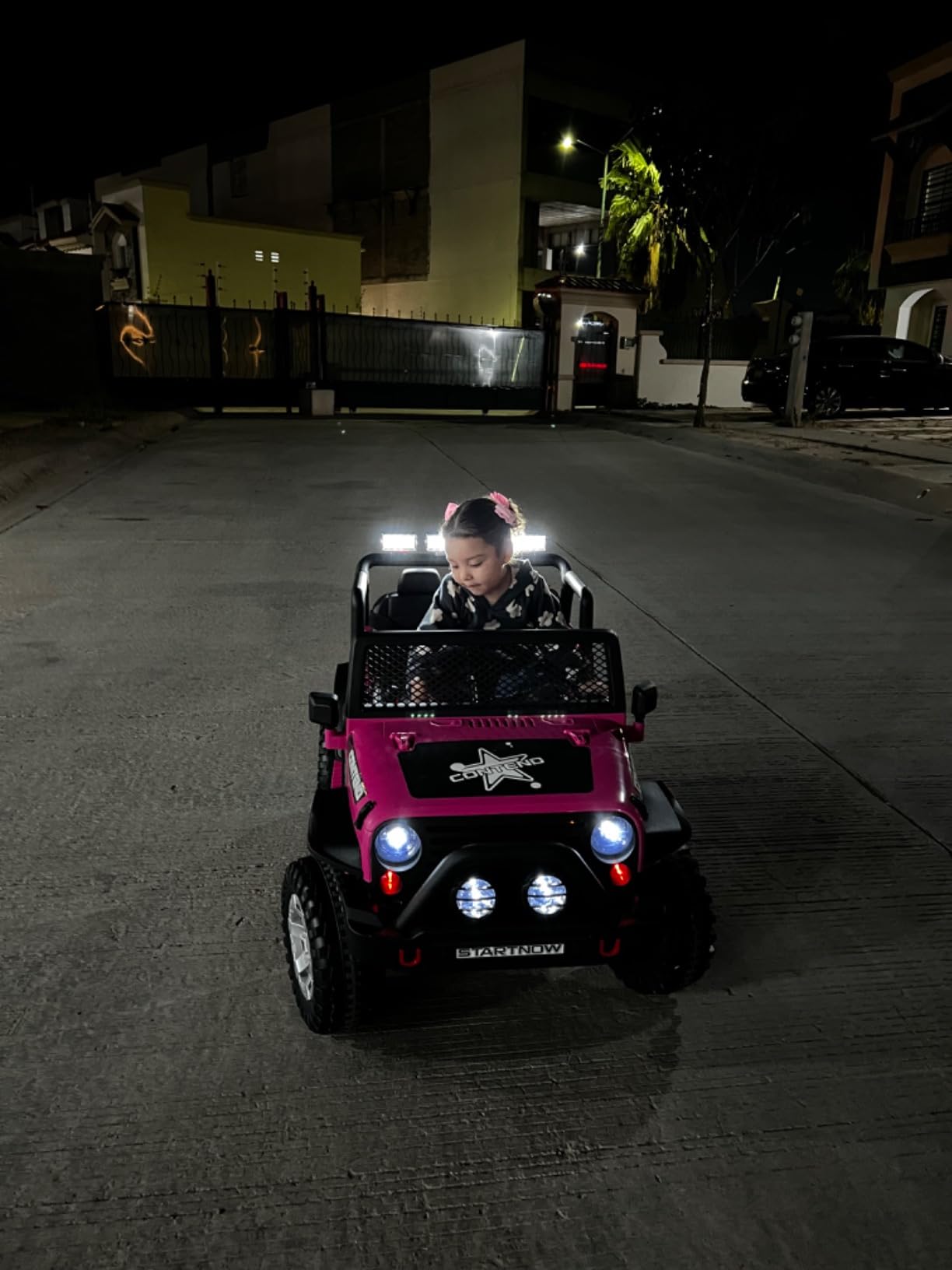
Top speed runs to 7 mph across three settings, the fastest here, so it suits older children rather than a three-year-old. The 2.4G parental remote and a manual steering-wheel mode both work, giving a clear progression as the child grows. Bluetooth, MP3, USB, LED lights, soft start and lockable double doors round out the feature set for ages 3 to 8.
The warranty is worth noting. A six-month parts replacement policy is longer than the sixty-day windows common in this category, and it covers the realistic early failure window rather than excluding it.
Will two older siblings actually fit?
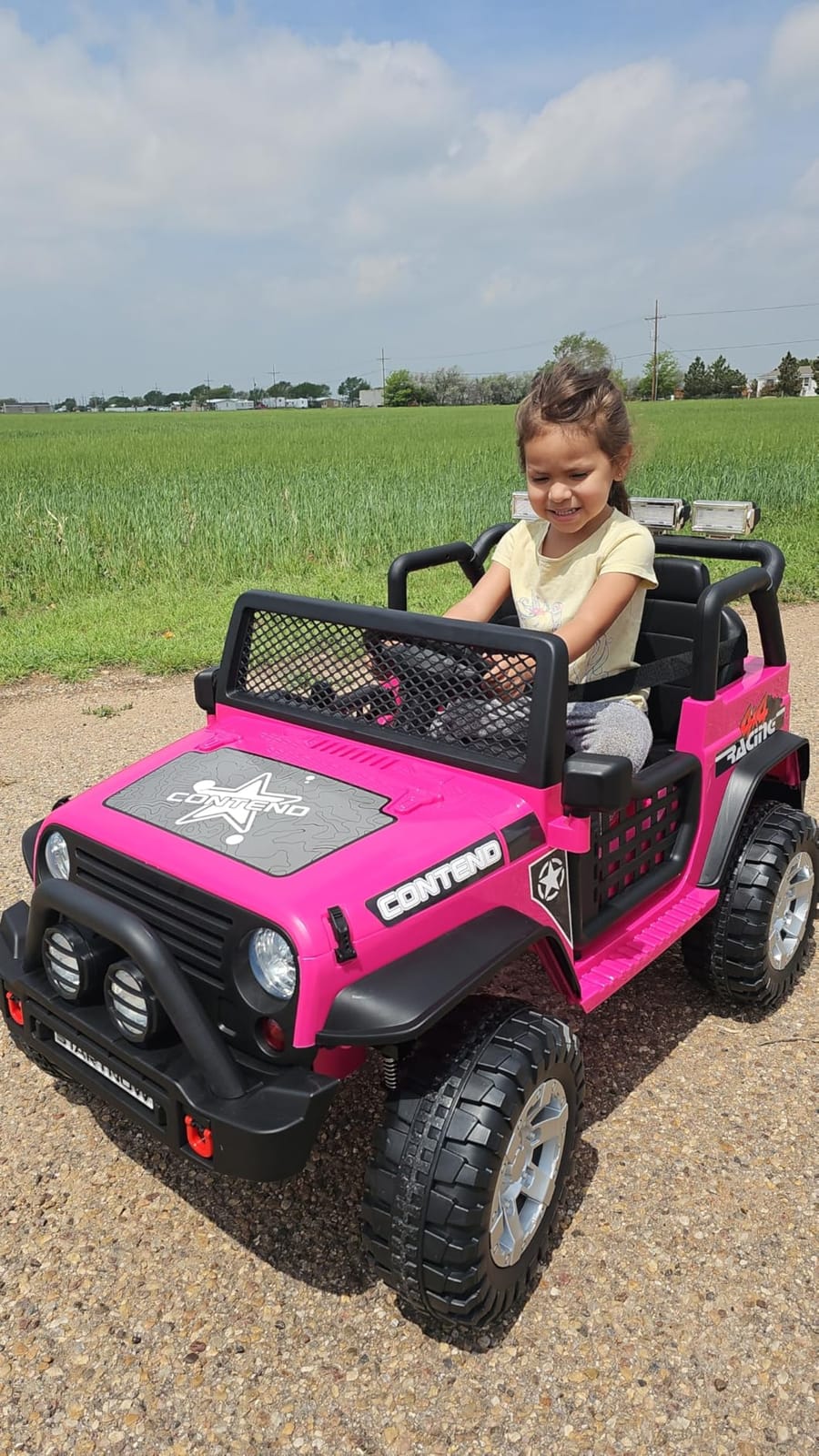
Better than anywhere else on this list. The 110 pound capacity and the sheer width of the frame are what make it practical for a pair of children in the 5 to 8 range, and the adjustable safety belts hold them in properly.
Measure your space first. At nearly 58 inches long and 27.5 inches wide, it needs a genuine yard, and the wide turning radius will annoy you in a small one.
What are the trade-offs?
Weight and charge time. At 62 pounds it takes two adults to move, and the eight to ten hour charge means overnight planning rather than an afternoon top-up. Playtime is rated at 1 to 2 hours per charge.
Some assembly and a supplied tool set are required out of the box, so read the instructions before you open the carton.
6. ELEMARA 24V 4WD Ride-On – Best for Heavier Riders and Sunny Yards
ELEMARA 24V Ride on Toy for Big Kids,Ride on Car 2 Seater w/Sun Shade,Dump Bed & Shovel,4.5MPH,4WD Electric Car for Kids,Battery Car w/Remote,Kids Ride on Truck,3 Speeds,LED Lights,Bluetooth, Royal
24V 10Ah with 4WD
3 speeds 3.1/3.7/4.5 mph
150 lb capacity
Removable sun shade canopy
Pros
- Heaviest
- most solidly built option with a reinforced metal undercarriage
- 150 lb capacity lets an older child share with a younger sibling
- 4WD traction handles grass and small hills
- removable sun shade canopy
- dump bed and shovel included
Cons
- Rear plastic motor mounts pop loose on rough ground
- front motors can be knocked out of alignment
- power button fouls with dirt
- battery life underwhelms relative to the 10Ah claim
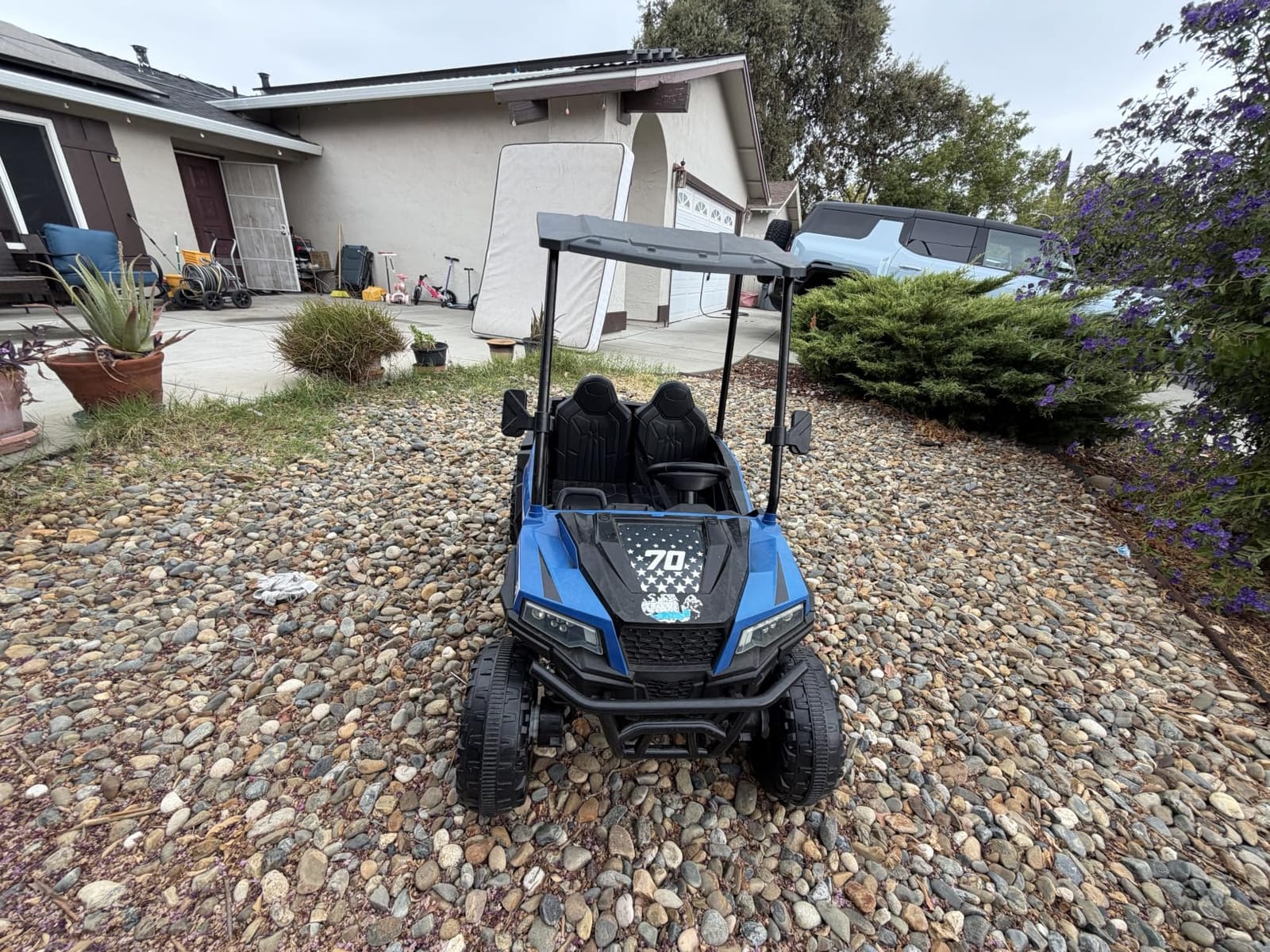
At 150 pounds of weight capacity, this is the only truck here that genuinely suits a 10-year-old sharing a ride with a younger child. The 24V 10Ah pack is also the largest battery in the group, which is the spec most likely to translate into fewer mid-afternoon battery rescues.
Build quality is the argument here. Owners describe it as the most solidly constructed truck they have owned, with a reinforced metal undercarriage and double shock absorbers working alongside spring suspension. The 4WD system manages grass, gravel and bumpy yards without complaint.
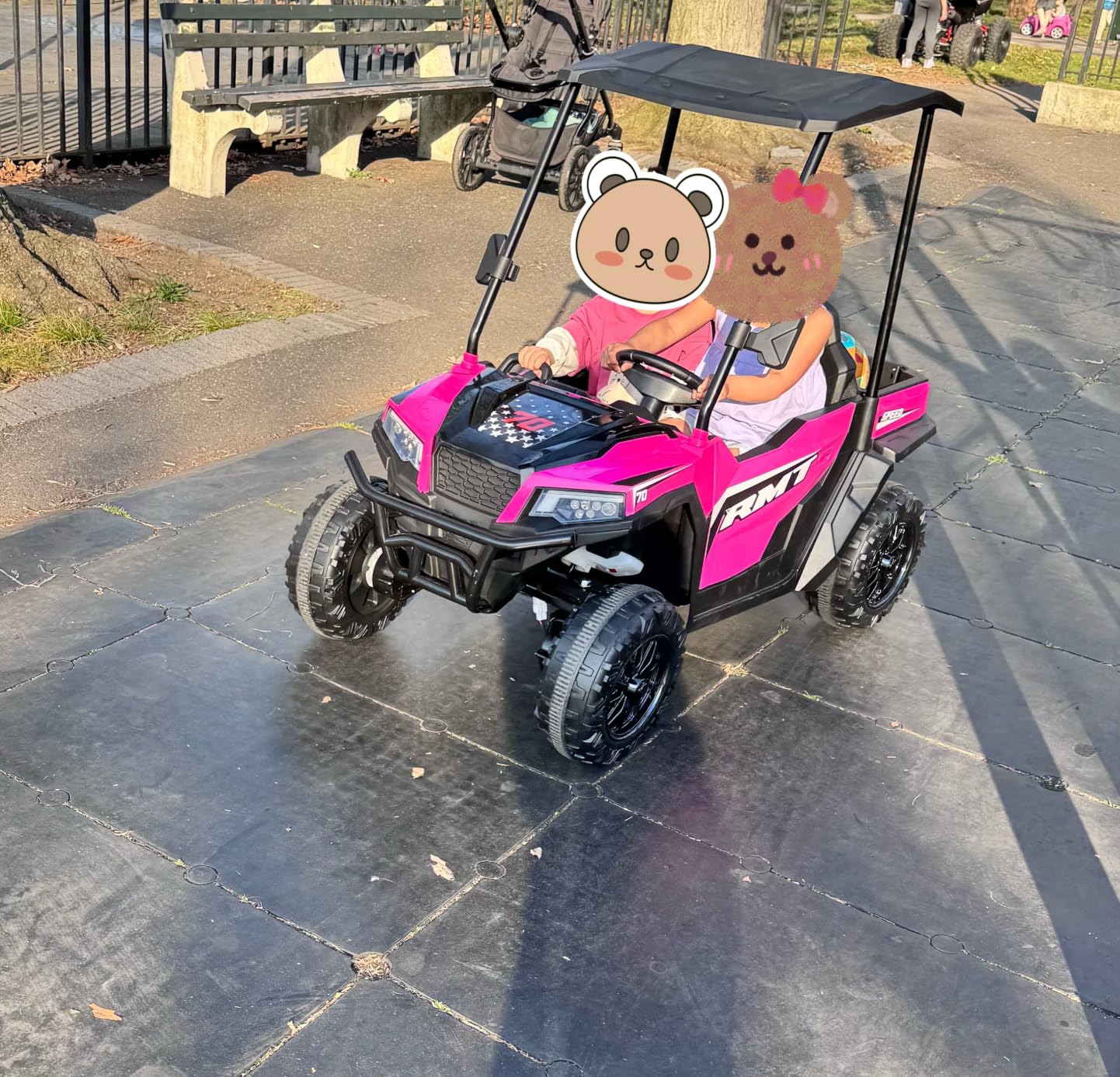
The removable sun shade canopy is the feature other trucks in this list do not have, and it matters in summer. A lifting dump bed and included shovel add hauling play, the remote can drive the vehicle with nobody in the seat, and Bluetooth stereo connects easily to a phone.
Speed is capped at 4.5 mph across three settings, a deliberate choice for a truck built to carry bigger children. Soft start, safety belts and lockable doors handle the safety basics.
Is the 10Ah battery worth the extra weight?
On paper yes, since 10Ah is roughly double the capacity of a typical 5Ah pack. In practice some owners report battery life that falls short of the claim, so manage expectations and keep it on the charger overnight rather than expecting an afternoon and evening session.
The reinforced build is the more reliable reason to choose it. If your yard is rough and your child is heavy, the extra reinforced construction is worth more than the battery headline.
What should I watch out for?
Drivetrain trim is the weak point. Rear plastic motor mounts pop out of place on rough ground and front motors can be knocked loose over uneven terrain, which turns a minor trip into a repair. The power button also fouls with dirt and sticks.
At 73 pounds it is the heaviest truck here and needs two adults to reposition. The remote is described as clunky to operate, and the canopy adds height to an already tall 42-inch profile.
7. First Ride On Chevrolet Silverado 24V – Best for a Calm, Controlled Ride
First Ride On 24V 2 Seater Ride on Toys Licensed Chevrolet Silverado, Electric Vehicle with Remote Control and Seat Belts, Electric Ride on Truck with Trunk, Bluetooth and LED Lights (Black)
24V dual motors
1.2-4 mph
30 meter remote range
Four-wheel suspension
20-inch two-person seat
Pros
- Highest average rating among the licensed pickups here
- officially licensed Silverado styling with authentic logos and grille
- 30 meter remote range gives real control at distance
- three-point belts and four-wheel suspension
- metal construction
Cons
- Top speed of 4 mph is modest against the 5-7 mph rivals
- fewer owner reviews so long-term feedback is thinner
- a trunk is listed but no storage volume is given
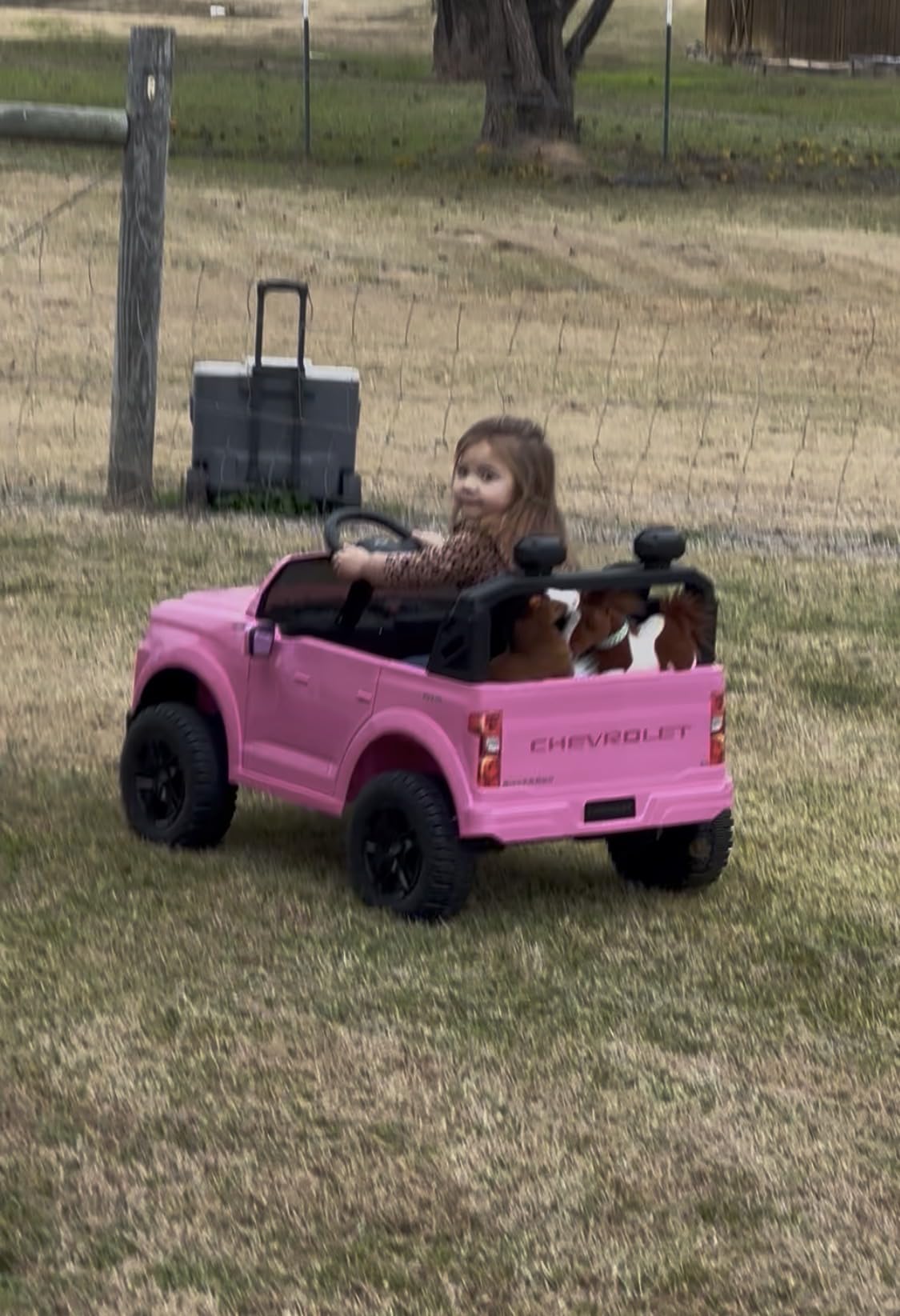
This is the calmest truck here, and for some children that is the deciding factor. Speed runs from 1.2 to 4 mph, which means the slowest setting in the group is still a real crawl and the fastest is the most modest of the pickups.
The remote is the standout. A range of 30 meters is longer than the roughly 100 feet most rivals offer, which is the difference between walking a few steps and crossing to the far end of the yard while the child is still driving.
Four-wheel suspension and three-point seat belts are both listed and both worth having, and the 20-inch two-person seat comfortably fits two children. The body is metal rather than plastic, which owners consistently note as a step up in feel, and it weighs 46.3 pounds, around 10 pounds less than most 24V trucks.
Styling is officially licensed Chevrolet Silverado with authentic logos and grille, and Bluetooth, USB/MP3 and LED headlights handle the realism factor. Rated for ages 3 and up with a 132 pound capacity.
Is 4 mph fast enough to keep a child interested?
For a 4 or 5 year old, yes, and it is the safer answer. Many parents move from 12V to 24V precisely because the 12V trucks felt outgrown, and this one is a compromise that extends the usable age range upward rather than downward.
For a 7 or 8 year old who wants speed, the 5 mph and 7 mph trucks further up this list will hold attention longer.
What are the compromises?
Owner feedback is thinner. At 222 reviews, this is the smallest evidence base among the licensed pickups here, so you have less long-term data to lean on than with the Ford models.
A trunk appears in the feature list but no storage volume is quoted, and the 4 mph ceiling is the one number that will disappoint a child who has seen a faster truck next door.
8. sopbost 24V 2-Seater Dump Truck – Best for Ditches, Gravel and Dirt Piles
24V Ride on Toys for Kids 4-8, 2 Seater Electric Car with Dump Bed, Black
24V with 4 x 75W motors
Up to 5 mph
Four spring suspension units
110 lb capacity, ages 3-8
Pros
- Four 75W motors climb slopes
- dirt piles and stony paths that defeat lesser trucks
- charge holds for hours with two riders aboard
- working auto-lifting dump bed with extra shovel
- assembly takes about 30 minutes or less
Cons
- Stops abruptly when the accelerator is released
- tire compound is neither plastic nor fully rubber
- large size takes a while to put together
- one owner reported control board and motor failures
This is the truck for a rough yard. Four 75W motors give 300W total, and multiple owners describe their children taking this truck through ditches, steep hills, gravel, tall grass and dirt piles on large acreage without stalling. That is a level of terrain performance the dual-motor trucks here do not reach.
Four spring suspension units and 4-wheel EVA rubber tires handle the rough ground, and the top speed of 5 mph is fast enough to feel like a real vehicle without being frightening. It is ASTM F963 compliant with a non-toxic polypropylene body.
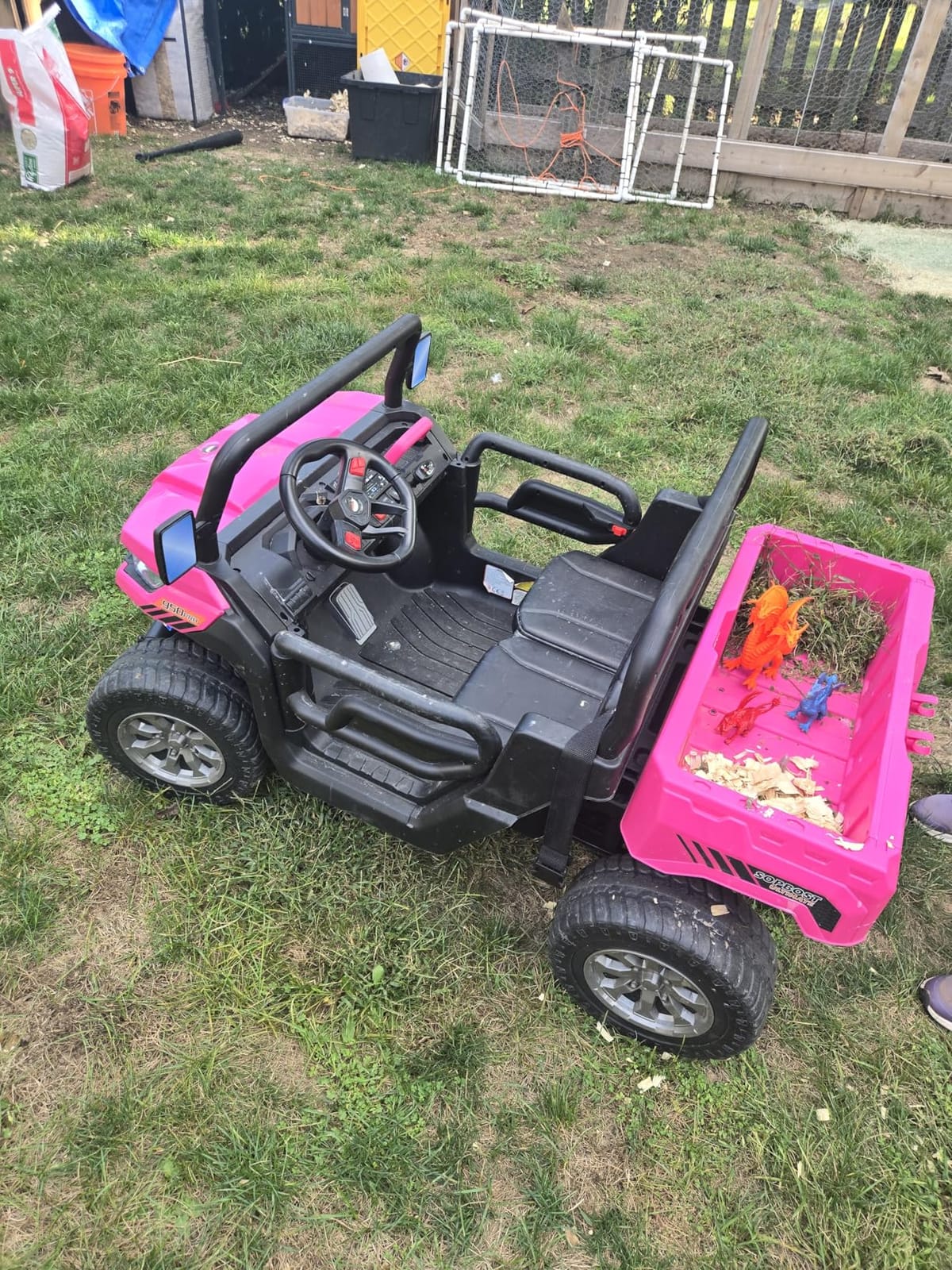
The electric auto-lifting dump bed comes with an extra shovel, and the remote means you do not have to run behind a steering child. Two children of similar age fit comfortably, and the adjustable independent seat belt is adjustable in a way most of these trucks are not.
Owners also report the charge holding for hours with two riders, and many describe it still working well after a full year of regular use. Assembly takes about 30 minutes or less with two adults.

How rough is rough enough to need this one?
If your property includes a slope, unpaved track, gravel driveway or a patch of ground your child has turned into a dig site, the extra motors earn their place. A 300W total output climbs where a 180W dual-motor truck bogs down.
On flat pavement, the extra power goes unused and you are simply paying for capability you do not need.
What should I watch out for?
The pedal release is abrupt. Owners warn that the hard stop can bang knees or faces, so warn older children and supervise the first few sessions on it. It is the most repeated complaint in the reviews.
The tire compound is described as neither plastic nor fully rubber, and one owner reported the control board, wheel motor, power cable and radio all failing within a year. The truck is 46.85 inches long, so assembly is not quick for one person.
9. ANPABO Licensed Caterpillar 24V – Best for Construction Play
ANPABO Licensed Caterpillar 24V Ride On Toys with Dump Bed and Shovel
24V with 4 x 100W motors, 4WD
3 speeds 2.5-5 mph
Removable battery pack
Ages 3-7, 110 lb
Pros
- Four 100W motors give true four-wheel-drive traction up yard hills
- officially licensed Caterpillar styling children recognise
- real bed tilt with openable tailgate and included shovel
- battery indicator with low-battery voice prompts
- removable pack saves dragging the whole truck
Cons
- Motor noise drowns out the music at speed
- music board volume is quiet relative to motor noise
- included shovel feels cheap
- children can override the remote in manual mode
Construction play is the theme, and it starts with the styling. Officially licensed Caterpillar, with a high chassis for passability and rear shock absorbers, and four 100W motors providing genuine 4WD traction. Owners report it climbing yard hills with several children aboard.
The bed tilts by pushing a handle, the tailgate opens, and a shovel is included. That combination is what keeps children digging for an hour rather than driving laps of the same circle, and it is why this one earns its place alongside the dump trucks above it.
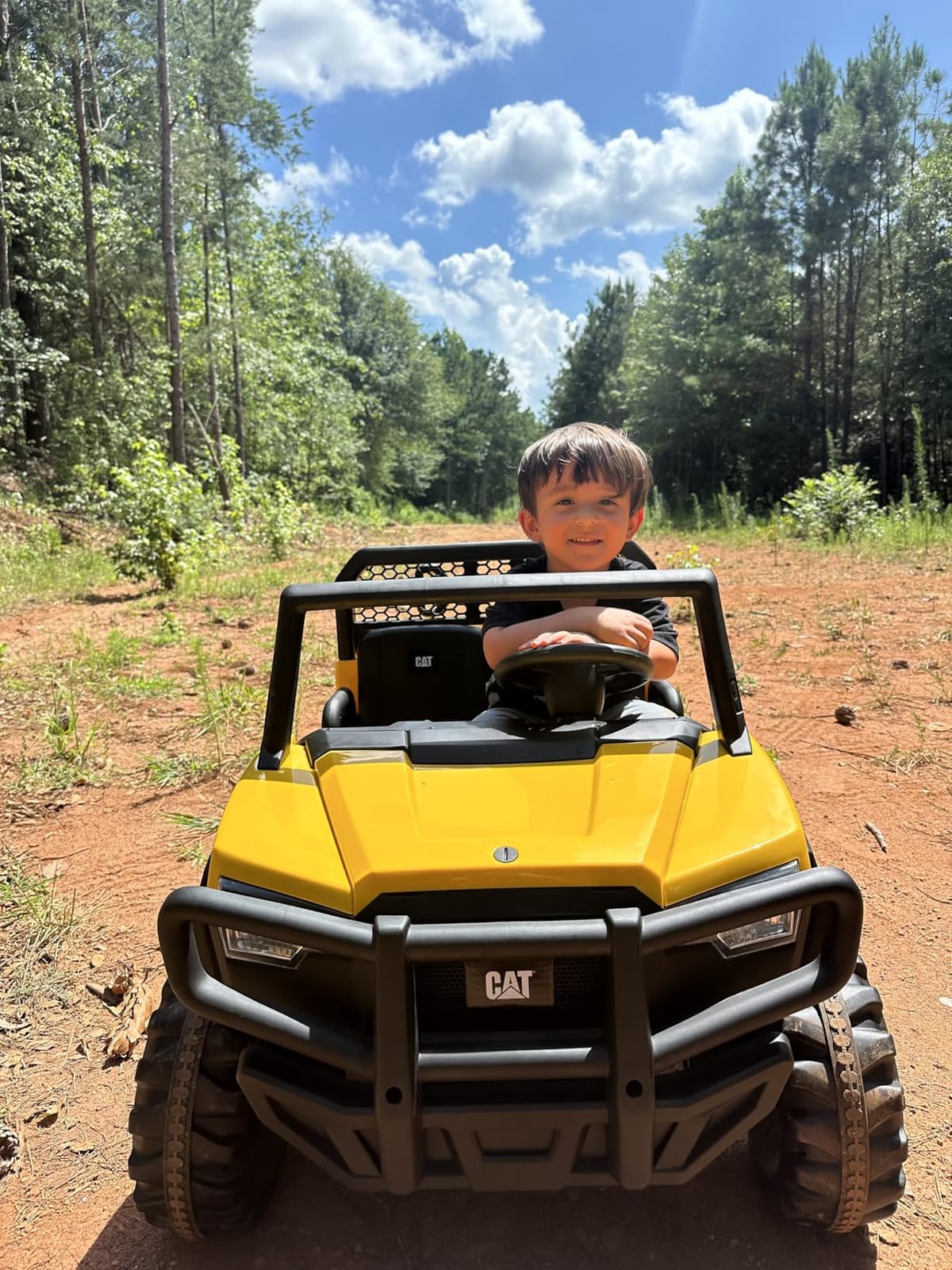
Two details here beat almost everything else on the list. The battery indicator light with low-battery voice prompts removes the guesswork that plagues trucks without one, and the removable battery pack stows under the hood so you can charge the truck without moving 60 pounds of vehicle into the house.
The parental remote has priority override and a P-button emergency stop, and the steering wheel detaches for storage. It weighs 60 pounds and measures 49 inches long, rated for ages 3 to 7 with a 110 pound capacity.

Is the removable battery worth it in practice?
Yes, more than the specification suggests. With a fixed pack you either run a long extension cord outside or move the whole truck to charge. Pulling a small pack out of the hood takes seconds and is the single most convenient design decision in this roundup.
Because the pack is removable, a spare battery is a realistic purchase rather than a pipe dream, which extends the usable life of the truck considerably.
What are the downsides?
The audio is the weak point. Motor noise overwhelms the speakers at speed and the music board volume is quiet, so Bluetooth is effectively a low-speed feature on this truck.
The included shovel feels cheap and may break quickly. Children can override the remote when they are in manual mode, and there is no way to lock the steering wheel or pedal, so a determined four-year-old can drive off unattended.
10. Hikiddo Ford Shelby F-150 24V – Best for Ages 3 to 5
24V Ride on Toys, Licensed Ford Shelby F150 Electric Car for Kid w/Remote
24V with dual 200W motors
2-3.5 mph
Up to 80 minutes
Ages 3-6, 66 lb capacity, 38.8 lb
Pros
- Officially licensed Ford Shelby F-150 styling that looks genuinely realistic
- dual 200W motors give real pickup-truck power for the size
- P-button emergency stop halts the truck immediately
- durable against constant bumping
- easy to assemble and charge
Cons
- Rated only up to 66 lbs so it suits younger children
- steering wheel hardware loosens and needs tightening
- around 80 minutes of runtime
- top speed of 3.5 mph is modest
Dual 200W motors in a compact 38.8 pound body is the unusual combination that makes this one worth a look. That is 400W of total output in a truck small enough for a three-year-old, and parents of 3 to 5 year olds consistently report it feels like a real pickup rather than a cartoon.
The remote has speed settings and a P-button that stops the truck dead, which is the most useful single safety feature on any truck in this roundup. A three-point seat belt, four-wheel shock absorption, LED headlights, horn and Bluetooth round out the basics.
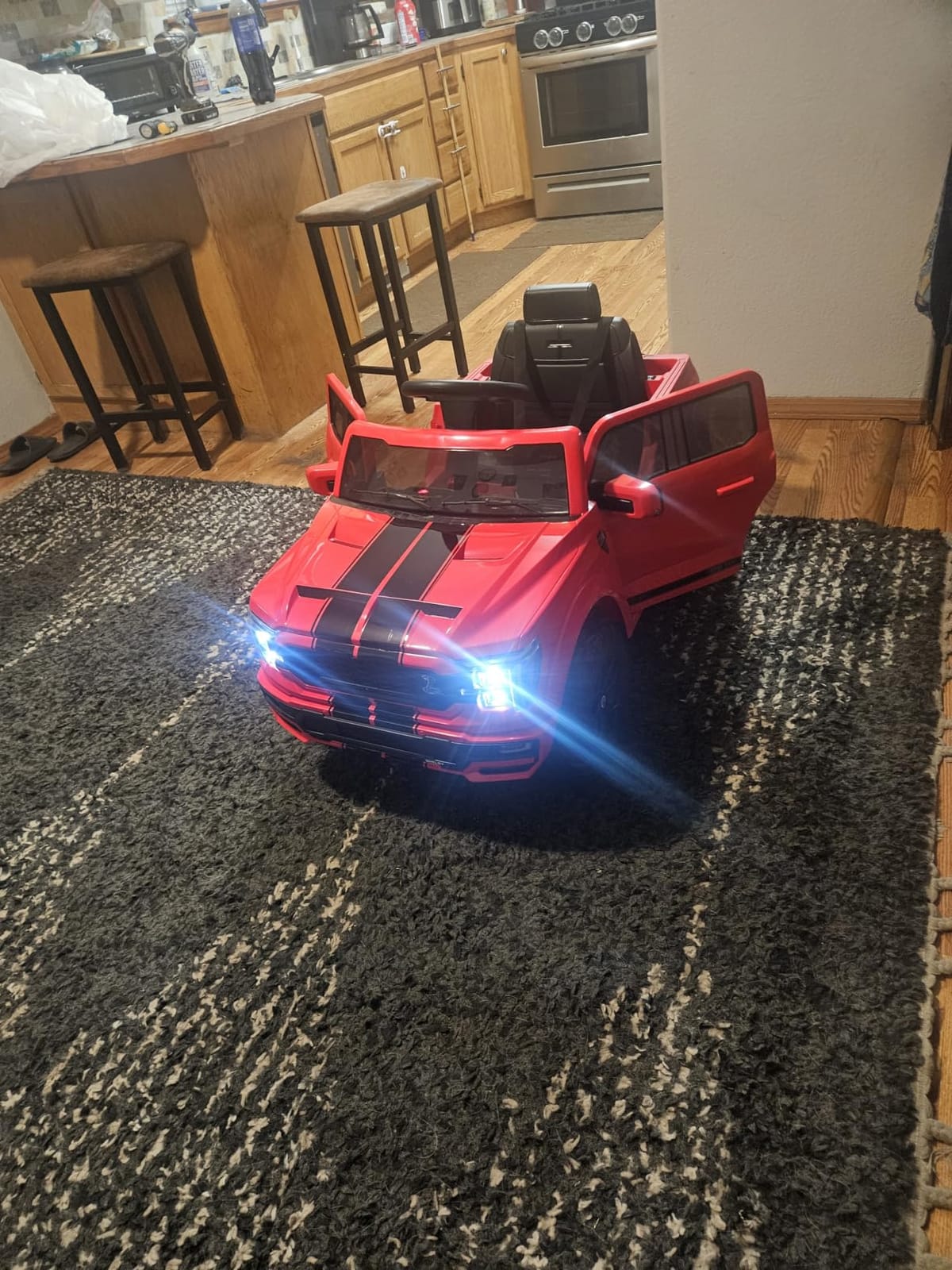
Durability is a real strength here. Owners describe it surviving constant bumping by a young child, and the packaging arrives well protected so parts do not arrive already broken. Assembly and charging are both described as easy, which matters when the person doing the work has a three-year-old to supervise.
It meets ASTM and CPSIA standards, which is a reasonable baseline to check on any ride-on. Speed runs 2 to 3.5 mph across adjustable settings, and it weighs just 38.8 pounds, so one parent can move it.

Is 66 pounds of capacity too restrictive?
It is the main limitation, and it is a hard one. A 66 pound rating suits children up to about 5 or 6, so a 7 year old or an 8 year old is outgrowing it quickly. If you can see that coming within a year, the 110 and 132 pound trucks are a better purchase.
Buying a truck a child will outgrow in a year means buying it twice, so weigh that against saving money now.
What are the compromises?
Runtime is the shortest here at around 80 minutes, and the 3.5 mph top speed is modest next to the 5 and 7 mph trucks. The steering wheel hardware loosens and needs periodic tightening, which is an easy fix but an easy thing to forget.
At 43.3 inches long it is compact enough for a small yard, and it is the most manageable truck here to store over winter.
24V vs 12V Ride-On Trucks: Is the Upgrade Worth It?
The upgrade is worth it if your child is 4 or older and has anything other than smooth flat concrete to drive on. A 12V truck bogs down in the first patch of grass; a 24V truck crosses it. That single difference decides whether the vehicle gets used for months or abandoned in a month.
Here is the short version. A 12V pack gives 12 volts to the motor controller. A 24V pack is simply two 12V lead-acid batteries wired in series, which is the single most useful fact for any parent attempting battery work. That doubles the power available to the motors, and the trucks above use it for torque on hills, grass, gravel and a second passenger.
Choose 12V if your child is under three, if they will only drive on a sealed concrete floor, or if the truck is for indoor play. Most 12V trucks top out around 2 to 3 mph and suit ages 1 to 4.
Choose 24V if your child is 4 or older, has grass, dirt, gravel or any incline in the yard, or if you want a truck that survives being outgrown. Expect 3 to 7 mph depending on the model, ages 3 to 8, and 1 to 2 hours of runtime per charge.
Go past 24V only when your child is genuinely too big for it. 36V models reach roughly 6 to 10 mph and 48V models 10 to 15 mph, and both are generally recommended for ages 8 and up. Those speeds are unsafe for most children under 8, and modifying a 24V truck to run on higher voltage voids the warranty and creates real burn and fire risk. Leave that to a specialist, and never mix voltages in a matched vehicle.
One practical point in favour of 24V: these trucks hold resale value better and last longer, because the battery is the first thing to wear out and it is replaceable. A 24V truck with a swappable pack can stay in service far longer than a sealed 12V unit.
How to Choose a 24V Ride-On Truck
Seven criteria decide this purchase, and almost every listing buries at least two of them. Work through them in order and the right truck usually becomes obvious.
Match age and weight first. Check the stated weight capacity against your child now, not their projected size in two years. A 66 pound rating suits ages 3 to 6; 110 pounds covers most of the 5 to 8 range; 132 pounds and above handles sibling pairs and older children.
Total motor wattage over motor count. Dual 90W means 180W. Dual 200W means 400W. Four 75W means 300W. Listings that say only dual motor are hiding the number that matters, so ask or skip them.
Decide 2WD or 4WD. Two driven wheels are fine on flat or gently rolling ground. Four driven wheels climb and grip noticeably better on hills, gravel and wet grass. A switchable 4WD/2WD drivetrain extends battery life noticeably in 2WD mode.
Check tire material. EVA foam tires grip grass, tile and concrete, run quietly and do not puncture. Hard plastic tires are cheaper, louder, and wear down faster, as owners of several trucks here confirm. Pneumatic tires are the rarest and need the most maintenance.
Read the battery spec in amp-hours. Voltage is power potential, amp-hours are duration. A 5Ah pack gives roughly half the runtime of a 7Ah pack for the same voltage, so 24V 7Ah is the sweet spot and 24V 10Ah is better still.
Verify the safety kit is real. A 2.4GHz parental remote with priority override and an emergency stop, a three-point belt per child, lockable doors, soft-start acceleration and a working speed limiter are the baseline. Remote range matters more than most listings admit, because it is the difference between walking a few steps and crossing the yard.
Separate functional features from gimmicks. A working dump bed, a speed selector and a working tailgate add genuine play value. MP3 players, horn sounds and flashing lights do not. Weight them accordingly.
Finally, check the footprint before you commit. These trucks run from 38 to 73 pounds and from 43 to 58 inches long, and the two you will struggle to move are the two worth avoiding if your storage space is tight. Plan the charging spot at the same time, because a 60-pound truck parked next to the outdoor socket is far easier than one that has to be wheeled to the garage. If your child is also ready for a pedal bike in the near future, our guide to the best kids bikes for beginners covers what to look for once the ride-on is outgrown.
Why Won’t My 24V Ride-On Charge? A Four-Step Diagnostic
In most cases a 24V ride-on that will not charge is a connection or charger problem, not a dead battery. Work through these four steps in order before you assume the worst.
Check the charger indicator light. Most wall adapters have an LED that shows red for charging and green for full. No light at all usually means the outlet or the adapter is the problem, or the adapter is not seated in the wall socket. Try a different outlet first, because it costs nothing.
Confirm the barrel connector is fully seated. The plug has to click in and seat fully, and it is easy to insert partially without noticing. Look closely for bent or pushed-in pins, which is the most common physical damage on these trucks. If the plug feels loose, stop and inspect it rather than forcing it.
Look for a tripped thermal breaker. Some packs have a resettable breaker on the pack itself, usually a small button. If the truck has been stored hot or the pack was over-discharged, the breaker may have tripped. Reset it with the truck on flat ground, then retry the charge.
Test the charger output before condemning the pack. A multimeter on the barrel connector should show roughly 28 to 29 volts for a 24V charger. A reading near zero with a solid indicator light means the charger has failed and the battery may be perfectly fine. This single test separates the two most expensive mistakes in this whole topic.
If all four steps pass and the truck still will not charge, the pack is the likely culprit. Remember that a 24V pack is two 12V lead-acid batteries in series, so one battery can fail on its own while the pair still measures as a single unit. A click sound at connection plus a suspiciously low voltage reading usually points to one failed cell in the string rather than a completely dead pack.
Battery Dead or Charger Dead? How to Tell in Five Checks
Distinguishing the two costs far less than replacing the wrong part. A charger is cheap and generic; a battery pack is the most expensive component on these trucks.
Inspect the pack physically. A swollen, bulging, leaking or hot-to-touch battery is finished. Stop using it and take it to a battery disposal point rather than putting it back on charge.
Watch the charging behaviour. A healthy 24V pack climbs from roughly 24 volts toward 28 to 29 volts and stays there. A pack that accepts a charge, drops it within minutes, then reads low again is losing capacity.
Use the multimeter test above. Output near zero means charger. Healthy charger output plus a pack that will not hold charge means battery.
Separate battery from motor problems. If the truck charges fine, the lights work and the dashboard is alive, but the vehicle will not move, the battery is not your problem. Look at the foot pedal connection, the motor controller and the gearbox instead.
Test each 12V battery separately if you can. Because the pair is wired in series, a healthy reading on the pair can hide one dead battery. Measuring each half tells you whether you need a matched pair or a single replacement.
One warning applies to every step above. Never put a 24V battery into a 12V ride-on. The voltage has to match the motors and controller or you will burn out the electronics and create a genuine fire risk. The safe modification path is upgrading the whole vehicle as a matched set of motors, controller and battery, which is a specialist job rather than a weekend one.
A related note on cold weather: parents in colder regions report noticeably worse winter performance, and the batteries are the reason. Below freezing, lead-acid packs deliver less power and charge more slowly, which is why off-season storage matters more than most sellers mention. Storing the truck under a cover also keeps pet hair out of the footwell and the seat rails; our picks for the best pet hair vacuums for trucks and SUVs cover the interior cleaning that comes with any vehicle a dog rides in.
Safety and Age Recommendations by Age Band
Most 24V trucks are rated for ages 3 to 8, and those ratings are worth taking seriously rather than treating as marketing filler. A 66 pound capacity and a 3.5 mph top speed are genuinely different things to hand to a three-year-old and a nine-year-old.
Ages 3 to 4
Stay on the lowest speed setting, keep the parental remote in hand at all times, and use a 2.4GHz remote with priority override and an emergency stop. A helmet is a sensible addition even at 2 mph, and closed-toe shoes are essential. A truck with lockable doors stops a determined pre-schooler driving off alone. This is the band where the small-capacity models such as the Hikiddo Shelby F-150 and the Nitoess UTV genuinely fit.
Ages 5 to 6
This is the sweet spot for the category and where most of the trucks here are designed to sit. Middle speed settings open up, and the dump-bed models start making sense as play value rather than decoration. Expect roughly an hour of active use per charge at medium speed, and plan an overnight charge rather than an afternoon top-up.
Ages 7 to 8
Move up to the 110 and 132 pound capacity trucks so the child is not cramped, and consider 4WD or high total wattage if the yard is anything but flat. Expect 4 to 7 mph. Supervise closely on slopes, because electronic braking on a downgrade is limited and a truck can roll or slide, which several owners here report.
Eight and Older
Most 24V trucks are genuinely outgrown at this point, even the 150 pound capacity model, because speed and power become the constraint rather than weight. Look at 36V models, which reach roughly 6 to 10 mph, or consider a two-seater so siblings can share. Above 8, the pedal bike or a junior quad is usually the better next step.
Across every age band, one safety note is worth repeating because it appears in owner reviews more than once: a child pressing the pedal firmly can override the parental remote in manual mode. Treat the remote as a safety net rather than a lock, and supervise on slopes and near traffic. A ride-on is a toy, not a vehicle, and it is not for use on public roads. Where a sibling is still too young to be anywhere near a moving truck, a dog playpen for kids style contained play area is a much safer way to let the driveway be the kids’ space.
Frequently Asked Questions
What age is a 24V ride-on truck appropriate for?
Most 24V ride-on trucks suit children aged 3 to 8, with ages 4 to 7 the sweet spot. Trucks rated to 66 pounds fit ages 3 to 6, while 110 to 132 pound capacity models cover ages 5 to 8 and sibling pairs. A 150 pound capacity truck stretches to a 10-year-old sharing with a younger child. Under age three, a 6V or 12V model is the better choice.
Which is better for my child, 12V or 24V ride-on toys?
Choose 24V if your child is 4 or older, has grass, dirt, gravel or any incline in the yard, or wants a truck that lasts more than a season. Choose 12V if your child is under three or will only drive on smooth flat surfaces. A 24V pack is two 12V batteries in series, which gives enough torque to climb grass and carry a second rider.
Why is my kid’s 24V ride-on truck not charging?
Work through four checks in order: look at the charger indicator light and try a different outlet, confirm the barrel connector is fully seated and undamaged, look for a tripped thermal reset button on the pack, and test the charger output with a multimeter. A 24V charger should read roughly 28 to 29 volts. Output near zero with a working light means the charger has failed, not the battery.
Can you put a 24V battery in a 12V ride-on truck?
No. Voltage must match the motor and controller rating, or you will burn out the electronics and create a real burn and fire risk. A 24V pack is simply two 12V lead-acid batteries in series, so it can be swapped for another 24V pack of the same chemistry and capacity. Upgrading a 12V vehicle means replacing motors, controller and battery as a matched set.
How fast does a 24V ride-on truck go?
Most 24V ride-on trucks top out between 3 and 6 mph, with the range in this group running from a gentle 1.2 to 3.5 mph on the smallest models up to 7 mph on six-wheel-drive trucks. Construction and dump models usually run 3 to 5 mph, while sport and monster trucks run 5 to 7 mph. 36V models reach 6 to 10 mph and 48V reach 10 to 15 mph, both recommended for ages 8 and up.
How long does a 24V ride-on battery last per charge?
Expect 1 to 2 hours of active use for most 24V trucks, and roughly 70 to 80 percent of the manufacturer claim in real conditions. Terrain, rider weight and speed setting all cut into it. A 24V 7Ah pack typically outruns a 5Ah pack by around 50 percent, and 10Ah more than doubles a 5Ah pack. Charging takes 8 to 12 hours, so plan overnight charging rather than afternoon top-ups.
Final Verdict: Which 24V Ride-On Truck Should You Buy?
Buy the First Ride On Ford Bronco if you want the safest overall bet, with the deepest owner feedback in the group, a 21-inch two-child seat with two three-point belts, and a 98 foot remote. Buy the First Ride On Ford F-150 Raptor if battery life and quick setup matter most, since the 7Ah pack and mostly assembled arrival are the practical wins.
Buy the ANPABO dump truck or the ANPABO Caterpillar if the bed is the point, the SEHOMY six-wheeler if two bigger children need room, and the sopbost if your yard is genuinely rough. For a tight budget or a three-year-old, the Nitoess UTV and the Hikiddo Shelby F-150 both deliver 24V capability in a manageable size and weight.
Whichever you choose, expect 70 to 80 percent of the rated runtime, budget an hour for assembly, and check the warranty length before you buy. A six-month parts policy covers the realistic first-year failure window; a sixty-day window covers almost nothing.
Use the price check buttons above to see current pricing, and hold onto a 24V truck until your child is genuinely too big for it. With a replaceable pack and a metal frame, that is usually two to three years of daily use, after which our guide to the best kids bikes for beginners covers the sensible next step.