
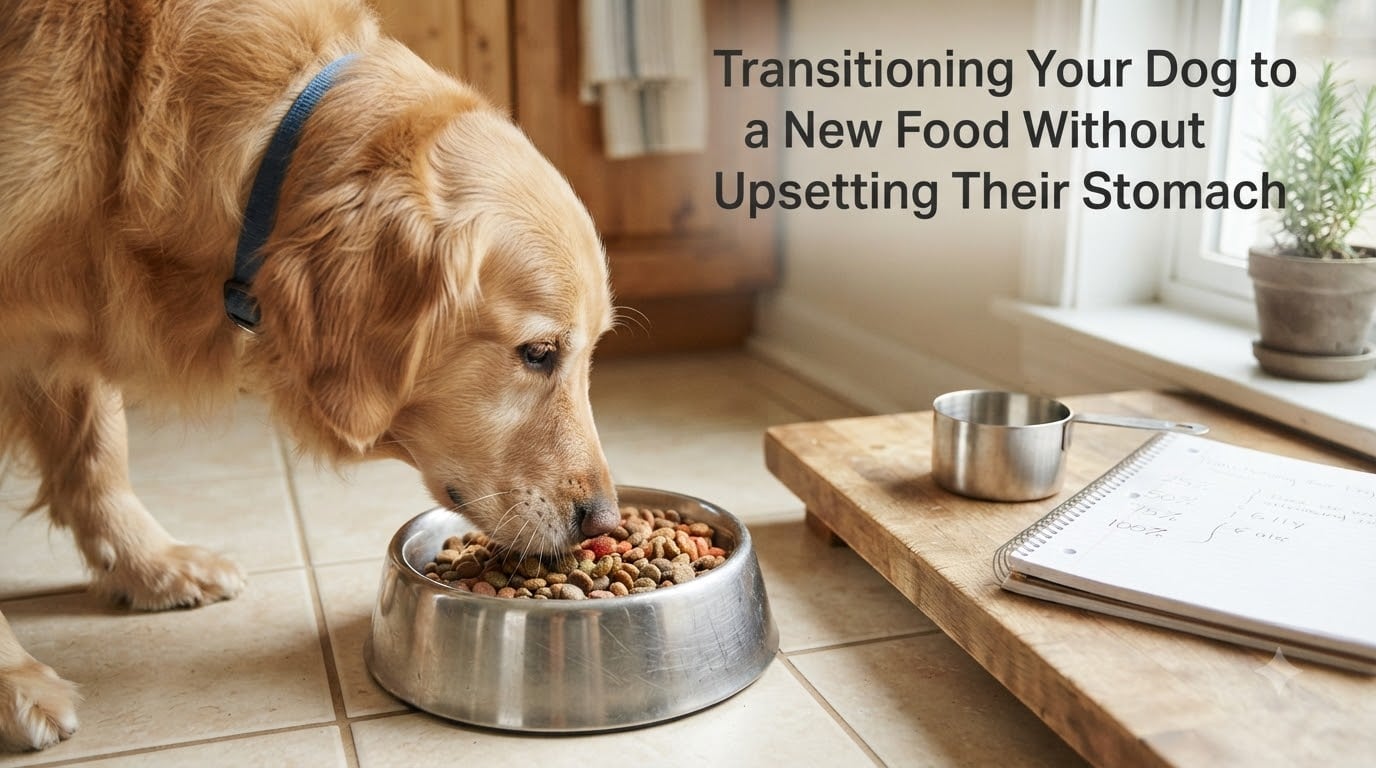
Switching your dog’s food the right way can be the difference between a smooth transition and a week of cleanup. I’ve walked dozens of dog owners through diet changes, and the ones who follow a gradual transition almost always skip the upset stomach phase entirely.
This guide covers the exact 7 to 10 day schedule our team recommends, the warning signs you should never ignore, and what to do when your dog refuses to eat the new food at all. Whether you’re switching brands, moving from puppy to adult formula, or trying a sensitive stomach diet, the steps below apply.
Table of Contents
Why a Gradual Transition Matters for Your Dog’s Stomach?
Abrupt food changes are one of the most common causes of digestive upset in dogs. Your dog’s gut hosts a specific population of bacteria that breaks down the proteins, fats, and carbohydrates in their current food. When you swap foods suddenly, those microbes don’t have time to adjust, and the result is often diarrhea, vomiting, or a refusal to eat.
The technical term is gastrointestinal disturbance, and it happens because the digestive system needs time to produce the right enzymes for new ingredients. Even foods that look similar on the label can contain completely different protein sources, fiber types, or fat levels that change how the gut processes them.
I learned this the hard way with my own beagle, who once spent three days with explosive diarrhea after I switched his food cold turkey because a sale ran out at the store. After that, I started every transition with at least a week of mixing, and we never had another incident.
Beyond gut bacteria, sudden changes can trigger food sensitivities or allergic reactions that look like a normal upset but are actually an immune response. Gradual mixing lets you spot these issues early, when they’re easier to reverse, rather than discovering them after a full switch.
Switching foods also affects how your dog absorbs nutrients. Different formulas use different mineral sources, vitamin blends, and fat ratios that change how efficiently the gut pulls calories and micronutrients from each meal. A gradual transition gives the intestinal lining time to adapt, which helps prevent the temporary nutrient malabsorption that often shows up as loose stool or changes in energy level.
Finally, a slow switch reduces food rejection. Many dogs who eat the same formula for months or years develop a strong preference for that specific kibble shape, smell, and texture. Throwing a completely unfamiliar food in the bowl often triggers a refusal, especially in picky breeds like beagles, shih tzus, and many terriers. Gradual mixing retrains the dog’s nose and palate to accept the new food as normal.
The 7-10 Day Transition Schedule That Works
The standard recommendation from most veterinarians is a 7 to 10 day transition, with the longer end reserved for sensitive stomach dogs. Here’s the day-by-day breakdown that works for the majority of healthy adult dogs.
Standard 7-Day Schedule
This is the minimum schedule I use for healthy adult dogs with no history of digestive issues. Measure by volume, not by weight, since kibble densities vary between brands and a cup of one food is not equal to a cup of another.
Days 1 and 2: Mix 25% new food with 75% old food. Feed the same number of meals per day, just with the new ratio. Watch for any stool changes and keep portions identical to what your dog was eating before.
Days 3 and 4: Move to 50% new food and 50% old food. By this point, most dogs have accepted the new texture and flavor. Stools should remain firm.
Days 5 and 6: Shift to 75% new food and 25% old food. Stools should remain firm and consistent. If you notice any softness, hold this ratio for an extra day.
Day 7: Switch to 100% new food. If stools stay normal for 48 hours, the transition is complete.
Extended 10-Day Schedule for Sensitive Dogs
For dogs with a history of digestive upset, seniors, or puppies under six months, stretch each phase by one extra day. Sensitive stomach dogs often need 14 days total, with each percentage step held longer than the standard schedule suggests.
This means Days 1 through 3 at 25%, Days 4 through 6 at 50%, Days 7 through 9 at 75%, and Day 10 at 100%. The extra time gives the gut microbiome a real chance to adapt.
Quick Transition Method (Emergency Only)
If your old food is unavailable due to a recall or supply issue, you can complete a transition in 3 to 5 days. Use the same percentages but compress each phase to one day instead of two. Monitor stool quality closely, and be ready to slow down if diarrhea appears.
For emergency transitions, prepare a bland backup meal of plain boiled chicken and white rice in case your dog’s stomach needs a reset. Feed this for 12 to 24 hours before restarting the new food at 25% if needed.
Signs of Digestive Upset to Watch For
Most dogs handle a gradual transition without any issues, but it’s important to know what a problem looks like so you can adjust quickly. Here are the warning signs that mean you should slow down or pause the transition.
Loose Stools or Diarrhea
This is the most common sign of a transition that’s moving too fast. If your dog’s stool becomes soft or watery at any point, drop back to the previous ratio for two to three days before trying again. Mild stool changes within the first 48 hours are normal, but anything beyond that signals the gut needs more time.
Pay attention to color as well. Yellow stool can indicate the food is moving through the intestines too quickly, while black or tarry stool is a vet emergency and warrants an immediate call regardless of when it appears.
Vomiting After Meals
Vomiting is a stronger signal than loose stools. If your dog vomits after eating the new food, pause the transition and go back to the previous day’s ratio. If vomiting continues even on the old food, contact your veterinarian, as something other than the transition may be going on.
Loss of Appetite or Refusal to Eat
Some dogs take a day or two to accept new food, but refusing meals for more than 24 hours is a red flag. Picky eating has its own set of solutions covered below, but a complete refusal combined with other symptoms warrants a vet call.
Excessive Gas or Bloating
New ingredients change how food ferments in the gut, and some increase gas production temporarily. Mild gas is normal during the first week, but if your dog’s belly looks swollen or they seem uncomfortable, slow the transition and consult your vet.
Lethargy or Behavior Changes
A dog that’s tired, hiding, or just “off” during a food transition may be dealing with more than a simple taste preference change. These behavioral signs often show up alongside digestive symptoms and shouldn’t be ignored.
Tips for Dogs With Sensitive Stomachs
Dogs with sensitive stomachs need extra patience. If your dog has had digestive issues in the past, or if you’re switching to a therapeutic diet, follow these adjustments to the standard schedule.
Extend the Timeline to 14 Days
Sensitive stomach dogs often need two full weeks to adjust. Hold each percentage step for three days instead of two, and don’t move to the next ratio until stool quality is consistently normal. Our team has found this slower approach nearly eliminates digestive upset in dogs with documented food sensitivities.
Add a Probiotic During Transition
A canine-specific probiotic supplement can help stabilize gut bacteria during the switch. Start the probiotic a few days before you begin the transition, and continue it for at least a week after. Plain, unsweetened yogurt with live cultures can work in a pinch, but a quality supplement is more consistent.
Consider a Limited Ingredient Diet
If you’re switching because of suspected food allergies or chronic digestive issues, choose a limited ingredient formula with a single novel protein source. Fewer ingredients mean fewer opportunities for the gut to react, and the transition often goes smoother.
Stick to Scheduled Meal Times
Free feeding during a transition makes it hard to monitor how much new food your dog is actually eating. Feed two or three scheduled meals per day so you can track appetite and stool patterns precisely.
Differences for Puppies Versus Senior Dogs
Puppies under six months have immature digestive systems, and senior dogs often have slower gut motility, so both groups benefit from the extended 14 day schedule. Puppies also tend to be more resistant to texture changes, so warming wet food or adding a small amount of warm water to kibble can help. Senior dogs with existing conditions like kidney disease or pancreatitis should always transition under veterinary supervision, since even small formula changes can affect their overall care plan.
How to Handle Picky Eaters During Food Transitions
Picky eaters are a different challenge entirely. These dogs don’t have digestive issues, they just refuse to eat food they don’t recognize or prefer. Most competitor guides skip this section entirely, but it’s one of the most common questions we see from dog owners.
Don’t Mix if Your Dog Refuses Mixed Food
Some dogs will pick out the new food and leave the old, or refuse the bowl entirely if the textures are mixed. For these dogs, try feeding in two separate bowls side by side, with the new food in a smaller portion. They often eat the new food first once they accept it as a separate option.
Add a Topper to Bridge the Flavor Gap
A small amount of wet food, bone broth, or a meal topper can make new kibble more appealing. Use just enough to add flavor without filling your dog up, and reduce the topper gradually as they accept the new food.
Warm Up the Food Slightly
Warming kibble in the microwave for 10 to 15 seconds releases aromas that entice reluctant eaters. Make sure it’s not too hot before serving, and only warm the new food, not the old, to keep the scent strong.
Try a Texture Match First
If you’re switching from kibble to wet food, or vice versa, start with a food that matches the current texture. A sudden change in texture is often what turns picky eaters off, even if they would accept the flavor eventually. Gradually shift textures once they accept the new flavor.
Troubleshooting: What to Do When Problems Appear
Even with a careful transition, problems can appear. Here’s a quick decision tree for the most common situations we hear about from dog owners.
If Stool Gets Loose
Drop back to the previous ratio for two to three days. If stool returns to normal, continue from that point at a slower pace. If loose stool persists for more than three days, contact your vet.
If Your Dog Vomits
Stop the new food entirely and go back to 100% old food for 24 to 48 hours. Once your dog is eating normally again, restart the transition at 25% new food and move more slowly than before.
If You Run Out of Old Food Mid-Transition
This is a real problem many owners face, especially when switching due to a recall. If you have less than a handful of old food left, jump to the highest percentage your dog can tolerate and add a probiotic to support the gut. If you have no old food at all, switch abruptly but plan to address any digestive issues with a bland diet of boiled chicken and rice for a day or two.
If Symptoms Don’t Improve
If digestive issues persist beyond a week of slow transition, or if your dog develops new symptoms like skin irritation, ear infections, or chronic gas, the new food may not be the right fit. Schedule a vet visit to rule out allergies or underlying conditions.
When to Call the Vet
Reach out to your veterinarian right away if your dog shows blood in stool, refuses water, becomes dehydrated, or seems to be in pain. These are not normal transition symptoms and need professional evaluation, especially in puppies and small breeds that dehydrate fast.
Frequently Asked Questions About Transitioning Dog Food
How long does it take a dog’s stomach to adjust to new food?
Most dogs need 7 to 10 days to fully adjust to a new food, but sensitive stomach dogs often need up to 14 days. The digestive system needs time to produce the right enzymes and adjust gut bacteria for new protein, fat, and fiber sources.
How do you transition a dog with a sensitive stomach to new food?
Extend the transition to 14 days and hold each ratio for three days instead of two. Add a canine probiotic a few days before starting, choose a limited ingredient formula when possible, and feed scheduled meals so you can monitor stool quality closely.
Can switching dog food upset a dog’s stomach?
Yes, switching dog food too quickly is one of the most common causes of digestive upset. Symptoms include diarrhea, vomiting, gas, and appetite loss. A gradual transition over 7 to 14 days allows the gut bacteria and digestive enzymes to adapt to new ingredients.
How long will a dog be sick after switching food?
Mild digestive symptoms from a quick switch typically resolve within 2 to 3 days once you slow down or pause the transition. If symptoms last more than a week, or get worse despite a slow transition, contact your veterinarian.
Final Thoughts on Switching Your Dog’s Food Safely
Transitioning your dog to a new food without upsetting their stomach comes down to patience, observation, and flexibility. The 7 to 10 day schedule above works for most dogs, and the longer 14 day timeline covers the sensitive cases that often need extra care. Watching stool quality throughout the process gives you the clearest signal that the new food is being accepted, and pulling back to an earlier ratio is always the right move when something seems off.
If you’re starting a transition this week, plan ahead by buying enough of the old food to last the full schedule, and pick up a canine probiotic to support gut health along the way. Our team’s experience shows that dogs whose owners stay flexible through the process almost always end up with a smooth switch and a happier belly.
2 thoughts on “How to Transition Your Dog to New Food (September 2026)?”