
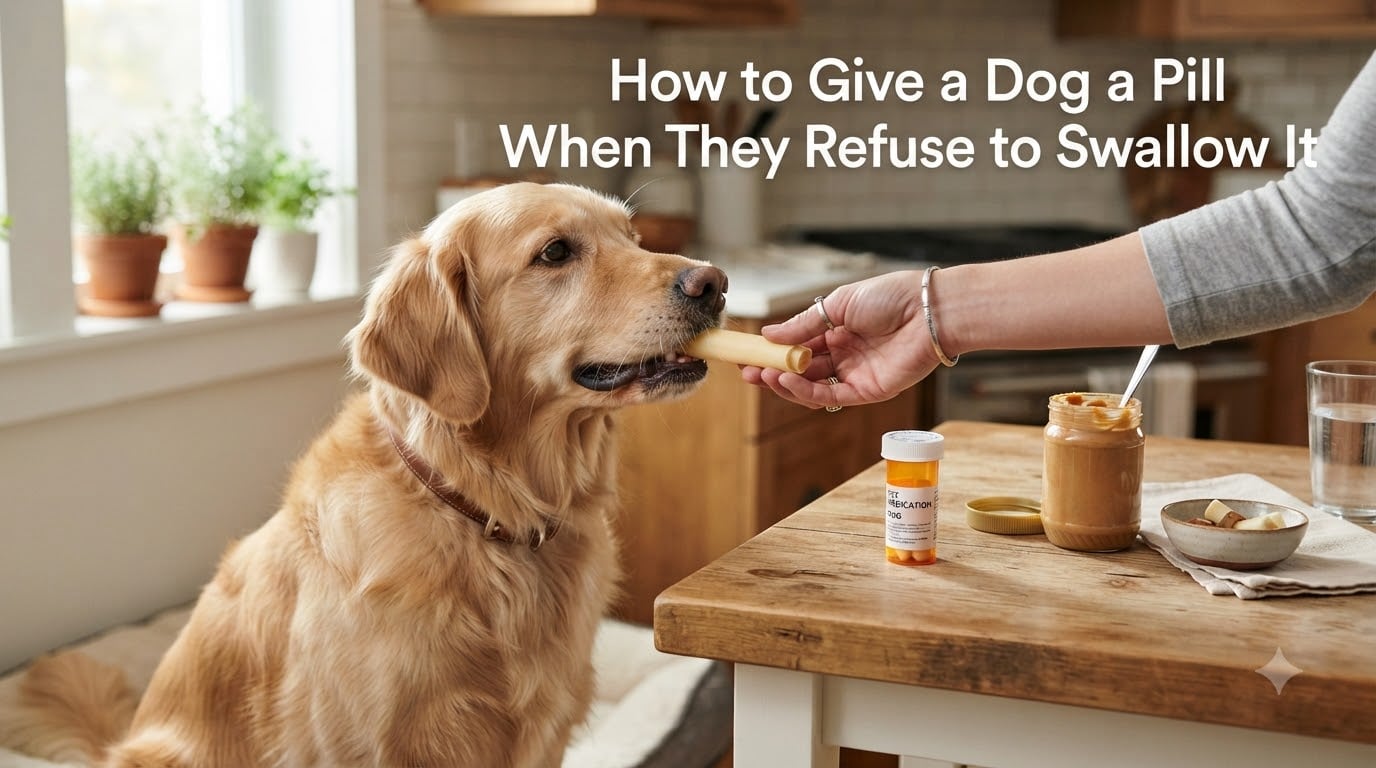
I have stood in my kitchen holding a tiny pill, staring at my dog, who stared back at me with the calm certainty of someone who had already won. If you are reading this, I am guessing you have been there too.
Learning how to give a dog a pill when they refuse to swallow it is one of those parenting moments no one warns you about. The vet hands you a bottle of capsules, your dog lifts their nose, and suddenly you are negotiating with a 40-pound animal who has decided the treat is a trap.
The good news: there are reliable techniques that work for almost every dog, from the eager Labrador to the suspicious husky who can detect medication from three feet away. In this guide, I will walk you through the methods I have tested myself, what veterinarians recommend, and what to do when your dog has learned every trick in the book.
Table of Contents
Why Do Dogs Refuse Pills in the First Place?
Dogs refuse pills for three main reasons, and understanding which one applies to your dog changes the solution.
The first reason is smell. A dog’s nose has up to 300 million scent receptors compared to our 6 million. Many medications have a bitter or medicinal odor that your dog can detect even inside a chunk of cheese. Once they smell it, they will eat around it, spit it out, or refuse the treat entirely.
The second reason is learned behavior. Smart dogs figure out the pattern quickly. They swallow the first two pill-hiding treats, then start chewing the third one carefully, isolating the pill, and dropping it on your kitchen floor. I have watched this happen in real time.
The third reason is past trauma. If a previous pill-giving attempt went badly, your dog remembers. A hand forcing their mouth open, a pill shoved too far down their throat, or getting scolded for spitting it out – all of these make the next attempt harder.
Once you understand which reason fits your dog, you can pick the right method from the ones below.
Method 1: Hide the Pill in Food or Treats
Hiding a pill in food is the easiest method when it works, and it works for most dogs most of the time. The trick is choosing the right food and using the right delivery technique.
Best Foods for Hiding Pills
Soft, sticky, strong-smelling foods work best because they mask the pill’s smell and prevent your dog from separating it from the treat. Here are the options I have seen work consistently:
Peanut butter (xylitol-free): Sticky, aromatic, and most dogs love it. Use a spoon to fully coat the pill so no edges show.
Soft cheese: Cream cheese or a small chunk of string cheese wraps around a pill and seals the smell inside. Vets recommend this often.
Wet dog food: Form a meatball around the pill and roll it until completely sealed.
Cooked meat: A small piece of hot dog, chicken, or liver hides pills effectively because the strong smell overpowers the medication.
Canned pumpkin: Useful for dogs on restricted diets, though not as smell-proof as meat-based options.
Avoid dry kibble for pilling. Most dogs crunch it carefully and will spit out anything that feels wrong.
The Rapid Succession Treat Trick
This is the technique that surprised me the most when I first tried it. I learned it from a Reddit thread where dog owners were sharing what actually worked on stubborn pets.
The idea is simple: prepare three or four small treats, with the pill hidden inside only the last one. Give your dog the first treat. As soon as they swallow, give the second. Then the third. Then the fourth, which contains the pill. Your dog is so focused on getting the next treat that they gulp the pill treat down without chewing.
Timing matters. Give the treats quickly enough that your dog does not have time to think, but with a clear rhythm so they do not worry you are doing something strange. This works because it overrides the suspicious sniffing behavior that usually gives pills away.
Pill Pockets and Pill Wraps
Commercial pill pockets are soft, moldable treats with a built-in pocket for the pill. Brands like Greenies make them in flavors dogs love. You push the pill inside, pinch the pocket closed, and offer it like a regular treat.
Pill pockets work for many dogs, but a word of caution: some dogs learn to eat the treat and discard the pill. If this happens, switch to a different method. Also check the ingredients if your dog has dietary restrictions.
Method 2: Direct Pilling Step by Step
When food tricks fail, direct pilling is the most reliable method. It feels intimidating the first time, but with practice it becomes quick and low-stress for both you and your dog.
Positioning Your Dog
Bring your dog to a quiet space without distractions. Small to medium dogs work well on a table or counter at waist height. Large dogs do better on the floor.
Stand on the dog’s right side if you are right-handed. Use your non-dominant hand to hold the pill between your thumb and index finger.
With your dominant hand, gently grasp the top of your dog’s muzzle from above. Your thumb should rest on one side of the upper jaw and your fingers on the other. Lift the muzzle upward so the nose points toward the ceiling. This causes the lower jaw to drop open slightly.
Placing the Pill
With the lower jaw open, use the index finger of your dominant hand to pull down the lower jaw gently. Place the pill as far back on the tongue as possible – ideally past the hump of the tongue where the swallow reflex kicks in. Aim for the center, not the sides, where the pill can get stuck in the cheek.
Close your dog’s mouth immediately and hold it shut with one hand. Lower their head back to a normal position – do not keep it tilted up, as that can cause the pill to go down the wrong way.
Confirming the Swallow
Keep your hand over the closed mouth and gently stroke the throat or blow lightly on the nose. Both encourage swallowing. You can also offer a small treat or a few drops of water right after to help the pill go down.
Watch for the tongue lick. When your dog licks their nose or lips, that is a strong sign the pill went down. Some owners squirt a tiny bit of water into the side of the mouth with a syringe to ensure the pill is swallowed rather than sitting at the back of the throat.
Reward your dog with praise and a treat immediately. This keeps the experience positive and makes next time easier.
Method 3: Liquid Medication and Compounded Alternatives
If your dog absolutely will not accept pills, ask your veterinarian about liquid or compounded alternatives. These are not separate medications – they are the same drug in a different form, often flavored to appeal to dogs.
Compounded medications come in flavors like chicken, beef, peanut butter, or even fish. A compounding pharmacy prepares the drug as a flavored liquid or chewable that your dog usually takes willingly. Many owners call this a turning point because it removes the daily battle.
Liquid medication is administered with a syringe. You measure the dose, gently insert the syringe into the side of the mouth between the cheek and teeth, and slowly dispense the liquid. Do not squirt it straight down the throat, as that can cause choking or aspiration.
Some medications can be crushed and mixed with wet food, but never do this without checking with your vet first. Some pills are time-released or coated to protect the stomach, and crushing them changes how the drug works.
What to Do When Your Dog Spits the Pill Out?
This is the most common frustration I see in dog owner forums. You do everything right, and ten minutes later you find a wet pill on the carpet. Here is what to do.
First, stay calm. Scolding your dog or showing frustration only makes them more suspicious next time. Pick up the pill, dry it off if needed, and try again with a different method.
If your dog is spitting pills out of their cheek, you are not placing the pill far enough back on the tongue. Adjust your direct pilling technique and aim deeper.
If your dog chews and spits from food, switch to a softer, stickier food that completely seals the pill. Peanut butter works for many dogs because they cannot separate the layers.
If your dog holds the pill in their mouth and refuses to swallow, try rubbing the throat or blowing on the nose to trigger the swallow reflex. You can also offer a small treat immediately after – many dogs will swallow the pill along with the treat.
For dogs who repeatedly spit pills out, the rapid succession treat trick is often the breakthrough method. The fast pace prevents them from getting strategic about chewing.
Tools That Make Pilling Easier
A few inexpensive tools can save you a lot of frustration, especially if you have to give medication daily.
Pet pillers (pill poppers): These are plastic syringes with a soft tip that holds the pill. You insert the tip into the side of the dog’s mouth, press the plunger, and the pill lands at the back of the tongue without your finger going in. This is helpful for dogs who resist having hands near their mouth.
Pill crushers: Useful when your vet approves crushing the medication. Crush the pill into a fine powder and mix it thoroughly into a small amount of wet food or liquid. Make sure your dog eats the entire portion to get the full dose.
Oral syringes: For liquid medication. Use a syringe without a needle, place it in the cheek pouch, and dispense slowly.
Treat balls and pill wraps: Soft, moldable wraps that seal around the pill. Some owners make their own using a small piece of bread or a soft dog treat.
A second person: Sometimes the most valuable tool is a helper. One person holds the dog steady while the other administers the pill. This is especially helpful for direct pilling on a wiggly dog.
How to Tell If Your Dog Actually Swallowed the Pill?
Watching your dog walk away after pilling and wondering whether they actually swallowed is stressful. Here are the signs to look for.
The most reliable sign is a lip lick or nose lick immediately after swallowing. Most dogs do this when food or medication moves past the tongue.
You can also check for a swallowing motion. Watch the throat – a clear swallow is a good sign the pill is on its way down.
Some dogs will eat grass or drink water shortly after, which usually confirms the pill is in the stomach rather than stuck somewhere awkward.
If your dog is pocketing the pill in their cheek and spitting it out later, you will often find a wet pill on the floor or in their bed. To prevent this, keep your dog with you for 10 to 15 minutes after pilling and watch their behavior. Do not let them run off to a quiet corner to dispose of evidence.
Calming an Anxious Dog During Medication
Most articles skip this part, but it matters. If your dog has had bad experiences with pills, every medication time becomes a fight. That stress compounds over days and weeks, especially for chronic conditions.
Start by staying calm yourself. Dogs read your energy. If you are tense and rushing, they will mirror that. Take a breath, speak softly, and move slowly.
Use high-value treats your dog does not get at other times. Tiny pieces of chicken, cheese, or special training treats make medication feel more like a reward session than a medical procedure.
Keep sessions short. Do not chase your dog around the house or force the issue. If you cannot get the pill in within a minute or two, take a break and try again in 15 minutes. Pushing through only creates more resistance.
For dogs with severe anxiety, talk to your vet about a mild sedative or anti-anxiety medication for pilling time. This is more common than people think, especially for dogs on long-term medication.
Finally, celebrate afterward. A short play session, a walk, or extra cuddles after medication helps your dog associate the experience with something positive. Over time, this retrains their response.
When to Call the Vet
Most pilling struggles can be solved at home, but some situations need professional help.
Call your vet if your dog gags repeatedly, drools excessively, or shows signs of distress after pilling. These could indicate the pill went down the wrong way or is stuck in the throat.
If your dog refuses all food and medication for more than 24 hours, this can be a sign of a deeper issue, especially in dogs who normally eat well. Sick dogs often lose appetite, and forcing pills can worsen the situation.
If you have tried multiple methods and none work for your dog, ask your vet about compounded medication or alternative delivery methods. There is almost always a solution that fits your dog.
And if your dog has bitten you or shown aggression during pilling, talk to your vet about safe handling techniques. You are not failing as an owner – some dogs simply need a different approach.
Frequently Asked Questions
How do I force a pill into my dog’s mouth?
Hold the top of your dog’s muzzle with one hand, gently lift the head back until the lower jaw opens, and use your other hand to place the pill as far back on the tongue as possible. Close the mouth, hold it shut, and stroke the throat or blow on the nose to encourage swallowing. Reward with a treat immediately after.
Can I crush my dog’s pills and mix them with water?
Only if your veterinarian confirms the medication is safe to crush. Many pills are coated or time-released, and crushing them changes how the drug is absorbed. If approved, dissolve the crushed pill in a small amount of water or wet food and make sure your dog eats the entire portion.
What if my dog keeps spitting the pill out?
Switch to a stickier food like peanut butter or cream cheese that seals the pill completely. Try the rapid succession treat trick – give three or four plain treats in quick succession, then the pill treat. If your dog pockets the pill in their cheek, check that you are placing it far enough back on the tongue during direct pilling.
Can I dissolve pills in water for my dog?
Some medications dissolve easily in water and can be given with a syringe. However, many pills are not designed to be dissolved and may not work properly. Always check with your vet before dissolving any medication, as some drugs lose effectiveness when crushed or mixed with liquid.
How can I give my dog a pill if he won’t eat anything?
Use direct pilling – place the pill at the back of the tongue while holding the muzzle, then close the mouth and stroke the throat until your dog swallows. If your dog still refuses, ask your vet about compounded liquid medication in a flavored form, which is often easier to administer to dogs with no appetite.
Final Thoughts on Giving a Dog a Pill
Learning how to give a dog a pill when they refuse to swallow it takes patience, but it gets easier. Most owners find a method that works within a few tries, and dogs often adapt once the experience becomes routine.
Start with the gentlest method – hiding the pill in food. If that does not work, try direct pilling or the rapid succession treat trick. For ongoing medication struggles, ask your vet about compounded alternatives that take the daily battle off your plate.
Whatever you do, do not blame yourself or your dog. Medication is hard for both of you. With the right technique and a little persistence, you will find a routine that works.