
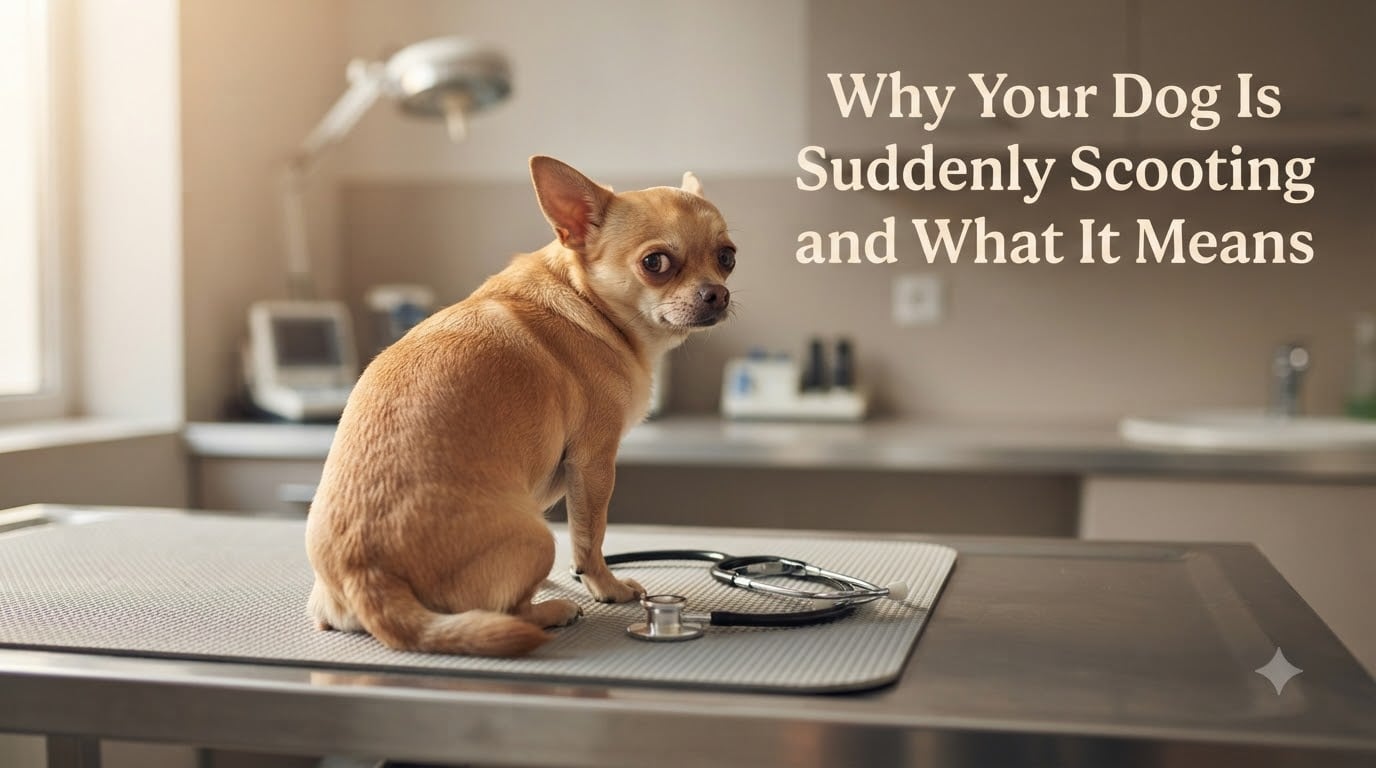
I get the panic the first time you see it. Your dog drops to the floor and drags their bottom across the carpet like they have somewhere important to be. It looks funny for a second, then you think, “Wait, is my dog okay?”
Dog scooting is that unmistakable butt-dragging move dogs do when something back there is itchy, sore, or just plain wrong. I have lived through it with my own dogs, and I have talked to countless owners who feel the same mix of worry and embarrassment, especially when it happens in front of guests. The good news: in most cases, sudden dog scooting has a clear cause you can address at home or with your vet.
In this guide, I will walk you through what dog scooting really means, the most common causes, the warning signs that need an urgent vet visit, and the prevention steps that actually work. By the end, you will know exactly what to look for and what to do next.
Table of Contents
What Dog Scooting Actually Means and Why Dogs Do It?
Dog scooting is the behavior of dragging the bottom or rear end along the ground, usually the carpet, grass, or floor. It is your dog’s instinctive way of trying to relieve itchiness, pressure, or pain in or around the anal area.
Dogs cannot scratch their own rear end with a paw, so they use the ground instead. Think of scooting as a symptom, not a condition. Something is bothering your dog back there, and scooting is their version of pointing at it.
The most common cause of dog scooting is irritation from full or impacted anal glands. Other triggers include intestinal parasites, food or environmental allergies, infections, leftover grooming irritation, and, less often, tumors near the anus. We will cover each in detail so you can match your dog’s behavior to the right cause.
A single short scoot after a poop is not always alarming. I would start paying close attention when the behavior shows up suddenly, repeats several times a day, or comes with other signs like licking, swelling, or a bad smell.
Anal Gland Problems: The Number One Cause of Dog Scooting
If your dog is suddenly scooting, the first thing to check is the anal glands. These are two small sacs located just inside the rectum at about the 4 o’clock and 8 o’clock positions. They hold a smelly fluid that dogs use to mark territory.
Normally, the glands empty a little every time your dog poops. When that does not happen, the fluid builds up and the glands become full, impacted, infected, or even abscessed. That pressure is exactly what drives the scooting behavior.
There are a few stages of anal gland trouble, and the signs usually get worse as the problem progresses.
Full or Impacted Anal Glands
Full glands feel like two small firm peas under the skin beside the anus. Your dog may scoot a few times a day, lick the area often, or seem uncomfortable sitting down. The fluid inside can become thick and pasty if it sits too long, which leads to impaction.
Infected or Abscessed Anal Glands
If bacteria get into the fluid, the gland can become infected. An abscess is a pocket of pus that feels warm and swollen. You might notice redness, a foul or bloody discharge, or your dog yelping when you touch near the tail. This stage needs a vet, not a home remedy.
Small breed dogs like Chihuahuas, Miniature Poodles, Shih Tzus, and French Bulldogs are especially prone to chronic anal gland issues. Overweight dogs and dogs with soft stool are also at higher risk because firm stool is what naturally presses against the glands during a bowel movement and helps empty them.
Other Common Causes of Sudden Dog Scooting
Anal glands are the headline cause, but they are not the only one. Here are the other reasons your dog might suddenly start dragging their bottom across the floor.
Intestinal Parasites, Especially Tapeworms
Tapeworms are a classic cause of dog scooting, especially when you also see small white rice-like segments stuck to the fur around the anus or in the stool. Dogs usually pick up tapeworms by swallowing infected fleas during grooming. A simple fecal flotation test at the vet confirms the diagnosis, and treatment is a single dose of an oral dewormer.
Food and Environmental Allergies
Allergies make the skin around the anus itchy and inflamed, which can lead to scooting even when the anal glands are perfectly empty. Common triggers include beef, chicken, dairy, wheat, soy, pollen, and grass. If your dog scoots more in spring or fall, or right after meals, allergies are worth considering.
Skin Infections and Hot Spots
Bacterial or yeast infections around the rear end can cause intense itching. Moist, matted hair around the anus is a perfect place for these to develop. You may also see redness, a greasy feel to the skin, or a strong odor.
Grooming Irritation
Recent haircut, clipper burn, or shampoo residue left around the rear end can irritate the sensitive skin there. Owners on dog forums often share stories of scooting that started within a day of a grooming appointment.
Perianal Fistula
Perianal fistula is a serious condition where deep, painful tunnels form in the tissue around the anus. It is most common in German Shepherds. The area looks raw, smells bad, and your dog is usually in obvious pain. This needs immediate veterinary care.
Anal Gland Tumors
Rare, but real, especially in older dogs. A firm mass near the anus that does not improve after expression should always be checked by a vet. Most are treatable when caught early.
Dog Breeds Most Prone to Scooting Problems
Some dogs seem to scoot more than others, and there are real reasons for that. If you own one of these breeds, you have probably already learned that anal gland care is part of the routine.
Small and toy breeds top the list. Chihuahuas, Miniature and Toy Poodles, Shih Tzus, Lhasa Apsos, Bichon Frises, and Cocker Spaniels have narrower anal gland ducts, which makes natural emptying harder. French Bulldogs and other bully breeds also show up often in owner forums talking about chronic scooting.
Overweight dogs of any breed are at higher risk because extra body fat changes the angle of the ducts. Senior dogs struggle too, often because of weaker muscle tone around the rectum. If your dog falls into any of these groups, monthly gland checks are a smart habit.
Warning Signs: When Dog Scooting Means an Emergency
Most scooting is uncomfortable but not urgent. Some signs tell you it is time to stop Googling and head to the vet.
Here is the checklist I share with every new dog owner. If any of these show up, treat it as urgent.
Bloody or pus-like discharge from the anus or any swelling beside it
Open wound, raw skin, or visible abscess near the rectal area
Your dog crying, snapping, or refusing to be touched near the tail
Scooting that suddenly becomes constant or happens every few minutes
Fever, lethargy, or loss of appetite along with the scooting
Straining to poop or producing only small, ribbon-like stools
An anal gland abscess can rupture within 24 to 48 hours if not treated. Once it bursts, your dog ends up with a painful open wound and a much longer recovery. If you see swelling, blood, or pus, do not wait for a regular appointment.
How Vets Diagnose and Treat Dog Scooting?
Your vet will usually start with a physical exam, including a rectal check to feel the anal glands. From there, the path depends on what they find.
For full or impacted glands, the vet manually expresses them. For an infection or abscess, they may flush the gland, prescribe antibiotics, and apply warm compresses. Severe or recurring cases sometimes need the glands surgically removed in a procedure called an anal sacculectomy.
If parasites are suspected, a fecal flotation test confirms which worm is involved and a targeted dewormer is given. For allergies, your vet may suggest a food trial, a hypoallergenic diet, or a short course of anti-itch medication to break the cycle. Most dogs feel better within a few days of treatment.
Safe Home Remedies for Mild Dog Scooting
For mild, occasional scooting with no other warning signs, there are a few things you can try at home while you decide whether a vet visit is needed.
A spoonful of plain canned pumpkin (not the pie filling) added to your dog’s food is a classic home remedy. The fiber helps firm up soft stool, which in turn helps the anal glands empty naturally during bowel movements. Most dogs do well with one to four tablespoons per meal, depending on size.
Other dog-safe fiber sources include cooked plain green beans, psyllium husk, and small amounts of bran. A warm compress held against the rear end for a few minutes can also help soften impacted material. Keep the area clean and gently trimmed of matted hair to reduce irritation.
One thing I do not recommend is expressing your dog’s glands yourself unless a vet has specifically taught you how. Done wrong, you can bruise the tissue, push fluid the wrong way, or cause a rupture. It is one of those skills worth learning hands-on from a professional, not from a video.
Preventing Future Scooting: Diet, Weight, and Routine Care
Prevention is where owners can make the biggest difference long term. Most of what causes recurring dog scooting comes back to stool quality, weight, and routine gland care.
Feeding a high-quality diet with enough fiber is the single biggest lever. Firm, well-formed stool naturally presses the anal glands as it passes, which is exactly what empties them. If your dog has chronic soft stool, talk to your vet about a diet change before reaching for supplements.
Keeping your dog at a healthy weight matters too. Extra body fat changes the duct angle and reduces the pressure on the glands during bowel movements. Regular exercise and portion control go a long way here.
For dogs that already have a history of gland issues, many vets recommend routine expression every 4 to 6 weeks. Some owners learn to do this at home, others have their groomer or vet handle it. Either way, sticking to a schedule is better than waiting for the scooting to come back.
Frequently Asked Questions About Dog Scooting
What can I give my dog for scooting?
For mild, occasional scooting with no other symptoms, add fiber to your dog’s diet. A spoonful of plain canned pumpkin (not pie filling), cooked green beans, or a vet-approved fiber supplement can help firm stool and support natural anal gland emptying. If scooting continues for more than a day or two, see your vet to rule out infection, parasites, or impacted glands.
When should I worry about dog scooting?
Worry when scooting is constant, comes with blood or pus, swelling near the anus, pain when sitting, fever, or loss of appetite. These signs point to an anal gland abscess, infection, or another urgent problem. Any dog with bloody discharge or an open wound near the rectum should be seen by a vet the same day.
What dog breeds are prone to scooting?
Small and toy breeds are most prone, including Chihuahuas, Miniature and Toy Poodles, Shih Tzus, Lhasa Apsos, Bichon Frises, and Cocker Spaniels. French Bulldogs and other bully breeds also commonly develop chronic anal gland issues. Overweight dogs and senior dogs of any breed are at higher risk as well.
How does the vet treat dog scooting?
Treatment depends on the cause. For full or impacted anal glands, the vet manually expresses them. Infected or abscessed glands are flushed and treated with antibiotics, sometimes with warm compresses at home. Parasites are treated with a targeted dewormer. Allergies are managed with diet changes or anti-itch medication. Severe or recurring cases may need surgical removal of the glands.
Can I express my dog’s anal glands at home?
Yes, but only after your vet or a vet technician has taught you the correct technique. Done incorrectly, you can bruise the tissue, push fluid backward, or rupture an infected gland. Once you have been shown how, many owners safely express their dog’s glands at home every 4 to 6 weeks as a preventive step.
Final Thoughts on Understanding Dog Scooting
Sudden dog scooting is your dog telling you that something is uncomfortable around their rear end. In most cases the cause is full anal glands, parasites, or allergies, and a quick trip to the vet clears it up.
Pay attention to how often it happens and what other signs come with it. Occasional mild scooting can often be managed at home with more fiber and better grooming. Frequent scooting, blood, swelling, or pain means it is time for a vet visit that day.
With the right diet, a healthy weight, and a routine gland check every few weeks, most dogs go back to dragging themselves across the floor for fun instead of out of discomfort.