
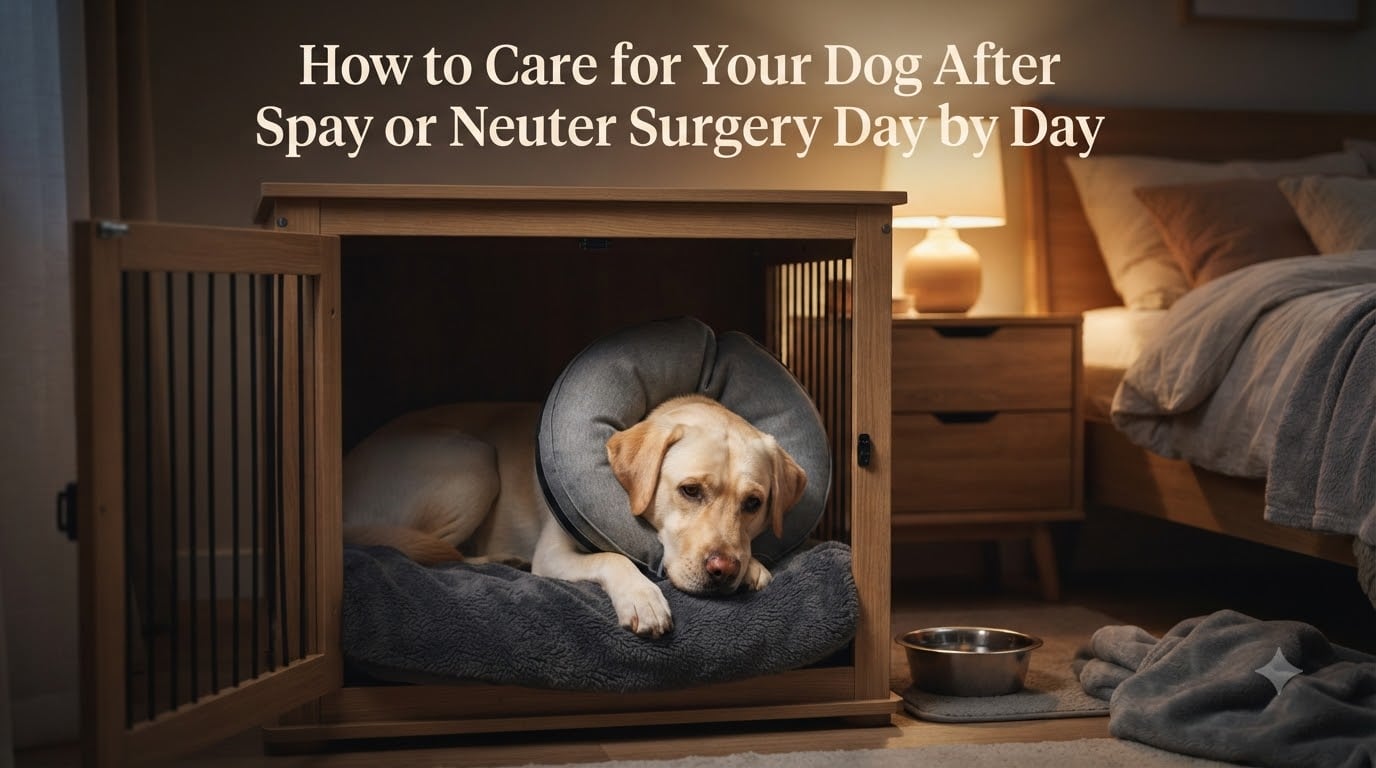
When I brought my beagle, Cooper, home after his neuter surgery, I sat on the kitchen floor at 2 a.m. watching him whimper in his crate and wondered if I was doing this right. The discharge paperwork said “limit activity and check the incision,” but it didn’t tell me what a normal recovery actually looked like hour by hour.
After that first anxious week, and after talking to our vet about what most owners miss, I put together the day-by-day guide I wish I had. Caring for your dog after spay or neuter surgery isn’t complicated, but it does require showing up consistently for 14 days. Here’s exactly what to do, when to do it, and when to pick up the phone and call your vet.
Table of Contents
What to Expect on Day 1 After Your Dog’s Spay or Neuter Surgery?
Day 1 is the groggiest, most uncertain day for both of you. Your dog is coming off general anesthesia, and the first 24 hours look rough even when everything is going perfectly.
Most dogs are sleepy, wobbly, and a little disoriented. Your job today is simple: keep them safe, keep them comfortable, and don’t expect them to act like themselves.
Set up the recovery space before you bring your dog home. Pick a small, quiet room or a covered crate in a low-traffic area of your house. Lay down washable bedding, because there is a real chance your dog will have a small accident from the anesthesia. Block off stairs with a baby gate. Remove anything they could jump onto, including your couch and bed.
Offer a small amount of water when you get home. Anesthesia makes dogs nauseous, so don’t be alarmed if your dog sniffs the bowl and walks away. Keep fresh water available at all times, but don’t force them to drink.
Wait 2 to 3 hours before offering a small meal. About half the size of their normal portion. Vets usually recommend a bland option like plain boiled chicken and white rice for the first meal. If your dog eats and keeps it down, you can offer another small meal in the evening.
Skip the cone debate for the first few hours. Most vets send dogs home already wearing an Elizabethan collar (e-collar) or a recovery suit. If your dog’s cone was removed for the car ride, put it back on before you set them down. Dogs will lick the incision the moment they feel the area is tender, and a single lick session can introduce infection.
Where should a dog sleep after neutering? Right next to you if possible, but on the floor. Don’t let them sleep on furniture, because they will try to jump down. A crate beside your bed works well. Your dog needs to feel your presence tonight more than any other night of recovery.
Days 2 to 3: Managing Grogginess, Appetite, and First Bathroom Breaks
By Day 2, the worst of the anesthesia should be wearing off. Your dog will probably seem more alert, but they may also start showing subtle signs of discomfort as the surgical pain medication from the clinic wears off.
Start the prescribed pain medication on schedule. Most vets send home 3 to 5 days of NSAIDs or another anti-inflammatory. Do not skip doses, and do not give over-the-counter pain meds meant for humans. Ibuprofen and acetaminophen are toxic to dogs.
Expect a reduced appetite for the first 48 hours. This is normal. As long as your dog is drinking water and shows interest in food by the end of Day 2, you’re on track. If your dog refuses all food for more than 24 hours, call your vet.
Take your dog outside on a leash only for bathroom breaks. No backyard freedom, no off-leash wandering. Carry them down stairs if you can. Keep the trip short, let them relieve themselves, and bring them straight back inside. Even a healthy-looking dog can tear stitches by sprinting across the yard after a squirrel.
Check the incision twice a day starting now. Look for the things that mean normal healing: a clean line, slight pinkness around the edges, mild bruising. Write down what you see so you can compare tomorrow.
Watch for vomiting or diarrhea. A little nausea on Day 1 is common. By Day 2 to 3, repeated vomiting or loose stool is a signal to call your vet, especially if your dog seems lethargic alongside it.
Days 4 to 7: Incision Care and Activity Restriction Rules
Days 4 through 7 are when most owners start to relax too early. Your dog probably looks and acts like themselves again, but the incision is still in the middle of the healing process. The tissue is fragile, and the worst complications usually happen when an owner decides their dog “seems fine” and lets them off-leash.
Keep your dog on crate rest or in a small, dog-proofed room. When you’re not actively sitting with them, they should be confined. This is the single most important rule of the 14-day recovery period.
Leashed walks only, and keep them short. Five to ten minutes, twice a day, is plenty. No jogging, no playing with other dogs, no fetch. The goal is just to keep their muscles moving and their bathroom habits regular.
Do not bathe your dog, and do not let the incision get wet. No swimming, no rain walks, no wiping the area with wet wipes. Moisture near the incision invites bacteria. Your vet will give you a specific date when baths are safe again, usually around Day 10 to 14.
Keep the e-collar or recovery suit on at all times. I know the cone of shame is awkward. Your dog will bump into furniture, eat slower, and sleep with their head tilted. That is normal. Removing the cone “just while they eat” is how most post-neuter incision infections start.
Separate your recovering dog from other pets in the house. A well-meaning housemate who tries to play or groom the incision can undo a week of careful recovery. Use baby gates, closed doors, or separate rooms for at least the first 7 days.
Mental stimulation is allowed and encouraged. Food puzzles, snuffle mats, frozen Kongs stuffed with peanut butter, and gentle training sessions give your dog’s brain a workout while their body rests. This is one of the best-kept secrets to surviving crate rest without going crazy.
Days 8 to 14: Returning to Normal Activity Safely
You’re in the home stretch. By Day 8, the incision should look closed on the surface, the swelling should be mostly gone, and your dog should be acting completely like their usual self. The temptation to declare victory is huge. Hold the line a little longer.
Schedule your follow-up vet visit if you haven’t already. Most clinics want to see your dog between Day 10 and Day 14 to confirm healing, check for complications, and remove any external stitches. Internal dissolving sutures will absorb on their own.
When can the cone come off? Most vets say 10 to 14 days, and only when the incision is fully closed with no scabs, no redness, and no opening. Some owners remove the cone the moment the incision looks dry. Don’t. A single lick session on Day 11 can still cause infection or tear the wound.
Gradually increase activity after the vet clears your dog. Start with slightly longer leashed walks on Day 11 or 12. Add gentle play on Day 13. Save dog-park visits, off-leash play, and running for at least 3 to 5 days after the cone comes off.
Baths are usually fine after Day 10 to 14. Ask your vet to confirm at the follow-up visit. Even then, avoid scrubbing the incision area for another week.
Watch the incision for delayed complications. Seromas (fluid-filled pockets) can show up a week after surgery. They look like a soft lump under the skin near the incision. Most resolve on their own, but a vet should check any new lump to rule out infection or a hernia.
Warning Signs After Spay or Neuter Surgery: When to Call Your Vet
Most spay and neuter surgeries go smoothly, and most dogs recover without incident. But knowing the difference between normal healing and a real problem can save your dog’s life. Here is the checklist I now keep on the fridge during recovery.
Call your vet right away if you see any of these:
Active bleeding from the incision, or blood soaking through the bedding
Foul-smelling discharge or pus (yellow, green, or gray)
Incision that is opening, gaping, or has visible stitches pulling through skin
Swelling that is getting worse after Day 3, especially if it’s hot to the touch
Repeated vomiting or diarrhea lasting more than 24 hours
Refusal to eat for more than 24 hours after Day 2
Lethargy that is getting worse instead of better after Day 2
Difficulty urinating or not urinating at all
Heavy panting, shaking, or signs of pain that don’t improve with medication
A hard, swollen, or painful belly
These are signs of infection after dog neutering or spay surgery. The good news: caught early, almost all of them are treatable. The bad news: ignored for 24 hours, some of them turn into emergency surgery.
Trust your gut. If something feels wrong, call. Most vet clinics have a 24-hour nurse line, and they would much rather talk you through a false alarm than see your dog in crisis at 11 p.m. on a Sunday.
How to Keep Your Dog Calm and Comfortable During Recovery?
This is the section I wish someone had written for me before Cooper’s recovery. Confinement is medically necessary, but it is psychologically hard, especially for young, active dogs. A bored, anxious dog is more likely to try to escape the crate, lick the incision, or re-injure themselves.
Use a recovery suit as an alternative to the cone. If your dog absolutely cannot tolerate the e-collar, ask your vet about a surgical recovery suit. These soft, full-body covers prevent licking without the head-bumping downsides of a plastic cone. They aren’t right for every dog, but for many, they’re a lifesaver.
Try a pheromone diffuser in the recovery room. Adaptil and similar products mimic the calming pheromones a mother dog releases. They don’t work for every dog, but the cost is low and the risk is zero.
Hand-feed meals and spend time on the floor with your dog. Your presence is the single most powerful calming tool you have. Sit next to the crate, talk softly, offer small pieces of chicken by hand. It sounds small, but it makes crate rest feel less like a punishment.
Rotate enrichment toys so they stay novel. A frozen Kong in the morning, a snuffle mat at lunch, a new puzzle feeder in the evening. Mental fatigue tires a dog out faster than physical exercise, and it does it without risking the incision.
If your dog is truly struggling, ask your vet about mild sedatives. Some clinics prescribe short-term anti-anxiety medication for high-energy or extremely anxious dogs during recovery. There is no prize for doing this without help.
Frequently Asked Questions About Dog Spay and Neuter Recovery
Can I leave my dog alone 3 days after neutering?
Most dogs are okay alone for short stretches by Day 3, as long as they are fully recovered from anesthesia, eating and drinking normally, and confined somewhere safe like a crate or small room. For the first 48 hours, it’s better to have someone checking in. By Day 3, a few hours alone is usually fine for an adult dog. Puppies, senior dogs, and dogs with complications should not be left alone that early.
How many days should I stay home with my dog after spay?
Plan to be home for at least the first 48 to 72 hours, and ideally the full first week. The highest-risk window for complications is the first 3 days, when anesthesia side effects, pain flare-ups, and incision problems are most likely. After Day 7, most dogs are stable enough for short periods alone as long as they are safely confined.
How long does it take a dog to heal from being spayed or neutered?
Surface healing usually happens within 10 to 14 days. Full internal healing, especially tissue strength at the incision site, takes about 6 to 8 weeks. Most dogs are back to normal activity by Day 14, but strenuous exercise and rough play should wait another week or two after the cone comes off.
Where should a dog sleep after neutering?
On the floor, in a crate or small pen, in a quiet room close to you. Avoid beds, couches, and elevated spots where your dog could jump down and risk tearing the incision. Many owners keep the crate next to the bed so the dog can see and hear them during the first anxious night.
What if my dog jumps after being spayed?
Don’t panic, but check the incision right away. One small jump off the couch usually does not cause a problem, but watch for new bleeding, swelling, or any sign the incision has opened. If you see any of these, call your vet. If the incision looks the same as it did before, just keep your dog confined and limit future jumping for the rest of the recovery period.
When can I take the cone off my dog after neuter?
Most vets recommend keeping the e-collar or recovery suit on for 10 to 14 full days, and only removing it once the incision is fully closed, with no scabs, redness, or openings. Always check with your vet before removing the cone. Removing it even a day early can lead to licking, infection, and a much longer recovery.
Final Thoughts on Your Dog’s Recovery After Spay or Neuter Surgery
Spay and neuter surgeries are among the most common procedures in veterinary medicine. Millions of dogs go through this every year and come out the other side just fine. The 14-day recovery period is not about doing anything heroic. It is about showing up, paying attention, and not cutting corners.
If you remember nothing else from this guide on dog after spay neuter surgery care, remember these three things. Keep your dog confined and on a leash for the full 10 to 14 days, even when they look completely normal. Check the incision twice a day and call your vet the moment something looks wrong. Trust the process, and trust that the boring, careful version of recovery almost always wins.
Two weeks from now, your dog will be back to zooming around the yard, and you will be back to sleeping through the night. The 14 days in between are the price of admission, and they are well worth it.