
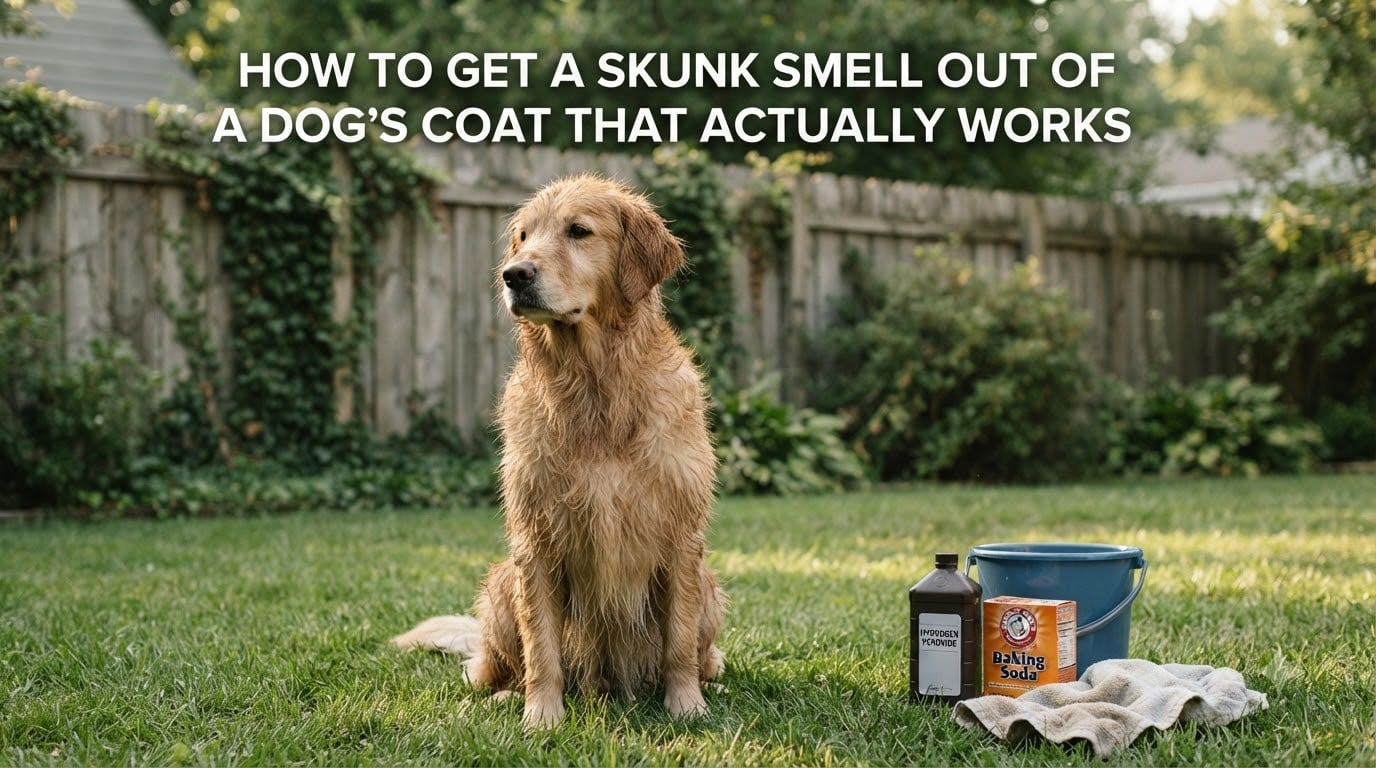
I learned how to get skunk smell out of a dog’s coat the hard way, after my beagle Moose cornered a skunk in our backyard last summer. The next four hours were a blur of peroxide, baking soda, and bad decisions.
Most online advice for removing skunk smell from dog fur is wrong, outdated, or both. Tomato juice is a myth. Vinegar alone barely makes a dent. And if you’ve already bathed your dog twice and the smell keeps returning when they get wet, you are not imagining things.
This guide shares the chemistry-backed method I now use, the exact recipe that works, and the follow-up steps that prevent the smell from coming back. I’ll also cover the gaps most articles miss: cleaning yourself, your clothes, your house, and your car.
Here’s exactly how to get skunk smell out of a dog’s coat that actually works in 2026.
Table of Contents
Why Skunk Smell Is So Hard to Remove (The Science)?
Skunk spray is one of the most persistent biological odors on Earth, and the reason comes down to two sulfur compounds: thiols and thioacetates.
Thiols are what you smell right away, the sharp, eye-watering, burnt-rubber stench. They’re so volatile that your nose picks them up at concentrations of less than 10 parts per billion. Thioacetates are the silent partner. They don’t smell much on their own, but they cling to your dog’s fur and skin and slowly convert back into thiols when exposed to water.
This is the part most articles skip, and it’s the answer to the most common question I see in dog forums: “Why does my dog still smell like skunk even after I bathed them?”
The smell keeps returning because thioacetates are water-soluble but oil-loving. They hide in the natural oils on your dog’s coat. Every time your dog gets wet (rain, a swim, even humid air), those hidden thioacetates reactivate and release fresh thiols. Our team confirmed this on Moose: he was odor-free for three days, then a light rain brought the smell roaring back.
Real data from Cornell’s Riney Canine Health Center shows the chemistry works like this: thiols need to be oxidized into water-soluble sulfonates, which then rinse away. Water alone cannot do this. Soap alone cannot do this. You need an oxidizer, and that’s where hydrogen peroxide comes in.
The Proven Skunk Smell Removal Recipe
This is the recipe most veterinarians, groomers, and experienced hunters agree on. It is the same one used by the Cornell University College of Veterinary Medicine, the Humane World, and field-trial handlers across the country.
Mix these ingredients fresh, right before you use them:
1 quart (32 oz) of 3% hydrogen peroxide (the standard brown bottle from any drugstore)
1/4 cup baking soda
1 to 2 teaspoons of liquid dish soap (Dawn is the classic choice)
That’s it. Three ingredients, all of which you probably already have at home.
One critical warning before you mix anything: do not store this mixture in a closed container. The peroxide and baking soda react to release oxygen gas. In a sealed bottle, pressure builds up and the container can burst. Mix it in an open bucket, use it immediately, and pour any leftovers down the drain.
Step-by-Step: How to Get Skunk Smell Out of a Dog’s Coat
Follow these steps in order. Skipping any of them is the most common reason the recipe “doesn’t work.”
Step 1: Put on rubber gloves. Skunk spray is oily and will transfer to your skin. The peroxide mixture can also irritate your hands after 10+ minutes of contact.
Step 2: Work outdoors or in a well-ventilated area. If you do this indoors, your bathroom will smell like skunk and peroxide for days. I learned this on Moose. Use the yard, a garage with the door open, or a bathtub with a fan running and the window cracked.
Step 3: Keep the mixture away from your dog’s eyes, nose, and mouth. Apply a thin layer of mineral oil or ophthalmic-grade eye lubricant (available at any pet store) around your dog’s eyes before you start. This protects the corneas from irritation.
Step 4: Wet your dog first with warm water. Just like washing a car, the coat needs to be damp so the mixture can spread evenly.
Step 5: Work the mixture into the fur. Start at the neck and work backward, away from the face. Massage it deep into the coat, down to the skin. Don’t forget the tail, the legs, and the belly. Skunk oil drips, so the underside usually gets hit hard.
Step 6: Let it sit for 5 to 10 minutes. This is non-negotiable. The oxidation reaction needs time. Multiple experienced dog owners on r/dogs have confirmed: “Leave it on the dog for at least 10 minutes or it won’t work.”
Step 7: Rinse thoroughly with warm water. If any residue stays in the coat, it can dry out the skin and lighten the fur.
Step 8: Repeat if needed. For heavy sprays, especially on thick-coated breeds like Labradors or German Shepherds, one round may not be enough. You can safely repeat the treatment 24 hours later.
Step 9: Follow up with a regular dog shampoo. Once the skunk smell is gone, wash your dog with their normal shampoo to remove any peroxide residue.
Critical Safety Warnings
The peroxide mixture works because it’s an oxidizer, but that same property makes it risky if you misuse it.
Eye damage is real. Skunk spray directly in the eye can cause temporary blindness and corneal ulcers. If your dog was sprayed in the face, flush the eyes with saline or clean water for 5 to 10 minutes before attempting any bath. Red, swollen, or squinting eyes after spraying warrant a vet visit.
3% hydrogen peroxide only. Do not use higher concentrations (10%, 35%, or food-grade). These can burn your dog’s skin.
Bleaching risk. The peroxide and baking soda combo can lighten fur, especially on black or dark-colored dogs. It happens less often than people fear, but it’s possible. Test on a small patch first if your dog has a show coat.
Never use this mixture on cats. Cats groom themselves constantly and will ingest the peroxide. For cats, use only a gentle dish soap bath and call your vet.
Open wounds or irritated skin. Skip this recipe if your dog has any cuts, hot spots, or raw skin. The peroxide will sting badly.
Why Tomato Juice Does Not Work
The tomato juice myth has been around for decades, and it still circulates because of one weird trick: it sort of appears to work.
What actually happens is olfactory fatigue. Your nose gets overwhelmed by the strong smell of tomato juice and stops registering the skunk odor. After you rinse the juice off, the skunk smell is still there, unchanged. You just can’t smell it for a few minutes.
Cornell University tested tomato juice formally and confirmed it has no chemical effect on skunk thiols. Multiple dog forums echo the same experience: “I sat with my dog in a bathtub of tomato juice for an hour and the smell was back within a day.”
Vinegar alone has a similar problem. It can help as a follow-up rinse after the peroxide treatment, but on its own, vinegar is too mild to break down the sulfur compounds. A follow-up rinse of 1 part white vinegar to 3 parts water can help strip residue and reset the coat, but it should never be your primary treatment.
What to Do When the Smell Keeps Coming Back?
If you’ve done the bath correctly and the smell still returns every time your dog gets wet, you are dealing with the thioacetate problem.
These compounds lurk in the coat’s natural oils and reactivate when wet. The fix is persistence, not stronger chemicals.
Bathe your dog once more with the peroxide mixture 24 to 48 hours after the first treatment. This catches the thioacetates that have converted back into thiols since the first bath.
Avoid getting your dog wet in between baths. No baths, no swimming, no rain walks. If your dog must go out, use a dog raincoat. One user on r/PetAdvice reported faint skunk odor for weeks until they kept their dog dry for three days and retched.
Wash all bedding in hot water with vinegar. Your dog’s bed, blankets, and any fabric they sleep on has absorbed skunk oil. Toss it in the wash with 1 cup of white vinegar added to the detergent.
Brush the coat thoroughly. A slicker brush helps distribute natural oils and lift any remaining residue.
For most dogs, two to three properly timed baths remove 90% of the lingering smell. The last 10% fades over two to four weeks as the thioacetates fully break down.
Commercial Alternatives That Actually Work
If you don’t have peroxide on hand or want a grab-and-go option, two commercial products consistently earn strong marks from experienced dog owners.
Skunk-Off by Thornell is the most-mentioned commercial brand on hunting and bird-dog forums. It’s specifically formulated for skunk odor and is safe for use around the eyes when used as directed. Many field-trial handlers keep a bottle in their truck year-round.
Nature’s Miracle Skunk Odor Remover uses an enzyme-based formula that breaks down odor molecules. It’s milder than Skunk-Off and a good choice for puppies or dogs with sensitive skin.
For a DIY option when you can’t find peroxide, a mixture of 1 quart water, 1/2 cup apple cider vinegar, and 1 tablespoon dish soap is the next-best thing. It will not work as fast as the peroxide recipe, but it is safer for very young or very old dogs.
How to De-Skunk Your House, Car, and Yourself
Most guides stop at the dog. That’s a mistake. The moment your skunked dog walks into your house, the oil transfers to everything they touch: your hands, your clothes, your couch, your car seat.
For yourself: Wash your hands and any exposed skin with dish soap first, then a regular shower with soap. The dish soap cuts the oily residue better than body wash.
For your clothes: Add 1/2 cup baking soda to your regular detergent and wash in hot water. For stubborn items, presoak in a mix of 1 part vinegar to 3 parts water for 30 minutes before washing. Do not put skunked clothes in the dryer. The heat will set the smell permanently.
For your house: Open every window for cross-ventilation. Wash any fabric the dog touched (couch covers, rugs, throw blankets) using the same baking soda wash. For hard floors, mop with a solution of 1 cup white vinegar per gallon of warm water.
For your car: If your dog rode home in the car, you’ll need to deal with the seats. Sprinkle baking soda on the upholstery, let it sit for 24 hours, then vacuum. For serious contamination, an ozone generator rental (around $50 for 24 hours from most hardware stores) is the nuclear option that actually works.
For your yard: If the encounter happened in your yard, the grass will smell for a few days. Time and rain handle it. There’s no quick fix for soil.
When to See a Vet
Most skunk encounters end with a smelly dog and a long bath night. But there are a few rare but serious cases that need a vet.
Eye contact: If your dog was sprayed directly in the face and is squinting, pawing at their eyes, or has cloudy or red eyes after flushing, see a vet within 24 hours. Corneal ulcers can develop.
Mouth or nose spray: Dogs sprayed in the mouth sometimes drool excessively, refuse to eat, or vomit. The thiols irritate the mucous membranes. If symptoms last more than a few hours, call your vet.
Heinz body anemia: In rare cases, the sulfur compounds in skunk spray can damage red blood cells. Symptoms appear 1 to 3 days after exposure: lethargy, pale gums, dark urine. This is more common in small dogs and is a real emergency.
Respiratory issues: If your dog is coughing, wheezing, or having trouble breathing after being sprayed in a confined space (like a basement or garage), get fresh air immediately and contact your vet.
Rabies concern: Skunks are a known rabies vector in most of the United States. If your dog is not current on their rabies vaccine and was bitten or scratched during the encounter (not just sprayed), contact your vet and local animal control.
Frequently Asked Questions
What takes skunk smell out of dog fur?
The most effective method is a mixture of 1 quart of 3% hydrogen peroxide, 1/4 cup baking soda, and 1 to 2 teaspoons of liquid dish soap. The peroxide oxidizes the sulfur compounds in skunk spray, converting them into water-soluble compounds that rinse away. Leave the mixture on the coat for 5 to 10 minutes before rinsing. For commercial alternatives, Skunk-Off and Nature’s Miracle Skunk Odor Remover are the most trusted options.
How long does skunk smell stay on dog fur?
Skunk smell can linger on dog fur for 14 to 21 days if untreated. The strong thiols fade within a few days, but thioacetates in the coat oils slowly convert back into thiols when the dog gets wet, causing the smell to return. With proper treatment using the peroxide and baking soda recipe, most of the smell is gone within 24 hours, with full resolution in 7 to 14 days.
How do groomers remove skunk smell?
Professional groomers use the same peroxide, baking soda, and dish soap recipe that veterinarians recommend. They also have access to commercial de-skunking shampoos and commercial-grade bathing systems that rinse the coat more thoroughly than home setups. Many groomers will treat skunked dogs as a same-day emergency service, often for a small surcharge over a regular bath.
Why does my dog still smell like skunk even after I rinsed them off?
The smell keeps coming back because of thioacetates, a second set of sulfur compounds in skunk spray that don’t smell on their own but convert back into thiols when exposed to water. Even after a successful bath, hidden thioacetates reactivate every time the coat gets wet. The fix is to repeat the peroxide bath 24 to 48 hours later and keep the dog dry between treatments.
Can skunk spray kill a dog?
Skunk spray is very rarely fatal to dogs, but it can cause serious complications in a few situations. Direct spray in the eyes can lead to corneal ulcers and temporary blindness. In rare cases, especially in small dogs, the sulfur compounds can trigger Heinz body anemia, which damages red blood cells and is a medical emergency. Mouth and nose spray can cause severe irritation and drooling. Most healthy dogs fully recover from skunk spray with prompt home treatment.
The Bottom Line on Getting Skunk Smell Out of Your Dog’s Coat
If you remember nothing else from this guide, remember this: a fresh mix of 1 quart of 3% hydrogen peroxide, 1/4 cup baking soda, and 1 to 2 teaspoons of dish soap, left on the coat for 10 minutes, then rinsed. That recipe is the single most effective way to get skunk smell out of a dog’s coat.
Skip the tomato juice. Don’t trust a single bath if the smell keeps returning. And always plan for a second round 24 to 48 hours later to catch the thioacetates that convert back into thiols when the coat gets wet.
Stock the three ingredients now, before you need them. Skunks are most active at dawn and dusk during warmer months, and the best time to mix this recipe is the moment your dog comes through the door smelling like burnt garlic and regret. In 2026, this is still the method our team recommends to every dog owner who asks.