
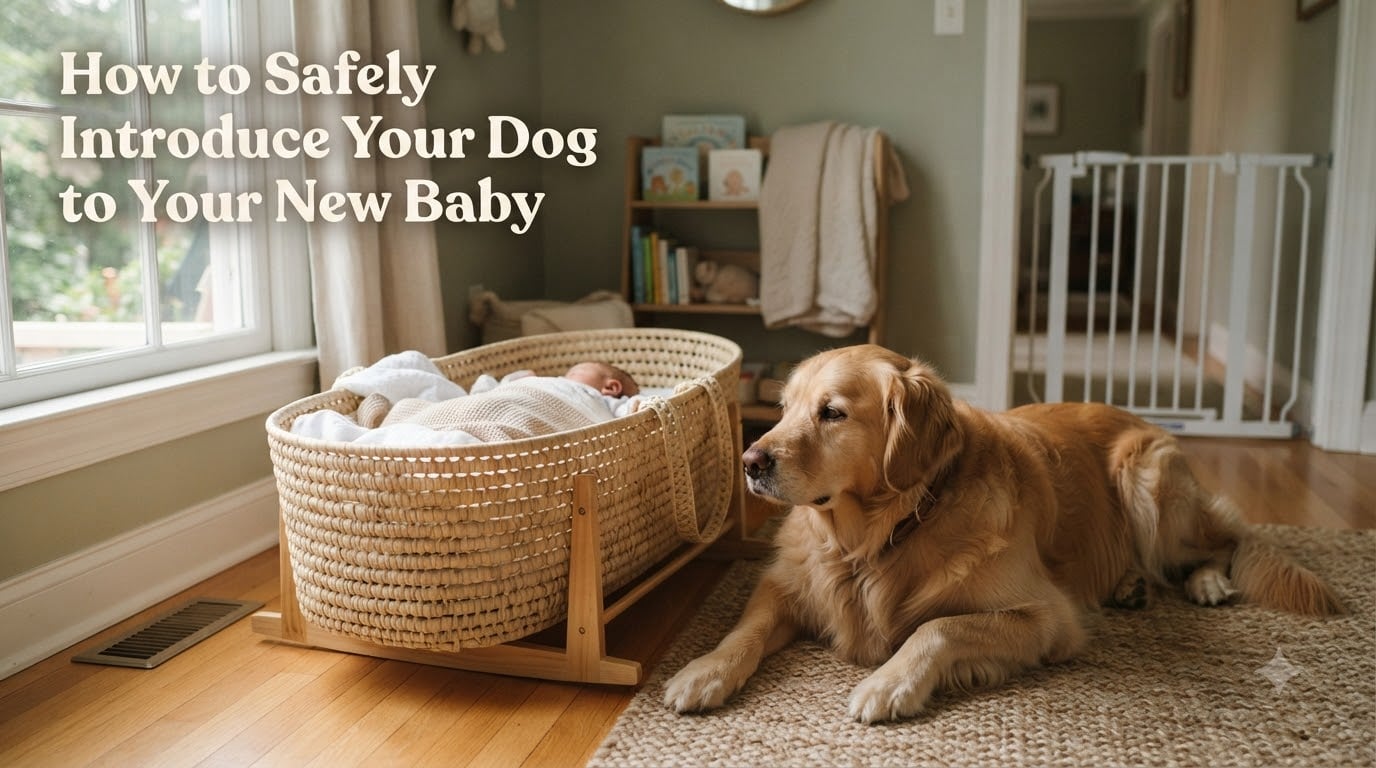
Welcoming a new baby into a home that already has a dog is one of the most joyful, and most nerve-wracking, transitions our team has seen families go through. I remember the first time our Labrador met my sister’s newborn: 90 pounds of pure curiosity pressed against my leg, while my sister held her breath.
This guide is built from veterinarian guidance, certified trainer protocols, and real parent stories pulled from parenting forums. You’ll get a clear timeline, a step-by-step introduction process, and a checklist of stress signs so you know exactly when your dog is relaxed and when to back off.
By the end, you’ll have a complete plan to safely introduce your dog to your new baby, from pregnancy prep through the toddler years.
Table of Contents
How to Safely Introduce Your Dog to Your New Baby?
Safely introducing your dog to your new baby means following a gradual, supervised process that helps your dog adjust to the baby’s sounds, smells, and movements while keeping both pet and child protected. The core approach is threefold: prepare your dog weeks or months in advance, control the first meeting carefully, and maintain strict supervision for the long term.
Most dogs adjust well when given structure and patience. The risk comes from rushing the introduction or assuming your friendly dog “will be fine.” Even the gentlest family pet can become anxious around a crying, unpredictable new human.
The Foundation: Calm, Predictable Routines
Dogs thrive on routine. A baby disrupts that routine, so your job is to build new predictability before the baby arrives. Walk your dog at the same times, feed on a schedule, and keep training sessions consistent.
I tell every expecting parent I work with: the calmer your dog is during pregnancy, the calmer they’ll be when the baby comes home. Stress compounds, so reducing chaos now pays off later.
Why Preparation Matters Before Baby Arrives
Preparation is the single biggest factor in whether a dog-baby introduction goes smoothly. Dogs who encounter baby-related sounds, smells, and gear for the first time on homecoming day are far more likely to react with fear or overexcitement.
Veterinary behaviorists recommend starting prep at least three months before your due date. That window gives you time to desensitize your dog to the new stimuli without overwhelming them.
Desensitization and Counter-Conditioning Explained
Desensitization means gradually exposing your dog to a stimulus at a low intensity so they stop reacting to it. Counter-conditioning pairs that stimulus with something positive, like treats, so your dog builds a happy association.
Together, these techniques rewire your dog’s emotional response. Instead of hearing a baby cry and feeling stressed, your dog hears the cry and thinks, “treats are coming.”
What Your Dog Needs to Learn Before Baby Comes
Before the baby arrives, your dog should reliably know several commands. Sit, stay, leave it, and a solid “go to your place” cue are the four most important.
Your dog also needs to be comfortable being separated from you. Practice short separations during pregnancy so separation anxiety doesn’t peak when you’re focused on a newborn.
The 3-3-3 Timeline for Preparing Your Dog
The 3-3-3 rule is a popular framework borrowed from rescue dog adjustment, and it works beautifully for baby prep. Three months out, three weeks out, three days out. Here’s how to break it down.
Three Months Before Baby: Build New Habits
Start by introducing baby gear one item at a time. Bring out the stroller, the swing, the baby bouncer. Let your dog sniff, then reward calm behavior with treats.
Play recordings of baby cries at low volume during meals. Gradually increase the volume over weeks. By the time the real baby cries, your dog will barely notice.
Walk your dog near playgrounds or parks where children play. Reward calm behavior around kids from a distance. This is one of the most overlooked prep steps, and it makes a huge difference.
Three Weeks Before Baby: Tighten the Routine
Adjust your dog’s daily schedule to match what life with a newborn will look like. If you’ll be walking at 7 a.m. and 8 p.m. once the baby arrives, start now.
Set up the nursery with the door closed and let your dog sniff around the threshold. Use baby gates to define which rooms will be off-limits. Reward your dog for respecting the boundary.
Practice holding a baby-sized bundle (a swaddled pillow works) while doing everyday tasks. Your dog needs to see you holding something small and moving carefully, without it being alarming.
Three Days Before Baby: Final Calm-Down
Reduce intense exercise 48 hours before your due date. You want your dog slightly tired but not overstimulated when you bring the baby home.
Confirm your dog knows where their safe space is. Whether it’s a crate, a bed, or a specific room, your dog should be able to go there on cue and stay calm.
Stock up on interactive toys, long-lasting chews, and treat puzzles. These will be lifesavers during the first chaotic weeks when you have less time for direct attention.
Step-by-Step Introduction Process for Your Dog and Baby
The first meeting sets the tone for everything that follows. Here’s the exact sequence our team has used with dozens of families, refined over years of feedback.
Step 1: Smell First, Eyes Second
Before bringing the baby inside, have someone take a blanket that smells like the baby to your dog. Let them sniff calmly, then reward with a treat. Do not force interaction.
Bring the baby’s first hat or swaddle home from the hospital ahead of the actual introduction. Place it near your dog’s bed so the new smell becomes familiar.
Step 2: The Homecoming Walk
Before entering the house, take your dog for a brisk 20-minute walk. A tired dog is a calmer dog. This isn’t about being stern; it’s about burning off anticipation energy.
Have a helper hold the baby in another room during the walk. You greet your dog first, calmly, without the baby present.
Step 3: The First Eye Contact
After the walk, have one parent sit on the couch holding the baby. The other parent brings the dog in on a leash. Keep the leash loose.
Let your dog sniff the baby’s feet (the least vulnerable area). Speak in a normal, cheerful tone. Reward your dog with treats for calm sniffing, then calmly lead them away after 30 seconds.
Step 4: Repeat With Increasing Proximity
Repeat step 3 two or three times that first day, gradually allowing closer sniffs if your dog remains relaxed. Never force the dog to approach; let them choose to come closer.
Keep sessions short. Five minutes total of focused baby-dog interaction is plenty for day one. More than that, and your dog may become overstimulated.
Step 5: Build Positive Associations Daily
For the first two weeks, give your dog a special treat every time the baby cries or fusses. You’re pairing the baby’s sound with something your dog loves.
Feed your dog their meals in the same room as the baby (with a gate between, if needed). This builds a calm, positive association with the baby’s presence.
Signs of Stress in Dogs Around Babies
Reading your dog’s body language is non-negotiable. Dogs almost always signal discomfort before they act on it. Miss the signals, and you risk escalation.
Calm Body Language: What to Look For
A relaxed dog has a loose, wiggly body. Their mouth is slightly open, ears are neutral, and their tail moves in wide, sweeping motions.
Your dog should be able to settle on their side or in a sphinx position when near the baby. Eating, sleeping, and taking treats are all strong signs of comfort.
Stress Signals You Should Never Ignore
Watch for these warning signs: lip licking, yawning when not tired, whale eye (showing the whites of the eyes), tucked tail, pinned-back ears, and panting without heat or exercise.
Other red flags include stiff body posture, hard stare at the baby, growling, snapping, raised hackles, and refusal to take treats. If you see any of these, separate your dog immediately and consult a professional.
Subtle Signs Parents Often Miss
Many parents miss the early cues. A dog who turns their head away, moves out of the room, or suddenly starts scratching themselves is communicating discomfort.
One Reddit user described her Golden Retriever leaving the nursery every time the baby cried. She thought it was indifference. Her trainer recognized it as stress and helped her address it before it escalated.
Creating Safe Spaces and Supervision Rules
Even with a perfect introduction, supervision is forever. No exceptions. A moment of distraction with a baby and a dog can be catastrophic.
Set Up Physical Boundaries
Install baby gates at the nursery door. A dog should never have unsupervised access to a sleeping baby, even briefly. Use pressure-mounted gates for doorways and hardware-mounted gates for stairs.
If your dog is crate-trained, the crate is your best friend. Dogs naturally seek den-like spaces, and a crate gives them a guaranteed retreat from baby chaos.
The “Between You and the Baby” Rule
Always position yourself between your dog and the baby. This is a hard rule from certified trainer Jen Jones of Dog Meets Baby, and it’s saved countless families from close calls.
Never hold the baby and the dog at the same time. Hands full means you can’t intervene if something goes wrong. Set the baby down first, then manage the dog.
Sleep, Feeding, and Toilet Separation
Keep dogs separate from babies during feeding times. Food guarding is instinctual, and even gentle dogs can resource-guard around a wiggling infant.
Bathroom breaks should be dog-only, with the baby in a safe spot. Never leave a baby on a changing table with a dog loose in the room, even for a second.
Long-Term Relationship Building as Baby Grows
The introduction is just the start. As your baby becomes mobile, the dynamic shifts, and your management needs to evolve with it.
When Baby Starts Crawling
A crawling baby is a completely new stimulus for most dogs. They move erratically, make new sounds, and suddenly invade the dog’s space. Many dogs who’ve been fine with infants become stressed around crawlers.
Watch your dog carefully during this phase. Reward calm behavior around the crawling baby, and use baby gates to give your dog escape routes. Never let a crawling baby chase or corner the dog.
Toddler Years: Teaching Mutual Respect
Once your child is a toddler, the work shifts to teaching both parties. Toddlers must learn not to pull tails, climb on dogs, or take food from bowls.
Continue using baby gates to give your dog breaks. Dogs need a toddler-free zone just as much as toddlers need a dog-free zone. Respect goes both ways.
Multi-Dog Household Adjustments
If you have multiple dogs, introduce them to the baby one at a time. A pack dynamic can amplify excitement or anxiety, and you want to see each dog’s individual reaction.
Some trainers recommend introducing the calmest dog first, so the baby has a positive “ambassador” experience. Save the most reactive or energetic dog for last, when you’re more practiced at reading signals.
When to Call a Professional Trainer or Behaviorist?
Most dog-baby introductions go smoothly with preparation. But some situations need expert help, and waiting too long can be dangerous.
Call a certified professional dog behaviorist if your dog shows any of these signs: growling at the baby, stiffening when the baby moves or cries, refusing treats in the baby’s presence, snapping, or escalating stress signals over time instead of decreasing.
Look for trainers with credentials from the IAABC (International Association of Animal Behavior Consultants) or CCPDT (Certification Council for Professional Dog Trainers). Avoid any trainer who recommends punishment-based methods; positive reinforcement is the gold standard for baby-related work.
Your veterinarian can also refer you to a veterinary behaviorist if your dog’s anxiety is severe. Medication, combined with training, can be life-changing for dogs with intense anxiety.
Frequently Asked Questions
How soon can I introduce my dog to my newborn?
Most trainers recommend introducing your dog to your newborn on the day you bring the baby home, after a 20-minute walk to burn off energy. The dog should meet the baby in a calm, controlled setting with one adult holding the baby and another holding the dog on a loose leash.
What is the 3-3-3 rule for introducing dogs?
The 3-3-3 rule breaks preparation into three phases: three months out (build new habits and desensitize to baby sounds and smells), three weeks out (tighten routines and set up physical boundaries), and three days out (final calm-down and confirmation of safe spaces). It gives your dog time to adjust gradually rather than facing everything at once.
How long will it take my dog to get used to a new baby?
Most dogs adjust to a new baby within two to four weeks if preparation was done in advance. Some dogs take up to three months to fully relax, especially reactive or anxious dogs. Consistent routines, positive reinforcement, and patient management speed the process significantly.
Should I let my dog sniff the baby?
Yes, calm sniffing is healthy and helps your dog learn the baby’s scent. Allow brief sniffs of the baby’s feet or blanket, then redirect with a treat. Never force the interaction, and always supervise. If your dog becomes overstimulated, calmly lead them away for a break.
Can I ever leave my dog alone with my baby?
No. Never leave a dog alone with a baby or young child, even for a moment, even if your dog is gentle and trustworthy. Dogs and children together require constant adult supervision. Use baby gates, crates, and closed doors to maintain separation when you cannot directly supervise.
Final Thoughts on Welcoming Baby and Dog Together
Bringing a baby into a home with a dog is one of the most rewarding things you’ll do as a parent. Done well, your child grows up with a built-in best friend and lifelong companion.
Start early, stay consistent, and never skip supervision. With preparation, patience, and the right boundaries, you can safely introduce your dog to your new baby and build a beautiful relationship that lasts a lifetime.