
The best tennis rackets for beginners share three traits: lightweight maneuverability, arm comfort, and a forgiving oversized sweet spot. Our shortlist of 2026 frames below is built around exactly those three criteria, and every pick comes with the gram weight and head size printed on the spec sheet.
Most new players do not need a tour player’s frame. What they need is a racket light enough to swing at full effort without thinking about it, forgiving enough that a mistimed ball still lands in, and comfortable enough that the forearm does not ache the morning after. Get those three right and you can keep the racket for years while your swing catches up to it.
We went through the spec sheets and the accumulated buyer feedback on twelve of the most-reviewed beginner frames on the market, then narrowed them by head size, unstrung weight, grip range and how each one behaves on off-centre contact. Nothing here is a pro-spec frame with a beginner label stuck on the box. Every one is built to make the racket do the work.
If you are also buying kit for the court, our beginner gravel bike guide covers the same no-jargon, spec-first approach we use here.
Table of Contents
Top 3 Picks for Beginner Tennis Rackets in 2026
Three frames came out ahead on the combination of rating, review volume and forgiving head size. Here they are in one place before the full write-ups.

12 Best Tennis Rackets for Beginners (October 2026)
Here is the full field in one table so you can cross-check head size, weight and stringing before reading any single review. The heaviest frame on this list is 295 g unstrung, and the largest head is 115 sq in.
| Product | Specs | Action |
|---|---|---|
| Wilson Federer Adult Recreational Racket |
|
Check Latest Price |
 Wilson Tour Slam Adult Recreational Wilson Tour Slam Adult Recreational |
|
Check Latest Price |
 Senston 27 Inch Adult Racket Set Senston 27 Inch Adult Racket Set |
|
Check Latest Price |
 HEAD Ti Conquest HEAD Ti Conquest |
|
Check Latest Price |
 HIRALIY 27 Inch Adult Racket Set HIRALIY 27 Inch Adult Racket Set |
|
Check Latest Price |
 HEAD Ti S6 HEAD Ti S6 |
|
Check Latest Price |
 Wilson Hyper Hammer 5.3 Wilson Hyper Hammer 5.3 |
|
Check Latest Price |
 Layway Two Player Starter Pack Layway Two Player Starter Pack |
|
Check Latest Price |
 LUNNADE 27 Inch Adult Racket LUNNADE 27 Inch Adult Racket |
|
Check Latest Price |
 Teloon Recreational Adult Racket Teloon Recreational Adult Racket |
|
Check Latest Price |
 HEAD Geo Speed HEAD Geo Speed |
|
Check Latest Price |
 WOED BATENS Two Player 27 Inch Set WOED BATENS Two Player 27 Inch Set |
|
Check Latest Price |
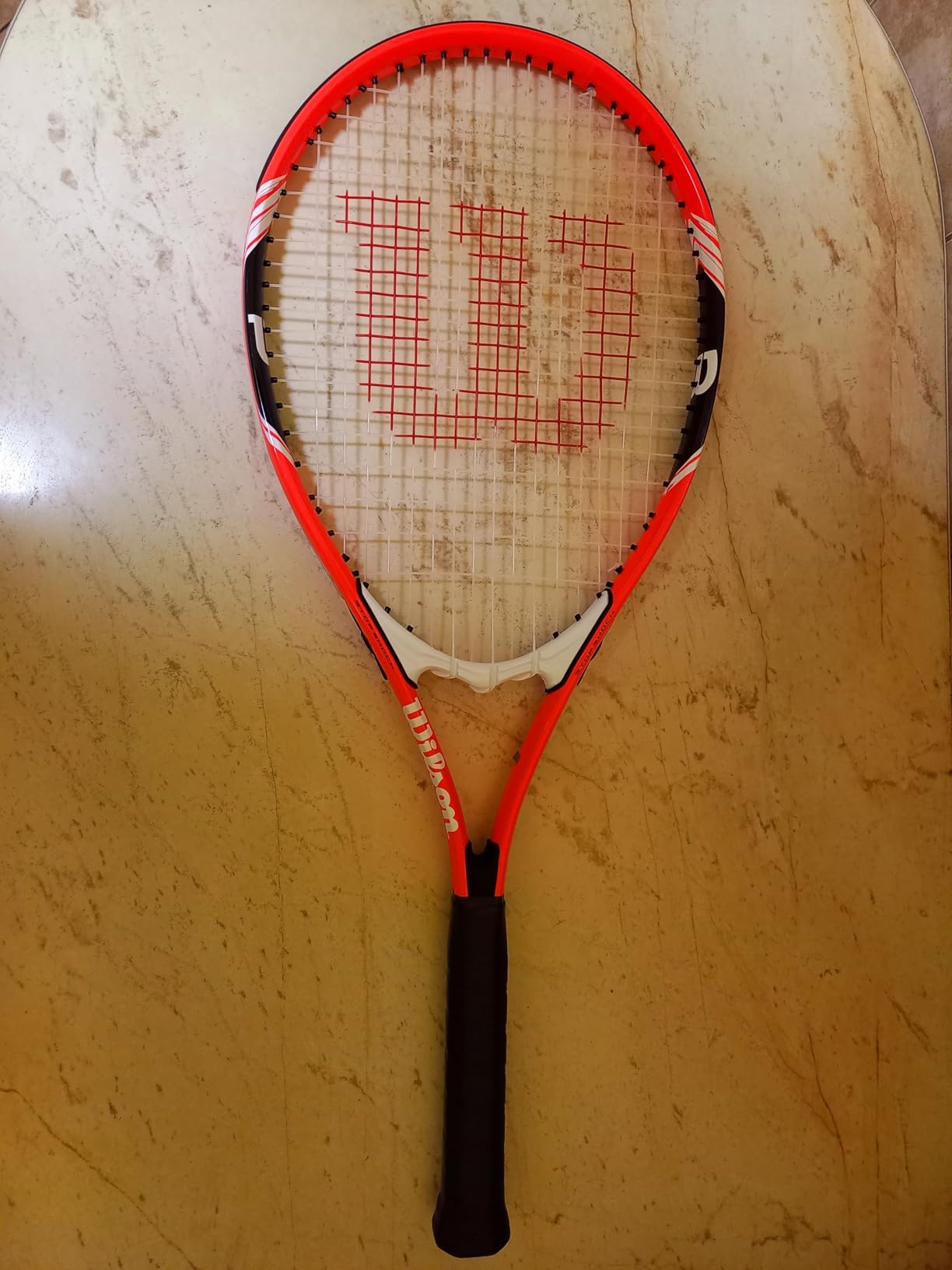
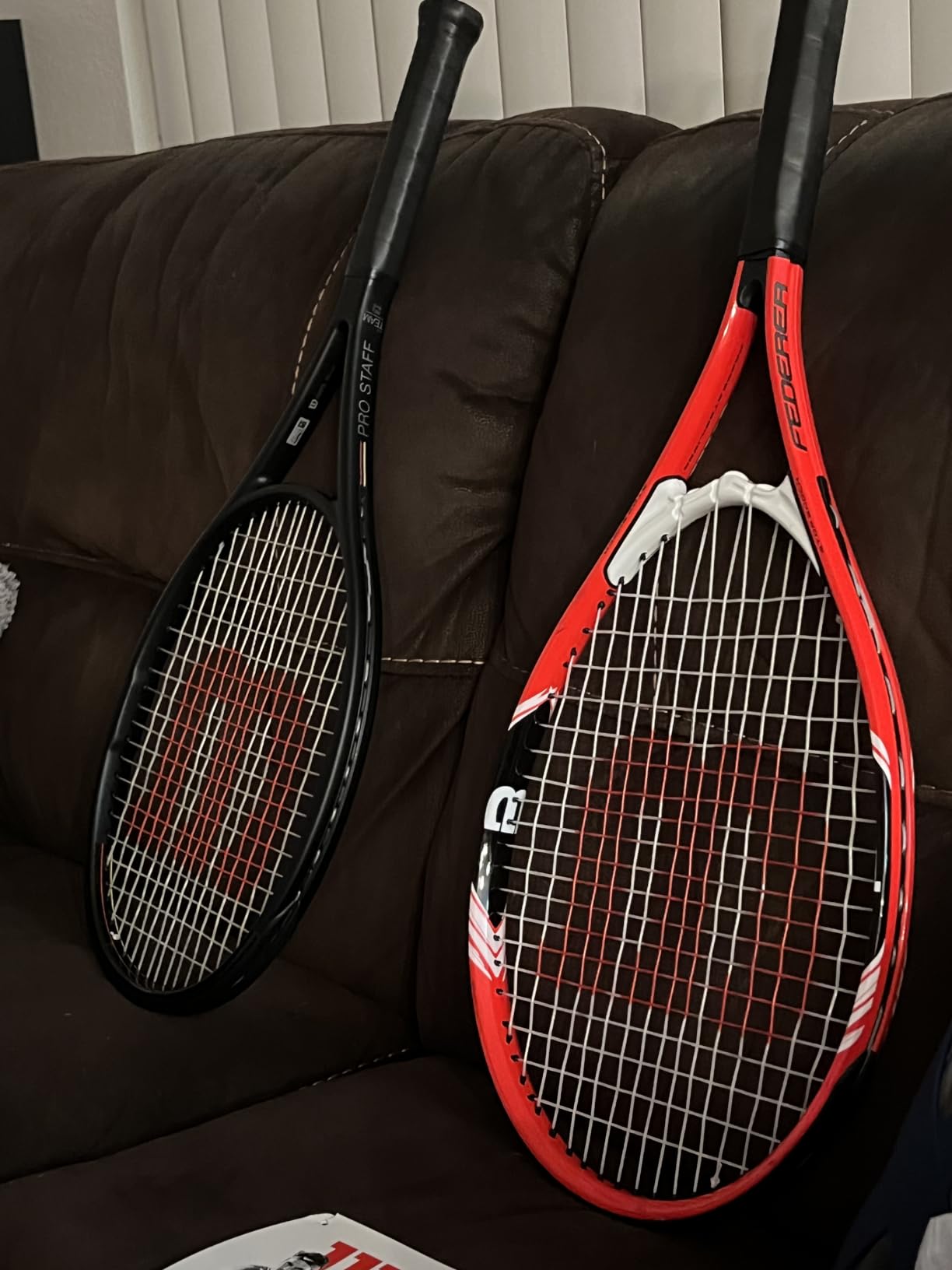
1. Wilson Federer Adult Recreational Racket: the Best All-Round First Frame
Wilson Federer Adult Recreational Tennis Racket – Grip Size 3 – 4 3/8″, Red/White/Black
295 g unstrung
AirLite Alloy graphite frame
Stop Shock Pads
Pre-strung
Pros
- Midplus head enlarges the sweet spot for forgiving contact
- Stop Shock Pads damp vibration where the throat meets the hoop
- AirLite Alloy keeps the frame light without feeling flimsy
- Pre-strung and playable the day it arrives
- Extended length adds reach on wide court positioning
Cons
- Listed as an intermediate frame so it is less forgiving than a dedicated beginner model
- Only one racket is included so it suits a single player
Best for: an adult beginner who wants one racket that will not need replacing in a year, and who will be playing on a weekly court booking rather than once a month in a car park.
This is the frame we hand to friends who ask us to just pick one. At 295 g unstrung it sits in the middle of the band that regular players quote on the forums, light enough to swing hard without thinking about your shoulder and heavy enough that struck balls carry depth without perfect contact. The AirLite Alloy construction is why the weight is where it is, and the extended length gives you reach you would not have with a short frame.
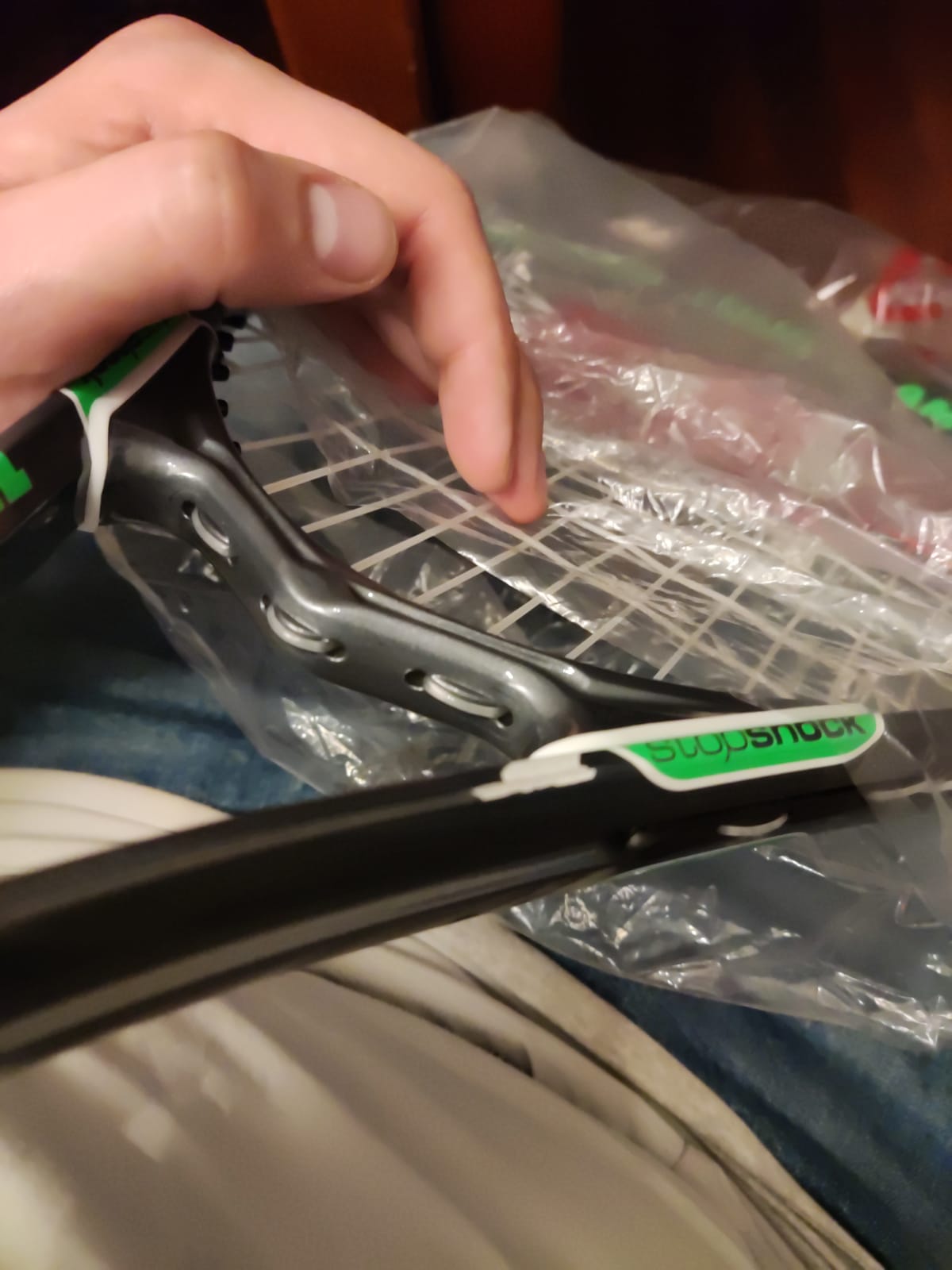
What sold us most is the Stop Shock Pads sitting where the throat collides with the hoop. That is exactly the junction that jars a forearm on a mishit, and buyers single it out repeatedly. After several sessions of digging balls out of the fence, the vibration through this frame stayed mild compared with a bare aluminium hoop of the same size.
The one honest caveat is the label. It is sold as an intermediate frame, and that is fair, which means the sweet spot is generous rather than enormous. Compared with a 115 sq in beginner hoop it asks slightly more of your timing. In practice new players cope with it easily because the midplus head still swallows a lot of off-centre contact.
For grip, size 3 at 4 3/8 inch suits most adult men and anyone with a medium to large hand. If your hand measures under 4 1/4 inch, step down a size rather than forcing it, because a too-fat grip makes you grip harder and that is a recipe for forearm tension.
Before you buy: check the grip fits before anything else
Measure the distance from the base of your index finger to the crease of your palm, then compare it with the brand grip chart. Wilson, Babolat and Head all use different numbering for similar sizes, so do not assume a size 3 in one brand equals a size 3 in another. If you fall between two sizes, take the smaller one and add an overgrip later. Our beginner tool buying guide uses the same small-first rule for handles, and the physics is identical.
Before you buy: decide whether you want one racket or a pair
Only one racket is in the box. If you play doubles, practise alone regularly, or want to learn with a partner, you will be constantly borrowing. That is the main reason to step down to one of the two-racket sets later in this list instead. For a solo adult who books a court and hits with friends, one is enough and the money is better spent on lessons or new balls.
2. Wilson Tour Slam Adult Recreational: Best Value Oversized Frame
WILSON Tour Slam Adult Recreational Tennis Racket – Grip Size 2-4 1/4″, Pink/Grey
V-Matrix sweet spot
Volcanic frame technology
AirLite Alloy
Pre-strung
Pros
- V-Matrix enlarges the sweet spot for genuine forgiveness
- Volcanic frame tech adds stability through contact
- Light enough for casual and beginner swing speeds
- Pre-strung so there is nothing to arrange
- Long run of buyer feedback on durability
Cons
- Published weight and dimensions are inconsistent so specs may not match the frame
- Aluminium frame gives less crisp feedback than graphite or titanium alternatives
Best for: a weekend player who is learning on hard courts and wants the largest forgiving feel without stepping up to a performance frame.
The Tour Slam has been on bestseller lists for years, and the reason is simple: it is an oversized aluminium frame that turns a mistimed swing into a decent shot. The V-Matrix layout and the open string bed do most of the work, giving you a bigger effective hitting area than the number on the box suggests. The oversize head also spreads the sting of a badly struck ball across a wider area, so a mishit lands softer in the hand.
Because it is aluminium rather than graphite, the response is a little softer and duller than a modern composite. Some players describe that as mushy. We would call it comfortable, and for a player who is not yet generating racquet head speed on demand, a softer bed is a feature. It rewards a shorter swing with depth.
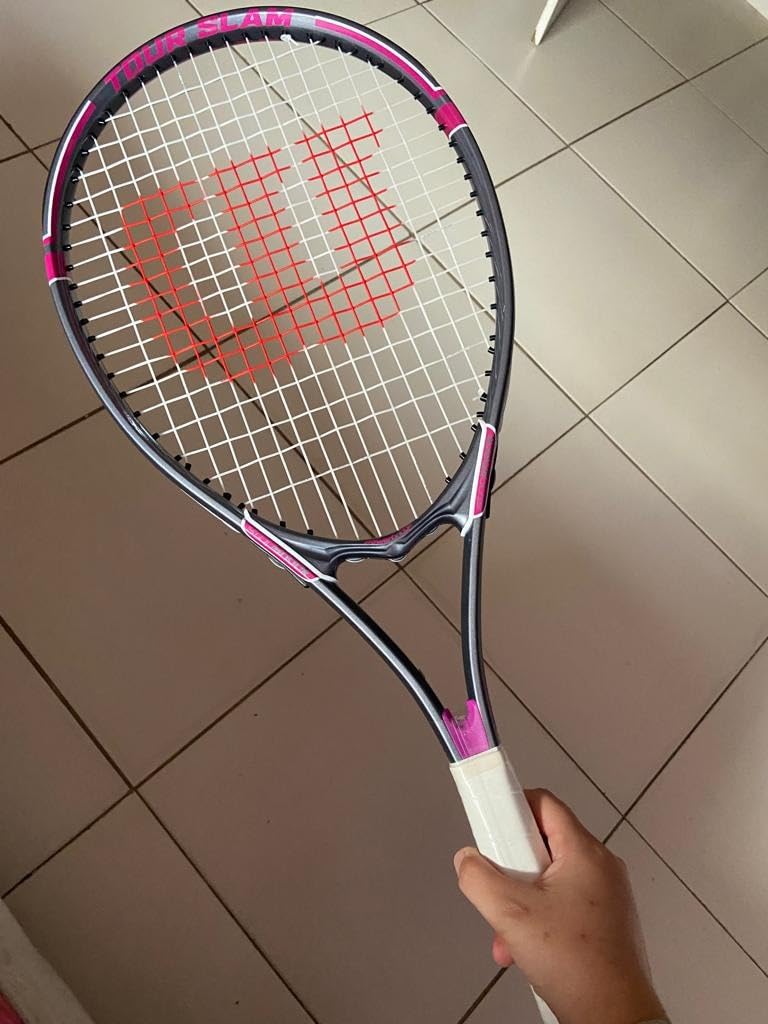
One thing to know before ordering: the published weight and dimensions for this model are inconsistent between listings, and the listed dimension figures are obviously wrong. Treat the weight as approximate and judge the frame by feel when it arrives. That is a manufacturer data issue rather than a build quality one, and the frames themselves have held up well for buyers.
Grip size 2 at 4 1/4 inch is the smaller of the two common adult sizes. It works for many women and for men with smaller hands, and it is the right default if you are unsure. Anything larger than 4 3/8 inch tends to suit players with a firm tennis background or very large hands.
Before you buy: is 4 1/4 inch grip too small for you?
This is the single most common sizing regret in the category, and it is easy to avoid. If you can wrap your fingers comfortably around the handle and your ring finger reaches just past the bottom edge without strain, 4 1/4 inch is correct. If your fingertips barely reach the base, go up a size. A grip that is slightly large is far less damaging than one that forces a cramped hold.
Before you buy: what you give up versus a graphite frame
Aluminium frames damp energy rather than returning it, so you get less control on hard, flat, fast shots. If you are heading toward club league tennis and want to start placing balls deep with pace, plan on upgrading in a year or two. If you are learning footwork and consistency, there is no benefit to upgrading early. Racket sport, badminton and squash players often find the Tour Slam vague by comparison.
3. Senston 27 Inch Adult Racket Set: Best Two-Racket Starter Pack
Senston 27″ Adult Tennis Racket Set Durable Lightweight Vibration Dampening
260-280 g unstrung
96-100 sq in head
27 inch length
Two rackets included
Pros
- Two rackets plus case dampeners overgrips and balls in the box
- One-piece moulded frame is durable and gives decent stroke control
- Open string pattern adds free power on short swings
- Very light unstrung weight in the 260-280 g band
- Size 2 grip suits smaller hands
Cons
- Sold unstrung so a stringing job has to be arranged separately
- Included tennis balls wear out quickly
- Included grip and overgrip may need replacing after regular use
Best for: couples, families or anyone who wants two rackets plus a case and dampeners without buying four things separately.
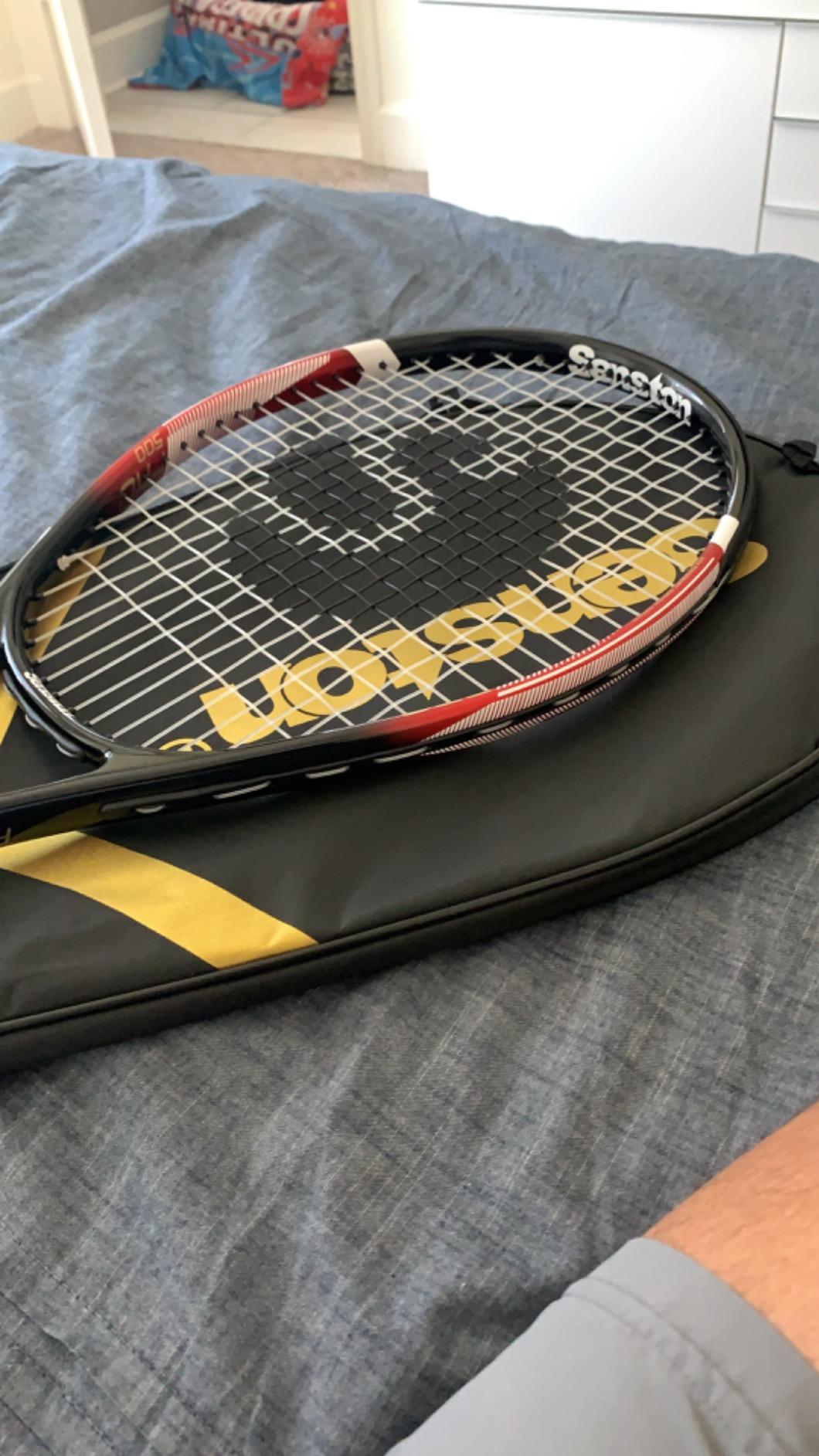
The contents are the story here. You get two rackets, a carry case, two overgrips, two vibration dampeners and three balls in a single box. For a household learning together, that removes the most common first-week problem, which is not having a second racket at all. The frames are unstrung, so budget for stringing once you know the grip size works for both players.
At 260-280 g unstrung with a 315 mm balance point, this is one of the lighter frames we recommend, and that is deliberate. The mid-plus head listed at 96-100 sq in is smaller than the 105 to 115 sq in frames above it, so the sweet spot is less generous. What you gain is a very fast racket through the air and almost no fatigue over a two-hour session.
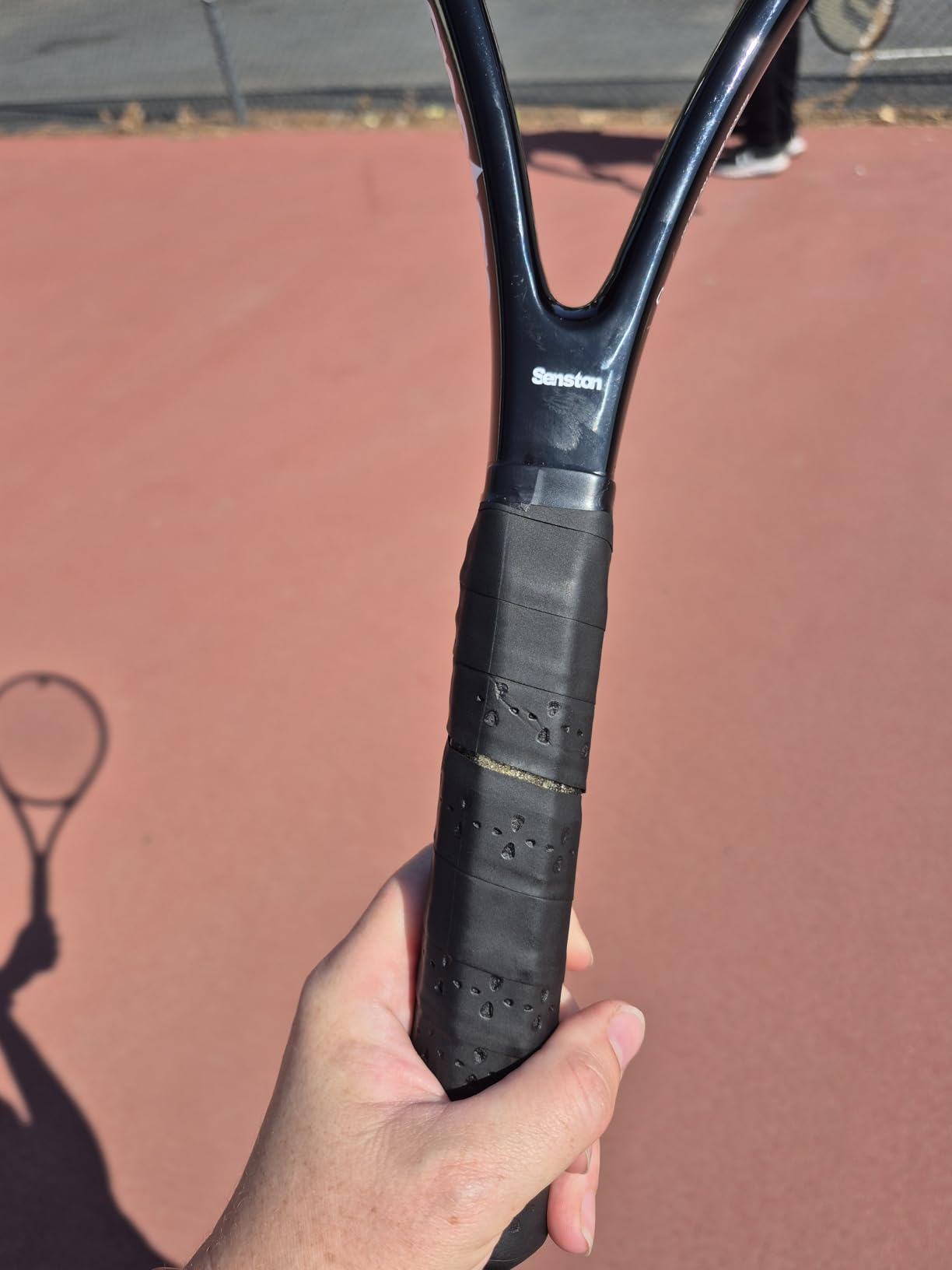
The one-piece moulded construction is a different approach to frame design from the layered composite frames most manufacturers use. It gives a solid, consistent feel and high durability, and buyers report the frames holding up well. It also means the frame does not flex much, so the free power comes from string bed tension and head size rather than frame flex.
Something we were corrected on by the specs: many listings describe this as a strung racket, and the listed weight figures do not always match. The manufacturer data describes it as unstrung, so plan for that. Unstrung is not a disadvantage for a player who has a local shop, but it is one more step before the first hit.
Before you buy: unstrung means a shop visit
Unstrung frames cost less to buy and more to prepare. The shop will ask for a string and a tension, and for a beginner the default advice is a soft multifilament or synthetic gut at moderate tension, not a polyester string at high tension. If you have no local shop within easy reach, choose one of the pre-strung options in this list instead.
Before you buy: the head is smaller than the rest of this list
At 96-100 sq in, this head is at the compact end for a beginner racket. You will notice off-centre hits more than you would on a 115 sq in frame, and a short swing will not be quite as forgiving. In exchange you get real control and easy handling. That trade is worth it for players with a naturally quick swing, and less so for absolute beginners who are still learning where the sweet spot is.
4. HEAD Ti Conquest: Best Oversized Head for Small Hands
HEAD Ti. Conquest Tennis Racquet, 4 1/4″ Grip
108 sq in oversized head
Titanium O-Beam frame
27 inch length
4 1/4 inch grip
Pros
- Oversized 108 sq in head gives a genuinely large sweet spot
- Ultra-light O-Beam frame reduces fatigue over long sessions
- Head-light balance improves control at the net
- Pre-strung and ready to play immediately
- One year manufacturer warranty included
Cons
- Very light weight can feel underpowered for players who generate their own pace
- Aluminium shaft gives less feedback than graphite or premium titanium frames
Best for: a beginner with small hands, or anyone over 50 who wants the lightest handling on this list without giving up head size.
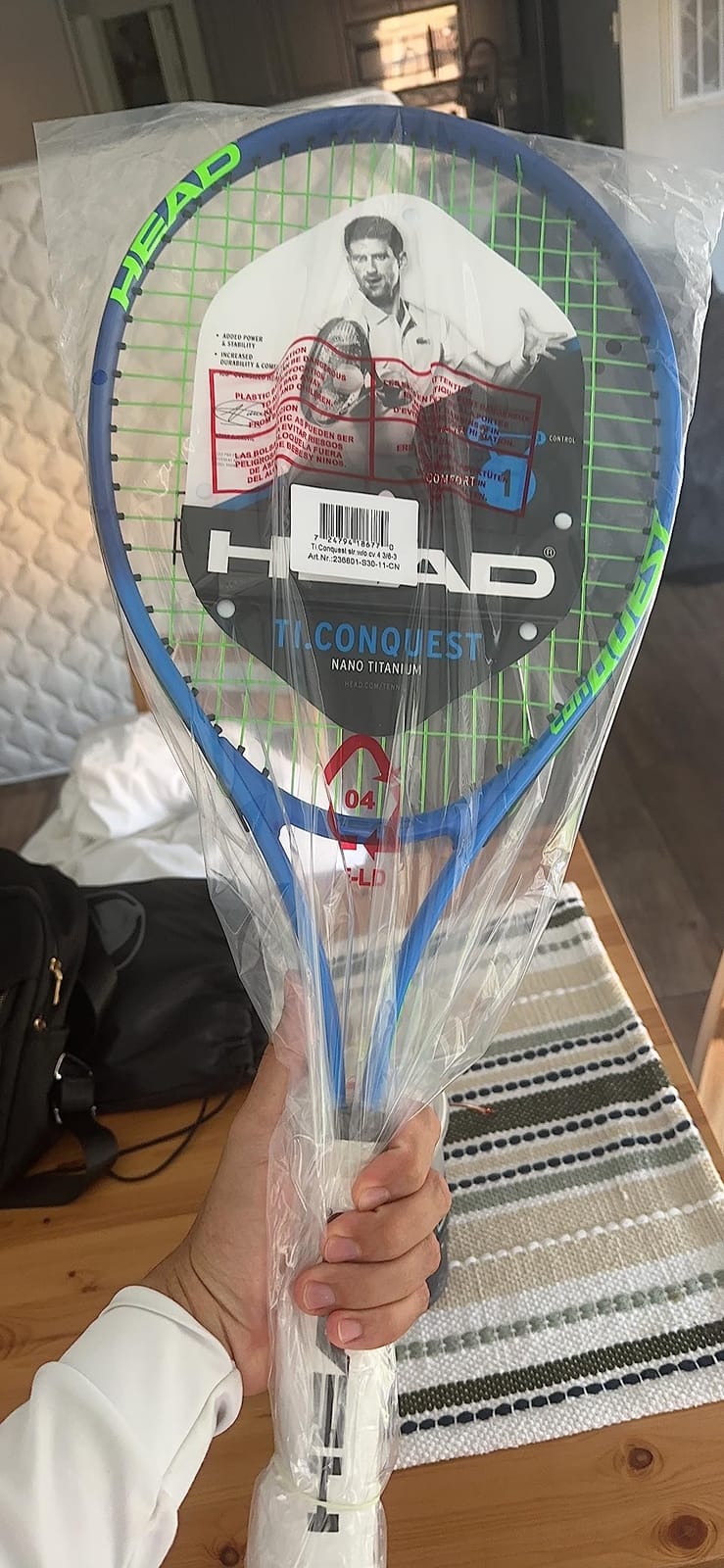
Two things go right here. The 108 sq in head is generously sized, so balls struck slightly late or off the centre still fly deep and straight. And the O-Beam titanium frame is genuinely light, which means a player with any shoulder history can swing freely for an hour without thinking about their arm. Those two things together are rarer than they should be.
The head-light balance is the quiet advantage. Most beginner frames are head-heavy to manufacture power, which makes the racket want to follow your swing. This one sits forward of your hand, so it turns quickly on the serve and settles fast at the net. For a player learning a backhand, that stability matters more than raw power.
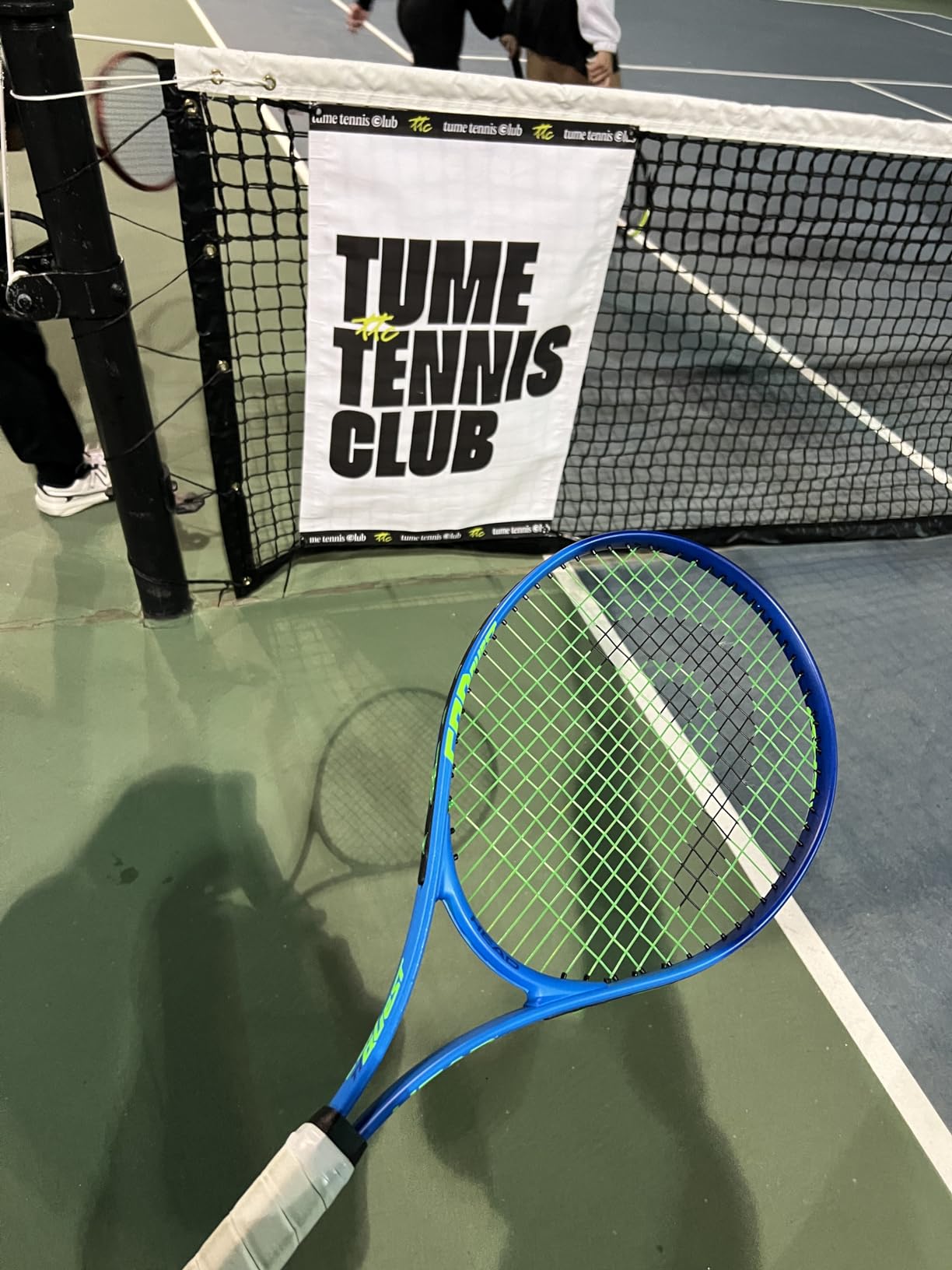
It arrives pre-strung, which removes the single biggest blocker for a total beginner. You can take it to a public court with a bag of balls and start. There is a one year manufacturer warranty, which is more than several frames in this list offer and worth something if you are unsure about your choice.
At 4 1/4 inch grip, this is comfortably one of the smaller handles here, and it pairs well with the mid-large head because the combination stays easy on the wrist. Buy a thinner overgrip rather than a thicker one. A thicker grip on an already small handle is the fastest route to a cramped hold and wrist rotation.
Before you buy: light means you may need to hit harder
A very light racket feels underpowered to players who already swing fast, because the frame is not adding energy for them. For a beginner with a short or slow swing, that is exactly right. If you came from badminton, squash or padel and expect free power from a modern graphite frame, test this in a shop first, because you may find it underwhelming.
Before you buy: which string is fitted
Factory stringing on this category is usually a synthetic string at moderate tension, which is exactly what a beginner wants. Leave it. The temptation to fit a stiff polyester string for control is the most common cause of early forearm soreness among new players. If you eventually get it restrung, ask for a soft multifilament at low-to-moderate tension.
5. HIRALIY 27 Inch Adult Racket Set: Best Lightweight Complete Set
HIRALIY 27-Inch Tennis Rackets, 2 Pack with Balls, Overgrips and Bag, Black
260 g frame
27 inch length
Aluminium with Y-joint
Two rackets included
Pros
- Complete set with two rackets balls spare overgrips and a carry bag
- Thickened aviation aluminium frame resists warping
- 260 g design reduces arm fatigue for beginners
- Triangular Y-joint absorbs shock for a steadier feel
- Understated colour options including an all-black frame
Cons
- Carry bag strap and bag durability are weak with reports of ripping
- No manufacturer warranty is listed
- Grip tape can peel or slide off when sweaty
Best for: a beginner who wants the lightest complete setup they can buy and who shares a court with a partner.
At 260 g per frame, this is the joint-lightest option here alongside the two-racket set later in the list. For a player who is picking up a racket for the first time and has no other racket sport background, that lightness is the whole point. A 260 g frame asks nothing of your shoulder, and you will actually finish the session instead of worrying about it.
The thickened aviation aluminium frame is where the durability comes from. One-piece aluminium frames are heavier and duller than graphite, but they do not crack at the throat the way a thin bonded composite can. The triangular Y-joint reinforcement is designed to absorb shock where the frame is most vulnerable, and buyers describe the feel as solid rather than harsh.
The included extras are unusually generous: two rackets, three balls, two spare overgrips and a bag. The overgrips matter more than they sound, because a fresh grip on a sweaty summer evening is the difference between enjoying a session and cutting it short.
Be honest about the bag, though. The most consistent complaint in buyer feedback is that the carry strap and the bag itself fail quickly, and a few buyers reported isolated defects on arrival. Buy a proper bag separately. The rackets themselves are not the problem, and the grip wrap is the one consumable you will replace sooner than you expect.

Before you buy: confirm the grip size before ordering
Grip size is not published consistently for this frame, and that is a real limitation. It suits small hands comfortably. If your hand measures larger than 4 1/4 inch you will be able to use it, but you will be gripping harder than you should, and that tension travels straight into the forearm and elbow. Larger-handed players should look at a 4 3/8 inch frame instead.
Before you buy: what you are actually paying for
You are paying for a bundle, not a performance edge. The head size is not published for this frame, and the aluminium construction means the response is soft rather than crisp. What you get in exchange is two complete setups out of one box, which is usually worth more to a beginner than any difference in head size you will notice in your first month.
6. HEAD Ti S6: Top Rated and the Biggest Sweet Spot Here
HEAD Ti S6 Tennis Racket, 4 3/8″ Grip
115 sq in oversized head
8.6 oz strung
27.7 inch length
Open 16x19 pattern
Pros
- 115 sq in head gives the most forgiving sweet spot in this roundup
- Very light strung weight enables fast net reactions and limits fatigue
- Graphite and titanium composite is stable and durable
- Extended length adds reach on serves
- Many owners report no tennis elbow symptoms after switching to it
Cons
- Factory strings can break relatively quickly so a restring may come early
- Grip size 4 3/8 inch runs large so measure your hand first
- Low power output means you lean on technique
Best for: the true first racket, or any adult who wants maximum forgiveness and low vibration with nothing else to think about.
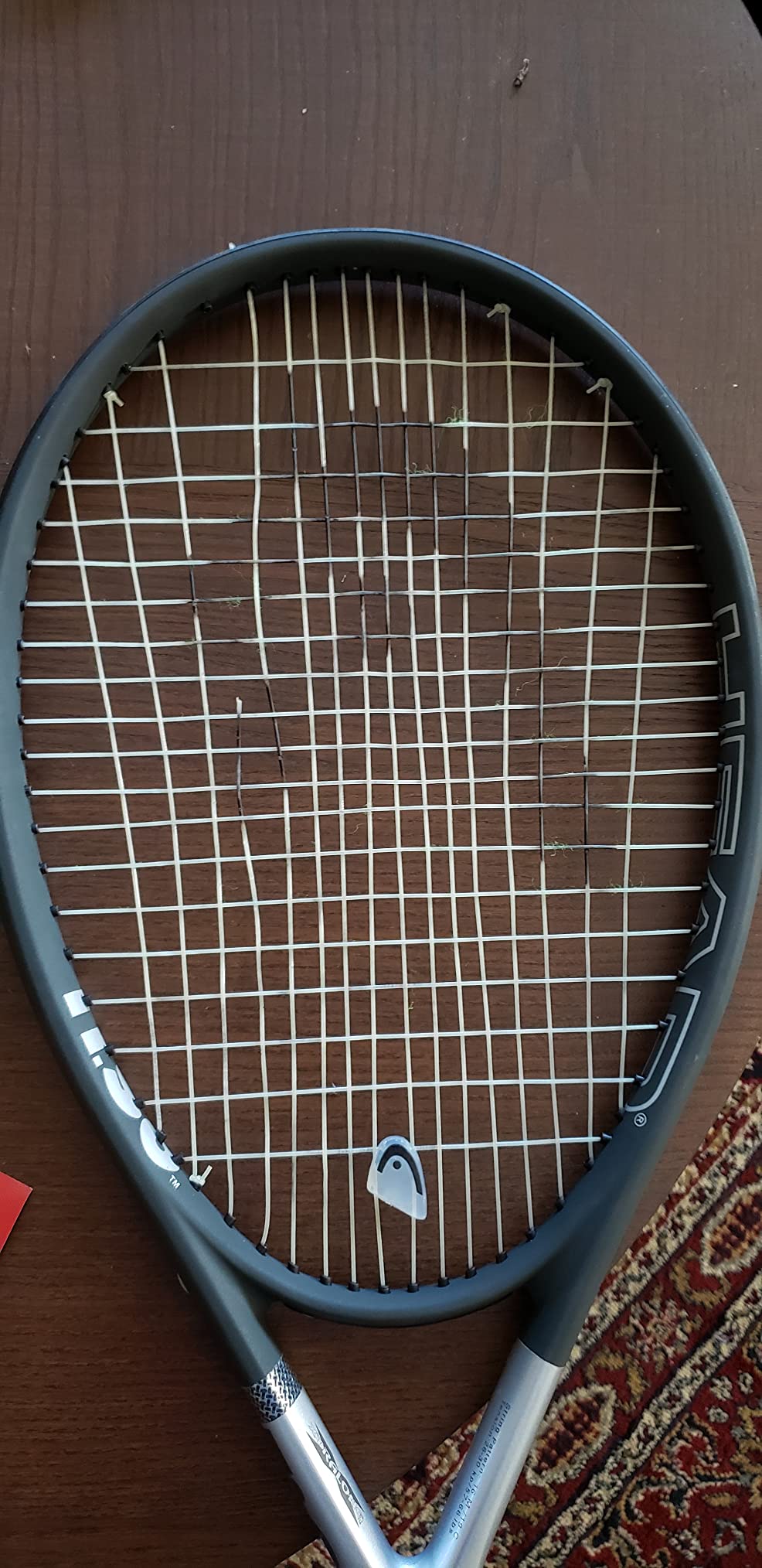
At 115 sq in, this head is larger than anything else on this list and larger than most adult frames on the market today. The practical effect is dramatic for a new player. A ball struck half a second late, or two inches off centre, still carries deep and stays inside the court. That is what forgiving means, and it is why this frame keeps appearing as a first recommendation on beginner forums.
It is also extremely light at 8.6 ounces strung, which is the second reason it works so well early. You can swing hard without loading the shoulder, and the extended 27.7 inch length gives you reach that most 27 inch frames cannot. Combined with an open 16×19 string pattern, you get spin on a compact swing without needing to brush hard across the ball.
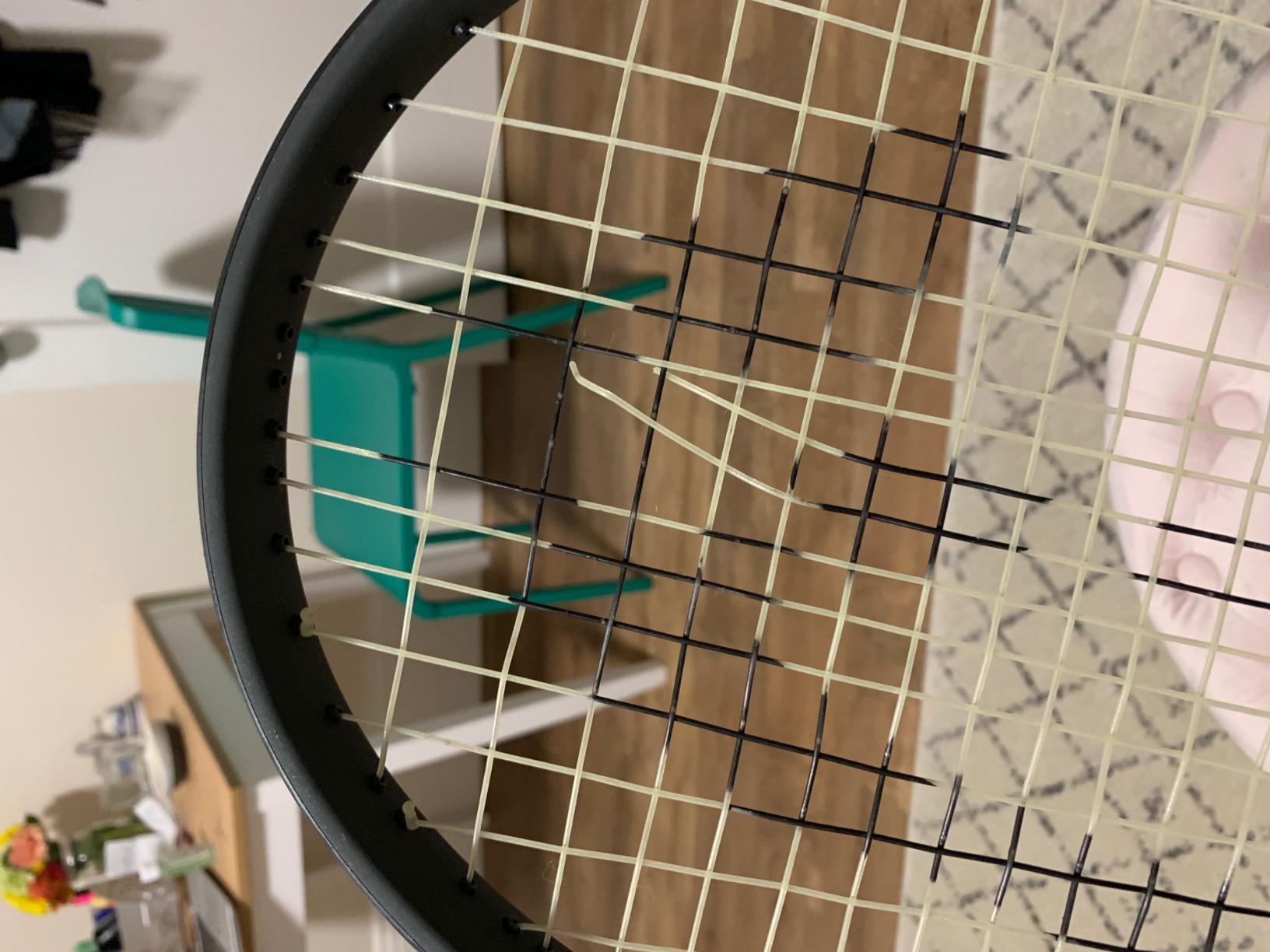
On arm comfort, the feedback is unusually consistent. A large number of owners specifically report that they did not develop elbow symptoms after moving to this frame, and the composite construction and oversized head both contribute to that. If you already have a diagnosed elbow problem, the short version is: light frame, big head, moderate string tension, and avoid polyester strings entirely.
The graphite and titanium composite also gives more stable response than a pure aluminium frame, so shots struck late still carry pace rather than dying. That is the difference between a racket that merely forgives mistakes and one that turns them into decent shots you can build a rally on.
Before you buy: the grip is the one real risk
At 4 3/8 inch, this handle runs noticeably large. Buyers with smaller hands regularly report that the grip feels bulky. If your measurement comes out below 4 1/4 inch, do not buy this size. Either choose a smaller option on this list or plan to move up with a thinner replacement grip, which is a poor first-project for someone who has never held a racket.
Before you buy: how long the strings last
Expect the factory stringing to need replacing earlier than you would like, commonly within a year of regular play. Treat that as normal rather than a defect, and use it as a chance to get the string right. Ask your local shop for a soft multifilament at a moderate tension. That combination keeps the arm comfort that made this frame popular in the first place.
7. Wilson Hyper Hammer 5.3: Best for Compact Swings and Heavy Topspin
Wilson Hyper Hammer 5.3 Strung Tennis Racket (Black/White, 4 3/8)
About 110 sq in head
Head-heavy balance
27.5 inch length
Graphite composite
Pros
- Hammer technology delivers a large sweet spot with real power
- Head-heavy balance adds stability without a heavy frame
- Generates heavy topspin and a strong serve from a compact swing
- Light enough to maneuver comfortably over long sessions
- One year manufacturer warranty
Cons
- Factory setup vibrates noticeably on off-center hits until a dampener is fitted
- Factory stringing can feel loose in the top and lower mains
- Head is larger than many players expect and needs a gentler swing
Best for: a player whose swing is short and compact, or who wants to generate topspin and serve pace without taking a full backswing.
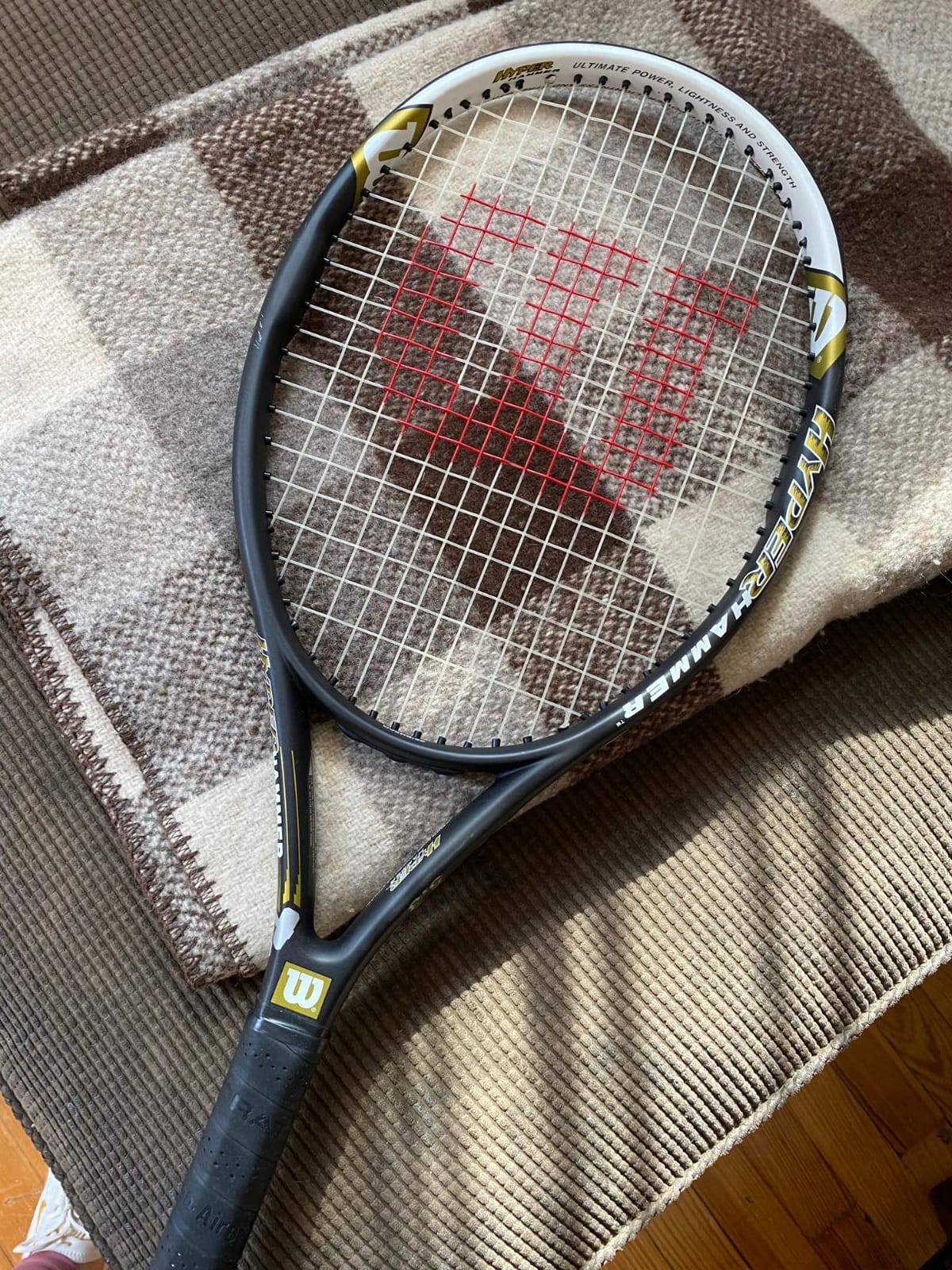
Most beginner frames prioritise forgiveness. This one prioritises power, and that is a genuine differentiator. The hammer-style geometry gives it a larger effective sweet spot than its listed head size suggests, and the head-heavy balance means struck balls leave the frame with pace even when contact is not perfectly centred. Players who struggle to get depth often find that problem disappears with this frame.
The second strength is spin. The open string pattern grabs the ball well, so a compact upward swing produces heavy topspin and a serve that drops into the court. That matters for beginners because topspin is the single biggest technical upgrade available: it lets you hit harder and still land the ball in.
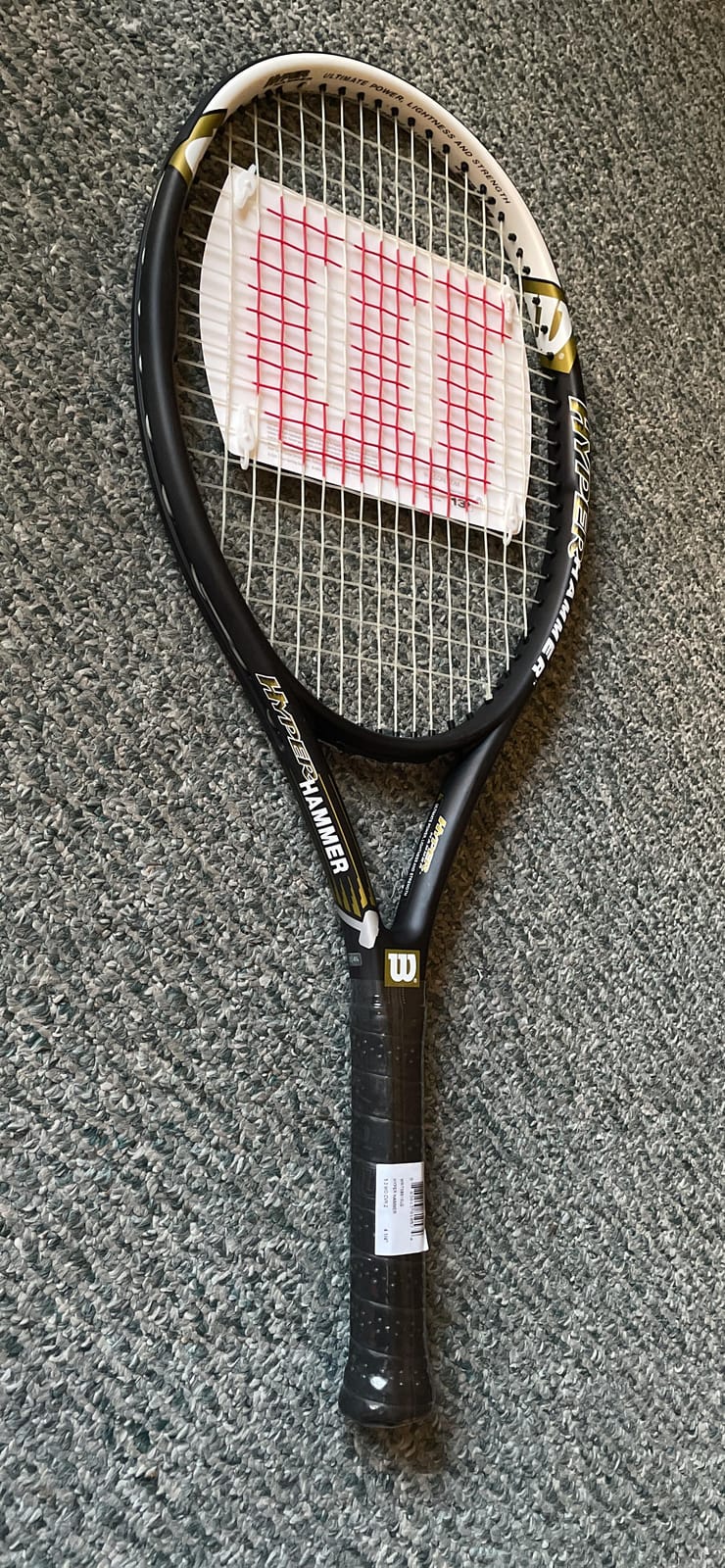
What you trade away is feel. This frame is more solid and damped than a pure graphite performance racket, and it does not reward a developing swing with the same crisp response. It also generates noticeable vibration on badly struck balls if you do not use a dampener. Fit one. Two dampeners cost very little and remove the sting at the throat entirely.
The listed weight of 0.24 kg and the 27.5 inch length place it in the middle of this roundup, and the 4 3/8 inch grip is the larger of the two standard adult sizes. It is a good match for adult men and for players with larger hands who want power rather than maximum forgiveness.
Before you buy: do you need dampeners to use this frame
Practically, yes. Buyers repeatedly report string vibration on off-centre contact with the factory setup, and both a dampener and a modest restring fix it. If you are the type who notices every sting in the forearm, choose a frame with built-in damping like the Ti S6 or the Federer frame instead of adding hardware to this one.
Before you buy: power versus control for your game
This frame is a power frame. That suits a short swing, a big server, or anyone learning on a fast indoor court where depth is the first problem to solve. It is less suited to a player who wants to place the ball precisely at the net on a slow clay court. Pick power if you are hitting through the ball, control if you are shaping it.
8. Layway Two Player Starter Pack: Best All-in-One Beginner Pack
Tennis Rackets 2 Players Recreational for Beginners,Pre-Strung 27 Inch Light Adult Racquet Set for Women Men with Tennis Balls,Overgrips and Carry Bag (Blue)
105 sq in oversized head
Pre-strung at proper tension
27 inch length
Two rackets
Pros
- Eight piece pack with two rackets balls two grips and a carry cover
- 105 sq in oversized head gives a large sweet spot for accuracy
- Pre-strung at a sensible tension so nothing needs arranging
- Light enough for casual play without fatigue
- Shockproof overgrip helps reduce vibration
Cons
- Included balls are unpressurised and soft so buy a proper set
- Carry bag strap is flimsy and can rip
- Not aimed at competitive play
Best for: a family or couple starting out together who want everything in one purchase and will replace the balls and bag anyway.
The pitch here is convenience, and it works. Two 27 inch rackets at a 105 sq in head, pre-strung at a proper tension, plus three balls, two handle grips and a portable cover. Nothing needs arranging, nothing needs a shop, and the oversized head gives a genuinely forgiving area for players who have never held a racket before.
At roughly 0.57 lb per racket this is a light frame, which suits a new player and a doubles pair who share the carry. The two-racket format is the real differentiator. Almost every other frame in this roundup is a single racket, and buying two separately doubles the cost for a household learning together.
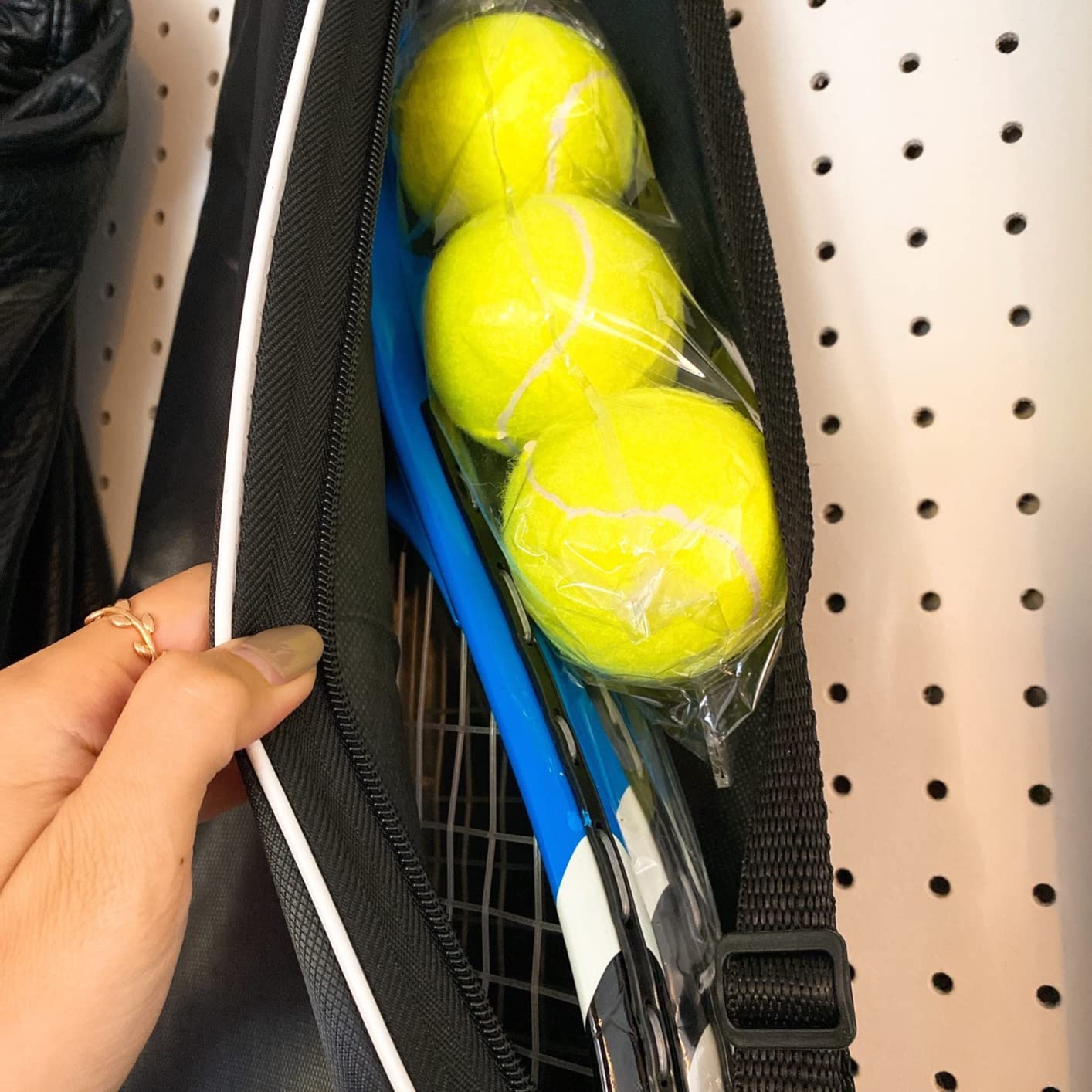
Buyers generally report that the rackets hold up across a season of casual play, which is the right standard for this frame. The shockproof overgrip is a nice touch, because a grip that does not slip is worth more than any spec line when you are four games into a beginner session and your hand is damp.
Two things need replacing straight away in our view. The included balls are pressureless and soft, so buy a real pressurised set before you judge how the rackets feel, because a dead ball makes any frame look bad. And the bag strap will not survive being carried regularly, so plan to buy a proper bag.
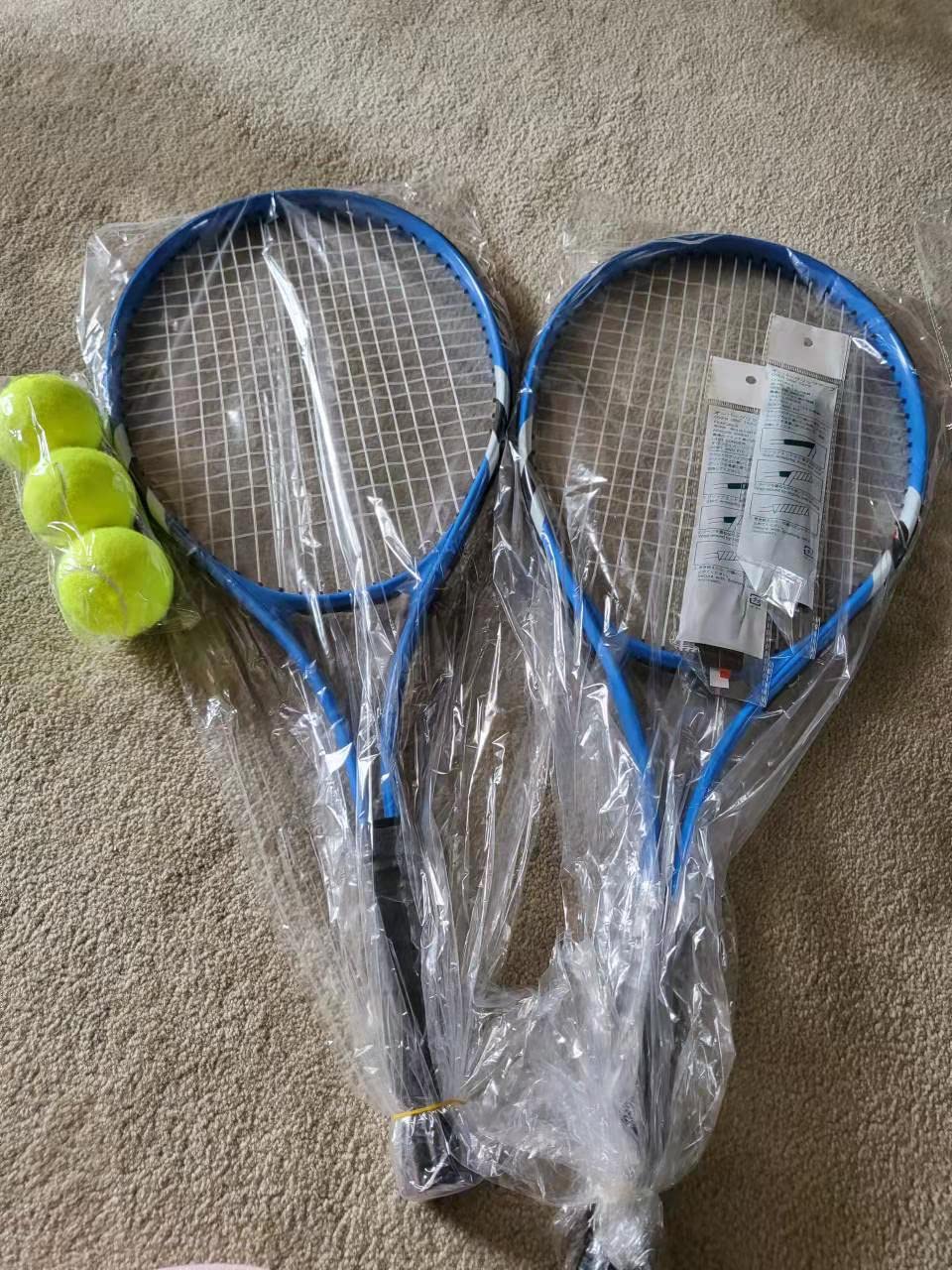
Before you buy: is a pack a good idea for a single player
Only if someone will play with you. If you are learning alone, the second racket is dead weight and a single frame with a better head size is the better buy. Packs make sense for couples, families, parent and child, or a group splitting the cost of a first session together.
Before you buy: what to check when the pack arrives
Check that both frames have the same string tension and no loose strings, and that the grips are not already creased or torn. Run a finger under the string bed near the grommets. Buy a small pack of balls in the same trip, because the ones included are not fit for practice and that is the most common early disappointment with budget sets.
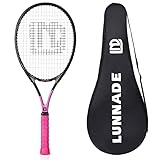
9. LUNNADE 27 Inch Adult Racket: Best for Larger Hands
LUNNADE Adults Tennis Racket 27 Inch, Shockproof Carbon Fiber Tennis Racquet Light-Weight, Pre-Strung and Regrip, Suitable for Beginners to Intermediate Players
280 g frame
27 inch length
4 3/8 inch grip
Aluminium and carbon build
Pros
- Durable frame and string construction gives good resilience and stability
- Ergonomic cushioned grip reduces fatigue over longer sessions
- Balanced weight distribution improves accuracy and power
- Pre-strung and supplied with a replacement grip
- Suited to beginners and intermediate players in training and recreation
Cons
- 4 3/8 inch grip is larger than average and suits bigger hands
- General purpose aluminium and carbon construction gives less refined feel
- No manufacturer warranty is listed
Best for: an adult with larger hands who finds most adult grips cramped, and who wants a frame that will still work at intermediate level.
The 4 3/8 inch grip is the reason this frame exists for some buyers, and it is a bigger handle than most of the frames in this roundup. If you have gone through three rackets and ended up with sore forearms each time, the problem was probably grip size rather than weight or strings. This is a frame where that theory is easy to test.
At 280 g with balanced weight distribution, the frame sits comfortably in the middle of the beginner band. It is pre-strung and comes with a replacement grip in the box, which is a small thing that tells you the manufacturer expects you to change it. Do so. A worn grip changes your swing more than most beginners realise.
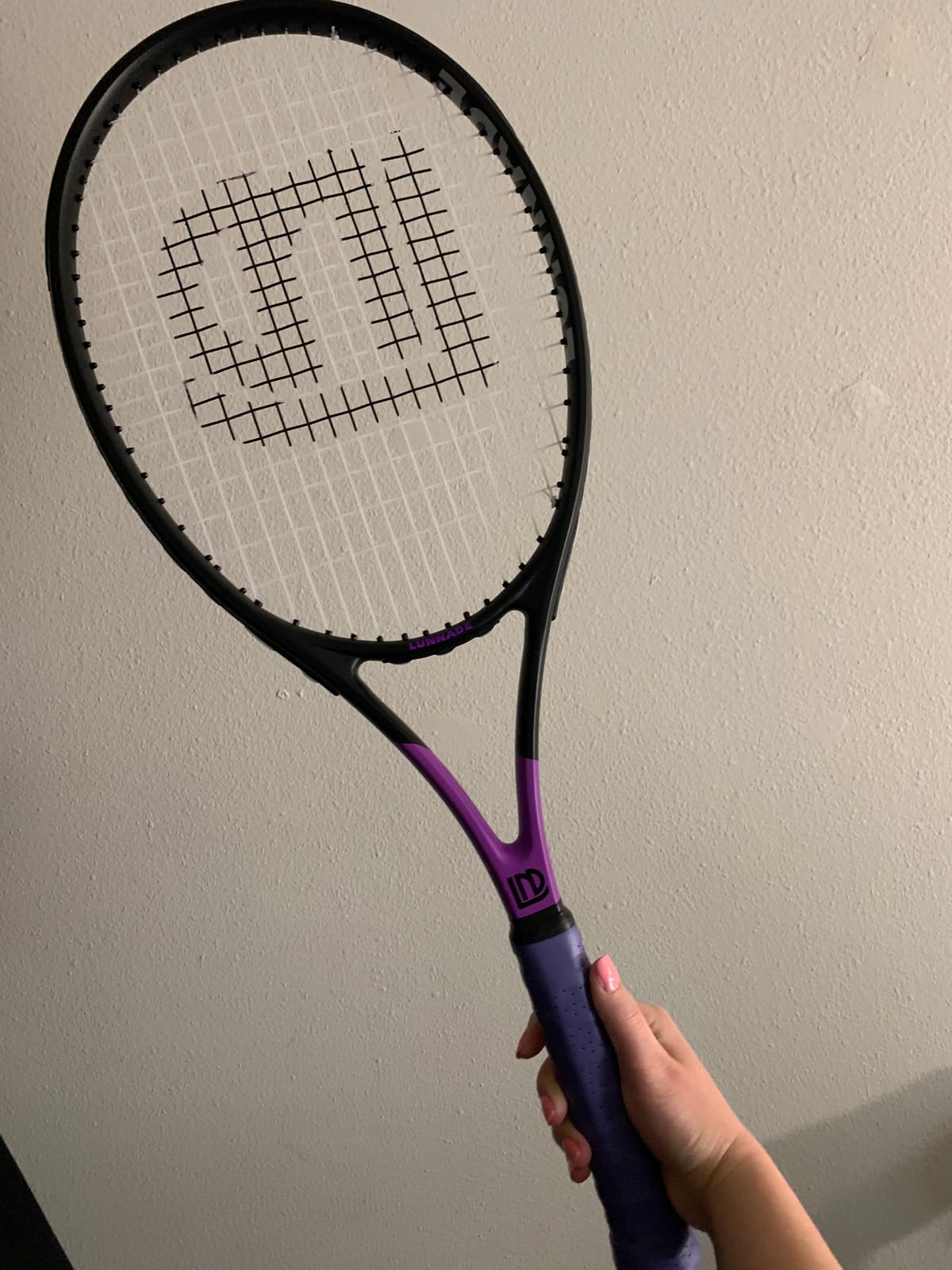
The build is a blend of aluminium and carbon fibre, which is a common mass-market construction. It is stable and it holds tension, and it does not feel as crisp in the hands as a full graphite frame. For a player who is not chasing feel, that trade is invisible after a few sessions.
What stands out in the feedback is consistency. Buyers describe it as solid and dependable rather than exciting, which is exactly the right word for a first racket. Several report that the same frame carried them from beginner lessons into intermediate play without needing a change.
Before you buy: confirm 4 3/8 inch is not too large
The same warning applies here as with other large-grip frames. If your hand measurement is 4 1/4 inch or below, this will feel cramped and you will compensate with your forearm. The frame is not wrong for you, the size is. Check a grip chart before ordering rather than after.
Before you buy: how far will this racket carry you
Further than most, which is a genuine advantage if you are unsure how long you will keep playing. The 280 g weight and stable construction will not embarrass you when you reach club level. What it will not give you is the control response of a full graphite player frame, so if you later want to shape shots precisely, that is the upgrade to make.
10. Teloon Recreational Adult Racket: Best for Spec Shoppers
Teloon Recreational Adult Tennis Rackets-27 inch Tennis Racquet for Men and Women College Students Beginner Tennis Racket. (Mark-IX)
280 g unstrung
102 sq in head
16x19 pattern
Strung at about 50 lbs
Pros
- Published unstrung weight and balance figures are rare at this level
- 102 sq in head with a standard 16x19 pattern
- Factory strung at a sensible 50 pound tension
- Size 2 grip suits smaller hands
- Ten colour options and manufacturer replacement support
Cons
- Grip must be wrapped by the user before playing
- Size 2 grip is too small for larger hands
- White grip can yellow over time
Best for: a beginner who wants real published numbers, a standard string pattern, and a sensible starting tension rather than marketing adjectives.
Almost every frame in this category hides its numbers behind adjectives. This one publishes them: 280 g unstrung, 102 sq in head, 16×19 string pattern, 27 inch length, size 2 grip, strung at 50 pounds. That is a complete specification sheet, and for a buyer who wants to know exactly what they are getting, it removes all guesswork.
The 102 sq in head is not oversized by the standards of this list, but it is a normal, well-proportioned beginner head that will feel familiar. The 16×19 pattern is the standard across this whole roundup because it gives a good balance of power and spin potential without being fussy. A 50 pound factory tension is moderate, which is right for an arm that is still learning.
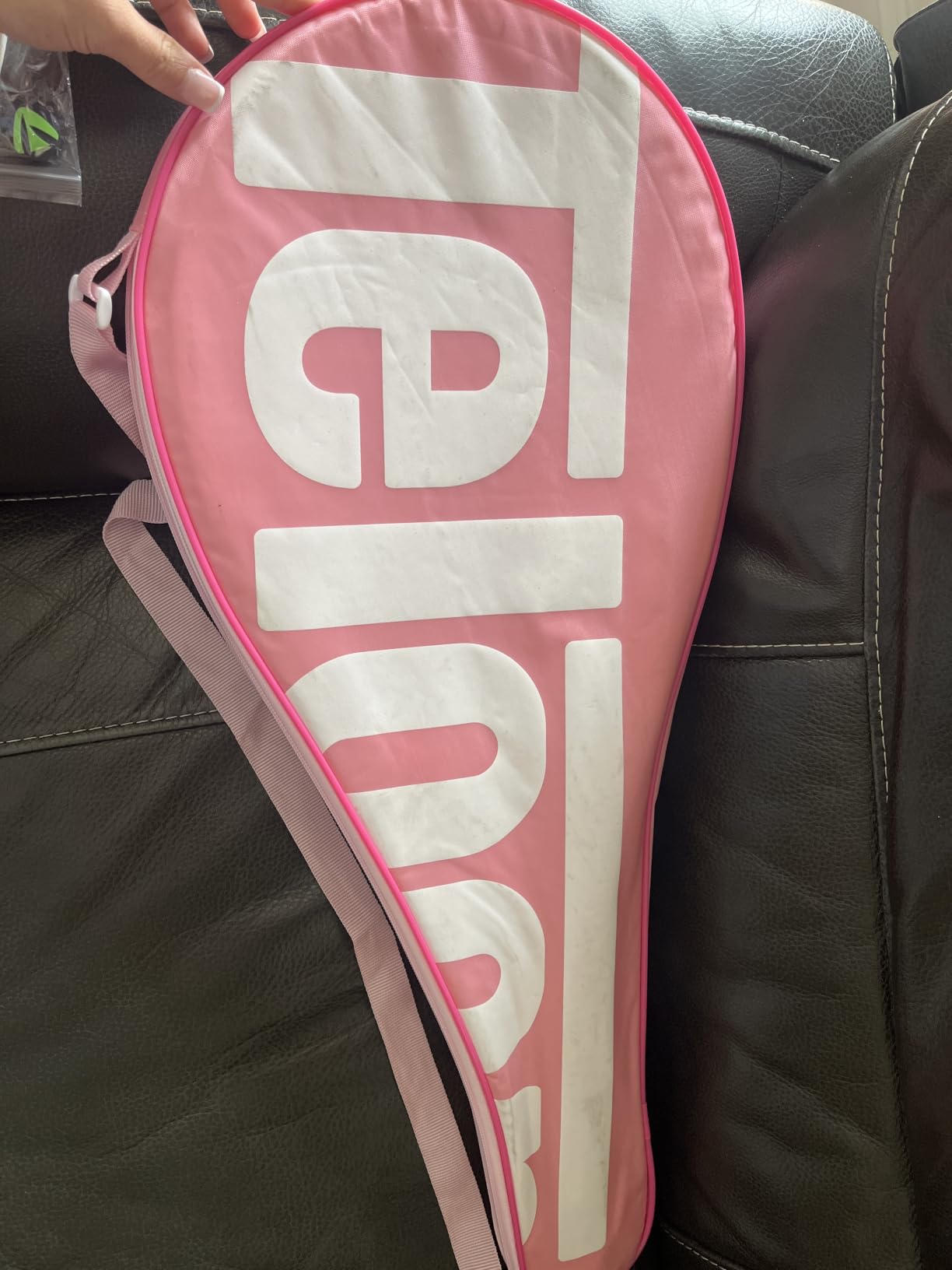
The frame is a one-piece moulded aluminium construction with a graphite and wood shaft, and the head-light balance keeps it easy to turn. Buyers consistently note that it looks better in person than the listing photos suggest, and that it has held up over repeated sessions for casual and beginner play.
Two practical notes. The included overgrip roll has to be fitted yourself, so you will be wrapping a grip the first time, which takes about two minutes and one try. And the size 2 handle is on the small side, so this is a frame for smaller hands or for players who prefer a thinner grip.
Before you buy: wrap the grip before the first session
A loose factory grip will slip at exactly the wrong moment. Fit the supplied overgrip, wrap the overlap at the throat end, and trim the excess with scissors. If wrapping feels awkward the first time, ask at a local club. Most coaches will do it in a minute and it makes a real difference to how the frame feels in your hand.
Before you buy: 102 sq in is a compromise head
This is a middle-sized head, so it sits between the very forgiving 115 sq in frames and the compact recreational ones. You will need decent timing to get consistent depth, but you will also get more control than an oversized frame gives you. For a player who wants one racket for both doubles and singles, that balance is a reasonable place to land.
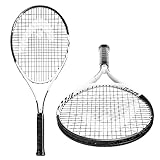
11. HEAD Geo Speed: Best for Buyer Peace of Mind
HEAD Geo Speed Tennis Racquet, 4 3/8″ Grip
105 sq in head
10.4 oz unstrung
27.5 inch length
Synthetic gut strung
Pros
- Established brand name with a one year manufacturer warranty
- Light 10.4 oz unstrung frame is easy to swing
- Head-light balance reduces vibration and aids control
- Pre-strung with synthetic gut so it is playable immediately
- 105 sq in head helps beginners make contact more often
Cons
- 4 3/8 inch grip can feel bulky for very small hands
- Aluminium frame gives less crisp feedback than graphite alternatives
Best for: a beginner who wants a recognised brand name, a warranty behind the frame, and a soft string bed fitted from the factory.
The Geo Speed is the sensible choice when your hesitation is not about specs but about risk. It comes from a known brand, it carries a one year manufacturer warranty, and it arrives strung with synthetic gut. Synthetic gut is a genuinely arm-friendly string, which matters more for a new player than most marketing suggests.
At 105 sq in and 27.5 inches, the head is a sensible all-rounder that is not extreme in either direction. The head-light balance is worth noting because it reduces vibration and makes the racket easier to control at the net, which is where beginners lose most points and most confidence. 10.4 ounces unstrung keeps fatigue low across a long session.
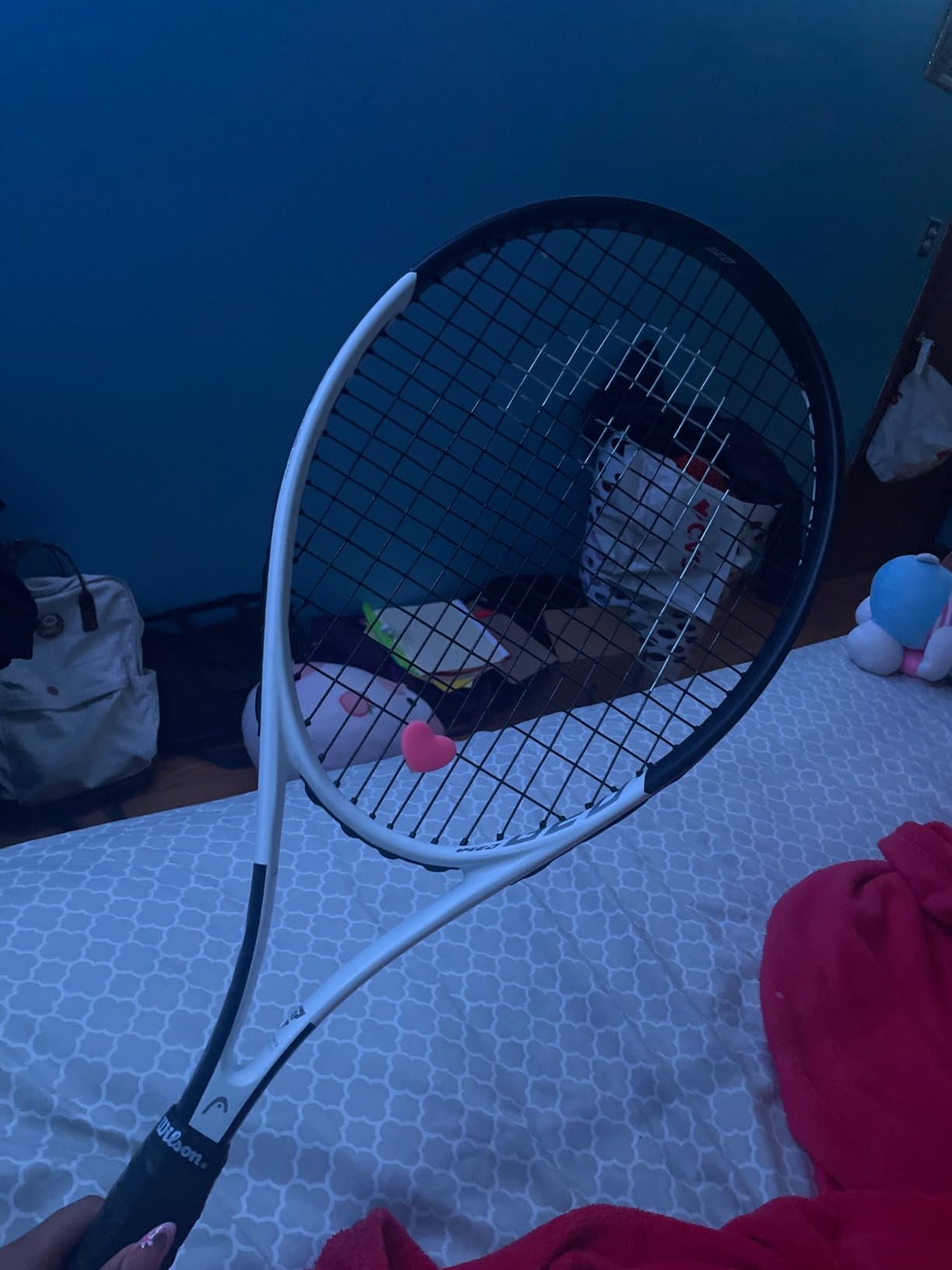
The Geo Power Technology in the frame is aimed at generating power without demanding a big swing, which is the right brief for a beginner. The aluminium frame with a graphite shaft is a proven construction, and the warranty means a manufacturing fault is not your problem to solve.
The reservation that comes up most is the 4 3/8 inch grip, which is at the larger end and can feel bulky for players with small hands. If that sounds like you, read the sizing note below. Otherwise this is a low-drama choice: a decent frame that will not surprise you, which is what a first purchase should be.

Before you buy: measure for the 4 3/8 inch grip
Large grips are not a quality signal, they are a fit question. If your hand is small, a 4 3/8 inch handle will make you hold the racket harder than you should, and that tension is a common trigger for early elbow soreness. A smaller frame such as the Ti Conquest or the Teloon will suit you better.
Before you buy: synthetic gut is a feature, not a compromise
Beginners often ask for the stiffest string they can get because it sounds more professional. It is the wrong instinct. A soft synthetic or multifilament string at moderate tension gives you power and comfort together, and you can always move to a firmer setup once your technique supports it. Leave the gut in place for your first season.
12. WOED BATENS Two Player 27 Inch Set: Best Lightweight Pair for Two Players
Pro Tennis Racket for Adults, 2 Player 27 inch Speed Tennis Racquet Acceptable for Beginner and Professional with 3 Tennis Balls, 2 Vibration Dampes, 2 Overgrips, Tennis Bag (Pink-Blue)
180 g frame
27 inch length
3 3/8 inch grip
Two rackets and dampeners
Pros
- Two-racket set sized for couples or families learning together
- Very light at 180 g and easy to carry
- One-piece integrated construction resists deformation and absorbs shock
- Two-layer overgrip with a replaceable sweat absorbent grip
- Bundle includes balls dampeners overgrips and a carry bag
Cons
- One review reported a colour that did not match the listing
- Generic brand with no stated warranty
Best for: two people learning together who want the lightest pair of rackets in the roundup and a complete bundle in one box.
At 180 g listed, this is by some distance the lightest frame here, and that is a real feature for a beginner with a slower swing. You can flick it quickly, change direction without effort, and carry a pair without noticing the weight. The one-piece integrated construction is designed to resist deformation and absorb shock, which suits a player who will mishit a lot of balls in the first months.
The bundle is generous: two rackets, three balls, two vibration dampeners, two overgrips and a bag. The two-layer overgrip is worth calling out, because the replaceable sweat-absorbent top layer means you can refresh the grip without replacing the whole handle.
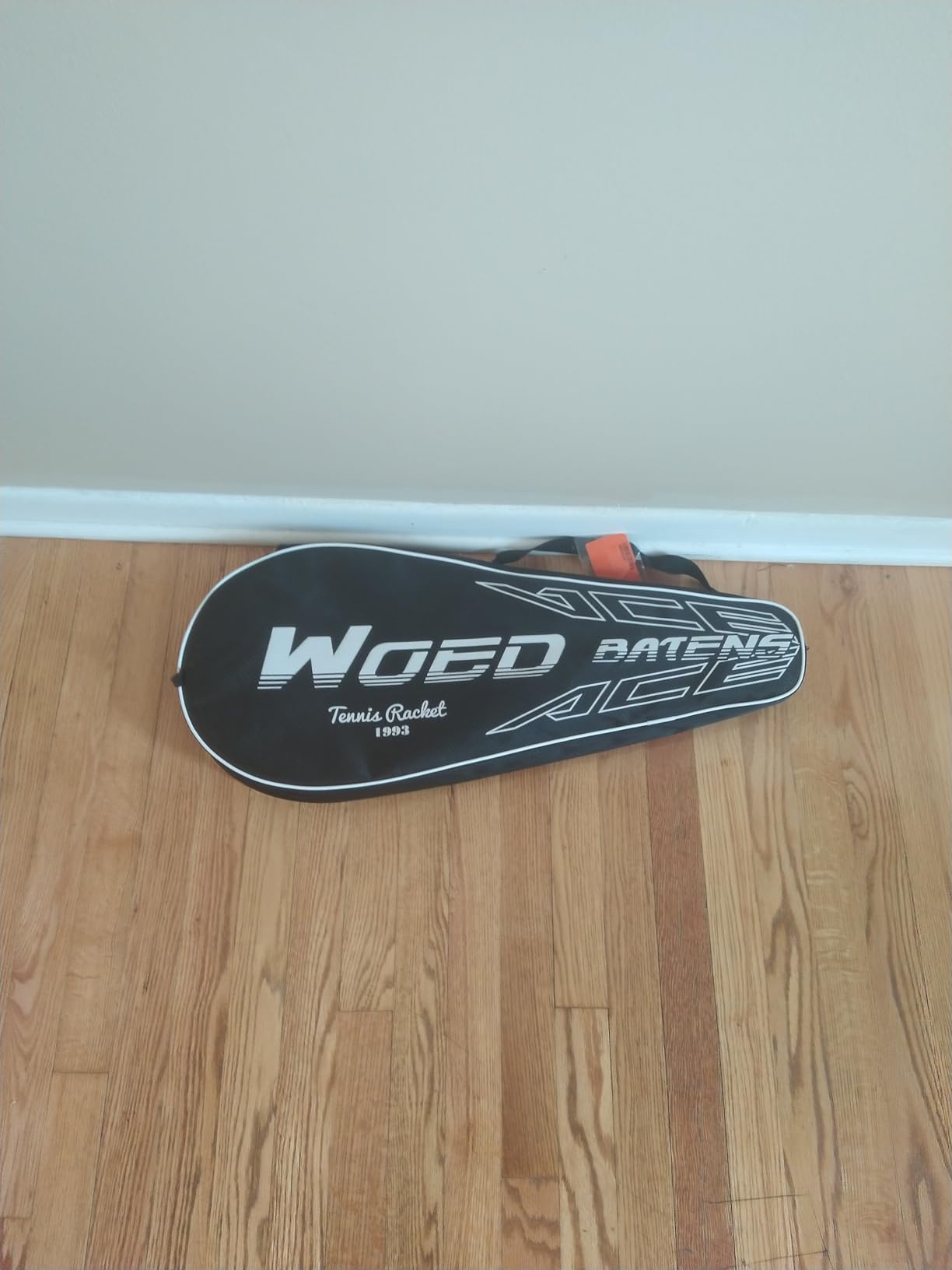
Buyer feedback describes the frames as sturdy, light and genuinely good for beginners, and the 81 percent five-star share reflects a well-liked budget set. Several owners mention that the dampeners take the sting out of the aluminium frame, which is worth having fitted from the start.
The 3 3/8 inch grip is among the smallest handles in this roundup, so treat this as a frame for small hands. If either player has a larger hand, the grip will feel cramped and you will grip harder than you should. The isolated colour mismatch complaint is the only recurring defect, and most buyers were satisfied regardless.
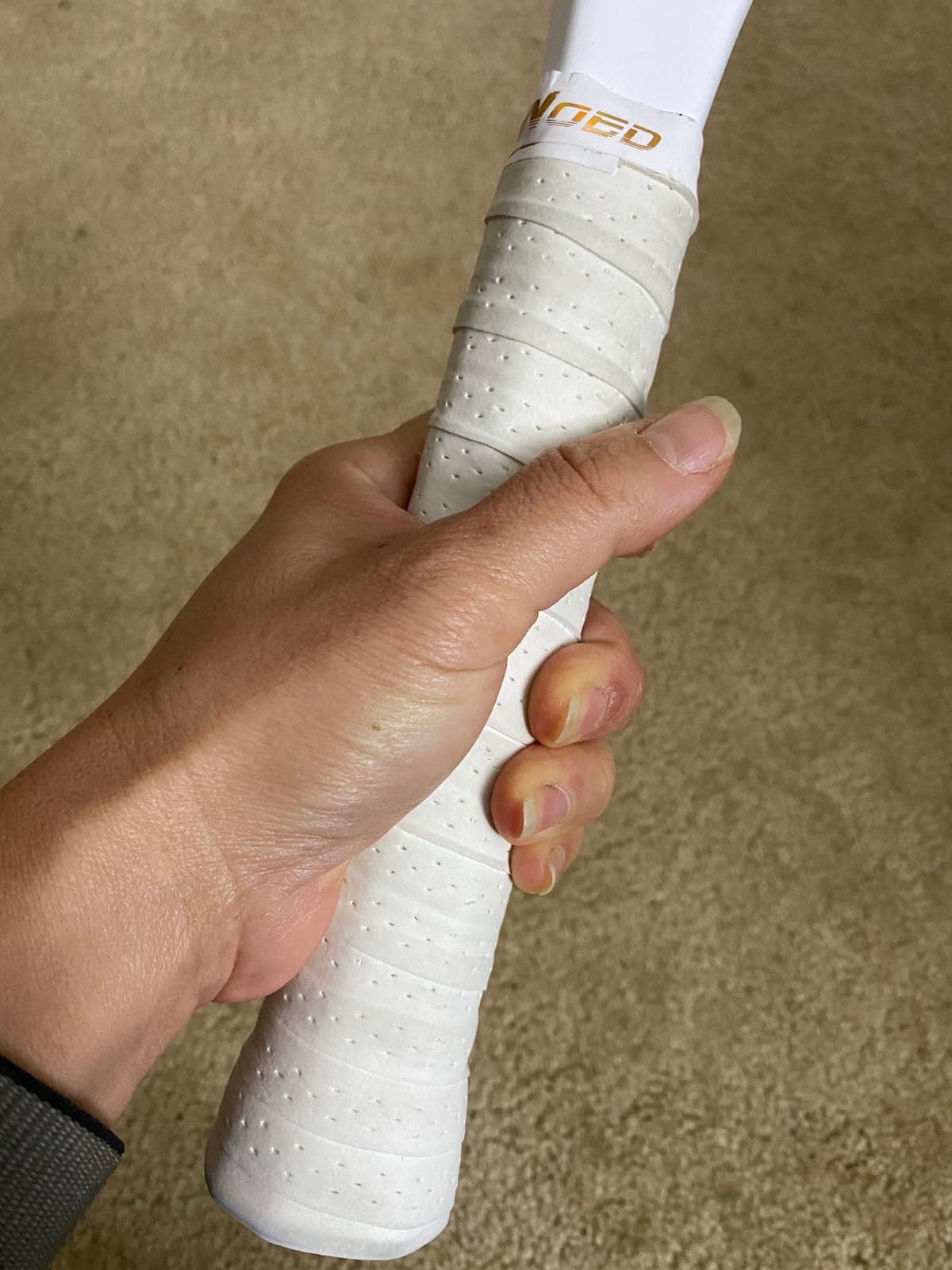
Before you buy: the grip is very small
3 3/8 inch suits smaller hands, often younger or female players. For an adult with a medium to large hand it will be tight, and tightness at the grip is the most common cause of a sore forearm in new players. Check your measurement first, and if it is above 4 inch, choose a 4 1/4 inch frame instead.
Before you buy: a two-player set for a solo player
Do not buy a pair if you are playing alone. This set earns its price on the second racket, and for one player the budget is better spent on one frame with a larger head and on a couple of coaching sessions. Pairs make sense for couples, siblings, and a parent introducing a child to the sport.
How to Choose a Tennis Racket as a Beginner
Choose a tennis racket as a beginner by fixing four numbers before you look at any brand: head size, unstrung weight, grip size and stringing. Everything else on the spec sheet is marketing. Get those four right and the racket will fit your game; get them wrong and no amount of technology will rescue it. Here is how each one actually affects your first year of playing.
If you want the short version: pick a head between 100 and 110 square inches, an unstrung weight between 280 and 300 grams, the smallest grip that still lets your fingertips reach the handle butt, and a pre-strung soft string at moderate tension. That combination is the specification of a good first racket, and most picks on this list sit close to it.
Head size and the sweet spot
Head size is the single most important number for a beginner and the one most often ignored. It is measured in square inches, and a larger head means a larger sweet spot, which means more of your shots land where you aimed them even when contact is imperfect. The range to target is 100 to 110 square inches. Frames well above 115 square inches are usually oversized recreational designs, and they are forgiving but slow through the air and dull at the net.
Is a bigger racket head better for a beginner? Within reason, yes. A 110 square inch head is meaningfully more forgiving than a 100 square inch head, and it is only marginally slower to swing. Beyond about 115 square inches you start trading away control for a forgiveness you no longer need, and the frame becomes hard to place accurately on short swings.
Unstrung weight and swing weight
What is the best weight for a tennis racket for beginners? Between 280 and 300 grams unstrung. Below 280 grams some frames feel underpowered, and above 300 grams many new players start feeling it in the shoulder and elbow within a few sessions. Manufacturers quote unstrung weight because it is comparable between frames; adding a string adds roughly another 15 to 20 grams depending on what you use.
What is a good swing weight for a tennis racket? The number people actually complain about is swing weight, not unstrung weight. A head-heavy frame of the same weight swings heavier at the end, which is exactly what a weak swing does not need. For a beginner, prefer a head-light or neutral balance, or a frame that is light overall, so the racket follows your hand rather than fighting it.
Grip size: buy small and build up with an overgrip
Measure your hand before you order anything. Put the palm of your non-dominant hand flat on a table, run the fingers of your dominant hand from the base of the index finger to the crease of the palm, and that distance is your grip size in inches. Then convert using the brand chart, because Wilson, Babolat, Head and Yonex all number grips differently. Our beginner impact driver guide explains the same handle-size logic for tools.
The rule is simple and it is the one experienced players repeat: if you are between two sizes, buy the smaller one and build it up with an overgrip. Adding a thin overgrip is easy, removing a too-fat grip is impossible. A grip that is too small makes you hold the racket harder, and that tension travels into the forearm and elbow, which is where most early tennis injuries start.
String pattern and tension
Should a beginner care about 16×19 versus 18×20? Barely. The 16×19 pattern is the beginner standard because the wider string spacing produces a larger effective sweet spot and more free power. An 18×20 pattern is tighter, more controlled, and better suited to an experienced player who already generates pace. For your first racket, look for an open 16×19 pattern.
Tension matters more than pattern. A moderate tension gives you power and comfort together. Do you need to restring your first tennis racket? Only when the strings break, feel dead under tension, or you are adding vibration dampeners to soften a harsh frame. Until then, leave the factory setup alone, and if you do restring, ask for a soft multifilament or synthetic string at a moderate tension rather than a stiff polyester.
Frame material: aluminium, graphite and titanium
Should a beginner use a graphite or aluminium racket? Either works, and the difference is feel rather than ability. Aluminium frames are heavier, cheaper, more durable and more muted. Graphite and composite frames are lighter, stiffer and give a crisper response that rewards a developing swing. Titanium sits between them, offering low weight with good strength. For a slow swing, weight and comfort matter more than material, so an aluminium frame is a legitimate choice.
Frame construction also drives arm comfort, which is the part that matters. A more flexible frame absorbs the shock of impact rather than passing it up the handle. Oversized aluminium designs and frames with built-in damping systems at the throat are the most forgiving in this respect. That is one of the reasons the Wilson recreational frames and the HEAD Ti frames surface so often in arm-comfort conversations.
Pre-strung versus unstrung
As a total beginner, buy pre-strung. It arrives ready to play, the tension is already set to something sensible, and you do not have to learn what a string and a tension are before your first session. Unstrung frames cost less and let you choose your own setup, which is a real advantage if you already know what you want or if your local shop is convenient.
The exception is if you cannot find the size you need pre-strung. Grip size availability varies a lot between brands, and an unstrung frame is sometimes the only way to get a size that fits your hand. In that case, order the stringing at the same time so the frame arrives finished.
Racket length and juniors
For an adult, racket length barely changes how the game feels. Most full-size frames are 27 inches, and the 27.5 and 27.7 inch frames on this list add a little reach on serves and wide balls. It is not worth choosing a frame on length alone. For a child it matters a great deal, and the standard chart runs 19 inches for players under about 4 foot 10, 21 inches up to around 5 foot 2, 23 inches to about 5 foot 6, 25 inches to about 5 foot 10, and 26 inches above that.
Arm Safety and Tennis Elbow in Year One
Most new players are more worried about tennis elbow than about winning points, and that worry is reasonable but manageable. Tennis elbow is an overuse injury driven by grip pressure and by the shock of impact traveling up the arm, not by a single bad shot. Three things reduce it, and all three are free.
The first is weight. Stay at or below about 300 grams unstrung while your swing is still developing, and prefer a head-light or neutral balance. A racket that follows your hand does not load your elbow. The second is string choice, and this is the one most beginners get wrong. Avoid polyester strings entirely in your first year. They are stiff, they transmit shock, and the reason elite players use them is that they already generate enormous pace.
The third is a dampener and a fresh grip. A vibration dampener fitted in the middle of the string bed noticeably softens off-centre contact, which is where the sting comes from. A fresh overgrip stops you squeezing, because a slippery handle makes every player grip harder than they intend.
The frames in this list that get mentioned most often in arm-comfort feedback are the HEAD Ti S6, with its very light strung weight and 115 square inch head, the Wilson Federer Adult Recreational with its Stop Shock Pads, and the HEAD Geo Speed, which arrives strung with synthetic gut. The lightweight aluminium sets at 180 and 260 grams are also cited by players with existing elbow problems, simply because less mass means less impact.
One last thing: if you feel elbow discomfort, stop for a week rather than pushing through. Elbow tissue does not heal well under load, and two weeks off at the start is much cheaper than six months off later.
Used and Demo Rackets: A Smarter First Purchase
Demo and used rackets are the recommendation that shows up most often in player forums, and the reasoning is sound. A demo program lets you swing several frames in a shop with coaching staff watching, and a used frame from a club let you handle a racket you might not have chosen otherwise without committing. A demonstration program at a local pro shop is genuinely worth an hour of your time.
If you buy used, inspect the frame closely before you pay. Look for cracks at the throat and around the grommets, check that the frame is straight when viewed edge on, and check the strings for broken or dead strands. A racket that has been in a wet bag or a hot car is a racket you should skip. Bring fresh balls and hit with it before committing, and remember that a good grip can be added for very little.
Our view is that a demo first, a new beginner racket second, is the most efficient order. The demo tells you which head size suits your swing and whether you need a larger grip, and then you can buy the right frame new with confidence instead of replacing it in six months.
Frequently Asked Questions
What is the best tennis racquet for a beginner?
The best tennis racquet for a beginner is one with a head size of 100 to 110 square inches, an unstrung weight of 280 to 300 grams, and a grip size that fits your hand without cramping. On this list, the Wilson Federer Adult Recreational and the HEAD Ti S6 are the strongest all-round choices for a first racket.
What size tennis racket is best for a beginner?
Most adult beginners want a full-size frame at 27 inches, with a head between 100 and 110 square inches. A 115 square inch head is even more forgiving but slower through the air. Children should use a length matched to their height, from 19 inches at around 4 foot 10 up to 26 inches above 5 foot 10.
How much should I spend on a tennis racket as a beginner?
Most beginners do not need to spend much. Frames in the low tens to the forties cover the true first racket, and paying more only buys head size, weight balance and build quality. If your budget allows, spend it on a couple of coaching sessions before upgrading, because coaching fixes technique and a racket cannot.
What is the best weight for a tennis racket for beginners?
Between 280 and 300 grams unstrung is the right band for most beginners. Below 280 grams some frames feel underpowered, and above 300 grams players with a developing swing often feel it in the shoulder and elbow. Also prefer a head-light or neutral balance, because swing weight matters more than unstrung weight.
Should a beginner buy a pre-strung or unstrung racket?
Buy pre-strung as a total beginner. It arrives playable at a sensible tension, so you can start playing without learning strings and tension first. Unstrung frames cost less and let you choose your own setup, which only makes sense if you already know what you want or need a grip size that is not offered pre-strung.
What racket does Novak Djokovic use, and should a beginner copy it?
Djokovic plays a very light, very head-heavy pro frame with a small head size and a dense string pattern, all built for his own extreme racket head speed. Copying it as a beginner is the most common expensive mistake. A large head and a light frame do the work for you; his racket expects you to do all of it yourself.
Which Beginner Racket Should You Buy?
If you want a single answer to the question of the best tennis rackets for beginners, start with the Wilson Federer Adult Recreational Racket. It has the highest rating and by far the largest volume of buyer feedback in this roundup, it weighs 295 grams unstrung, and its Stop Shock Pads put it near the top of the list for arm comfort. If your hand is smaller than average, the HEAD Ti Conquest is the safer buy at 4 1/4 inch and 108 square inches.
If forgiveness matters more than anything else, the HEAD Ti S6 wins outright with a 115 square inch head and an 8.6 ounce strung weight, and it is the frame most often recommended as a first full-size racket. For a household learning together, the two-racket sets here avoid the second-purchase scramble, and the Layway pack is the most complete of them. And if you are worried about your elbow, stay at or below 300 grams, choose a soft string, and fit a dampener.
Whichever frame you pick, give it one season before you judge it. Most players who regret a first racket regret buying a frame that was too heavy or the wrong grip size, and both of those mistakes are avoidable for the cost of a tape measure. Once your swing is consistent and you are hitting with pace, a mid-range frame becomes the better buy, and the racket you started on will have done its job.