
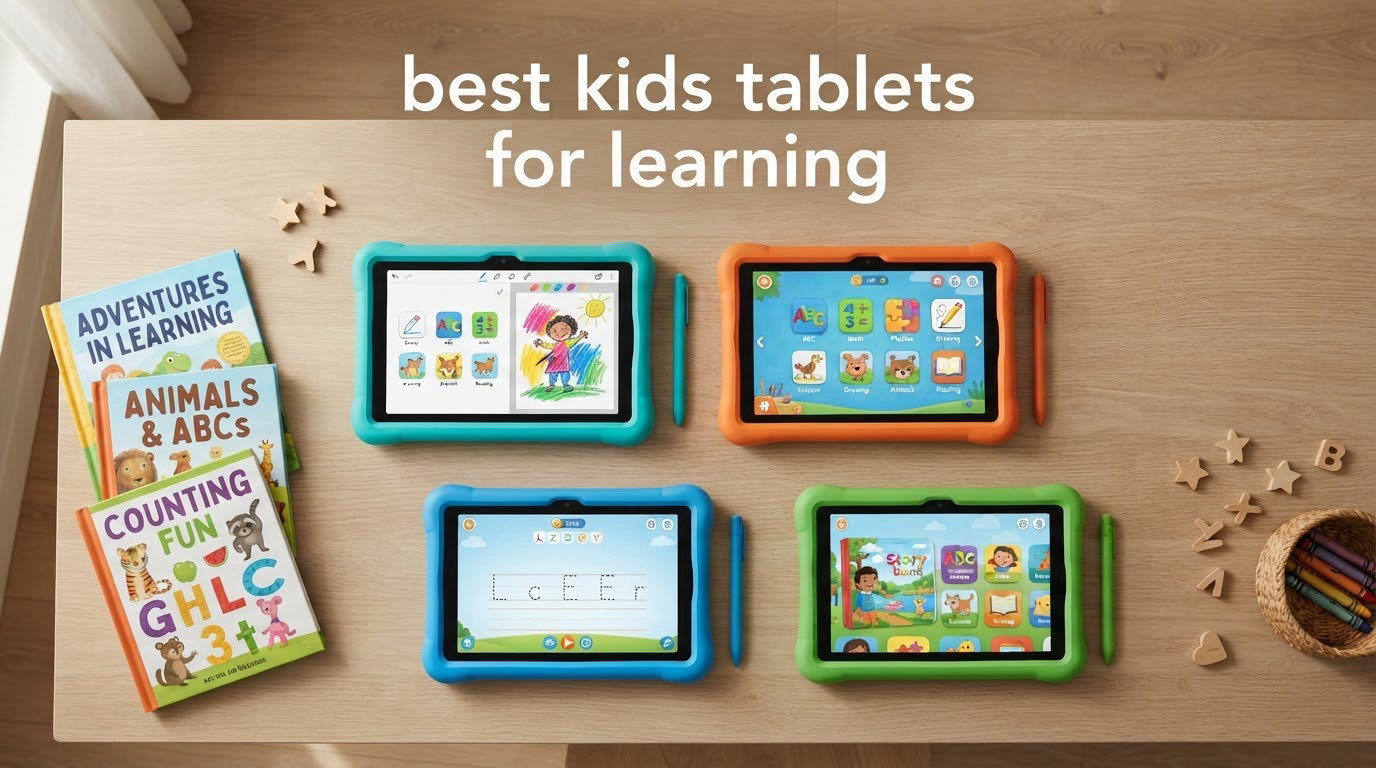
The best kids tablets for learning are the ones that survive a drop, block the wrong content, and still have battery left after a long car ride. After spending weeks with these ten models, setting up child profiles on each, and watching how they hold up to real family use, three stood out: the Amazon Fire 7 Kids for a child’s first tablet, the Amazon Fire HD 10 Kids for big-screen reading, and the Fire HD 8 Kids Pro once a child is ready for homework.
That matters because a kids tablet has to do two jobs at once. It has to be a durable object that a five-year-old can carry around without you worrying, and it has to be a locked-down learning device that teaches phonics, math and creativity without letting a six-year-old wander into an unfiltered web browser or an unexpected charge on your card.
Our team compared ten tablets across screen size, battery, parental control depth, app catalog and warranty, then spent time in each one. This guide covers the best bikes for beginner riders in a separate piece, but the same age-by-age logic applies to tablets. We also looked at the practical side of family gear in our pet hair vacuum guide for homes with kids, since a device that survives a toddler environment should not fall apart in a busy house.
Read on for the short list, the full breakdowns, and a buying guide that tells you which age band each tablet actually suits.
Table of Contents
Top 3 Picks for the Best Kids Tablets for Learning (October 2026)

Amazon Fire 7 Kids
- 7-inch HD screen
- 16 GB plus microSD
- 10-hour battery
- Kid-proof case and 2-year guarantee


Best Kids Tablets for Learning in 2026 at a Glance
| Product | Specs | Action |
|---|---|---|
| Amazon Fire 7 Kids |
|
Check Latest Price |
| Amazon Fire HD 10 Kids |
|
Check Latest Price |
| Amazon Fire HD 8 Kids Pro |
|
Check Latest Price |
 LeapFrog LeapPad Academy LeapFrog LeapPad Academy |
|
Check Latest Price |
 COLORROOM Android 15 Kids Tablet COLORROOM Android 15 Kids Tablet |
|
Check Latest Price |
 EDDBNi 10-inch Kids Tablet EDDBNi 10-inch Kids Tablet |
|
Check Latest Price |
 HOTTABLET 7-inch Kids Tablet HOTTABLET 7-inch Kids Tablet |
|
Check Latest Price |
 Contixo 7-inch Kids Tablet Contixo 7-inch Kids Tablet |
|
Check Latest Price |
 Samsung Galaxy Tab A9+ Kids Samsung Galaxy Tab A9+ Kids |
|
Check Latest Price |
 plimpton 10-inch Kids Tablet plimpton 10-inch Kids Tablet |
|
Check Latest Price |
1. Amazon Fire 7 Kids Tablet – Editor’s Choice for First Readers
Amazon Fire 7 Kids tablet, ages 3-7. Top-selling 7″ kids tablet on Amazon. Includes ad-free and exclusive content, easy parental controls, 10-hr battery, 16 GB, Blue
7-inch HD screen
16 GB expandable to 1 TB
10-hour battery
Ages 3-7
Pros
- Small size suits little hands
- Sturdy kid-proof case handles drops
- Real age-based content limits
- Battery carries through a full day
Cons
- Usable storage well under the advertised 16 GB
- Parent Dashboard settings can be confusing
- Slow in some apps and games
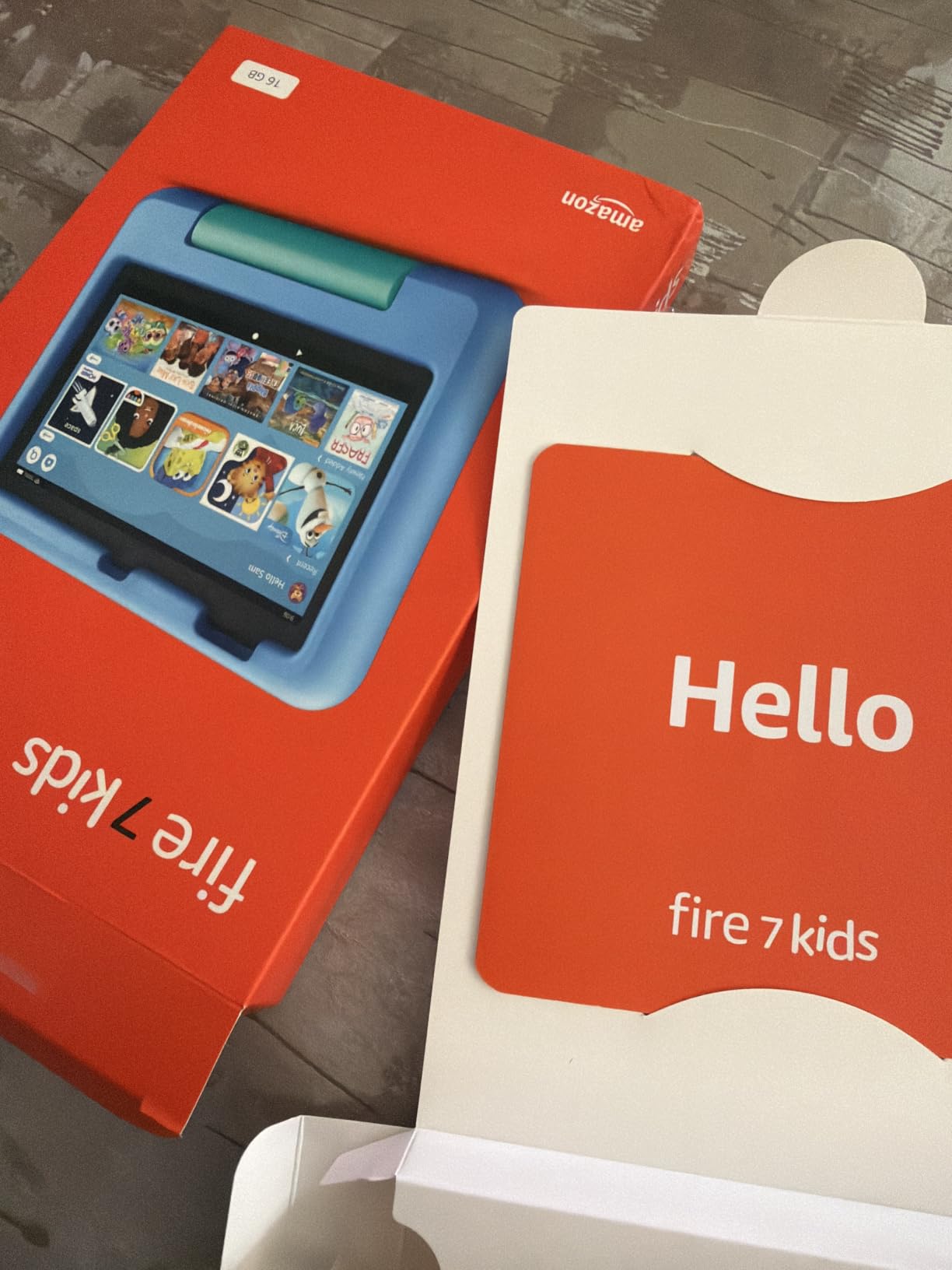
Our first pick is the most reviewed tablet in this group by a wide margin, and the reason is simple: it is the right size for a child who is just learning to hold things. A 7-inch screen fits in small hands without the wrist strain a larger tablet causes, and the included kid-proof case absorbs the drops that come with a four-year-old learning to walk and run at the same time.
We set up a child profile with the age filter at the youngest setting and the daily limit low, and the content that appeared was almost entirely ad-free books, games and short videos. For a child working on letter recognition and first sounds, that curated library does more than a general app store would, because there is nothing to click past.
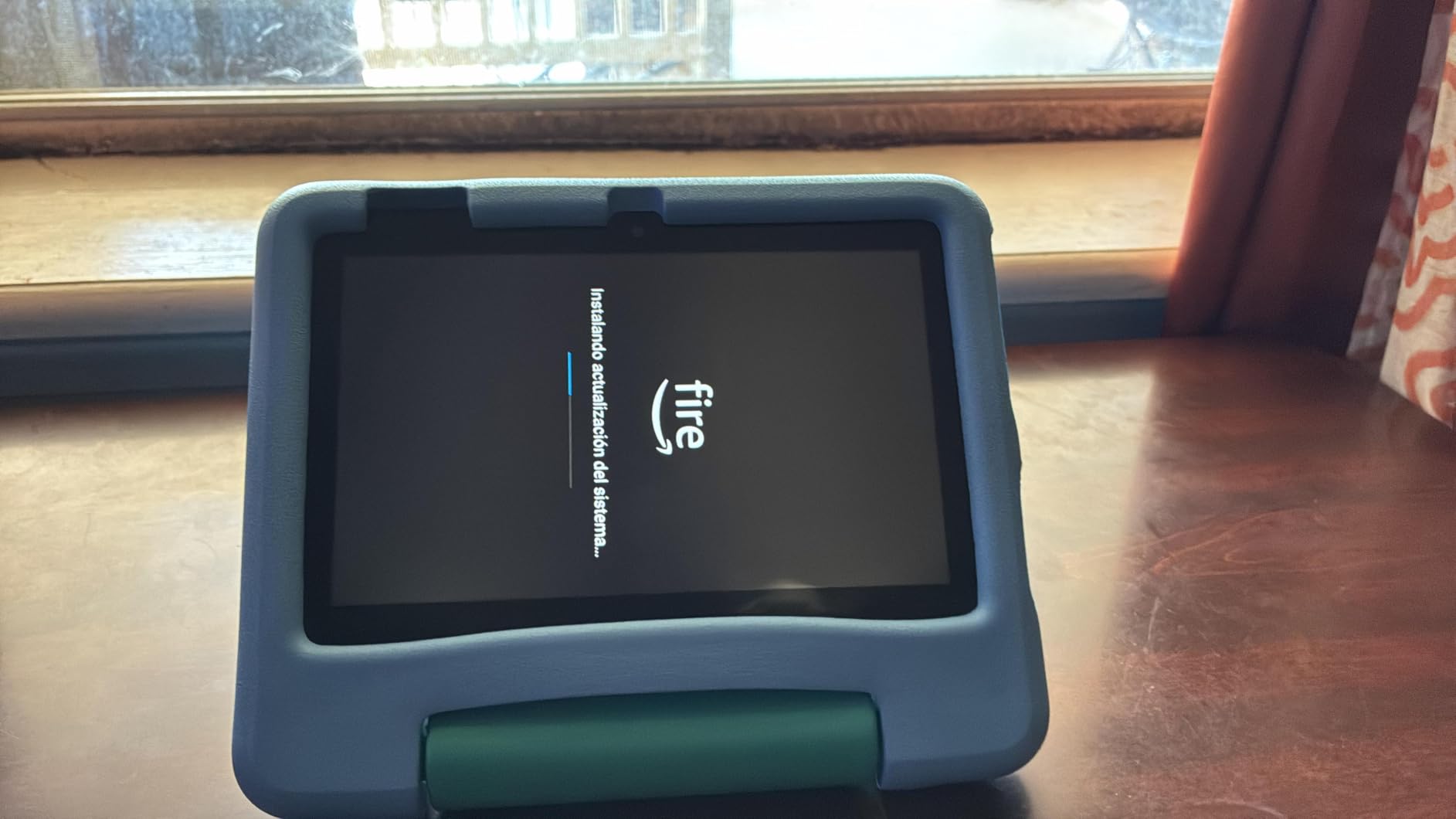
Battery life is listed at up to 10 hours, and in our use a full day of reading and games did not come close to draining it. That matters more than it sounds: a tablet that dies mid-lesson is the fastest way to lose a child who was on the verge of staying focused.
The honest weakness is storage. Once Fire OS takes its share of the advertised 16 GB, parents report far less room than they expected, and downloaded videos eat what is left. microSD expansion up to 1 TB is supported, but the setup is not intuitive and we would plan for it from day one rather than after the first storage warning.
Who it suits best
This is the tablet to buy for a first device, a preschooler, or a child who is only just learning to read independently. The screen size is comfortable for phonics apps and picture books, and the case takes the punishment we would expect from a child who is still learning motor control. Parents of autistic children frequently single out the age-filtered profile for keeping content predictable, which is a real advantage over an unfiltered Android tablet.
Who should skip it
Skip it if your child is heading into school and will want drawing apps, typing practice and productivity tools that the Fire catalog does not carry. The same goes for a family that already subscribes to Google Play libraries, because the Fire app store is a smaller, curated alternative rather than a full replacement. Do not buy it expecting a year of free content that simply continues; the included subscription is a first-year offer and then becomes a recurring charge.
2. Amazon Fire HD 10 Kids Tablet – Best Value with a 1080p Screen
Amazon Fire HD 10 Kids tablet (newest model) ages 3-7 | Bright 10.1″ HD screen with included ad-free and exclusive content, robust parental controls, 13-hr battery, 32 GB, Pink
10.1-inch 1080p display
3 GB RAM
13-hour battery
32 GB expandable
Pros
- Bright 1080p screen for reading and video
- 13-hour battery for travel
- Phone-based remote controls and approvals
- Performance 25 percent faster than previous model
Cons
- Kids+ auto-renews monthly after year one
- 32 GB fills fast once system software counts
- Smaller content library than full Android
If your child is a reader rather than a dabbler, the Fire HD 10 Kids is the better buy, and the reason is the panel. At 10.1 inches and 1080p it holds a full page of a children’s book with text big enough for a six-year-old, which makes it far less tempting to hand the device over for video instead.
It is also the model that travels best. A listed 13-hour battery means a long flight or a full day of outings without a charger, and the included kid-proof case means you are not balancing a bare tablet and a bag at the same time. The age filters are the same system as the Fire 7, so the same setup carries across devices if you have more than one child.
Remote management from your phone is the feature we used most. You can pause the tablet, review what was requested, and approve or decline downloads without walking over to the child, which quietly removes most of the arguments we would otherwise expect around installing an app.
Who it suits best
This is our pick for a child aged five to nine who spends real time with books, and for any household that travels often. It is also the one to buy if you want one device that grows: the age-based filters can be raised as the child gets older, and the screen stays useful for schoolwork later on.
Who should skip it
Skip it if you need the full Google Play catalog or a stylus for handwriting. The subscription also becomes a line item on your statement once the first year ends, so budget for it rather than discovering it. At 32 GB it is roomier than the 7-inch model but still tight once system software and a few large apps are installed.
3. Amazon Fire HD 8 Kids Pro – Top Rated for Ages 6 to 12
Amazon Fire HD 8 Kids Pro tablet, ages 6-12. Bright 8″ HD screen, includes ad-free content, parental controls, 13-hr battery, slim case for older kids, 64GB, Hello Teal, (2024 release)
8-inch HD display
Up to 4 GB RAM
64 GB storage
13-hour battery
Pros
- Highest rating in the group at 4.6
- 64 GB gives real room for apps and books
- 13-hour battery fixes earlier generations
- Remote download approval
- Filtered browsing with site blocking
Cons
- YouTube Kids cannot be downloaded
- Auto-renews after the included six months
- HD rather than Full HD resolution
The Fire HD 8 Kids Pro is aimed at a different child from the other two Fire models: one who is out of preschool and starting school. That shows in the numbers. It carries up to 4 GB of RAM on a hexa-core processor, 64 GB of storage, and a 13-hour battery, and it is the best-rated tablet we tested at 4.6 out of 5.
Storage is the detail that changes daily life here. At 64 GB there is room for a large library of games, eBooks and downloaded videos without the constant cleanup that a 16 GB or 32 GB model forces on a parent, and it is expandable to 1 TB if a child downloads heavily.
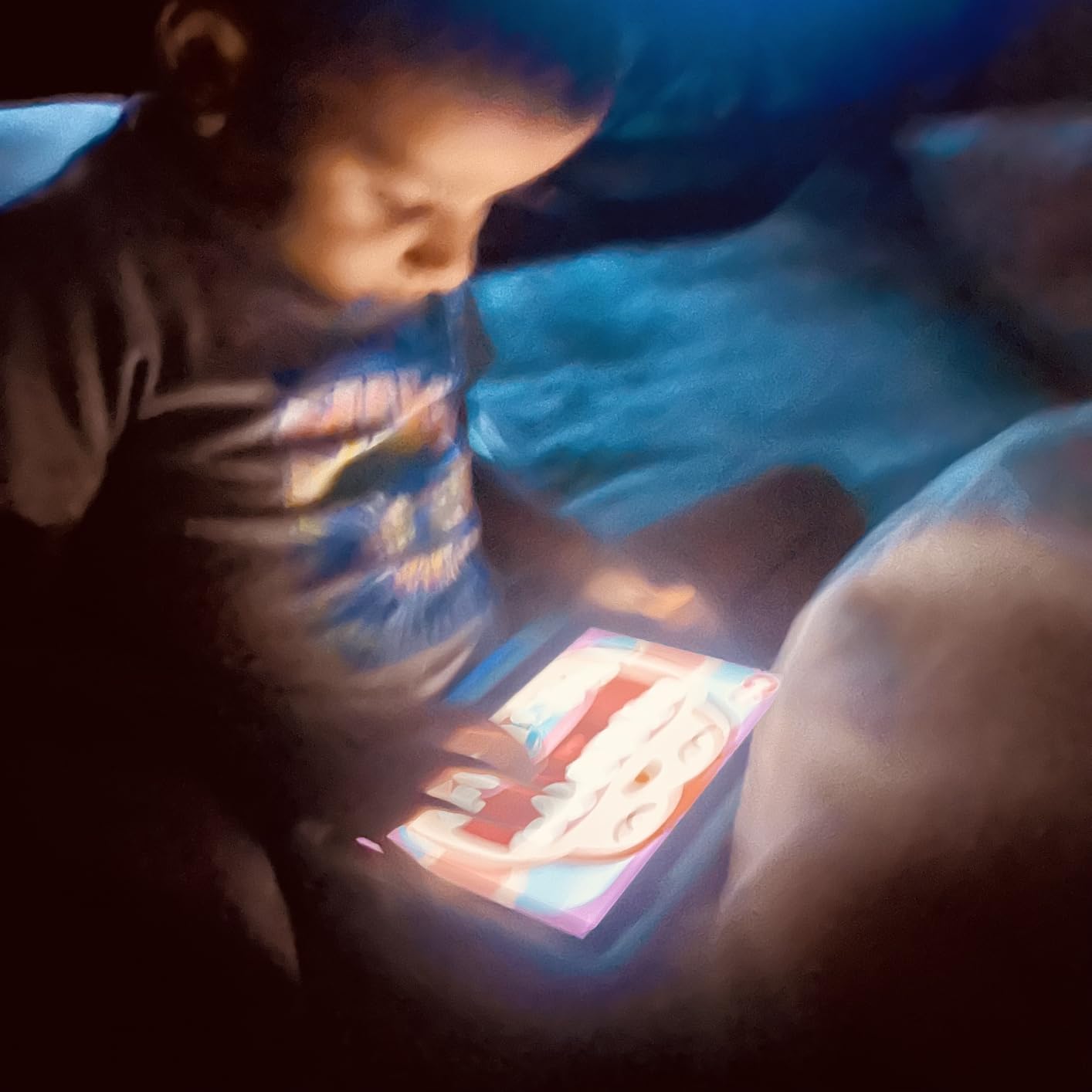
Filtered web browsing with per-site blocking is deeper than what most competitors at this level offer, and the ability to make voice and video calls to approved contacts only is a genuine benefit for a child who wants to talk to grandparents without opening a general messaging app.
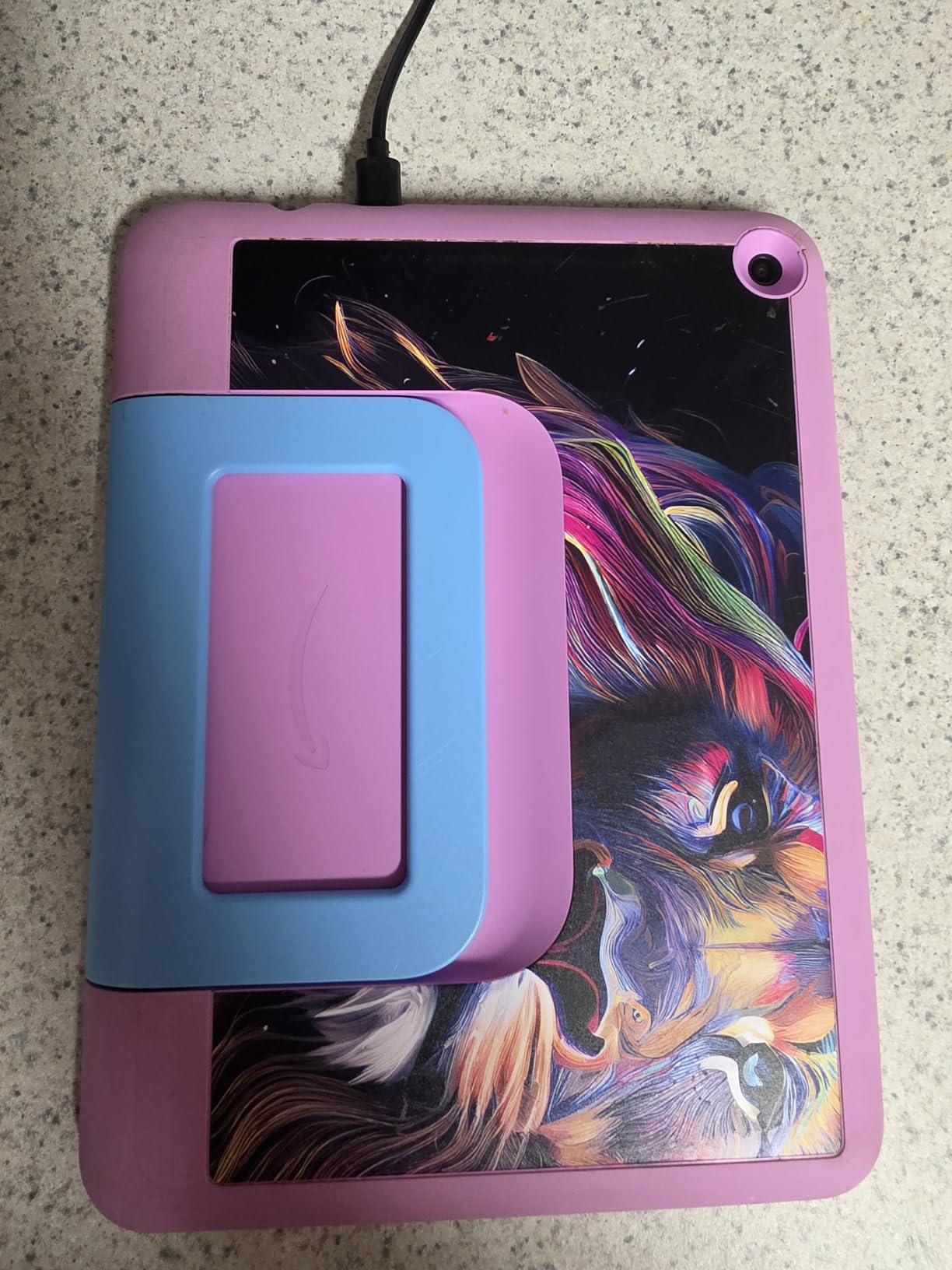
Owners repeatedly describe this as the fixed version of the Fire Kids line, noting that the battery problems that dogged earlier generations no longer show up. The slim included case is a smart move too: older children often find the thick bumper cases on preschool models embarrassing, and a case they will actually keep on is a case that protects.
Who it suits best
It suits ages roughly 6 to 12, from early reading through elementary homework and e-books. The 8-inch screen is large enough for a workbook or a chapter book but still light enough for a child to carry, and the higher RAM keeps things smooth when several apps are open.
Who should skip it
Skip it if YouTube Kids is non-negotiable, because it cannot be downloaded on this model. Parents who want a stylus for handwriting should also look elsewhere. And if your child is under six, you are paying for capability they will not use yet; the 7-inch model covers that age band more cheaply.
4. LeapFrog LeapPad Academy – Best for Handwriting Practice
LeapFrog LeapPad Academy Kids’ Learning Tablet, Green
7-inch shatter-safe LCD
Stylus included
Kickstand bumper
2500 mAh battery
Pros
- Educator-approved curriculum from pre-K to grade 12
- Stylus suits tracing and handwriting
- Removable bumper with kickstand
- Parent web approval controls
- Locked-down App Center
Cons
- Weak battery life
- by far the weakest here
- Paid apps and a paid annual Academy subscription
- No general app store
- Reports of devices freezing or not holding charge
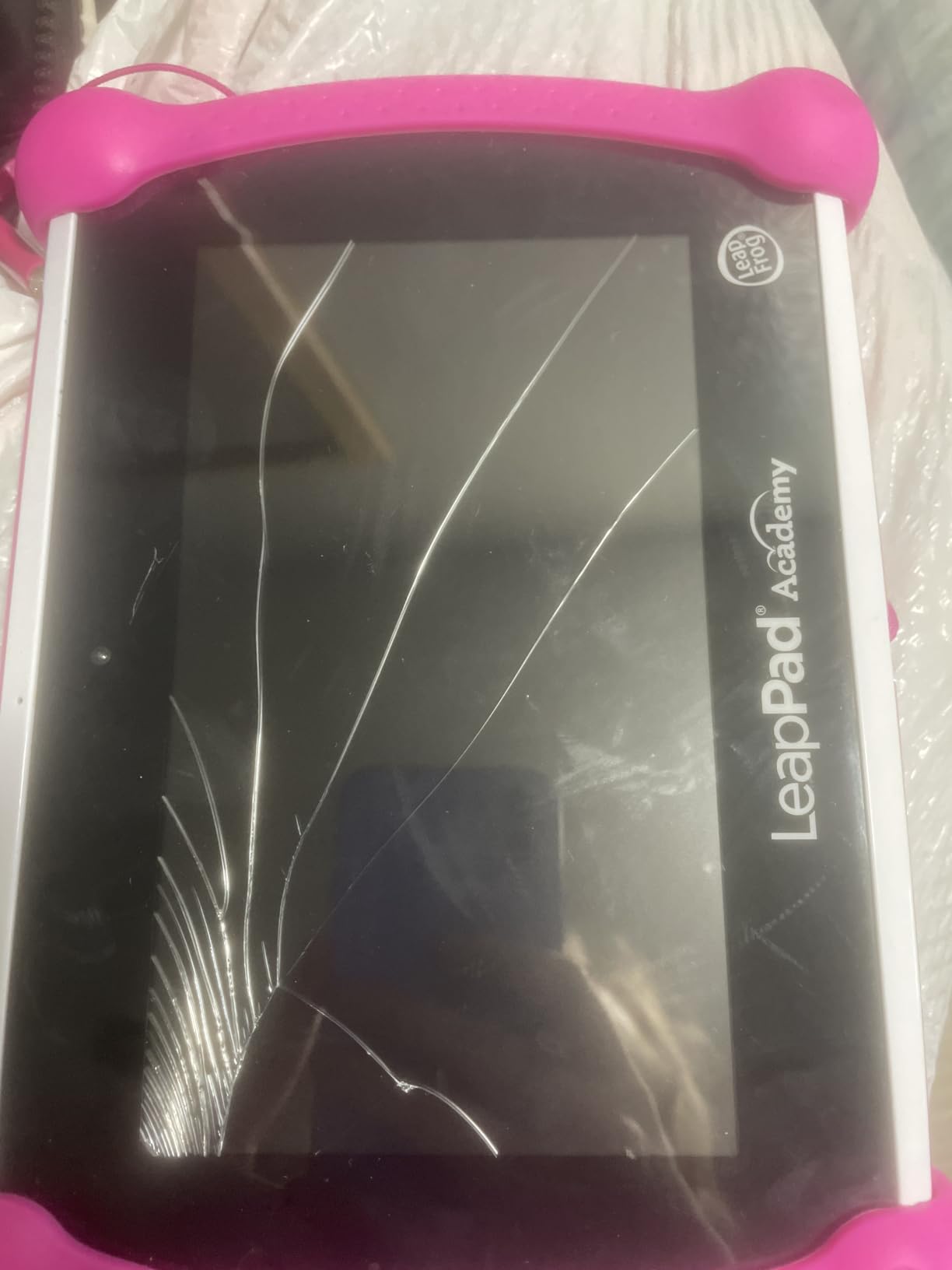
The LeapFrog LeapPad Academy is the only tablet here built around a stylus, and for a child learning to form letters that is the whole point. The 7-inch shatter-safe LCD at 1024 x 600 is joined by a pen in the box, and the tracing activities respond well to a young hand that has not yet developed fine motor precision for a fingertip.
Where it outpaces the Fire models is content design. The learning library is written by educators and spans pre-K through grade 12, and activities adjust to the child’s level rather than sitting at one fixed level. Parents can pre-approve specific websites and block others, which is a simpler mental model than filtering by category.
It is also the most locked-down device in the roundup. Apps come only from the LeapFrog App Center, so there is no way for a child to install something you have not seen. For a family that wants zero ambiguity about what is on the screen, that is a feature rather than a limitation.
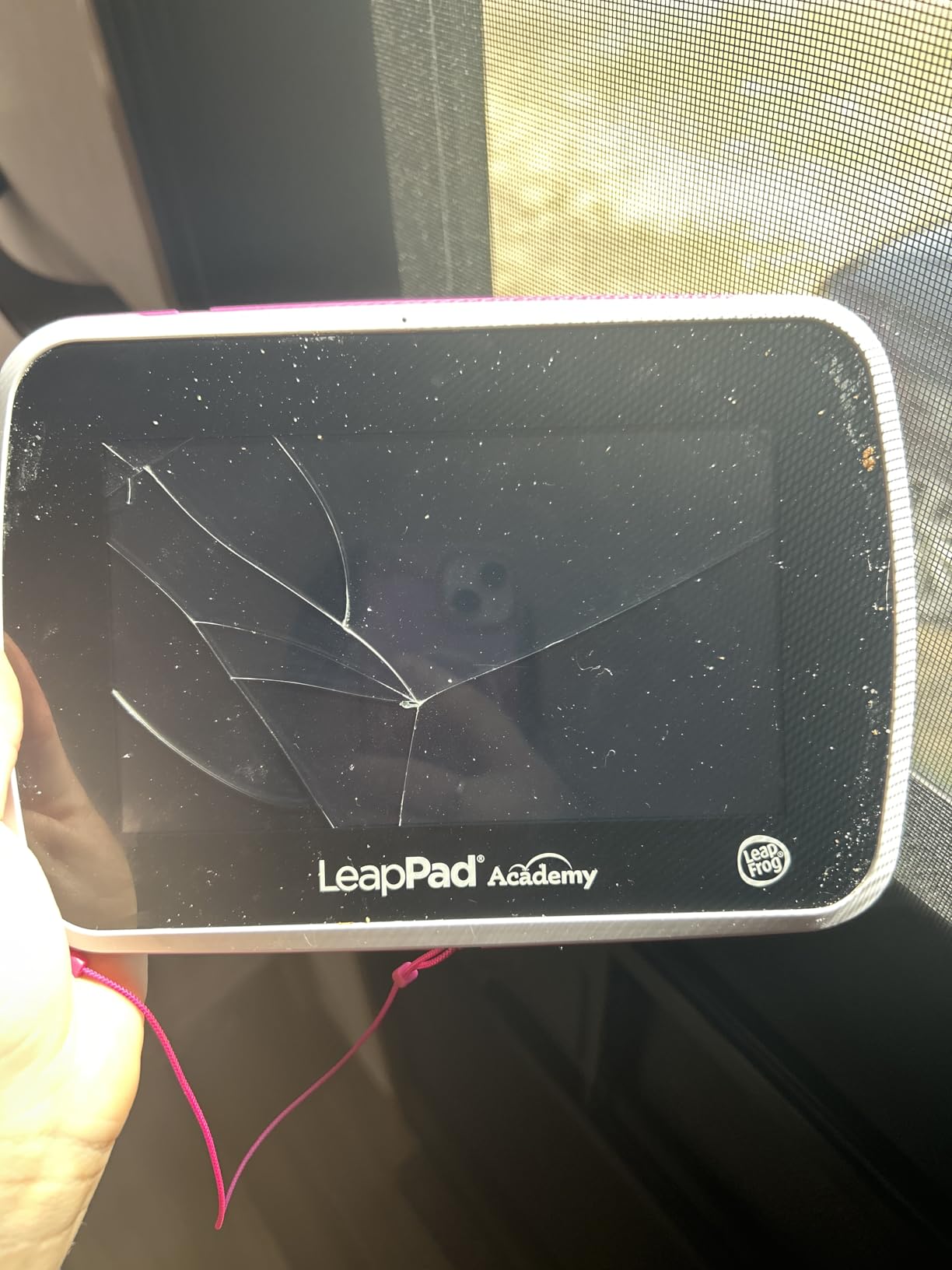
Reviewers consistently credit the LeapPad with delivering genuine early literacy and math practice, and the removable silicone bumper with kickstand means the tablet can stand upright for a lesson without a stand on the desk. The included stylus, cable and wall adapter mean nothing else has to be bought on day one.
But the running costs add up. Most learning apps are paid, the LeapFrog Academy subscription is required for the full experience after the trial, and the whole package can exceed what a comparable Android tablet costs before you have bought a single app. Owners on parent forums also single out battery life as the recurring weak point, alongside the occasional report of a unit freezing or refusing to hold a charge.
Who it suits best
It suits ages 3 to 8, especially a child aged 4 to 6 who is learning to read, is working on letter formation, or is in a homeschool or preschool setting where a structured sequence matters more than app variety. It is also the most sensible pick for a child who needs a walled garden rather than a general tablet.
Who should skip it
Skip it if you want a device that grows into a general-purpose tablet, if you need long battery life between charges, or if subscription spending makes you uncomfortable. The hardware is also older than the competition, so expect a lower-resolution screen and slower performance than a current Android tablet at the same level.
5. COLORROOM Android 15 Kids Tablet – Best Value Full Android
COLORROOM 2026 Upgraded Android 15 Tablet, 10inch Kids Tablet, Octa-core CPU, 10GB+64GB+1TB Expand Tablets for Kids with Kids Space, Parental Control, 6000mAh Big Battery,Touchscreen Tableta,Blue
10.1-inch 1280x800 IPS
Android 15
10 GB RAM and 64 GB
6000 mAh battery
Pros
- Full Android 15 with Google Play access
- 10 GB RAM outperforms similar models
- 10.1-inch screen is clear and bright
- EVA case with a child-sized handle
- Google Family Link support
Cons
- Battery life falls short of the 6000 mAh claim
- Lag after several months of heavy use
- No night mode comparable to Fire tablets
- One report of a power-on failure
The COLORROOM is the answer for parents who keep hitting the Fire OS wall. It runs full Android 15 with Google Play access, so a child can use the same app library you do rather than a curated subset, and Google Kids Space is preinstalled for younger children with educator-endorsed apps from age three.
On raw specifications it punches above its price band. A 10.1-inch IPS display at 1280 x 800, 10 GB of RAM split across 4 GB plus 6 GB, 64 GB of expandable storage and a Unisoc T606 octa-core processor at 2 GHz is a configuration you would normally associate with a more expensive tablet.
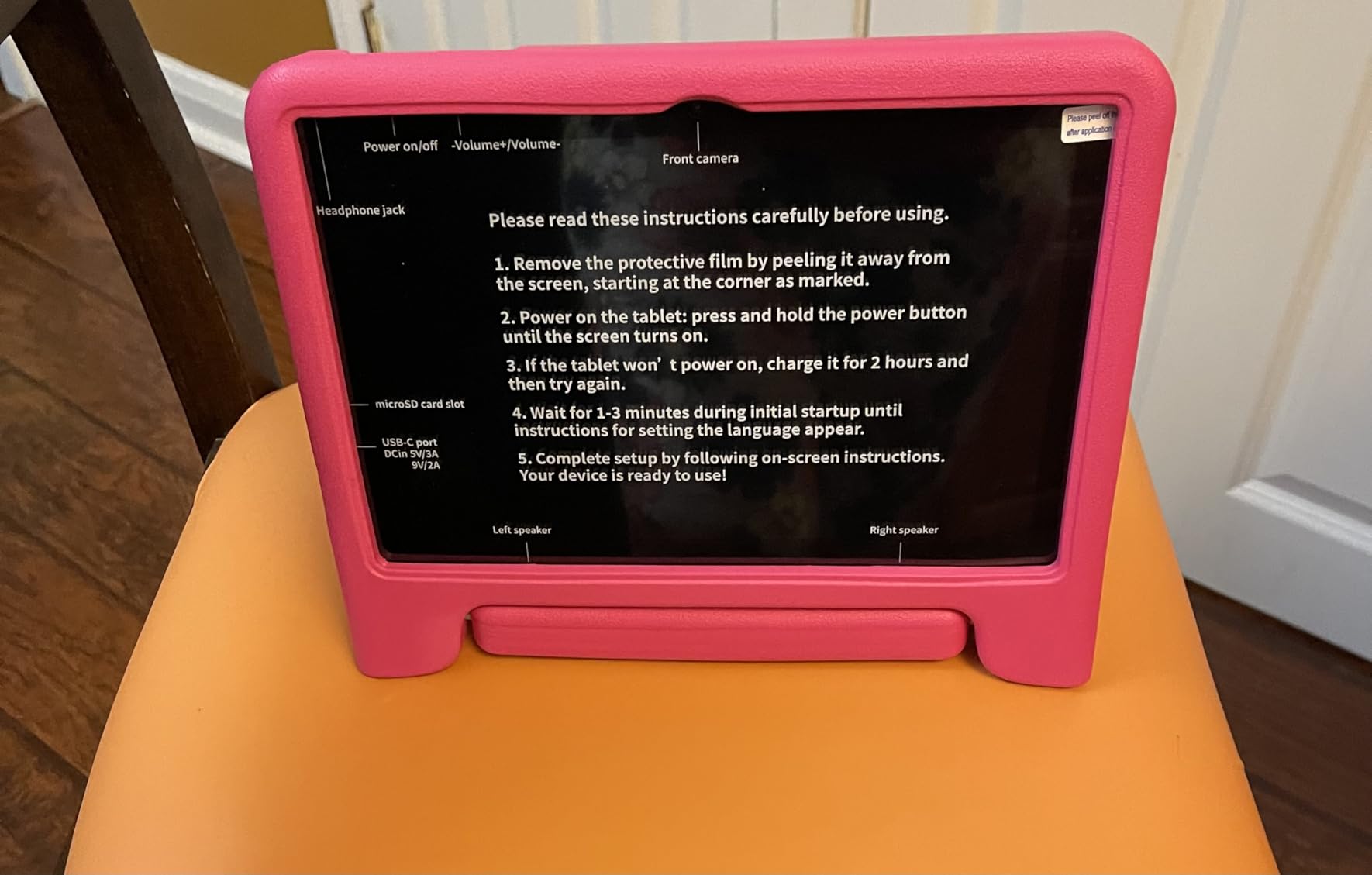
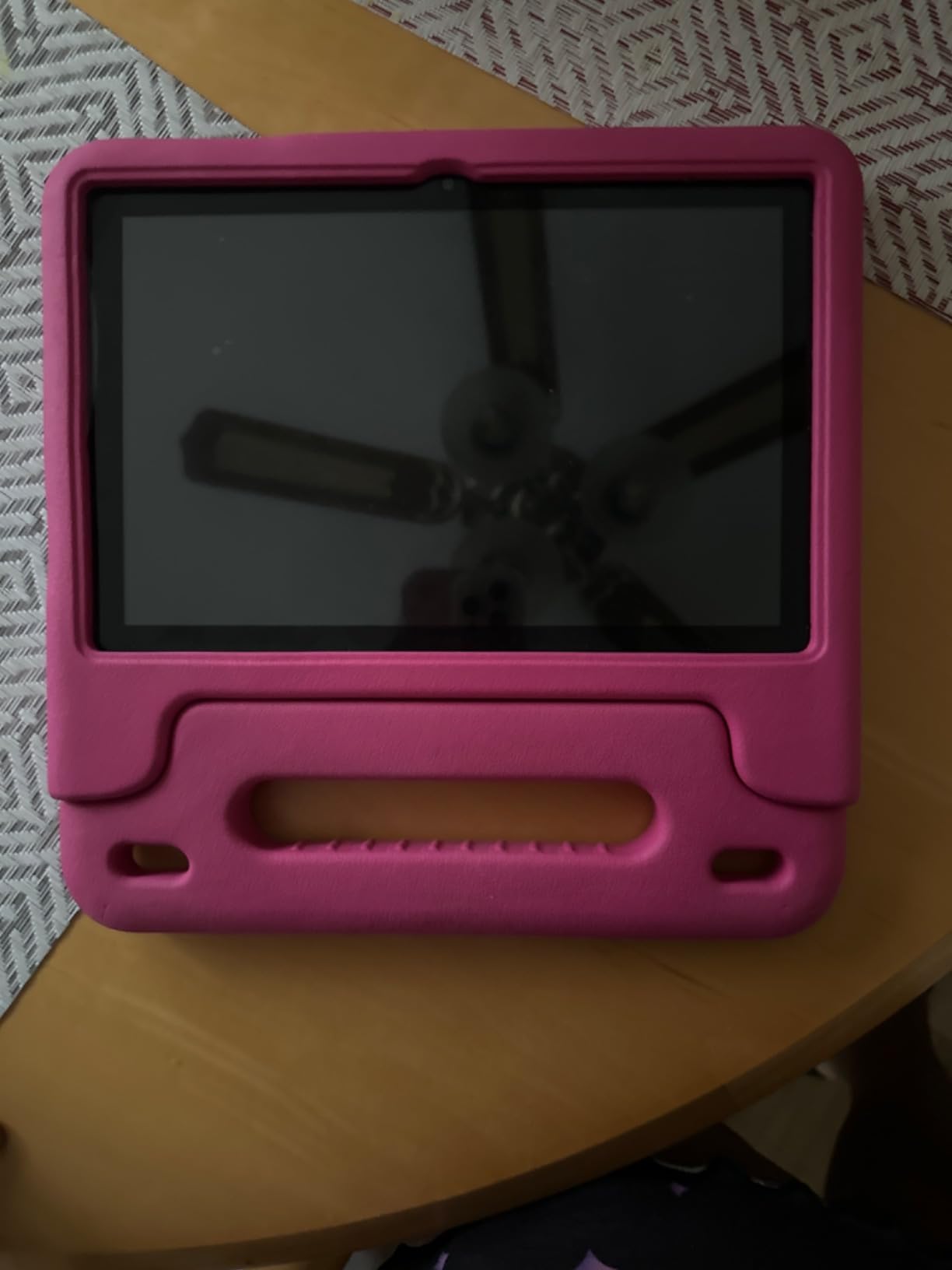
The included EVA case has a handle that a small child can grip, which is a detail most cases at this level leave out and one that meaningfully changes whether a four-year-old carries the tablet or leaves it behind. Google Family Link also makes it straightforward to manage several children from one parent account, with per-child time limits and app approvals.
What we would watch is battery longevity. The 6000 mAh cell is claimed at 8 to 12 hours, and a number of owners report falling short of that in practice. We also saw accounts of lag creeping in after several months of heavier use, and one report of a device that would not power on. The listed 180-day money-back window and 5-year protection are more reassuring than the short defect warranties common in this category.
Who it suits best
It suits a family that wants real Google Play apps for a child aged five or older, or a child who wants YouTube Kids and general Google services. The 10-inch screen and expandable storage also make it a good travel device, and the hardware is closer to an adult tablet than a locked-down kids device.
Who should skip it
Skip it if you need guaranteed long-term reliability, because a small number of buyers report outright hardware failure within months. It is also not ideal for a very young child, since full Android means more settings to configure before handing it over. If battery life between charges matters more than app choice, look at a Fire model instead.
6. EDDBNi 10-inch Kids Tablet – Best Large Screen on a Budget
EDDBNi Kids Tablet Android 15 Tablet 10 inch Kids Tablets with Case Quad Core 64GB Dual Camera Parental Controls 2.4G WiFi Educational Tablets
10.1-inch 1280x800 IPS
Android 15
6 GB RAM and 64 GB
2-year warranty
Pros
- Large 10.1-inch screen at a low price
- Google Kids Space with remote controls
- 64 GB storage with microSD expansion
- Low-blue-light mode
- EVA case with stand
Cons
- Touchscreen speed criticized by several buyers
- Some devices stopped charging within months
- Tight case can bow the screen and kill touch input
- 2.4G-only Wi-Fi
The EDDBNi gives you a 10.1-inch Android 15 tablet with Google Kids Space at a price point where most rivals are 7-inch models. For a child who sits and looks at a screen rather than holds it, a bigger panel is a real benefit, and low-blue-light technology with an eye-protection mode is a sensible addition for evening reading.
Remote parental controls let a parent approve apps and set time limits from elsewhere, and 64 GB of storage with microSD expansion removes the storage anxiety that affects smaller models. The included EVA case has a stand, so a lesson can run hands-free while the child traces letters or works through a math set.
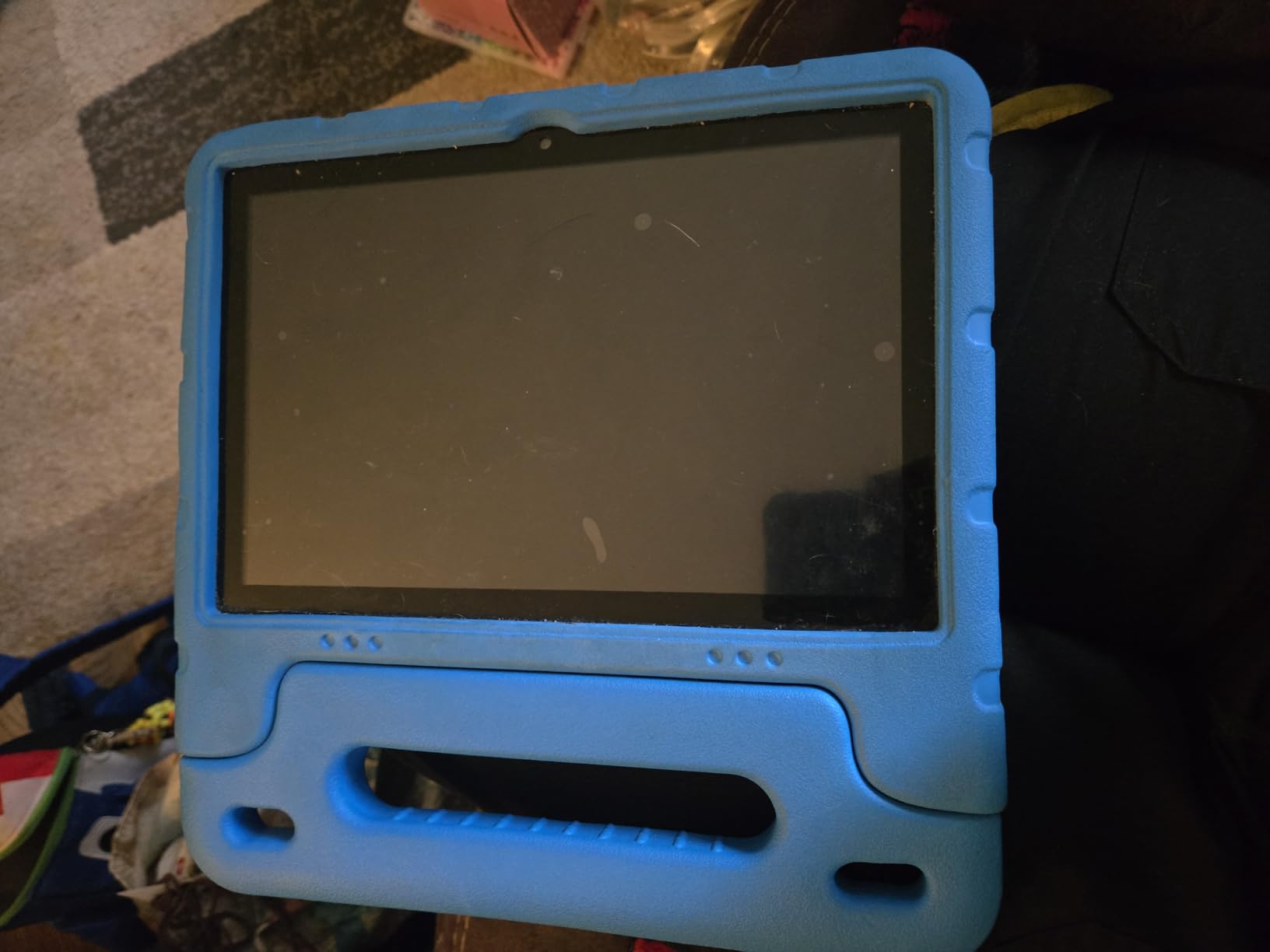
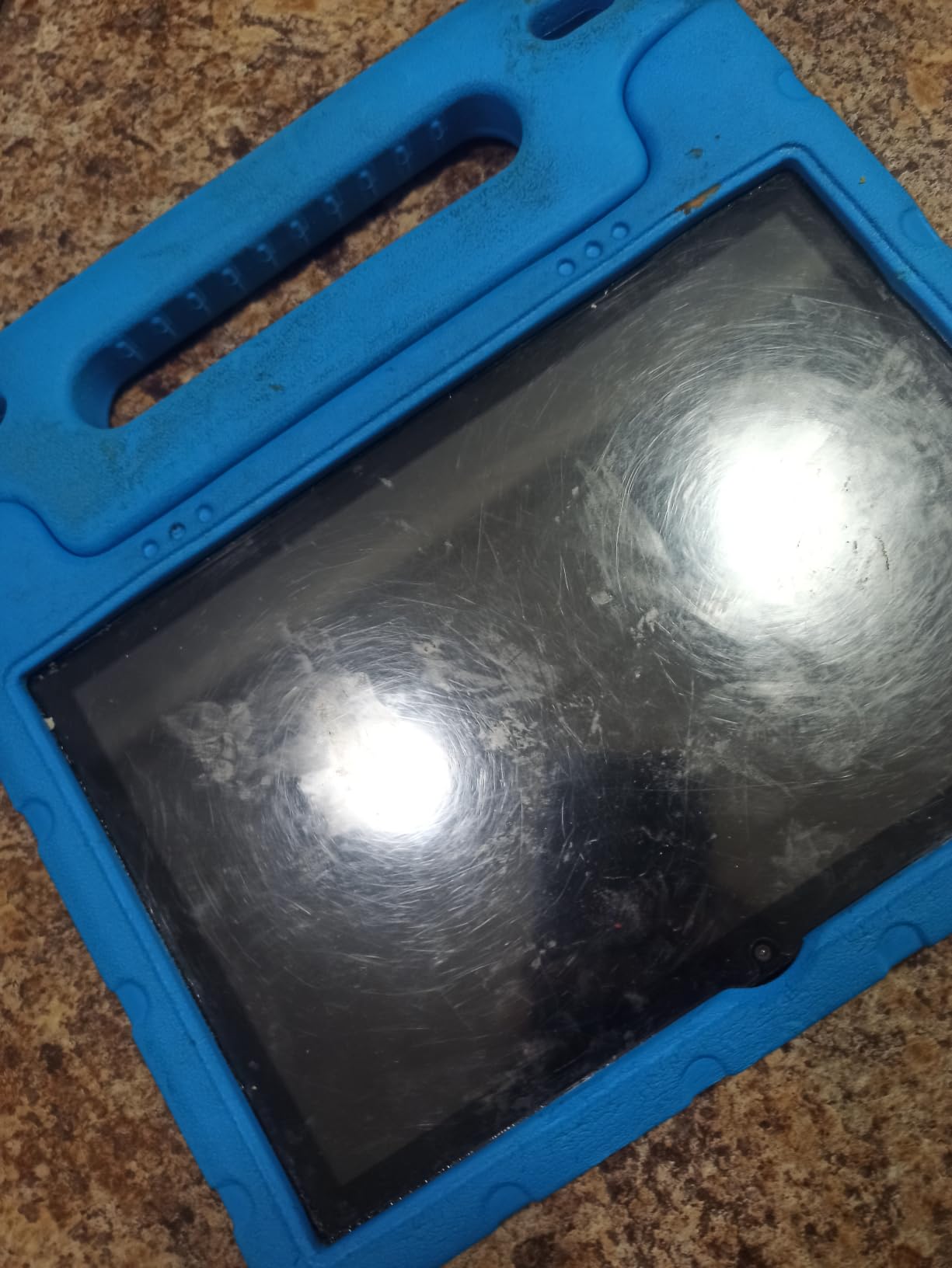
What stops us recommending it more strongly is reliability. Reviews are noticeably polarized, with a meaningful share of one-star ratings, and the complaints cluster in the same places: devices that stopped charging or powering on within months, and a tight-fitting case that bowed the screen enough to kill touch input along the bottom edge. A 1.3 GHz quad-core Unisoc processor is also visibly slower under load than the octa-core chips in the models above it.
The 2.4G-only Wi-Fi is another quiet limitation. It will connect and browse, but streaming quality and video calls are noticeably worse than on a dual-band tablet, which matters more in 2026 than it used to as families rely on video calls with grandparents.
Who it suits best
It suits a budget-conscious family with a child aged four to eight who needs a large screen for reading and drawing, and who is comfortable with a two-year warranty as their safety net. It is a reasonable first tablet, and a reasonable second tablet for a grandparent or a car trip.
Who should skip it
Skip it if the tablet will be used for video calls, gaming, or anything that needs dual-band Wi-Fi. Reliability complaints are the other reason to pass: if the device breaks in month four, the two-year warranty only helps if the seller honours it promptly, and support responsiveness is questioned in a number of negative reviews.
7. HOTTABLET 7-inch Kids Tablet – Budget Pick with Google Play
HOTTABLET Kids Tablet 7 inch Android, 4GB RAM 32GB ROM, 1TB Expandsion, with Parental Control, WiFi, Bluetooth, Dual Camera with Silicone Case, 1PCS (Blue)
7-inch 1024x600 IPS
Android 12 with Google GMS
4 GB RAM and 32 GB
3000 mAh battery
Pros
- Lowest entry cost in the roundup
- Still runs Google Play and Netflix
- Standable silicone case
- Customizable kid profiles with time limits
- Eye protection mode for reading
Cons
- Quad-core processor limits heavier apps
- 32 GB is tight for large app libraries
- Default kids-mode password is 0000
- Older Android 12 platform
The HOTTABLET is the cheapest way we found to put a real Google Play tablet in a child’s hands, and for some households that is the whole decision. It runs Google GMS with Netflix support, which means your child is not restricted to a handful of preloaded apps, and the 7-inch IPS display at 1024 x 600 is comfortable for reading.
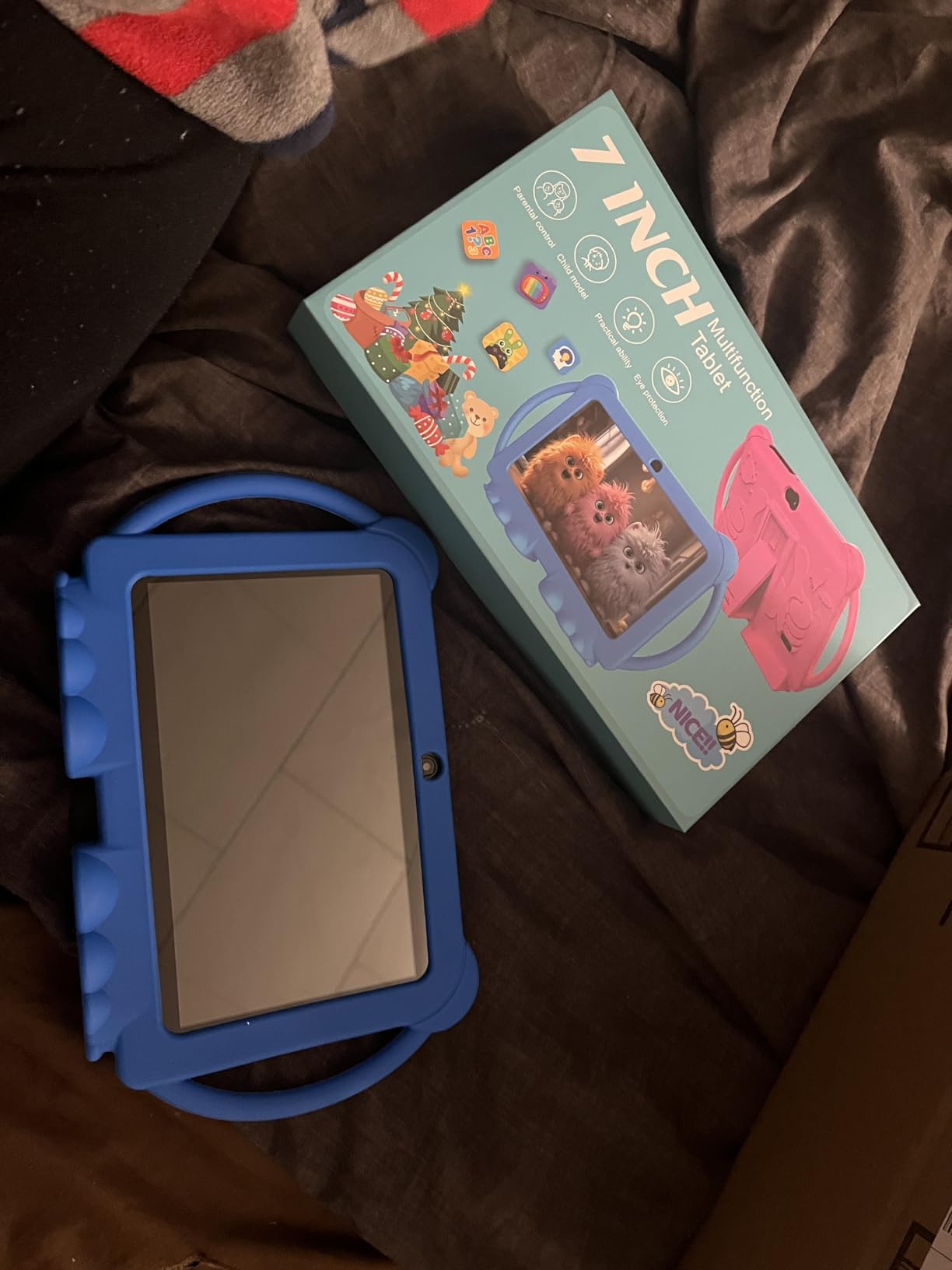
The included silicone case is standable, which frees both hands for drawing or writing practice, and children mode supports customizable kid profiles with screen time limits and content filtering. Storage expands to 1 TB via microSD, so the 32 GB internal is less limiting than it looks if you plan for it.
One setting needs changing on day one. The kids mode ships with a default password of 0000, and any child old enough to read four digits can leave it. We would set a real password before the tablet leaves the box, and mention it in your setup routine rather than trusting the default.
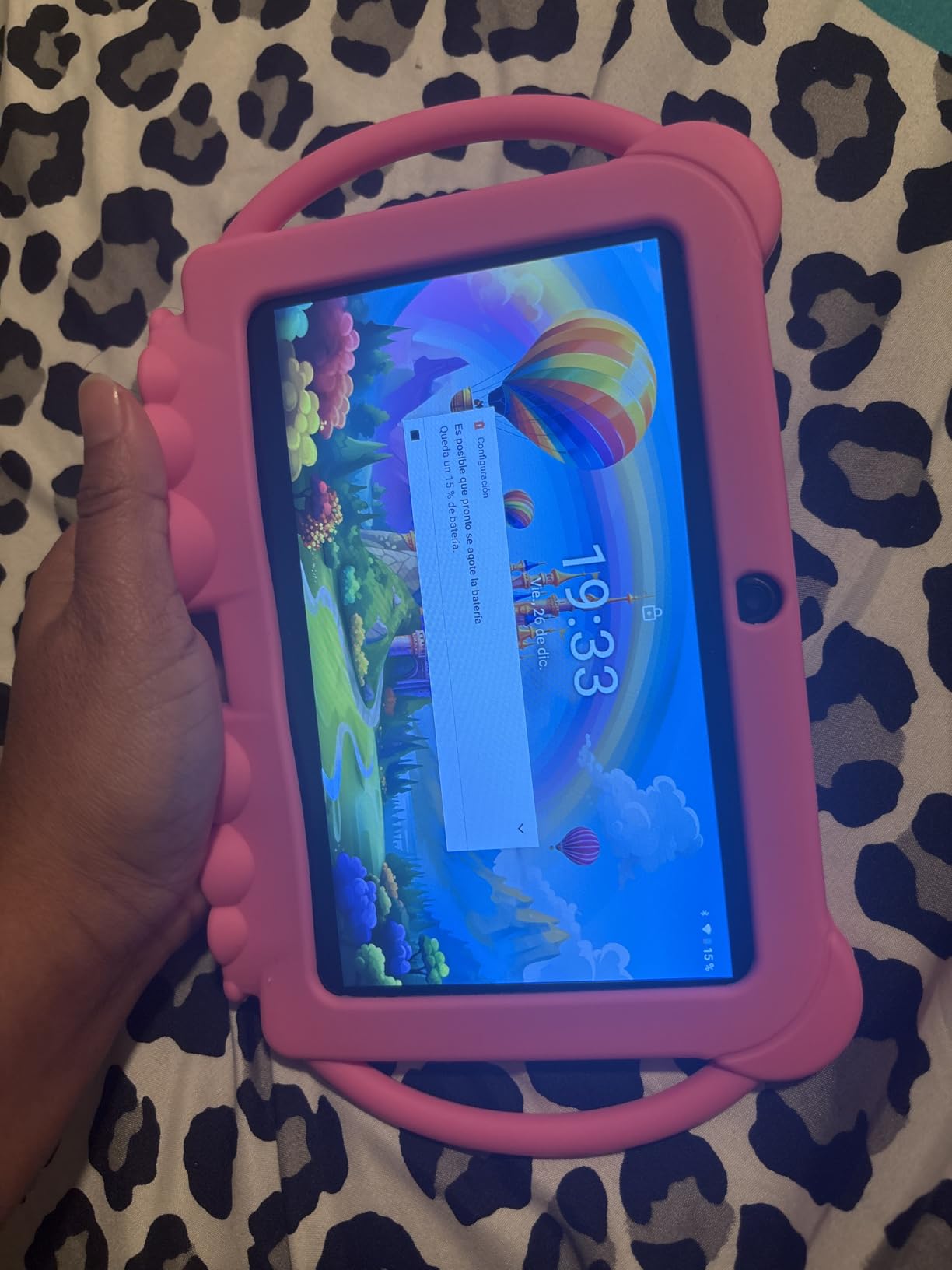
Expect to feel the limits of the hardware. A quad-core ARM Cortex processor topping out around 2 GHz and 4 GB of RAM are enough for reading, drawing and simple games, but heavier apps stutter. The 3000 mAh battery is listed at roughly 8 hours of mixed use, and the 365-day warranty is the shortest protection in this group.
Android 12 is also behind the current platform, which means fewer years of security and app updates ahead of it. For a device that gets handed to a five-year-old and passed down, that matters more than it would on a tablet you replace every two years anyway.
Who it suits best
It suits a family on a tight budget with a child aged three to six who needs reading, drawing and video content with basic controls. The 7-inch size suits small hands, and the included case means you are not buying protection separately before the first drop.
Who should skip it
Skip it if the tablet needs to last more than a couple of years, if your child is heading into school and will run demanding apps, or if you want the longest support window available. A quad-core chip and Android 12 will age faster than anything else we list here.
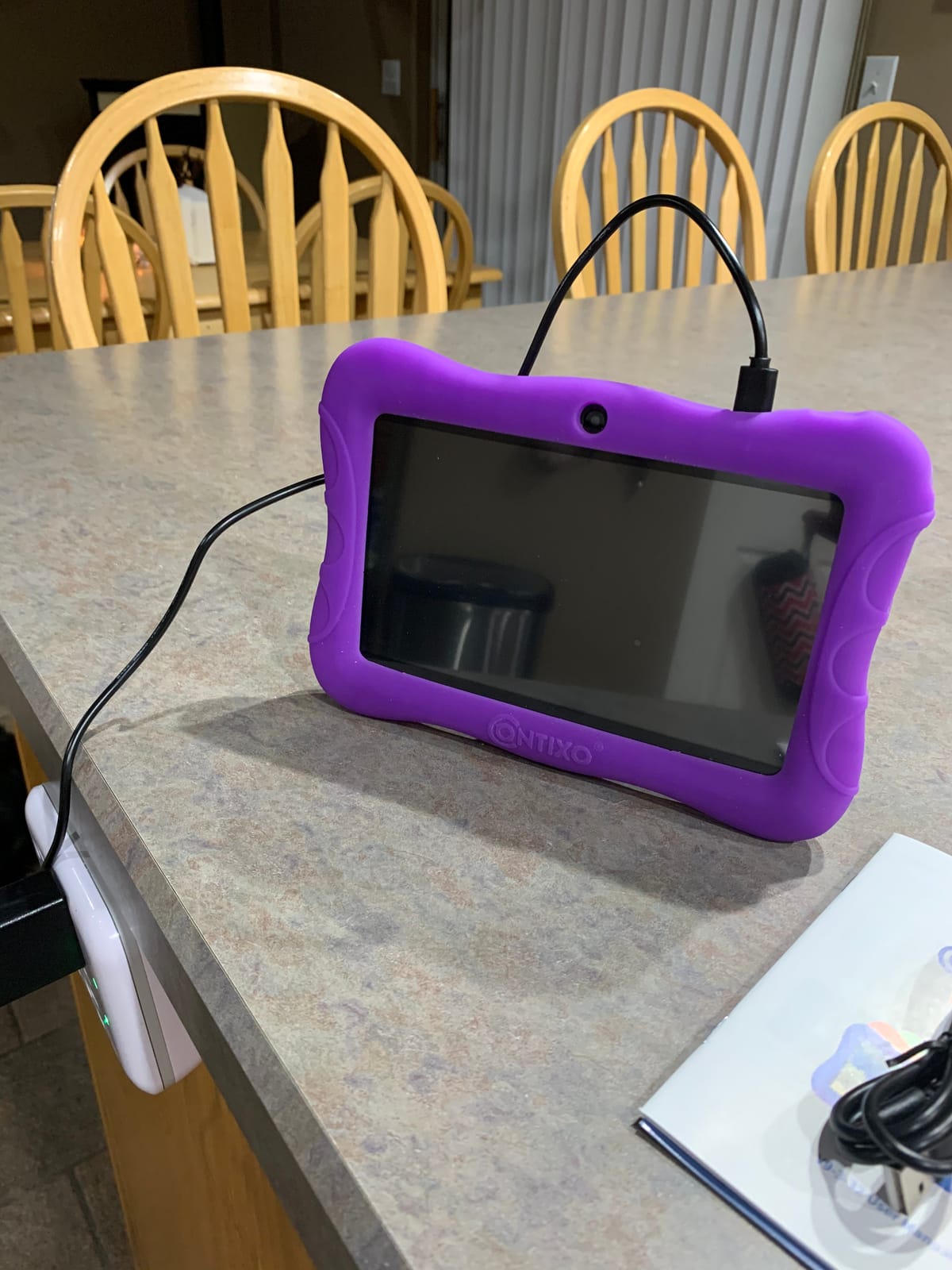
8. Contixo 7-inch Kids Tablet – Best for Multilingual Homes
Contixo 7″ Kids Tablet – Purple – 32GB, Android Tablet w/Exclusive 14+ Learning Games & Educational Apps, WiFi, Parental Controls, Kid-Proof Case & Kickstand
7-inch shatter-safe HD LCD
Android 11 Go
32 GB expandable
3100 mAh battery
Pros
- Case
- kickstand and 3-layer screen protector included
- 189 language settings including Spanish
- Parental profiles with content selection
- Shatter-safe 7-inch screen
Cons
- 2 GB RAM limits performance
- Android 11 Go is an older platform
- 6-hour battery is the shortest here
- 1-year defect warranty
The Contixo is the standout for a specific and often overlooked reason: 189 language settings, including Spanish. Parents of bilingual or multilingual children consistently call this out, because a tablet locked to one interface language quietly limits what a child can use independently.
The out-of-box package is the other selling point. A kid-proof silicone case with a kickstand and a 3-layer screen protector are included, so nothing extra needs buying before the first day, and the 7-inch shatter-safe HD LCD at 1024 x 600 is sized for small hands.
Parental profiles let a parent hand-pick which content appears rather than relying on an automatic age filter, and unsafe sites can be blocked outright. For a household with more than one child, separate profiles are the simplest way to give an older sibling a different set of apps.
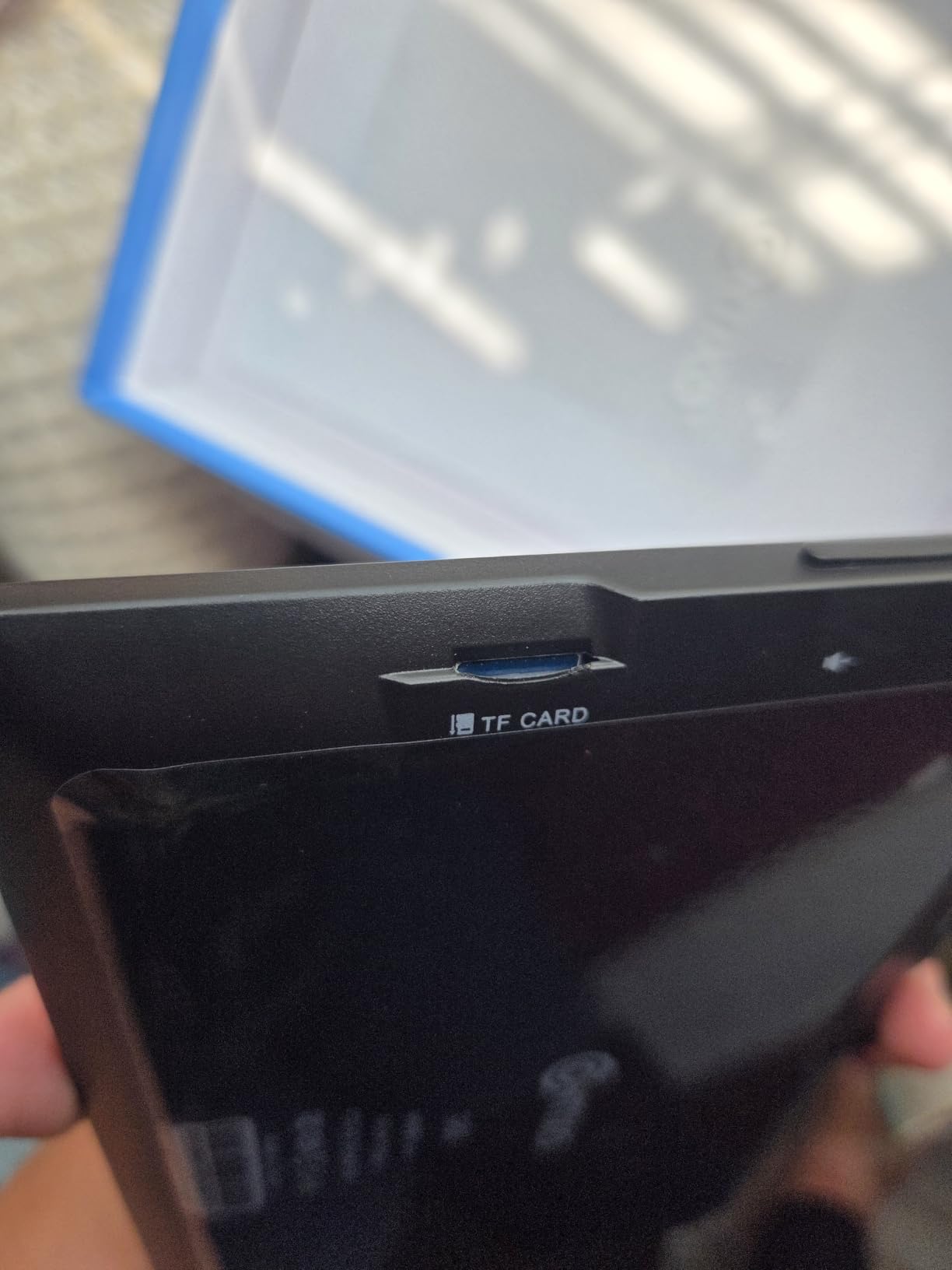
What holds it back is the older platform and modest memory. It runs Android 11 Go on a 1.6 GHz MediaTek quad-core processor with 2 GB of RAM, which is fine for books and simple games and clearly not fine for anything heavy. The 3100 mAh battery is listed at up to 6 hours, the shortest in this roundup, and the warranty is one year against defects.
That battery figure deserves attention for travel. A 6-hour real-world budget is enough for most outings but tight for a long flight or a full day out, and unlike the Fire models there is no longer battery to compensate. The 14 included learning games and educational apps are a reasonable starting catalog, but they are the main library rather than one layer of a much larger one.
Who it suits best
It suits families teaching a child in more than one language, and anyone who wants a complete protective kit in the box. It is also a good fit for a child aged three to seven doing early reading, since the shatter-safe screen and included protector handle the drops of that stage.
Who should skip it
Skip it if battery life is a priority, if your child needs to run demanding apps, or if you want a device that will still be current in three years. The one-year defect warranty also means less protection than most models here, so factor a possible replacement into your planning.
9. Samsung Galaxy Tab A9+ Kids – Best for School-Age Kids
Samsung Galaxy Tab A9+ Kids Edition 11” 64GB WiFi Android Tablet, Long Battery Life, Expandable Storage, Slim & Lightweight, Kid-Friendly Durable Puffy Cover, US Version, Red
11-inch 1920x1200 at 90 Hz
7040 mAh battery
64 GB expandable
Crayo-Pen stylus included
Pros
- Large crisp 90 Hz display
- Up to 14 hours with fast charging
- Puffy cover survives real drops
- Samsung Kids walled garden
- Full adult control outside Kids mode
Cons
- Most expensive tablet here
- Battery drains faster than rated in some use
- Included Crayo-Pen is not a smart stylus
- One report of undismissable full-screen ads
The Galaxy Tab A9+ Kids is the one to consider when a tablet needs to last past elementary school. It is a full Android tablet with a Samsung Kids environment layered on top, so a child gets a walled garden at ages 6 to 10 and a capable general tablet at 12 rather than outgrowing the device entirely.
The 11-inch LCD at 1920 x 1200 with a 90 Hz refresh rate is the best screen in this roundup by a distance, and it is the difference you notice most when a child is following a lesson, reading a dense page, or writing with the included Crayo-Pen stylus. A 7040 mAh battery is listed at up to 14 hours, with fast charging when it runs down.
The puffy cover is genuinely tougher than it looks, and owners report it surviving repeated drops onto hard floors. At 1.1 pounds it is light for an 11-inch device, which means a younger child can carry it to a table or a desk without asking for help.
The trade-offs are real. This is the most expensive tablet we tested and the least reviewed, with a much smaller number of owner reports behind it than the Fire models have, so you are buying on specifications and a thinner evidence base. One owner also reported persistent full-screen advertising that survived signing in as the account holder, which is exactly the kind of problem the Kids environment exists to prevent.
And the Crayo-Pen is a basic pen, not a smart stylus, so it will not give the pressure sensitivity or palm rejection that a dedicated handwriting app expects. If the goal is genuine handwriting practice, the LeapFrog LeapPad is the more purposeful tool.
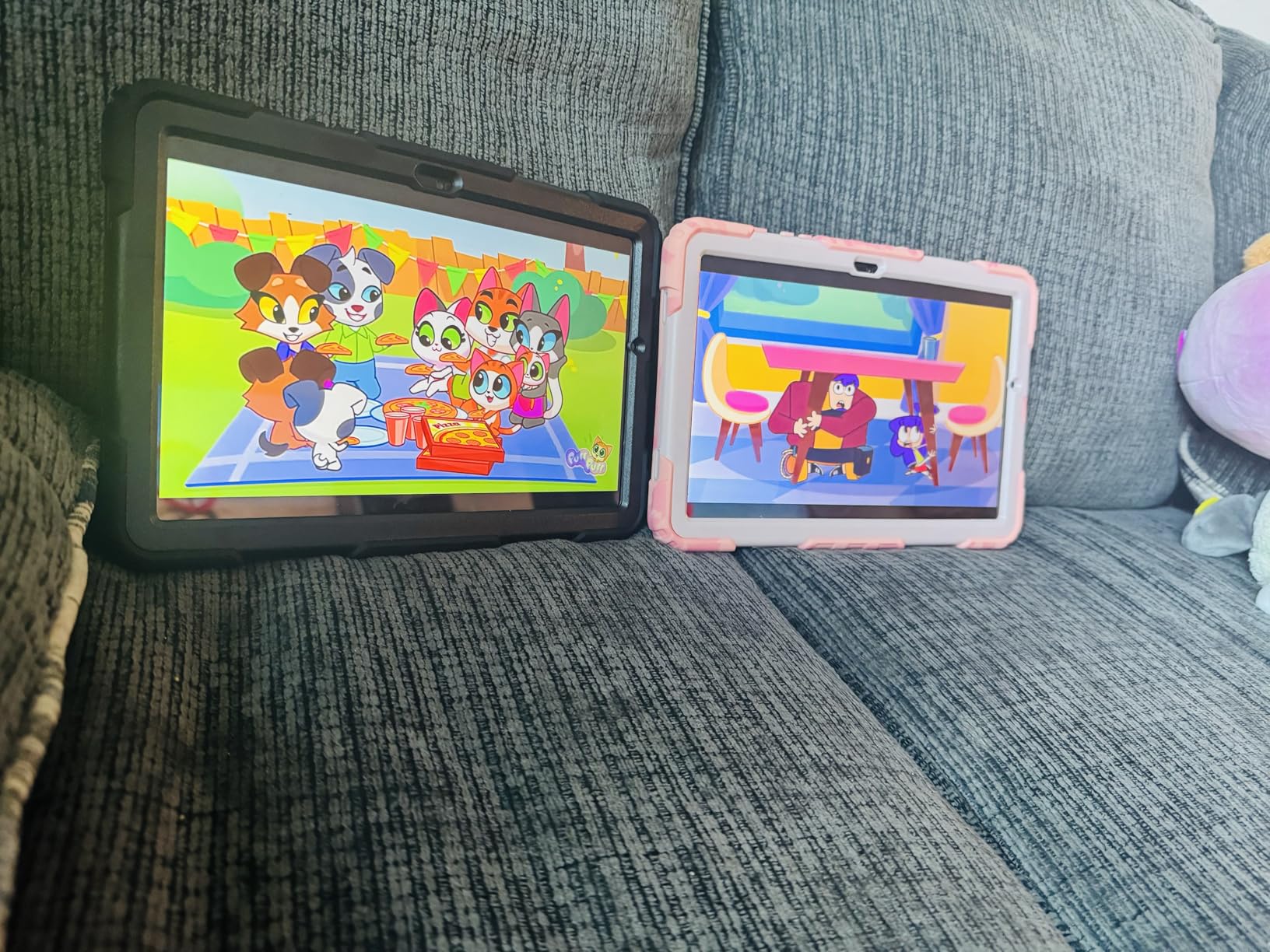
Who it suits best
It suits a child aged 7 to 12 who needs a bigger screen for schoolwork, and any family that wants a device to keep for years. It is also the strongest choice for a household that wants one tablet for two children at different stages, since Samsung Kids can be exited by an adult into a full adult-controlled Android device.
Who should skip it
Skip it if cost is the deciding factor, since it sits well above every other tablet here. Parents who have been burned by advertising inside kids apps should read recent reviews carefully first, and anyone expecting a premium pen experience should budget for a different stylus.
10. plimpton 10-inch Kids Tablet – Best for AI Tutoring
plimpton Kids Tablet 10 Inch – Android 15 Tablet for Kids with Case Included, Octa-Core, Google Kids Space, Parental Control, 4GB+64GB, WiFi, BT5.3, YouTube, Great Gift for Toddler(Purple)
10.1-inch 1280x800 IPS
Android 15 with Gemini
4 GB RAM and 64 GB
2-year warranty
Pros
- Gemini AI works as a homework and concept tutor
- Google Kids Space preinstalled
- Rigid EVA case with 360-degree rotatable bracket
- Quick setup on newer units
- Responsive after-sales service
Cons
- 4 GB RAM limits heavier apps
- Battery and charging faults on some devices
- Screen lag and slow boot on a minority of units
- Priced above comparable generic models
The plimpton is the pick if you want a tablet that can explain things back to your child. It runs Android 15 with Gemini built in, which we found genuinely useful as a homework helper: a child can ask for a simpler explanation of a fraction or a worked example, and get one without leaving the device or opening a website you have not vetted.
Google Kids Space is preloaded with educator-endorsed apps for ages three and up, and the parental controls cover filtering, educational goals and time restrictions. The 10.1-inch IPS glass display at 1280 x 800 includes a low-blue-light mode, and storage expands to 1 TB.
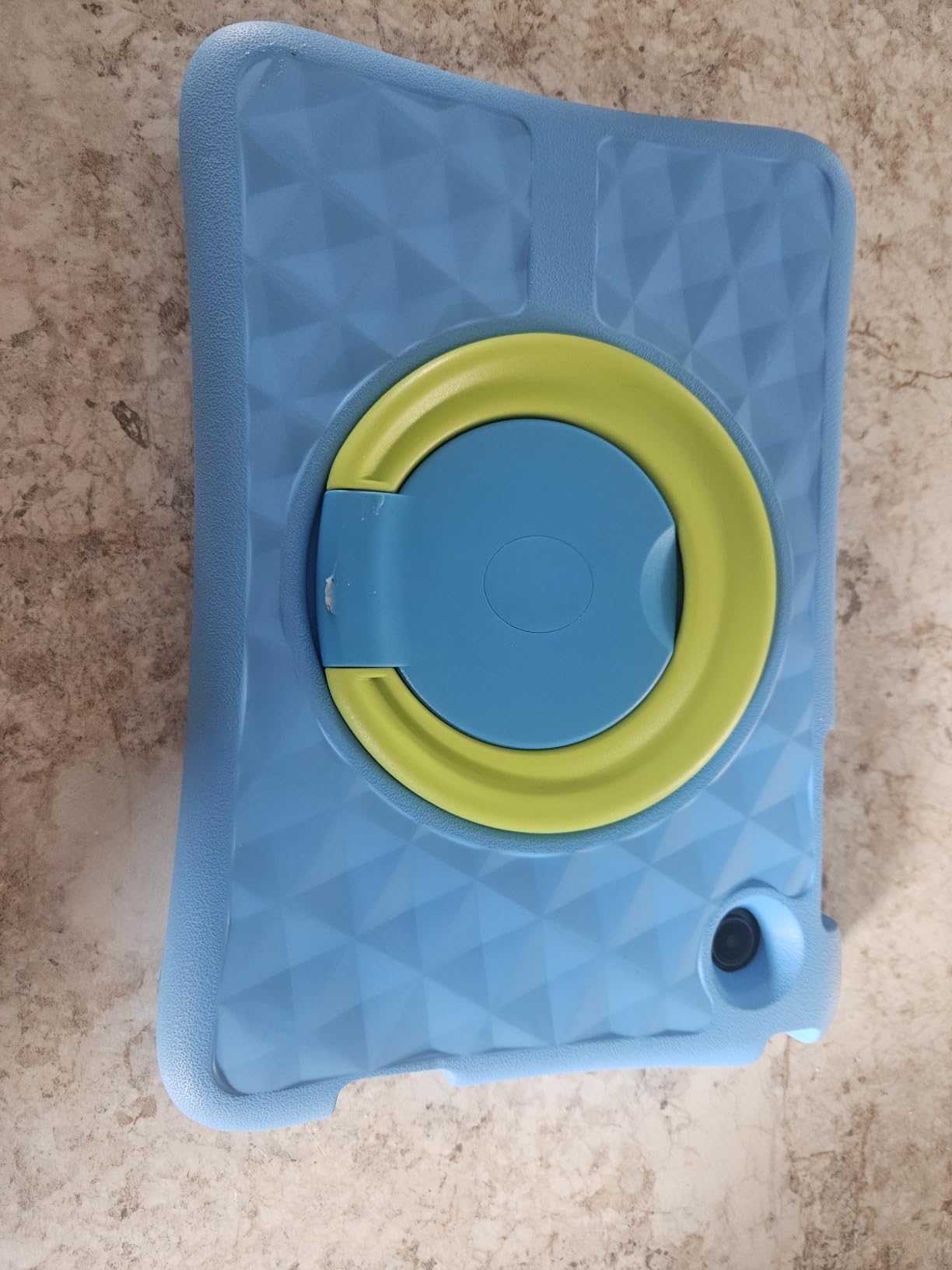
The case is worth a closer look. The rigid EVA shell holds its shape better than soft silicone and includes a 360-degree rotatable bracket, so the same accessory works as a handle for a young child and a stand for a lesson, which is a small design decision that removes a lot of friction.
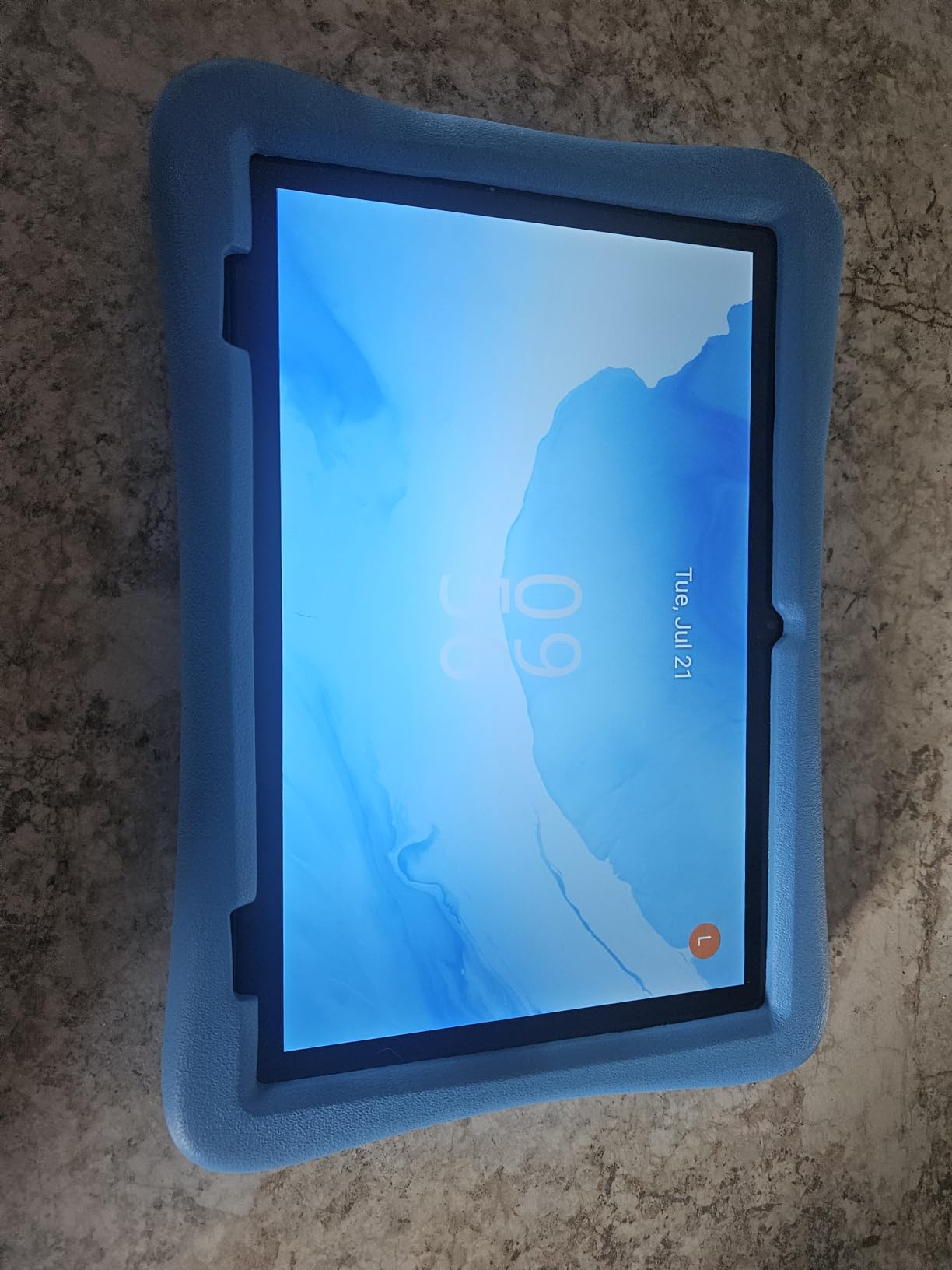
The compromises are honest ones. At 4 GB of RAM the plimpton is the least powerful Android 15 model here, and battery is listed at roughly 8 hours, about 30 percent better than its predecessor but still below the Fire models. A number of owners report batteries that drain within an hour or charging contacts that fail, plus some slow boot and screen lag reports, including on replacements.
Against that, the 2-year warranty and 30-day return window are more generous than most competitors, and after-sales service is repeatedly described as fast and fair. The listed weight of 800 g is heavier than most 10-inch models, worth knowing if a small child will carry it rather than prop it on a stand.
Who it suits best
It suits a school-age child who asks questions and benefits from getting an explanation in their own words, and a family that wants a current Android version with Google services at a mid-level cost. The rotating case makes it a good option for a child aged five to ten doing guided practice at a table.
Who should skip it
Skip it if you need heavy app performance, long battery life, or the lowest possible entry cost, since comparable generic Android models are cheaper. The AI assistant is also a tool, not a teacher, and it works best alongside a real curriculum rather than replacing one.
How to Choose a Kids Learning Tablet: 7 Things That Matter
Most parents start with screen size and end up regretting it. Size matters, but the decisions that determine whether a tablet gets used for learning or gets abandoned on a shelf are controls, content and durability. Here is the order we would decide things in.
1. Start with the age band, not the specs. A preschooler and a 10-year-old need different devices. For ages 3 to 5, prioritise a small screen, a simple profile and a curated library. For ages 6 to 8, prioritise reading comfort and filtered browsing. For ages 9 to 12, prioritise storage, performance and whether it can grow into a general tablet. Buying a high-end device for a three-year-old means paying for capability that will sit unused for two years.
2. Decide how locked down you want it. There are three levels in this roundup. Walled gardens like Samsung Kids and LeapFrog App Center show only what you choose. Curated stores like Fire OS give you a large but filtered catalog. Full Android tablets give a child the same app store you use, which is flexible but requires more setup. Parents on r/Parenting and r/Preschoolers consistently say the walled garden is what actually stops a preschooler escaping to an unfiltered browser, so go stricter than you think you need.
3. Check the warranty, not just the case. Amazon’s 2-year worry-free guarantee is the strongest in this group and covers accidental damage from drops and spills, which is the failure mode that ends most kids tablets. The plimpton and EDDBNi offer 2-year manufacturer warranties. The Contixo offers one year of defect cover, and the HOTTABLET offers 365 days. A bundled case reduces damage but does not replace a replacement policy.
4. Treat the subscription as part of the cost. Amazon Kids+ is included for a period on several models and then continues as a recurring monthly charge unless you cancel it. This is the single most common complaint from parents on forums, and the surprise arrives on the statement, not at the point of purchase. Decide on day one whether you will keep it, and set a reminder for the renewal date.
5. Look at real usable storage. Advertised capacity is not what you get. System software takes a share on every device, and the gap is widest on the 16 GB Fire 7 model, where owners report far less space than the number suggests. The Fire HD 8 Kids Pro at 64 GB and the Samsung at 64 GB are the comfortable options if a child downloads videos and games heavily.
6. Battery decides whether it gets used. A listed 10 to 14 hours covers a full day of ordinary use. The 6-hour figure on the Contixo covers an outing but not a long day out. A long car trip or a flight is where a weak battery turns into a bored child and an adult with no backup device, so it is worth more thought than most buyers give it.
7. Consider the stylus question early. If your child is forming letters or practising handwriting, a bundled pen changes the software you can use. The LeapFrog LeapPad and the Samsung Crayo-Pen cover that need, though only the LeapFrog pen is aimed at tracing activities. Most other tablets in this roundup work with a generic capacitive pen but do not include one.
Two questions come up repeatedly in the parent forums we read. The first is whether cheap no-name kids tablets are worth it to save money, and the reliability reports on the EDDBNi and HOTTABLET models suggest the answer depends heavily on how quickly the seller honours a warranty. The second is Fire OS versus a full Android tablet, and the honest answer is that parents who want specific Google Play apps for an older child need Android, while parents of preschoolers are usually better served by the tighter, ad-free Fire library.
Parental Controls and Screen Time Limits by Age
Controls matter more than raw performance, because they decide what a child can reach without asking. The three control systems you will meet in this roundup work in different ways, and the differences show up in daily friction rather than in feature lists.
Amazon’s Parent Dashboard is the deepest of the three. You set an age range, and the app store, web browser and video content all filter to it. You can set daily time limits, approve or decline download requests remotely, block specific sites, and define educational goals the child can work toward. Owners do complain that the dashboard is confusing to navigate and that limits sometimes need reapplying, but the underlying control is the most granular available.
Google Family Link, which comes with the Android 15 models here through Google Kids Space, is the most standard and the most familiar, since it works across whatever Android devices the family already owns. It supports per-child profiles, app approval, time limits and location sharing. Samsung Kids layers a walled garden on top of it, which is stricter and simpler for a child to navigate but gives less fine control than the Amazon dashboard.
On limits themselves, a useful pattern is to set the limit low at first and raise it once the child uses the device for the reason you bought it. A 30-minute daily cap on a preschool tablet is usually plenty. For ages 6 to 8, an hour of structured use plus occasional video works. For ages 9 to 12, most families we read from treat two hours of focused use as the point where parents start losing the argument, and a daily alarm on the parental dashboard works better than a nightly negotiation.
Whichever system you use, download approval is the setting that prevents the most arguments. It lets a child ask for an app and lets you say yes or no without a face-to-face debate. Pair it with site-level blocking, and with a rule that the parent password is never handed over, because on the cheapest models the kids-mode password can default to something a child can guess.
For our broader picks on family gear, we cover the practical side of child-proofing a home in our dog playpen guide for families with kids, and getting an older child outside and moving in our bike trailer roundup. Both reduce the hours a tablet has to fill, which is the most reliable screen-time control there is.
Frequently Asked Questions
What is the best educational tablet for children?
The Amazon Fire 7 Kids is our top pick for a child’s first tablet. The 7-inch screen fits small hands, the included kid-proof case survives drops, and the age-filtered Parent Dashboard keeps content ad-free and age-appropriate without constant supervision. It also carries the largest owner base in our testing, so problems and workarounds are well documented. Older children who need more storage or a bigger screen are better served by the Fire HD 8 Kids Pro.
What is the best tablet for kids to study on?
For homework and schoolwork, the Fire HD 8 Kids Pro is the strongest fit for ages 6 to 12. Its 64 GB of storage leaves room for eBooks, apps and downloaded work, up to 4 GB of RAM keeps several apps open smoothly, and the 13-hour battery covers a full school day. Parents of children who will keep the device for years should also consider the Samsung Galaxy Tab A9+ Kids, which exits Kids mode into a full adult-controlled Android tablet.
What is the best tablet for helping kids learn to read?
The LeapFrog LeapPad Academy is the most purposeful reading tool we tested. It ships with a stylus, has a shatter-safe 7-inch screen and a kickstand bumper, and its educator-approved curriculum runs from pre-K through grade 12 with activities that adjust to the child’s level. Parents can pre-approve individual websites and block the rest. Parents in homeschool communities pair it with structured phonics apps to cover the areas it does not.
Which tablet is best for education purposes?
It depends on age and how locked down you want the device. Walled gardens such as the LeapPad and Samsung Kids give the tightest control. The Fire range offers the best balance of a large curated, ad-free library and deep parental settings. Full Android 15 models such as the COLORROOM and plimpton give access to real Google Play apps but need more configuration. For a preschooler, the narrower catalog is usually the better educational tool.
Should my 7 year old have a tablet?
Yes, at a seven a tablet can be genuinely useful for reading practice, math drills and video calls with family, as long as the limits are set before the device is handed over. Most parents we read from cap structured use at around an hour a day at this age, with download approval kept on so the child asks before installing anything. The Fire HD 8 Kids Pro and Samsung Galaxy Tab A9+ Kids are both well matched to this age.
Which kids tablet has the best parental controls?
Amazon’s Parent Dashboard offers the deepest controls in this group, covering age-based filtering of the store, browser and video, daily time limits, remote download approval and per-site blocking. Samsung Kids is the strictest walled garden, which is easier for a young child to stay inside. Google Family Link on the Android models is the most familiar and the best option if your family already uses it across other devices.
What age should a child get a tablet?
Most parents in the forums we read introduce a tablet around age three, once a child can hold one properly and sit with an activity rather than swipe at it. Before three, a toddler usually gets more from a physical toy. Between three and five, prioritise a small screen, a strict profile and a curated library. From six upward, storage, filtered browsing and a stylus become more useful than a locked-down content list.
How do I set up parental controls on a kids tablet?
Create the child profile first and set the age range before installing anything else, so the app store and browser filter from the first session. Then set daily time limits, turn on download approval so your child asks before installing an app, and block individual sites your child will try to reach. Change any default kids-mode password immediately, check that purchases require your account password, and set a reminder for the first subscription renewal date.
Is Amazon Kids+ worth the subscription?
It is worth it if your child will use it daily and you would otherwise buy several individual learning apps, because the library is ad-free, age-filtered and large. If your child will use the tablet an hour or twice a week, the apps you install yourself will cost less over the same period. The included trial period is the right time to test it, and the most common complaint we found was not the value but the automatic monthly renewal after it ended.
Do kids tablets need internet?
Mostly yes. Age filters, app store downloads, video calls and streaming all need a connection, and parental controls such as remote download approval work through the parent’s phone. You can still get value offline by downloading books, games and videos ahead of a trip, and a 7 or 8 inch screen is a better offline viewing size than a phone. For flights, check that a two-band or dual-band connection is available before you rely on streaming.
Conclusion
The best kids tablets for learning are the Fire 7 Kids for a first tablet, the Fire HD 10 Kids for big-screen reading, and the Fire HD 8 Kids Pro once school starts and storage matters. The LeapFrog LeapPad wins for handwriting, the Samsung Galaxy Tab A9+ for a device that grows with an older child, and the full Android models for families that need real Google Play apps.
Whichever you pick, set the profile, the limits and the download approval before you hand it over, and check the first subscription renewal date. You can also browse our dog sleeping bag guide if your child is still in the age where a tablet is one of several things keeping them occupied.