
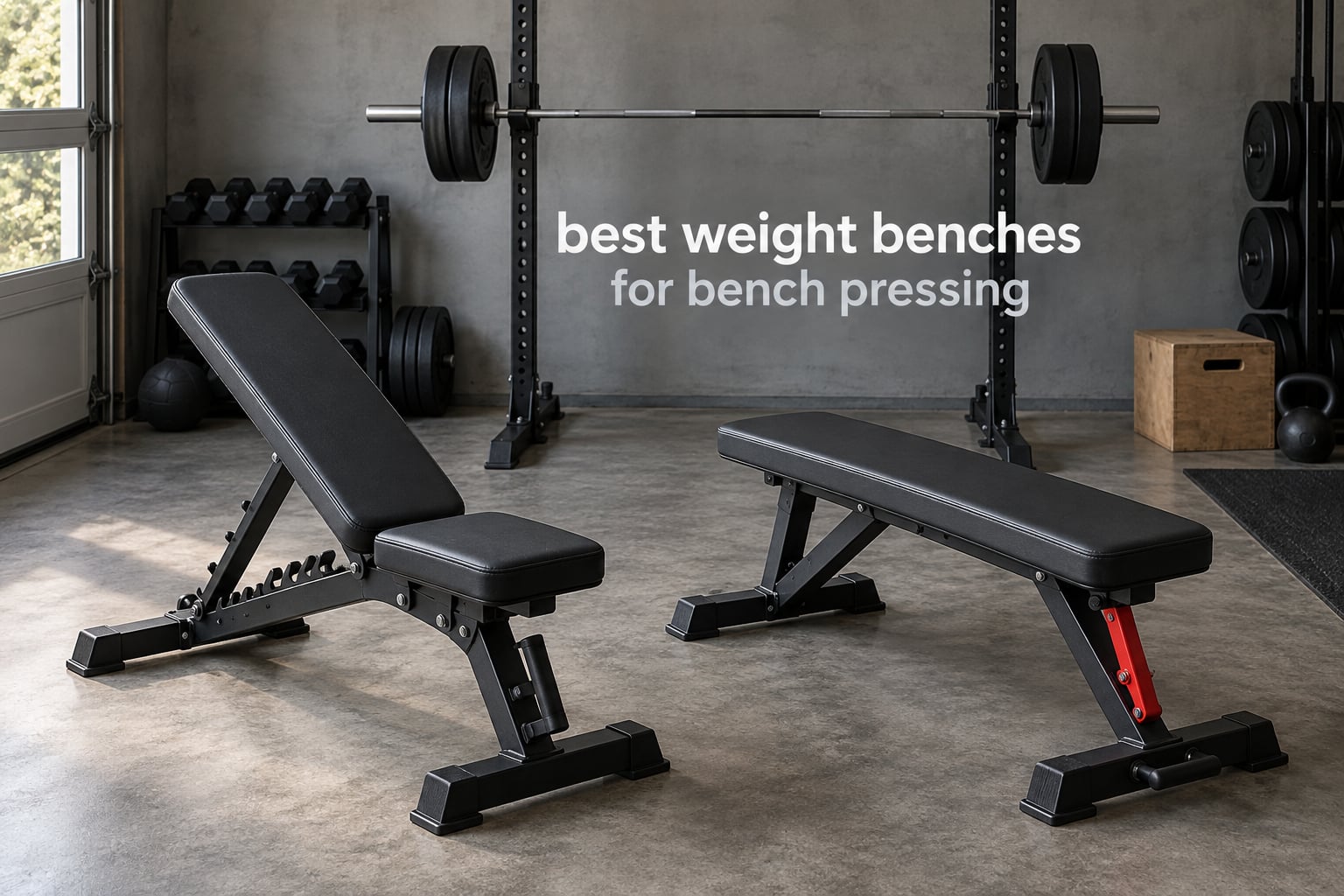
Short answer: the FLYBIRD WB5 is the best weight bench for bench pressing for most home gyms, the FLYBIRD Full Body bench is the pick if you care about competition height, and the Finer Form foldable flat bench is the one to buy if you only ever press flat and want zero wobble. All three are rated well above what most people actually load onto them, and all three have thousands of owner reviews behind them.
That is the shortlist. The other seven benches below earn their place for specific reasons: a 1,050-pound steel frame, a bench that folds to nothing in an apartment, an all-in-one station with a leg extension, or a rated capacity that comfortably covers a 300-pound press. We compared the ten most-reviewed benches in this category and judged each one on the things that decide whether a barbell bench press is safe and repeatable.
Four questions do most of the work. How much weight is the frame rated for, and does that rating survive when the bench is at an angle. How big is the gap between the seat pad and the back pad, because a gap is a hard edge pressing into your tailbone. How tall is the bench, because bench height decides how much foot drive you can produce. And is there anything in the frame that moves, flexes or shifts under a heavy single.
One quick note before we start, since people land here from all sorts of searches: this guide is about a padded steel frame you lie under while pressing a barbell or dumbbell. It is not the same object as a bench vise for metalworking, which is a very different tool with a very different buying logic.
We also want to be upfront about what we did and did not do. Every capacity number, pad dimension, height, weight and warranty length quoted below comes from the manufacturer’s own listing and from aggregated customer reviews. We did not load-test any of these benches ourselves. Where owner reviews and the spec sheet disagree, we say so, because that gap is where most disappointed buyers end up.
Table of Contents
Top 3 Best Weight Benches for Bench Pressing in 2026

FLYBIRD WB5 Adjustable Bench
- 800lb ASTM certified capacity
- 144 positions from -30 to 90 degrees
- 30 inch backrest
- Folds to a 9.06 inch wide footprint

FLYBIRD Full Body Bench
- 17.38 inch IPF competition height
- 750lb capacity
- 96 combo settings
- Reinforced triangle steel with pull pin lock

YOLEO 827lbs Bench
- 827lb ASTM certified capacity
- 84 adjustable positions
- 28 inch backrest
- Folds to 31.5 by 12.6 by 13 inches
All 10 Weight Benches at a Glance in 2026
Everything below is rated capacity, not user capacity, and it is the number that should drive your decision. Read the angle caveat further down before you load anything heavy onto an adjustable bench.
| Product | Specs | Action |
|---|---|---|
| FLYBIRD WB5 Adjustable Bench |
|
Check Latest Price |
| FLYBIRD Full Body Adjustable Bench |
|
Check Latest Price |
| YOLEO 827lbs Adjustable Bench |
|
Check Latest Price |
 NICEPEOPLE 660lbs Adjustable Bench NICEPEOPLE 660lbs Adjustable Bench |
|
Check Latest Price |
 Yagud 880lbs Bench Set Yagud 880lbs Bench Set |
|
Check Latest Price |
 Finer Form Foldable Flat Bench Finer Form Foldable Flat Bench |
|
Check Latest Price |
 K KiNGKANG 1,050lbs Adjustable Bench K KiNGKANG 1,050lbs Adjustable Bench |
|
Check Latest Price |
 Finer Form Multi-Functional FID Bench Finer Form Multi-Functional FID Bench |
|
Check Latest Price |
 PASYOU 660lbs Dual-Frame Bench PASYOU 660lbs Dual-Frame Bench |
|
Check Latest Price |
 Steelbody Deluxe Utility Bench Steelbody Deluxe Utility Bench |
|
Check Latest Price |
Flat vs. Adjustable Benches: Which One for Bench Pressing?
Here is the disagreement we see most often online, and the reason it never resolves: people are asking different questions. If your goal is incline pressing, shoulder pressing, dips and leg extensions, the answer is obviously an adjustable bench and no one argues otherwise. If your goal is a heavy flat barbell bench press, the answer is a rigid flat bench, because a bench with moving parts has more places for the bar path to change under load.
A dedicated flat bench has no hinge, no pin and no sliding seat. There is nothing to shift between reps, and the pad sits at one fixed height. An adjustable bench trades that certainty for range, and on a mid-range model the seat pad moves relative to the back pad, which changes where your hips sit and therefore how much arch you can hold.
The practical compromise most experienced lifters land on is a two-bench setup: an adjustable bench for everything accessory work, and a dedicated flat bench for the main press. If you can only buy one, buy based on the heaviest barbell you will ever load onto it. That is the single most important sentence in this guide.
One more variable that gets overlooked: bench height. The 17-inch competition standard is not a magic number for everyone. A lifter around 5 feet 3 inches often presses better from a lower bench because they can plant both feet flat and drive through them. A tall lifter with long femurs may need more height to get their heels down at all. Check the height before you fall in love with the rest of the specs.
1. FLYBIRD WB5 Adjustable Bench – 144 Positions and 800lb Capacity
FLYBIRD WB5 Weight Bench, ASTM-Certified 800LBS Adjustable Weight Bench Workout Bench Foldable for Home Gym, 90° to -30° FID and 30in Extended Backrest for Bench Press Strength Training Exercise
800lb capacity
144 positions from -30 to 90 degrees
30 inch backrest
28.5 lb frame
Pros
- Highest review volume in the group with 26094 ratings
- Folds to a 9.06 inch wide footprint
- 30 inch backrest supports head and spine
- Quick spring-lock adjustment without reaching a support bar
- FLYBIRD service repeatedly resolves defects
Cons
- Sits higher than a standard bench so short lifters lose flat-foot drive
- Firm padding rather than soft
- Rubber foot caps can detach from the leg tubes
With 26,094 ratings behind it, the FLYBIRD WB5 has more real-world history than anything else on this list, and for a bench that means a lot. Around 70 percent of those ratings are five stars, and the recurring theme across the largest sample we looked at is stability once the bench is loaded. There is very little mention of wobble, which is the number-one safety complaint we found on cheaper benches in this category.
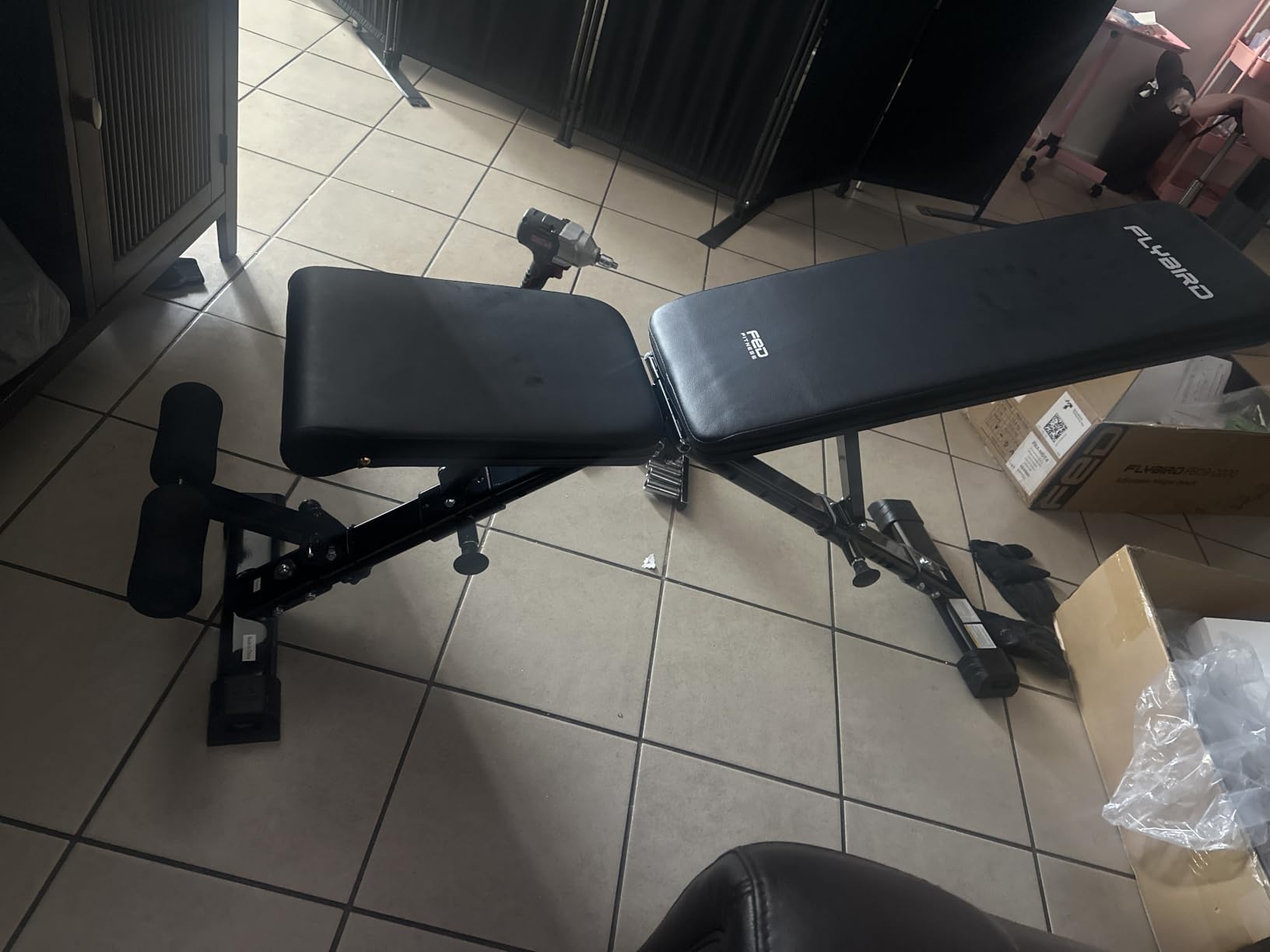
The spec sheet is generous for a frame this light at 28.5 pounds. You get 144 positions running from a 30-degree decline all the way to 90 degrees upright, which is more range than most dedicated FID benches offer, and the backrest is a long 30 inches with a 15.7-inch seat pad in front of it. That combination is what keeps a tall lifter’s head supported at incline angles.
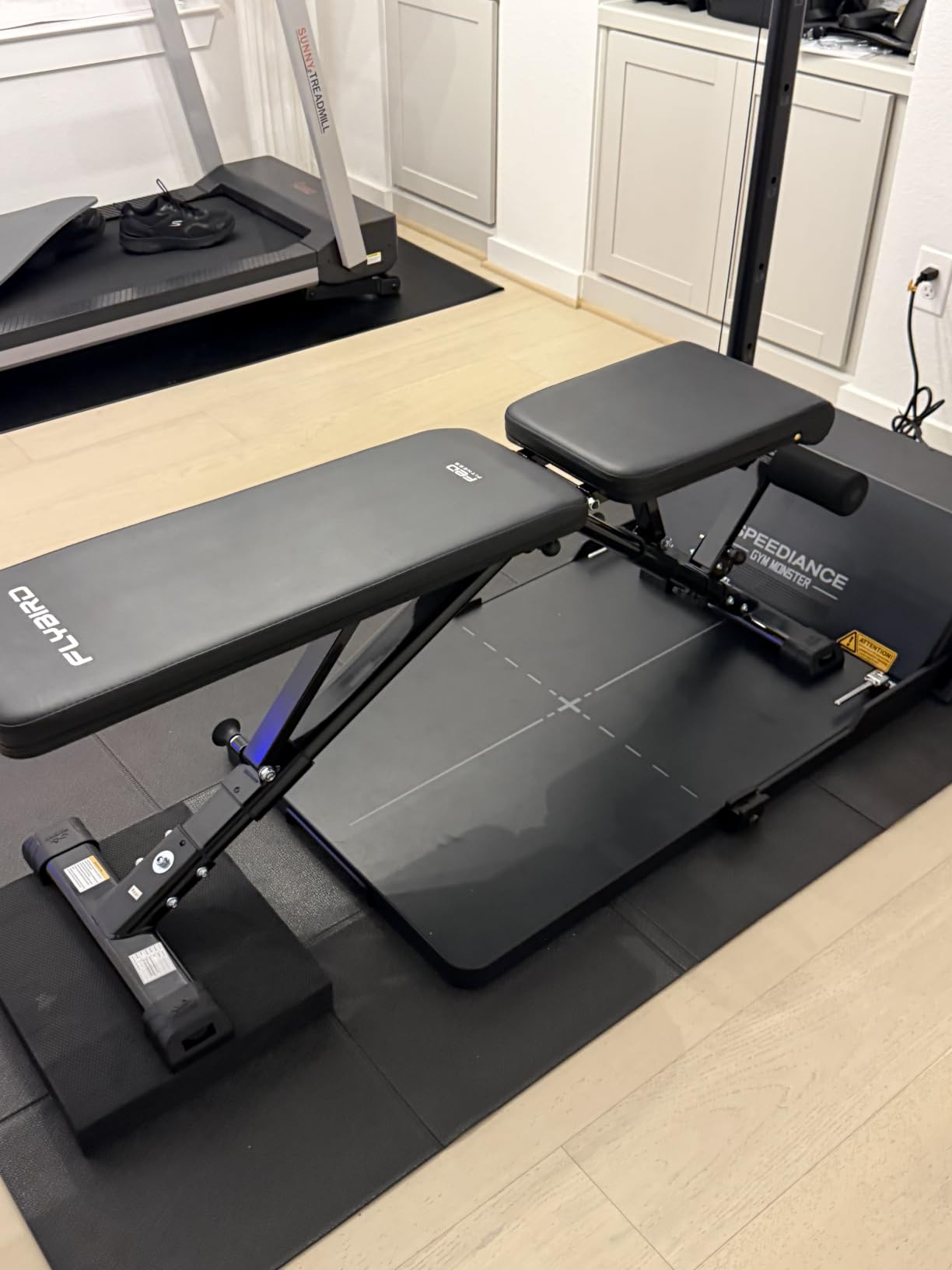
The frame is alloy steel with a dual-triangle structure and a double-locking mechanism, certified to 800 pounds. That rating is genuinely useful: it covers a bench press of 300 pounds or so with plenty of headroom, which puts it well above the load of most home lifters. Where the spec sheet is optimistic is at the ends of the range, since no manufacturer publishes a separate derated figure for the extreme incline and decline positions.
Adjustment is handled by a spring-lock system rather than a pin you pull from behind your head, and that is the detail that matters most for pressing. On a pin bench you have to sit up, reach behind the pad and re-pin it between sets. Here you reach down and pull a lever, which is the difference between a quick angle change and a full break in your session.
Why the WB5 works for heavy flat pressing
At 800 pounds rated on a dual-triangle frame, this bench sits in the middle of the capacity range here: the highest figures belong to the K KiNGKANG and the two Finer Form frames, while the budget options stop at 660 pounds. Even so, 800 pounds is well clear of the 300-pound press most lifters in a home gym will ever attempt, and the folding design means it can live in a garage corner without eating a rack’s worth of space. The 30-inch backrest is long enough that a lifter around 5 foot 11 inches still has head support when the pad is raised.
The tradeoff is bench height. Owners repeatedly note that this bench sits higher than a standard flat bench, and short lifters end up pressing with their feet on the pad rather than flat on the floor. If you are under about 5 foot 6 inches, test the height in a store before committing, because that is the one spec you cannot fix later.
Where it falls short for a bench press specialist
The padding is firm rather than plush, which some lifters read as harsh during heavy presses and others prefer because the surface does not bottom out. There is no true vertical position at 90 degrees, so it stops just short of a standing shoulder press hold.
The most common mechanical complaint is rubber foot caps detaching from the leg tubes, and a smaller number of owners report the backrest running short for very tall users at certain angles. Neither is a dealbreaker, but both are recurring enough that you should check the feet after a few sessions.
2. FLYBIRD Full Body Adjustable Bench – IPF-Standard 17.38 Inch Height
FLYBIRD Adjustable Weight Bench, Full Body Workout Bench for Home Gym (L)
17.38 inch IPF competition height
750lb capacity
96 combo settings
23 lb frame
Pros
- The only bench here listed at IPF competition height
- Deepened lock slot with safety pull pin resists backrest slip
- Reinforced triangle steel structure
- Textured sweat-proof leather grips well when chalked up
- 22291 ratings to draw owner experience from
Cons
- Backrest adjustment requires reaching the support bar behind your head
- Seat width feels narrow for broader frames
- PU leather wrinkles with repeated use
This is the bench to buy if you care about matching competition geometry. Its listed height is 17.38 inches, sitting right around the 17-inch standard that federations measure to, and it is the only bench in this group whose manufacturer publishes a competition height. For a lifter who cares whether their home press will transfer to a platform, that single number carries real weight.
Height also does something practical for everyday training. A pad at that height gives you enough clearance to set up a barbell in a rack, unrack it and lie down without the bar clipping the uprights on the way in. If you are working with an Olympic bar, that geometry is worth more than almost any other spec on the list.
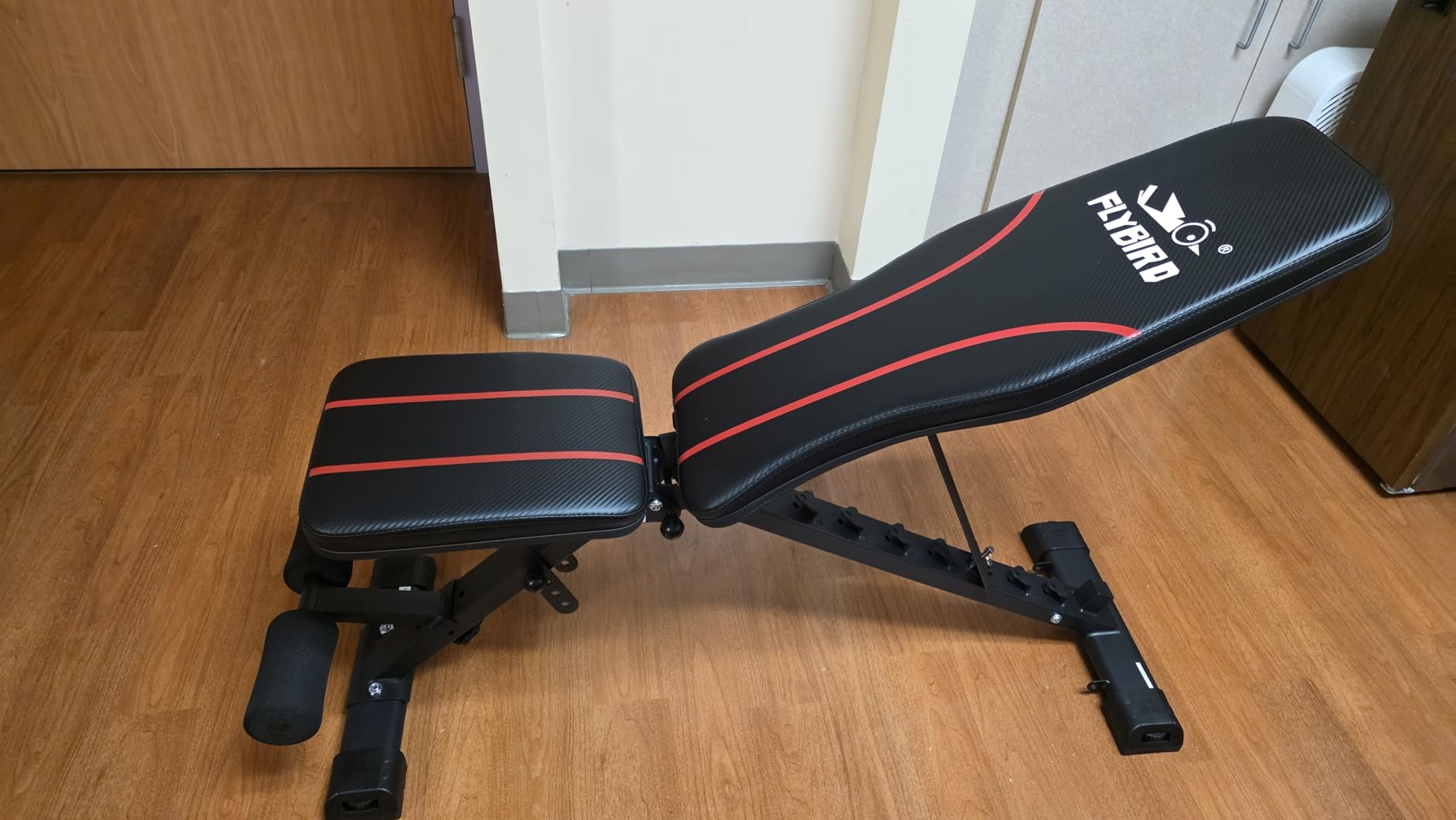
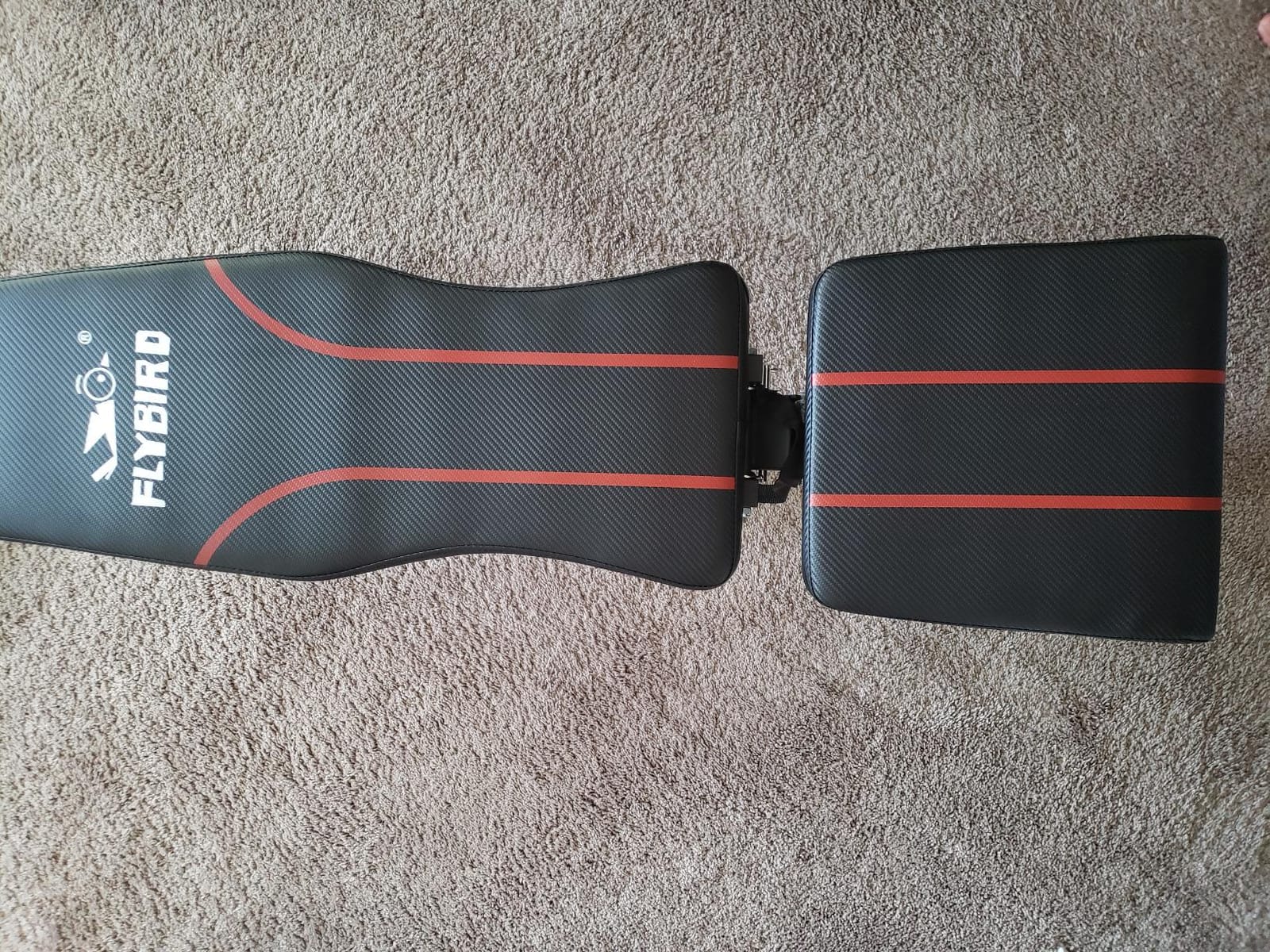
The 750-pound rating comes from solid steel with three reinforced triangle structures, which is a lot of structure for a bench that weighs only 23 pounds. The lock system is the part worth knowing about: a deepened lock slot paired with a safety pull pin, designed specifically to stop the backrest creeping out mid-set. Backrest slip is the single most common adjustable bench failure and the most dangerous, so a design that addresses it directly is a genuine plus.
There are 96 combined settings across 8 backrest positions, 4 seat positions and 3 leg holder positions. In practice that covers incline, decline, flat, shoulder pressing and rowing, and the folding design stores the bench in a fraction of its floor footprint when you are done.
Why the height specification is worth paying attention to
Roughly 22,291 ratings make this the second-most-reviewed bench in the roundup, and reviewers specifically name the competition-standard height as a reason the bench suits pressing. The textured sweat-proof leather is also cited often, which matters more than it sounds: a slick pad under a heavy press is a safety problem, not a comfort problem.
Because it sits at competition height rather than above it, this bench also avoids the height trap that catches shorter lifters on the WB5. You get a bar path and a touch point that behave more like a meet platform, which is exactly what a powerlifter training at home wants.
Where the ergonomics fall short
The most repeated complaint is reach. Changing the backrest means reaching behind your head to the support bar, which is awkward when you are lying flat mid-session and effectively impossible while the bar is still racked. Plan your angle changes before you lie down rather than during a set.
Broader lifters report the seat feeling narrow, and the PU leather is described as wrinkling after extended use. Neither is serious for a bench press, but both are the kind of detail that only shows up after a year of ownership rather than a first session.
3. YOLEO 827lbs Adjustable Bench – Near-Zero Assembly and a Long Back Pad
YOLEO Adjustable Weight Bench, ASTM-Certified 827LBS, 98% Pre-Assembled
827lb ASTM certified capacity
84 adjustable positions
28 inch backrest
Folds to 31.5 by 12.6 by 13 inches
Pros
- Great stability on hard floors from large flat feet
- 98 percent pre-assembled so setup is two pins
- Built-in transport handle and one-person fold
- Thick dense foam that wipes clean
- 24-month warranty
Cons
- Seat-to-back cushion gap presses into the tailbone on decline work
- Some owners say the size L version will not reach a true decline
- Padding feels thin and can warm up in long sessions
The YOLEO is the value pick in this roundup, and the reason is not the capacity number, it is the setup experience. This bench arrives 98 percent assembled. You take the ring pin and the ball pin out of the packaging, insert them, and you are training. On a category where setup time and lost hardware are routine complaints, that is a real quality-of-life difference.
The 4.6 star average comes with 9,407 ratings and about 78 percent five stars, which is a strong signal for this price bracket. Owners consistently describe it as stable on laminate, concrete and other hard floors, thanks to wide flat feet that spread the load instead of rocking on a narrow contact patch.
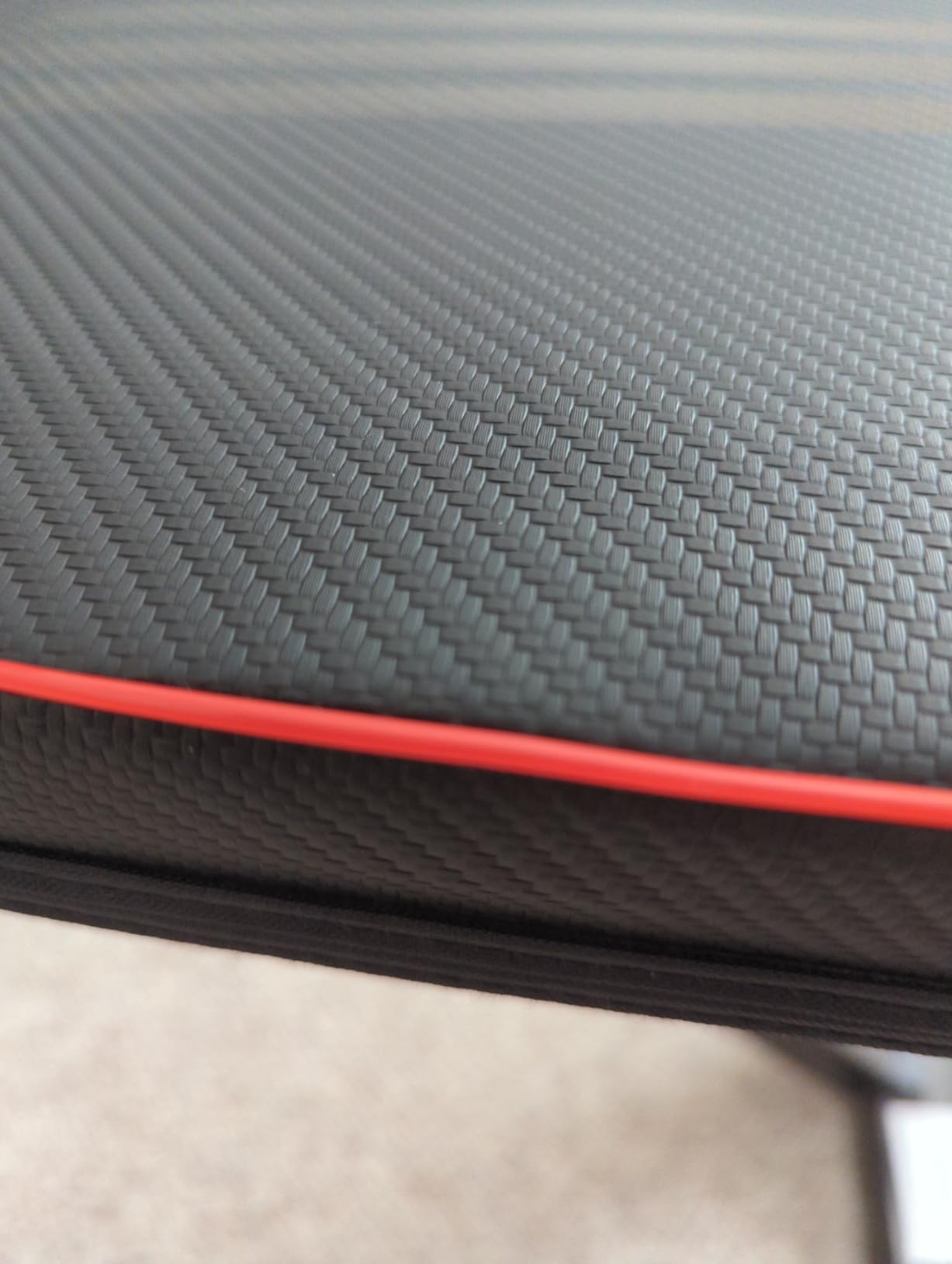
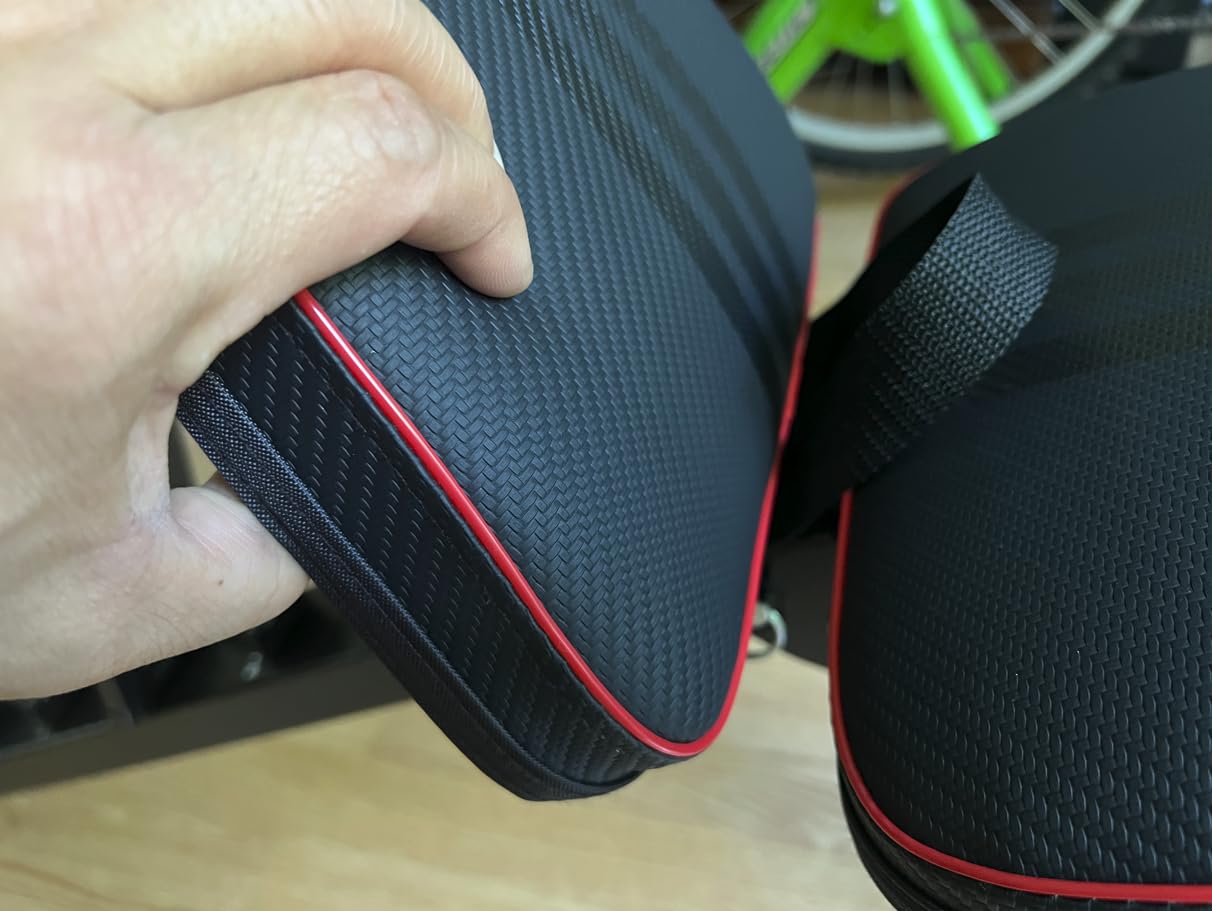
Position count is 84 across 7 backrest, 4 seat and 3 leg settings, and there is a 3.1-inch thigh pad for decline work. The pad itself is 13 inches wide with a 28-inch backrest, dense foam under PU leather, and the whole thing folds down to 31.5 by 12.6 by 13 inches with a handle built into the frame.
Capacity is certified to 827 pounds, which is unusually high for a frame in this bracket and comfortably above a 300-pound bench press. As with every adjustable bench here, that rating is a flat rating, and the useful question is what happens when the bench is tilted. On a seven-position backrest the decline positions are the ones to treat with caution.
Why this bench fits a garage or an apartment
The fold is the headline here. One person can collapse it in seconds, and the built-in transport handle means you are not dragging a 23-pound frame across the floor to move it. For a home gym that doubles as a parking space or a spare bedroom, that is the difference between a bench you keep and a bench you end up wishing you had not bought.
At 28 inches, the backrest is long enough for most lifters to keep head support at incline, and the 13-inch seat width is a reasonable middle ground between narrow benches and wide competition pads. It is not a wide-pad bench, so very long-torso lifters should read the next section.
Where the pad gap causes problems
The single most repeated criticism across reviews is the gap between the seat and back cushions. Several owners work around it with a rolled towel, which tells you how real the issue is. For decline sit-ups and leg drives, that gap becomes a hard edge and can dig into the tailbone.
Two more practical notes: the optional ankle support requires screwing in and out, which is genuinely tedious if you use leg extensions regularly, and the padding is thinner than some buyers expect and can feel hot without a towel on the pad. If your pressing load stays under 300 pounds, none of this matters much.
4. NICEPEOPLE 660lbs Bench – Compact Folding Bench for Small Rooms
NICEPEOPLE Adjustable Weight Bench for Home Gym, 660LBS Capacity Workout Bench with 8 Backrests for Chest Shoulders Arms, Compact and Foldable Strength Bench for Small Space Apartment Room
660lb capacity
8 adjustable backrest angles
29.3 inch backrest
17 lb frame
Pros
- Folds in one step to under 10 inches thick
- A 29.3 inch backrest that suits most users at incline
- Four rotatable leveling foot caps steady it on uneven floors
- Quick three-minute setup with written and video instructions
- Bright non-slip breathable padding
Cons
- 660lb rating and a 17 lb frame limit heavy barbell work
- Only 8 backrest angles versus dozens on FID benches
- Seat support is fixed and does not move independently
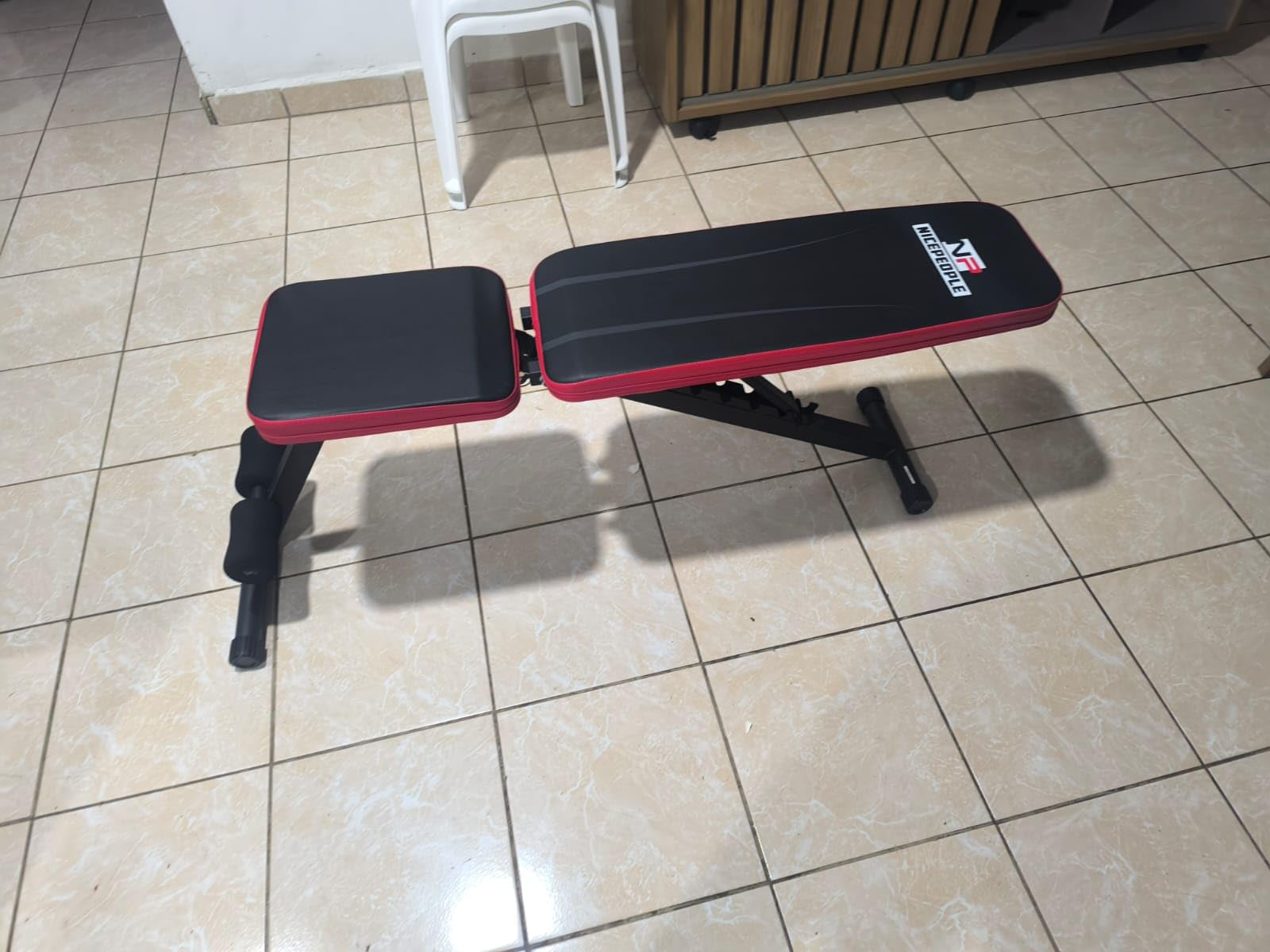
This is the bench to buy if floor space is the binding constraint. It folds to 30.7 by 16.3 by 9.25 inches, which means it slides under a bed, into a narrow closet or against a wall where almost nothing else fits. At 17 pounds it is also the lightest bench in the group, so moving it between rooms is a one-person job without any awkwardness.
It has a 4.5 rating across 4,520 ratings with about 76 percent five stars, and reviewers describe it as a beginner and small-space bench. That framing is accurate. The 29.3-inch backrest is longer than several more expensive benches here, and it supports the head and upper back for the majority of users at incline angles.
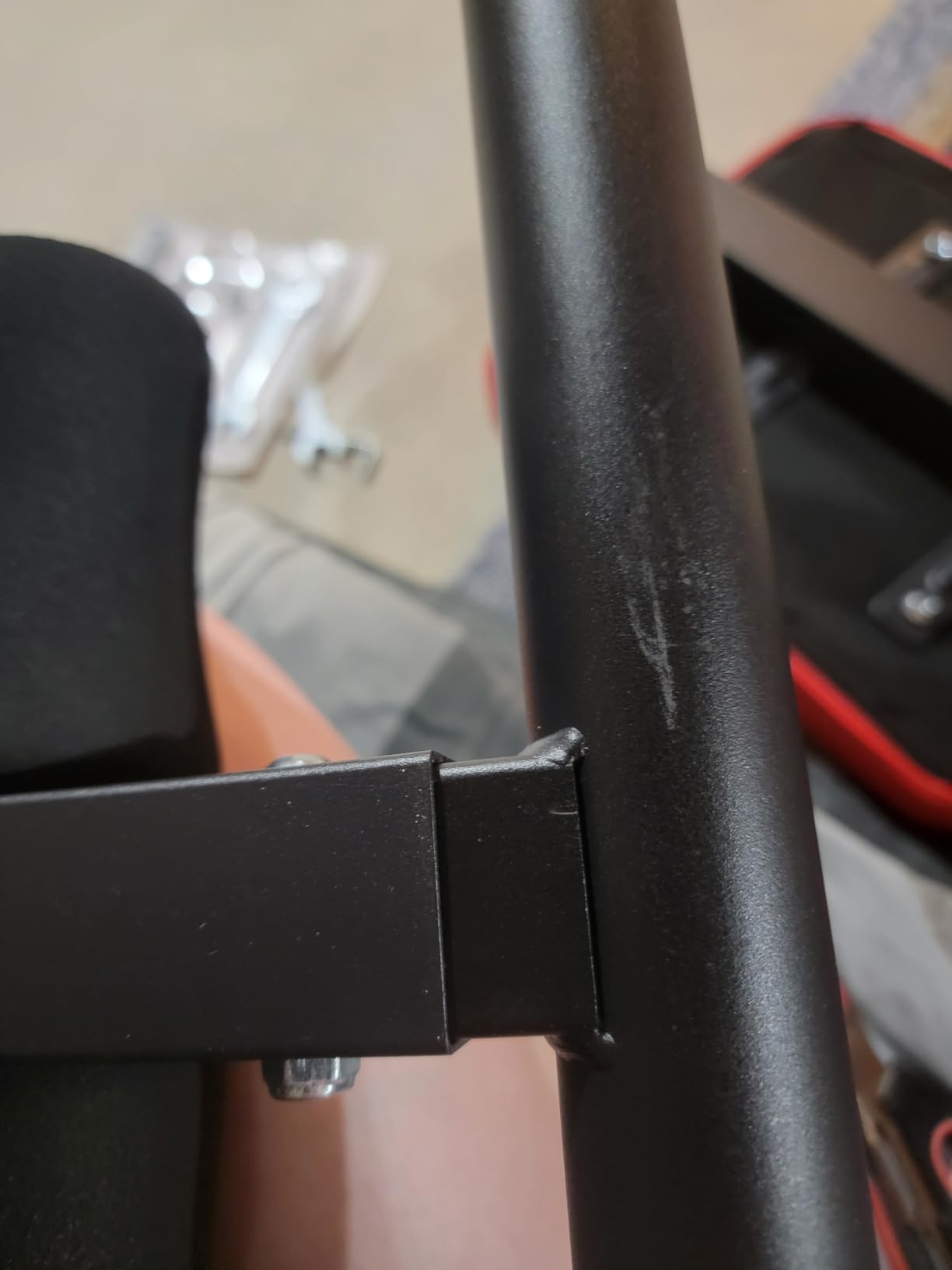
Frame construction is reinforced triangular alloy steel, and the manufacturer reports testing through more than 8,000 durability cycles. Capacity is 660 pounds, which is a real but limited number. A 225-pound lifter pressing 300 pounds is fine. A 300-pound lifter aiming for 400 is pushing the rating, and there is no angled derating published to tell you where the safe ceiling drops.
Adjustment runs through 8 backrest angles using a fast-adjust groove rather than a pin. Eight positions is not many. It covers flat, incline and decline, which is most of what a home gym needs, but it is a fraction of what a dedicated FID bench gives you.
Why it wins in a small space
The four rotatable leveling foot caps are the detail owners mention most. Most benches of this size rock on laminate or uneven concrete, and rocking under load is uncomfortable and unsafe. Adjustable feet let you level the frame on a floor that is not perfectly flat, which is common in older garages and rented flats.
Setup takes about three minutes with the included manual and installation video, and the padding is described as non-slip, breathable and easy to wipe down. If you are training with dumbbells rather than a barbell, this handles that job without drama.
Where it falls short for heavy pressing
The combination of a 660-pound rating and a 17-pound frame is the honest limit here. A light frame is the first thing that develops flex under a heavy single, and heavy lifters reviewing this bench consistently note the rating as the ceiling rather than a comfort margin.
The seat support is also fixed and does not adjust independently of the backrest, so you cannot fine-tune the seat-to-back relationship the way you can on a multi-position bench. If you plan to incline press heavy as well as flat, look at a higher-rated adjustable instead.
5. Yagud 880lbs Bench Set – All-In-One Station With Leg Extension
880LBS Adjustable Weight Bench, Foldable Workout Bench with Leg Developer
880lb load limit
Leg extension, rack and safety catches included
7 backrest adjustments
36 lb frame
Pros
- Includes a leg extension
- barbell rack and safety bar catches
- Triangular commercial-grade steel frame
- Thick PU leather padding for long sessions
- Folds quickly to save floor space
- Five pieces for one purchase
Cons
- No true decline position
- Uprights sit far behind your head making unracking awkward
- Leg extension pad sits low near the floor
Almost nobody buys one bench when they can get a whole station. This set includes a leg extension, a barbell rack with safety bar catches, and the bench itself, all on a shared triangular steel frame rated to 880 pounds. If you are building a home gym from nothing and want leg work without buying a separate machine, the value math here is hard to argue with.
We are going to be straight about the confidence level on this one: 149 ratings at a 4.4 average is a thin review base compared to the other nine benches, roughly seventy-four percent five stars. That is not enough history to tell you how the frame behaves after three years, and it is why this sits fifth rather than higher.
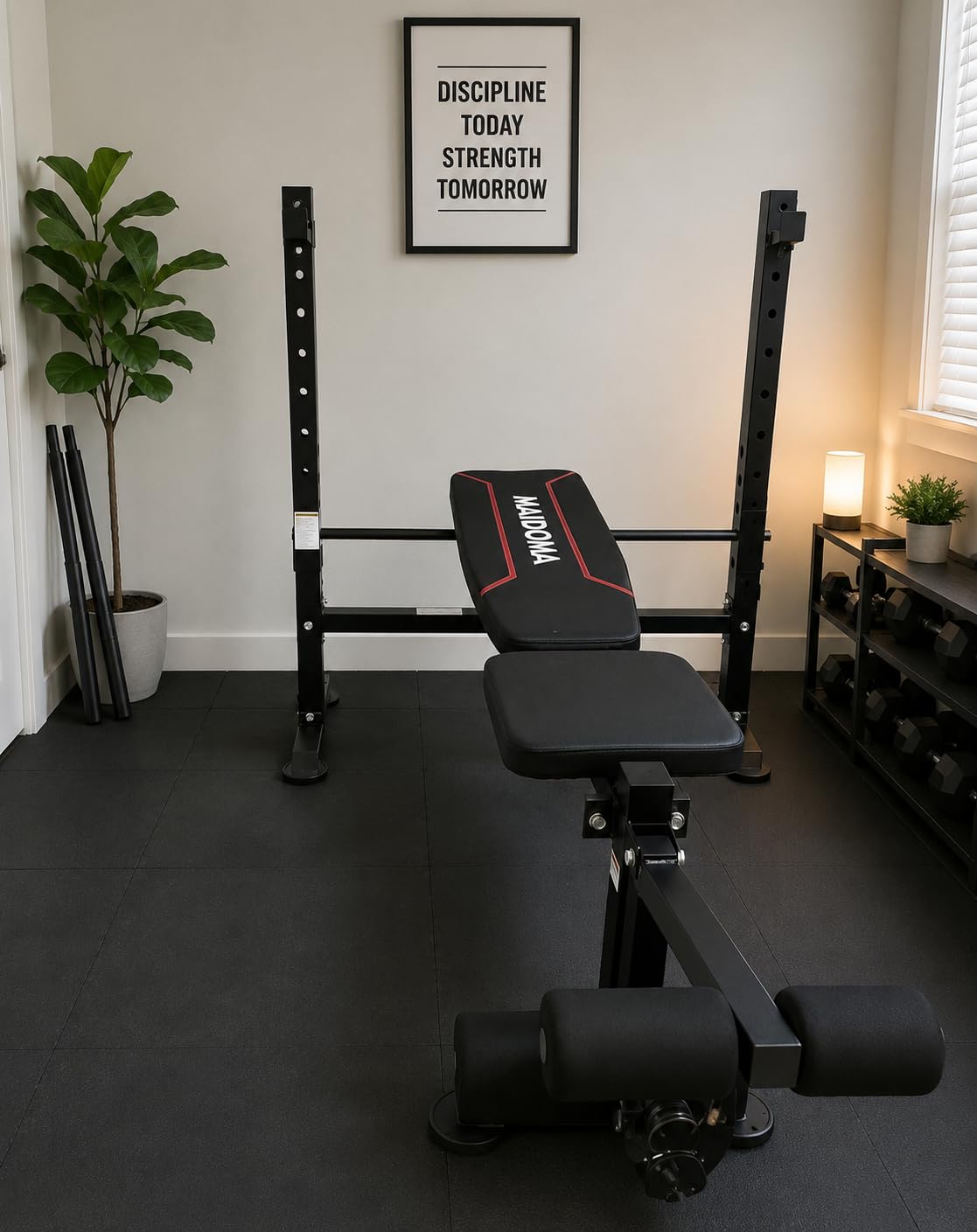
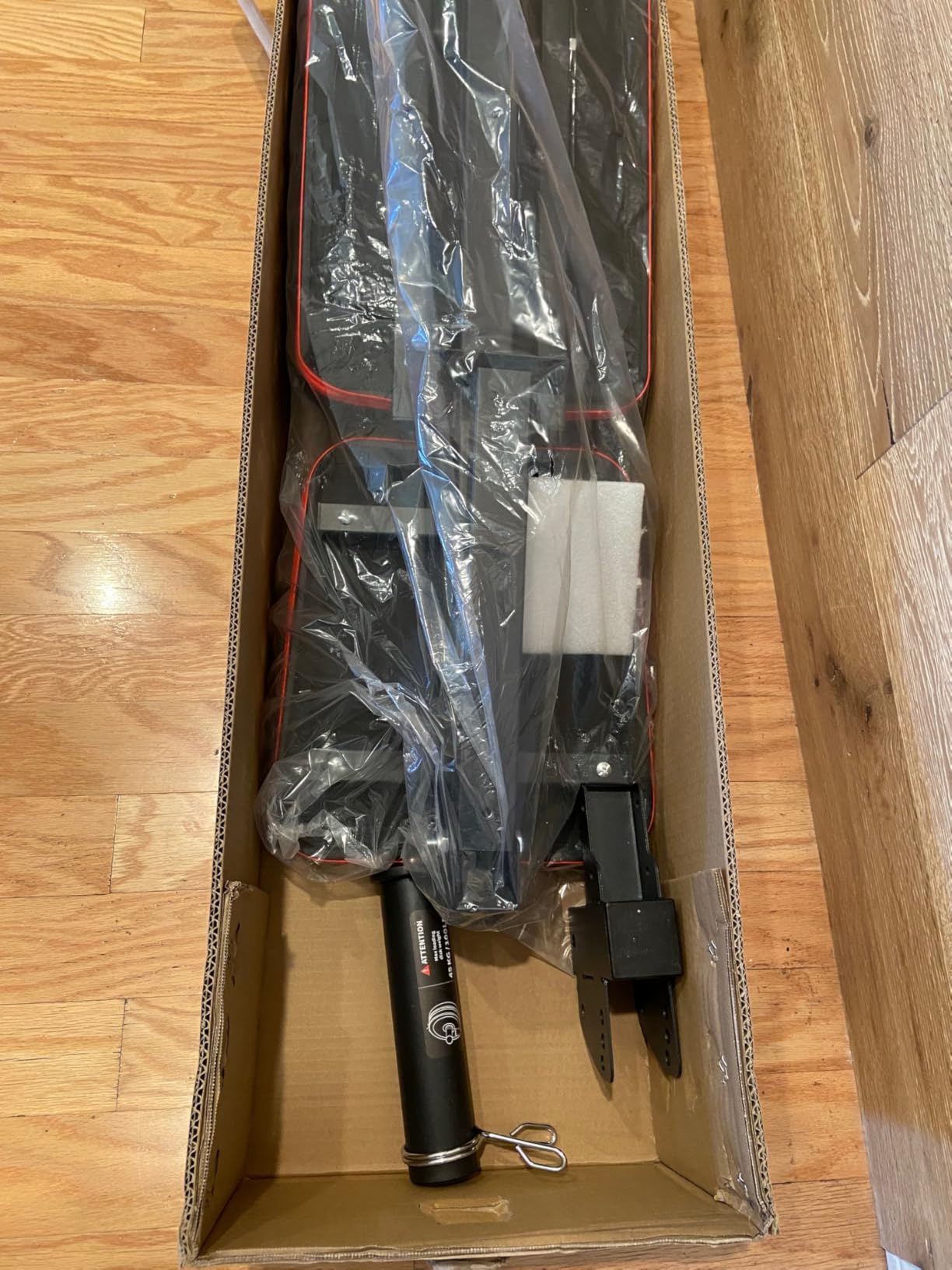
Adjustment covers 7 backrest positions, 3 preacher pad positions and 3 foot settings. The frame itself is described as commercial-grade steel in a triangular stability configuration, and the padding is extra-thick PU leather described as sweat-proof and anti-slip. The whole thing folds in about two seconds.
For bench pressing specifically, the rack uprights are the deciding factor. They are positioned well behind the head when you are lying flat, which makes unracking a loaded bar awkward in exactly the moment when awkwardness is dangerous. Owners also flag a metal connector that sits right where your tailbone lands on the seat pad.
Who this station suits
If leg extension, leg curl work and preacher curls are on your program, this replaces three separate purchases. The 880-pound rating is more than adequate for pressing in the flat and incline positions, and the safety bar catches are a genuine bonus for anyone training without a squat rack.
The bench itself feels stable under moderate loading, and the triangular frame design is the kind of structure that resists side-to-side movement. For a lifter under roughly 250 pounds, that combination is workable.
Where the ergonomics break down
There is no true decline position, so decline bench pressing is off the table entirely. The incline setting is also steeper relative to how far back the uprights sit, which means the bar travels in front of you rather than over your centre of mass.
The leg extension pad sits low, close to the floor, which makes for an awkward range of motion on that movement. Between the rear-set uprights, the hard connector at the seat and the missing decline, this is a station for accessory work, not for a dedicated barbell bench press program.
6. Finer Form Foldable Flat Bench – 1,000lb Rating and 4.7 Stars
Finer Form Foldable Flat Weight Bench for Home Gym, 1,000 lb Capacity
1,000lb capacity
4-way steel frame
Extra-thick cushion pad
27.7 lb frame
Pros
- Highest star rating in the roundup at 4.7 with 82 percent five stars
- 4-way steel frame removes wobble under load
- 1000lb capacity covers very heavy pressing
- Folds flat for storage under a bed or in a closet
- Minimal assembly with a free exercise chart
Cons
- Flat only
- so no incline or decline work is possible
- Limited to dumbbell pressing and hip thrusts
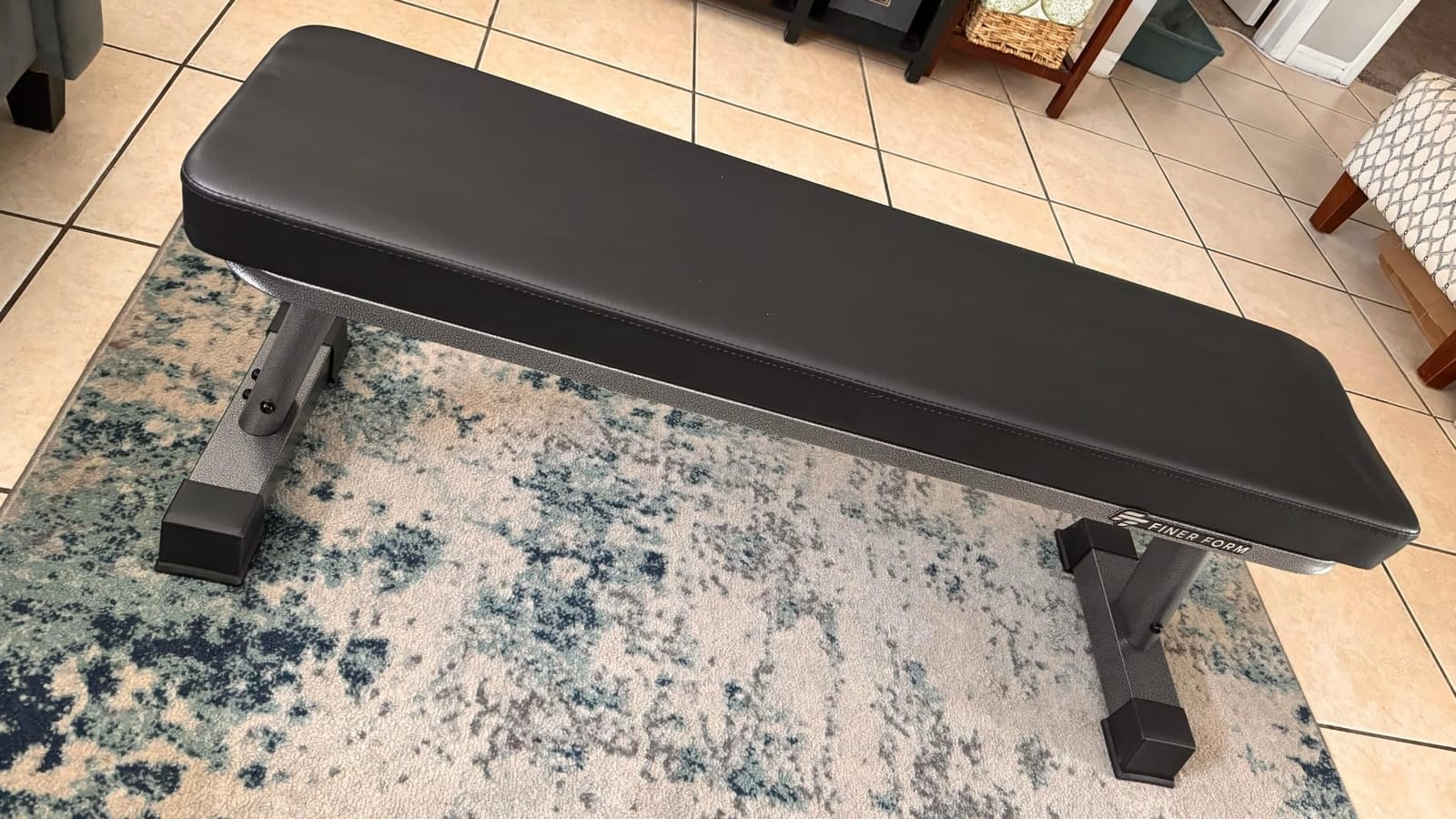
This is the highest-rated bench in the group at 4.7 stars, with about 82 percent of its 2,983 ratings at five stars. Owners describe the same thing over and over: it does not wobble. The reason is a 4-way steel frame rather than the more common two-leg arrangement, which spreads the load across four contact points instead of two.
It is a flat bench, and we want to be upfront that this is a real limitation rather than a compromise you can ignore. If incline dumbbell pressing, shoulder pressing or decline work is part of your program, this bench will not do those movements and no amount of capacity changes that.
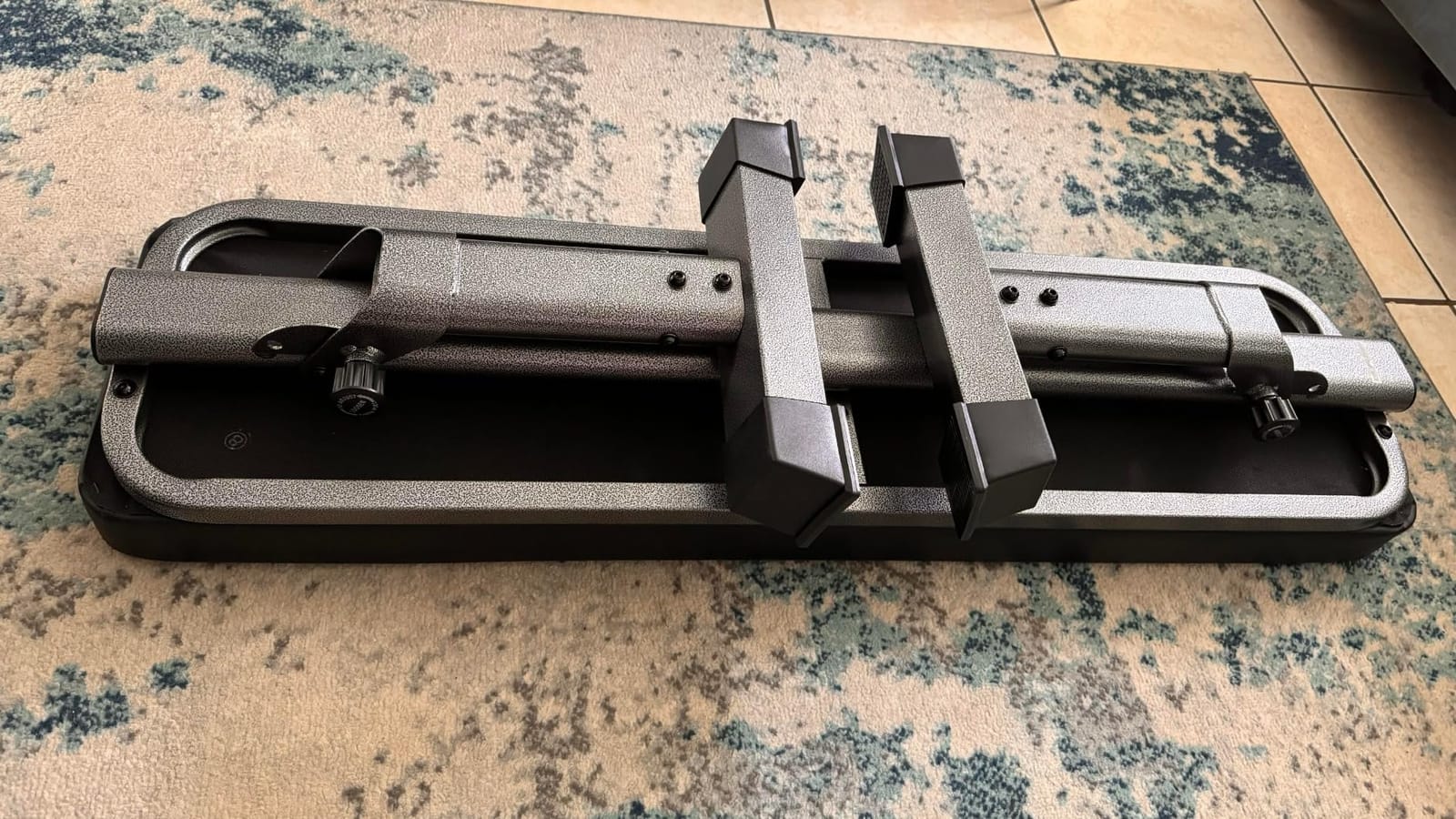
What you get instead is a 1,000-pound rated frame that is completely rigid, an extra-thick cushion pad, and dimensions of 45 by 12 by 18 inches. A pad at 18 inches is high for a flat bench, and that matters more for tall lifters than for short ones. It suits dumbbell work, hip thrusts, sit-ups and core training, and the fold lets it disappear when you are done.
Because there is no hinge or sliding mechanism, there is nothing to shift between reps. For a lifter who presses heavy and does everything else on a rack or with dumbbells, that rigidity is the entire point, and it is why dedicated flat benches keep winning the community argument despite offering one movement.
Why this is the highest-rated option
Roughly 82 percent five stars across 2,983 ratings is a genuinely strong distribution, and the review language is unusually consistent: the frame does not move. A 1,000-pound rating on a 27.7-pound bench is a heavy-duty figure, and it comfortably covers a bench press well past what most home lifters will reach.
The fold is also better than most. Owners describe storing it under a bed or in a closet, and the extra-thick pad is cited as comfortable for long dumbbell sessions. Assembly takes minutes, and a free exercise chart is included.
Who should skip it
Anyone whose training includes incline pressing. There is no back pad adjustment at all on this bench, so the entire adjustable category exists to solve a problem this bench does not address. Buying it as your only bench means adding a second one for angled work later.
At 18 inches tall it is also a high flat bench, so short lifters may struggle to plant their feet flat and drive through them. If you are under about 5 feet 4 inches, check the height before you order.
7. K KiNGKANG 1,050lbs Bench – Thickest Tubing and a 3-Year Frame Warranty
K KiNGKANG Adjustable Weight Bench, Foldable Home Gym, 1050lbs Capacity
1,050lb capacity
2 inch steel tubing
8 backrest angles
3-year frame warranty
Pros
- Highest rated capacity in the roundup at 1050 pounds
- 2 inch powder-coated commercial-grade tubing
- Wide 4 inch foot pads and a triangular structure
- 2.4 inch high-density foam reduces pressure points
- Folds to 31.4 by 14.1 by 12 inches
Cons
- Adjustment pins are small and can wiggle out
- Proportioned for shorter users and cramped for tall lifters
- Front pad adjustment requires unscrewing the upper leg assembly
The headline spec here is 1,050 pounds, the highest rated capacity in this entire roundup, sitting on two-inch powder-coated commercial-grade steel tubing. Tube diameter is the spec nobody measures and everybody feels, and thicker tubing is what resists the flex you feel through the pad when a heavy single is on the way down.
It pairs that with 2.4-inch high-density foam cushions under a premium leather cover, which is among the thicker padding in this group. Wider cushions spread the load across your shoulder blades and upper back, which is a real comfort difference on a long pressing session.
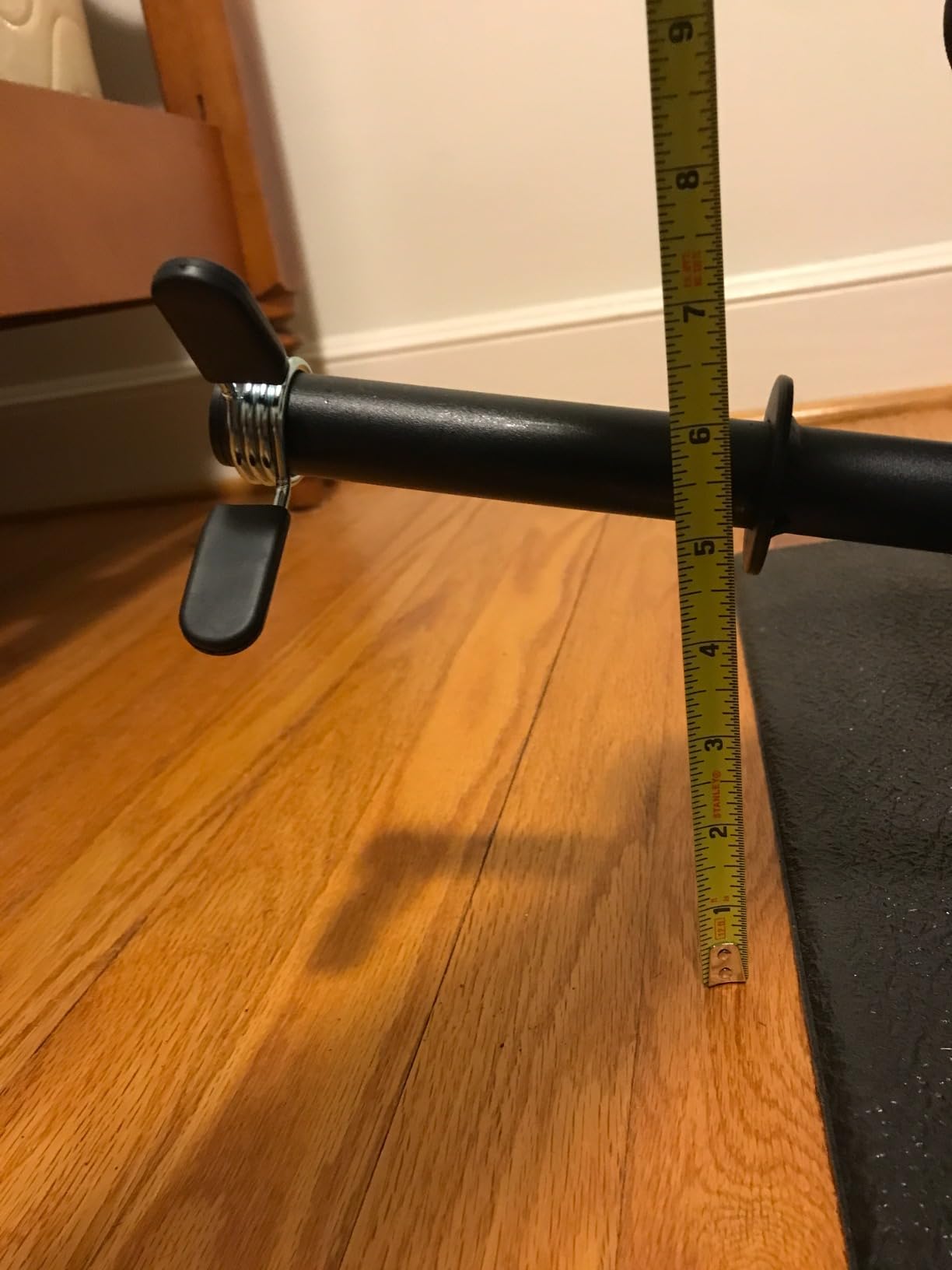
Adjustment is 8 backrest positions with 3-position elbow pads, and the frame uses a triangular structure with wide 4-inch foot pads to stay planted. Setup is 99 percent pre-assembled with tool-free assembly in under five minutes, and the warranty is 3 years on the frame, the longest frame coverage in this group alongside the FLYBIRD parts coverage.
The trade is proportions. At 51.5 by 13.4 by 31.5 inches, this bench is proportioned for shorter users, and owners at or above six feet describe it as cramped. The frame weight is listed at 15.42 kilograms, so it is not a light bench, but it is not the 55-pound monolith the Steelbody is.
Why the capacity and tubing matter for heavy singles
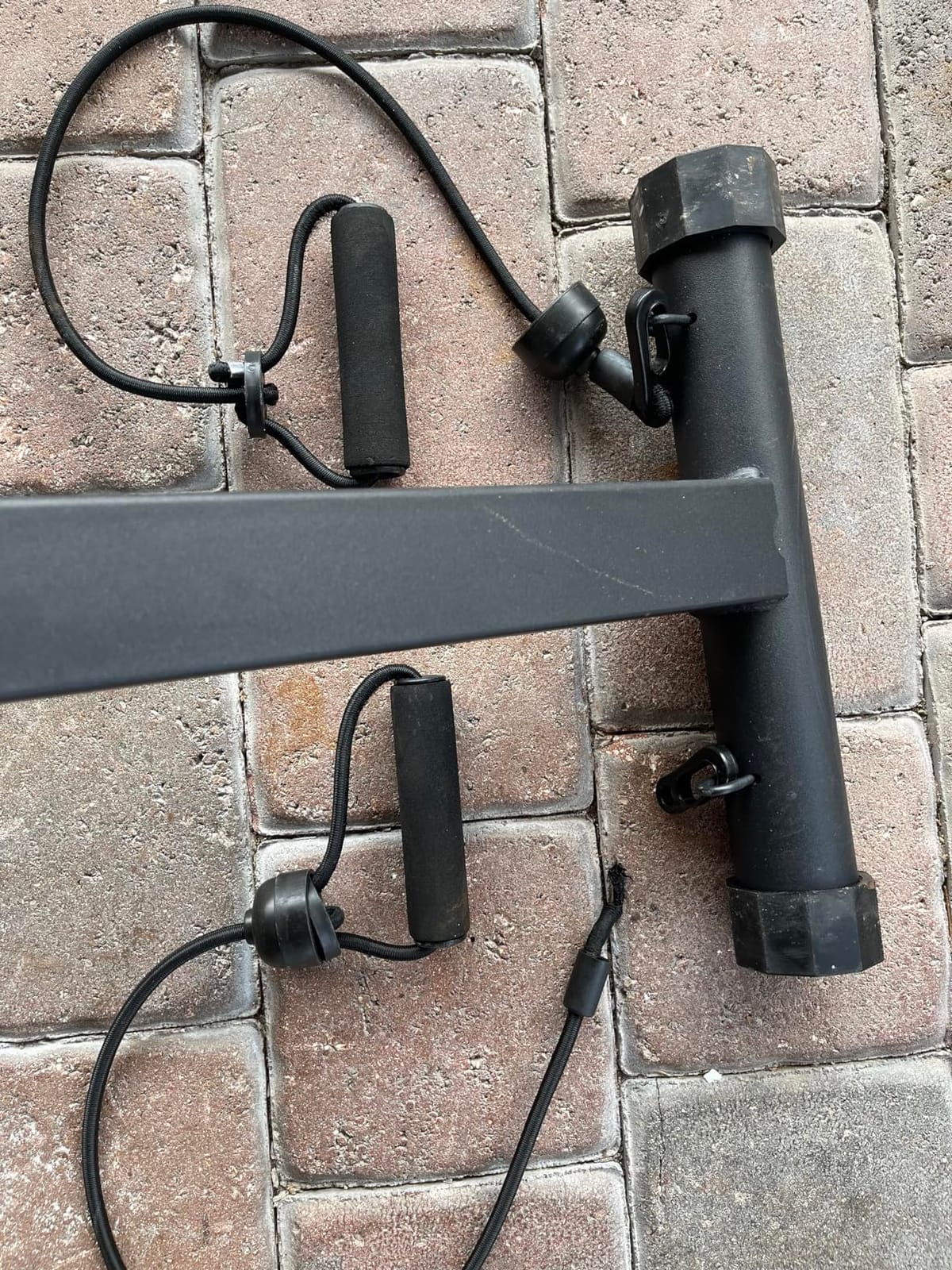
Rated capacity is only half the story, because plenty of benches carry a high number on a frame that still flexes. Two-inch tubing and a triangular structure with 4-inch foot pads is the combination that keeps the pad from moving under a 400-pound press. The 4.4 average across 2,701 ratings reflects that owners are largely happy with the build.
The 2.4-inch foam is also worth crediting. It reduces pressure points across the upper back during heavy pressing, and thicker cushioning is the one spec that gets more useful the longer a session runs.
Where the hardware and sizing disappoint
The most common complaint is the adjustment pins. They are small, and owners report them wiggling partway out of their holes, which on a bench press means a pad that shifts under load. Check the pins before a heavy set rather than during one.
Two more: the leg roller bar is narrow enough to rub the shins during leg extensions, and front pad adjustment requires unscrewing the upper leg assembly rather than pulling a pin. There is also no catch to hold the bench closed when folded, so it does not stay upright on its own.
8. Finer Form Multi-Functional FID Bench – Bench, Roman Chair and Hyperextension
Finer Form Multi-Functional Adjustable FID Weight Bench and Roman Chair
1,000lb capacity
23 settings across 8 backrest positions
Dual-purpose Roman chair and hyperextension
21 kg frame
Pros
- One frame covers back extensions
- Roman chair work and preacher curls
- 1000lb capacity handles 200 to 250 pound presses
- 23 settings across backrest
- seat
- support pad and calf positions
- Transport wheels on one side and a handle on the other
Cons
- Only one decline setting
- Back section stays slightly wobbly even with bolts tight
- Does not fold for closet storage
This bench exists to answer the objection that a flat bench does too little. The same frame gives you incline, decline and flat pressing, plus hyperextension work for your lower back and glutes, a Roman chair, a sit-up station and preacher curls. Reviewers count more than 100 exercises available across the settings.
It carries a 1,000-pound rating, and owners report it stays stable and does not tip under 200 to 250 pound presses. That puts it comfortably above the load of most lifters, though a 300-pound-plus presser is pushing into territory where the frame design matters more than the number.
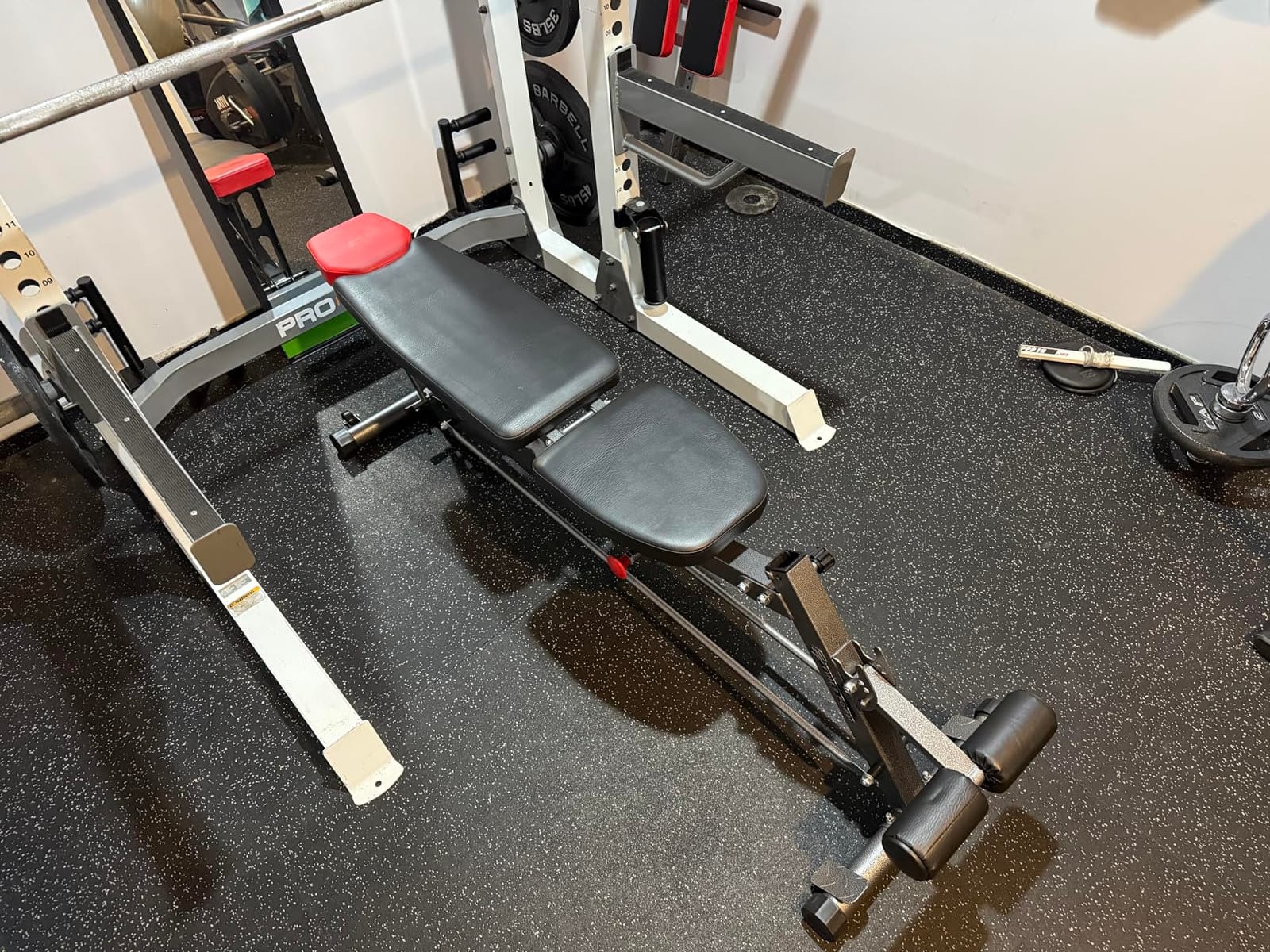
Settings break down into 8 backrest, 3 seat, 8 support pad and 4 calf positions, and transitions between them are fast. The design detail we like most is practical rather than flashy: transport wheels on one side and a handle on the other, so a 21-kilogram frame can be repositioned by one person without dragging it.
At 62 by 20 by 30.25 inches, this is the largest footprint in the roundup by a wide margin, and it does not fold. That is a serious constraint in a small garage, and you should measure your space before anything else, because no amount of versatility helps if the bench does not fit.
Why the multi-function design earns its footprint
A dedicated Roman chair or hyperextension bench costs money and floor space on its own. Getting both from the same frame as your pressing bench is the value argument here, and the 4.5 average across 2,635 ratings with roughly 74 percent five stars suggests most owners made peace with the trade.
Well-labelled hardware, illustrated instructions and a free workout poster all make assembly less annoying than average, and owners report responsive support that shipped replacement parts quickly when something broke.
Where it falls short
There is only one decline setting, so steep decline work is not possible, and a reviewer set that cannot move far enough is frustrating if that is a movement you program. The back section also stays slightly wobbly even with the bolts fully tightened, which is the most common mechanical criticism.
Taller lifters run into the head-support problem. The back piece is about an inch short for users at 6 foot 1 inch and above when the pad is fully vertical, and the preacher pads are narrow and only adjustable vertically, not horizontally. Add a smooth, slippery foot placement piece without grip tape and this is clearly not commercial equipment.
9. PASYOU 660lbs Dual-Frame Bench – Unfold and Train, No Assembly
PASYOU Adjustable Weight Bench, 660LB Capacity Foldable Workout Bench, Incline Flat Bench Press for Home Gym, Dual-Frame Strength Training Bench, No Assembly Required
660lb capacity
2.8 inch high-density foam pad
Dual support frame
No assembly required
Pros
- Dual support legs give standout stability with minimal wobble
- No assembly at all beyond fitting the leg knobs
- Folds flat to fit under a bed or in an apartment
- 2.8 inch foam resists creasing under load
- Levelling feet steady it on uneven floors
Cons
- Seat-to-backrest gap is wider than most competing benches
- Collapsing the legs requires removing two screws
- A few inches short for taller users who want a longer backrest
The PASYOU has the second-highest rating in this group at 4.6 stars, with about 80 percent of its 1,968 ratings at five stars. Reviewers frequently place it above the better-known FLYBIRD models in the same bracket, and the reason they give is the dual support frame, which is unusual at this size and weight.
That frame is what produces the stability. A dual-leg arrangement under the seat distributes the load across more contact points than a single centre post, and the effect owners describe is a bench that does not shift when a heavy set is loaded. At 21 pounds it is still light enough to move with one hand.
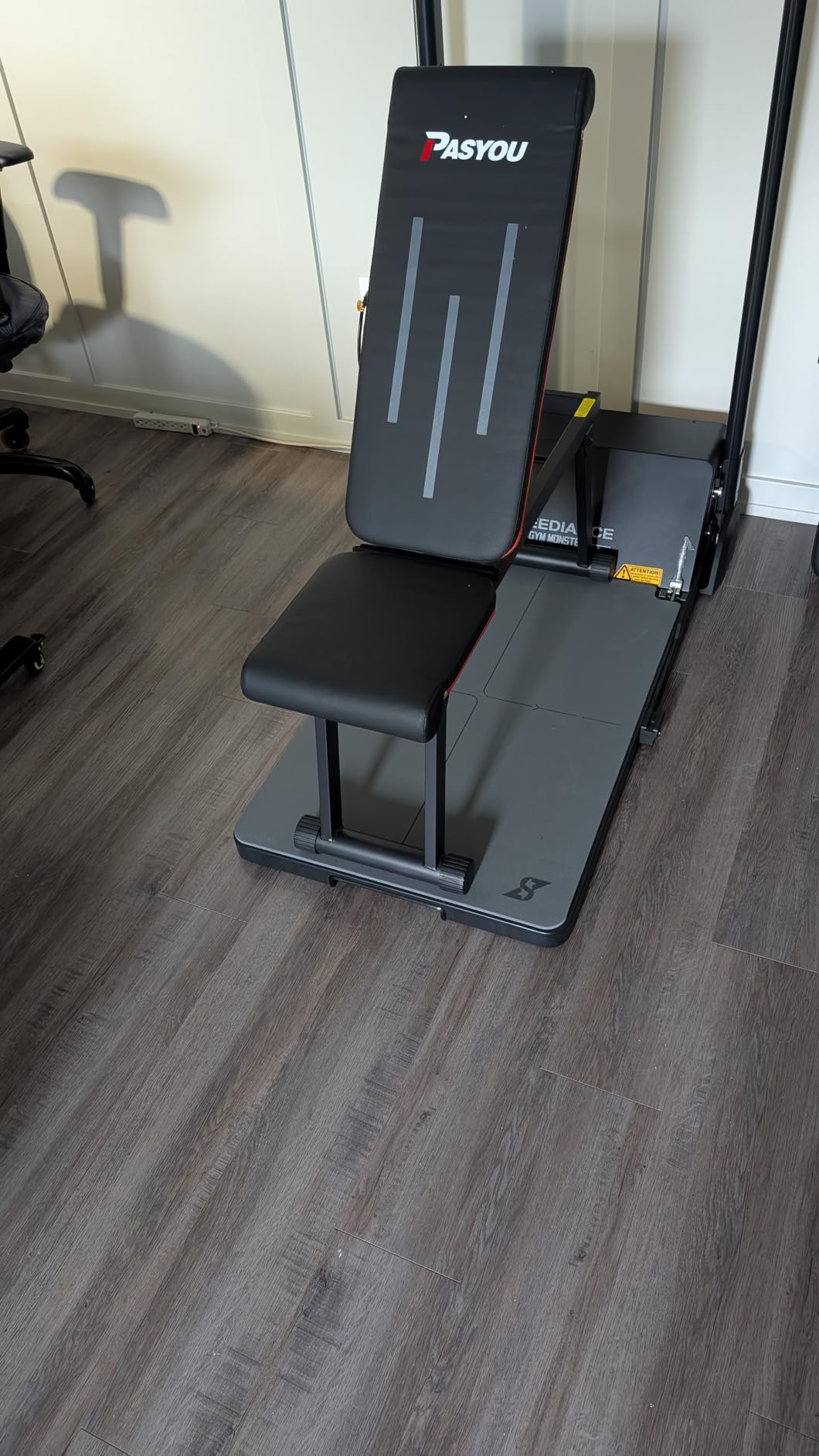
There is genuinely no assembly. You take it out of the box, fit the leg knobs, unfold and train. The pad is 2.8 inches of high-density foam under a leather cover, and reviewers specifically note that it resists creasing under load, which is a common failure with cheaper foam.
Adjustment runs through 6 backrest positions covering flat, incline and upright, and the bench folds flat for apartment or garage storage. Non-slip adjustable feet handle uneven floors, and customer service has been reported as quick to replace a unit that arrived with misaligned bolt holes.
Why the dual frame earns its place
Stability is the whole game at 660 pounds of rated capacity, and this bench delivers it through frame geometry rather than raw mass. That combination makes it a sensible pick for someone pressing in the 200 to 300 pound range who wants zero wobble without a 100-pound frame.
The 2.8-inch pad is also among the thicker ones here and does not crease, so it stays comfortable over long sessions. No assembly, folding design and levelling feet round out a package that is unusually complete for the bracket.
Where the gap and length get in the way
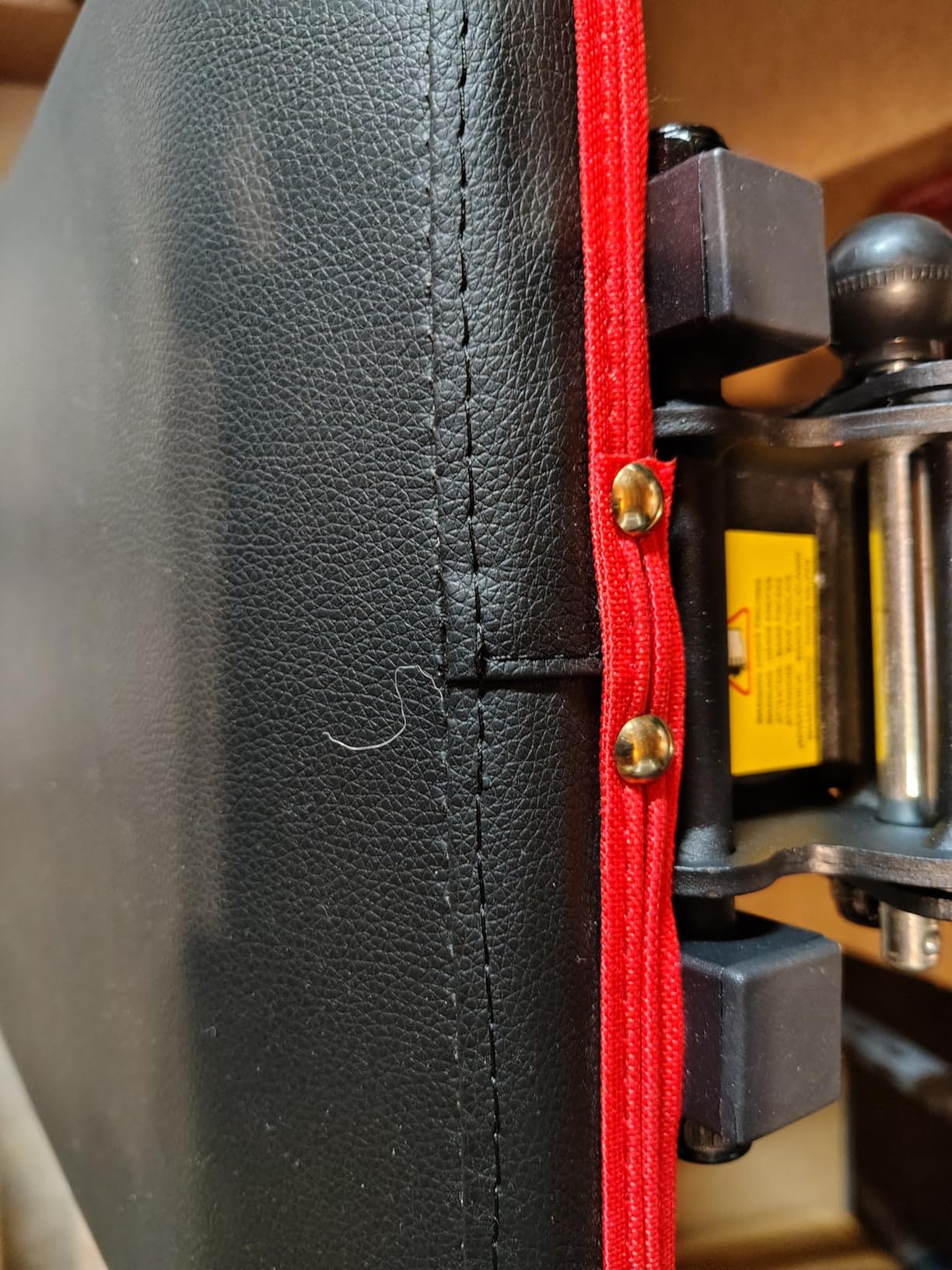
The seat-to-backrest gap is described as wider than on most competing benches, and that is the trade-off reviewers mention most. Gaps matter more at decline and during sit-ups, where a hard edge can press into the tailbone, and they matter more still for long-torso lifters.
Collapsing the legs requires removing two screws, so it cannot be done quickly between sets the way a pin-folded bench can. At 39 inches long it is also a few inches short for taller users who want more backrest length, though it is the narrowest footprint in the group at 11 inches wide.
10. Steelbody Deluxe Utility Bench – Heaviest Frame and Integrated Wheels
Steelbody Deluxe 6 Position Utility Weight Bench for Weightlifting and Strength Training STB-10105, Black-Brown
55 lb stainless steel frame
Low profile design
6 back and 5 seat positions
2-year warranty
Pros
- Heaviest bench in the group at 55 pounds with no wobble
- Low profile improves benching stability and leg drive
- Wheels sit under the frame so they do not interfere with a rack
- Stainless steel hardware and a 2-year manufacturer warranty
- Widest bench here at 26.5 inches for broader frames
Cons
- No decline position at all
- Back pad is short and leaves the head unsupported for users around 5 foot 9 inches and taller
- 300lb listed weight limit is low for heavy barbell work
Mass is a crude engineering tool, and the Steelbody uses it. At 55 pounds this is the heaviest frame in the roundup by a wide margin, and it is built from stainless steel with vinyl-covered padding. Owners describe it as completely wobble-free, which is unsurprising when the bench simply has too much inertia to move.
The design detail that earns real praise is the integrated transport wheels, mounted under the frame so they sit between the legs rather than sticking out. That means the bench can be rolled around without fouling a squat rack upright, which is a problem with bolt-on wheel kits.
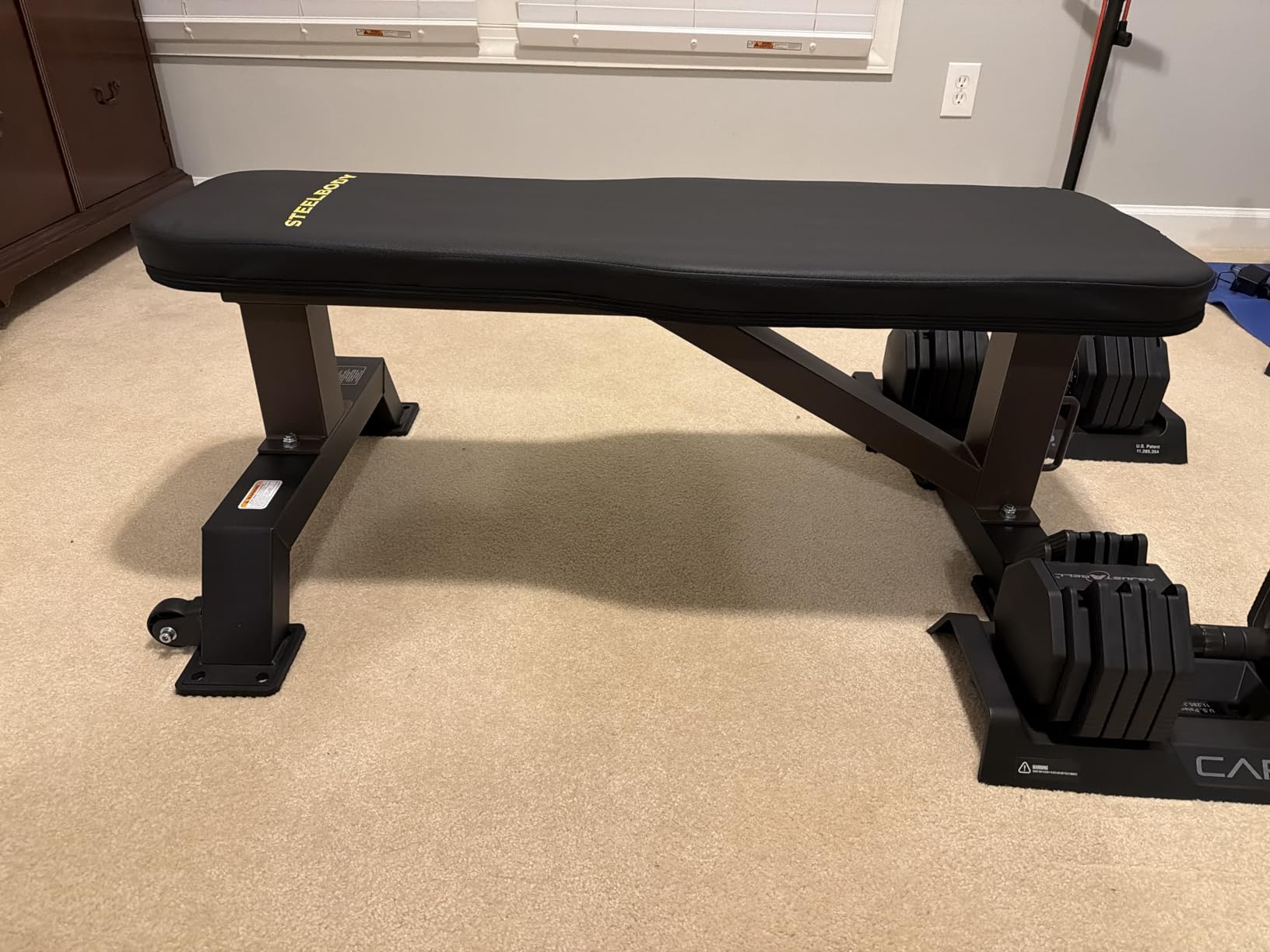
It is also described as low profile, and that has a direct effect on pressing. A lower pad lets you set your feet flatter and drive more directly up through the bar, which is a meaningful advantage for a lifter whose bench press progress has stalled. Adjustment covers 6 back positions and 5 seat positions with a maximum incline of 70 degrees.
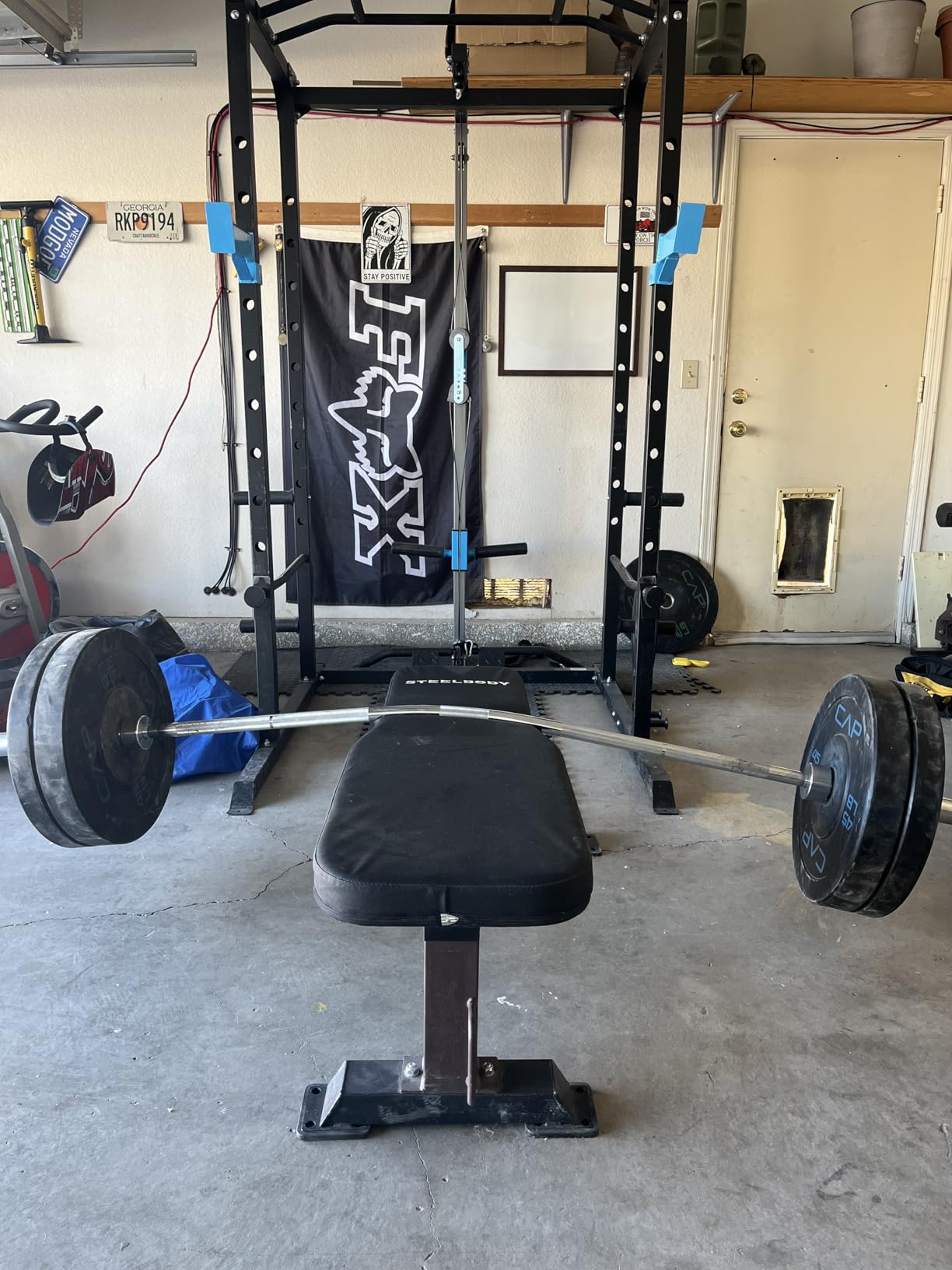
At 47 by 26.5 by 44 inches, it is the widest bench in the group, and that is not a marketing decision. Wider seating suits lifters with broader frames who feel cramped on a 12-inch pad, and the 15-inch seat and 15 by 30-inch back pad give more room than most.
Why weight matters more than capacity ratings
The listed weight limit here is 300 pounds, which is the lowest number on the list, and we are not going to pretend otherwise. For a lifter under that figure, though, the stability on offer is the best in the group, and low profile geometry genuinely helps leg drive.
Stainless steel hardware throughout, a 2-year manufacturer warranty and wheels that tuck under the frame add up to a bench that stays put. At 4.6 stars across 1,696 ratings with roughly 79 percent five stars, owners broadly accept the trade-offs in exchange for a rock-solid platform.
Where the compromises bite
There is no decline position, so decline bench pressing is impossible. The back pad is short at 30 inches, and users around 5 foot 9 inches and taller report the head is unsupported when the pad is raised, which pushes this bench toward shorter lifters.
There is also a large gap between the seat and back pad when flat, and the most common complaint of any kind is the assembly instructions, which are described as poorly organized and taking roughly twice as long as they should. A few buyers also report paint chipping or light rust on arrival.
How to Choose a Weight Bench for Heavy Pressing?
1. Buy for the weight you will actually load
Work out your top working set plus a margin, then check that the bench is rated above it. A 225-pound lifter pressing 275 needs a bench rated at 500 pounds or more for a safe margin, and most of these clear that easily. A 300-pound lifter pressing 400 needs to look at the 800 to 1,050-pound options.
Be precise about what the number means. On adjustable benches it is a flat rating. Several brands rate a bench at 1,000 pounds flat and considerably less at an angle, and they rarely publish the derated figure. Assume the angled rating is lower and check with the manufacturer if you plan to press heavy on an incline.
2. Look at tube diameter and steel gauge, not the marketing claim
Steel gauge is a real number and a real differentiator, but a thicker gauge is not automatically a better bench. Two-inch square tubing is the useful floor for anything rated above 800 pounds, and thinner tubing shows up as flex through the pad under a heavy single rather than as a break.
Be sceptical of very thick gauge claims paired with very high capacities. A frame that advertises 7-gauge steel and an extreme weight number is usually doing marketing work rather than engineering work.
3. Treat bench height as a selection rule, not a preference
The 17-inch competition standard is a reference point, not a mandate. Taller benches help you get the bar off the chest and improve reracking, but they reduce foot drive. Lifter under about 5 feet 6 inches usually press better from a lower pad where both feet sit flat.
The practical test is simple: sit on the bench, plant your feet, and check whether your heels touch the floor with your knees bent. If they do not, the bench is too tall for your proportions, regardless of what else the spec sheet says.
4. Measure the pad gap before you fall in love with the rest
A zero-gap design means the seat pad and back pad come together when the bench is flat, so there is no hard edge for your tailbone to sit on. Traditional adjustable benches commonly leave a gap of an inch or more, which matters most at decline and during sit-ups.
Long-torso and high-arch lifters feel this more than anyone. If you have struggled to find a comfortable position on a bench with a wide gap, prioritise a narrow or zero-gap design over a heavier capacity rating.
5. Check pad width against your frame
Pad width runs from about 12 inches on most of the benches here to 14 inches on dedicated competition models. A wider pad spreads load across broader shoulders and suits lifters with wider frames or long torsos. A narrow pad concentrates pressure on the shoulder blades, which is uncomfortable on a heavy press.
The Steelbody at 26.5 inches overall and the YOLEO at 13 inches represent the two ends of what is in this roundup. Sit on both if you can, because pad width is one of those things you feel immediately and cannot judge from a photo.
6. Account for how far you can move it
Assembled weights here range from 17 pounds on the NICEPEOPLE to 55 pounds on the Steelbody, and that difference decides whether you will actually rearrange your gym. Anything above about 35 pounds without wheels is a two-person job or a permanent fixture.
Wheels matter more than the raw weight number. The Steelbody, the Finer Form FID and the YOLEO all have either integrated or built-in transport, which is what turns a heavy bench into a movable one.
7. Verify the warranty and the fold before you pay
Warranty depth varies widely in this category, from a one-year frame warranty with three years of parts coverage on the FLYBIRD models to a three-year frame warranty on the K KiNGKANG and a two-year manufacturer warranty on the Steelbody. Longer is better, and a frame warranty is worth more than a parts warranty.
Check the folded dimensions against your storage space too. Benches that fold to under 10 inches thick can go under a bed, and benches that do not fold at all need a permanent corner.
8. Know when to skip this article entirely
If you are only ever doing dumbbell pressing, sit-ups and core work, you do not need a rated-to-1000-pound steel frame, and the Finer Form flat bench or the PASYOU covers it for a fraction of the money. Buy capacity only when you will load it.
If your goals are general fitness rather than progressive barbell strength, bodyweight work and simple adjustable movement patterns will take you a long way. And if the household budget question is part of your thinking, our guide to keeping a cat at a healthy weight covers a different kind of long-term progress entirely.
Frequently Asked Questions
What is the best bench press bench for home use?
The FLYBIRD WB5 is the best all-round bench press bench for home use because it combines an 800-pound rated frame, 144 positions from a 30-degree decline to 90 degrees upright, and a 30-inch backrest, with more than 26,000 owner ratings behind it. If you only ever press flat, the Finer Form foldable flat bench rates highest at 4.7 stars and does not wobble. If you train toward competition, the FLYBIRD Full Body bench is the only one listed at IPF competition height.
Which is better for my home gym, a flat bench or an adjustable bench?
For heavy barbell bench pressing, a flat bench is better because it has no moving parts to shift under load and it holds a consistent bar path. An adjustable bench is better if you also need incline, decline, shoulder pressing and rows. The most common experienced-lifter setup is both: an adjustable bench for accessory work and a dedicated flat bench for the main press. If you can only buy one, choose based on the heaviest load you will ever put on it.
Does bench height matter for bench press?
Yes, and it is one of the most overlooked specifications. A taller bench gets the bar off the chest more easily and improves reracking, but it reduces foot drive. A 17-inch competition standard suits most lifters, though anyone under about 5 feet 6 inches often presses better from a lower pad where both feet sit flat. Sit on the bench and check whether your heels reach the floor with your knees bent before you buy.
Is it worth buying a weight bench?
It is worth it if you are doing any barbell or dumbbell pressing, sit-ups, rows or core work, because a bench turns a floor exercise into a repeatable one with a stable setup. Buy capacity only if you will load it: a 225-pound lifter pressing 275 needs a bench rated around 500 pounds, while a 300-pound lifter should look at 800-pound-plus frames. If you are only doing dumbbells, a lighter folding bench covers it.
What is the best brand for bench press benches?
For flat competition-style benches, Rogue, REP and Bells of Steel are the most established names in the category. For folding and adjustable home gym benches, FLYBIRD, Finer Form and YOLEO lead on review volume, with the FLYBIRD WB5 and Finer Form flat bench holding the highest ratings of the ten compared here. Brand reputation matters less than tube diameter, capacity rating and warranty length, which you can verify on any listing.
The Best Weight Benches for Bench Pressing: Final Word
After comparing ten benches, the best weight benches for bench pressing come down to what you load onto them. The FLYBIRD WB5 takes our top slot because an 800-pound rated dual-triangle frame, 144 positions and a 30-inch backrest cover every pressing movement without wobble, and 26,094 ratings suggest very few surprises.
Buy the FLYBIRD Full Body bench instead if competition height is your priority, and the Finer Form foldable flat bench if you press flat only and want the highest rating and the least movement under load. Add the K KiNGKANG if you are pressing over 400 pounds and want the thickest tubing and longest frame warranty in the group.
Whatever you choose, match the capacity to your heaviest working set, check the pad gap against your torso, and confirm the bench height lets both feet sit flat. Those three checks will prevent more bad purchases than any rating on any listing.