
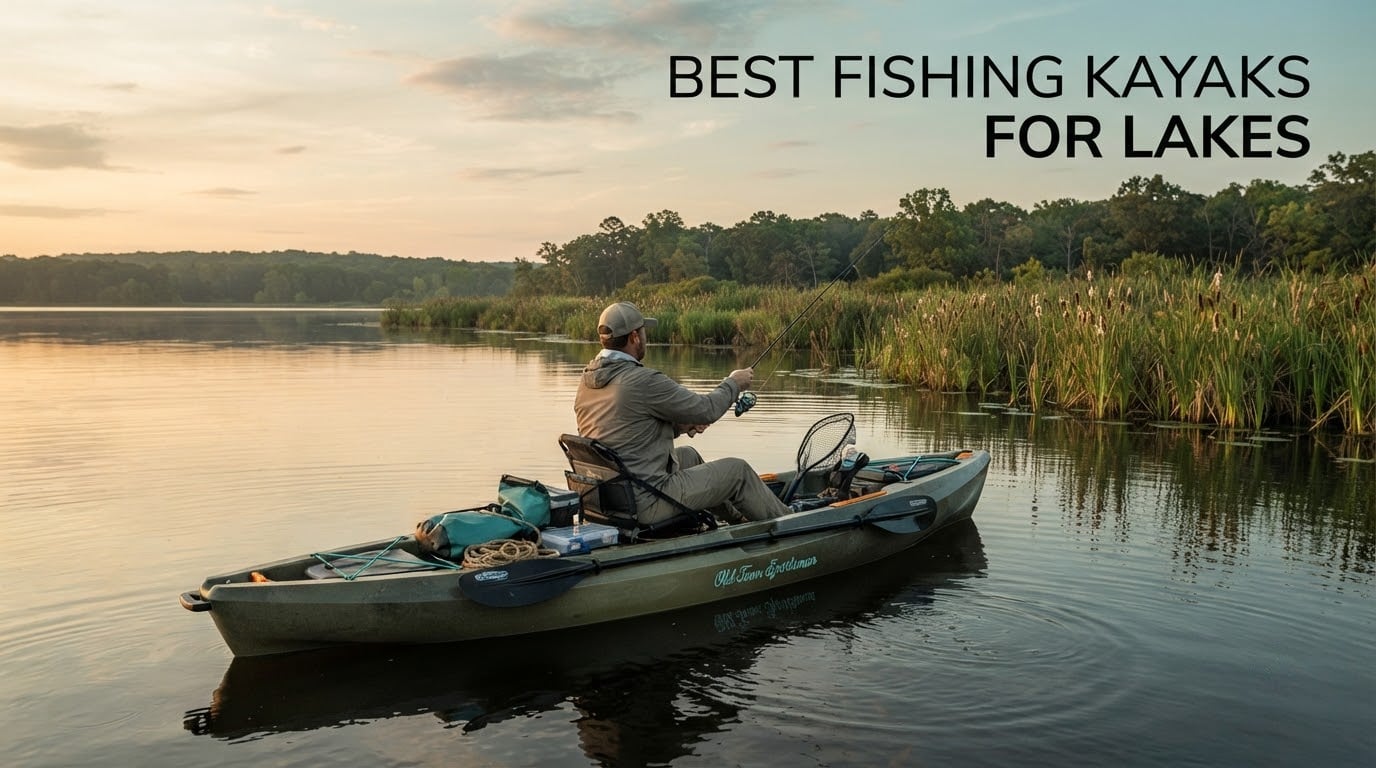
A fishing kayak is a flat-bottomed, wide-beam boat built for angling, almost always a sit-on-top design with molded rod holders, a raised casting platform, accessory tracks and mounting points for a fish finder or trolling motor. Lake fishing kayaks trade outright speed for control: a wide, stable hull lets you stand and cast or hold a spot on structure without paddling constantly, and pedal or motor propulsion keeps both hands on the rod.
When we lined up the best fishing kayaks for lakes, the deciding factors were not features on a spec sheet. They were how a boat behaved in the four situations that actually end most trips early: 20 mph of wind across open water, a wave wake from a passing boat, launching alone from a soft ramp, and standing up to land a fish on a deck loaded with a cooler. Twelve boats made the cut, spanning the three propulsion tiers (paddle, pedal, motor) and a wide range of hull sizes, weights and capacity ratings.
Everything below reflects what owners report after real seasons on real water, plus the specification limits that decide whether a boat suits a particular angler. Prices change constantly, so every product here links to a live listing rather than quoting a figure that will be stale by the time you read this. Updated for 2026, the advice below still applies: match the boat to the water, then match the water to how you can actually get the boat there.
Table of Contents
Top 3 Picks for Lake Fishing Kayaks in 2026

Lifetime Tamarack Angler 100
- 51 lb hull weight
- 275 lb capacity
- 10 ft sit-on-top
- Paddle included
Pelican Catch Mode 110
- 375 lb capacity
- Retractable stern skeg
- Two rigging tracks
- 75 lb weight
Old Town Sportsman PDL 106
- 450 lb max capacity
- Pontoon-style hull
- Forward and reverse drive
- Mesh lumbar seat
Three boats cover most anglers. The Lifetime Tamarack Angler 100 is the one we would put most people in: it is light enough to solo-carry, wide enough to stand in, and has the largest owner review base in the group. The Pelican Catch Mode 110 is the stability king, with the widest open deck and a retractable skeg that helps in wind. The Old Town Sportsman PDL 106 is the pedal-drive answer for anyone who wants to cover water hands-free all day.
Best Fishing Kayaks for Lakes at a Glance in 2026
| Product | Specs | Action |
|---|---|---|
| Lifetime Tamarack Angler 100 |
|
Check Latest Price |
 Pelican Sentinel 100X Pelican Sentinel 100X |
|
Check Latest Price |
| Pelican Catch Mode 110 |
|
Check Latest Price |
 Perception Pescador Pro 12 Perception Pescador Pro 12 |
|
Check Latest Price |
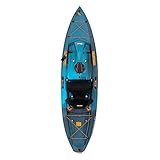 Lifetime Tamarack Pro 103 Lifetime Tamarack Pro 103 |
|
Check Latest Price |
 Pelican Catch Classic Pelican Catch Classic |
|
Check Latest Price |
 Reel Yaks Raptor 9.5 Reel Yaks Raptor 9.5 |
|
Check Latest Price |
 Reel Yaks Radar 10 Reel Yaks Radar 10 |
|
Check Latest Price |
| Old Town Sportsman PDL 106 |
|
Check Latest Price |
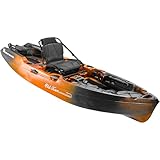 Old Town Sportsman 106 Minn Kota Old Town Sportsman 106 Minn Kota |
|
Check Latest Price |
 Lifetime Yukon Angler Lifetime Yukon Angler |
|
Check Latest Price |
 BKC Brooklyn 10.5 Pro BKC Brooklyn 10.5 Pro |
|
Check Latest Price |
Two columns deserve attention before anything else: weight, because it decides whether you launch solo or need a second person, and the difference between maximum and usable capacity. On the Old Town pedal and motorized models, the maximum figure is the hull limit; the usable figure quoted by the manufacturer is what one angler plus a normal gear load should actually stay under. Buyers who load to the maximum number tend to feel the difference in handling within a season.
1. Lifetime Tamarack Angler 100 – Best Overall Fishing Kayak for Lakes
Lifetime Muskie Angler Sit-On-Top Kayak with Paddle, Tan, 120″
10 ft sit-on-top
275 lb capacity
51 lb hull weight
Paddle included
Pros
- Stable flat bottom with a sharp bow that tracks well
- Light at 51 lb so one person can roof-carry it
- Three rod holders and two 6 in storage compartments
- Paddle included in the box
Cons
- Included paddle is short and flimsy
- Seat connector clips bend under load
- Veers right when the paddler stops
This is the boat we keep coming back to. The Lifetime Tamarack Angler 100 pairs a 31-inch beam with a sharp bow and deep hull tracking channels, and owners describe it as stable enough to cast from while still moving at a reasonable clip. At 51 lb it is one of the few angler kayaks in this group that a single person can lift onto a roof rack without a second set of hands.
Capacity is listed at 275 lb, which is the lower end here, and that is the honest trade-off. It is enough for an angler up to roughly 200 lb with normal tackle. Heavier paddlers or people carrying a full tackle board and a large cooler will feel the limit sooner, and for them the wider-beam boats further down this list are a better fit.
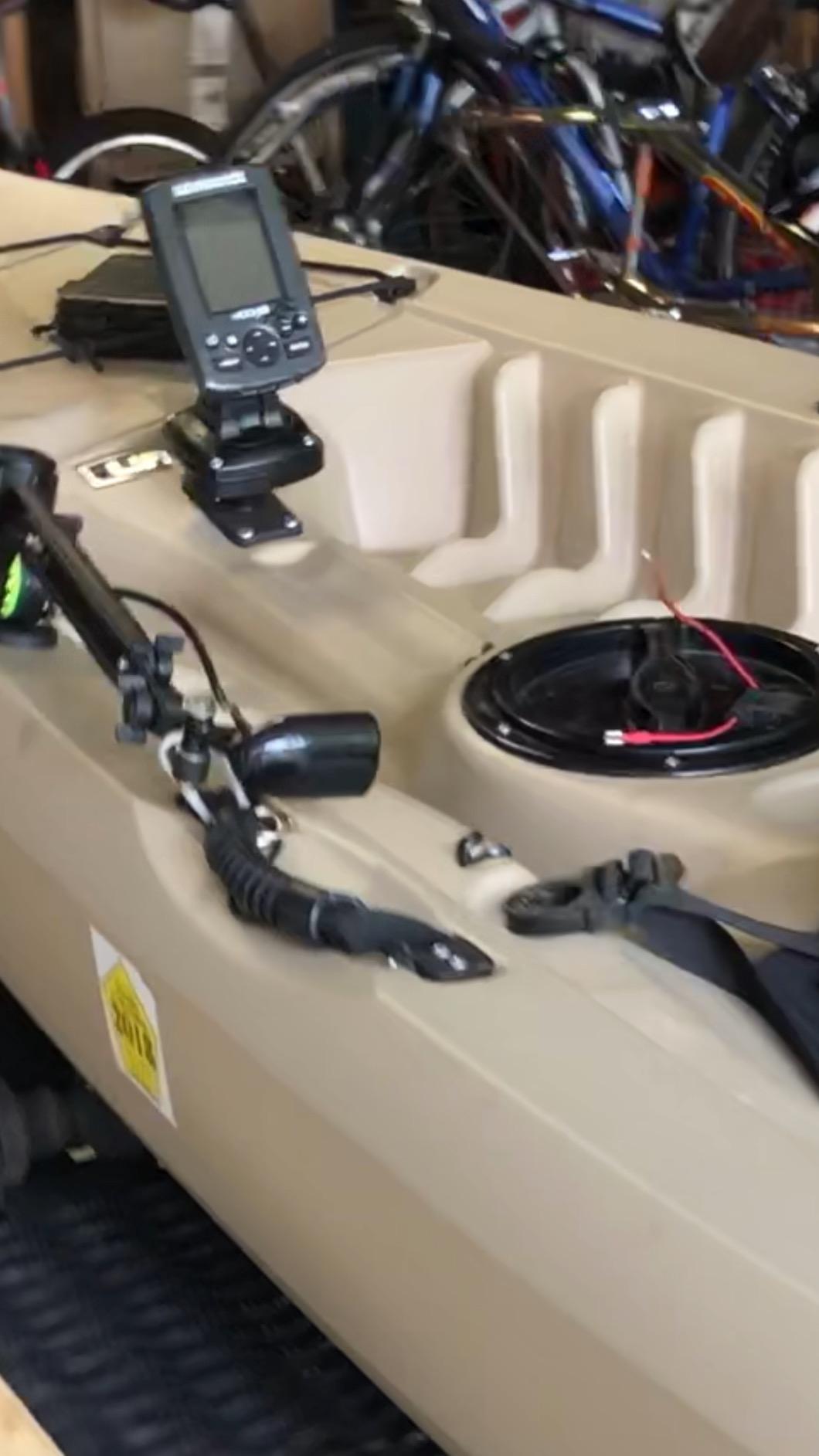
Rigging is sensible for the class: two flush-mounted rod holders, one top-mount holder, and two 6-inch storage compartments in the rear and center. The bow is sharp for speed and tracking and there is a skeg for straight paddling. Front and rear T-handles are molded into the hull, which matters more than they sound like they should when you are dragging the boat across a gravel ramp alone.
Two recurring notes from owners: vacuum out plastic chips from the factory before the first trip, and plan on replacing the paddle. The included paddle is short and thin, and many owners move to a longer fishing paddle with a line-retrieval hook within the first year. Adding cup inserts to the storage compartments turns them from dead weight into usable tackle storage.
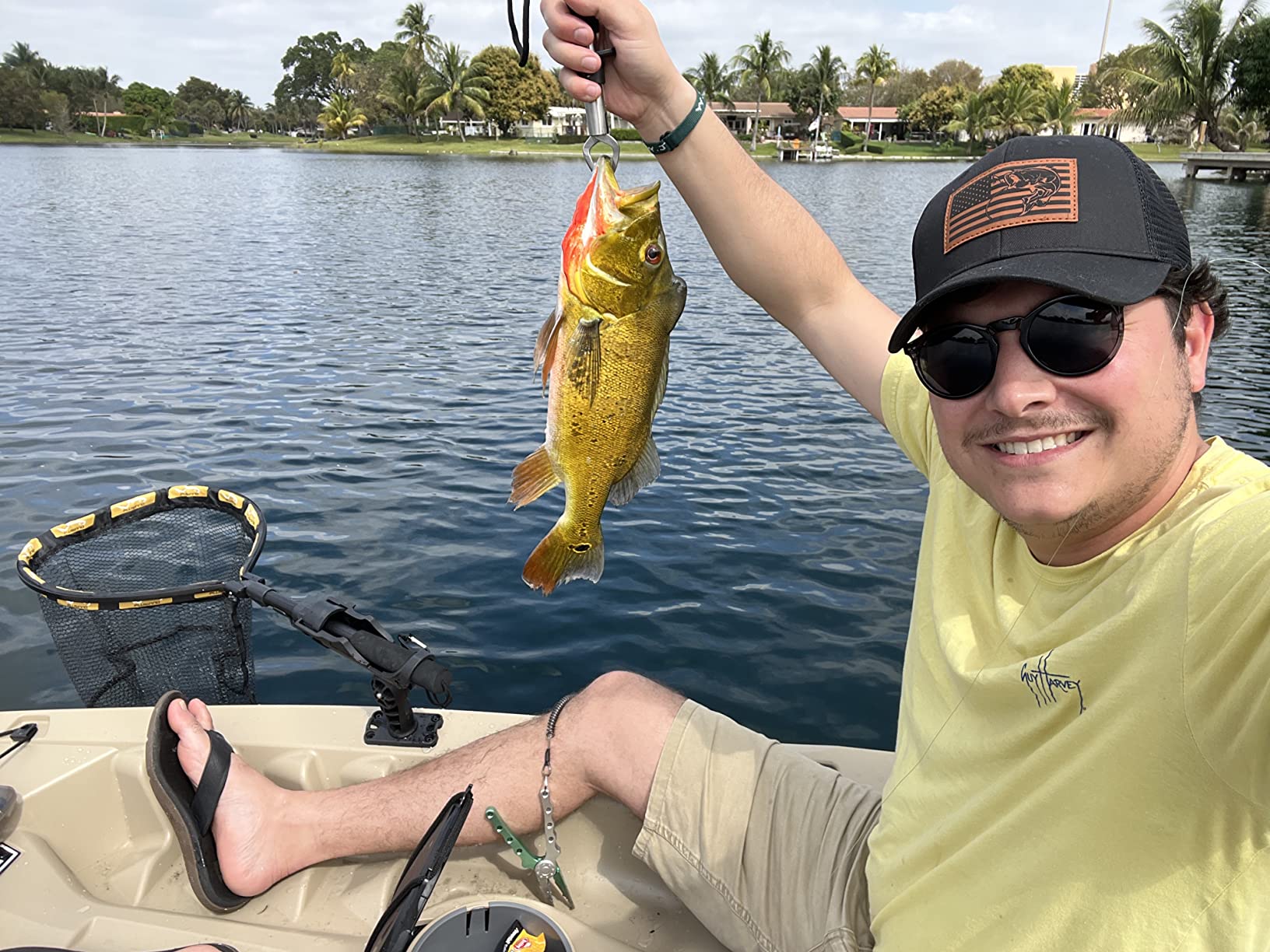
What you give up to get the 51 lb weight
The beam is 31 inches, which is a full three inches narrower than the wide angler boats later in this list. That difference shows up when you stand to cast into heavy vegetation or when a wake rolls under you. Anglers who spend their day sight-casting into shoreline timber usually end up happier with a wider deck.
Tracking also softens when you stop paddling, with a tendency to veer to one side. On a calm lake at low speed that is manageable. On a fetch-exposed stretch with a stiff breeze it can be annoying, and a wind paddle or a rudder kit is the usual fix among owners who fish those conditions.
Who should buy a different boat instead
If you are over about 200 lb, or you plan to stand and cast all day rather than fish seated, look at the 34-inch-beam models later in this list. They are heavier, and that is the whole reason the Tamarack is easier to move, so it is a straight stability-versus-transport decision.
If your lake is genuinely open water with strong afternoon wind, this is a capable boat but not a wind boat. A longer hull or a stern skeg will hold a line better. For most ponds, small lakes and sheltered reservoirs, though, it is the most balanced pick in the group and the one we would start with.
2. Pelican Sentinel 100X – Lightest Angler Kayak You Can Carry Solo
Pelican Sentinel 100X – Angler Sit on top Fishing Kayak – Forest Mist – Lightweight – Ergolounge™ Seating System – 10 ft, Sentinel 100X Angler Fishing Kayak
9 ft 6 in sit-on-top
44.6 lb total weight
275 lb capacity
ExoPak removable storage
Pros
- Lightest angler kayak here at 44.6 lb
- Sub-10-foot length stores in a closet or trunk
- Padded Ergolounge seat and backrest
- Removable ExoPak carries two vertical rod holders
Cons
- Narrower beam and shorter tracking surface
- Under 10 ft so less bow room for standing casts
- 275 lb capacity is the lowest here
At 9 feet 6 inches and 44.6 lb, the Pelican Sentinel 100X is the smallest and lightest boat here, and that is its entire argument. It ranks near the top of its category with 528 owner reviews, and reviewers consistently name portability and seat comfort as the two reasons to choose it over longer, more stable-looking boats.
The Ergolounge seating system is the feature that shows up most often in reviews: extra-thick cushioning with a tall, wide padded backrest. On a boat this light you would not expect a serious seat, and owners report the opposite. For anglers who want a comfortable boat that fits inside an apartment or a small garage, this is a genuinely rare combination.
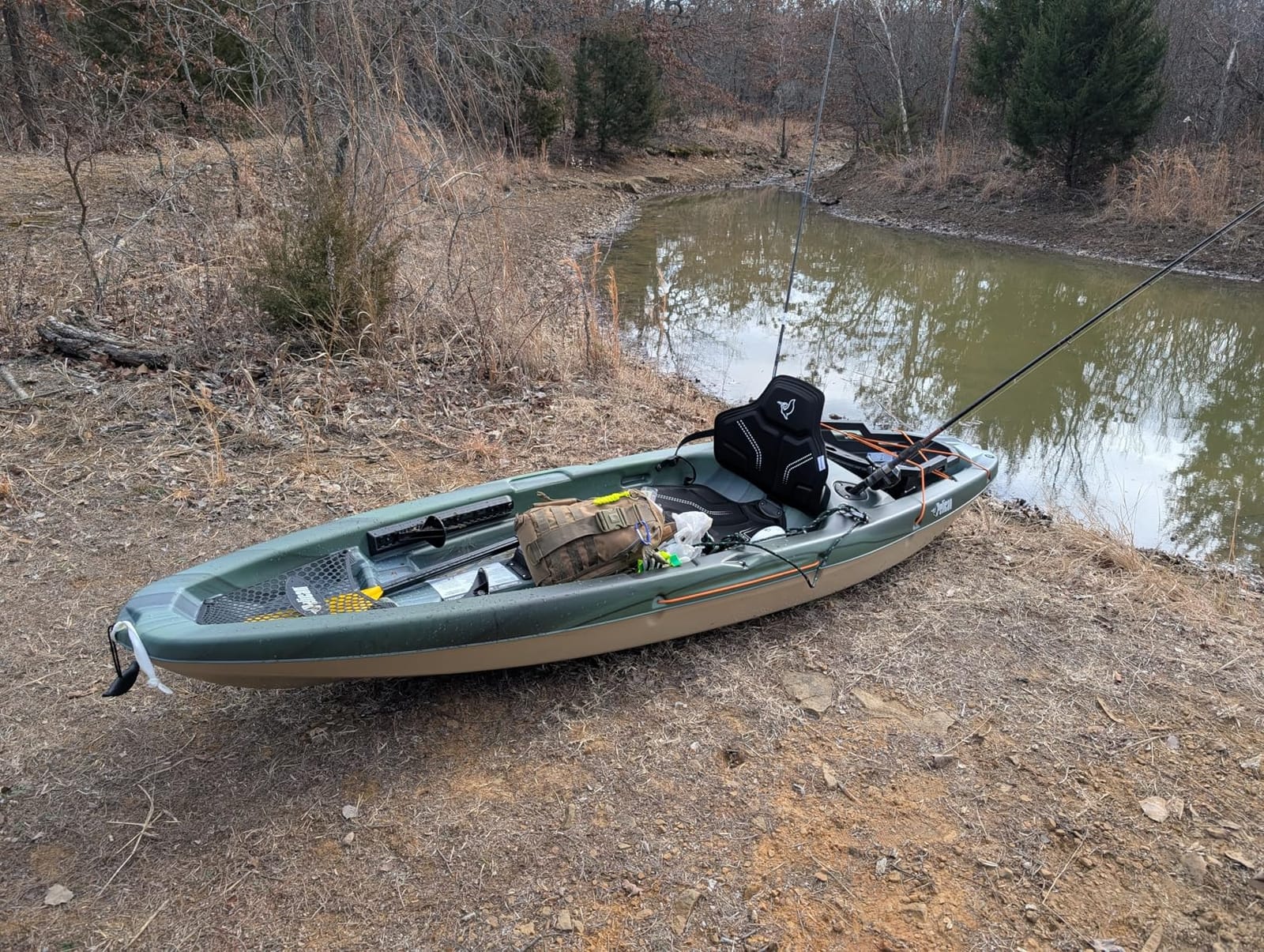
The ExoPak removable storage compartment is the clever bit. You pack your tackle at home, lift the sealed unit out, and drop it into the kayak at the water, and it doubles as a carrier for two vertical rod holders. Pelican includes four rod holders in total, two flush-mounted and two vertical in the ExoPak. Molded-in side carrying handles make solo handling straightforward.
Warranty is a lifetime limited warranty against manufacturer defects with one year on parts and accessories. That is a real differentiator in a segment where cheaper boats often carry shorter terms, and Pelican has a track record of servicing these hulls for a long time.
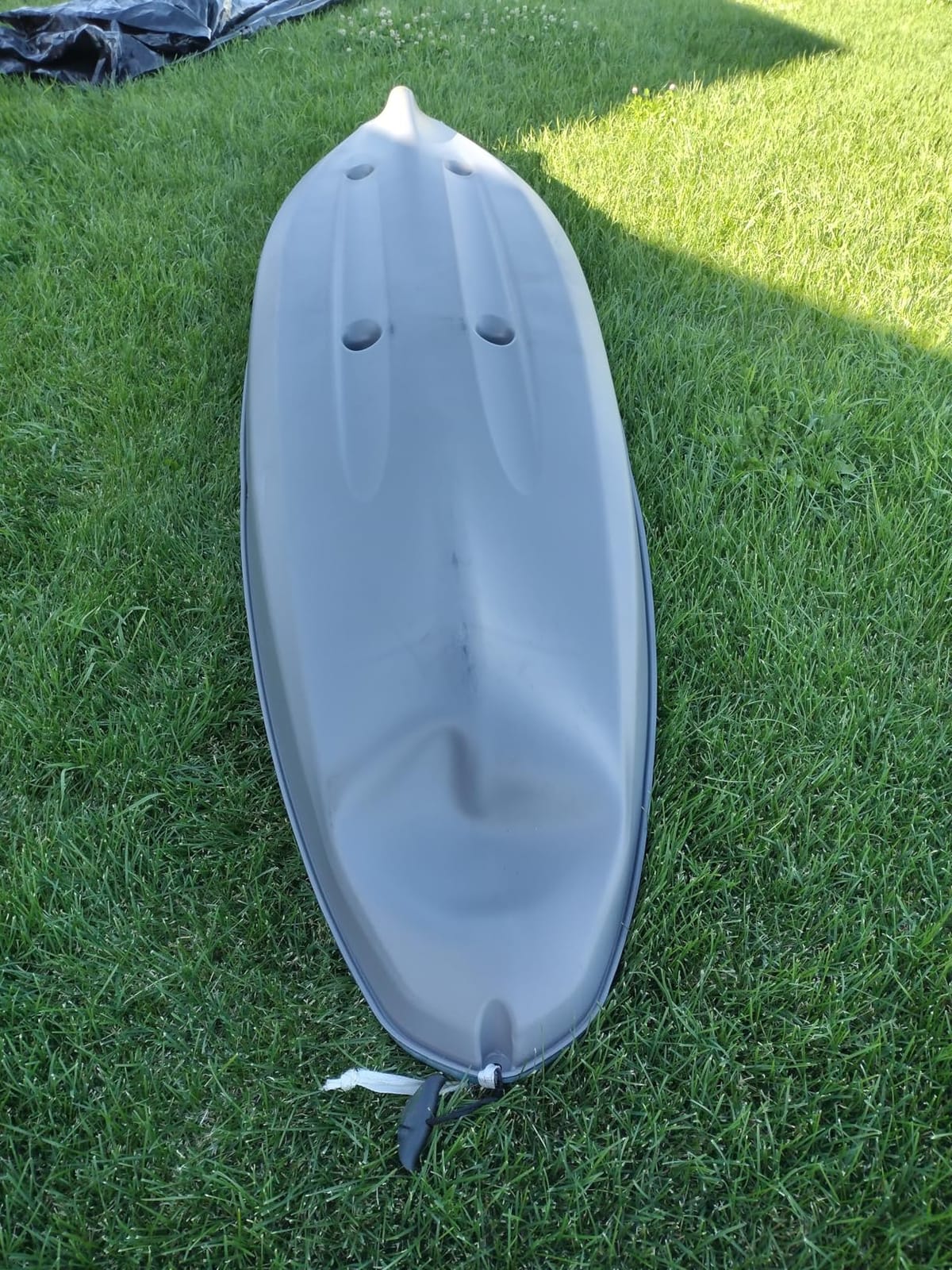
How short is too short for a lake
The 30-inch beam and 9.5-foot length are the compromise. Shorter hulls turn quickly, which helps in a pond loaded with lily pads and stumps, but they wallow more in a chop and track less straight across open water. If your lake is small, weedy and sheltered, the quick turning is a feature. If it is a wide reservoir with a long run to the fish, it will feel twitchy.
Standing casts are also constrained. With less bow room in front of the seat, casting from a standing position is workable for a light paddler and tight for anyone else. Seated casting is where this boat is at its best, and seated casting covers the majority of lake fishing.
Who should buy a different boat instead
The 275 lb capacity rating is the number to check first. It is the lowest in this group, and it is the same figure the Lifetime Tamarack Angler 100 carries, but this boat is narrower, so a heavier paddler has less margin before the deck feels soft. Anglers above 200 lb should step up to a 34-inch-beam model.
Second, if your water is open and windy, buy length. The 12-foot Perception further down trades a little weight for a much calmer ride in chop, and that difference shows up on a fetch-exposed lake long before it shows up on a sheltered pond.
3. Pelican Catch Mode 110 – Most Stable Deck for Standing Casts
Pelican Catch Mode 110 Fishing Kayak – Premium Angler Kayak with Lawnchair seat – 10.5 Ft., Venom
10 ft 8 in sit-on-top
375 lb capacity
34.5 in beam
Retractable stern skeg
Pros
- Enormous open deck for coolers crates and gear
- Retractable skeg improves tracking in wind
- Ergoboost seat folds flat for a bench position
- Highest rating in the group at 4.6 stars
Cons
- Wide flat hull is slow
- Heavy at roughly 75 lb so a cart is close to mandatory
- Deck flexes for paddlers over 200 lb
The Catch Mode 110 is the widest angler kayak in this group at 34.5 inches, and with a 375 lb capacity rating it is the most forgiving deck to stand on. Owners report fishing it with a 200 lb adult and a 100 lb dog without scupper overflow, which tells you how much buoyancy is in reserve. At 4.6 stars across 347 reviews it also holds the highest average rating of the paddle boats here.
The retractable stern skeg is the feature lake anglers underrate. Deployed, it resists side slip in wind and chop, which is exactly the failure mode of a wide, flat hull. It retracts for launching through shallow water and for weed beds, then comes back out once you are moving on open water.
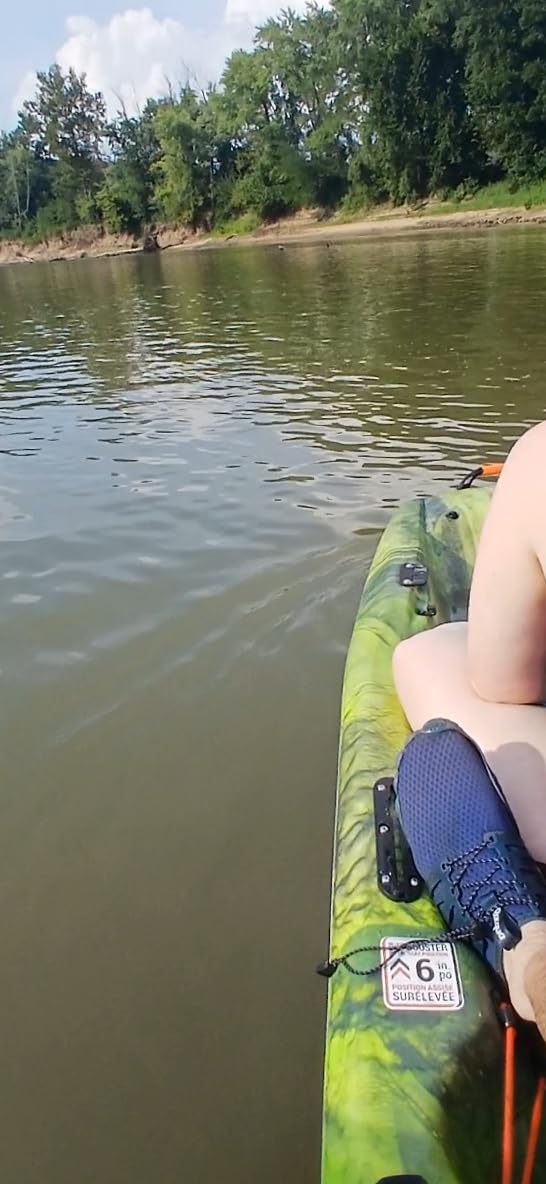
Rigging is where the money went: two 4-inch accessory rigging tracks, three flush-mount rod holders, anti-slip traction pads with a built-in ruler that also dampens noise when you move. The Ergoboost seat adjusts for field of view and folds flat into a raised bench position, which owners use for bowfishing and for reaching gear forward. Under-seat storage adds a little more.
It is available with a rudder or with a transom mount in Venom and Granite, so if you plan to add a trolling motor later, buy the transom version now. The traction pads are genuinely useful: standing quietly in pads and pads is how you get close to fish that would otherwise spook from 30 feet away.

What a 34.5 inch beam actually costs you
Width buys stability and spends it in speed. This is the slowest boat here by a clear margin, and owners accept that trade without complaint because they are fishing structure rather than covering distance. If you like to paddle a mile up a creek to reach a lake nobody else can get to, that is a different conversation.
At 75 lb it is also among the heaviest, and a cart is close to mandatory for solo launching from anything softer than a paved ramp. Several reviewers describe the 67 to 75 lb range they see, so treat the published figure as a range rather than a single number. Buyers also note deck flex for heavier paddlers, a common characteristic of wide polyethylene hulls at this weight class.
Who should buy a different boat instead
Skip this one if you fish long distances at a fast clip, or if you have no cart and no second person to help at the ramp. The catch is that paddle storage becomes a full-time job on a 75 lb hull with a heavy seat, and many first-time buyers underestimate that.
Also weigh the skeg decision. With the skeg up the boat turns very easily, which is right for ponds and weedy edges. With it down, current and wind can still push you sideways because the beam is doing so much work. It is a controllable trade, just not a free one.
4. Perception Pescador Pro 12 – Best Tracking Hull for Open Water
perception Pescador Pro 12 | Sit on Top Fishing Kayak with Adjustable Lawn Chair Seat | Large Front and Rear Storage | 12′ | Dapper
12 ft sit-on-top
375 lb capacity
64 lb hull weight
Adjustable lawn chair seat
Pros
- Tracks straight and holds course in boat wake
- Lawn chair seat stays comfortable past three hours
- Large front and rear storage for a fish finder
- 5-year hull and deck warranty
Cons
- At 64 lb it is hard to load solo
- Not as lively as shorter kayaks
- Standing is realistic only for lighter paddlers
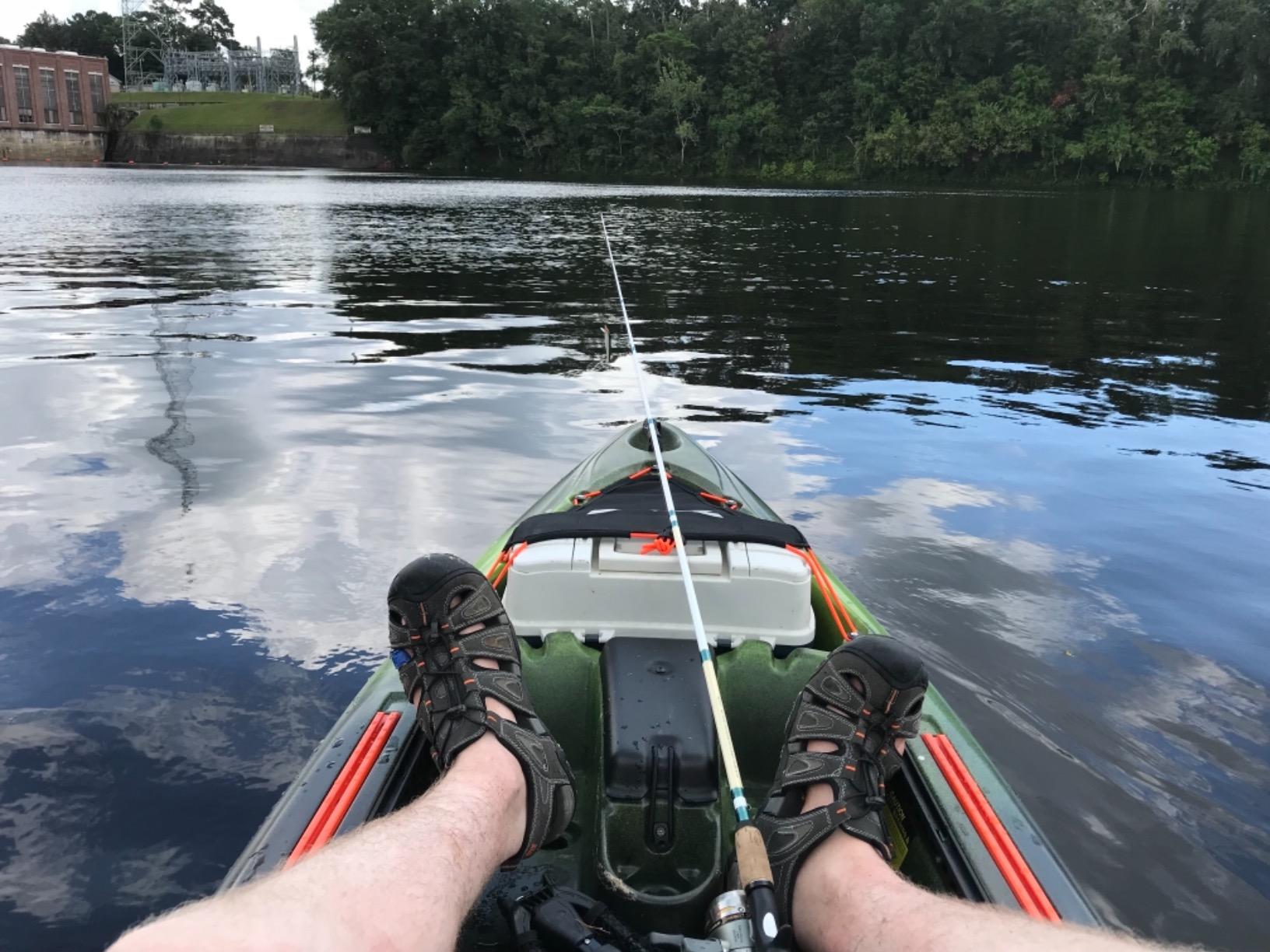
At 12 feet, the Pescador Pro 12 is the longest hull in this roundup, and that is the whole reason to buy it. Owners report that it tracks straight and holds its course when a wake passes under it, which is precisely the behavior you want when you are trolling or covering open water on a lake that gets wind. It is also made in the USA with a five-year hull and deck warranty.
Capacity is 375 lb, tied with the Catch Mode 110 for the highest figure among the paddle boats, and the hull weighs 64 lb. That weight sits in the awkward middle: heavy enough to feel planted and track well, light enough that many owners still manage solo launches, though several say they cannot get it onto a vehicle alone. Plan on a cart.
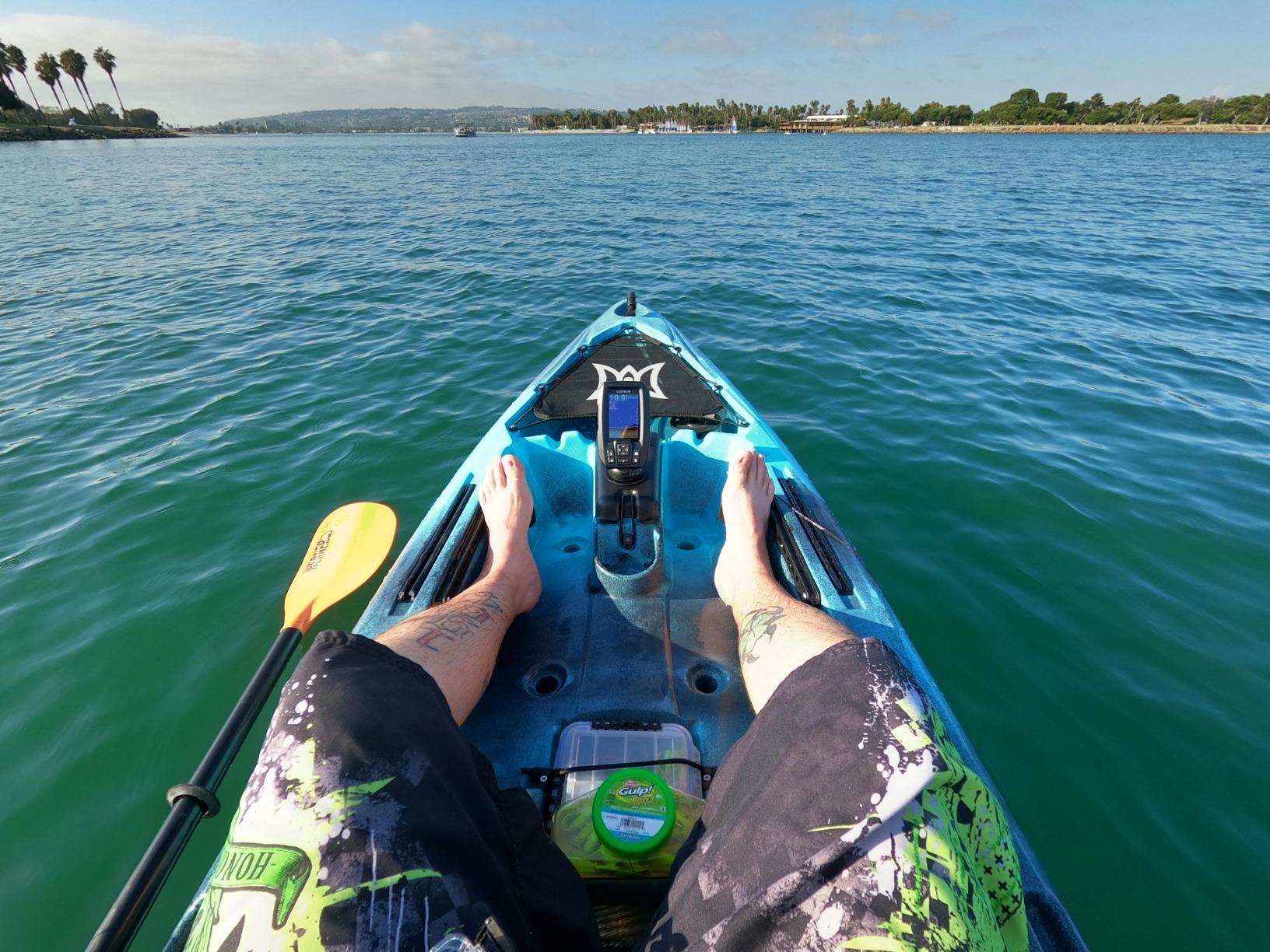
The adjustable lawn chair seat is the comfort story, and reviewers describe three-hour-plus sessions without discomfort. It also makes getting in and out easier, which matters with a high-capacity boat, and there is room to stretch out for taller paddlers. Large front and rear storage areas accept a fish finder, tackle and a change of clothes without a separate dry bag.
One of the more telling details in the reviews is that a number of owners report buying a second one years later. Long ownership histories are usually a better durability signal than any material rating, and this boat appears in multiple reviews from people who have run it for seasons on lakes and nearshore water.
Why length beats width on exposed water
Longer hulls cut through chop instead of riding over it, and a 12-foot waterline simply does less bouncing when a wake passes beneath. If your lake is wide enough that you have to paddle across open water to reach the structure, that difference is worth the extra 10 lb over a 10-foot boat of the same family.
The cost is maneuvering. A 12-foot kayak does not turn inside its own length, and in the shallow, weedy corners where lake fishing is often won, a shorter hull is more nimble. Many anglers end up using a long hull to reach the spot and a short one to work it, which is a reasonable outcome if you only own one boat: reach the spot carefully and fish it seated.
Who should buy a different boat instead
Anglers under about 180 lb who want to cast while standing will find this boat limits them. The deck is not the problem; the 32.5-inch beam and the seat position are. If standing casts are your primary mode, a wider angler hull such as the Catch Classic or the Yukon Angler suits you better.
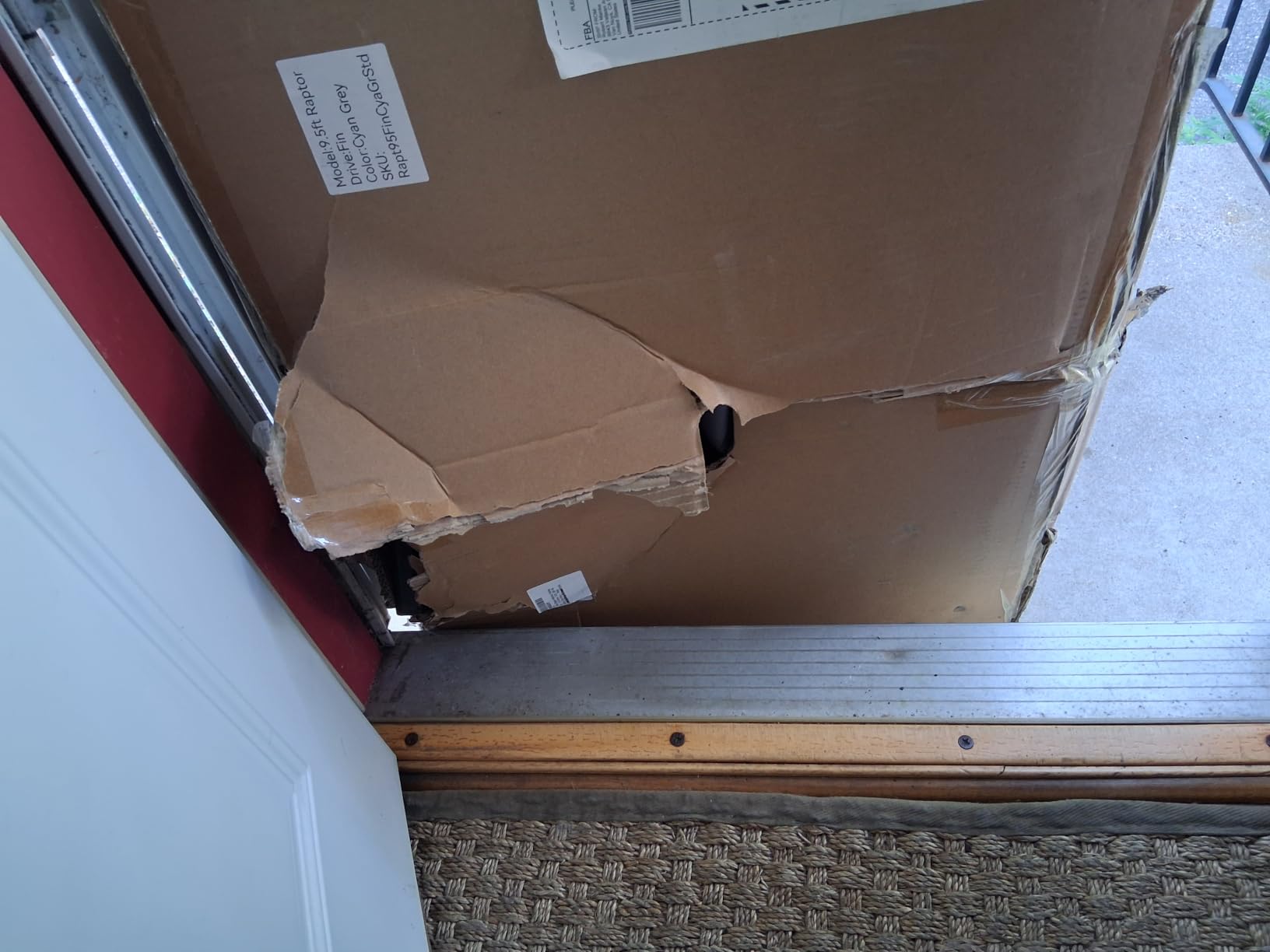
Buyers should also check the arrival condition. Several reviews mention hull gouges or broken sacrificial parts from shipping, so inspect the boat on delivery and document any damage before you float it. It is a common complaint across this entire category, not unique to this boat.
5. Lifetime Tamarack Pro 103 – Best Value Angler Kayak with a Framed Seat
Lifetime Tamarack Pro 103 Sit-On-Top Kayak, Lightning Fusion, 10 ft. 3 in.
10 ft 3 in sit-on-top
300 lb capacity
57.5 lb weight
Adjustable framed seat
Pros
- Adjustable framed seat and footrests dial in well
- Deep hull channels track better than a flat angler hull
- Chine rails add side stability for casting
- Center hatch with bucket plus a deeper tank well
Cons
- 300 lb capacity is modest for big paddlers
- 31 inch beam is narrower than wide angler boats
- Storage volume is limited for long trips
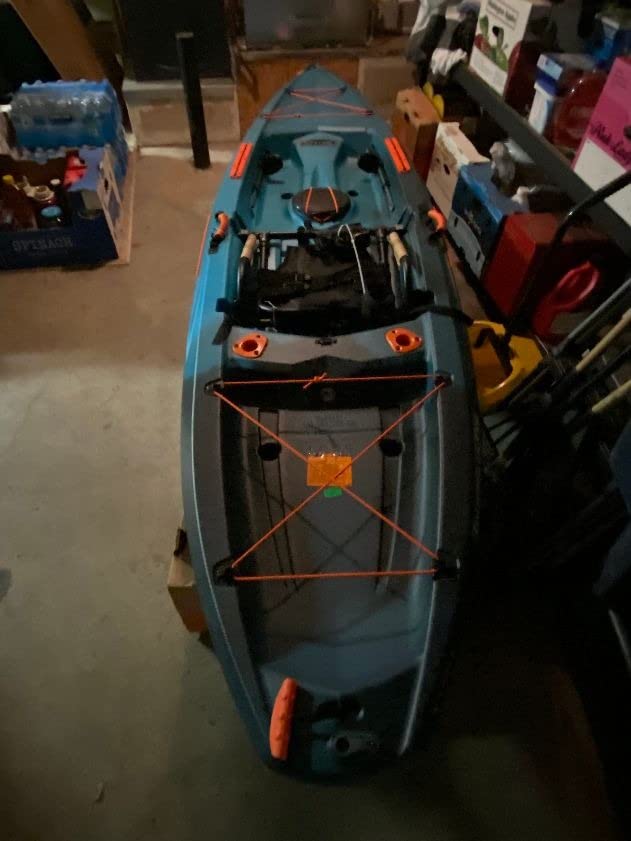
The Tamarack Pro 103 is the boat to look at if you want a framed adjustable seat and real tracking hull features without moving up a tier. At 10 feet 3 inches and 57.5 lb it sits neatly between the very light end of this list and the heavy 75 lb class, and the adjustable framed seat plus adjustable footrests are the feature owners mention first and most often.
Unlike a flat-bottom angler kayak, this hull has deep hull channels and chine rails. Reviewers report the channels give noticeably better tracking than a typical flat angler deck, and the chines add a layer of side stability that helps when you are casting from a seated position. That combination makes it a good all-round lake boat for someone who paddles more than most.
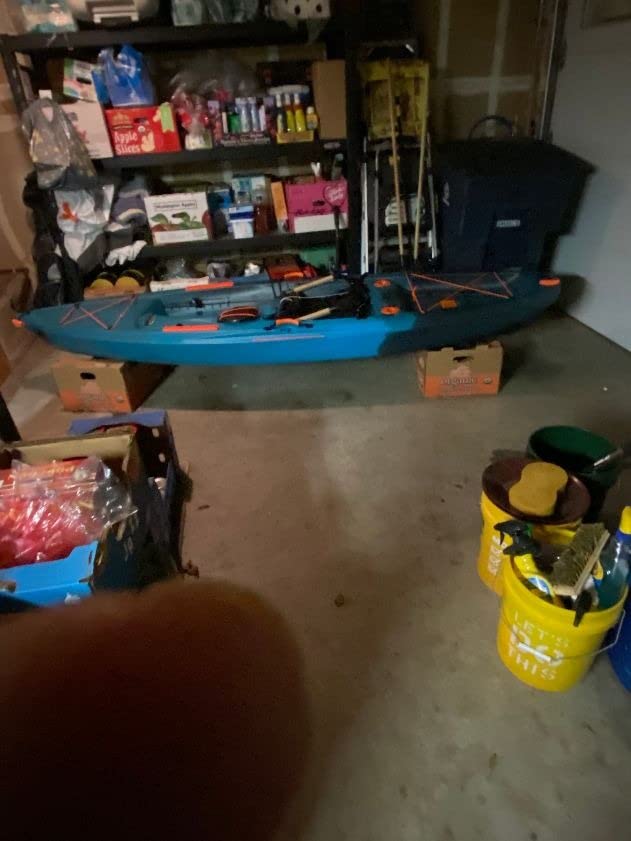
Rigging covers the essentials: one adjustable and two flush-mounted rod holders, accessory mounting points, a tackle box, front and rear bungee cords, a paddle keeper, and a center storage hatch with a bucket included. A deeper tank well adds usable volume. There is also a molded-in ruler to measure your catch, which is a small touch that costs nothing to build in.
Two things to know before you order. The one-star share in the reviews runs higher than most boats here, and the complaints cluster around shipping damage and hull flex rather than the design. Inspect the hull carefully on arrival. The 300 lb capacity also means big paddlers carrying heavy gear are close to the limit before the trip starts.
How the seat changes a full day
A framed seat with adjustable footrests is the difference between comfortable and not after hour four. You set the seat height and leg length once and stop thinking about it, which on an open lake where you are stationary for hours is a real quality-of-life gain. The adjustment range also helps fit angler and gear separately, which matters more than it sounds.
Compare that to the molded seats on the two smaller Lifetime models in this roundup, which clip into fixed posts and cannot be fine-tuned. If back discomfort on long sessions is a worry for you, the framed seat alone justifies moving up to this boat.
Who should buy a different boat instead
The 31-inch beam is narrow for a dedicated fishing boat. Standing casts will work for a light paddler but are not the strength of this hull, and if you plan to sight-cast from your feet all day you will be happier on a 34-inch deck such as the Catch Classic.
Capacity is the second filter. At 300 lb with a modest storage volume, this is a boat for one angler with normal tackle, not for a heavy rig. Anglers over 220 lb or those towing a trolling motor should look at the 350 to 450 lb models further down.
6. Pelican Catch Classic – Best for Dry Storage and a Wide Beam
Pelican Catch Classic 100 Angler – Sit-on-Top Fishing Kayak – Ergocast Dual Position Seating System – 10 ft
10 ft sit-on-top
350 lb capacity
34 in beam
57 lb weight
Pros
- Locking bow hatch gives real dry storage
- 34 inch beam is a stable platform for casting
- Light enough at 57 lb for solo roof mounting
- Ergocast seat adjusts high or low
Cons
- Two rod holders is a low count
- No dry compartments inside the hull
- Does not track like a 12 foot hull
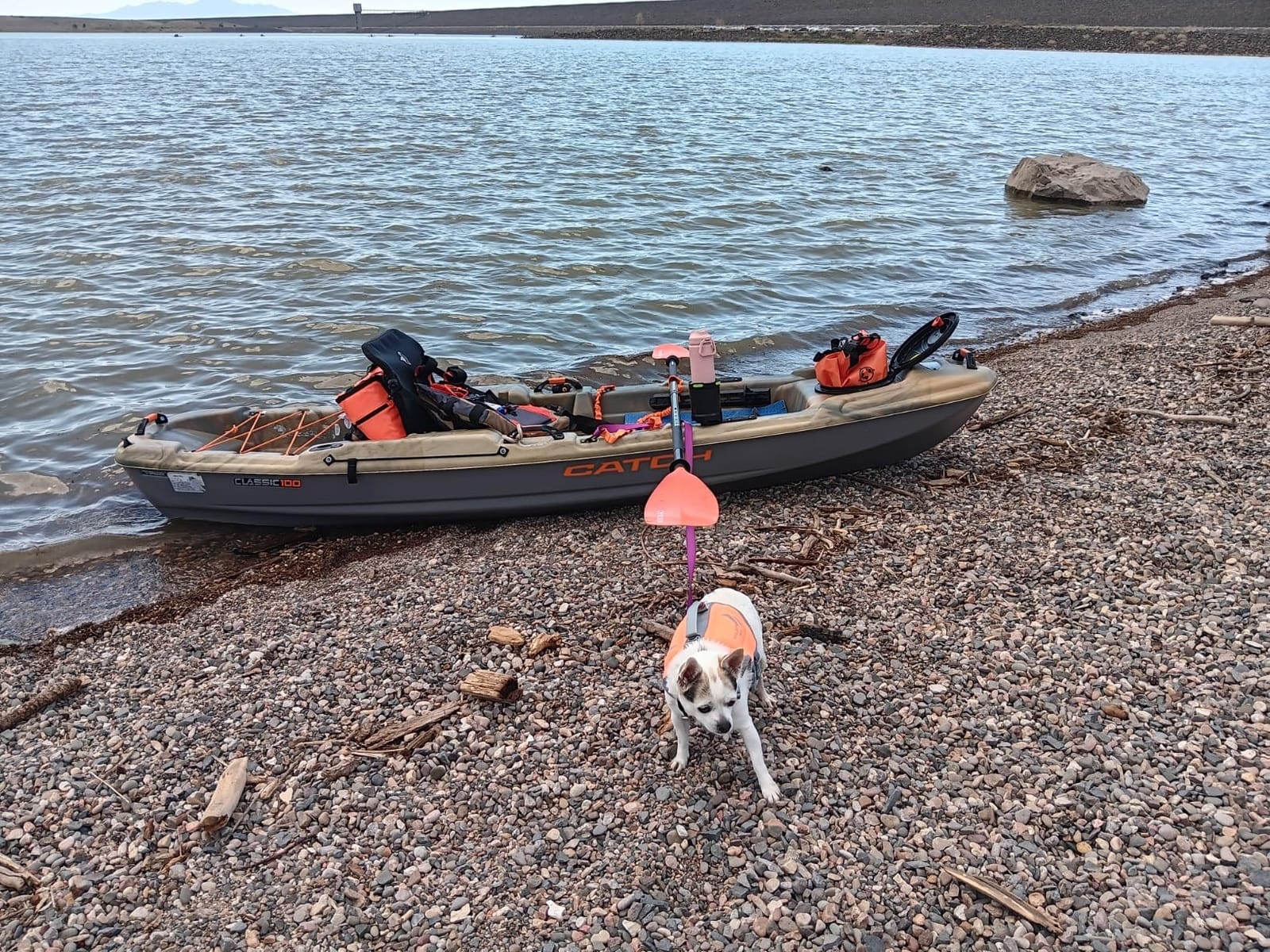
The Catch Classic answers a question most anglers only think about after their first soaked battery: where do you actually keep electronics and spare clothing dry. The locking front bow hatch with a locking lid is genuine dry storage, not a water-resistant pocket, and it is the reason this boat makes our list. At 34 inches wide and 57 lb it also gives you a stable casting platform without the weight of the 75 lb class.
The Ergocast Classic seating system adjusts to a high or low position with different support levels, and the reviews are unusually consistent about the seat being the reason people chose this boat over more expensive options. Bass anglers report it tracks straight and stands up well for casting into vegetation, which is the combination most lake fishing needs.
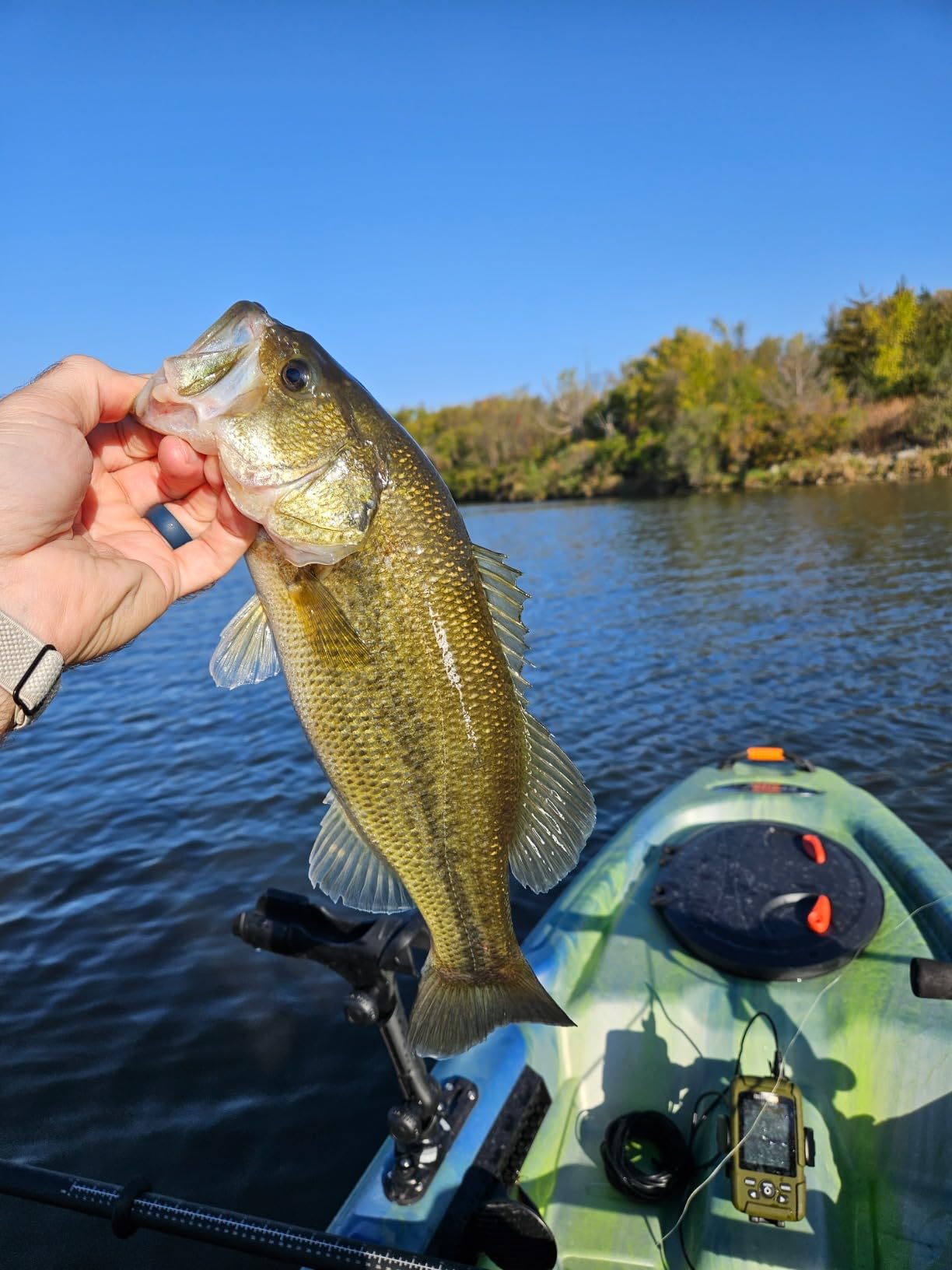
Dual accessory rails run along the deck for a fish finder, camera or any rail-mounted accessory, and two flush-mount rod holders sit behind the seat so rods are out of the way when you are not casting. A paddle holder frees your hands once you are set up. The hull is rotomolded polyethylene, 10 feet long, with a 350 lb capacity rating and a lifetime limited warranty against manufacturer defects.
It is available in Catch Classic 100 and 120 variants, so the same platform covers two lengths. The trade in choosing it is that rod holder count is low at two, and there are no dry compartments inside the hull beyond the bow hatch. If you carry more than two rods and a full electronics kit, budget for a rod holder rail.
Why a locking hatch changes your packing list
Once you have a compartment that keeps water out, you stop paying for dry bags. That is a saving in both money and time at the ramp, and it removes the anxiety of putting a transducer cable or a spare battery in a bag you might have left open. On a cold early-season trip, dry gear is the difference between a full day and a cut-short one.
The caveat is that the hatch is at the bow, ahead of the seat, so it is harder to reach while seated for heavy items. Plan your load order accordingly, with the heavy gear forward and the fiddly small items in the hatch.
Who should buy a different boat instead
At 4.3 stars this boat has the lowest average among the Pelicans here, driven largely by an elevated one-star share tied to broken foot supports, leaking scupper plugs and shipping damage. The design is sound; the quality control is inconsistent. If you are comfortable inspecting on arrival, it is a good buy.
Also, the polyethylene hull can warp or crack with prolonged uncovered sun storage, so treat the kayak as a garage or covered-space item. Leave it in direct summer sun on a trailer for a season and you may find warped gunwales later. Also note it does not track like a 12-foot hull, so open-water crossings will take more effort.
7. Reel Yaks Raptor 9.5 – Best Modular Pedal Kayak for Small Storage
Reel Yaks Raptor Modular Fishing Kayak, Fin Drive 9.5ft, 380 lbs Capacity
9.5 ft modular pedal kayak
380 lb capacity
62 lb total weight
Two-piece split hull
Pros
- Two-piece hull fits an SUV trunk with no rack or trailer
- Fin drive moves quietly and efficiently
- Both halves are self-floating and fully molded
- Comes rigged with bungees T-rails and a stadium seat
Cons
- Rudder wiring and ferrules are the weakest link
- Seat sits very low with no under-seat storage
- One-year hull warranty is the shortest here
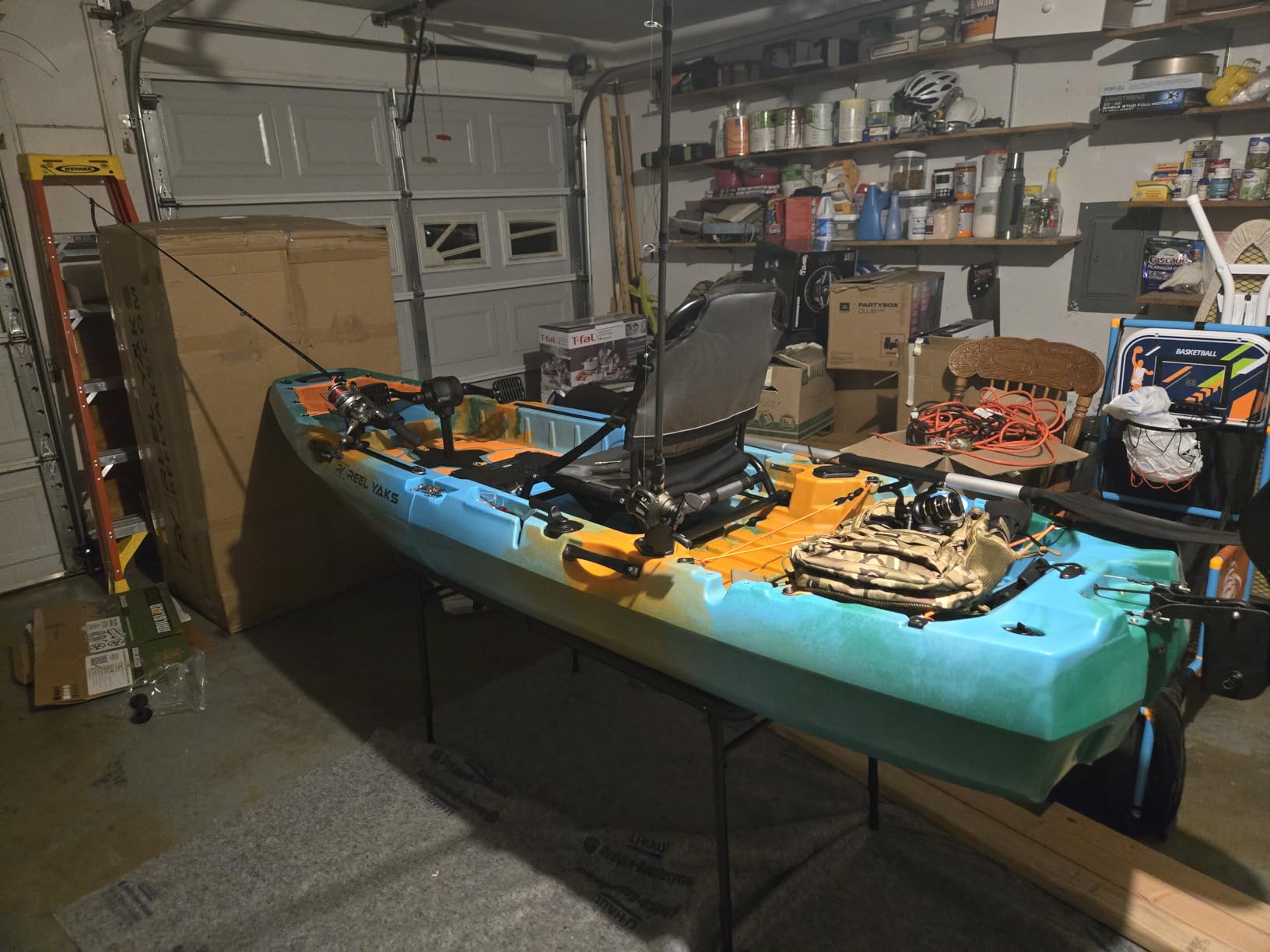
This is the boat that answers the loudest complaint in kayak fishing forums, which is that pedal kayaks are too heavy and too long to live with. The Reel Yaks Raptor 9.5 splits into two sections that fit in a vehicle trunk, so no roof rack, no trailer and no carrying it down a long path is required. It comes with a fin pedal drive, rod holder, paddle, T-rail tracks and a stadium seat, pre-rigged.
Capacity is 380 lb with a wide W-hull, and owners report the fin drive moving quietly and efficiently even against wind and current, which is the core advantage of a fin drive over a propeller. Both hull halves are self-floating and fully molded, so the joint stays dry, and it snaps back together in seconds.
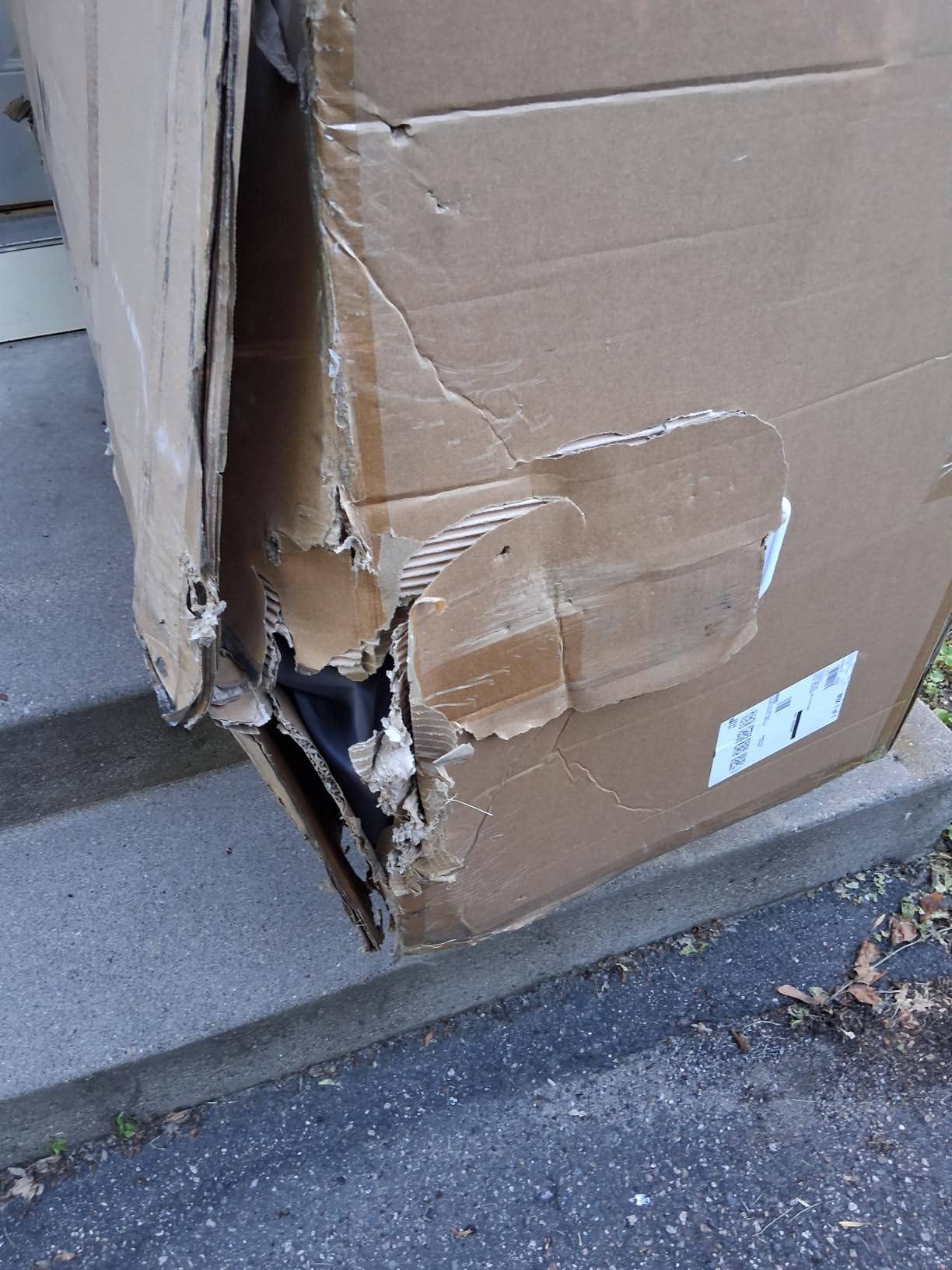
Storage is where it wins outright. The two-piece format fits an apartment, a closet, a small garage or a trunk, and an optional center module converts the boat to a tandem later. Owners also compare the build favorably to far more expensive pedal kayaks, and customer support is repeatedly praised for shipping replacement parts within hours, which matters given what follows.
That last point matters because the rudder is the weak link. Reviews are candid that the rudder wiring and ferrules, and the rudder guide screw in particular, are the components that fail, sometimes within days. Treat that as a known hardware issue with a responsive parts service rather than a dealbreaker, and check the guide screw on day one.
What a fin drive gains and gives up
A fin drive is quieter than a propeller, moves more efficiently, and cannot snag on a submerged branch or paddle. Owners on forum threads also report that fin drives are easy to raise in shallow water by pressing them up with a foot, which is a genuine advantage when you are working lily pads and stumps. The trade is control: a fin drive has no reverse, so backing off structure means turning around and paddling.
At 30.3 inches wide, the hull is narrower than the wide angler boats, so it is stable but not as planted. On a sheltered lake with reed edges and pads, that maneuverability is a benefit. On an exposed lake in wind, the narrower beam and the lack of reverse are harder to live with.
Who should buy a different boat instead
The low seat is a real limitation. It has no height extender and no under-seat storage, so you sit low, which hurts visibility and back comfort over a long day. Anglers with back or hip issues, and anyone who wants to cast from a raised position, should look at a boat with an elevated frame seat.
Track-rail end caps also require loosening a rail to fit accessories, with no tool-free mounting, and optional pieces such as the trolling motor plug and the center module cost extra. If you want a pedal boat that is fully sorted on day one with no assembly, this is not it.
8. Reel Yaks Radar 10 – Best for Big Anglers Who Want Instant Reverse
Reel Yaks Radar Modular Fishing Kayak, 10ft, 430 lbs Capacity
10 ft modular pedal kayak
430 lb capacity
88 lb weight
Propeller drive
Pros
- Propeller drive gives instant forward and reverse
- Highest capacity in this modular line at 430 lb
- Two-piece hull stores without a trailer
- Wide W-hull feels planted when casting and standing
Cons
- At 88 lb each half needs a two-person carry
- Only 35 reviews so thin owner history
- 14 percent of reviews are 3-star
The Radar is the same modular idea as the Raptor with a propeller drive and a much higher capacity figure, and reverse is the reason to choose it. A propeller gives instant forward and reverse control, which means you can back off a rock you just drifted into, hold a position inside a tight pocket of structure, or reposition without a long turnaround. On a lake full of stumps and drop-offs that is a real capability, not a novelty.
It comes with a 360 rod holder, paddle, propeller drive, stadium seat, T-rail tracks and storage hatches. The two-piece hull separates quickly for garages, closets and trunks, and the wide W-hull is reported to feel planted while casting and standing. The manufacturer also offers a fin drive configuration, so buy the propeller version if reverse is the feature you are after.
Capacity is the headline number: 430 lb is at the top of this modular line and comfortably above most of the paddle boats here, which makes it a candidate for larger anglers who still want trunk storage. At 88 lb it is the heaviest modular kayak in the range, so each half is realistically a two-person carry, and a cart is close to necessary.
Be honest about the evidence here. With 35 reviews, this has the thinnest owner history of the pedal models, and 14 percent of those reviews are 3-star, the highest three-star share in this roundup, pointing to some drive or fit dissatisfaction. A 4.4 average on a small base is encouraging but not proven.
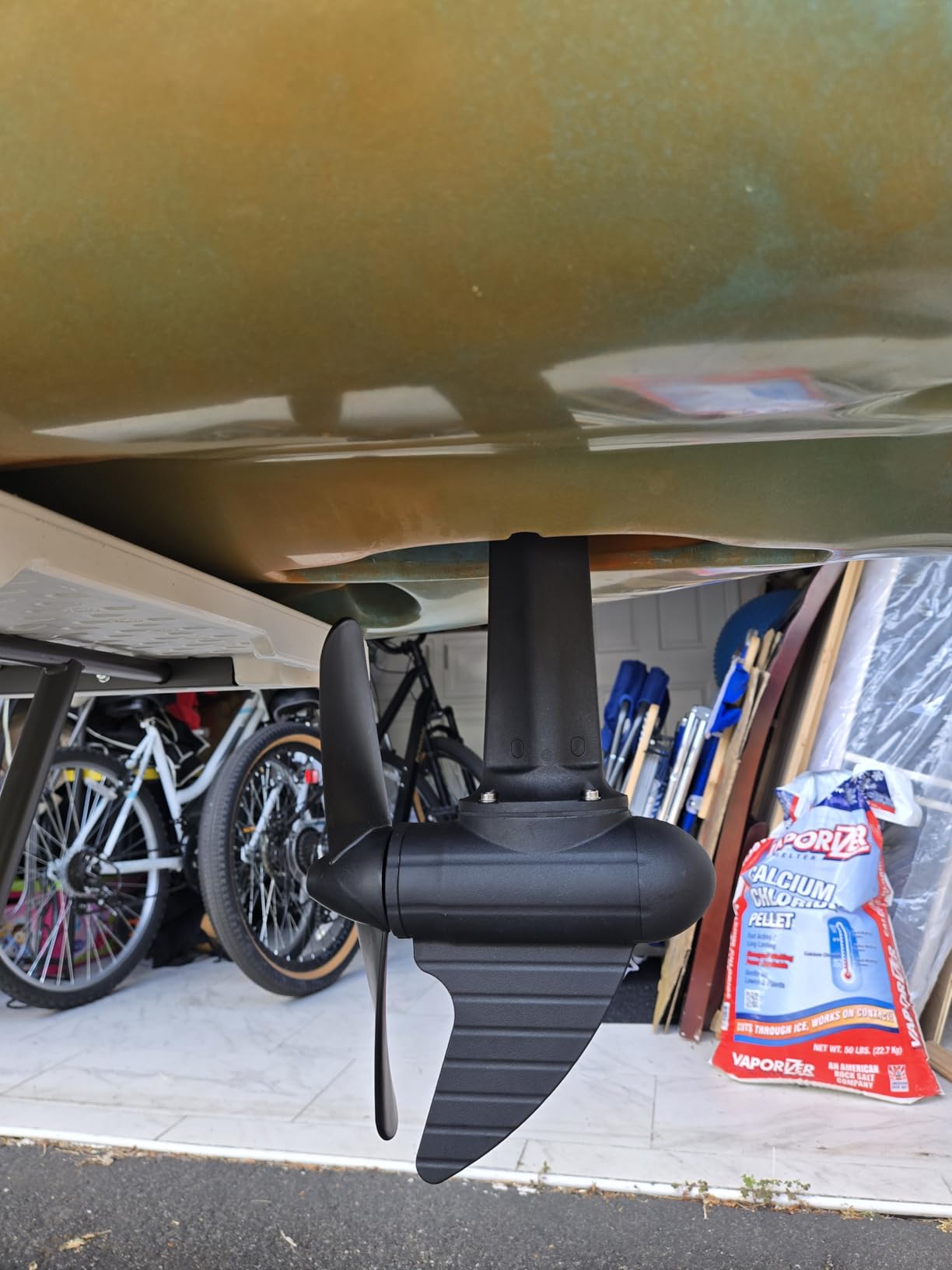
Propeller drive versus fin drive on a lake
The trade is control against simplicity. Propellers give instant reverse, hold a spot better in current, and pull harder against a stiff headwind, but they need more care around underwater hazards and a slightly more involved maintenance routine. Fins are quieter, more efficient and retract with a foot press, but you cannot back up.
Forum owners debating drive systems consistently rank comfort and reverse capability above raw speed, and the propeller boat tends to win that comparison. The practical question is whether your lake has the obstacles that make reverse valuable. Rocky shoreline, timber, dense pads and tight rock structure say propeller. Open flat water and shallow weedy edges say fin.
Who should buy a different boat instead
If you plan to solo-carry to the launch over any real distance, 88 lb in two halves is a lot, and the weight lands in the same bracket as the pedal boats you were trying to avoid. The two halves are individually manageable; together at the ramp they are not. Budget for a cart and a second pair of hands.
And if you want a proven long-term record, look at the Old Town pedal drive, which carries a five-year warranty on the drive itself. Warranty length is a reasonable proxy for how confident a manufacturer is in a moving assembly, and one year on a hull is worth factoring into the decision.
9. Old Town Sportsman PDL 106 – Best Pedal-Drive Fishing Kayak for Lakes
Old Town Sportsman PDL 106 Solo Sit-on-Top Fishing Pedal Kayak, 10 ft 6 in, Steel Camo
10 ft 6 in sit-on-top
450 lb max capacity
107 lb hull
Forward and reverse drive
Pros
- Pontoon-style hull feels planted and does not flip
- Forward and reverse drive holds position in wind
- Mesh lumbar seat adjusts to leg length
- Universal transducer mount and accessory tracks
Cons
- 107 lb hull plus 18 lb console is a two-person move
- You will need a wheeled cart
- Paddle is not included
The Sportsman PDL 106 is the most complete fishing platform in this roundup and the one we would choose for a full day of hands-free lake fishing. The pontoon-style hull is wide and flat, and owners describe it as feeling like a tank, reporting that it does not flip when standing or when a wave lifts it. Maximum capacity is 450 lb, with 343 lb quoted as usable for one person plus gear, and the boat is 10 feet 6 inches long.
The PDL drive gives forward and reverse with a patented easy-docking system, which matters at the ramp: you can dock the drive rather than wrestling it out. Owners report the drive holds position on windy days, which is the specific failure that ends a lot of pedal-kayak sessions early. A 5-year warranty on the drive is also the longest drive warranty in this group.
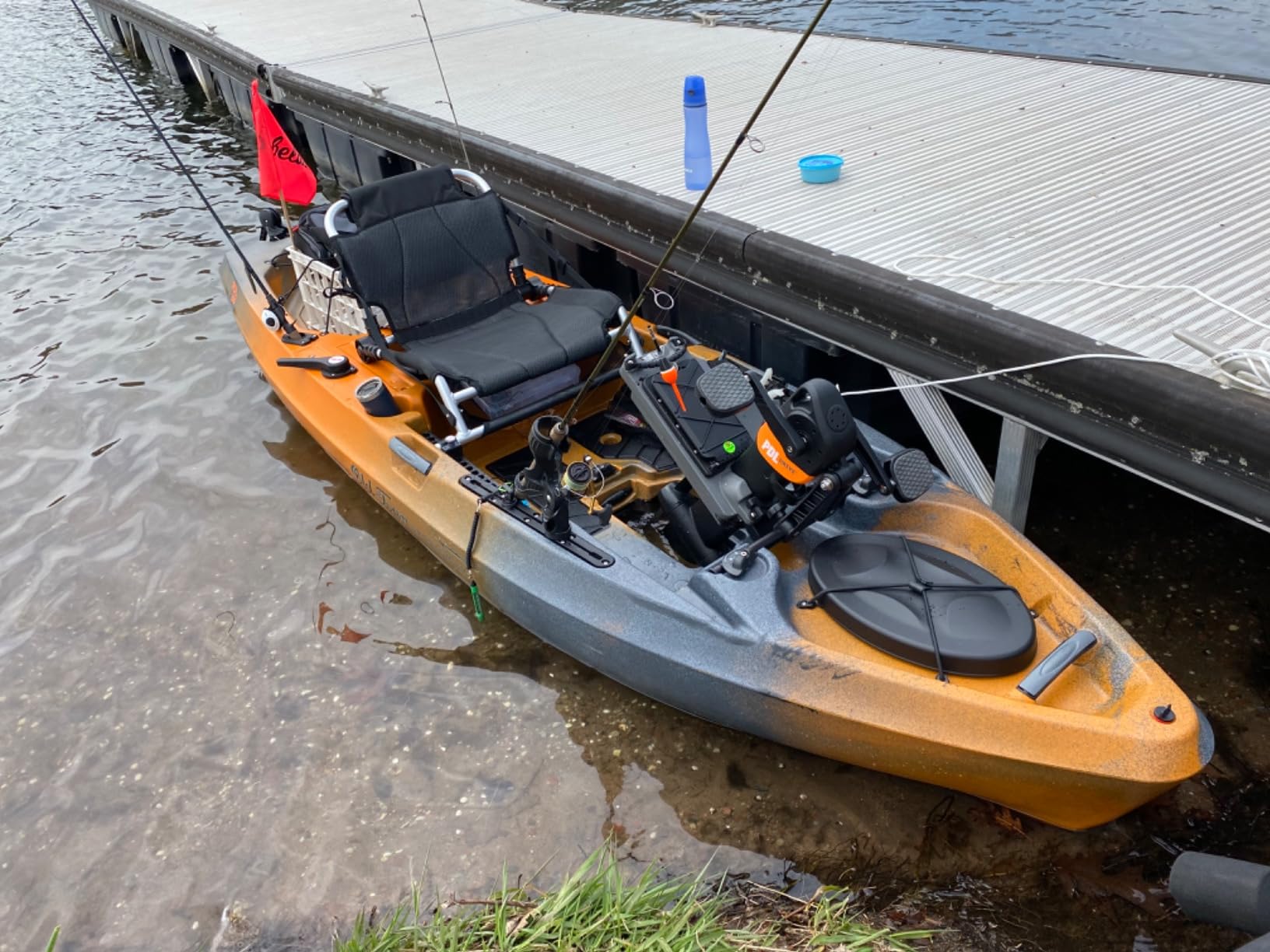
The premium mesh seat has real lumbar support and adjusts to leg length, and reviewers single it out for staying cool on long days. The universal transducer mounting system makes a fish finder install painless, and customizable accessory tracks, cushioned floor pads, a custom tackle box and a generous spread of rod holders cover the rigging. At 4.7 stars it holds the highest average rating of any boat here, with 87 percent five-star reviews.
Even so, treat the weight seriously. The hull is 107 lb and the removable pedal console adds 18 lb, and reviewers almost universally mention needing a cart or a second person. Owners also note that despite its size it fits into skinny water and creeks, so the footprint is not the problem the weight suggests.
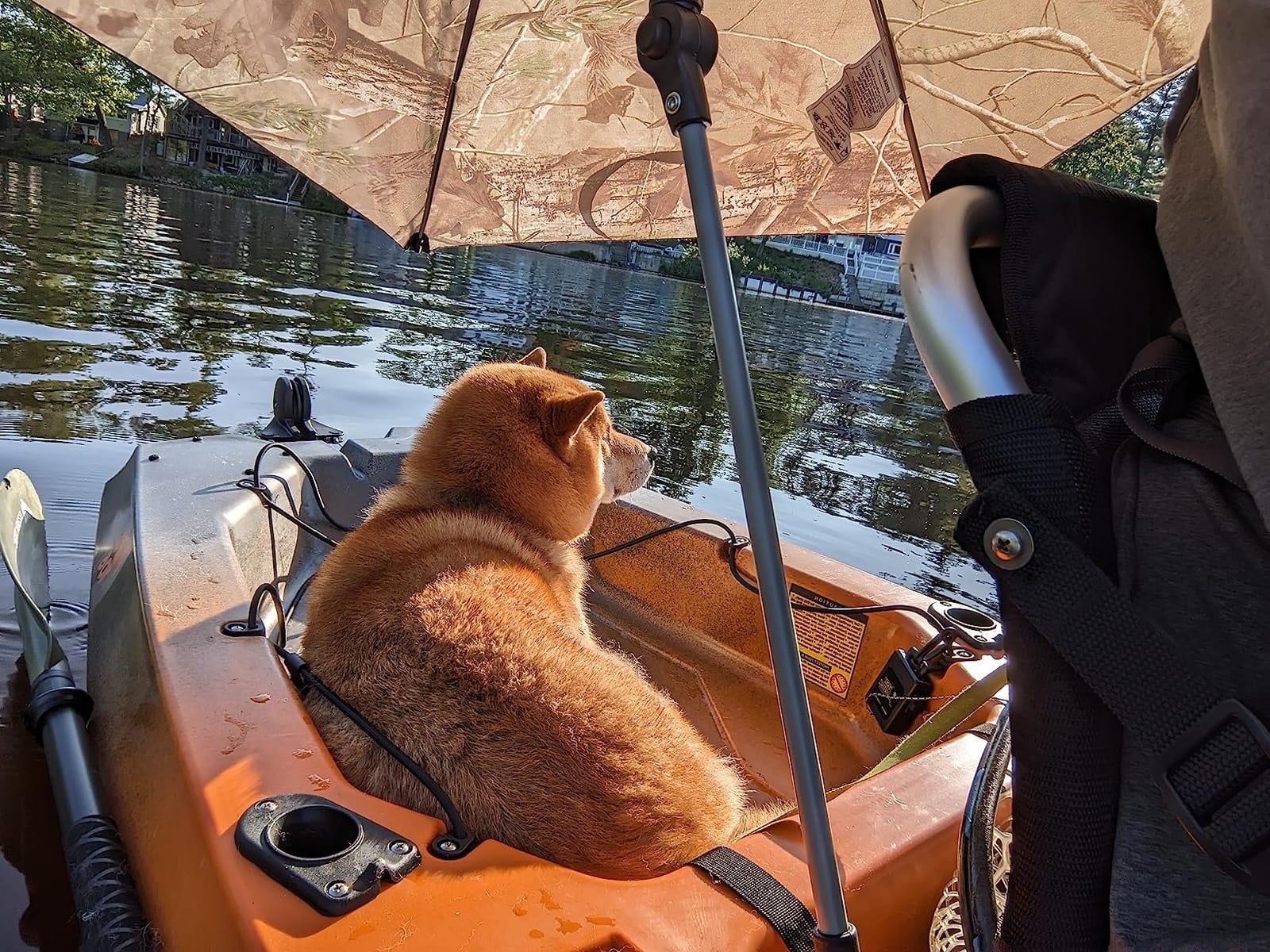
What a pontoon-style hull changes on a lake
Two pontoon-style hulls side by side trade secondary stability for a level, quiet platform, and that is exactly what standing casts and bowfishing need. The boat sits flat when you stand, it does not wallow, and the wide flat aft section gives a deck you can rig a motor or a seat back onto. On a calm lake this is the most confidence-inspiring boat here.
The cost is tracking in a crosswind, because a flat aft section has less waterline to bite into than a tunnel hull, and pedal drive at low speed across a fetch can push the stern. The reverse is what saves it. Without instant reverse you would be turning around; with it, you back downwind and keep fishing.
Who should buy a different boat instead
Anyone who cannot get a heavy boat to a launch, and that is the honest limit here. If you have no cart, no second person and no trailer, this boat is wrong, and so is any 100 lb-plus platform. The forum consensus is clear that needing a trailer defeats the point of a kayak, so the weight has to fit your actual logistics.
Also, the paddle is sold separately, so add one. Even with a drive system you will want it for lining up a cast, drifting into a pocket and getting back to shore if something fails. Treat that as a required accessory, not an optional one.
10. Old Town Sportsman 106 Powered by Minn Kota – Best for Trolling Motor Coverage
Old Town Sportsman 106 Powered by Minn Kota Solo Sit-on-Top Fishing Motorized Kayak, with Minn Kota Motor, 10 ft 6 in, Ember Camo
10 ft 6 in motorized
525 lb max capacity
45 lb thrust Minn Kota
121 lb hull
Pros
- Saltwater-ready Minn Kota motor with 45 lb of thrust
- Highest capacity in the roundup at 525 lb
- Extra-large rudder controls well in forward and reverse
- Through-hull wiring avoids drilling for a fish finder
Cons
- Heaviest boat here at 121 lb
- Motor battery is not included
- Paddle is not included
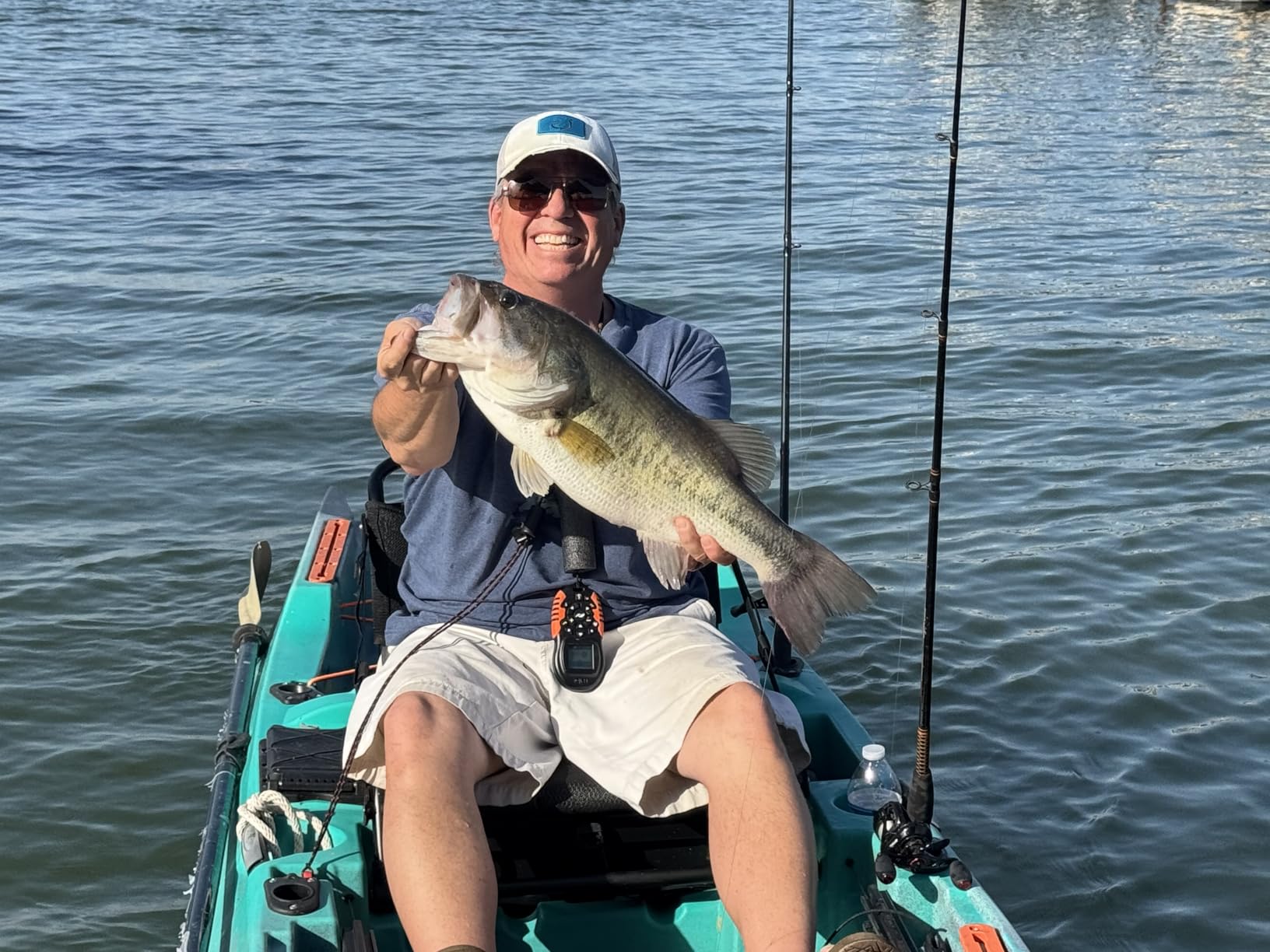
This is the only true motorized option in the roundup, and it is the boat for an angler who wants to cover a lot of lake without paddling. The supplied Minn Kota low-profile 12-volt motor is saltwater-ready and produces 45 lb of thrust, which is enough to hold a line in a stiff wind or pull through a current you would rather not fight. Capacity is 525 lb, the highest figure here, with 329 lb quoted as usable.
Three through-hull wiring kits and a universal transducer mount mean a fish finder can be installed without drilling the hull, which is a big deal on a boat at this level. The extra-large rudder gives real control in both forward and reverse, and the dual-layer Textilene mesh seat, adjustable foot braces and cushioned floor pads make long days bearable. The box includes a motor console, removable seat, battery box, console cover plate and a tackle box.
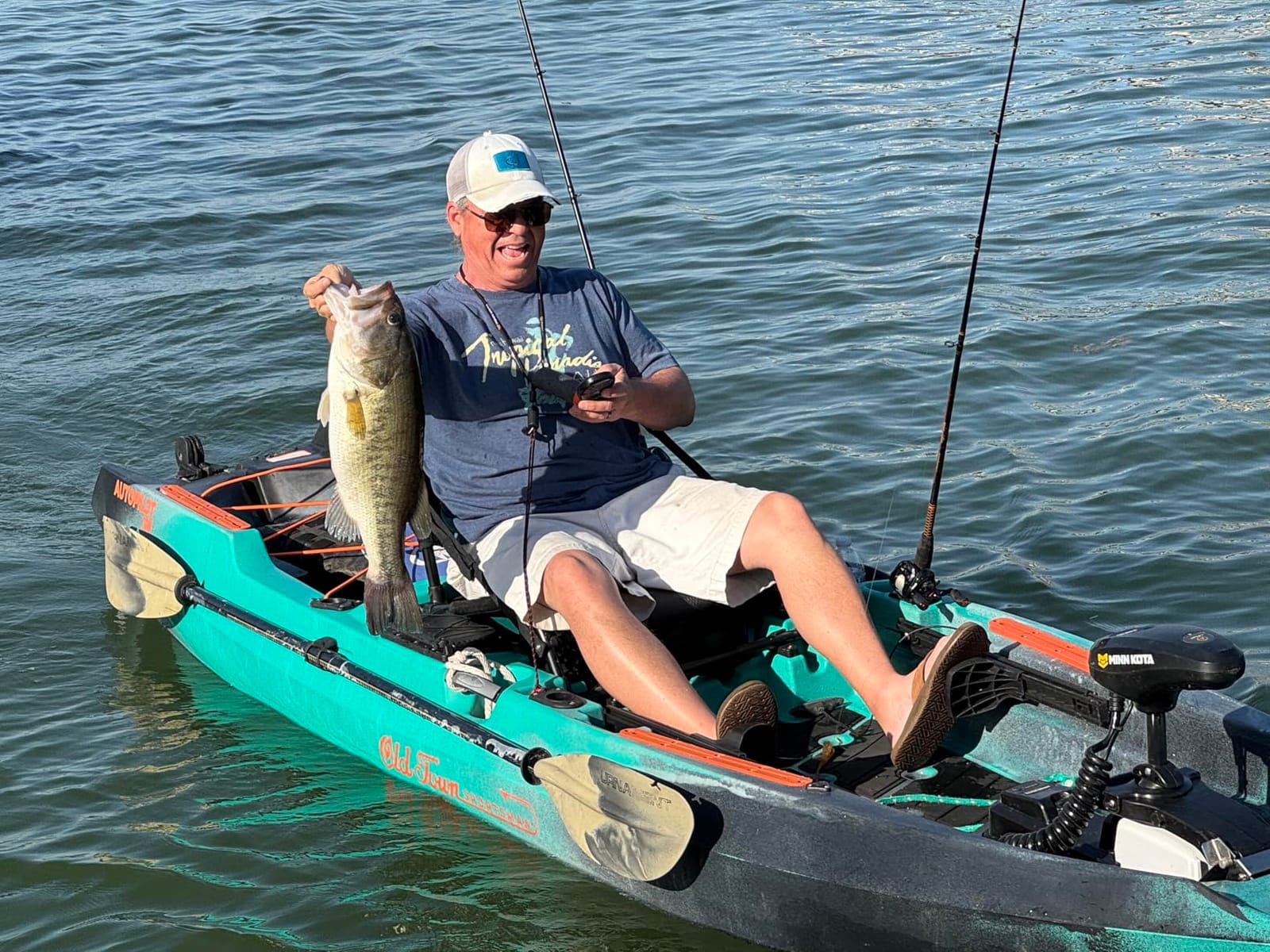
At 4.6 stars with 21 reviews, including 79 percent five-star and zero one-star, the owner base is small but strongly positive. Several owners with long histories of kayak fishing describe it as the best fishing kayak they have used, and multiple reviewers report that pairing it with a lithium battery multiplies usable lake time. The motor carries a two-year warranty and the hull a limited warranty.
The battery is not included, and that is the single most important thing to plan for. A trolling motor is only as good as its battery, and on a lake you will want more runtime than a basic lead-acid pack gives you. Owners who have made this upgrade describe it as the difference between a full day and a half day on the water.
When a trolling motor beats a pedal drive
A motor wins on endurance and on load. If you are working a large reservoir, covering a long trolling run, or carrying a heavy electronics and tackle package, a motor lets you arrive fresh. It also lets you mount a spot-lock style motor in some configurations and hold position hands-free for baitfishing, which a pedal drive does not do as quietly.
Pedal drive wins on simplicity. There is no battery to charge, no motor to service, no throttle cable to snag, and no failure mode that ends your day. Motorized boats also have more total moving parts, and the combined 121 lb hull plus a console is genuinely a two-person job at the ramp. A drive system that silently works after five years of neglect is worth a lot.
Who should buy a different boat instead
Do not roof-mount this one. Reviewers advise against putting a 121 lb hull on a roof rack, and the weight concentrated high on a vehicle is a genuine safety concern on an off-axis launch. Plan for a truck bed, a trailer, or a modular alternative that splits into two halves.
It is also overkill for a small sheltered lake. If you mostly fish structure within a short paddle of the launch, the pedal boat gives you the same coverage with none of the maintenance, none of the charging and a hull you can lift. Buy the motor for range and endurance, not for convenience.
11. Lifetime Yukon Angler – Best for Stand-Up Fishing on a Budget
Lifetime Yukon Angler Kayak, Sit-On-Top Fishing Kayak, with Paddle, 11’ 6”
11 ft 6 in sit-on-top
350 lb capacity
78.5 lb weight
High initial stability hull
Pros
- High initial stability hull built for stand-up casting
- Two-position adjustable frame seat
- Quick-dry foam-back mesh seat
- Rudder-ready and transducer-ready hulls
Cons
- At 78.5 lb it is hard to load solo
- 15 percent of reviews are one-star
- Hatch is water-resistant rather than fully dry
The Yukon Angler is the boat here that is explicitly designed around standing. Its high initial stability hull is shaped for stand-up casting, and it comes with an integrated stability strap to help you feel secure while upright. At 11 feet 6 inches and 32 inches wide it also has the length to track, which is a rare pairing with a stand-up platform at this end of the range.
The adjustable frame seat has two positions: high for fishing and paddling, and reclined for relaxing between spots. The quick-dry foam-back mesh seat is comfortable in sun and drains rather than holding water, which is a small but real quality difference over a molded plastic pad on a long day.
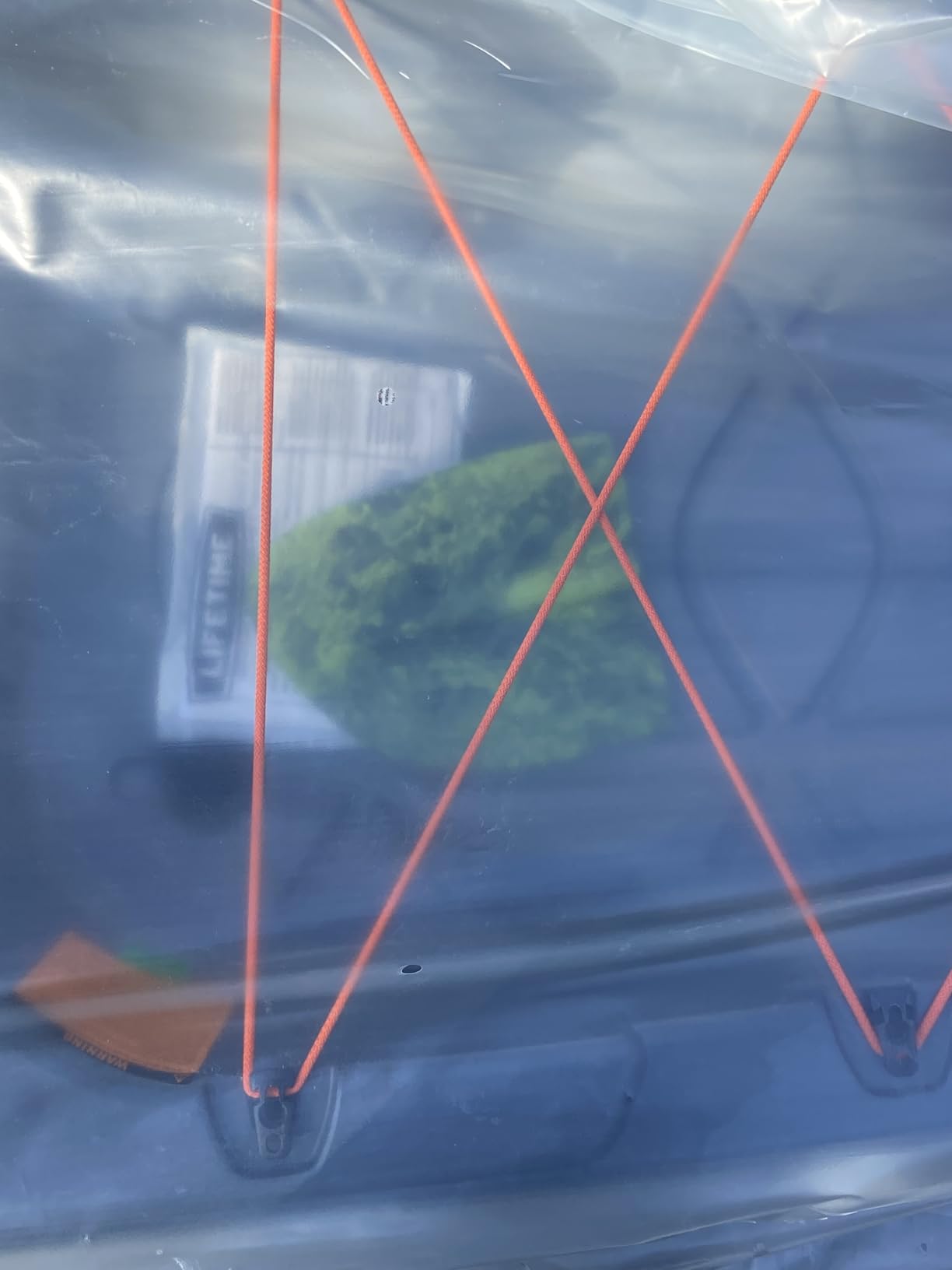
It is unusually well equipped for the class. You get a triple rod holder plus two horizontal rod cradles, two 12-inch sections of universal accessory track, an integrated quarter-turn universal mount for accessories, an oval water-resistant storage hatch, tankwell storage with bungee lacing, a skeg wheel for tracking, a foam-reinforced deck, and eight self-bailing scupper holes with a deck channel draining system. The hull is rudder-ready and transducer-ready, so upgrades install without drilling. A paddle is included, along with two paddle keepers and a front cradle, and there is a five-year limited warranty.
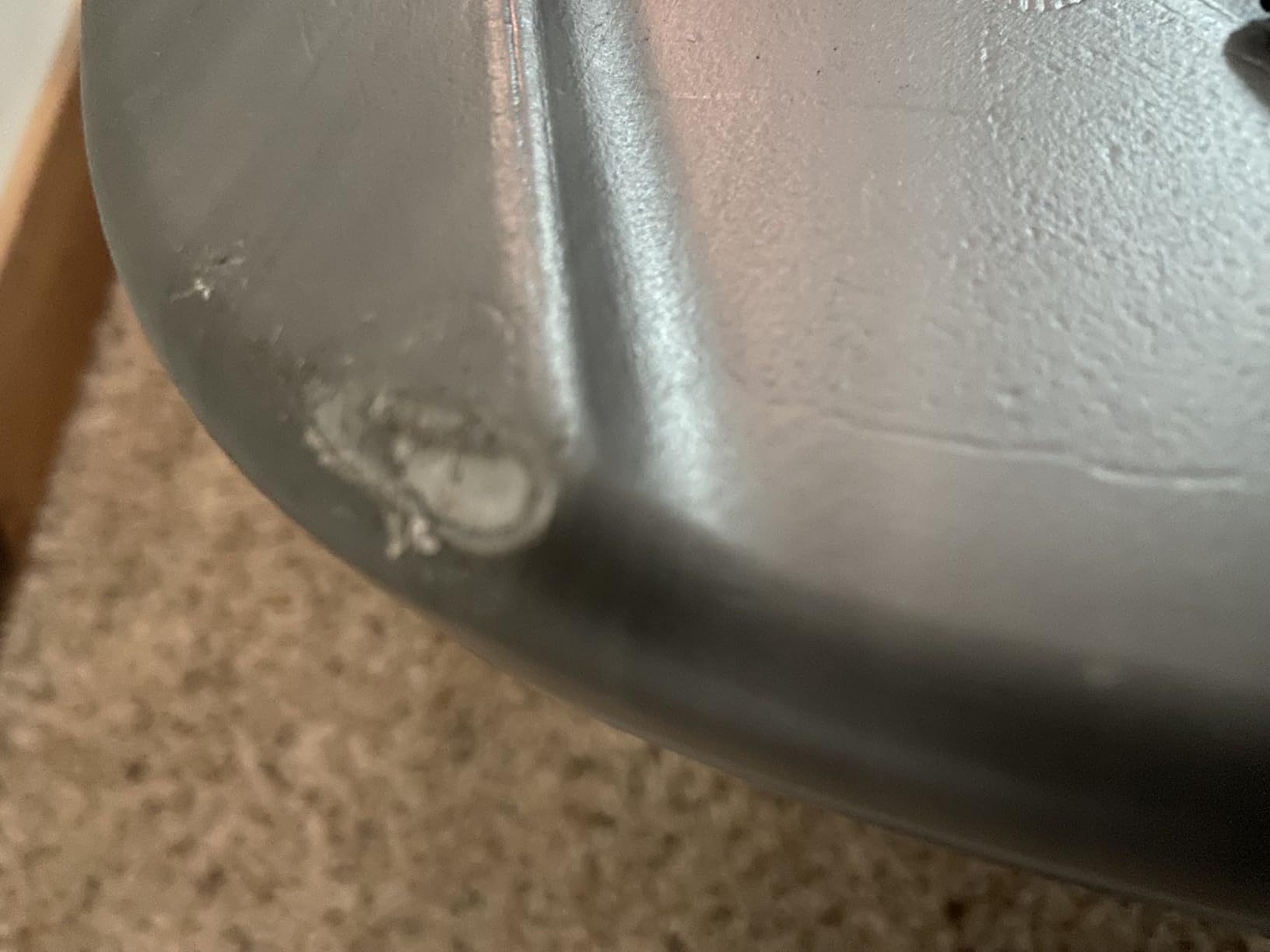
The caveat is the evidence. At 4.0 stars on 17 reviews, it has both the lowest average rating and the thinnest review base in this roundup, and 15 percent of reviews are one-star. Judge the design on the feature list and the warranty, not on a small sample, and inspect carefully on arrival.
What high initial stability actually gives you
Primary stability is how flat the boat sits before it starts to lean; secondary stability is how it behaves once you are already over. A high initial stability hull is wide and flat with a hard chine, which means you can stand up quickly, cast a long way and step hard to a spot without the deck disappearing under you. That is the difference between casting from your feet and casting from a seated position every time.
The limits are still real. Standing stability in a beam wind or a passing wake is a different problem from static stability, and no kayak in this class replaces caution, a paddle float and a leash system. Treat the strap as a comfort aid, not a restraint.
Who should buy a different boat instead
Weight is the blocker at 78.5 lb. That is the second-heaviest paddle boat here, and it is heavy for a boat whose main selling point is accessibility. Without a cart, loading it solo is a genuine chore, and forum users consistently name anything over roughly 80 lb as the point where carrying stops being practical alone.
The storage hatch is water-resistant rather than fully dry, so protect your electronics if you are mounting a transducer. And given the 15 percent one-star share, check the seat frame, foot braces and drain plugs during the first week, because fit and finish issues are what that share reflects.
12. BKC Brooklyn 10.5 Pro – Best All-In Pedal Package
BKC Brooklyn 10.5 Pro Motorized Fishing Kayak, Trolling Motor
10.5 ft pedal kayak
420 lb capacity
68 lb weight
Trolling motor included
Pros
- Trolling motor and paddle included in the box
- Propeller drive and rudder for precise positioning
- Aluminum-frame upright seat with an elevated view
- Sealed dry storage hatches and a rear cargo area
Cons
- Only 17 reviews so a small owner base
- At 68 lb plus motor a cart is needed for solo launching
- HDPE hull is heavier than comparable polyethylene boats
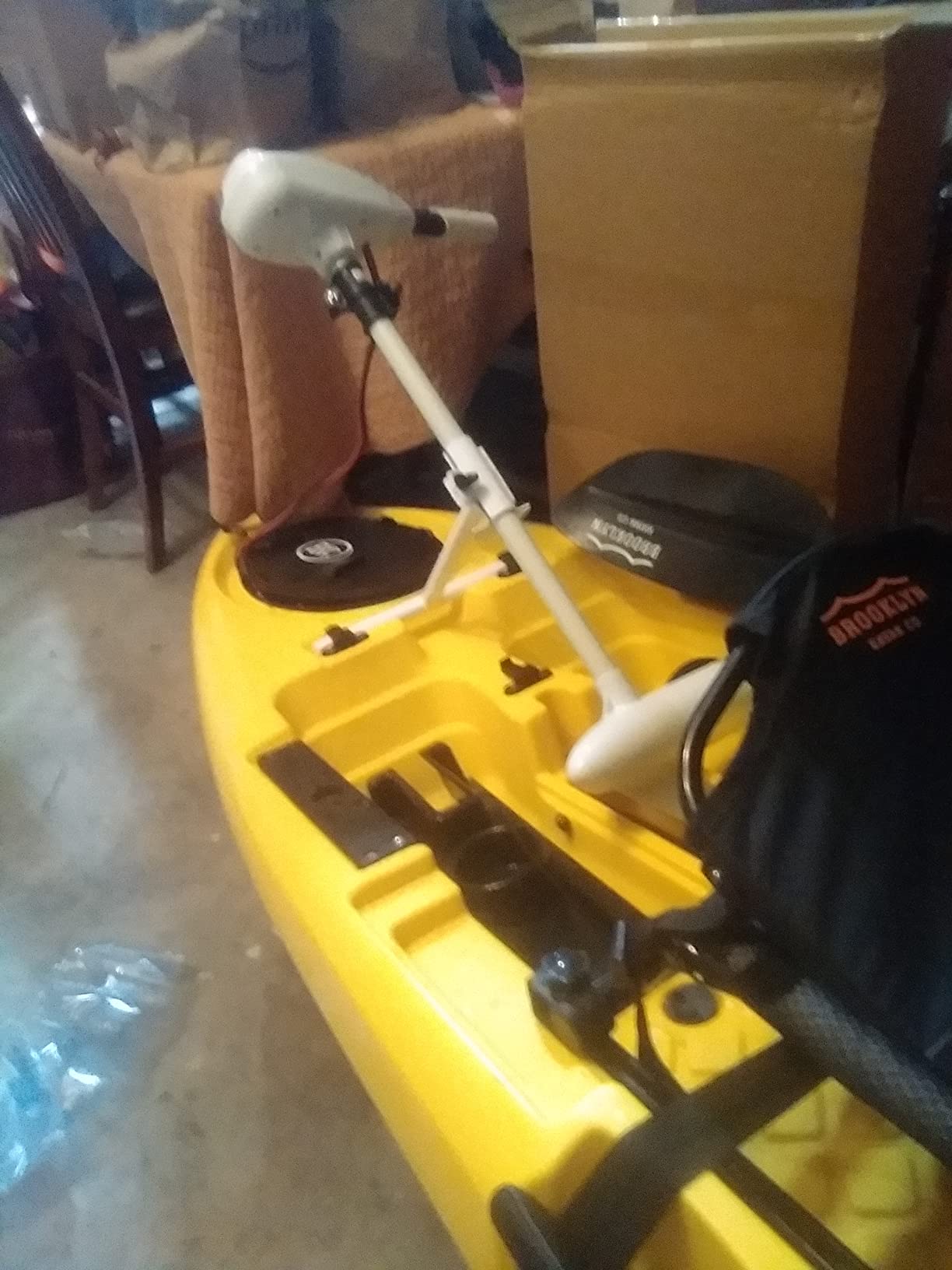
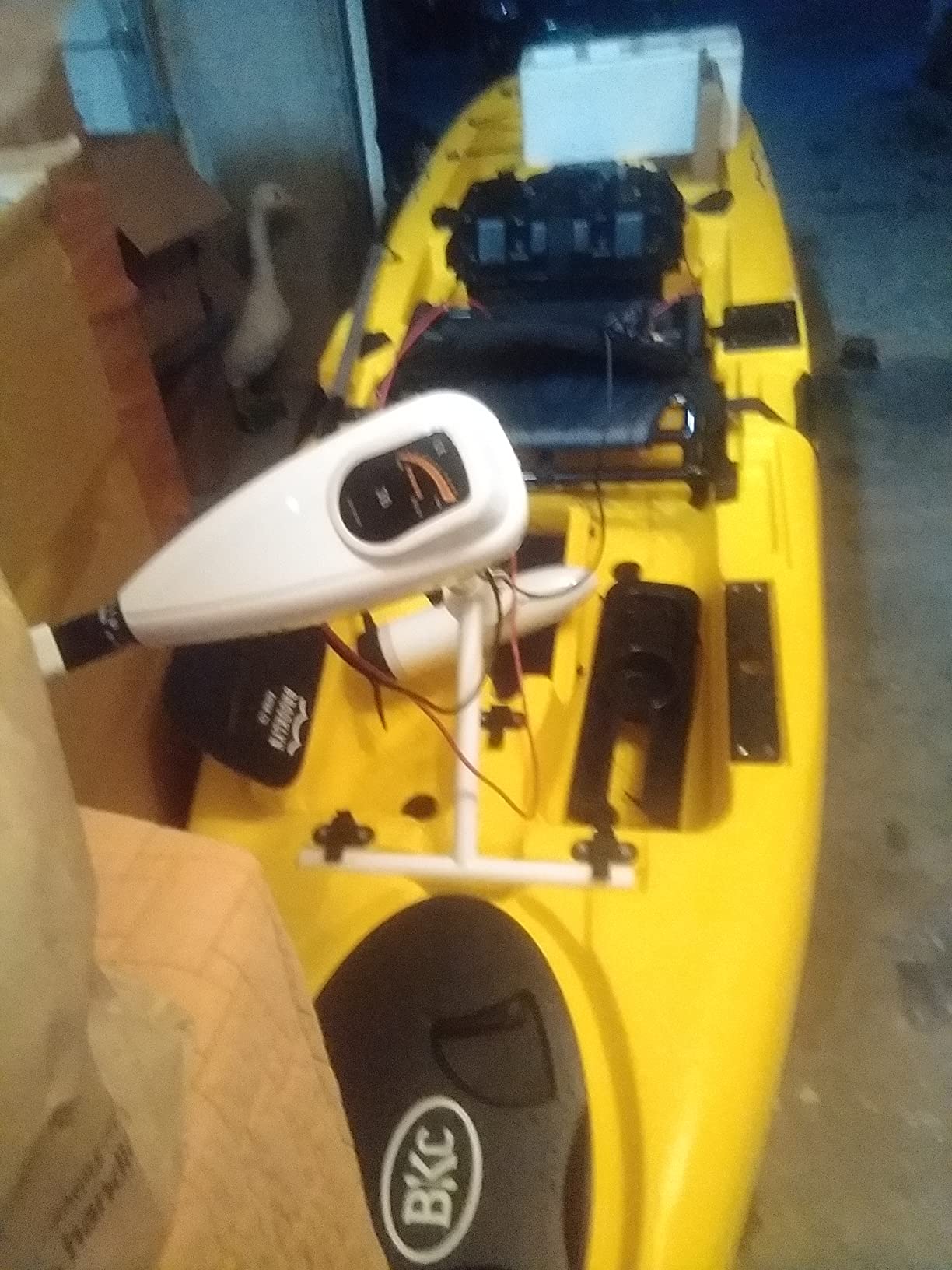
The Brooklyn 10.5 Pro is unusual in one specific way: the trolling motor is in the box. The package includes a trolling motor, a paddle, an upright aluminum-frame seat, adjustable footrests, sealed dry storage hatches and a rudder. For a first pedal kayak, that removes the most annoying part of the purchase, which is the shopping list of accessories you discover you need two weeks later.
It is 10.5 feet long, rated to 420 lb, and the propeller drive works with rudder steering for hands-free positioning while you cast or hold a line in wind and current. The aluminum-frame seat sits upright and elevated, which gives better visibility over the water, more comfortable paddling and improved control when casting. Flush-mounted rod holders, gear tracks, accessory mounts and a rear cargo area for tackle boxes and coolers round out the rigging.
The hull is high-density polyethylene, which explains the 68 lb weight. It is heavier than a comparable polyethylene boat, but it is stiffer, and the reviews suggest that trade is acceptable. It is available in five colorways, and the wide hull is reported to stay planted on lakes with a full load on board.
At 4.3 stars on 17 reviews it is mid-pack with the smallest review base in the roundup, though the 4-star share is high at 19 percent, which usually indicates people are satisfied once set up rather than that there is an unresolved problem. Judge it as a well-boxed package rather than as a proven platform.
Why the included motor changes the maths
Motorized propulsion on a boat this size lets you cover ground without a drive system cycle and a battery, and many owners pair it with a small transom-mounted battery rather than a build-in system. The trade is that the motor is a component you will eventually maintain or replace, and it consumes hull space and adds weight at the stern, which slightly reduces the cargo capacity you paid for.
What you gain is a boat that works out of the box on a lake with real distance between the ramp and the fish. For an angler who wants to be on the water quickly without a learning curve in drivetrains, that is a fair exchange and a genuine advantage over buying a bare hull and adding power later.
Who should buy a different boat instead
If you want a pedal drive that can be serviced or upgraded, look at the Old Town PDL, which carries a five-year drive warranty and a documented drive assembly. Propeller drives on smaller budget boats are the component most likely to need parts, and the 17-review base here gives you little owner evidence to fall back on.
At 68 lb with a motor aboard, you will still need a cart for solo launching, so this does not solve the transport problem. And if you plan to run it on open water in a stiff wind, test the elevated aluminum seat with the motor installed, because a high seat plus a stern-mounted power unit is a different balance point than the reviews describe on a calm day.
How to Choose a Fishing Kayak for Lakes: Length, Beam and Capacity?
Choose length first, because it is the decision you cannot undo and the one that most affects how the boat behaves. Length gives you tracking, speed and dry hull volume; beam gives you stability and deck space; capacity tells you whether the combination works for your body and your gear. Everything else, including seats, tracks and rod holders, is adjustable after purchase.
Choosing your length
Under 10 feet, a kayak is nimble and easy to carry. It turns on a dime in a weedy pond, which is the most common lake habitat there is, but it wallows in chop and tracks poorly across open water. Around 10 to 10.5 feet is the sweet spot for most anglers: enough waterline to feel settled, short enough to launch alone. At 12 feet you get a calmer ride in a wake and better tracking, at the cost of maneuvering and a slightly heavier hull.
For lakes specifically, longer is better than it is on rivers. A river rewards a short boat that spins on a dime; a lake rewards length because distance is measured in hundreds of yards of open water rather than feet. The exception is a small, weedy, stump-filled pond, where the shortest boat in this roundup is the most productive one you can own.
Reading the beam width
Beam is the single number that decides whether you can cast from your feet. Thirty inches is a paddling width and feels lively but twitchy standing. Thirty-two to 33 inches is the middle, workable for seated casting and standing for lighter paddlers. Thirty-four inches and up is a standing platform: stable enough to step forward, lean and cast, at the cost of speed and some load-carrying ease.
There is no free lunch in width. Every inch of extra beam is water pushed aside, and a very wide hull is genuinely slow. Decide which of your days matters more, the ones where you stand and cast into structure or the ones where you cover a long run of open water, because the answer picks the beam for you.
Capacity and the 120 rule
The 120 rule is a community heuristic, not a regulation: a solo angler can reasonably car-top and carry a kayak up to roughly 120 lb without needing a trailer or a second person. It came out of forum threads, not a manufacturer’s manual, and it is useful precisely because weight, not capacity, is what ends most first-time purchases. A boat rated for 500 lb that you cannot lift onto your car is not a boat you will fish.
Use usable capacity, not maximum capacity, when you load up. On the two Old Town boats here, the maximum is 450 and 525 lb, but the manufacturer’s own usable figures are 343 and 329 lb for an angler plus gear. Staying under the usable number is what keeps the boat handling the way the designer intended. A simple rule: angler weight plus a fully loaded gear bag should stay under the usable rating, with margin.
Hull shapes and what they do
A tunnel hull has a deep central channel, and it is the fastest-tracking shape in this roundup, which is why the Perception Pescador Pro 12 feels settled in a wake. A cathedral or tri-hull is faster still and much more sensitive to crosswinds, so it suits protected water rather than exposed lakes. A catamaran-style twin pontoon hull is the most stable and the least quick to turn. A wide flat-bottomed angler hull is the most stable of all but the slowest, and it is why the Catch Mode 110 and the Sportsman PDL 106 feel planted when you stand.
Material matters less than people think, but the difference shows in flex and weight. Rotomolded polyethylene is tough, cheap to replace and heavier by feel; high-density polyethylene is stiffer and often lighter for the same size. Neither will matter much on a calm lake. What matters is that polyethylene hulls can warp in prolonged uncovered sun storage, so keep the boat shaded.
Seating and why it decides long days
Molded plastic seats are light and cheap and adjustable in height only. Framed mesh seats run cooler, allow proper posture and can be raised for visibility, which is what you want when sight-fishing. Elevated aluminum-frame seats give the best casting control and the best view, and they are the standard on pedal boats because sitting high puts your legs where the drive needs them. If you are on the water for more than four hours, a framed or elevated seat is not a luxury.
Sit-On-Top or Sit-In: Which Hull Fits Lake Fishing
For lake fishing, choose a sit-on-top in almost every case. The open deck is the reason: you can stand, you can reach gear on both sides, you can step over a line, and you can get out after a capsize. Sit-in kayaks are enclosed, cooler and narrower, which makes them better for cold water and rougher conditions, but on a flat lake the trade buys you nothing you need.
Are sit-on-top kayaks more stable? Usually, yes, and the reason is width and open deck area rather than the sit-on-top format itself. A wide sit-on-top with a flat bottom is the most stable combination available, and that is the configuration every boat in this roundup uses. The sit-inside advantage in stability comes from the paddler being low in the hull, which matters in a boat designed for rough water, not for a lake.
Are sit-in kayaks better for fishing? In a specific way: they keep you drier and warmer. A sit-in with a skirt is far better for early spring and late autumn fishing on a cold lake, and it has a cockpit that holds gear secure in a capsize. On a summer lake with warm air, every one of those advantages disappears and the open deck wins outright. Buy the sit-in for cold water, the sit-on-top for everything else.
What are the disadvantages of sit-on-top kayaks? Four, and they are real. You get wet from spray and rain because there is no deck to keep water off you. Water that comes into the boat stays in it, since the hull does not self-drain as well as a sit-in. You have less protected storage in the cockpit. And you are more exposed in a capsize, which matters more on open water than on a sheltered pond. None of that matters much on a calm summer lake; all of it matters in October.
Do sit-on-top kayaks flip easily? No, and this is the most common fear new owners have. The wide flat hulls in this roundup are the least tippy boats manufactured, and the Sportsman PDL 106 specifically has owners reporting it does not flip when standing or when a wave lifts it. What flips kayaks is standing up too fast in a beam wind, not the hull design. Rise in stages, keep low and use your paddle as a brace.
Paddle, Pedal or Motor: Picking Lake Propulsion
Propulsion is a comfort and coverage decision, not a speed decision. A paddle is simplest, cheapest to maintain and impossible to break, but it occupies the hands that should be holding a rod. Pedal and motor systems free both hands, which is the whole point, and they let you hold a position in wind without fighting to stay put. On a lake, that is the difference between working a spot and drifting off it.
Are pedal drive kayaks better for fishing? For long days and long distances, yes, because your hands stay free and you can cover ground without stopping to paddle. A paddle kayak still wins in a sheltered pond where the launch is close to the fish, because a paddle is silent, simple and one less thing to maintain. Pedal drive also brings a rudder, which is the feature that actually helps in wind.
Which pedal drive kayak is the most stable? Among the boats here, the Old Town Sportsman PDL 106, and the reason is the pontoon-style hull rather than the drive system. Stability comes from the hull, not the propulsion. That said, the drive system determines how usable that stability is: a forward and reverse pedal drive lets you correct in a crosswind instead of fighting it, and the Raptor fin drive and the BKC propeller drive are both less capable of holding a line on a fetch.
What is the best budget fishing kayak with pedals? Among the pedal options reviewed, the Reel Yaks Raptor 9.5 is the one to look at first, because the two-piece hull removes the transport problem that usually defeats a first pedal purchase. The BKC Brooklyn 10.5 Pro is the alternative if you want a trolling motor in the box and would rather not choose a battery system. Both are more reachable than the pedal-drive class average, and both carry real capacity figures of 380 lb and above.
One more maintenance note that roundups rarely cover. Serviceable, replaceable drive components are worth real money over a decade of ownership, and owners in the forums consistently favour systems where a part can be swapped rather than an assembly replaced. Check what is available for the specific drive before you commit, and ask the retailer what a service costs.
Getting the Kayak to the Launch: Weight and Transport
Weight is the most important specification in this entire roundup and the one people check last. A boat you cannot get to the water is a boat you will stop using by August. Before you buy, measure the actual distance from your vehicle to the water at your favorite launch, because the last hundred yards is where a 100 lb hull ends your season.
The bands that matter in practice: under 60 lb can be solo-carried and solo-loaded; 60 to 80 lb usually means a roof rack and a cart, with solo loading possible but unpleasant; above 80 lb realistically means a cart and a second person, or a trailer. Two of the powered boats here weigh more than 100 lb before consoles, and reviewers on both mention needing a second person every single time.
Then consider storage, which is a constraint people underestimate. A modular two-piece kayak such as the Reel Yaks Raptor or Radar fits in a trunk, a closet or a small apartment, which matters enormously if you do not have a garage. Two owners of one-piece boats in the reviews describe the opposite problem: the boat becomes the thing that dictates where the car has to be parked.
A word on roof mounting. Even at 60 lb, use proper rated bars and straps, follow the roof-rack weight limits including accessories, and re-check them after the first ten miles. Owners on larger boats in this roundup advise against roof mounting above about 100 lb, and that advice is worth taking.
Finally, budget the cart. It is the single cheapest upgrade in kayak fishing and it decides whether solo launching is pleasant or miserable. A weighted cart with balloon tires handles a gravel ramp; a cheap hand truck on a sand launch will not, and you will learn that the hard way.
Reading the Lake: Wind, Chop, Shallows and Safety
Lake fishing splits into sheltered water and exposed water, and the same boat can be excellent in one and wrong in the other. Sheltered water is ponds, small lakes ringed by trees and the lee side of a bay. Exposed water is anything with fetch: a long open stretch where wind builds waves and where a boat can be caught out a long way from shore. Know which one you fish, because it changes the length, beam and propulsion you need.
Wind tolerance comes down to three things: beam, hull shape and whether you have reverse. Wider beams and flat hulls resist rolling; tunnel hulls cut through chop; reverse lets you back off a problem rather than fight it. Wind paddle blades help more than most people expect on an angler kayak, and they are a cheap insurance policy for afternoon lake wind.
Shallow habitat deserves its own note, because it is the defining lake environment and it is the opposite requirement. Lily pads, weed beds, submerged stumps and mud want a boat that turns quickly and a drive that retracts. Fin drives lift with a foot press, propellers need care, and short hulls with rudders are simply easier to place. If you are sight-fishing in pads, a narrow 9.5-foot boat is more productive than a wide 34-inch platform.
Safety kit stays simple. Wear a properly fitted personal flotation device every trip, not in the boat. Carry a whistle, a paddle with a float attached to it so it cannot swim away, a bailer or sponge, and a spare paddle if you are going far. Add a spray skirt only if you are fishing cold water in a sit-in.
And apply the 120 rule to the day as well as the boat: if the wind is above what the forecast promised, if the sky darkens fast, or if you are further from shore than you planned, turn around. Every boat on this list is a float with a deck. None of them changes the outcome of ignoring weather.
Frequently Asked Questions
What is the most stable fishing kayak?
Stability comes from beam width and hull shape, not from propulsion. The widest angler hulls here sit at 34 to 34.5 inches and feel planted when you stand; the Old Town Sportsman PDL 106 goes further with a pontoon-style hull that owners report does not flip when standing. For beginners, prioritize beam over length, and remember that a beam of 34 inches is where standing casts become genuinely comfortable.
Which is better for fishing, a 10-foot or 12-foot kayak?
For lakes, the 12-foot hull wins on open water because a longer waterline tracks straighter and cuts through chop rather than riding over it. The 10-foot hull wins in ponds, weedy edges and anywhere you need to turn inside a short distance. As a default for a mixed lake angler, 10 to 10.5 feet is the balanced choice: settled on the water and still easy to maneuver and launch alone.
What is the 120 rule for kayaking?
The 120 rule is a community guideline, not a regulation: a solo angler can reasonably car-top and carry a kayak up to roughly 120 lb without a trailer or a second person. It matters because weight, not capacity, ends most first-time kayak purchases. Check the rigged weight rather than the bare hull figure, and buy a cart if your boat sits anywhere above 60 lb.
Are sit-on-top kayaks more stable than sit-ins?
Generally yes, because the wide, flat, open-deck angler hulls are the most stable designs available, and that is the configuration nearly every fishing kayak uses. Sit-in kayaks are narrower and keep the paddler low in the hull, which helps in rough water, but on a flat lake the open deck wins: you can stand, reach gear and get out after a capsize. Sit-ins are worth it in cold water with a skirt.
Are pedal drive kayaks better for fishing?
For long days and long distances, yes, because your hands stay free and you can cover ground and hold position in wind without paddling. The reverse on a pedal drive is the feature anglers notice most in real conditions. For sheltered water close to the launch, a paddle kayak is simpler, silent and has nothing to maintain, so the pedal upgrade pays off mainly on bigger water and bigger days.
Which kayaks are best for mounting a trolling motor?
Look for a transom mount or a rated motor plate rather than a bare deck, and confirm the boat’s capacity covers the combined weight of the motor and battery. The Pelican Catch Mode 110 is offered with a transom mount, the Old Town Sportsman 106 Powered by Minn Kota ships with a 45 lb thrust Minn Kota motor, and the Reel Yaks Raptor accepts an optional trolling motor plug. Check the battery compartment before you order.
How heavy a fishing kayak can I car top?
For a solo angler, up to roughly 120 lb is the practical ceiling and that is where the community 120 rule comes from. In practice, under 60 lb is genuinely easy to load alone, 60 to 80 lb wants a roof rack and a cart, and above 80 lb you should assume a second person or a trailer. Modular two-piece kayaks are the workaround for heavy boats, since each half fits in a vehicle trunk.
What size kayak is best for lakes and rivers?
Around 12 feet is the traditional answer, but on lakes the trade shifts slightly toward 10 to 10.5 feet unless the water is open and exposed. Long is better for tracking across open water and for holding course in a wake; short is better for turning in shallow, weedy water. Rivers generally reward a shorter, more maneuverable boat than lakes do, so if you fish both, size for the smaller water.
Which Lake Fishing Kayak Should You Buy in 2026
Start with the Lifetime Tamarack Angler 100 if you want one boat that handles the widest range of lake conditions and one person can actually move it. It is light, stable, cheaply maintained and has the largest owner review base here, which makes it the safest choice for a first purchase and a solid second boat.
Step up in width rather than length if your fishing is sight-casting from your feet: the Pelican Catch Mode 110 gives you a 34.5-inch platform and a retractable skeg for wind. Add length instead if you fish open water and want to hold a line in a wake, which is what the 12-foot Perception Pescador Pro 12 does best. If storage is the constraint, the two-piece Reel Yaks Raptor 9.5 puts pedal propulsion in a vehicle trunk.
Go hands-free only when you have solved the transport problem. The Old Town Sportsman PDL 106 is the pedal-drive pick and the Old Town Sportsman 106 Powered by Minn Kota covers the largest water and the heaviest loads, but both need a cart and realistically a second person. Demo the boat for a full morning before you commit, because a 20-minute demo in flat water tells you nothing about how it feels in a beam wind.
Whichever you choose, kit it out properly before the first trip: a fitted personal flotation device, a whistle, a paddle float, a cart if it weighs more than 60 lb, and rigging that matches the fish you chase. The boat is the cheap part of the equation, and the right accessories are what turn it into a full season on the water.