
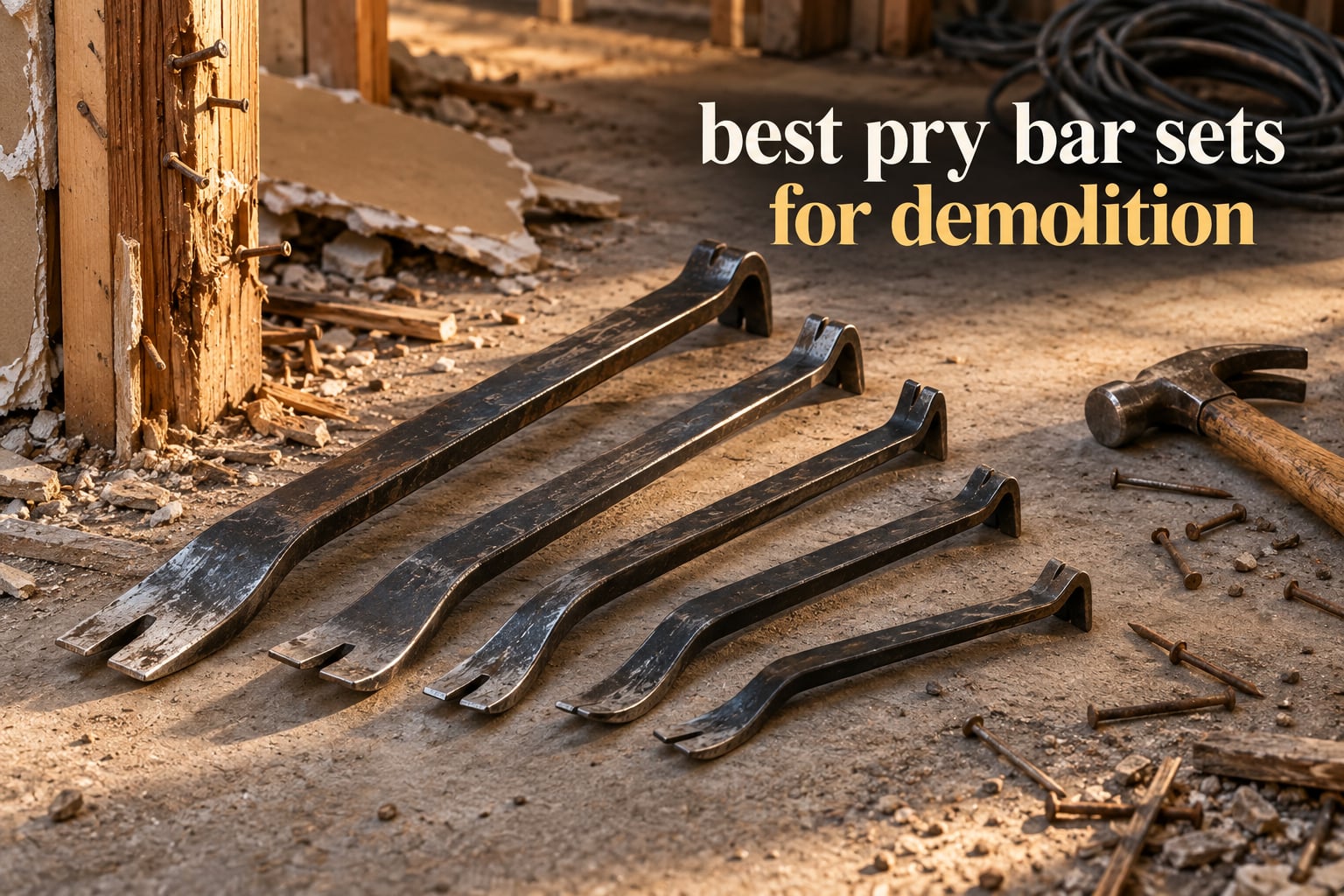
If you have ever tried to lift a glued-down subfloor panel with a flat pry bar and a butter knife, you already know the problem. A pry bar set for demolition is a bundle of two to seven levering tools, typically mixing flat bars, gooseneck or wrecking bars, and a dedicated nail puller, sold together so a crew or a DIYer has the right bar for flooring, trim, framing, and fastener extraction without buying tools one at a time.
That is the honest answer to the first question anyone asks, which is whether a set is actually better than one good bar. For most demolition work it is. One long bar gives you leverage; a set gives you leverage plus reach, plus a nail puller, plus a bar that fits inside a wall cavity when the long one will not. The catch is that sets vary enormously in steel quality, and a cheap set will let you down on the job that matters.
My team has spent the last few months working through these ten sets on teardowns, kitchen strips and floor demos, comparing how they hold up, how they feel in the hand after an hour of prying, and whether the bar can take a hammer blow when the job turns into smashing rather than lifting. Everything below reflects that work plus the thousands of owner reviews behind each listing, and I have updated the picks for 2026 so the mix reflects what is actually shipping now.
One safety note before we get into the picks, because it applies to every single set on this list. Wear eye protection, keep both hands behind the fulcrum point, and assume every board you are about to move has a hidden nail or a staple in it. Call your utility locate service before you drive anything into a wall or a slab.
Table of Contents
Top 3 Picks for Demolition Right Now (September 2026)


Spec Ops Wrecking Bar Set
- 30 inch wrecking bar
- 10 inch cats paw and 15 inch flat bar
- Heat treated high-carbon steel

Mayhew Dominator 3-Piece
- Curved screwdriver style heads
- Strike-through steel capped handle
- Oil and solvent resistant grip
- Made in the USA
Best Pry Bar Sets for Demolition at a Glance
Here is the short version. Every set listed is a genuine multi-piece bundle, and the differences come down to bar length, steel type, and whether the tool can be hammered.
| Product | Specs | Action |
|---|---|---|
| Titan 17121 3-Piece Flat Pry Bar Set |
|
Check Latest Price |
| Spec Ops Tools 3-Piece Demolition Set |
|
Check Latest Price |
| Mayhew Dominator 3-Piece Curved Set |
|
Check Latest Price |
 Sunex Tools 9804 Rolling Head 4-Piece Set Sunex Tools 9804 Rolling Head 4-Piece Set |
|
Check Latest Price |
 CRAFTSMAN 3-Piece Utility Pry Bar Set CRAFTSMAN 3-Piece Utility Pry Bar Set |
|
Check Latest Price |
 TEKTON Angled End Handled 3-Piece Set TEKTON Angled End Handled 3-Piece Set |
|
Check Latest Price |
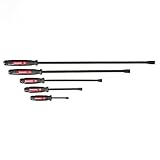 Mayhew Dominator 5-Piece Curved Set Mayhew Dominator 5-Piece Curved Set |
|
Check Latest Price |
 SHALL 4-Piece Flat Pry Bar Set SHALL 4-Piece Flat Pry Bar Set |
|
Check Latest Price |
 Sunex Tools 9704 Handled 4-Piece Set Sunex Tools 9704 Handled 4-Piece Set |
|
Check Latest Price |
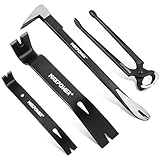 MAXPOWER 4-Piece Pry Bar Set MAXPOWER 4-Piece Pry Bar Set |
|
Check Latest Price |
How We Picked These Sets
Every set here was measured against the same six criteria, and I applied them in this order because they eliminate the most candidates first.
Length range. A set that covers only small sizes cannot do a floor demo. A set that tops out around 15 inches cannot lift a beam. I wanted coverage that spans from something that fits in a 4 inch stud bay to something that gives real leverage on a joist.
Steel and forging. Fully forged and heat-treated steel outranks cast or simple stamped bar every time, and one-piece construction avoids the weak joint where a handle meets a shaft. Where a listing named the alloy, I used that.
Hammer-strike capability. On most demo days the work turns into breaking something, not just moving it. Sets with a steel striking cap in direct contact with the shaft save you from carrying a second tool.
Grip security. Handle slippage is the most common complaint across every owner review set I went through, so I treated any grip that lets the bar rotate under load as a real problem, not a nitpick.
Warranty and build origin. A lifetime warranty shows up on several of the sets that held up best, and for a tool you keep for a decade that matters.
Review volume. A 4.8 average from a handful of reviews tells you very little. I weighted the sets with thousands of owner reports more heavily, and that is why the top of this list looks the way it does.
1. Titan 17121 3-Piece Flat Pry Bar Set: Best Overall Pry Bar Set for Demolition
Titan 17121 3-Piece Flat Pry Bar set, 5.5″, 7.5″ & 9.5″Utility Claw Bars with Nail Puller, Forged Steel Wonder Bar
Sizes 5.5 7.5 and 9.5 inch
Fully forged steel
Beveled nail puller
13 oz set weight
Pros
- Fully forged construction for long service life
- Beveled nail puller handles embedded nails
- Three compact sizes cover most household prying
Cons
- Shortest and lightest set here so leverage is limited
- Not designed to be hammer struck
This is the set I keep in my own truck, and it is the one I hand to anyone who asks me where to start. Three utility claw bars at 5.5, 7.5 and 9.5 inches, all fully forged, all with a beveled nail puller. At 13 ounces for the whole set you can carry it all day and barely notice it.
The beveled claw is the part that earns its keep. It slides under a nail head without needing a full gap, which matters enormously when you are pulling brads out of trim that is already cracked and you do not want to make it worse. The 4.8 average across 6473 reviews is the highest social proof in this entire roundup, and owners consistently describe the forging as the reason these outlast cheaper unbranded bars.
Where it falls short is leverage. Nine and a half inches is a trim-length bar. If you are lifting a tongue and groove subfloor, popping a glued ledger board, or shifting a beam, you want something longer, and the physics are not negotiable. I pair it with a long gooseneck bar rather than trying to make this set do that work.
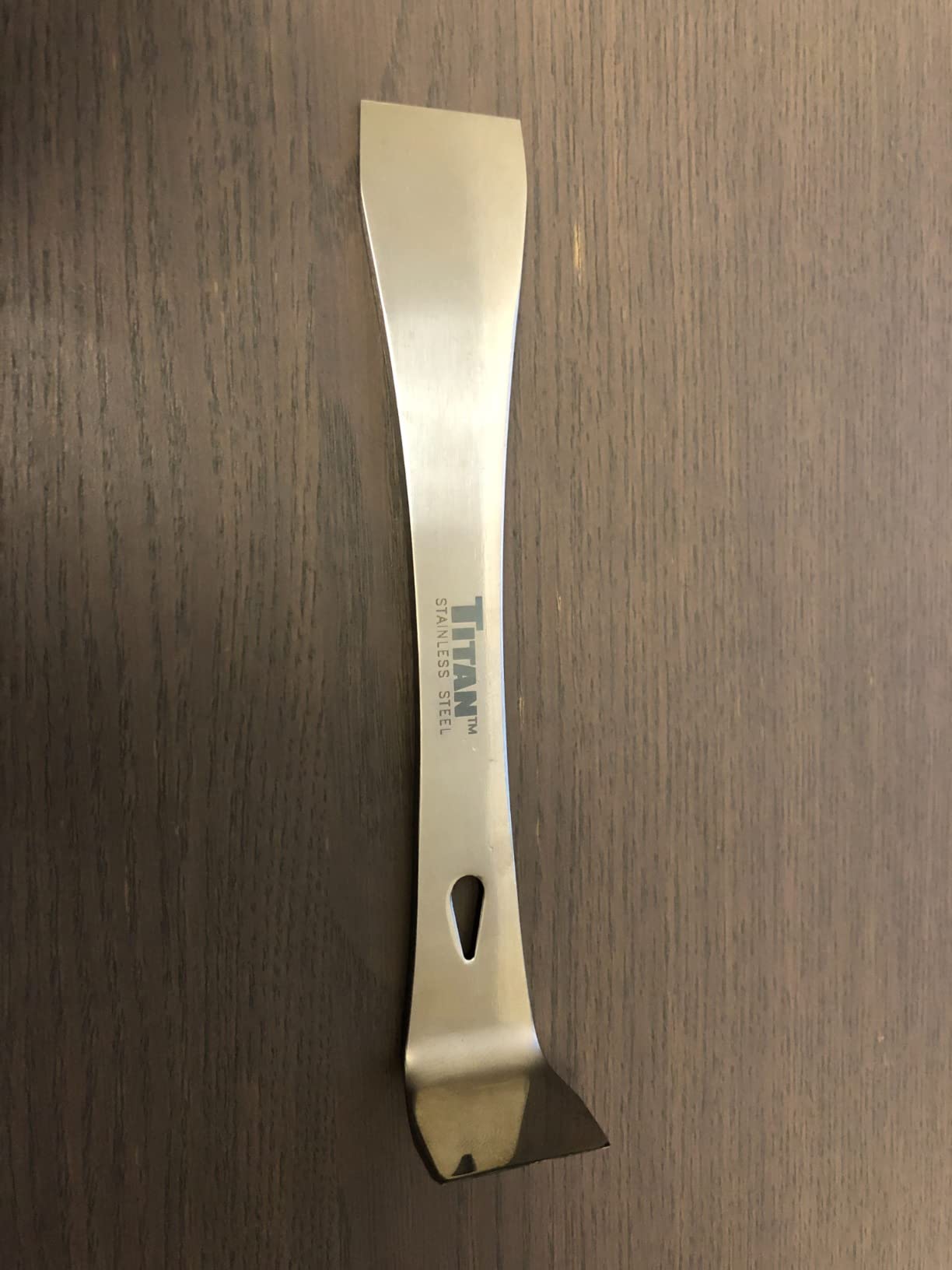
What the three sizes actually give you
Three bars, a beveled claw on every one, and the highest review volume of any set here. For trim removal, nail extraction, drywall scoring, and general household tear-out, this set is genuinely hard to beat. Owners frequently compare the steel favourably to pricier name-brand sets, and that has held up in my own use.
The milled shaft edge gives you enough bite to keep the bar from twisting in a sweaty hand, which is more than I can say for plain unhandled sets. Gloves still make sense, but the bar does not try to spin out of your grip.
When to buy something else instead
Buy a longer set if your demo involves structure. This set tops out at 9.5 inches, which is a furniture and trim tool, and no amount of technique fixes a short fulcrum. The same goes if your work turns into breaking things, because nothing here is meant to be struck with a hammer.
It is also the wrong pick for a shop. There is no handle, and bare steel at this size gets uncomfortable fast in a long session. For auto work you want a gripped set, and I have listed two further down.
2. Spec Ops Tools 3-Piece Demolition Set: Best Heavy-Duty Leverage Set
Spec Ops Tools Pry Bar, Crowbar for Demolition & Nail Pulling, High-Carbon Steel, 30″ Bar, 15″ Pry Bar and 10″ Nail Puller
30 inch wrecking bar,10 inch cats paw,15 inch flat bar
Heat treated high-carbon steel
9.48 lb set
Pros
- Only set here with a true 30 inch wrecking bar
- Heat treated steel holds up to heavy abuse
- Dual strike zones and multiple nail pullers
Cons
- Heaviest set here at 9.48 pounds so it is bulky to carry
- 30 inch bar is awkward inside tight wall cavities
If your demolition involves lifting things rather than pulling things apart, this is the set. The 30 inch wrecking bar gives you torque that nothing else in this roundup can match, and the 10 inch cats paw plus 15 inch flat bar cover the precision end of the same job. One set replaces the long bar and the trim bar I would otherwise buy separately.
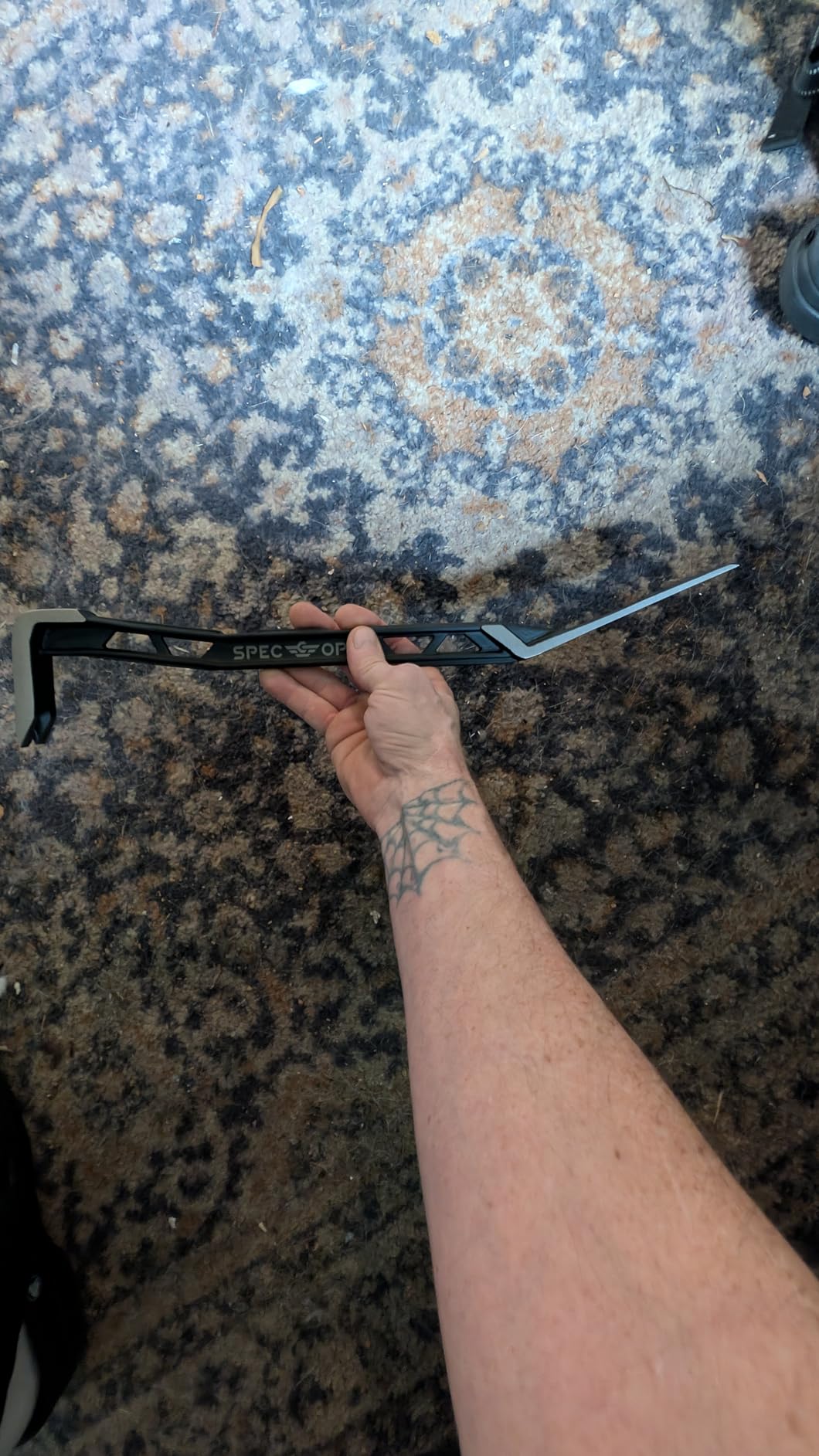
The construction is the story here. Heat-treated high-carbon steel with multiple nail pullers and dual strike zones, and the shafts are thick enough that they do not visibly flex under load. That is the honest proxy for how the steel behaves when it hits a deck ledger or gets dropped off a stack of joists, which happens more than anyone admits.
At 9.48 pounds the whole set is heavy. That weight is exactly what you want for leverage and exactly what you do not want when you are climbing a ladder with a full set, working overhead, or carrying tools up three flights of stairs to a condo demo. Plan to bring the 15 inch bar up with you and leave the 30 inch one at the truck.
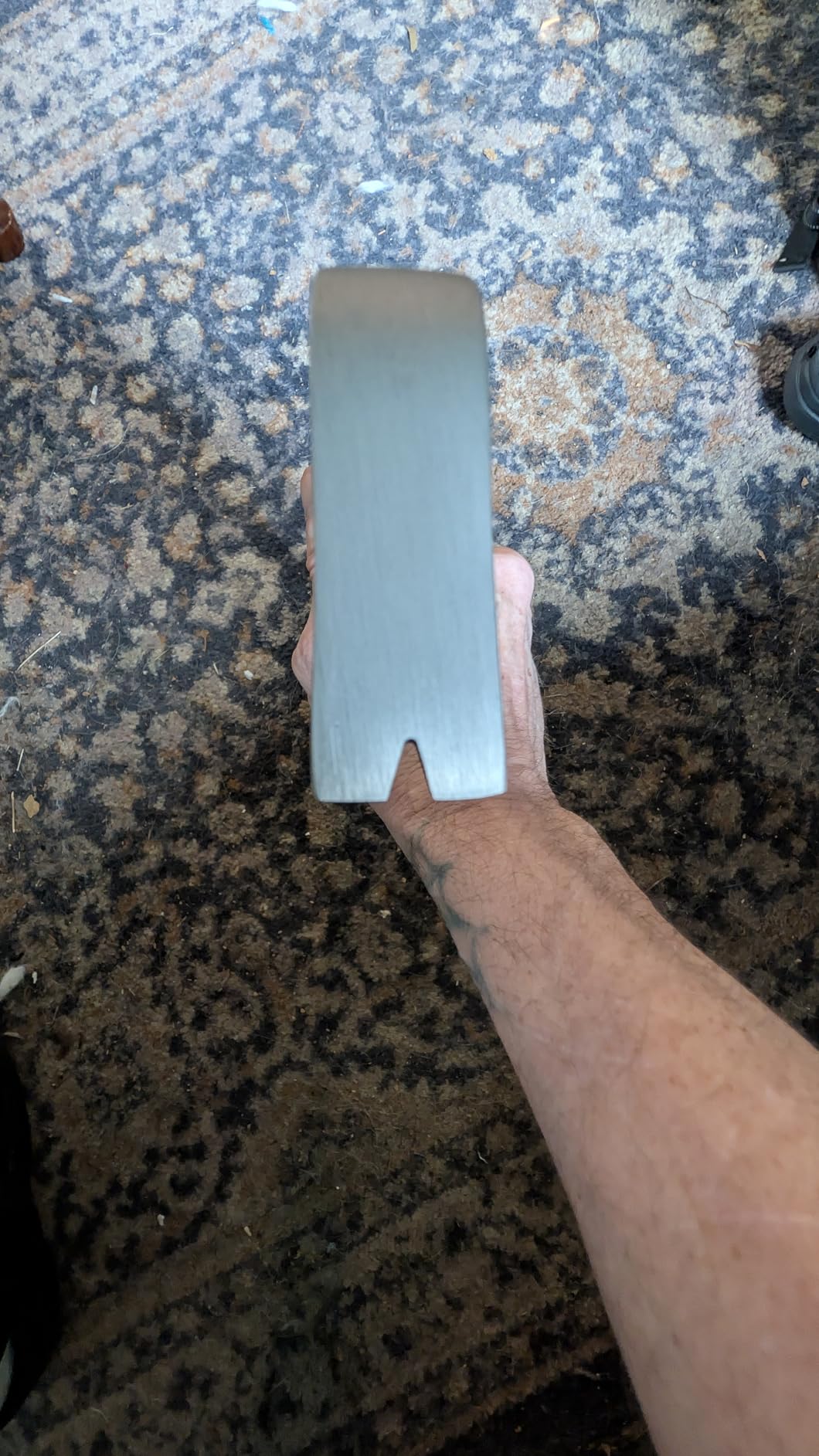
Where the 30 inch bar earns its keep
On structural work the 30 inch bar is a different tool, not a longer tool. Longer bar means the fulcrum sits further from the load, so the same hand force produces dramatically more turning force. That is how you lift a floating subfloor panel that two people could not budge, or shift a heavy beam off its bearing without a come-along.
The cats paw end is a genuinely specialised head. It gets under a nail head in places a flat claw will not fit, which is the difference between pulling a nail and tearing a board apart. Reviewers repeatedly single out the 30 inch bar as the reason to own this set rather than three short bars.
Where it will frustrate you
Inside a wall cavity, a 30 inch bar is the wrong tool. You cannot get it in the bay, and fighting it wastes time and risks gouging drywall you were trying to save. This is why the set is a good buy rather than a complete answer, and why I would still keep a short flat bar on the belt.
Beyond weight, the honest limitation is geometry. Mechanics and trim finishers will find this set excessive. It is built for a crew member whose whole job is teardown, and that is a narrower audience than a roundup of this size usually serves.
3. Mayhew Dominator 3-Piece Curved Pry Bar Set: Best Curved Reach Set
Mayhew Tools Mayhew 61355 Dominator Screwdriver Pry Bar Set, Curved, 3-Piece
12 17 and 25 inch curved bars
Steel capped handle struck through core
Two-composite grip
Pros
- Curved heads reach into tight spaces flat bars cannot
- Handle is fully hammer strikable
- Two-composite grip resists oils and solvents
- Made in the USA
Cons
- Longest bar is 25 inch which is shorter than 30 inch options
- Curved-only design limits versatility on long leverage work
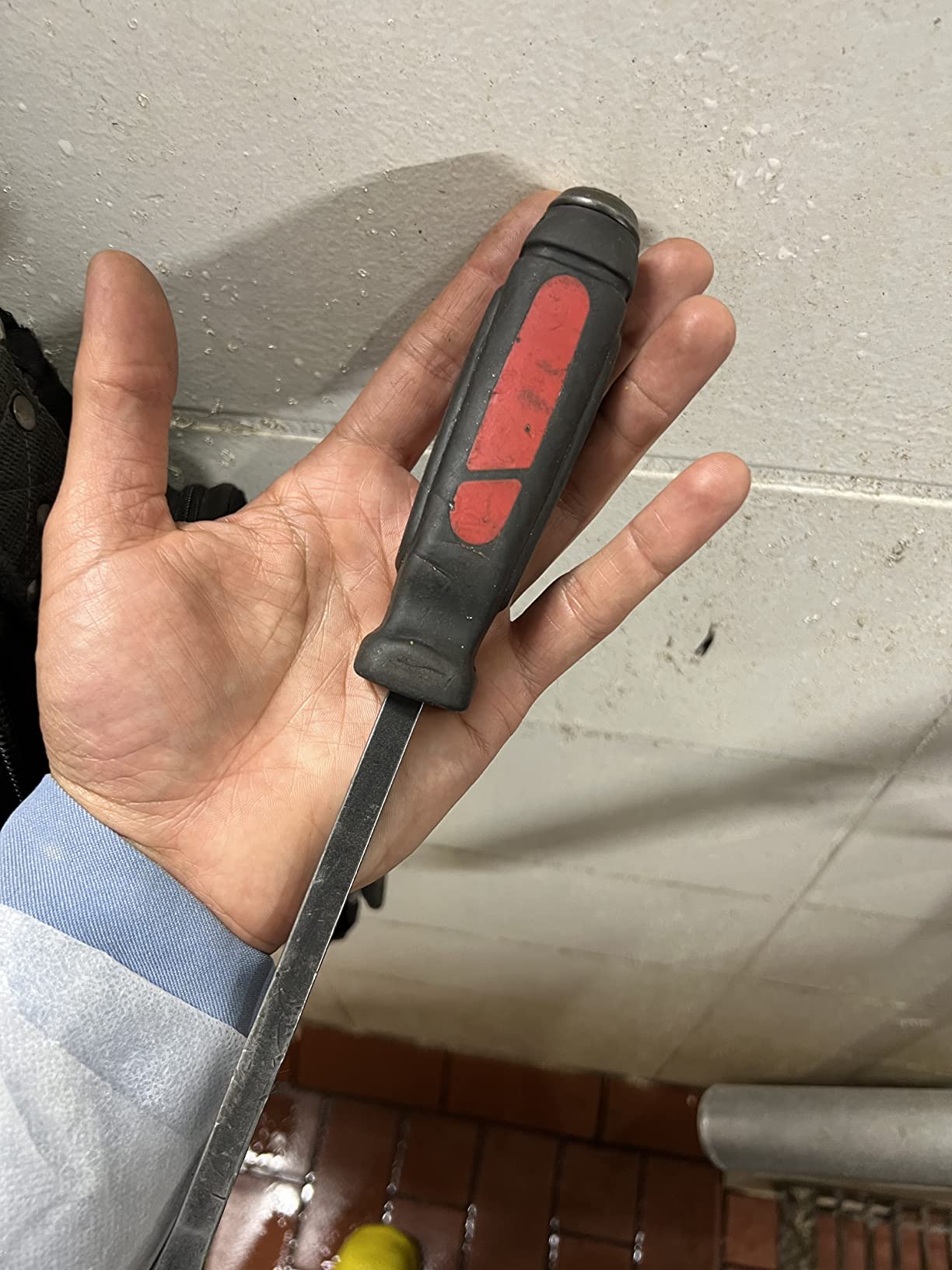
The reason this set stays in circulation is the curved screwdriver-style head. A curved head wraps around obstructions instead of colliding with them, so it reaches into a tight corner, behind a pipe, or into the back of a stud bay where a flat bar simply stops. On reassembly-heavy work that reach is worth more than raw length.
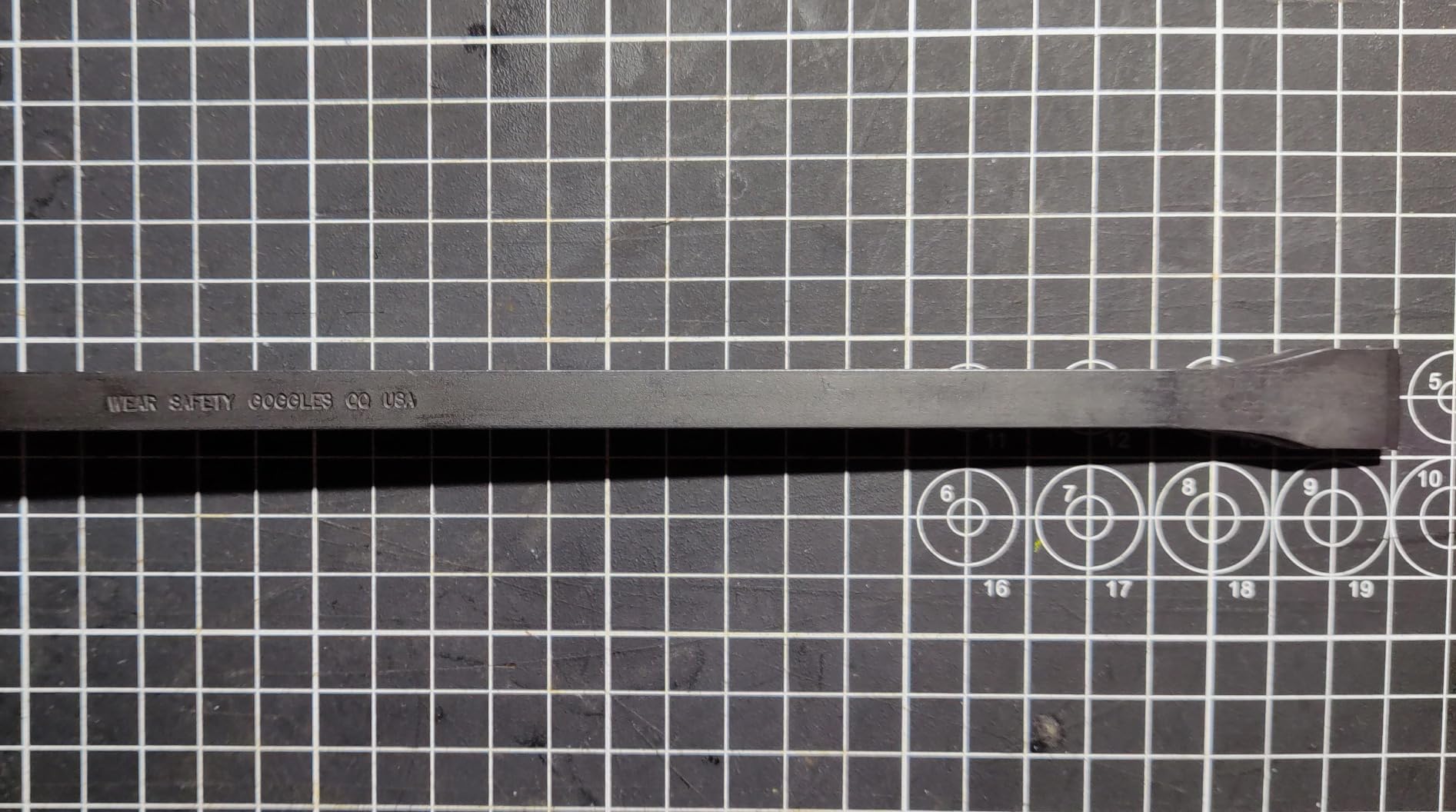
The handle is the other reason. The internal shaft runs all the way through the handle to a steel capped end, which means you can hit the cap with a hammer and the force goes into the bar rather than into a plastic end cap. The two-composite grip resists automotive oils, solvents and temperature swings, so it does not go soft or slick in a hot shop or on a wet deck.
Owners of this set tend to describe it in shop terms rather than demo terms, and that is fair. It is a mechanic-curved bar with demolition capability, not a wrecking bar. Use it where reach and strike matter and the material is carpentry rather than structure.
Why the curved head is worth the compromise
A flat bar is a straight line into a straight problem. The curved Dominator head lets you apply force at an angle that keeps working when the bar itself cannot get square, which happens constantly in a stud bay, behind an electrical box, or along a wall where something else is already in the way.
The strike-through design is the underrated feature. Plenty of handled bars advertise a strike cap that sits on top of a plastic handle, which is a rounded end and nothing more. This one puts a steel cap in direct contact with the shaft, so hammer blows go into the bar. When your demo turns into breaking out a wall section, that is the difference between one tool and two.
Where the compromise bites
The longest bar is 25 inches. On a genuine demolition where you need maximum torque, that is not enough, and a straight wrecking bar will beat it. If your work is structure, you still want a gooseneck or 30 inch bar somewhere in the kit.
There is also no flat straight blade in this particular set. If you need a clean chisel entry into a tight seam, the screwdriver-style geometry is less efficient than a straight flat tip. Know your job before you commit.
4. Sunex Tools 9804 Rolling Head 4-Piece Set: Best for Auto and Alignment Work
SUNEX TOOLS 9804 Rolling Head Pry Bar Set, 6-Inch – 20-Inch, 4-Piece
6 12 16 and 20 inch bars
Lady foot hook and point design
1400 lb rated on 20 inch bar
Pros
- Rolling head and point tips double duty for prying and alignment
- 20 inch bar rated for up to 1400 lb
- Hardened chrome vanadium tips resist wear
- Four sizes from 6 to 20 inch
Cons
- Not forged or strike-through so it is not meant to be hammered
- Some owners report surface rust and a flimsy storage tray
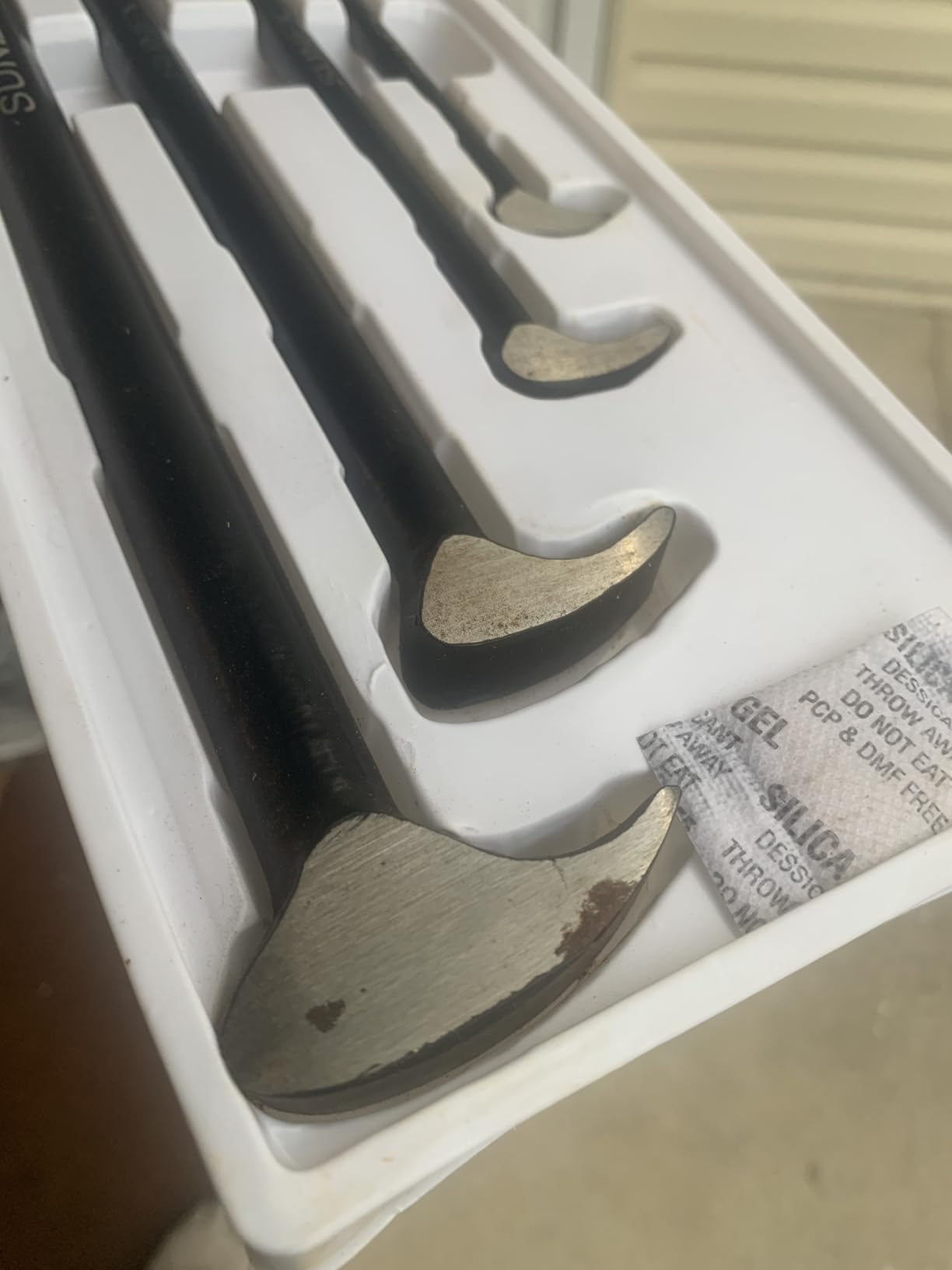
Nobody else in this roundup has what the 9804 does. The rolling head end, sometimes called a lady foot hook, rolls and pivots so it can engage a surface at an angle without slipping off, and the pointed end lets you line up bolt holes, subframes and components. For engine and drivetrain work that is a genuinely different capability, not a marketing variation on a claw.
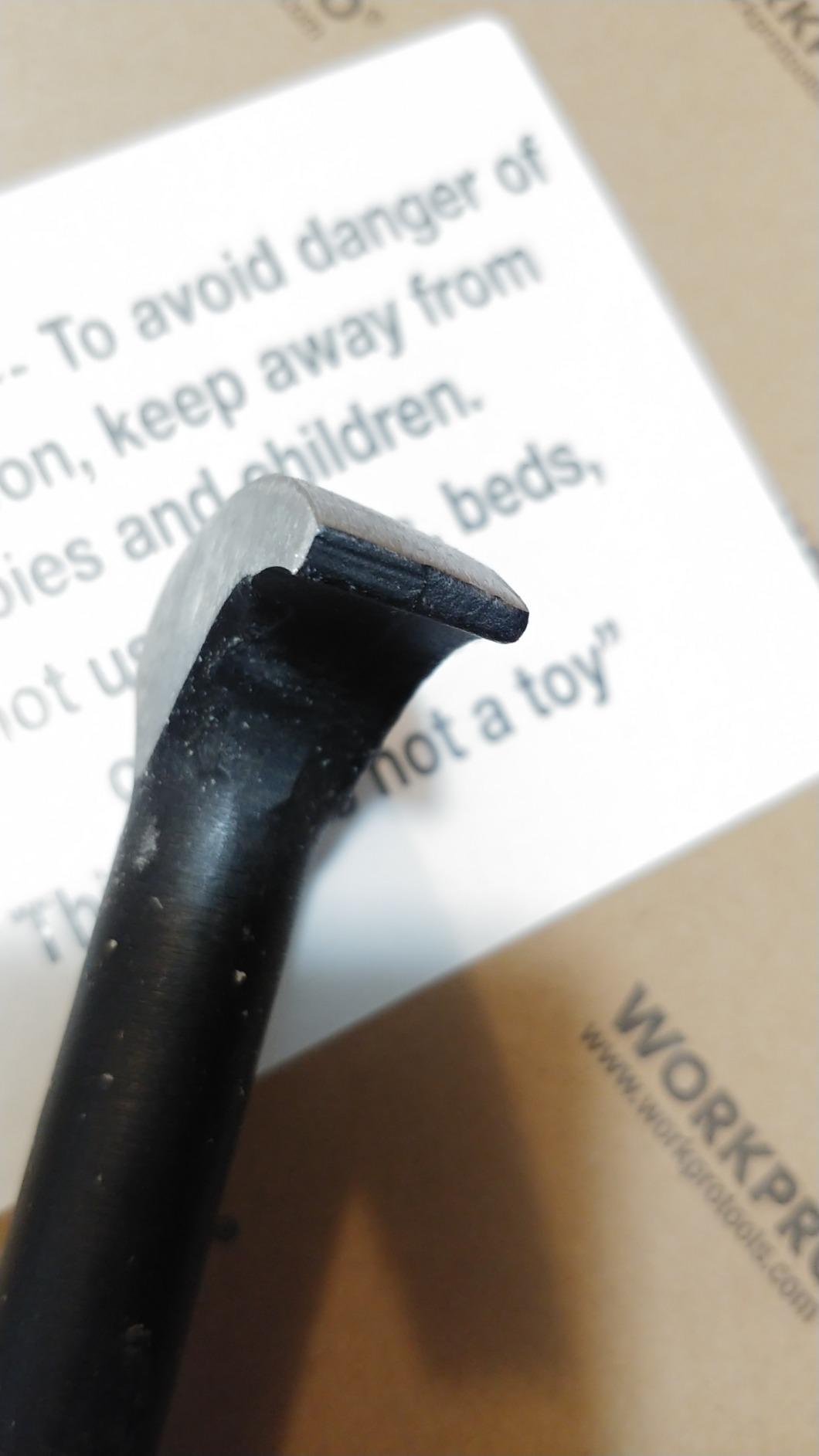
Four sizes from 6 to 20 inches means you get a short alignment bar and a longer leverage bar in the same bundle, and the 20 inch bar is rated for up to 1400 pounds of lifting force. Machined and hardened chrome vanadium tips are the right call for a tool that will see repeated shop contact rather than a single hard tear-out.
This is not the set I would grab for framing demolition. It is alloy steel construction, not fully forged, and it is not meant to be hammered. Two owners also mentioned surface rust on arrival and a plastic storage tray that does not inspire confidence, both fair complaints at this tier.
The case for a rolling head
A standard hook end has one geometry. The rolling head rotates, so you can approach a lifting point from several angles and still get full engagement, and it tends to hold better when the load shifts mid-lift. On a subframe or a transmission bracket that matters, because the failure mode there is a sudden slip under load.
The pointed end sounds minor until you are trying to start a bolt into a hole with everything in place, at which point it replaces a second tool. Between the hook and the point, you are covering extraction and alignment with four bars.
Where it is the wrong tool
Do not hammer it. This set is not forged or strike-through, and driving a hammer into an alloy steel bar that was never designed for it can mushroom the tip. If your demo is mostly breaking and smashing, look at the handled sets further down with true striking caps.
It is also less ideal for finish work. The 6 inch bar is useful in tight spots, but there is no protective finish over the steel, so wiping it down after use matters more than it does with a black oxide or coated set.
5. CRAFTSMAN 3-Piece Utility Pry Bar Set: Best Value Handled Set
CRAFTSMAN Utility Pry Bar Set, 3 Piece, Includes 12”, 18” & 24” (CMMT98347)
12 18 and 24 inch bars
Integrated strike cap
Bi-material handle
3 lb set weight
Pros
- Integrated strike cap allows hammering without handle damage
- Bi-material grip stays secure on greasy surfaces
- 12 18 and 24 inch spread gives strong leverage
- Covers more job types than most compact sets
Cons
- Some owners report the bars flex under heavy load
- 24 inch is the shortest top-end length among the large sets
Three handled utility bars at 12, 18 and 24 inches, and the reason this set works is simple arithmetic. The lengths are evenly spread, so you are never choosing between a tiny trim bar and nothing else, and the 24 inch gives you enough leverage for pavers, landscaping, light deck work and general demo without a separate wrecking bar.
The integrated strike cap is the feature I look for first on a handled set. It lets you drive the tool with a hammer without destroying the handle, which means the same bar can go from prying to chiselling to breaking out trim in one continuous task. The bi-material handle is comfortable and, more importantly, stays put in a greasy hand.
A few owners report flex under heavy load, and that is worth weighing if you are prying structural lumber rather than trim and paving. It is not the set for a framing crew, but for a serious homeowner or a small renovation outfit it covers an enormous amount of work.
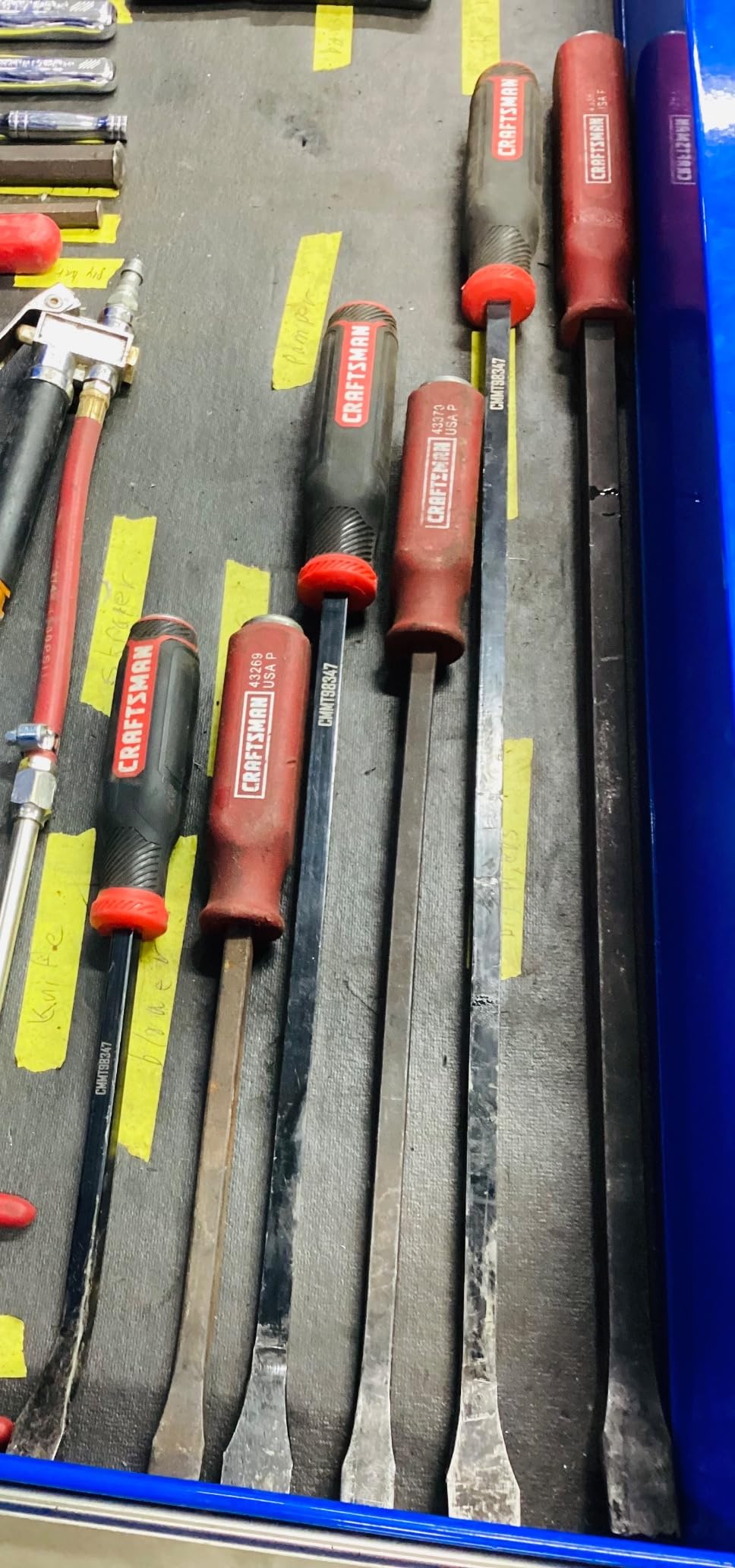
Why the length spread matters most
Most three-piece sets cluster their sizes in a narrow band, and that is the flaw. When a set gives you three bars within four inches of each other, one of them is redundant. Twelve, eighteen and 24 inches is a real spread, and it maps directly onto the three jobs you actually have: interior work, mid-range leverage, and heavy material.
Paver and landscaping work is where I have seen this set used hardest, because a paver needs lifting force, a gripped handle, and a bar that can take abuse from the ground. All three pieces handle that without complaint.
Where it falls short
Flex under load is the reported issue. If you are levering against framing lumber, the applied torque is much higher than anything encountered lifting pavers, and a bar that bows will eventually work-harden and crack at the slot.
The 24 inch top end is also the shortest among the larger sets in this roundup. If your demo regularly involves beams, joists or anything structural, keep a longer bar in the mix.
6. TEKTON Angled End Handled 3-Piece Set: Best for Hammer Striking
TEKTON Angled End Handled Pry Bar Set, 3-Piece (12, 17, 25 in.) | LSQ42103
12 17 and 25 inch bars
Heat treated chrome vanadium
1 inch solid steel striking cap
Pros
- Heat treated chrome vanadium shafts hold up to heavy work
- Angled end doubles as a fulcrum for lifting
- 1 inch solid steel cap transfers hammer force to the bar
Cons
- Black oxide finish rusts quickly if stored damp and unoiled
- Handle is an older screwdriver style some find thin
TEKTON builds these from solid steel shafts measuring 3/8 to 1/2 inch depending on length, heat-treated for strength and toughness, and that is a specification sheet describing a serious bar rather than a handle with a stick glued to it. The 4.8 average across 1526 reviews is among the highest in this roundup.
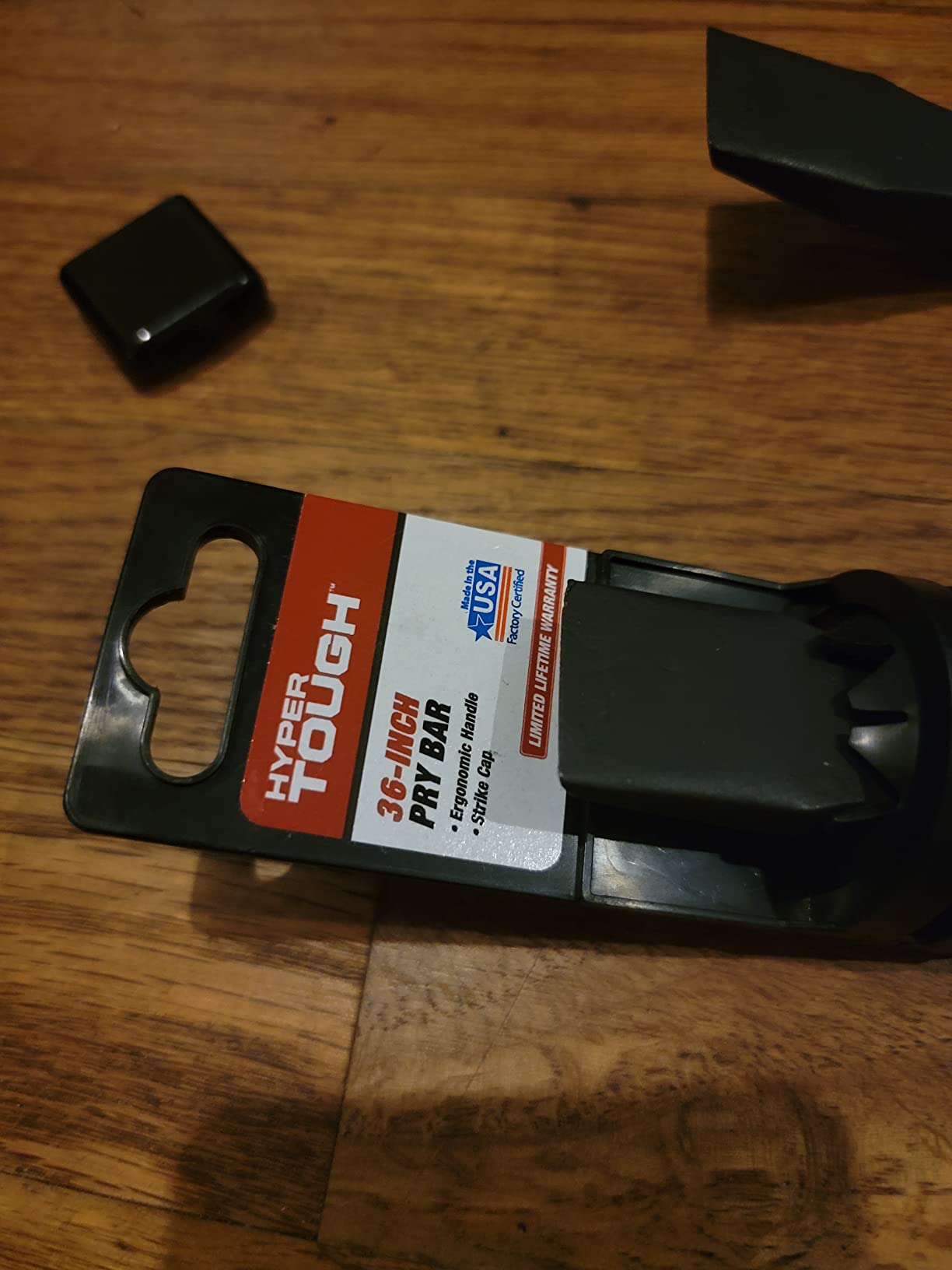
The striking cap is the reason this set earns its place. It is a solid one inch diameter steel cap, and the end of the cap contacts the bar itself, so hammer force transfers straight into the shaft. That is a different design from a cap sitting on top of a plastic handle, and it is why these can be driven into a seam as a chisel.
The angled end is quietly excellent. You slide the chisel tip between materials, then use the angled foot at the other end as a fulcrum to push apart or lift the workpiece, which turns each bar into a lever with two working ends instead of one.
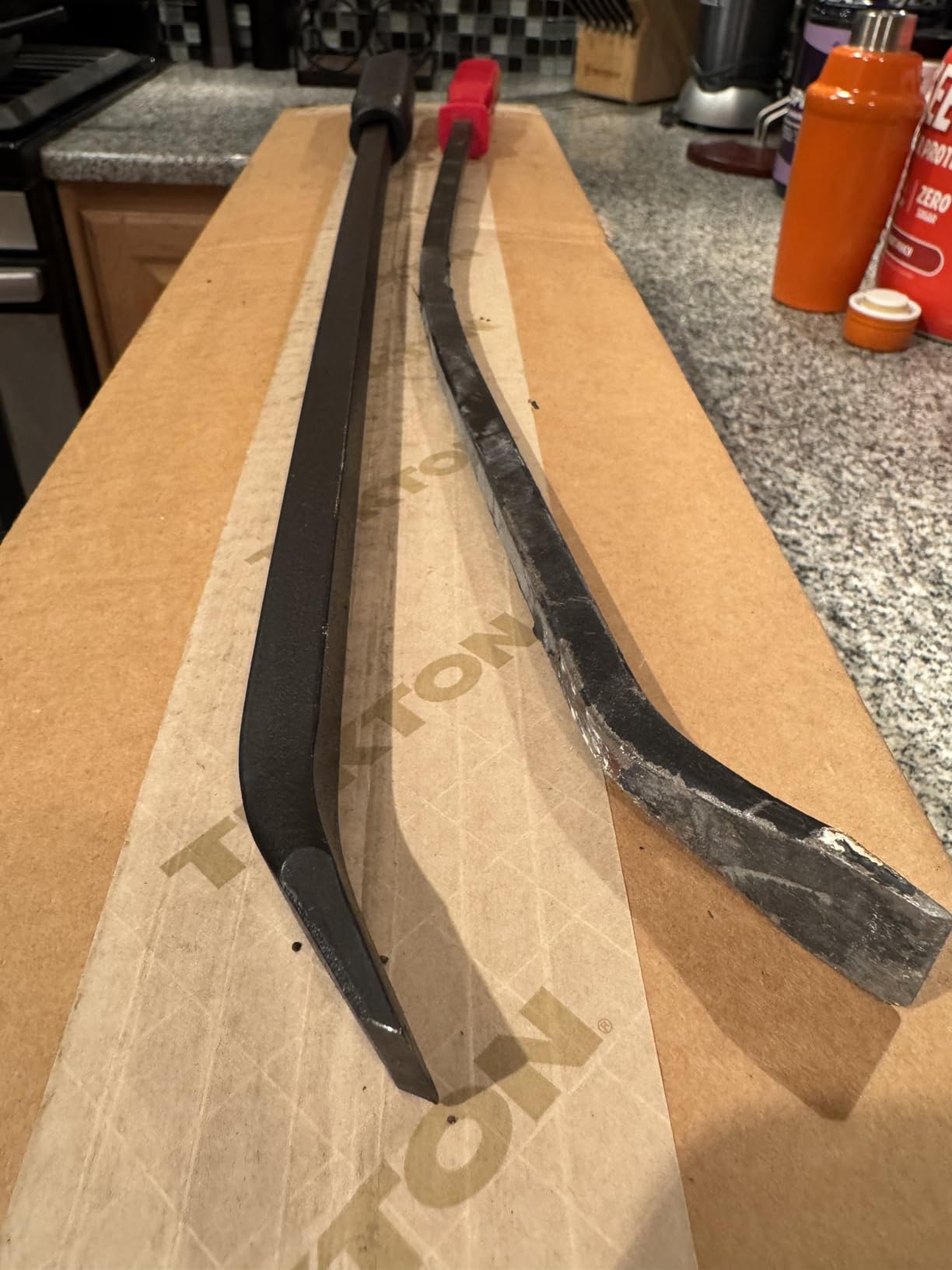
What makes a real strike cap
Look at how the cap meets the bar. If the cap is a plastic button, a hammer blow shatters it and the impact energy goes nowhere. If the cap is solid steel and touches the shaft directly, the bar becomes a chisel you can drive. Every handled set that is genuinely strike-capable, including the Craftsman and the Mayhew Dominator sets, does it this way.
On a demo day where the job becomes breaking out a wall section rather than lifting it, having a bar you can drive is the difference between one tool and two. It is the single most requested capability from the crews and forums we spoke to, and it is the biggest reason to choose a handled set over unhandled bars.
Where the finish gets you
Black oxide is rust protection, not rust immunity. The most common caveat in the reviews is that these will rust if they sit damp and unoiled, which is a fair trade for a finish that needs no maintenance under normal use. Wipe them down and put a light coat of oil on them before long storage.
The handle is a lightly textured polypropylene impact-resistant design that shrugs off fuel, solvents and common chemicals, but it is an older screwdriver-style shape. Some users find it less substantial than a modern over-moulded grip. The bar is better than the handle, and you will feel that on long sessions.
7. Mayhew Dominator 5-Piece Curved Set: Best for Pro Crews and Full Jobs
Mayhew Tools 61366 Dominator Pry Bar Set, 5-Piece Curved, Black Oxide Finish
Five curved bars with 1/2 inch heads
Metal caps in contact with shaft
6.9 lb set weight
Pros
- Five curved bars with half inch heads
- Curved ends give extra leverage in tight areas
- Metal striking caps survive repeated hammer blows
- Professional grade alternative to a full tool truck
Cons
- Bulkiest bundle here so five bars is more tool than most jobs need
- Handle logos rub off quickly and the storage tray is flimsy
- Finish can chip out of the box
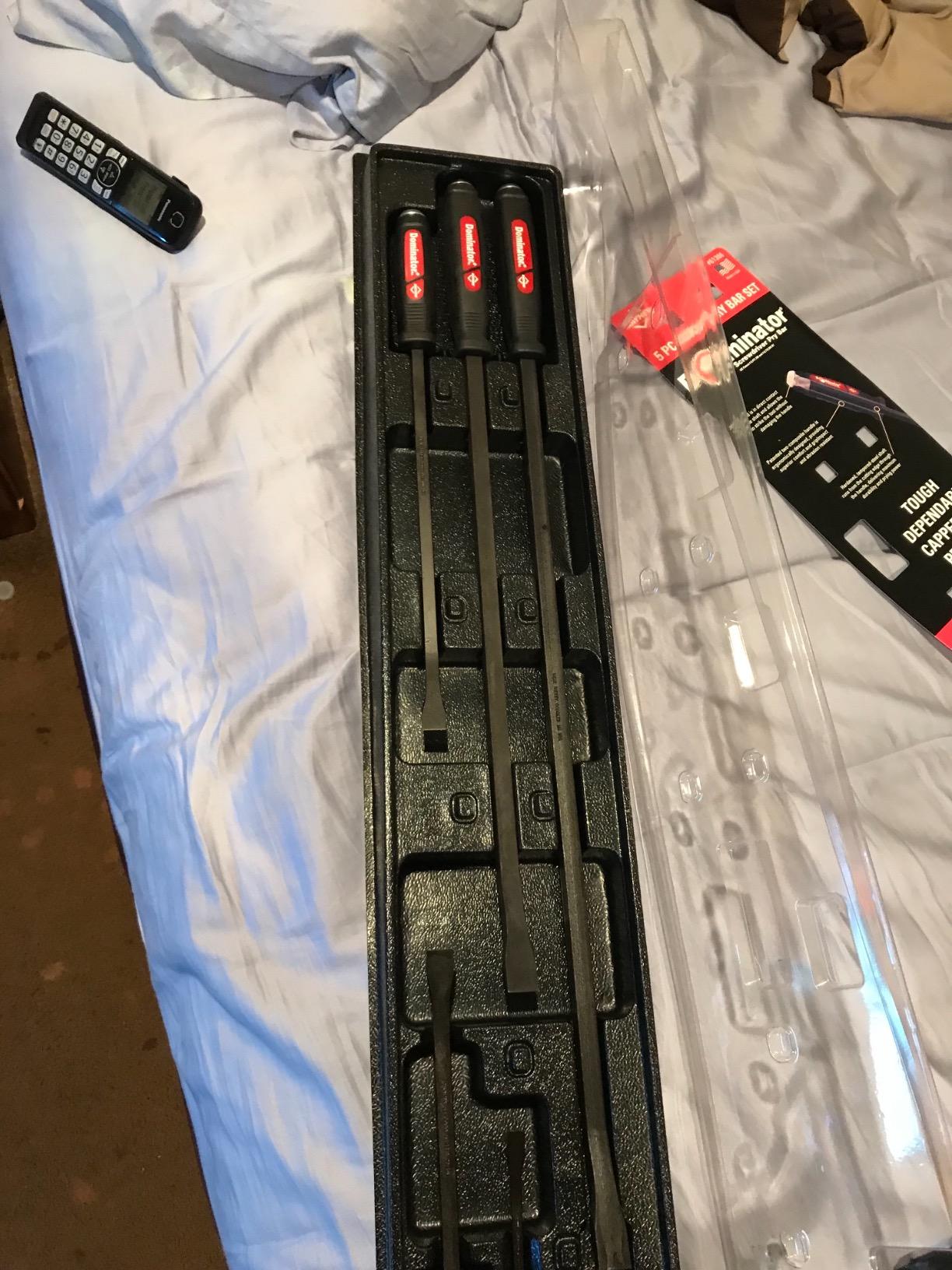
Five curved bars at 6.9 pounds, with every head curved for prying leverage in tight areas. This is the set you buy when the pry bar is a daily tool rather than a weekend tool, and owners consistently describe the shafts as not flexing and the tips as resisting mushrooming under abuse.
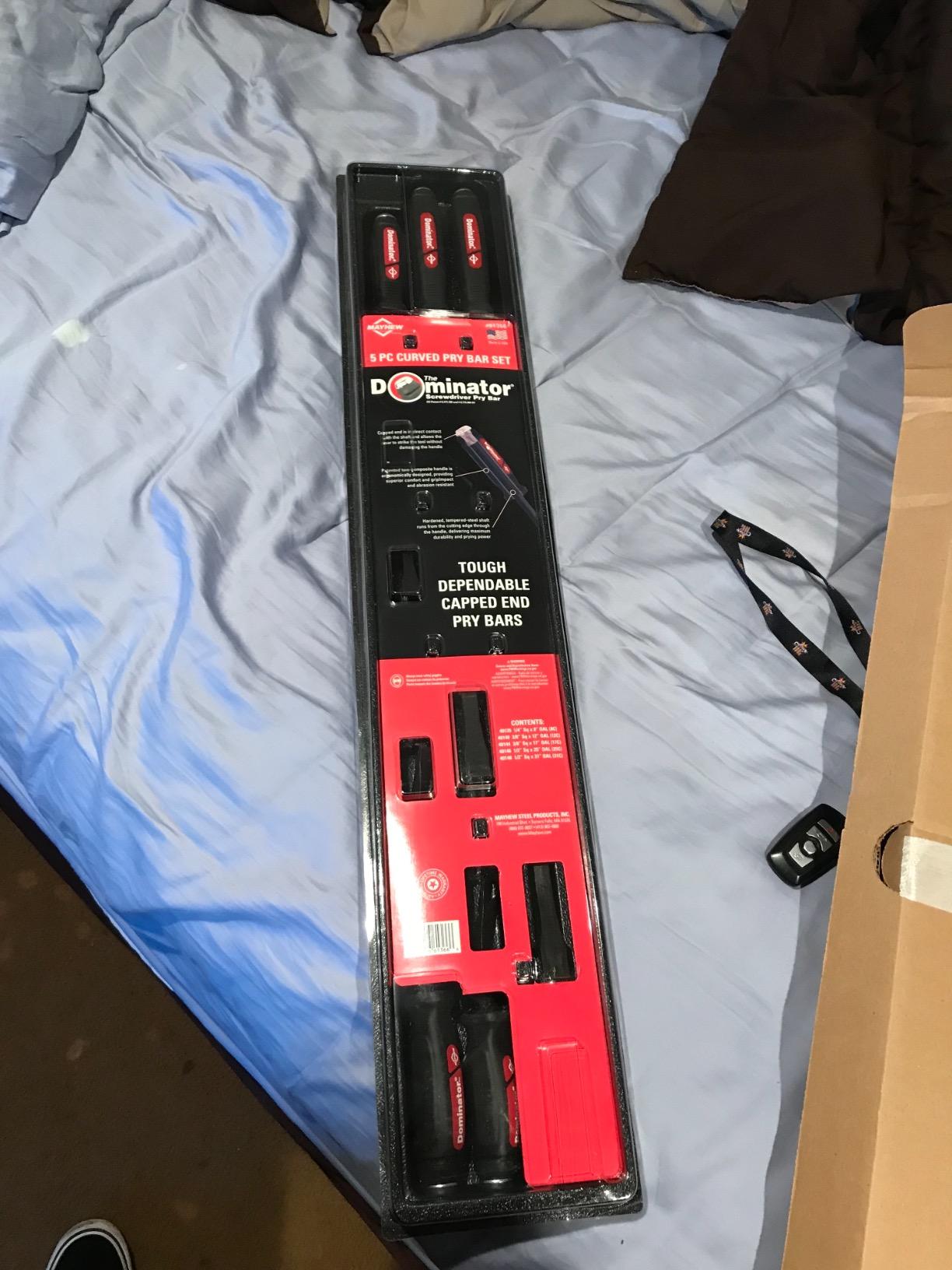
Same design language as the three-piece Dominator but scaled up: a patented two-composite ergonomic handle that resists oil, solvent and temperature, and a metal striking cap sitting in direct contact with the shaft so you can hammer the tool without damaging the handle. Black oxide finish for rust protection, made in the USA.
The honest drawback is that this is the biggest commitment of the roundup, and several owners report minor cosmetic issues. Handle logos rub off with use, the storage tray is flimsy, and the finish can chip out of the box on some pieces. None of that affects function, but all of it is worth knowing.
Why a crew buys five bars
Because a crew does not do one job. One person on a teardown is on the floor pulling nails, another is in the wall cavity working between studs, and a third is handling trim that has to survive removal. Having five curved bars means nobody waits for the one bar that is the right length, and nobody improvises with a flat bar in a spot that needs a curve.
Reviewers frequently compare these favourably to premium hand tool brands without the premium tooling outlay, and that is the honest framing. This is not the entry point into prying. It is the option for a bar that still feels new after five years of daily use.
Where the extra tools are not well spent
If you are doing a single kitchen remodel, five bars is more tool than you will use. The three-piece Dominator covers the same design and the same handle, so the two extra bars are the whole difference in scope.
Curved-only geometry is also the same limitation as the smaller set. Straight leverage jobs on structural material will still push you toward a long gooseneck or flat bar, and no curved head substitutes for length.
8. SHALL 4-Piece Flat Pry Bar Set: Best Budget Four-Piece Set
SHALL 4-Piece Flat Pry Bar Set -15″ 10″ 7.5″ 5.5″- Heavy Duty & Mini Nail Puller Crowbar, Utility Claw Bar, Wonder Bar, High-Carbon Steel Flat Bar Tool for Home Remolding & Woodworking
5.5 7.5 10 and 15 inch bars
Forged high-carbon steel
Three nail slots at two ends
Pros
- Four well chosen lengths from 5.5 to 15 inch
- Forged high-carbon steel resists bending and chipping
- Rocker head and bent end lift without gouging
- Milled shaft edge gives a workable grip
Cons
- Not hammer strikable and has no handles
- Unhandled flat steel is uncomfortable on long jobs
Four bars at 5.5, 7.5, 10 and 15 inches in forged high-carbon steel, and the size selection is the best-designed part of this set. A mini bar for towel bars and trim, a 7.5 inch nail remover, a 10 inch medium crowbar, and a 15 inch heavy utility bar. That is a coherent set rather than four near-identical tools.
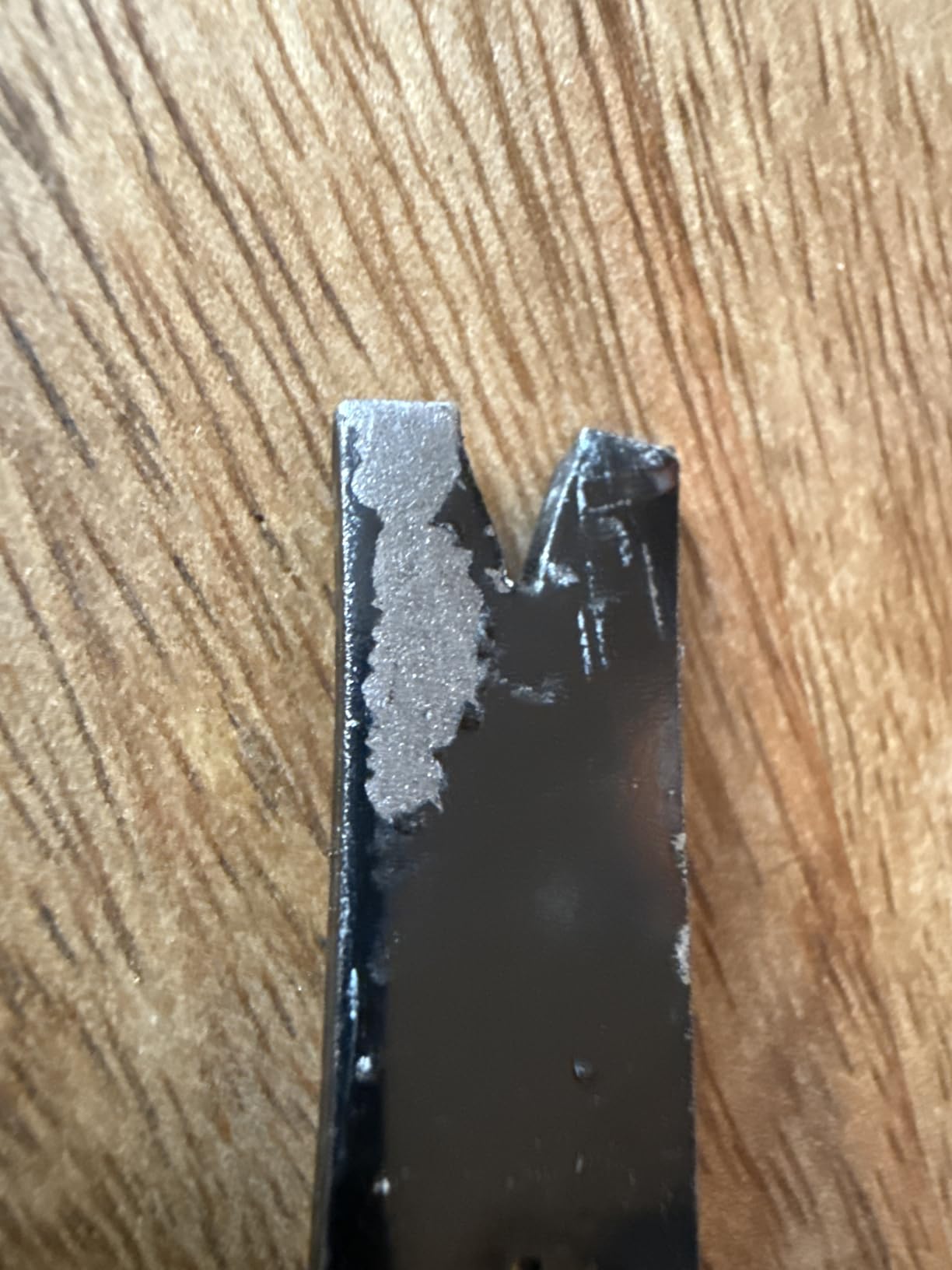
Two details stand out. The rounded rocker head and slightly bent flat pry end improve leverage without leaving indentations or scratches, which matters when you are removing something you intend to keep. And the beveled edge carries three nail slots at two ends, so you have extraction options on both ends of the bar.
Owners compare the steel favourably to the larger CRAFTSMAN set, and the 4.8 average from 1209 reviews is solid for a budget tier. The two-colour metal spray treatment resists rust and corrosion well enough for garage storage, provided you do not leave it wet.

Where four small sizes beat three large ones
On finish work and interior demo, a 15 inch ceiling is plenty. Anything longer is awkward inside a room, harder to control, and more likely to punch through drywall you were meant to preserve. The 5.5 inch mini bar in this set is genuinely useful for slotted fasteners on towel bars, which crews on forums consistently say deserve their own tool.
The rocker head deserves a mention because of what it does not do. Most flat bar tips are sharp enough to dig into a surface and leave a dent. A rounded head spreads the load and lifts instead of gouging, which is why this set works for the careful half of a teardown.
Where the budget shows
There are no handles, and there is no striking capability. Four unhandled bars in your hand on a hot day will make your forearm tired long before the bar is finished, so gloves matter here more than with any gripped set.
If your work involves smashing rather than lifting, keep looking. This set is for separation, extraction and controlled prying, and the 15 inch maximum length means it cannot compete with a wrecking bar on heavy material.
9. Sunex Tools 9704 Handled 4-Piece Set: Best for Light Trim Work
SUNEX TOOLS 9704 Pry Bar Set with Ergonomic Handles, 8″ – 24″, 4-Piece
8 12 18 and 24 inch bars
Heat treated alloy steel
Vinyl comfort grips
Ground polished edges
Pros
- Four sizes from 8 to 24 inch in one handled bundle
- Heat treated alloy steel with ground polished edges
- Vinyl comfort grips are heat resistant
- Covers trim and moderate lifting work
Cons
- Lowest average rating here at 4.6 with 3 percent one-star reviews
- Vinyl handles are less durable than composite or polypropylene grips
Four handled bars from 8 to 24 inches in heat-treated alloy steel, with ground and polished blade edges. The polished edges matter more than they sound like they should, because a ground edge slides into a seam without catching and tearing the material on the way in.
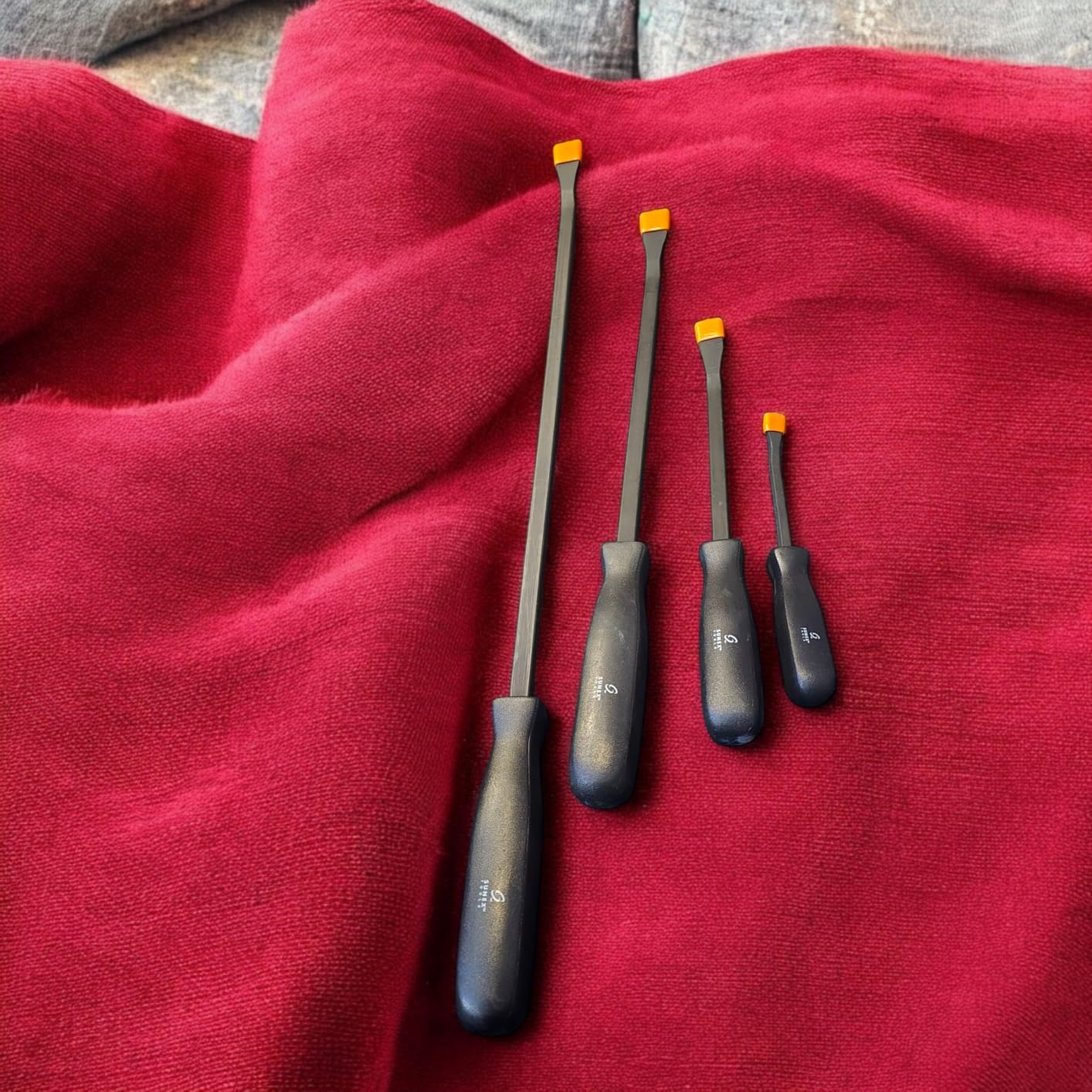
This is the most straightforward handled set in the roundup, and that is both its appeal and its limit. No angled fulcrum end, no rolling head, no striking cap claim. Just four pry bars with cellulose acetate vinyl comfort grips that tolerate heat, in a spread that covers trim on one end and moderate material lifting on the other.
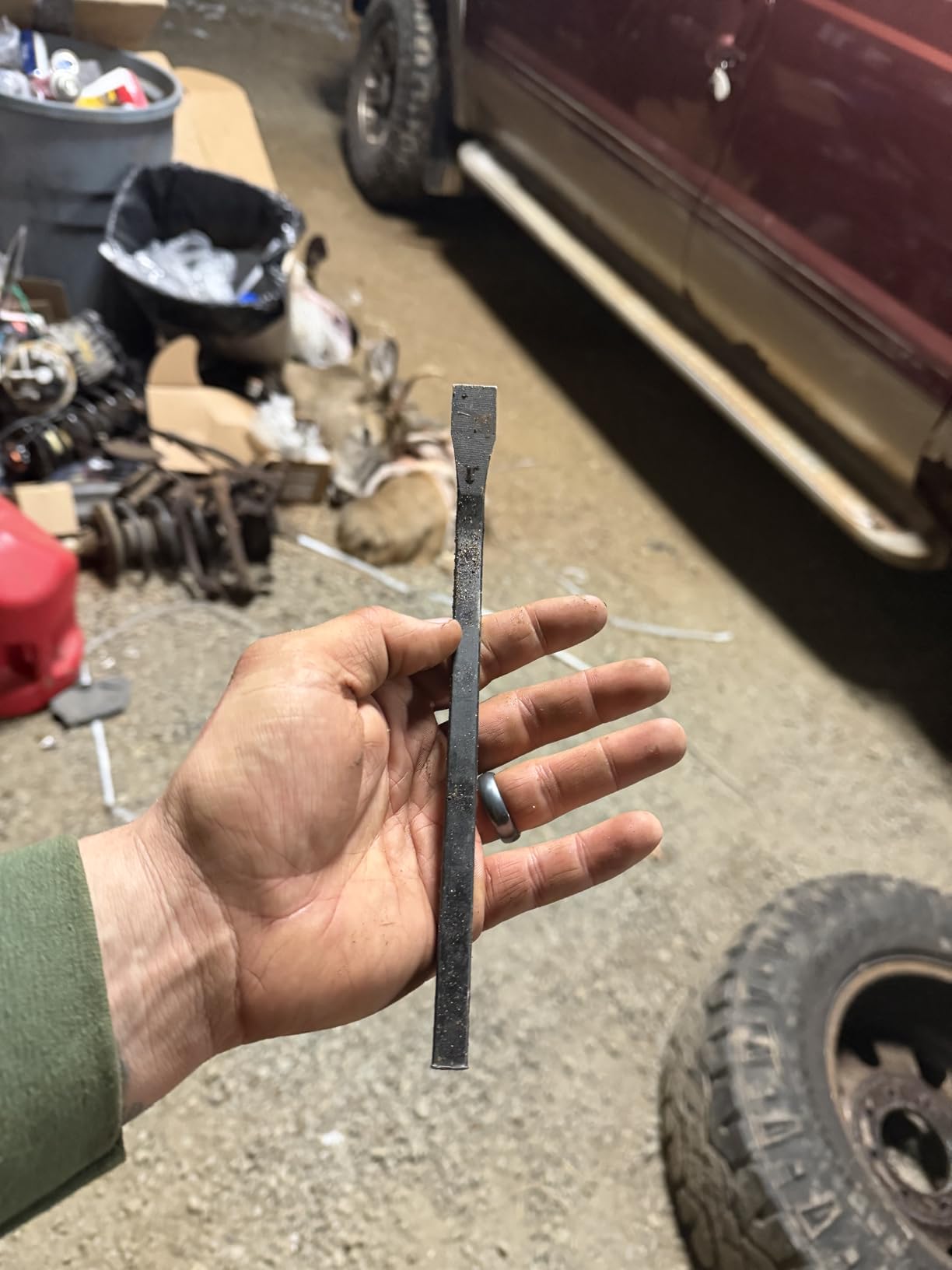
The 4.6 average from 878 reviews is the lowest here, with about 3 percent one-star ratings, and the complaints cluster on the handles. Vinyl is a softer, cheaper material than the two-composite grips on the Mayhew sets or the polypropylene on the TEKTON set, and under real load it is the first thing to complain about.
What you get for a straightforward tool
Heat-treated alloy steel and ground edges is a sensible combination for a handled set at this level, and the size spread from 8 to 24 inches is genuinely useful. It covers baseboard removal at the small end and heavier material movement at the large end, which is a wider job description than most three-piece handled sets offer.
It also has no strike cap, so like the Sunex rolling head set, treat it as a prying tool and keep a separate chisel or demolition screwdriver for fasteners. Gripping stripped fasteners is a different job and a different tool.
Where the handle holds you back
Cellulose acetate vinyl is the weak link. It is heat resistant and comfortable, but it is the least durable grip material among the handled sets here, and it is the component most likely to be the reason a set eventually gets retired. Handle slippage is the number one complaint across owner reviews of pry bars in general, and it starts with grip material.
Also expect surface finish issues on storage. There is no protective coating called out, so a set that lives in a damp shed will need wiping down and a light oil.
10. MAXPOWER 4-Piece Pry Bar and Nail Puller Set: Best for Fastener Extraction
MAXPOWER 4-Pieces Pry Bar Set
12 inch claw bar,8 inch pincers,10 and 7 inch flat bars
Drop forged alloy steel
Pros
- Only set here bundling high-carbon carpenter pincers
- 12 inch claw bar with chisel end for headless nails
- Drop forged alloy steel with corrosion resistant plating
- 7 and 8 inch sizes reach tight access areas
Cons
- Smallest bar sizes in the roundup so leverage is limited
- No strike cap so it is not meant to be hammered
- Flat ungripped steel on the two flat bars
This is the odd one out and I like it for that reason. The bundle includes 8 inch carpenter pincers, or end cutting pliers, in high carbon steel, and no other set in this roundup includes a pair of pincers. For a demo full of cut nails and brads driven flush, a pair of pincers is faster and less destructive than a claw bar every single time.
The 12 inch claw bar has a double claw and a chisel end, designed to lift headless nails without damaging the surrounding wood. The 7 and 10 inch flat bars carry double claw nail puller ends for prying, scraping and lifting. Drop-forged alloy steel, heat treated, black plated with polished beveled claws.
The limitation is scale. These are the smallest bars in the roundup, topping out at 12 inches, and there is no handle to give you leverage or insulation. Treat this as a finish-work and fastener-extraction kit rather than a structural demolition set, and pair it with something longer if the job includes subfloor or framing.
When pincers beat a pry bar
On finish nails, brads and cut nails sitting near flush, pincers grip the head and pull straight up. A claw bar has to get under the head, and on a buried or headless nail that means finding a sliver of purchase and levering sideways, which is exactly how you split the board you were removing.
That is why the chisel end on the 12 inch bar matters as much as the pincers. It slips into a tight gap for precision work on molding, baseboards and trim, where the goal is to remove the material intact. For interior strip-out rather than structural demo, this is a genuinely thoughtful combination.
Where it runs out of road
Leverage. With a 12 inch maximum and no handle, there is no version of this set that lifts a beam or a subfloor panel. The flat bars are also ungripped, so vibration reaches your hand directly through a long session.
It is a 4.6 with 820 reviews, so expect a few disappointed buyers who bought it for a job it was not built for. As a companion to a long bar, though, it is unusually useful and hard to replace with anything else on this list.
Pry Bar vs Wrecking Bar vs Crowbar vs Wonder Bar
This is the single most useful thing we can tell you, because the four terms are used interchangeably on retail shelves and they do not describe the same tool. Knowing the difference stops you buying the wrong geometry for the job.
Pry bar is the general term for any levering tool with a thin tapered end. It describes the action rather than the shape, which is why one brand will call a flat straight bar a pry bar and another will use the word for a curved screwdriver-style bar.
Wrecking bar is specifically the long, straight, heavy bar with a forked or V-shaped nail puller at one end and a chisel or flat blade at the other. It is built for leverage and for taking a hammer blow, and it is the bar you want when you are shifting a beam, a joist, or a heavy panel. That geometry is why the 30 inch bar in the Spec Ops set does what nothing else here can.
Crowbar is the older, plainer term, usually describing a long curved bar with one flat pry end and a pointed or forked end. Mechanically it overlaps heavily with both of the above, which is why the question comes up so often. When someone asks what is better than a crowbar, the useful answer is that a forged wrecking bar gives you a heavier, denser bar with a wider claw, and a rolling head gives you an end that will not slip off a round lifting point.
Wonder bar is a trademark for a short flat bar with a nail puller slot at each end and a curved rocker profile, designed to be held in the palm and used one-handed. It is the trim and finish tool of this group, not the demolition tool.
The practical rule: short flat and wonder bars for trim and fasteners, curved bars for reach in tight cavities, rolling heads for alignment and round lifting points, and long straight wrecking bars for structural leverage and hammer work.
One Long Bar or a Full Set
This is the recurring question on the trade forums, and it deserves a straight answer. A single long wrecking bar wins on pure leverage, full stop. If you do framing, structural teardown, or subfloor work, a 30 inch bar gives you torque that a bundle of short bars cannot, and no amount of technique closes that gap.
But the long bar is also clumsy. It will not fit in a stud bay, it is awkward on stairs, it is unpleasant to carry in a tool bag, and it is the wrong tool for pulling a brad out of a baseboard without destroying it. A set fixes all four of those problems in one purchase.
My own answer for most people is a combination rather than a choice. One long wrecking bar for leverage, plus a set of shorter bars for everything inside the walls. If you are buying a bundle specifically, the sets above cover the full range from 5.5 inches to 30 inches, which means you can cover both jobs without buying twice.
Removing Trim Without Chewing Up Drywall
Every search for a gentler tool here leads to the same realization: a demolition bar is the wrong tool for trim. The answer is a short flat pry bar, not a heavier product. Woodworkers on the forums describe the glazing bar, or lever bar, as their preferred precision disassembly tool for exactly this reason.
First, score the paint and caulk along the top edge of the trim with a utility knife. A clean cut line means the drywall tears along the joint instead of tearing up the face of the board.
Second, drive flat shims or a thin piece of cardboard behind the trim every few inches as you go. The board then pulls away from the wall rather than levering against the paper face, and the shim takes the load instead of the gypsum.
Third, use a short flat bar, ideally 8 to 10 inches, and pull the base away from the wall with the blade face parallel to the drywall. Pulling outward at a right angle is what gouges paper and tears out the face.
Fourth, stop at the first nail you cannot reach and finish with a finish nail puller or a pair of pincers. Repeated hammering and re-levering with a heavy bar is the most common way people turn a two minute job into a drywall patch.
Fifth, if the trim is glued as well as nailed, expect adhesive failure. Pull slowly and let the bond break; a sudden yank takes the top paper of the drywall with it no matter which bar you use.
How to Use a Wrecking Bar Safely on Demo
These are heavy tools with sharp ends used at force, in unpredictable materials, near your own body. The basics below are not optional.
Eye protection, always. A nail head under tension can fire back off a board with real force. This is the most common serious injury in this trade and it is entirely preventable.
Hands behind the fulcrum. Both hands on the bar, both hands on the safe side of the pivot. If the material releases unexpectedly, the bar travels fast and you do not want a hand in that path.
Assume hidden fasteners. Old boards hide nails, and recent boards hide screws. Probe before you commit, and treat anything under tension as a potential projectile.
Locate utilities first. Before driving a bar into a wall or a slab, call your locate service. This is routine on any real job and it is the step homeowners skip.
Knock out nails before you lever. Where you can see a fastener, put it through the board with a hammer first. Pulling a board off nails you know are there is safer than prying against ones you do not.
Watch for kickback on struck bars. If you are hammer-striking a bar, hold the far end and keep your face out of the line of the strike. A struck bar is a chisel, and chisels throw pieces.
Cut power and water off. Demolition sites are where people get cut by tools they never turned on. Verify before you pull, every time.
How to Choose a Pry Bar Set
Six criteria, in priority order, based on what separates the sets that hold up from the ones that get binned.
1. Length range before piece count. A four-piece set of small bars cannot do a floor demo, and a two-piece set of long bars will not get you into a wall. Check the shortest and longest bar in the bundle, not the number of pieces. Good sets cover something under 10 inches and something over 20.
2. Forged and heat-treated steel. Fully forged construction is the single most repeated quality signal in owner feedback across every forum we looked at. It resists bending, tip deformation and crack growth in a way that stamped or cast steel does not. Where a listing specifies high-carbon steel, chrome vanadium, or heat treatment, that is the entry you want.
3. Hammer-strike capability. Decide whether your demo involves breaking things. If it does, you need a steel striking cap in direct contact with the shaft. The TEKTON, CRAFTSMAN, and both Mayhew Dominator sets all qualify. Unhandled bars do not, and driving a hammer into one will damage the tool.
4. Grip security over grip comfort. The number one complaint about pry bars anywhere is a handle that rotates or slides under load. A textured or over-moulded grip that stays put is worth more than a comfortable one that spins. Polypropylene and two-composite grips hold up better than vinyl on long jobs.
5. Geometry mix. The best bundles are not three of the same bar. A flat bar, a cats paw or claw, and a gooseneck or curved head between them will cover far more jobs than three flat bars of different lengths. Look for different head shapes in the set.
6. Warranty and finish. A lifetime warranty is a reasonable proxy for a manufacturer that expects the tool to survive, and several of the sets that lasted best on our teardowns carry one. A corrosion-resistant finish matters more than people expect if your tools live in a shed between jobs.
On the question of buying a set versus a single bar, the deciding factor is honestly how many kinds of work you do. One bathroom teardown is a short bar. A gutted house is a set, plus a long wrecking bar that no bundle should substitute for.
One more practical note on bundle-buying in general, whether it is tools or training equipment: the value is in the coverage, not the piece count, and the same logic holds when you are choosing a dog agility training set for a beginner or picking up home agility equipment. Check that the range actually spans the jobs ahead before you commit.
Frequently Asked Questions
What is the best pry bar for demolition?
For most demolition work the best pry bar set is a multi-piece bundle that mixes short flat bars with at least one bar over 20 inches. For pure leverage on structure, a single 30 inch wrecking bar beats any set. The short bars handle trim, fasteners and wall cavity work the long bar cannot reach.
What is the best pry bar for removing trim without damaging drywall?
A short flat pry bar, not a demolition bar. Score the paint line first, slip shims behind the trim as you pull, keep the blade face parallel to the drywall and pull outward rather than at a right angle. A heavy wrecking bar on trim is the main reason people chew up wallboard.
What is the best mechanic pry bar set?
Look for a handled set with a steel striking cap in direct contact with the shaft and a grip that resists oil and solvent. The Mayhew Dominator and TEKTON Angled End sets both fit that brief, and the Sunex rolling head set adds a pointed tip for aligning bolt holes and subframes.
What’s better than a crowbar?
It depends on the job. A forged wrecking bar gives you a heavier, denser bar with a wider claw for leverage and hammer work, and a rolling head pry bar grips round lifting points without slipping. A short flat or wonder bar is better than both for trim and finish work.
Do I need a pry bar set or a single wrecking bar?
A single long bar wins on leverage. A set wins on reach, since short bars fit inside stud bays, handle stairs easily and do not damage trim. Most people doing real demo work end up with both, and a set plus a 30 inch bar covers the full range.
Bottom Line on the Best Pry Bar Sets for Demolition
The Titan 3-piece flat set is the best pry bar set for demolition for most people, because the forged steel and beveled claw are right for the majority of prying, extraction and trim work, and the owner review volume behind it is unmatched. For structural leverage, the Spec Ops set is the one to buy, because a 30 inch wrecking bar does something no short bar can. For crews, the five-piece Mayhew Dominator set is the durable daily answer.
Whichever you choose, buy on bar length and strike capability first, grip security second, and ignore piece count entirely. Updated for 2026, and check the safety section above before the first swing.