
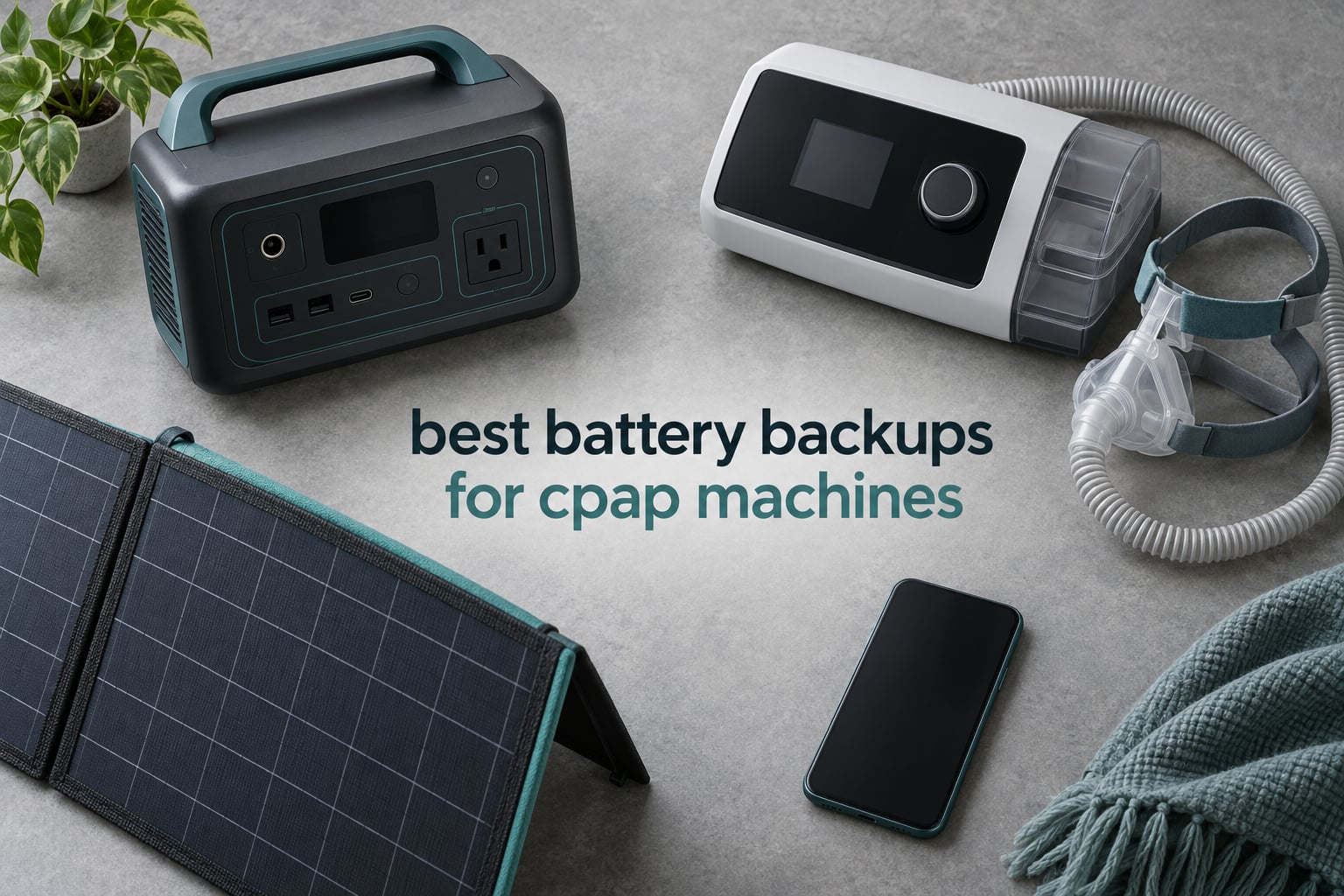
Sleep therapy stops the second the power does, and one lost night is not just a bad night’s sleep. For anyone on nightly CPAP, a battery backup is the difference between waking up rested and waking up with the blood pressure spike, foggy focus and daytime sleepiness that follow untreated apnea. After weeks of reading owner reports and comparing spec sheets, here are the best battery backups for CPAP machines we would put behind a bed in 2026.
Two product families show up in almost every conversation about this. Purpose-built CPAP packs like the EASYLONGER ES720 ship with the right DC cables and a selectable voltage output, so your machine plugs straight in. General portable power stations like the Jackery Explorer 300 and BLUETTI Elite 30 V2 give you far more capacity, more ports and the ability to keep your phone and modem alive during a multi-night outage. Our list covers both, because the right answer depends on how long your outage lasts and whether you sleep with a heated humidifier.
We also mapped the numbers that decide the outcome: watt-hours, inverter type, battery chemistry and continuous output in watts. Those four specs explain nearly every runtime complaint in the reviews we read. If you are still choosing equipment, our guides on battery backups for aquarium pumps and battery stick vacuums for pet hair use the same sizing logic, because reliable backup power comes down to the same physics no matter the load.
Three channels of evidence shaped this list. First, the technical record: the manual ratings and review counts published with each product, which we used verbatim rather than estimating. Second, owner runtime reports, which is why the Jackery, the ALLWEI and the Renogy rank where they do on the strength of measured overnight hours rather than label capacity. Third, the medical and travel community forums, where the recurring failure patterns behind humidifier sizing, inverter hum and airline watt-hour limits come from.
We also want to be plain about what we did not do. We did not run a week of sleep therapy on each unit, so runtime figures in the reviews are owner-reported and clearly attributed. We did not test unbranded marketplace listings, and we do not recommend them for a device you plug in next to your bed every night.
One note before we start: this is buying guidance, not medical advice. Talk to your DME provider about your therapy and your equipment, and confirm any battery plan with them before you rely on it.
Table of Contents
Top 3 Picks for CPAP Battery Backups in 2026
Quick Comparison of Every Battery Backup in This Guide
| Product | Specs | Action |
|---|---|---|
 Jackery Explorer 300 Jackery Explorer 300 |
|
Check Latest Price |
| BLUETTI Elite 30 V2 |
|
Check Latest Price |
 Anker SOLIX C300 Anker SOLIX C300 |
|
Check Latest Price |
 ALLWEI 300W Power Station ALLWEI 300W Power Station |
|
Check Latest Price |
 Renogy 72000mAh 266Wh Power Bank Renogy 72000mAh 266Wh Power Bank |
|
Check Latest Price |
 EASYLONGER ES720 CPAP Battery Backup EASYLONGER ES720 CPAP Battery Backup |
|
Check Latest Price |
 GRECELL 330W Power Station GRECELL 330W Power Station |
|
Check Latest Price |
 VTOMAN FlashSpeed 300 VTOMAN FlashSpeed 300 |
|
Check Latest Price |
 EBL 330W Power Station EBL 330W Power Station |
|
Check Latest Price |
 MARBERO 300W Power Station MARBERO 300W Power Station |
|
Check Latest Price |
How Big of a Battery Backup Do I Need?
On an eight hour night, a CPAP without a heated humidifier draws roughly 30 to 60 watts, which is about 240 to 480 watt-hours. A heated humidifier and heated tube are not the problem on their own, because the heater cycles: most machines average 60 to 90 watts across the night, or 480 to 720 watt-hours, even with the heat on. Because a power station converts stored DC to AC, apply a 1.2 multiplier for inverter loss before you size anything.
Multiply your measured nightly draw by 1.2, then choose a pack with at least that much capacity. A 40 watt CPAP-only night works out to roughly 384 watt-hours, and a 75 watt heated-humidifier night to about 720 watt-hours. That second figure is where most sizing estimates go wrong, and it is also the figure most of the units here will not reach, which is why the heater is the first thing to turn down in a real outage.
Round to these tiers when you shop:
- One night, no humidifier: 250 to 400 watt-hours, which most of the units in this guide cover comfortably.
- One night with heated humidifier: 400 to 500 watt-hours with the heater on low, and treat a second night as a stretch.
- Two to three night outage, CPAP only: 600 to 1000 watt-hours, which puts you in the larger power station class.
- Multi-night outage plus phones and router: 1000 watt-hours and above, with AC output above 300 watts.
- BiPAP or ST/APAP in bilevel mode: treat it as the humidifier case and add roughly 30 percent more capacity than a CPAP.
The mistake almost everyone makes is sizing for the machine and ignoring the heater. On r/SleepApnea, owners who switched off the heated hose and humidifier reported getting close to five nights from a 35Ah lead battery, which is the cheapest cost per night available. The same people running a heated humidifier overnight were looking at a fraction of that.
Capacity also does not equal runtime on its own. Two packs with the same watt-hour rating can behave very differently if one uses a modified sine wave inverter, or if one has a high standby draw. That is why the runtime figures in our reviews come from owner reports rather than the label alone.
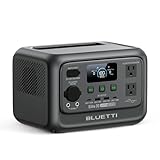
1. Jackery Explorer 300: Best Overall Battery Backup for CPAP Machines
Jackery Explorer 300 Portable Power Station,292Wh
292Wh LiFePO4
300W continuous pure sine wave
7.1 pounds
4000+ cycles
Pros
- Owners report 35 hours of DreamStation runtime across 4 nights
- Quiet with no audible fan under CPAP loads
- LiFePO4 pack rated beyond 4000 cycles
- Backlit LCD shows live wattage and battery percentage
- Two year warranty with a further 12 months available
Cons
- 300W ceiling rules out high draw appliances
- USB-C port is output only and will not accept charging input
- Car port rated at just 10A
The Jackery Explorer 300 is the unit we would put behind a bed first, and the reason is unusually direct owner evidence rather than a spec sheet. Multiple buyers report powering a DreamStation CPAP for 35 hours across four indoor nights, then two more sub-freezing camping nights while using only 29% of a charge. That is the sort of margin you want when the grid goes down unexpectedly.
What makes it work technically is the 300W pure sine wave inverter. A clean sine wave keeps the machine’s internal electronics and motor happy, and the pure waveform is why owners do not report the hum-through-the-hose symptom that plagues cheaper inverter designs. The LiFePO4 chemistry is rated beyond 4000 charge cycles, which works out to more than a decade of nightly use.
Do note that we found no matching customer photos for this listing after multiple passes, so the evidence here leans on written runtime logs rather than photo verification. It is also the most heavily reviewed product in this guide, with more than 11,000 ratings behind a 4.6 average, so the failure patterns are well documented rather than hypothetical.
Recharging is where the design stays simple. A full wall recharge takes roughly four hours, and MPPT solar charging reaches 80% in about 2.8 hours with a 100 watt panel, sold separately. Pass-through charging is supported, so you can run a machine while the pack tops up, and the unit auto-powers off under a 10 watt load after 12 hours to protect the cells.
The trade-offs are real but narrow. The 300 watt ceiling means it will never run a refrigerator or an air conditioner, and the USB-C PD port handles output only, so charging from a USB-C source is not an option. The 12V car port is rated at 10A, which is low for some 12V accessories. For a CPAP and a phone, none of that matters.
Is the Jackery Explorer 300 quiet enough to sleep beside?
Yes, and that is a bigger deal than it sounds. Under CPAP-level loads the fan does not spin up, so owners running it on a nightstand report no audible noise. It also auto-shuts down after 12 hours below a 10 watt draw, which protects a standby battery that otherwise would drain slowly all week.
Its 7.1 pound weight with an integrated handle is manageable for a device you may need to move to the kitchen during an outage. It is not a grab-and-go travel pack, but it is a small generator rather than a lunch box.
Who should skip the Jackery Explorer 300?
Skip it if you plan to run a heated humidifier at full heat all night, since 292Wh is most of what that scenario needs before losses. Buyers who regularly take flights should note the airline rules we cover further down, because watt-hours are the deciding factor there.
Also skip it if your load is heavy electronics rather than a medical device. A clothes steamer or a space heater will trip the 300 watt inverter, and the Jackery is simply not built for that duty.
2. BLUETTI Elite 30 V2: Best for a Heated Humidifier
BLUETTI Elite 30 V2 Portable Power Station 288Wh 600W LFP Solar Generator
288Wh capacity
600W continuous output
10ms UPS switchover
9.5 pounds
Pros
- 600W continuous output well above every other unit here
- Low 4.5W standby draw extends usable runtime
- 80 percent recharge in 45 minutes from the wall
- Bluetooth and Wi-Fi app shows live wattage draw
- Five year warranty with a 60 month listing term
Cons
- One owner reported fast depletion draining the pack to 53 percent overnight
- Bulkier footprint at 9.5 pounds than the Jackery or Renogy
- No native USB passthrough for PC shutdown control
The heated humidifier is where most cheap backups strain, because the heater can lift your machine’s draw and push a modest inverter into cycling. The BLUETTI Elite 30 V2 is built around that problem. Its 600 watt continuous output runs well ahead of every other unit in this guide, and it carries a 10 millisecond UPS switchover so a mains cut does not interrupt the machine.
Verified owners do run CPAPs on it. One reported a five hour run on a full charge with 16% still showing at the end, and the low 4.5 watt standby figure means you are not paying for capacity just to have it sit there. If you sleep with a heated tube and a humidifier at medium heat, this is the unit that gives you headroom instead of anxiety.
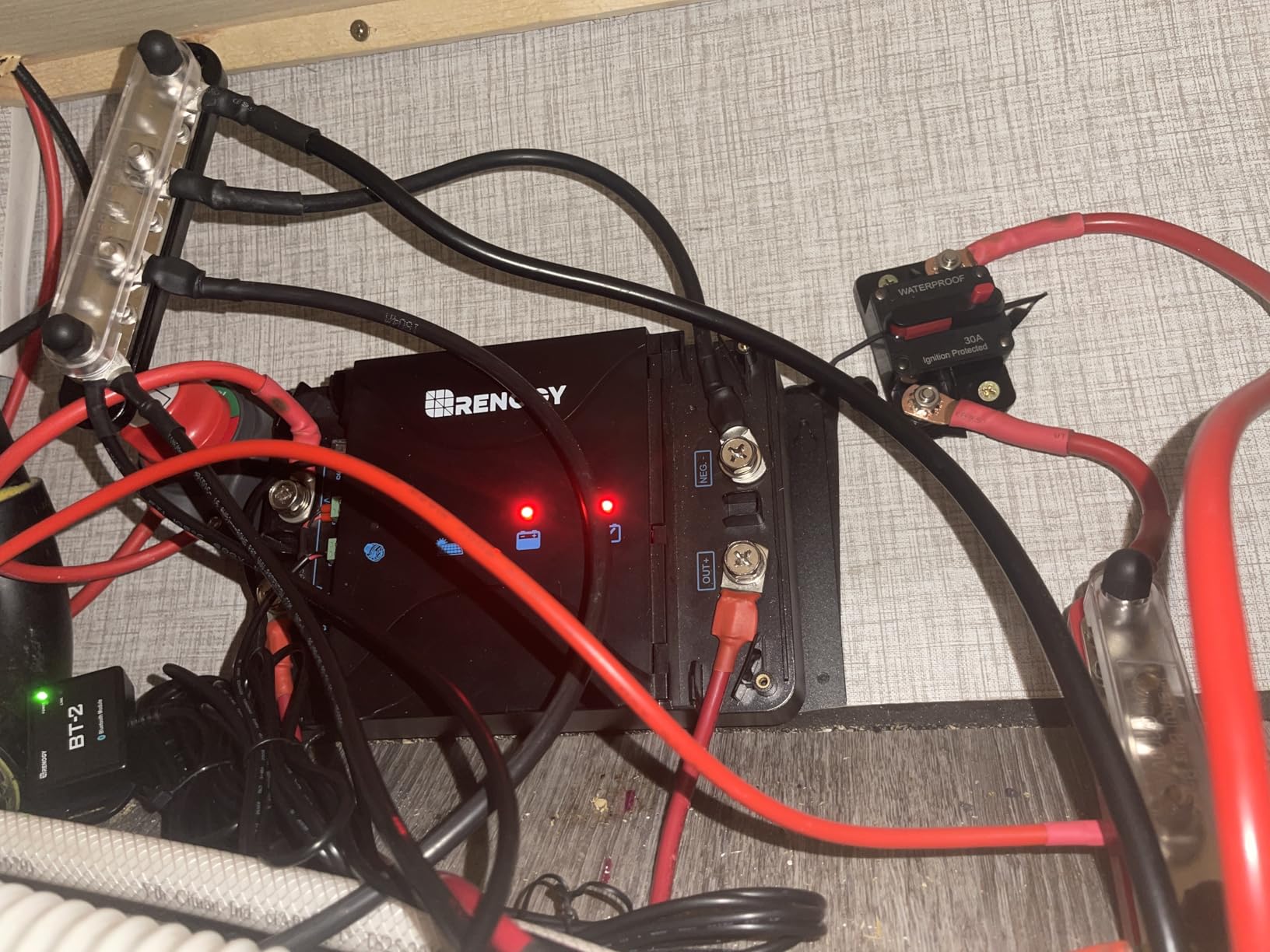
The recharge numbers are the other headline. The 380 watt adjustable AC input takes the pack from zero to 80% in 45 minutes and to full in 70 minutes, which matters when you are refilling between short outages or topping up at a campsite. The industry-standard solar connector also means third-party panels work without an adapter.
The app is genuinely useful rather than decorative. Owners use the Bluetooth and Wi-Fi app to watch real-time wattage, which is the fastest way to know whether your machine’s overnight draw matches your assumption. Turn on Power Lifting Mode and surge capability goes to 1500W for resistive loads that start inrush currents.
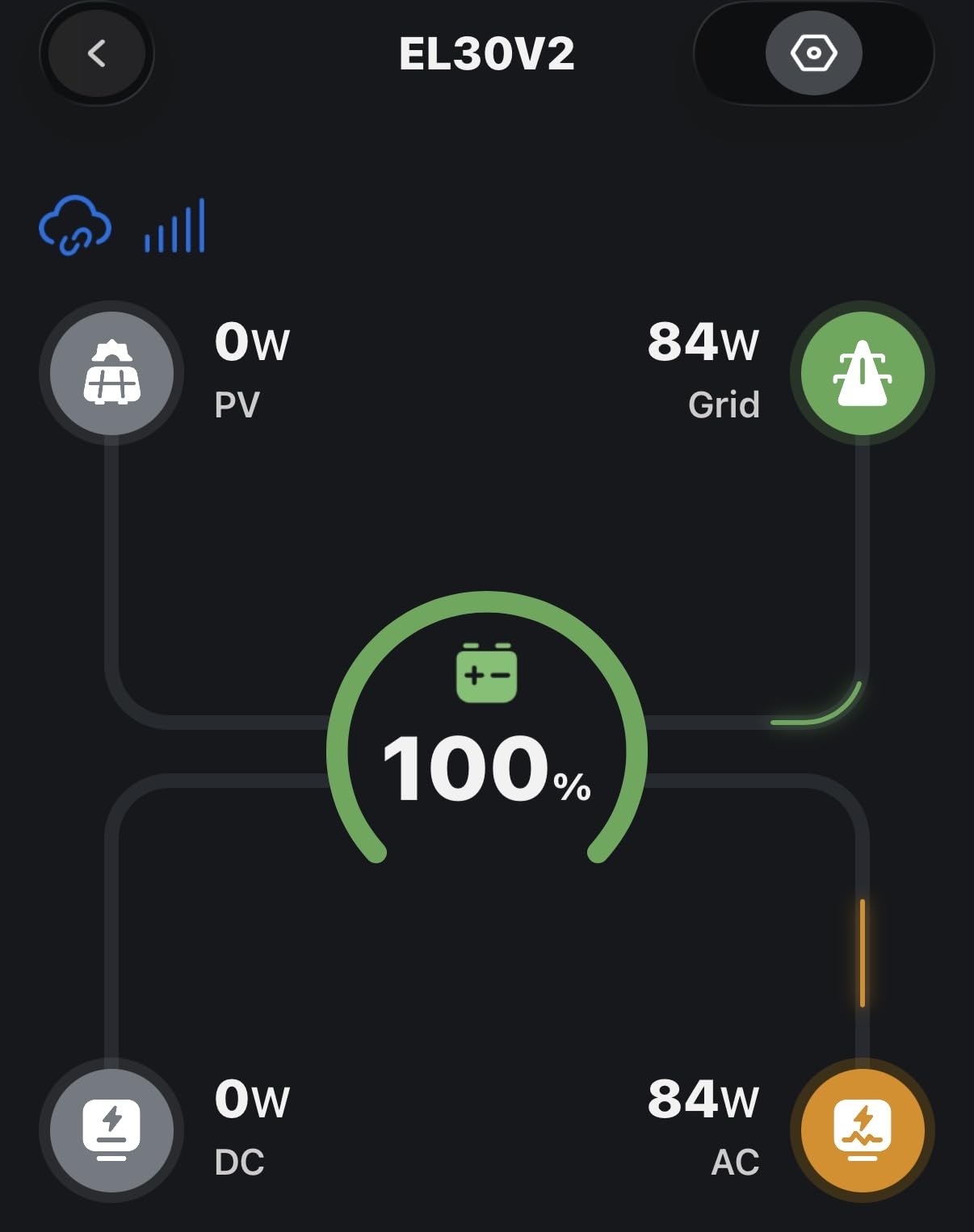
Our reservations are worth stating plainly. At 9.5 pounds it is the heaviest unit in this group, and its boxy 12.48 by 13.39 by 9.72 inch footprint does not tuck away as neatly. There is also no native USB passthrough signal for a desktop PC, so auto-shutdown has to be configured inside the app instead.
Capacity is the same 288Wh as several smaller units here, so it will not run longer than a lighter pack of the same size. You are paying for the inverter, the fast charging and the UPS behaviour, not for more watt-hours.
Does the 600W output actually matter for a CPAP?
For a machine without a heater, no. Any 300 watt inverter in this list handles it. The output ceiling only becomes decisive once you add a heated humidifier, a heated tube and a second device on the same night, or a small fridge in an RV.
If your setup is CPAP-only, the Jackery is the more sensible purchase and this one is money you do not need to spend.
Who should skip the BLUETTI Elite 30 V2?
Skip it if you need to carry your backup on foot or up stairs regularly, since 9.5 pounds is at the top of this list. Anyone planning multi-night outages with a heated humidifier will still want more capacity, because 600 watts of output does not extend 288Wh of energy.
Skip it if you dislike app-based controls. The 1-star share sits above 50% according to the review analysis, and the most common thread in those complaints is expectation management on capacity rather than quality.
3. Anker SOLIX C300: Best for Recharging Fast Between Short Outages
Anker SOLIX C300 Portable Power Station, 288Wh Solar Generator for Camping
288Wh capacity
300W continuous with 600W surge
140W two-way USB-C
9.1 pounds
Pros
- Reaches 80 percent from a wall outlet in about 50 minutes
- 140W two-way USB-C
- Eight outputs including three AC outlets
- 25dB measured at 3.3 feet with no cooling fan noise
- Five year warranty and a 10 year LiFePO4 design life
Cons
- 288Wh limits long runs at roughly 4 to 5 hours on a 65W laptop
- Not compatible with Anker SOLIX PS30 or PS200 class solar panels
- USB-A output is only 12W
Storm outages are often brief and annoying rather than catastrophic, and the Anker SOLIX C300 is built for exactly that pattern. It goes from 3% to full in under 57 minutes and hits 80% in about 50 minutes from a wall outlet, so a short window of grid power is enough to reset the night. Few competitors in this list refill that quickly from mains.
Owner testing also confirmed it behaves like a proper UPS: pull the AC cord while a device is running and the C300 keeps it alive through the switchover. That is exactly the behaviour you want if your CPAP is plugged into a wall and the mains fail without warning.
Port count is generous for a 288Wh pack. You get three AC outlets, a 120 watt car socket, two 140 watt USB-C ports, a 15 watt USB-C and a 12 watt USB-A. The two-way USB-C port is the standout, since it can accept a 140 watt charge and deliver the same to a device, which removes the need for a separate cable direction.
It also has a published noise figure. Anker measured it at 25dB from 3.3 feet, and owners report no audible fan at CPAP loads. The three-level light bar with an SOS strobe is a small thing that becomes important at 2am in a dark house.

Where it falls short is capacity relative to its size. Owners measuring a 65 watt laptop get roughly four to five hours, and CPAP loads scale from the same 288Wh pool. The 12 watt USB-A is an anachronism on a modern unit, and the shoulder strap is sold separately despite the vertical form factor suggesting it should be included.
One owner reported a port failure that required a replacement unit, and the panel compatibility list excludes three Anker SOLIX models, which matters if you already own solar gear from the same brand.
Is the C300 a good travel backup for a CPAP?
For car and campsite use, yes. The 140 watt two-way USB-C means a single cable handles both charging the pack and charging a phone, and the vertical footprint packs better than a wide box.
For air travel, watt-hours decide it rather than port layout. Check the carry-on rules below before planning a flight around it.
Who should skip the Anker SOLIX C300?
Skip it if your outage lasts more than two nights, since 288Wh runs out before most CPAP-only setups would need it to. Anyone already invested in Anker SOLIX PS200 class solar panels should look elsewhere, because those are not supported.
Skip it if weight matters. At 9.1 pounds it is heavier than the Jackery, the ALLWEI and the MARBERO, so it is a station rather than a carry item.
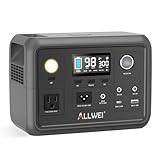
4. ALLWEI 300W Power Station: Best for Published CPAP Endurance Data
ALLWEI Portable Power Station 300W, 256Wh Solar Generator LiFePO4 Battery
256Wh capacity
300W continuous pure sine wave
Runtime hours on display
6.4 pounds
Pros
- Published CPAP endurance tests of 20 hours on a Luna 2 and 12 hours on a DreamStation 2 with heat
- Display shows percentage plus estimated hours remaining
- LiFePO4 cells rated for 3000 cycles
- Dual AC plus solar charging refills in 2 to 2.5 hours
Cons
- No 24V output for RV or some CPAP setups
- Fan noise during discharge is loud beside a bed
- Solar input capped at 120W so 200W panels will not work
The ALLWEI 300W publishes CPAP endurance numbers tied to specific machines, which is why it earns a place. Owners report 20 hours of runtime across three nights on a BMC Luna 2 without a heated tube, and 12 hours across two nights on a DreamStation 2 with the heat turned up. A DreamStation 2 with heat is close to the worst realistic case, and it still covered two nights.
The display is the feature we would underline. Instead of four ambiguous LEDs, it shows the percentage remaining and the estimated runtime in hours, which removes the guesswork that sends people to bed wondering whether they will wake up at 3am. It is the same information the BLUETTI app provides, available without a phone.
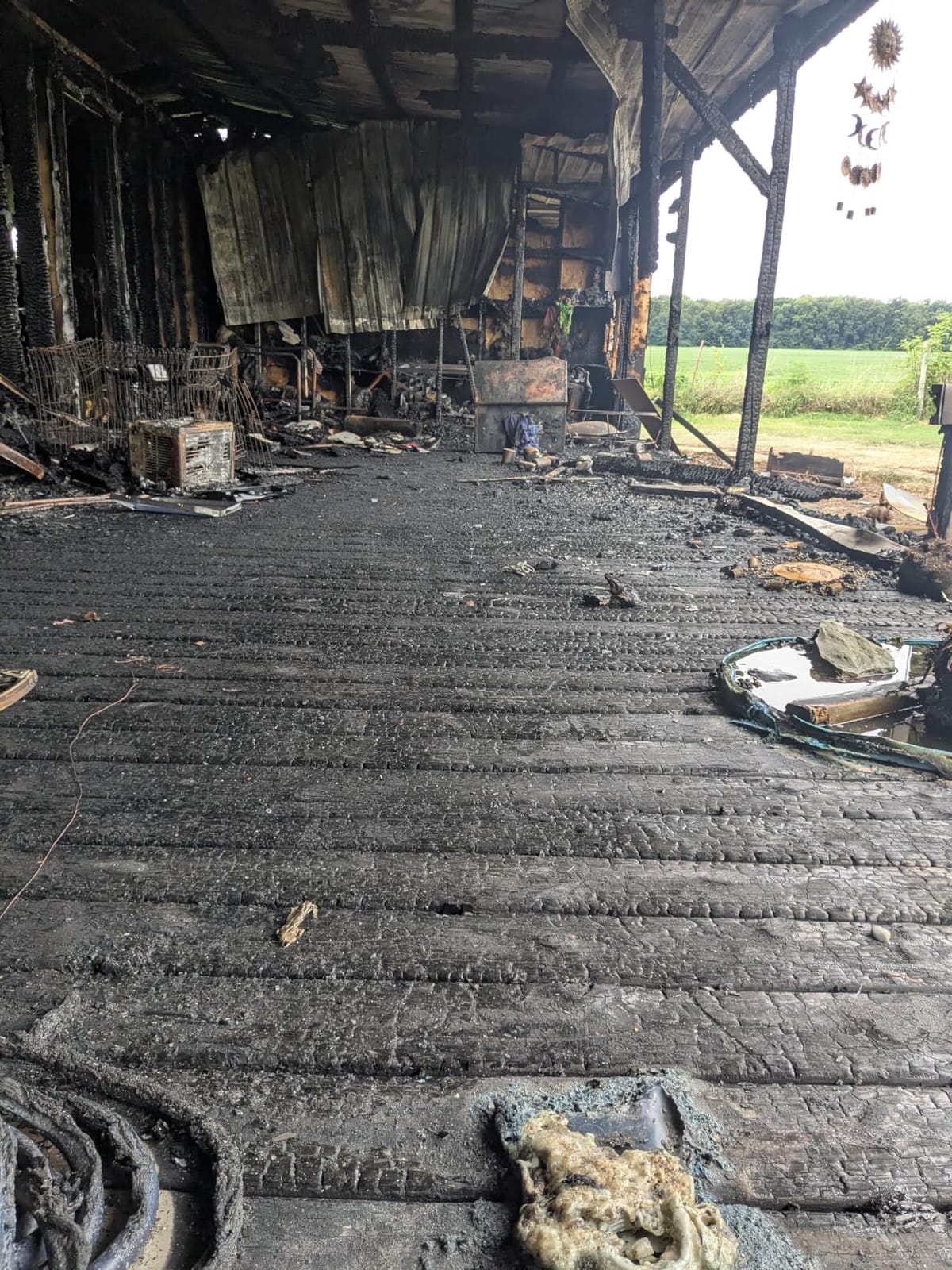
Standby retention is unusually good. One owner stored it fully charged for two months and reported no measurable drain, which matters enormously for a device that spends most of its life idle in a cupboard waiting for a storm. Pass-through charging is supported, and dual AC plus solar input refills the pack in 2 to 2.5 hours.
Chemically it is a LiFePO4 pack rated for 3000 cycles, and the output is 300 watts continuous with 600 watts of peak surge on a pure sine wave. A built-in MPPT controller handles the solar side, and a six-layer BMS covers overcharge, over-current, over-voltage and short circuit conditions.
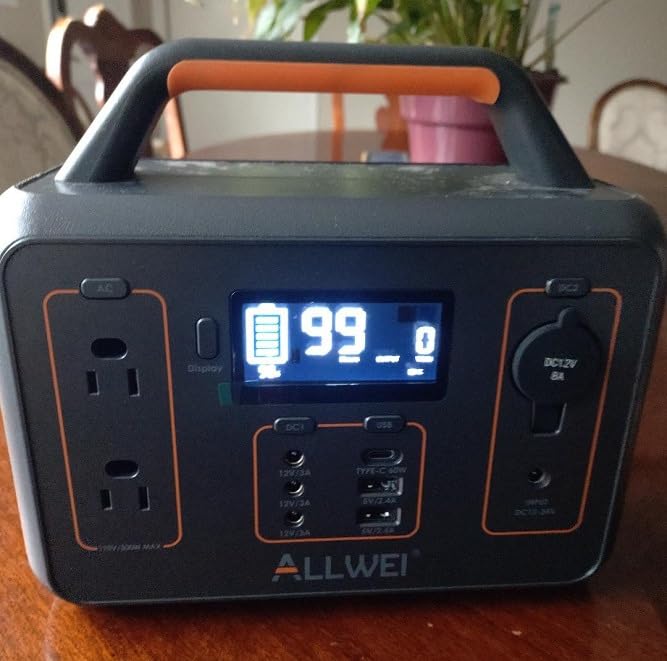
Noise is the drawback to plan around. Owners report the fan loud enough during discharge to be impractical next to a bed, so this one wants a spot across the room rather than on the nightstand. The charge readout has also frozen mid-cycle for some users before the unit dropped sharply.
The 120 watt solar ceiling is a real limit if you own 200 watt panels, and there is no 24V output for RV or van setups. Owners also report USB glitching when a USB-C device is connected at the same time, and a car plug tip that runs hot to the touch.
Does the ALLWEI run a heated humidifier all night?
The DreamStation 2 test with heat covered two nights on a 256Wh pack, which works out to roughly 128Wh per night. That is close to the sizing math we outlined, so a CPAP with a heated humidifier and a heated tube is realistic here with a little care on the humidity level.
If your machine pulls more than 90 watts, add capacity rather than relying on a single charge. Anything in the 400Wh and up class gives you the same night twice over.
Who should skip the ALLWEI 300W?
Skip it if you plan to sleep beside it. The fan noise complaint is repeated and specific, and it is not solvable with settings. Anyone running 200 watt solar panels or needing 24V output for an RV should choose a different unit.
Skip it if you need the largest number of ports. Six outputs is fewer than the C300 or the MARBERO, though for a CPAP plus a phone that is rarely the deciding factor.
5. Renogy 72000mAh 266Wh Power Bank: Best Value CPAP Runtime
Renogy 72000mAh 266Wh 12v Power Bank with 60W PD, CPAP Battery for Camping, High Capacity Large Camping Power Bank with USB-C DC Wireless Charging & Flashlight, Backup Power Supply for Starlink Mini
72,000mAh and 266Wh
Three CPAP cables included
Selectable 12V to 24V DC
Not airline approved
Pros
- Owners document 32 to 72 hours of DreamStation or AirSense 10 runtime without humidification
- Three included CPAP cables cover most current ResMed and Philips machines
- Multi-voltage DC output also runs laptops and satellite internet hardware
Cons
- Cannot charge and output at the same time on all ports
- Not airline approved so it cannot fly in cabin or checked baggage
- Some units lose charge capacity after a year or two
The Renogy 72000mAh is the strongest runtime-per-review story in the budget half of this list, and it starts with a number that is hard to argue with. Long-term owners document 32 to 72 hours of DreamStation or AirSense 10 use without humidification, which is a multi-night answer for a pack most people expect to last a single night.
It arrives with three CPAP cables covering the ResMed AirMini, AirSense 10 and 11, AirCurve 10, and DreamStation 1 and 2, so the machine is unlikely to need an extra cable. The selectable 12V, 16.5V, 20V and 24V DC output matches most operating voltages directly, and the same bank will also run a laptop or a satellite internet terminal.
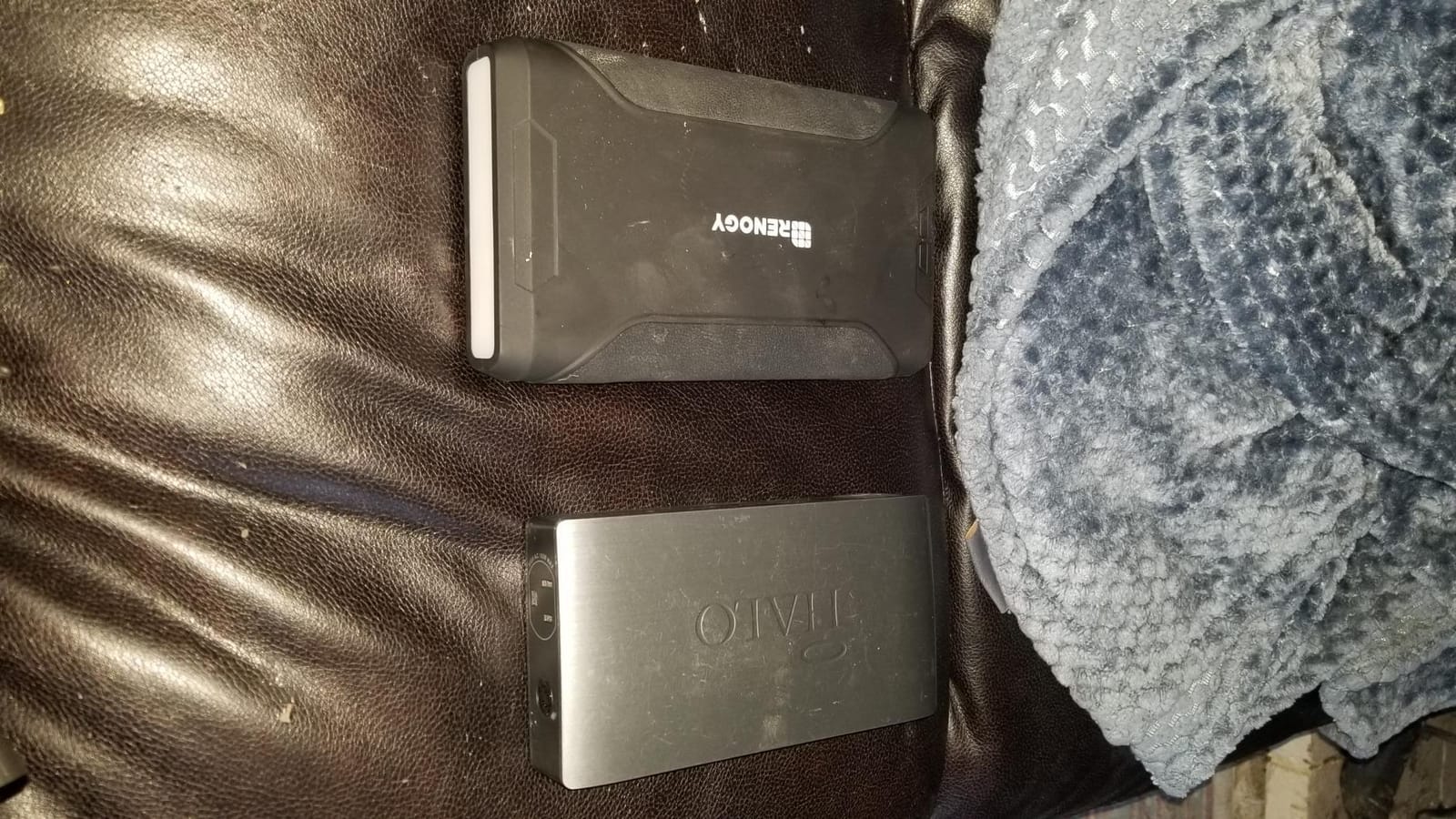
Five outputs can be active at once, and the wireless charging pad is a quiet convenience for a phone on the nightstand. Recharging runs four ways: wall, car socket, a 20 to 150 watt solar panel, or USB-C PD in 3 to 4 hours. For van and campsite setups that flexibility is worth more than a refined display.
The trade-offs are structural rather than quality related. It cannot charge and output simultaneously on all ports, so a mid-night solar top-up while running therapy is not possible, and it is not airline approved, which rules it out of both carry-on and checked baggage entirely.
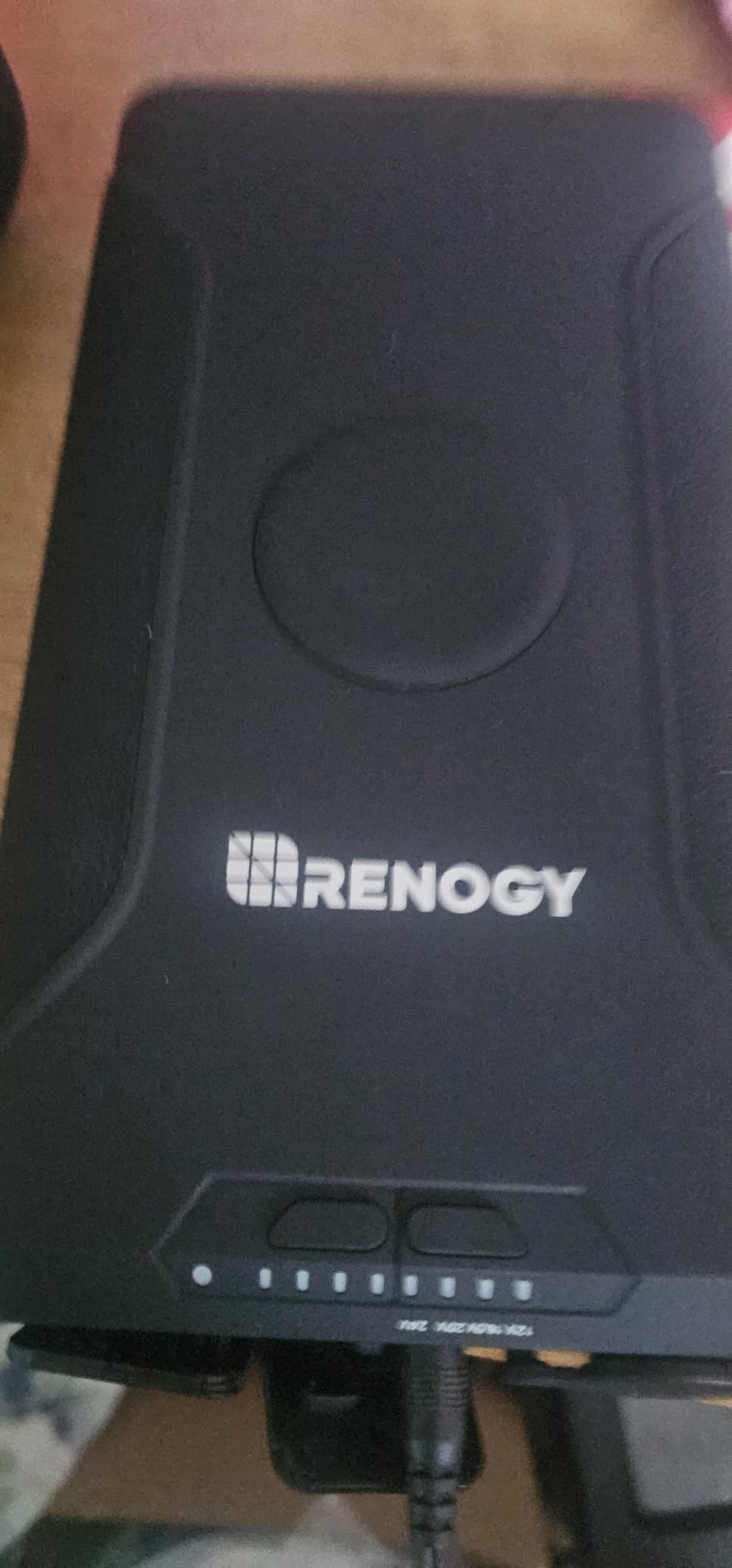
Then there is the interface. The LED indicator is confusing, with segments that bleed into each other and a manual that reads them in the reverse order. There is no numeric display, only four LEDs, and the 12V car socket rating is quoted inconsistently at 150W and 180W depending on where you read it.
At 2.8 pounds it is also one of the heavier units relative to its capacity, and a number of owners report units failing to hold charge after a year or two with weak support afterwards. That history is the main reason this sits at number five despite the runtime numbers.
Is the Renogy good enough for a multi-night blackout?
Yes, and it is one of the most economical routes to that outcome. Turning off humidification, owners get several nights per charge, and the 266Wh capacity sits comfortably above the one-night requirement. Adding a heated humidifier cuts that sharply, so plan on a second charge for a two-night outage.
For a longer outage, use it alongside a wall charge rather than as the only plan. The lack of pass-through is the constraint to design around.
Who should skip the Renogy 72000mAh?
Skip it if you fly. The manufacturer does not mark it for airline carriage, which is a hard stop for frequent travelers no matter how good the runtime is. It is also the wrong choice for anyone who needs to run a fan or router alongside therapy overnight, since the concurrent charge and output limitation bites there.
Skip it if you want to know how many hours are left. Four ambiguous LEDs are not a substitute for a runtime readout, and the manual does not clarify them.
6. EASYLONGER ES720: Best for Included CPAP Cables
EASYLONGER ES720 CPAP Battery Backup, 266.4Wh Portable CPAP Power Supply
266.4Wh capacity
Four DC cables included
Selectable 12V to 24V DC
3.31 pounds
Pros
- Four included DC cables cover most major ResMed and Philips machines
- Adjustable DC output matches a CPAP voltage without a converter
- Pass-through charging lets the pack run a device while recharging
- Four USB ports plus a 180W car socket make it a general power hub
- LED light with SOS mode for outages and camping
Cons
- Heated tube on the Luna G3 is not supported
- Car socket needs an external voltage converter for a CPAP
- Some durability and support complaints in the 1-star share
The EASYLONGER ES720 is the most purpose-built option here. It is a CPAP battery first and a power bank second, which changes what arrives in the box. Four DC cables ship with it, covering the ResMed S9, AirSense 10 and 11, AirCurve 10 and 11, Luna G3, and the Philips DreamStation and DreamStation 2.
That cable bundle is the argument. If you have an older ResMed or a DreamStation, you can plug in tonight without tracking down a barrel connector with the right voltage and centre-positive polarity. The adjustable DC output at 12V, 16.5V, 20V and 24V handles the range most machines use, and no external converter is needed.
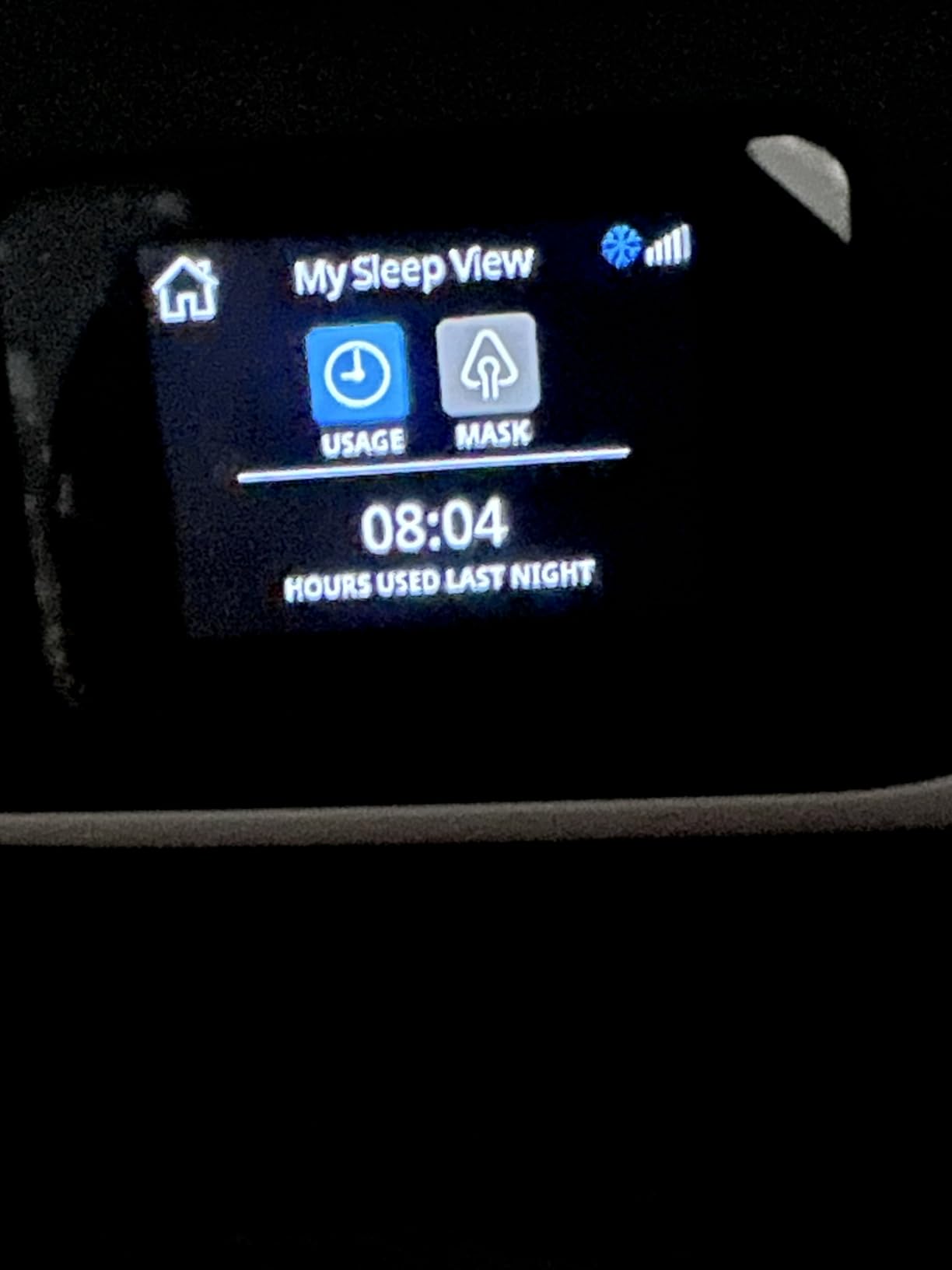
At 266.4Wh it is right in the sweet spot for a one-night backup, and pass-through charging means the pack can run your machine while it recharges from the wall. Four recharging routes are supported: a 72W AC adapter in 4 to 5 hours, 60W PD USB-C in 4.5 to 5.5 hours, a 100W solar panel in 4 to 5 hours, and a car outlet in 4.5 to 5.5 hours.
It is also a genuinely useful general power source. Four USB ports and a 180 watt cigarette lighter socket mean your phone, laptop and camera can all be topped up from the same box, and the built-in LED with a red SOS mode is a genuine asset when the power is out.
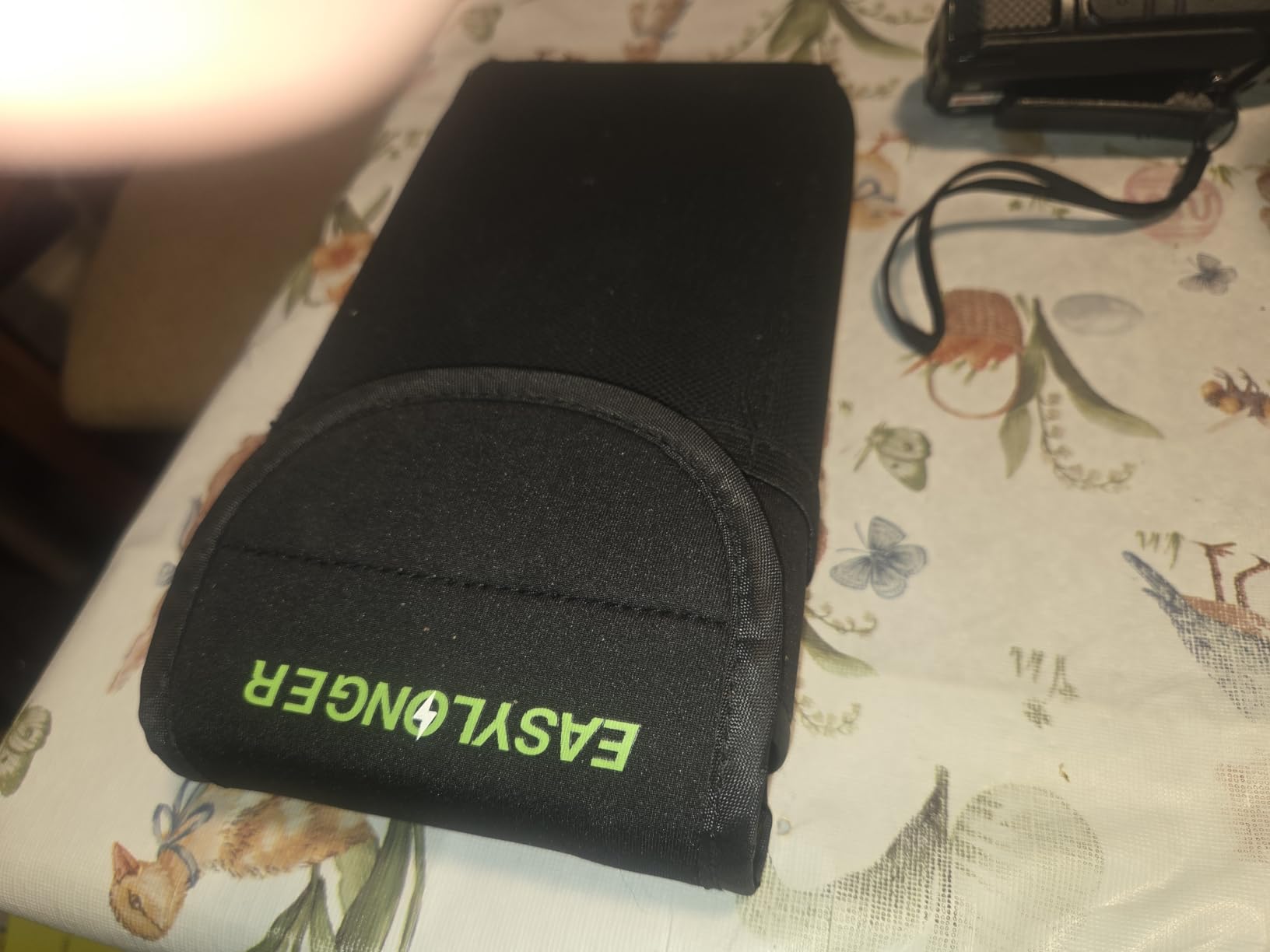
Two compatibility limits are worth checking before you buy. Heated tube support on the Luna G3 is absent, and running a CPAP from the car socket requires an external voltage converter, which pushes you back toward the DC barrel port anyway.
On brand-level consistency, the 4.2 average across 372 ratings sits below the leaders in this roundup, and 14% of reviews are one star. Buyers who valued it most are the ones whose exact machine it covers, so verify your model before ordering rather than assuming universality.
Is the EASYLONGER ES720 enough for a full night with humidification?
It works for a typical night. At 266.4Wh you have room for a machine running 60 to 100 watts overnight, which is the heated-humidifier range, with margin left over. The output is 180 watts on the car socket and the direct DC path bypasses inverter conversion.
What it will not do is cover several nights. For an outage of two nights or more, pair it with a larger power station or keep the wall charger ready.
Who should skip the EASYLONGER ES720?
Skip it if you own a Luna G3 with a heated tube, since that combination is not supported. Anyone wanting pure sine wave AC output should know this pack is built around DC delivery, which is fine for most CPAPs but not a general inverter replacement.
Skip it if you want long-term chemistry reassurance. It uses a single lithium ion pack rated by cycles, and the warranty experience in its reviews is less settled than the LiFePO4 units here.
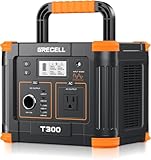
7. GRECELL 330W Power Station: Most Versatile with Real Headroom
GRECELL Portable Power Station 330W, 230.88Wh Solar Generator
230.88Wh capacity
330W pure sine wave output
60W and 18W USB-C PD
7.3 pounds
Pros
- 330W pure sine wave gives headroom for a heated-humidifier CPAP
- Two USB-C PD ports at 60W and 18W
- Over 2200 ratings behind a solid owner base
- Built-in MPPT works with third-party panels
Cons
- 230.88Wh capacity is at the low end of this group
- 9 percent one-star share points to some consistency complaints
- Only a single AC outlet
The GRECELL 330W solves the specific problem that cheap budget stations create. A 330 watt pure sine wave output leaves real headroom for a heated-humidifier CPAP, which is more than most units in its weight and price bracket offer. The manufacturer lists CPAP medical devices explicitly among the supported loads, alongside laptops, projectors, TVs and mini fridges under 330W.
With more than 2,200 ratings, it also has one of the deeper owner histories in this guide. That matters more than the spec sheet, because a pack that stops holding charge after eight months is worthless as emergency equipment, and the owner record is how you catch that early.
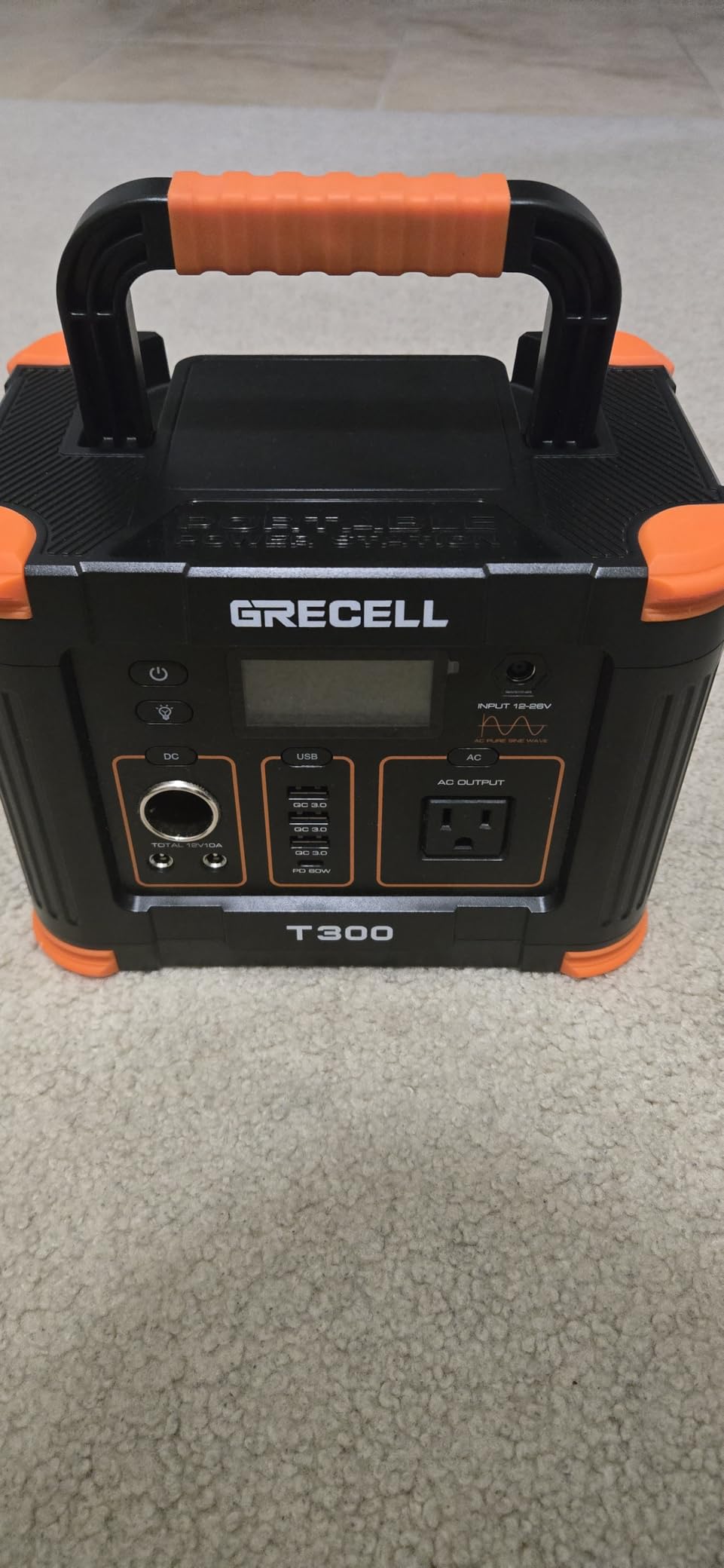
USB-C is where it beats its rivals. A 60 watt USB-C PD port plus a second 18 watt USB-C port is generous on a unit of this size, and the dual silent cooling fans mean it does not hum on a nightstand the way some cheaper units do.
Recharging runs three ways: AC outlet, solar panel, or car outlet, with a built-in MPPT controller that maximises panel extraction and an included MC4-7909 cable so third-party panels connect directly. The BMS covers overload, overcharge and short circuit, and charging stops automatically when full to protect the cells.
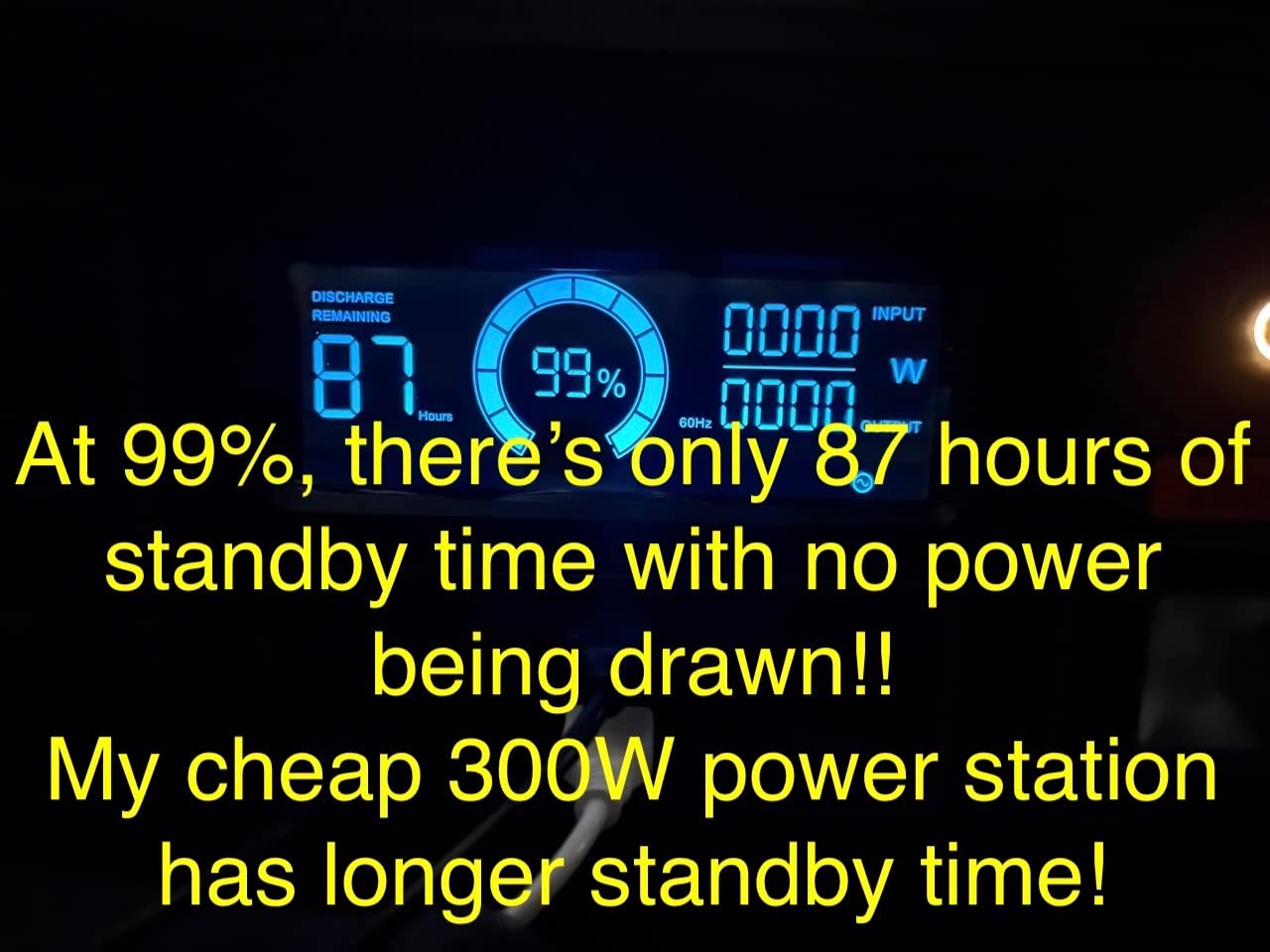
Capacity is the limit. At 230.88Wh it sits near the bottom of this list, so expect roughly one night with a heated humidifier and close to two without one. Recharge times lag the class leaders as well, and the single AC outlet means you cannot run two AC loads at once.
The dual fans add bulk to an already 7.3 pound package, and a 9% one-star share points to some consistency and support complaints. Treat it as a two-year tool rather than a decade investment, because the warranty is two years.
Is the GRECELL 330W loud during a night of therapy?
Not noticeably. The dual cooling fans are described as silent in the owner reports, which is a meaningful difference from the ALLWEI, where fan noise during discharge is a repeated complaint. On a nightstand beside a CPAP, this is the quieter choice.
Under a CPAP load the fans should not need to spin hard anyway, since a machine pulling 60 watts is a light load for a 330 watt inverter.
Who should skip the GRECELL 330W?
Skip it if a multi-night outage is the scenario, because 230.88Wh runs out sooner than almost anything else here. Anyone needing to run two AC devices simultaneously should note the single outlet before ordering.
Skip it if fast refilling matters. Recharge is slower than the C300, the Elite 30 V2 and the VTOMAN, so it suits a home base better than a rapid-turnaround plan.
8. VTOMAN FlashSpeed 300: Best for RV and Road Recharging
VTOMAN FlashSpeed 300 Portable Power Station, 300W 230Wh LiFePO4 Battery
230Wh LiFePO4 capacity
300W output
12V and 24V car input
100W PD recharge
Pros
- LiFePO4 pack rated beyond 3000 cycles
- Two AC outlets at a weight of just 7.3 pounds
- Accepts 12V and 24V vehicle or RV outlets for on-the-road charging
- 80 percent recharge in about 2 hours from a 100W PD source
Cons
- Small capacity at 230Wh limits runtime per charge
- Thin owner base at 533 ratings so durability is less documented
- Solar panel sold separately
The VTOMAN FlashSpeed 300 stands out for one reason on an RV trip: it accepts both 12V and 24V vehicle or RV outlets for recharging. Most units in this class take a 12V car socket only, so an RV owner with a 24V system can refill the pack from the vehicle instead of hunting for a wall outlet at a campground.
Speed is the other draw. A 100 watt PD input takes it to 80% in about two hours, and a full wall recharge takes roughly 2.5 hours. That makes it practical to top up during a lunch stop and still have a full night of therapy waiting at the destination.
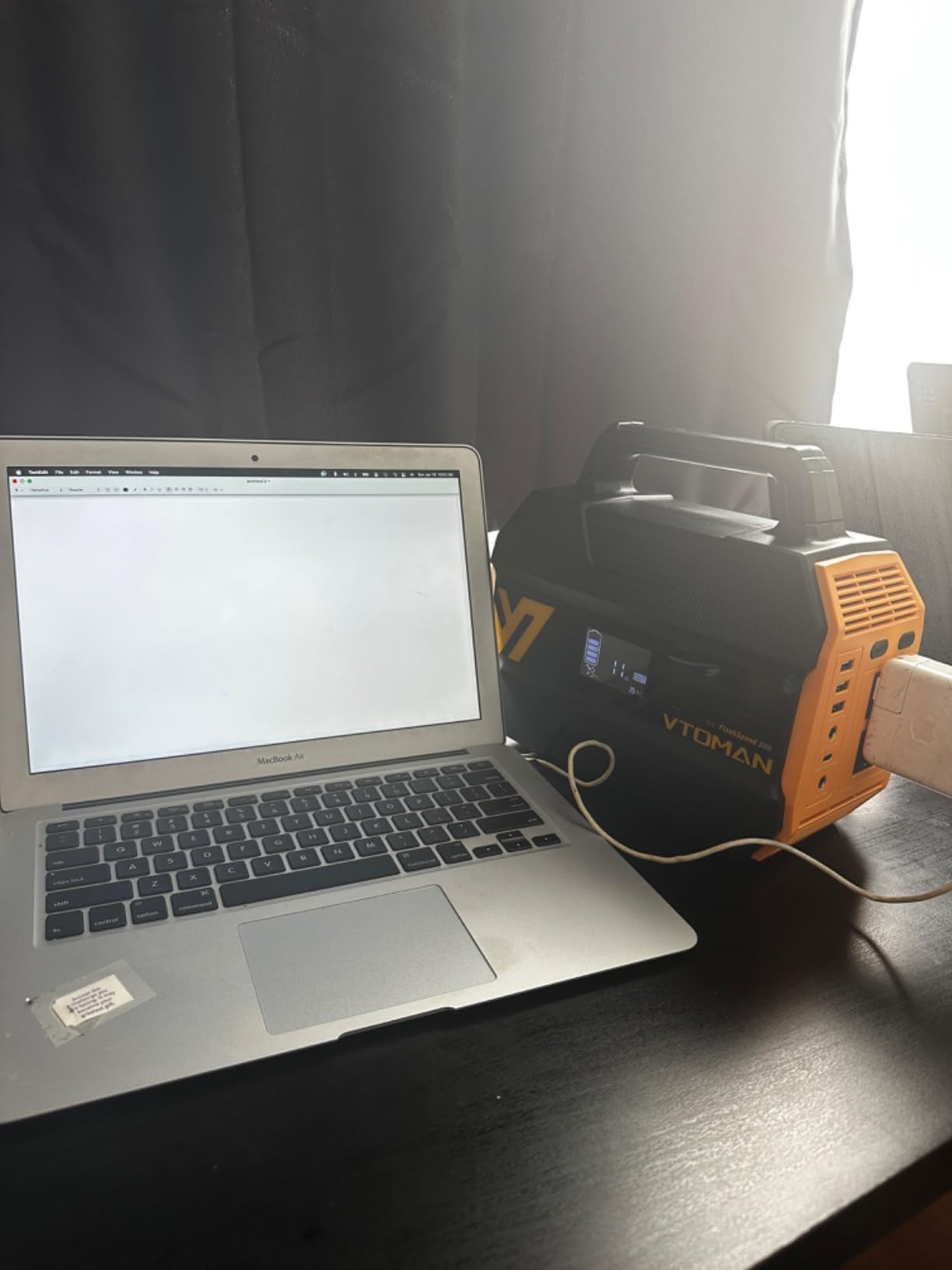
Seven outputs is generous for a 230Wh pack, including two AC outlets, a 100 watt USB-C, three USB-A ports and a DC output. The LiFePO4 cells are rated beyond 3000 cycles, which the manufacturer puts at more than six times the lifespan of a conventional pack, and the manufacturer lists CPAP machines among supported devices.
Recharging options cover four routes: wall socket, solar panel, 12V or 24V car or RV outlet, and 100W USB-C PD. The digital display gives a concrete state-of-charge reading, and the LED light offers steady, strobe and SOS modes for a dark campsite.
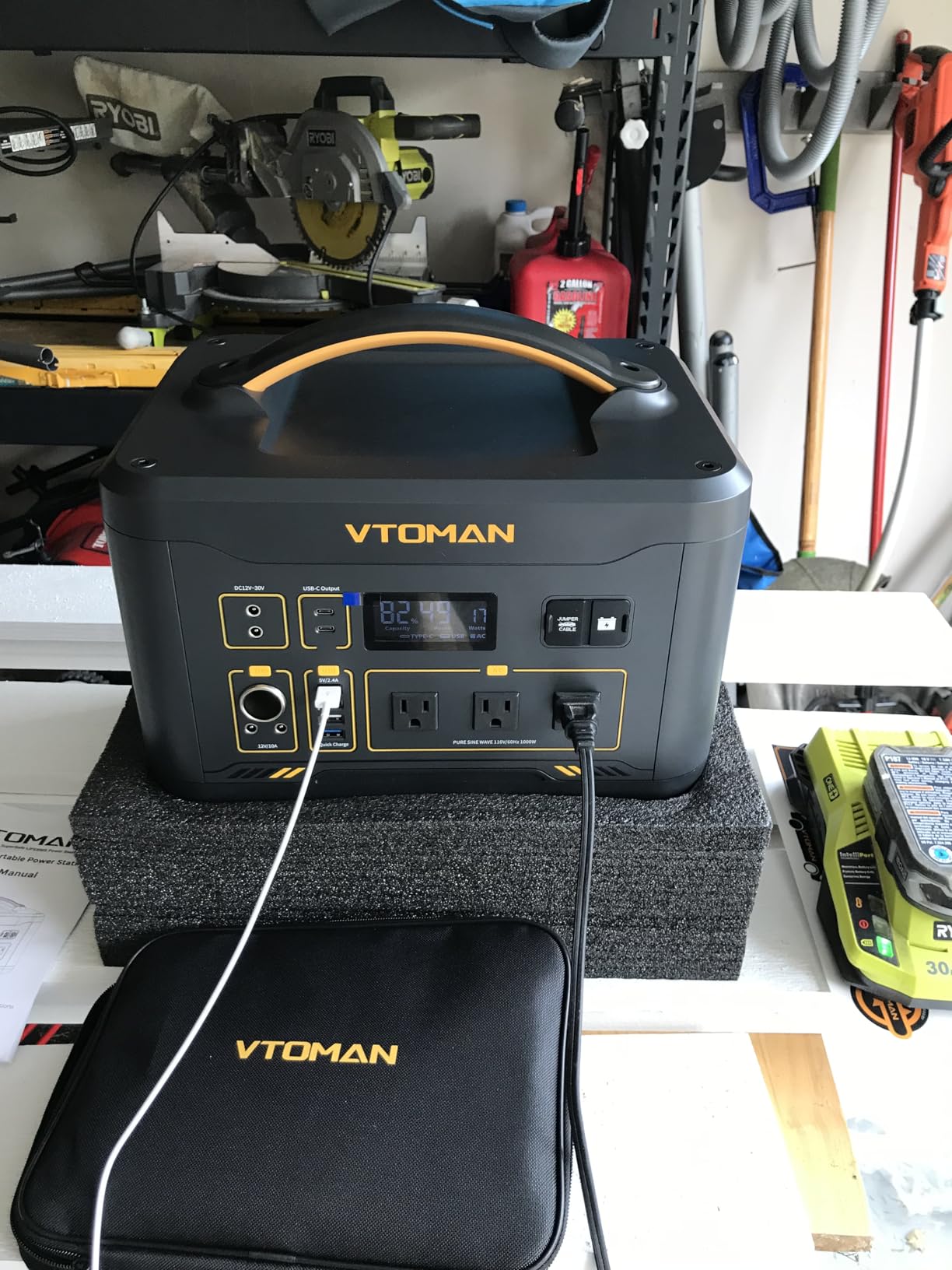
The honest limitation is evidence. At 533 ratings, this is one of the thinner owner bases in the guide, so long-term durability is less well documented than for the Jackery, the BLUETTI or the GRECELL. The review analysis also shows a 6% two-star share, which is relatively high and usually points to unit-to-unit variation.
Capacity is the smallest in the group at 230Wh, and the panel is sold separately, which adds cost for anyone planning genuine off-grid use. At 7 pounds it is also not a lightweight carry option.
Can the VTOMAN run a heated humidifier overnight?
It can, but with little margin. 230Wh against a 60 to 100 watt heated-humidifier night leaves very little for a second device, and there is no headroom above that. A CPAP-only night at 30 to 60 watts is comfortable, and that is the use case the capacity supports.
If humidification matters to you, this is the one to step up from rather than the one to compromise on.
Who should skip the VTOMAN FlashSpeed 300?
Skip it if durability proof matters more than recharge speed. With 533 ratings and a shorter field history, you are betting on a newer product line than several alternatives here.
Skip it if you need several nights of runtime or a heavy second device. Nothing in the 230Wh class supports that, and the VTOMAN does not pretend otherwise with its output ceiling.
9. EBL 330W Power Station: Best for Lighting During an Outage
EBL Portable Power Station 288.6Wh 330W Solar Generator for Camping Home
288.6Wh capacity
330W pure sine wave
Light and SOS work standalone
7.9 pounds
Pros
- 330W pure sine wave output with 600W surge
- LED light and SOS mode work without main power
- Hibernation mode below 5W preserves charge in storage
- Wireless charging pad plus 60W USB-C PD
- Folding handle and two year warranty
Cons
- 11 percent one-star share is among the highest here
- Only 346 ratings so the long-term record is thin
- 330W output gives no headroom for a humidifier plus other loads
The EBL EB300 is the budget unit whose standout detail is that the light and the SOS mode work when the main power is off. In a genuine outage at night, being able to find your mask and tubing without waking the household is worth more than an extra USB-A port, and no other budget unit in this list makes that claim.
On paper the rest is competitive too. 288.6Wh of capacity with 330 watts of pure sine wave AC output and 600 watts of surge, plus seven ports including a 60 watt USB-C PD, an 18 watt USB-A, two DC5521 outputs, a 12V car socket and a 5 watt wireless charging pad. The manufacturer lists CPAP machines among supported devices.
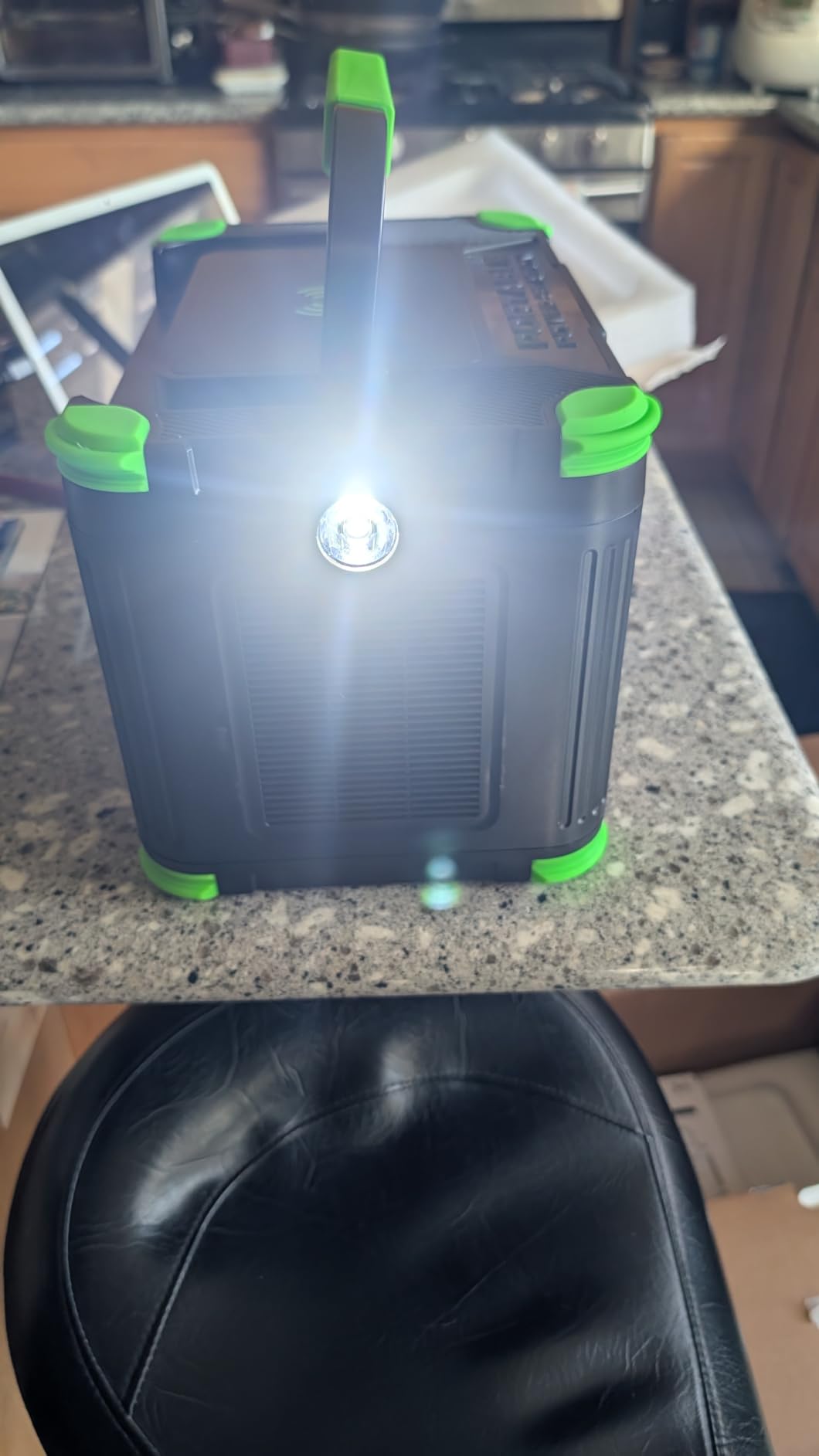
Hibernation mode below a 5 watt draw is a genuinely useful feature for backup equipment. It means a pack sitting in a cupboard for a season does not quietly drain itself, which is a common complaint with cheaper lithium units. Overload protection triggers at 350 plus or minus 40 watts, so a plugged-in machine that draws too much is disconnected rather than damaged.
Safety features cover short circuit and temperature protection with an automatic cooling fan on high load. The folding handle and anti-collision strips make it more manageable in a vehicle, and the listed weight is 7.9 pounds.
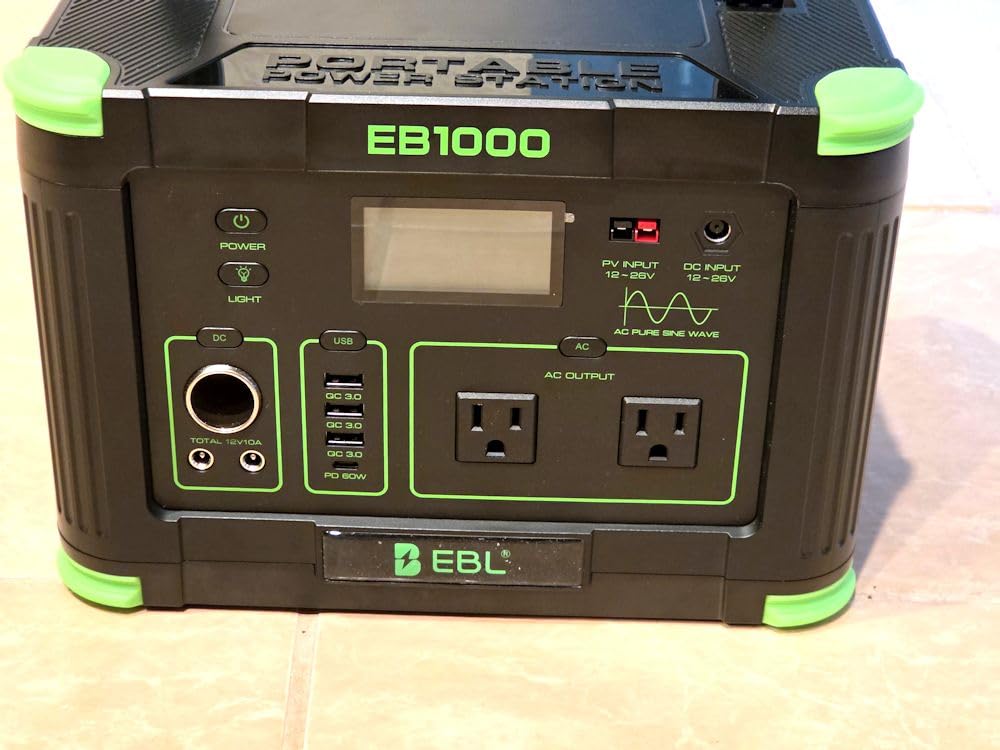
Now the reasons to hesitate. At 346 ratings it has the thinnest evidence base in this guide, and an 11% one-star share is among the highest of the ten, which usually points to early quality variation or support friction. Recharge is slow at 6 to 7 hours from a wall and 7 to 9 hours from a car.
The 0 to 40 degree Celsius operating range is also narrower than some alternatives, which can matter in a car during summer heat. And 330 watts of output means no room for a heated-humidifier machine plus anything else on the same night.
Is the EBL good for a one-night outage with humidification?
Yes, a single night fits comfortably inside 288.6Wh. The heating load is what the capacity is for, and the 330 watt inverter handles a heated tube and humidifier without cycling. One night is the realistic scope.
A second night from the same charge is unlikely at those settings. Plan on wall power recovery or a second pack for a longer outage.
Who should skip the EBL 330W?
Skip it if you want a proven service record. With 346 ratings and an 11% one-star share among the highest here, this is the pick for someone who accepts a newer track record in exchange for the standalone light and hibernation behaviour.
Skip it if you leave the unit in a hot vehicle or an unheated shed, because the 0 to 40 degree Celsius limit rules that out. Slow recharge also makes it a poor fit for rapid turnaround.
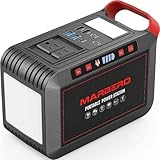
10. MARBERO 300W Power Station: Best for Light Loads on a Budget
Portable Power Station 300W MARBERO 237Wh Camping Solar Generator Backup Lithium Battery with Pure Sine Wave 110V AC Outlet, USB C, USB A, DC for Outdoors Camping CPAP Home Blackout Emergency
237Wh capacity
300W output with 375W peak
4.6 pounds
Two LED lanterns
Pros
- Deepest owner base of any budget pick with over 9000 ratings
- Light at 4.6 pounds in a handheld form factor
- Eight outputs including two AC outlets and a 12 to 16.8V DC output
- Long-term owners report it still working after 2 to 3 years including in 100F heat
- Clean quiet pure sine wave output
Cons
- Light-load tool: 237Wh is the smallest capacity here and drains quickly on a fan
- Recharge is slow at roughly 6 to 8 hours from wall or car
- Reports of units ceasing to hold charge within the 12-month warranty
The MARBERO M823 is the most compact unit we tested and it carries one of the largest owner bases at this price point, with more than 9,000 ratings behind it. At 4.6 pounds it is a genuine handheld rather than a station you move with two hands, which is the deciding factor if your power cuts tend to happen in a room other than where you store the pack.
It still puts out 300 watts rated with a 375 watt peak on a clean pure sine wave, and it carries eight outputs: two AC outlets, two USB-A QC3.0, two more USB-A, an 18 watt USB-C PD and a DC output variable from 12 to 16.8 volts. That DC output is the useful part for a CPAP, since it suits many machines without an inverter step.
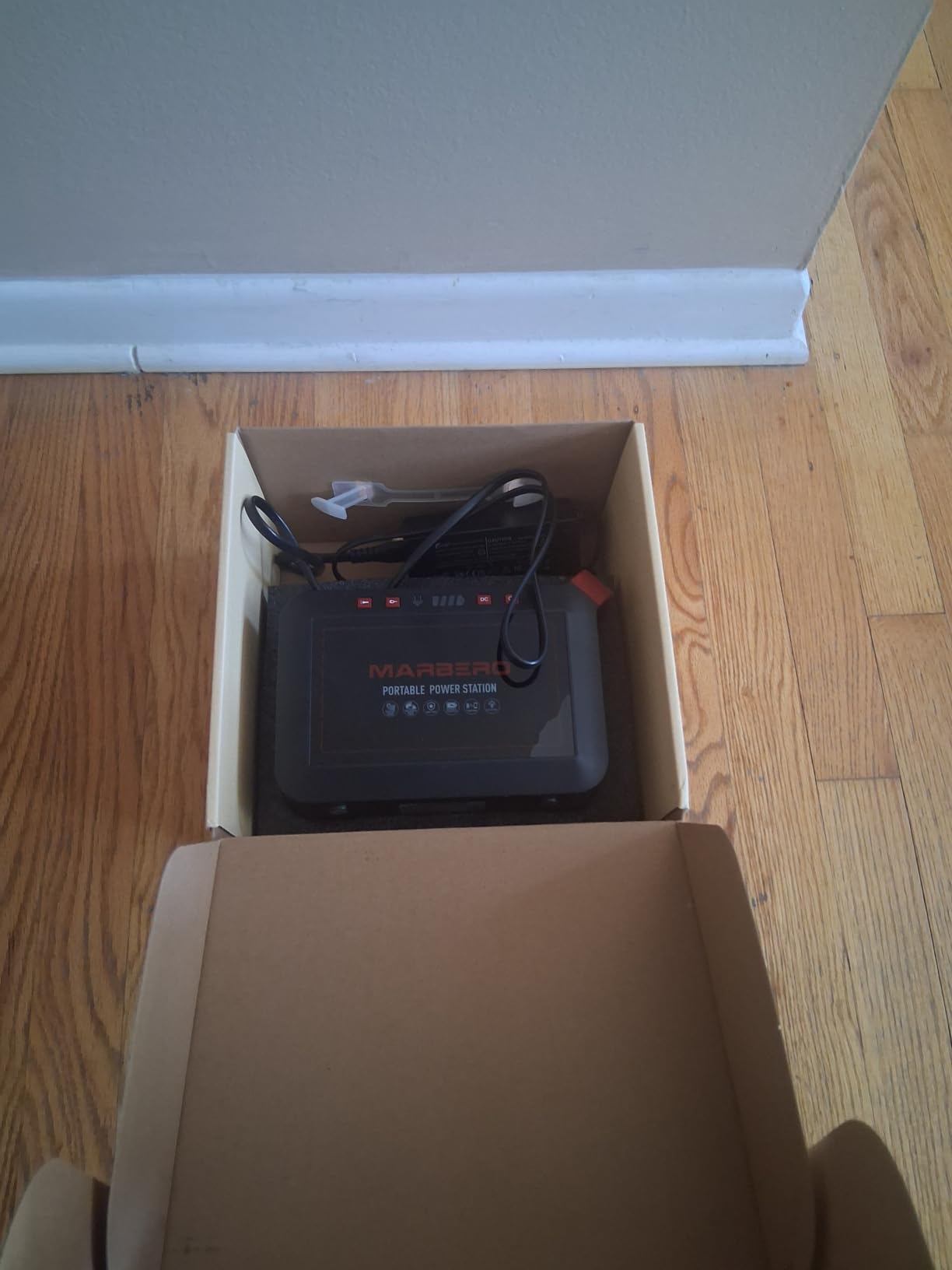
Two built-in LED lanterns are a nice touch, one with two brightness levels and one with three plus steady, twinkle and SOS modes. A six-layer BMS covers voltage, temperature, short circuit and overload protection, and recharging runs three ways: wall in about six hours, car adapter in about eight, or solar with a 16.4 to 24 volt panel sold separately.
There is a real base of long-term owners here. People report units still working after two or three years, including one who carried it through summer heat at 100F. For a low-draw CPAP load, that durability record is the most compelling part of the story.
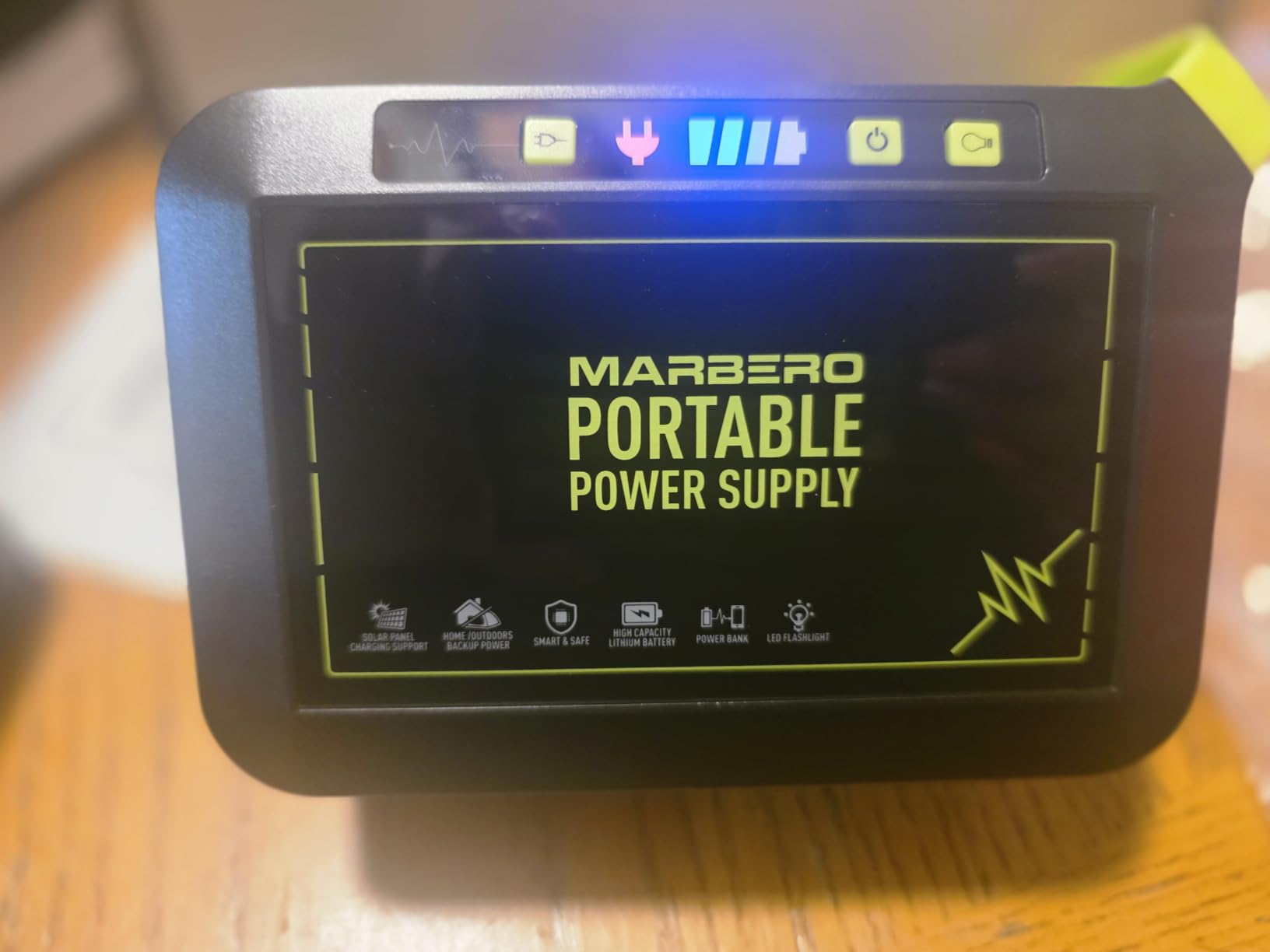
The failures concentrate around longevity and charging. Several owners report units ceasing to hold charge within a year, well inside a warranty that runs only 12 months, and a 12% one-star share is among the highest of the ten we reviewed. That is a thin safety net for equipment you are buying to be there in an emergency.
Capacity is also at the low end here at 237Wh, so a fan or any higher-draw load empties it quickly. The proprietary round DC charging port means a lost cable is awkward to replace, and recharge times of 6 to 8 hours are slow for anything but a home base.
Is the MARBERO M823 loud enough to disturb sleep?
It runs quietly on light loads, and a CPAP is a light load. The noise complaints in this category attach to units with fans that spin up under strain, which is not what a 40 watt machine causes on a 300 watt inverter.
The two lanterns are the bigger sleep consideration, and they are genuinely useful at night rather than a gimmick.
Who should skip the MARBERO 300W?
Skip it if you expect heavy use or a heated humidifier. At 237Wh and with the shortest warranty here, it is a light-load tool and a spare rather than a primary backup.
Skip it if you are buying for a device you will not check for a year. Reports of charge capacity loss inside the warranty term are the defining complaint, and that risk is what a longer warranty elsewhere is for.
Buying Guide: Seven Criteria in Priority Order
Buy in this order and you will not regret it. The first two criteria decide whether the backup actually works, the next two decide how long it keeps working, and the last three are convenience that most people over-weight at purchase time.
- Pure sine wave output. Non-negotiable. A modified sine wave inverter can put audible hum through the mask hose and cause the machine to cycle on and off. Every portable power station on this list except the Renogy and the EASYLONGER, which deliver DC directly, produces a clean waveform.
- Capacity matched to your measured draw. Find your machine’s wattage, add the heater if you use one, multiply by 1.2 for inverter loss, then buy comfortably above that. Running short is the single most common reason a backup fails on night two.
- LiFePO4 chemistry over NMC. LiFePO4 packs are rated for 3000 to 4000 cycles in the products here, tolerate heat better and carry a far lower thermal risk with a device like a CPAP plugged in overnight. A cycle life of 3000 daily charges is more than eight years.
- Continuous AC output in watts. A CPAP with a heated humidifier can pull 100 watts on its own. 300 watts covers a machine comfortably, and 600 watts covers a machine plus a phone, a router and a lamp without cycling.
- Pass-through charging. Lets you keep therapy running while the pack recharges. The EASYLONGER ES720, the Jackery, the ALLWEI and the BLUETTI support it, while the Renogy cannot do it on all ports.
- Recharge speed. Anything that refills from a wall in two hours or less is practical for storm patterns and campsite stops. The C300, the Elite 30 V2 and the VTOMAN lead here.
- Solar input and car charging. Meaningful for camping and van life, largely irrelevant for a home blackout kit that sits near an outlet. Do not pay for it if you will never use it.
Weight is worth factoring in as well, particularly the gap between a 4.6 pound handheld and a 9.5 pound box. Our related guide to cordless cleaning for pet hair makes a similar point about backup equipment you will actually move when you need it.
One category to avoid entirely is unbranded marketplace listings marketed as CPAP batteries with no published watt-hour rating, no safety certification and no warranty. Sellers of that kind are recurring sources of user complaints, and a medical device is a poor thing to plug into an unknown power supply overnight.
Travel and Airline Rules: The 100Wh Limit
Lithium battery rules in aviation are based on watt-hours, and the limit for carry-on baggage is 100Wh with no exceptions for medical devices. That single number eliminates most of the units in this guide from air travel, including the Renogy, which is not approved for carriage at all.
Spare batteries must be in your carry-on, never in checked baggage, because cargo holds are not temperature controlled and a lithium battery there is a fire risk. Each battery also needs terminals protected, which in practice means the original case or a battery bag, and the airline must be told you are carrying a CPAP for medical reasons.
Because most power stations here sit between 230Wh and 292Wh, the practical answer is that flying with one means a second battery under 100Wh, which is also its own approval process. Users on the forums raise this constantly as a genuine frustration, and it is the main reason travel-focused CPAP users often buy a dedicated travel machine instead.
For ground travel, the picture is easier. All of the units listed recharge from a car socket, and the VTOMAN adds 24V vehicle input for RV use. Solar charging pairs naturally with the same setup, though check the panel wattage limit on the ALLWEI, which caps at 120W.
Power Outage Setup Checklist
Work through this once before you need it. The majority of outage failures we see described in the forums come down to setup rather than hardware.
- Charge the CPAP, not only the battery. A charged machine with a flat backup is the wrong way round. Keep the machine at full charge so any spare pack is purely overflow.
- Test auto-start behaviour. Unplug your CPAP from the wall and confirm whether it starts by itself when power returns. Some machines resume therapy automatically and some require a button press, and you need to know which yours is.
- Run a full night on battery. Do this on a normal evening. You will learn your real overnight draw and whether the humidifier is the deciding factor, which is the number your sizing depends on.
- Set the voltage and polarity once. For DC packs, match the voltage and confirm centre-positive polarity before connecting. A wrong setting is the most common cause of a machine failing to start on battery.
- Know what happens when power returns. Some machines restart mid-night when mains reappears, and therapy hours split across two sessions may not be read correctly by your data card or app. Ask your DME provider about this before it happens.
- Keep a mask, tubing and a backup power brick together. The most common overnight complaint is not a dead battery but a missing or damaged mask.
- Tell your DME provider about the plan. Confirm which machine and which power supply you use, and ask them to document it in case therapy data needs context later.
For anyone running an RV or a longer off-grid stay, a 12V deep-cycle battery with a pure sine wave inverter is the alternative that forum users raise most often. It is not a product we have tested, but the logic is the same sizing math, applied to a far larger energy store that you recharge by driving or by solar.
Paying With FSA and HSA Funds
Sleep therapy and the equipment that supports it are commonly eligible expenses for a Flexible Spending Account or a Health Savings Account, and a CPAP battery usually qualifies under durable medical equipment. This matters more than it sounds, because pre-tax health funds turn a backup purchase into something you are spending money you set aside for healthcare rather than after-tax income.
Two practical notes. Many sellers mark products as FSA or HSA eligible, and the EASYLONGER ES720 is one of the units here that carries that designation, which is a meaningful signal on a category where unbranded listings are common. Eligibility is confirmed at checkout with your card, so check before ordering rather than reimbursing afterwards.
Keep the receipt and the product listing. If your plan requests documentation during a claim, the listing page and your order confirmation are usually what an administrator asks for, and screenshots taken on the day of purchase make that painless.
Frequently Asked Questions
What size battery backup do I need for a CPAP machine?
A CPAP without a heated humidifier draws roughly 30 to 60 watts, so one eight hour night needs about 240 to 480 watt-hours. With a heated humidifier and heated tube, expect 60 to 90 watts, or 480 to 720 watt-hours per night. Multiply your nightly draw by 1.2 to cover inverter loss, then buy above that figure. A 250 watt-hour pack covers a CPAP-only night; a heated-humidifier night needs 400 to 500 watt-hours.
How can I back up my CPAP during a power outage?
Keep the machine charged at full and the backup pack charged separately, then plug the machine into the pack instead of the wall. Test auto-start once by unplugging the machine and confirming whether it starts by itself when power returns. Run a full night on battery beforehand to learn your real draw, and set any DC voltage and polarity before you need it. Keep a spare mask and tubing with the kit.
What is the best portable power pack for a CPAP machine?
The Jackery Explorer 300 is the strongest all-round choice, with owner reports of 35 hours of DreamStation runtime across four nights, a pure sine wave inverter and a LiFePO4 pack rated beyond 4000 cycles. If your machine runs a heated humidifier, the BLUETTI Elite 30 V2 offers 600 watts of continuous output and a 10 millisecond UPS switchover. For a single night with cables included, the EASYLONGER ES720 is the most purpose-built option.
Do CPAP batteries work in checked baggage?
No. Spare lithium batteries are not permitted in checked baggage because cargo holds are not temperature controlled. Batteries must travel in your carry-on with terminals protected, and you should tell the airline you are carrying a medical device. Most of the units in this guide exceed the 100Wh carry-on limit, so check the watt-hour rating printed on the battery before planning a flight around it.
How long will a 500Wh battery run my CPAP?
A 500Wh pack stores roughly 415 usable watt-hours after a 1.2 multiplier for inverter loss. At a 40 watt CPAP-only draw that is around ten hours, or one night with a large reserve. At 75 watts with a heated humidifier it is closer to five and a half hours. In practice 500Wh suits one heated-humidifier night with margin, or a couple of CPAP-only nights.
The Bottom Line
For most people the Jackery Explorer 300 is the right buy, because it is the one unit where long-term owners have published overnight runtime logs on named CPAP machines and the inverter is a clean pure sine wave. If your setup runs a heated humidifier and heated tube, go one step further to the BLUETTI Elite 30 V2 for the 600 watt ceiling, and pair either with wall power recovery for anything longer than two nights.
If you want something that arrives plug-and-play with the correct cables and the lowest weight, the EASYLONGER ES720 does that job for a single night. Whatever you choose, the best battery backups for CPAP machines share three things: a clean waveform, enough watt-hours for your heater setting, and a full test night on battery before the storm arrives. Check the sizing math above first, then use the review button on the unit that matches your draw.