
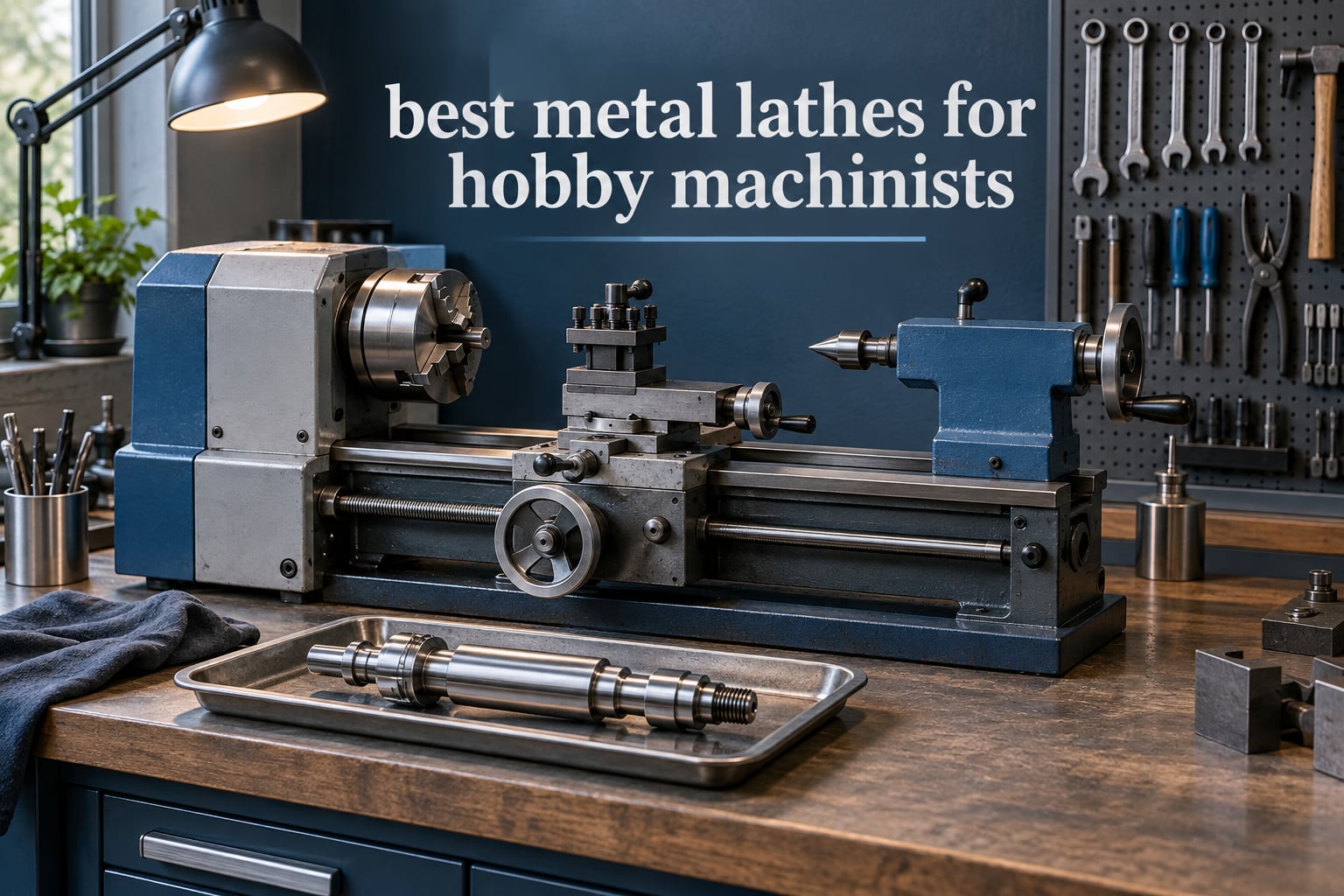
Buying your first metal lathe is one of those decisions where the wrong choice is expensive and the right one is genuinely fun for decades. The best metal lathes for hobby machinists are the benchtop machines that grip a workpiece in a chuck, spin it at a speed you choose, and let a cutting tool remove material while you feed it by hand. That simple description covers everything from a 34-pound precision machine to a 205-pound steel-cutting bench.
I have spent the last few months going through the spec sheets and owner reviews for every machine in this roundup, alongside the sizing advice that dominates the hobby forums. Ten lathes here, spanning a 6-inch micro machine up to an 8×32 bench with a brushless spindle. No hands-on claims here, and I want to be straight about that: every number below comes from the manufacturer’s listing and from what owners reported in reviews.
What follows is the guide I wish I had when I sized up my own shop. We cover the class question first, because buying the wrong size is the single most common regret, then ten picks with the honest downsides attached to each one. If you want a short answer, the VEVOR 7×14 is the one most hobby machinists should look at first. If your work is steel, the answer changes entirely.
Table of Contents
Top 3 Metal Lathes for Hobby Machinists in 2026
Three machines cover most hobby shops in 2026: one balanced all-rounder, one heavy-duty bench, and one value entry point. The winner is the one with the deepest owner feedback behind it, not the one with the highest headline specification.

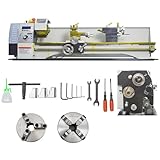
INTSUPERMAI 8×32 Metal Lathe
- 1100W brushless motor
- Gearless electronic leadscrew
- 31.5 in between centers
All 10 Metal Lathes Compared in 2026
Every machine in the roundup, side by side. Use swing over bed as the diameter limit, distance between centers as the length limit, and motor watts as your guide to whether mild steel is realistic.
| Product | Specs | Action |
|---|---|---|
| VEVOR 7×14 Metal Lathe |
|
Check Latest Price |
 VEVOR 8×14 Mini Metal Lathe VEVOR 8×14 Mini Metal Lathe |
|
Check Latest Price |
 WEN 7×12 ML712 WEN 7×12 ML712 |
|
Check Latest Price |
 CREWORKS 9×30 Metal Lathe CREWORKS 9×30 Metal Lathe |
|
Check Latest Price |
| INTSUPERMAI 8×32 Metal Lathe |
|
Check Latest Price |
 Shop Fox M1015 6×10 Shop Fox M1015 6×10 |
|
Check Latest Price |
 Proxxon PD 250/E Proxxon PD 250/E |
|
Check Latest Price |
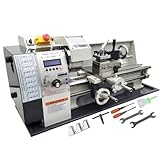 TECHTONGDA 8×16 TECHTONGDA 8×16 |
|
Check Latest Price |
 INTBUYING 8×24 INTBUYING 8×24 |
|
Check Latest Price |
 Upgraded 7×14 Mini Metal Lathe Upgraded 7×14 Mini Metal Lathe |
|
Check Latest Price |
Which Class of Metal Lathe Do You Actually Need?
A good small metalworking lathe is defined by two numbers: swing over bed, the largest diameter you can turn, and distance between centers, the longest piece you can hold between the chuck and tailstock. Everything else is detail. Match the class to your work and you avoid the two classic mistakes, buying a machine too small for real parts, or buying more machine than your bench and budget can carry.
- Micro class, under 6 in swing and 40W to 150W: jewelry, pen turning, model parts, Delrin and other plastics, and small electrical work. Great for learning tool geometry because a mistake costs almost nothing. Not a general metal lathe.
- Entry class, 6 to 7 in swing with a 550W to 650W motor: aluminum, brass, copper, plastics, and light cuts in mild steel. This is where most first machines sit, and it is the sweet spot for learning.
- Mid class, 8 in swing with 1000W to 1100W: real 1018 steel work, longer pieces between centers, and heavier facing cuts. This is where hobby shops stop outgrowing the machine.
- Long-bed class, 8 in swing with 24 in or more between centers: long shafts, handrails, gun barrels, and anything where a steady rest or follow rest becomes standard equipment.
The sizing advice that repeats most often on the hobby forums is simple: buy the largest machine you can physically fit and comfortably afford, because most people outgrow a 7×14 faster than they expect. Practical Machinist users argue for a swing of at least 13 inches and at least a dozen speeds running as slow as 40 RPM for threading work, which is a good reminder that headroom beats precision at this level.
1. VEVOR 7×14 Metal Lathe – Best Overall for Hobby Machinists
VEVOR 7″x14″ Metal Lathe, Upgraded Digital Display, 550W
550W motor
7.09 in swing over bed
13.78 in between centers
50-2500 RPM
Metal gears
Pros
- High-precision 4 in 3-jaw chuck handles round and square bar
- Generous swing for a compact machine
- Digital speed readout
- METAL gear train instead of nylon
- Auto power-off protection and LED lamp
Cons
- Material removal is limited against 8-9 in machines
- 14 in between centers is short for long workpieces
- Tool post height set by hand when tooling changes
Out of ten machines, this is the one with by far the largest body of owner feedback: 294 reviews sitting at 4.0 stars. That volume matters more than it looks. With a review base that size you can see the failure pattern clearly instead of guessing, and the pattern here is good, with a real cluster of five-star owners who are enthusiastic about value, the metal gear train and the digital readout.
The specification is a sensible one for an entry machine. You get a 550W motor, 7.09 inches of swing over bed, 13.78 inches between centers, and stepless electronic speed control from 50 to 2500 RPM with a digital display. The 4-inch three-jaw chuck is large enough to be useful rather than decorative, and the metal gear train is the specific upgrade that separates this machine from the nylon-geared budget lathes it competes with.
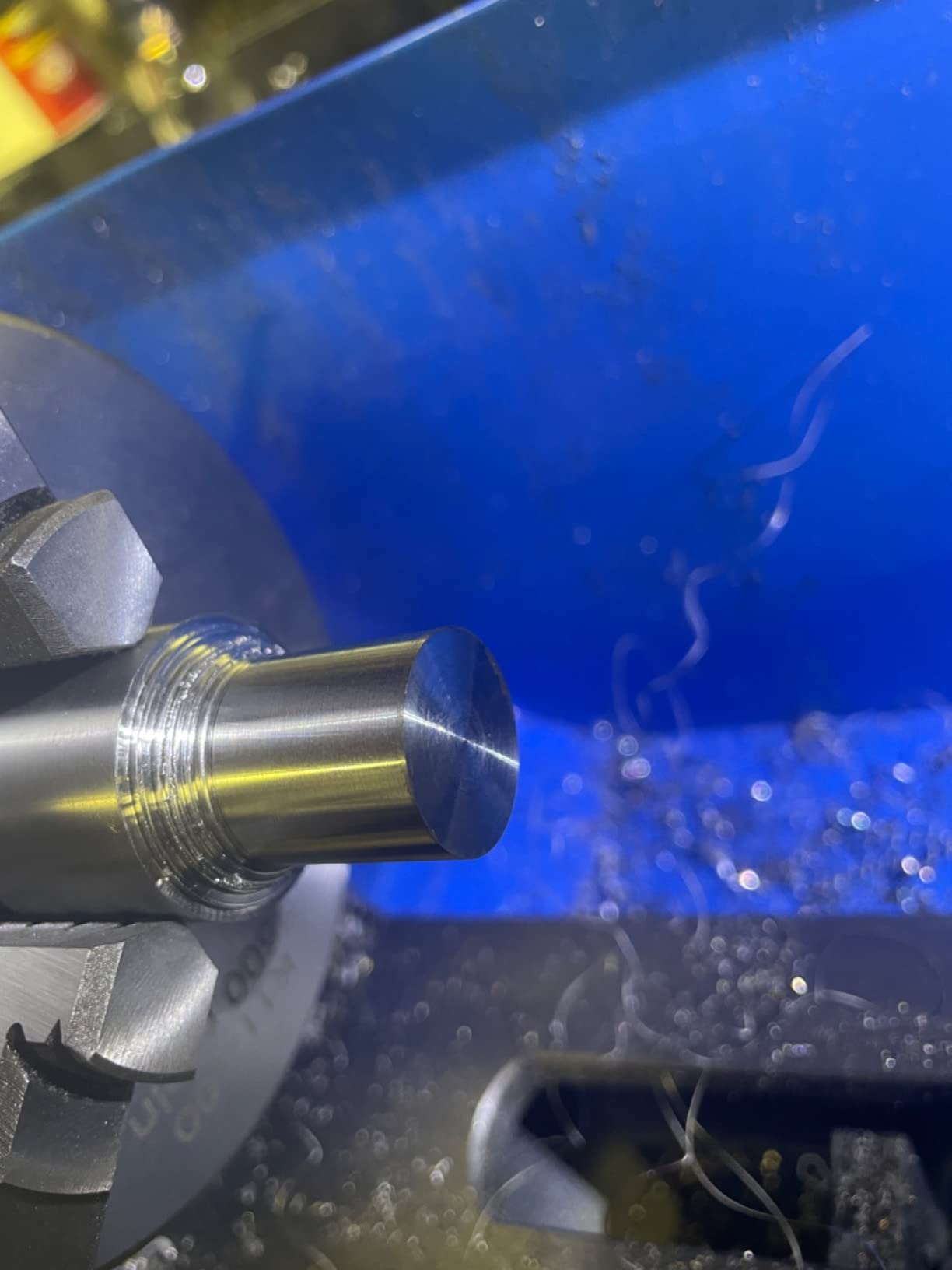
The distribution behind that 4.0 average is the honest part. About 58 percent of ratings are five stars, but there is a notable 14 percent one-star cluster, the largest of any VEVOR machine in this group, and those reviews concentrate on two things: assembly alignment on arrival, and what happens when you need support after the warranty window closes. Worth knowing before you order, and worth budgeting a weekend for.
Aluminum and brass are where this machine shines, and light cuts in mild steel are entirely workable. What it will not do is take a heavy facing pass across a 7-inch diameter, and the 14-inch bed means longer workpieces need a steady rest or a different machine. Understand those two limits before you buy, and it is an excellent first lathe.
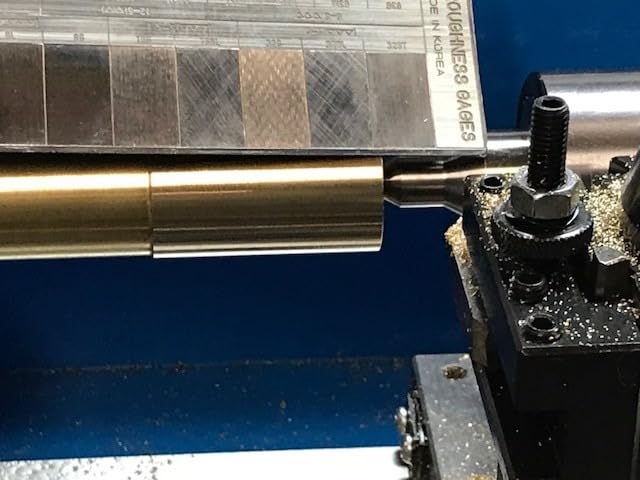
Is the 4-inch chuck and swing enough for real hobby parts?
For model engineering, small brackets, bushings, spacers, hardware and restoration work, yes. The 4-inch chuck is wide enough to hold a 2-inch bar with plenty of jaw engagement, and 7.09 inches of swing leaves room for the workpiece plus a tool holder without pushing the compound into the chuck.
Where it runs out is diameter. Anything approaching 7 inches across has to be turned in a few light passes with sharp carbide tooling, and there is no reserve torque to recover from a mistake. If your parts are small and varied, the constraint will never register. If you turn occasional large flanges, plan on moving up in size later.
What should I expect in the first weekend of ownership?
Plan for a full day. Level the machine, check the tailstock against the chuck with a dial indicator, shim if needed, and re-align before you cut anything. That alignment step is where most of the one-star reviews come from, and it is a solvable problem once you have a magnetic base and a test indicator.
After that comes gib adjustment on the cross slide and compound, greasing the ways, and a first cut in aluminum to confirm runout. Owners who treat this as part of the hobby report excellent results. Owners who expect a ready-to-run machine from the shipping crate tend to end up in that one-star group. The difference is entirely about expectations, not about the machine.
2. VEVOR 8×14 Mini Metal Lathe – Best Value Benchtop Machine
VEVOR Mini Metal Lathe 8″x14″ Compact Lathe Machine 2250 PRM Variable Speed
Cast iron body
600W motor
50-2250 RPM
8.3 in swing over bed
MT2 tailstock
Pros
- All-metal gear train and direct drive to the spindle
- Cast iron construction with metric graduations
- Stepless speed with forward and reverse
- Accessory package includes jaws cutters and spare gears
- Accurate enough for mild and stainless once tuned
Cons
- Carriage power feed cannot be switched off
- Power feed knob only reachable with the gear cover off
- Tailstock knob has bushing slop
- Gib adjustment needed on arrival
This machine takes the entry-class idea and adds cast iron, more swing and forward and reverse rotation, which is the combination you want the moment you start cutting threads. The cast iron body with a metal gear train and metric graduations is a real step up from an all-aluminium shell, and owners who tuned theirs in report good results on aluminum, brass, copper, mild and stainless steel.
Six hundred watts of motor driving the spindle from 50 to 2250 RPM with stepless control, plus a 0.8-inch spindle bore and a 3.9-inch three-jaw chuck. You get a turret post for quick tool changes, a cross slide for internal, facing and bevel work, and an MT2 tailstock with four set screws so you can cut offset tapers. The accessory package is generous for the money: jaws, cutters, spare gears and an oil gun all in the box.
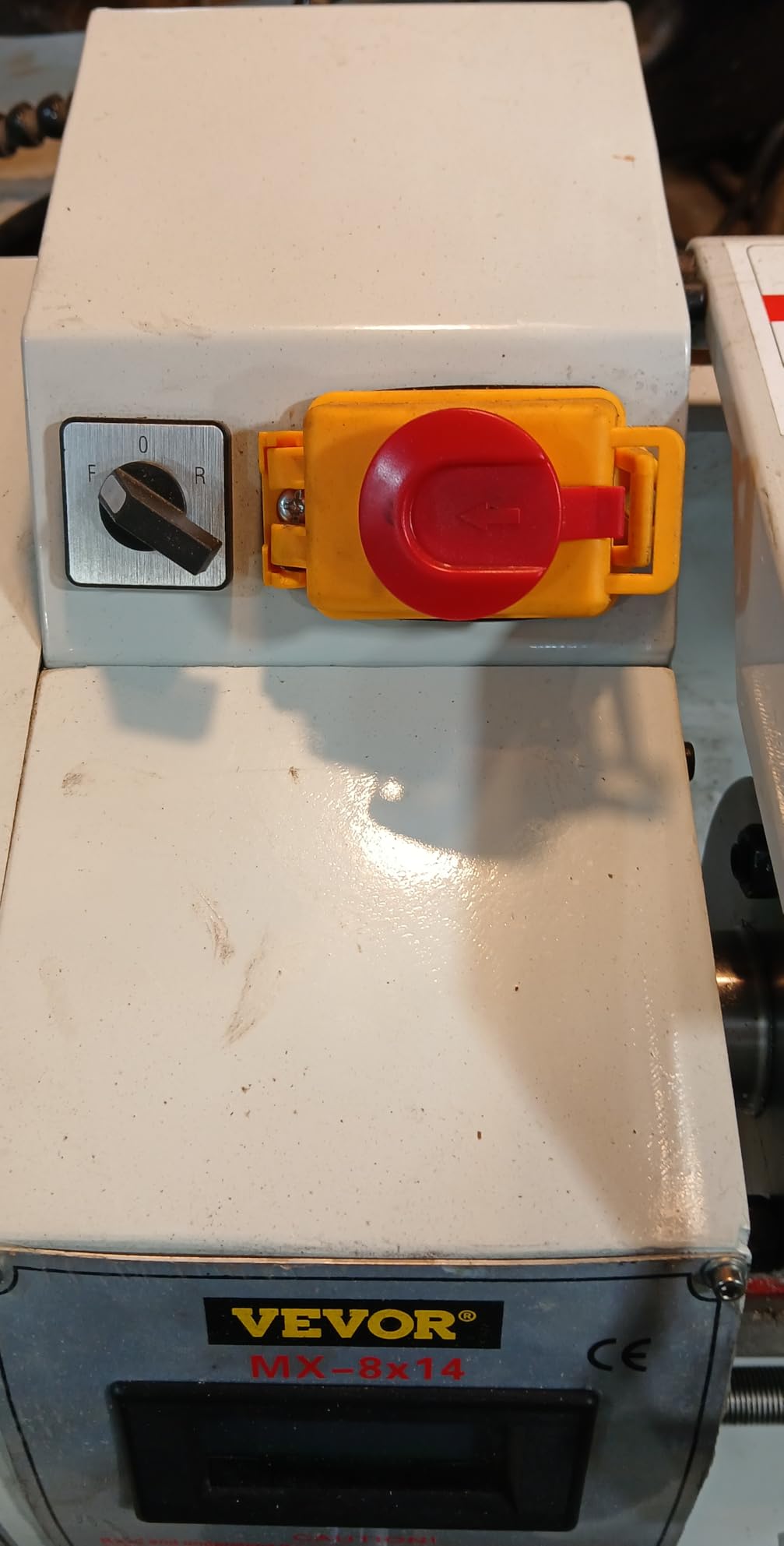
The 3.7 average across 54 reviews is low, but the review pattern explains it. Reviewers split sharply into those who treat setup and tuning as part of the hobby and rate it four or five stars, and those who expected a finished precision instrument. This is a machine that rewards a weekend of fettling.
There are real engineering complaints worth reading before you buy. The carriage power feed cannot be switched off, so the leadscrew always turns, and the power feed knob is only reachable with the gear cover removed, which is a safety issue rather than a preference. The tailstock knob has bushing slop, and the supplied high-speed-steel tooling is weak on steel. Budget for a proper quick-change tool post and carbide inserts, which is the most common upgrade path owners describe.
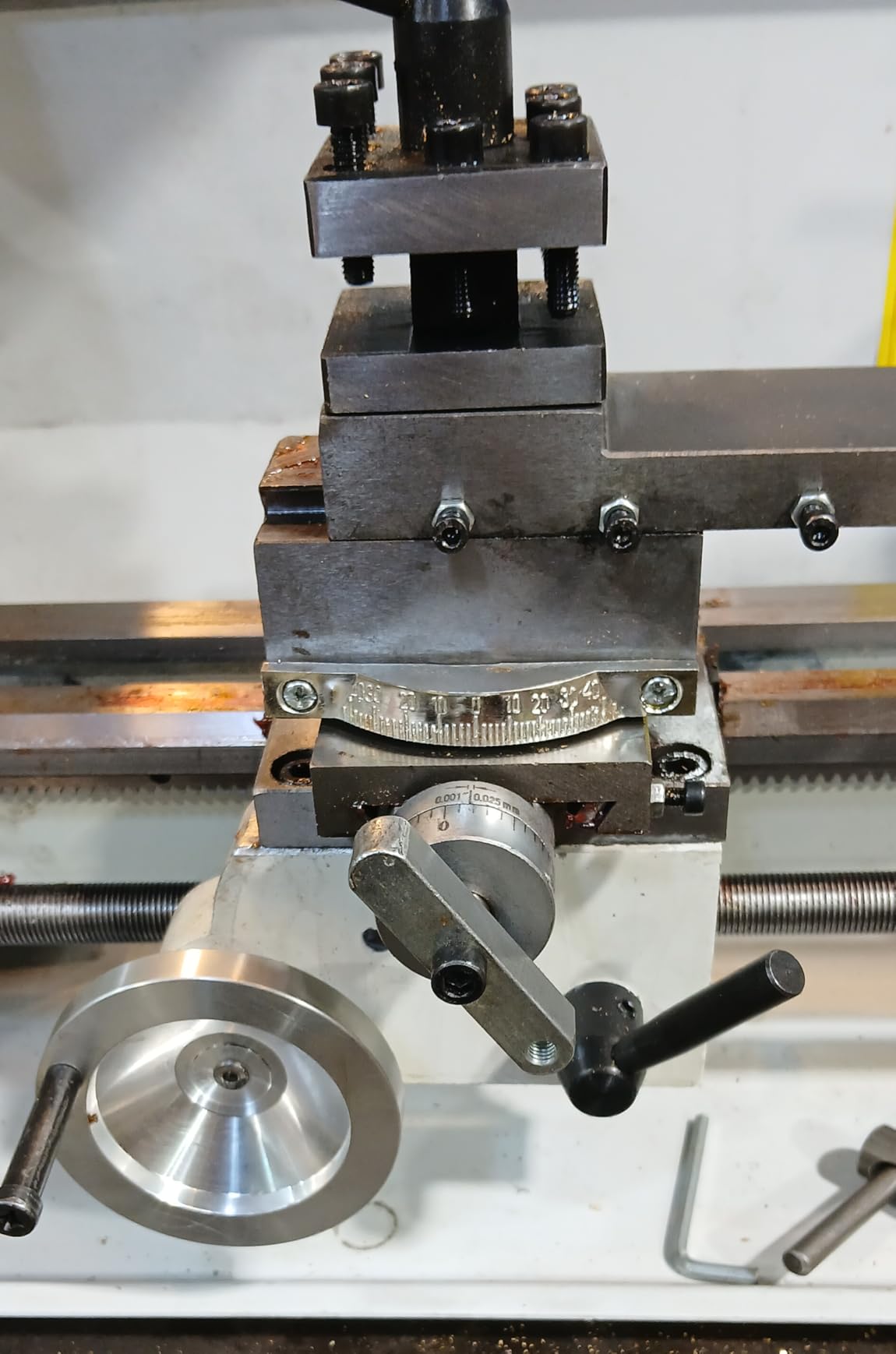
Does the cast iron bed hold up for steel cutting?
Yes, within reason. The direct metal gear train and cast iron construction give smoother running than belt-driven budget machines, and the 8.3-inch swing over bed gives more room for larger parts than the 7-inch class. Steel is realistic once you fit carbide tooling and stop trying to hog out heavy passes.
Remember that gibs must be tightened and the ways re-greased on arrival, so the machine as shipped is not yet the machine you will use. A couple of hours of that work separates owners who rate it highly from owners who do not. Also note that swing over the cross slide is listed at 13.8 inches, so verify clearances for your largest workpiece before committing.
Is the 8×14 the same machine as the 7×14?
No, and the differences are not cosmetic. You gain roughly an inch of swing, cast iron instead of a lighter body, a larger spindle bore at 0.8 inches, forward and reverse rotation, and an adjustable MT2 tailstock that lets you cut tapers properly. You also get a turret post where the smaller machine has a four-way post.
For a first machine that will grow with you, this is the more capable of the two. The trade is weight and floor space, plus a longer first setup because there is more to align. If your work is mostly small aluminum and brass parts under 6 inches, the simpler 7-inch machine is the better fit and the review data supports it more strongly.
3. WEN 7×12 ML712 – Best for Threading With a Warranty Behind It
WEN 7-by 12-Inch Benchtop Metal Lathe, Variable Speed, Two Direction (ML712)
Dual speed ranges
Threading dial 12-52 TPI
MT3 spindle and MT2 tailstock
7 in swing by 12 in
Pros
- Backed by a recognized US power-tool brand with a two-year warranty
- Two independent speed ranges give finer control
- Threading dial covers 18 TPI sizes from 12 to 52
- Adjustable automatic feed alongside manual operation
- 12 in between centers on a 7 in swing machine
Cons
- Only 11 ratings for long-term owner feedback
- 7 in swing is the smallest capacity in the group
- Automatic feed is adjustable rather than fully powered
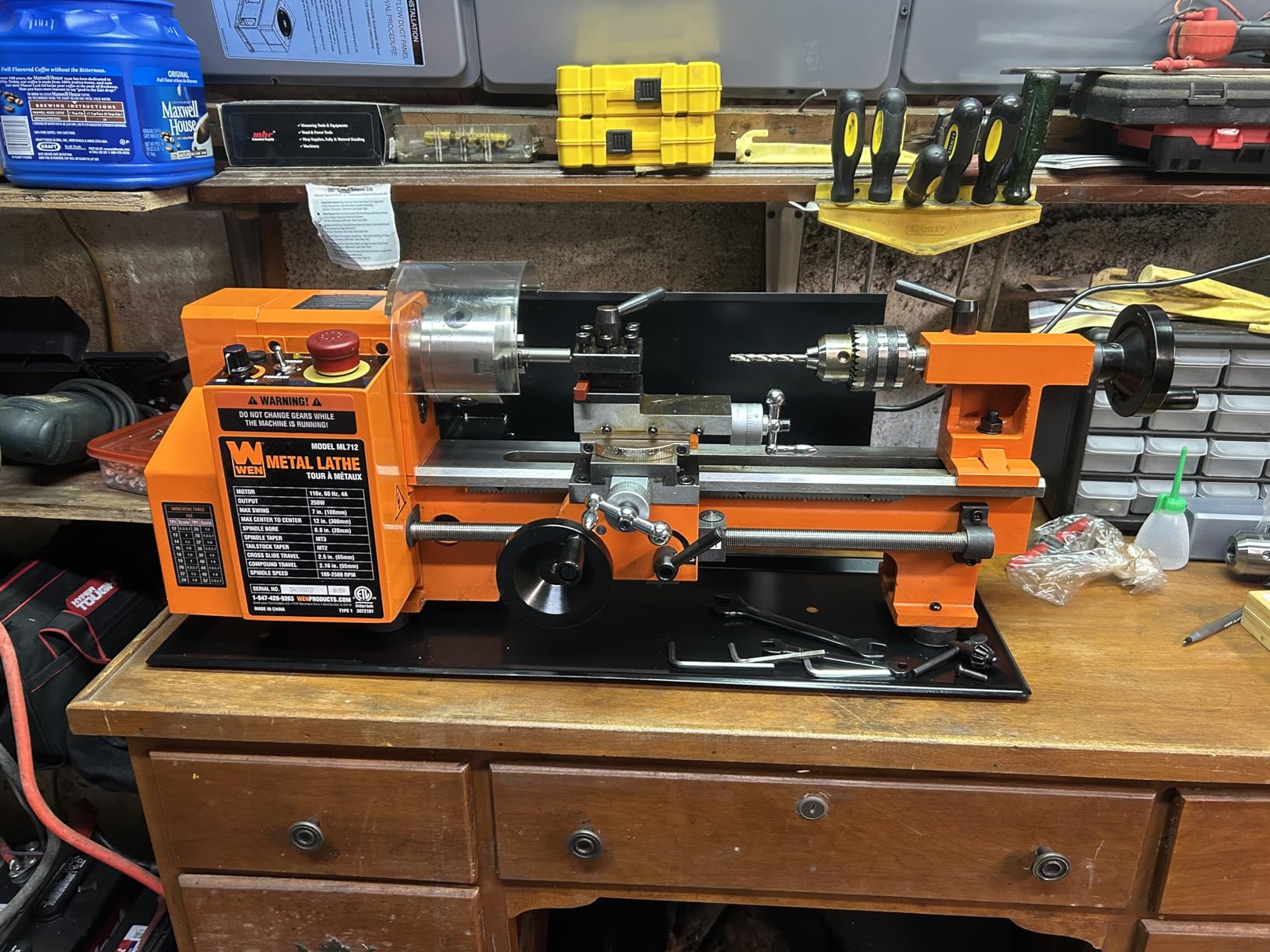
What sets this machine apart is the threading hardware. The dial indicator covers 18 thread sizes from 12 to 52 TPI, which is a genuinely useful feature that most machines in this price bracket do not offer, and the MT3 spindle taper with an MT2 tailstock taper is a standard combination you can buy tooling for anywhere.
Speed control runs in two full variable ranges from 100 to 2500 RPM, either direction. Two ranges matter more than buyers expect, because the low range gives fine control at finishing feeds while the high range keeps surface speed reasonable on larger diameters. Manual or adjustable automatic feed operation is included, along with a three-jaw chuck, a 5/16-inch capacity tool post and a 5/16-inch tool rest.
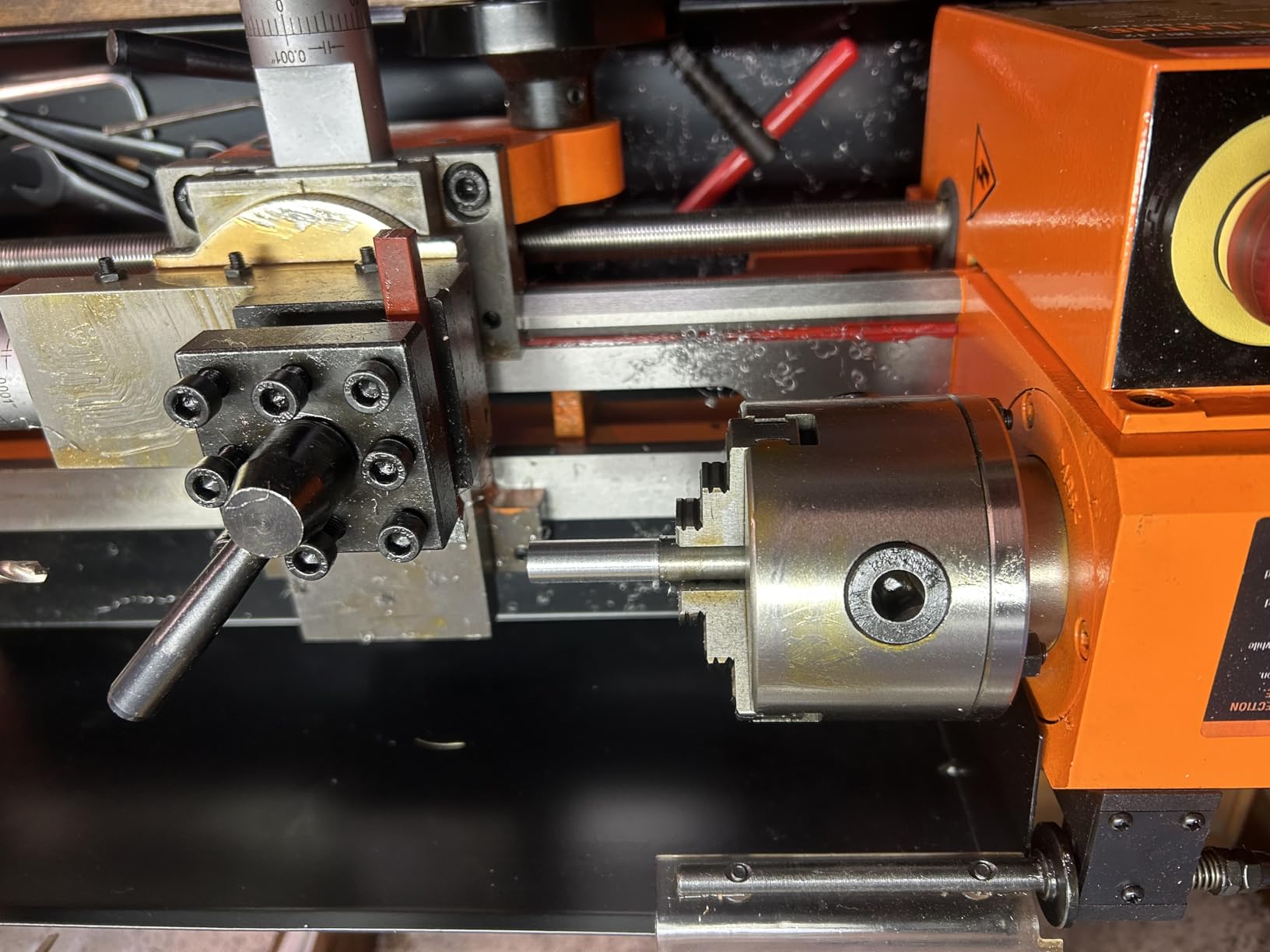
The honest caveat is the review base. Eleven ratings at 3.7 stars is a very thin sample, and the distribution has an unusually high share of three-star reviews. That pattern reads as acceptable and unexciting rather than broken, which is still useful information when you are choosing between machines.
Owners who bought it seem to value the warranty and the threading dial more than raw cutting capacity, and that is a reasonable trade for a beginner. The two-year warranty from a recognized US power-tool brand is worth real money when a headstock or drive component fails, and that is precisely the failure mode the thinner imported machines leave you with. At 114.4 pounds, it is a substantial but manageable bench machine.
How important is the threading dial for a first lathe?
More than most guides admit. Cutting a thread by trial and error on a plain leadscrew means swapping gears, guessing the change, and retrying until the pitch is right. A dial indicator that indexes the half nut to a marked thread size removes all of that, which is why threading learners gravitate to machines with one.
The combination of 12 to 52 TPI coverage and dual speed ranges means you can cut a coarse thread slowly and a fine thread at a usable surface speed, without a full gear chart. If threading is a goal rather than a someday project, this is the single best-equipped machine in the roundup for the money.
What are the 7-inch swing and 12-inch bed really limiting?
Seven inches of swing is the smallest diameter limit here, so a workpiece over about 6 inches needs to be turned in light passes. Twelve inches between centers is generous for the class, and it will comfortably handle model engine parts, small hardware and most restoration work.
Also note that the automatic feed is described as adjustable rather than a fully powered cross feed. That means it helps with consistent longitudinal feeding but does not drive the cross slide for you. Set expectations accordingly if you are used to machines with powered cross feed.
4. CREWORKS 9×30 Metal Lathe – Best for Cutting Steel
CREWORKS Mini Metal Lathe 9″ x 30″ Benchtop Metal Lathe with 3 Jaw Chuck and 3000rpm Max. Spindle Speed, 1100W Metalworking Machine with LCD Display, Metal Lathe Machine for Threading Turning Drilling
1100W motor
0-3000 RPM display
8.7 in swing over bed
27 in between centers
5 in chuck
Pros
- One of the two heaviest machines here at 198 pounds
- 1100W motor with electronic speed control
- Arrived clean well packed and largely rust-free
- Transparent chuck guard and emergency stop
- Support replaced a damaged tailstock at no cost
Cons
- Advertised 30 in between centers measures closer to 27 in
- Cross slide and compound need milling for a quick-change post
- Headstock bearings cannot be lubricated
- Slide arrives very sticky and needs cleaning
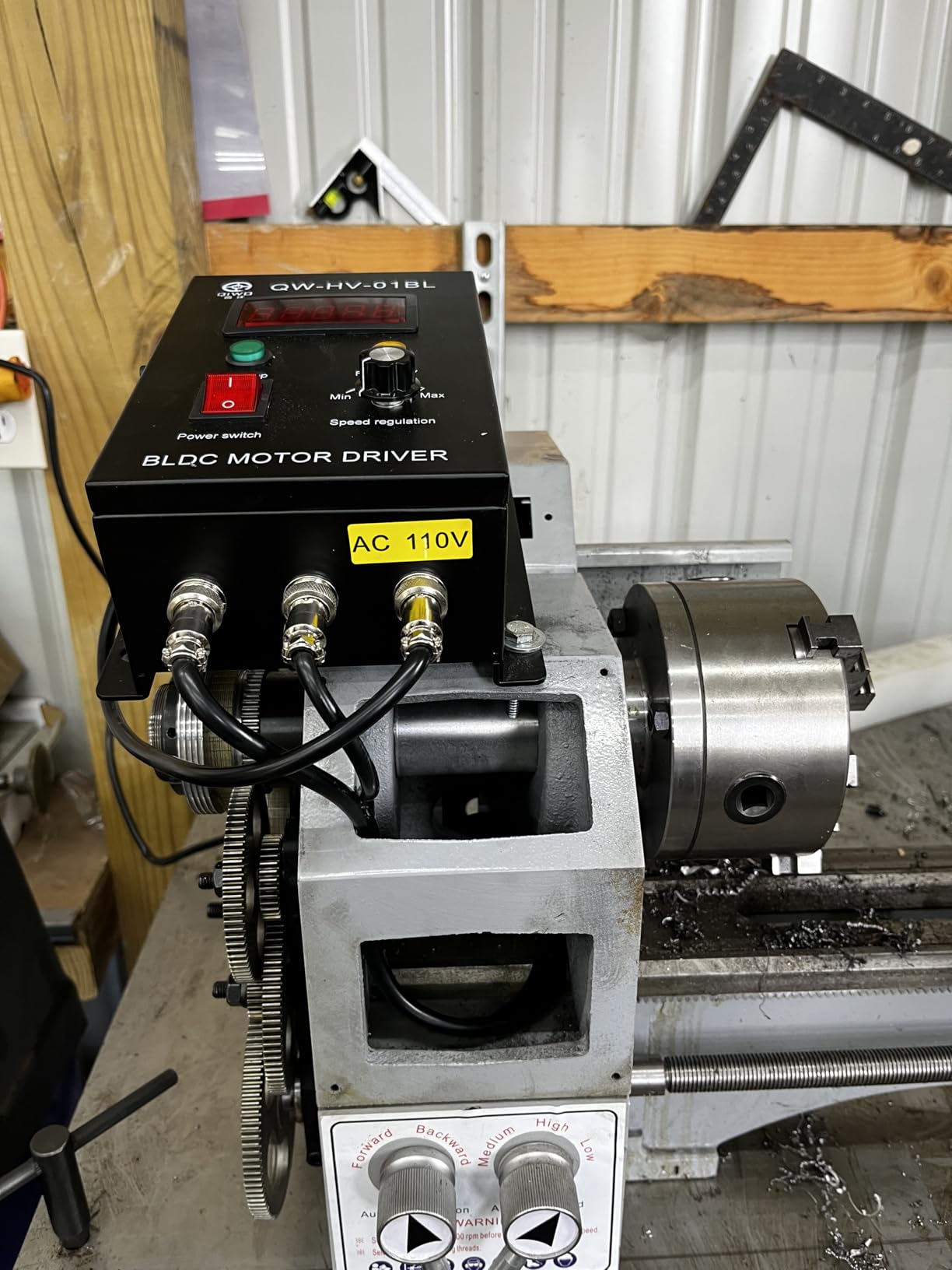
Steel is a torque problem, and this machine solves it with a 1100W motor, 198 pounds of cast iron and a 5-inch high-precision chuck. The 8.7 inches of swing over bed and a listed 27 inches between centers give it the geometry for real workpieces rather than model-scale ones, and the 0 to 3000 RPM range with a real-time digital display makes surface speed easy to hold on a large diameter.
Owners repeatedly single out the shipping condition. This machine arrives clean, well packed and largely rust-free, needing far less commissioning than typical direct imports, and one buyer reports CREWORKS support replacing a damaged tailstock quickly and at no cost. That is a meaningful difference from machines that show up needing a warranty claim before the first cut.
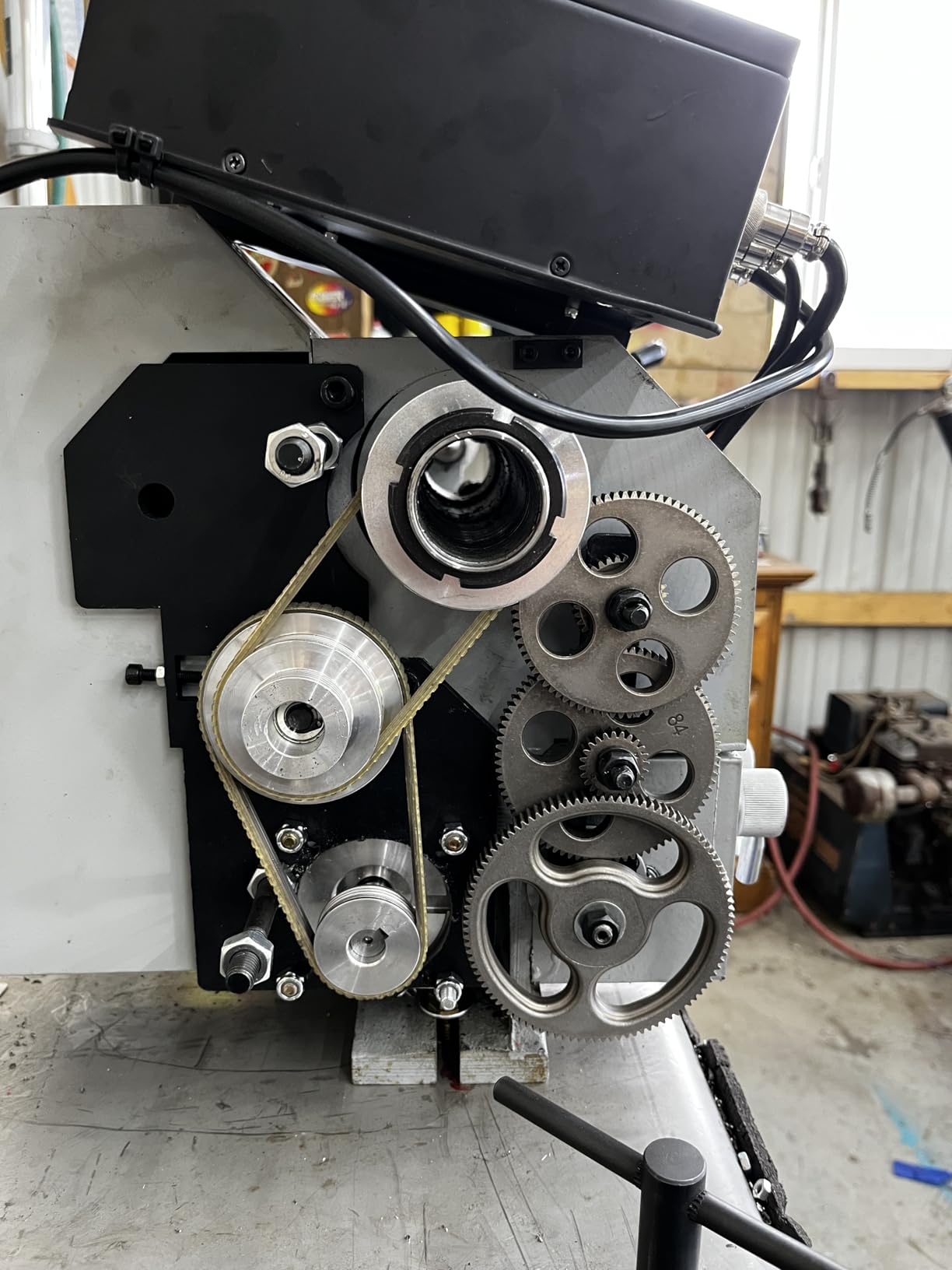
The 3.8 average comes from only eight ratings, so treat it as a small and strongly worded sample rather than a reliable average. Positives cluster on rigidity, power and condition. Negatives cluster on two specific things: the bed is shorter than advertised, and the supplied tool post needs machining to accept a quick-change unit.
On that first point, the listing says 30 inches between centers and owners measure closer to 27. Measure before you plan a long shaft. On the second, milling, drilling and tapping the cross slide and compound to fit a quick-change tool post is a normal weekend job, but only if you own a small mill or a drill and taps and some patience. The other recurring complaints, lubricated bearings that are sealed and a slide that arrives sticky and grimy, are real but manageable in the first setup.
Is 1100 watts enough to cut 1018 and tool steel at home?
For 1018 mild steel, comfortably, with proper carbide tooling and sane depth of cut. For tool steel, you are into a different conversation and should work slowly with coolant and shallow passes. The combination of power and mass is what makes it feel solid rather than strained, and the 198-pound weight is a large part of why the cuts look clean.
The one risk to plan for is parts availability. One owner reported electronics burnout within a year with no replacement parts and hard-to-reach support. If that happens, budget for the possibility of losing the drive electronics rather than treating support as a certainty.
Does the 9×30 fit in a home shop?
The machine footprint is 43.7 by 16.9 inches, which is a long bench. You will need a stand or a heavy dedicated bench, and at 198 pounds you should not plan to move it often. Two people are a sensible assumption for the initial positioning.
Because the bed is closer to 27 inches than the advertised 30, think of it as a 9×27 in practice. That is still enough for most hobby gunsmithing and restoration work, but check the longest part you actually intend to turn before ordering.
5. INTSUPERMAI 8×32 Metal Lathe – Most Versatile for Serious Hobby Work
INTSUPERMAI 8″× 32″ Metal Lathe Precision Benchtop Metal Lathe Electronic Leadscrew Gearless Hobby DIY Metal Lathe 50-2500rpm Variable Speed with 4 Jaw/3 Jaw Chuck 110V
Gearless electronic leadscrew
1100W brushless motor
50-2500 RPM
0.01 mm spindle precision
Pros
- Gearless electronic leadscrew removes gear-change guesswork
- 1100W brushless motor handles deep passes in 1 in steel
- Three-jaw and four-jaw chucks both included
- Dual V-ways and tapered roller bearing
- Auto-turning stops the carriage without a mechanical stop
Cons
- Documentation is poor with no real operation or parts manual
- Cross slide needs modification for a quick-change post
- Heavy at 205 pounds
- 4-jaw chuck run-out measured around 0.005 in
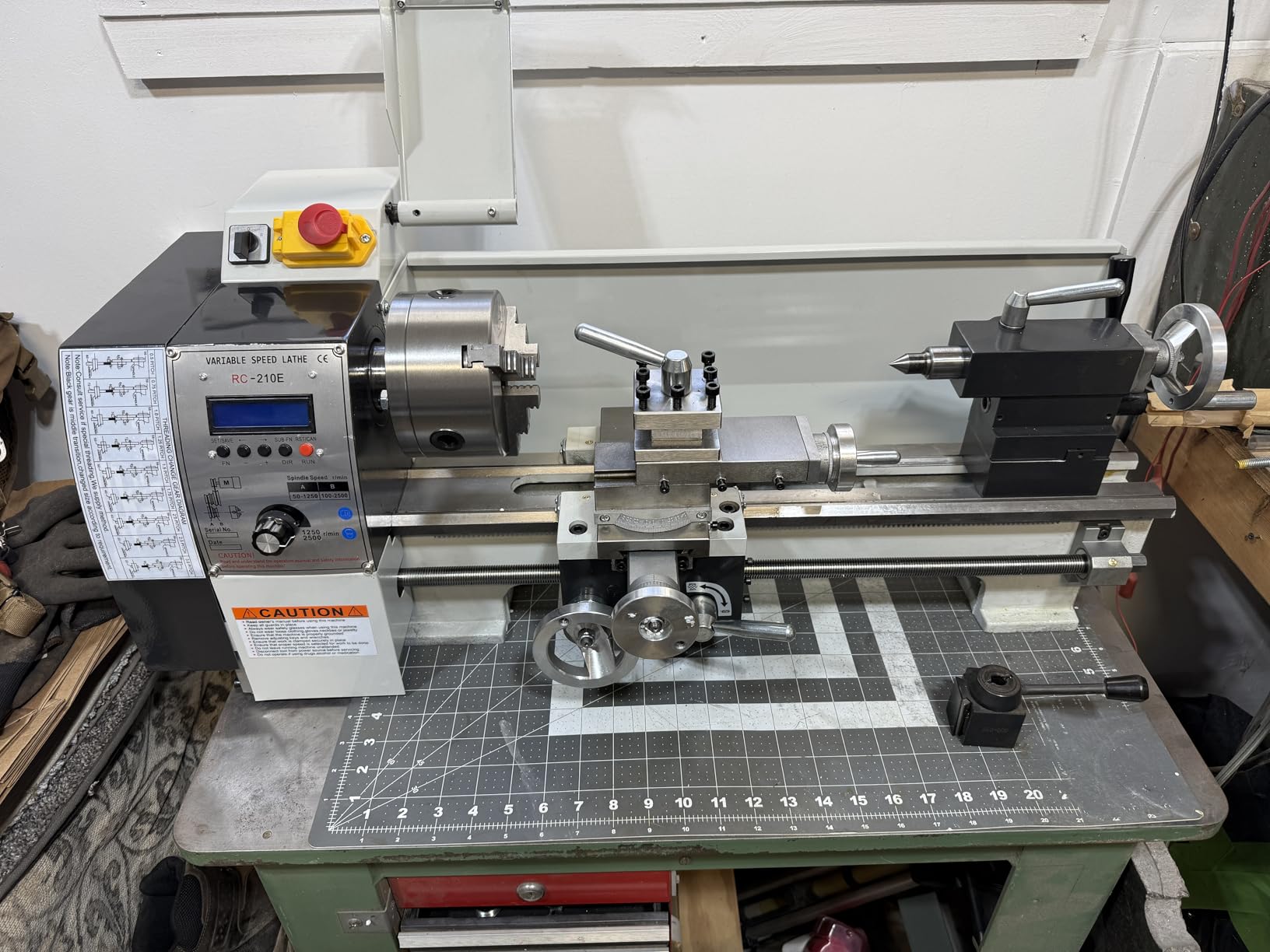
The gearless electronic leadscrew is the idea worth understanding before you compare anything else. Instead of change gears and a half nut indexing system, you switch between imperial and metric threads from the control panel, which removes the single most error-prone part of threading a smaller lathe. Owners who measure things get excellent results, with run-out around 0.0005 inches on a three-jaw chuck after cleaning and accuracy within about 0.003 inches over a 20-inch bed.
Underneath, you get a 1100W brushless motor running 50 to 2500 RPM, a 31.5-inch center length, 8.27 inches of swing over bed, and dual V-ways with a tapered roller bearing. A metric thread range of 10 to 44 TPI is covered, and manual start, automatic start and delayed automatic start are all available, along with direction control, one-click tool clearance, parameter memory and reciprocating turning.
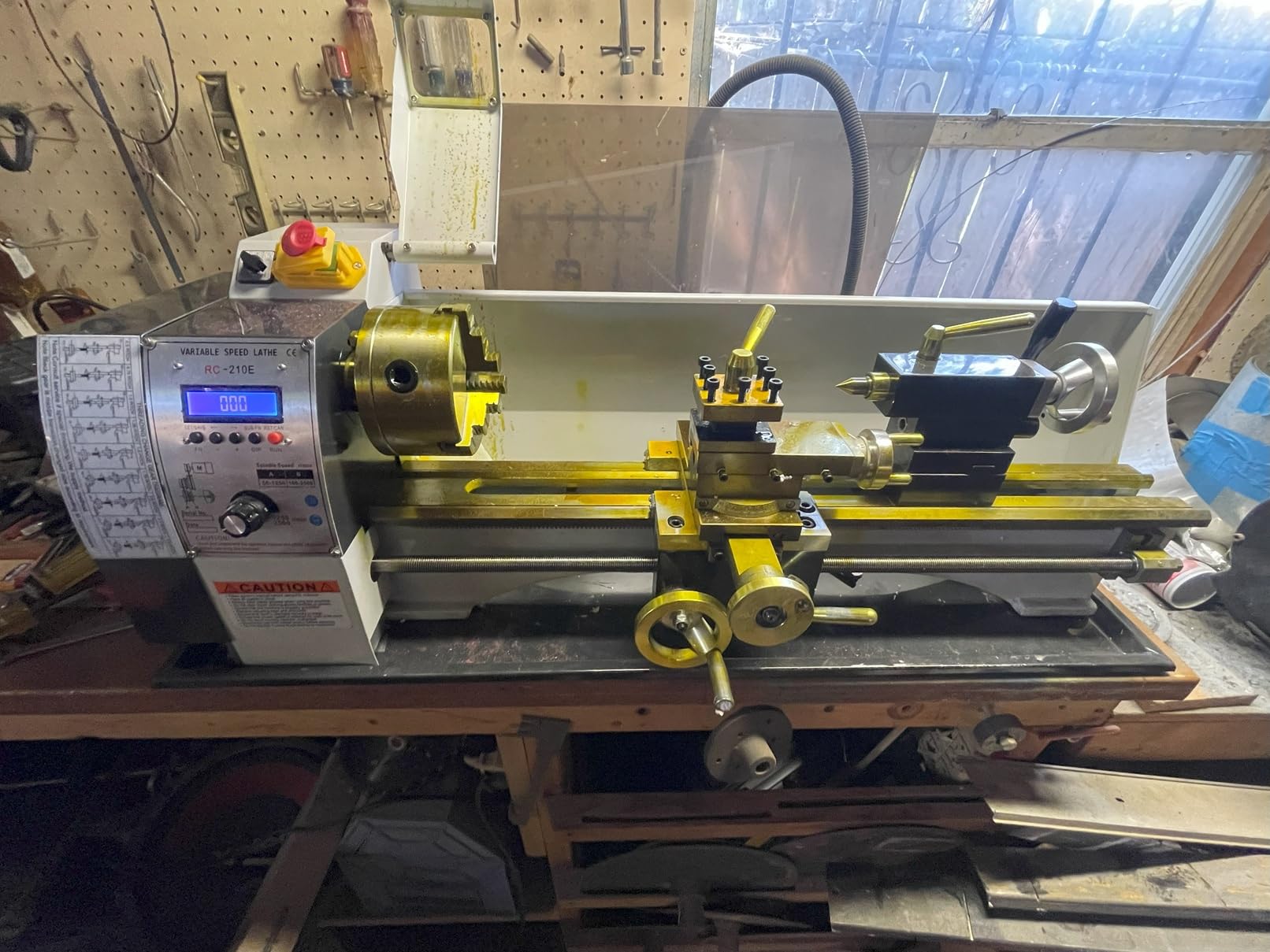
Thirteen reviews at 4.9 stars with 90 percent five-star and nothing below three is one of the strongest rating profiles in the group. The quiet running gets called out repeatedly, with no gear meshing noise, and stepless speed helps maintain surface speed on deeper cuts. The 1100W brushless spindle is reported to handle fairly deep passes in 1-inch steel.
Now the honest part. Documentation is the recurring complaint, with several buyers learning operation from video walkthroughs because there is no real operation, service or parts manual, and control-panel headings arrive untranslated. A quick-change tool post does not fit without modifying the cross slide, and the quarter-inch cross-slide extension blocks standard post bolt sizing until it is milled off. The four-jaw chuck run-out measured around 0.005 inches, so dial it in before trusting it for concentric work.
Is a gearless electronic leadscrew worth the extra cost?
If threading is part of your work, yes, and the saving in scrapped parts and setup time adds up quickly. One key press changes between imperial and metric with no gear removal and no cover off, which on a conventional mini lathe is a five-minute job every time you change pitch systems.
If you mostly face, turn and drill, the advantage is smaller and you are paying a premium for a feature you will not use. In that case the mid-class machines give you more torque per dollar.
What does 205 pounds mean for a home shop?
It means a properly built stand and a floor or a bench rated for it, and it means you will not be moving the machine casually. Owners describe it as awkward to bolt down single-handed, so plan the installation with a second person and get the base level before the headstock goes on.
It also needs truing up before it holds precision work, which is normal for a machine in this class rather than a defect. Budget the same first weekend you would budget for any large lathe, plus the small mill time needed for the tool post modification.
6. Shop Fox M1015 6×10 Mini Lathe – Best for a Small Bench
Shop Fox 6 in. x 10 in. Mini Metal Lathe M1015
6 in swing by 10 in centers
3/8 in spindle bore
16 TPI leadscrew
110V brushed DC motor
Pros
- Compact and genuinely rigid for a micro lathe
- At 71 pounds far easier to bench-mount than 200 lb machines
- One owner cuts steel with it without difficulty
- Expands into milling work with Shop Fox accessories
- Satisfaction reported for luthier and small-shop turning
Cons
- Build quality varies sharply between units
- No compound cross slide so tool changes need repositioning
- Chucks live center and cutting tools are not included
- Drive belt reported failing after about five months
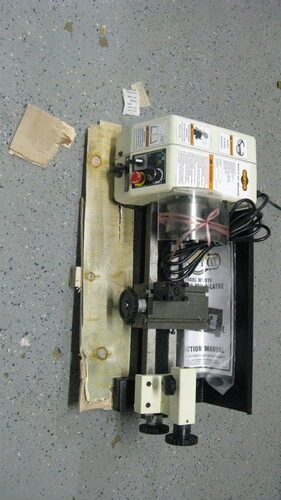
This is the machine for a garage bench you do not want to give up. Six inches of swing, ten inches between centers, a 3/8-inch spindle bore and a 16 TPI leadscrew, driven by a brushed 110V DC motor with electronic speed control. At 71 pounds you can carry it with one person, put it on a folding bench, and still have room for tooling.
Owners report it is compact but genuinely rigid, and one buyer cuts steel with it without difficulty, which says a lot for a micro class machine. Others pair it with the matching steady rest and vertical milling slide from the same maker to turn it into a small combined turning and milling setup. Luthier work in Delrin and similar materials is a natural fit at this size.
The 3.4 average across 24 reviews is the lowest in this group, and the distribution is genuinely bimodal with about 19 percent one-star and 19 percent five-star. The pattern is not about capability. It is about quality control between units: some owners received bent spindles that cooked their bearings within two months, out-of-tolerance gib adjustment on both axes, or a drive belt that failed after about five months.
Consistent, non-defect complaints across the whole review set are worth taking seriously. Chucks, live center and cutting tools are not included and must be bought separately, so budget for them. The gearbox side casing is plastic rather than alloy, and the decals peel. There is no compound cross slide, which means every tool change needs a full repositioning, and travel on the cross slide and tailstock runs out quickly on larger workpieces.
Can a 6×10 lathe cut steel?
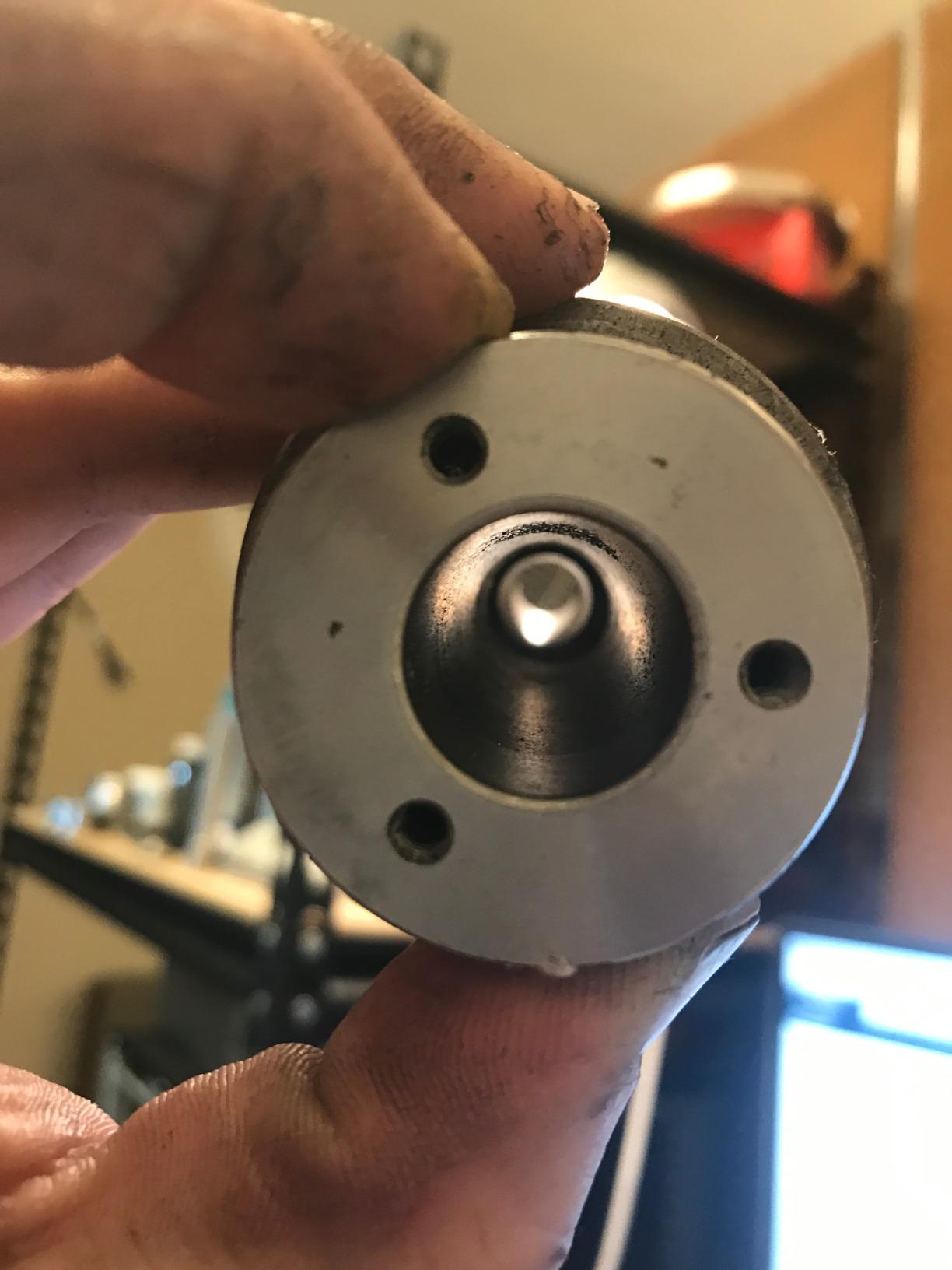
Light work, yes, with sharp tooling and patience. The 3/8-inch spindle bore limits bar diameter, so you are working with small round bar or short sections rather than structural material. One owner cuts steel without difficulty, which tells you the capability exists at the low end of the range.
What it will not handle is a heavy pass, because a 150W-class motor has no torque reserve and the bed is short. If steel is more than an occasional experiment, this is the wrong class and the 8×14 or 9×30 machines are the correct answer.
Is this a stepping-stone or a final machine?
For many hobbyists it is a first machine that gets outgrown, and buying the largest machine you can fit is the repeated forum advice. But it is a genuinely capable machine in its own right for small precision work, and at 71 pounds it is the one you can keep in a small apartment shop or take to a club.
Just verify your unit carefully on arrival. Check spindle runout and gib adjustment before the first cut, keep a spare drive belt on hand, and order the missing tooling alongside the lathe rather than a month later.
7. Proxxon PD 250/E – Best for Quiet Precision Work
Proxxon 34002 Metal Turning Precision Lathe PD 250/E
150W AC motor on 115V
34.3 pound machine
Metric system only
Automatic feed
Pros
- European brand heritage
- Exceptionally quiet and vibration-free
- Lightest machine in the group at 34.3 pounds
- Smooth precise controls with a very solid feel
- Two-year warranty covering repair or replacement of parts
Cons
- Cannot cut coarser threads than its specification
- Motor is loud with noticeable rattle and modest power
- Only 6 reviews so reliability is undocumented
- Metric system only with no imperial graduations
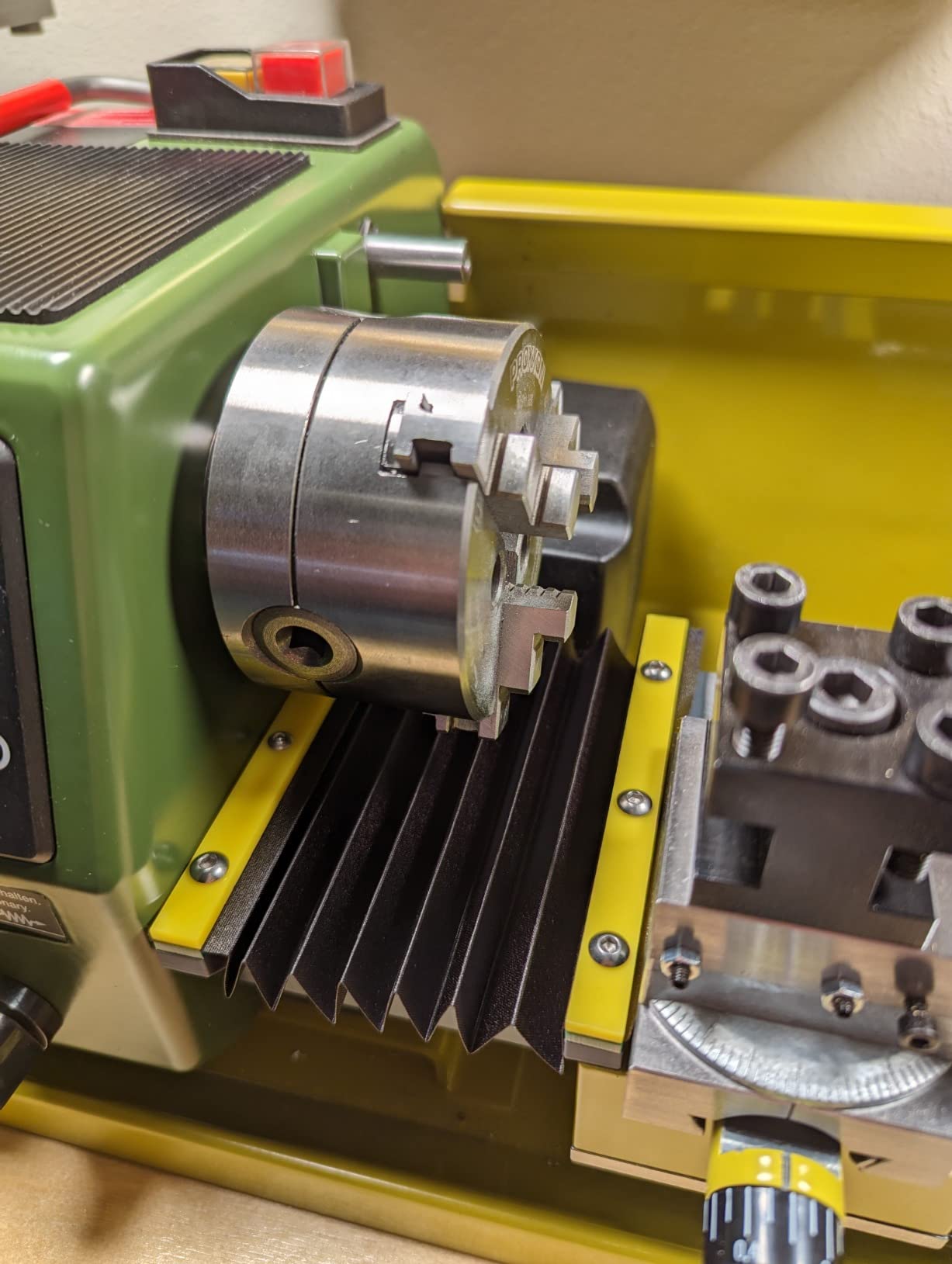
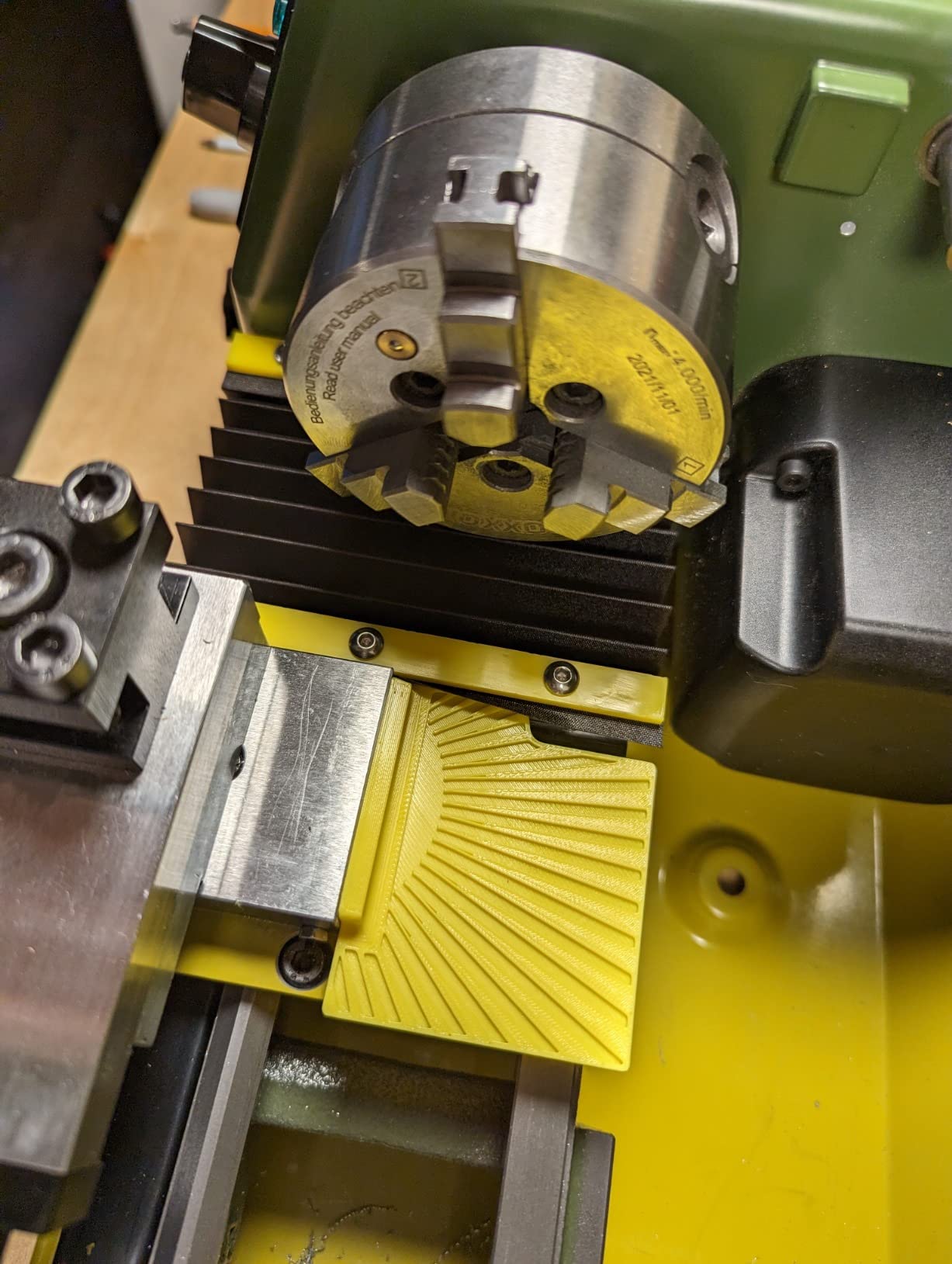
Everything about this machine is about feel rather than force. It is a 150W AC motor on 115 volts, in a 34.3-pound body that measures 24.8 by 15.16 by 10.24 inches, and the consensus among owners with real hours on it is that it is quiet, precise and vibration-free. Buyers with more than a hundred hours describe it as a pleasure to work with, and that is not a description you find often in this category.
The controls are smooth and precise, and automatic feed is included so you can let the carriage run while you concentrate on the cut. The two-year warranty from PROXXON covers repair or replacement of defective parts, which given the build quality is a meaningful backstop on a precision machine rather than a formality.
Six reviews at 4.8 stars, with 80 percent five-star, is a very small sample. The most-cited review is a four-star critique from a long-term PROXXON owner who rates the lathe as very good overall but the motor as loud and underpowered, and who specifically points out that the product photo shows a thread the machine will not actually produce.
That thread limitation is the honest catch. This is a precision turning machine, not a threading machine, and it is metric system only, so anyone working in inches needs to plan around it. Treat it as the finishing and small-parts complement to a bigger machine rather than a replacement for one, and it does that job exceptionally well.
Is a 150-watt motor strong enough for a beginner?
For precision work, yes. The motor is specified for smooth, controlled low-speed turning rather than roughing out heavy material, so think small parts in brass, aluminium, acrylic and Delrin, plus light work in appropriate alloys. It is not the machine to learn heavy facing passes on.
The gap between this and a 550W entry lathe is the gap between a quiet instrument and a general-purpose tool. If your shop is quiet-sensitive, a shared space or an apartment, that difference is worth paying for in a way that raw wattage figures do not capture.
How do I decide if precision is really worth this much?
Ask what you are actually making. If your work involves small components, restoration of delicate hardware, or model-scale parts where finish matters more than material removal rate, the Proxxon approach pays for itself quickly in less scrap and less rework.
If you want to turn steel, cut threads or handle pieces over 4 inches, look at the mid-class machines instead and save the money for tooling. The metric-only specification is also worth a hard look, since many US hobbyists think in inches and will be converting constantly.
8. TECHTONGDA 8×16 Metal Lathe – Best for Automatic Thread Switching
TECHTONGDA 1100W Brushless Metal Lathe Automatic Thread Benchtop Lathe
1100W brushless motor
One-key metric and imperial switch
50-2500 RPM with reverse
Pros
- One-key electronic switch between metric and imperial threads
- 1100W brushless motor with no carbon brushes to replace
- All-metal transmission gears and tapered roller bearing spindle
- Emergency stop plus overload protection
- Panel-driven parameter memory and reciprocating turning
Cons
- Only 2 reviews so no independent owner evidence yet
- Shortest warranty in the group at six months
- Smallest bed in its own range at 8x16
- Very low category sales rank and limited market history
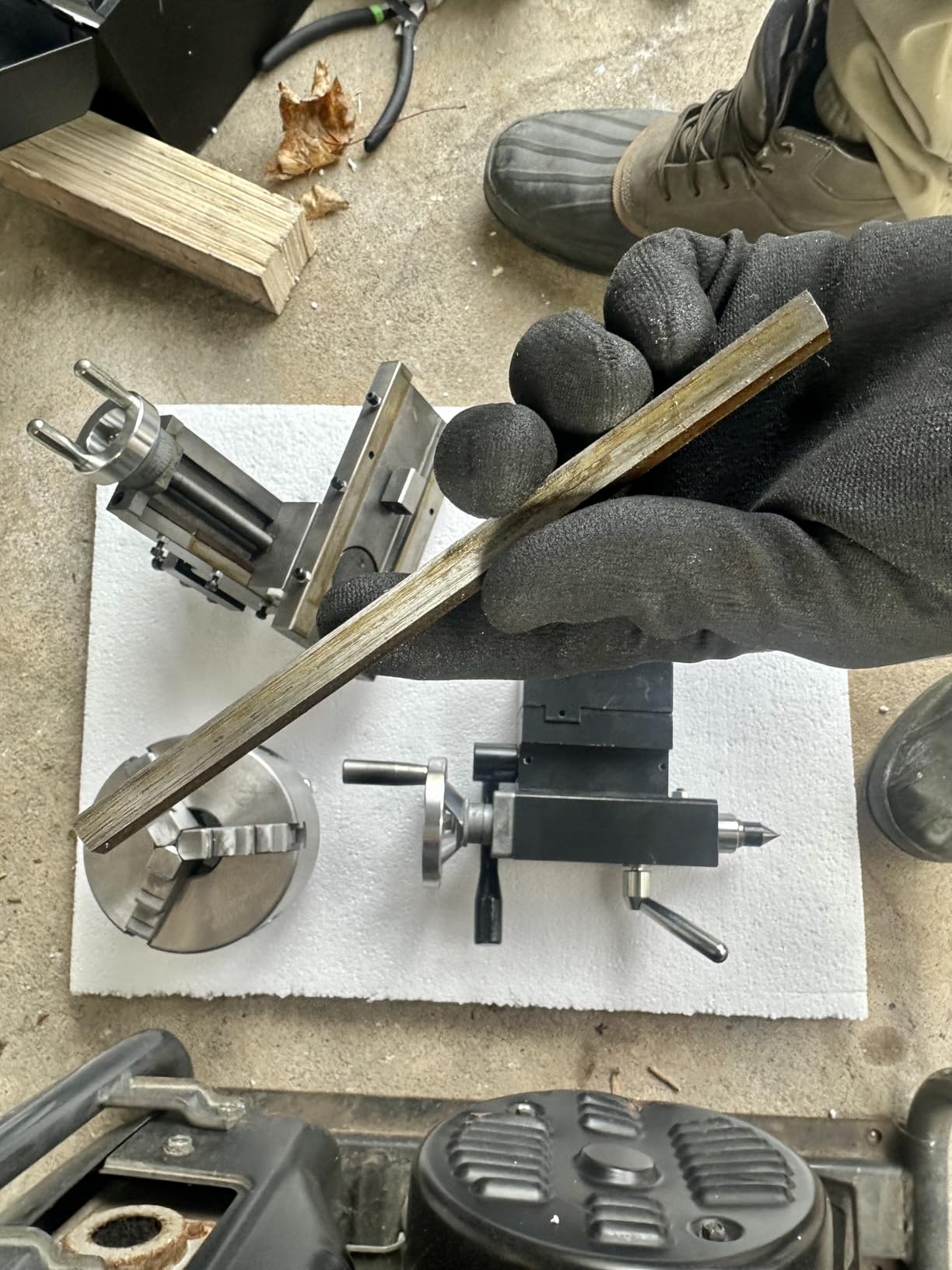
The headline feature here is the electronic gear shift. One key on the control panel switches between metric and imperial threading, with no gear replacement and no need to remove a cover, which is the same core idea as the gearless leadscrew approach but reached by a different route. Everything else is built to match it.
Underneath, a 1100W brushless motor means no carbon brushes to replace over the machine’s life, which removes a maintenance item and a recurring cost. Stepless speed runs 50 to 2500 RPM with forward and reverse, the spindle is supported by precision tapered roller bearings, and the transmission is all metal. At 160 pounds it is a substantial but not unmanageable bench machine.
Both reviews on record are five stars, and that number means something much less than it appears. Two ratings do not demonstrate a track record; they reflect early enthusiasm. Every performance claim for this machine therefore comes from the manufacturer’s listing rather than from independent owners, and you should read the specification with that in mind.
The six-month warranty is the shortest offered by any machine in this roundup, and combined with a very low category sales rank and limited market history, it is the main practical caution. It is available in 8×16, 8×23 and 8×31 bed lengths, so if you need a longer bed, this capability exists in the range, though the listing reviewed here is the 8×16 variant with the smallest bed.
How does automatic thread switching compare to change gears?
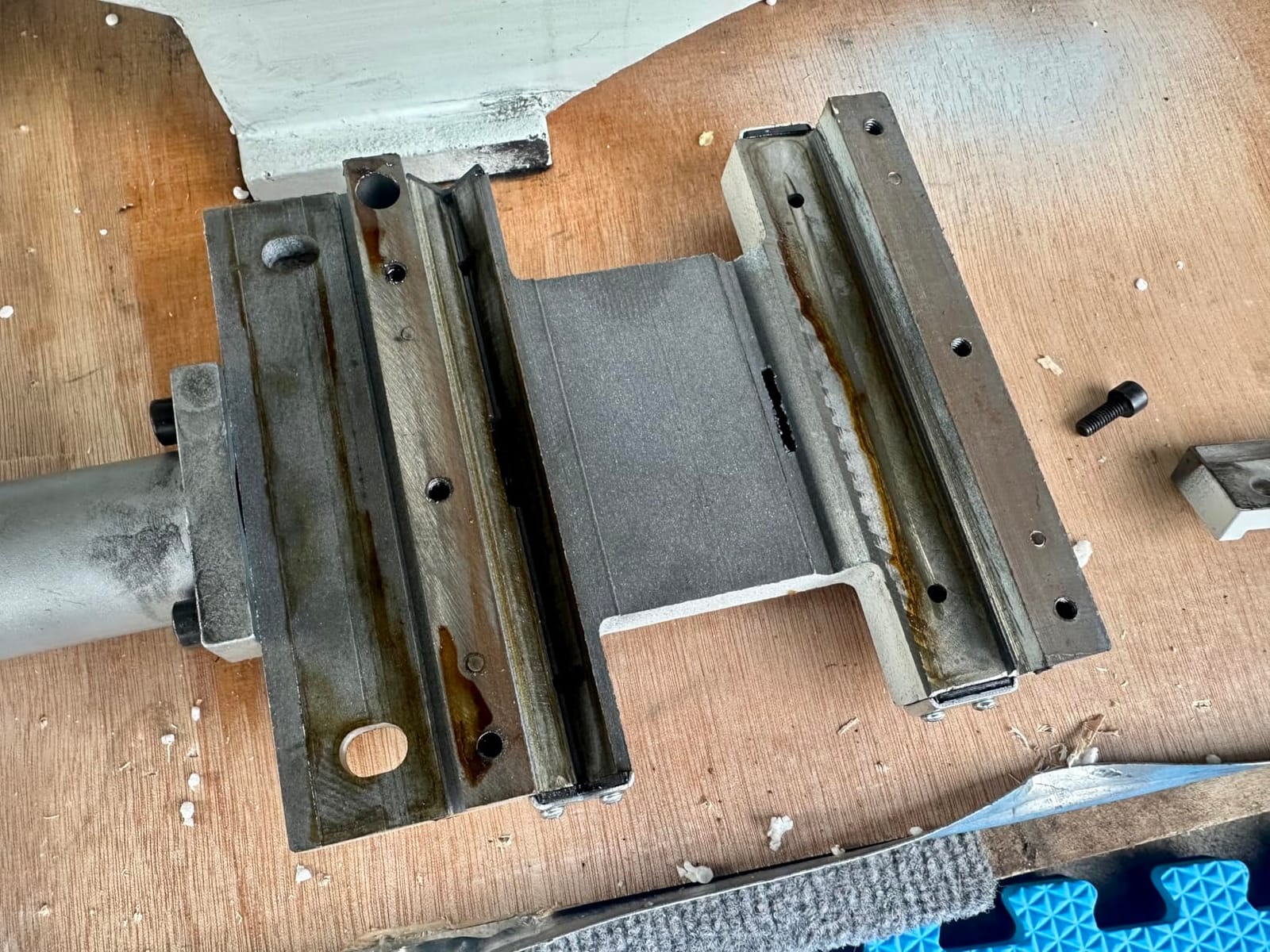
Faster and less error-prone, by a wide margin. On a conventional lathe, switching between metric and imperial means removing the cover, changing two gears, checking the chart and hoping you got the pairing right. Here it is one key press and the machine handles the ratio.
The trade is that you depend on the electronics and the control panel rather than on mechanical gears you can inspect and replace yourself. For most hobby machinists the convenience wins easily, but it is worth knowing what you are giving up.
Is a six-month warranty a reason to skip this machine?
It is a reason to slow down, not necessarily a reason to walk away. The specification is competitive for the money, the safety provision is genuinely good with both an emergency stop and overload protection, and brushless motors are mechanically simpler than brushed alternatives.
What would make me cautious is buying it as the only machine in a shop with no other way to turn. In that situation the long-term support question matters more, and a machine with a stronger warranty record and more owner feedback is the safer foundation.
9. INTBUYING 8×24 Metal Lathe – Best Spindle Bore in the Group
INTBUYING 8″x24″ Benchtop Metal Lathe 1100W Brushless Motor 50-2500RPM Precision Mini Lathe Machine for Metal/Woodworking Industrial & Hobby Use with Metric Thread WM210V 110V
1100W brushless motor
1.50 in spindle bore
8.3 in swing over bed
MT5 spindle taper
Pros
- 1100W brushless motor with real cutting power in the class
- 1.50 in spindle bore accepts larger bar
- Four change gears covering 40
- 50
- 60 and 72
- Digital RPM display with forward reverse and emergency stop
- Fine dials on saddle tailstock and movable center
Cons
- Only 3 reviews so the thinnest feedback base here
- Threads still need gear changes rather than electronic switching
- Two stepped speed ranges instead of stepless control
- 161 lb weight needs a solid bench and two people
The distinguishing number on this machine is the 1.50-inch spindle bore. Everything else in the group is built for bar you could hold in your hand, and a bore that size means longer lengths of round or square material pass straight through the chuck without being cut down to fit. For anyone working with larger round bar, that is the whole decision.
Around that sit some strong fundamentals. A 1100W brushless motor on 110 volts, 23.6 inches between centers, 8.3 inches of swing over bed and a 4.92-inch reverse three-jaw chuck that handles both round and square material. The spindle taper is MT5, which is less common than the MT3 fitted to smaller machines, so check your tooling before you commit.
Three reviews, all five stars, and the same caution as the machine above applies. The specification is competitive and the product ranks reasonably well in the category, but there are no accounts of long-term use to draw on. What we can say is that the design decisions are sensible and the accessory package is complete, with chuck jaws, four gears, spanners, hex keys, an oil can and a screwdriver.
The threading arrangement is the one place it trails the electronic machines. Four change gears at 40, 50, 60 and 72 give a broad range of pitches, but you are still doing mechanical gear changes to move between systems. Speed control runs in two stepped ranges, 50 to 1250 and 1250 to 2500 RPM, rather than truly stepless, which is fine once you learn the two gears and limiting when you want continuous surface speed.
Is the MT5 spindle taper a problem?
It narrows your tooling options. MT3 is the near-universal standard on lathes of this size, and MT5 tooling is less common and sometimes pricier to replace. Before ordering, list the chucks, centers and live centers you already own and confirm whether they are MT5.
If you are starting with nothing, it matters less, since you will be buying MT5 tooling regardless. If you already have an MT3 collection, this machine will be frustrating until you convert.
Is 161 pounds too heavy for a home bench?
It needs a genuinely solid bench and a second pair of hands to position. The machine measures 38.2 by 11.8 by 13.4 inches, so footprint is manageable even though mass is not. If you have ever had to move a machine after installing it, plan the location carefully first.
The upside of that mass is that it does not chatter. A 161-pound bed with dual fine dials on the saddle, tailstock and movable center will hold a cut, and that stability is what you are paying for.
10. Upgraded 7×14 Mini Metal Lathe – Best Safety Features Out of the Box
Mini Metal Lathe,Upgraded 7″x 14″ Metal Lathe Machine, High Precision Mini Benchtop Lathe with LED Screen, 2500 RPM,for Metal Threading Turning Drilling
550W motor, cast iron body
7.09 in swing over bed
0-2500 RPM
Interlocked chuck guard
Pros
- Interlocked clear chuck guard that must be down to run
- Spindle accuracy under 0.01 mm
- Accessory package includes metal gears jaws oil gun and tool kit
- Digital display with manual or automatic feed
- Emergency stop button on the control panel
Cons
- Lacks power and torque for cutting steel
- Tailstock arrived about 0.100 in out of alignment needing shims
- Crating is inadequate and chip pan arrives damaged
- Unbranded listing with a brand that does not match the manufacturer field
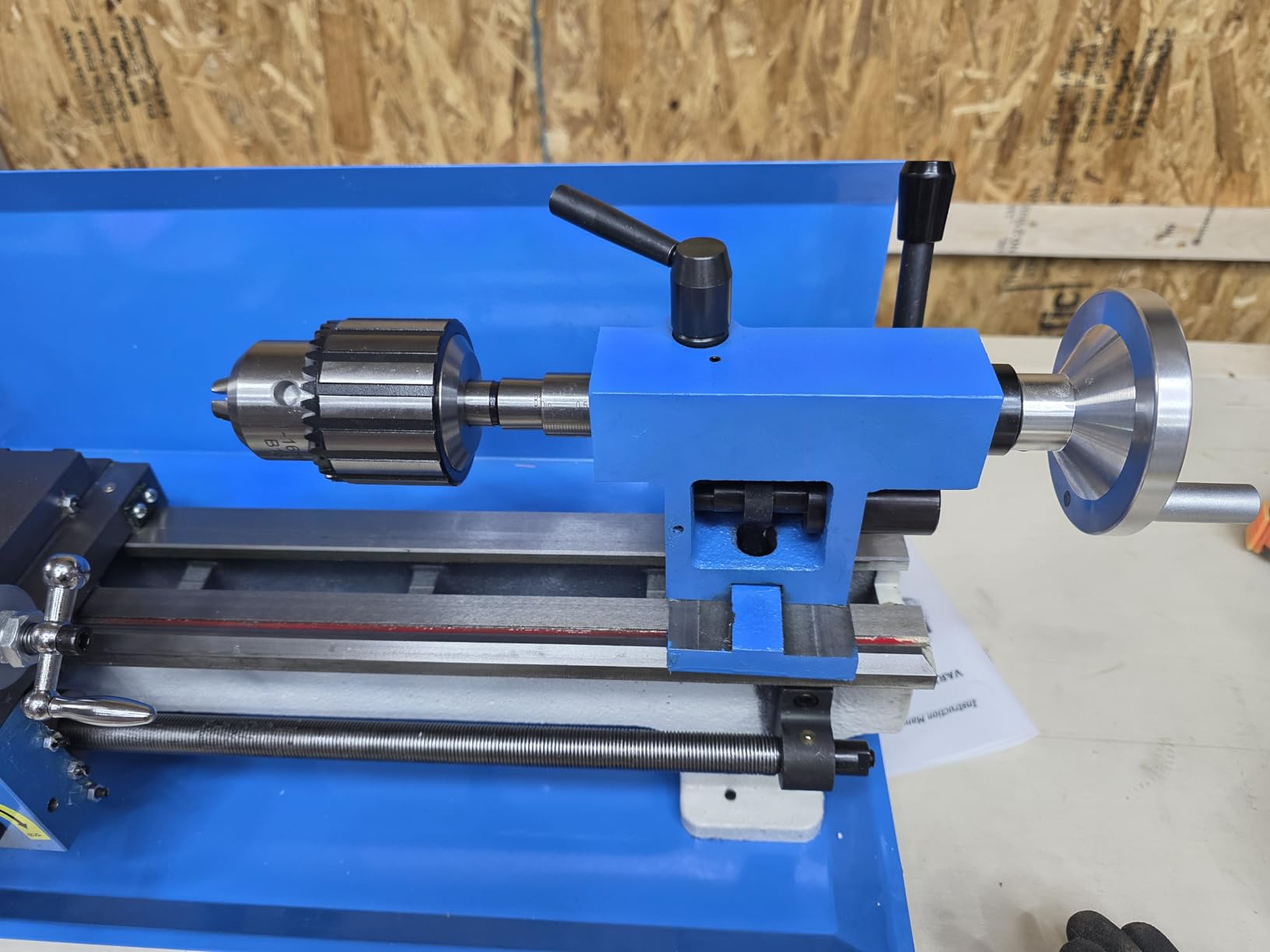
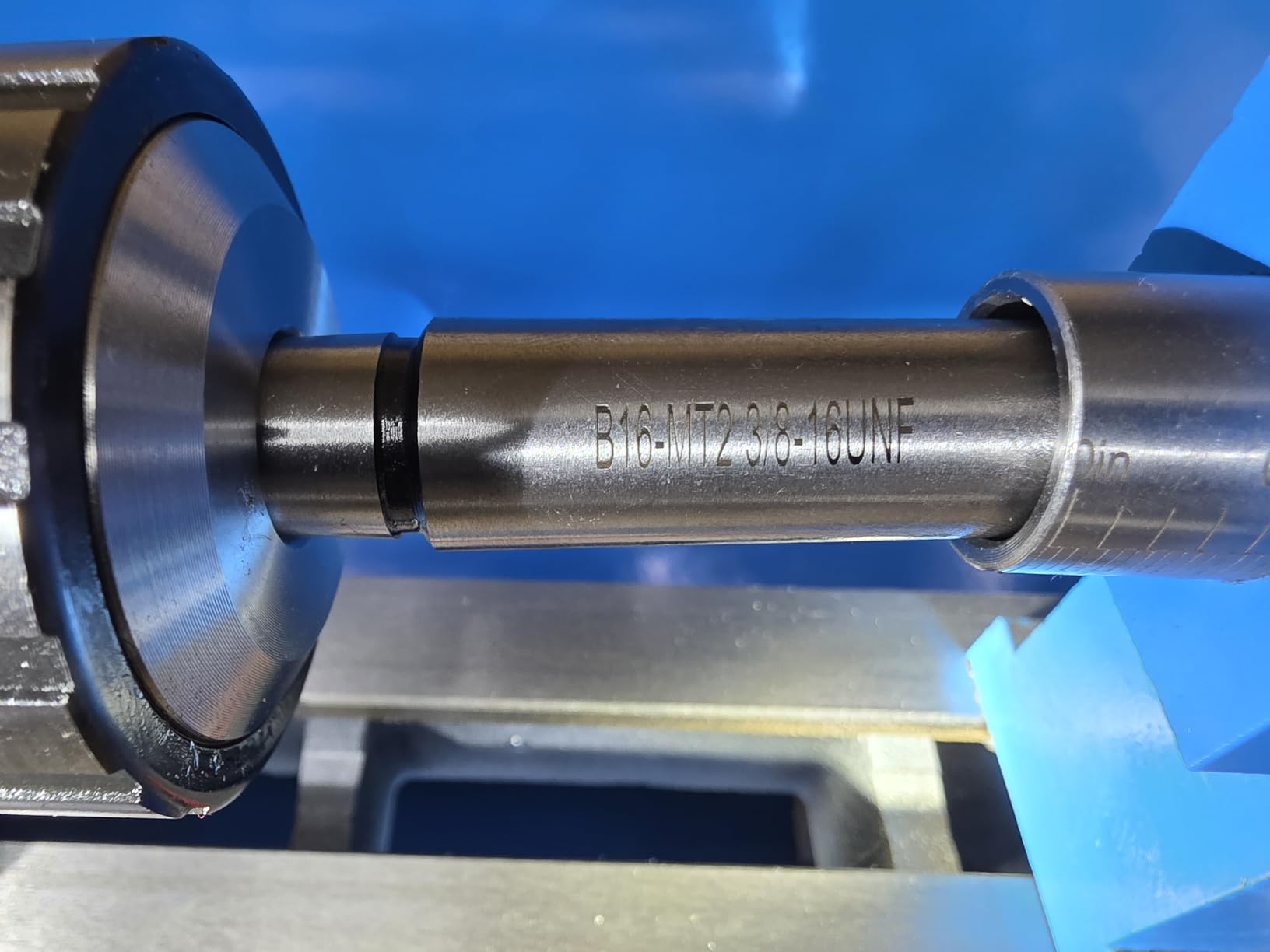
What separates this machine from other machines in its class is the safety provision and the accessories. The chuck guard is interlocked and the machine will not run with it open, the emergency stop is on the control panel, and the box includes five metal gears, three jaws, an oil gun, a tool kit and an accessories kit. Very few machines at this level ship that ready to work.
Underneath, a 550W motor drives a cast iron body with a 7.09-inch swing over bed and a 14-inch slide frame, with spindle accuracy quoted at under 0.01 mm and a 4-inch three-jaw self-centering chuck. Speed runs from 0 to 2500 RPM, reversible, with a digital display, manual or adjustable automatic feed, and a turret column with quick tool change for internal, face and bevel cutting.
Eight reviews at 4.1 stars, split 72 percent five-star against 18 percent one-star, tells you this is a machine with a committed audience and a committed set of detractors. Buyers focused on aluminium, plastics and small work rate it very highly and single out the safety features and the accessory bundle.
The detractors have two consistent complaints. The first is power: the machine lacks torque for steel, so cut depth and diameter have to be limited and aluminium and plastic are the realistic materials. The second is condition on arrival, with a tailstock that arrived about 0.100 inch out of alignment requiring shims, and crating that is inadequate, letting the machine loosen in transit with a damaged chip pan and toolbox. Check alignment and shipping damage immediately.
Is the interlocked chuck guard genuinely worth it?
Yes, particularly if younger or inexperienced users will be around the machine. Most machines in this class let you run the spindle with an open chuck guard, which is a real hazard with rotating jaws. A guard that physically prevents operation until it is closed removes the temptation and removes the risk.
It is a small design decision with an outsized effect on shop safety, and it is the main reason I would look at this machine over a similarly specified alternative.
What does the unbranded listing mean for support and parts?
It is the part to think hardest about. The brand field reads as generic while the manufacturer field names a different brand, so documentation, firmware explanations and parts identification are all less predictable than with a single identifiable maker. If a gear or a display fails, you may be searching rather than ordering.
Customer support is repeatedly described as responsive and helpful, and owners judge the machine better value than a comparable Harbor Freight unit. Set that against the weaker predictability and decide how much risk of a part being unavailable you are comfortable with.
US-Supported Brands vs. Direct Import Lathes
What a US-supported machine actually buys you is not performance, it is the absence of a category of problems. Direct-import lathes are frequently the better machine on paper, with brushless motors, larger spindle bores and electronic thread switching that US-reseller machines cannot match at the same money. The trade is in what happens after the crate is opened.
- Harbor Freight and Central Machinery: forum consensus treats these as legitimate value picks for a first machine, and owners of their machines commonly recommend a bed extension to lengthen it. The stigma exists, and it is worth addressing head-on: the machines are ordinary, with ordinary quality variation, and the value case rests on a lower entry point and easy availability rather than on any special engineering.
- Grizzly, LittleMachineShop and other US resellers: what you are paying for is pre-inspection, US-based parts inventory, technical support that answers, and warranty service that does not require an international shipment. For a first machine that you do not yet know how to fix, that is a genuine reduction in risk.
- Direct import brands such as VEVOR, CREWORKS, INTSUPERMAI, TECHTONGDA and INTBUYING: better specifications for less money, and review counts that show real owners are getting machines in usable condition. The risks are uneven quality between units, poorer documentation, and limited parts availability once a warranty ends.
Our read, based on the review patterns in this roundup: choose direct import if you are comfortable fettling a machine, willing to verify alignment on arrival, and buying parts like gears and tooling anyway. Choose a US-supported seller if this is your first machine, if you will be relying on it for work you cannot afford to redo, or if your shop has no way to machine replacement parts. The specific machine matters less than the support model you are comfortable with. A related note if your workshop shares space with other equipment: sturdy metal enclosures can help separate a machine area from everything else sharing the room.
How to Choose a Metal Lathe for Hobby Machining
Seven criteria in priority order, based on what separates machines that owners are happy with from machines that gather dust. Work down the list rather than shopping by brand.
- Swing over bed first. This is the diameter limit and it is the number people buy wrong on. Measure your largest workpiece, add a couple of inches for the tool holder, and buy above that. Practical Machinist users argue for at least 13 inches of swing for general work, which is a demanding target for a benchtop machine and a fair ambition for a larger one.
- Distance between centers second. The length limit. Fourteen inches covers model work and most hardware; 24 inches and beyond starts covering long shafts, handrails and barrels. Remember that a tailstock takes up a few inches of usable length.
- Motor watts third. Under 200W is for precision and plastics. 500W to 650W covers aluminium, brass, copper and light mild steel. Above 1000W with a heavy bed is where genuine steel work becomes routine instead of an event.
- Variable speed fourth. Electronic variable speed, ideally with two ranges, gives continuous control of surface speed. Stepped belts and pulleys force you to stop the machine and change something for every diameter change, which is the fastest way to get tired of turning.
- Gear material fifth. Metal change gears or a gearless electronic leadscrew, never nylon if you intend to cut steel. Stripped nylon gears are the single most common failure on imported machines sold for general work, and the fix is not cheap once it happens.
- Spindle and tailstock taper sixth. MT2 and MT3 are the standards. A non-standard taper locks you into proprietary tooling and that is expensive over a machine’s life. The INTBUYING machine here uses MT5 on the spindle, which is worth weighing before you buy.
- Build rigidity and support seventh. Cast iron where it matters, a real emergency stop, and a support model you can live with. Weight is the honest proxy for rigidity, and 100 pounds versus 200 pounds is a meaningful difference in how a cut looks.
Two more things to settle before you order. First, budget a full weekend for setup: leveling, shimming the tailstock until the centers are concentric, gib adjustment, greasing the ways and a confirming cut. This is the most common source of disappointment in the first week and it is entirely normal. Second, remember that the lathe is the smallest part of the budget. A quick-change tool post, carbide tooling, a dial test indicator with a magnetic base, a four-jaw independent chuck, a live center and a digital readout are where the real cost of getting started sits.
On the question of whether to start with a lathe or a mill, the lathe is the conventional first machine because it is cheaper, the skills of speed, feed and depth of cut transfer straight across, and broken mistakes are cheaper there. Milling involves fixturing, workholding and coordinate thinking, all of which are easier once you are comfortable feeding a tool into rotating material.
Plan the storage around the machine too. Spare chucks, change gears, cutting inserts and blanks need somewhere organised, and the same reasoning behind choosing sturdy metal enclosures for a shared workshop applies here: a labelled, rigid place for metal hardware beats a pile on the bench.
Frequently Asked Questions
What is a good small metalworking lathe?
A good small metalworking lathe is a benchtop machine defined by swing over bed, the largest diameter you can turn, and distance between centers, the longest piece you can hold between chuck and tailstock. A 7-inch swing with a 550W to 650W motor handles aluminium, brass, copper and light mild steel, while a smaller 6-inch machine suits jewelry, pen turning and model parts. Match the class to your largest workpiece before anything else.
What is the best lathe for a beginner?
For most beginners the VEVOR 7×14 is the strongest starting point, with 294 reviews giving you far more evidence than any other machine in this group. It has a metal gear train, digital speed control and a 4-inch three-jaw chuck, and it handles aluminium, brass and light mild steel. The single most important caveat is that you should plan a full weekend for alignment, shimming and gib adjustment before cutting anything.
What is the best brand of lathe machine?
There is no single best brand, but there is a clear best support model. US-supported resellers sell you pre-inspection, domestic parts inventory and warranty service that does not require an international shipment, which matters most on a first machine. Direct import brands usually give you more power, larger spindle bores and electronic thread switching for less money, in exchange for uneven quality between units and weaker parts availability once warranty coverage ends.
Is the Harbor Freight lathe any good?
Harbor Freight and Central Machinery lathes are ordinary machines at an unusually low entry point, and forum owners regularly recommend them as a first lathe. The stigma around the brand is about branding rather than engineering, and it does not apply differently to the machines. The real trade is the same one that applies to any direct import: check tailstock alignment and gib adjustment on arrival, and expect to fettle it yourself.
Are Vevor mini lathes any good?
The VEVOR machines in this roundup earn their reputation on value and gear material rather than refinement. The 7×14 carries a metal gear train instead of the nylon gears common at this level, and 294 owners have reviewed it at 4.0 stars. The 8×14 adds cast iron and more swing. The recurring criticism across both is not capability but arrival condition, so budget a setup weekend and verify alignment before cutting.
What is the best mini lathe for the money?
The VEVOR 7×14 is the value answer in this group because its 550W motor, metal gear train, digital speed readout and 4-inch chuck combination is hard to match cheaper, and its review base gives you real evidence rather than marketing. The WEN 7×12 is the alternative if a two-year warranty and a threading dial covering 12 to 52 TPI matter more to you than raw specification. Both are 7-inch swing machines for aluminium, brass and light mild steel.
Can a mini metal lathe cut steel?
Yes, within limits. A 550W to 650W machine with a metal gear train can take light cuts in 1018 mild steel with sharp carbide tooling, but it will bog down on a heavy facing pass. Real steel work becomes routine above 1000W on a cast iron bed weighing near 200 pounds. Nylon change gears are the deal breaker, because stripped gears are the most common failure when a machine sold as general purpose is pushed into steel.
How long does it take to set up a new mini metal lathe?
Budget a full weekend. Level the machine, shim the tailstock until the centers are concentric, check spindle runout with a magnetic base and dial test indicator, adjust the cross slide and compound gibs, grease the ways, then make a confirming cut. Machines arriving with factory-set gibs and shipping damage, which is common on direct imports, add several more hours. Machines with poor documentation can add a full day of learning operation.
Do I need a digital readout for a mini lathe?
A digital readout is the most valuable single upgrade for a mini lathe, because screw backlash in the handwheel dials makes fine depth of cut genuinely difficult to judge by eye. A readout removes that guesswork from facing and turning operations and is worth buying before most other accessories. Set your expectations properly though, it improves dial precision but it does not fix a spindle that is out of true or gibs that need adjustment.
Which Metal Lathe Should You Buy?
For most hobby machinists, the VEVOR 7×14 is the right first machine. It has a metal gear train rather than nylon, digital speed control from 50 to 2500 RPM, a 4-inch three-jaw chuck, and more owner feedback than anything else we reviewed, which means fewer surprises. Add a cast iron 8×14 or a heavier mid-class machine if you plan to cut steel regularly, and reserve a weekend for setup whichever one you choose.
The gap between a good machine and a great shop is tooling, not another lathe. Buy the quick-change tool post, the carbide inserts, the dial test indicator and a four-jaw independent chuck first, learn to work rather than to collect machines, and the best metal lathes for hobby machinists will pay you back every weekend. If you want more shop and less machine, our guides to metal accessories and enclosures cover the surrounding kit, and metal wheel options show the same build-quality comparison we have applied to these lathes.