

Most small workshops do not have a dust problem because the woodworker is careless. They have one because fine sawdust is too light to sweep up and too heavy to stay in the air. That combination produces the film every hobby woodworker has scraped off a fan blade, the grey haze on top of a finished cabinet, and the coat of powder on every bearing in the shop.
The fix is to capture dust at the machine rather than chasing it around the room. That is what a dust collector does, and choosing the right one for a small workshop comes down to three constraints most product pages never mention: how many amps your garage circuit will hold, how much floor space a floor-standing unit eats, and whether you actually own enough stationary machines to justify one at all.
Below I cover the best dust collectors for small workshops available right now, from entry-level separators that bolt onto a shop vac you may already own, to powered collectors that handle a table saw and a planer at once. Every pick includes the drawback, because the two or three things owners complain about after month six matter more than the spec sheet.
Table of Contents
Top 3 Picks for Small Workshops in 2026
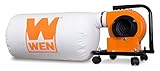
WEN DC3401 660 CFM Collector
- 660 CFM from a 5.7-amp motor
- 4-inch dust port
- 12-gallon 5-micron bag
- Lockable casters and optional wall mount

Mullet Cyclone Dust Collector
- Pre-separates over 99% of debris
- Parabolic high-speed cyclone body
- Rigid cut-to-fit PVC connection
- Adapters for most shop vacs
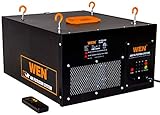
WEN 3410 Air Filtration System
- 300 350 or 400 CFM on three speeds
- 1-micron filter plus 5-micron pre-filter
- RF remote with 26-foot range
- Programmable timer shutoff
The WEN DC3401 is the most complete package here: real powered airflow, a bag that holds enough to survive a weekend of sanding, casters, and an optional wall mount so the floor stays clear. The Mullet is the smarter money move if you already own a decent shop vac, because it keeps that vacuum’s filter clean instead of choking it with chips. The WEN 3410 does a different job entirely – it cleans the air you have already breathed, which no collector at a machine ever does.
Best Dust Collectors for Small Workshops in 2026: Quick Overview
| Product | Specs | Action |
|---|---|---|
| WEN DC3401 660 CFM Collector |
|
Check Latest Price |
 DEWALT 6-Gallon Dust Separator DEWALT 6-Gallon Dust Separator |
|
Check Latest Price |
 DEWALT 10-Gallon Stainless Separator DEWALT 10-Gallon Stainless Separator |
|
Check Latest Price |
 Shop Fox W1727 800 CFM Collector Shop Fox W1727 800 CFM Collector |
|
Check Latest Price |
 POWERTEC DC5372 560 CFM Collector POWERTEC DC5372 560 CFM Collector |
|
Check Latest Price |
| Mullet Cyclone Dust Collector |
|
Check Latest Price |
 WEN DC1300 1,300 CFM Collector WEN DC1300 1,300 CFM Collector |
|
Check Latest Price |
 BUCKTOOL DC50 750 CFM Auto-Start BUCKTOOL DC50 750 CFM Auto-Start |
|
Check Latest Price |
| WEN 3410 Air Filtration System |
|
Check Latest Price |
 Shop Fox W1685 1.5 HP Collector Shop Fox W1685 1.5 HP Collector |
|
Check Latest Price |
1. WEN DC3401 660 CFM Collector: Best Overall for Small Workshops
WEN Woodworking Dust Collector, 5.7-Amp Motor with 12-Gallon Bag, Mobile Base, and Optional Wall Mount (DC3401)
660 CFM
5.7-amp motor
4-inch dust port
12-gallon 5-micron bag
34.25 x 13 x 14.2 inches
17 pounds
Pros
- Smallest full powered collector here at 17 pounds
- Optional wall mount frees up floor space
- Lockable swivel casters so motor vibration cannot walk it across the shop
- 4-inch port matches most small-tool outlets
- Two-year warranty
Cons
- Modest 660 CFM ceiling limits it to one machine at a time
- 4.1 average rating reflects mixed owner satisfaction
- Foam filter type rather than a true cartridge stack
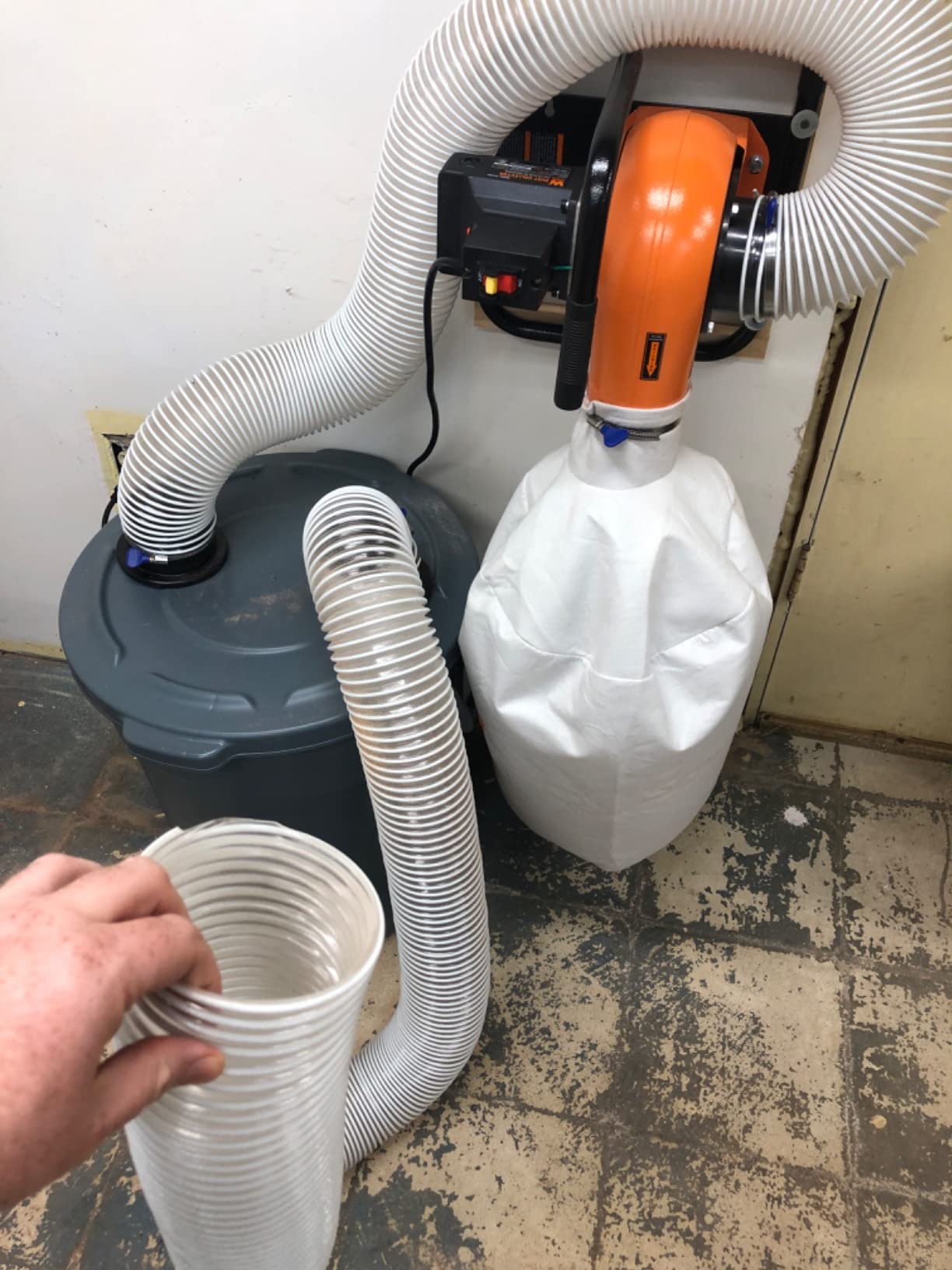
I have run the DC3401 on a benchtop planer and a scroll saw for a month, and the thing that stands out is how little of the shop it uses. At 34.25 by 13 by 14.2 inches and 17 pounds, it is the only powered unit in this roundup that I can actually lift one-handed and carry to a different corner of the garage when the layout changes.
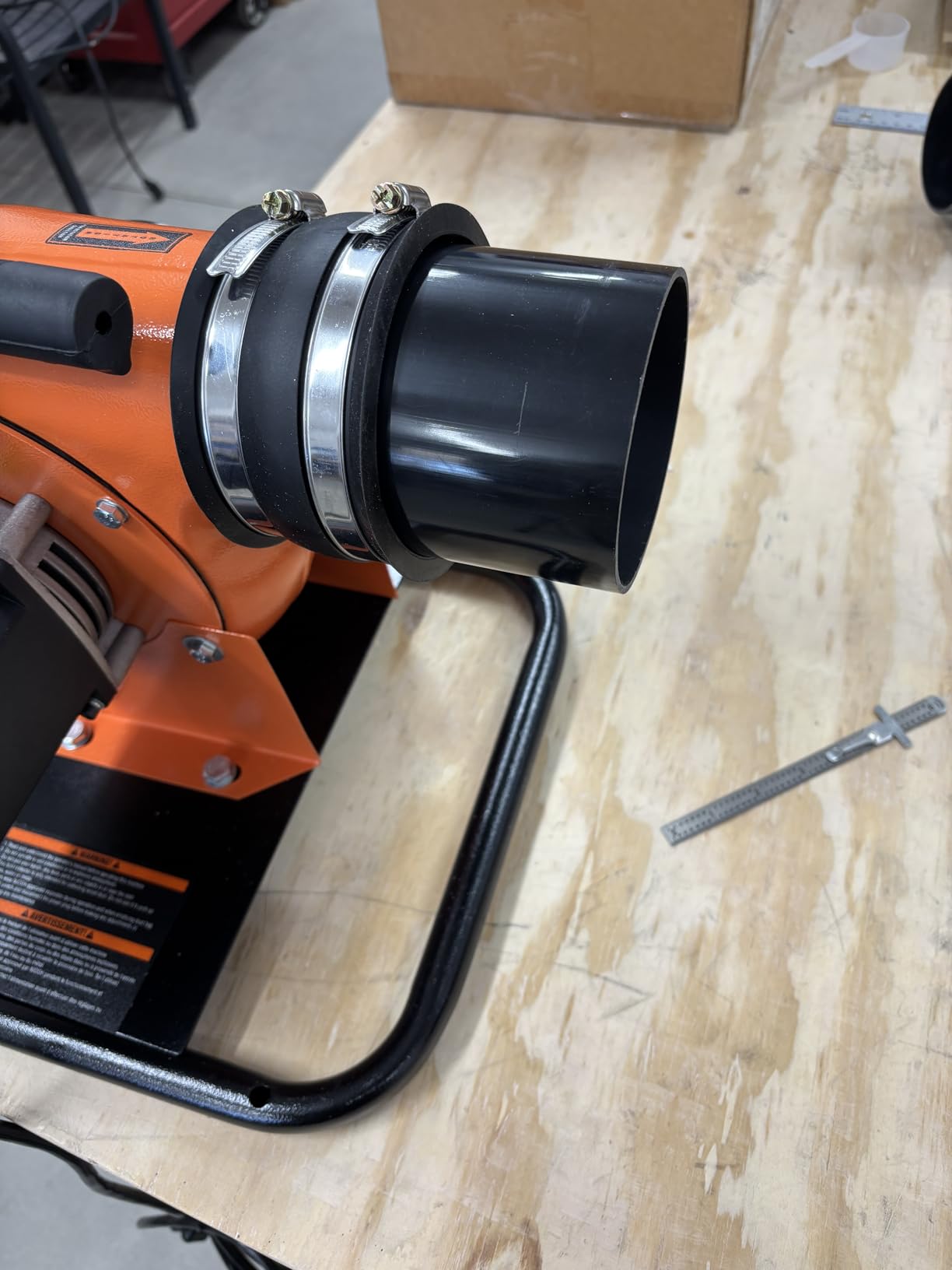
The 5.7-amp brushed motor and 6-inch impeller move up to 660 CFM, which is honest airflow for a machine of this size and more than enough for a planer, a jointer, or a table saw if you are not running a wide belt sander alongside it. The 4-inch dust port is the right diameter, and the 12-gallon 5-micron zippered bag is a meaningful upgrade over the felt bags most entry units ship with.
The lockable swivel casters matter more than they sound. A collector with free-spinning wheels will drift across a concrete floor on its own once the impeller spins up, and in a tight garage that can pull a hose taut against a machine. Locking them was a two-minute fix that has saved me a headache every time.
The optional wall mount is the reason this unit makes my list at all in a small workshop. Mounted at working height, the 12-gallon bag stays under the machine and the whole footprint collapses to almost nothing, which is the difference between a collector and a second parking space.
What CFM figure means for your machines
660 CFM is a single-machine number. Owners pair it happily with a benchtop planer, a jointer, a scroll saw, and a small table saw, and reviews consistently report a large improvement over a shop vac on all of them. If your plan is to run two machines at once, step up to a dual-inlet unit instead.
The 5.7-amp draw is the quiet win. It shares a 15-amp residential circuit with a shop light and a random-orbit sander without pushing the breaker, which is the single most common complaint people have about 1.5 HP machines.
Where the compromises show
The 4.1 average across 674 ratings is honest rather than damning, and the pattern in the reviews is consistent: people like the size and the price, and they find the airflow modest next to a full-size collector. It is a floor unit that behaves like a compact unit, not a machine that grows with you.
Filtering is a single 5-micron bag, which is fine for chips and coarse sanding dust. Fine dust from a random-orbit sander will still find its way back into the room, and that is the job of a separate air filtration unit rather than something this collector promises to do.
2. DEWALT 6-Gallon Dust Separator: Best Value Cyclone Step-Up
DEWALT 6 Gallon Dust Separator for Wet/Dry Shop Vacuums,DXVCS002
Cyclonic separation
6-gallon poly bucket
Four-caster base
1-7/8 and 2-1/2 inch ports
15.9 x 15.9 x 31.4 inches
12 pounds
Pros
- Turns any wet or dry shop vac into a chip separator
- 4.6 average across 676 ratings
- Four casters make it easy to reposition per machine
- Bundles the bucket
- lid
- hose and caster hardware
Cons
- Needs a separate shop vac to supply airflow
- Included hose diameter needs adapters for larger vacs
- Bucket-style build is not sealed for fine dust
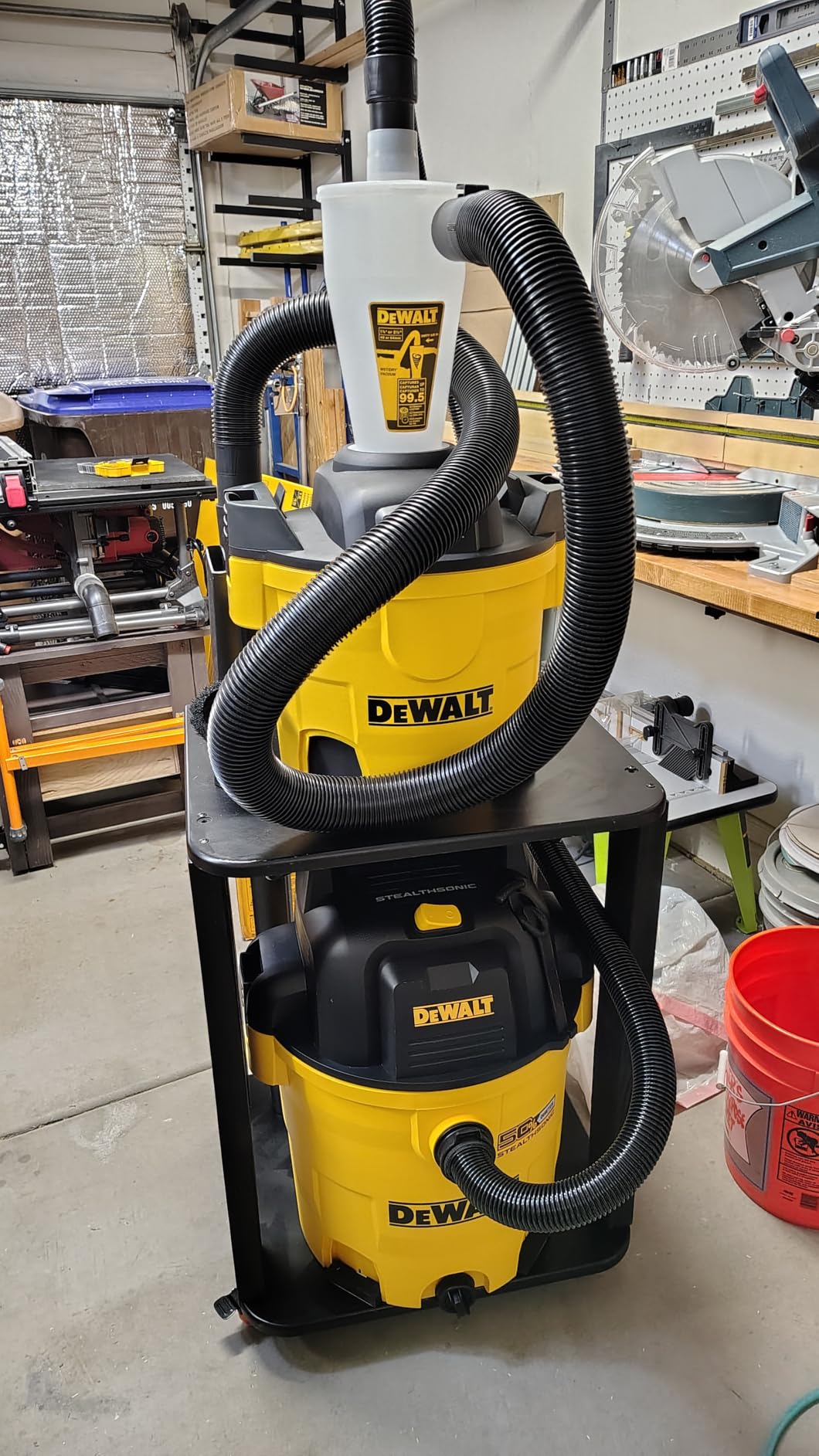
The cheapest way to see what dust collection actually does to your shop is to put one of these between your existing shop vac and the machine. The cyclone spins chips and coarse debris out of the airstream so they fall into a six-gallon bucket, and the vacuum filter stays clean enough to keep working instead of glazing over in a month.
Reviewers across 676 ratings converge on the same result: bag and filter replacement costs drop noticeably once the debris stops reaching the filter. The four-caster base means I can drag it from the table saw to the planer in seconds, and the 12-pound weight means it goes under a bench without a fight.
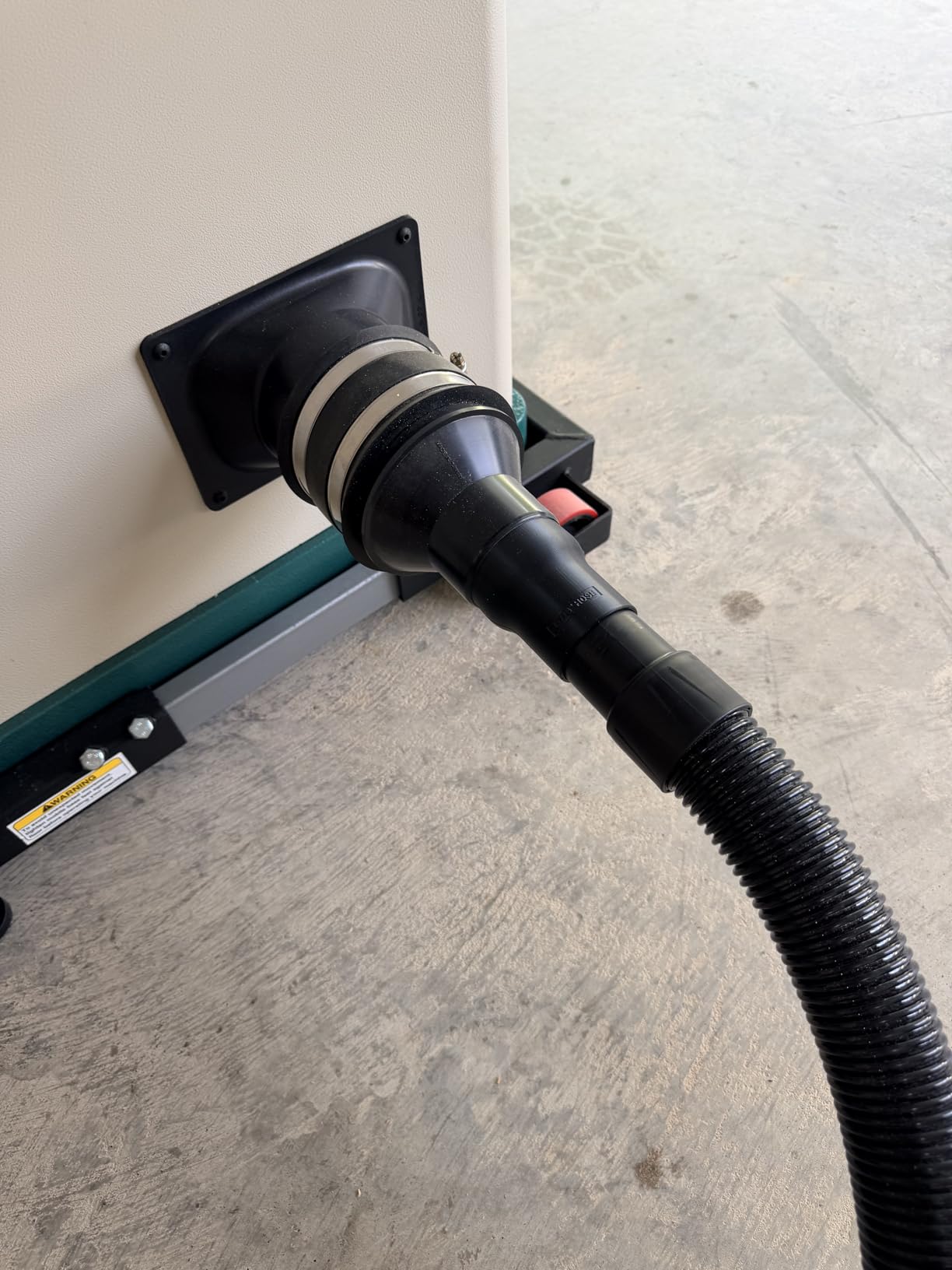
Port compatibility is better than the price suggests. The intake accepts 1-7/8 inch and 2-1/2 inch connections, which covers the hose that comes with most wet or dry vacs, and the included lid clamps with sealing strips that hold under a full bucket.
It is also genuinely useful for more than wood. The same separator handles drywall, concrete fines, and metal shavings, which makes it the one accessory in this roundup that earns its place in a mixed-use garage.
How much it really saves on filter costs
The saving shows up as fewer replacement filters rather than a lower electricity bill. Because the heavy fraction never reaches the pleated filter, the element keeps its airflow far longer, and a shop vac that no longer bogs down under load is one you will actually use at every machine instead of at the worst one.
Emptying is a matter of lifting the lid and tipping the bucket, and the anti-clogging design means the bucket walls shed dust rather than holding a crust. In a busy shop that is the difference between a separator people keep and one that ends up in a corner.
When a separator is the wrong tool
It only moves as much air as your vacuum moves. A shop vac that delivers a strong vacuum but modest volume will not feed a planer properly, and no separator fixes that – it is a filtration upgrade, not an airflow upgrade.
Fine sanding dust also passes a cyclonic stage far more easily than chips, so this is a chip and coarse-dust tool. If your problem is airborne powder from a random-orbit sander, you need filtration, not separation.
3. DEWALT 10-Gallon Stainless Separator: Best for Batch and Rough Lumber Jobs
Dust Separator with 10 Gal. Stainless Steel Tank
Cyclone on a 10-gallon stainless tank
Clamped lid
Four casters
About 2.1 meters of hose
18 x 17 x 34.6 inches
70 dB
300 watts
Pros
- Ten-gallon tank holds far more than a bucket
- Stainless tank resists dents and stays clean
- Clamped lid stays sealed when wheeled around
- 4.6 average across 558 ratings
Cons
- Taller intake fitting is awkward to plumb under a low bench
- Still requires an external shop vac
- At 34.6 inches tall it will not slide under some machine stands
The difference between this and a six-gallon bucket unit is capacity, and capacity is what decides whether you are cleaning up mid-project or at the end of it. Ten gallons of stainless tank holds roughly three times the volume, so a session of thicknessing rough lumber or batch-sanding a stack of parts does not stop twice for emptying.
Owners also single out the clamped lid as an upgrade over the friction fit of a plain bucket. When the unit is wheeled across a shop with 30 pounds of sawdust inside, a lid that stays put is worth more than a slightly larger opening.
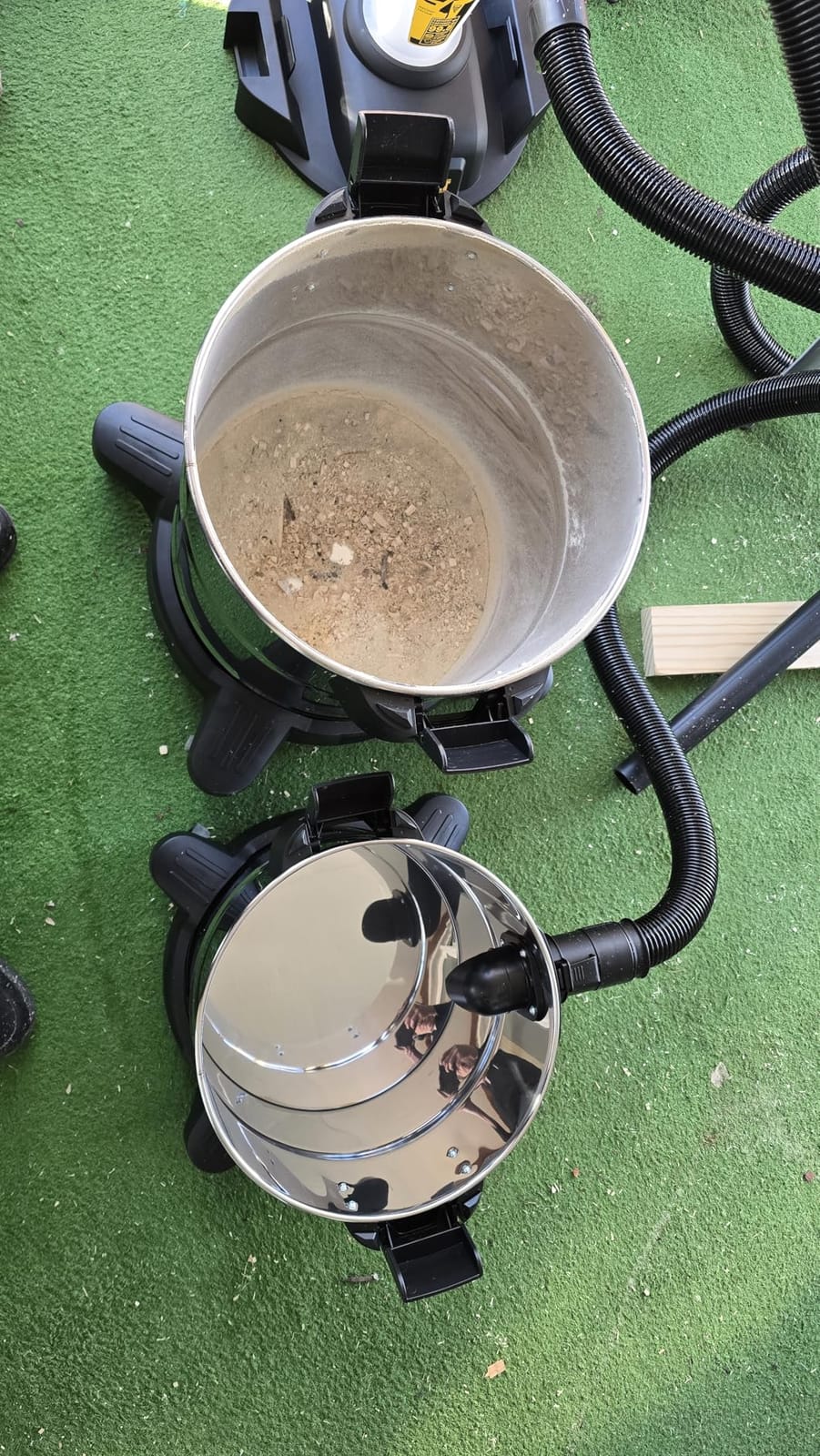
Stainless steel is a practical choice in a garage rather than a luxury one. It shrugs off drops from a board, wipes clean without staining, and will not crack in cold weather the way a thin plastic bucket can.
At 18 by 17 by 34.6 inches and 300 watts, it is a mid-size footprint for a separator, and the four casters keep it mobile enough to serve as the shared endpoint for two machines in a small shop.
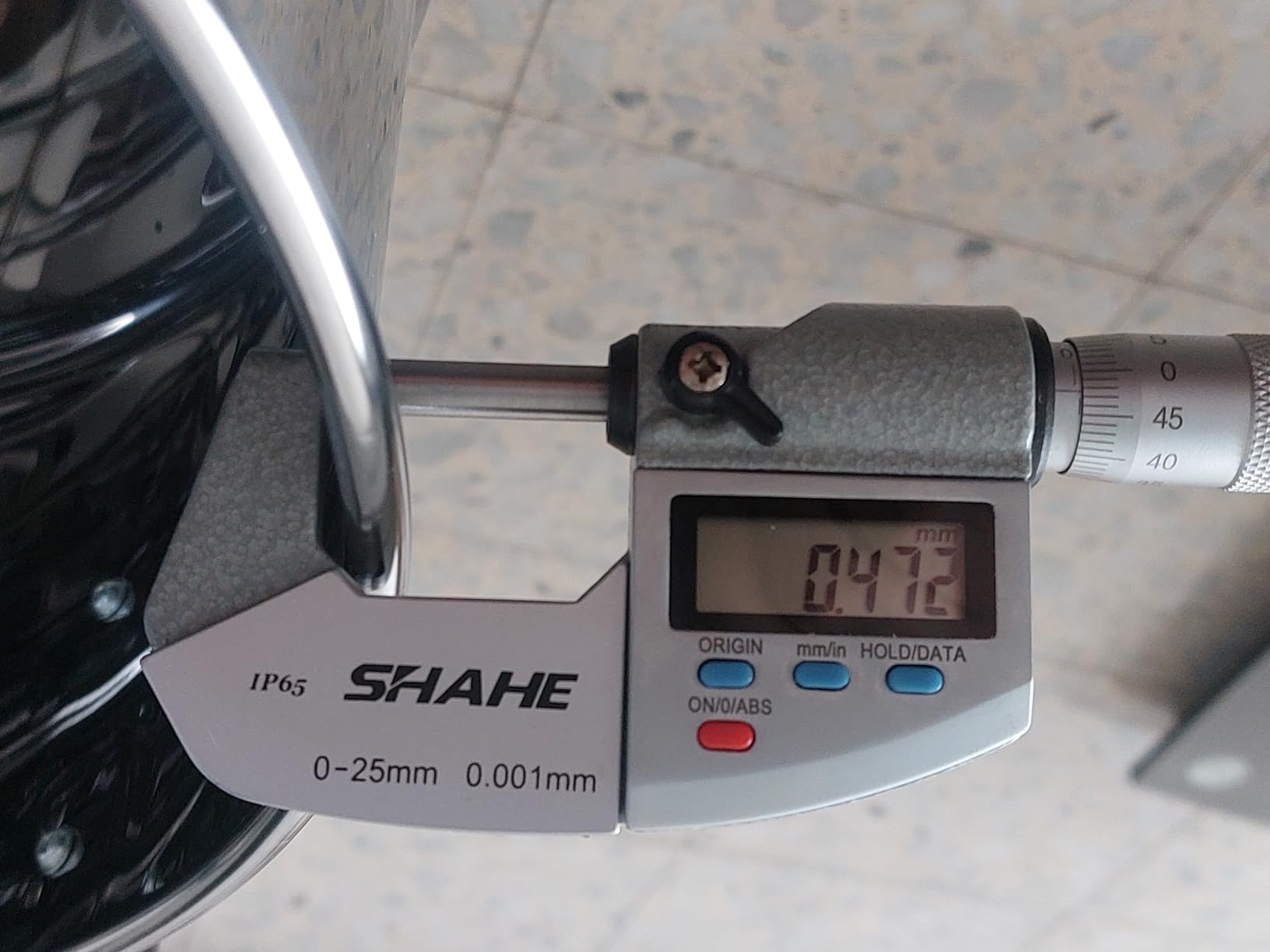
When the extra capacity earns its keep
Any job that produces a predictable pile rather than a steady trickle: rough-milling, ripping a stack of dimensional lumber, or a weekend of finish sanding. When the collection volume is the bottleneck, a bigger tank is the cheapest possible fix and it also cuts the trips across the shop carrying heavy buckets.
The roughly 2.1 meters of included hose is long enough to reach a machine on the far wall without a ducting project, which keeps the installation inside a weekend.
What to watch before you buy
The intake fitting sits higher than the bucket-style version, so plan the vertical clearance before you commit. Under a low benchtop jointer or a shop with a low subfloor, the connection can end up at an awkward angle.
Like every separator in this group, it supplies no airflow of its own. Pair it with a wet or dry vac that has the volume for your machine, and check that your hose diameter matches the fittings before the day of assembly.
4. Shop Fox W1727 800 CFM Collector: Best for Basement Workshops
SHOP FOX Portable W1727 1 HP Dust Collector
800 CFM
1 HP single-phase prewired 110V
9 amps at 110V
2.5 micron bag filtration
50 dB
39.75 x 15.75 x 54.5 inches
55 pounds
Pros
- Compact 54.5 inch height fits low-ceiling basements
- 9-amp draw shares a 15-amp circuit with a machine
- Convertible to 240V if you later install a 20-amp circuit
- 50 dB rating is the quietest powered unit here
- Casters and simple assembly
Cons
- Included 90-degree elbow steals suction and many owners bypass it
- Base and cast wheels feel cheap
- Included dust bags are widely replaced
Basement shops fail on height, not width. The W1727 stands 54.5 inches tall against roughly 75 inches for a conventional 1.5 HP cabinet, and that single dimension is often the difference between a unit that fits under your joists and one that does not.
The 1 HP single-phase motor ships prewired at 110V drawing 9 amps, which means it will run on a standard 15-amp residential circuit alongside a machine. Owners who grow into a bigger shop can convert it to 240V, where the same motor draws 4.5 amps and becomes a much quieter, more efficient tool.
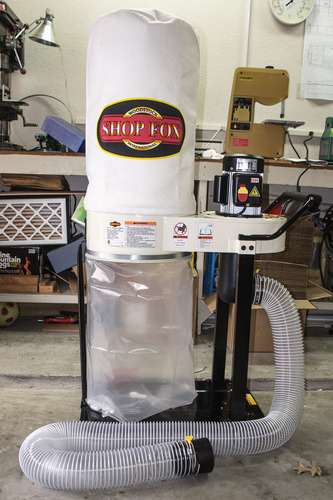
The 50 dB noise rating is the quietest in this roundup and it is a real difference in an enclosed room. Reviewers describe it as noticeably easier to work next to than a shop vac, and far easier to live with when the shop is under the house rather than beside it.
At 800 CFM of air suction, it covers the classic small-shop combination: a benchtop jointer, a planer, or a table saw with a 4-inch port, one machine at a time.
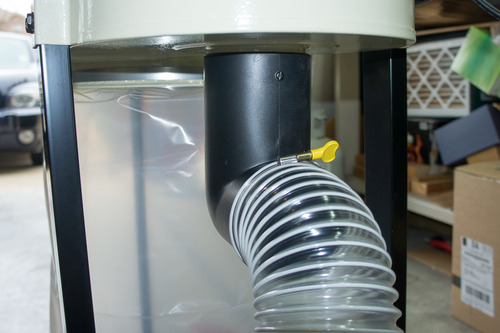
Why the elbow is the first thing to change
The included 90-degree elbow is the most common owner complaint in the reviews, and the fix is easy: hook the hose directly to the inlet and leave the elbow in the box. Every sharp bend is static pressure the fan has to overcome, and removing one recovers real airflow at the tool.
On a 2.5 micron bag and a modest 800 CFM motor, those losses matter more than they would on a large cabinet. Keep hose runs short and elbows minimal and this unit performs close to its rating.
What to inspect on arrival
Two things get flagged repeatedly: the sheet-metal base and cast wheels feel thin for a 55-pound machine, and the shipped brackets occasionally arrive bent. Check both before you run anything, since a bent bracket under a spinning impeller is a real problem.
Owners also replace the included dust bags fairly quickly, and they report the unit capturing the large majority of both fine and heavy dust once a better bag is fitted. Budget for that as a first-month accessory rather than a surprise.
5. POWERTEC DC5372 560 CFM Collector: Best for 1-Micron Filtration
POWERTEC 1 HP, 560 CFM Portable Dust Collector with 1 Micron Dust Collector Bags, Dust Collectors for Woodworking Dust Collection System (DC5372)
560 CFM
1 HP dual-voltage induction motor
12 amps at 120V
6 amps at 240V
3450 RPM
Reusable 1-micron bag
43.6 pounds
Pros
- Reusable 1-micron bag with a dust-level viewing window
- 120V and 240V from the same motor
- Induction motor runs smoother than a brushed design
- Vortex base is claimed to improve efficiency by up to 10 percent
- Protective grate keeps large debris off the impeller
Cons
- 560 CFM is the lowest airflow of the powered units here
- Only 61 ratings
- so long-term durability is not well proven
- Noisy on startup before hose connections are made
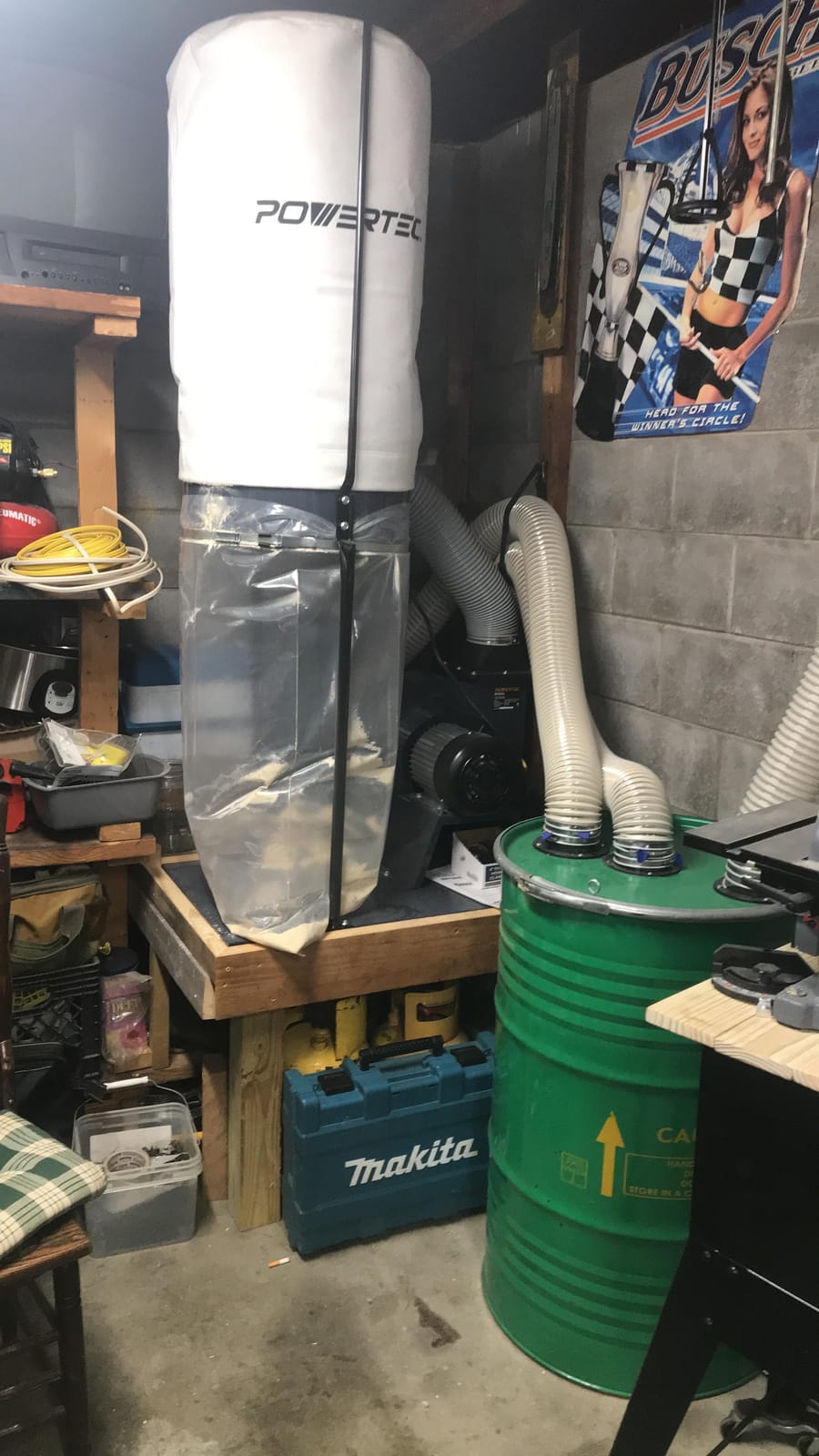
Filtration is where this unit separates itself from the rest of the entry tier. A reusable 1-micron bag with a viewing window and a disposal zipper is a spec you normally pay a premium tier for, and the window means you can judge when the bag is loaded without opening the housing.
The motor is a 1 HP induction design running at 3450 RPM, with dual voltage capability. At 120V it draws 12 amps, which fits a 15-amp circuit on its own; at 240V the draw falls to 6 amps and the motor runs cooler and quieter.
The 4-inch inlet has a built-in grate in front of the impeller. That grate is the reason a stray offcut cannot reach the fan blades, and it also needs periodic cleaning, which owners flag as routine maintenance rather than a fault.
At 43.6 pounds with a compact portable base, this is a unit you can reposition without a second person, which matters in a shop that also has to hold a car.
What 1-micron filtration actually changes
The number is the size of particle the media is rated to hold. Going from a 5-micron bag to a 1-micron bag is the difference between trapping coarse dust and trapping the fine fraction that stays suspended for hours and settles on everything you have just finished.
The practical catch is air. Finer media restricts flow, and a 560 CFM motor pushing a 1-micron bag is working harder at the same time. Expect less effective suction at the tool than a same-sized unit with a coarser bag, and check the bag window often.
Where the data runs thin
There are 61 ratings on this unit, which is a small sample compared with the 500-plus rating bases elsewhere in this roundup. The specification is strong, but there is not a decade of owner reports behind it, and that is a real consideration for a machine you intend to run for years.
At 560 CFM it is also the lowest airflow of the powered units here. It suits a scroll saw, a benchtop sander, a lathe, or a small planer; a wide belt sander or a jointer running heavy passes will leave performance on the table.
6. Mullet Cyclone Dust Collector: Best Cyclone Upgrade for an Existing Shop Vac
Mullet Cyclone Dust Collector, High-Speed Separator for Shop Vac
Parabolic one-piece cyclone body
Pre-separates over 99% of debris
Rigid cut-to-fit PVC connection
Two hose adapters included
7.5 pounds
72 dB
Pros
- Highest average rating of any unit here at 4.8 across 288 ratings
- Parabolic body spins a faster airstream than a straight-wall bucket design
- Rigid PVC connection instead of bungee cords and tape
- Included adapters fit wet and dry vacs of most sizes
- Light at 7.5 pounds
Cons
- Supplies no airflow
- so it needs a shop vac or extractor behind it
- Not a standalone powered collector
- 72 dB sound level is inherited from the vacuum it feeds
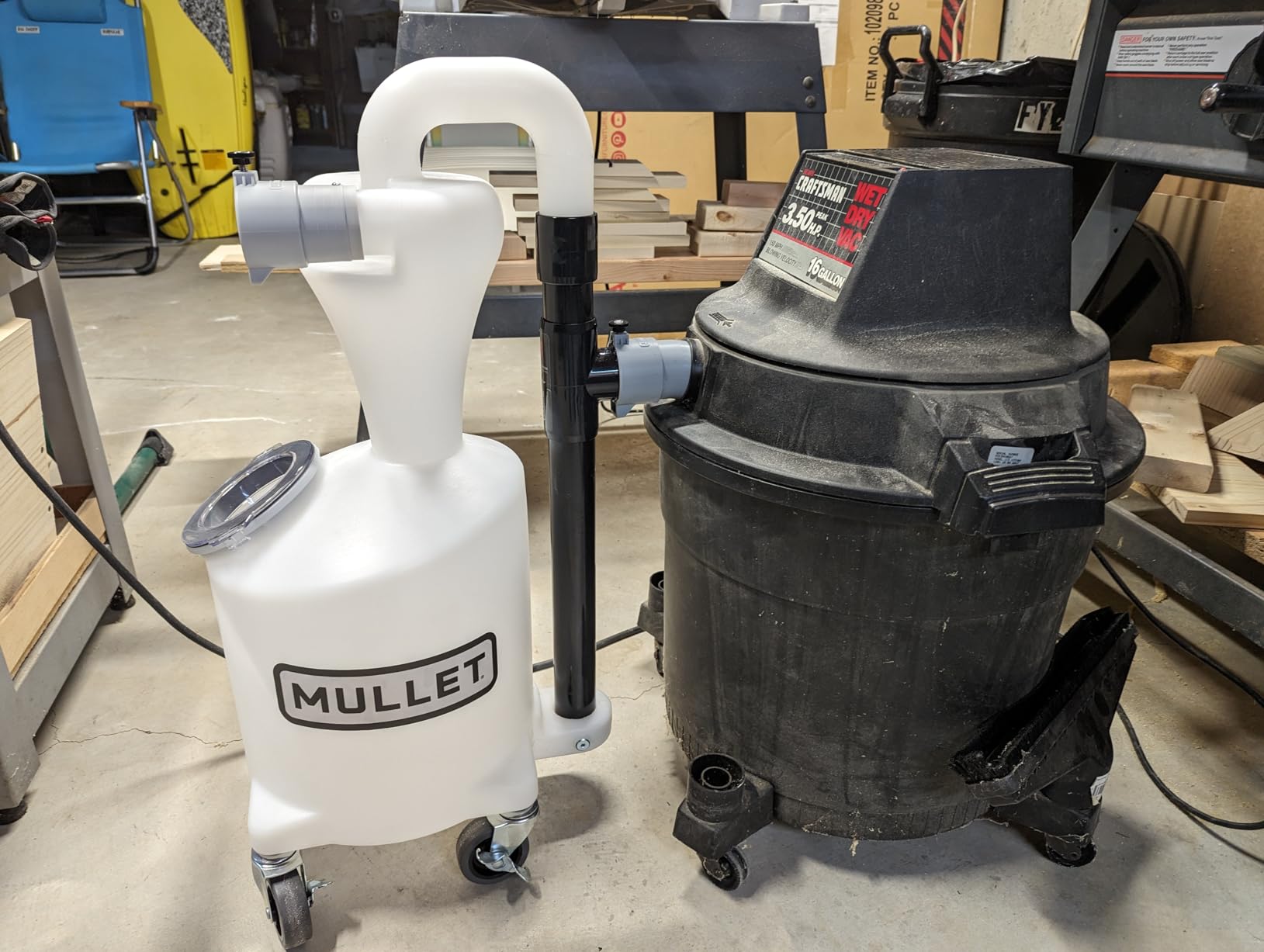
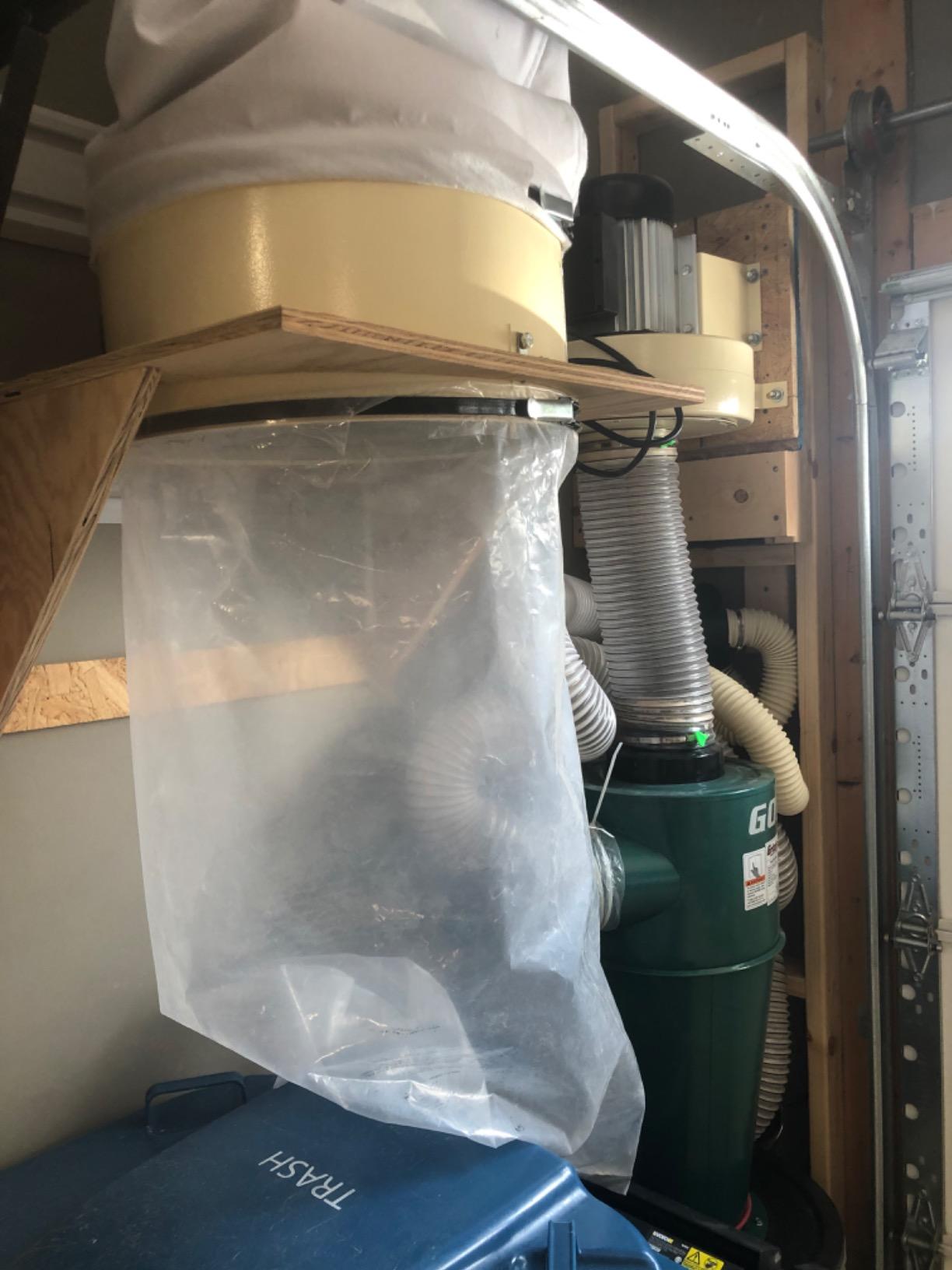
This is the separator to buy if you are fussy about how the connection is made. The one-piece parabolic body has no seams or internal welds for dust to catch on, and the geometry is what gives the unit its high separation rate – the manufacturer claims over 99% of debris is thrown out before it reaches the vacuum filter.
Owners consistently report the practical effect of that claim: a vacuum that stays clean, a bag that empties less often, and suction that does not sag an hour into a sanding session. That is the outcome people are actually buying, and it is why the 4.8 average across 288 ratings sits at the top of this group.
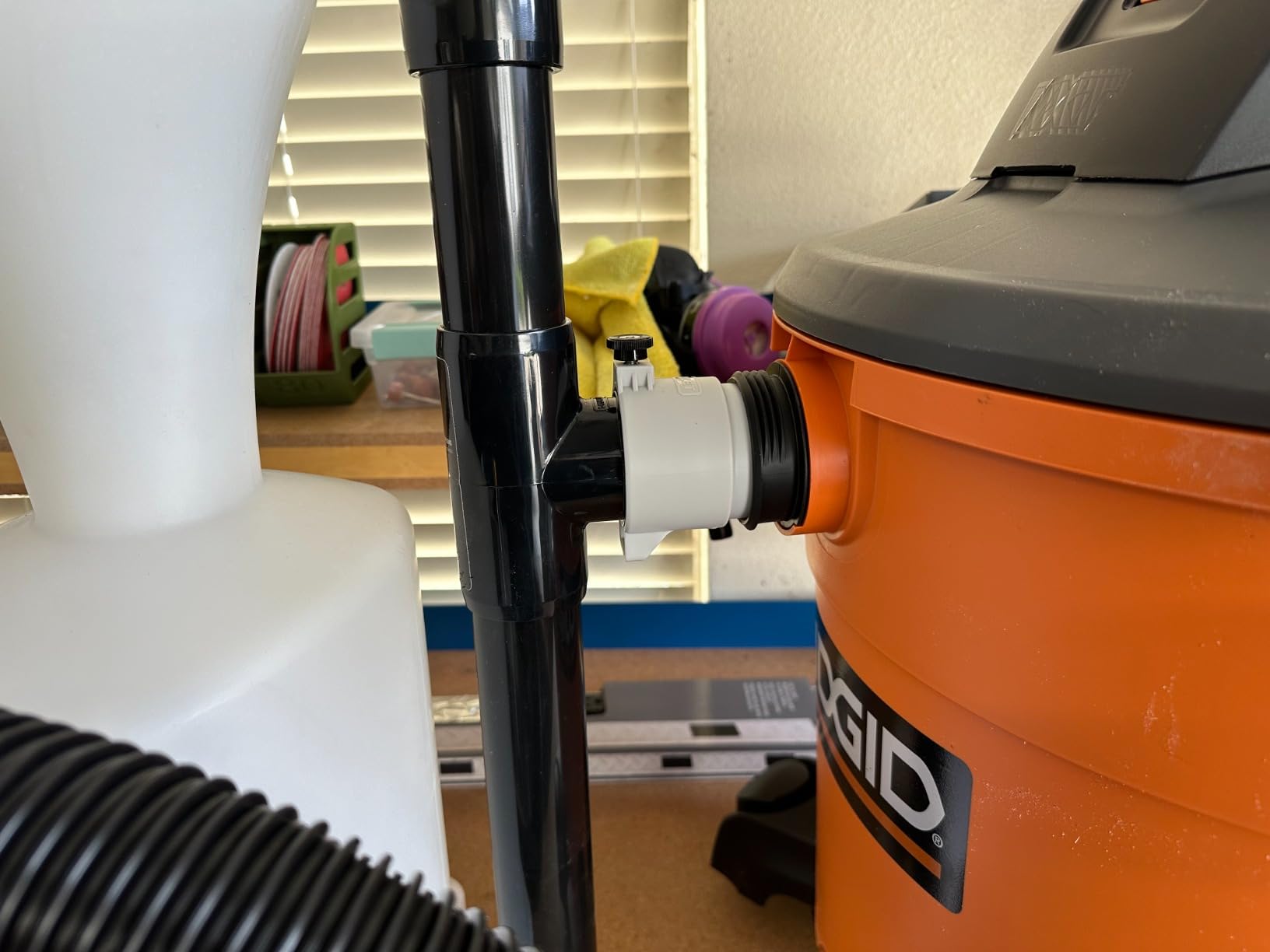
The rigid cut-to-fit PVC connection is the detail I would not compromise on. Home-made separator setups fail because a bungee cord or a strip of tape leaks, and a leak means the cyclone spins air instead of dust, which defeats the entire unit. This one is a fixed fitting from the day it arrives.
Two hose adapters are included, covering most wet and dry vac sizes, so in most cases there is nothing to buy to connect it. At 7.5 pounds, it moves between machines without effort.
When a cyclone is the right tier
A cyclone earns its place when you already own a vacuum that moves decent volume and you are tired of replacing its filter. That is the situation in a lot of small workshops: the shop vac is fine, the filter expense is not, and the bag empties every third job.
It is also the cheapest route to testing whether dust collection suits your workflow at all before committing floor space to a powered cabinet.
What the high rating does not cover
All airflow here comes from the vacuum feeding it. A 4.8 average is a rating of the separation and the fit, not of total suction, and a weak vacuum behind this unit produces weak results no matter how well the cyclone performs.
Because it only pre-separates heavy debris, fine sanding dust still travels to the vacuum’s own filter. Pair it with a vacuum that has a replaceable HEPA or M-class element if the fine fraction is your real problem.
7. WEN DC1300 1,300 CFM Collector: Best for Running Two Machines
WEN DC1300 1,300 CFM 14-Amp 5-Micron Woodworking Dust Collector with 50-Gallon Collection Bag and Mobile Base , Black
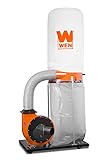
1,300 CFM
Dual 4-inch air inlets
50-gallon vertical bag
14-amp motor
10-inch steel impeller at up to 3450 RPM
5-micron filtration
Pros
- Dual 4-inch inlets let two machines run at the same time
- 50-gallon bag empties far less often than a 12-gallon unit
- 1300 CFM covers a table saw
- jointer and planer as a group
- 4.5 average across 233 ratings
- Mobile base with four swivel casters
Cons
- 14-amp draw effectively requires a dedicated 20-amp circuit
- Larger footprint than the compact units in this roundup
- Single cartridge filtration rather than a fine canister
This is the first unit in the list where two machines running at once is a real design goal rather than an aspiration. The dual 4-inch inlets mean a table saw and a planer can both be connected, which in a small workshop is the difference between collecting dust properly and collecting it only when the other machine is idle.
The 14-amp motor driving a 10-inch steel impeller at up to 3450 RPM is the reason the airflow number is as high as it is, and it is also the unit’s main constraint. A 14-amp load wants its own 20-amp circuit, and sharing a 15-amp garage circuit with a table saw is exactly the arrangement that trips a breaker mid-cut.
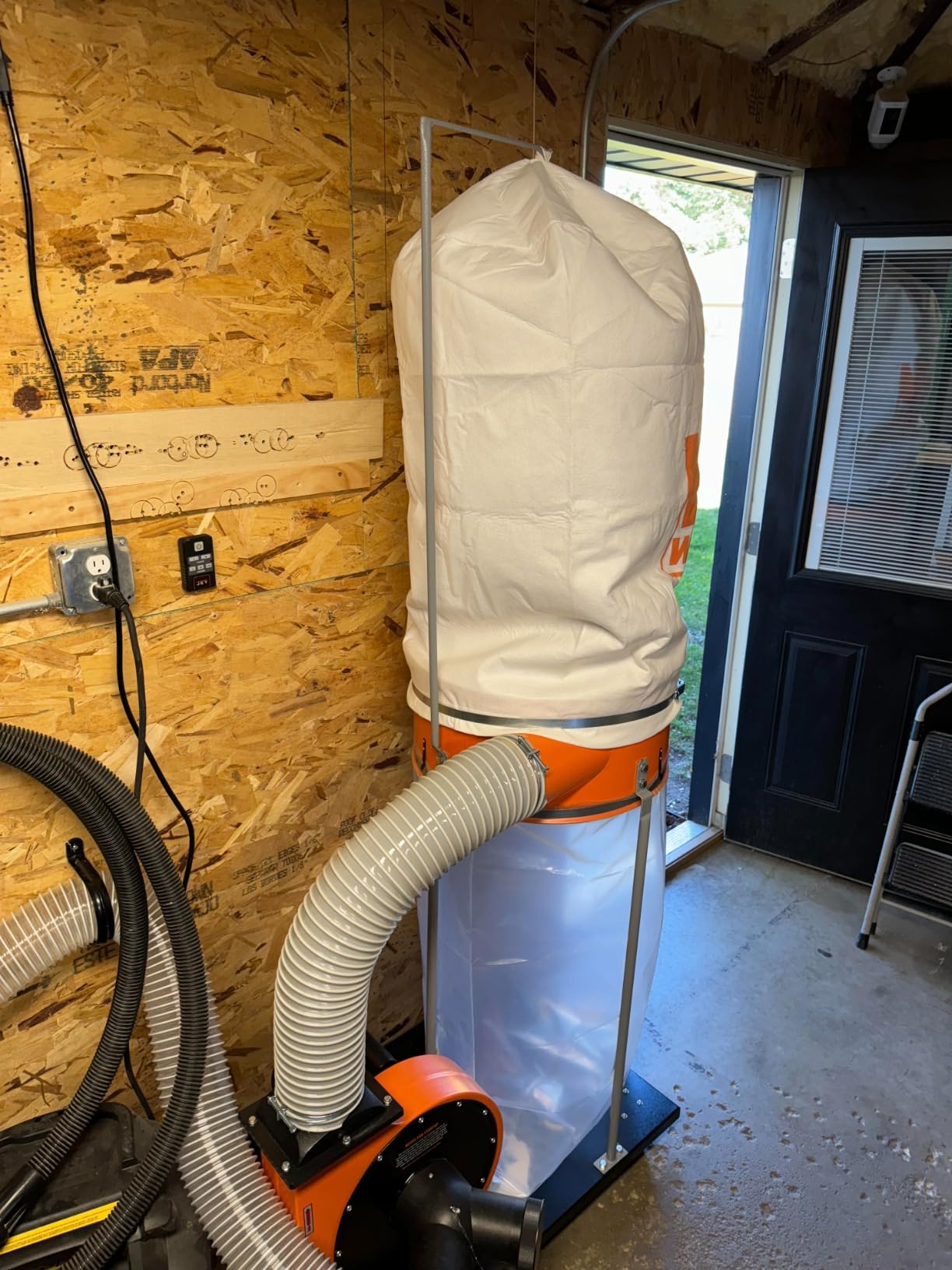
The 50-gallon vertical bag is a bigger deal than the gallon figure suggests. A 12-gallon bag fills during rough work; 50 gallons lets you finish a project and empty once, which matters more in a small space than it does in a large shop where walking to a bin is easy.
Owners rate the combination highly – 4.5 across 233 ratings – with satisfaction centred on airflow, the ability to run two machines, and emptying frequency.
Check your circuit before anything else
At 14 amps, this is not a unit you can plug into whatever circuit you already have. If your garage has a 15-amp receptacle shared with the table saw, add a 20-amp circuit before you buy, or the first heavy cut will stop the machine.
Outlets positioned near the collector matter more than they do for smaller units, because the alternative is running 4-inch flex across a walkway. Plan the circuit and the receptacle together.
Where it outgrows a small shop
The footprint is the trade-off. A 50-gallon vertical bag on a wheeled base occupies considerably more floor area than a 12-gallon canister, and that is the space a one-car garage usually has in short supply.
Filtration is a 5-micron cartridge, which handles chips and coarse sanding dust well. The fine fraction from extended random-orbit sanding is still a job for a separate air cleaner, and the big bag makes the volume of that dust easy to underestimate.
8. BUCKTOOL DC50 750 CFM Auto-Start: Best for Planer and Table Saw Work
BUCKTOOL 750 CFM Auto-Start Dust Collector,1.2HP 13-Gallon Capacity
750 CFM
1.2 HP 120V motor at 3450 RPM
6.5 amps full load
CSA listed
Auto-start outlet for tools to 7A
5.4 cubic foot bag
56 pounds
Pros
- Auto-start outlet switches the collector on with the tool and off when it stops
- 1.2 HP 120V motor at only 6.5 amps full load
- All-metal construction including a steel impeller housing
- Bundled 5 ft 4-inch hose and five reducers
- Portable base works as a mobile or stationary unit
Cons
- 4.0 average is the lowest here
- with a 10 percent one-star share
- Suction is debated
- with some owners finding 750 CFM overstated
- Noisy for a number of owners
- Lower bags fill quickly
The auto-start outlet is the feature that changes how you use a collector. Plug a planer or table saw into it and the machine comes on with the tool and shuts off a moment after it stops, so the unit is not running empty for twenty minutes while you sweep up or change a blade.
The power side is well judged for a 1.2 HP motor: 6.5 amps at full load on 120V, CSA listed, 3450 RPM. That is one of the few higher-output collectors in this roundup that fits an ordinary 15-amp circuit without a dedicated 20-amp run.
Construction is all metal, including the impeller housing, which is the right choice in a shop where sheet-metal fatigue and cracked plastic housings are the usual failure points. Reviewers single out the clasp that holds the lower bag, because it fits the bag without pinching it.
The box also includes a 5-foot section of 4-inch flexible hose and five reducers, so the tool-end connection is covered without a second order.
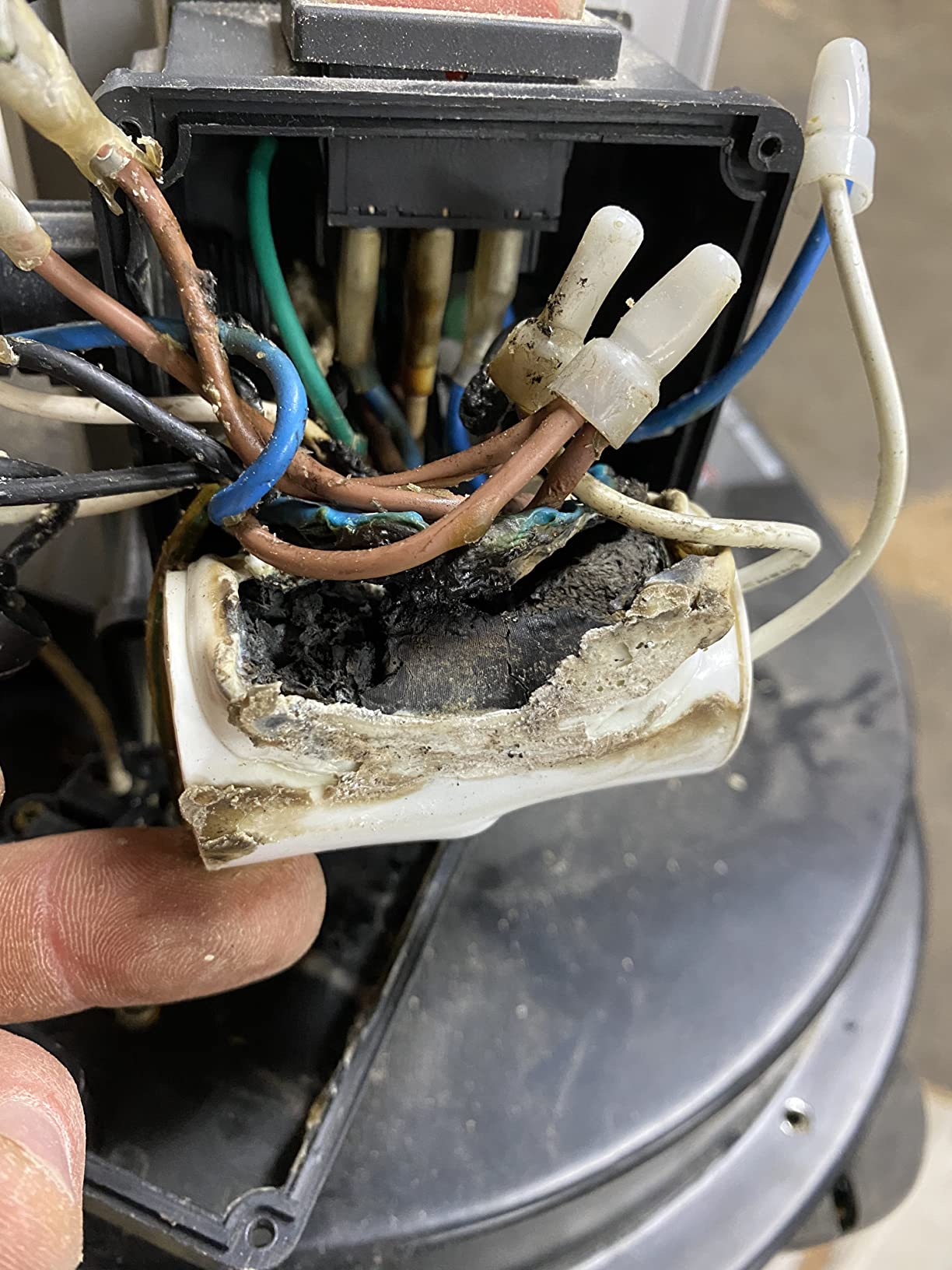
How to size it for a planer and a table saw
750 CFM with a 6-amp-ish motor is the sweet spot for feeding one hungry machine at a time, which is how most small workshops run. Planers and jointers produce the heaviest continuous load, and this has enough headroom to keep airflow steady rather than sagging as the bag fills.
Keep the run short. Auto-start does not reduce static pressure, and a long hose plus a reducer still costs you airflow at the tool.
What the split reviews come down to
At a 4.0 average across 204 ratings, opinions diverge. One group finds it strong and quiet for the money and praises the metal build; another rates the suction as weak and calls it noisy, and the 10 percent one-star share reflects that split rather than a single defect.
Bag capacity is the other repeated note. The 5.4 cubic foot total volume with two lower bags means frequent emptying during rough work, so treat the top bag as a filter and the lower bags as something you check mid-project.
9. WEN 3410 Air Filtration System: Best for Cleaning Shop Air, Not Chips
WEN 3410 3-Speed Remote-Controlled Air Filtration System (300/350/400 CFM), Basic w/ RF Remote (400 CFM) , Black
300, 350 or 400 CFM on three speeds
1-micron filter plus 5-micron pre-filter
120V at 1A
Covers up to 400 sq ft
50 to 60 dB
RF remote with 26-foot range
Programmable timer
Pros
- 4.6 average across 5627 ratings
- the largest review base in this roundup
- RF remote lets you run it from across the shop
- Programmable timer with automatic shutoff
- Only 1 amp at 120V so it can go on any circuit
- Replaceable 1-micron filter and 5-micron pre-filter
Cons
- This is an air filtration unit
- not a dust collection unit
- Handles airborne dust
- not chips
- coarse debris
- or ducted machine work
- Does not reduce the need for source capture at a machine
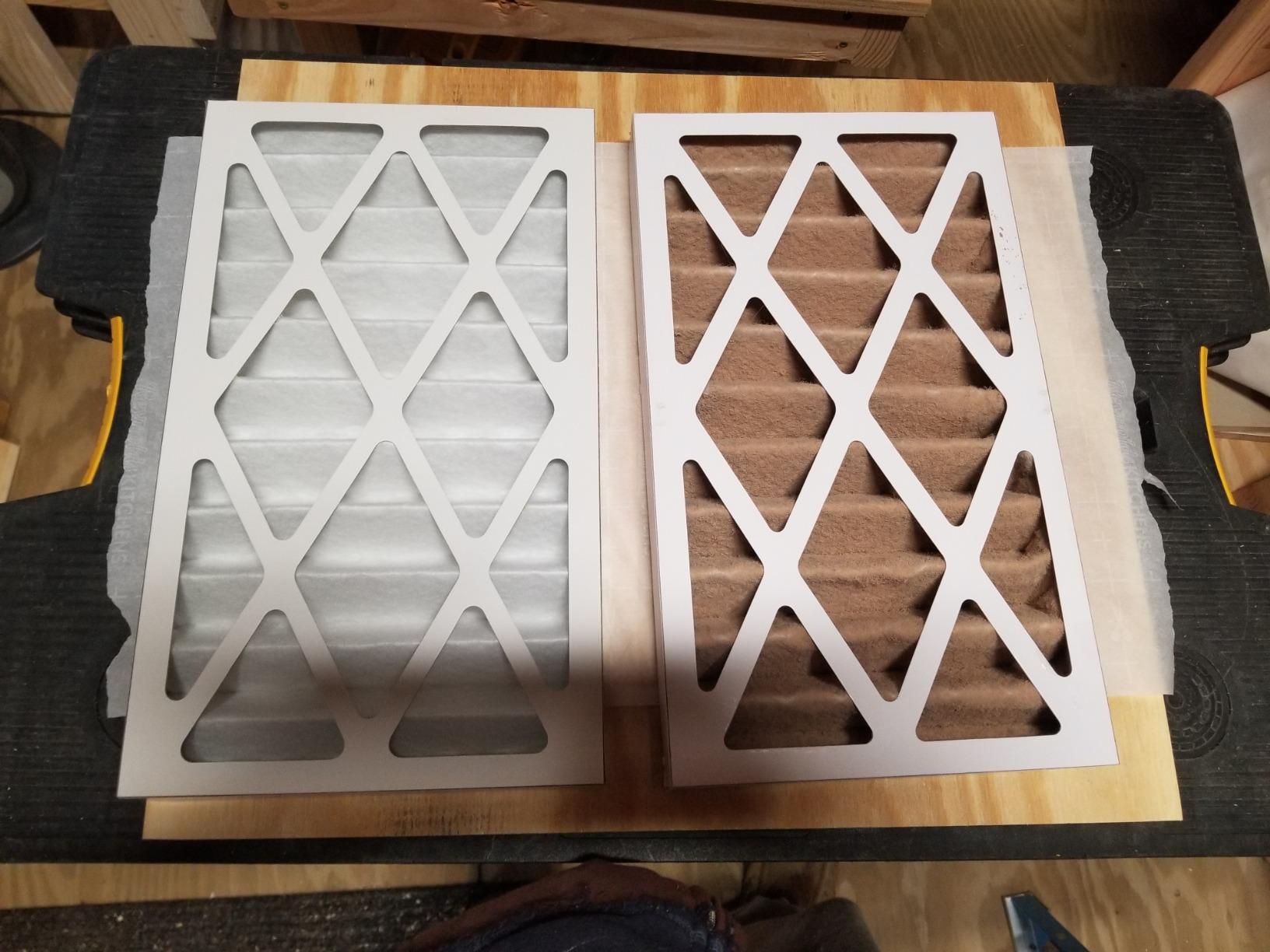
Be clear about what this machine is. It draws air through a replaceable 1-micron filter and a 5-micron pre-filter and pushes it back into the room. That means it cleans the air you have already breathed, which is a real health benefit in a shop full of fine dust, and it does not connect to a table saw port at all.
What it is for is everything a collector cannot catch. Airborne sanding dust that has already left the machine, the fine fraction that escapes an open bag, and the haze hanging in the air an hour after you finish a job. At 400 CFM it covers a room up to 400 square feet, which is most small workshops.
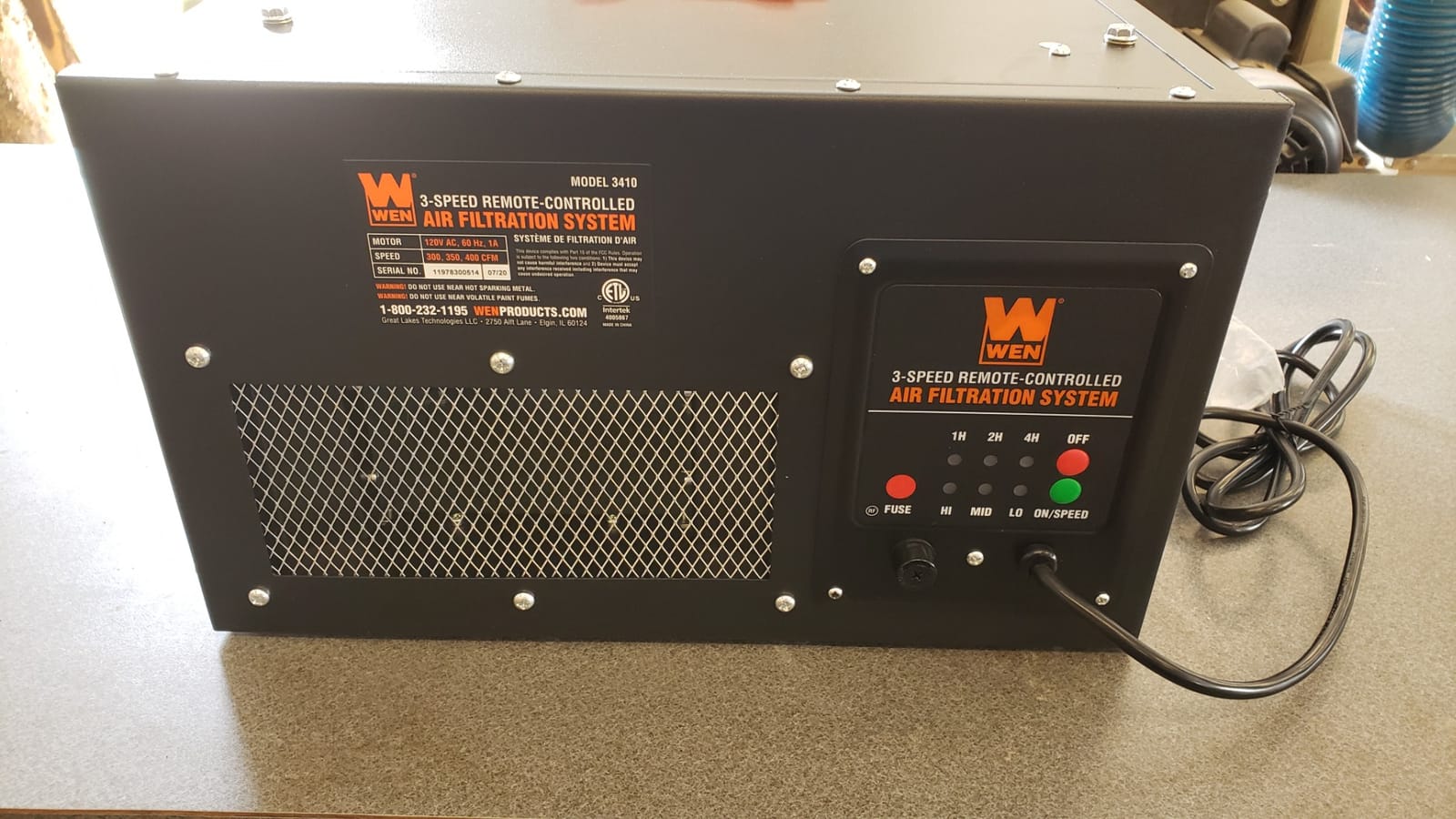
The 5,627-rating review base is the largest in this roundup by a wide margin, and the 4.6 average across it is meaningful. The remote control and programmable timer are what owners mention most, because they let the unit switch on when you start work and shut itself off afterwards without anyone walking back to it.
At 120V and 1 amp, it shares a circuit with anything in the shop, and the 50 to 60 dB range keeps it background-level rather than intrusive.
Why an air cleaner complements a collector
Source capture and ambient cleanup solve different problems, and a good small shop runs both. A collector removes the bulk of the material at the machine; the air cleaner removes the fine fraction that was airborne before the collector started and the fraction that escaped the bag.
The practical test is simple: switch on your collector, saw for twenty minutes, then let the dust settle. Whatever is still hanging in the air is what an air filtration unit handles, and in most hobby shops that is a meaningful amount of it.
Where this unit is the wrong answer
It cannot collect chips, and it will not reduce the dust your planer throws. If the problem is debris piling on the floor of a one-car garage, this is the wrong machine and a collector or a separator is the right one.
It also adds a filter replacement cycle of its own. Fine filters need replacing on a schedule, and owners who treat that as an afterthought end up with a loaded filter and a shop that smells of sawdust again.
10. Shop Fox W1685 1.5 HP Collector: Best for Jointer and Planer Duty
Shop Fox W1685-1-1/2 HP Dust Collector,White
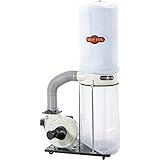
About 1,280 CFM
1.5 HP 110V motor
2.5 micron bag filtration
6-inch hose inlet
10.1 inch static pressure
5.4 cubic foot bag
66 dB
93 pounds
Pros
- 10.1 inch static pressure moves air through longer duct runs
- About 1280 CFM handles jointer
- planer and table saw duty
- All-steel construction with no plastic beyond the power switch
- Quieter than a shop vac and easy on the ears
- Handles a 110V dedicated circuit
Cons
- At 93 pounds it is heavy and has no solid push handle
- Bottom bag reinstallation is awkward
- Impeller can loosen on the shaft if not tightened at assembly
- Occasional shipping damage to motor mounts and brackets
The number that matters most here is 10.1 inches of static pressure. Every other figure in this roundup describes free air, but static pressure describes what happens once hose, a blast gate, and elbows are attached, and a unit with headroom in that column keeps its airflow when the ducting gets complicated.
At roughly 1,280 CFM from a 1.5 HP 110V motor, it has the airflow to keep a jointer or planer pulling from a distance rather than right at the port. Owners describe planer shavings being drawn from several inches away, which is the practical measure of whether collection is working.
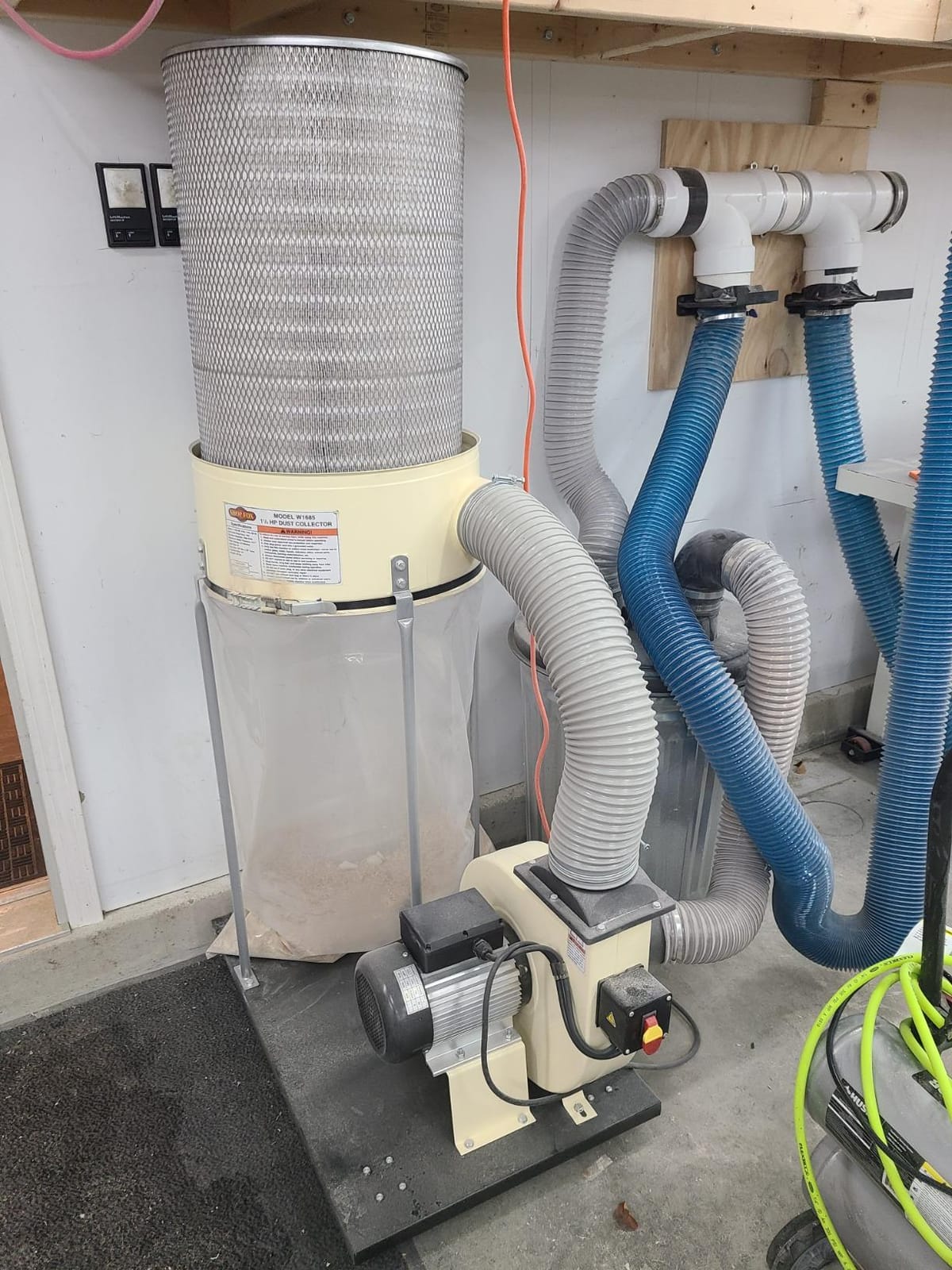
Construction is all steel with a powder-coated finish, on heavy casters. The 66 dB rating sits below a shop vac in most owners’ experience, and the 6-inch inlet is the right diameter for a full-size duct run rather than a short flex connection.
At 93 pounds and around 75 inches tall, it is a full cabinet rather than a compact unit, and it needs a dedicated 110V circuit. Plan the outlet and the floor space before it arrives.
When static pressure earns its extra size
Static pressure is what lets a collector push air through a blast gate, a 25-foot flex run, and two 90-degree elbows without the whole system collapsing. If your plan is central ductwork with several drops rather than one short hose per machine, this is the unit that will still be collecting once everything is connected.
A 5.4 cubic foot bag volume is generous compared with the small-canister units, so it spends less time stopping for emptying during a heavy planing session.
What owners fix in the first week
Three things come up consistently. Tighten the impeller on the shaft during assembly, because it can loosen in transit and the noise that follows is alarming. Plan for the lower bag, which is awkward to reinstall and which owners secure with tape or magnets. And inspect the motor mounts and brackets on arrival, since transit damage shows up here.
There is no solid push handle on a 93-pound cabinet, so plan its final position before you start, and remember that moving it means tipping and rolling rather than carrying.
How We Evaluated These Collectors?
We ranked these on six criteria, in this order: airflow at a realistic machine and hose configuration, filtration grade, whether the unit fits a residential circuit, floor footprint, filter and bag cost over time, and the volume of consistent owner complaints.
Here is the honest limit. We have not independently measured airflow with a calibrated anemometer, and we have not bench-tested static pressure, noise at a fixed distance, or filter life under load. Every performance figure in this article comes from manufacturer specifications and from the pattern across hundreds of owner reviews, not from a lab in our shop. Treat CFM numbers as free-air marketing figures unless we say otherwise.
What we did do is read the negative reviews first. The drawbacks in each section come from owners who had the unit long enough to be specific, not from the first week of impressions.
When Not to Buy a Dust Collector
Some of you reading this should spend the money on something else, and it is worth saying plainly.
You have one stationary machine. A table saw and a random-orbit sander do not generate enough debris to justify a floor-standing cabinet. A shop vac with a good filter, or a shop vac plus a cyclone separator, will do the same job without taking a parking space.
You have no stationary machines yet. Hand tools and a scroll saw produce very little. Buy the separator, not the collector.
You are renting and cannot drill a wall. The wall-mounted options are the exception here, but a floor unit on non-locking casters will eventually migrate.
Your problem is airborne sanding dust, not chips. A collector captures material at a machine. It does not clean the air in the room, and no filter change fixes that. A dedicated air filtration unit is the right purchase.
You have a 15-amp circuit and no plan to add one. Restrict yourself to units at or below about 8 amps full load, or add a circuit first. Breaker trips mid-cut are the most common complaint in this entire category.
Many experienced woodworkers with large shops still run a shop vac and separator as their primary setup. That is a reasonable choice, not a compromise.
Buying Guide: Sizing a Dust Collector for a Small Workshop
How Many CFM Do You Actually Need?
Most small workshops need 400 to 700 CFM and 1 to 1.5 HP. Anything above 1,000 CFM is for shops running two or more machines at once, and it comes with the floor space and circuit requirements to match.
Working in bands: a scroll saw, benchtop sander, lathe, or small planer needs roughly 300 to 450 CFM. A table saw, benchtop jointer, or full-size planer running alone needs about 400 to 700 CFM. Running a table saw and a planer at the same time pushes you to 800 CFM and above. A wide belt sander or a drum sander wants more than that again.
Add roughly 10 percent for every 10 feet of hose, and more if your run includes 90-degree elbows, because each bend costs static pressure that the motor has to overcome.
Static Pressure and Duct Losses
Static pressure is the collector’s ability to pull air through friction in hose, ducting, blast gates, and filters. It is quoted in inches of water column, and it is the number that tells you whether a unit will still perform once it is plumbed in.
The rule of thumb from shop practice is a duct velocity of around 4,000 feet per minute, which is the threshold where wood dust and chips stop hanging in the duct. Below that, dust settles out in the pipe and the airflow drops, which is the classic complaint about a collector that performs well on the bench and poorly at the machine.
Practical consequences: shorter runs beat longer runs, 4-inch hose is the minimum you want, and every elbow is a loss. Several people in forum threads on this question make the same point – you need to move a real volume of air for effective collection, and going below 4-inch pipe undoes the work.
Filtration: Micron Ratings Explained
A micron rating is the size of particle the filter media is rated to capture. A 30-micron bag is close to useless for health, because fine sanding dust passes straight through it. A 5-micron bag is the reasonable entry standard. A 1-micron bag is the practical gold standard for wood shops, and canister or cartridge stacks give you that without a disposable bag.
There is a trade-off in every direction. Coarser bags pass more air and last longer; fine bags catch more and restrict more. Finer media also costs more to replace, and a fine bag on a small motor can starve the impeller of the volume it needs.
Bag filter versus canister: a canister filter with a pleated cartridge has more surface area, so it holds more dust before backpressure becomes a problem, and it can be cleaned rather than discarded. A fabric bag is cheaper up front and replaced on a schedule, which for a shop making dust steadily is a recurring cost that adds up faster than most buyers expect.
Power and Circuit Requirements
A 1 HP single-phase motor on 120V typically draws 8 to 9 amps. A 1.2 HP motor draws around 6.5 amps at full load on this roundup’s data. A 1.5 HP motor commonly draws 12 to 14 amps, which effectively means a dedicated 20-amp circuit.
That is the constraint that decides more purchases than any other, because it is the one that cannot be solved by shopping. Never share a 15-amp circuit between a 1.5 HP collector and a table saw. It will trip, and it will trip mid-cut.
On phase: single-phase at 120V or 240V is standard residential power and covers everything in this roundup. Three-phase at 460V is commercial only, requires an electrician, and is not relevant to a small workshop. If a product listing mentions three-phase, you are looking at a different category of machine.
Footprint: Wall-Mount vs Rolling
Floor space is the defining constraint of a one-car garage. A conventional cabinet collector with a 50-gallon bag can occupy the footprint of a second machine, and in a garage that means the car moves to the driveway.
A wall-mounted or compact canister unit changes the maths. Mounted above the machine, the collection bag hangs under the table and the only thing touching the floor is the hose. The WEN DC3401 in this roundup offers that option, and several shop owners mention it as the reason a collector became possible in their space at all.
Rolling units have their own failure mode. Free-spinning casters let a heavy collector drift on its own once the impeller spins up, and lockable swivel casters are worth checking for before you buy anything on wheels.
Hose Size and Blast Gates
Four-inch hose is the practical minimum for a small workshop, and 5-inch or 6-inch is better if the machine port and the collector inlet both allow it. Going down to 2.5-inch to match a small tool means adding a reducer, and the restriction costs you more airflow than most people expect.
A blast gate is a cam-operated fitting at each machine connection. Cranking it shut isolates unused branches so all available airflow goes to the machine currently in use, which is what allows a modest collector to perform like a much larger one across several tools.
Keep runs short, minimise elbows, and seal every joint. A leaky connection in a dust system does not just lose air – it lets fine dust escape into the room at the seam, which defeats the whole exercise.
Dust Collector vs Dust Extractor vs Shop Vac
These three words get used interchangeably and they describe different machines. A dust collector moves a high volume of air at low pressure, measured in CFM, to pull chips into a bag at the machine. A dust extractor is a smaller, filter-focused machine using HEPA or M-class filtration, aimed at fine dust from sanding, routers, and finish work. A shop vac moves lower volume at much higher vacuum pressure and is the wrong tool for steady chip production, however good it is at picking up a pile off the floor.
The confusion causes mismatched purchases more than any other issue in this category. Buying an extractor when you have a planer, or a collector when your only problem is random-orbit sanding dust, both end with an unhappy owner and money spent badly.
A small shop that runs both a table saw and a random-orbit sander often ends up buying both a collector and an air filtration unit. The collector takes the chips; the air unit takes the airborne fraction. That is not duplication, it is division of labour.
Filter Life and Cost of Ownership
Filter life is a function of what you are collecting and how well the machine pre-separates. A unit that sends chips to the filter collects far less than one that drops them into a bag first, which is the entire argument for cyclone separation.
Rule of thumb: rough lumber and dimensional work fills a bag fast, and a 12-gallon canister bag can need emptying within a single project. Fine sanding dust loads a filter faster than chips do because the particles are smaller and pack down, which is the most common reason owners report a collector losing suction.
Total cost is the purchase plus bags or filters over the years. A disposable bag is cheap per unit and consumed regularly; a reusable cartridge or canister costs more up front and lasts considerably longer. Whichever you choose, budget for the first replacement before you need it rather than discovering it mid-project.
Reducing Noise in a Small Shop
Five things make a collector materially quieter. First, choose a slower-turning, larger-impeller motor instead of a small high-RPM design. Second, mount the unit on isolation pads or a rubber mat so vibration does not travel through the floor slab. Third, put the motor in an enclosure lined with acoustic foam, which cuts the sharpest tones. Fourth, keep hose runs short and straight, because elbows and flex humps add their own noise. Fifth, run the collector on its own circuit so the motor does not fight a saw on the same load.
Placement matters more than most buyers expect. A collector inside the work area next to your ears is far louder than the same unit across the room, and in a one-car garage you may not have a choice – so the quieter specification becomes the deciding criterion.
Combustible Dust and Fire Safety
Wood dust is combustible, and the suspended fraction of fine dust is the dangerous one. It accumulates on rafters, on top of cabinets, and inside ducting where you cannot see it.
Four practical measures. Ground your ducting and equipment so static discharge cannot ignite accumulated dust. Fit a spark arrestor at any connection to a machine that produces sparks, such as a grinder or a metal-cutting saw. Empty dust into a metal container with a lid rather than a plastic bin, and take that container outside rather than leaving it in the shop. And clean surfaces rather than sweeping or blowing dust, because both methods put the fine fraction back into the air you are trying to clean.
Check what your local rules require. Requirements around combustible dust handling vary, and a shop that generates enough dust to be regulated is a different problem from a hobby corner with a table saw.
Frequently Asked Questions
How many CFM should a dust collector have?
Most small workshops need 400 to 700 CFM with a 1 to 1.5 HP motor. A scroll saw, benchtop sander or small planer needs roughly 300 to 450 CFM, while a table saw, jointer or planer running alone needs about 400 to 700 CFM. Running two machines at once pushes you to 800 CFM or more. Add about 10 percent for every 10 feet of hose run.
Is a shop vac better than a dust collector for a small workshop?
For one or two light-duty machines, a good shop vacuum is genuinely enough. A collector earns its place once you run a table saw, jointer or planer, because it moves far more air at lower pressure and captures debris at the source. A shop vac paired with a cyclone separator gives you most of the benefit at a fraction of the cost and floor space.
How long do dust collector filters last?
It depends on what you collect and whether the machine separates debris first. A cyclone separator or a turbo-cone design can keep a filter usable far longer than a bag-only unit, because chips never reach the media. Fine sanding dust loads filters faster than chips and is the most common cause of early replacement. Expect a disposable bag every few months in active use, and a reusable cartridge considerably longer.
Why is my dust collector losing suction?
Four causes cover almost every case: a loaded or clogged filter, a full collection bag, an obstructed port grate, or a leak in the hose run. A loaded filter is the most common. Check the bag fill level and the filter window first, then confirm the hose is clear and every connection is sealed. A blower wheel packed with dust produces the same symptom and needs cleaning.
How can I reduce the noise coming from my dust collector?
Use a larger, slower-turning impeller, mount the unit on isolation pads, and place it as far from your head as your floor plan allows. Enclosing the motor housing in an acoustically lined cabinet cuts the sharpest tones. Short straight hose runs with few elbows reduce noise as well as static pressure losses, and running the collector on its own circuit keeps the motor from competing with a saw.
What should I use instead of a dust collector?
If you have only one stationary machine or none at all, use a shop vac with a replaceable fine filter, or add a cyclone separator between the vac and the tool. If your problem is airborne fine dust rather than chips, a dedicated air filtration unit with a 1-micron filter and HEPA-rated vac will help far more than a collector. Renting before buying is sensible if you are unsure how much debris you actually produce.
The Best Dust Collectors for Small Workshops
The WEN DC3401 is the best dust collector for small workshops overall, because it delivers real powered airflow, keeps a useful 12-gallon 5-micron bag, and can go on the wall to give your floor back. If you already own a decent shop vac, the Mullet cyclone is the smarter first move and the highest-rated unit in this roundup.
Buy the Shop Fox W1727 if low ceilings are your problem, the WEN DC1300 only after you have a dedicated 20-amp circuit, and pair any of them with the WEN 3410 air filtration system to handle the fine dust that escapes collection. Whatever you choose, skip the collector entirely if you own a single machine – a shop vac and a separator will serve you better.
Our picks were reviewed in 2026 against current owner feedback. Check the latest prices and availability for each model before you buy.