
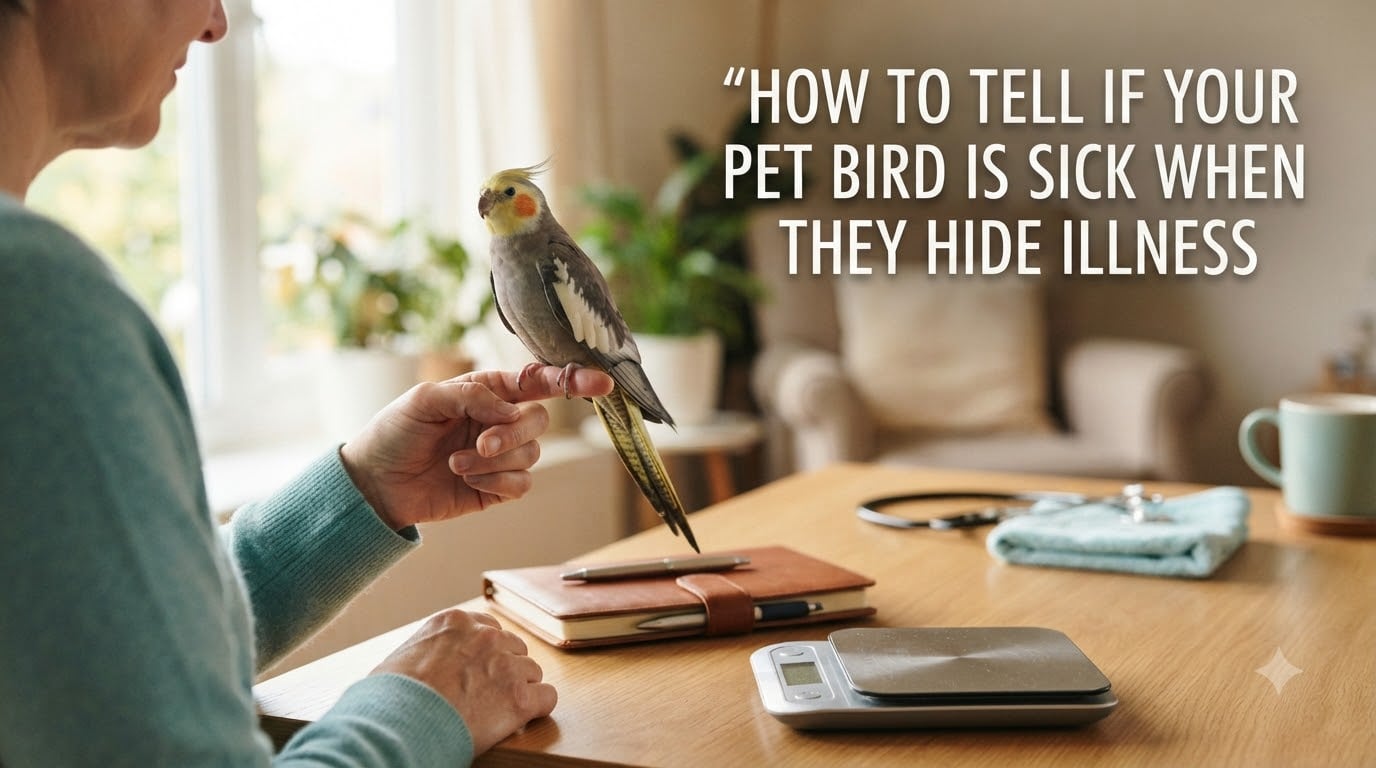
Knowing how to tell if your pet bird is sick can be the difference between a treatable condition and a tragic loss. Wild birds evolved to conceal any sign of weakness, because showing illness to a predator meant death. Our companion parrots, canaries, and finches inherited this instinct, and by the time they look obviously sick, their condition is often advanced. I have watched healthy-looking budgies collapse within 24 hours of their first subtle symptom, and I have also seen cockatiels bounce back because an owner noticed fluffed feathers early. This guide gives you the symptoms, the timelines, and the action steps so you can catch illness before it becomes an emergency.
Table of Contents
Why Birds Hide Illness and Why Early Detection Saves Lives?
Birds hide illness because their bodies are programmed for survival in flocks where predators single out the weak. A wild bird that looks sick gets targeted first, so evolution favored birds that mask symptoms until they physically cannot. Pet birds still carry this instinct, which means the visible warning signs only appear once the bird has burned through its internal reserves.
The Survival Instinct Behind Concealment
When a bird feels unwell, hormones like corticosterone actually suppress obvious signs of pain and lethargy. Your bird may keep eating, perching normally, and vocalizing as if nothing is wrong, while infection spreads internally. By the time your bird sits fluffed on the cage floor, it has likely been fighting the illness for days or even weeks.
Early detection requires you to notice small shifts from your bird’s normal baseline. A budgie who sings every morning but is quiet for two days, a cockatiel who usually eats eagerly but picks at food slowly, a canary who perches high but now sits low. None of these alone prove illness, but combined with even one physical sign they warrant a closer look.
Physical Signs Your Bird Is Sick
Physical signs are the most reliable evidence of hidden illness, and you can spot most of them during normal handling or observation. Run your eyes over your bird once a day and learn what “normal” looks like so anything different jumps out.
Feather Changes That Signal Trouble
Fluffed feathers held for long periods are the single most consistent sign of sickness across all bird species. A healthy bird keeps its feathers sleek and flat against the body. A sick bird puffs them up to trap body heat, because illness often comes with chills. If your bird looks like a “fluffed ball” for more than an hour or two, especially at normal room temperature, something is wrong.
Other feather red flags include:
Dull, ragged, or soiled feathers when your bird is not molting
Bald patches or visible skin from plucking or feather loss
Feathers stuck together or stained around the vent, beak, or eyes
Stress bars (horizontal lines across feathers) indicating past illness or malnutrition
Eye, Beak, and Facial Discharge
Clear or crusty discharge from the eyes, nostrils, or beak suggests infection. Healthy bird eyes are bright, round, and fully open. Watch for swelling, sticky lids, or a third eyelid becoming visible. Nasal discharge often appears as wet streaks above the nostrils or crusty material blocking them. Beak texture should be smooth and symmetrical, not flaky or overgrown.
Weight Loss and Body Condition
Birds can lose up to 30 percent of their body weight before they look thin, which is why periodic weighing matters. A kitchen scale that measures in grams lets you track trends. A budgie dropping from 35g to 28g in two weeks is losing muscle, even if feathers still cover the change. You can also feel the keel bone (the ridge running down the chest). In a healthy bird it is padded with muscle, in a sick bird it feels sharp and prominent.
Behavioral Changes That Reveal Hidden Illness
Behavior changes usually appear before physical symptoms, but they are also easier to miss because every bird has quirks. The key is comparing today’s behavior to your bird’s personal baseline over time.
Lethargy and Reduced Activity
A bird that normally plays, climbs, and explores but now sits still on a perch for hours is showing one of the earliest illness signs. Sleep more than usual, especially during daytime, is a red flag. Healthy pet birds are alert and responsive when you approach the cage. A bird who ignores you, keeps eyes half-closed, or rests both feet on the perch instead of one is conserving energy for a fight you cannot see.
Changes in Appetite and Water Intake
Drop in food consumption is often the first sign owners notice, because birds typically have predictable eating routines. Hulls left in the food bowl, droppings with less solid waste, or a bird who ignores favorite treats all suggest reduced intake. Conversely, a sudden increase in drinking water can signal diabetes, kidney disease, or infection. Either extreme warrants attention.
Vocalization and Personality Shifts
A normally chatty parrot who goes silent, or a normally quiet bird who starts screaming, may be signaling discomfort. Personality changes like sudden aggression in a friendly bird, or unusual tameness in a shy bird, often reflect how sick the bird feels. Trust your gut if your bird “seems off” even when you cannot point to a specific symptom.
Respiratory Symptoms and Breathing Problems in Birds
Birds have a highly efficient respiratory system with air sacs, but it is also fragile. Respiratory infections spread fast and can become fatal within 48 hours. Watch for breathing-related symptoms every single day.
Tail Bobbing and Labored Breathing
Tail bobbing, where the tail moves up and down with each breath, means your bird is working harder to breathe. A healthy bird breathes smoothly with no visible tail motion. Tail bobbing at rest is an emergency. Open-mouth breathing, audible clicks or wheezes, and a bird who stretches the neck forward to gulp air all signal serious respiratory distress.
Sneezing, Coughing, and Nasal Discharge
Occasional sneezes are normal, especially after preening or during dust. Persistent sneezing, however, especially with discharge, points to infection. Watch for crusty nostrils, sneezing fits, head-shaking to clear discharge, or audible “click” sounds when breathing. Any combination of these symptoms needs an avian vet visit within 24 hours.
Digestive Signs and Droppings Changes to Monitor
Droppings are the most informative daily health signal you have, because they reflect how every major organ system is functioning. Healthy droppings have three parts: a solid green or brown fecal portion, a white urate cap, and clear urine.
What Normal vs Abnormal Droppings Look Like
Normal droppings are well-formed, hold their shape, and have clearly separated components. Abnormal droppings to flag include:
Bright green or yellow droppings (possible liver issue)
Black or tarry droppings (possible internal bleeding)
Runny droppings with no shape (diarrhea or polyuria)
Undigested food in droppings (crop or infection problem)
Excess water ring around droppings (kidney, infection, or diet issue)
A single odd dropping is usually not an emergency, especially if a bird just ate fruit or veggies. Repeated abnormal droppings over 12 to 24 hours need investigation.
Vomiting, Regurgitation, and Crop Issues
Regurgitation is a normal bonding behavior where the bird brings up food for a mate or favorite person. It looks gentle, and the bird stays alert and happy. True vomiting is forceful, the bird shakes its head, food flies out, and the bird looks unwell afterward. A crop that stays full and swollen, or feels squishy and sour-smelling, points to crop stasis or infection. Both require urgent care.
Species-Specific Warning Signs: Parrots, Cockatiels, Canaries, and Finches
Different bird species show illness in slightly different ways, and knowing your species’ baseline helps you catch subtle changes.
Parrot and Cockatiel Symptoms
Parrots and cockatiels are flock animals, so they often mask symptoms until late in an illness. Watch for reduced talking or whistling in a normally vocal bird, less interest in head scratches, and spending more time at the bottom of the cage. Feather plucking, which owners often mistake for behavioral issues, can also signal skin infection, pain, or nutritional deficiency. Cockatiels specifically show early illness through puffy eye rings and subtle weight loss you can feel at the keel.
Canary and Finch Symptoms
Canaries and finches are small and fast, so illness progresses quickly. A canary who stops singing for more than two days during breeding season is likely unwell. Look for fluffed feathers with the head tucked under a wing, sitting on the cage floor instead of perching, and labored breathing with a slight tail bob. Because their bodies are small, even 24 hours of not eating can be critical.
Larger Birds: Macaws, African Greys, and Cockatoos
Larger parrots hide illness even more effectively because they have more body mass to draw on. African Greys are especially prone to feather plucking when stressed or ill, and cockatoos can develop behavioral symptoms that mask physical ones. Watch for changes in the “pinch test” of feathers (new feathers should grow in smoothly), appetite for favorite nuts or treats, and the condition of the cere (the fleshy area above the beak).
Emergency Symptoms Requiring Immediate Avian Vet Care
Some symptoms cannot wait for an appointment. If you see any of these, contact an avian veterinarian right now.
Red Flag Symptoms You Cannot Ignore
Seek emergency care immediately if your bird shows:
Bleeding from any source that does not stop within a few minutes
Seizures, tremors, loss of balance, or head tilting
Collapse, inability to perch, or lying on the cage floor
Open-mouth breathing with tail bobbing at rest
Prolapse (tissue protruding from the vent)
Severe vomiting or signs of toxin exposure
Egg binding in a female bird (straining, swollen abdomen, lethargy)
How to Find an Avian Veterinarian
Not every vet who treats dogs and cats is qualified for birds. Look for a veterinarian who is a member of the Association of Avian Veterinarians or has completed an avian specialty residency. Search the AAV’s online directory or ask local bird clubs and rescues for recommendations. Save your nearest avian vet’s contact information before you need it, because emergencies do not wait for business hours.
Daily and Weekly Bird Health Monitoring Checklist
Catching illness early comes from making health checks part of your routine. Here is a checklist you can use every day.
What to Check Every Day
Droppings: color, consistency, and number (should be roughly predictable)
Appetite: did your bird eat the usual amount of food?
Water consumption: roughly the same as yesterday?
Activity level: playing, climbing, and vocalizing as expected?
Feather condition: sleek and clean, or fluffed and unkempt?
Eyes, nostrils, and beak: clear and symmetrical?
Weekly and Monthly Health Reviews
Once a week, weigh your bird on a gram scale and record the number. Monthly, do a hands-on check: feel the keel bone, examine feather quality across the body, check feet for scales or sores, and look at the vent area for cleanliness. Annual vet visits with an avian specialist, including bloodwork, catch issues that daily checks can miss, like early kidney or liver disease.
Emergency First Aid Basics for Sick Birds at Home
When your bird is clearly unwell, your actions in the first hour matter. The goal of home first aid is to stabilize your bird until you reach a veterinarian.
Stabilizing Your Bird Before the Vet Visit
Move your bird to a warm, quiet space. A sick bird cannot regulate body temperature well, so provide a heat source like a heating pad set on low beneath half the cage, or a warm (not hot) towel draped over part of the enclosure. Offer easy access to food and water placed near a low perch. Keep handling to a minimum, and place a towel or perch on the floor in case your bird falls.
What NOT to Do When Your Bird Is Sick
Avoid these common mistakes that can make things worse:
Do not give medications meant for humans or other pets without vet guidance
Do not try to force food or water into a sick bird’s mouth
Do not delay the vet visit hoping symptoms will pass
Do not use over-the-counter bird remedies without a diagnosis
Do not expose a sick bird to drafts, loud noise, or other pets
If a toxin is suspected, bring the package or sample of the substance to the vet. Quick identification can save your bird’s life.
Frequently Asked Questions About Sick Pet Birds
Do birds hide when they are sick?
Yes. Birds hide illness as a survival instinct inherited from wild ancestors. Showing weakness in a flock attracts predators, so their bodies suppress obvious symptoms until the illness becomes severe. By the time a pet bird looks visibly sick, the underlying condition has usually been progressing for days or weeks.
Can a sick bird recover on its own?
Rarely. Most avian illnesses require professional treatment, and birds deteriorate quickly without intervention. Mild stress-related symptoms may resolve with rest and a stable environment, but bacterial, viral, fungal, and parasitic infections need medication. Waiting to see if a sick bird recovers on its own is one of the most common causes of preventable bird deaths.
How do birds act when they’re sick?
Sick birds typically become quiet, sleep more, sit fluffed with eyes half-closed, eat less, and stop vocalizing. They may isolate themselves, perch low in the cage, or show personality changes like sudden aggression. Droppings often change color or consistency at the same time. Any combination of these shifts from your bird’s normal behavior is reason to investigate further.
What does a diseased bird look like?
A diseased bird usually appears fluffed and unkempt, with dull or soiled feathers, a prominent keel bone, and discharge from the eyes, nostrils, or beak. The eyes may look dull or half-closed, and the bird may sit low or on the cage floor. Visible weight loss, labored breathing with tail bobbing, and stained feathers around the vent are common warning signs.
Final Thoughts on Recognizing a Sick Bird
Learning how to tell if your pet bird is sick comes down to knowing your individual bird and acting on small changes before they grow. Daily observation, weekly weighing, and an established relationship with an avian veterinarian are the three pillars of early detection. When in doubt, call your vet. Avian vets would always rather see a bird that turns out to be fine than meet one too late to help. Keep this guide handy, run through the checklist each morning, and you will catch problems while they are still solvable. Your bird’s survival instinct to hide illness is a reminder that they need you to notice what they cannot tell you.