
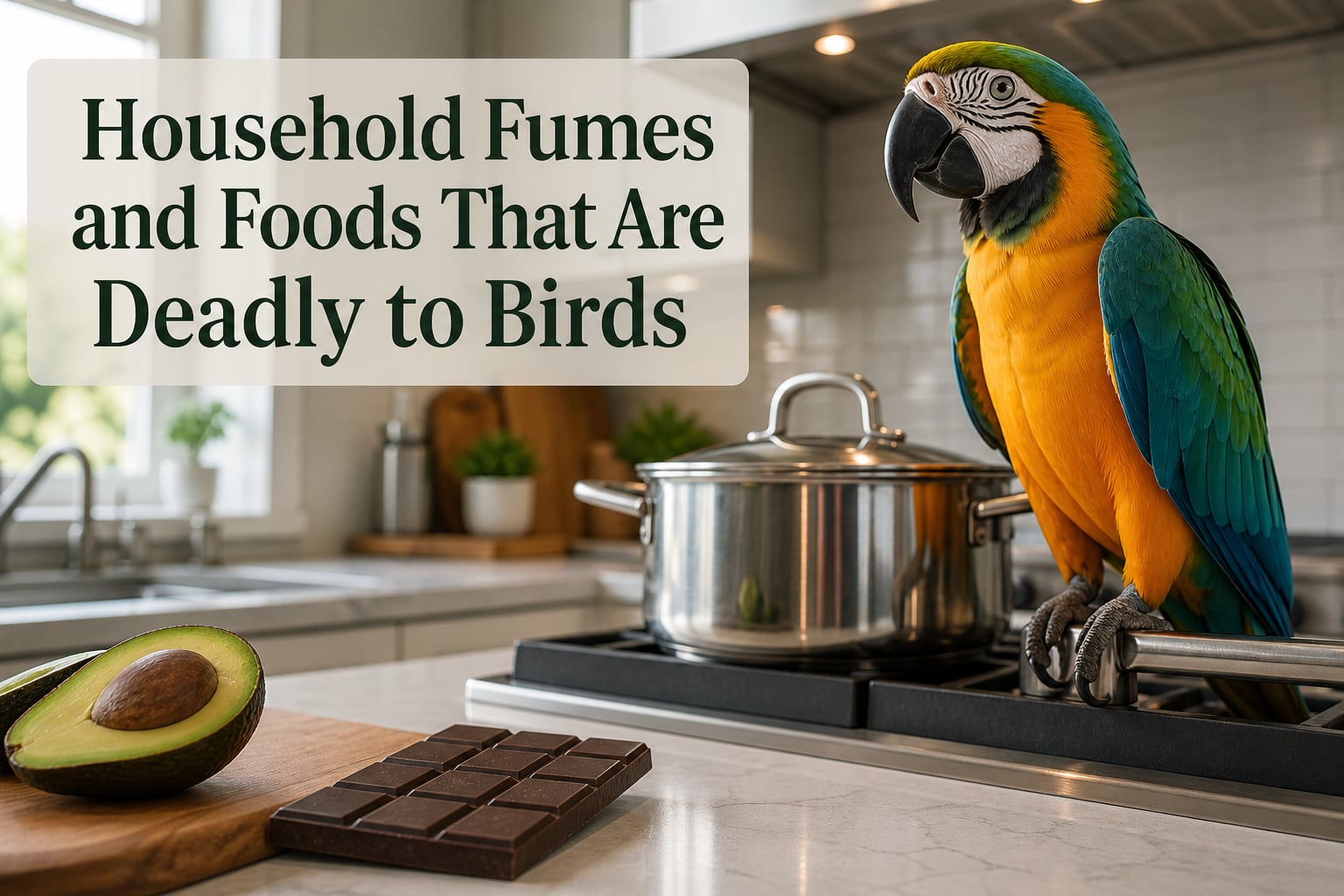
I remember the morning I learned that my grandmother’s canary died within minutes of someone running the kitchen oven’s self-clean cycle. Nobody in the family had connected the two events until years later, when my own parrot started showing respiratory distress after I baked cookies on a non-stick tray.
That moment changed how I think about my home. Birds are not small dogs or cats. Their respiratory systems, metabolism, and curiosity combine to make them extraordinarily vulnerable to substances that humans handle every day without a second thought.
The truth is, the average living room contains several items that can kill a pet bird in minutes or, in some cases, cause slow organ failure over months. This guide walks through every major category of household fumes and foods that are deadly to birds.
I have drawn from veterinary references, avian toxicology research, and stories shared by bird owners across online communities. My goal is simple: give you a single, complete resource that can help you identify hazards, prevent exposure, and act fast if something goes wrong.
Table of Contents
Quick-Reference: Top 10 Deadly Household Dangers for Birds
If you only read one section, read this one. Below are the ten most common household items that bird owners report causing illness or death in pet birds. Bookmark this list and check it against your home this week.
Teflon and PTFE-coated cookware (heated)
Avocado (all parts of the plant)
Chocolate of any kind
Scented candles and essential oil diffusers
Aerosol sprays (perfume, hairspray, air fresheners)
Smoke from cigarettes, vaping, or burning food
Bleach, ammonia, and oven cleaners
Onions, garlic, and chives
Heavy metals (lead, zinc from old paint and hardware)
Pesticides and rodent poisons
Why Birds Are Extremely Sensitive to Toxins
Birds are not just smaller versions of mammals. Their respiratory anatomy is fundamentally different, and that difference is the key to understanding why so many common household items are dangerous.
Birds have a system of air sacs in addition to lungs, and airflow through their respiratory tract is unidirectional. Air moves in one direction, not in and out like a mammal’s. This system is highly efficient at extracting oxygen, which lets birds fly at altitudes where mammals would struggle to breathe.
That same efficiency works against them with airborne toxins. Anything a bird inhales is processed faster and more thoroughly than the same substance inhaled by a human. Trace amounts of fumes that you barely notice can overwhelm a bird’s system in minutes.
Three other factors compound the problem. First, birds have very small body mass, so even small absolute doses of a toxin represent a large dose per kilogram.
Second, their metabolism is faster, which means toxins circulate quickly through their bloodstream. Third, many species are naturally curious and use their beaks to investigate everything, putting them in direct contact with potentially toxic surfaces and foods.
Some species are more sensitive than others. Canaries, finches, and other small passerines are often the first to show symptoms in a household with airborne toxins.
African greys and cockatoos are particularly vulnerable to respiratory irritants. Budgies and cockatiels fall somewhere in the middle. Even within a species, individual birds can vary in their response, which makes prevention the only reliable strategy.
Toxic Fumes That Can Kill Birds Within Minutes
Fumes are the most acute danger in the home. A single exposure to the wrong airborne chemical can kill a bird faster than a vet can be reached. Here are the major categories to understand.
Teflon and PTFE Coatings: The Silent Killer
Polytetrafluoroethylene (PTFE) is the chemical name for Teflon and similar non-stick coatings. When PTFE-coated surfaces heat past roughly 280C (536F), they release an odorless gas that is highly toxic to birds. Birds can die within minutes of exposure, often before their owners realize anything is wrong.
The danger is not limited to frying pans. PTFE appears in drip pans for ovens, sandwich makers, waffle irons, self-cleaning ovens, hair straighteners, curling irons, space heaters, heat lamp bulbs, and some irons.
Self-cleaning oven cycles are particularly dangerous because they superheat the interior to burn off residue, releasing PTFE and other combustion byproducts into the air. I have read too many stories from bird owners who lost pets within a day of switching to a new non-stick pan or running the oven’s self-clean feature.
If you share your home with a bird, replace PTFE cookware with stainless steel, cast iron, or ceramic. Avoid the self-clean feature entirely, or run it only when the bird can be moved to a well-ventilated area of a separate building for at least 24 hours.
Smoke and Carbon Monoxide
Tobacco smoke is toxic to birds, both firsthand and secondhand. Nicotine and the other chemicals in cigarette smoke damage their respiratory tract and can cause eye irritation, skin problems, and chronic respiratory disease. Vaping is not safer; the aerosolized propylene glycol and flavoring compounds can irritate bird lungs.
Burning food on the stove, fireplace smoke, and wood stove smoke all produce fine particulates and carbon monoxide that are dangerous to birds. Carbon monoxide is especially insidious because it is odorless.
If you use a gas heater, fireplace, or any combustion appliance, install a carbon monoxide detector. Never run these devices in a room where your bird is housed.
Aerosols, Sprays, and Air Fresheners
Anything that comes out of a pressurized can is a hazard. This includes aerosol cooking sprays, hairspray, deodorant sprays, perfume, cologne, air fresheners, and aerosol cleaning products. Birds that inhale these mists can develop respiratory distress within minutes.
Plug-in air fresheners and automatic spray dispensers are particularly dangerous because they release small amounts of chemical continuously. If you want your home to smell pleasant, open a window. Scented products are not worth the risk.
Scented Candles and Essential Oil Diffusers
Scented candles release fragrance chemicals and soot when burned. Some candles also have metal-core wicks that release trace metals. Birds kept in rooms where scented candles are used regularly show higher rates of respiratory irritation.
Essential oil diffusers are a newer hazard that many bird owners overlook. Many essential oils are toxic to birds, including tea tree, eucalyptus, peppermint, citrus oils, and pine.
Birds have a much more sensitive sense of smell than mammals, and their respiratory systems cannot tolerate the concentrated compounds released by diffusers. Even diffusers marketed as “natural” or “pet-safe” are not safe for birds.
Cleaning Product Fumes
Bleach, ammonia, oven cleaners, and toilet bowl cleaners are some of the most dangerous household chemicals for birds. Mixing bleach and ammonia produces chloramine gas, which can kill both humans and birds. Even using these products in a separate room can be dangerous if fumes travel through shared ventilation.
If you must use strong cleaners, move the bird to a separate, well-ventilated space, open windows in the cleaning area, and allow several hours for fumes to dissipate before returning the bird. Better yet, switch to bird-safe cleaning products such as vinegar and water solutions or commercial products specifically labeled as bird-safe.
Deadly Foods That Are Toxic to Birds
Foods that humans eat without thinking can be lethal to birds. The list below covers the most commonly encountered toxic foods in a typical home. Some are dangerous in tiny quantities, others build up toxicity over time.
Avocado (Persin Toxicity)
Avocado contains a fungicidal toxin called persin. Persin is present in every part of the avocado plant: the fruit, the pit, the leaves, and the bark. Birds are extraordinarily sensitive to persin, and ingestion can cause respiratory distress, heart damage, and death within hours.
Even a small amount can be fatal to a small bird. A budgie can be killed by less than a gram of avocado. There is no safe quantity.
Keep guacamole, avocado toast, and any dish containing avocado completely out of reach of your bird. If you grow an avocado tree indoors or outdoors, make sure your bird cannot access any part of it.
Chocolate (Theobromine and Caffeine)
Chocolate contains theobromine and caffeine, both of which are methylxanthines that birds cannot metabolize effectively. The darker the chocolate, the more dangerous it is. Baking chocolate and high-cocoa dark chocolate contain the highest concentrations of theobromine.
Symptoms of chocolate poisoning include hyperactivity, vomiting, diarrhea, tremors, seizures, and heart arrhythmias. Death can occur within 24 hours of ingestion.
As with avocado, even small amounts are dangerous to small birds. A single square of dark chocolate can be lethal to a cockatiel.
Caffeine (Coffee, Tea, Energy Drinks)
Coffee, tea, energy drinks, and any other caffeinated beverage are dangerous to birds. Caffeine causes cardiac arrhythmias and neurological symptoms. Birds should never be offered coffee, even in small amounts.
Decaffeinated coffee is not safe either because the decaffeination process does not remove all methylxanthines. The same applies to decaf tea.
Onions and Garlic
Onions, garlic, leeks, chives, and shallots all contain compounds called organosulfides that damage bird red blood cells and cause Heinz body hemolytic anemia. This condition can develop over time with repeated exposure and is not always reversible.
Raw, cooked, dried, and powdered forms are all dangerous. Many prepared foods and baby foods contain onion or garlic powder, so always check ingredient labels before sharing any human food with your bird.
Alcohol
Alcohol is toxic to birds at any concentration. Even small amounts can cause liver damage, brain damage, and death. Fermented fruits, bread dough that has begun to rise, and any alcoholic beverage should be kept far away from birds.
Other Dangerous Foods
Salt and salty snacks can cause kidney damage and dehydration. Xylitol, the sugar substitute found in sugar-free gum and many low-calorie products, causes rapid liver failure in many animals and should be avoided for birds as well.
Fruit pits and apple seeds contain cyanogenic compounds that release cyanide when chewed. Raw beans contain a toxin called phytohemagglutinin that is destroyed only by thorough cooking. Uncooked beans and bean flour can be lethal.
Rhubarb leaves contain oxalic acid. Tomato leaves, potato leaves, and eggplant leaves all contain solanine, which is toxic to birds. Moldy or spoiled food can produce mycotoxins that cause severe illness.
Household Chemicals and Heavy Metals
Beyond cleaning products and pesticides, several other categories of household items pose serious risks to birds.
Cleaning Products and Disinfectants
In addition to bleach and ammonia, watch out for phenol-based cleaners (often labeled as pine-scented or disinfecting), drain cleaners, and oven cleaners. These products release fumes that linger for hours. Use them in well-ventilated areas away from your bird, or switch to bird-safe alternatives.
Pesticides and Insecticides
Insecticidal foggers, bug sprays, ant baits, and rodent poisons are all highly toxic to birds. Birds can be poisoned by eating insects that have been killed by pesticide, by walking across treated surfaces, or by inhaling spray drift.
If you have an infestation, choose non-toxic methods like diatomaceous earth or professional integrated pest management that excludes your bird from the area during treatment.
Lead and Zinc Poisoning
Lead and zinc are heavy metals that cause chronic toxicity in birds. Sources include old paint in pre-1978 homes, solder, galvanized wire and cage parts, costume jewelry, curtain weights, fishing weights, batteries, and some mirrors and ceramics.
Lead poisoning causes neurological symptoms including seizures and head tilting. Zinc toxicity causes gastrointestinal distress, lethargy, and feather picking. Both conditions require veterinary diagnosis and treatment.
If you have an older home or use vintage cages, have your bird tested for heavy metal levels annually. Early detection makes treatment far more effective.
Personal Care Products
Nail polish remover, hair dye, rubbing alcohol, hand sanitizer, sunscreen, and lotions all contain volatile compounds that can harm birds. Apply these products in well-ventilated areas away from your bird, and wash your hands thoroughly before handling your pet.
Toxic Houseplants to Keep Away From Birds
Many common houseplants are toxic to birds. The list includes philodendron, dieffenbachia, pothos, ivy, oleander, azalea, rhododendron, yew, mistletoe, calla lily, poinsettia, daffodil bulbs, and tulip bulbs.
Birds often chew on plant leaves and stems, so any toxic plant in the home is a hazard. If you want greenery in your bird’s space, choose bird-safe plants such as spider plants, Boston ferns, African violets, hibiscus, and parlor palms.
Always verify plant safety with a veterinary source before introducing a new plant to your home. When in doubt, keep the plant in a room the bird cannot access.
Signs and Symptoms of Bird Poisoning
Recognizing the early signs of poisoning can save your bird’s life. Birds are prey animals and instinctively hide illness, so by the time symptoms are obvious, the situation is often critical.
Respiratory signs include open-mouth breathing, tail bobbing with each breath, wheezing, clicking sounds, nasal discharge, and a crouched posture with wings held away from the body. These symptoms indicate the bird is struggling to get enough oxygen and require immediate action.
Neurological signs include seizures, tremors, head tilting, loss of coordination, weakness on one side of the body, and sudden disorientation. Heavy metal poisoning and certain chemical exposures often cause these symptoms.
Digestive signs include vomiting, regurgitation, diarrhea, and blood in droppings. Birds that have eaten a toxic food may also stop eating and drinking entirely.
Behavioral signs to watch for include lethargy, fluffed feathers for extended periods, sitting on the cage floor instead of perching, and a general “not quite right” appearance. Any sudden change in behavior is a warning sign.
Acute exposure to fumes causes symptoms within minutes. Chronic exposure to lower levels can cause symptoms that develop over weeks or months, including feather damage, weight loss, and reduced activity. Both situations require veterinary attention.
Emergency First Aid and What to Do If Your Bird Is Exposed
When poisoning is suspected, every minute counts. Follow these steps in order while you contact your avian veterinarian.
Step 1: Remove the bird from the source of exposure immediately. If fumes are involved, move the bird to a well-ventilated room with fresh air. If food is involved, remove any remaining toxic substance from the cage.
Step 2: Ventilate the area where the exposure occurred. Open windows and doors. Turn off any devices that may be producing fumes.
Step 3: Do not induce vomiting unless specifically directed by a veterinarian. Birds have a unique anatomy that makes induced vomiting dangerous.
Step 4: Call your avian veterinarian or a poison control hotline immediately. The ASPCA Animal Poison Control Center can be reached at (888) 426-4435. The Pet Poison Helpline is available at (855) 764-7661.
There may be a consultation fee, but these services are staffed 24/7 with veterinary toxicologists. The cost is negligible compared to the value of your bird’s life.
Step 5: Transport your bird to the vet in a small, secure carrier lined with a soft towel. Keep the carrier warm and minimize stress during transport.
Bring any packaging from the suspected toxin, a sample of recent droppings if possible, and a timeline of when symptoms started. This information helps the vet diagnose and treat quickly.
Do not offer food or water unless directed by a veterinarian. Do not apply any home remedies or treatments you read about online. Time is your most valuable resource, and professional guidance is essential.
Bird-Proofing Your Home: Prevention Checklist
Prevention is far easier than emergency treatment. Walk through your home with this checklist and address each item.
Replace all PTFE-coated cookware with stainless steel, cast iron, or ceramic
Remove self-cleaning oven use or run only when birds are in a separate building
Switch to bird-safe cleaning products or use vinegar and water solutions
Remove all toxic plants from areas the bird can access
Install carbon monoxide detectors on every floor
Move bird cages away from kitchens, bathrooms, and laundry rooms
Use unscented, bird-safe personal care products only
Remove or replace old painted surfaces, vintage cages, and galvanized wire
Never use aerosol products in the same room as your bird
Store all medications, cleaning products, and chemicals in closed cabinets
Keep human food out of reach and never offer food from your plate
Maintain good ventilation throughout your home
Supervise your bird closely during any out-of-cage time. Even a bird-proofed home contains hazards that a curious beak can discover in seconds. Many experienced bird owners recommend bird-proofing one room thoroughly and limiting free-roam time to that space.
Frequently Asked Questions
What fumes are toxic to birds?
The fumes most toxic to birds include PTFE (Teflon) released from heated non-stick cookware, smoke from cigarettes and burning food, aerosols like hairspray and air fresheners, scented candles and essential oil diffusers, cleaning product fumes (bleach, ammonia, oven cleaners), and carbon monoxide from combustion appliances. Birds can die within minutes of exposure to concentrated fumes, especially PTFE.
What are 5 household products that are toxic to birds?
Five of the most toxic household products for birds are: 1) non-stick Teflon cookware when heated, 2) bleach and ammonia-based cleaners, 3) aerosol sprays including air fresheners and hairspray, 4) scented candles and essential oil diffusers, and 5) pesticides and rodent poisons. Each of these can cause respiratory failure, neurological damage, or death within minutes to hours of exposure.
What is the most toxic thing to birds?
PTFE (Teflon) fumes from heated non-stick cookware are widely considered the most acutely toxic household substance for birds. When PTFE-coated surfaces reach approximately 280 degrees Celsius (536 degrees Fahrenheit), they release an odorless gas that can kill birds within minutes, often before owners realize anything is wrong. Avocado is equally dangerous when ingested and is the most toxic food for birds.
What smells are harmful to birds?
Smells harmful to birds include cigarette smoke, vape aerosol, perfume and cologne, scented candles, essential oil diffusers (especially tea tree, eucalyptus, and citrus), air fresheners, cleaning product fumes, paint and solvent odors, and burning food or fireplace smoke. Birds have a much more sensitive respiratory system than mammals, so even mild fragrances can cause irritation or death in enclosed spaces.
How much avocado will kill a bird?
Even a very small amount of avocado can kill a small bird. Avocado contains persin, a toxin that damages the heart and respiratory system. A budgie can be killed by less than one gram of avocado flesh, and there is no established safe quantity for any bird species. All parts of the avocado plant, including the fruit, pit, leaves, and bark, contain persin and should be kept completely away from birds.
Can birds eat chocolate?
No, birds cannot safely eat chocolate. Chocolate contains theobromine and caffeine, both methylxanthines that birds cannot metabolize. Symptoms of chocolate poisoning include vomiting, tremors, seizures, heart arrhythmias, and death within 24 hours. Dark chocolate and baking chocolate are the most dangerous because they contain the highest concentrations of theobromine. Even small amounts can be lethal to small birds like cockatiels and budgies.
Conclusion
Living with a bird means reconsidering what is normal in a typical household. The household fumes and foods that are deadly to birds are not exotic or unusual. They are the same cookware, cleaning products, plants, and snacks that fill millions of homes.
The difference is that birds cannot tolerate what humans can. Take an afternoon to walk through your home with this guide. Replace your non-stick pans if you have not already, move your bird’s cage away from the kitchen, and put away the essential oil diffuser.
Keep the emergency numbers somewhere you can find them in a hurry. The ASPCA Animal Poison Control Center is at (888) 426-4435, and the Pet Poison Helpline is at (855) 764-7661.
Prevention is everything. Birds hide illness until they cannot, and treatment often comes too late. By making your home safe before anything happens, you give your bird the gift of a long, healthy life.