
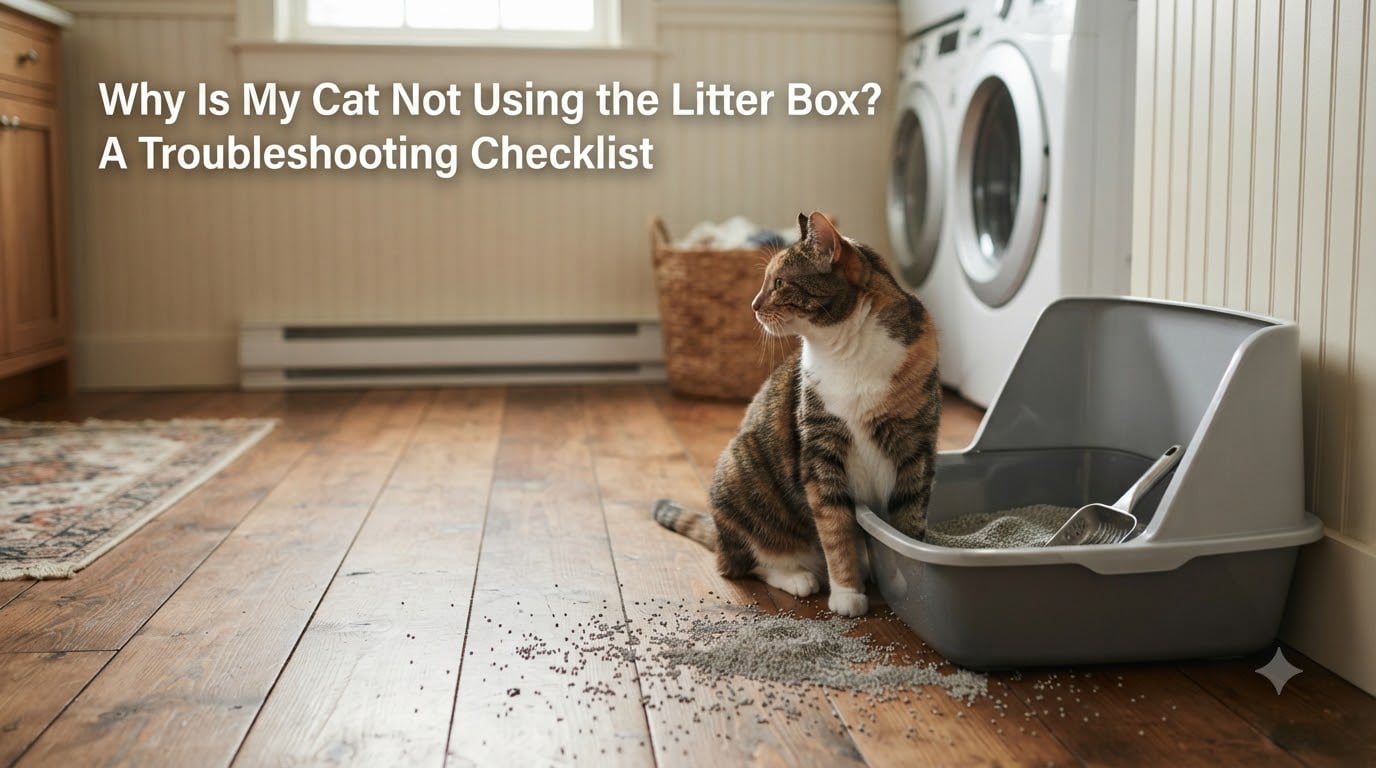
If your cat is suddenly eliminating outside the litter box, you’re not alone. Litter box problems are one of the most common reasons cats are surrendered to shelters, but in most cases the behavior is fixable.
When a cat stops using the litter box, the cause is usually medical, behavioral, or setup-related. This troubleshooting checklist walks you through the 5 steps I use with my own fosters and rescues. By the end, you’ll know exactly what to try next, and when a vet visit can’t wait.
I’ll cover medical red flags first, then move into litter box setup, stress triggers, multi-cat dynamics, and special cases like declawed and senior cats. There’s also a quick-reference checklist you can print and a FAQ answering the most common search questions.
Table of Contents
Step 1: Rule Out Medical Issues First
A cat who suddenly stops using the litter box is often trying to tell you something hurts. Before changing anything about the box itself, rule out a medical cause. Up to 10% of all cats develop elimination problems during their lifetime, and a significant share of those cases trace back to pain or illness.
Think of it from your cat’s perspective. If using the box caused pain the last time, your cat will associate the box with that pain. Even after the medical issue is resolved, the negative association can linger. That’s why medical causes must be ruled out before anything else.
Schedule a vet visit within 24 to 48 hours if you notice any of these warning signs:
Straining in or out of the litter box with little or no output (this can signal a life-threatening urinary blockage, especially in male cats)
Blood in the urine or stool
Crying or meowing while trying to urinate or defecate
Frequent small trips to the box
Sudden change in thirst or appetite
Hidden accidents paired with vomiting or lethargy
Excessive grooming of the belly or back end
Sudden weight loss or changes in energy level
Common medical causes include urinary tract infections, feline interstitial cystitis (a stress-related bladder inflammation), bladder stones, kidney disease, constipation, diabetes, and arthritis. Older cats especially may avoid the box because stepping in and out hurts their joints, even if the elimination itself isn’t painful.
One Reddit user in r/CATHELP shared that her cat started avoiding the litter box after a bad bout of diarrhea. Even after the stomach upset cleared, the cat kept avoiding the box because she associated it with pain. The vet ruled out ongoing illness, but the negative association had to be retrained over several weeks using a second box in a different location.
If your cat gets a clean bill of health, move to Step 2. If the vet finds an issue, treating it often resolves the litter box problem automatically. Make sure to ask your vet about pain management options during recovery, since that pain is what cements the negative association.
Step 2: Check Spay or Neuter Status
Intact cats, especially males, frequently spray or eliminate outside the box to mark territory. If your cat is unspayed or unneutered, this is the single highest-impact fix you can make. It also reduces roaming, fighting, and certain cancers.
Spaying or neutering reduces marking in roughly 90% of males and 95% of females, according to data summarized by the ASPCA. Most cats should be fixed by 5 to 6 months of age, before marking habits fully develop. If your cat is older and intact, talk to your vet about whether surgery is still a good option. In most cases it is.
Marking looks different from litter box avoidance, and identifying which behavior you’re seeing helps you respond correctly. Marking usually involves small amounts of urine on vertical surfaces like walls, doors, or furniture legs. The cat backs up to the surface, raises the tail, and sprays.
Litter box avoidance tends to involve full puddles or stools on horizontal surfaces, often near the box but not in it. The cat may squat like normal, just in the wrong spot. If you see both behaviors, your cat may have a marking issue layered on top of a setup problem. Address both.
Step 3: Evaluate Your Litter Box Setup
If your cat is medically healthy and fixed, the litter box setup is the next place to look. In my experience fostering cats, more than half of “behavior” problems are actually setup problems in disguise. Let’s go through each variable one at a time, since each can independently cause avoidance.
Cleanliness and Scooping Frequency
Cats are fastidious. Most cats refuse to use a box with any waste in it, and many will avoid a box that smells of old accidents even if the visible litter looks clean. Scoop at least once a day, ideally twice if you have multiple cats.
Dump the litter, wash the box with mild dish soap and warm water, and refill it every 2 to 4 weeks depending on the number of cats. Rinse thoroughly. Avoid ammonia-based cleaners. They smell too similar to urine and can actually encourage repeat marking. A 10% bleach solution works for deep cleaning, but rinse well afterward.
If your work schedule makes daily scooping hard, consider a self-cleaning box. Just be aware some cats are scared by the mechanical rake. Introduce it gradually and give your cat a choice between the self-cleaning box and a traditional one during the transition.
Litter Type Preferences
Most cats prefer fine-grained, unscented clumping litter. Scented litters and rough pellets often get rejected because the texture hurts sensitive paws or the perfume overwhelms their stronger sense of smell. If you’ve recently switched litter brands, that’s a likely culprit and an easy fix.
Common litter types, ranked by general cat preference based on shelter and foster experience:
Fine-grain unscented clumping clay (most widely accepted)
Unscented clumping plant-based litter like wheat or corn
Soft paper or recycled newspaper pellets
Crystal or silica gel litter
Scented clay litter (most often rejected)
Large pellet pine or wood (texture issues for some cats)
If you need to switch, do it gradually. Mix 25% new litter with 75% old for a week, then 50/50, then 75/25, then full switch. Sudden changes are a common trigger for litter box avoidance. Litter depth matters too. Aim for 2 to 3 inches. Some cats prefer shallower litter, especially declawed cats with tender paws or older cats who tire quickly.
Box Size and Style
Most commercial litter boxes are too small. The general rule is the box should be at least 1.5 times the length of your cat from nose to base of tail. For an average 10-pound cat, that’s a box at least 22 inches long. A large plastic storage bin works in a pinch and costs less than most purpose-built boxes.
On covered versus uncovered, opinion splits. Many cats feel trapped in covered boxes and avoid them, especially in multi-cat homes where they can’t see threats approaching. The hood also traps odor inside, which is unpleasant for a cat with a far more sensitive nose than ours. If you’re using a hooded box, try removing the cover for two weeks and see if behavior changes.
Self-cleaning boxes can help with cleanliness but some cats are scared by the mechanical rake. Test your cat’s reaction before committing. Senior or disabled cats may also do better with low-entry boxes that have a cut-down side, so they don’t have to lift their legs high to step in.
Location Matters
Place boxes in quiet, low-traffic areas where your cat won’t be ambushed by dogs, kids, or loud appliances. Avoid placing the box right next to food, water, or the washing machine. The vibration and noise of a spin cycle can terrify a cat mid-elimination and create a lasting avoidance.
If your home has multiple floors, place a box on each level. Older cats especially struggle with stairs, and a cat who has to cross a busy hallway to reach the box may give up and choose the closest soft surface instead. A common mistake is tucking the box into a corner the cat can’t reach easily, like behind a couch or inside a cramped closet.
Privacy matters, but escape matters more. Cats prefer boxes where they can see the room and have an exit path. A box in a quiet corner of a bedroom or home office usually beats a hidden box in a basement.
Step 4: Address Environmental and Stress Factors
Cats are creatures of habit. Even small changes can trigger litter box problems. Common stressors include a new baby, a new pet, moving furniture, construction noise, a houseguest, or even rearranging your work schedule. Cats don’t understand “summer hours” or “daylight saving,” they just notice their person is suddenly home at odd times.
One of the most overlooked triggers is separation anxiety. Cats who are closely bonded to their owners sometimes avoid the box when left alone for long periods. The theory is that eliminating spreads their scent around the home, which feels reassuring when they’re anxious. If your cat’s accidents cluster around your work hours or after you leave for trips, separation anxiety could be the cause.
To reduce environmental stress:
Maintain a consistent feeding and play routine
Provide vertical spaces like cat trees where your cat can survey the room
Use synthetic pheromone diffusers like Feliway in the room with the litter box
Give your cat a predictable hiding spot away from guests and noise
Avoid punishing accidents, which increases stress and worsens the behavior
Use calming supplements like Composure Soft Chews or Rescue Remedy after consulting your vet
If you’ve recently moved or brought home a new pet, expect a 2 to 7 day adjustment period. Newly adopted cats often take 24 to 48 hours to use a new box. Confine them to one room with the box, food, and bed until they’re comfortable, then gradually expand their territory. Multiple foster networks report this short, structured confinement dramatically speeds up litter box training for new cats.
Step 5: Navigate Multi-Cat Household Dynamics
Multi-cat homes introduce a layer of complexity that single-cat households don’t face. The golden rule is one box per cat, plus one extra. Two cats means three boxes. Three cats means four boxes. Spread them across different rooms and ideally different floors so no single box becomes a chokepoint.
Bullying is a hidden cause. A dominant cat may guard the litter box, scaring another cat away. Watch for one cat sitting in the hallway staring at the box, or following another cat toward it. In a multi-story home, place boxes so that no cat can be cornered. The “escape route” matters as much as the count.
To find out which cat is having the problem, your vet can add fluorescein dye to one cat’s food. That cat’s urine will glow bright blue or green under a blacklight, making it easy to identify. You can also ask your vet about briefly separating cats into different rooms with their own boxes to see whose behavior changes. Food dyes are temporary and harmless.
Don’t punish either cat. Punishment increases stress and usually makes the problem worse. Instead, reward the right behavior with treats and praise when you see your cat using the box. Behavior modification works best when it’s positive.
Special Considerations Most Articles Miss
Some cats need extra adjustments that general guides tend to skip. Here are the situations where standard advice falls short, and how to adapt.
Declawed Cats and Paw Pain
Declawed cats often avoid the litter box because stepping in litter hurts their paws. The surgery removes not just the claw but part of the bone, and nerve damage or bone regrowth can cause chronic pain even years after the procedure. Vets report this is one of the most common long-term complications of declawing.
For declawed cats, use very soft, fine-grain litter. Some owners have success with paper-based litters or shredded newspaper. Avoid clay clumping litter with hard granules, and skip pellets entirely. Keep litter depth shallow, around 1 to 2 inches, so your cat doesn’t have to dig deep. A soft rug or mat placed just outside the box can also help.
Senior Cats and Accessibility
Older cats frequently develop arthritis, cognitive decline, or sensory loss. They may forget where the box is, struggle to climb into it, or get surprised by other pets on the way. Cognitive dysfunction in cats is similar to dementia in humans and often shows up as litter box accidents alongside other confusion.
Use a low-entry box with a cut-down side for easy access. Place multiple boxes on every floor of your home. Night lights near the box can help cats with declining vision. Senior cats also benefit from more frequent vet checks, ideally every 6 months, to catch kidney disease, hyperthyroidism, and arthritis early. Pain management for arthritis often restores normal litter box use within weeks.
Newly Adopted or Outdoor Cats
Cats used to going outside may not understand a litter box at first. They’ve been eliminating in soil, grass, or sand for years, and a plastic box with unfamiliar litter feels strange. Confine them to a single small room with the box, food, water, and bed for the first week. Show them the box after meals and gently place them in it so they learn the texture.
Avoid hooded boxes and unfamiliar substrates for new cats. Stick to plain clay or clumping litter until they’re reliably using the box, then experiment if needed. Outdoor-to-indoor transitions can take 2 to 4 weeks. Patience and a small starting space are your best tools.
How to Clean Accidents Properly?
How you clean up matters almost as much as fixing the cause. Cats return to spots that smell like urine, so regular household cleaners often backfire. The smell of vinegar or ammonia actually triggers more marking in many cats.
Use an enzymatic cleaner specifically designed for pet stains. These break down the uric acid crystals that cause lingering odor at a molecular level. Avoid ammonia-based products, vinegar alone, or steam cleaners, which can set the stain and the smell permanently into carpet fibers.
Blot fresh accidents with paper towels before applying the enzymatic cleaner. Don’t rub, that spreads the stain. Let the cleaner sit for 10 to 15 minutes, then blot dry. For old stains, you may need multiple applications over several days. Soak the area thoroughly each time.
On carpet, saturate both the carpet and the pad underneath. The pad often holds more urine than the visible surface, and a blacklight will reveal the true size of the spot. Furniture cushions may need to be removed and treated separately. Some owners report that a final application of plain water and thorough blotting helps remove any cleaner residue that might also attract the cat back.
Your Quick-Reference Troubleshooting Checklist
If you’re short on time, run through this list in order. Most readers find their answer within the first three steps. Tick each one as you go.
Rule out medical causes with a vet visit, especially if the change is sudden.
Confirm your cat is spayed or neutered.
Scoop the box at least once daily and replace litter weekly.
Switch to unscented, fine-grain clumping litter if you haven’t already.
Upgrade to a larger, uncovered box if the current one feels cramped.
Move the box to a quiet, accessible spot away from food and appliances.
Add boxes so you have one per cat plus one extra, on every floor.
Reduce stress with routine, vertical space, and pheromone diffusers.
Clean accidents with enzymatic cleaner only, never ammonia.
Consult a feline behaviorist if the problem persists beyond 4 weeks.
If you’ve worked through every step and your cat is still avoiding the box, talk to your vet about a referral to a certified animal behaviorist. Some cats need a combination of environmental change, behavioral training, and medication to recover. Medications like fluoxetine or amitriptyline can help break a cycle of stress-related elimination, but they work best alongside behavioral work, not as a replacement for it.
Frequently Asked Questions
Why is my cat suddenly refusing to use the litter box?
Sudden litter box avoidance usually points to a medical issue or environmental change. Common causes include urinary tract infections, bladder inflammation, arthritis pain, a recent move, new pets, a switched litter brand, or a dirty box. Schedule a vet visit within 24 to 48 hours to rule out pain or illness before adjusting the box setup.
What to do if the cat is not using the litter box?
Start with a vet check to rule out medical causes, then confirm your cat is spayed or neutered. Next, evaluate the box setup: scoop daily, switch to unscented clumping litter, upgrade to a larger uncovered box, and place it in a quiet spot. Add boxes so you have one per cat plus one extra, and clean accidents only with enzymatic cleaner.
When to worry about a cat not using a litter box?
Worry and call your vet immediately if your cat strains to urinate without producing much, cries in the box, has blood in the urine, or shows vomiting and lethargy. Male cats with urinary straining need emergency care because blockage can become fatal within 24 to 48 hours. Also worry if the behavior started suddenly in an otherwise healthy cat.
My cat goes in the litter box but doesn’t use it. What could be wrong?
When a cat enters the box but leaves without eliminating, it usually signals a negative association. Common triggers include painful urination from a past UTI, dislike of the litter texture, box location that feels unsafe, or stress from another pet guarding the box. Try a different box style, location, and litter, and rule out medical causes with your vet.
Putting It All Together
A cat not using the litter box is telling you something is wrong. Start at the top of this checklist and work down methodically. Most cats return to consistent box use within 2 to 4 weeks once the underlying cause is identified and addressed, though medical cases can take longer depending on recovery.
Be patient with your cat and with yourself. Litter box problems almost always have a solution, and the bond you share is worth the effort. If you’ve tried every step and still struggle, a board-certified veterinary behaviorist can offer tailored support that general advice can’t replace. They can also help you decide whether anti-anxiety medication might be appropriate.
For more on 2026 cat behavior and care, bookmark our resource library. We’ve published guides covering everything from introducing a new cat to managing multi-cat conflict. The right information, applied consistently, resolves the vast majority of litter box problems within a month.