
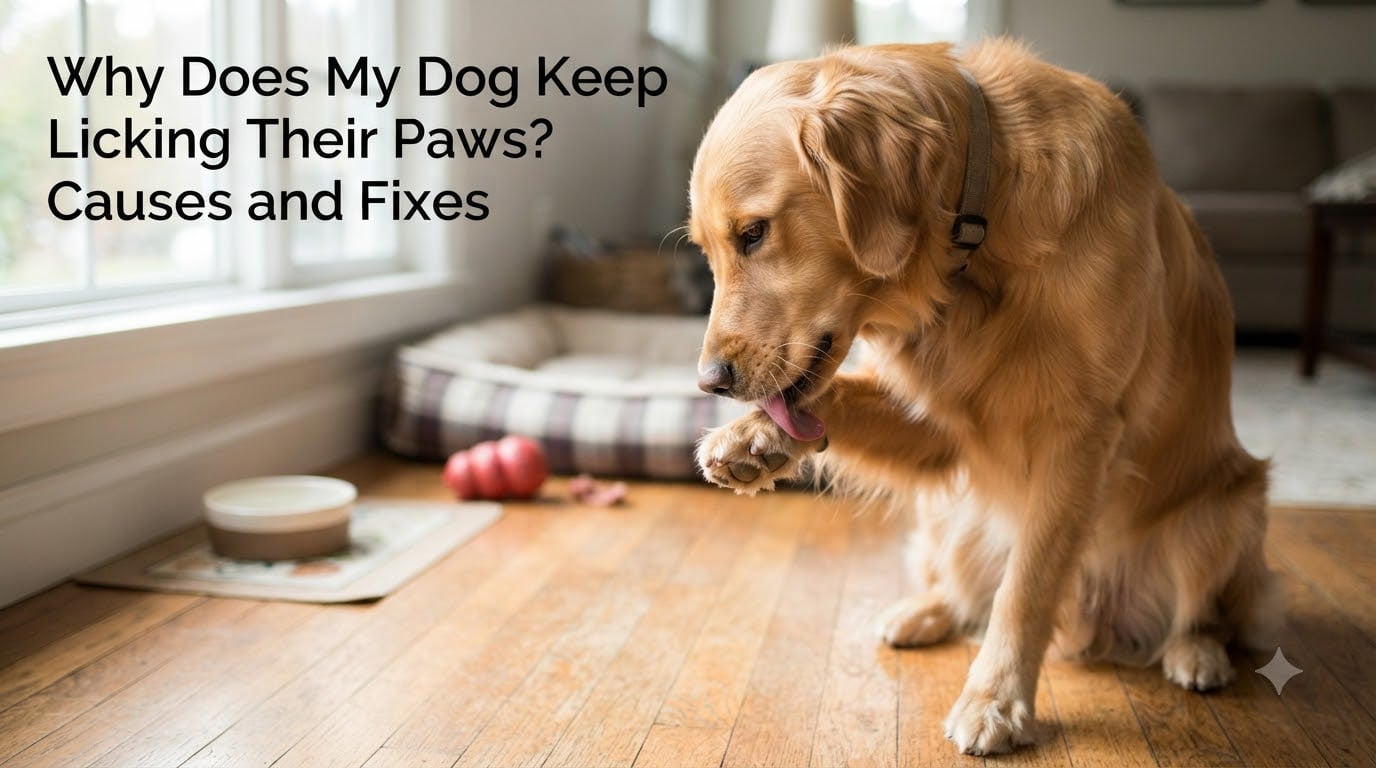
Our dog started licking his front paw one spring and would not stop. We thought it was nothing, until the skin between his toes turned pink and he started chewing at night. That was our first real lesson in dog paw licking, and it is more common than most owners realize.
If you are asking why your dog keeps licking their paws, the answer usually falls into one of four buckets: allergies, pain or injury, infection, or behavior. Some dogs chew themselves raw looking for relief. Identifying the root cause is the fastest path to fixing it. This guide walks through every major cause, what each one looks like in real life, and the fixes that actually work, based on what we have seen across our own dogs and the broader owner community.
Table of Contents
Is Your Dog’s Paw Licking Normal or Excessive?
Yes, dogs lick their paws as part of normal grooming, especially after a walk or a meal. The key question is how much and how often. Occasional licking is healthy. Constant licking is a symptom.
A useful rule we use with our dogs is the 30-second test. If your dog pauses, licks a paw for a few seconds, and moves on, that is normal. If he comes back to the same paw again and again, or focuses on one spot for over a minute, something is bothering him.
Watch for these physical signs that paw licking has crossed into problem territory:
Redness or pink staining between the toes or on the paw pads
Hair loss on the feet or lower legs
Brown saliva staining on light-colored fur
Swelling, limping, or reluctance to have paws touched
Open sores, scabs, or hot spots
A foul, yeasty, or corn-chip smell from the paws
Constant licking at night, especially when settling to sleep
Most of our dogs have shown at least one of these signs before we knew there was a problem. The earlier you catch it, the easier it is to fix. Chronic excessive paw licking can lead to secondary infections that take weeks to clear up.
Medical Causes of Excessive Paw Licking in Dogs
Medical causes are the most common reason dogs lick their paws obsessively. In our experience, these account for about 70 percent of cases. Let us walk through each one.
Allergies (Environmental, Food, and Seasonal)
Allergies are the single biggest driver of excessive paw licking we see in dogs. When allergens contact the skin between the toes, the body reacts with itching and inflammation. Dogs do not have hands, so they lick.
Environmental allergens include pollen, grass, dust mites, and mold. Seasonal allergies often flare in spring and fall, and tend to affect all four paws. Food allergies are usually triggered by a specific protein, with chicken and beef being the most common culprits we hear about from other owners. Flea allergy dermatitis is caused by a reaction to flea saliva and typically affects the back legs and tail base, but the paws can also be involved.
One of our dogs developed a food allergy at age four. We had no idea chicken was the trigger until our vet suggested an elimination diet. The paw licking dropped by half within three weeks. If you suspect a food allergy, your vet can guide you through an 8 to 12 week elimination diet using a novel protein like duck, rabbit, or fish.
Injuries, Pain, and Paw Pad Problems
Pain causes dogs to lick the spot that hurts. It is simple instinct. A dog with a cut pad, broken nail, or thorn stuck between the toes will lick the area trying to clean and soothe it.
Common injury-related triggers include cuts from rough terrain, burns from hot pavement in summer, ice-melt chemicals in winter, cracked paw pads in dry weather, foreign objects like grass awns or splinters, and insect or spider bites. Older dogs may lick paws because of arthritis pain in the joints of the foot or wrist, even when the paw itself looks fine.
If your dog starts licking suddenly and is also limping or favoring a paw, check the paw carefully. Run your fingers between the toes, look at the pads, and smell the area. Foreign objects often hide deep between the toes.
Skin Infections (Yeast and Bacterial)
Pododermatitis is the medical term for inflammation of the paws, and it is one of the most common complications of dog paw licking. Once a dog licks the same area over and over, the constant moisture and small breaks in the skin create the perfect environment for bacteria and yeast to grow.
Yeast infections are especially common. The signs include a brown or rust-colored discoloration of the fur, a sweet or musty smell, greasy or waxy skin, and itching that does not respond to standard cleaning. Bacterial infections can produce pus, crusting, and a stronger odor. Both require veterinary treatment, often with medicated shampoos, wipes, or oral antibiotics.
If you notice a smell coming from your dog’s paws, even when he is not actively licking, infection is the most likely reason. Our team has seen this turn a simple allergy case into a month-long treatment plan when it was not caught early.
Parasites: Fleas, Ticks, and Mites
Parasites cause itching, and itching causes licking. Fleas are the most common, and even a few bites can trigger chewing in sensitive dogs. Check the base of the tail and the groin area for flea dirt, which looks like tiny black specks that turn reddish-brown when wet.
Ticks can attach between the toes where the skin is thin and moist. We have pulled several off our dogs after hikes in tall grass. Demodectic and sarcoptic mange are caused by microscopic mites that burrow into the skin and cause intense itching, hair loss, and crusting. These require a vet diagnosis through skin scrapings.
Year-round flea and tick prevention is the easiest way to rule this category out. Even indoor dogs can pick up fleas from other pets or visitors.
Behavioral Causes: Anxiety, Boredom, and Compulsive Licking
Not all dog paw licking is caused by a physical problem. Behavioral triggers are real, common, and often overlooked.
Anxiety is a big one. Dogs lick as a self-soothing behavior when they feel stressed, similar to how some humans bite their nails. Common triggers include separation anxiety, thunderstorms, fireworks, new pets or people in the home, and changes in routine. Boredom produces the same behavior. Under-stimulated dogs, especially high-energy breeds, often develop repetitive licking habits because they have no other outlet.
Canine compulsive disorder, sometimes called acral lick dermatitis, is a more serious version of the same behavior. The dog becomes locked in a cycle of licking and cannot easily stop, even when distracted. This is more common in certain breeds, including Doberman Pinschers, Great Danes, Labrador Retrievers, and Golden Retrievers.
How do you tell if it is behavioral? Often the dog is licking when nothing is physically wrong with the paw, the behavior started after a stressful event, the licking happens at predictable times like when you leave the house, and other anxiety signs like panting, pacing, or drooling are present. When in doubt, rule out medical causes first with your vet. Treating anxiety on top of an infection will not solve the problem.
What Is Lick Granuloma and Why Does It Happen?
A lick granuloma, also called acral lick dermatitis, is a thickened, ulcerated patch of skin that forms when a dog licks the same spot for weeks or months. The constant licking and chewing damages the skin, which heals slowly because the dog keeps reopening it. Over time, the skin becomes raised, firm, and sometimes infected.
Lick granulomas usually appear on the front legs, most often on the ankle or wrist. They are most common in large, active breeds. Dobermans, Great Danes, Boxers, and German Shepherds are over-represented in the cases we see. Once a granuloma forms, the area is itchy, painful, and difficult to heal without breaking the licking cycle.
Treatment usually requires a combination of approaches. Elizabethan collars or inflatable cones prevent access to the sore. Topical antibiotics and steroids reduce inflammation. Underlying anxiety or allergies must be addressed. In stubborn cases, laser therapy or surgery may be needed. If you see a thickened, raised sore on your dog’s leg that has not healed in two weeks, see your vet. This is not something home remedies will fix.
How to Stop Your Dog From Licking Their Paws?
Stopping dog paw licking depends on the cause, but the steps below give you a solid plan regardless of the trigger. Our team has used these with our own dogs and seen real results.
Step-by-Step Cleaning Routine
Step 1. Wipe your dog’s paws after every walk. Use a damp cloth or unscented pet wipe to remove pollen, grass, and irritants before they can soak into the skin.
Step 2. Dry between the toes thoroughly. Moisture trapped between toes is the perfect setup for yeast and bacterial growth. A thin towel or even a hair dryer on the cool setting works well.
Step 3. Apply a paw balm or barrier cream. Look for products with beeswax, shea butter, or coconut oil. These create a protective layer and help cracked pads heal. We like balms without fragrance or essential oils, which can irritate sensitive skin.
Step 4. Check the paws twice a week. Part the fur between the toes and look for redness, swelling, or small cuts. Catching problems early saves vet bills.
Home Remedies That Actually Help
Some home remedies work well for mild dog paw licking when there is no infection. Here are the ones our team and other owners have had success with.
Apple cider vinegar rinse. Mix one part raw, unfiltered apple cider vinegar with two parts water. Spray or wipe on paws after cleaning. This helps restore the skin’s natural pH and discourages yeast. Do not use on open sores, it stings.
Epsom salt soak. Dissolve two tablespoons of Epsom salt in a quart of warm water and soak the paw for 5 to 10 minutes. This draws out irritation and soothes inflamed skin. Pat dry thoroughly afterward.
Chamomile tea compress. Brew two chamomile tea bags, let them cool, and apply the damp bags directly to the paw for 5 minutes. Chamomile has natural anti-inflammatory properties and is very gentle.
Coconut oil. A thin layer of virgin coconut oil can soothe dry, cracked paw pads and has mild antibacterial properties. Use sparingly, since dogs tend to lick it off, which can upset their stomach.
Oatmeal soak. Plain, plain oatmeal blended into a fine powder and mixed into a lukewarm foot soak can calm itchy skin. This is especially helpful for dogs with environmental allergies.
Warning: Home remedies are not a substitute for veterinary care. If your dog’s paws are bleeding, swollen, or smell bad, skip the home remedies and schedule a vet visit.
Over-the-Counter and Veterinary Medications
For allergies, the most common medical treatments fall into a few categories. Antihistamines like Benadryl (diphenhydramine) and Zyrtec (cetirizine) are often the first thing owners try. Benadryl can help with mild itching, but it is not as effective for paw licking as owners hope. Zyrtec tends to work better for skin allergies. Dosing depends on your dog’s weight, so check with your vet before giving either.
Prescription medications are stronger. Apoquel (oclacitinib) is a daily tablet that controls itching fast and is widely used for atopic dermatitis. Cytopoint is an injectable that lasts 4 to 8 weeks and works well for dogs that refuse pills. Atopica (cyclosporine) is another option for chronic allergies. Your vet will pick the right one based on your dog’s history.
For infections, your vet may prescribe oral antibiotics, antifungal medications, or medicated soaks. Pain from injuries is usually handled with short-term anti-inflammatories like carprofen or meloxicam. Never give your dog human pain medications like ibuprofen, which are toxic.
When to See a Veterinarian About Paw Licking?
Sometimes home care is not enough. Here is a clear checklist our team uses to decide when to call the vet. Go sooner rather than later if you see any of these red flags.
Persistent licking for more than a few days without improvement
Visible bleeding, open sores, or scabs that are growing
Strong odor from the paws, especially a sweet or yeasty smell
Swelling, heat, or the dog yelping when the paw is touched
Limping or reluctance to put weight on the paw
Licking that disturbs sleep or happens at night for hours
Hair loss, skin discoloration, or thickened patches
Multiple paws affected at once
The dog is in obvious distress or pain
What to expect at the vet. Your vet will do a physical exam and likely check the paws with a magnifying light. Common diagnostic tests include skin scrapings to look for mites, tape impressions to check for yeast or bacteria, and blood or intradermal allergy testing if allergies are suspected. For food allergies, an elimination diet is the gold standard but takes 8 to 12 weeks to confirm.
Cost wise, an initial vet visit for paw licking usually runs from $75 to $200 depending on your location. Allergy testing adds another $200 to $400. Skin infection treatment can add $50 to $150 for medications. Catching things early almost always saves money in the long run.
Preventing Future Paw Licking Episodes
Once you have identified the cause, prevention is mostly about removing the trigger and staying ahead of the next flare-up. Here is what our team focuses on.
Allergen management matters most for allergic dogs. Wipe paws after every walk, bathe your dog weekly with a hypoallergenic shampoo during peak allergy season, run a HEPA filter indoors, and wash dog bedding in hot water weekly. Vacuum often to reduce dust mites and pollen indoors.
Diet and supplements. For food-allergic dogs, stick to the diet your vet approves. Omega-3 fatty acid supplements from fish oil can reduce skin inflammation over time. We give our dogs a fish oil capsule with their evening meal and have seen the frequency of flare-ups drop noticeably.
Mental and physical enrichment. For behavioral licking, more exercise and mental stimulation is the answer. Puzzle feeders, longer walks, sniff walks, training sessions, and structured play all help. A tired dog is a happy dog, and a happy dog rarely licks obsessively.
Regular paw inspections. Make a habit of checking your dog’s paws once a week. Part the fur, look at the pads, smell the toes. You will catch small problems before they become big ones. This five-minute habit has saved us multiple vet visits over the years.
Frequently Asked Questions About Dog Paw Licking
How do I get my dog to stop obsessively licking his paws?
Start by identifying the cause. Wipe and dry the paws after walks, use an e-collar to break the licking cycle, and address any underlying allergies, pain, or anxiety. If licking continues for more than a few days, see your vet to rule out infection or other medical issues.
What medication is used to stop dog licking paws?
Veterinarians commonly prescribe Apoquel, Cytopoint injections, or Atopica for allergy-driven licking. Bacterial or yeast infections are treated with oral antibiotics or antifungals, while anxiety-driven licking may respond to short-term anti-anxiety medication or behavior therapy.
What are dogs lacking when they lick their paws?
Dogs that lick their paws excessively are often missing relief from itching, pain, or stress. Nutritional deficiencies are rarely the cause, though omega-3 fatty acid supplementation can reduce skin inflammation in some dogs with allergies.
Will Benadryl help dogs licking paws?
Benadryl can offer mild relief for occasional allergy symptoms in dogs, but it is often less effective for chronic paw licking than prescription options. The standard dose is 1 mg per pound of body weight twice daily, but always check with your vet before giving Benadryl, especially if your dog takes other medications.
Why do dogs lick their paws at night?
Nighttime paw licking is often triggered by allergies, which flare when the dog is resting, or by anxiety related to being alone in the dark. Some dogs also lick at night because the quiet environment makes itching more noticeable. A vet visit is recommended if the behavior disrupts sleep.
When should I worry about my dog licking his paws?
Worry if licking is constant, has lasted more than a few days, or comes with redness, swelling, sores, hair loss, odor, or limping. These signs point to infection, injury, or chronic disease that needs veterinary attention rather than home care.
Final Thoughts on Dog Paw Licking
Excessive dog paw licking is one of the most common complaints we hear from owners, and it almost always has a cause you can find and fix. The four big categories to remember are allergies, injuries, infections, and behavior. Work through them with your vet, and most cases improve within a few weeks.
If our dogs have taught us anything, it is that early action matters. A paw that gets attention on day one is a quick fix. A paw that gets ignored for a month can turn into a skin infection or a granuloma that takes much longer to heal. Watch for the warning signs, keep a simple cleaning routine, and do not hesitate to call your vet when something feels off. Your dog will thank you with happy, healthy paws.