
Seeing your rabbit’s head suddenly twist sideways is terrifying. I remember the first time it happened to a foster bun in our care: he rolled across the floor like a spinning top and looked at me with one terrified eye. If you are reading this right now, you likely just went through something similar. Take a breath. The good news is that most rabbits with head tilt from E. cuniculi recover, and many regain a normal or near-normal posture with the right treatment plan.
This guide covers the full rabbit head tilt E. Cuniculi recovery timeline, week by week. I will walk you through what the parasite does, why it causes head tilt, the medications your vet will likely prescribe, and how to set up your home so your rabbit can heal safely. You will also find a detailed supportive care checklist and warning signs that need an emergency vet visit. Whether your rabbit was just diagnosed or you are several weeks into treatment and feeling discouraged, this article is for you.
Table of Contents
What Is Head Tilt (Torticollis) in Rabbits?
Head tilt in rabbits, also called torticollis or wry neck, is a condition where the head persistently leans or twists to one side. It is not a disease itself but a symptom of an underlying problem affecting the vestibular system, which is the network of nerves and structures responsible for balance and spatial orientation.
The vestibular system includes parts of the inner ear (the auditory bulla and labyrinth) and the brain (the vestibular nuclei in the brainstem). When something disrupts this system, the rabbit loses its sense of “up.” The neck muscles compensate by holding the head at an angle that feels level to the rabbit, even if it looks dramatically tilted to us.
You might notice your rabbit’s head held at 20 degrees, 45 degrees, or even a full 90 degrees, with the chin pointing toward the shoulder. The tilt can come on gradually over several days or appear almost overnight. Mild cases look like a slight head cock, while severe cases include rolling, flipping, and the inability to stand.
Head tilt can affect rabbits of any age, but it is most commonly diagnosed in young adult rabbits between one and four years old. It also tends to appear more often in the spring and summer months, which researchers believe is linked to seasonal stress and breeding cycles that can reactivate latent infections.
Understanding E. Cuniculi: The Parasite Behind Many Head Tilt Cases
Encephalitozoon cuniculi, often shortened to E. cuniculi, is a microscopic parasitic organism called a microsporidian. It is one of the most common causes of head tilt in rabbits worldwide. Studies have shown that up to 50 percent of healthy pet rabbits carry antibodies to this parasite, meaning exposure is widespread even when symptoms never appear.
The parasite lives inside cells, particularly in the brain, spinal cord, and kidneys. Once a rabbit is infected, the parasite forms spores that can be shed in urine for months, infecting other rabbits through contaminated food, water, bedding, or direct contact. It can also pass from a mother rabbit to her unborn kits through the placenta.
Here is what makes E. cuniculi so tricky. After the initial infection, the parasite often becomes dormant, hiding quietly inside cells for the rest of the rabbit’s life. The immune system keeps it in check until something causes stress, illness, or immunosuppression. When that happens, the parasite reactivates, multiplies, and triggers inflammation in the tissues where it lives. This is why a rabbit can be perfectly healthy for years and then suddenly develop head tilt at age three after a stressful event like moving, a new companion, or a mild respiratory infection.
The two organ systems E. cuniculi damages most are the central nervous system (causing encephalitis and vestibular disruption) and the kidneys (causing nephritis). Some rabbits also develop eye problems, including cataracts or uveitis, when the parasite infects the lens of the eye.
How E. Cuniculi Causes Head Tilt
When E. cuniculi spores reactivate in the central nervous system, they trigger inflammation in the brain and vestibular structures. This inflammation disrupts the signals that normally tell your rabbit which way is up. The result is the classic head tilt and the disorienting sensation of vertigo.
The damage is not instantaneous. In most cases, the parasite multiplies slowly over days to weeks before the inflammation becomes severe enough to cause obvious symptoms. This is why some owners notice subtle signs first, like a slight wobble when the rabbit hops, before the head tilt becomes obvious.
The severity of symptoms depends on how much of the vestibular system is inflamed. Mild inflammation produces a small head tilt and mild disorientation. Severe inflammation can damage the vestibular nuclei in the brainstem and cause complete loss of balance, rolling, and an inability to stand.
This is also why symptoms may seem to worsen before they improve once treatment starts. The antiparasitic medication kills the parasite, but it takes time for the inflammation to resolve. During the first one to two weeks of treatment, your rabbit may actually look worse as the immune system processes dying parasites and continues fighting inflammation.
Other Causes of Head Tilt in Rabbits
While E. cuniculi is the most discussed cause of head tilt in rabbits, it is not the only one. Your vet will work to identify the actual cause because the treatment differs depending on what is going on.
The most common non-parasitic cause is an inner or middle ear infection, also called otitis interna or otitis media. Bacterial infections of the auditory bulla produce symptoms that look almost identical to E. cuniculi head tilt. They often respond well to long courses of antibiotics, sometimes combined with surgical drainage in severe cases.
Other causes include:
Baylisascaris procyonis (raccoon roundworm): This is rare but devastating. It causes severe neurological damage and is usually fatal.
Physical trauma: A fall, an injury, or rough handling can damage the vestibular system directly. Head tilt after trauma often appears within 24 to 48 hours.
Stroke or central nervous system lesions: Less common but possible, especially in older rabbits.
Toxins: Some plants and chemicals can cause neurological symptoms, though this is rare.
Middle ear polyps or tumors: Uncommon but should be considered, especially in older rabbits.
This is why diagnostic testing matters. A vet who simply assumes E. cuniculi without ruling out other causes may miss a treatable bacterial infection. Your vet will likely do a full neurological exam, look inside the ears with an otoscope, and may recommend blood titer testing for E. cuniculi antibodies.
Early Signs and Symptoms to Watch For
Head tilt does not always appear as a sudden full head twist. In many cases, there are subtle early signs that appear before the tilt itself. Knowing what to look for can help you catch the condition earlier, when treatment tends to be more effective.
Early signs include:
Slight head wobble or unsteadiness when hopping
Subtle leaning to one side when sitting still
Mild reluctance to move or jump
Decreased appetite or selective eating
Eye discharge or a cloudy appearance in one or both eyes
Subtle nystagmus, which is rapid, involuntary eye movement back and forth or up and down
Hind limb weakness or a slightly uncoordinated gait
Progressive signs include:
Obvious head tilt to one side
Circling in one direction
Rolling or flipping when startled or moved
Inability to stand without support
Complete loss of appetite
Visible nystagmus
If you notice any of these signs, contact your vet right away. Early treatment is one of the strongest predictors of a good recovery.
How Veterinarians Diagnose the Cause?
Your vet will start with a thorough physical and neurological exam. This includes watching your rabbit move, checking reflexes, examining the eyes for nystagmus, and inspecting both ears with an otoscope. The vet will also feel for signs of kidney damage, dehydration, and weight loss.
For E. cuniculi specifically, two blood tests are commonly used. An IgM titer suggests active or recent infection, while an IgG titer indicates past exposure. A high IgM titer paired with neurological symptoms strongly supports an active E. cuniculi infection. Some vets also use PCR testing on blood or urine to detect parasite DNA.
Imaging may be recommended in some cases. Skull radiographs can reveal fluid or thickened bone in the auditory bulla, which suggests middle ear disease. CT scans or MRI give a more detailed picture and can help differentiate between E. cuniculi inflammation, infection, and structural lesions, but they require general anesthesia and are not always available or affordable.
Do not be discouraged if your vet cannot give you a 100 percent certain diagnosis on day one. In many cases, treatment is started based on clinical signs while test results are pending. If your rabbit has classic head tilt symptoms and a positive E. cuniculi titer, most vets will begin treatment right away.
Treatment Options: Fenbendazole, Antibiotics, and Supportive Care
The standard treatment protocol for E. cuniculi head tilt has three main parts: antiparasitic medication, anti-inflammatory support, and intensive nursing care. Your vet will tailor the exact plan based on your rabbit’s specific symptoms and test results.
Fenbendazole (Panacur) is the most commonly prescribed antiparasitic for E. cuniculi. It is typically given orally once daily for 28 days at a dose of 20 mg per kg of body weight. Fenbendazole works by disrupting the parasite’s cellular structure, which kills it slowly. It does not repair the damage already done, but it stops further parasite multiplication and gives the immune system a chance to clear the remaining spores.
Antibiotics are often prescribed alongside fenbendazole, especially if the vet suspects a concurrent bacterial ear infection. Common choices include chloramphenicol, enrofloxacin (Baytril), or trimethoprim-sulfa combinations. Long courses, sometimes 6 to 8 weeks, are typical because ear infections penetrate bone and are difficult to clear.
Anti-inflammatories and pain relief help reduce the inflammation that causes many of the symptoms. Meloxicam (Metacam) is commonly used. Corticosteroids like prednisone are generally avoided in rabbits because they suppress the immune system and can worsen the underlying infection, though some vets use them cautiously in specific situations.
Meclizine is sometimes prescribed to reduce the vertigo sensation, helping rabbits feel more steady and less nauseous.
Treatments may sound extensive, but most rabbits tolerate the medications well. Work with your vet to learn the correct dosing, administration technique, and timing. If you are struggling with administration, ask your vet for tips. There are tricks that make the process much easier.
Rabbit Head Tilt E. Cuniculi Recovery Timeline: What to Expect Week by Week
Recovery from E. cuniculi head tilt is rarely fast. Most rabbits need weeks to months of medication and supportive care before they are back to normal, and some retain a slight residual head tilt for life. Knowing what to expect at each stage can help you stay patient and recognize when your rabbit is on track versus when something needs attention.
Week 1: Acute Phase
Your rabbit may be severely disoriented, rolling, refusing food, or unable to stand. Symptoms often appear at their worst during this first week. Your job is to keep your rabbit safe, hydrated, and fed. Use padded enclosures, offer favorite foods by hand, and administer medications exactly as prescribed. Appetite stimulants may be needed. Do not be alarmed if symptoms seem to worsen before they improve. This is normal.
Week 2: Stabilization
By the end of week two, most rabbits stop getting worse. Some begin showing small signs of improvement: holding the head more steadily for a few seconds, attempting to move, or eating a little on their own. Nystagmus often begins to slow or stop. Continue the full medication course even if your rabbit looks better. Keep the environment quiet, padded, and predictable.
Week 3-4: First Real Improvements
This is often when owners start to feel hopeful. Many rabbits begin hopping short distances, eating more reliably, and showing a noticeable reduction in head tilt. Circling usually decreases. Appetite typically returns to normal. Your vet will likely continue the 28-day fenbendazole course through this period and may reassess whether antibiotics need to continue.
Week 5-8: Gradual Recovery
Improvements continue, though progress can feel slow. Your rabbit may start grooming again, interacting with companions, and exploring more confidently. Some rabbits recover almost completely during this window, while others still have a visible head tilt that is slowly improving. Continue supportive care, but you can begin gradually expanding the living space as balance improves.
Months 2-6: Long-Term Recovery
Most rabbits reach their maximum medical improvement between two and six months after treatment begins. After this point, any remaining head tilt is likely permanent. Many rabbits adapt beautifully to a residual tilt and live completely happy, normal lives. They learn to navigate their environment, eat on their own, and enjoy play and interaction.
Some rabbits experience a recurrence months or years later, especially during stressful events. Keep fenbendazole on hand and talk to your vet about a plan if symptoms return.
The single most important thing I can tell you about the rabbit head tilt E. Cuniculi recovery timeline is this: symptoms often get worse before they get better. If you are in week one and feeling frightened, please know that this is the hardest part and it usually passes.
Supportive Care Checklist for a Rabbit with Head Tilt
Good home care makes a real difference in recovery. Here is a checklist I share with every foster family whose rabbit develops head tilt.
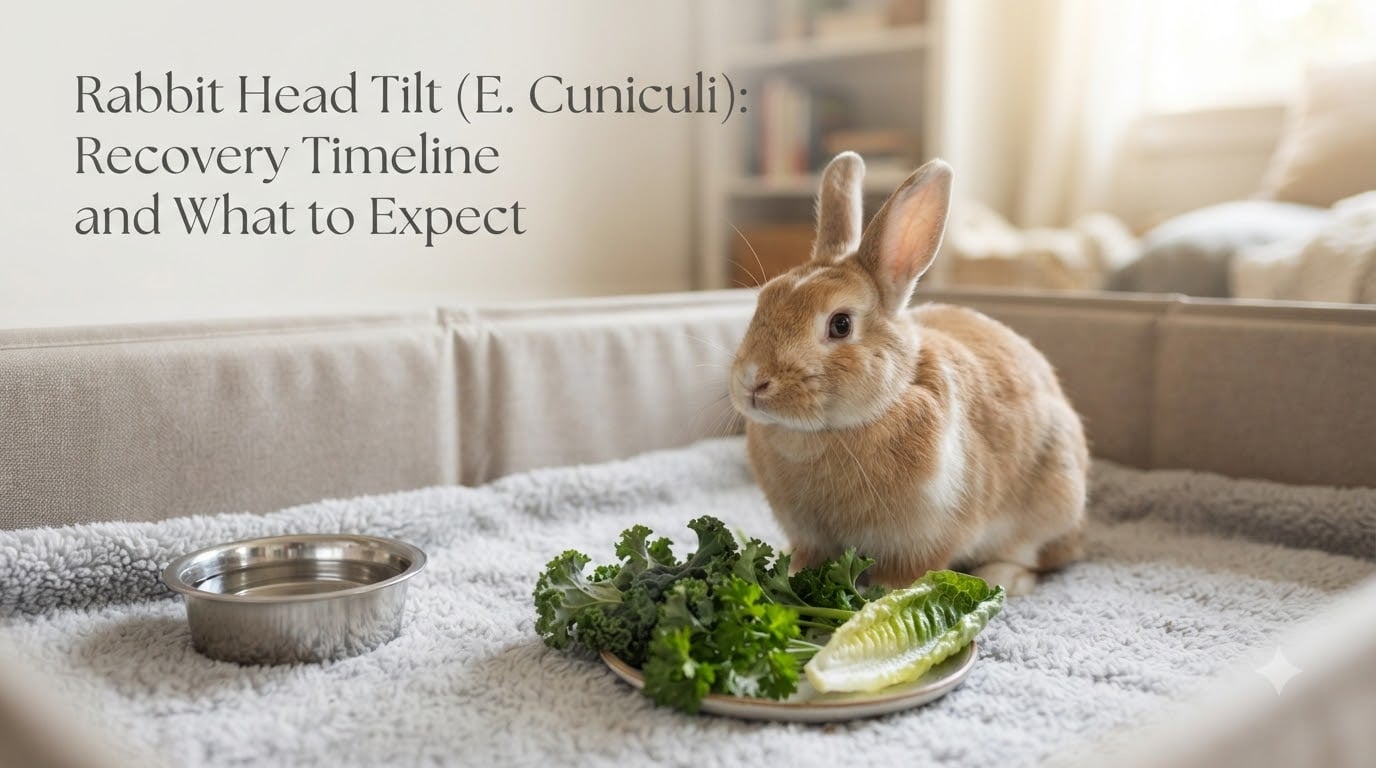
Padded enclosure: Line a small area with fleece, towels, or vet bedding. Keep walls low so you can reach in easily.
Remove hazards: Take away ramps, ledges, water bowls that can be tipped, and any objects the rabbit could fall on.
Assist with feeding: Offer favorite greens, herbs, and pellets by hand. Use Critical Care or recovery formula if appetite is poor.
Keep hydration up: Offer water in a shallow, heavy bowl. Some rabbits find sipper bottles impossible during disorientation.
Help with grooming: Rabbits with head tilt often cannot groom their face or rear. Gently clean soiled fur daily.
Reposition frequently: If your rabbit is rolling or stuck on one side, gently roll them back every few hours to prevent sores.
Maintain temperature: Sick rabbits struggle to regulate body temperature. Keep the room comfortable, not too hot or cold.
Minimize stress: Keep noise low, lighting soft, and handling gentle. Predictability helps rabbits feel safe.
Medication schedule: Set alarms and stick to the schedule. Missing doses can slow recovery.
Daily weight checks: Weigh your rabbit at the same time each day. Weight loss is an early warning sign.
Warning Signs That Require Emergency Veterinary Care
Most rabbits recover with steady, patient care, but some situations need urgent attention. Call your vet right away if you notice:
Seizures or loss of consciousness
Complete refusal to eat or drink for more than 12 hours
Labored breathing or open-mouth breathing
Sudden worsening after a period of improvement
Signs of severe pain such as screaming, grinding teeth loudly, or hunched posture
Inability to urinate or produce droppings
Sudden paralysis of the limbs
Rabbits deteriorate quickly when they stop eating. GI stasis can develop within hours and become life-threatening. Trust your instincts. If something feels wrong, call your vet.
Living with Permanent Head Tilt: Quality of Life Considerations
Some rabbits recover fully. Others keep a slight or moderate permanent head tilt. This can feel disappointing after weeks of intensive care, but it is important to know that many rabbits adapt wonderfully. They learn to navigate their space, eat on their own, hop, binky, and enjoy life just as they did before.
Quality of life is the key measure. Is your rabbit eating well? Moving around without distress? Interacting with you or a companion? Showing curiosity and engagement with the environment? If yes, the tilt itself does not mean a poor quality of life.
There are cases where head tilt is so severe that recovery is unlikely or the rabbit is in constant distress. In these situations, your vet may discuss quality of life and humane options. This conversation is never easy, but it is a gift we can give our pets when suffering cannot be relieved. Talk openly with your vet about what you are seeing.
Preventing E. Cuniculi in Your Rabbit
Prevention is not always possible because exposure is so common, but you can reduce the risk. Quarantine new rabbits for at least four weeks before introducing them. Clean food bowls, water bottles, and litter boxes regularly to reduce spore buildup. Avoid feeding hay or greens from sources that may have been contaminated by wild rabbit or rodent urine.
Some vets recommend periodic fenbendazole treatment for high-risk rabbits, such as those who live with an infected companion. Talk to your vet about whether preventive treatment makes sense for your situation.
Frequently Asked Questions
How long does it take a rabbit to recover from head tilt?
Recovery from head tilt caused by E. cuniculi typically takes 4 to 12 weeks of treatment and supportive care, with most rabbits reaching maximum improvement within 2 to 6 months. Some retain a mild permanent tilt but still live full, happy lives.
How long does it take for a rabbit to recover from e-cuniculi?
Most rabbits show meaningful improvement within 2 to 4 weeks of starting fenbendazole, but full recovery can take 2 to 6 months. Symptoms often worsen during the first 1 to 2 weeks before improving, which is a normal part of the process.
Can Panacur be used to treat head tilt in rabbits?
Yes, Panacur (fenbendazole) is the standard antiparasitic treatment for E. cuniculi head tilt in rabbits. It is typically given orally once daily for 28 days at 20 mg per kg of body weight, often alongside anti-inflammatories and antibiotics if needed.
Can a rabbit live with a head tilt?
Yes, many rabbits live full, happy lives with a permanent residual head tilt after E. cuniculi treatment. They adapt to balance changes, continue eating and hopping normally, and often enjoy excellent quality of life.
Conclusion: What to Expect on Your Rabbit’s Recovery Journey
The rabbit head tilt E. Cuniculi recovery timeline is rarely a straight line. There are discouraging days when your rabbit seems worse, followed by small wins that build hope. Most rabbits who receive prompt treatment, careful medication, and dedicated supportive care go on to live full, happy lives. Some recover completely. Others keep a slight tilt that fades into the background of everyday joy.
If you take one thing from this guide, let it be this: do not give up. The first two weeks are the hardest, and many rabbits who seem severely affected in week one are hopping around their pen by week four. Stay in close contact with your vet, follow the medication schedule faithfully, and provide the calm, padded, low-stress environment your rabbit needs to heal. Recovery is a marathon, not a sprint, and your rabbit is lucky to have you in their corner.