
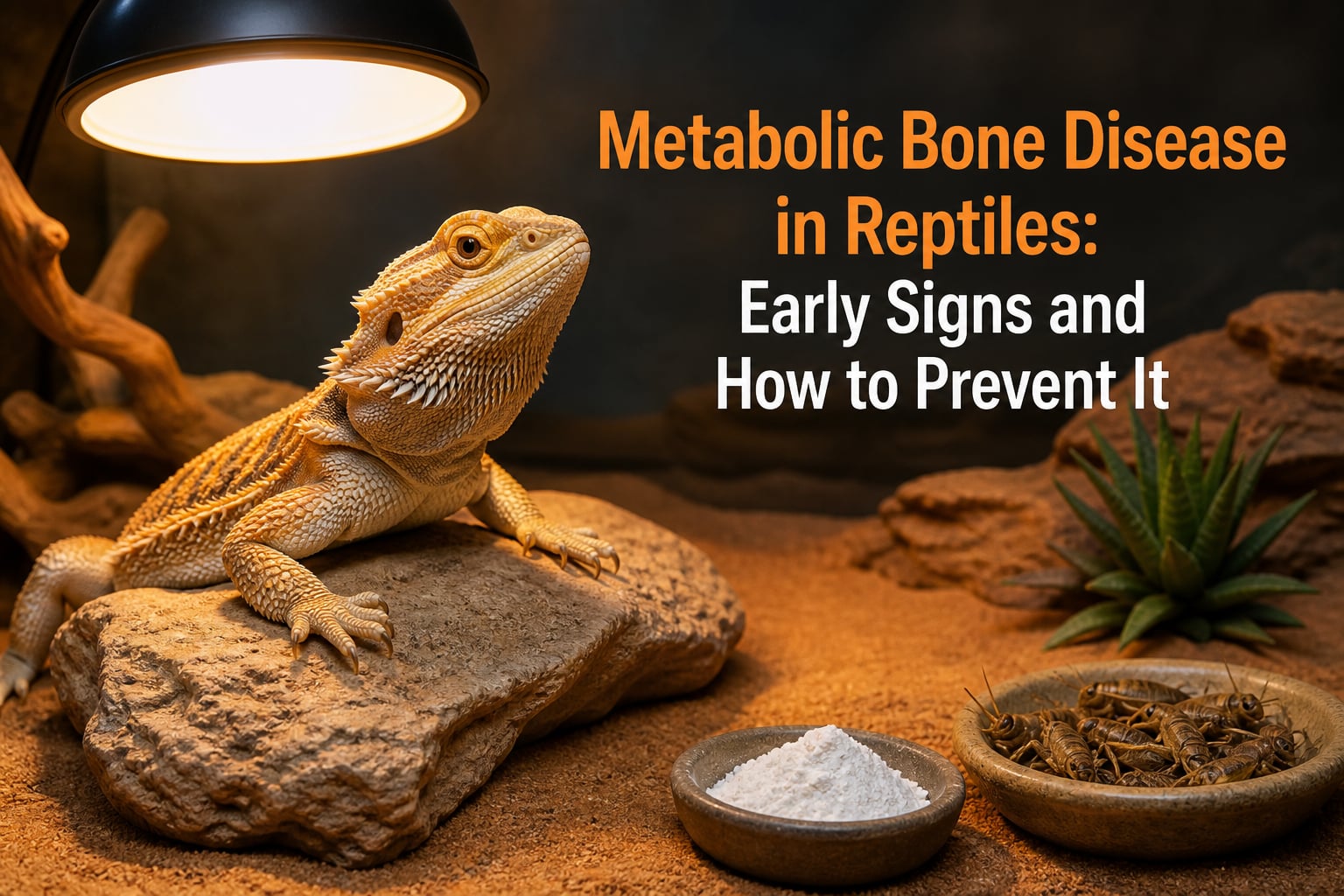
Metabolic bone disease in reptiles is one of the most common preventable conditions we see in captive herps, and it is also one of the most heartbreaking. I have worked with owners who thought their setup was perfect until a bearded dragon’s jaw went rubbery or a leopard gecko’s spine curved. The good news is that with the right information, you can catch it early, stop it in its tracks, and prevent it from ever happening.
This guide walks you through what metabolic bone disease actually is, the silent early signs most owners miss, the exact causes, and a practical prevention plan you can apply this week. Whether you keep bearded dragons, leopard geckos, chameleons, or tortoises, the principles are the same.
Table of Contents
What Is Metabolic Bone Disease in Reptiles?
Metabolic bone disease (MBD) in reptiles is a condition caused by chronic calcium deficiency, often tied to inadequate UVB lighting or an unbalanced calcium-to-phosphorus ratio, which leads to weak, rubbery, deformed bones. Vets also call it nutritional secondary hyperparathyroidism, fibrous osteodystrophy, or osteomalacia depending on the exact mechanism.
Here is the simple version. A reptile’s body needs calcium for muscle contraction, nerve signaling, and bone strength. When blood calcium drops, the parathyroid glands release parathyroid hormone (PTH). PTH tells the bones to release calcium into the bloodstream. Over time, the bones become thin, fibrous, and bendable instead of rigid.
Captive reptiles are uniquely at risk because they depend entirely on us for three things they would get naturally in the wild: UVB exposure, dietary calcium, and proper basking temperatures. Get any of those wrong, and the calcium balance tips the wrong way.
The bone metabolism process at a glance
Bones are not static. Osteoclast cells break down old bone and osteoblast cells build new bone. Calcium is the raw material. Vitamin D3 is the courier that lets the gut absorb calcium from food. UVB light is what tells the skin to make vitamin D3 in the first place.
Break any link in that chain and the body pulls calcium out of the skeleton to keep the blood level stable. Blood calcium matters more to immediate survival than bone density, so the body sacrifices the bones first. That is why MBD can sneak up on owners who only look for surface symptoms.
What Causes Metabolic Bone Disease in Reptiles?
MBD has three root causes that almost always appear together: not enough calcium, not enough vitamin D3, and not enough usable UVB light. A fourth contributor, incorrect temperatures, is the silent partner that makes the other three worse.
The calcium-phosphorus-vitamin D3 triad
Reptiles need a dietary calcium-to-phosphorus ratio of roughly 2:1. Phosphorus binds calcium in the gut and prevents absorption. If you feed a diet high in phosphorus and low in calcium, the reptile absorbs very little calcium even if you are offering it on paper.
Common feeder insects like crickets and mealworms have Ca:P ratios of around 1:3 to 1:7. That means a beetle-and-cricket diet with no supplementation creates a chronic calcium deficit. Herbivores fare better with leafy greens, but even spinach and kale have issues with oxalates that bind calcium.
UVB lighting failures
This is the most common mistake I see. UVB bulbs lose output long before the visible light dims. A T8 fluorescent tube that still looks bright can drop to almost no UVB output in 6 months. Many owners keep bulbs for 2 to 3 years without realizing the UVB is gone.
Window glass also blocks nearly all UVB. Placing a terrarium by a sunny window gives warmth and visible light but no UVB at all. The same goes for plastic and mesh screens, which can filter out 30% to 50% of UVB depending on the weave.
Dietary mistakes
Beyond feeder insect ratios, the biggest dietary issues are: skipping calcium dusting, dusting inconsistently, using phosphorus-rich foods like bananas or iceberg lettuce as staples, and not gut-loading feeder insects before feeding them out.
Temperature and gut motility link
Reptiles digest and absorb nutrients within a narrow temperature range. If the basking spot is too cool, food sits in the gut longer, calcium absorption drops, and supplementation becomes less effective. This is why a temperature problem alone can trigger MBD even with a perfect diet and bulb.
Early Signs and Symptoms of Metabolic Bone Disease
Early signs of metabolic bone disease in reptiles fall into two categories: behavioral changes that appear weeks before physical deformities, and physical symptoms that escalate as the disease progresses. Catching the behavioral phase is the difference between a full recovery and permanent damage.
Behavioral warning signs (the silent phase)
These are the signs owners post about on forums right before the worst hits. I have collected them from real case threads on Reddit and other reptile communities.
Reduced appetite, especially for calcium-rich foods
Lethargy and longer basking times than usual
Tremors or twitching in the toes, limbs, or tail
Reluctance to climb, jump, or move normally
Dragging the back legs or belly-dragging instead of walking
Sudden aggression or unusual shyness (a sign of pain)
If you notice two or more of these at once, schedule a vet visit. The reptile may be compensating for low blood calcium or early bone pain, even if its bones still look normal on the outside.
Early physical symptoms
The earliest visible physical sign is often a soft lower jaw. Gently feel your reptile’s jaw. It should feel firm, like a hard plastic comb. If it gives slightly under pressure, that is the start of “rubber jaw,” the MBD signature symptom.
Other early physical signs include slight swelling at the joints, a kinked or wavy tail, a subtle bend in the spine, and shell softening in turtles and tortoises. By this point, the disease has been progressing internally for weeks or months.
Advanced symptoms
Advanced MBD is hard to miss. Expect swollen and bowed legs, a clearly bent spine, severe rubber jaw that affects eating, spontaneous fractures, cloacal prolapse from straining, and seizures in extreme cases. At this stage, treatment focuses on stabilizing the reptile rather than reversing damage.
Species Most at Risk for Metabolic Bone Disease
Any captive reptile can develop MBD, but some species hit the vet clinic far more often than others. Knowing your pet’s risk helps you tune your prevention plan.
Bearded dragons
Bearded dragons are the poster child for MBD. They grow extremely fast as juveniles, depend entirely on insects and UVB for calcium, and are sensitive to phosphorus-heavy diets. Most pet store dragons develop at least mild symptoms without proper UVB and supplementation.
Leopard geckos
Leopard geckos are nocturnal, which leads many owners to skip UVB. While they can survive on dietary D3 alone, supplementation mistakes are common, and their thin tails and small bones show symptoms quickly. Curved tails and wobbly gaits are red flags.
Chameleons
Chameleons are extremely sensitive to UVB intensity and calcium. Jackson’s and veiled chameleons develop bowed legs and rubber jaw fast when husbandry slips. They are also stress-prone, which suppresses appetite and worsens absorption.
Turtles and tortoises
Chelonians show MBD as shell softening, pyramid-shaped scutes, and beak deformities. Indoor tortoises without UVB and with all-banana or all-lettuce diets are the classic cases. Aquatic turtles without UVB develop soft, flexible shells within months.
Iguanas and other herbivores
Green iguanas need very high calcium diets and strong UVB. Uromastyx and bearded dragons in the herbivore-leaning adult phase also need careful calcium balance. Oxalate-rich greens like spinach can quietly bind calcium over time.
How to Prevent Metabolic Bone Disease in Reptiles?
Prevention comes down to the prevention trifecta: correct UVB lighting, balanced calcium supplementation, and proper basking temperatures. Nail all three and your reptile will almost never develop MBD.
Pillar 1: UVB lighting done right
Choose a T5 high-output UVB tube sized to the enclosure length. For bearded dragons and similar desert species, use a 10% to 12% UVB bulb. For forest species like crested geckos and chameleons, 5% to 6% UVB works.
Mount the bulb inside the enclosure or on a reflector hood so the reptile can bask within 8 to 12 inches of the tube. Replace T5 bulbs every 9 to 12 months and T8 bulbs every 6 months, even if they still glow. Use a UV meter if you keep high-value species.
Pillar 2: Calcium supplementation and gut loading
Dust feeder insects with plain calcium carbonate (no D3) at every feeding for juveniles and every other feeding for adults. Add a multivitamin with D3 twice a week if your reptile does not get strong UVB exposure.
Gut load insects 24 hours before feeding by offering them calcium-rich vegetables like collard greens, squash, and carrots. Hydrated insects with empty guts cannot pass on the calcium you dusted.
Pillar 3: Proper temperatures and basking
Set a basking surface temperature appropriate to the species. For bearded dragons that is 100 to 110°F at the basking spot. For leopard geckos it is 88 to 95°F. Use a thermostat and a digital probe thermometer, not a stick-on strip.
A cool side in the 70s°F and a proper day-night cycle help digestion and calcium metabolism. Without that thermal gradient, even perfect supplementation underperforms.
Calcium-to-phosphorus ratios of common feeder insects
Use this quick reference when building a feeder rotation. Aim to balance the overall Ca:P ratio above 1.5:1 across a week of feedings.
Crickets: about 1:3 (poor, must be dusted)
Mealworms: about 1:7 (very poor, dust heavily)
Dubia roaches: about 1:3 (fair, dust with calcium)
Black soldier fly larvae: about 1.5:1 (good, dust lightly)
Hornworms: about 1.3:1 (good for variety)
Silkworms: about 1.2:1 (excellent staple)
Mix at least one high-calcium feeder like silkworms or BSFL into the rotation weekly. Variety beats supplementation alone.
Treating Metabolic Bone Disease at Home and at the Vet
Treatment for MBD always starts at the vet. Home care supports recovery but cannot replace professional diagnosis and stabilization. Here is what to expect from both.
What a reptile vet will do
An exotic vet will take radiographs to measure bone density, run bloodwork for calcium and phosphorus levels, and prescribe oral or injectable calcium. Severe cases may need calcitonin injections to slow bone resorption and reduce pain.
The vet will also review your setup, since fixing husbandry is the only way to stop the cycle. Bring photos of your lights, basking area, and supplements to the appointment.
What you can do at home during recovery
Adjust UVB and basking temperatures immediately, switch to high-calcium feeders, and remove climbing hazards to prevent fractures. Hand-feeding may be necessary if the jaw is too soft to bite normally. Provide shallow water dishes to reduce fall risk.
Keep handling short and gentle. Pain relief medication from the vet can help your reptile eat and move more normally during recovery.
Recovery timeline and what can be reversed
Blood calcium normalizes within days to weeks of treatment. Bone density improves over 2 to 6 months with proper husbandry. Visible deformities like a bowed leg or kinked tail are usually permanent, but the reptile can live a full, functional life once stable.
Owners often ask if MBD can be reversed. The honest answer: the metabolic disease can be reversed, but the structural deformities cannot. Early intervention saves the bones you still have.
When to See a Veterinarian
Take your reptile to an exotic or reptile-savvy vet as soon as you notice tremors, rubber jaw, refusal to walk, or any sudden behavior change lasting more than 48 hours. These are not “wait and see” signs.
To find an exotic vet, search the Association of Reptile and Amphibian Veterinarians (ARAV) directory, ask your local herpetological society, or call ahead to confirm a general practice sees reptiles. Not every vet has reptile training, and that matters for diagnosis and dosing.
Bring a fresh fecal sample, photos of the enclosure and lighting, and any supplements you use. The vet visit moves faster with that information ready.
Frequently Asked Questions About MBD in Reptiles
How can metabolic bone disease be prevented in reptiles?
Provide proper UVB lighting replaced every 6 to 12 months, dust feeder insects with calcium carbonate at most feedings, gut load insects 24 hours before feeding, and maintain correct basking temperatures for your species. This prevention trifecta keeps the calcium-vitamin D3-phosphorus balance healthy.
What are the early signs of metabolic bone disease in reptiles?
Early signs include reduced appetite, lethargy, tremors in toes or limbs, reluctance to climb, and a soft lower jaw. Behavioral changes often appear weeks before visible bone deformities, which is why owners who know the silent phase catch MBD much earlier.
Can metabolic bone disease be reversed?
The metabolic component can be reversed with proper UVB, calcium supplementation, and vet care, restoring bone density within months. Structural deformities such as bowed legs, kinked tails, and curved spines are usually permanent, though the reptile can still live a full life once stable.
What is metabolic bone disease in reptiles?
Metabolic bone disease (MBD) is a condition caused by chronic calcium deficiency, often tied to inadequate UVB lighting or poor dietary calcium-to-phosphorus ratio, that leads to weak, rubbery, deformed bones. Vets also call it nutritional secondary hyperparathyroidism.
How to treat metabolic bone disease in reptiles?
Take the reptile to an exotic vet for radiographs, bloodwork, and calcium supplementation. At home, correct the UVB setup, balance calcium supplementation, gut load feeders, and adjust basking temperatures. Severe cases may need calcitonin injections and pain management.
How common is metabolic bone disease in reptiles?
MBD is the single most common preventable disease in captive reptiles. Rescues report that the majority of surrendered bearded dragons, leopard geckos, and turtles show at least mild symptoms, often from outdated UVB bulbs and phosphorus-heavy diets.
Can a reptile recover from metabolic bone disease?
Yes, especially when caught early. With correct husbandry and vet support, most reptiles regain bone density and live normal lives. Advanced cases with severe deformities can still recover metabolically but may keep visible skeletal changes for life.
How long can a bearded dragon live with metabolic bone disease?
With proper treatment and husbandry correction, a bearded dragon with MBD can live its full 8 to 12 year lifespan. Without treatment, severe MBD becomes fatal within months as fractures, seizures, or organ failure develop.
Conclusion
Metabolic bone disease in reptiles is preventable, treatable when caught early, and far easier to stop than to reverse once deformities set in. Audit your UVB bulb age, your dusting schedule, and your basking temperatures this week. Those three checks catch most cases before they ever start.
If your reptile is already showing signs of MBD, book an exotic vet visit, fix the husbandry gaps, and give the recovery a real chance. With consistent care, even reptiles that started behind can live long, active, healthy lives.