
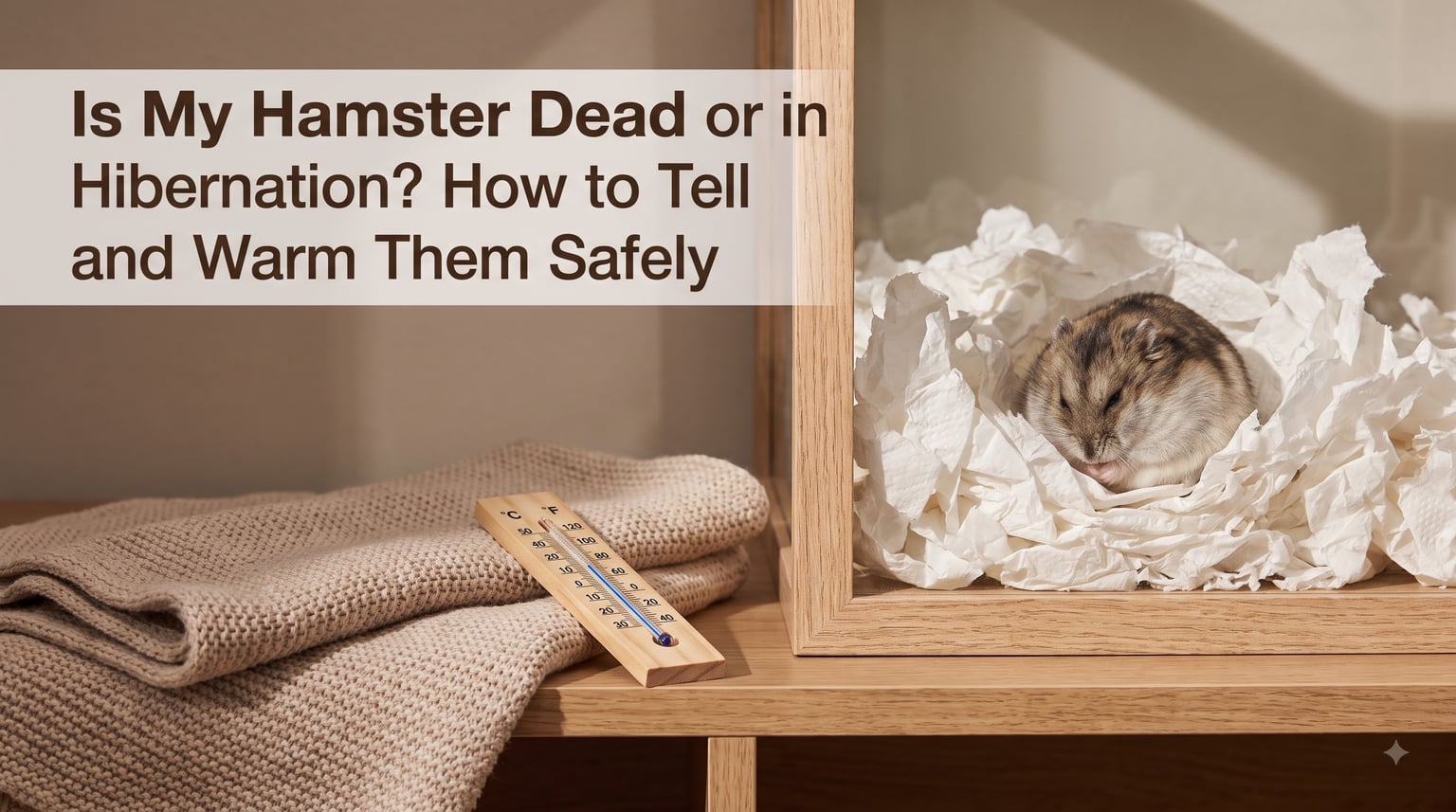
Finding your hamster motionless, cold, and unresponsive is one of the most frightening moments any pet owner can face. Before you panic, take a breath. What you are seeing may not be death at all. It could be torpor, a hibernation-like state that hamsters enter when their environment gets too cold, and it is often reversible.
This guide walks you through exactly how to tell whether your hamster is dead or in hibernation (torpor), step by step. I have pulled together advice from veterinary sources, real owner experiences from hamster care communities, and temperature-specific guidance that most other resources leave out.
By the end, you will know what physical signs to check, how to warm your hamster safely without causing harm, and when it is time to call a vet. Every minute counts, so let us get started.
Table of Contents
Understanding Torpor: Why Pet Hamsters Do Not Truly Hibernate?
Torpor is a dangerous, involuntary state of reduced metabolic activity that hamsters enter when their surroundings become too cold. It is not the same as true hibernation, which wild animals prepare for over weeks by building fat reserves and nesting material.
Pet hamsters have no biological preparation for this state. When the room temperature drops below about 18 degrees Celsius (around 64 degrees Fahrenheit), their body can slip into torpor as a last-ditch survival tactic. The problem is that without stored energy and proper physiological changes, torpor can quickly lead to fatal hypothermia.
This is why experienced keepers and vets stress one key point: domestic hamsters should never hibernate. If your hamster enters torpor, it is an emergency that signals something is wrong with their environment, usually a cold room, a draft, or inadequate bedding.
Dead vs Torpor: Side-by-Side Sign Comparison
The fastest way to assess your hamster is to compare what you are observing against known signs of each state. I have built this comparison from veterinary guidance and reports shared by hundreds of owners in hamster care forums.
Here is what to look for:
Breathing: A hamster in torpor takes very shallow, slow breaths that are hard to spot. You may need to watch the chest area for a full minute. A dead hamster shows no chest movement at all.
Heartbeat: Place a finger gently against the lower left side of the chest. Torpor hamsters have a faint, slow pulse. No pulse at all points toward death.
Body temperature: Both states feel cold, but a torpor hamster is usually cool rather than ice-cold. A dead hamster gradually loses all body warmth.
Body stiffness: This is the most telling sign. A torpor hamster feels limp and floppy. After death, a hamster goes floppy for roughly 2 hours, then stiffens (rigor mortis) for 12 to 24 hours, then goes floppy again.
Whisker movement: Torpor hamsters may show tiny, almost invisible whisker twitches. Dead hamsters show none.
Eye response: Gently touch near the eye. A torpor hamster may show a sluggish blink or twitch. No response indicates death.
Room temperature: If the room has stayed above 20 degrees Celsius and your hamster is cold and stiff, death is unfortunately more likely. If the room was cold or a window was left open, torpor is a real possibility.
Use this checklist as your first assessment tool before moving on to the detailed step-by-step process below.
Step-by-Step: How to Tell If Your Hamster Is Dead or in Hibernation
Follow these steps in order. Move calmly but quickly, since a hamster in torpor needs warming sooner rather than later.
Step 1: Check for breathing. Place your hamster on a flat surface and watch the chest and ribcage area for 60 full seconds. Torpor breathing can be as slow as one breath per minute, so do not give up after ten seconds. Look for the faintest rise and fall.
Step 2: Check for a heartbeat. Cup your hamster gently and place your index finger against the lower left chest wall. Hold still and feel for 30 to 60 seconds. A faint, rhythmic thudding means the heart is still working.
Step 3: Assess body stiffness. Gently try to move a limb. If the leg moves freely and feels floppy, your hamster is likely in torpor. If the body is rigid and stiff, especially if more than 2 hours have passed since you last saw them active, death is more probable.
Step 4: Check whiskers and facial response. Look closely at the whiskers for tiny twitches. Gently stroke near the eye or touch a whisker to see if there is any reflex response.
Step 5: Check the room temperature. Use a thermometer near the cage. Anything below 18 degrees Celsius makes torpor a strong possibility. Also check for drafts, open windows, or a heating system that may have failed overnight.
Step 6: Try the warm-up test. Begin the gradual warming process described in the next section. If your hamster is in torpor, you should see gradual improvement within 30 to 60 minutes. If there is no change after warming, contact a vet.
Important warning: Never use a hair dryer, heating pad on high, hot water, or direct body heat from holding the hamster tightly against your skin. Rapid warming can cause shock and organ failure in a torpid hamster.
How to Safely Warm a Hamster in Torpor?
Warming must be gradual. Sudden heat forces the body to demand oxygen and energy faster than it can supply, which can be fatal. The goal is to raise the hamster’s temperature slowly over 30 to 60 minutes.
Here is the safe warming process I recommend based on veterinary guidance:
1. Move the cage to a warmer room. Bring your hamster into a room that is around 21 to 23 degrees Celsius. Do not place them directly next to a radiator or heater. The ambient temperature should be warm but comfortable for you.
2. Use a heat source from underneath. Fill a water bottle with warm (not hot) water, wrap it in a towel, and place it near the hamster so they can move toward or away from it. A microwaveable heat pack wrapped in cloth works too.
3. Provide insulation. Cover the hamster loosely with a small, soft cloth or tissue bedding. This traps warmth gradually without smothering them.
4. Offer warmth through your hands. Cup the hamster in both hands and let your body heat transfer gently. Keep your hands relaxed so air can circulate.
5. Watch for signs of recovery. Within 30 to 60 minutes, a torpor hamster should begin stirring, whiskers may twitch more visibly, and breathing should deepen. They may start to move slowly or attempt to groom.
6. Offer food and water once responsive. Once your hamster is moving, offer a small piece of high-energy food like a seed or a drop of water on your fingertip. Do not force-feed.
7. Contact a vet if no improvement. If 60 minutes of gradual warming produces zero change in breathing, movement, or body warmth, call an exotic pet veterinarian immediately.
When to Contact a Veterinarian
Call a vet right away if your hamster shows no response after 30 to 60 minutes of proper warming. Also seek veterinary help if the hamster was in torpor for several hours before you found them, since prolonged torpor can cause organ damage even after recovery.
Other red flags that warrant an immediate vet visit include difficulty breathing after warming, signs of injury, or if your hamster repeatedly goes back into torpor after warming up. The latter points to an underlying health issue that needs professional diagnosis.
Preventing Torpor: Temperature Guide for Hamster Rooms
Prevention is far easier than emergency warming. The ideal temperature range for a hamster room is 18 to 24 degrees Celsius (64 to 75 degrees Fahrenheit). Below 15 degrees Celsius, the risk of torpor rises sharply.
Here is a practical breakdown of temperature zones:
Safe zone (18-24 degrees C): Your hamster stays comfortable and active. No torpor risk.
Caution zone (15-18 degrees C): Torpor becomes possible, especially for older or thinner hamsters. Add extra bedding and check for drafts.
Danger zone (below 15 degrees C): Torpor is likely. Move the cage or add a safe heat source immediately.
To prevent torpor, keep the cage away from windows, exterior walls, and air conditioning vents. Provide at least 6 inches of bedding for burrowing insulation. In winter, consider a ceramic heat emitter designed for small pets, placed safely outside the cage. Never use heat lamps or pads inside the enclosure.
Coping If Your Hamster Has Passed
If, after careful checking and warming, your hamster does not recover, I am truly sorry for your loss. Losing a pet, even a small one, hurts deeply, and the sudden nature of this situation makes it harder.
It is natural to second-guess yourself, but torpor and sudden death can happen even with excellent care. Hamsters have short lifespans, typically 2 to 3 years, and some health issues show no warning signs. The fact that you sought help and tried to save them shows how much you cared.
Give yourself time to grieve. If you have children, explain what happened in age-appropriate terms. Many owners find comfort in creating a small memorial or planting something in their hamster’s memory.
Frequently Asked Questions
Did my hamster die or hibernate?
Check for shallow breathing (watch the chest for 60 seconds), feel for a faint heartbeat on the lower left chest, and test body stiffness. A limp, floppy hamster in a cold room (below 18 degrees C) is more likely in torpor. A stiff, ice-cold hamster in a warm room is more likely to have died.
How to tell if a hamster is sleeping or dead?
A sleeping hamster responds to gentle touch, has visible breathing, and feels warm. A dead hamster shows no breathing, no heartbeat, no whisker movement, and gradually becomes stiff. If the room was cold, test for torpor by warming gradually before assuming death.
What does a hibernating hamster feel like?
A hamster in torpor feels cool (not ice-cold), limp and floppy, and may have very faint whisker twitches. Their body is relaxed rather than rigid, and you may detect a slow heartbeat if you hold a finger against the chest for a full minute.
How long does hamster torpor last?
Torpor can last anywhere from a few hours to over a day if the cold conditions persist. With proper gradual warming at 21-23 degrees C, most hamsters begin stirring within 30 to 60 minutes. Prolonged torpor increases the risk of fatal hypothermia.
What is the most common cause of death in hamsters?
The most common causes include old age, respiratory infections, wet tail (especially in young Syrian hamsters), heart disease, and cancer. Sudden environmental triggers like torpor from cold temperatures can also be fatal if not addressed quickly.
Conclusion
Finding your hamster cold and still is terrifying, but knowing the difference between death and torpor can save their life. The key takeaway is this: a limp, cool hamster in a cold room is very possibly in torpor and can often be revived with gradual warming.
Always check for breathing over a full minute, feel for a heartbeat, test body stiffness, and assess the room temperature before drawing any conclusions. If your hamster is in torpor, warm them slowly over 30 to 60 minutes using ambient heat, never direct or intense heat sources.
Keep your hamster’s room between 18 and 24 degrees Celsius year-round, and you will dramatically reduce the risk of this happening again. If warming produces no response, contact an exotic pet vet without delay.
You did the right thing by searching for help. Whether your hamster recovers or not, you gave them the best possible chance.