
I remember the first time I heard about avian influenza reaching a flock just two miles from my house. I had six hens in my backyard and no plan beyond the basics. That moment forced me to learn everything I could about protecting a small flock, and I want to share what actually works.
Setting up biosecurity for your backyard flock is no longer optional. Highly pathogenic avian influenza (HPAI) has affected thousands of backyard and commercial flocks across the United States, and small flocks are just as vulnerable as large operations. The good news: the same backyard flock biosecurity bird flu practices that keep commercial operations safe work for a coop of three hens or thirty.
In this guide, I will walk you through the core steps to protect your chickens, ducks, turkeys, and other poultry. You will learn how to set up physical barriers, control visitors, disinfect equipment, and recognize early warning signs of infection. I will also share cost-effective DIY solutions and practical quarantine procedures that fit a small-flock budget.
Table of Contents
What Bird Flu Is and Why Your Backyard Flock Is at Risk?
Avian influenza is a virus that infects wild birds, domestic poultry, and occasionally mammals. The strains most relevant to chicken owners are classified as either low pathogenic (LPAI) or highly pathogenic (HPAI). HPAI is the version that kills flocks quickly, sometimes within 48 hours of exposure.
Wild waterfowl like ducks, geese, and shorebirds carry the virus without showing symptoms. When they pass through your area during migration, they leave contaminated droppings on ponds, grass, and feed. Your chickens can pick up the virus by stepping in those droppings, eating contaminated feed, or drinking from a shared water source.
Migration season creates the highest risk window. According to the Cornell Lab of Ornithology’s BirdCast tool, peak migration in the continental United States runs from late February through May in spring and September through November in fall. During these windows, I tighten my biosecurity and stop letting my hens free-range in open grass where wild birds feed.
Even a single infected wild bird near your coop can spread the virus through contaminated dust, feathers, or surfaces. The virus survives in cool, moist environments for weeks. That is why backyard flock biosecurity bird flu measures focus on creating clean, dry, enclosed spaces and limiting any contact between your flock and the outside world.
How to Set Up Biosecurity for Backyard Chickens: The Core Steps
When I built my biosecurity plan, I followed the same framework the USDA’s Defend the Flock program recommends. These six steps form the foundation that every small-flock owner should implement, and they directly answer the most common question in backyard poultry circles: how to keep chickens safe from bird flu.
Establish a clean line of separation. Define one boundary where your birds live and everything outside that boundary is potentially contaminated. Use fencing, netting, or a covered run to keep wild birds out of the chicken area.
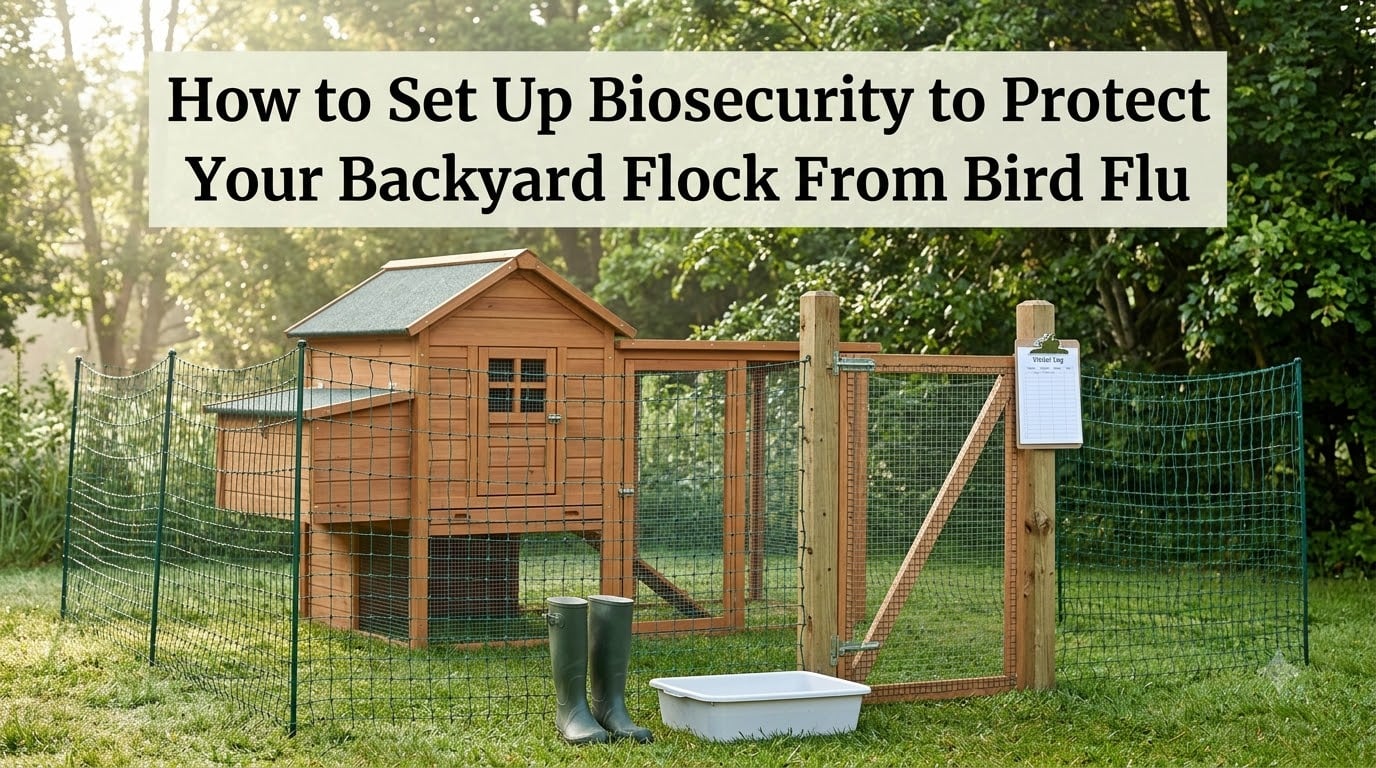
Set up a hand washing station at the coop entrance. A simple wash basin with soap, clean water, and paper towels works. Add a bottle of hand sanitizer for days when water is frozen.
Use dedicated clothing and footwear. Keep a pair of boots or shoes that never leave your property near the coop. I use rubber boots and leave them in a bin by the gate.
Build a footbath with disinfectant. A shallow plastic tub with a dilute bleach or Virkon S solution catches pathogens from shoe soles. Replace the solution daily.
Disinfect equipment between uses. Feeders, waterers, rakes, and buckets should be cleaned with a 1:10 bleach solution or a veterinary disinfectant.
Quarantine any new or returning birds for 30 days. A separate enclosure with dedicated tools prevents introduction of disease to your main flock.
These six steps create overlapping layers of protection. If one fails, the others still guard your flock. That redundancy is what makes backyard flock biosecurity bird flu plans effective in real-world conditions.
Wild Bird Separation Strategies That Actually Work
Keeping wild birds away from your chickens is the single most effective biosecurity measure. The University of California Davis and several land-grant universities consistently identify wild bird contact as the leading cause of backyard flock infections.
The first strategy is full enclosure with netting. I covered my run with 1-inch poultry netting to keep out sparrows, starlings, and pigeons. Even though wild songbirds rarely carry HPAI, they can transport the virus on their feet after landing in contaminated areas.
The second strategy is feed and water management. Store feed in sealed metal bins, never leave feed out overnight, and clean up spilled grain. Wild birds are drawn to free meals, and spilled feed is an open invitation. Use covered waterers that prevent wild birds from drinking or defecating in your flock’s water source.
The third strategy is free-range timing. If you let your hens out during the day, choose late morning to early afternoon, after peak wild bird feeding times. Avoid areas near ponds, wetlands, or fields where migratory waterfowl rest.
The fourth strategy is discouraging perching and nesting near your coop. Install bird spikes on coop roofs, remove nearby trees where wild birds roost, and patch any holes in your coop larger than 1 inch. These small changes reduce perching opportunities around your chicken area.
Visitor and Traffic Control on Your Property
Every person, vehicle, or piece of equipment that enters your property can carry the virus. Visitors who own birds pose the highest risk, but anyone walking near your coop can track contaminated material on their shoes.
I keep a visitor log near the coop. Anyone who enters the chicken area records their name, date, and last contact with poultry. This is not paranoia; it is a standard practice recommended by state veterinarians.
For routine visitors, I provide disposable boot covers and require hand washing before they approach the coop. If a visitor has been around other birds within the past 48 hours, I ask them to skip the chicken visit entirely.
Delivery drivers and feed trucks should not enter the coop area. Ask suppliers to drop deliveries at your driveway or gate. I keep a wheeled cart at the gate to haul feed the rest of the way without dragging contaminated tires across the property.
How to Disinfect a Chicken Coop After Suspected Bird Flu Exposure
If you suspect your flock has been exposed to bird flu, or if a bird dies suddenly and you want to clean thoroughly, follow this disinfection procedure. The USDA and APHIS recommend a four-stage approach.
Remove all birds and dispose of any dead birds per state guidelines. Do not compost or bury suspected HPAI-positive birds. Your state veterinarian will direct carcass disposal.
Dry clean the coop. Remove all bedding, manure, feed, and debris. Scrape, sweep, and brush down every surface. The virus hides in organic matter, so thorough removal matters.
Wash all surfaces with hot, soapy water. Use a stiff brush to scrub walls, floors, roosts, and nest boxes. Soap breaks down the fatty coating around the virus.
Apply an approved disinfectant. Use a 1:10 bleach solution, Virkon S, or an EPA-registered poultry disinfectant. Apply to all surfaces and let it sit for at least 10 minutes. Then rinse with clean water and allow the coop to dry completely before reintroducing birds.
Sunlight is a powerful ally. UV rays break down the virus on exposed surfaces. After cleaning, leave doors and windows open for several hours of direct sun if possible. For equipment that cannot be bleached, like porous wood roosts, consider replacing them entirely.
Always wear gloves, an N95 mask, and eye protection during disinfection. The same viruses that affect birds can occasionally infect humans, especially during high-exposure tasks like cleaning contaminated coops.
Quarantine Procedures for New and Returning Birds
Bringing new chickens home is one of the highest-risk moments in flock management. Even healthy-looking birds can carry pathogens they will shed during stress, like transport or relocation. A 30-day quarantine is the gold standard.
Set up a separate enclosure at least 30 feet from your main coop, with its own feeders, waterers, and tools. I keep a dedicated set of rubber gloves and boots in a bin by the quarantine coop. Never share equipment between the two areas without disinfecting first.
During quarantine, observe new birds daily for signs of illness. Watch for lethargy, decreased appetite, respiratory symptoms, or unusual droppings. Handle new birds last each day so you do not carry anything back to your established flock.
If you show or travel with birds, the same quarantine applies on return. Birds returning from fairs, swaps, or breeding visits should be isolated for 30 days before rejoining the main flock.
Signs of Bird Flu in Chickens and What to Do Next
Early detection protects the rest of your flock and helps authorities track outbreaks. Knowing the symptoms is one of the most important backyard flock biosecurity bird flu skills you can develop.
The most common HPAI symptoms in chickens include sudden death without prior signs, lethargy and lack of movement, decreased egg production or soft-shelled eggs, swelling around the head, eyelids, comb, or wattles, purple discoloration of wattles and legs, nasal discharge, coughing or sneezing, diarrhea, and twisted neck or loss of coordination.
If you see any combination of these signs, especially sudden deaths of multiple birds, act fast. Do not wait to confirm. Call your state veterinarian, your local USDA APHIS office, or the USDA toll-free hotline at 1-866-536-7593.
Do not move sick birds or carcasses off your property. Isolate the affected birds if you can do so safely, and limit contact until officials arrive. Your prompt reporting protects other flocks in your area, including those of your neighbors.
On a personal note, the fear of losing a flock is real. Many backyard chicken owners I have spoken with describe the same dread when news of nearby outbreaks spreads. Knowing the symptoms and having a reporting plan in advance turns that anxiety into action.
Cost-Effective DIY Biosecurity Solutions for Small Flocks
Commercial biosecurity equipment can get expensive, but most backyard flock owners do not need industrial gear. I built my entire setup for under $60 using hardware store basics.
For footbaths, a $5 plastic dishpan from a discount store works as well as a $40 commercial unit. Fill it with a dilute bleach solution at each coop entrance.
For dedicated clothing, a pair of $15 rubber boots and a $10 coverall from a farm supply store covers your clothes and shoes. Hang them on a hook by the coop door so they never enter your home.
For hand washing, a $10 camping water jug with a spigot lets you set up a sink anywhere. Pair it with bar soap in a covered dish and paper towels.
For wild bird exclusion, a roll of 1-inch poultry netting costs around $25 and covers most backyard runs. Secure it with zip ties and a few wooden stakes.
These DIY solutions are not fancy, but they meet the same standards as commercial equipment. What matters is consistent use, not the price tag.
Frequently Asked Questions About Backyard Flock Biosecurity
How do I keep backyard chickens safe from bird flu?
Keep wild birds away from your flock using covered runs and netting, store feed in sealed containers, set up a footbath and dedicated clothing at the coop entrance, wash your hands before and after handling birds, and quarantine any new chickens for 30 days. During spring and fall migration seasons, restrict free-ranging and avoid areas near ponds or wetlands where wild waterfowl gather.
What are the latest biosecurity precautions for bird flu in backyard flocks?
Current best practices include establishing a defined boundary between your flock and outside areas, using disposable boot covers or dedicated boots for visitors, disinfecting equipment with a 1:10 bleach solution, monitoring the Cornell Lab BirdCast migration forecast to time heightened precautions, and reporting any sudden deaths or unusual symptoms to your state veterinarian or the USDA hotline at 1-866-536-7593.
How do I disinfect a chicken coop after bird flu exposure?
Remove all birds and dispose of any dead birds per state guidelines. Dry clean by removing all bedding, manure, and debris. Wash every surface with hot, soapy water and a stiff brush. Apply an EPA-approved disinfectant such as a 1:10 bleach solution or Virkon S, let it sit for at least 10 minutes, then rinse and allow the coop to dry completely in direct sunlight before reintroducing birds.
What should I do if my flock has bird flu?
Call your state veterinarian or the USDA APHIS hotline at 1-866-536-7593 immediately. Do not move sick birds or carcasses off your property. Isolate affected birds if you can do so safely, and limit human contact until officials arrive. Follow all instructions from animal health authorities, including quarantine periods and carcass disposal procedures specific to your state.
Protect Your Flock Starting Today
Backyard flock biosecurity bird flu protection does not require a fortune or a degree in animal science. The same six core practices used by commercial poultry operations work for small flocks, and most of them cost less than a bag of layer feed.
Start with one change this week. Set up a footbath at your coop entrance, cover your run with netting, or establish dedicated clothing. Each layer of protection reduces your risk. If you have already implemented everything, take time to review your plan before the next migration season.
Your chickens depend on the decisions you make. With consistent biosecurity, you can keep your flock healthy through 2026 and the years that follow.