
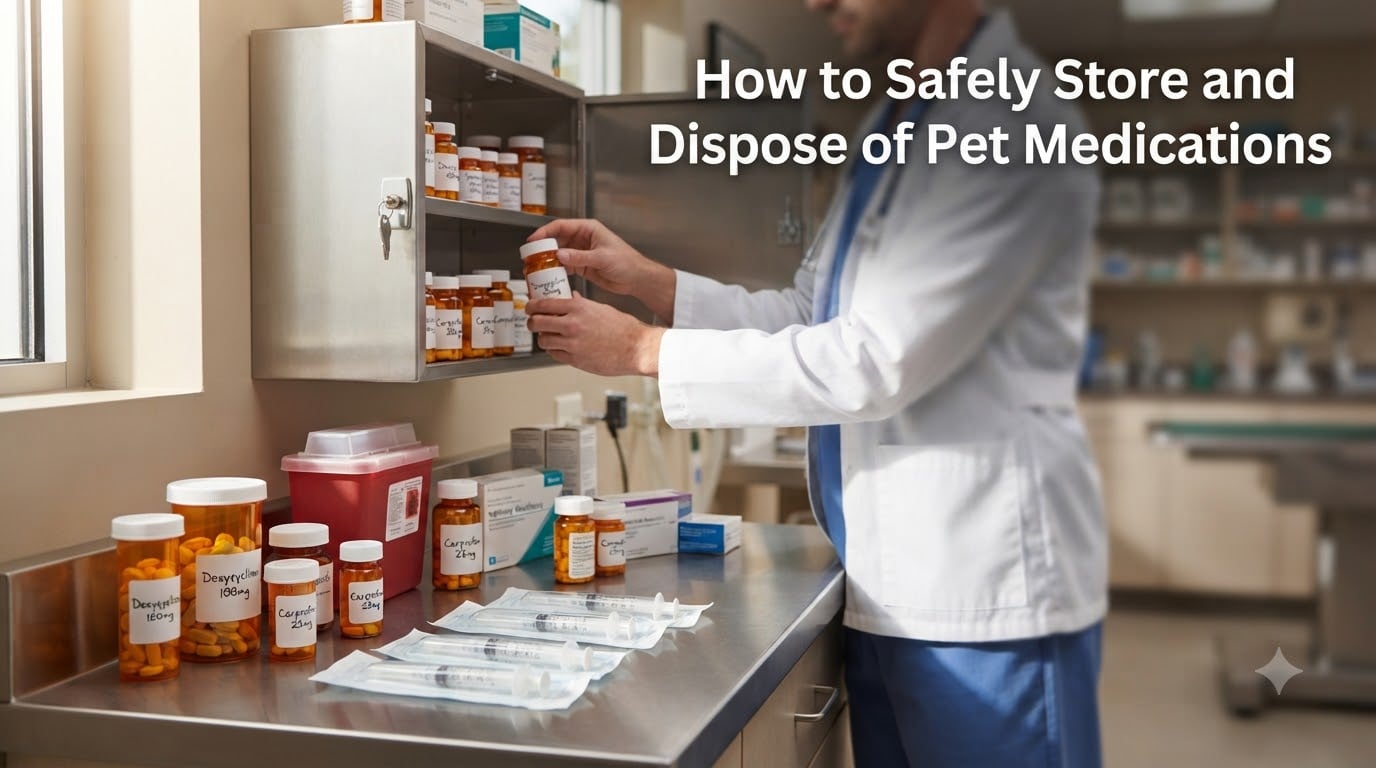
Every year, the Pet Poison Helpline receives thousands of calls from panicked owners whose pets have gotten into medications left on counters, in purses, or stored in bathroom cabinets. Our team has seen how a few simple habits around pet medication storage and disposal can prevent these emergencies entirely. This guide covers the exact steps our experts recommend to keep your pets, your family, and the environment safe.
Table of Contents
Why Proper Pet Medication Storage and Disposal Matters?
Improperly stored pet medications are a leading cause of emergency vet visits. The FDA reports that nearly 50% of calls to animal poison control centers involve human medications accidentally ingested by pets. But pet-specific medications carry their own risks when mishandled.
Flushed or poured medications contaminate water supplies. Thrown-out pill bottles with original labels expose your personal information. A curious dog or cat can chew through a child-resistant bottle faster than you might think. Every disposal decision affects three things: your pet’s safety, your family’s safety, and the broader environment.
Getting this right takes less than ten minutes per medication. The payoff is preventing an emergency that could cost hundreds of dollars and, in worst cases, a pet’s life.
Essential Storage Rules for Pet Medications
Before you worry about disposal, you need to store your pet’s medications correctly. Good storage extends shelf life, prevents accidental ingestion, and keeps the medication effective when your pet needs it.
Keep Medications in Original Containers
Always store pet medications in their original packaging with the label intact. The label tells you the drug name, dosage, expiration date, and prescribing veterinarian. If you need to call poison control, that label information is critical for fast treatment decisions.
Never transfer pills to a weekly pill organizer and leave the original bottle in a drawer. That creates two problems: pills can be confused, and the medication loses its full identification if needed during an emergency.
Choose a Cool, Dry, Secure Location
Most pet medications should be stored at room temperature (59 to 77 degrees Fahrenheit) in a low-humidity area. A high cabinet in a hallway or bedroom works better than a bathroom medicine cabinet, where steam from showers degrades medications.
Security matters as much as location. Choose a cabinet with a childproof latch or a lockable container. Dogs can open cabinet doors, and cats can jump to high shelves. Our team of veterinary advisors has heard from owners who stored flea medication on a counter only to find their dog had eaten the entire tube.
Separate Pet and Human Medications
Store human and pet medications in different locations and clearly mark each storage spot. This prevents the dangerous mix-up of giving your dog a human painkiller or your cat a pet medication meant for the dog. The VCA Animal Hospitals recommends using different shelves or separate cabinets entirely.
If you have a multi-pet household, take this further. Store each pet’s medications in clearly labeled bins or bags within your medication cabinet. Color-coded labels work well for households with multiple animals.
Refrigerated Medications Need Special Care
Some pet medications, including certain insulin and compounded liquids, require refrigeration. Store these on a dedicated shelf, not in the door, where temperature fluctuates. Keep them in a sealed container to prevent your pet from smelling them through the packaging.
Never freeze refrigerated medications unless the label specifically states this is acceptable. Freezing can change the chemical structure of many drugs.
How to Safely Dispose of Pet Medications?
When your pet finishes treatment, when medication expires, or when your pet passes away, you need safe disposal methods. Four options exist, and the best choice depends on the medication type.
Method 1: Use a Drug Take-Back Program
Drug take-back programs are the gold standard for disposing of pet medications. The DEA hosts National Drug Take Back Day twice a year (April and October), with collection sites at police stations, pharmacies, and veterinary clinics nationwide.
Many pharmacies offer year-round medication drop-off, including CVS, Walgreens, and most grocery store pharmacies. Some veterinary clinics maintain permanent collection boxes. You can find nearby locations through the DEA’s online locator or by calling your local government.
Take-back programs accept most medications, including controlled substances. They ensure proper destruction through licensed hazardous waste handlers. This is the safest option for both your community and the environment.
Method 2: Trash Disposal (Step-by-Step)
When a take-back program is not available, you can safely dispose of most pet medications in your household trash. The AVMA recommends this method for non-controlled medications without specific disposal instructions.
Remove the pills from their original container and place them in a sealable plastic bag.
Add an unpalatable substance like used kitty litter, coffee grounds, or dirt. This makes the medication unappealing to children, pets, and wildlife that might encounter the trash.
Seal the bag tightly and place it inside another sealable bag.
Hide the sealed bag inside a trash can liner or surround it with other waste so it’s not visible.
Remove or scratch out all personal information on the prescription label before recycling or discarding the empty bottle.
This method prevents accidental ingestion and keeps pharmaceutical compounds out of waterways. It works for pills, capsules, and most liquid medications.
Method 3: Flush List Medications
The FDA maintains a specific list of medications that can be flushed down the toilet. These are typically controlled substances where the risk of accidental ingestion or misuse outweighs the small environmental impact of flushing.
Common pet medications on the flush list include certain formulations of buprenorphine, fentanyl, hydrocodone, morphine, and oxycodone. Check the FDA’s flush list before flushing any medication. If your pet’s medication is not on the list, use trash disposal instead.
Never flush medications that are not on the FDA’s approved list. Water treatment facilities cannot remove all pharmaceutical compounds, and flushed antibiotics contribute to antimicrobial resistance in the environment.
Method 4: Disposing of Sharps and Injectables
Injectable pet medications require special disposal. Used needles, syringes, and lancets go into an FDA-approved sharps container, which is a rigid, puncture-resistant container with a tight-fitting lid.
You can purchase sharps containers at pharmacies or ask your veterinarian for one. When the container is three-quarters full, seal it and bring it to a sharps collection site. Many hospitals, clinics, and pharmacies accept full sharps containers for proper incineration.
Never throw loose needles in household trash or recycling. This puts sanitation workers at risk of needlestick injuries and potential infection.
What to Do With Medications After a Pet Dies?
When a beloved pet passes away, dealing with leftover medications can feel overwhelming. The same disposal methods apply. You can use take-back programs, trash disposal, or flush list medications depending on the type of drug.
Some animal shelters and rescue organizations accept unopened, unexpired medications for treating other animals in their care. Call local shelters before dropping off to confirm what they accept. Some states restrict donation of certain medications, so check your local regulations.
For controlled substances belonging to a deceased pet, contact your veterinarian. They can advise on disposal and may take the medications back for proper destruction through their DEA registration.
Emergency Response: What If Your Pet Ingests Medication
Even with the best precautions, accidents happen. If you suspect your pet has ingested any medication, act immediately.
Call the Pet Poison Helpline at 855-764-7661 or the ASPCA Animal Poison Control Center at 888-426-4435. A consultation fee may apply, but the veterinary toxicologists on staff can tell you exactly whether your pet is in danger based on the medication, dose, and your pet’s weight.
Have this information ready: the medication name and strength, the approximate amount ingested, the time of ingestion, and your pet’s current weight and any symptoms. Do not induce vomiting unless specifically told to do so by a veterinary professional. Some medications cause more damage coming back up than staying down.
Common symptoms of medication ingestion include vomiting, lethargy, loss of coordination, seizures, and unusual salivation. Some effects are delayed, so call even if your pet seems fine an hour or two after the incident.
Multi-Pet Household Medication Management
Managing medications for multiple pets adds complexity. Our advisors recommend a dedicated medication station with separate, labeled containers for each animal. Use colored bins or tape to visually distinguish medications by pet.
Keep a written log of when each pet received each dose. This prevents accidental double-dosing and helps your veterinarian track responses to treatment. A simple spreadsheet on your phone works well.
When one pet finishes a medication course, dispose of the remaining supply immediately rather than storing it “just in case.” Misidentifying an old medication for a new pet is a common cause of household medication errors.
Frequently Asked Questions
How do I dispose of unused pet medications?
The best method is a drug take-back program at a pharmacy, veterinary clinic, or DEA collection site. If none is available, mix the medication with kitty litter or coffee grounds in a sealable bag, then place it in the trash inside another bag. Remove personal information from the original container before discarding it.
What should I do with pet medications after a pet dies?
Use the same disposal methods as for any expired or unused medication: drug take-back programs, trash disposal with kitty litter, or flushing for medications on the FDA’s flush list. Some animal shelters accept unopened, unexpired medications. Contact your veterinarian for guidance on controlled substances.
How should I store dog medicine at home?
Keep dog medications in their original containers with labels intact, stored in a cool, dry, secure location away from children and pets. Avoid bathroom medicine cabinets where humidity degrades medications. Use a locked or latch-secured cabinet that your dog cannot access. Store human and pet medications in separate locations.
What does kitty litter do to medications?
Kitty litter serves as an unpalatable substance that makes medications unappealing to children, pets, and wildlife that might find the bag in the trash. It does not neutralize the medication chemically, but it discourages accidental ingestion. Used coffee grounds work the same way as an alternative.
Can I flush pet medications down the toilet?
Only flush medications specifically listed on the FDA’s flush list, which typically includes certain controlled substances like buprenorphine, fentanyl, and oxycodone. For all other medications, use a take-back program or trash disposal. Flushing non-listed medications contributes to water contamination.
What should I do if my pet accidentally ingests medication?
Call the Pet Poison Helpline at 855-764-7661 or the ASPCA Animal Poison Control Center at 888-426-4435 immediately. Have the medication name, strength, amount ingested, time of ingestion, and your pet’s weight ready. Do not induce vomiting unless directed by a veterinary professional. Watch for vomiting, lethargy, or loss of coordination even hours later.
Final Thoughts on Pet Medication Safety
Safe pet medication storage and disposal is a small habit with outsized impact. Store medications in their original containers in a cool, dry, secure location separated from human drugs. Use drug take-back programs whenever possible, and follow the kitty litter method for trash disposal when take-back is unavailable. Check the FDA’s flush list before flushing any medication, and never throw loose needles in household trash.
Bookmark the Pet Poison Helpline and ASPCA Animal Poison Control numbers in your phone today. Share this guide with anyone who shares medication management duties in your household. Our team believes that a few minutes of prevention is worth more than hours of emergency treatment, and your pet deserves nothing less.