
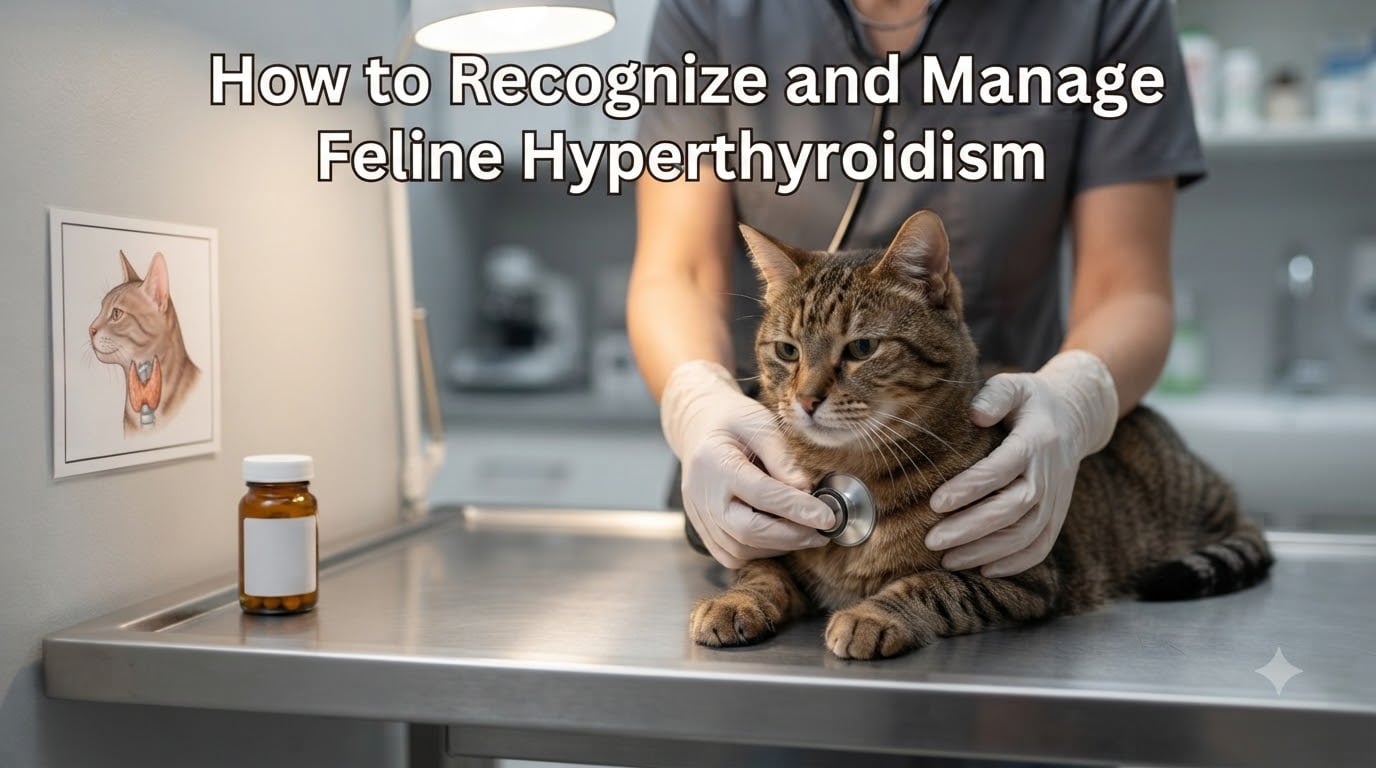
When your senior cat starts losing weight but suddenly wants a third meal, something is off. Our team has talked with dozens of cat owners who missed the early hints, and the pattern is always the same: vague changes that creep in over weeks, easy to blame on aging. Most of those cats turned out to have feline hyperthyroidism, the most common hormonal disorder in older cats.
Feline hyperthyroidism affects roughly 1 in 10 cats over age 10, and it can be managed or even cured when you catch it early. In this guide, I’ll walk you through how to recognize and manage feline hyperthyroidism, from the first subtle warning signs to the four treatment paths your vet will likely discuss. You’ll get a symptoms checklist, a treatment comparison table, real owner experiences, and clear answers to the questions we hear most often on forums.
By the end, you should know exactly when to call the vet, which questions matter most, and what each treatment actually involves day to day.
Table of Contents
What Is Feline Hyperthyroidism?
Feline hyperthyroidism is a hormonal disorder in which a cat’s thyroid gland produces too much thyroxine (T4) and triiodothyronine (T3). This speeds up the metabolism, affecting nearly every organ system. Most cases come from a benign tumor called an adenoma in one or both thyroid lobes.
The thyroid gland sits in your cat’s neck, just below the voice box. It normally releases T3 and T4 hormones that regulate how the body uses energy. When an adenoma forms, the gland floods the bloodstream with excess hormone, and the cat’s metabolism shifts into overdrive.
This condition usually appears in cats between 7 and 17 years old, with the average age at diagnosis around 13. It is rare in younger cats. Because the symptoms develop slowly, owners often miss them for months.
Here is the key fact: untreated hyperthyroidism is fatal. But treated early, most cats return to normal health and live years longer. Our team has seen 16-year-old cats bounce back within weeks of starting treatment.
Early Warning Signs to Watch For
These four warning signs are how feline hyperthyroidism usually announces itself. If your older cat shows any of them, request a blood test at your next vet visit.
1. Weight loss with a strong, even ravenous, appetite. This is the classic signature. The thyroid burn burns calories faster than food can replace them. Cats may beg, steal food, or wake you for midnight meals they never cared about before.
2. Increased thirst and urination. Watch for a fuller water bowl, more litter box clumps, or accidents outside the box. The metabolism boost pushes more fluid through the kidneys.
3. Restlessness and hyperactivity. Older cats usually sleep more. A hyperthyroid cat may pace, vocalize at night, or seem unable to settle. One Reddit user described their 11-year-old as “acting like a kitten again,” which turned out to be the first red flag.
4. An unkempt, matted, or greasy coat. Cats groom constantly, but a fast metabolism changes how the coat lays and feels. You may notice shedding increases, and brushing becomes harder.
Common Symptoms Checklist
Symptoms come in clusters. Use this checklist to track what you’re seeing at home. Bring it to the vet appointment, because details matter.
Physical signs owners typically notice
Weight loss despite eating more
Ravenous or voracious appetite
Increased drinking and urination
Vomiting (food or bile)
Diarrhea or soft stools
Unkempt, matted, or greasy coat
Mild to moderate muscle wasting, especially over the spine and back legs
Enlarged thyroid gland you can feel as a small lump in the throat
Behavioral signs to track
Restlessness, pacing, or nighttime vocalization
Clingy or attention-seeking behavior
Irritability or sudden anxiety
Less grooming, or over-grooming in patches
Reduced tolerance for handling
What your vet may spot that you can’t
Rapid heart rate (over 200 beats per minute at rest)
Heart murmur or arrhythmia
Slightly elevated body temperature
Mildly enlarged thyroid on palpation
High blood pressure
Mild muscle wasting
A useful rule: if two or more of these symptoms show up at once, ask for a T4 test. Waiting to see if things improve is the most common mistake owners make.
How Veterinarians Diagnose Feline Hyperthyroidism?
Diagnosis is straightforward when symptoms fit, but bloodwork rules out lookalike conditions. Here’s the typical path.
Step 1: Physical exam and history. The vet checks your cat’s weight, heart rate, and thyroid size. They will also feel the kidneys, since kidney disease often coexists in older cats. Bring your symptom checklist, dates of when changes started, and any photos or videos.
Step 2: Total T4 blood test. This measures the main circulating thyroid hormone. Most cats with hyperthyroidism have a T4 well above the normal range (usually over 4.0 micrograms per deciliter). In mild early cases, T4 can sit in a “high-normal” gray zone that needs follow-up.
Step 3: Full bloodwork and urinalysis. A complete blood count and chemistry panel catches liver, kidney, and electrolyte changes. A urinalysis confirms kidney function through specific gravity (urine concentration). This matters because treatment can unmask hidden kidney disease.
Step 4: Confirmatory or advanced tests. If T4 is borderline, the vet may run a free T4 by equilibrium dialysis, or repeat the T4 in 2 to 4 weeks. Rarely, a thyroid scan (scintigraphy) pinpoints ectopic thyroid tissue before radioactive iodine treatment.
The diagnosis usually wraps up in one or two visits. Most cats are confirmed and on a treatment plan within a week.
Treatment Options for Feline Hyperthyroidism
Four main options exist, and none is right for every cat. The best choice depends on your cat’s age, kidney function, household, and budget. Here is a side-by-side comparison to start.
| Treatment | How It Works | Pros | Cons |
|---|---|---|---|
| Methimazole (oral or transdermal) | Anti-thyroid drug blocks hormone production. Given daily, often twice daily. | Available immediately, reversible, adjustable dose, lowest upfront cost | Lifelong daily dosing, side effects possible, does not cure disease |
| Radioactive Iodine (I-131) | Single injection destroys overactive thyroid tissue. Done at a licensed facility. | Often a permanent cure, single treatment, no daily medication | Higher upfront cost, hospital stay of several days to two weeks, limited to specialty centers |
| Surgery (thyroidectomy) | Removes the affected thyroid lobe, sometimes both. | Can cure disease, no ongoing drugs | General anesthetic risk, possible damage to parathyroid glands, recurrence possible |
| Iodine-Restricted Diet (Hill’s y/d) | Lowers iodine intake so the gland cannot make active hormone. | No pills, single prescription diet | Strict adherence required, no other food or treats, not for cats eating other diets |
For most cats, the choice comes down to methimazole or radioactive iodine. Let’s break each one down so you can ask informed questions.
Methimazole and carbimazole medication
Methimazole is the most widely prescribed treatment and the only one most general practice vets manage in-house. It blocks the enzyme that makes T3 and T4. Carbimazole is a closely related prodrug that converts into methimazole after dosing.
It’s available as oral tablets, liquid, or a transdermal gel applied to the ear. The transdermal option is helpful when your cat resists being pilled. One Reddit owner shared that pill pockets worked until their 14-year-old started rejecting them, then switched to transdermal with no further struggles.
Side effects usually show up in the first two to four weeks. Watch for vomiting, loss of appetite, lethargy, itchiness, or facial scabbing. Most are mild and resolve with a dose change. A small percentage of cats, around 5%, develop liver issues that force a switch to a different treatment.
Bloodwork is rechecked 2 to 4 weeks after starting, then every 3 to 6 months. The dose is adjusted until T4 sits in the lower half of the normal range.
Radioactive iodine therapy (I-131)
A single injection of radioactive iodine concentrates in the abnormal thyroid tissue and destroys it from the inside. Normal thyroid tissue is spared because it is less active. Most cats become euthyroid (normal) within a month.
Success rates sit around 95% with a single injection. A small minority need a second dose. Once cured, most cats stay euthyroid for life, though a small number develop hypothyroidism later and need temporary supplementation.
Safety is well established. The injection is given under sedation. Cats stay at the facility until radiation levels meet safety guidelines, usually 3 to 14 days depending on the protocol. During that time, owners cannot visit. After release, contact precautions last 1 to 2 weeks, mostly around litter and close contact.
How long can a cat live after radioactive iodine treatment? Data shows median survival times of 4 to 6 years after treatment, with many living well past that. Younger cats and those without kidney disease tend to live longest.
Surgical thyroidectomy
Surgery removes the affected thyroid lobe, sometimes both. When one lobe is removed, the other often compensates and stays normal. Surgery is less common now but remains a good option when radioactive iodine is not available or affordable.
The main risk is damage to the parathyroid glands nearby, which control calcium. Hypocalcemia after surgery can be life-threatening and requires immediate care. Most vets who perform this surgery have low complication rates, but it is real and worth discussing.
Recovery is fast. Most cats bounce back within a week. Recurrence is possible if small abnormal tissue was missed.
Iodine-restricted diet
The thyroid gland needs iodine to make hormone. Feed a prescription diet with iodine below 0.32 parts per million (Hill’s y/d is the main brand), and production falls to near-normal.
It works, but only if your cat eats nothing else. Treats, table scraps, other cats’ food, even flavored medications must be removed. Multi-cat households sometimes struggle. The diet is also not appropriate for cats with kidney disease, who need higher protein and more water-rich food.
Managing Secondary Complications
Untreated hyperthyroidism puts the entire body under stress. Most secondary problems develop quietly over months. Watch for, and treat, these complications.
Heart disease. Chronic overstimulation thickens the heart muscle, a condition called hypertrophic cardiomyopathy. Many cats already have a heart murmur at diagnosis. Heart changes often reverse with treatment, but severe damage can persist. Vets will listen closely and may suggest a cardiac ultrasound before radioactive iodine or surgery.
High blood pressure (hypertension). Excess thyroid hormone pushes blood pressure up, which can damage the eyes, kidneys, brain, and heart. Blood pressure is easy to check at the vet. Treatment with amlodipine, a once-daily pill, brings it down within days.
Kidney disease. This is the trickiest complication because hyperthyroidism masks kidney problems. High thyroid hormones increase blood flow to the kidneys, which can make lab values look better than they really are. Treating the thyroid can unmask or worsen kidney disease. Our team has seen cats whose kidney values rose just weeks after methimazole began.
That is why vets check kidney function before and during treatment. If kidney values climb too high, dose adjustments or alternative therapies may be needed. Many cats live with both conditions managed together.
Other effects to watch. Rapid metabolism can cause liver enzyme elevations, mild anemia, and changes in calcium levels. Most of these correct themselves once thyroid levels normalize.
What happens if feline hyperthyroidism is left untreated
Without treatment, cats continue to lose weight, develop heart failure, suffer eye damage from hypertension, and reach a point where appetite finally falls away. Quality of life drops sharply. Most cats that go untreated die within 2 to 4 years of diagnosis, often from heart complications. Early treatment is not optional, it is life-saving.
Dietary Management Guidelines
Food is a tool, not a cure for most cats. Here are practical rules from owners and vets.
What to feed. Most cats with hyperthyroidism do well on a high-protein, moderate-fat diet that supports muscle mass. Wet food is preferred because it boosts water intake, which protects the kidneys.
What not to feed. Avoid fish-flavored foods, soy-heavy foods, and anything labeled “supplement for thyroid health” without vet guidance. Soy can interfere with methimazole absorption. Always keep treats and human food out of reach when starting prescription diets.
Hydration. Fresh water in multiple bowls, or a fountain, encourages drinking. Wet food adds moisture. Catching dehydration early protects the kidneys during treatment.
Prognosis and Life Expectancy
Prognosis is one of the most important questions owners ask, and the answer is more reassuring than most expect. With treatment, most cats live normal lifespans.
For methimazole, the average survival time after starting treatment is around 2 to 4 years, with many cats living longer. The main factor is how well the kidneys and heart cope.
For radioactive iodine, median survival is 4 to 6 years after treatment in studies, and many cats reach 15, 17, even 19 years of age. Younger cats and those without kidney disease live longest.
For thyroidectomy, results are similar to radioactive iodine when surgery goes smoothly. Diet alone has shorter supporting data, but properly fed cats can live years.
So can cats live long with hyperthyroidism? Yes, especially when treatment starts before the heart and kidneys are damaged.
Frequently Asked Questions
How does a cat with hyperthyroidism feel?
Many hyperthyroid cats feel restless, hungry, and thirsty. Their metabolism runs high, so they lose weight, pace, vocalize at night, and may crave constant attention. They are not in pain, but they are uncomfortable and physically stressed.
Why are so many cats getting hyperthyroidism?
Better feline nutrition and veterinary care mean cats live longer, and hyperthyroidism almost always shows up after age 7. Environmental triggers such as fish-flavored foods, flame retardants, and certain fertilizers may also play a role in cats born after the 1970s.
Can cats live long with hyperthyroidism?
Yes. Treated cats commonly live 3 to 5 more years, and many reach 5 to 7 years after diagnosis. Earlier treatment, healthy kidneys, and good heart function all extend life expectancy.
Are cats with hyperthyroidism more clingy?
Often, yes. Many owners notice their cat following them around, demanding attention, and sleeping closer than usual. The restlessness and anxiety that come with overactive thyroid hormones drive clingy behavior.
How safe is radioactive iodine treatment for cats?
Radioactive iodine is considered very safe and is the gold standard when available. Sedation carries minimal risk, the injection is well tolerated, and serious complications are rare. The main practical issue is the required hospital stay for radiation safety.
How long can a cat live after radioactive iodine treatment?
Most cats live 4 to 6 years after treatment, and many live beyond that. Cats treated when young to middle-aged, with no kidney disease, often reach normal feline lifespans into their late teens.
What is the life expectancy of a cat on methimazole?
Cats on methimazole typically live 2 to 4 years after diagnosis, depending on age and kidney health. With careful monitoring and dose adjustments, some live 5 years or longer.
What not to feed a cat with hyperthyroidism?
Avoid soy-heavy foods, fish-flavored diets, table scraps, and any non-prescription treats if your cat is on an iodine-restricted diet. Keep flavored medications and supplements consistent so they do not interfere with treatment.
Conclusion
Recognizing and managing feline hyperthyroidism comes down to watching closely, testing early, and choosing the treatment that fits your cat. A short list of the most important points: track weight and appetite monthly, especially after age 7, push for a T4 test when two or more symptoms appear, ask about both medication and radioactive iodine, monitor the kidneys closely, and remember that treated cats usually live long, comfortable lives.
If you suspect feline hyperthyroidism in your cat, schedule a vet visit this week. The earlier you start, the easier the road ahead.