
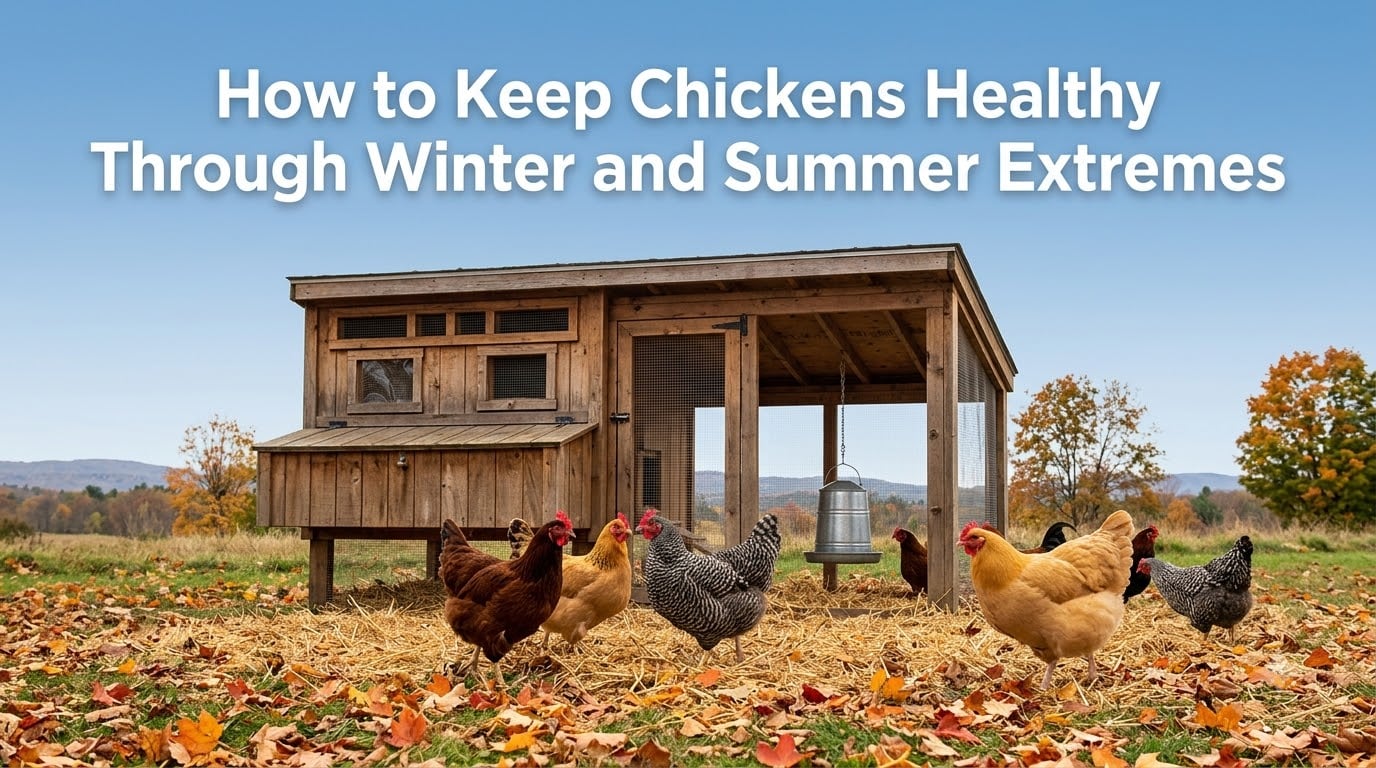
Keeping chickens healthy through extreme seasonal swings is one of the hardest things I have learned as a backyard flock owner. Between blistering 2026 summer heat waves that pushed past 105 degrees Fahrenheit here and bitter January nights that dropped below zero, I have lost birds I shouldn’t have and learned what actually works the hard way.
If you are wondering how to keep chickens healthy through winter and summer extremes, this guide breaks down everything from recognizing heat stress and frostbite to adjusting feed, managing coop humidity, and choosing the right breeds for your climate. I have pulled together what worked for my flock, what failed, and what experienced keepers in places like Minnesota, Colorado, and upstate New York swear by.
The stakes are real. Heat stress can kill a chicken within hours, while frostbite can permanently damage combs and wattles overnight. Egg production crashes, respiratory issues flare up from poor humidity control, and frozen waterers leave your flock dehydrated when they need water most. But with the right preparation, your chickens can thrive in temperatures ranging from below zero to over 100 degrees.
Here is the comprehensive system I use, built from years of trial, error, and advice from university extension experts and seasoned homesteaders.
Table of Contents
How Chickens Regulate Body Temperature?
Chickens have a higher normal body temperature than humans, sitting around 102 to 103 degrees Fahrenheit. Understanding how they regulate that heat is the foundation for everything else in seasonal care.
In cold weather, chickens fluff up their feathers to trap warm air against their bodies. They roost close together, sometimes covering their bare feet with their breast feathers, and tuck their heads under their wings to conserve heat. A healthy, fully feathered chicken in a dry, draft-free coop can handle surprisingly cold temperatures, even below zero.
In hot weather, chickens cannot sweat. Instead they pant, holding their wings away from their bodies and spreading their feathers to release trapped heat. Blood flow increases through their combs and wattles, which act as natural radiators. This is why breeds with large combs and wattles tend to handle heat better, but are more prone to frostbite in extreme cold.
Humidity changes everything. A chicken can survive sub-zero temperatures in dry air but may suffer frostbite at 20 degrees if the coop humidity is too high. Moisture from droppings, breath, and spilled water is the real winter enemy, not the cold itself.
Heat Stress vs Cold Stress: Spotting the Signs Early
The single most important skill in extreme weather chicken care is recognizing stress before it becomes an emergency. I check my flock twice daily during weather extremes, looking for specific warning signs that tell me whether to intervene.
Here is a side-by-side breakdown of what to watch for.
Heat stress signs: Panting with open beak, wings held away from the body, drooping and lethargic posture, pale or discolored comb, reduced feed intake, and a sharp drop in egg production. In severe cases, chickens may stagger, collapse, or lie flat. Heat stress becomes dangerous above 85 degrees Fahrenheit and life-threatening above 95 degrees, especially with high humidity.
Cold stress signs: Hunched posture with feathers fully fluffed, reluctance to leave the roost, shivering, pale or darkened comb tips indicating frostbite risk, frozen wattles, and birds staying isolated rather than clustering. Frostbite can develop in minutes on exposed comb tips when temperatures drop below 20 degrees with high humidity or wind chill.
The key difference is speed. Heat stress kills fast, sometimes within hours. Cold stress creeps in overnight, and frostbite damage is often permanent by the time you notice it. Both demand quick action, but heat is the more urgent emergency.
How to Keep Chickens Healthy Through Winter and Summer Extremes?
Now that you understand how chickens handle temperature and what stress looks like, let’s walk through the practical care strategies for each extreme. I break this into summer and winter sections, then cover feeding, humidity, breed selection, and daily checklists that apply to both.
Summer Care: Keeping Your Flock Cool
Heat is deadlier than cold for chickens. University extension experts and experienced keepers all agree: most chicken deaths during summer heat waves are preventable with the right preparation.
Step 1: Provide unlimited cool water. Chickens drink up to twice their normal amount in extreme heat. I set out multiple waterers in shaded locations and refill them with cool water twice a day. Adding ice blocks to waterers in the morning keeps water drinkable through afternoon peaks. Never let water run dry during a heat wave.
Step 2: Maximize shade and airflow. Chickens need shade during peak heat hours from late morning through late afternoon. If your run lacks natural shade, add shade cloth, tarps, or a pop-up canopy over the run. Position it to create cross-ventilation. Battery-powered fans inside the coop and run make a huge difference when air is stagnant.
Step 3: Use electrolytes during heat waves. This is a gap I see in most guides. When chickens pant heavily, they lose electrolytes through respiration. Adding poultry electrolyte supplements to water during sustained heat above 90 degrees helps maintain hydration and body function. Follow package directions and offer electrolyte water in a separate container alongside plain water so birds can self-regulate.
Step 4: Offer frozen treats in moderation. Frozen watermelon, frozen corn, and ice blocks with embedded berries give chickens a cooling snack. But remember the 90/10 rule: treats should never exceed 10 percent of daily intake. Too many treats displace nutritionally complete layer feed.
Step 5: Keep dust baths available. Dust bathing helps chickens cool down and stay clean. Provide a dry dust bath area with sand, wood ash, and peat moss in a shaded spot. If your run soil is muddy from summer storms, a covered dust bath station keeps it usable.
Step 6: Skip the morning scratch. Scratch grains and corn generate body heat during digestion. In winter that helps, but in summer it works against you. Stick to layer feed and save the scratch for cold evenings.
One forum keeper from Texas told me their flock went from panting lethargically to active within an hour of adding electrolyte water and a fan. Small changes matter in heat.
Winter Care: Keeping Your Flock Warm and Safe
Winter care is less about adding heat and more about managing moisture, wind, and water. Chickens handle cold far better than heat, but only if their coop is dry and draft-free.
Step 1: Winterize the coop before the first freeze. Inspect for gaps, cracks, and holes that let wind blow directly onto roosting birds. Seal those gaps with caulk or weatherstripping, but never seal ventilation. Chickens need fresh air circulation year-round to vent moisture and ammonia. The goal is ventilation without drafts, which means vents placed high on walls above the roost level.
Step 2: Prevent frozen water. A heated waterer is one of the few winter purchases I consider essential if you have electricity at the coop. Without power, swap waterers twice daily and bring the waterer inside overnight to prevent freezing. Chickens need water just as much in winter, and dehydration worsens cold stress.
Step 3: Use the deep litter method. A thick layer of pine shavings or straw, allowed to compost in place over winter, generates gentle warmth and absorbs moisture. I start with 6 inches of shavings in fall and add fresh material on top throughout winter. Turn it weekly with a pitchfork to keep it dry and active.
Step 4: Protect combs and wattles from frostbite. Apply petroleum jelly to large combs and wattles on nights forecast below 20 degrees. This creates a barrier against moisture and wind. Cold-hardy breeds with small pea combs and tight wattles rarely need this treatment, but single-comb breeds like Leghorns are highly vulnerable.
Step 5: Add scratch grains in the evening. A handful of scratch or cracked corn an hour before roosting gives chickens slow-digesting energy that generates body heat overnight. This is the winter mirror of the summer rule: scratch warms them from the inside.
Step 6: Cover the run. A clear or white tarp, or better yet marine-grade vinyl, on the windward side of the run blocks snow, wind, and freezing rain. Many keepers on forums report marine vinyl outlasts tarps by years and does not shred in blizzards. Covering the run also encourages chickens to go outside and stay active instead of staying cooped up all day.
A keeper from upstate New York shared that after losing birds to frostbite one winter, they started checking the coop at 10 PM every night with a flashlight during cold snaps. They found that moisture levels spiked overnight when birds were all inside breathing. Cracking a high vent solved the humidity problem immediately.
Feeding Adjustments for Extreme Weather
What and when you feed your chickens shifts with the seasons. Getting this right supports egg production, body temperature regulation, and immune health during stressful weather.
The 90/10 rule: 90 percent of a chicken’s daily diet should be nutritionally complete layer feed. The remaining 10 percent can be treats, scratch, kitchen scraps, or forage finds. This rule matters year-round but becomes critical in extreme weather when chickens need maximum nutrition to cope with temperature stress.
In summer, chickens naturally eat less because digestion produces heat. Keep layer feed available all day but avoid the temptation to over-treat with water-heavy snacks. Focus on hydration through water and electrolytes rather than food. Offer feed during cooler morning and evening hours when birds are most hungry.
In winter, chickens eat more to fuel their internal heating. Increase available feed slightly and add evening scratch to boost overnight warmth. Some keepers, including me, serve warm mash in the morning, mixing layer feed with warm water. My flock comes running for it on sub-zero mornings, and it seems to jump-start their activity for the day.
Always provide grit and oyster shell separately. Chickens need grit for digestion, especially in winter when they cannot forage, and calcium from oyster shell keeps eggshells strong when production naturally slows.
Managing Coop Humidity and Ventilation Year-Round
If I could give one piece of advice that prevents more winter chicken problems than any other, it would be: monitor your coop humidity. Buy a cheap thermometer-hygrometer combo and hang it inside the coop at roost level.
The target humidity range is 50 to 70 percent. Above 70 percent, moisture combines with cold air to cause frostbite even when temperatures are only moderately cold. Below 50 percent, respiratory tissues can dry out and become irritated.
The biggest mistake I see is closing all vents in winter to trap heat. This traps moisture instead, creating the exact conditions that cause frostbite and respiratory disease. Keep high vents open year-round. If you see condensation on windows or coop walls, your humidity is too high and you need more ventilation, not less.
In summer, ventilation becomes even more critical. Every available window and vent should be open. Stagnant, humid air inside a coop can kill chickens faster than the outside temperature alone. Battery fans, positioned to move air across the coop without blowing directly on roosting birds, are worth every penny.
Breed Selection for Extreme Climates
If you live in an area with predictable extreme weather, choosing the right breed is your first line of defense. Breed selection affects cold tolerance, heat tolerance, and frostbite risk more than any management change you can make later.
Cold-hardy breeds typically have small pea or rose combs that resist frostbite, tight feathering that traps warmth, and heavier body types. Top picks include Rhode Island Reds, Plymouth Rocks, Wyandottes, Orpingtons, and Sussex. These breeds handle below-zero temperatures well in a dry coop.
Heat-tolerant breeds have large single combs and wattles for heat dissipation, lighter body types, and sometimes lighter feather colors that reflect sun. Leghorns, Andalusians, Catalanas, and Fayoumis excel in southern heat. Rhode Island Reds also perform reasonably well in heat, making them a solid all-around choice.
If your area experiences both extremes, dual-purpose breeds like Plymouth Rocks and Orpingtons offer the best balance. They tolerate cold well and can handle moderate heat with proper shade and ventilation. Avoid Mediterranean breeds like Leghorns if your winters regularly drop below 10 degrees, as their large combs frostbite easily.
Daily and Emergency Checklists
Consistency saves lives during extreme weather. I follow a routine that catches problems early, and I keep an emergency plan ready for when temperatures hit dangerous levels.
Daily summer checklist:
1. Refill all waterers with cool water morning and evening.
2. Check for panting, drooping wings, or lethargic birds during the hottest afternoon hours.
3. Confirm shade covers the entire run during peak sun.
4. Ensure feed is available but skip scratch and corn.
5. Add frozen water bottles or ice blocks to waterers before leaving for the day.
Daily winter checklist:
1. Check water is not frozen; refill with lukewarm water.
2. Observe combs and wattles for signs of frostbite, especially dark or swollen tips.
3. Scrape frozen droppings from the coop floor and add fresh shavings.
4. Give evening scratch about an hour before roosting.
5. Do a 10 PM night check with a flashlight to confirm all birds are on the roost, dry, and the coop is not overly humid.
Emergency heat response: If a chicken shows severe heat stress, move it to a shaded area immediately, dip its feet and legs in cool water, and offer electrolyte water. Do not submerge the entire body, which can shock the system. Contact a poultry veterinarian if the bird does not recover within 30 minutes.
Emergency cold response: If a bird shows signs of hypothermia or frostbite, bring it into a garage or mudroom that is cool but above freezing. Warm the bird gradually. Sudden warmth can cause shock. Apply petroleum jelly to frostbitten areas and do not rub, which damages frozen tissue further.
Frequently Asked Questions
Will my chickens be ok in 100 degree weather?
Chickens can survive 100 degree weather, but they need active intervention. Provide unlimited cool water with electrolytes, full shade over the run, cross-ventilation with fans, and frozen treats. Check the flock every two hours during peak heat for panting or lethargy. Without these measures, temperatures above 95 degrees can cause heat stroke and death within hours, especially for heavy breeds and older birds.
What is the 90/10 rule for chickens?
The 90/10 rule means that 90 percent of a chicken’s daily diet should come from nutritionally complete layer feed, and no more than 10 percent should come from treats, scratch grains, kitchen scraps, or forage. This ensures birds get adequate protein, calcium, and vitamins, especially important during temperature stress when nutritional demands increase.
Why put coffee grounds in your chicken coop?
Coffee grounds are sometimes used in coops as a deodorizer and pest deterrent because caffeine repels certain insects. However, coffee grounds can be toxic to chickens if ingested in quantity, so they should be used cautiously and kept out of reach of the flock. Most extension experts recommend safer alternatives like food-grade diatomaceous earth or fresh pine shavings for coop hygiene.
How to keep chickens healthy during winter?
Keep chickens healthy in winter by providing a dry, draft-free but well-ventilated coop, preventing water from freezing with a heated waterer, monitoring humidity between 50 and 70 percent with a hygrometer, feeding extra calories with evening scratch, protecting combs and wattles with petroleum jelly on cold nights, and doing a nightly check to confirm all birds are safely roosting. Chickens handle cold well if the coop stays dry.
Conclusion
Learning how to keep chickens healthy through winter and summer extremes comes down to a few core principles: manage moisture, provide unlimited water, adjust feed to match the season, and check your flock daily when temperatures swing. Heat kills faster, but cold and humidity cause slower, permanent damage that is just as serious.
Start before the weather hits. Winterize your coop in early fall before the first hard freeze, and set up shade and cooling systems in late spring before the first heat wave. Buy a hygrometer, stock electrolytes, and choose breeds suited to your climate from the beginning.
Your chickens depend on you completely during weather extremes. With the system in this guide, your flock can stay healthy, productive, and comfortable whether it is 10 below or 100 above. My flock has made it through both, and yours can too.