
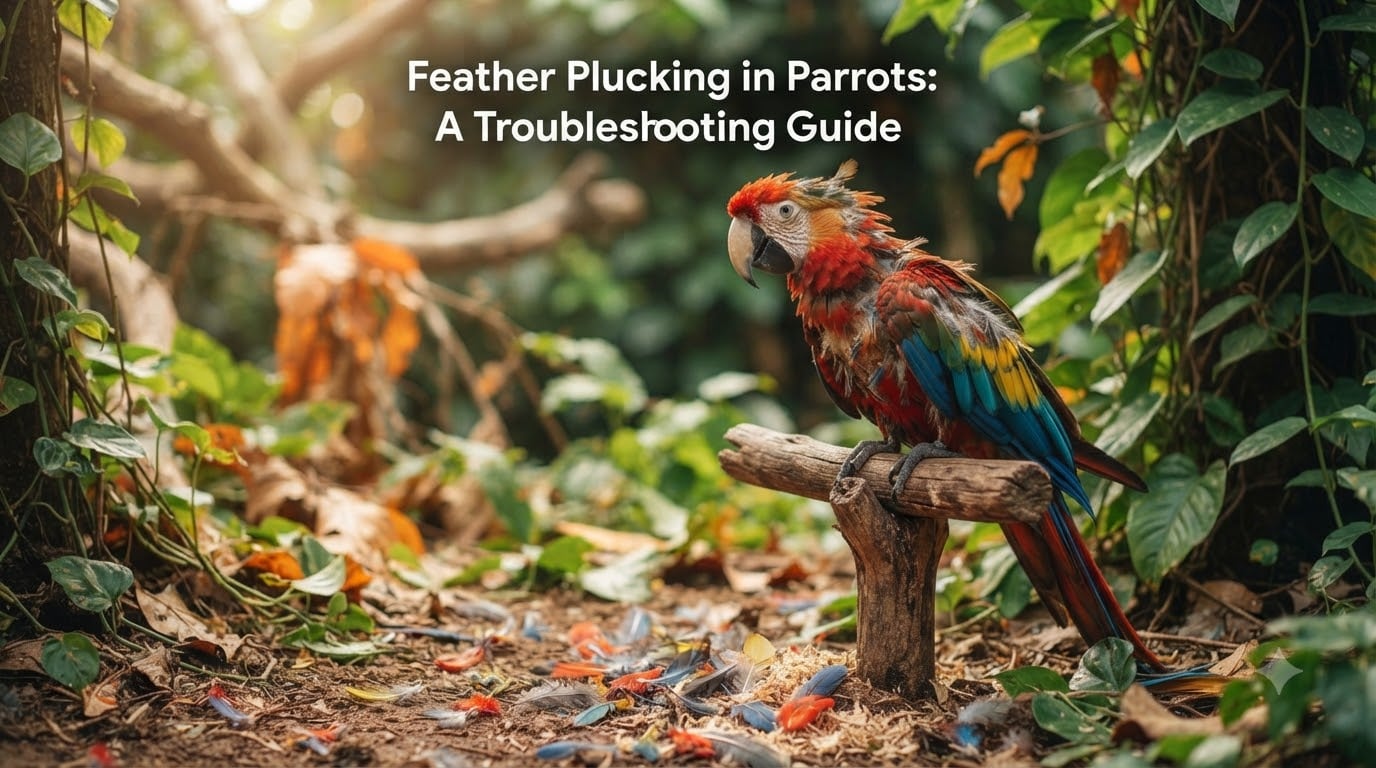
I still remember the first time I noticed bare patches on my African Grey’s chest. One morning, Thor was fluffed up on his perch, and I saw a small bald spot under his wing that had not been there the day before. My heart sank because I knew feather plucking in parrots is never a random habit. It is always a signal that something is wrong.
Feather plucking in parrots is a destructive behavior where a bird repetitively pulls out, chews, or damages its own feathers, often as a response to physical discomfort, stress, boredom, or emotional distress. It can escalate to self-mutilation if left unaddressed, leading to permanent follicle damage and serious skin infections.
If you are reading this, you probably already know the helpless feeling of watching your bird damage its own plumage. I have been there, and so have thousands of parrot owners on forums like r/parrots and r/BirdHealth. The good news is that feather plucking can often be reduced or stopped entirely when you identify and address the root cause. This troubleshooting guide walks you through every possible trigger, from medical issues to cage setup to hormonal imbalances, and gives you a practical step-by-step action plan.
Our team spent weeks pulling insights from avian veterinarians, parrot behaviorists, and real owner experiences to build this guide. Every section below gives you something you can do today to help your bird.
Table of Contents
What Is Feather Plucking in Parrots?
Feather plucking is when a parrot intentionally pulls out, shreds, chews, or breaks its own healthy feathers. This is different from normal molting, where old feathers fall out naturally and are replaced by new ones. Plucking is a compulsive behavior that serves no biological purpose and actually harms the bird.
The key distinction is understanding the difference between preening and plucking. Preening is healthy grooming. Your bird uses its beak to clean, realign, and maintain its feathers. Plucking is when that grooming instinct goes into overdrive and the bird starts pulling feathers out by the shaft or chewing them down to the skin.
Preening vs plucking at a glance: A preening bird keeps its feathers smooth and intact. A plucking bird leaves broken feather shafts, bare patches, and sometimes damaged skin behind. Plucking often happens when the owner is not looking, so the first sign is usually a bald spot rather than catching the bird in the act.
Feather plucking exists on a spectrum. Mild cases involve occasional chewing on wing or tail feathers. Severe cases escalate to self-mutilation, where the bird starts tearing at its own skin and muscle tissue. That escalation can happen fast, which is why early intervention matters so much.
Common Causes of Feather Plucking in Parrots
Figuring out why your parrot is plucking is the hardest part of fixing the problem. In my experience, and according to avian veterinarians, the cause is rarely just one thing. Most cases involve a combination of medical, environmental, and psychological factors that build on each other over time.
Medical Causes of Feather Plucking
Medical issues should always be ruled out first because they are the easiest to identify and treat. Any physical discomfort can trigger a bird to start damaging its feathers.
Common medical causes include external parasites like mites or lice, bacterial or fungal skin infections, viral diseases such as Psittacine Beak and Feather Disease, food allergies, and nutritional deficiencies. Internal organ disease can also cause general discomfort that leads a bird to pluck.
One cause that many owners overlook is heavy metal toxicity. Cheap galvanized cage parts, painted toys, and even some household items can leach zinc or lead into your bird’s system. Zinc toxicity and lead poisoning both cause skin irritation and feather destructive behavior. If your bird has access to older or imported toys, this is worth investigating.
Dietary deficiencies are another major medical trigger. Calcium deficiency, vitamin A deficiency, and inadequate protein intake can all lead to poor feather quality and increased plucking. A bird on an all-seed diet is especially vulnerable because seeds are nutritionally incomplete for most parrot species.
Environmental Causes of Feather Plucking
Your bird’s environment plays a huge role in its behavior. One of the most overlooked environmental factors is humidity. Most parrot species come from tropical or subtropical climates where humidity stays above 50 percent. In heated homes, indoor humidity can drop to 20 or 30 percent, especially in winter. This dries out the skin and makes feathers brittle and itchy, which can trigger plucking.
Cage size matters too. A cage that is too small restricts movement and causes frustration. Toxins in the home environment are another concern. Teflon and other nonstick cookware coatings release fumes that are toxic to birds. Scented candles, aerosol sprays, and air fresheners can all irritate a bird’s respiratory system and skin.
Light exposure also affects feather health. Parrots need 10 to 12 hours of darkness each night for proper rest. Too much artificial light can disrupt hormonal cycles and contribute to plucking. I learned this the hard way when Thor’s night cage was near a streetlight that kept him awake.
Psychological Causes of Feather Plucking
Parrots are incredibly intelligent animals with the emotional capacity of a toddler. Boredom, isolation, fear, anxiety, and even grief can all manifest as feather plucking. Many owners on r/parrots report that plucking started after a significant life change such as a move, a new pet, the loss of a companion bird, or even a change in the owner’s work schedule.
One forum member shared that their Cockatoo started plucking after the owner returned to the office full-time. The bird had been accustomed to eight hours of daily interaction and suddenly had to spend most of the day alone. This kind of social deprivation hits species like Cockatoos and African Greys particularly hard because they are deeply bonded flock animals.
Stress-related plucking is also common when the humans in the household are stressed. Parrots pick up on our emotions, and a tense home environment can make a sensitive bird anxious enough to start pulling feathers.
Hormonal Factors and Owner Mistakes
Hormonal changes are a significant but often misunderstood cause of feather plucking. During breeding season, hormonal surges can make parrots frustrated and agitated, especially if they do not have an outlet for that energy. This frustration frequently leads to feather destruction.
What many owners do not realize is that common handling practices can accidentally trigger hormonal behavior. Stroking a parrot’s back, under the wings, or along the tail simulates mating behavior and keeps the bird in a constant state of hormonal frustration. Petting should be limited to the head and neck area only.
Other hormonal triggers include providing a small dark space or happy hut for sleeping, which mimics a nest cavity. Warm mushy foods like cooked sweet potato can also simulate regurgitated mate feeding. Allowing your bird more than 12 hours of daylight can signal breeding season. These seemingly innocent choices can keep your parrot chronically hormonal and much more likely to pluck.
Species Most Prone to Feather Plucking
Not all parrots are equally likely to develop feather destructive behavior. Some species are genetically and psychologically more vulnerable due to their intelligence levels and social needs.
African Grey Parrots top nearly every list of plucking-prone species. Their high intelligence means they require constant mental stimulation. Without it, they turn to self-destructive behaviors. Cockatoos are also extremely prone to plucking, especially Moluccan and Umbrella Cockatoos, because of their intense need for social bonding.
Cockatiels, Macaws, and Conures round out the most commonly affected species. Cockatiels often pluck due to hormonal frustration or loneliness. Macaws need enormous space and enrichment to stay mentally healthy. Conures can develop plucking from boredom relatively quickly if their environment lacks variety.
The pattern is clear. The smarter and more social the species, the higher the risk of feather plucking when those needs go unmet. If you own one of these species, prevention through enrichment and social interaction should be a daily priority, not an afterthought.
Signs Your Parrot Is Stressed
Catching stress early can prevent plucking before it starts. Parrots communicate discomfort through body language and behavior, but the signs can be subtle until you know what to look for.
Here are the most common signs that your parrot is stressed and may be at risk for feather plucking:
Excessive screaming or vocalizing beyond normal morning and evening calls. This often signals frustration or loneliness.
Feather fluffing that persists for long periods, especially combined with lethargy or sitting at the bottom of the cage.
Aggression or biting that appears suddenly, particularly in a normally gentle bird.
Loss of appetite or refusing favorite foods. This can indicate illness or severe anxiety.
Repetitive pacing or bar-biting along the cage walls. This is a sign of frustration and confinement stress.
Destructive behavior toward toys, perches, or food bowls beyond normal chewing.
Changes in droppings including color, consistency, or frequency. Stress and illness both affect digestion.
If you notice two or more of these signs, take action immediately. Stress that goes unaddressed for weeks or months is the most common pathway to chronic feather plucking.
How to Stop Feather Plucking: A Step-by-Step Troubleshooting Guide
Now we get to the part you came here for. Stopping feather plucking requires a systematic approach because you cannot fix what you have not identified. Follow these steps in order, and give each one at least two to three weeks before moving on unless you see clear results sooner.
Step 1: Schedule an avian vet exam. This is non-negotiable. A qualified avian veterinarian can run blood work, skin scrapings, and physical exams to identify or rule out medical causes. Treating an infection or parasite can stop plucking overnight in some cases. Do not skip this step, because behavioral approaches will not fix a medical problem.
Step 2: Audit your bird’s environment. Check humidity levels with a hygrometer and aim for 40 to 60 percent. Remove any nonstick cookware, scented products, and questionable toys from your bird’s reach. Make sure the cage is large enough for your species and positioned in a low-stress area of the home.
Step 3: Review the diet. Transition from an all-seed diet to a high-quality pellet base supplemented with fresh vegetables, limited fruits, and appropriate nuts. Address calcium and vitamin A intake specifically. Dietary changes can take four to six weeks to show results in feather quality.
Step 4: Add enrichment and foraging opportunities. Wild parrots spend hours each day foraging for food. Captive parrots eat from a bowl in five minutes and have nothing to do for the rest of the day. Wrap food in paper, hide treats in foraging toys, and rotate toys weekly to keep things interesting.
Step 5: Adjust social interaction. Spend quality one-on-one time with your bird daily, ideally in structured training sessions rather than passive sitting. Target training, step-up practice, and trick training build confidence and reduce anxiety. If you work outside the home, consider leaving a radio or TV on and providing puzzle toys.
Step 6: Manage hormonal triggers. Limit petting to the head and neck. Remove any nest-like enclosures. Ensure 10 to 12 hours of dark, quiet sleep each night. Adjust daylight exposure to match natural seasonal cycles rather than keeping lights on late.
Step 7: Monitor and adjust. Keep a daily log of your bird’s plucking behavior, diet, environment, and stress events. Patterns will emerge that help you fine-tune your approach. One owner on r/BirdHealth discovered through logging that their bird plucked most aggressively on days after loud gatherings at the house.
The 3-3-3 Rule for Parrots
The 3-3-3 rule is a decompression framework originally developed for dogs but increasingly applied to parrots by avian behaviorists. It describes the adjustment period when a bird enters a new home or experiences a major life change.
The first 3 days are about survival. Your bird is overwhelmed, scared, and trying to make sense of a completely new environment. Behavior during this period is not reflective of the bird’s true personality. The first 3 weeks are about learning. Your bird starts to settle in, learn the routine, and test boundaries. The first 3 months are about true integration. This is when your bird’s real personality emerges and a stable bond forms.
This rule matters for feather plucking because many birds start plucking during a major transition. Understanding that the adjustment period takes months, not days, helps you set realistic expectations and avoid making additional changes that pile on more stress. If your bird started plucking after a move, a new family member, or a rehoming situation, give the 3-3-3 framework time to work before assuming something else is wrong.
Prevention Strategies for Feather Plucking
Prevention is always easier than treatment. Once plucking becomes a habit, it can be very difficult to break even after the original trigger is resolved. Building a strong prevention routine protects your bird from ever developing the behavior.
Environmental Enrichment Tips
Enrichment is not optional for parrots. It is a biological necessity. Provide at least five different toy types in the cage at all times, including foraging toys, chewable wood toys, shredding toys, puzzle toys, and noise-making toys. Rotate them weekly so your bird never gets bored.
Introduce new enrichment gradually. Sudden changes to the cage can cause more stress than they relieve. Add one new item at a time and observe your bird’s reaction before adding more. Out-of-cage time on a play stand or training table adds variety to the daily routine.
Humidity and Bathing Guidelines
Most parrots benefit from humidity levels between 40 and 60 percent. Use a hygrometer to monitor your home and add a humidifier if needed, especially during winter months when heating dries out the air. One owner on r/parrots reported that simply adding a humidifier to their bird’s room completely stopped the plucking within two weeks.
Bathing is equally important. Offer your bird a bath or misting at least two to three times per week. This keeps the skin hydrated and feathers in good condition. Some birds prefer a shallow dish of water, others like a spray bottle, and some enjoy showering with their owner. Experiment to find what your bird enjoys.
Diet and Nutrition for Healthy Feathers
A balanced diet is the foundation of healthy feathers. High-quality pellets should make up about 60 to 70 percent of the diet. Fresh vegetables, especially dark leafy greens and orange vegetables rich in vitamin A, should make up 20 to 30 percent. Seeds, nuts, and fruits should be treats, not the main course.
Calcium is especially important for feather health. Offer calcium-rich foods like broccoli, kale, and small amounts of cheese or cooked egg. Cuttlebone or mineral blocks provide supplemental calcium. If your bird has been on a seed-only diet, transition slowly over several weeks to avoid digestive upset.
When to See an Avian Vet
Some situations require immediate professional help. If your bird progresses from feather plucking to skin picking or self-mutilation, do not wait. Self-mutilation is a medical emergency that can lead to life-threatening blood loss and infection.
You should also see an avian vet if plucking starts suddenly and aggressively, if it is accompanied by other symptoms like weight loss or changes in droppings, or if it persists for more than a few weeks despite environmental and dietary improvements. A veterinarian who specializes in birds, not just a general practitioner, can run the right tests and give you an accurate diagnosis.
During the visit, expect a thorough physical exam, blood panel, and possibly skin scrapings or feather follicle testing. Bring notes about your bird’s diet, cage setup, daily routine, and when the plucking started. The more information you provide, the faster your vet can narrow down the cause.
Do Parrot Feathers Grow Back After Plucking?
This is one of the most common questions parrot owners ask, and the answer depends on how long the plucking has been going on. Feathers can regrow if the follicles are still healthy and intact. Each feather grows from a follicle in the skin, and if that follicle is undamaged, a new feather will emerge during the next molt cycle.
However, chronic plucking can damage or destroy follicles permanently. Once a follicle is scarred over, no new feather will grow from that spot. This is why early intervention is so critical. If your bird has been plucking the same area for months or years, some follicles may be permanently gone.
Even when follicles are intact, regrowth takes time. Feathers grow during the molt cycle, which happens once or twice a year depending on the species. Expect regrowth to take several months, and be patient with your bird during the process.
Frequently Asked Questions
How to cure parrot feather plucking?
There is no single cure for feather plucking because the cause varies from bird to bird. The most effective approach starts with an avian vet exam to rule out medical issues, followed by environmental changes like increasing humidity, improving diet, adding enrichment and foraging opportunities, and managing hormonal triggers. Some birds respond within weeks while others need long-term management.
What is the 3 3 3 rule for parrots?
The 3-3-3 rule describes a parrot’s adjustment period after a major life change or rehoming. The first 3 days are about survival and overwhelm. The first 3 weeks are about learning the routine and settling in. The first 3 months are about true integration and bond formation. Understanding this timeline helps owners avoid making additional stressful changes too soon.
How do I stop my parrot from plucking feathers?
Start with a vet exam to rule out medical causes. Then audit your bird’s environment for humidity, toxins, and cage size. Improve the diet by switching to pellets and fresh vegetables. Add daily foraging activities and rotate toys regularly. Limit petting to the head and neck to avoid hormonal triggers. Track progress in a daily log to identify patterns.
What can I spray on my bird to stop plucking?
Bitter anti-plucking sprays are available but they are a temporary deterrent, not a solution. A better approach is regular misting with plain water or aloe vera spray to hydrate the skin and feathers. Addressing the underlying cause, whether it is dry air, poor diet, or boredom, is far more effective than any topical spray.
Do birds feel pain when their feathers are plucked?
Yes, pulling out a healthy feather causes pain because each feather is connected to a nerve-rich follicle. This is why feather plucking can become a cycle of discomfort. Once the bird starts, the irritation from missing feathers and damaged follicles can trigger more plucking. This is also why early intervention matters.
Do parrot feathers grow back after plucking?
Feathers can grow back if the follicles are undamaged, but chronic plucking can destroy follicles permanently. Regrowth happens during the molt cycle and can take several months. The sooner you address the underlying cause of plucking, the better the chances that follicles remain healthy and feathers return.
Conclusion
Feather plucking in parrots is complex, but it is not hopeless. The most important thing you can do is act early, start with a veterinary exam, and work through the troubleshooting steps systematically. Whether the cause is medical, environmental, psychological, or hormonal, there are concrete steps you can take today to help your bird. Stay patient, keep a log, and remember that some birds may need lifelong management. Your parrot depends on you, and every improvement, even a small one, is a step in the right direction.