
Keeping your dog free from intestinal parasites is one of the most important things you can do for their long-term health. A proper dog deworming schedule protects not just your pet, but also your family, since some of these worms can spread to humans. Puppies are especially vulnerable because their immune systems are still developing, and worms can cause serious complications or even death in young dogs.
But figuring out when to deworm and how often can feel confusing. I have seen this firsthand with my own dogs, and I hear the same questions from owners constantly. Some veterinarians recommend yearly deworming, others suggest quarterly treatments, and breeders often have their own protocols that differ from what your vet tells you. On top of that, your dog’s age, lifestyle, and environment all factor into the right schedule.
In this guide, I will walk you through a complete dog deworming schedule broken down by every life stage, from newborn puppies to senior dogs. I will cover the specific ages and intervals recommended by veterinary experts, the different types of worms your dog might face, warning signs to watch for, and prevention strategies that actually work. I will also explain the 7-7-7 rule, address common mistakes owners make, and debunk some of the natural remedy myths floating around online.
Every recommendation here is grounded in veterinary guidelines from organizations like the Companion Animal Parasite Council (CAPC) and the American Kennel Club. Whether you are a first-time puppy owner or managing a multi-dog household, this guide will help you build a deworming plan that fits your dog’s specific needs.
Table of Contents
Age-Based Dog Deworming Schedule
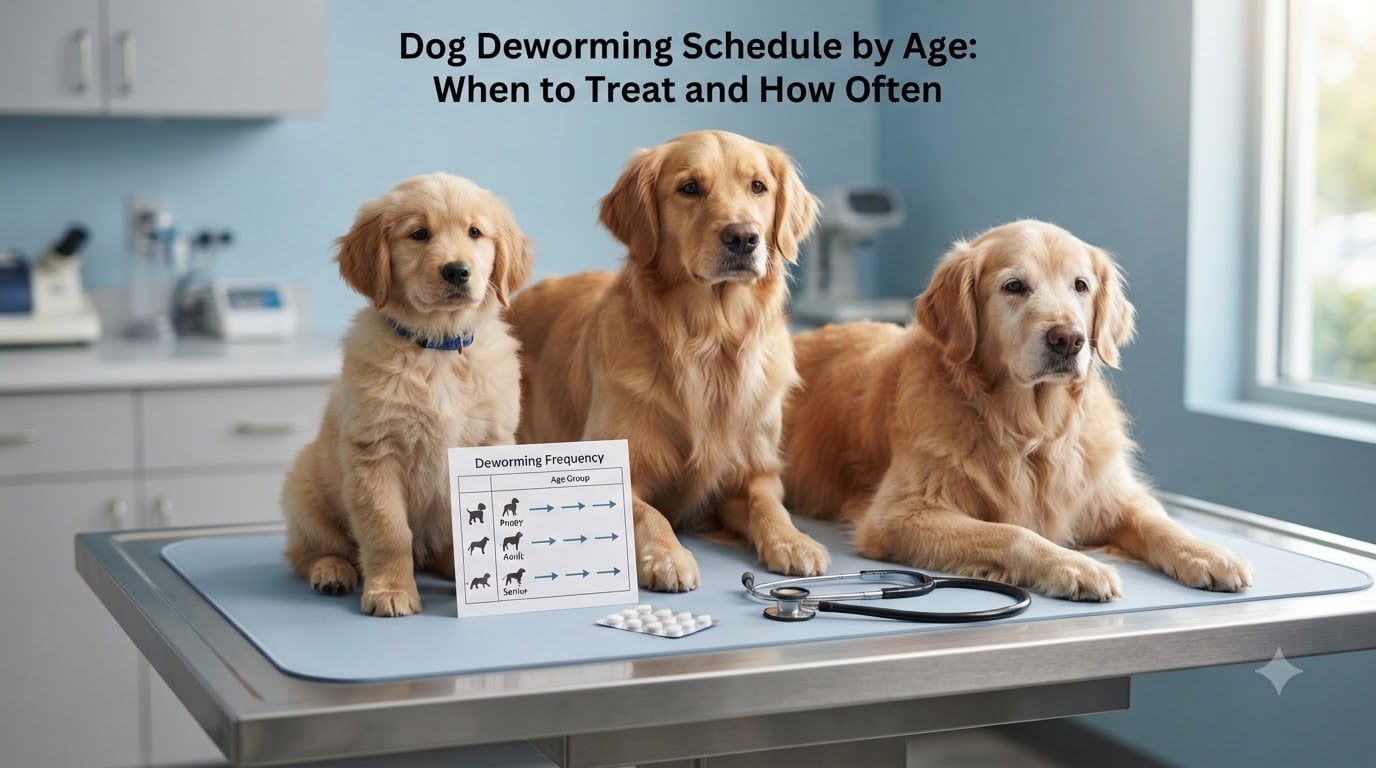
The recommended dog deworming schedule follows a clear pattern based on age. Puppies should be dewormed at 2, 4, 6, and 8 weeks of age, then monthly until they reach 6 months. Adult dogs typically need deworming 2 to 4 times per year depending on their lifestyle and risk factors. Senior dogs should follow an annual schedule adjusted for health conditions, with fecal testing guiding treatment decisions.
Here is a quick-reference breakdown of the deworming schedule by life stage:
Newborn puppies (2 to 8 weeks): Deworm every 2 weeks, starting at 2 weeks of age. Treatments happen at 2, 4, 6, and 8 weeks.
Older puppies (8 weeks to 6 months): Deworm monthly until 6 months of age.
Adult dogs (6 months to 7 years): Deworm every 3 to 6 months based on lifestyle. High-risk dogs need quarterly treatment. Low-risk dogs may only need it twice a year.
Senior dogs (7+ years): Deworm annually at minimum, with fecal exams twice a year. Adjust frequency based on health status.
This schedule aligns with guidelines from the CAPC, which recommends that all dogs receive year-round parasite prevention. The key is consistency. Missing treatments, especially during the puppy stage, allows worms to multiply and can undo weeks of progress.
Your veterinarian should always have the final say on your dog’s specific schedule. Factors like geographic location, exposure to other animals, hunting behavior, and travel all influence how often your dog needs deworming.
Puppy Deworming Schedule: The First 6 Months
Puppies need the most aggressive deworming schedule of any age group, and for good reason. Nearly all puppies are born with or acquire roundworms and hookworms very early in life. These parasites are passed from the mother, even if she shows no symptoms and tests negative on a fecal exam.
The standard puppy deworming schedule calls for treatments at 2, 4, 6, and 8 weeks of age. After the 8-week mark, puppies should continue receiving monthly deworming treatments until they reach 6 months old. That means a puppy could receive 10 or more deworming doses in their first half-year of life.
Many owners wonder why puppies need so many rounds. The answer comes down to how worms grow. Most deworming medications kill adult worms but do not affect eggs or migrating larvae. When a dose clears the current adults, larvae that were still developing can mature days or weeks later and start the cycle over again. This is why the 2-week interval matters during early puppyhood.
If you got your puppy from a breeder, ask for their deworming records. Most reputable breeders start the 2, 4, 6, 8-week protocol before the puppy goes home. If you adopt from a shelter, ask whether deworming was started and when the last dose was given. Shelters typically deworm on intake, but you will need to continue the schedule from wherever they left off.
One thing I learned the hard way is that you need to track puppy deworming carefully. Multiple doses in a short window make it easy to lose count. I keep a simple notebook with dates and medication names for each puppy, and I bring it to every vet visit so nothing falls through the cracks.
Broad-spectrum dewormers that cover roundworms and hookworms are the standard choice for puppies. Your vet will recommend a specific product and dosage based on your puppy’s weight, which changes rapidly during the first few months. Never use a dewormer labeled for adult dogs on a young puppy without veterinary approval.
Adult Dog Deworming Schedule
Once your dog reaches 6 months of age, the deworming schedule shifts from aggressive prevention to risk-based treatment. Most adult dogs need deworming 2 to 4 times per year, but the exact frequency depends on lifestyle factors that vary widely from dog to dog.
The CAPC categorizes adult dogs into risk levels. High-risk dogs that spend lots of time outdoors, hunt, eat raw meat, visit dog parks frequently, or live in multi-pet households should be dewormed every 3 months. Low-risk dogs that stay mostly indoors, eat commercial food, and have minimal exposure to other animals may only need treatment twice a year.
Many owners on forums like Reddit ask whether routine deworming is necessary or if they should only treat when worms are confirmed. The answer depends on your approach. Preventive deworming on a fixed schedule catches infections before symptoms develop and reduces environmental contamination. Treatment-only deworming relies on fecal testing and saves money but allows worms to gain a foothold before you act.
I follow a quarterly schedule for my own dogs because we live in an area with lots of wildlife and they spend hours outside every day. Your situation might be very different, and that is perfectly fine. The important thing is to make a plan with your vet and stick to it.
Monthly heartworm preventatives often include ingredients that also cover some intestinal worms. If your dog is on a monthly preventative like Heartgard, Sentinel, or Interceptor, check which parasites it covers. You may still need a separate broad-spectrum dewormer for full protection, especially against tapeworms, which most heartworm preventatives do not address.
Senior Dog Deworming: Special Considerations
Senior dogs need a deworming approach tailored to their changing bodies. As dogs age, their immune systems weaken, making them more susceptible to parasitic infections. At the same time, their organs process medications differently, which means standard deworming doses might need adjustment.
The baseline recommendation for senior dogs is at least one annual deworming treatment combined with twice-yearly fecal exams. Dogs with compromised immune systems, chronic illnesses, or those taking multiple medications may benefit from more frequent treatment, but this decision should always involve your veterinarian.
One concern with senior dogs is liver and kidney function. Many deworming medications are processed through these organs, and a senior dog with reduced organ function may need a lower dose or a different medication entirely. Blood work before starting a deworming regimen gives your vet the information needed to choose the safest option.
Senior dogs are also more likely to have concurrent health conditions. A dog with inflammatory bowel disease, for example, may react differently to deworming medication than a healthy adult. Always inform your vet about every supplement and medication your senior dog takes before adding a dewormer to the mix.
Watch senior dogs closely after treatment. Side effects like lethargy, vomiting, or diarrhea that would pass quickly in a younger dog can be more serious in a senior pet. If your older dog seems off for more than 24 hours after deworming, call your vet right away.
The 7-7-7 Rule Explained
The 7-7-7 rule is a widely referenced guideline in veterinary parasitology. It stands for deworming puppies starting at 7 days of age rather than waiting until 2 weeks, treating every 7 days during the early nursing period, and continuing for 7 doses total. Some veterinarians use this rule as an alternative to the standard 2, 4, 6, 8-week schedule, particularly for breeds or situations where roundworm transmission risk is extremely high.
However, the 7-7-7 rule is not universally adopted. The more commonly recommended schedule in the United States follows the CAPC guidelines of treating at 2, 4, 6, and 8 weeks. The 7-7-7 approach is sometimes used by breeders in other countries or in specific situations where early, aggressive intervention is warranted.
The reasoning behind starting at 7 days is that roundworm larvae begin migrating through puppy tissues almost immediately after birth. By treating earlier and more frequently, the goal is to catch larvae before they mature into egg-producing adults. This approach can reduce the total worm burden more effectively in heavily contaminated environments.
If your breeder or veterinarian mentions the 7-7-7 rule, ask them to walk you through their specific protocol. The exact timing and number of doses can vary depending on the source, so clarity matters. What matters most is that your puppy receives consistent, broad-spectrum deworming from a very young age, regardless of which specific schedule you follow.
Types of Intestinal Worms in Dogs
Four main types of intestinal worms affect dogs. Each one behaves differently, causes different symptoms, and requires specific treatment approaches. Understanding the differences helps you protect your dog more effectively and know what to watch for.
Roundworms
Roundworms are the most common intestinal parasite in dogs, and nearly every puppy is born with them. These large, spaghetti-like worms can grow up to 7 inches long and live in the intestines, where they steal nutrients from your dog’s food. Puppies with heavy roundworm infections often develop a pot-bellied appearance and may fail to grow at a normal rate.
Dogs acquire roundworms by ingesting eggs from contaminated soil, eating infected prey, or through mother-to-puppy transmission during nursing. Roundworm eggs are remarkably durable and can survive in the environment for years, making yard contamination a long-term concern.
Hookworms
Hookworms are small, blood-sucking parasites that attach to the intestinal wall. They are particularly dangerous because they feed on your dog’s blood, which can lead to anemia, especially in puppies. A heavy hookworm infection can be fatal in young dogs if left untreated.
Dogs can get hookworms by ingesting larvae from the environment, through skin contact with contaminated soil, or from their mother during nursing. The larvae can actually burrow through a dog’s skin, often through the paws, which makes dogs that spend time in damp, contaminated areas especially vulnerable.
Whipworms
Whipworms live in the large intestine and cecum, where they cause inflammation, diarrhea, and weight loss. These parasites are harder to detect than other worms because they produce eggs intermittently, meaning a single fecal exam might miss an active infection. Your vet may recommend multiple fecal tests if whipworms are suspected.
Whipworm eggs are extremely resilient and can survive in soil for up to 5 years. Dogs become infected by ingesting eggs from contaminated environments. Because the eggs are so persistent, reinfection is common unless you treat the environment along with the dog.
Tapeworms
Tapeworms are long, flat, segmented worms that attach to the intestinal wall. The most common way dogs get tapeworms is by swallowing infected fleas during grooming. Dogs can also acquire a different type of tapeworm by eating infected rodents or rabbits.
You might notice tapeworm segments in your dog’s stool or around their rear end. These segments look like small grains of rice and may move. Tapeworms are less likely to cause severe symptoms than other worms, but they still require treatment with a specific dewormer that targets them. Most general dewormers and heartworm preventatives do not cover tapeworms, so if you see those rice-like segments, let your vet know.
How Dogs Get Worms
Understanding transmission routes helps you build a more effective prevention strategy. Dogs can pick up worms from multiple sources, and most of them are impossible to avoid entirely.
Mother-to-puppy transmission is the most common route for roundworms and hookworms. Dormant larvae in the mother’s tissues reactivate during late pregnancy and migrate to the puppies through the placenta and milk. This means even a mother dog with a negative fecal test can pass worms to her puppies.
Environmental exposure is the next biggest factor. Worm eggs and larvae contaminate soil wherever infected dogs have defecated. Public spaces like dog parks, trails, and even your own backyard can harbor parasites. Dogs that sniff, lick, or eat things off the ground are constantly at risk.
Fleas are the primary carrier for tapeworms. When a dog grooms itself and swallows an infected flea, the tapeworm lifecycle begins. This is why flea control is such an important part of parasite prevention. Dogs that hunt and eat prey animals like mice, rabbits, or birds can also acquire tapeworms and other parasites from their catch.
Raw food diets are another potential source. Feeding raw or undercooked meat, especially from wild game, increases the risk of parasite transmission. If you feed raw, freezing meat at specific temperatures and durations can reduce, though not eliminate, this risk.
Signs Your Dog Has Worms
Symptoms of worm infections vary depending on the type of worm and how heavy the infection is. Some dogs show no symptoms at all, which is why routine deworming and fecal testing are so important. But when symptoms do appear, here is what to watch for.
Visible worms in stool or vomit: Roundworms look like spaghetti and may be visible in your dog’s stool or vomit. Tapeworm segments look like small white grains of rice and may appear around your dog’s anus or in their bedding.
Digestive issues: Diarrhea, vomiting, and changes in appetite are common signs of worm infections. Blood in the stool can indicate hookworms, which damage the intestinal lining as they feed.
Weight loss and poor condition: Worms steal nutrients from your dog, leading to weight loss despite a normal or increased appetite. A dull, dry coat and general lack of energy are also warning signs.
Swollen belly: Puppies with roundworm infections often develop a pot-bellied appearance. This is one of the most recognizable physical signs of a heavy worm burden.
Scooting and irritation: Dogs with tapeworms may scoot their rear ends along the ground due to irritation from worm segments. While scooting can also indicate anal gland issues, it is worth investigating for parasites.
Coughing: Some roundworm and hookworm larvae migrate through the lungs during their lifecycle, which can cause coughing or respiratory symptoms before the worms settle in the intestines.
If you notice any of these signs, schedule a vet visit and bring a fresh stool sample. A fecal exam can identify the specific type of worm and guide the right treatment. Do not wait for symptoms to worsen, especially in puppies, where infections can become dangerous quickly.
Deworming Prevention Best Practices
Preventing worm infections is far easier and less expensive than treating them. A few consistent habits can dramatically reduce your dog’s risk of picking up parasites.
Stay on schedule. The single most important thing you can do is follow your dog’s deworming schedule without gaps. Set phone reminders for each treatment date and keep a log of what medication you used and when. Missing even one puppy dose can allow worms to reestablish.
Pick up waste promptly. Worm eggs and larvae spread through fecal contamination. Cleaning up after your dog immediately, both in your yard and on walks, reduces environmental contamination and protects other dogs. In your own yard, daily pickup makes the biggest difference.
Use year-round flea prevention. Since fleas carry tapeworms, controlling fleas directly controls one of the most common tapeworm transmission routes. Monthly flea preventatives are far easier than dealing with a flea infestation and tapeworm infection at the same time.
Get regular fecal exams. The CAPC recommends fecal testing at least once or twice a year for adult dogs. These exams catch infections before symptoms appear and help your vet choose the right dewormer for the specific parasite involved.
Limit exposure to high-risk areas. Dog parks, communal dog yards, and areas with heavy stray dog populations are hotspots for parasite transmission. You do not need to avoid these places entirely, but be extra vigilant about your dog’s deworming schedule if they frequent them.
Avoid raw meat from unknown sources. If you feed a raw diet, source meat carefully and follow proper freezing protocols. Commercially available raw pet food is typically processed to reduce parasite risk, but wild-caught game is a different story.
One topic that comes up frequently on forums is natural deworming remedies. Garlic, pumpkin seeds, diatomaceous earth, and apple cider vinegar are commonly suggested alternatives to veterinary dewormers. There is no scientific evidence supporting these remedies as effective parasite treatments. Relying on them instead of proven medications allows infections to worsen while you wait for results that will not come. Natural approaches can supplement a veterinary deworming protocol, but they should never replace it.
What to Expect After Deworming?
Knowing what is normal after deworming helps you avoid unnecessary panic while catching genuine problems early. Most dogs tolerate deworming medication very well, but some side effects are common and expected.
Mild digestive upset is the most frequent reaction. You might see loose stools, slight vomiting, or reduced appetite for 24 to 48 hours after treatment. This happens because the medication is causing worms to die and pass through the digestive system. These symptoms should resolve on their own within a day or two.
You may see dead worms in your dog’s stool. This is actually a good sign because it means the medication is working. Roundworms can be several inches long, so do not be alarmed if you notice them. The worms may be moving slightly even after being expelled, which can be unsettling but is completely normal.
Some dogs, particularly puppies, become temporarily hyperactive or lethargic after deworming. This is usually a short-lived response to the medication. If behavioral changes persist beyond 48 hours or your dog refuses to eat, contact your veterinarian.
Regarding the best time of day to deworm, most veterinarians recommend giving the medication during or after a meal, which is typically the morning or evening feeding. Giving dewormer with food reduces stomach irritation and helps the body absorb the medication more effectively. There is no medical difference between morning and evening dosing, so choose whichever aligns with your dog’s regular feeding routine.
After deworming, it takes 2 to 3 days for the medication to fully clear the active worms. However, because most dewormers do not kill eggs and larvae, follow-up treatments are essential. This is why the puppy schedule repeats every 2 weeks, and why adult dogs need periodic retreatment.
Call your vet immediately if your dog experiences severe vomiting, persistent diarrhea, signs of dehydration, extreme lethargy, or any allergic reaction like facial swelling or difficulty breathing. These are not normal side effects and require prompt veterinary attention.
Frequently Asked Questions
How often should a dog be on deworming treatment?
Puppies should be dewormed every 2 weeks from 2 to 8 weeks of age, then monthly until 6 months. Adult dogs typically need deworming 2 to 4 times per year based on lifestyle and risk factors. Senior dogs should be dewormed at least annually with guidance from fecal exam results.
What is the 7 7 7 rule for dogs?
The 7-7-7 rule refers to an aggressive early deworming protocol where puppies are treated starting at 7 days of age, every 7 days, for 7 total doses. This approach aims to catch roundworm larvae before they mature. It is an alternative to the standard CAPC schedule of treating at 2, 4, 6, and 8 weeks and is more commonly used by breeders in specific high-risk situations.
What are common deworming mistakes?
The most common deworming mistakes include missing scheduled doses, using the wrong dewormer for the specific parasite, under-dosing based on outdated weight, stopping treatment too early, relying on natural remedies instead of veterinary medication, and skipping fecal exams. Another frequent error is not treating all dogs in a household at the same time, which allows worms to cycle between pets.
How often should you deworm a senior dog?
Senior dogs should be dewormed at least once a year, with fecal exams performed twice annually. Dogs with weakened immune systems or chronic health conditions may need more frequent treatment. Always consult your veterinarian before deworming a senior dog, as age-related changes in liver and kidney function may require dosage adjustments or different medication choices.
Is it okay to deworm every 3 months?
Yes, deworming every 3 months is appropriate for adult dogs with moderate to high exposure risk. Dogs that visit dog parks, hunt, eat raw meat, live in multi-pet households, or spend significant time outdoors benefit from quarterly deworming. The CAPC supports this frequency for at-risk dogs. Low-risk indoor dogs may only need twice-yearly treatment.
What is the best time of day to deworm a dog?
The best time to deworm a dog is during or immediately after a meal, whether that is morning or evening. Giving dewormer with food reduces the chance of stomach upset and helps the body absorb the medication. There is no medical advantage to morning versus evening dosing, so choose the time that fits your dog’s regular feeding schedule.
Is deworming hard on dogs?
Deworming is generally well tolerated by most dogs. Mild side effects like loose stools, slight vomiting, or temporary lethargy can occur for 24 to 48 hours as the medication kills and clears worms. Puppies and senior dogs may be more sensitive. Severe reactions are rare but require immediate veterinary attention.
Can dogs get worms from fleas?
Yes, dogs can get tapeworms from swallowing infected fleas during grooming. Fleas carry tapeworm larvae, and when a dog bites at an itchy flea and accidentally swallows it, the tapeworm lifecycle begins inside the dog. This is why year-round flea prevention is an essential part of any parasite control program.
Conclusion
A solid dog deworming schedule is one of the foundations of responsible pet ownership. Puppies need treatments at 2, 4, 6, and 8 weeks followed by monthly doses until 6 months. Adults need 2 to 4 treatments per year based on their lifestyle. Senior dogs require careful, vet-guided deworming that accounts for their changing health. Staying consistent with this schedule protects your dog from the serious health consequences of intestinal parasites and reduces the risk of transmission to your family.
The key takeaways are simple: start early with puppies, maintain consistency through adulthood, adjust for your dog’s risk level and age, and always partner with your veterinarian for fecal testing and medication choices. Avoid the temptation of unproven natural remedies, treat all pets in your household simultaneously, and keep a written record of every treatment date and medication.
If you are unsure where to start, schedule a vet visit and ask for a fecal exam plus a personalized deworming plan. Your vet knows your dog’s health history, your local parasite risks, and which medications will work best. That professional guidance, combined with the schedule outlined in this guide, will keep your dog healthy and parasite-free for years to come.