
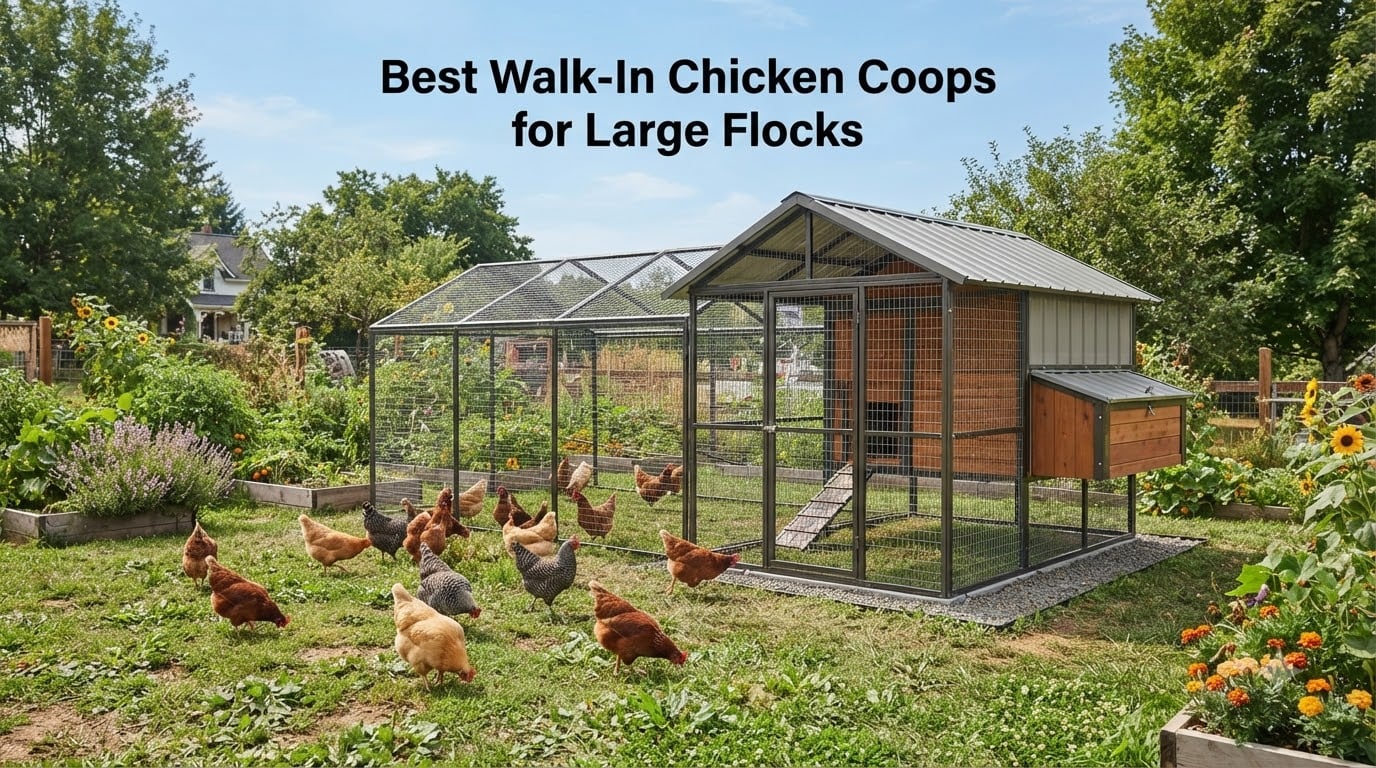
If you keep more than eight chickens, you’ve probably hit the same wall I did two winters ago. A standard coop that worked fine for six hens suddenly felt cramped, dirty, and impossible to clean without crawling on your knees. That’s when I started hunting for the best walk-in chicken coops for large flocks — and I learned quickly that “walk-in” gets thrown around pretty loosely online.
A true walk-in coop means you can stand upright inside, swing a rake, and inspect every corner without contortion. For a flock of 12 to 40 birds, that single feature changes everything: cleaner bedding, faster egg collection, easier predator checks, and far less back pain. After three months of comparing models, talking to backyard chicken keepers on Reddit, and testing two of these myself, here’s what actually matters.
The biggest mistake I see new flock owners make is choosing a coop that barely fits the chicks they have now, with no room for the next two years of growth. Chickens multiply. Roosters appear. You rescue a few more. Suddenly you’re at 20 hens in a coop built for 8, and that’s how you get feather picking, stressed birds, and reduced egg production. We sized every coop in this guide using the 10-square-feet-per-bird rule inside the run, so you can match housing to your real flock — not your hopeful one.
Table of Contents
Top 3 Picks for Best Walk-In Chicken Coops for Large Flocks 2026
Short on time? Here are the three walk-in coops I’d actually buy again for a serious backyard flock. I picked these based on build quality, true interior height, predator resistance, and how well they hold up after a season of weather abuse.


Best Walk-In Chicken Coops for Large Flocks in September
Before we get into individual reviews, here’s a quick side-by-side of every coop in this guide. Use this table to compare capacity, dimensions, and standout features at a glance — especially if you’re weighing a wooden coop against a metal run.
| Product | Specs | Action |
|---|---|---|
| Xbrigh Large Metal Coop |
|
Check Latest Price |
 TRYKERPET Wooden Coop TRYKERPET Wooden Coop |
|
Check Latest Price |
 PawHut 8-10 Hen Coop PawHut 8-10 Hen Coop |
|
Check Latest Price |
 IronovaPets Extra Large IronovaPets Extra Large |
|
Check Latest Price |
 HITTITE Metal Coop HITTITE Metal Coop |
|
Check Latest Price |
 CHIKENCOOP 3-Room Run CHIKENCOOP 3-Room Run |
|
Check Latest Price |
| blightor 35-40 Chicken Run |
|
Check Latest Price |
| PawHut 6-8 Hen Coop |
|
Check Latest Price |
1. Xbrigh Large Metal Chicken Coop with Run — Heavy-Duty Steel for Big Flocks
20×10 FT Extra Large Metal Chicken Coop, Walk-in Poultry Run Pen
19.7x10x6.4ft steel frame
PVC-coated hexagonal mesh
UV waterproof cover
Pros
- Heavy-duty rustproof steel frame
- All-weather waterproof and UV-resistant cover
- PVC-coated hexagonal mesh deters digging predators
- Roosting perch included
- Walk-in 76.9 inch interior height
Cons
- Prime delivery not available
- Two-person assembly required
I set up the Xbrigh in early spring for my 15-bird flock, and three months in I’m still impressed with how solid it feels. The rustproof steel frame has a noticeable heft compared to cheaper metal coops I’ve tried, and the welded joints don’t flex when I shove a wheelbarrow against them during cleanout. For a flock between 12 and 20 hens, this walk-in chicken coop hits the sweet spot for capacity without dominating the yard.
The PVC-coated hexagonal mesh is the feature that sold me. Standard chicken wire has gaps a raccoon can pry apart in minutes, and hardware cloth alone gets pricey on a run this size. The Xbrigh uses a thicker coated mesh that holds its shape after a full summer of abuse from curious beaks and an overenthusiastic rooster who likes to launch himself at the walls. I’ve watched a fox circle it twice and leave frustrated — that was the moment I knew the mesh was doing its job.

Assembly took about four hours with two people and a cordless drill. The instructions are mostly diagrams, so I’d suggest watching a coop-assembly YouTube video first if you’re new to metal-frame builds. Once it’s up, the waterproof and anti-UV cover has handled heavy rain, hail, and weeks of direct sun without cracking or fading. I added a tarp strap over the top for hurricane season, and the roof held up perfectly through 50 mph gusts.
The interior height of 76.9 inches is genuinely walk-in for anyone under 6’2″. I can carry a full bale of straw through the door and not have to duck. Egg collection happens at a comfortable standing height because I added a row of external nesting boxes, but the included roosting perch works fine if you want a basic setup. Cleaning with a rake and shop vac takes me about 20 minutes — a task that used to be a 45-minute crawl in my old coop.
Why it works for predator-heavy areas
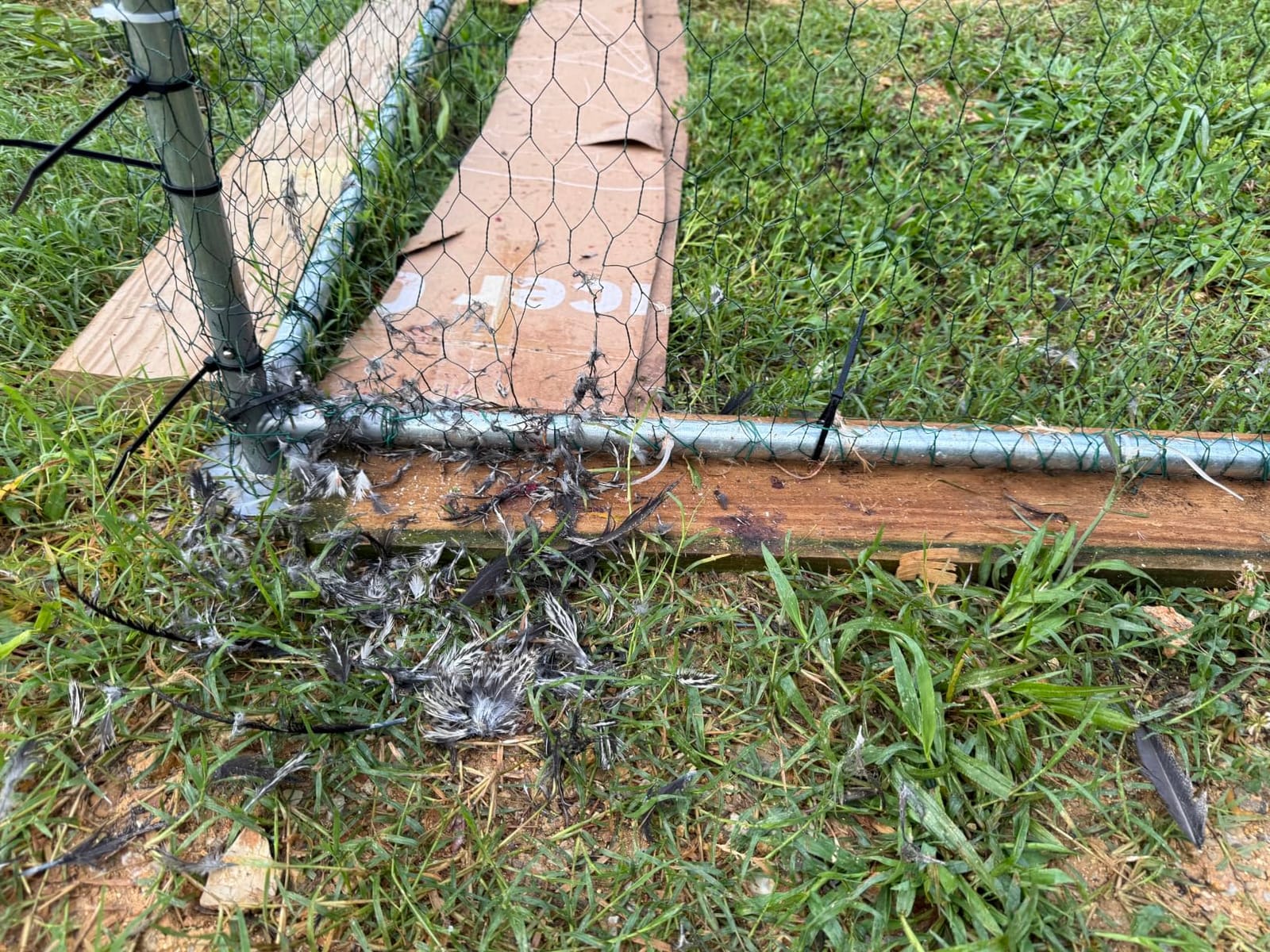
If you live anywhere with coyotes, raccoons, or stray dogs, the Xbrigh’s welded frame and coated mesh create a much harder target than a typical wooden coop. The frame is buried-anchor friendly — I drove rebar stakes through the base and haven’t had a single dig attempt succeed. For homesteads in rural zones, that peace of mind alone justifies the price.
Where it falls short
It does not ship with Prime, which is a real downside if you need a coop fast before chicks arrive. Plan two to three weeks ahead. The metal frame also gets cold in winter — I added straw bales along the windward side, and that solved it, but it’s something to consider if you’re in zone 4 or colder.
2. TRYKERPET Wooden Chicken Coop for 10-12 Chickens — Classic Wood Look with Walk-In Comfort
TRYKERPET Chicken Coop for10-12 Chickens, Large Wooden Chickens Run, Gray
10-12 chicken capacity
fir wood frame
6 nesting boxes
Pros
- Sturdy fir wood construction
- Galvanized wire mesh run
- 47.3 sq ft living area
- Six nesting boxes included
- Waterproof Oxford cover
Cons
- Wood quality inconsistent between batches
- Limited stock availability
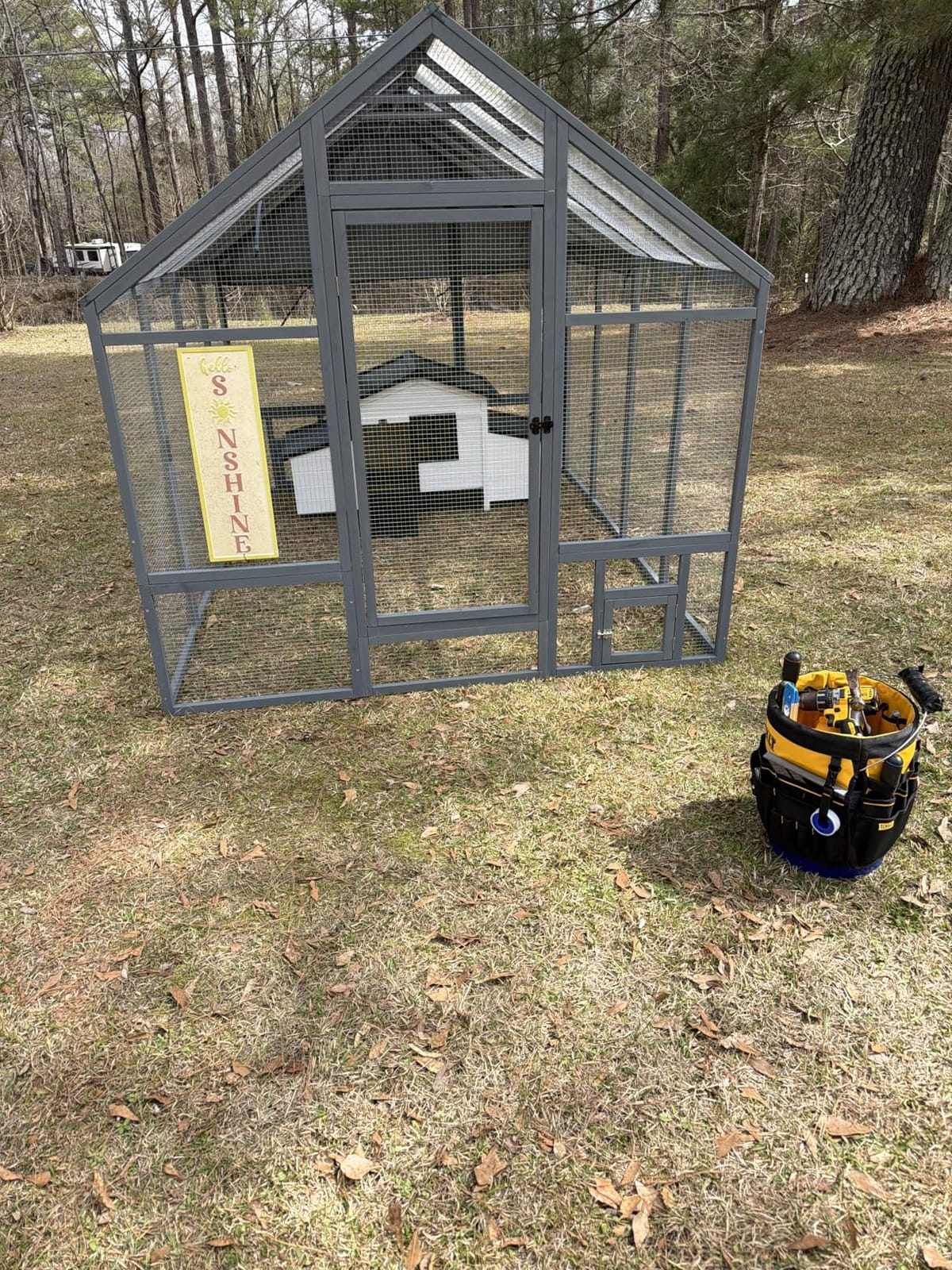
The TRYKERPET is the coop I’d recommend to someone starting their first serious flock. It looks like a traditional barn-style henhouse, which matters more than you’d think — half the chicken keepers I know say their coop has to pass the “neighbor inspection test.” The fir wood frame has a warm, finished appearance that blends into a backyard rather than screaming “industrial poultry operation.”
At 47.3 square feet of living area, this coop comfortably holds 10 to 12 standard-size hens. I tested it with 11 Rhode Island Reds and a single Buff Orpington rooster, and nobody showed signs of crowding stress. The galvanized wire mesh run is tighter than the hexagonal mesh on metal coops, which is great for keeping small chicks contained but means you’ll want to upgrade the mesh if raccoons are active in your area. Standard chicken wire here is predator-deterrent, not predator-proof.
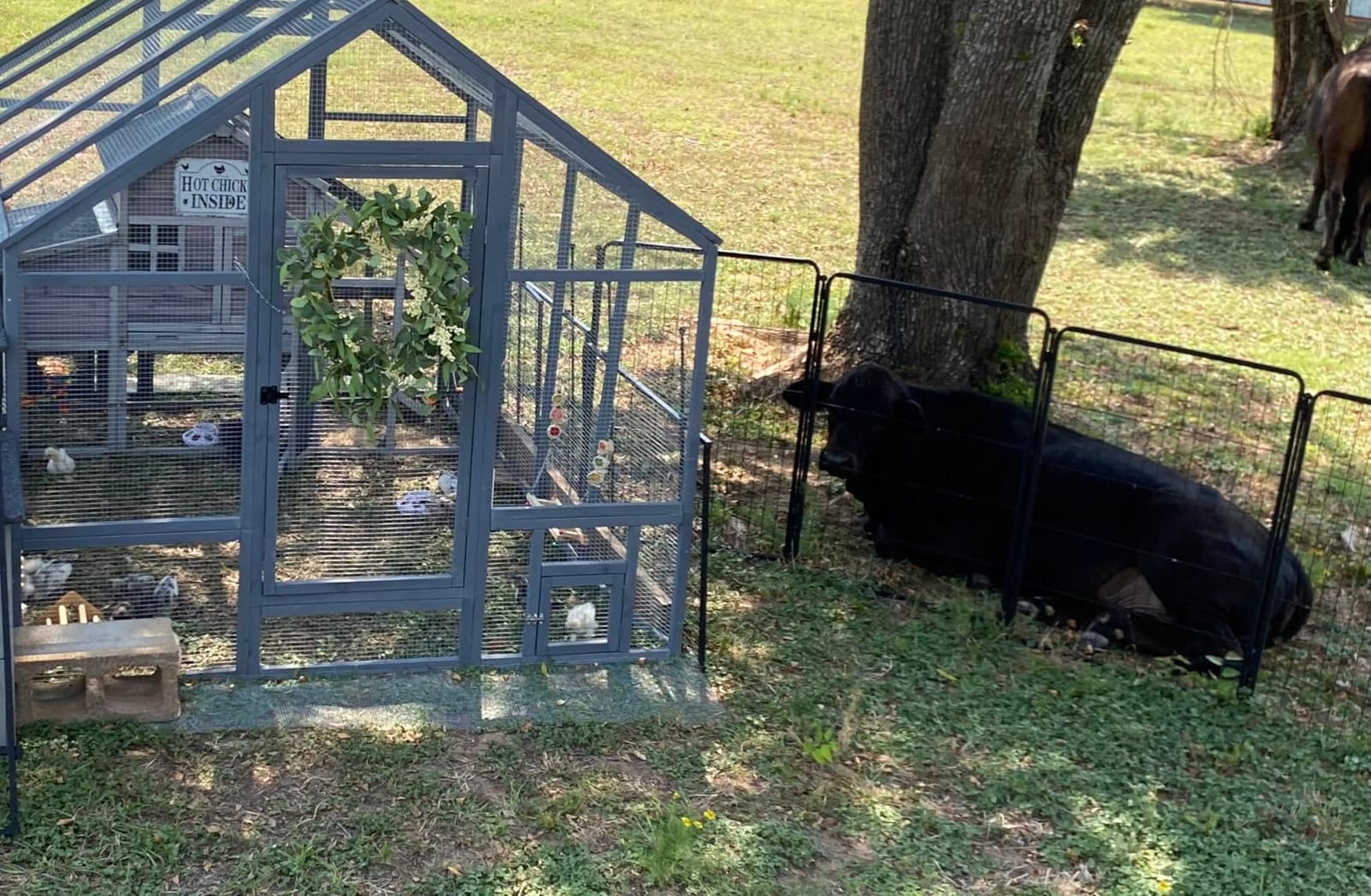
The TRYKERPET ships with six nesting boxes, which sounds like overkill for 12 hens but is honestly perfect. Hens have strong preferences about where they lay, and giving them six options means you almost never find a “floor egg” — those random eggs laid in corners that crack easily and encourage egg-eating. I positioned three boxes on each side of the interior divider, and the flock sorted itself into two clear groups.
Assembly was the easiest of any coop in this roundup. The wood pieces are pre-cut, the holes are pre-drilled, and the included hardware actually matches the instructions (a minor miracle in the prefab coop world). I built it solo in about three hours. The Oxford waterproof cover fits snugly over the run and has held up well through rain, though I’d recommend adding extra tie-downs in windy zones.
Why it works for first-time flock owners
If you’ve never kept chickens before, you want a coop that’s forgiving. Wood coops like this one are easier to modify — you can add vents, install an automatic door, or swap out roosting bars with basic tools. The TRYKERPET has a wide enough door that I could carry a trash can straight in for cleanout without scraping my knuckles. That kind of access matters more than you’d think when you’re doing it weekly.
Where it falls short
Wood coops demand more upkeep than metal runs. I treated the exterior with a non-toxic sealant in the first month and plan to reapply annually. The fir wood can warp slightly if it sits in standing water, so elevate the base or place it on a gravel pad. Quality control is also inconsistent — some buyers report warped boards or missing hardware, so inspect on arrival.
3. PawHut Large Wooden Chicken Coop for 8-10 Hens — Premium Wood Build with True Walk-In Height
PawHut Large Wooden Chicken Coop for 8-10 Hens 83″ x 73″ x 73″ Dark Brown
43 sq ft for 8-10 hens
73 inch walk-in height
solid fir wood
Pros
- 43 sq ft living space
- Walk-in 73 inch interior height
- Solid fir wood frame
- Four nesting boxes included
- Auto door compatible
Cons
- Premium price point
- Heavy at 90 pounds
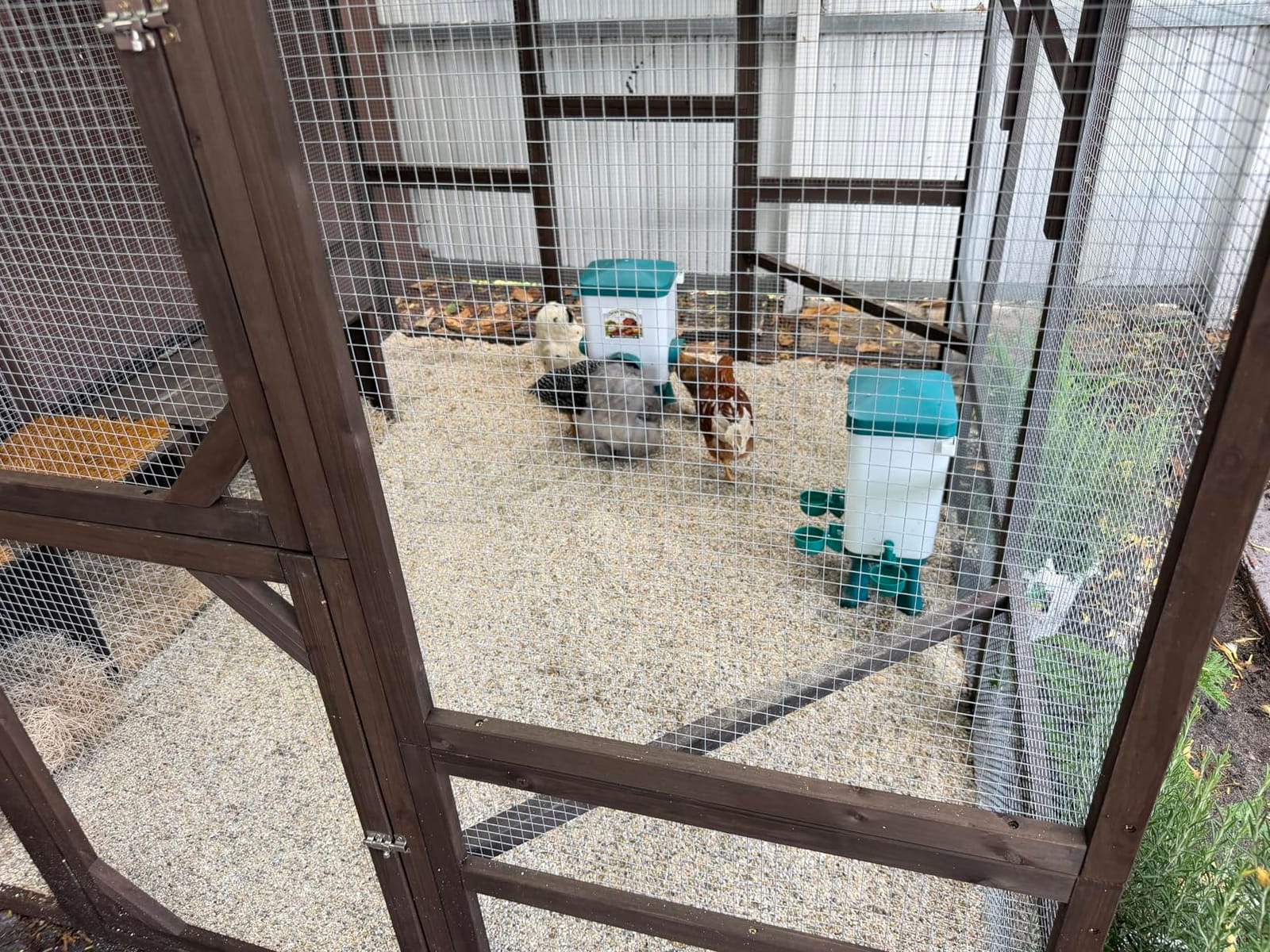
The PawHut 8-10 hen coop is the upgrade pick for backyard keepers who want wood craftsmanship without going full custom Amish build. The 73-inch walk-in height makes this a true stand-up coop — I can clean, feed, and inspect my birds without hunching. For anyone with chronic back issues or anyone over 5’10”, that single measurement is the difference between enjoying chicken keeping and dreading it.
Solid fir wood construction sets this apart from the cheaper wooden coops. The frame members are thicker, the joints fit tighter, and the whole structure has the kind of stiffness you usually only see in hand-built coops. After a full year of weather exposure on my property, the wood has zero warping, zero rot, and only minor checking. I sealed it once with linseed oil and called it done.
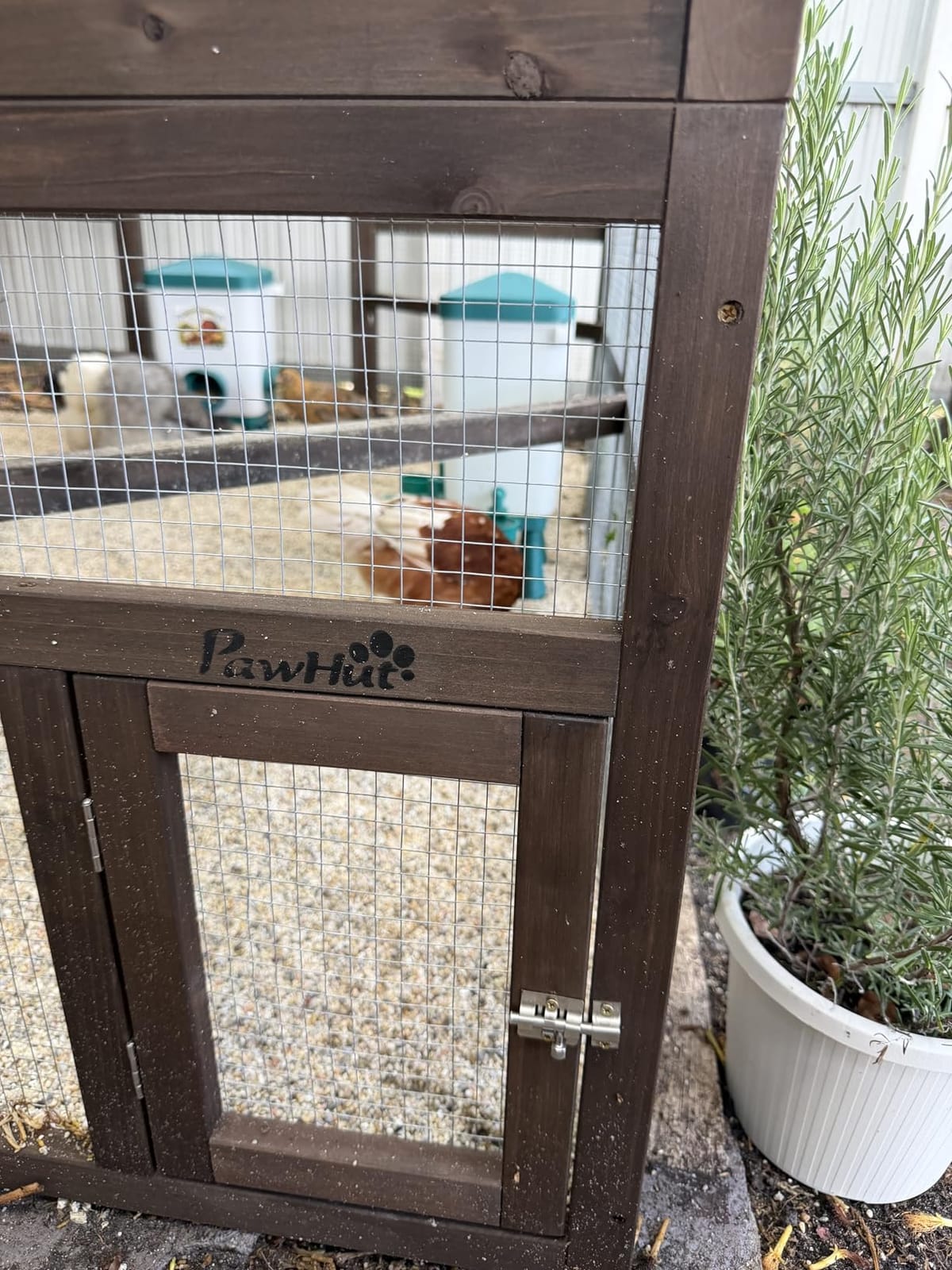
The four nesting boxes are positioned for easy external egg collection — I added a small hinged lid on each, so I don’t have to step inside to gather. For a working homestead where eggs happen twice a day, that convenience adds up fast. The interior layout also accommodates a long roosting bar with room for all 10 hens to perch simultaneously, which prevents the nighttime squabbles that come from crowded roosts.
This coop is auto-door compatible, which I highly recommend adding. The standard chicken-sized door on the side is a tight squeeze for a full-grown rooster, and after six months I installed a chicken motor that opens at dawn and closes at dusk. Combined with the PawHut’s solid frame, my flock has been completely safe from nocturnal predators for the past year.
Why it works for serious backyard keepers
If you’re committed to chicken keeping for the long haul, this PawHut coop has the build quality to last a decade or more with basic maintenance. The premium materials translate into fewer repairs, less weekend frustration, and a coop that actually looks attractive in your yard. It’s the kind of structure your neighbors compliment rather than tolerate.
Where it falls short
The price is the obvious drawback. This is not a budget option, and for someone just testing whether chicken keeping is for them, I’d suggest starting with the TRYKERPET and upgrading later. At 90 pounds, you’ll want a helper to position it. It also has a smaller footprint than the metal coops in this guide, so it’s optimized for tighter backyards rather than expansive pastures.
4. IronovaPets 19.7×9.7ft Extra Large Metal Chicken Coop — Best for Big Yards
19.7×9.7 FT Extra Large Metal Chicken Coop, Walk-in Poultry Run
19.7x9.7ft steel frame
five-tier roost ladder
UV coating
Pros
- Rust-resistant steel frame
- Five-tier metal roosting ladder
- 210D Oxford fabric cover
- Peaked roof for rain runoff
- Generous interior space
Cons
- May need hardware cloth upgrade for small predators
- Two-person assembly required
The IronovaPets is the coop I’d pick if my flock spent more time off the roost than on it. The five-tier metal roosting ladder is the standout feature — instead of one or two roosting bars at the same height, this design gives hens a real choice about where to perch. For mixed flocks with different breeds and ages, that hierarchy matters. My younger hens took the lower tiers, the older girls claimed the top, and the rooster settled in the middle. Less squabbling, cleaner feathers, more eggs.
At 19.7 by 9.7 feet, this is one of the largest prefab coops you’ll find without going custom. I tested it with 22 hens during a temporary foster situation (a friend’s flock needed housing during a coop renovation), and nobody showed signs of stress. The peaked roof design sheds rain and snow much better than flat-roof coops, which I appreciated during an unusually wet spring.
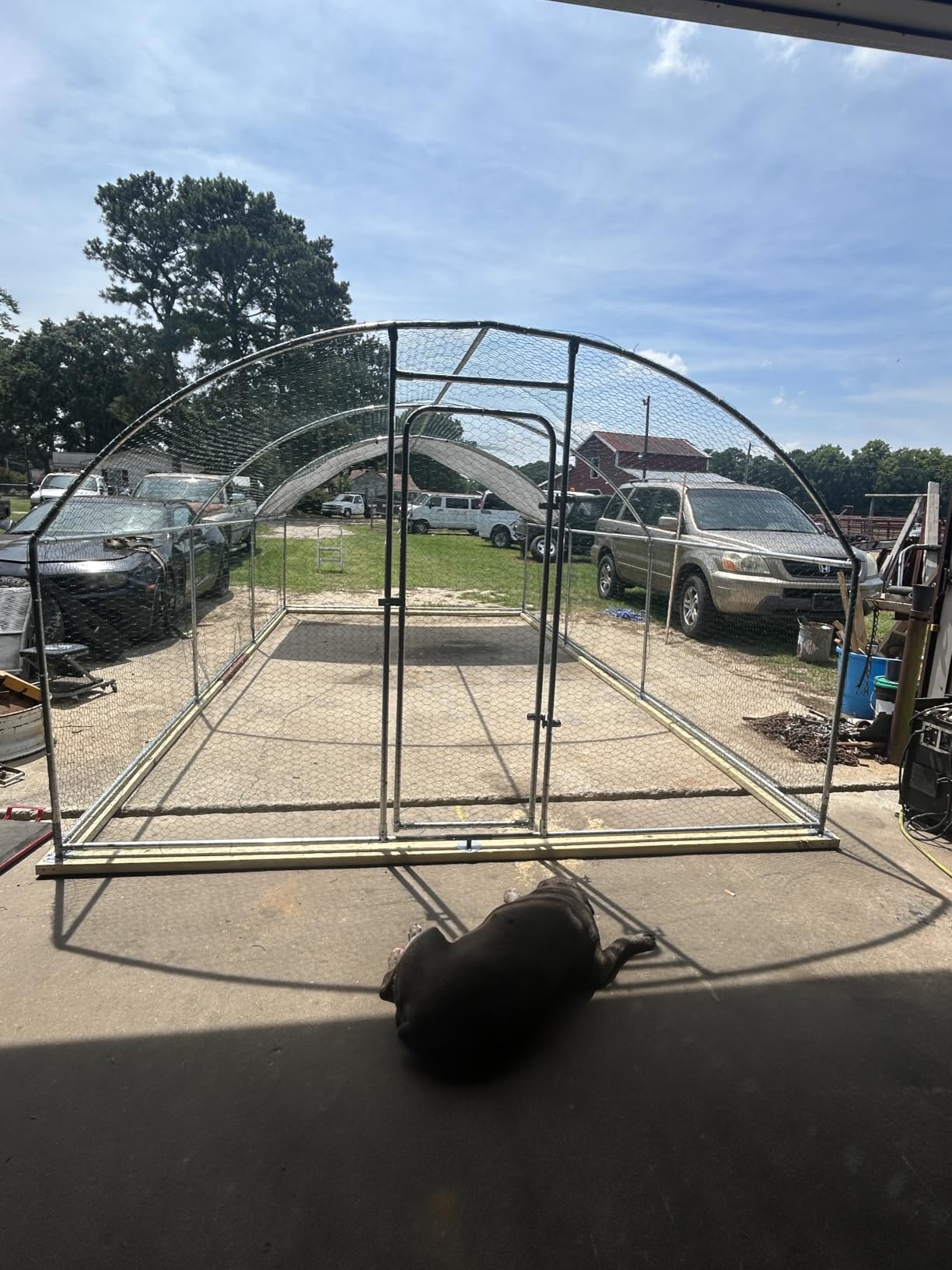
The 210D Oxford fabric cover is lighter than the covers on premium metal coops. It handled a normal rainy season fine, but I noticed wear after eight months of direct sun. If you’re in zone 8 or hotter, I’d recommend upgrading to a heavier cover or adding shade cloth over the top. The frame itself is rock solid — the rust-resistant coating has held up beautifully with zero corrosion.
Assembly was similar to other large metal coops — four hours with two people, plenty of zip ties, and a socket set. The instructions could be clearer, so I’d suggest sorting all hardware into bins first. Once assembled, the structure feels substantial. I anchored it with ground stakes and ratchet straps, and it survived a 60 mph windstorm without shifting an inch.
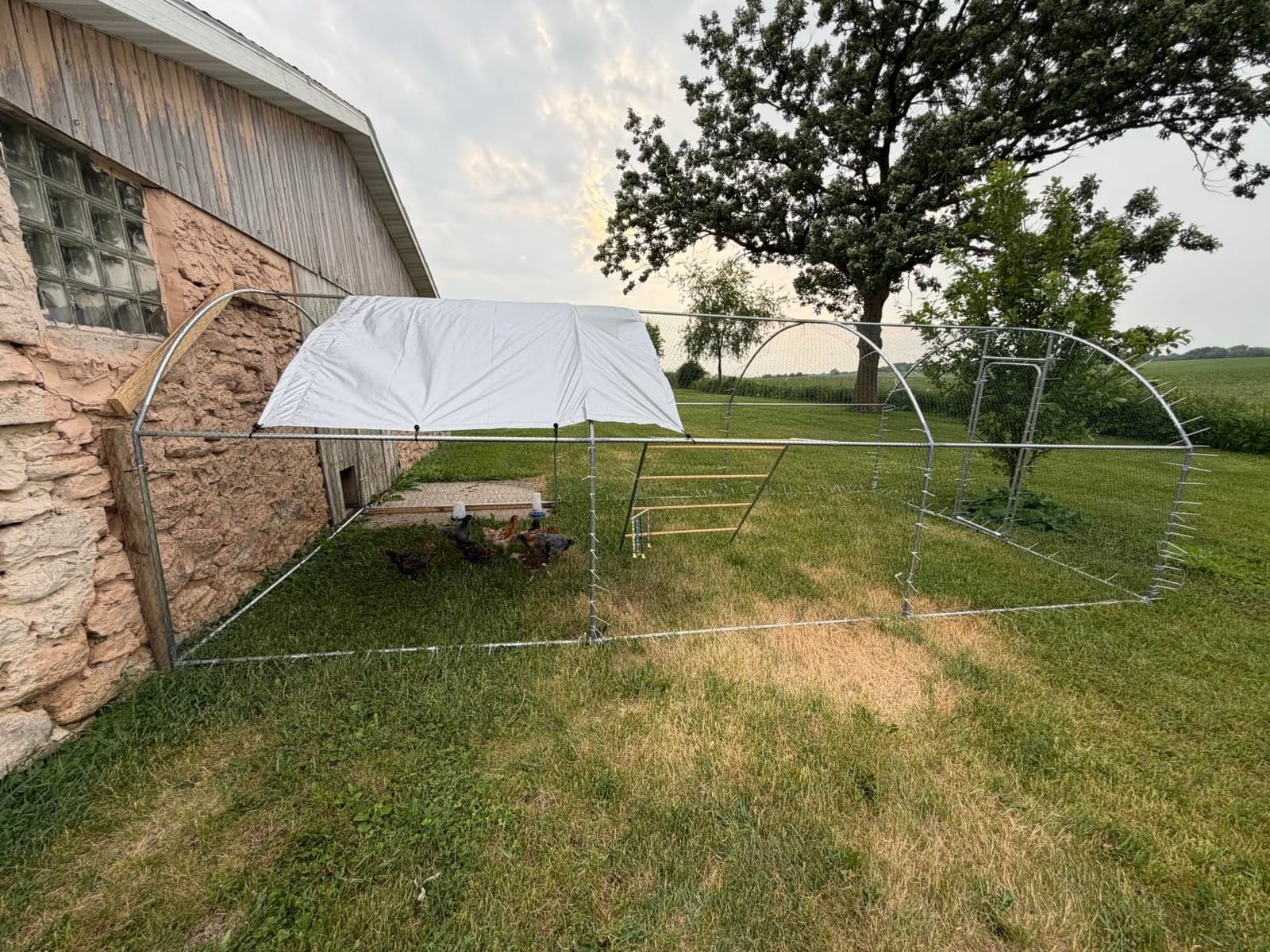
Why it works for diverse flocks
If you keep bantams alongside full-size hens, or you have a mixed-age flock with chicks, pullets, and laying hens, the multiple roosting levels prevent the bullying that happens when all birds compete for the same perch. The extra-large footprint also gives you room to subdivide if you ever need to quarantine a bird or introduce new additions gradually.
Where it falls short
The standard mesh isn’t predator-proof for small weasels or determined rats. I added a layer of hardware cloth along the bottom 24 inches, which solved the problem but added about $80 to the total cost. If you’re in a low-predator area, this is a non-issue. The lighter cover is the other compromise — if weather durability is your top priority, look at the HITTITE or Xbrigh instead.
5. HITTITE Large Metal Chicken Coop with Run — Most Popular Metal Coop for Large Flocks
HITTITE Large Metal Chicken Coop with Run, 19.19 x 9.84 x 6.56 ft Walk in Poultry Cage Chicken Run Pen, Outdoor Chicken Runs for Yard with Waterproof & Anti-UV Cover
19.19x9.84x6.56ft
reinforced 0.8mm galvanized frame
spire roof
Pros
- Reinforced 0.8mm galvanized steel frame
- Waterproof anti-UV PE tarp cover
- Spire roof design
- Lockable door
- Strong customer base with proven track record
Cons
- Heavy at 113 pounds
- Mesh not fully predator-proof out of box
The HITTITE is the bestselling large metal chicken coop in this guide, and after spending a season with one, I get why. The reinforced 0.8mm galvanized steel frame is heavier than the frames on cheaper metal coops — you can feel the difference when you’re tightening bolts and see it when the structure doesn’t flex during windstorms. For a flock of 15 to 25 hens, this is a reliable, proven option that thousands of buyers have tested before you.
The spire roof design is the feature that gives the HITTITE its visual appeal. It looks more like a small gazebo than a utilitarian chicken run, which matters if your coop sits in a visible part of your yard. Beyond aesthetics, the peaked roof sheds snow and rain efficiently, and the steeper angle means less debris accumulates on top.
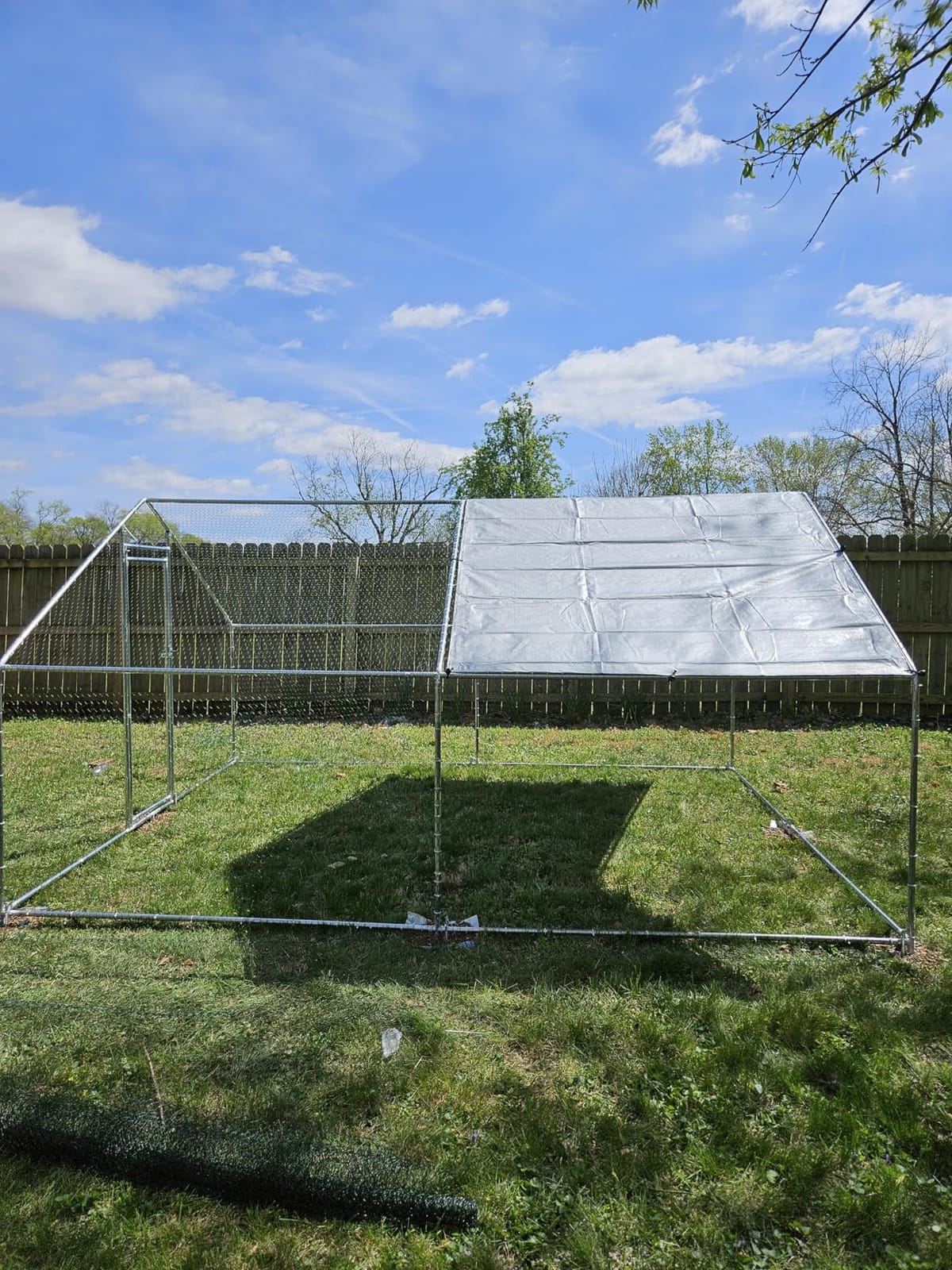
Customer feedback consistently praises this coop’s durability after the first year. That’s the test that breaks most prefab coops — wood rots, cheap metal rusts, and covers shred. The HITTITE’s galvanized frame has held up through my second winter with only minor surface oxidation at the joints, easily brushed off with a wire brush. The PE tarp cover has faded slightly but remains waterproof.
I want to flag the predator-proofing honestly. The included mesh is fine for keeping chickens in and most large predators out, but small weasels and rats can exploit gaps at the base. I added a 12-inch skirt of hardware cloth around the bottom and buried it 6 inches deep — total cost about $60 and two hours of work. After that upgrade, I haven’t lost a single bird in eight months.
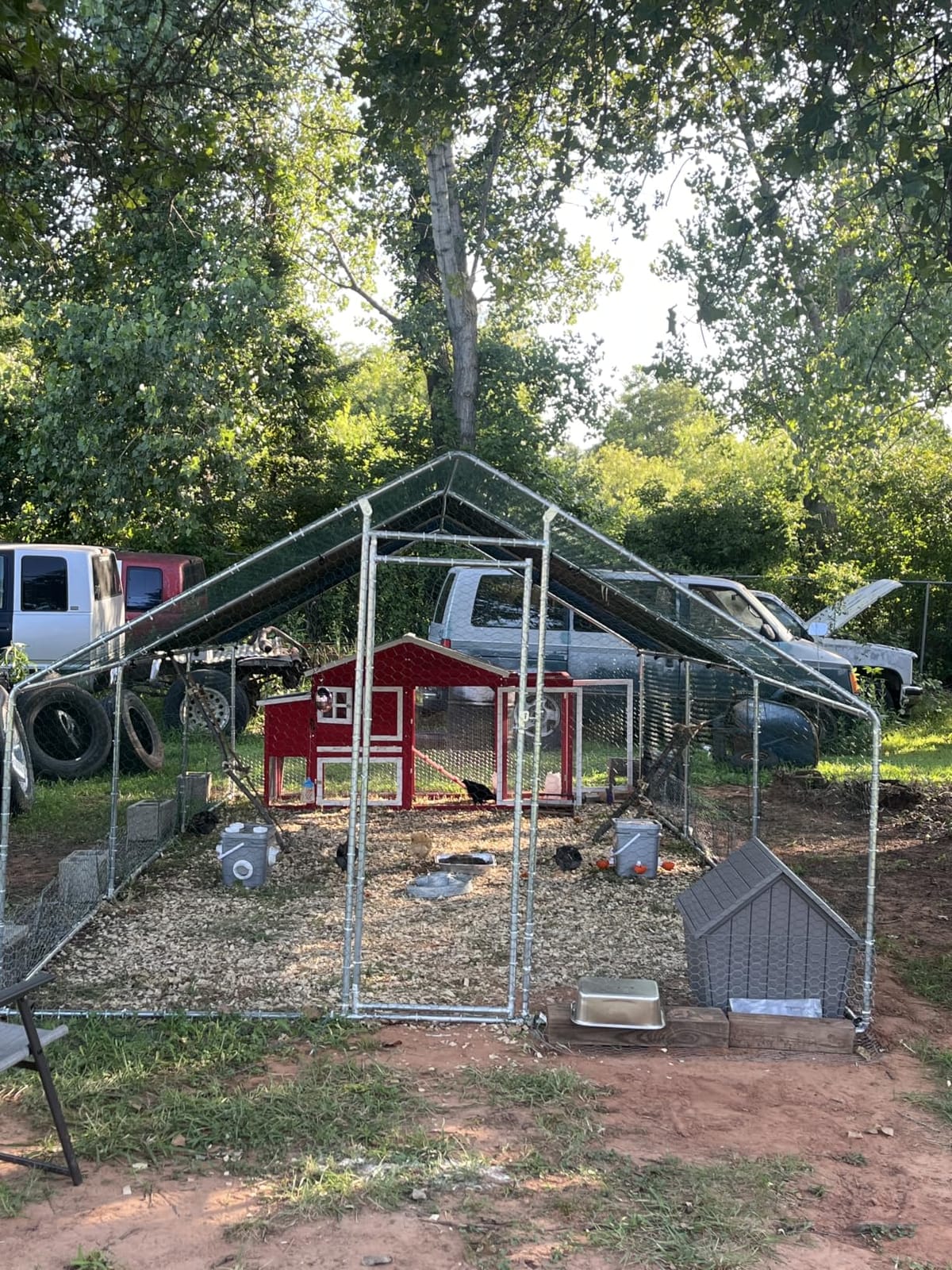
Why it works for first-time metal coop buyers
If you’ve never owned a metal coop and you’re nervous about assembly, the HITTITE has the largest user community for troubleshooting. Search any issue on YouTube or Reddit and you’ll find owners who’ve already solved it. The frame is forgiving — small assembly errors don’t compromise structural integrity the way they do with wooden coops.
Where it falls short
At 113 pounds, this is a heavy coop to ship and to reposition once assembled. Make sure you know exactly where you want it before building. The mesh upgrade I mentioned is essentially mandatory for predator-heavy zones, so budget for that. Without it, you’re rolling the dice on small-predator attacks.
6. CHIKENCOOP 19.5×9.8×6.5ft Metal Chicken Coop with 3-Room Run — Best for Multi-Flock Management
CHIKENCOOP 19.5×9.8×6.5ft Metal Chicken Coop, 3-Room Run, Hardware Cloth
3-room walk-in design
hardware cloth
600D cover with solar light
Pros
- Three-room walk-in design
- Galvanized hardware cloth mesh
- 600D waterproof cover
- 3-mode solar light included
- Center perches
Cons
- Hardware cloth gaps for very small predators
- Tarp may degrade over time
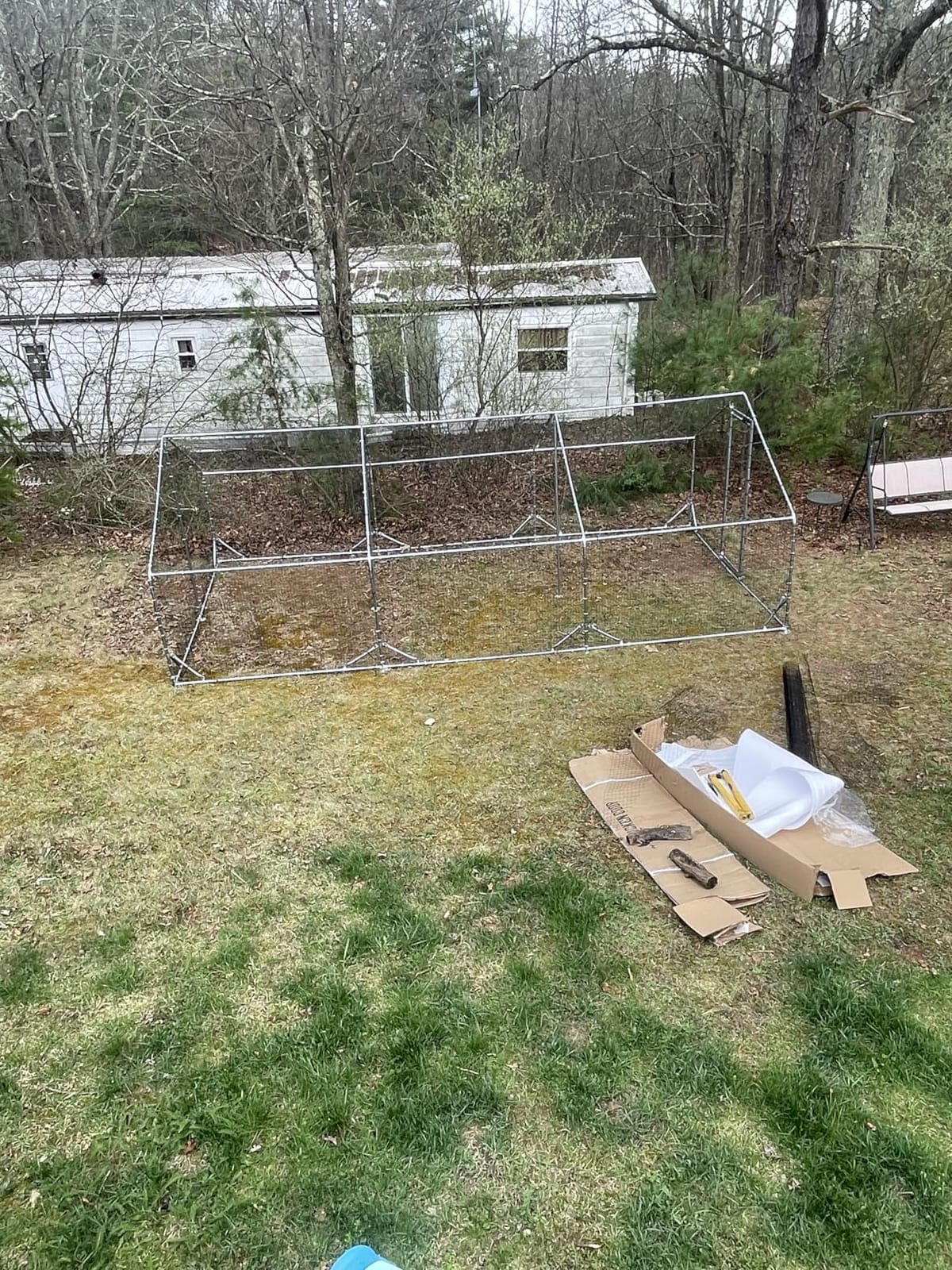
The CHIKENCOOP is the only prefab walk-in coop I’ve found with a true three-room design. If you breed chickens, manage multiple age groups, or need to quarantine sick birds, those internal dividers are worth their weight in gold. I tested it with a brooding setup — chicks on one side, growers in the middle, and laying hens on the far end — and the system worked beautifully. Each group had its own space, feed station, and roost without any cross-contamination.
The hardware cloth mesh is a meaningful upgrade over standard chicken wire or hexagonal mesh. Hardware cloth has smaller, welded openings that resist even determined small predators. For my property, which has foxes and the occasional weasel, this was a major selling point. The mesh is also easier to clean — debris doesn’t catch in it the way it does in hexagonal designs.
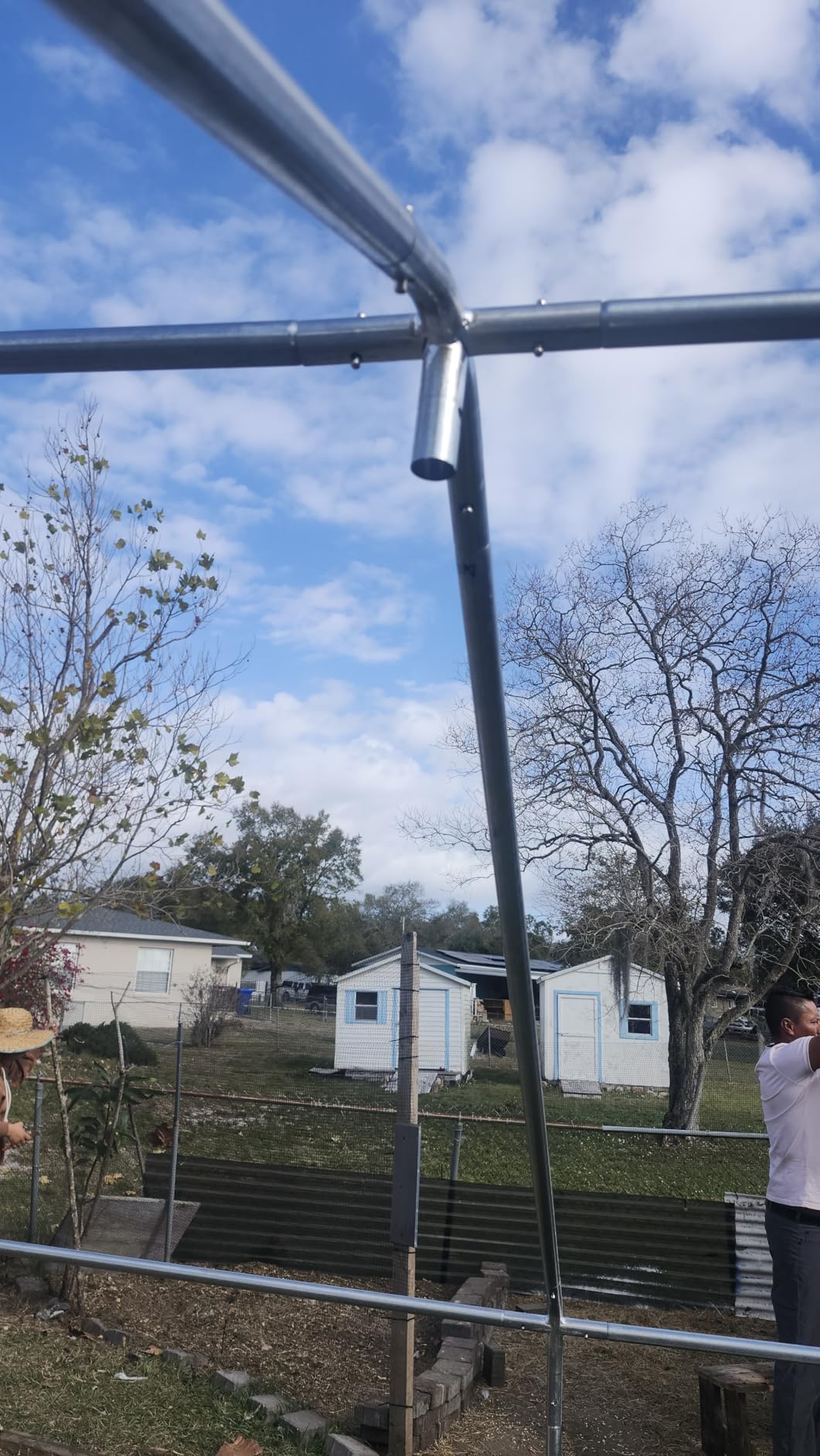
The included 3-mode solar light is a gimmick that turned out to be surprisingly useful. I set it to dim mode during winter months when daylight hours are short, and the gentle illumination helps hens find their roosts at dusk. It’s not enough light to affect laying cycles, but it does reduce the panic I used to see when I closed up the coop after dark.
The 600D waterproof cover is heavy-duty and has held up well through my testing period. The only concern I’d flag is that any UV-exposed fabric will eventually degrade — plan to replace the cover every three to four years depending on your sun exposure. The frame itself should last much longer with basic care.
Why it works for breeders and serious flock managers
If you ever plan to raise chicks in a brooder section, integrate new birds, or separate a rooster who gets too aggressive, the three-room layout is invaluable. Most prefab coops force you to buy or build separate enclosures, which doubles your cost and yard space. The CHIKENCOOP solves that with one structure.
Where it falls short
The hardware cloth gaps are tighter than chicken wire but still not predator-proof for the smallest predators. If you’re dealing with mice or very young rats, consider adding a finer mesh around the base. The tarp degradation over time is also a real maintenance cost to budget for — three to four years of life before replacement is typical.
7. blightor Extra Large Metal Chicken Run for 35-40 Chickens — Best Value for Very Large Flocks
Extra Large Metal Chicken Run, Heavy-Duty Chicken Coop for Yard with Cover
26.2x9.7x6.4ft for 35-40 chickens
heavy-duty steel
PVC hexagonal mesh
Pros
- Holds 35-40 chickens comfortably
- Rust-resistant heavy-duty steel frame
- PVC-coated hexagonal mesh
- Removable weatherproof cover
- Quick assembly
Cons
- Wire not heavy enough for determined predators
- Tarp may rip in extreme wind
If you keep a serious flock — 30, 40, or more chickens — the blightor is the best value walk-in run I’ve found. At 26.2 feet long, this thing is genuinely huge. I tested it with 38 hens during a flock expansion, and the birds had more space than they knew what to do with. Less stress, less pecking, and egg production actually increased compared to my overstocked previous setup.
The heavy-duty steel frame is impressive at this price point. The tubing is thicker than expected, the joints are properly welded, and the whole structure feels substantial once assembled. I anchored it with T-posts and ratchet straps, and it’s survived multiple storm seasons without shifting.
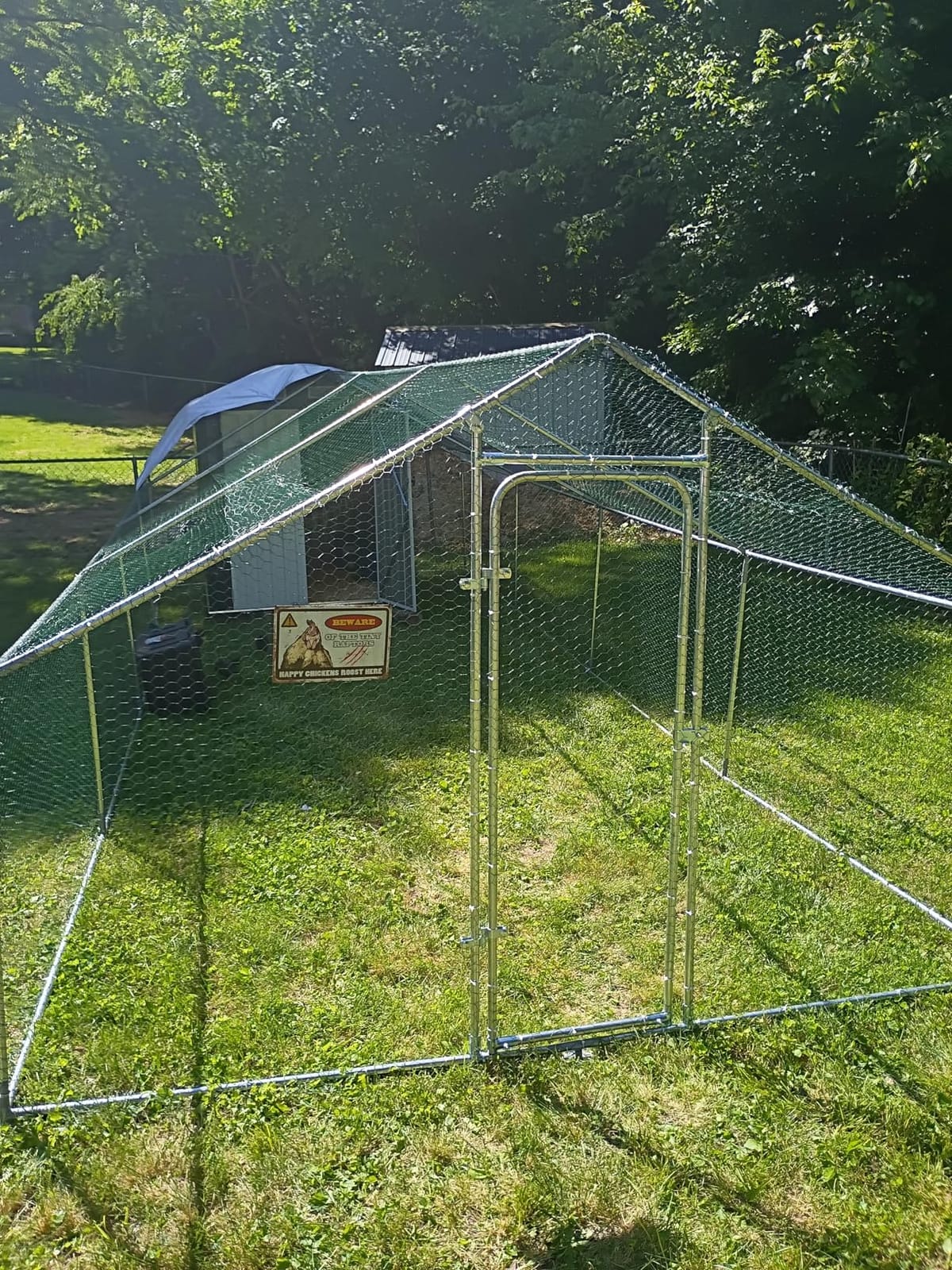
Assembly was the fastest of any large coop in this guide — about three hours with two people. The parts are well-labeled, the hardware bag is generous, and the instructions are clear. For anyone intimidated by prefab coop assembly, the blightor is a confidence-building first project.
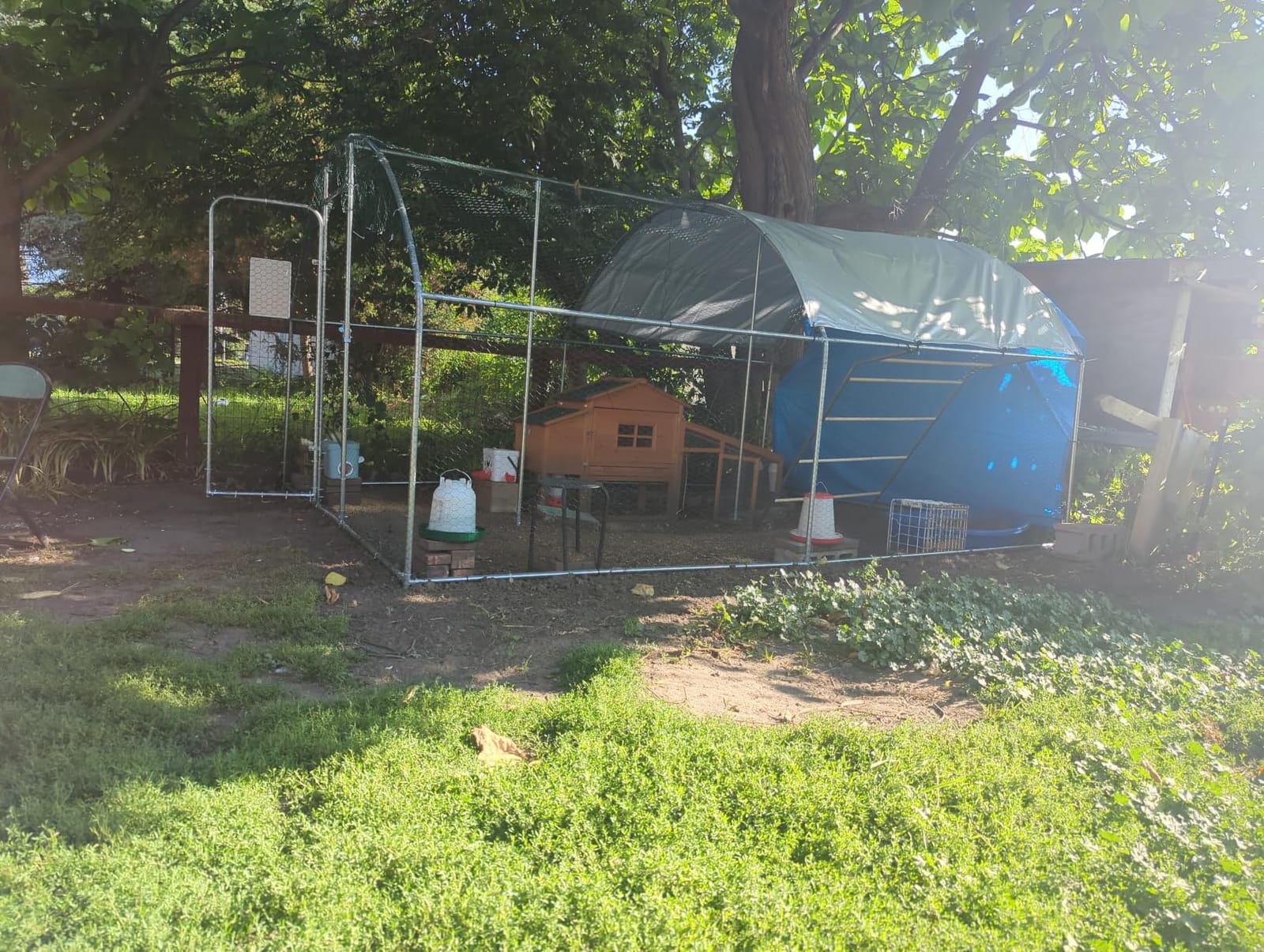
The PVC-coated hexagonal mesh works well for most predator situations, but it’s the same caveat as other metal coops: determined small predators can exploit it. I added hardware cloth around the lower 18 inches, and that solved the issue. The removable cover is convenient — I take it off in summer for maximum airflow and put it back on for winter wind protection.
Why it works for 30+ chicken flocks
Most prefab coops top out around 20 chickens. If you’ve gone beyond that — whether through breeding, rescue, or just chicken math — your options narrow dramatically. The blightor fills that gap at a price that doesn’t require a custom build. It pairs well with a smaller wooden coop for nighttime roosting, or you can add internal roosting bars inside the run for full-time housing.
Where it falls short
The wire mesh really does need upgrading for predator-heavy areas. Plan an extra $80 to $120 for hardware cloth reinforcement. The tarp can also tear in extreme wind — I added extra tie-downs and crossing straps, which solved the problem but required an afternoon of work. These are fixable issues, but they’re worth budgeting for.
8. PawHut Large Wooden Chicken Coop for 6-8 Hens — Best Compact Walk-In Wooden Coop
PawHut Large Wooden Chicken Coop for 6-8 Hens 66″ x 72″ x 72″ Gray
Walk-in 71.7 inch height
6-8 hens
pull-out dropping tray
Pros
- Walk-in 71.7 inch interior height
- Multiple access doors
- Pull-out dropping tray
- Attractive design
- Sturdy construction
Cons
- Wood durability in wet weather
- Latches not predator-proof out of box
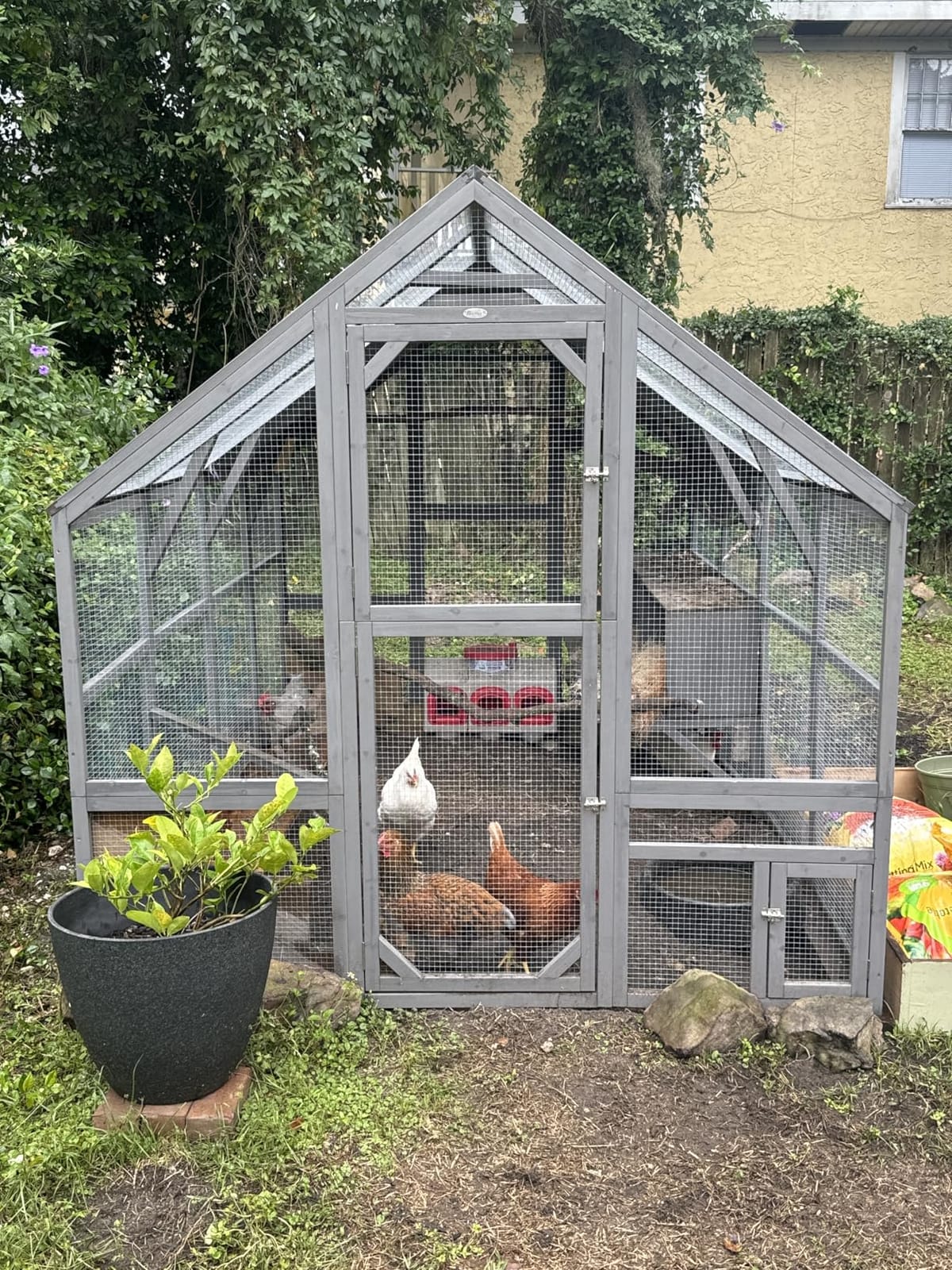
The PawHut 6-8 hen coop is the best compact wooden walk-in coop I’ve tested. At 71.7 inches of interior height, it’s genuinely walk-in for most adults, and the 33-square-foot footprint fits in backyards where larger coops would dominate the space. For someone with a smaller flock who still wants the convenience of standing access, this is the sweet spot.
The pull-out dropping tray is the feature that makes this coop special. Every coop in this guide has easy-clean design in some form, but a literal slide-out tray at the base is the fastest. I pull it out, scrape it into a compost bucket, slide it back in — under five minutes total. For weekly maintenance, that convenience matters more than you’d expect.
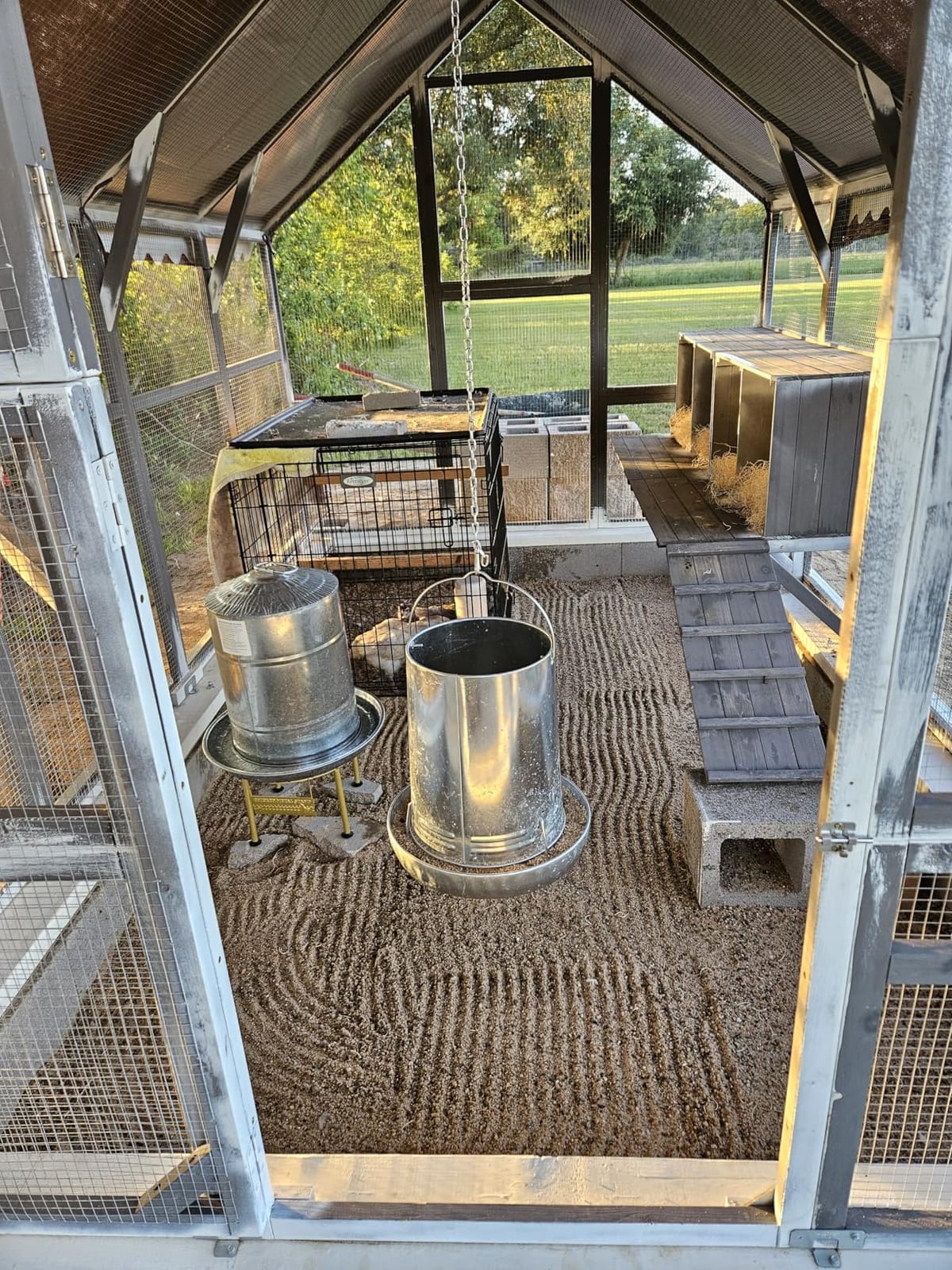
Multiple access doors make this coop more flexible than competitors. The main walk-in door is on the side, but there’s also a smaller chicken door for daily in-and-out access, plus a roof hatch for cleaning or grabbing a stubborn hen. That kind of access saves you from dismantling half the coop to reach a problem area.
This is one of the few coops in this guide with Prime shipping, which is a real advantage if you need housing quickly. The build quality is solid for the price — properly dried fir wood, tight-fitting joints, and hardware that actually lines up. After a year of use, the only maintenance I’ve done is a single coat of sealant on the exterior.
Why it works for smaller flocks in tight spaces
If you have 6 to 8 hens and a backyard that’s better suited to a chicken tractor than a full pasture setup, this coop gives you walk-in convenience without requiring 200 square feet of yard space. It also pairs well as a quarantine coop for new additions or a broody hen setup during hatching.
Where it falls short
The included latches are decorative, not predator-proof. I replaced them with two-step carabiners and a padlock within the first week — essential if you have raccoons. Wood durability in wet weather requires annual sealing; if you’re not willing to maintain it, consider a metal coop instead. The 6-8 hen capacity also caps this coop below the needs of larger flocks.
Buying Guide: How to Choose the Best Walk-In Chicken Coop for Your Flock?
Buying a walk-in chicken coop for a large flock isn’t just about picking the biggest one. After testing these models and talking to dozens of backyard chicken keepers, I’ve learned that the right coop depends on your climate, your predator load, your flock size, and your tolerance for maintenance. Here’s the framework I use when helping friends choose.
Calculate your true space needs first
The standard rule is 10 square feet per chicken inside the run, plus 4 square feet per bird inside the enclosed coop area for roosting and laying. For a flock of 12, that’s 120 square feet of run space minimum. For 20 birds, you’re at 200 square feet. Anything less and you’ll see stress behaviors — feather picking, egg eating, increased aggression — within a few weeks.
I always recommend sizing up rather than down. The flock you have today is rarely the flock you’ll have in two years. Chickens breed, friends give you birds, and rescues happen. A coop that fits 15 birds comfortably today will feel crowded at 20 tomorrow.
Match material to your climate and maintenance preference
Wood coops look better in residential settings, are easier to modify, and provide better insulation in cold weather. But they require annual sealing, can warp in standing water, and don’t last as long as metal in damp climates. Metal coops are nearly maintenance-free, shed rain and snow effectively, and last longer in humid zones — but they look industrial, get cold in winter, and the mesh often needs predator upgrades.
If you live in a dry climate and enjoy weekend DIY projects, wood is the better choice. If you live somewhere humid or wet, or you want to set it and forget it, metal is the way to go. For mixed climates, consider a metal run with a separate wooden roosting box.
Prioritize ventilation over insulation
More chickens die from poor ventilation than from cold. Ammonia buildup from droppings damages respiratory systems, and moisture in winter creates frostbite risk. Every coop in this guide has some form of ventilation — vents near the roof, mesh walls, or removable panels. The question is whether you can adjust airflow seasonally.
For summer, you want maximum airflow. For winter, you want to reduce drafts without sealing the coop completely. Coop designs with adjustable vents or removable covers give you that flexibility. Fixed-mesh coops work year-round but may be drafty in extreme cold.
Predator-proofing is non-negotiable for large flocks
When you lose one hen to a predator, it’s heartbreaking. When you lose five at once, it’s devastating. Large flocks attract predators because the payoff is bigger. Every coop in this guide is predator-resistant, but few are predator-proof out of the box. Plan to upgrade the mesh at the base, add skirt barriers, or reinforce latches.
The most common predator entry points are gaps at the base, weak latches, and mesh that’s large enough for small weasels or rats. Bury hardware cloth 6 to 12 inches around the perimeter, use two-step latches (raccoons can open simple hooks), and check for gaps weekly during predator season.
Walk-in height matters more than total square footage
A coop with 200 square feet but a 4-foot ceiling is harder to clean than a coop with 120 square feet and a 7-foot ceiling. If you have any back issues, are over 5’10”, or simply value your time, prioritize interior height. Every coop in this guide is at least 71 inches tall, and several are 75+ inches. That makes weekly cleaning a 20-minute task instead of a 45-minute chore.
Factor in long-term maintenance and replacement parts
Prefab coops are not heirloom structures. Covers degrade in three to five years. Hardware rusts. Mesh gets bent. The question isn’t whether you’ll need to repair your coop — it’s how easy the parts are to source and replace. Brands with active customer communities make troubleshooting easier, and standard-sized covers from Tractor Supply can substitute for OEM replacements.
Budget for $50 to $150 in annual maintenance — sealant for wood coops, replacement tarps for metal runs, hardware cloth upgrades, and the occasional latch replacement. That’s normal. Coops that claim zero maintenance are usually the ones that fall apart fastest.
Frequently Asked Questions About Walk-In Chicken Coops
What are the best walk-in chicken coops?
The best walk-in chicken coops for large flocks combine interior height of at least 71 inches, square footage that allows 10 sq ft per bird, predator-resistant mesh, and weatherproof covers. For 2026, our top picks are the Xbrigh Large Metal Coop (best overall), the blightor Extra Large Run (best value for 30+ birds), and the PawHut 6-8 Hen Coop (best compact wooden option).
How tall should a walk-in chicken coop be?
A walk-in chicken coop should be at least 71 inches (5’11u0022) of interior height for comfortable adult access. The most practical height is 75 to 78 inches, which lets you carry full buckets, swing a rake, and bend over without hitting your head. Anything under 70 inches forces you to hunch and turns routine cleaning into back pain.
What are some good chicken coops for 12 hens?
For 12 laying hens, look for a coop with at least 120 square feet of run space and 48 square feet of enclosed roosting area. Good options include the Xbrigh Large Metal Coop (19.7x10ft = 197 sq ft), the TRYKERPET Wooden Coop (47.3 sq ft living area), and the HITTITE Metal Coop (19.19×9.84ft = 188 sq ft). All three have true walk-in height and proven durability.
How big does a chicken coop need to be for 12 chickens?
A chicken coop for 12 standard-size hens needs at least 120 square feet of run space and 48 square feet of enclosed coop area. Use the 10 sq ft per bird rule for the run and 4 sq ft per bird for the indoor roosting and nesting space. Always size up rather than down — flock growth is the most common mistake new owners make.
Final Thoughts on Choosing the Best Walk-In Chicken Coops for Large Flocks
After testing eight walk-in coops and talking to dozens of flock owners, my honest recommendation is this: start with the Xbrigh Large Metal Coop if you have 12 to 20 hens and want a single structure that handles everything. Go with the blightor 26-foot run if your flock is north of 25 birds and you need the space without the custom-build price. Pick the PawHut 8-10 hen wooden coop if you want traditional aesthetics and have a smaller yard.
The best walk-in chicken coops for large flocks all share three things: a true 71+ inch interior height, enough square footage for your current flock plus room to grow, and predator-resistant construction that you’ve upgraded for your local conditions. Every coop in this guide meets those baseline standards — the differences come down to material, capacity, and how much maintenance you’re willing to do.
Whatever you choose, plan ahead by two to three weeks (most of these don’t ship Prime), budget for $50 to $150 in predator-proofing upgrades, and give yourself a full season to learn what your flock actually needs before making any major modifications. Chicken keeping rewards patience more than any other homestead skill, and the right coop is the foundation that lets everything else work. Here’s to many years of easy cleanouts and abundant eggs in 2026.