

We brought home our first pair of rats with nothing but a small pet-store kit and a lot of enthusiasm. Within two months we had replaced almost every piece of it. The cage was cramped, the bedding was dusty, and the included food bowl tipped over every single night.
That trial-and-error is exactly why we built this guide to the best starter kits for first-time rat owners in 2026. Our team compared ten products across cages, sleep spots, food, enrichment, and grooming — all items we have used in our own rat room or watched friends rely on for years.
So what should a rat starter kit actually include? At minimum: a tall wire cage, dust-free bedding, a pelleted food base, a water source, at least one hide per rat, and safe chew items. Anything beyond that is comfort and enrichment — important, but built on that foundation.
Rats are one of the most rewarding small pets you can bring home. They learn their names, recognise their people, and actively want to spend time with you. They are also smart and social, which means a poor setup shows up fast as stress, sneezing, or bar-biting.
Experienced keepers on r/RATS and the major rat forums repeat the same warning: most shop-bought starter kits are inadequate. The cages are too small for active animals, and the bundled bedding is often the wrong type entirely. Our goal with this list is to spare you the replacement cycle we went through.
Here is the plan for this guide: our top three picks first, a comparison table of all ten products, then a detailed review of each one. We finish with a buying guide covering cage sizing, bedding safety, and what to buy in week one versus later.
One rule outranks every product decision below. Rats must live in pairs or small same-sex groups — a lone rat is a lonely rat, no matter how nice the hardware around it is.
Table of Contents
Top 3 Picks for First-Time Rat Owners
If you only want the short version, start here. The cage is the biggest and most consequential purchase in any rat starter kit, so our top three picks solve the habitat question at three different spending levels.

Critter Nation Double Unit…
- 36 x 24 x 63 inch habitat
- Half-inch bar spacing
- Two full levels
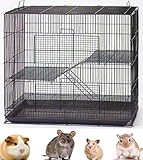
The Critter Nation is the habitat we recommend without hesitation when the budget allows. The Homey Pet covers the same basics for far less money. The Mcage is the best inexpensive way to safely house two rats, especially babies, thanks to its narrow bar spacing.
Best Starter Kits for First-Time Rat Owners in 2026
All ten products from our testing are in the table below. Scan it for the full lineup, then jump to whichever reviews match the stage of your setup.
| Product | Specs | Action |
|---|---|---|
| Critter Nation Double Unit Cage |
|
Check Latest Price |
 Homey Pet 3-Tier Rat Cage Homey Pet 3-Tier Rat Cage |
|
Check Latest Price |
 Kaytee My First Home Habitat Kaytee My First Home Habitat |
|
Check Latest Price |
| Mcage 3-Level Portable Cage |
|
Check Latest Price |
 Sweetude 6-Pc Hammock Set Sweetude 6-Pc Hammock Set |
|
Check Latest Price |
 Kaytee Fiesta Rat Food 4.5 lb Kaytee Fiesta Rat Food 4.5 lb |
|
Check Latest Price |
 VESPRO Wood Chew Toy Set VESPRO Wood Chew Toy Set |
|
Check Latest Price |
 Jevnd Stainless Foraging Toy Jevnd Stainless Foraging Toy |
|
Check Latest Price |
 Trixie Suspension Bridge Toy Trixie Suspension Bridge Toy |
|
Check Latest Price |
 Crafterlife Grooming Kit Crafterlife Grooming Kit |
|
Check Latest Price |
A quick way to read it: the first four rows are habitats, row five adds sleep and hide spots, row six covers food, rows seven to nine handle enrichment, and row ten closes out grooming. A complete starter kit pulls from every group rather than doubling up on one.
1. Critter Nation Double Unit Cage – The Roomiest Habitat You Can Buy
Critter Nation by MidWest Double Unit Small Animal Cage
36 x 24 x 63 inches
1/2 inch bar spacing
Two full levels
Tool-free assembly
Pros
- Spacious two-story habitat
- Sturdy metal construction
- Height-adjustable shelves
- Full-width doors
- Removable base pans
Cons
- May need a rubber mallet
- Some factory defects reported
- Heavy at 44 pounds
This is the cage we run in our own rat room, and it has outlasted three cheaper cages we owned before it. The double unit gives you 36 by 24 by 63 inches of space with two full levels, and our group of four rats uses every inch of it. It has held a top-tier rating across more than 6,000 reviews for good reason.
Assembly is genuinely tool-free, although two of our panels needed gentle persuasion with a rubber mallet. Once it is up, the full-width double doors make daily interaction easy — you never have to fish a shy rat out of a back corner.
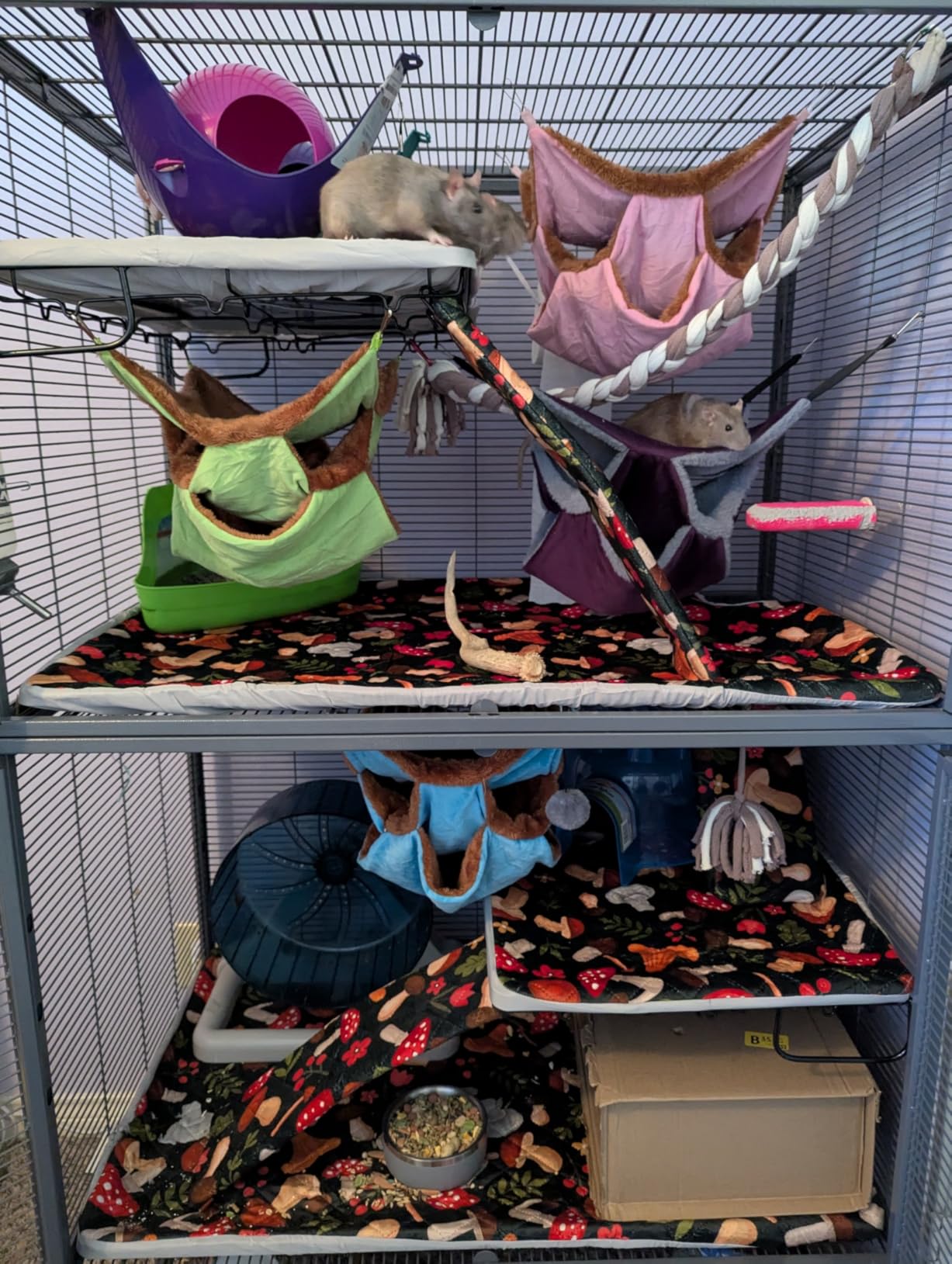
The half-inch bar spacing is the number experienced keepers check first: young rats cannot slip through it, and adults climb the walls like a ladder. Height-adjustable shelves let you reconfigure the layout as your rats age and get less athletic, which extends the useful life of the cage for years.
Cleaning is where this habitat earns its keep. Both base pans slide out completely, which turns a full substrate change into a ten-minute job instead of an afternoon project. The wide accessory ecosystem built around this cage means hammocks, bridges, and platforms all fit without improvising.
The downsides are real but manageable. It weighs 44 pounds empty, so pick its final spot before you fill it with bedding. A small number of buyers report factory defects like bent door latches, so inspect every panel during assembly and use the warranty if something arrives off.

How many rats can it comfortably hold?
The double unit suits a group of four to six rats, which gives you room to grow beyond a first pair. If you are starting with two rats and do not plan to expand, the single-unit version of the same cage is worth a look instead. More space per rat always means fewer squabbles and more natural behaviour.
Will it fit in your space?
Measure first, because this cage stands over five feet tall and will dominate a small room. Compare the 36 by 24 inch footprint against your intended wall before ordering. It is a piece of furniture, not an accessory, and planning around that saves a lot of shuffling later.
2. Homey Pet 3-Tier Rat Cage – Best Value Full-Size Habitat
Homey Pet Rat Cage, Small Animal Cage for Ferret, Chinchilla, Guinea Pig
25 x 17 x 38 inches
0.7 inch bar spacing
3-tier design
Lockable casters
Pros
- Lockable wheels for mobility
- Pull-out tray for cleaning
- Splash guard
- Non-slip ramp
- Tool-free assembly
Cons
- Bar spacing wide for baby rats
- Hard to clean corners
- Some assembly challenges
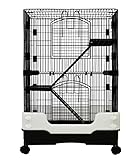
When a friend asked us for a mid-range habitat recommendation, this is what we suggested, and her two does are still living in it happily a year later. The three tiers give climbing room that flat cages simply cannot match, and the whole thing ships ready for daily use.
The lockable casters are the feature nobody thinks they need until cleaning day. You roll the entire habitat away from the wall, empty the tray, wipe the base, and roll it back — no lifting required.
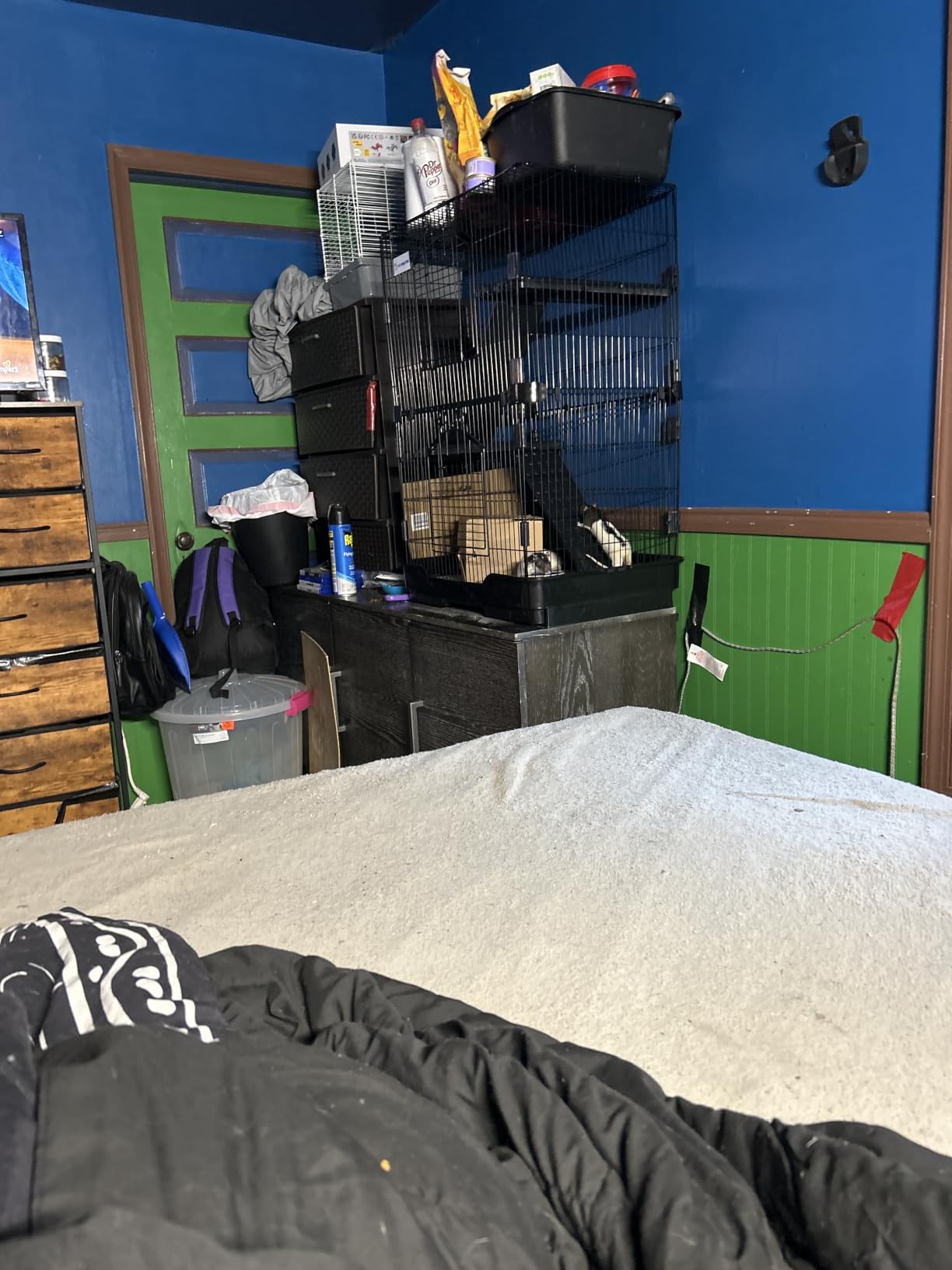
Technically, this cage hits the marks that matter: chew-proof wire, a urine guard around the base to protect your floor, and a pull-out tray that catches most of the mess. The non-slip ramp is a small detail, but it saves older or less athletic rats from sliding off the levels.
Setup is tool-free, though the instructions are terse, so budget an hour and expect a second pair of hands to help align the panels. Once assembled, the frame feels stable rather than wobbly.
The big caveat is bar spacing. At 0.7 inches, it contains adult rats well but is wide enough for babies and small females to squeeze through. A few frame corners are also awkward to wipe down during deep cleans.

Is the bar spacing safe for your rats?
Measure your smallest rat before choosing this cage. If you are adopting kittens — baby rats, in keeper slang — start them somewhere with narrower spacing or line the lower panels with hardware mesh until they fill out. Adult males and most adult females are contained without any modification.
How does it compare to a premium cage?
You give up some floor space and the wide door access of the top pick, but you keep the multi-level climbing that rats genuinely need. For a first-time owner with two or three adult rats, it covers every essential without the premium-habitat commitment.
3. Kaytee My First Home Habitat – Best Compact Starter Cage
Kaytee My First Home Habitat for Pet Rats
25.5 x 12.5 x 14 inches
1/2 inch wire spacing
Deep base
Multiple levels
Pros
- Half-inch spacing ideal for rats
- Deep base contains bedding
- Multiple levels
- Solid plastic shelves
- Easy to clean
Cons
- Too small for permanent housing
- Plastic base can be chewed
- Ramp fit issues reported
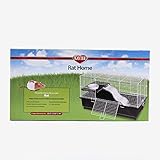
We keep one of these as our quarantine and travel cage, and that is exactly the role we recommend it for. Despite the friendly name on the box, it is not a permanent home for rats — the dimensions are simply too tight for long-term housing.
The half-inch wire spacing is spot-on for rats, which is rarer than it should be among compact cages. The deep base also does a respectable job of keeping bedding inside the cage instead of scattered across your floor.
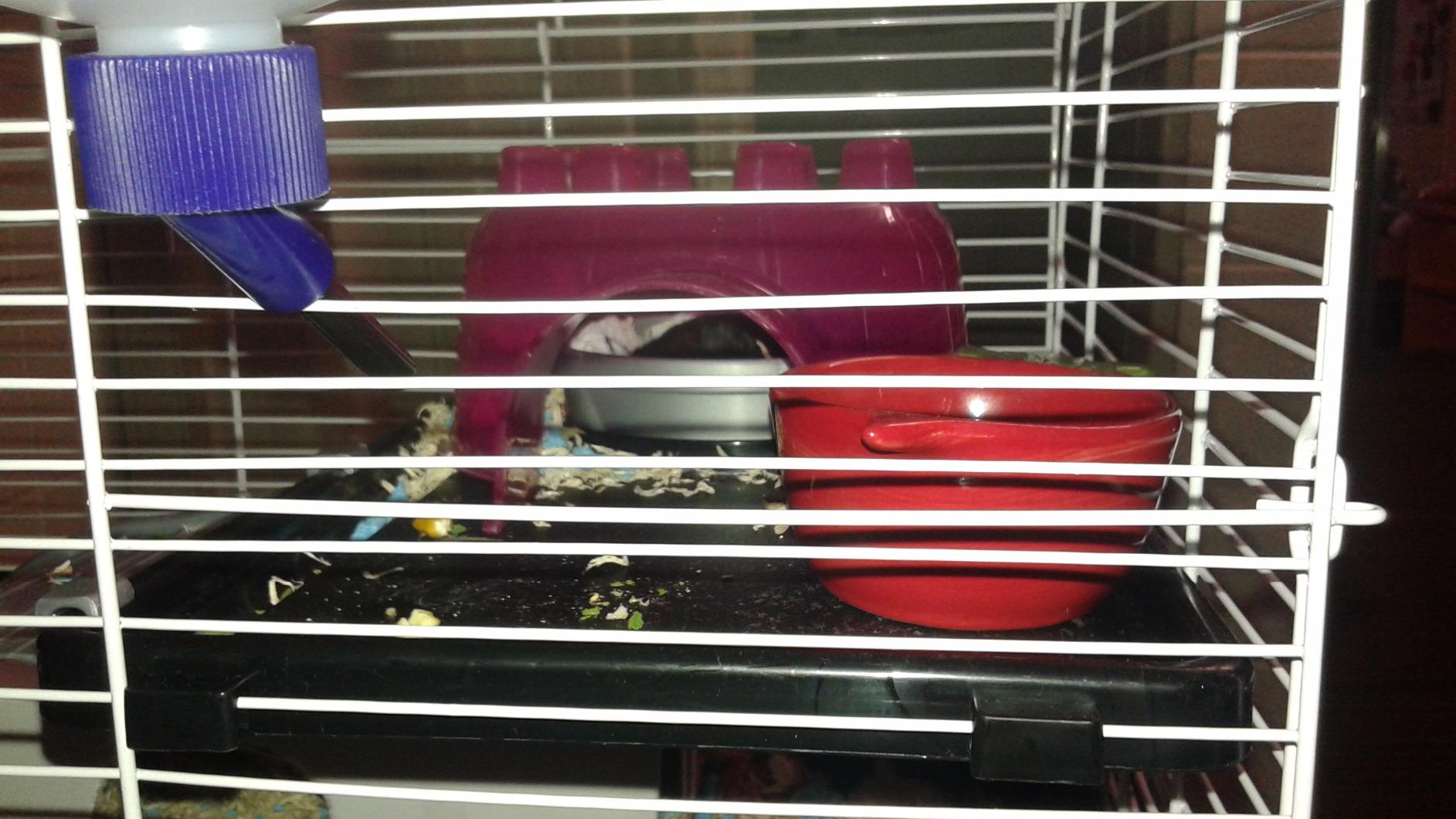
For a weekend trip, a vet visit, or a temporary stay while the main cage gets a deep clean, it works well. The multiple levels give your rats somewhere to climb, and the chew-proof locks stop determined escape artists from working the door open.
Where it falls short is size. At 25.5 by 12.5 by 14 inches, it offers a fraction of the space active rats need, and reviewers consistently flag this same limitation. It also weighs almost nothing, which makes carrying it to the car a one-hand job.
The plastic base is the known weak point — determined chewers can work through it over time. Check the corners weekly if you have a rat who likes to renovate, and replace the base rather than risk an escape.

What is it actually best for?
Think of it as the supporting actor rather than the star: travel cage, vet-visit quarters, quarantine space, or a grow-out pen for young rats before they move to the big habitat. Plenty of experienced keepers keep one around for exactly these jobs, which is how we use ours.
Can it house a pair of rats temporarily?
Yes, a pair can live here comfortably for a week or two, which covers new-rat introductions or emergency housing during cage repairs. Beyond that window, move them into a habitat with proper floorspace. Anything longer would be unfair to animals this active and curious.
4. Mcage 3-Level Portable Cage – Best Foldable Budget Cage
3-Levels Easy Portable Collapsible Ferret Chinchilla Sugar Glider Rats Mouse Animal Critter Bite-Proof Metal Carrier Travel Cage with Narrow 3/8-Inch Bar Spacing Easy to Setup No Tools Needed
24 x 16 x 24 inches
3/8 inch bar spacing
Foldable frame
Two access doors
Pros
- Narrow 3/8 inch spacing
- Foldable for storage
- No-tools assembly
- Removable tray
- Good for two adult rats
Cons
- Tray only one inch tall
- Bars can arrive bent
- Gaps may need zip ties
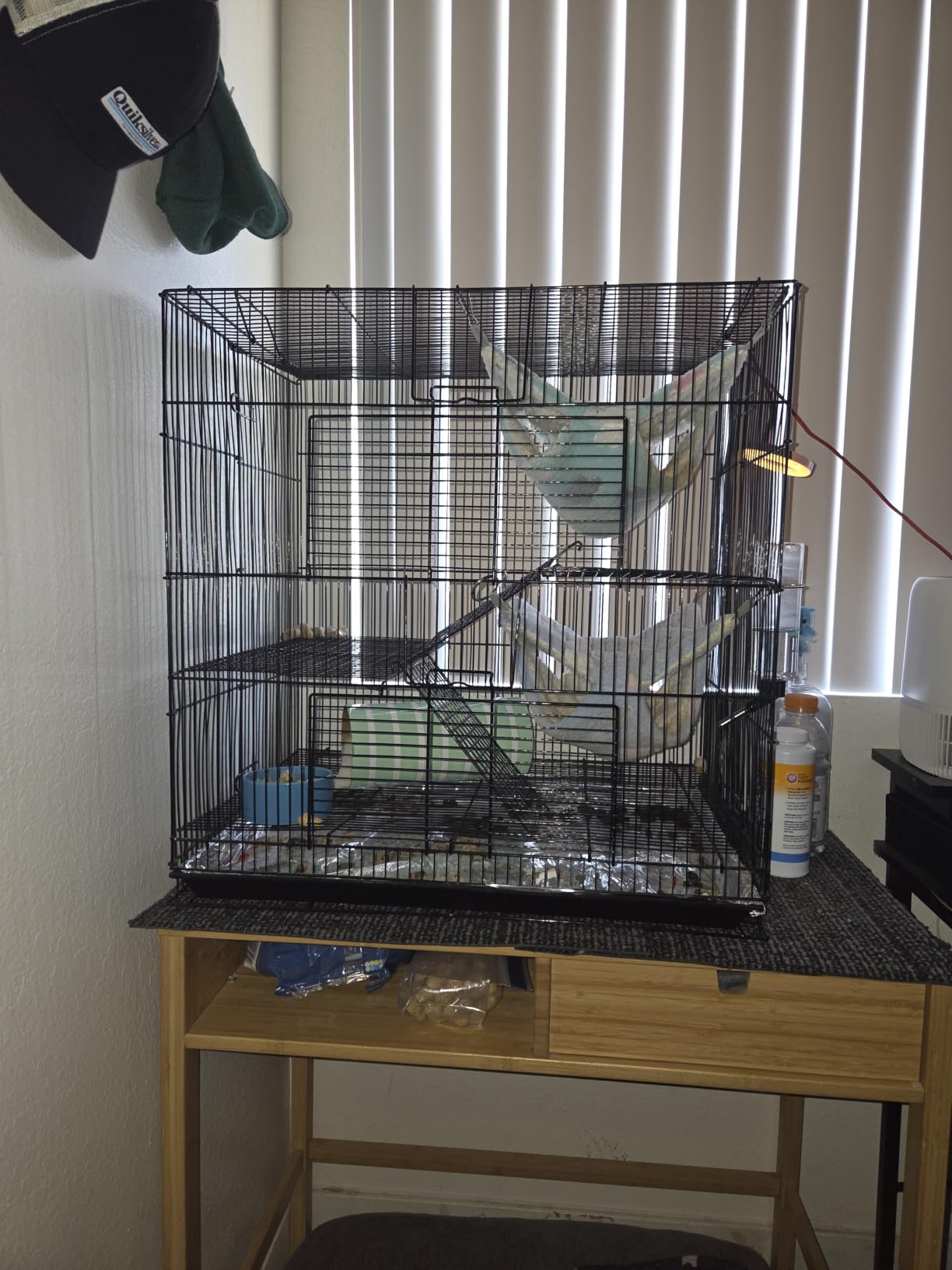
This was the first real cage we ever bought, and it carried our two boys through their first year safely. For a first-time owner watching every dollar — sorry, every cent — it gets the safety fundamentals right where cheap cages usually fail.
The star feature is the 3/8-inch bar spacing. Even young kittens cannot squeeze out, which makes this one of the safest budget options available for baby rats, a point nearly 2,000 reviewers have backed up over the years.
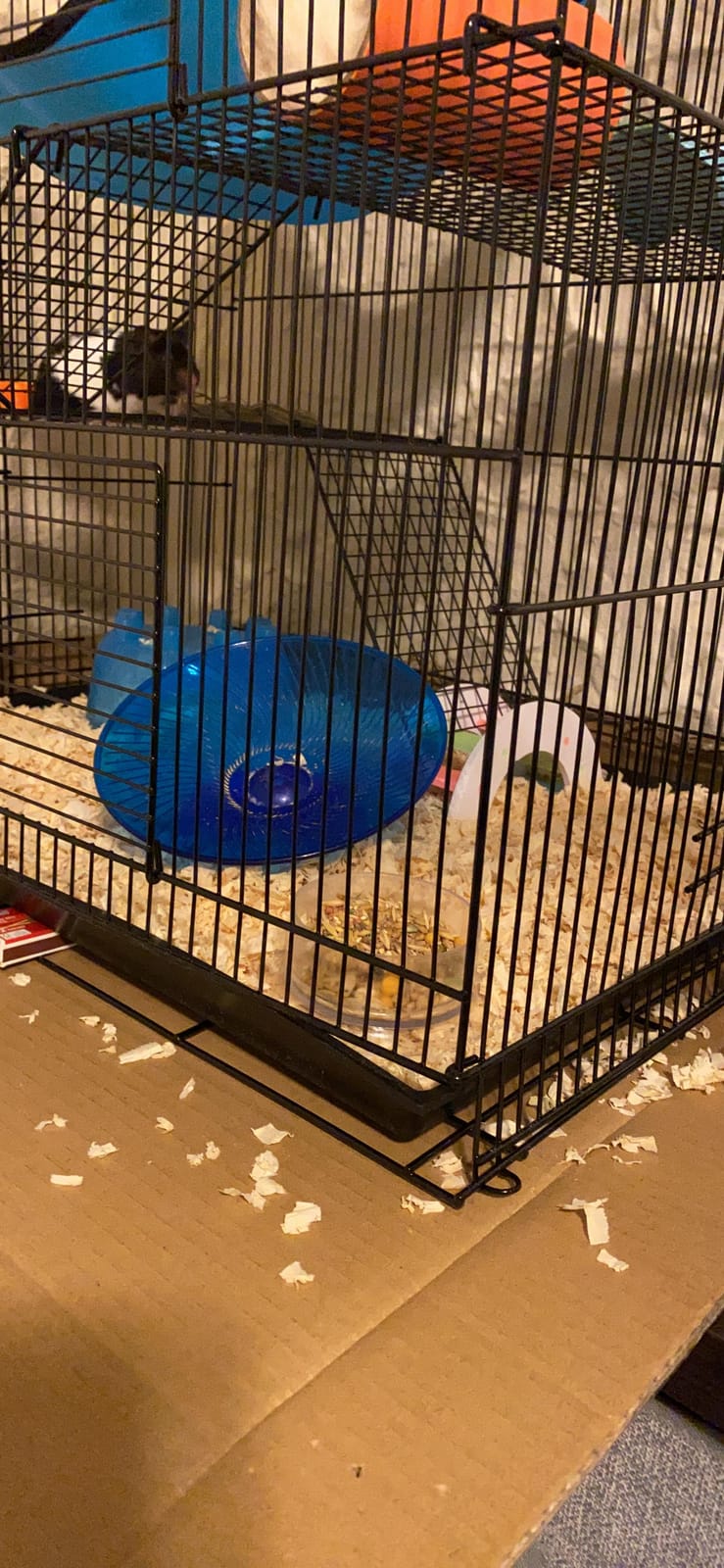
It folds flat for storage and sets up without any tools, which turned it into our go-to cage for a house move and one long road trip. Two front doors with locking clips make catching a nervous rat far easier than single-door designs.
The trade-off is the shallow one-inch tray. Bedding will end up on your floor, so pair this cage with a scatter mat underneath or accept daily sweeping as part of the routine.
Quality control is hit or miss: our unit arrived fine, but a noticeable share of reviewers report bent bars or panel gaps that need zip-tying. Inspect everything on arrival and contact the seller immediately if panels are warped.
Will it hold bedding without making a mess?
Not on its own, so plan around it. Use a thick mat or fleece blanket under the cage, and consider a deeper aftermarket pan if you stay with this habitat long-term. Some owners retrofit a plastic storage bin as the base and solve the problem entirely.
Is it sturdy enough for daily use?
For two calm adult rats, absolutely. Heavy chewers and intense climbers will eventually find the flimsier spots, usually around the door hinges. Treat it as a starter or travel habitat rather than a forever home for a large, busy group, and it will serve you well.
5. Sweetude 6-Piece Hammock Set – Soft Sleep and Hide Spots
Sweetude 6 Pcs Rat Hammock Set Ferret Hanging Tunnel 3 Tier Guinea Pig Hammocks Hideout Soft Chinchilla Bed for Cage Accessories Hide,Play and Sleep(Lovely,Heart)
3 hammocks plus 3 tunnels
11.8 inch hammocks
Coral velvet
Machine washable
Pros
- Soft thick velvet material
- Six pieces in one set
- Machine washable
- Space-saving tiered design
- Durable metal hooks
Cons
- Colors may vary from photos
- Remove hooks before washing
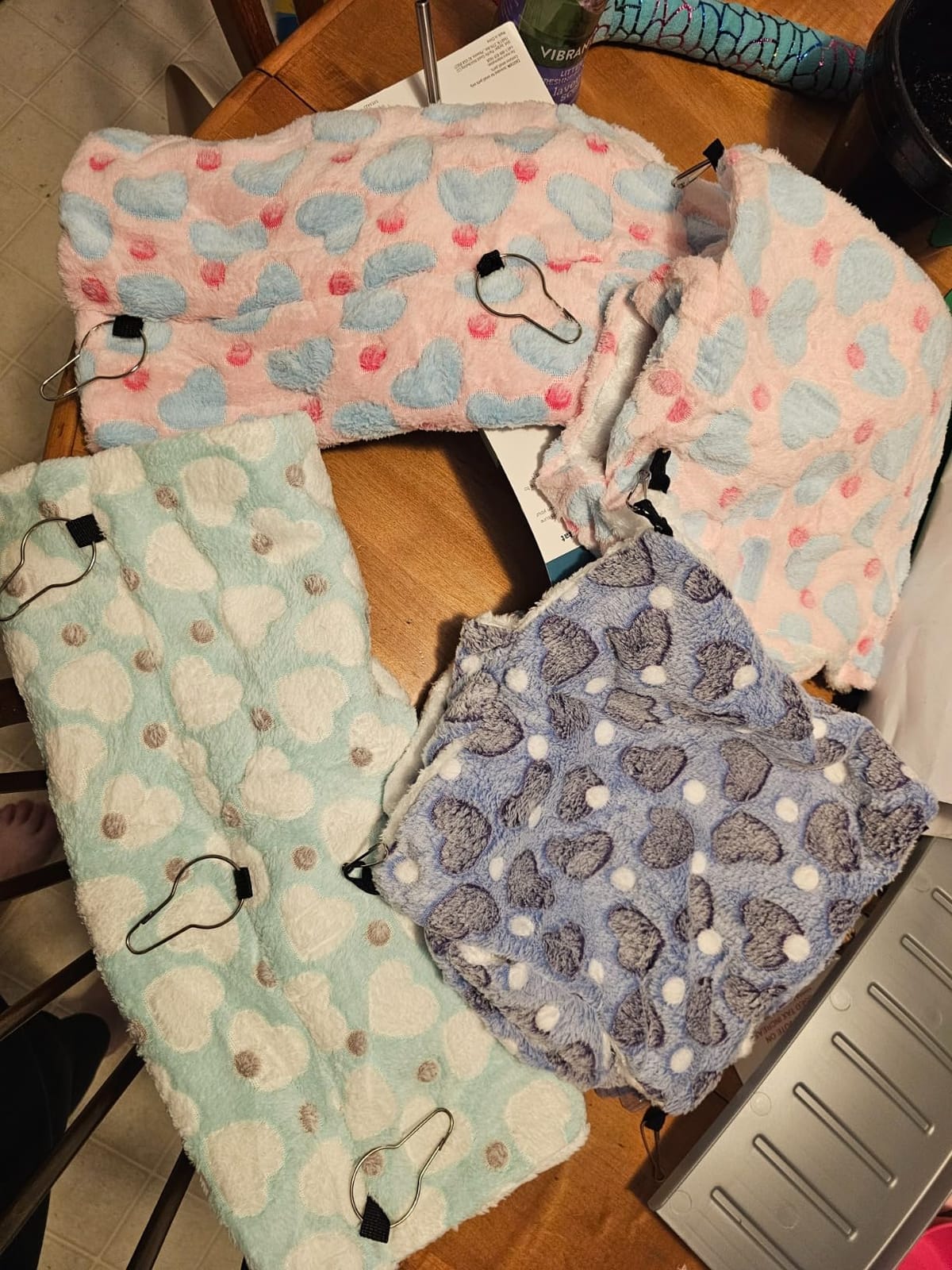
If you want to see rats at their absolute happiest, give them a pile of hammocks. This six-piece set turned our cage into a rat blanket fort within an hour of hanging it, and it holds the highest rating of anything on our list.
You get three tiered hammocks and three hanging tunnels, enough to fill one large cage or split between two habitats. The coral and arctic velvet is thick enough to survive real use, not just product photos.

Rats are prey animals, and enclosed sleep spots lower their stress in a way you can actually observe. Ours rotate between tunnel naps and flat hammock sprawls depending on the room temperature and their mood.
Washing is simple: pop the metal hooks off and run everything through the machine on a gentle cycle. We wash ours weekly and the fabric has held up without thinning or losing shape.
Two small notes from our experience. The colours you receive can differ from the listing photos, and forgetting to remove the hooks before washing will produce an alarming clatter from your machine.
Will these fit your cage?
Each hammock is 11.8 by 11.8 inches and the tunnels run about 19.7 inches long, so they suit mid-size and large wire cages best. In a compact cage, hang one hammock and one tunnel, then store the rest as rotation stock for laundry days.
How many do you actually need?
For a pair of rats, two sleep spots is the minimum so nobody gets bullied out of bed, and the spares act as replacements between washes. Rats also scent-mark fabric, so rotating sets keeps the cage smelling fresher between deep cleans — a small perk that adds up.
6. Kaytee Fiesta Mouse and Rat Food – Best Tasting Starter Food
Kaytee Fiesta Mouse & Rat Food, Nutritious Blend, 4.5 Pounds
4.5-pound bag
Grains seeds fruits vegetables
Antioxidant blend
Chewing textures
Pros
- Rats love the variety
- Antioxidant support
- Dental chewing textures
- Trusted long-standing brand
- Good value per pound
Cons
- Best used as a supplement
- Rats may cherry-pick favorites
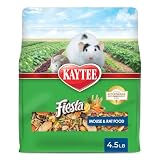
No food has ever caused a bigger riot in our rat room than this blend. The sound of the bag opening brings every rat to the cage front within seconds, which tells you most of what you need to know.
It is a colourful mix of grains, seeds, fruits, and vegetables in assorted shapes and textures, backed by one of the longest-standing brands in small pet nutrition. As a training treat and bonding food, it is genuinely excellent.

The honest nutrition picture is more nuanced. Rats are omnivores that do best on a pelleted lab-block base, and experienced keepers warn that loose mixes let rats cherry-pick their favourites and skip the rest.
That selective feeding is the real risk: a rat who eats only the fatty seeds misses out on protein and key vitamins. With over 7,000 reviews at a 4.7 rating, the taste is not in question — the diet balance is the part you manage.
Our approach has worked for years: a lab block as the daily staple, with this blend offered as a portioned top-up. Everyone gets variety, and nobody gets to become a picky eater with a nutrient gap.

Can this be your rat’s only food?
We would not recommend it, and neither do most experienced keepers on the forums. Serve it alongside a complete pelleted block so the core diet stays balanced, then use the fun bits for foraging games and training rewards. Think of it as the dessert course rather than the main meal.
How much should you feed per day?
A practical starting point is one to two tablespoons of total food per rat daily, adjusted for body condition, plus fresh vegetables. Scatter feeding part of the ration turns mealtime into enrichment, which is a genuine win for bored or overweight rats.
7. VESPRO Natural Wood Toy Set – Best Chew and Climb Bundle
Hamster Toys Set, Guinea Pig Toys Bunny Small Animal Chewing Toy for Cage
Apple wood and timothy hay
Bendable bridge
Swing seesaw and roller
Natural materials
Pros
- Wide variety of pieces
- Natural safe wood
- Encourages chewing and climbing
- Great value for the count
- Rotation-friendly
Cons
- Bridge smaller than expected
- Pieces may differ from photos
Rat teeth grow continuously, so chew items are not optional entertainment — they are dental maintenance. This set keeps our chewers busy with a whole arcade of natural options, and it ranks near the top of its category for good reason.
The box includes a bendable wooden bridge, a bell swing, a seesaw, a roller, reed balls, hay cakes, and apple branch pieces. That variety matters, because rats lose interest in any single toy surprisingly fast.
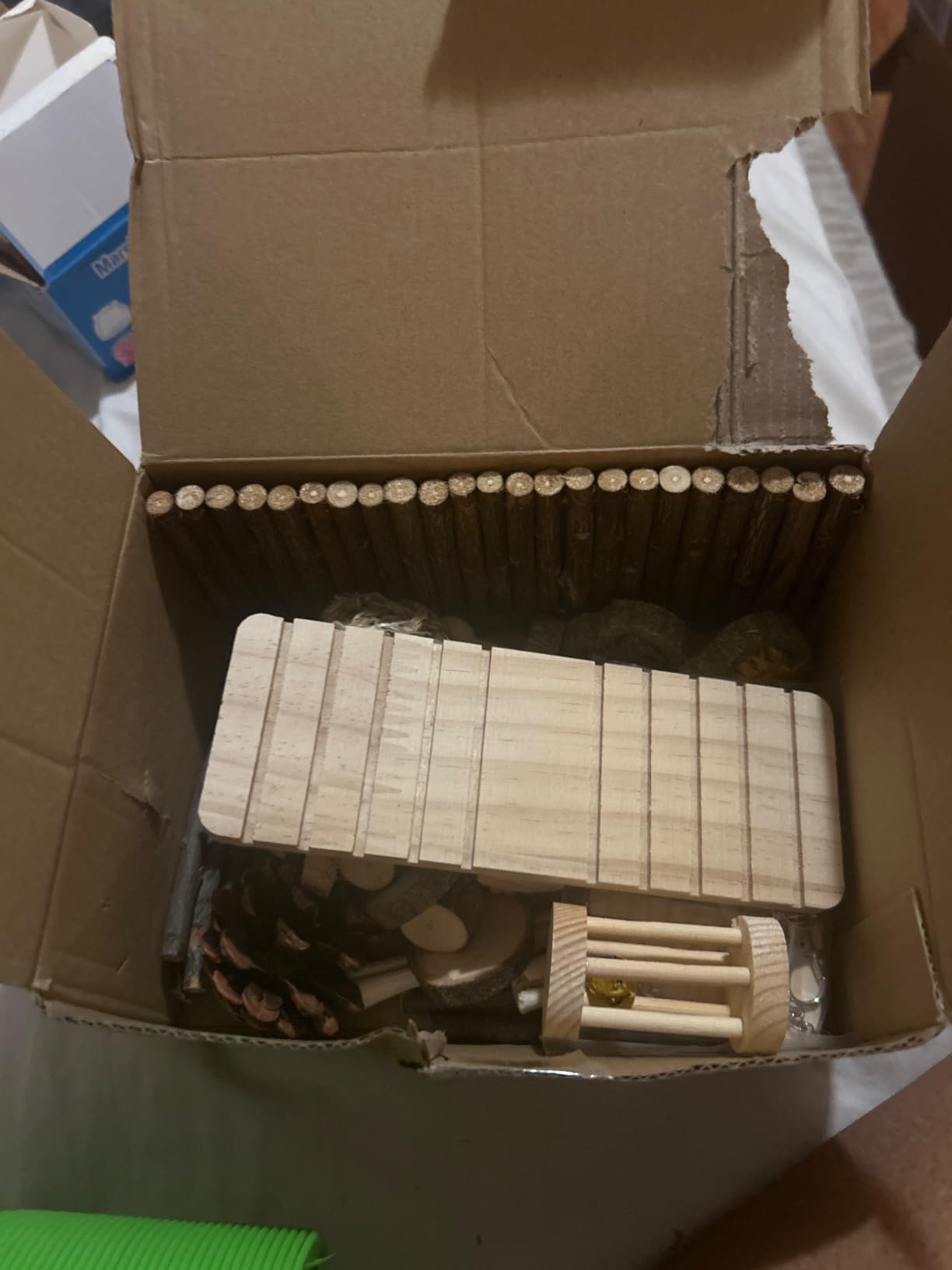
Everything is natural wood and hay without dyes or additives, which is the safety box we want ticked for animals that gnaw for hours a day. The bridge bends into ramps, tunnels, or a ladder between levels.
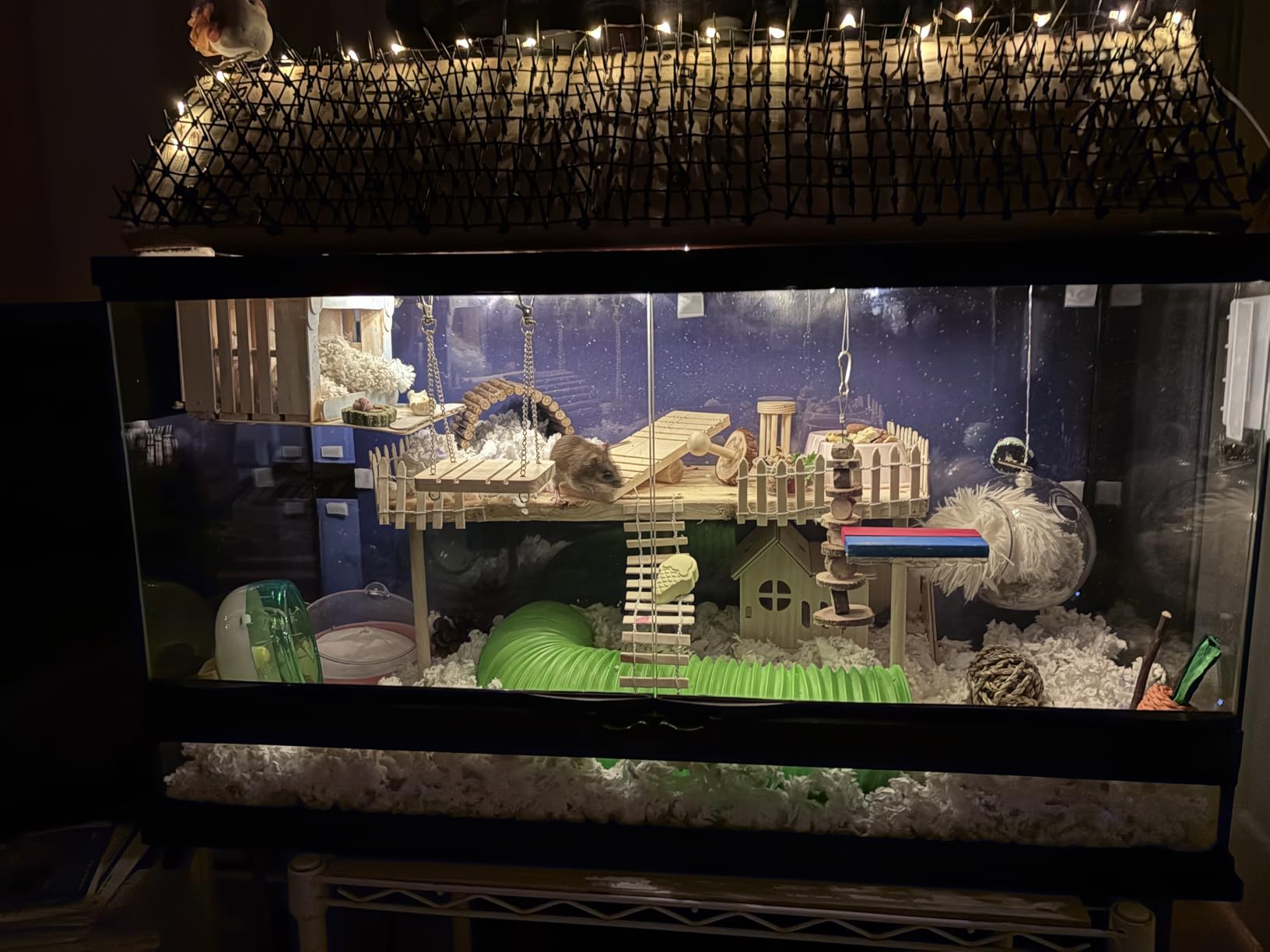
The seesaw and swing double as climbing challenges, and hiding treats inside the balls turns the set into a foraging puzzle. Rotation is the trick we have settled on: half the pieces live in the cage, and we swap them weekly so everything feels new again.
Two honest cautions. The bridge runs smaller than some photos suggest, and the exact contents can vary slightly from the listing. For rat-sized pets both are non-issues, but check measurements if you keep larger rodents.
Are the materials safe for rats?
Yes — apple wood and timothy hay are standard, safe chew materials for rodents, and this set is free of added dyes and chemicals. Supervise the first day with any new wood product, and remove any piece that starts to splinter or fray into loose strands.
How long does a set like this last?
Heavy chewers will demolish the small pieces within weeks, while the bridge and swing typically last months. That destruction is the product doing its job: worn-down wood is far better than overgrown teeth, which is a real veterinary problem for rats.
8. Jevnd Stainless Steel Foraging Toy – Best Mess-Free Veggie Holder
Jevnd 2Pcs Rat Enrichment Toys, 304 Stainless Steel Holder for Fruit Veggie
Two stainless skewers
304 food-grade steel
Lid prevents trapping
Dishwasher safe
Pros
- Chew-proof stainless steel
- Lid stops heads getting stuck
- Visible food encourages foraging
- Adjustable hanging height
- Reduces food waste
Cons
- Rust reported on some units
- Tiny skewer bolt is easy to lose
Wedge a piece of broccoli in a bowl and most rats will ignore it. Hang that same broccoli where they have to work for it, and it becomes the most exciting object in the entire cage.
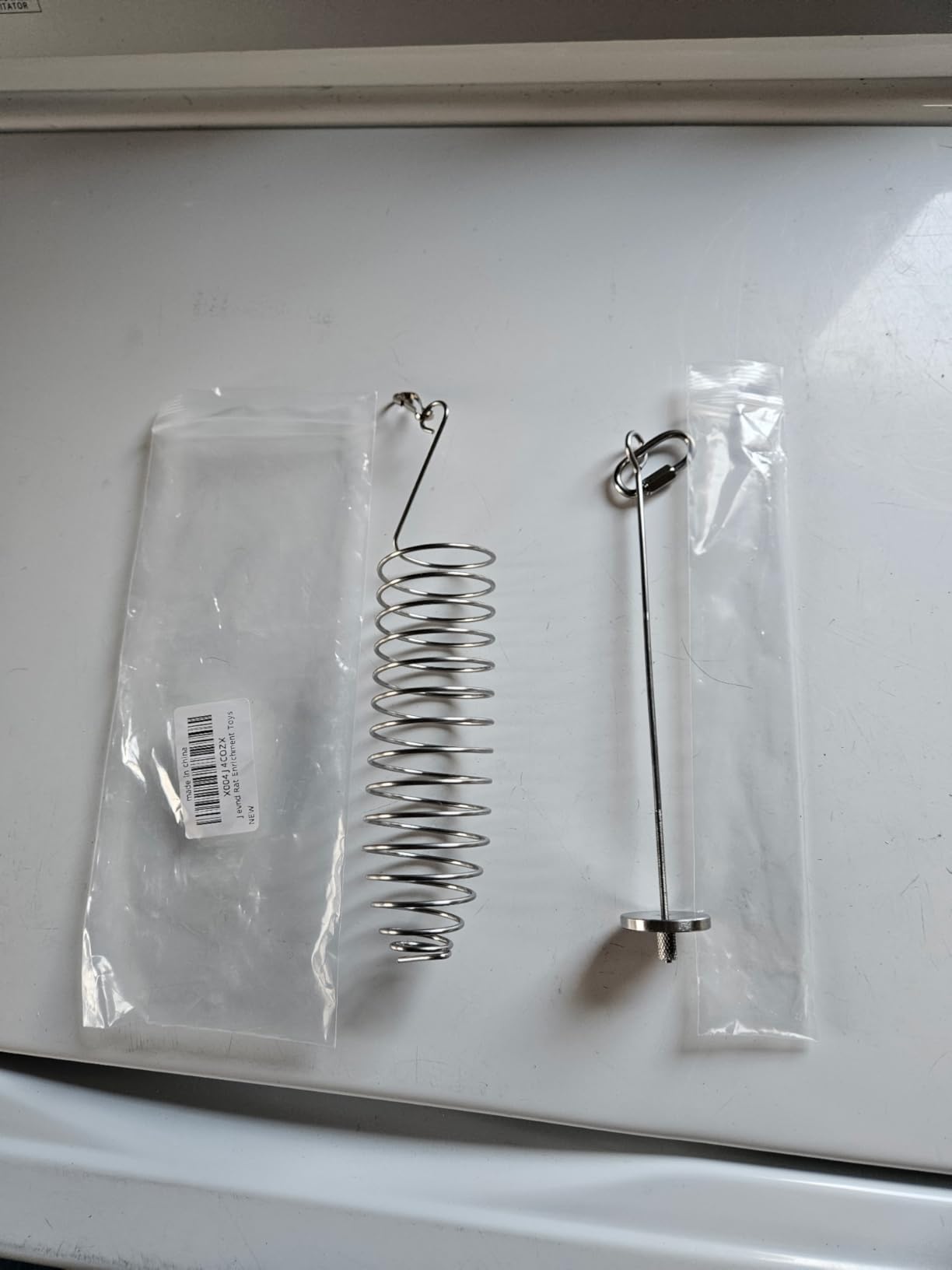
These stainless steel skewers solved our vegetable problem overnight. You thread broccoli, carrot, apple, or cucumber onto the rod and hang it from the cage roof at whatever height suits your rats.
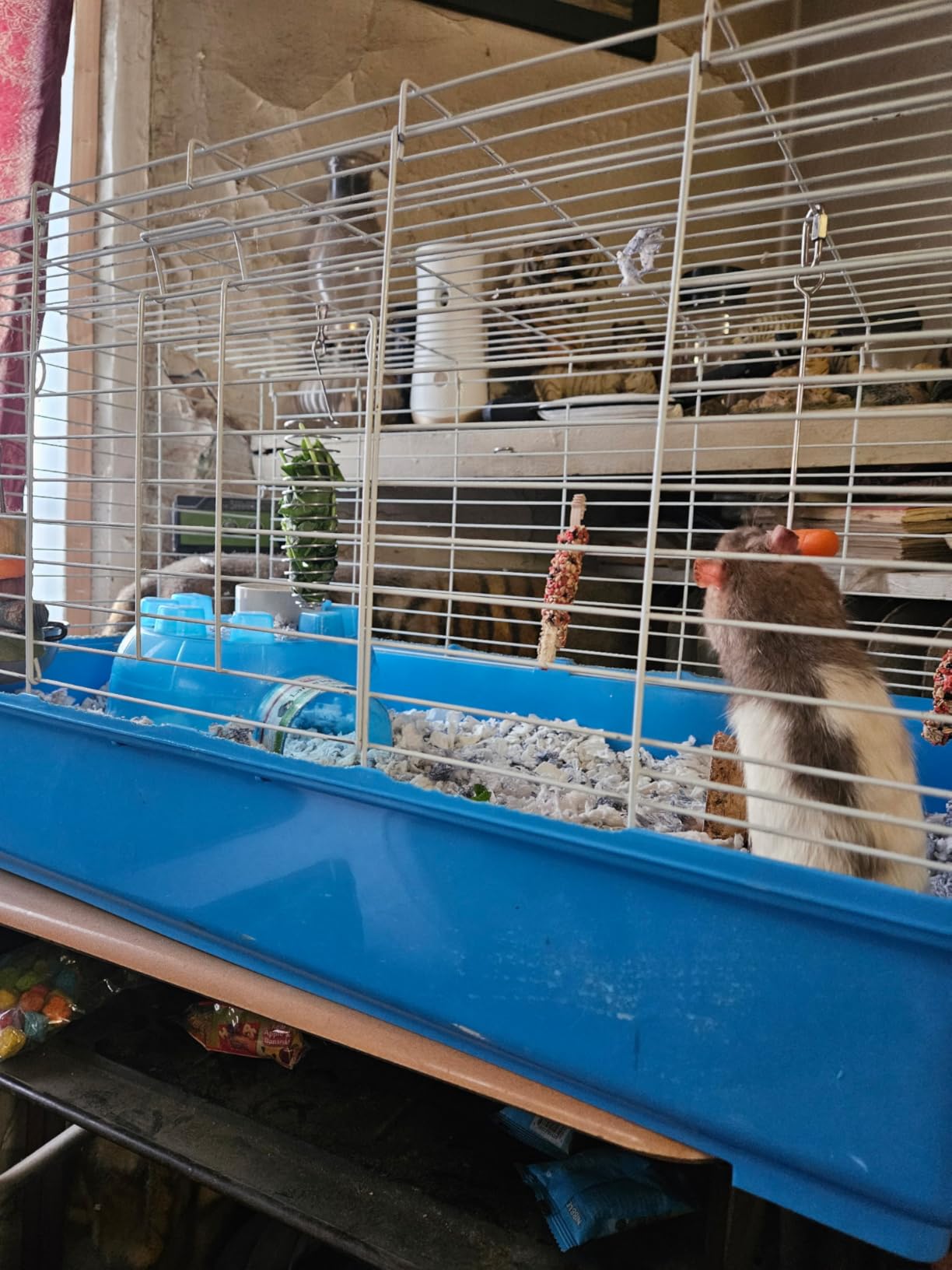
The design details are genuinely well thought out. A lid stops curious heads from getting stuck, the food stays visible so interest stays high, and chew-proof steel outlasts every wooden skewer we ever tried.
It also cuts mess dramatically. Food scraps stay off the cage floor instead of being dragged through the bedding, so substrate lasts longer and the weekly clean goes faster.
Two quality notes from our use and other reviews: occasional units have shown rust spots, and the tiny bolt securing the skewer is alarmingly easy to lose. Dry the pieces thoroughly after every wash and keep the bolt somewhere dedicated.
Is stainless steel better than wooden skewers?
For longevity and hygiene, yes. Wood absorbs moisture and gets gnawed through within days, while food-grade 304 steel goes straight into the dishwasher. If a unit ever shows rust, replace it rather than leaving it in the cage.
What foods work best on it?
Firm vegetables are ideal: broccoli stems, carrot chunks, cucumber rounds, and bell pepper strips all stay put. Skip soft fruits that slide off the rod, and remove any uneaten fresh food within a few hours so it does not spoil in the cage.
9. Trixie Suspension Bridge – Best Budget Climbing Toy
Trixie Small Animal Suspension Bridge, Hanging Cage Accessory with Hammock and Climbing Toys – Ladder and Ring, Ideal for Rats, Ferrets, Guinea Pigs, Mice
Hammock ladder and ring
6.7 x 5.9 x 8.7 inches
Clips onto cage bars
Chew resistant
Pros
- Three toys in one
- Encourages climbing
- Clips onto bars in seconds
- Durable non-toxic materials
- Cheap way to add levels
Cons
- Hammock fits one small rat
- Rope less engaging for some rats
- Undersized for large males
For very little money, this little bridge adds a hammock, a rope ladder, and a rope ring to any cage. It is one of the most-reviewed rat accessories on the market, with thousands of owners backing it up.
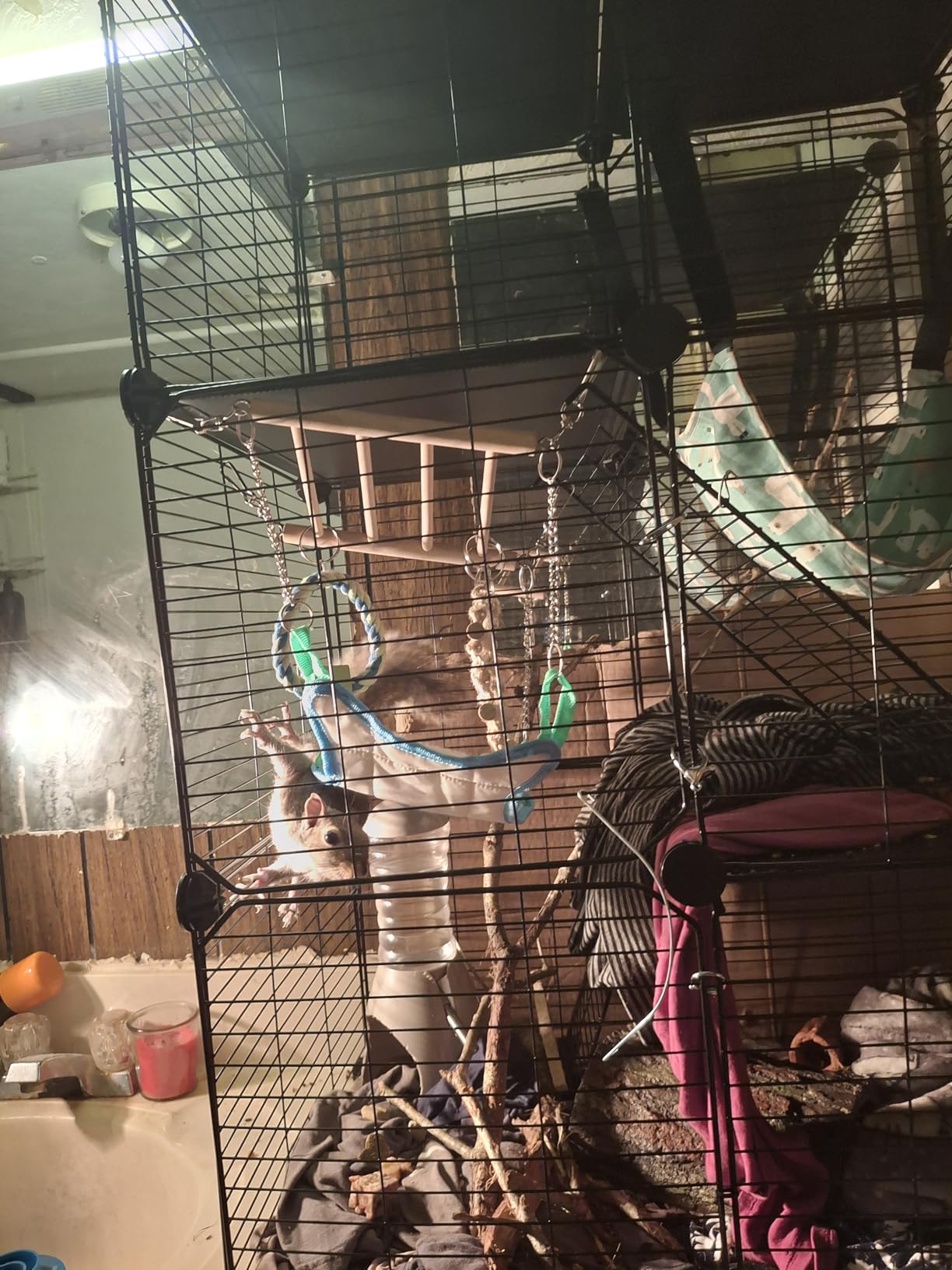
We hung ours as a mid-level connector between two shelves, and it became the busiest route in the cage almost immediately. Rats that ignored other toys started detouring through the rope ring within a day.
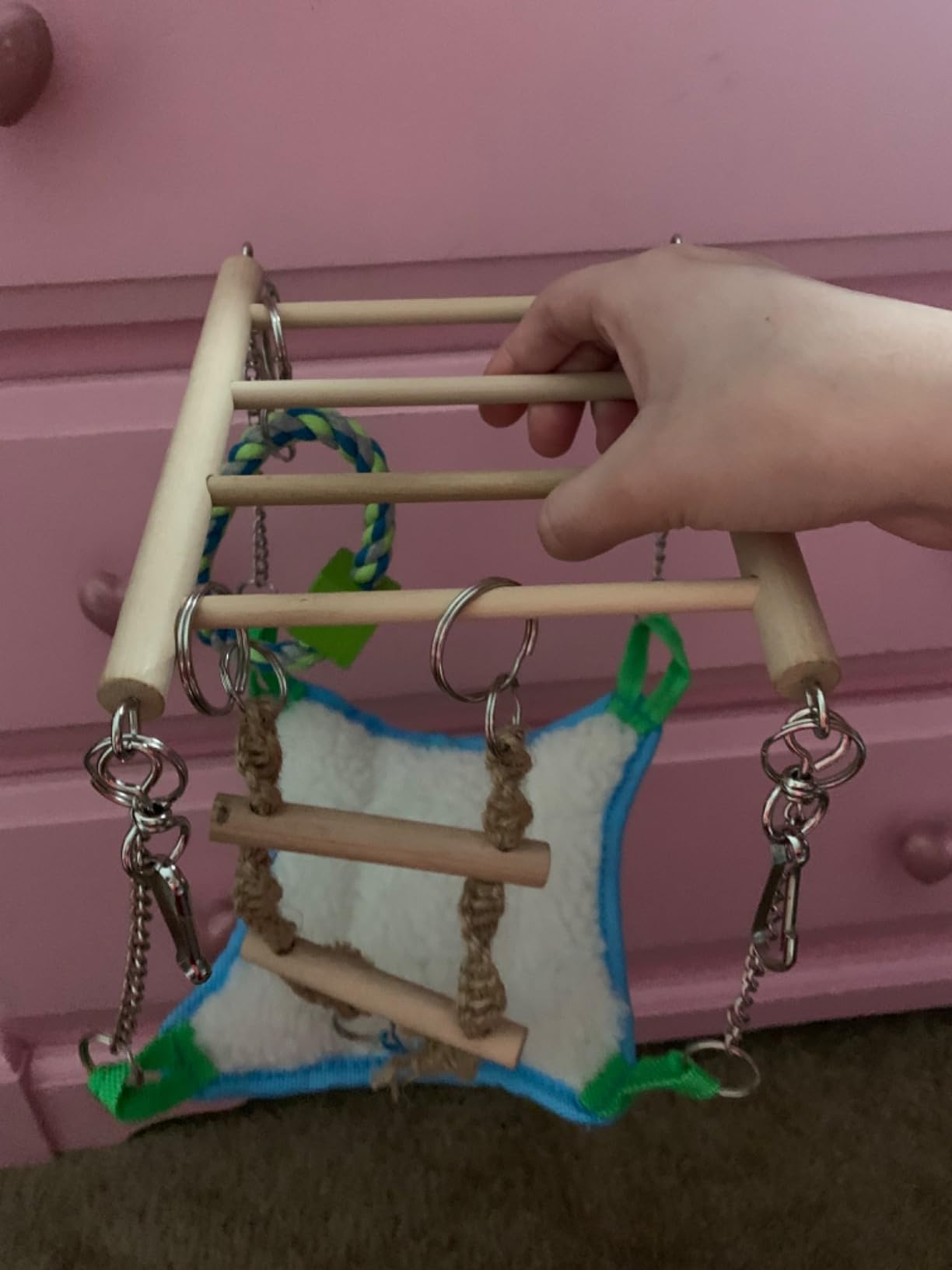
Attachment takes seconds — the clips fasten straight onto cage bars wherever you like. That flexibility lets you redraw the climbing layout whenever your rats start looking bored, which is more useful than it sounds.
The materials are chew-resistant and non-toxic, and after months of use ours shows only light fraying on the ladder rope. For the cost of replacing it a few times over, you still come out far ahead of buying separate items.
Size is the main limitation. The hammock comfortably holds one small rat, and larger males will flatten or ignore the whole unit. Treat it as one piece of a bigger playground rather than the centrepiece.
Is it big enough for your rats?
For dwarf rats, young rats, and slender females, yes. If you keep big adult males, expect them to ignore it or sleep on top of it rather than inside it. Matching toy scale to your actual rats prevents a drawer full of unused cage jewellery.
Where is the best place to hang it?
Rats prefer circular running routes, so hang the bridge between two platforms to create a loop rather than a dead end. Keep it away from the litter corner and the food area, since rope absorbs moisture and holds smells much faster than wood or plastic.
10. Crafterlife Grooming Kit – Best First Grooming Set
Crafterlife Small Animal Pet Grooming Kit with Pet Shedding Slicker Brush, Bath Massage Glove, Pet Grooming Comb, Nail Clipper Trimmer for Rabbit, Puppy, Kitten, Guinea Pig, Hamster, Ferret (Pink)
Slicker brush and bath glove
Steel comb
Nail clippers and file
Lifetime guarantee
Pros
- Complete four-tool set
- Reduces shedding
- Gentle on small animal skin
- Compact and travel friendly
- Budget-friendly
Cons
- Nail clippers run small
- No storage bag included
Grooming is the most underrated part of rat care, because it doubles as a health check. While brushing over the years, we have found lumps, skin irritation, and overgrown nails weeks before they became serious problems.
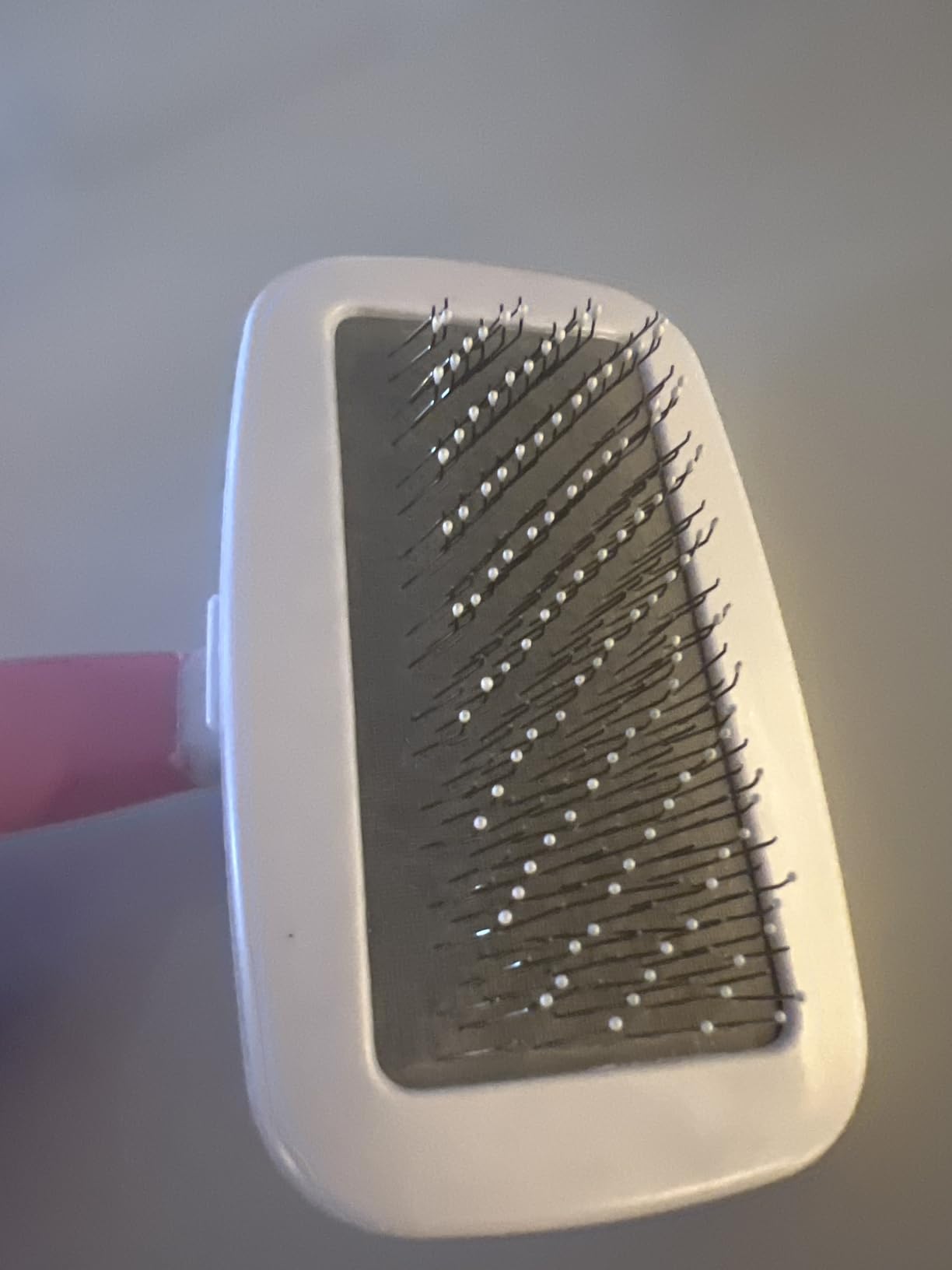
This kit covers the basics in one purchase: a double-layer slicker brush, a rubber bathing glove, a double-tooth steel comb, and nail clippers with a file. It ranks in the top tier of its category across well over a thousand reviews.
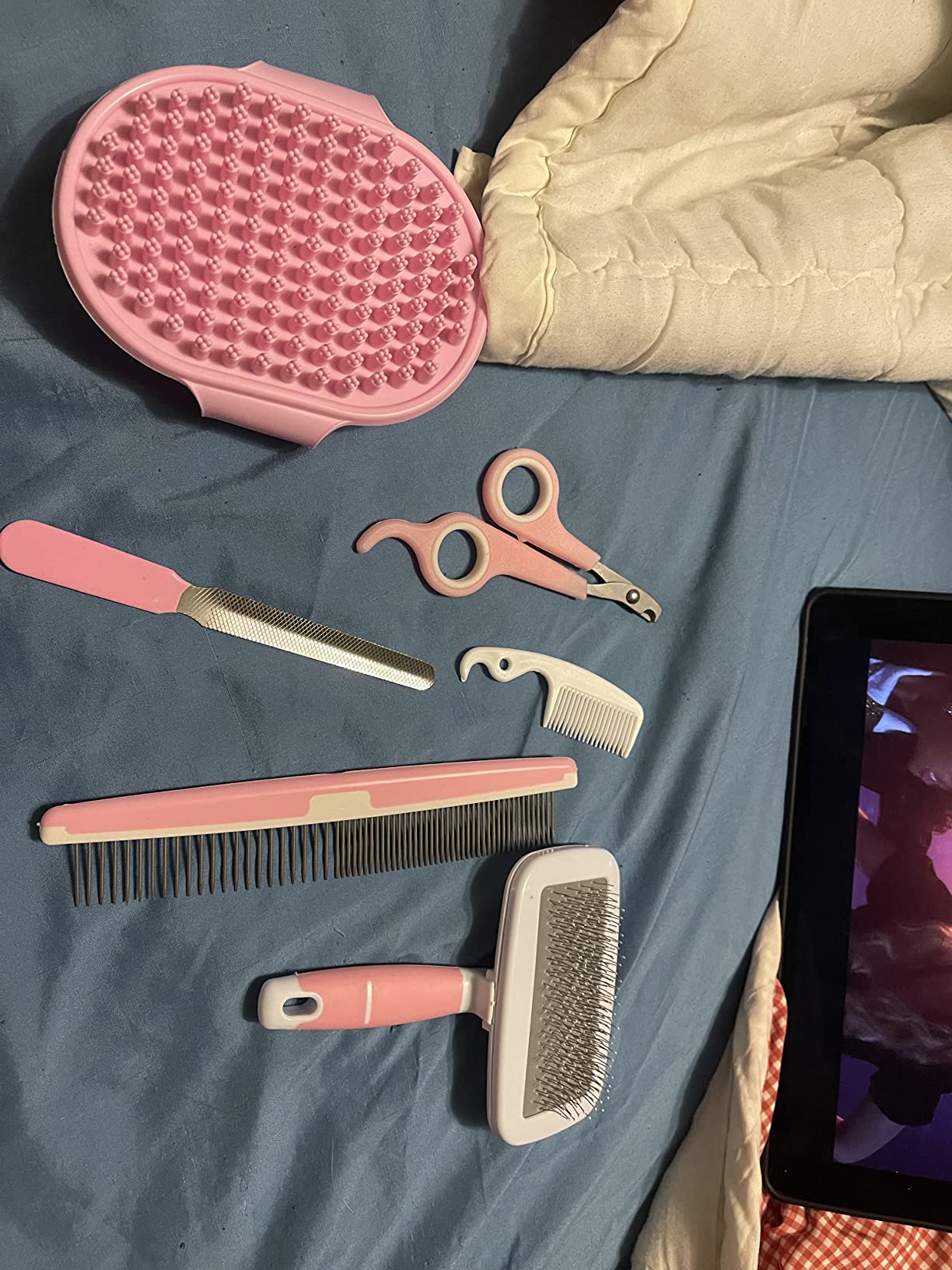
The slicker brush is the everyday tool, and it handles a rat’s fine fur gently enough that ours will fall asleep mid-session. The bath glove became our favourite for older rats who decided the brush was beneath them.
Nail trims are where most new owners freeze up. The clippers here are small, which actually helps with precision on tiny feet, though buyers with larger hands find them a bit fiddly to position.
The kit ships without a storage bag, so keep the pieces in a small box or they will scatter within a week. A lifetime guarantee from the maker rounds out what is otherwise a simple, functional set.
Do rats actually tolerate being groomed?
Most do, if you start slowly and pair sessions with treats. Begin with short brushing while your rat licks yogurt off a spoon, and only graduate to nail trims once they trust you. Some rats never enjoy it and simply need swift, confident handling instead — both are normal.
How often should you groom a pet rat?
A quick brush once a week suits most coats, with nail checks every two to three weeks. Rats are fastidious self-groomers and keep themselves remarkably clean, so full baths are rarely needed — reserve those for medical reasons or a genuinely messy tail.
Buying Guide: How to Build Your First Rat Starter Kit
The fastest way to build a first setup is to prioritise in this order: an adequately sized wire cage, at least two same-sex companions, dust-free paper bedding, a pelleted food base, and enrichment that covers climbing and chewing. Everything else is an upgrade, not a prerequisite.
Cage Size and Bar Spacing Come First
Rats need vertical space far more than raw floor space. The baseline quoted by the RSPCA and repeated across keeper forums is a wire cage at least 90cm long, 60cm deep, and 120cm high — roughly 36 by 24 by 47 inches — for two to five rats.
Bar spacing is the safety detail most beginners miss. Half an inch suits adult rats; drop to 3/8 inch if you are bringing home babies or small females, because wide spacing is the number one escape route in cheaper cages.
Look for solid shelving or full floors at each level. Wire rack shelves can contribute to a foot condition called bumblefoot, so cover them with fleece or cardboard if your habitat only has wire levels.
The Social Rule: Never Just One Rat
Rats live in colonies and communicate constantly through play, grooming, and sleep-piles. A single rat, even with hours of daily handling, will be lonelier and more stressed than a pair kept in identical conditions.
Get at least two same-sex rats, ideally littermates, or a properly introduced neutered mixed pair. Forum wisdom on this point is blunt and unanimous: never get a single rat, and three is even better if your cage allows.
Bedding: What to Use and What to Avoid
Nearly all pet rats carry mycoplasma, a respiratory bacterium that stays dormant until something irritates the airways. Dusty bedding is the most common trigger, which is exactly why paper-based bedding is the standard recommendation for this species.
Avoid cedar and pine shavings entirely — the aromatic oils irritate rat respiratory tracts, and rats are already respiratory-sensitive animals. Kiln-dried aspen is the only wood option many experienced keepers accept.
Whichever substrate you choose, depth matters. A thick layer lets rats dig and tunnel, which is genuine enrichment rather than just a floor covering, and it also absorbs ammonia far better between cleanings.
Food and Water Setup
Build the diet around pelleted lab blocks, which prevent selective feeding, then add a seed-and-fruit mix like the Kaytee Fiesta above as variety and training rewards. Fresh vegetables daily complete the picture.
For water, bottles stay cleaner for longer, but some rats strongly prefer drinking from a bowl. Offer both in your first week and let your rats vote with their behaviour.
Enrichment Covers Four Needs
Climbing, chewing, foraging, and hiding — a good rotation touches all four. Hammocks and bridges serve climbing, wood chews serve teeth, hanging skewers serve foraging, and tunnels or huts serve hiding.
Rotate toys weekly rather than filling the cage all at once. A toy that has been out of rotation for a week attracts almost as much attention as a brand-new purchase, which keeps costs down and interest up.
What to Buy First Versus Later
Day one essentials: the cage, bedding, food, a water bottle, one hide per rat, and a small carrier for vet trips. These are the non-negotiables, and nearly every forum thread about starter kits circles back to exactly this list.
Week one additions: hammocks, wooden chews, and a foraging toy, added once your rats have settled and stopped hiding from you. Later upgrades: a grooming kit, a playpen or free-roam setup, and deeper cage accessories.
Buying in this order spreads the cost and matches what your rats actually need as they settle. It also means you never panic-buy the wrong thing on adoption day.
Budget Tiers Without the Guesswork
On a tight budget, the Mcage with paper bedding, lab blocks, and simple hides covers every essential safely. Mid-range, the Homey Pet cage plus the Sweetude hammock set delivers climbing room and comfort together. If you want the habitat that can last a decade, the Critter Nation double unit with a full accessory load-out is the endpoint most keepers eventually reach — we did.
Frequently Asked Questions
What should be in a starter kit for pet rats?
A complete rat starter kit includes a tall wire cage with half-inch bar spacing or narrower, dust-free paper bedding, a pelleted food base, a water bottle, at least one hide per rat, hammocks, chew items, a carrier, and cleaning supplies. Plan for a cage of at least 24 by 24 by 24 inches for a pair, though bigger is always better.
Should I get 1 or 2 pet rats?
Always get at least two. Rats are highly social colony animals, and a lone rat develops stress behaviours even with daily human interaction. Same-sex pairs or small groups from the same litter are the standard recommendation, and three is even better if you have the cage space.
Can I leave my rats alone for 4 days?
No. Rats need daily checks for food, water, and health, and a knocked-over water bottle or a developing illness can turn serious within a day. For anything longer than a weekend, arrange a sitter who knows them and can spot early warning signs.
Do pet rats stink up your house?
Not when the cage is maintained. Rats themselves have very little body odour, and smell comes from ammonia building up in soiled bedding. Spot-clean daily, change bedding weekly, and use absorbent paper-based bedding — males are slightly more musky than females but never overwhelming.
What not to put in a rat cage?
Avoid cedar and pine shavings, dusty or scented bedding, cotton nesting material that can tangle limbs, treated wood, small enclosed plastic hides with poor ventilation, and any accessory with gaps that could trap a head or foot. Also skip exercise wheels sized for hamsters, which can damage rat spines and tails.
Final Thoughts on the Best Starter Kits for First-Time Rat Owners
The shortest path to a happy first setup: pair the Critter Nation double unit with the Sweetude hammock set, feed a lab-block base topped up with Kaytee Fiesta, and keep the VESPRO wood set in rotation for teeth and boredom. Watching our rats stack themselves into those hammocks every evening is still the best part of the day.
If the budget is tighter, the Mcage plus paper bedding, lab blocks, and basic hides covers every essential safely, and you can upgrade piece by piece as you go. The gear matters, but the pair of rats you put inside it matters far more.
However you build it, finish the setup before adoption day so your new pair lands in a calm, completed home. That single step spares first-time owners more stress than any product on this list — and our guide to the best starter kits for first-time rat owners in 2026 exists to make it easy.