
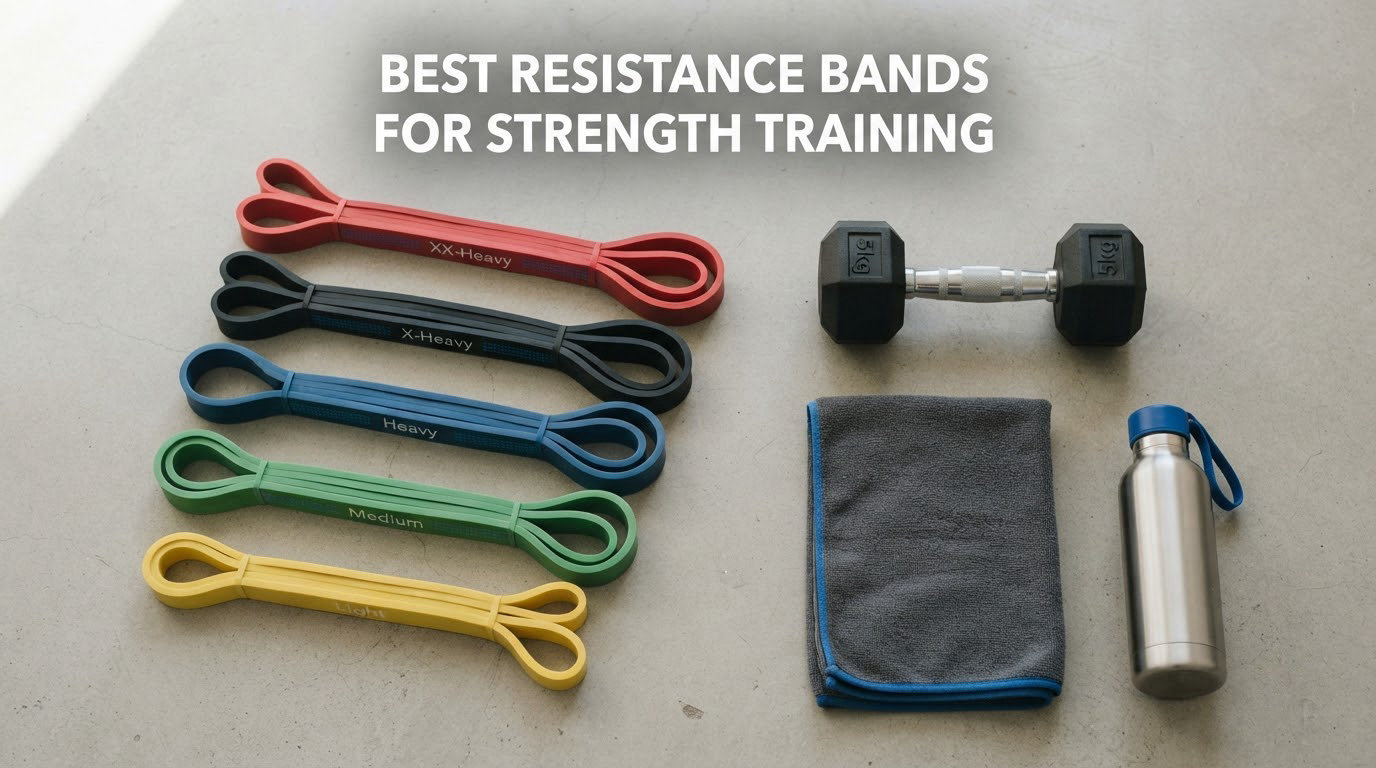
The best resistance bands for strength training are continuous loop power bands or tube bands with handles that deliver real, progressive tension through the full range of motion. Our team worked through twelve sets across six weeks of programming, comparing loop bands, tube bands, fabric loops, and a heavy six-level system on assisted pull-ups, banded deadlifts, pressing, rowing, and warm-up work.
The short answer is that almost any set can add useful load to a strength program, but they are not interchangeable. A 12 inch loop band and an 82 inch pull-up band feel nothing alike, and the difference between a set that holds up to daily deadlift tension and one that frays in a month is usually the rubber, not the listing. We scored every set on tension range, construction, hardware, and how it behaved once a band reached the end of its stretch.
Below you will find a category-labelled pick for every job a strength band can do, plus the honest trade-off on each one. We also explain why band tension is a range rather than a single number, and how to pick a starting band without a scale. Use the category labels to jump straight to your use case, or read the whole thing if you are building a kit from scratch.
One note on cost, since it comes up constantly in the r/ResistanceBand community threads. The pattern we keep seeing there is identical: buy something serviceable, train on it for a year, and upgrade only the piece that is actually failing. Bands are the cheapest piece of a home gym, so buying the whole ecosystem at once is rarely the smart move.
If you are training a partner or a family member at the same time, the same build-up logic applies to anything else you add to the room. Our notes on adjustable dumbbells for dog training cover the parallel question of loading progression for a non-human training partner, and the same reps-to-failure rule carries over.
Table of Contents
Top 3 Picks for Strength Training in 2026
These three sets cover the widest range of strength work. The Fit Simplify set is the one we recommend to most people, the Renoj fabric loops took the highest average rating of anything we tested, and the WHATAFIT kit wins on completeness.

Fit Simplify Loop Band Set
- Five colour-coded levels
- 12 inch loops
- carry bag and exercise guide included


The Best Resistance Bands for Strength Training at a Glance in 2026
Every set below appears with its own ASIN, key specifications, and the reason it made the list. Read the tension range first, because that is the single spec that decides whether a set can support the lifts you actually want to do.
| Product | Specs | Action |
|---|---|---|
| Fit Simplify Loop Exercise Bands Set of 5 |
|
Check Latest Price |
| WHATAFIT Resistance Bands with Handles 150 lb Set |
|
Check Latest Price |
 VEICK Resistance Bands with Handles Set VEICK Resistance Bands with Handles Set |
|
Check Latest Price |
| Renoj Fabric Loop Bands 3 Pack |
|
Check Latest Price |
 TheFitLife Bands with Handles and Door Anchor TheFitLife Bands with Handles and Door Anchor |
|
Check Latest Price |
 WSAKOUE Pull Up Bands Set WSAKOUE Pull Up Bands Set |
|
Check Latest Price |
 Draper’s Strength Heavy Duty Loop Band Draper’s Strength Heavy Duty Loop Band |
|
Check Latest Price |
 COOBONS FITNESS Heavy Bands with Handles COOBONS FITNESS Heavy Bands with Handles |
|
Check Latest Price |
 Bodylastics Basic Series Resistance Band Set Bodylastics Basic Series Resistance Band Set |
|
Check Latest Price |
 THERABAND Non-Latex Resistance Band Set THERABAND Non-Latex Resistance Band Set |
|
Check Latest Price |
 TechStone Loop Exercise Bands 5 Levels TechStone Loop Exercise Bands 5 Levels |
|
Check Latest Price |
 COFOF Resistance Bands with Handles 5 Levels COFOF Resistance Bands with Handles 5 Levels |
|
Check Latest Price |
Are Resistance Bands as Effective as Lifting Weights?
Yes for hypertrophy, strength, and tendon health, with one honest caveat about how you progress. Because a band is elastic, tension climbs continuously as you stretch it and peaks at the hardest point of the movement, which is usually lockout. A dumbbell holds the same force from the first centimetre to the last, so the loading profile is genuinely different rather than merely lesser.
That peak matters for two reasons. First, the hardest position of a banded movement is the one where the muscle is shortest and most capable of producing force, which is a stimulus a light dumbbell simply does not give you. Second, the ecccentric phase gets progressively more load as you lower into the stretch, so you get real stretch-mediated tension on the way down as well.
The caveat is progression. Free weights make microloading easy: add two kilos, repeat. Bands make it harder, because tension is a curve rather than a dial. The workaround is simple and it is how we program them: pick a band that leaves you one to three reps shy of failure, then move up a level when every rep in the set is clean.
What you cannot do with bands is load a barbell with a fractional increment mid-set, or build to a true maximal single. For that reason most serious strength athletes use bands as an accessory layer around a barbell programme rather than as a replacement for it. Used that way, they are not a compromise. They are an addition.
1. Fit Simplify Loop Exercise Bands Set of 5: Best Overall Loop Set
Fit Simplify Resistance Loop Exercise Bands with Instruction Guide and Carry Bag, Set of 5
5 levels
12 in by 3 in latex loops
3.5 oz
instruction guide and carry bag
Pros
- Widest review base of any set we tested
- Five colour-coded levels from extra light to extra heavy
- 3.5 oz total weight so it fits any gym bag
- Illustrated guide with dozens of exercises
- Loops stay flat and do not roll up mid-set
Cons
- Narrower and shorter than some buyers expect
- Carry bag is roughly 2 inches too short for the loops
- Colour order in the multicolor set does not follow light-to-heavy
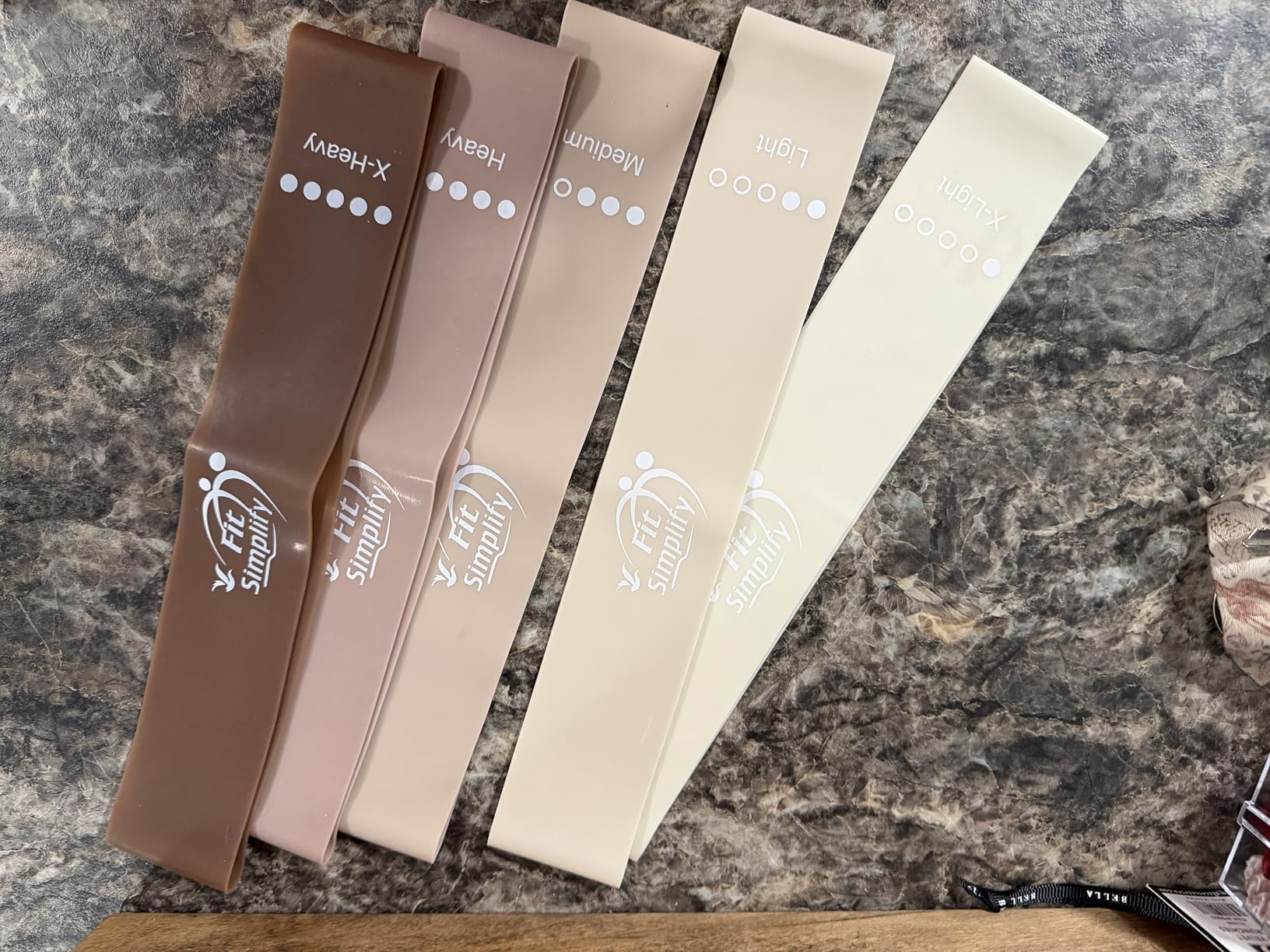
Our pick for most people. This is the set we kept reaching for during six weeks of programming because it does the least amount of arguing with the exercise. Five colour-coded loops cover extra light through extra heavy, and the whole set weighs 3.5 ounces, which means it lives in a drawer rather than a closet.
We used the lighter loops for warm-up sets before heavy squats and the heavier ones for banded deadlift tension and lateral work. The resistance is smooth and predictable through the stretch, with no sudden stiffening that we noticed over repeated sessions. The loops stayed flat on the floor rather than rolling into a tube, which matters more than it sounds when you are doing banded leg work in bare feet.
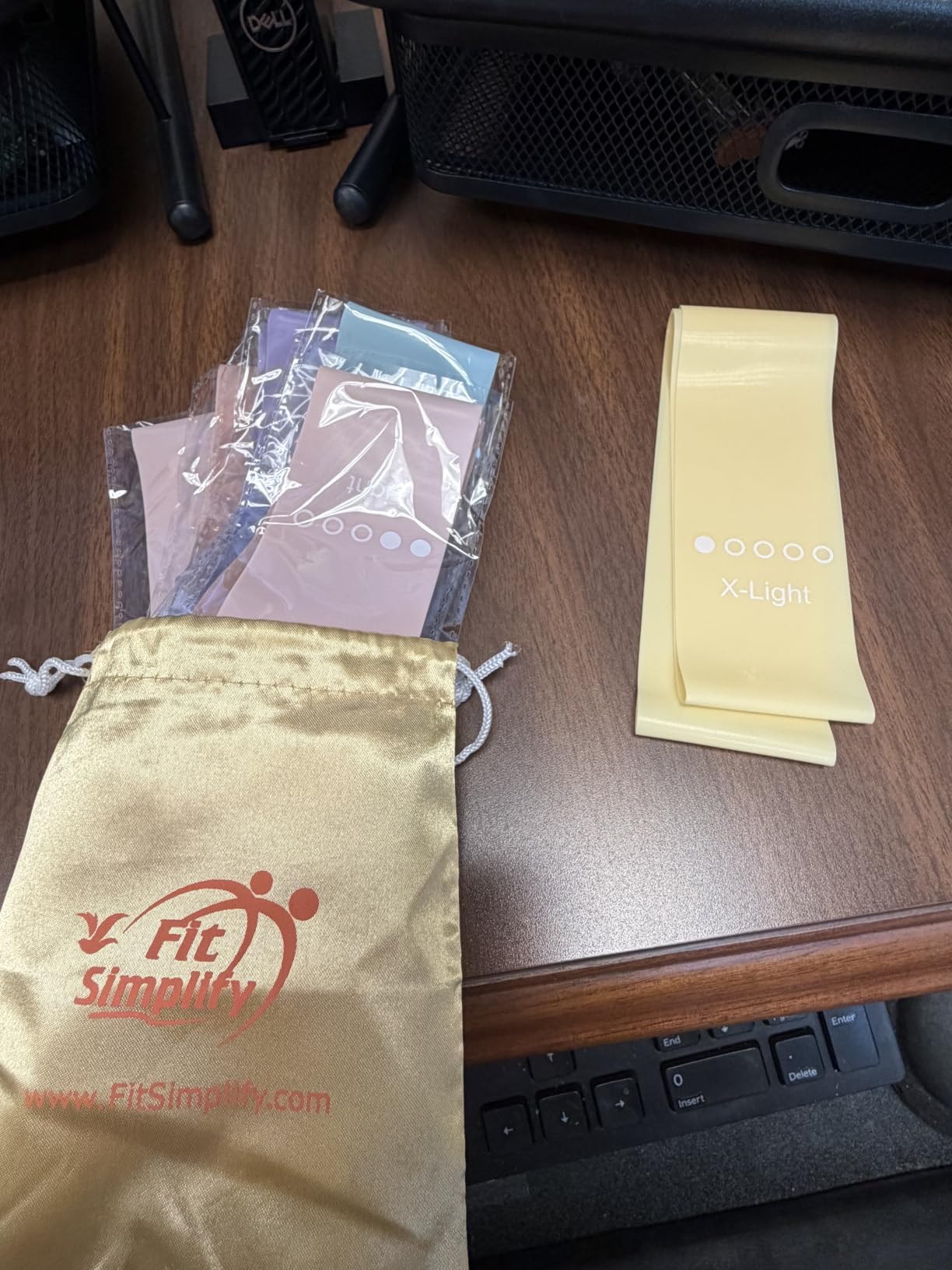
The two things worth knowing first: the loops are 12 inches by 3 inches, which is compact but short for big pulls, and the pouch in the box is a little undersized for the bands themselves. Neither issue affected our training. Both were mentioned often enough in user feedback that we would rather you hear it here.
The instruction booklet is more useful than most. It covers legs, arms, back, shoulders, ankles, hips, and core, which gave us enough movement ideas to program an entire month without inventing anything. For a first band purchase, that is a real advantage over a bare loop set.
Who this loop set suits
Anyone building a first kit, training without a rack of weights, or needing something that fits in a laptop bag. The five-level range is wide enough that two people of very different strength can use the same set, which is unusual at this weight.
We also liked it for warm-up work. Loading a band progressively before a heavy compound lift is far easier with colour-coded loops than with a single tube, and doing three or four warm-up sets takes about four minutes.
Who this loop set does not suit
It will not carry heavy barbell tension. A 12 inch loop at the top of its tension is not a replacement for a dedicated power band when you are adding load to a deadlift, and we would not use these for rack pulls with real weight on the bar.
If you need anchored pressing or rowing, you need handles and an anchor, which this set does not include. Buyers expecting a full system will find the box thinner than the product photographs suggest.
2. WHATAFIT Resistance Bands with Handles, 150 lb Set: Best Complete Kit
WHATAFIT Resistance Bands with Handles, 150 lb Exercise Bands Set
5 tubes 10-50 lb
stackable to 150 lb
natural latex
door anchor included
Pros
- Five clearly labelled levels stackable to 150 lb
- Natural latex with steel buckles that resist cracking
- Door anchor
- ankle straps
- cushioned handles and carrying case included
- Carabiner system makes fast band changes easy
- 2 year limited warranty
Cons
- Labelled poundage is approximate
- so a 20 lb band can feel lighter than a 20 lb dumbbell
- Multiple tubes are awkward to centre in the door anchor
- Metal door clips can mark a door
This is the kit we recommend to anyone who wants to start training a full body at home without buying a rack. Five stackable tubes run from 10 lb to 50 lb and combine to 150 lb of total tension, and the box includes a door anchor, two cushioned handles, ankle straps, and a carrying case. Very few sets at this level give you the whole inventory.
The carabiner clips changed our sessions. Swapping a band takes a couple of seconds rather than the fumbling that comes with tubes without clips, which means a multi-exercise programme is realistic rather than aspirational. We ran pressing, rowing, and overhead work off the same anchor point for a full month without an issue.
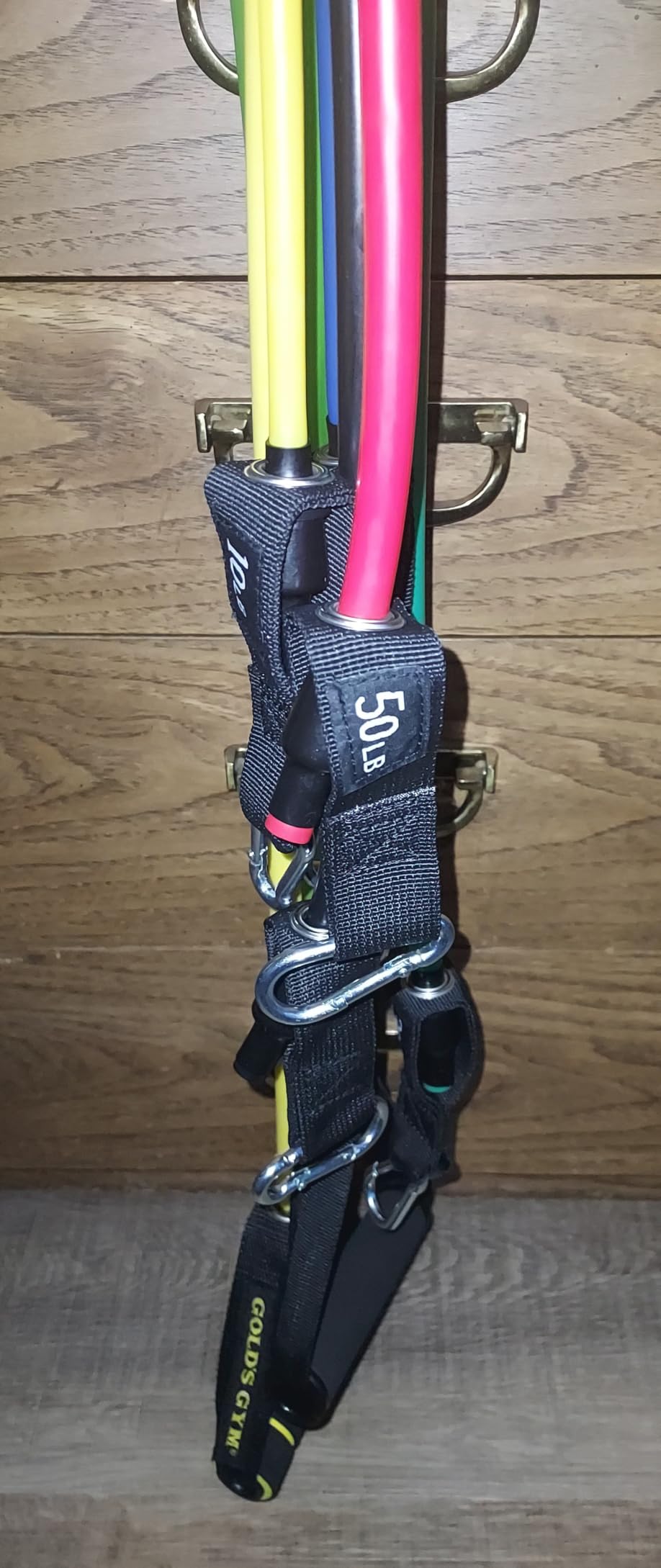
The honest part of this set is that the printed poundage is a reference point, not a measurement. Band tension rises as you stretch, so a 20 lb band at moderate stretch is not the same as a 20 lb dumbbell through the range. Judge the level by reps to failure, not by the printed number.
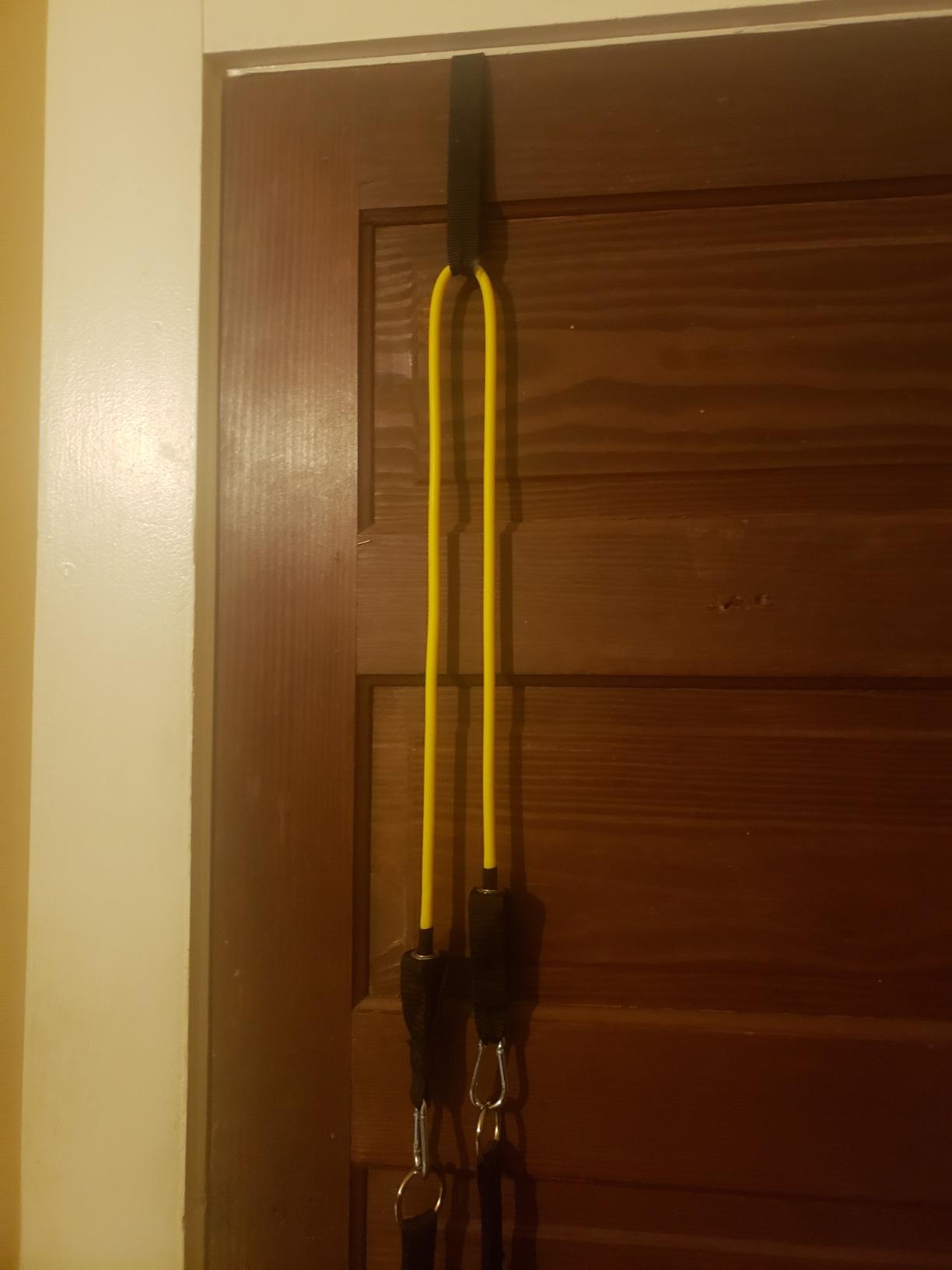
Door anchor setup took us a few attempts to get right with multiple tubes attached. Once you know the technique the whole thing is stable, but plan five minutes the first time rather than expecting it to work immediately.
Who this kit suits
Home lifters who want pressing, rowing, and leg work in one purchase. It is also a strong choice for physical therapy style work at moderate tension, and the 2 year limited warranty is longer than most sets in this category offer.
Anyone training a partner will get more use out of it than a single loop set, because the five levels let you scale resistance to whoever is doing the work.
Who this kit does not suit
Latex allergy sufferers, since the construction is 100% natural latex. If latex is a problem for you or anyone you train with, look at a non-latex or fabric option instead.
It is also not ideal if your door is the only anchor point and you care about the finish. The metal clips can leave a mark, which we would test on a hidden door before committing to it.
3. VEICK Resistance Bands with Handles: Best All-Round Tube Set
VEICK Resistance Bands with Handles, Exercise Tube Bands Set for Workouts
5 tubes 10-50 lb
48 inch length
stackable to 150 lb
full accessory kit
Pros
- Five colour-coded levels stackable to 150 lb
- 48 inch length suits a wide range of exercises
- Includes cushioned handles
- ankle straps
- door anchor and carry bag
- Lightweight and easy to store
- Rated 4.6 across more than 23000 reviews
Cons
- Bands are 48 inch which is short for some overhead positions
- Colour coding has to be checked by eye against the manual
- No stated warranty beyond the standard manufacturer coverage
Very similar inventory to the WHATAFIT set, with one meaningful difference: the bands are 48 inches long. That extra length gave us noticeably more usable tension on rowing and lat work, where a short tube limits how far you can sit back into the stretch.
The five levels are colour-coded in the familiar yellow, blue, green, black, and red progression, and they stack to 150 lb combined. We used two bands for pressing and three for squats, and the carabiners held position under load the entire time.
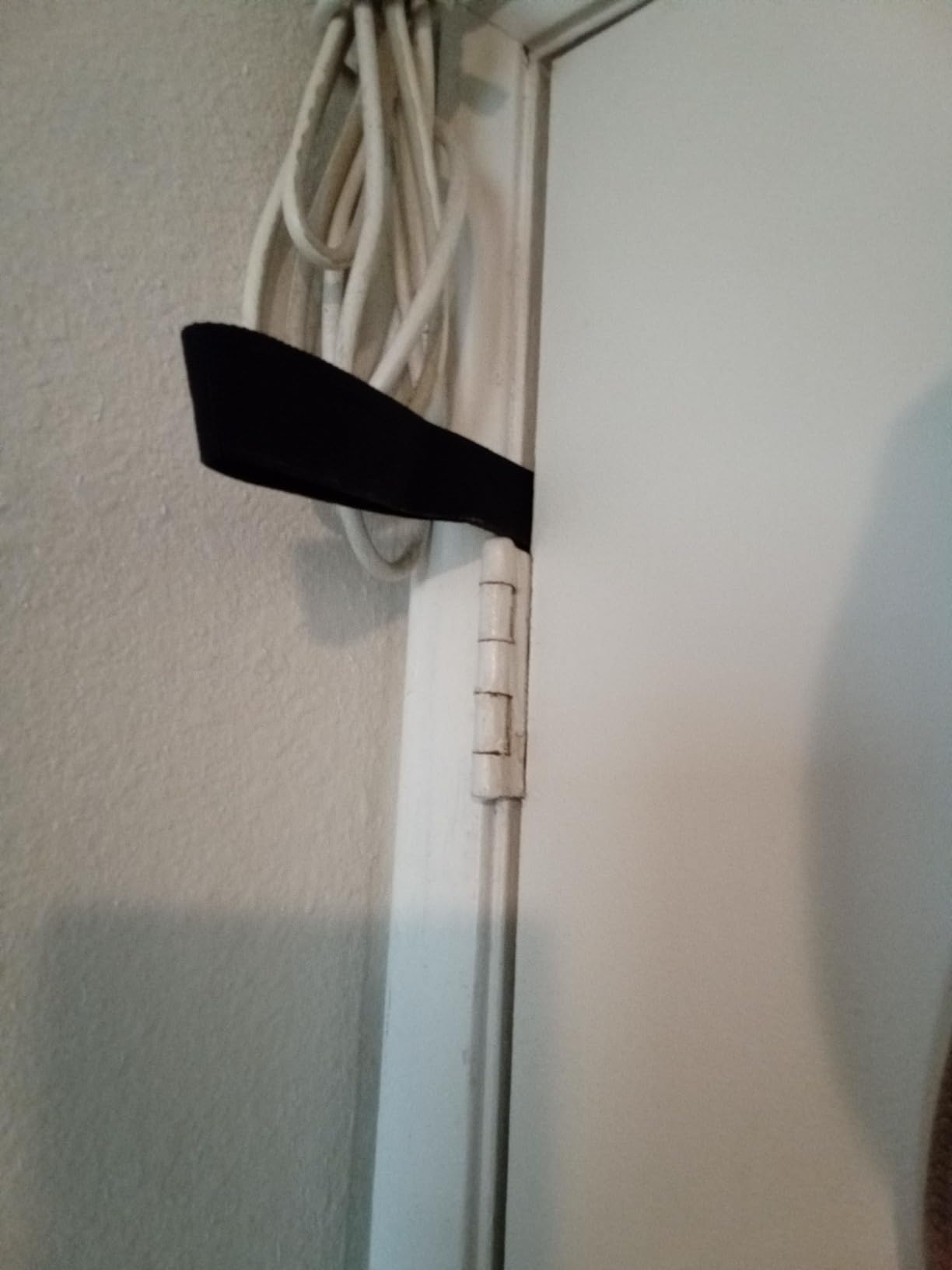
Field durability is where this set has earned its reputation. Users report VEICK bands lasting roughly ten to fourteen months on a second set, with the included carabiners being the stated reason for buying a replacement rather than the tubes themselves. We did not push these to failure, but the latex felt dense and the surface texture held up to repeated handling.
Our one reservation is length in the other direction. For overhead work in a seated position, 48 inches leaves less to spare than a longer tube. If your programme is press-heavy rather than row-heavy, weigh that before buying.
Who this tube set suits
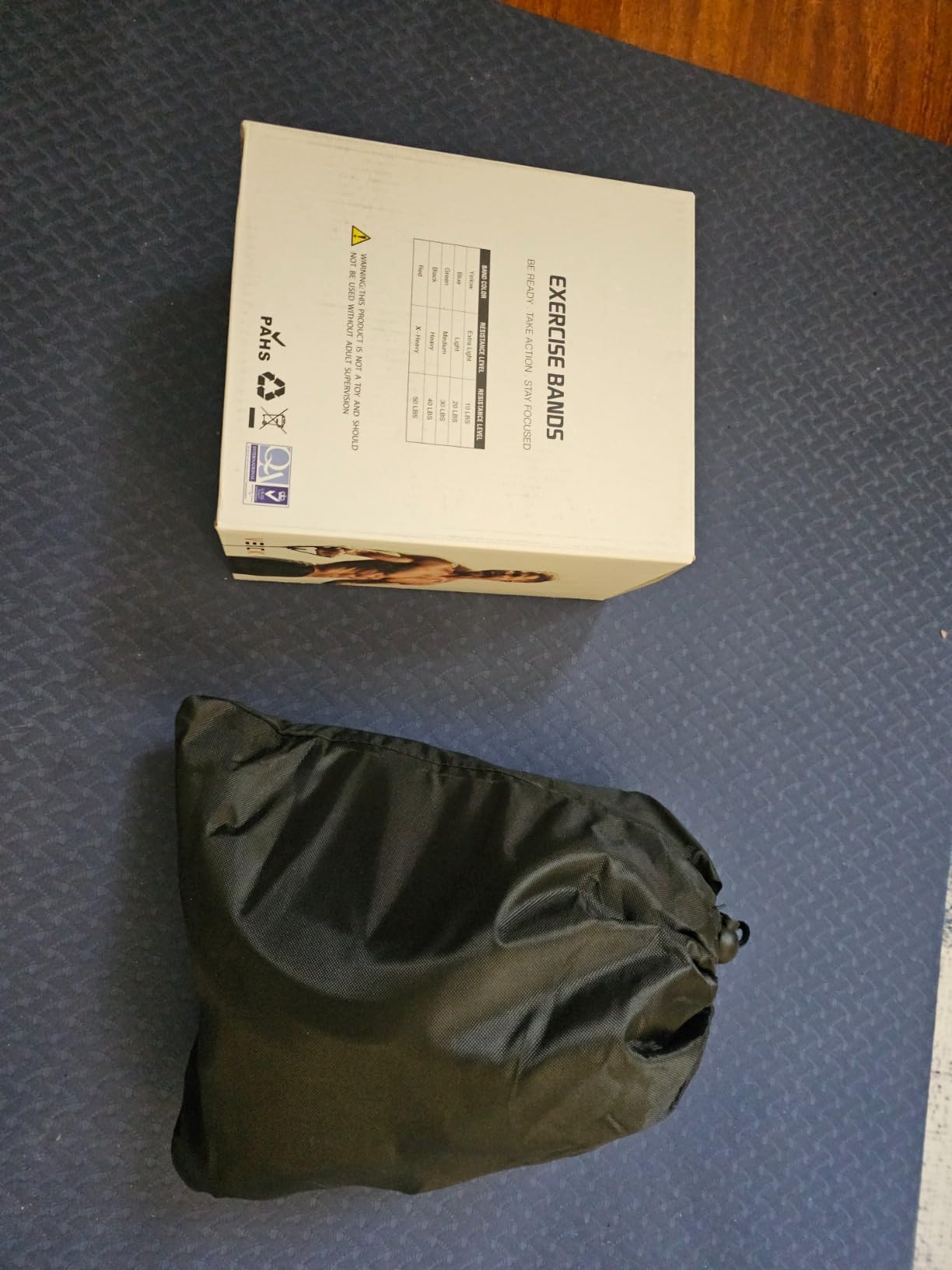
Rowing-dominant programmes, home gym users, and anyone who wants a middle ground between a short loop and a very long tube. The carry bag is a cloth pouch rather than a hard case, but it is enough for a locker or a rucksack.
It also works well for yoga and mobility work, where a moderate tube with handles is more versatile than a flat band.
Who this tube set does not suit
Very tall users doing overhead pressing from a seated position will feel the 48 inch limit. There is no cheap fix beyond shortening your range of motion or picking a longer tube style.
If you need true heavy loading, the individual bands top out at 50 lb and the combined figure depends on stacking all five. Budget for that when you plan your progression.
4. Renoj Fabric Loop Bands: Best Rated and Best for Skin Comfort
Booty Resistance Bands Set, Renoj Non Slip Hip Exercise Bands for Legs and Butt Women [3 Set]
3 fabric loops
light medium heavy
cotton polyester
28.35 in long
Pros
- Highest average rating of the set at 4.7
- Fabric does not chafe or burn skin the way latex can
- Inner grips stop the loops sliding during fast leg work
- Works for glute bridges
- squats and lateral walks
- Compact enough for a drawer or a gym bag
Cons
- The lightest band is still very stiff for a true beginner
- The heaviest band barely stretches
- Grips can slide during very dynamic movement or heavy sweating
- Three levels only
- with no colour coding
The highest-rated set in the category, alongside one other at 4.7, and the one that changed our mind about fabric. The weave is soft against skin, there is no latex anywhere in the construction, and the internal grips genuinely hold the loop in place during fast lateral work, which is the movement that usually defeats a flat band.
We used these for glute bridges, banded squats, and side walks more than anything else. The 28.35 inch length is longer than a typical short loop set, which gives a better stretch for hip work. Packaging is black fabric throughout, so nothing rolls or pinches.
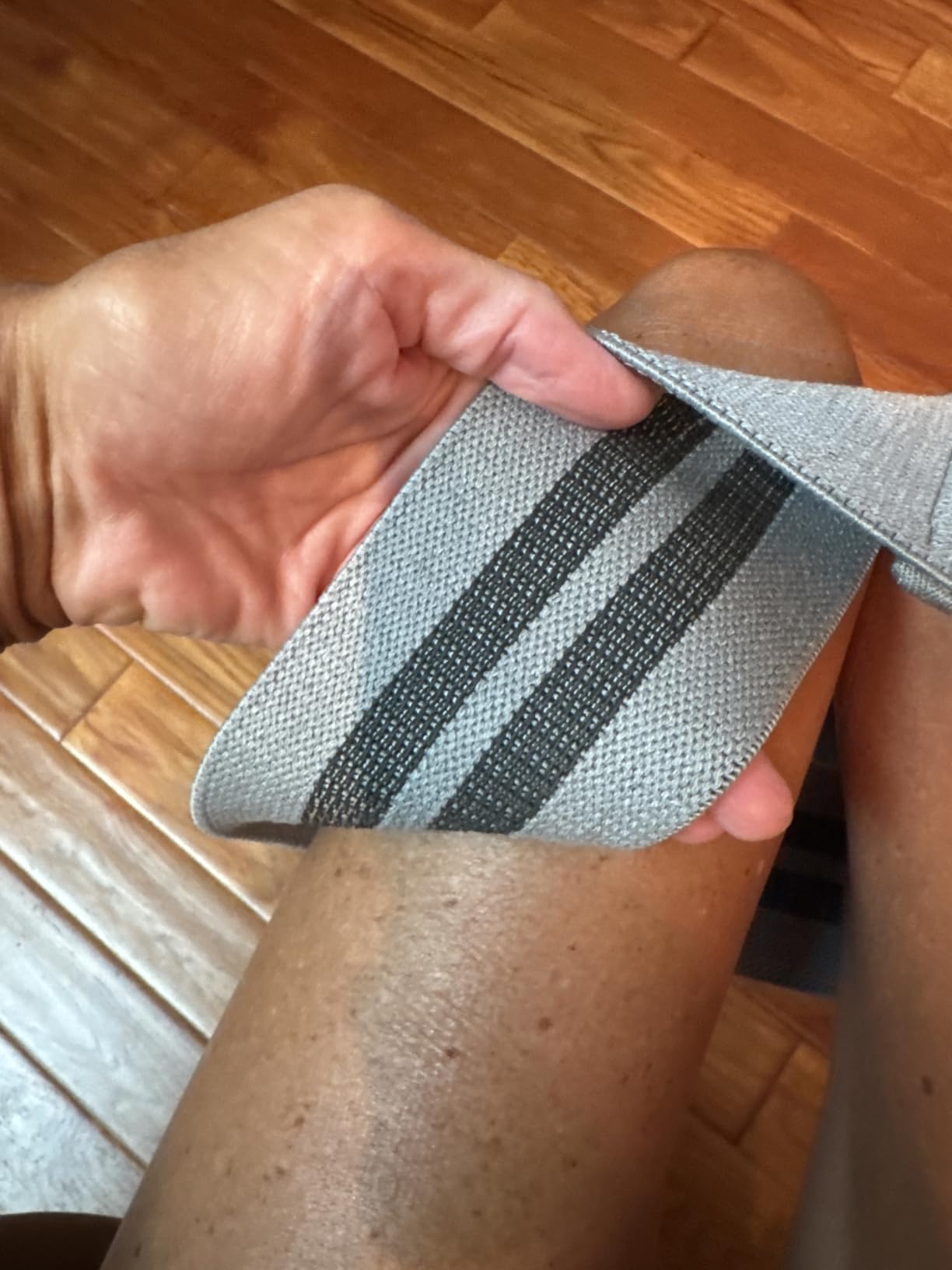
The important warning is the resistance floor. Even the light band here is firm, which makes this a poor first purchase for someone who has never trained with resistance. The heavy band barely stretches at all, so if you are working toward a large tension you will want to stack with something else.
During very sweaty or very fast sessions we did see the grips creep slightly. It was never enough to lose a rep, but if your training is mostly explosive work, test it first.
Who these fabric loops suit
Anyone with a latex sensitivity, and anyone doing lower-body work where chafing ends the session. A soft fabric loop against bare skin is a very different experience from latex, and that difference compounds over a long session.
They are also quiet. If you train in an apartment or an office, fabric is the sensible answer.
Who these fabric loops do not suit
True beginners. There is no genuinely light option in this set, and a first-time user would be doing activation work at a tension they cannot control.
They also will not serve for barbell tension work or anchored pressing. These are body-weight resistance loops, and the resistance ceiling is well below a heavy power band.
5. TheFitLife Bands with Handles and Door Anchor: Best for Beginners and Rehab
TheFitLife Exercise Resistance Bands with Handles – 5 Fitness Workout Bands Stackable up to 110/150 lbs, Training Tubes with Large Handles, Ankle Straps, Door Anchor Attachment, Carry Bag (110 LBS)
5 bands 10-110 lbs
anti-snap construction
handles and door anchor
1 year warranty
Pros
- Anti-snap build with reinforced stitching and enlarged stress points
- Manageable resistance range designed for beginners and rehab
- Thicker webbing and premium latex hold elasticity over time
- Handles
- ankle straps and door anchor included
- Backed by a one year warranty
Cons
- Heaviest combined figure of 110 lbs is lower than the 150 lb kits
- Dimensions are not listed
- so plan for a standard anchor footprint
- Not a heavy-duty choice for powerlifting warm-ups
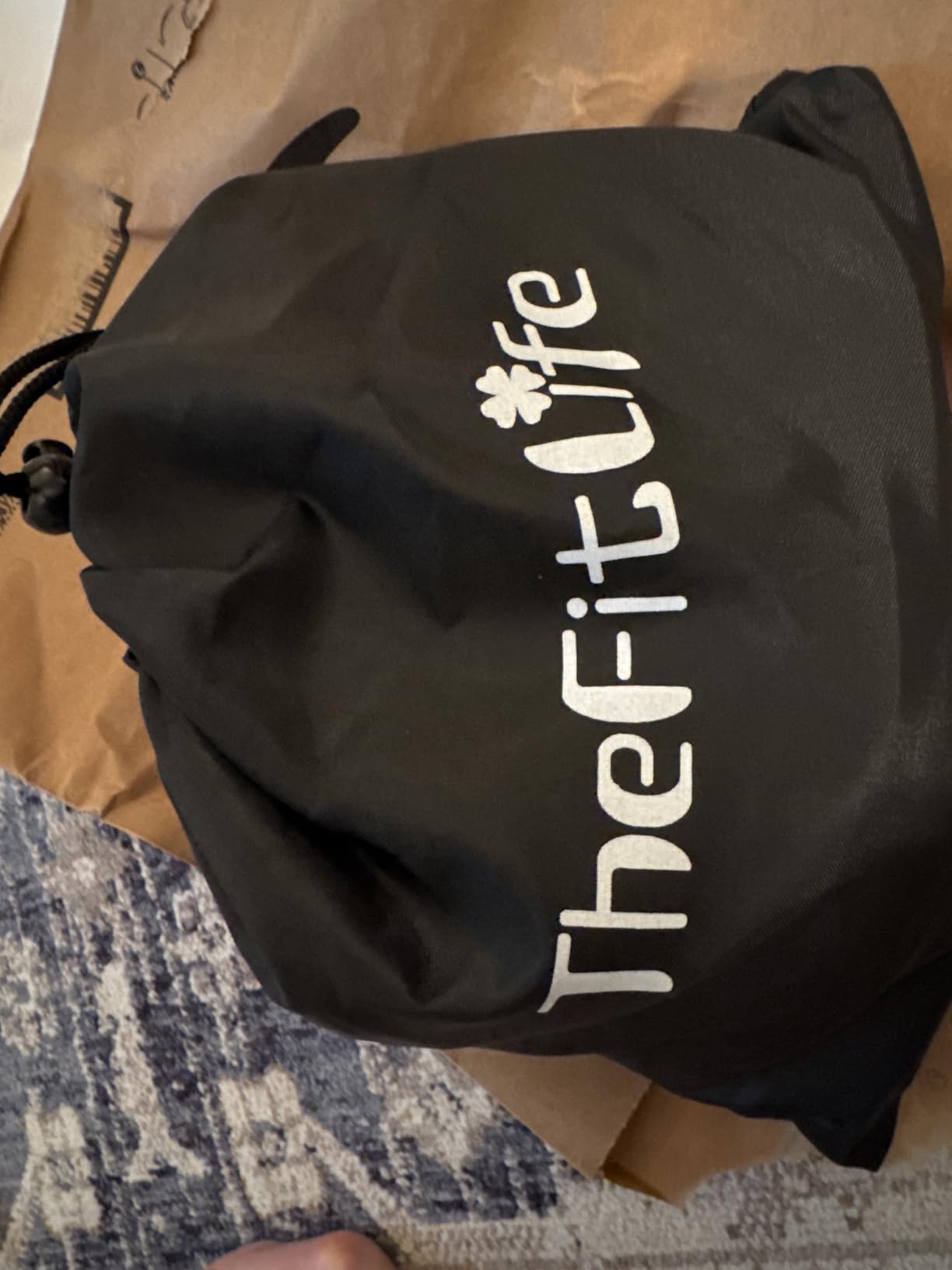
This is the set we would hand to someone returning to training after a long break, or working alongside a physical therapist. The resistance range is deliberately gentle, and the build is engineered around the failure mode that scares people most, which is a band snapping back into the face.
The construction is the story here: reinforced stitching, thicker webbing, and enlarged connection points at the stress points. We anchored these to a door frame repeatedly over a month and saw no fraying at the attachment end, which is where cheaper tubes usually let go first.
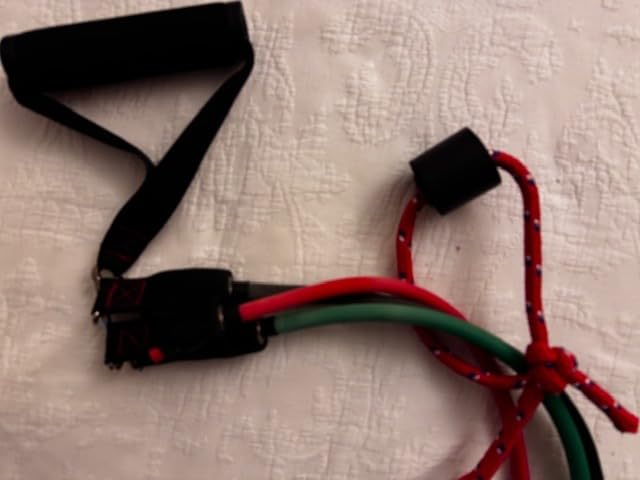
The tradeoff is ceiling. Five bands combine to 110 lb, which is less than the 150 lb kits in this roundup, and the individual levels are not the ones you would pick for barbell tension. For strength work that tops out around a moderate dumbbell, that is fine. For powerlifting, it is not the set.
The waterproof carrying bag is a small thing that turned out to matter, since damp webbing in a rucksack is unpleasant for the next session.
Who this set suits
Beginners, older trainees, and anyone doing rehabilitation work where the goal is controlled tension rather than maximal load. The handles and ankle straps make it usable for both upper and lower body in a small space.
It is also a good first purchase for a household with two people at different ability levels, because the incremental levels are evenly spaced.
Who this set does not suit
Powerlifters and anyone adding serious load to a barbell. The top end of the range is not designed for the tension a loaded deadlift produces.
It is also not the set for someone who wants a single band they can buy again in two years, because the full kit is the only configuration offered here.
6. WSAKOUE Pull Up Bands Set: Best for Pull-Up Assistance
Pull Up Bands, Resistance Bands Set, Exercise Workout Bands for Men & Women, Ideal for Body Stretching, Physical Therapy and Muscle Training – Colorful
5 bands 5-125 lbs
82 inch length
100 percent natural latex
storage bag
Pros
- 82 inch length mounts directly to a pull-up bar
- Five graded levels from 5 to 125 lbs combined
- Natural Malaysian latex stays soft and elastic with heavy use
- Works for push-ups
- squats and shoulder presses too
- Drawstring storage bag included
Cons
- Strong rubber chemical smell on arrival that fades over time
- Higher bands are stiff if you only use the light levels
- Bands are cut progressively thinner rather than a uniform width
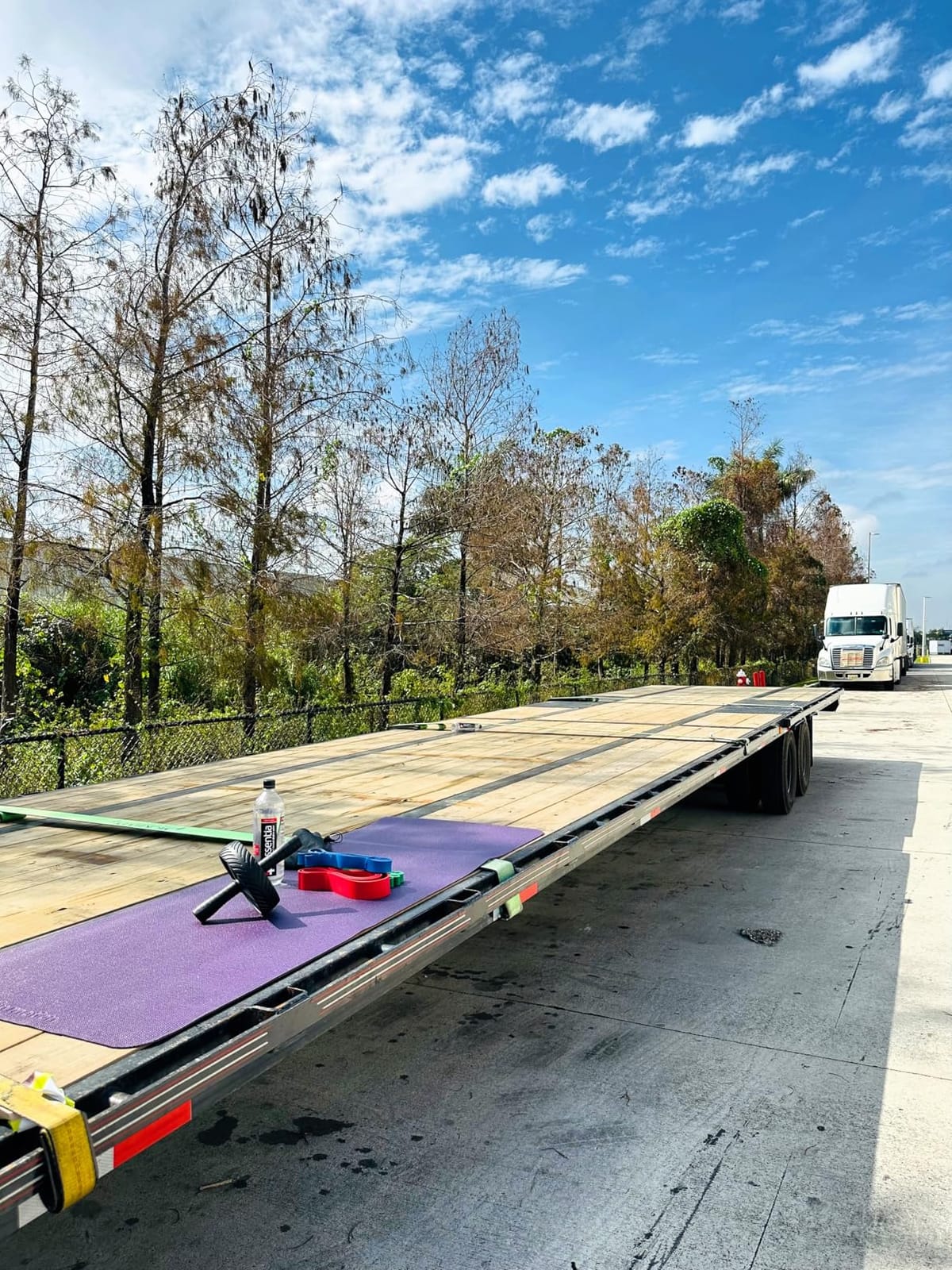
Length is the whole point of this set. At 82 inches, these loop directly over a pull-up bar with nothing else required, and the five graded levels span 5 to 125 lbs of combined assistance. That range covers everyone from someone doing their first negative pull-up to an advanced athlete working toward a muscle-up.
We used the lighter bands for assisted chin-ups and the heavier ones for banded bench press and squat assistance. The latex stayed soft and elastic throughout, and users report no tearing after daily training, which matches what we saw.
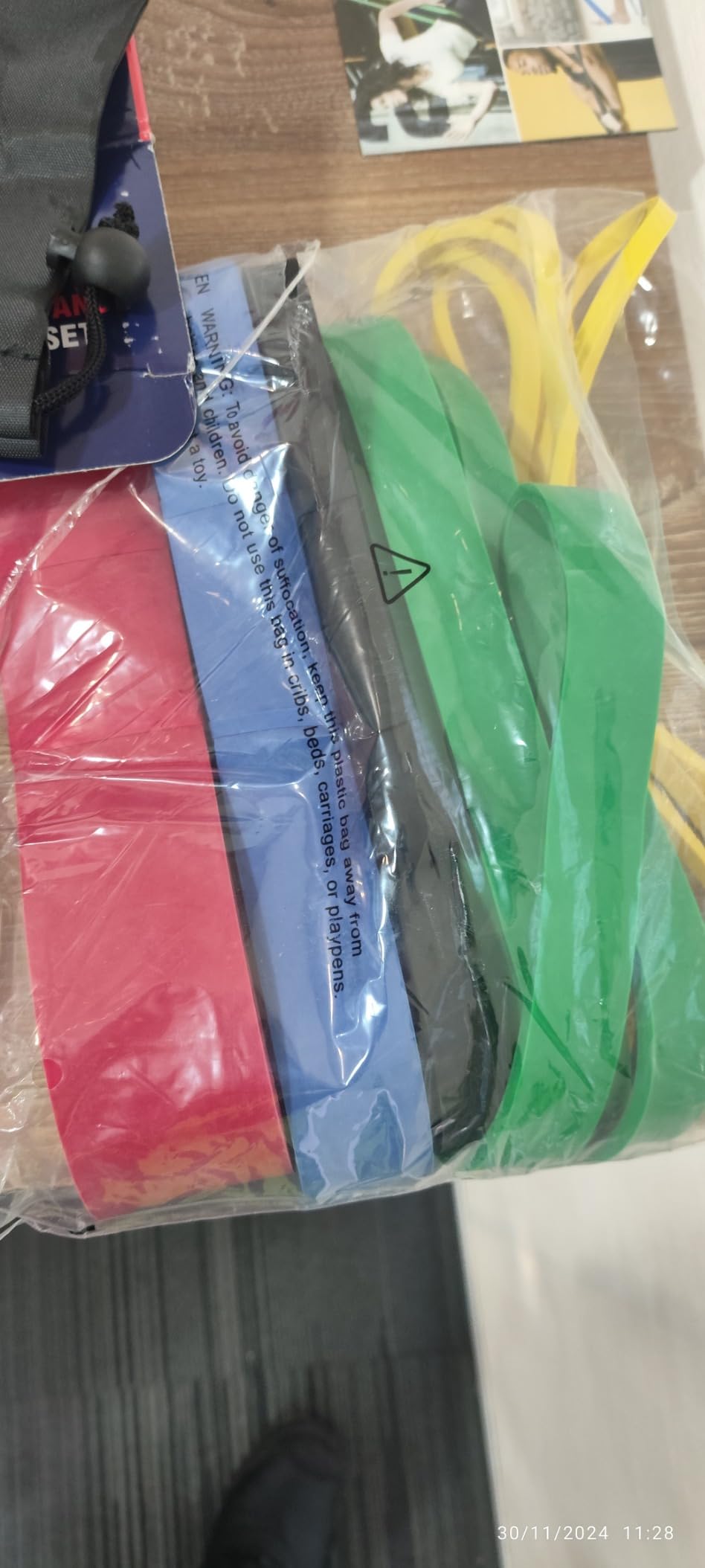
Two practical notes. The first is smell: these arrive with a strong rubber odour that fades over a few weeks of use, noticeable if you leave them in a small room. The second is that the bands are cut progressively thinner to create different resistance rather than using a uniform width, so the higher levels feel different in the hand.
If you only plan to use the lightest one or two bands, the stiff upper levels are dead weight. If you are progressing toward bodyweight pull-ups, that is exactly what you want.
Who these pull-up bands suit
Anyone building toward a first bodyweight pull-up, and anyone working on a strict pull-up once they can already do several. The double-loop method works cleanly at this length, and you can combine bands to reduce assistance gradually as you get stronger.
They are also useful beyond the bar, as a long loop for stretching, overhead mobility, and banded presses.
Who these pull-up bands do not suit
Users with a latex allergy, since the construction is 100 percent natural Malaysian latex. There is no synthetic version in this set.
They are not the right tool for barbell tension on a deadlift, where you want a shorter, thicker band with a documented force curve.
7. Draper’s Strength Heavy Duty Loop Band: Best for Powerlifting Warm-Ups
DRAPER’S STRENGTH Heavy Duty Resistance Stretch Loop Bands for Powerlifting Workout Exercise and Assisted Pull Ups 03. Black
41 inch loop
natural latex
10 to 50 lbs for this variant
documented tension chart
Pros
- Documented tension chart makes matching band thickness to a target load straightforward
- 41 inch width is broad enough to avoid pinching the skin
- A long-standing choice for dynamic effort and banded squat work
- Multi-band sets available in several configurations
- Handles
- anchors and straps sold separately
Cons
- Very slippery out of the packaging and needs scrubbing for grip
- Strong initial off-gassing odour in enclosed rooms
- Latex naturally wears with extended heavy use
- Sold as a single band with no accessories in the box
This is the band powerlifters reach for, and the reason is the published tension chart. Instead of a vague poundage claim, the cross-section thickness is documented so you can pick a band that matches a specific target load. That turns band selection from guesswork into a calculation.
We used a 41 inch loop for Spanish squat warm-ups, banded deadlift tension, and dynamic effort work. The width is broad enough that it does not pinch the skin even under heavy stretch, which is a genuine problem with narrower loops on leg work.
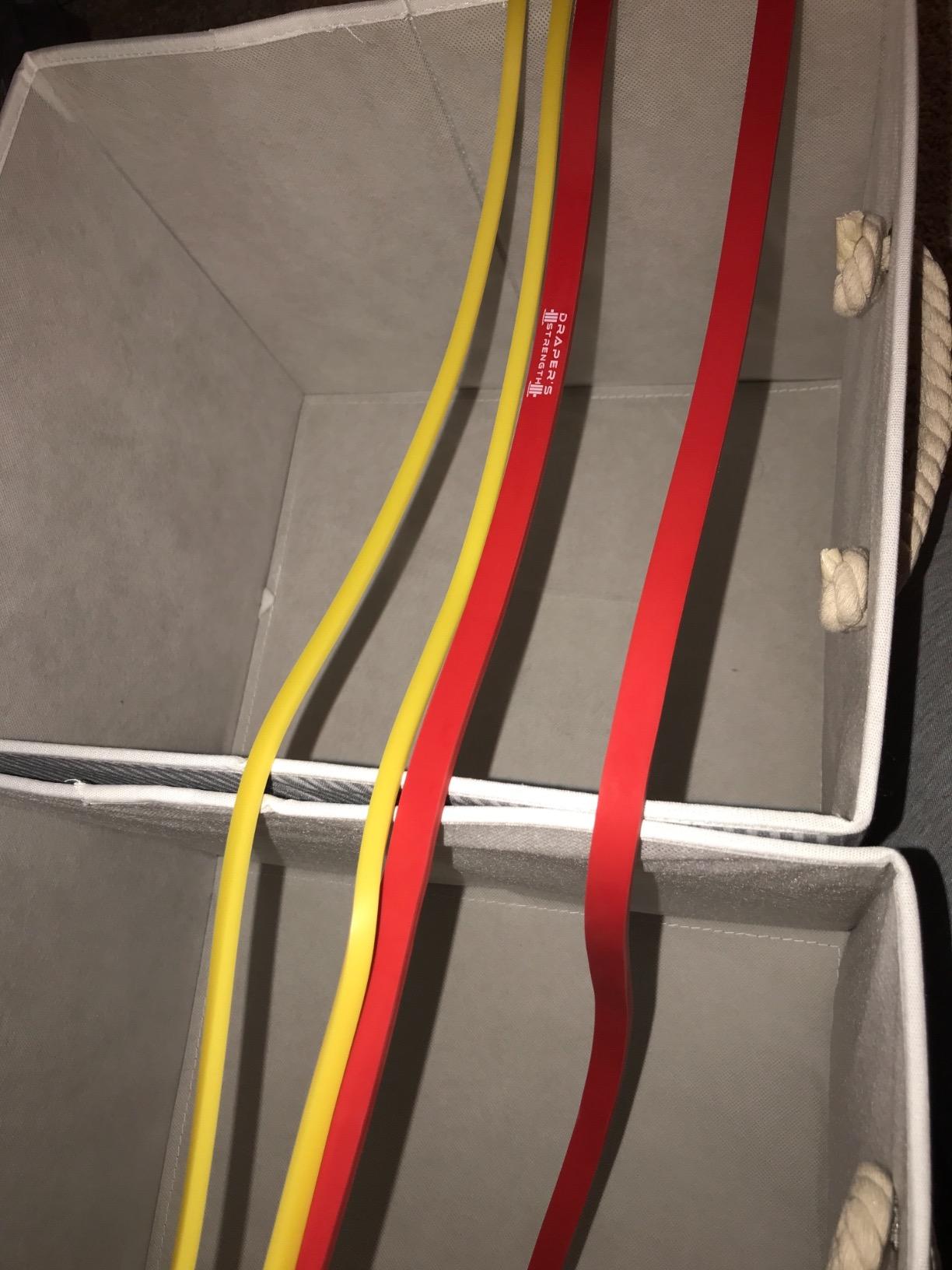
Two handling notes that show up in almost every owner report. The latex is extremely slippery straight out of the packaging, so scrub it before your first set, and the initial odour is strong enough to notice in a closed room. Both improve after a few weeks of use.
Remember this is a single band, not a kit. Handles, anchors, and straps are separate purchases, and the accessories are where most of the money goes in a complete setup.
Who this loop band suits
Powerlifters and anyone adding real tension to a barbell. Dynamic effort days, banded squats, and rack pulls are exactly the applications this construction was designed for, and the tension chart lets you buy a specific band rather than guessing.
It is also a good single band for assisted pull-ups if you already have a bar-mounted anchor and want a thicker, heavier option than a cheap tube set provides.
Who this loop band does not suit
Beginners. A 41 inch band with this much tension needs an anchor and a base of strength before it is useful, and there is no light option within this particular variant.
It is also a poor fit for a small apartment. The space these demand and the rubber smell they produce both scale with how heavy you go.
8. COOBONS FITNESS Heavy Bands with Handles: Best Heavy-Duty Multi-Level Set
Heavy Resistance Bands for Working Out, 300LBS Exercise Bands with Handles, Workout Bands for Men, Weight Fitness Bands Set for Muscle Training, Strength, Slim, Yoga, Home Gym Equipment
6 levels 25-75 lb
stackable to 300 lb
foam handles
carabiners included
Pros
- Six stackable levels from 25 to 75 lb combining to 300 lb
- Natural latex with metal carabiners and nylon webbing
- Extra-wide foam handles stay comfortable and non-slip in long sessions
- Complete kit with handles
- door anchor
- ankle straps and carry bag
- One year warranty
Cons
- The 300 lb figure requires all six bands together
- with single bands topping out at 75 lb
- Included ankle straps and door anchor are basic
- A larger stack means more band swaps between exercises
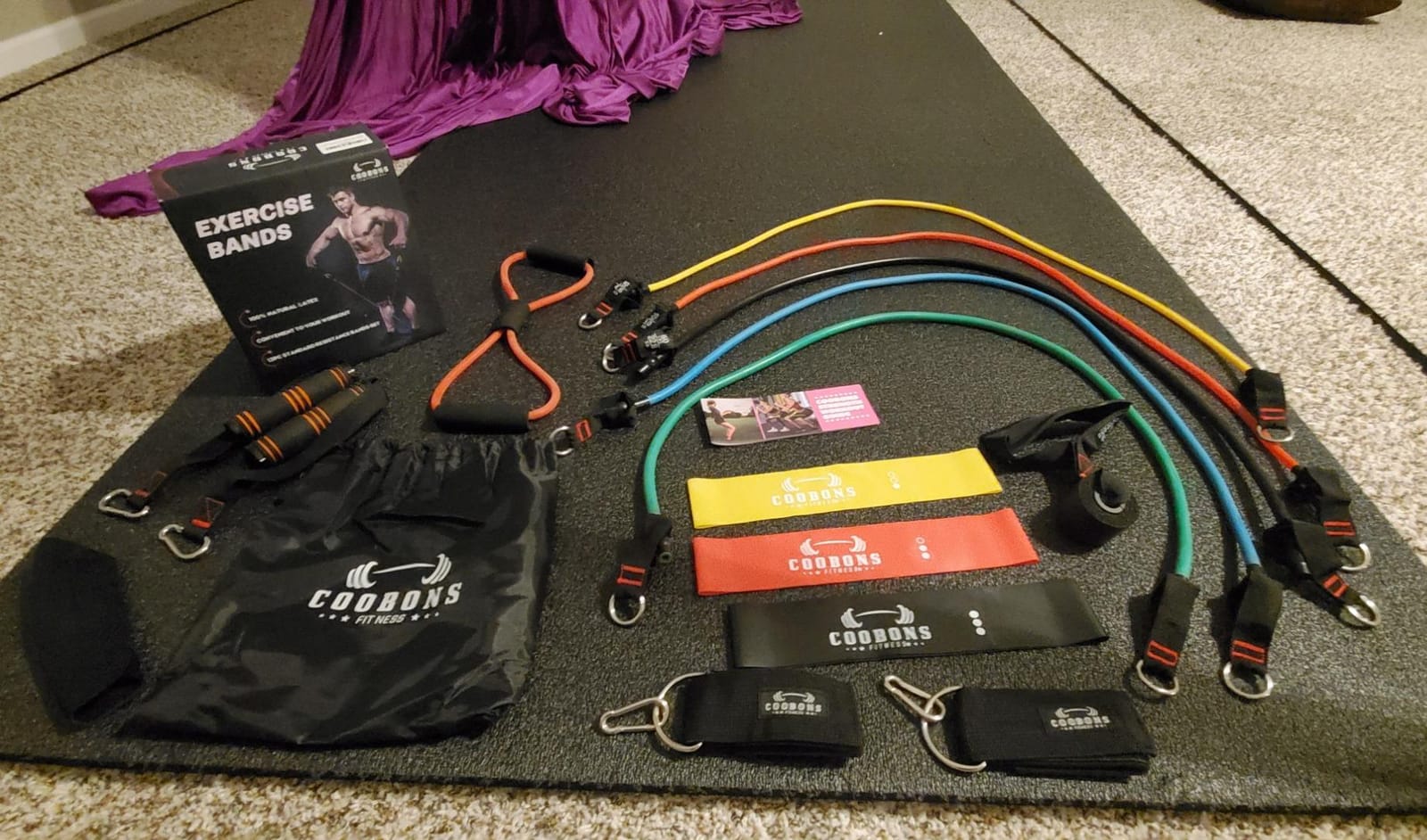
This is the heaviest system we tested, and the reason it earns a place is the six-level range. Each band runs from 25 to 75 lb, so you get useful increments at the top end rather than jumping from a moderate tube straight to a stack of five. The combined ceiling is 300 lb, which is more than most home systems offer.
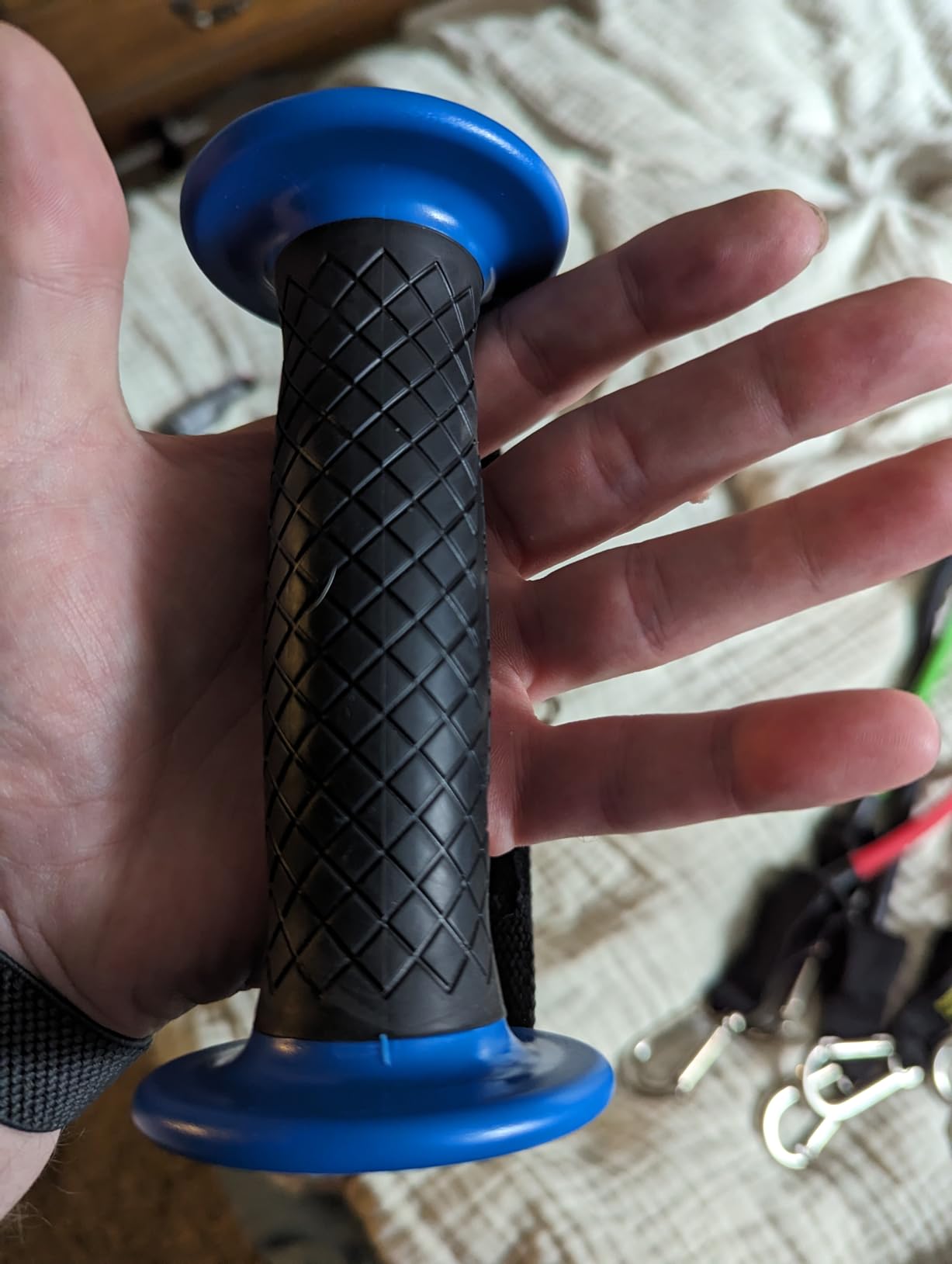
The foam-wrapped handles are the detail we noticed most. They stayed comfortable through a long session and did not slip when our hands got damp, which is the most common complaint about cheaper handles. The nylon webbing and metal carabiners felt overbuilt relative to the rest of the kit.
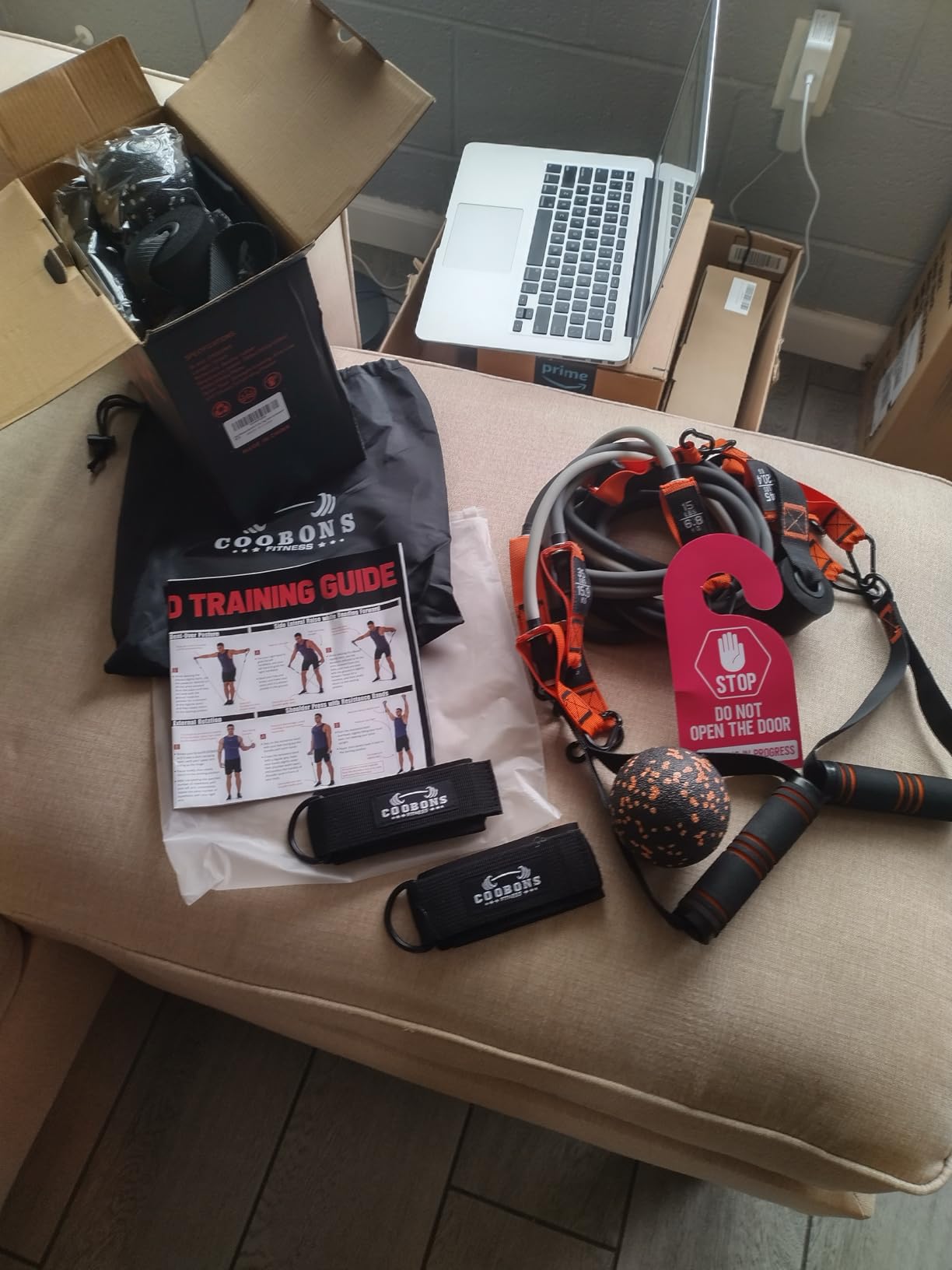
Understand the 300 lb headline before you plan around it. That figure needs all six bands connected simultaneously, which is a specific and demanding exercise. Individually the labelled levels top out at 75 lb, so for most programming you are choosing between two and four bands rather than the full stack.
More bands also means more swapping. If you follow a programme that changes tension exercise by exercise, the time spent changing bands is real. Plan your sessions around two or three fixed stacks.
Who this heavy set suits
Intermediate and advanced lifters who have outgrown a light kit and want genuine top-end tension. Squats, presses, and heavy rows all work well with the middle bands, and the range of increments makes real progressive overload possible without a full rack.
The extra-wide handles also make it a good fit for anyone with larger hands who finds narrow grips uncomfortable.
Who this heavy set does not suit
Beginners and anyone with a latex allergy, since the bands are 100 percent natural latex. The lightest band at 25 lb is already a serious load for a new trainee.
It is also a lot of gear for a small space. Six bands, an anchor, straps, and a bag is a lot of equipment to store in a flat that doubles as a gym.
9. Bodylastics Basic Series Set: Best Anti-Snap Design
Bodylastics Pro Series Resistance Band Set – 5 Bands, Handles, Ankle Straps, Door Anchor, Carry Bag Snap Reduction Tech (3-190 Lbs Max Resistance)
5 tubes stacking to 190 lbs
internal safety cord
limited lifetime warranty
natural latex
Pros
- Internal safety cord inside each tube limits dangerous overstretch
- Metal clips stay locked in place through an exercise
- Five clearly labelled levels stack to 190 lbs
- Door anchor and ankle straps included
- Limited lifetime warranty and long-standing durability reports
Cons
- The safety cord caps maximum stretch
- which limits range of motion for very tall users
- Frequent band swaps between exercises
- Some sets can arrive with twisted cords or bubbles in the tubing
- Coiling the band to shorten it is awkward for some movements
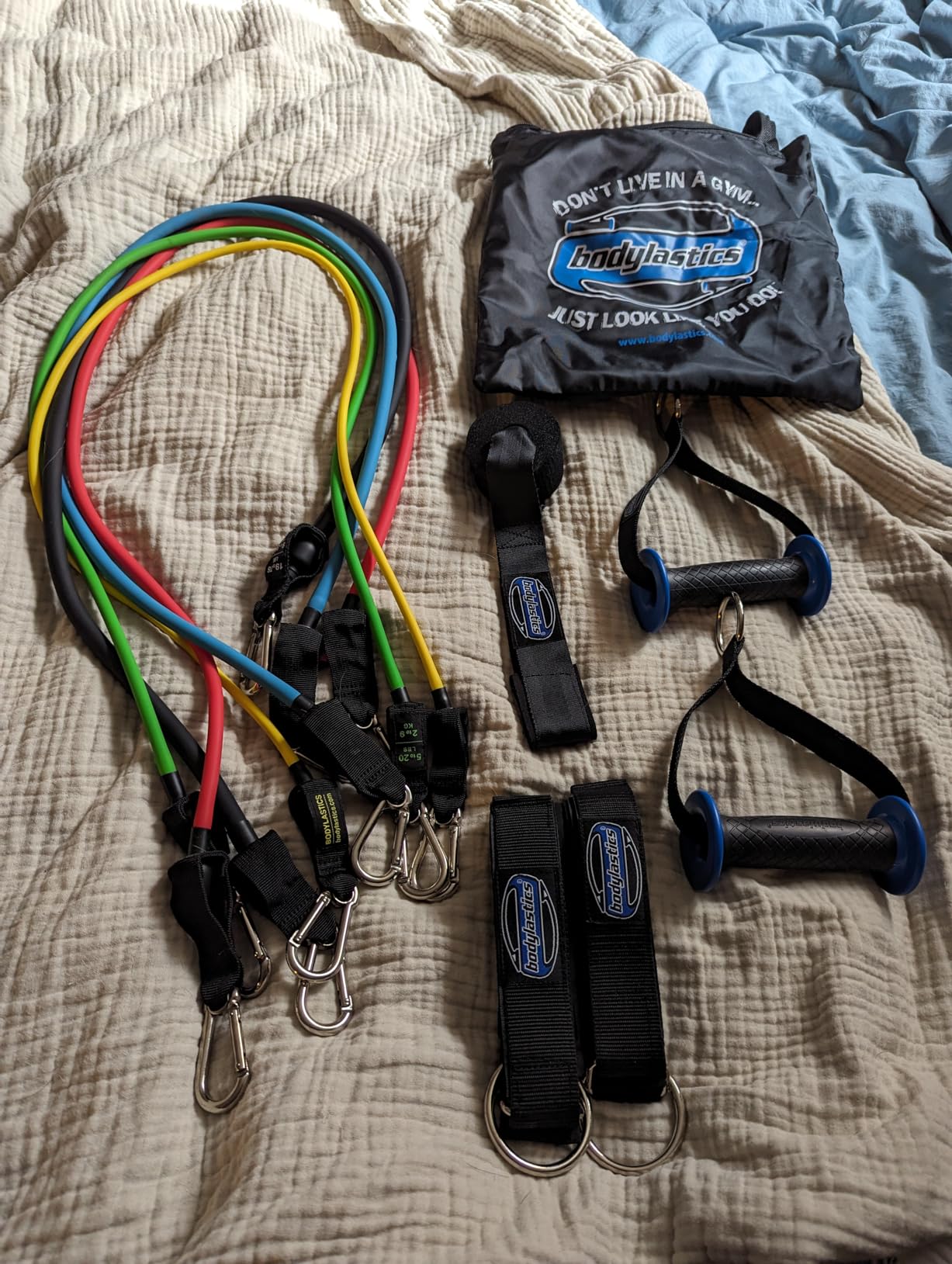
The Bodylastics set is built around one idea: a band should not be able to stretch far enough to recoil into your face. Each tube carries a patented internal safety cord that limits overstretching, which is the single most effective snap mitigation available in this roundup. It is a mechanical solution rather than a material upgrade.
The five tubes are rated from 3 to 10 lbs up to 19 to 80 lbs and stack to 190 lbs of total tension. Handles are stiff and well engineered, and the metal clips stay fixed during a set instead of flopping. The limited lifetime warranty is the longest in this group, and long-term owners report bands that hold their resistance after years of daily use.
The trade-off is real and it is a range of motion trade-off. Because the internal cord caps stretch, a very tall user can hit a limit on overhead presses and squats that has nothing to do with their strength. The fix is to coil the band to shorten it, which some people find awkward.
Quality control is the other watch point. Some sets can arrive with twisted cords or bubbles in the tubing, which is a simple thing to check on arrival. In our experience the brand has been responsive about replacements when an individual unit is faulty.
Who this set suits
People training with a partner who share a space, and anyone who is genuinely worried about a band recoiling. The safety cord is the reason this set comes up unprompted in community recommendations for anyone training pull-ups with a spotter nearby.
It is also a good long-term buy. The warranty and the reported long-term durability mean you are unlikely to replace it.
Who this set does not suit
Very tall users doing overhead work, for the stretch ceiling described above. Anyone with a latex allergy is also out, since the tubes are 100 percent natural Malaysian latex.
It is not the cheapest way into a complete home kit, and if your programme changes tension frequently you will spend real time swapping bands between sets.
10. THERABAND Non-Latex Resistance Band Set: Best Latex-Free Option
THERABAND Resistance Bands Set, Beginner Kit, Yellow, Red, Green, Non-Latex
3 colour-coded levels
synthetic rubber and TPE
5 ft by 4 in flat bands
non-latex
Pros
- Non-latex construction suits sensitive skin and clinical settings
- Colour-coded levels make progression easy to track
- Each band is 5 feet long and 4 inches wide
- Weighs 1.6 oz for the set
- Wipes clean and packs into a desk drawer
Cons
- Light resistance range is not enough for heavy progressive loading
- Flat loops include no handles
- anchors or ankle straps
- Only three levels in the set
If latex is the reason you have been avoiding bands, this is the set to look at. The construction is synthetic rubber and thermoplastic elastomer rather than natural latex, which removes the allergy question entirely and also means the material will not break down in the sun the way natural rubber does.
The three levels are colour-coded, with yellow at 3 to 4.3 lbs, red at 3.7 to 5.5 lbs, and green at 4.6 to 6.7 lbs. Each band is 5 feet long and 4 inches wide, and the whole set weighs 1.6 ounces. We used them for rotator cuff work, shoulder mobility, and warm-up, which is exactly what this tension range is built for.
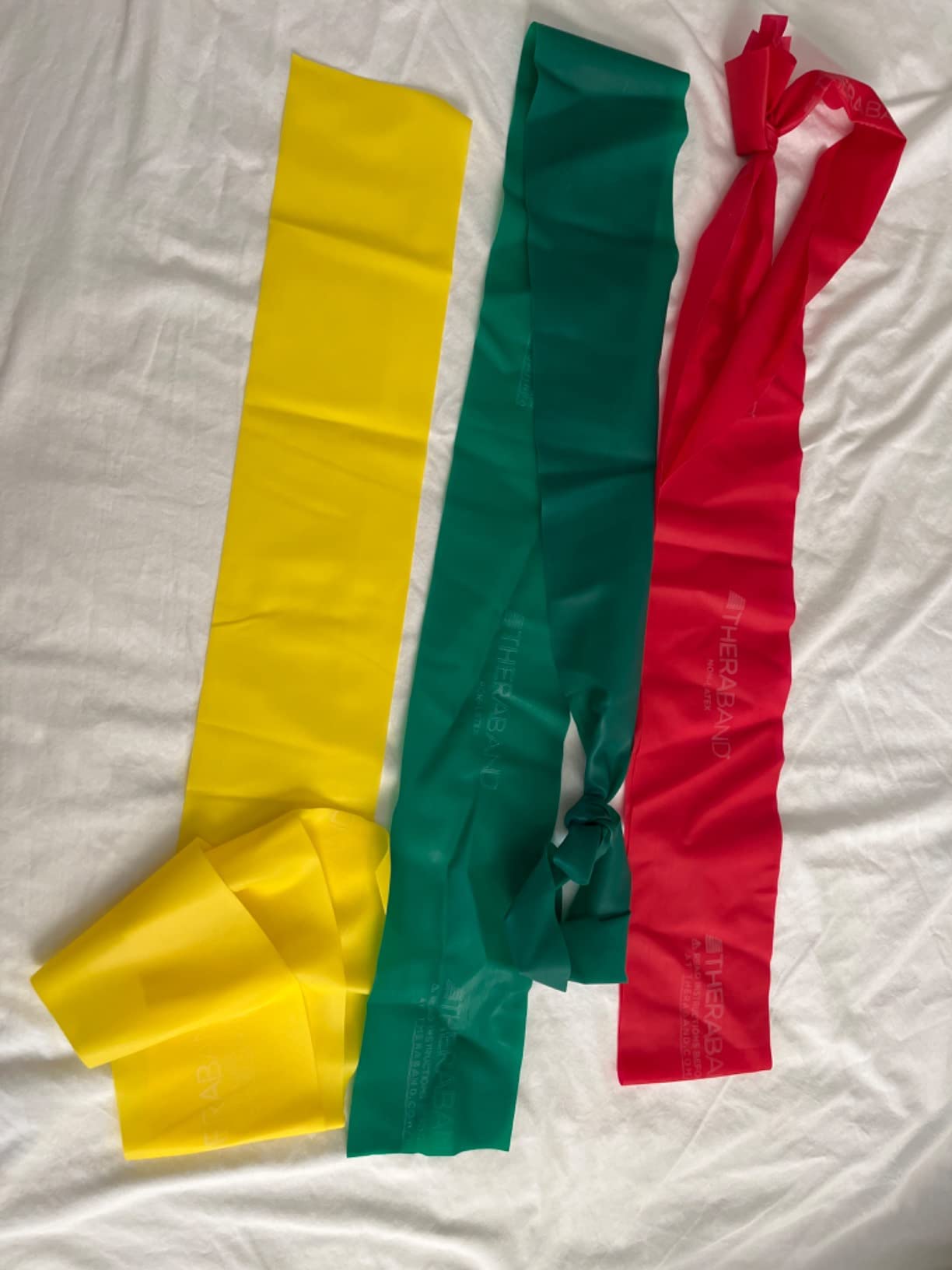
Be realistic about the ceiling. Three light levels will not support heavy progressive strength loading, and there is a real limit to how much you can grow with a set that tops out around 6.7 lbs. For rehab, posture, and warm-up work that is not a problem. For a strength block it is.
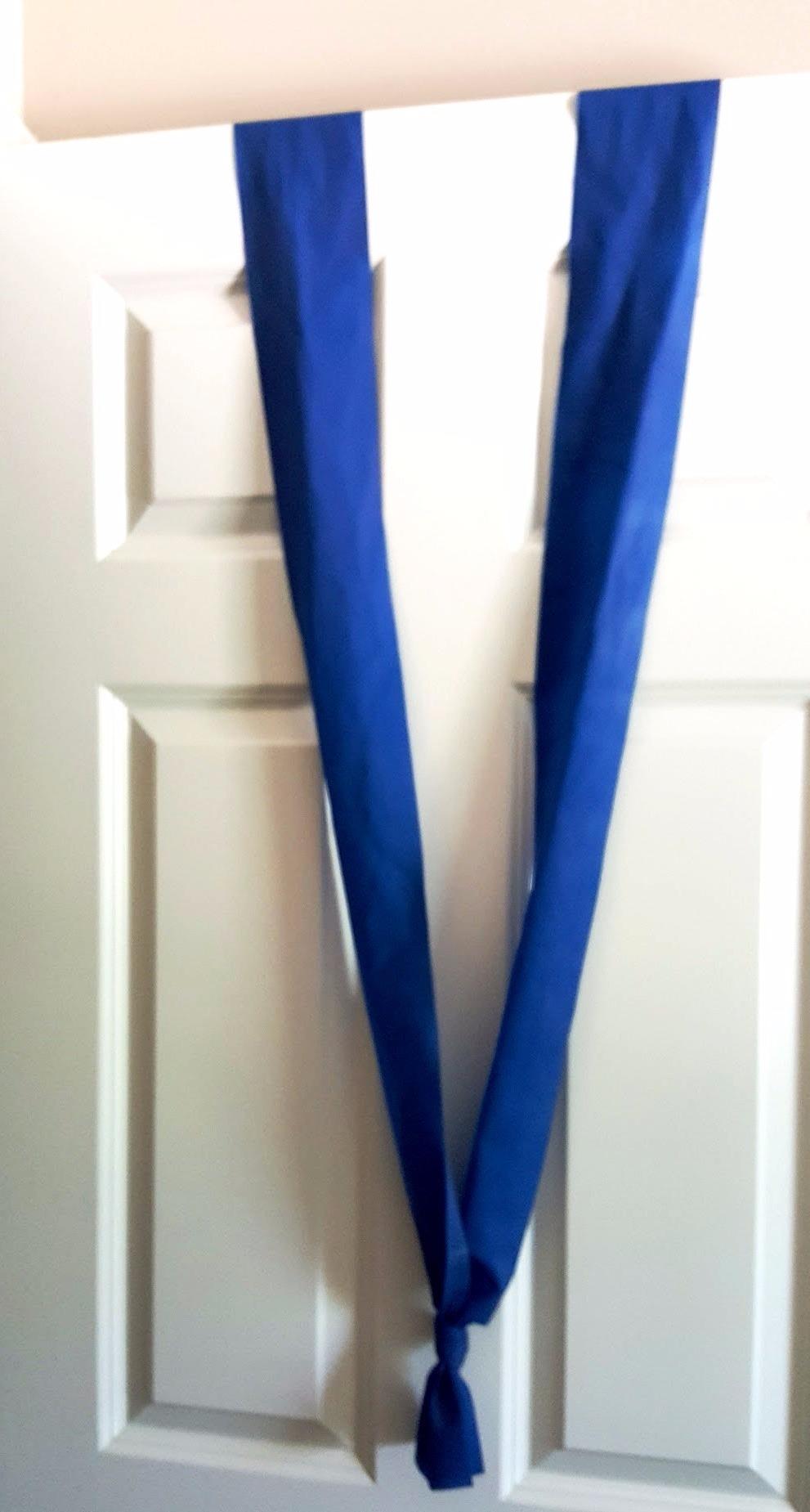
There are also no handles, anchors, or ankle straps in the box. You get three flat loops and nothing else, so plan exercises that work without an anchor point.
Who this non-latex set suits
Anyone with a confirmed latex allergy, and anyone training in a clinical or shared space where a non-latex material is a requirement. Physical therapists and coaches often keep a set like this for exactly that reason.
It is also the easiest to travel with. At 1.6 ounces it lives in a desk drawer, a handbag, or a carry-on without a thought.
Who this non-latex set does not suit
Lifters who want to add real load to a barbell or build serious tension through a range of movement. The light range makes this a preparation and maintenance tool rather than a strength instrument.
If you want anchored work, you will need to buy the anchor and attachments separately, which is worth factoring into your decision.
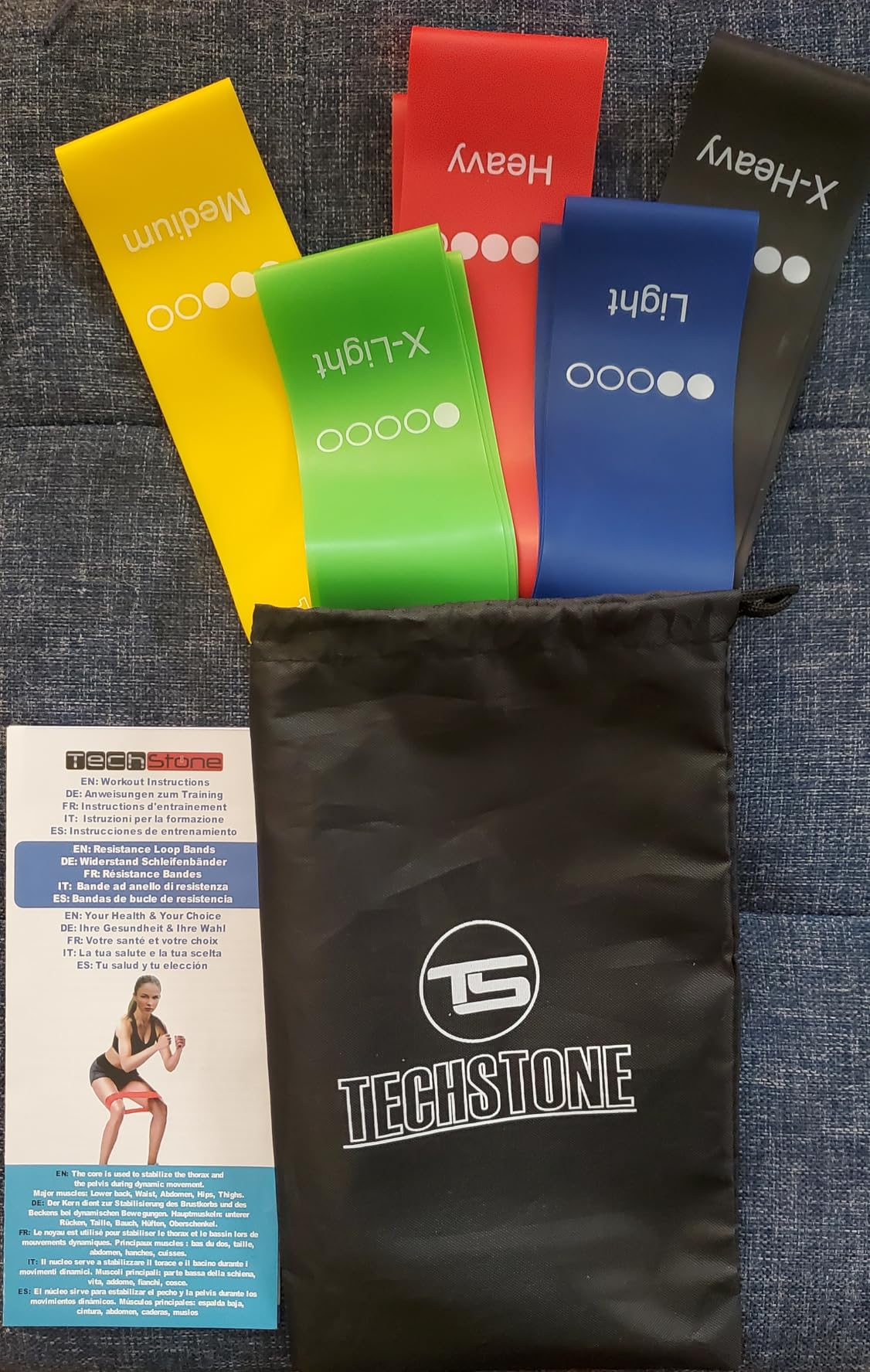
11. TechStone Loop Exercise Bands, 5 Levels: Best Compact Set
TechStone Resistance Bands Set – 5 Levels Loop Exercise Bands for Men & Women, Elastic Workout Bands for Home Gym, Training, Yoga & Fitness, Carry Bag Included (Multicoloured)
5 levels up to 115 lbs
100 percent natural latex
141 g
carry bag
Pros
- Five clearly separated resistance levels spanning light to heavy
- 100 percent natural latex with smooth progressive tension
- Whole set weighs 141 g and fits a gym bag
- One year replacement warranty
- Useful for yoga
- Pilates
- rehab and pull-up assistance
Cons
- Loop style with no handles
- so anchored and pressing movements are awkward
- Short band length limits range of motion on big pulls
- No instruction material or exercise guide in the box
A simple, compact loop set that punches above its class. Five levels run from 10 lbs up to 115 lbs combined, the latex is 100 percent natural, and the entire package weighs 141 g including the carry bag. That is about the weight of a small bottle of water.
The tension is smooth and consistent as you stretch, which is the characteristic that matters most for warm-up and activation work. We used the lighter loops before barbell sessions and the heavier ones for banded rows and leg work, and the surface texture stayed grippy without needing to be scrubbed first.
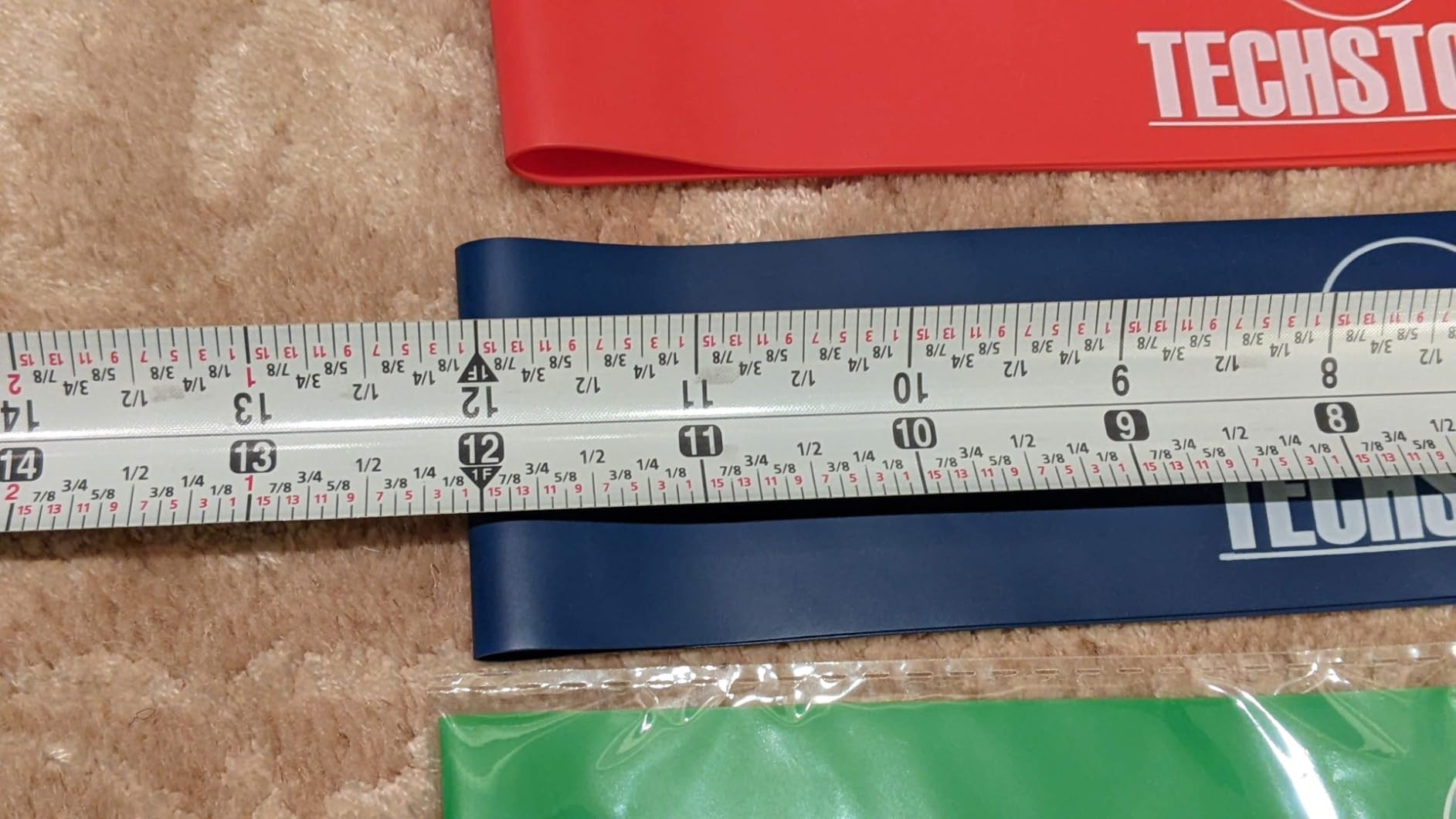
The constraint is length. At 11.81 inches these are short loops, and while they handle big compound movements perfectly well, they are not the right tool for anchored pressing or rowing because there is nothing to hold and no anchor included. Plan on double-looping or shortening your stance for those patterns.
There is no exercise guide in the box either, which is a small loss for beginners. We covered the movements in the booklets from other sets in this roundup instead.
Who this compact set suits
Travellers, people training in a small apartment, and anyone who wants a full set they can forget about. The one year replacement warranty gives some reassurance that the manufacturer stands behind the latex.
It is a genuinely good value pick for a first loop set, and the range is wide enough to serve most training ages.
Who this compact set does not suit
Anyone whose programme depends on handles and an anchor. Short loops without attachments will frustrate you on the second week of a pressing or rowing programme.
Heavy barbell work is also out of reach. The combined 115 lb figure needs multiple loops in use at once, and the band width is narrow for the volume of load involved.
12. COFOF Resistance Bands with Handles, 5 Levels: Best for Toning and Arms
Resistance Bands with Handles for Women, 5 Level Exercise Bands Workout Bands for Physical Therapy, Yoga, Pilates, Door Anchor, Storage Pouch(Colour)
5 levels 10-30 lb
foam non-slip grips
door anchor and ankle straps
natural latex
Pros
- Five clearly labelled levels at even 5 lb increments
- Soft non-slip foam grips stay comfortable in long sessions
- Full kit with handles
- ankle straps
- door anchor
- poster and manual
- Thickened door anchor designed to protect the finish
- One year warranty and a six month money-back window
Cons
- Individual bands top out at 30 lb
- so heavy work needs stacking
- Styling is aimed at a women's fitness audience
- Poster and manual are basic rather than a full programme
Also rated 4.7, and the most comfortable for arm work. The five levels are spaced in clean 5 lb increments from 10 to 30 lbs, which makes dosing a session unusually easy. Nothing about the resistance is a surprise because nothing about the levels is improvised.
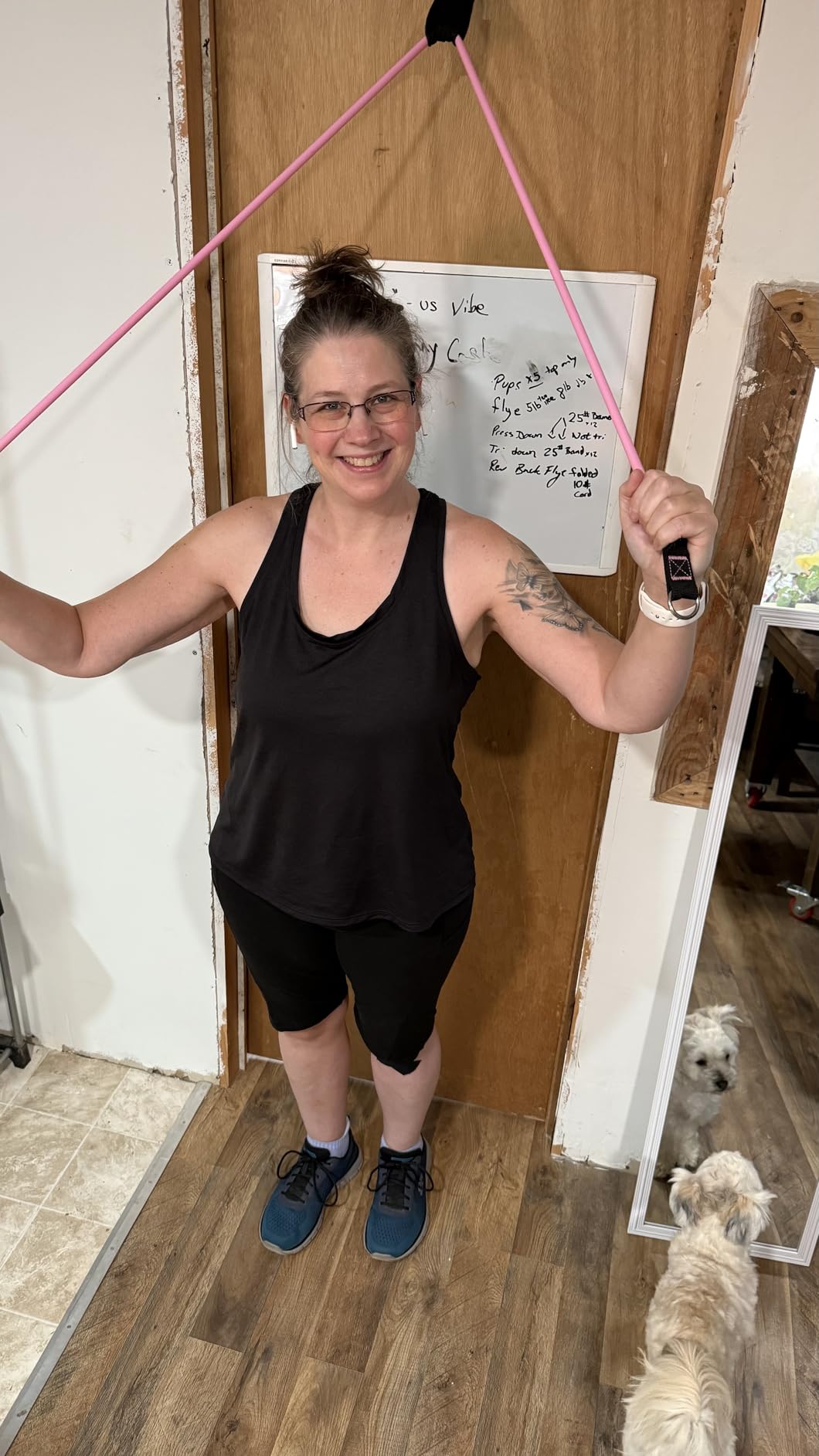
The foam grips are the reason we kept reaching for this set on pressing and curl variations. They stayed soft and non-slip through a full session, and the natural latex is described as skin-friendly, which held up in practice for us. The thickened door anchor is also thoughtful, since it is designed not to mark the door.
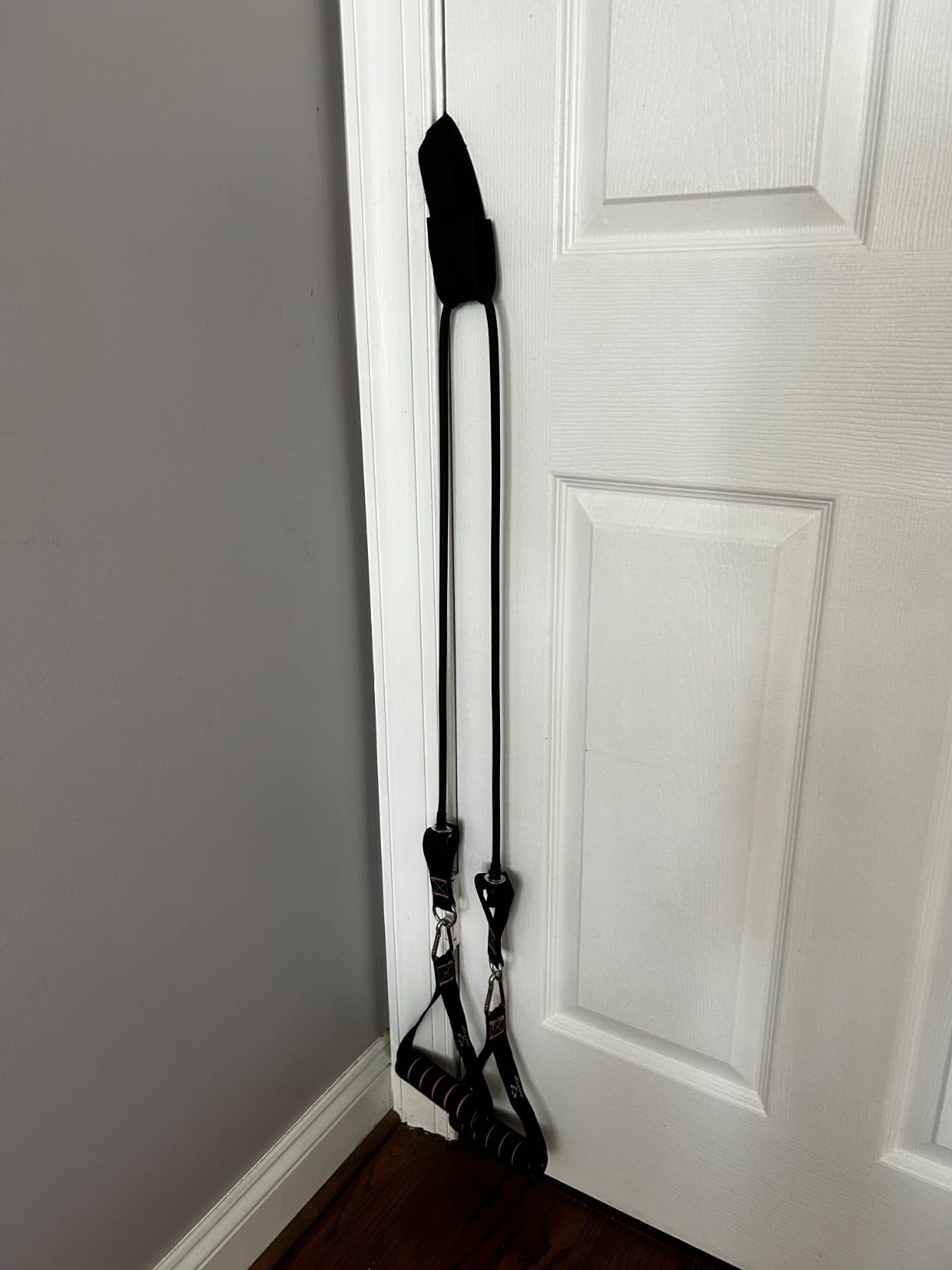
Be clear-eyed about the ceiling. Thirty pounds per band is a toning load, not a strength load, and serious work means stacking multiple bands. We saw the best results pressing, curling, and doing lateral arm work rather than loading a barbell.
The visual presentation is aimed at a women’s fitness market, which is a marketing choice rather than a functional one. The bands themselves are colour-coded and clearly labelled, and nothing about the hardware is different from a unisex kit.
Who this handled set suits
Home lifters focused on arms, shoulders, and upper-body toning, and anyone who finds narrow handles uncomfortable. The 5 lb increments make it a good fit for training with a less experienced partner since you can adjust precisely.
The one year warranty and six month money-back window give reasonable cover for a first purchase.
Who this handled set does not suit
Advanced strength work and anyone adding band tension to a heavy barbell lift. Thirty pounds per band simply does not reach the loads involved, even stacked.
It is also not the right set for someone with a latex allergy, and the included poster is a reference sheet rather than anything you can programme from.
How to Choose Resistance Bands for Strength Training in 2026
Style, tension, material, and anchoring are the four decisions that determine whether a band set works for you. Get these right and the purchase is straightforward. Get them wrong and you end up with equipment that looks impressive in a drawer.
Which band style does which job?
Continuous loop bands are the most versatile style for a home lifter. They slide over a bar or a door anchor with no attachments, they layer together, and they work for pull-up assistance, banded squats, and warm-up work. Their weakness is anything that needs a handle, and short loops limit your range of motion on big pulls.
Tube bands with handles are the right choice for cable-style movement: pressing, rowing, lat pulldown, and anything anchored to a door or a rack. They are more awkward for pull-up assistance and for layering across a barbell. Mini bands are a separate category entirely, useful for activation and hip work rather than maximal loading.
Fabric loops sit somewhere in between. They do not roll or pinch, they are quiet, and they are the practical answer for anyone with a latex sensitivity, but the resistance range typically starts firm and tops out lower than a heavy power band. Choose fabric for comfort and skin contact, and latex or rubber for ceiling.
How to choose the right tension without a scale
Ignore the printed poundage as a shopping guide and use it as a starting reference only. The printed number represents a force at a particular stretch, and you will meet that force at a different point in the movement than you expect. Instead, choose by working within one to three reps of failure.
Start lighter than you think. Take the level below what you think you can handle, run a set of ten, and note where you land. If you finish with four or more reps in reserve, step up. If you cannot reach eight clean reps, step down. This is the whole progression system for bands, and it works better than any colour chart.
One more thing about tension: a band produces its highest force at maximum stretch, not at rest. That means a heavy band is only heavy at the end of the range, and the hardest position is the one where your muscle is strongest. Exploit that by choosing a band that is hard at lockout rather than one that is manageable throughout.
Latex, rubber or fabric: material compared
Natural latex, which most of the sets here are made from, has the smoothest tension progression and the highest resistance ceiling. It is also the material most likely to cause a reaction in people with an allergy, and it degrades faster with heat, sun, and repeated stretch cycles.
Synthetic rubber and thermoplastic elastomer, as used in the THERABAND set, remove the allergy question and tolerate heat and storage better. The tradeoff is a lower resistance ceiling and a slightly less progressive feel, which is fine for rehab and warm-up work and less useful for heavy strength loading.
Fabric, as used in the Renoj set, does not pinch, roll, or chafe, and it is quiet. It is also the least progressive of the three and usually has the narrowest range. Treat fabric as the comfort option rather than the performance option.
Which band for which goal
For assisted pull-ups, you want a long loop band that mounts over a bar, ideally 60 inches or more, with graded levels you can combine and subtract as you progress. For barbell tension on a deadlift or a rack pull, you want a thick power band with a documented tension chart, short enough to keep the leverage honest.
For warm-up and activation, a light loop set or a non-latex flat band is ideal, since the job is raising muscle temperature rather than loading tissue. For hypertrophy work with handles, tube bands win, because a handle lets you load the top of the range of motion where a loop cannot reach. For travel, a non-latex flat set weighs almost nothing and packs into a desk drawer.
For rehabilitation or a latex sensitivity, non-latex or fabric is the only sensible answer, and you should accept a lower ceiling in exchange. For a garage gym where you already own a barbell, the best value is a heavy power band rather than another light tube kit. If your home setup doubles as a training space for someone else, our write-up on agility training sets for beginners covers the storage and anchoring constraints that come with sharing floor space.
Why bands snap and the monthly inspection routine
Bands fail for a short list of reasons: stretching past the rated range, single-dip rubber with no layering, abrasion from anchoring on knurled barbell sleeves or rough metal, heat and sunlight, and simple age. A band that frays in eight weeks was usually overstretched or anchored on a rough surface, not poorly made.
One warning from the community is worth repeating: footplates and anchors can shred a band faster than the band wears out. The edges of a footplate cut into the loop under load, so inspect the section that passes through the anchor every month rather than the middle, which always looks fine.
Our monthly routine takes five minutes. Look for flat spots, whitening, surface cracks, or any fraying along the length, paying attention to where the band meets hardware. Check that printed tension labels are still legible. Smell for off-gassing in a closed space. Retire any band with a visible nick rather than hoping it holds, and never anchor a band to a knurled surface or a sharp door edge.
No band is snap-proof. The honest answer to which resistance bands do not snap is that layered latex loops with smoothed edges and a published tension range, plus sleeved or internally reinforced tubes, are the safest options, and that respecting the rated range matters more than the brand name.
Frequently Asked Questions
Can resistance bands be as effective as lifting weights?
For hypertrophy, strength, and tendon health, yes, with one caveat about progression. Band tension rises continuously as you stretch and peaks at lockout, so the hardest position is the one where the muscle is strongest. The caveat is that free weights make microloading easier, so you progress bands by taking sets within one to three reps of failure and moving up a level.
What strength resistance bands should I use?
Match the band to the job. Continuous loop power bands for pull-up assistance and barbell tension, tube bands with handles for pressing and rowing, mini bands for warm-up and activation, and fabric loops for non-slip comfort and latex-free training. A complete kit with a door anchor, handles, and ankle straps covers the most exercises for a home lifter.
Can I actually build muscle with resistance bands?
Yes, provided you take sets within one to three reps of failure and then progress the band. Bands deliver increasing load through the range of motion, which places peak tension on the muscle at lockout, and the eccentric phase loads harder than the concentric. What you cannot do easily is add fractional load, so progression means changing levels rather than adding weight.
What are the downsides of using resistance bands?
The main drawbacks are snap risk, difficulty loading by small increments, the absence of an external load for lifts that require one, latex exposure for allergy sufferers, and length awkwardness for certain movements. Snap risk is managed by staying inside the rated range, anchoring away from knurled surfaces, and inspecting bands monthly for fraying and flat spots.
Are fabric or latex resistance bands better?
Latex gives smoother, more consistent tension progression and the highest resistance ceiling, which makes it the better choice for heavy strength work. Fabric resists pinching and rolling, stays quiet, does not chafe, and is the practical option for anyone with a latex allergy. Non-latex synthetic bands sit in between, tolerating heat better but with a lower ceiling.
Final Verdict on the Best Resistance Bands for Strength Training
The Fit Simplify loop set is our overall pick in 2026. Five colour-coded levels, a 3.5 ounce total weight, and the largest review base in this roundup make it the least risky first purchase and the most useful general-purpose set. If your training is barbell-focused rather than bodyweight-focused, pair it with a dedicated heavy power band rather than expecting short loops to carry deadlift tension.
For cable-style work, the WHATAFIT kit and the VEICK set are both complete and well made, with the WHATAFIT offering the longer warranty and the VEICK offering the longer tubes. Pull-up specialists should look at the WSAKOUE 82 inch set. Latex allergy and clinical settings mean the THERABAND non-latex set, and skin comfort on lower-body work means the Renoj fabric loops.
Start with one set, train on it long enough to know which piece you actually outgrow, and upgrade from there. Bands are the cheapest part of a home gym and the easiest to replace, so there is no reason to buy the whole ecosystem at once.