
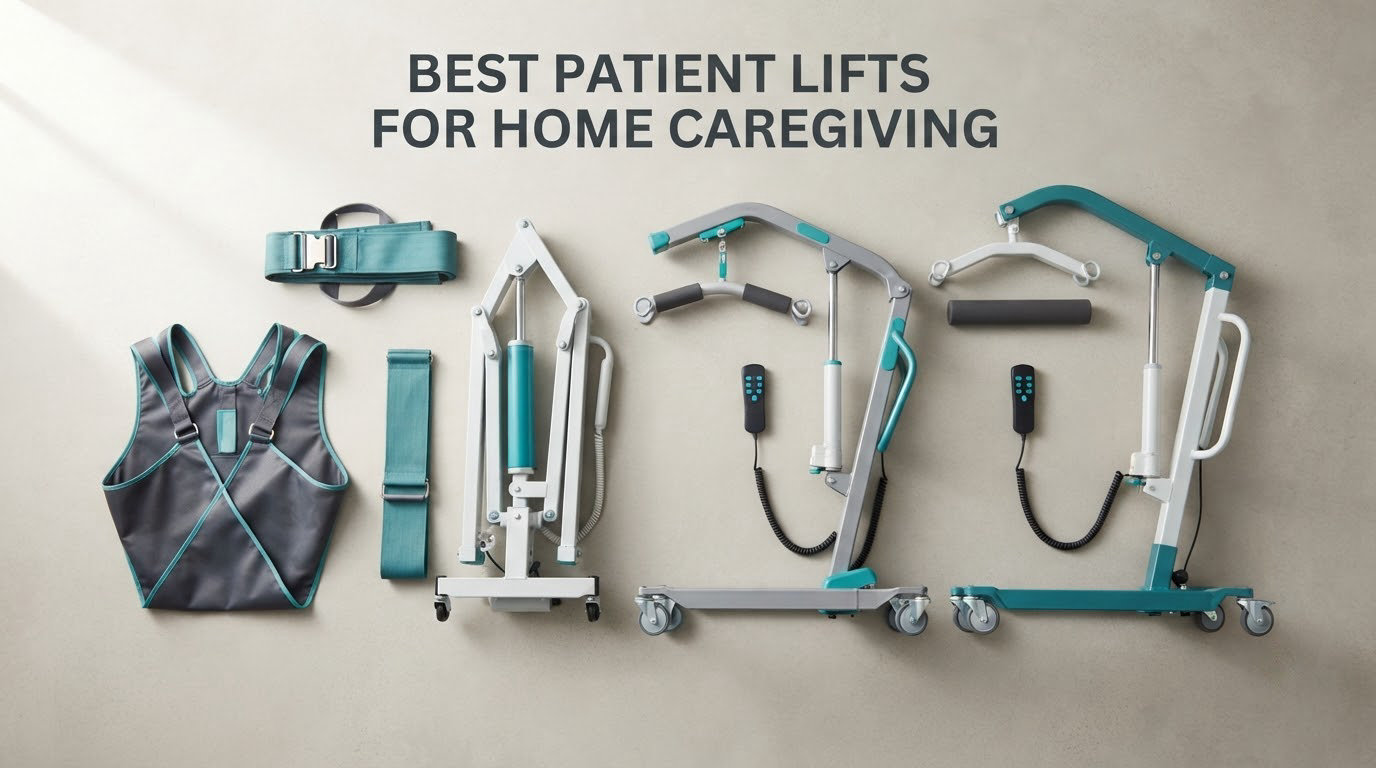
The best patient lift for home use is a full-body electric lift if the person cannot bear any weight, a sit-to-stand lift if they can push through their legs for most of their body weight, and a hydraulic floor lift for occasional transfers or a tight budget. That is the short answer, and everything below is the detail behind it: ten patient lifts we compared spec by spec, who each one actually suits, and the measurements you need to take before you buy.
Most home caregiving injuries happen in the ninety seconds it takes to move someone from bed to chair. One caregiver, one awkward load, one locked lower back. A patient lift removes that lift from the equation entirely, but only if the lift, the sling and the patient’s ability all match. A mismatched combination is either useless or unsafe.
One clarification before we go further. A patient lift is a wheeled frame with a boom arm and a spreader bar that a caregiver attaches to a sling to raise an adult off a bed, chair or the floor. People call it a Hoyer lift, and Hoyer was a brand name, not a category, so you will see the word applied to machines from manufacturers that have never heard of it. Search by lift type, not by that name.
We spent weeks comparing capacity ratings, lift ranges, base widths, clearances and real owner reviews across the ten models below. We also looked at the caregiver side of the equation, because a lift that needs two strong people to load is not a home lift. Our advice is informational, and you should confirm any lift choice with your patient’s clinician, occupational therapist or physical therapist before you purchase.
If you are setting up a home care room from scratch, our guide to grooming tables for home use covers the same kind of space-and-clearance thinking for a different piece of equipment.
Table of Contents
Top 3 Picks for Best Patient Lifts for Home Caregiving in 2026
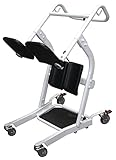
Lumex LF1600 Sit to Stand
- Steel frame with padded knee pads and handbars
- 400 lb capacity
- Users 5 ft 1 in to 6 ft 6 in
- 61 lb frame that moves through home doorways

Invacare 9805P Hydraulic
- 450 lb capacity
- Floor-level 20 in lifting range for fall recovery
- Bent mast with a base that narrows to 22 in
- 68 lb frame with 3-year warranty
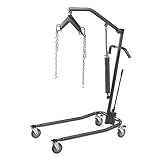
Drive Medical 13023SV
- 450 lb capacity on a 42 inch base
- 17.5 in to 62 in lifting range
- 6-point swivel bar for 2 to 4 straps
- Steel-welded silver vein frame
Best Patient Lifts for Home Caregiving in 2026 at a Glance
Ten lifts, sorted by the decision each one solves rather than by brand. The three lift families below behave very differently, and the single most common buyer mistake is choosing the wrong family for how much weight the person can actually push through their legs.
| Product | Specs | Action |
|---|---|---|
| Lumex LF1600 Sit to Stand Patient Lift |
|
Check Latest Price |
| Invacare 9805P Hydraulic Patient Lift |
|
Check Latest Price |
| Drive Medical 13023SV Hydraulic Lift |
|
Check Latest Price |
 Vive Mobility Sit to Stand Lift Vive Mobility Sit to Stand Lift |
|
Check Latest Price |
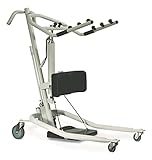 Invacare GHS350 Sit to Stand Lift Invacare GHS350 Sit to Stand Lift |
|
Check Latest Price |
 Hi-Fortune HY101-01A Electric Lift Hi-Fortune HY101-01A Electric Lift |
|
Check Latest Price |
 VOCIC AY03 Sit to Stand Lift VOCIC AY03 Sit to Stand Lift |
|
Check Latest Price |
 SuperHandy GBTS024 Electric Floor Lift SuperHandy GBTS024 Electric Floor Lift |
|
Check Latest Price |
 Joerns Hoyer Advance E340 Electric Lift Joerns Hoyer Advance E340 Electric Lift |
|
Check Latest Price |
 ArjoHuntleigh Sara Stedy Sit to Stand ArjoHuntleigh Sara Stedy Sit to Stand |
|
Check Latest Price |
1. Lumex LF1600 Sit to Stand Patient Lift – Best Overall for Partial Weight Bearing
Lumex LF1600 Stand Assist, Sit to Stand Patient Lift for Elderly Seniors, Chair Transfer & Standing Support Aid
Steel frame
400 lb max user weight
Fits users 5 ft 1 in to 6 ft 6 in
61 lb unit, 33.5 x 25 x 42.5 in
Pros
- Strongest review volume in the group at 1050 ratings
- Steel frame stays stable through the push-up phase
- Cushioned knee pads and padded seat reduce pressure on shins
- Holds users from 5 ft 1 in to 6 ft 6 in
Cons
- Requires the user to bear partial weight and participate
- Full-size stand assist frame needs clearance around furniture
Best for: a patient who can push up through their legs but needs help getting from the bed to a chair or commode. Not for: anyone who cannot bear weight at all, and not for a very tall or very short patient outside the listed height band.
The LF1600 has more owner feedback behind it than any other lift in this roundup, 1,050 ratings averaging 4.6, and 83 percent of those buyers gave it five stars. Graham-Field has been making patient aids for more than fifty years, and that longevity shows in the simple, welded-steel construction rather than anything clever.
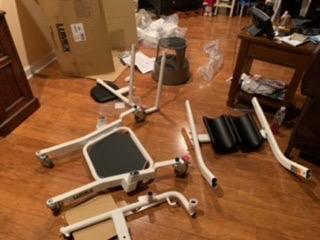
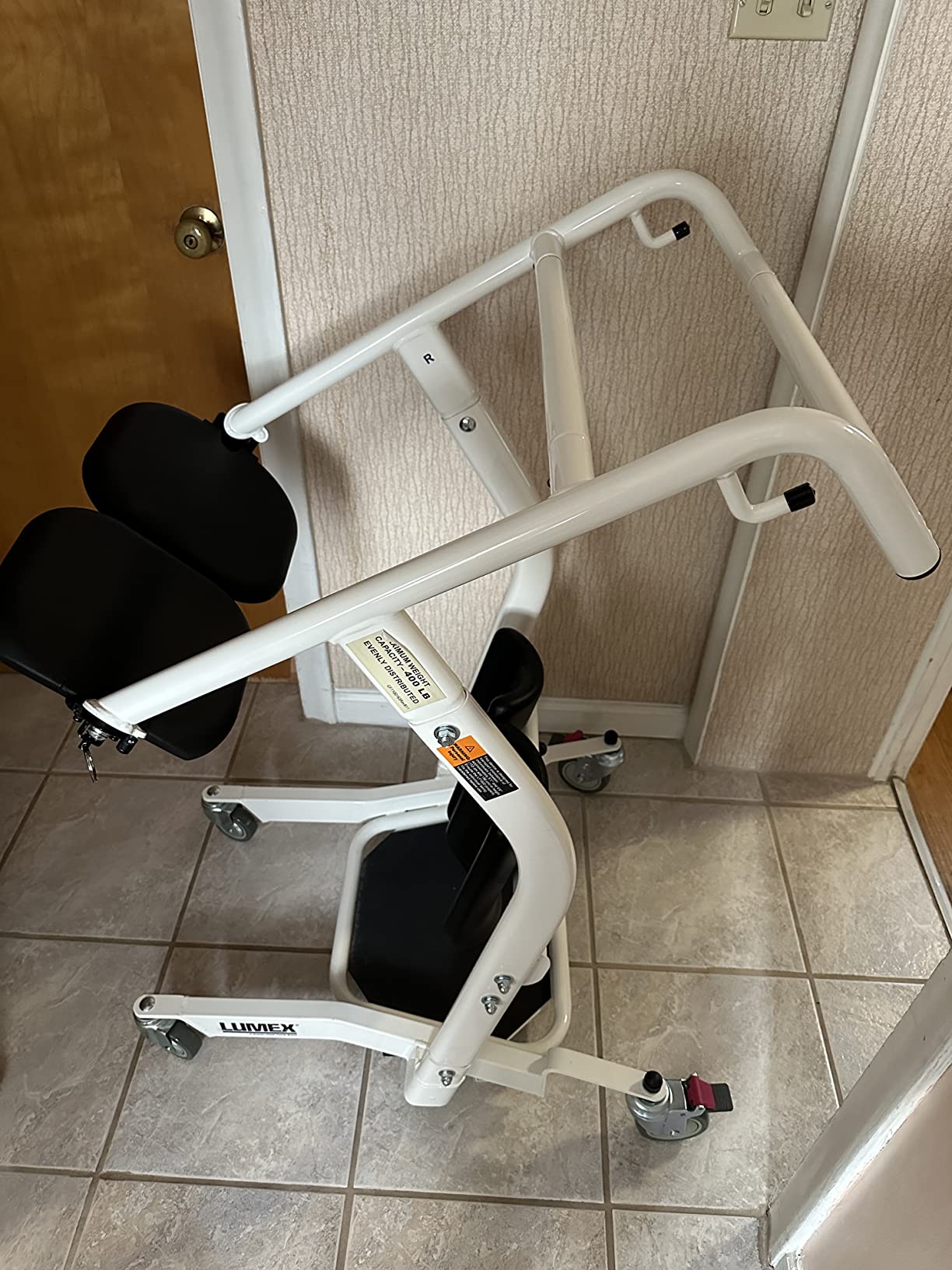
What stands out on the spec sheet is the height range. The frame is built for users from 5 foot 1 inch to 6 foot 6 inch, which is a wider window than most stand assist lifts cover, and the 400-pound limit is a full pound class above the typical 350-pound sit-to-stand rating. At 61 pounds, the unit is light enough for one caregiver to reposition rather than drag.
Comfort details matter more than people expect on this kind of device. The cushioned knee pads, ergonomic handbars and padded seat are where the patient spends the awkward part of every transfer, and reviewers repeatedly call them out as the reason the lift feels less clinical than it looks.
When the LF1600 is the right call for a home
This is the lift to buy when the goal is getting a weak but cooperative person upright two or three times a day. Sit-to-stand use supports circulation, appetite and bone loading during recovery, and doing it every day rather than skipping days because the transfer is too hard is the whole point of the machine.
It is also a natural fit for a home with a normal bedroom and a normal bathroom, because the footprint is smaller than most full-body floor lifts. The catch is the height band. If the patient is under 5 foot 1 inch or over 6 foot 6 inch, the padded seat and handbar geometry will not sit correctly, and you should move to a full-body lift with a sling instead.
Where the LF1600 falls short
The frame needs open floor space around the chair or bed for the base to spread and for the caregiver to stand at the front. In a tight room crowded with furniture, a narrower unit with an adjustable base will do more for you. If the patient cannot reliably push through their legs, this lift simply is not the right tool and no amount of adjustment changes that.
2. Invacare 9805P Hydraulic Patient Lift – Best Full-Body Lift for Home Hallways
Invacare Hydraulic Patient Lift, Lightweight Transfer Lift Chair with 450 lb Weight Capacity, Bent Mast for Safer Transfers, 6-Point Padded Swivel Bar, Floor-to-Bed Height Range for Fall Recovery
450 lb capacity
20 in to 64 in lifting range
Bent mast with 6-point swivel bar
68 lb unit
Pros
- Bent mast keeps the patient clear of the frame and less claustrophobic
- Shifter handle narrows the base to 22 inch for tight hallways
- 20 inch starting height allows floor-level fall recovery
- Lightest hydraulic frame in the group at 68 lb
Cons
- Requires the caregiver to pump every transfer
- Assembly is required before first use
Best for: a non-weight-bearing patient in a home with narrow hallways, especially one who has fallen and needs to be recovered from the floor. Not for: a single exhausted caregiver, since every transfer means pumping the handle.
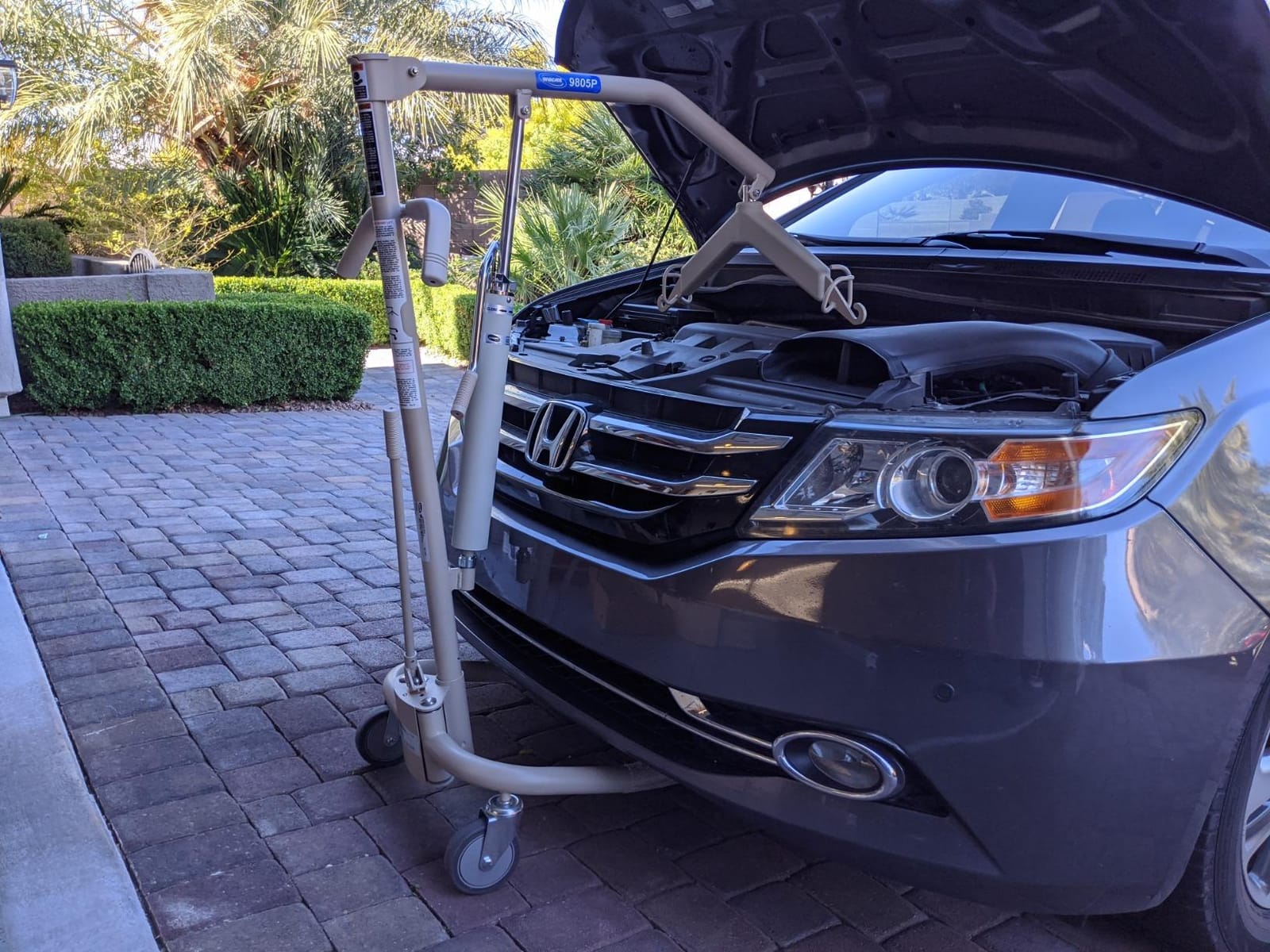
This is the lift that answers the question caregivers post about most often on forums: is a full-body Hoyer actually necessary, or is there something less institutional that works at home. The 9805P is the less institutional answer. It weighs 68 pounds, it narrows to 22 inches at the base, and it lifts from 20 inches off the floor to 64 inches, which means a fall recovery does not require dragging anyone.
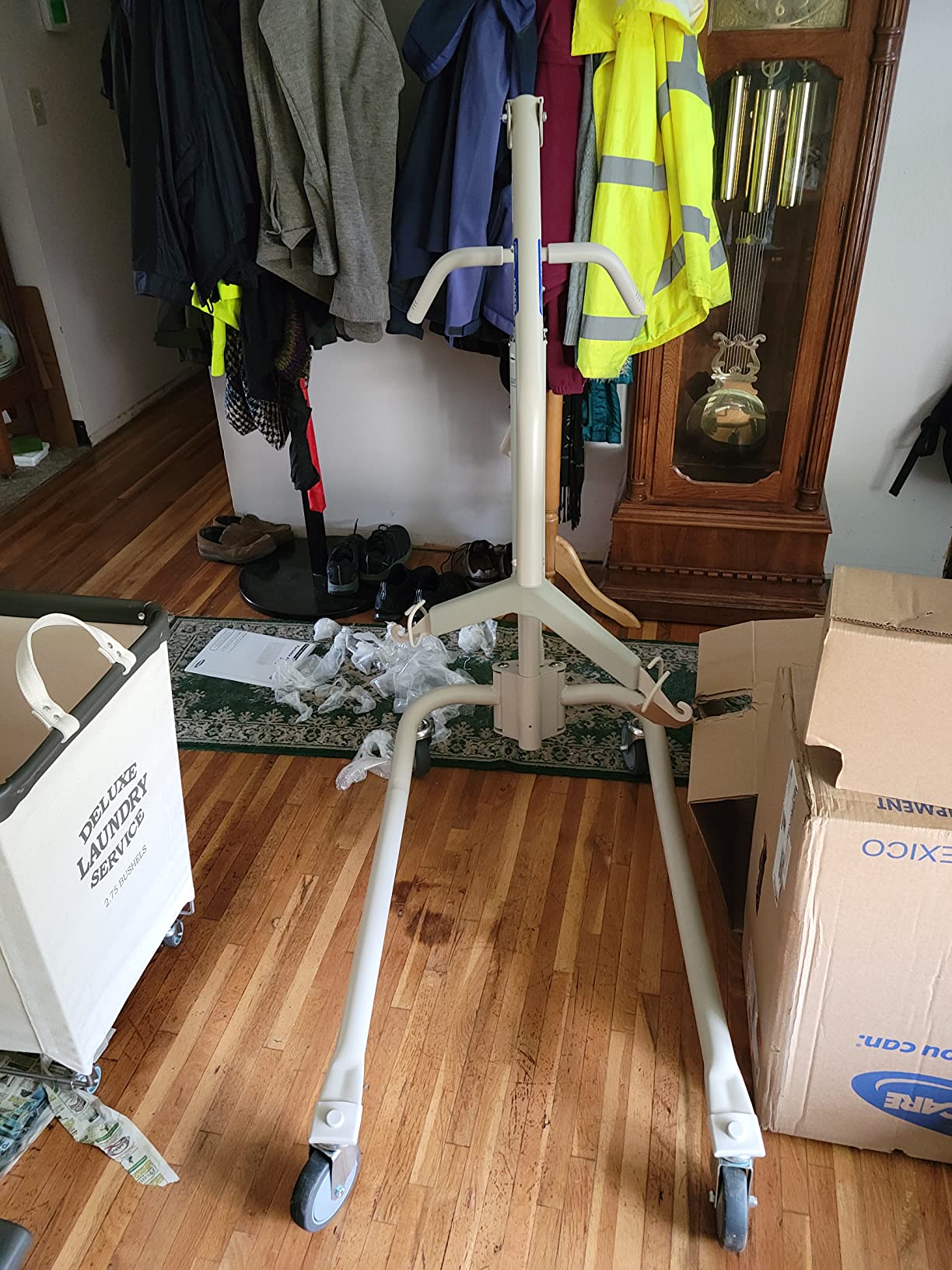
The bent mast is the detail owners praise most. Instead of a straight vertical post, the boom curves, which moves the patient’s legs and chair away from the frame and makes the transfer feel less enclosed. Reviewers consistently describe the experience as less claustrophobic than a straight-mast lift, which matters for a patient being hoisted several times a day.
The rotating pump handle lets the caregiver work from either side, and the 5-inch low-friction casters roll over carpet and hard flooring without a fight. With 515 ratings at 4.4 and 73 percent five stars, this is a well-proven design rather than a new one.
Why the 9805P handles real home spaces
Most full-body lifts open to a base wide enough to straddle a bed or wheelchair, and that is exactly the width that will not go through a residential door. The shifter handle on this model collapses the base from 62 inches open to 22 inches closed, so the caregiver rolls it down a hallway, then opens it back up at the bed. That one feature is the difference between a lift that works in an apartment and one that stays in the garage.
The floor-level starting height is the second reason. Anyone caring for a bedbound person knows that falls happen, and a lift that can start at 20 inches off the ground turns a two-person floor recovery into a one-person job. It also means a sling can be slid under a patient who has already slid down the bed, without first shuffling them back up.
When to choose something else
The 68-pound frame is light, but the pumping is not free. Each transfer takes repeated strokes of the hydraulic handle, and that effort lands in the caregiver’s shoulder and wrist. If the person helping is over 60, has a lifting restriction, or is the only helper in the house, an electric lift removes more strain than it adds in cost and maintenance.
3. Drive Medical 13023SV Hydraulic Lift – Best Rated Steel-Welded Floor Lift
Drive Medical Handicap Hydraulic Lift, Silver Vein, 5 Inch
450 lb weight capacity
17.5 in to 62 in lifting range
42 inch base width
6-point swivel bar
Pros
- Steel-welded frame built for daily transfers
- 450 lb capacity with a wide 42 inch base for stability
- 6-point swivel bar accepts 2 to 4 sling straps
- Low 17.5 inch starting height for near-floor work
Cons
- Must be assembled before use
- Base does not narrow for tight doorways
Best for: a larger patient who needs a stable, wide-based full-body lift and whose home has standard-width doorways. Not for: a small apartment, because this base does not fold narrower.
With 503 ratings at 4.4 and 72 percent five stars, the 13023SV has the second-deepest review history in this group. Drive Medical has been building this style of lift for well over a decade, and the steel-welded silver vein frame is the reason owners report it feeling solid after years of daily use.
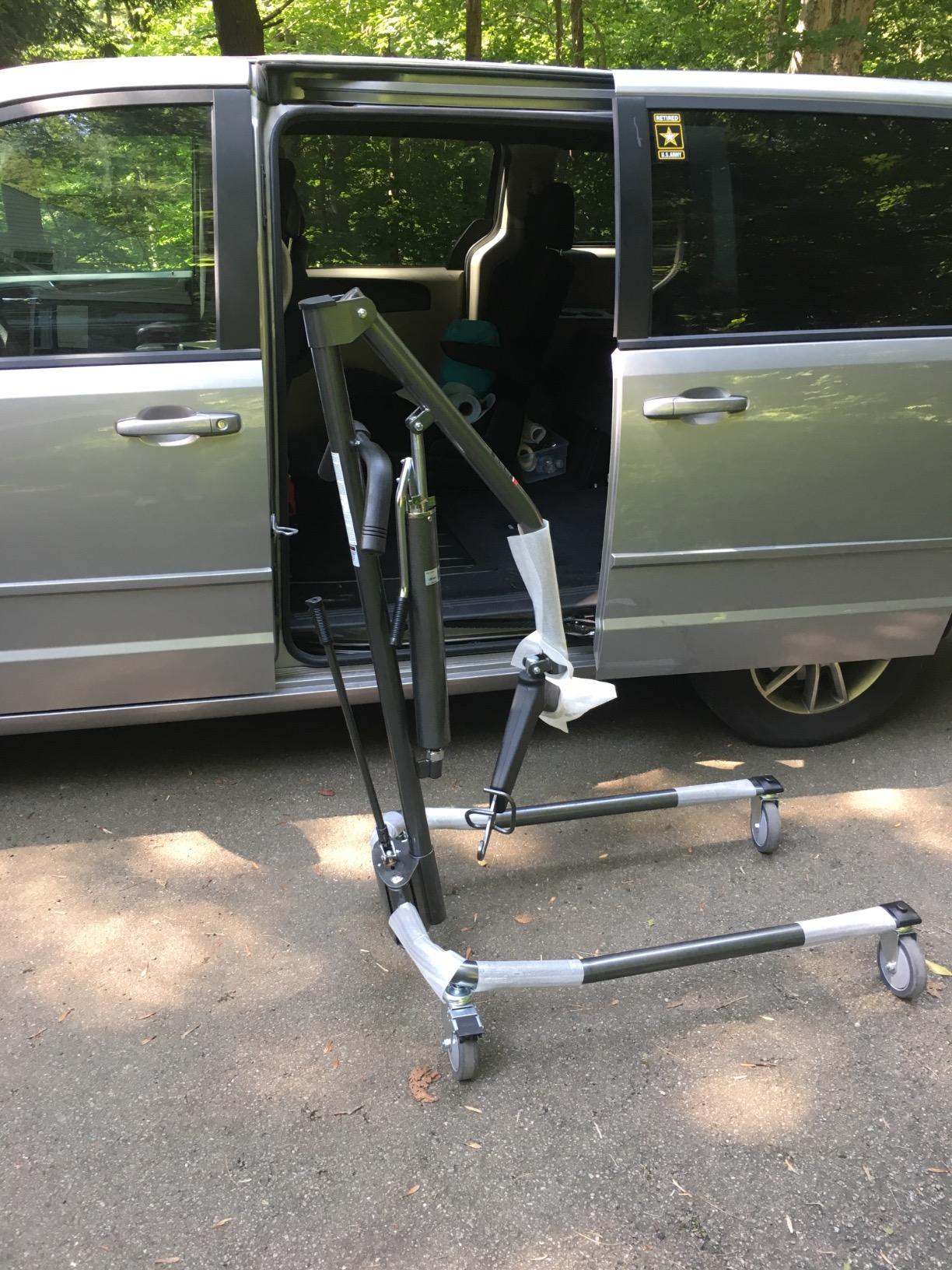
The 450-pound capacity and 42-inch base width are a matched pair. That wide stance resists tipping when a heavier patient is lifted from an odd angle, which is the situation that scares caregivers most. The 6-point swivel bar accepts anywhere from two to four sling straps, so it works with both simple two-strap slings and four-point comfort slings.
Its low point is 17.5 inches, slightly lower than most competitors in this roundup, which is useful when a patient has sunk low in the bed or slid toward the footboard. Casters are 5 inches, so it rolls over thresholds and low-pile carpet without being lifted.
Where the wide base helps and where it hurts
A 42-inch base is an asset in a patient room and a liability in a hallway. In a bedroom or living room with space to manoeuvre, that footprint gives the operator confidence when the patient’s weight is not centred over the frame. If the route from bed to bathroom passes through a doorway narrower than 42 inches or a tight turn, this lift will not make it without a second thought.
Measure the whole route, not just the front door. Caregivers regularly discover that the bedroom door is fine and the bathroom door is the problem, and finding that out after delivery is expensive in time and in cancelled orders.
What to know before you buy
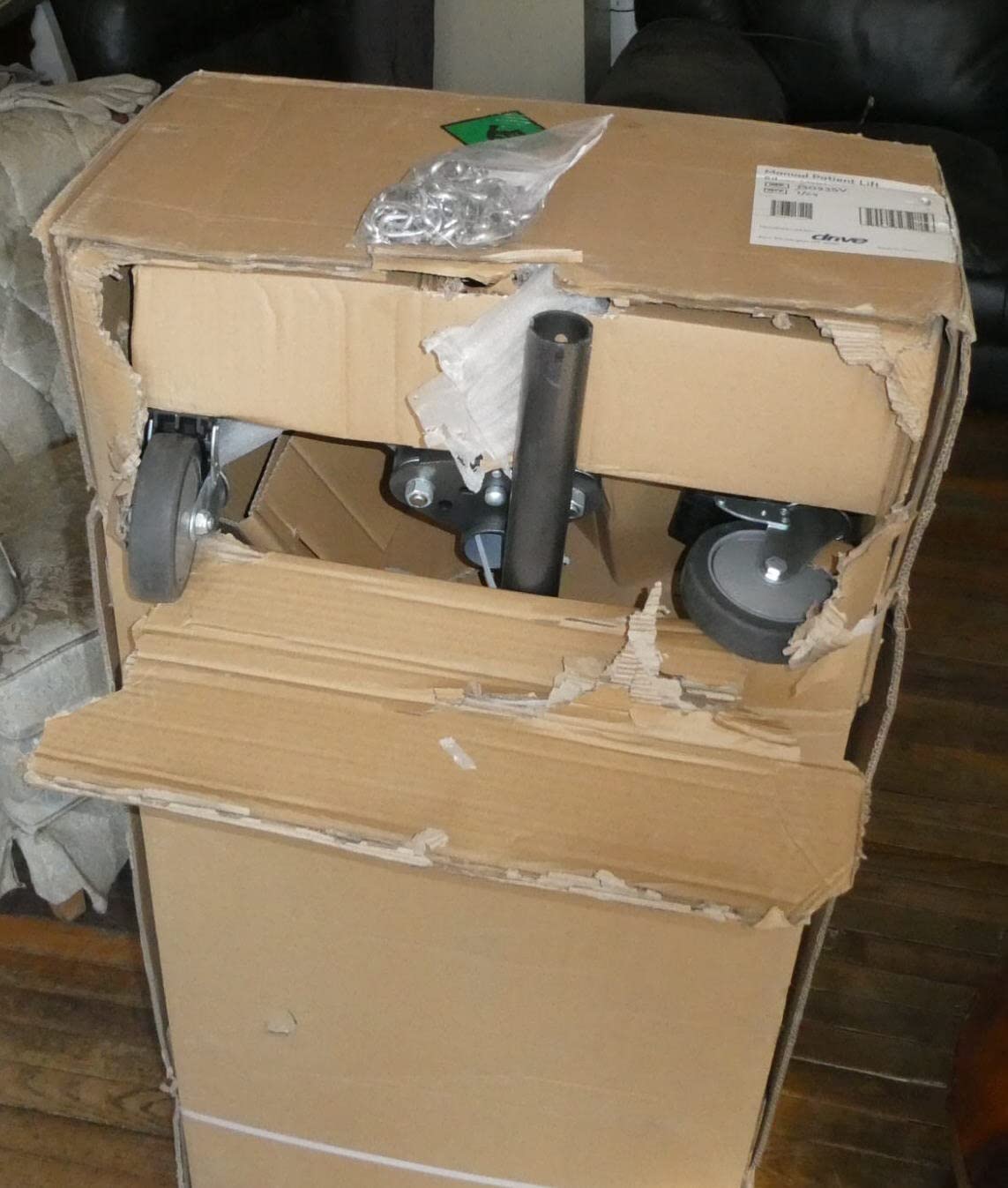
Assembly is required, and it is a real job rather than a five-minute bolt-together. Budget an afternoon with two people, and check that you have room to assemble it where it will live, because these frames do not fit back through a doorway once built in a tight space. Listing detail on this model is also thinner than most, so confirm capacity and range against the manufacturer’s own documentation before you order.
4. Vive Mobility Sit to Stand Lift – Padded Stand Assist With Dual Brakes
Vive Mobility Sit to Stand Patient Lift for Handicapped – Stand Assist Lift
400 lb capacity
26 inch base at widest point
Needs 60-70 percent weight bearing
60 lb unit
Pros
- Foam-wrapped handrails with cushioned shin rests and split seat pads
- Four swivel casters glide across multiple flooring types
- Dual locking brakes plus hooks for side support straps
- 2-year manufacturer guarantee
Cons
- 26 inch base may not clear narrow doorways
- Only suits users who can bear 60-70 percent of body weight
Best for: a partially weight-bearing patient on a tighter budget who wants a padded, supportive stand assist. Not for: narrow doorways under about 28 inches, or a patient who cannot hold up their own torso.
Vive Mobility’s sit-to-stand unit has 567 owner ratings at a 4.3 average, with 68 percent five stars. The 4.3 is a notch below the top of the field, and the difference shows up mostly in the base width, which is the caveat buyers mention most.
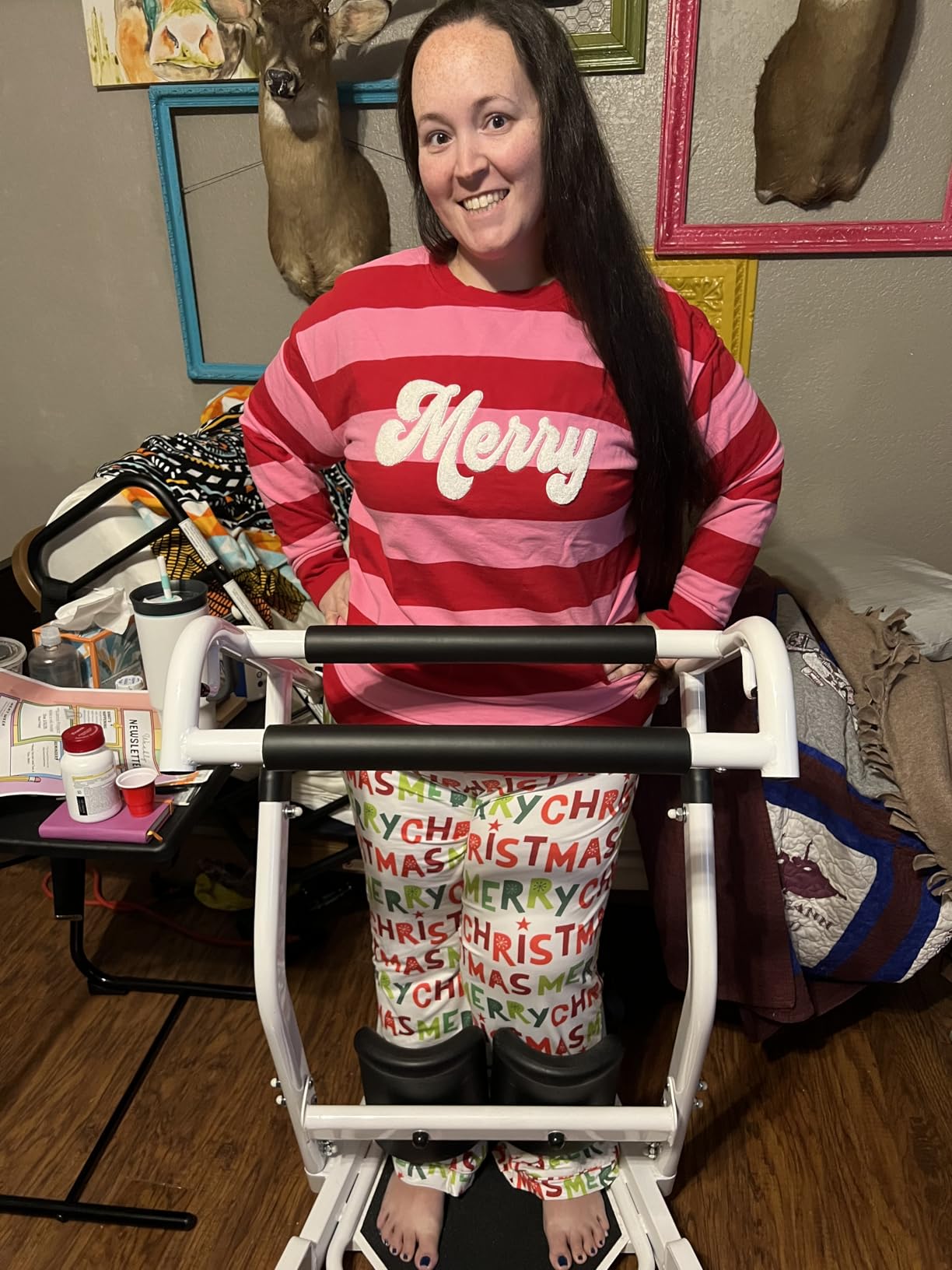
The comfort package is unusually good for the money. Foam-wrapped handrails, cushioned shin rests and split seat pads are the three surfaces a patient touches during every transfer, and Vive has covered all of them. The split seat also lets a caregiver access the hips and lower back for clothing and skin checks without removing the patient from the lift.
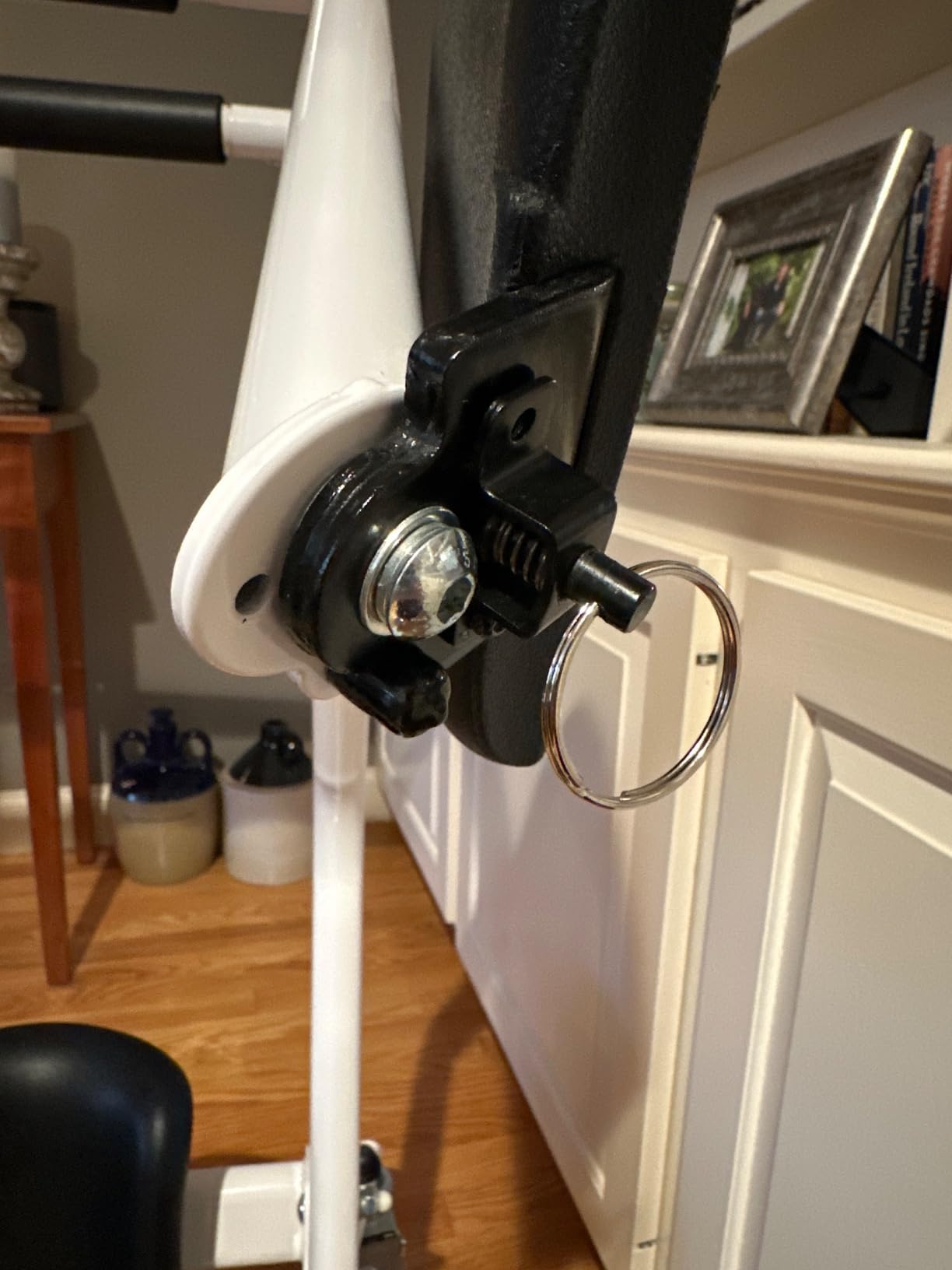
Dual locking brakes on the casters matter more than they sound. They stop the unit rolling during the part of the movement where the patient’s weight shifts, and the hooks for side support straps add a layer of security for anyone who sways during the push-up phase.
Check your doorway width before ordering
The base measures 26 inches at its widest point, and reviewers report doorway width as the most common practical complaint. Measure every door on the route before you order, and if you have a standard interior door, that figure is often tighter than people expect once the stop moulding and hinges are included.
If the width works, this is a good value pick. The unit is 60 pounds, rolls on four swivel casters that glide across different flooring types, and carries a 2-year guarantee from the manufacturer.
Who should skip it
The manufacturer is explicit that this lift is for users who can support 60 to 70 percent of their body weight. That excludes anyone who is largely non-weight-bearing, including many post-operative hip and knee patients in the early weeks. For those patients, a full-body sling lift is not a step up in comfort, it is the only safe option.
5. Invacare GHS350 Sit to Stand Lift – Best for Beds With Low Clearance
Invacare Sit to Stand Lift for elderly, Hydraulic Stand Assist Lift Aid for Patient, Lift Assist Transfer Device for Elderly Seniors, Adults & Disabled, FSA & HSA eligible
4.5 inch bed clearance
Sling capacity up to 350 lb
Adjustable leg pad and footplate
88 lb unit
Pros
- Low 4.5 inch height fits under most homecare beds
- Adjustable leg pad and retractable non-slip footplate suit different body sizes
- Rotating pump handle lets the caregiver work from either side
- Works with Invacare multi-function slings
Cons
- 350 lb sling capacity is lower than most rivals here
- Non-locking casters are not suitable where a locked base is required
Best for: a homecare bed with a low frame, where most stand assist lifts will not slide underneath to allow the base to straddle the bed. Not for: a patient above 350 pounds.
The GHS350 holds a 4.0 average across 267 ratings, the lowest in this roundup, with 57 percent five stars and an 11 percent one-star share. We include it because the one thing it does well, it does very well, but you should buy it for that one thing specifically.
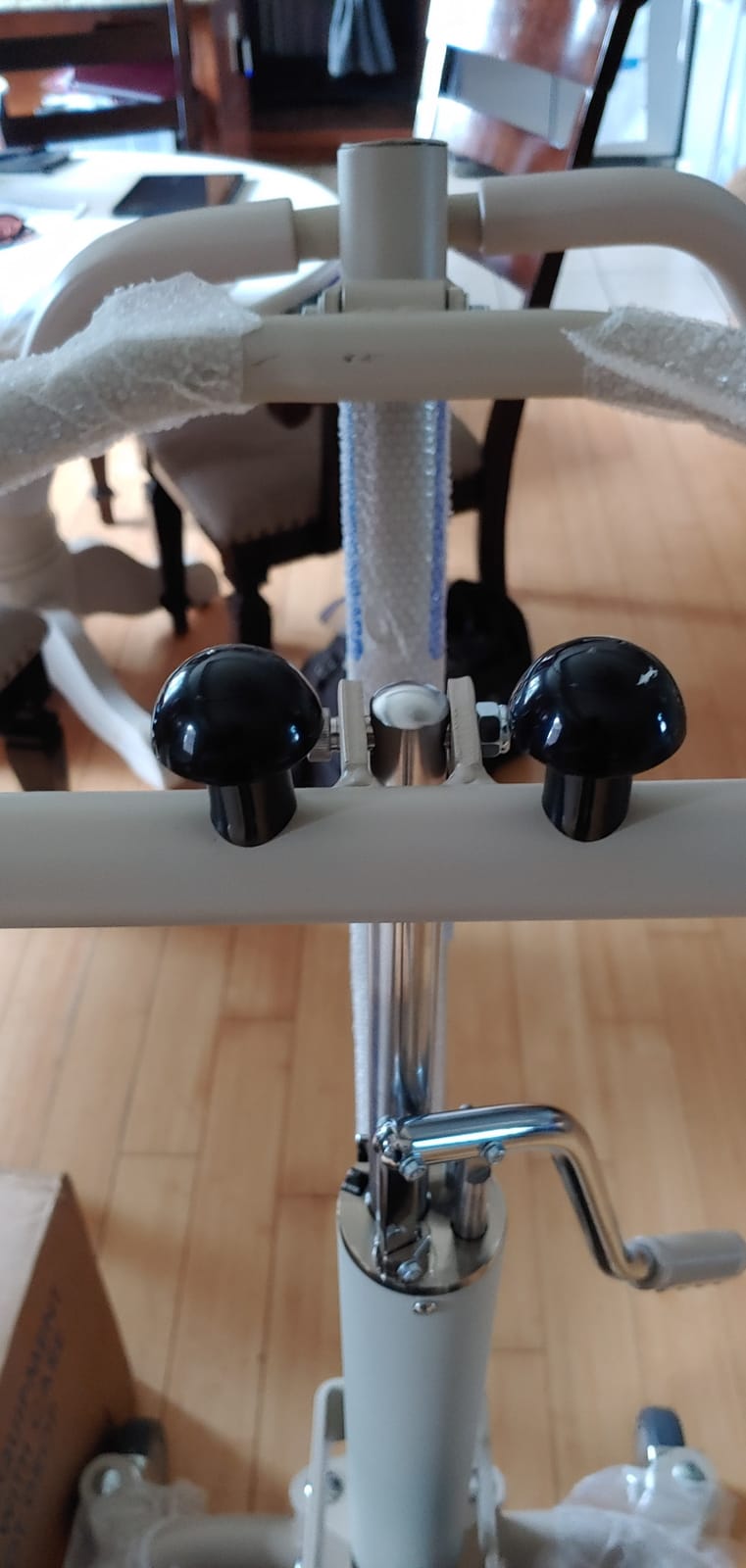
That one thing is clearance. At 4.5 inches, this is the lowest-profile stand assist unit in the group, which is what lets a caregiver slide the base underneath a homecare bed and reach the patient from an angle that taller frames cannot manage. Many homecare beds sit low on a frame with a narrow gap to the floor, and this is the difference between a workable transfer and an improvised one.
The adjustable soft contoured leg pad and retractable non-slip footplate adjust to different leg lengths, and the rotating pump handle means the caregiver is not permanently stuck on one side of the device. It is compatible with Invacare multi-function slings for toileting, stand assistance and seated transfers.

Why the non-locking casters are a design decision
Invacare fits low-friction, non-locking casters here on purpose. As the patient pushes up and their centre of gravity moves, the casters let the lift re-centre itself rather than fighting the shift. The trade-off is that you cannot lock the base, so this unit is not appropriate for a patient who needs a rigid, locked base during transfers.
That is also why the rating sits where it does. Buyers who expected locking brakes read them as a defect, and the one-star reviews reflect that mismatch rather than a quality problem.
Where the 350-pound limit bites
Three other units in this roundup carry a 400-pound or higher rating, so if the patient is over 350 pounds this is the wrong lift regardless of how good the clearance is. At 88 pounds it is also the heaviest stand assist frame here, which is another reason it suits a bedroom with space rather than a hallway.
6. Hi-Fortune HY101-01A Electric Patient Lift – Best for Solo Caregiver Transfers
Hi-Fortune Patient Lift Electric Unfoldable Hydraulic Body Transfer for Home Use Seniors Easy-Assembly, Battery-Powered, 400lb Weight Capacity with Medium U-Sling, White, 1 Count (Pack of 1)
450 lb capacity
33 in to 68 in lift range
99 lb unit that folds for storage
1-year frame warranty
Pros
- Push-button hand controls let one caregiver manage the whole transfer
- Rear pedals widen or narrow the base without bending down
- Swan neck legs reach around recliners and large furniture
- Disassembles for storage and vehicle transport
Cons
- Assembly instructions are unclear and photos may not match the shipped model
- Battery and parts availability from the manufacturer has been inconsistent
- Ground bars must be fully spread or the lift can tilt
Best for: a single caregiver who must do every transfer alone, in a home where the lift needs to be put away between uses. Not for: anyone who needs a warranty with meaningful length on the electronics.
Caregivers describe this unit in one phrase more than any other: it turns a two-person job into a one-person job. The push-button hand control raises and lowers the patient without pumping, so a solo caregiver is not left hanging on a lever while also supporting the patient’s weight. 250 ratings at 4.4 with 71 percent five stars back that up.
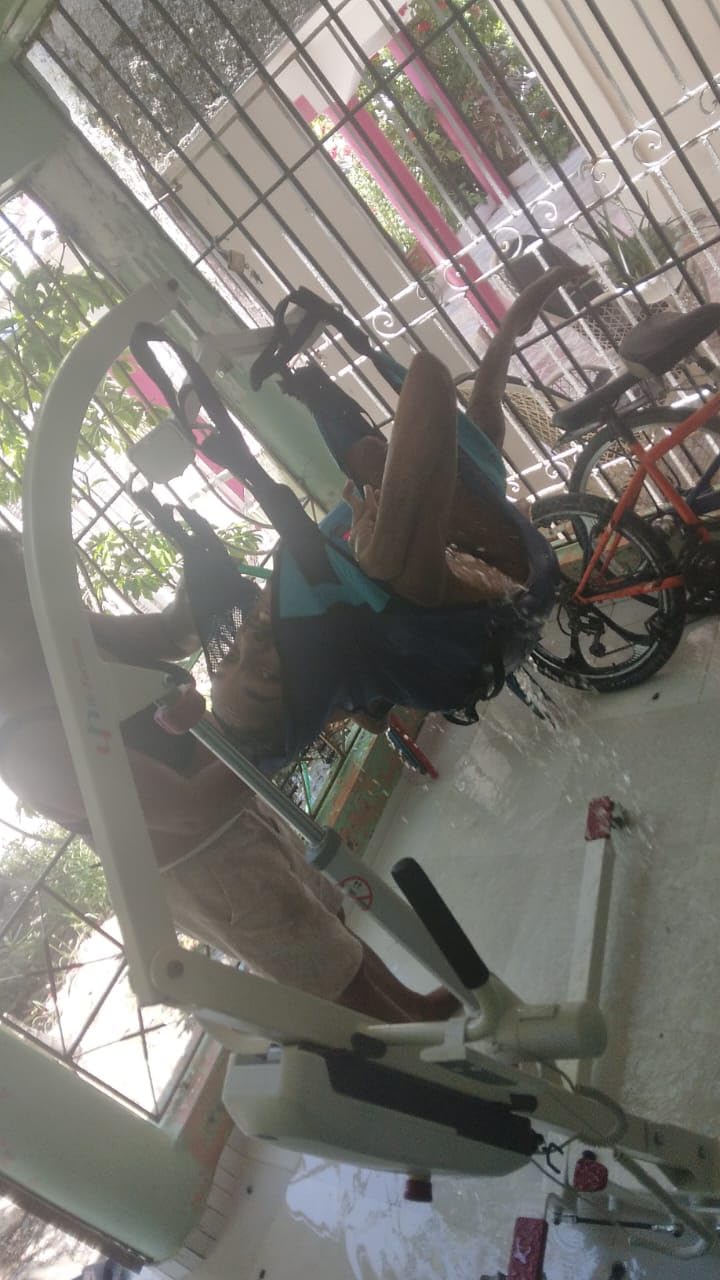
The rear pedals are a genuinely clever bit of design. One pedal widens the base and the other narrows it, and both are operated by foot, so the caregiver does not have to crouch down and reposition the legs every time they approach a different piece of furniture. The swan neck leg design also brings the base closer to a recliner than a conventional rectangular base would.
It lifts from 33 to 68 inches. That is a shorter low range than the hydraulic floor lifts, which means it is not the machine to use for a patient who has fallen to the floor, but it is more than adequate for bed, chair and commode transfers at normal heights.
One instruction, one spreader bar, one sling
The lift arrives with a four-point spreader bar and a free polyester U-sling with colour-coded handles, which removes the most common first-time buyer mistake of buying an incompatible sling. Colour coding matters more than it sounds, because attaching straps in the wrong order produces a sling that twists under load.
The frame is alloy steel and the unit weighs 99 pounds, which is the heaviest in this roundup. It folds down for storage and travel, so it can live in a closet between uses rather than occupying the middle of a bedroom permanently.
What could go wrong over time
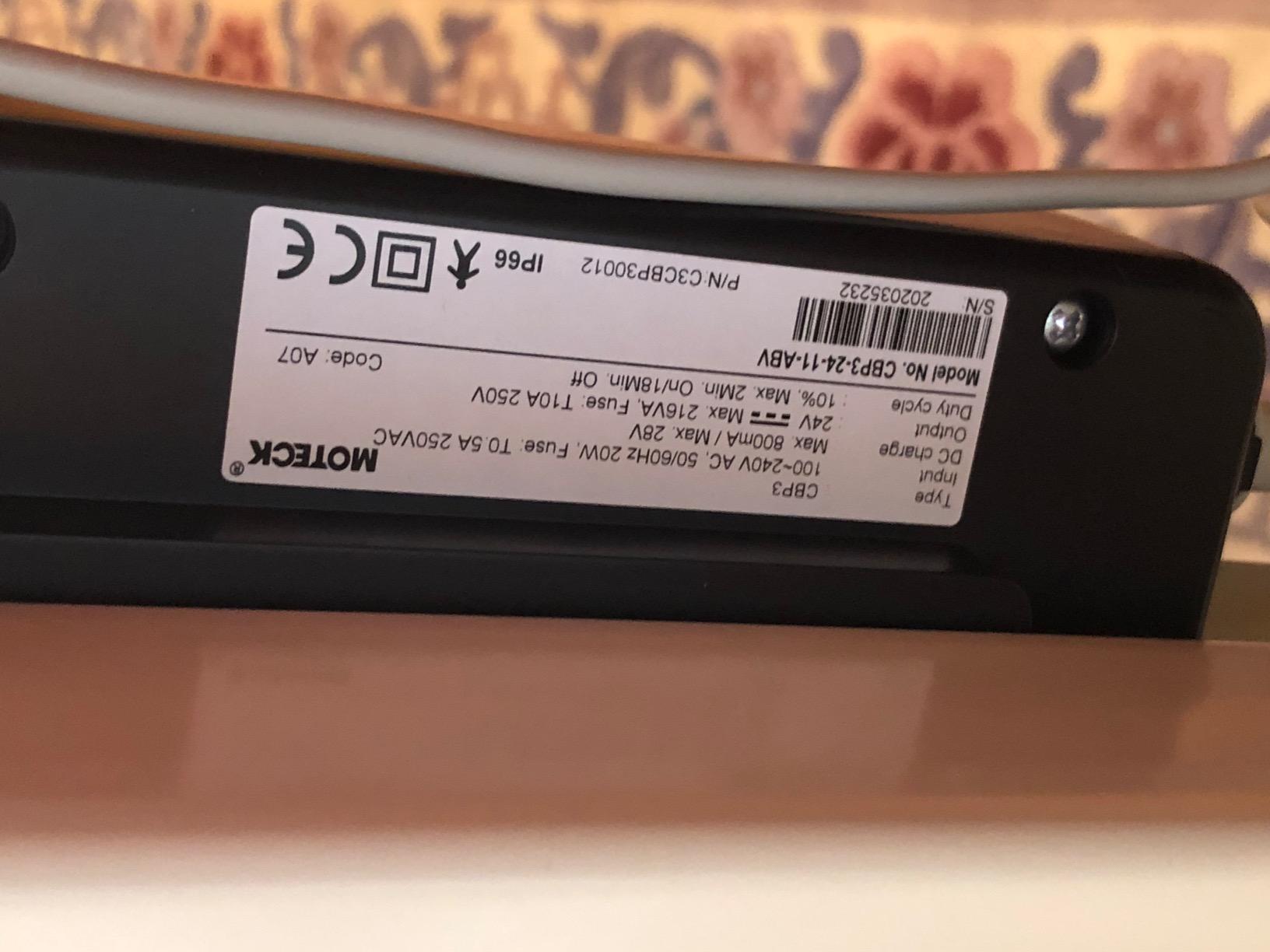
Two things come up repeatedly in the reviews. Assembly instructions are unclear, and some buyers report printed photos that do not match the model that arrived, so allow extra time and verify parts against the actual unit. More seriously, a minority report battery failure and slow responses from manufacturer support on replacement parts. The warranty is 1 year on the frame and 6 months on the actuator, control box and hand controls, which is the shortest electrical cover in this group.
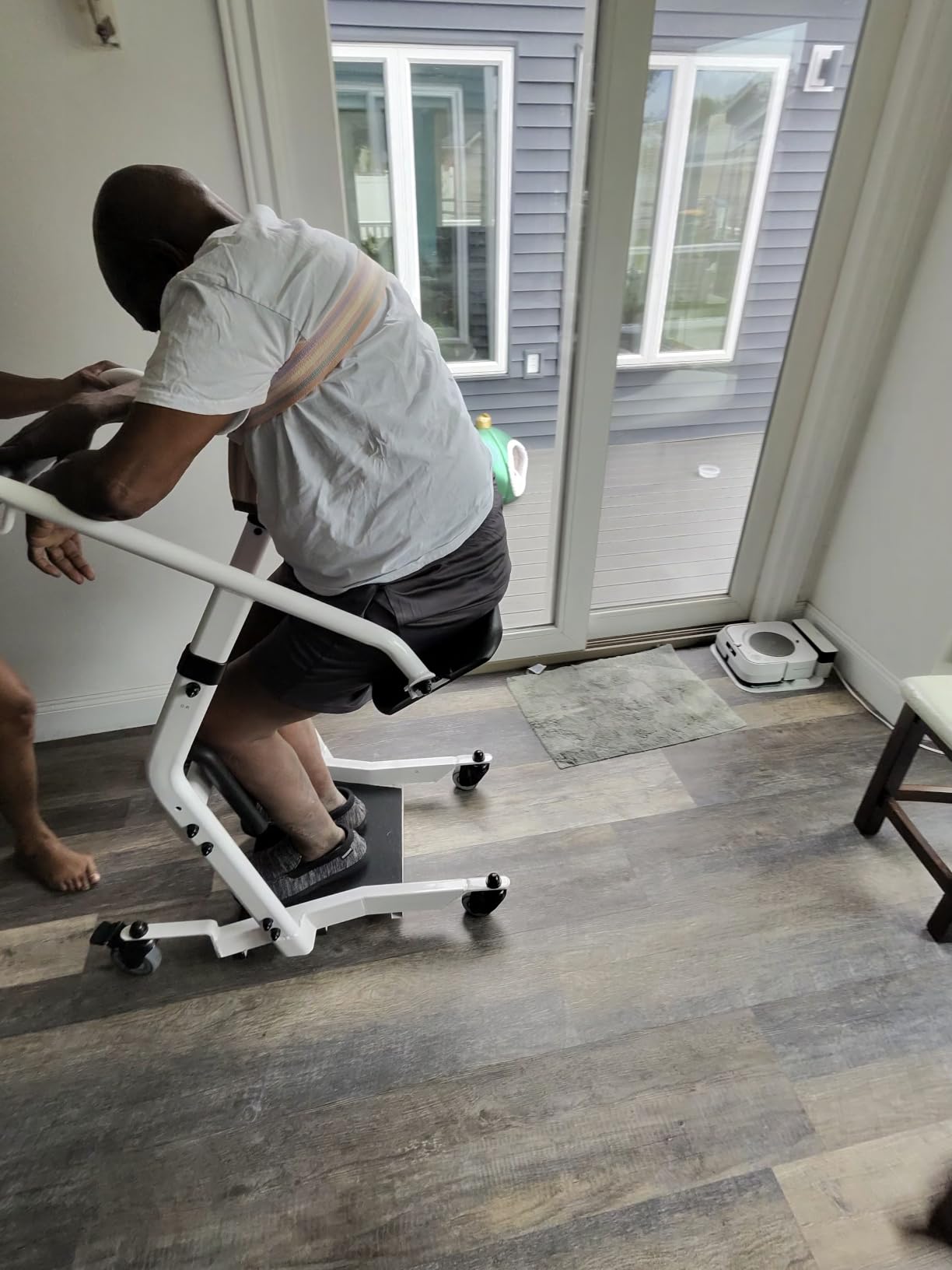
7. VOCIC AY03 Sit to Stand Lift – Best Low-Profile Base for Furniture Clearance
VOCIC Sit to Stand Lift, Patient Lift Chair Transport Unit with Wheels
400 lb capacity
6 cm low profile base
2-level adjustable knee pad
58 lb unit
Pros
- Low profile base slides under most furniture
- Lightest stand assist frame in the group at 58 lb
- Dual-lock braking on 3 inch rear and 4 inch front casters
- Foam handgrips with shin pads and split-seat cushions
- Tool kit and instructions included for assembly
Cons
- Open design has no safety belt restraint and does not support one
- Not suitable for completely immobile or paralyzed patients
Best for: a patient who can sit up and push through their legs, in a home where the front of the chair or couch is close to the floor. Not for: anyone who needs a torso belt, and not for a fully immobile patient.
The AY03 is the newest listing in this group, with 191 ratings at 4.4 and 73 percent five stars. Reviewers focus on the same three things: the base, the padding, and how stable it feels during the push-up phase.
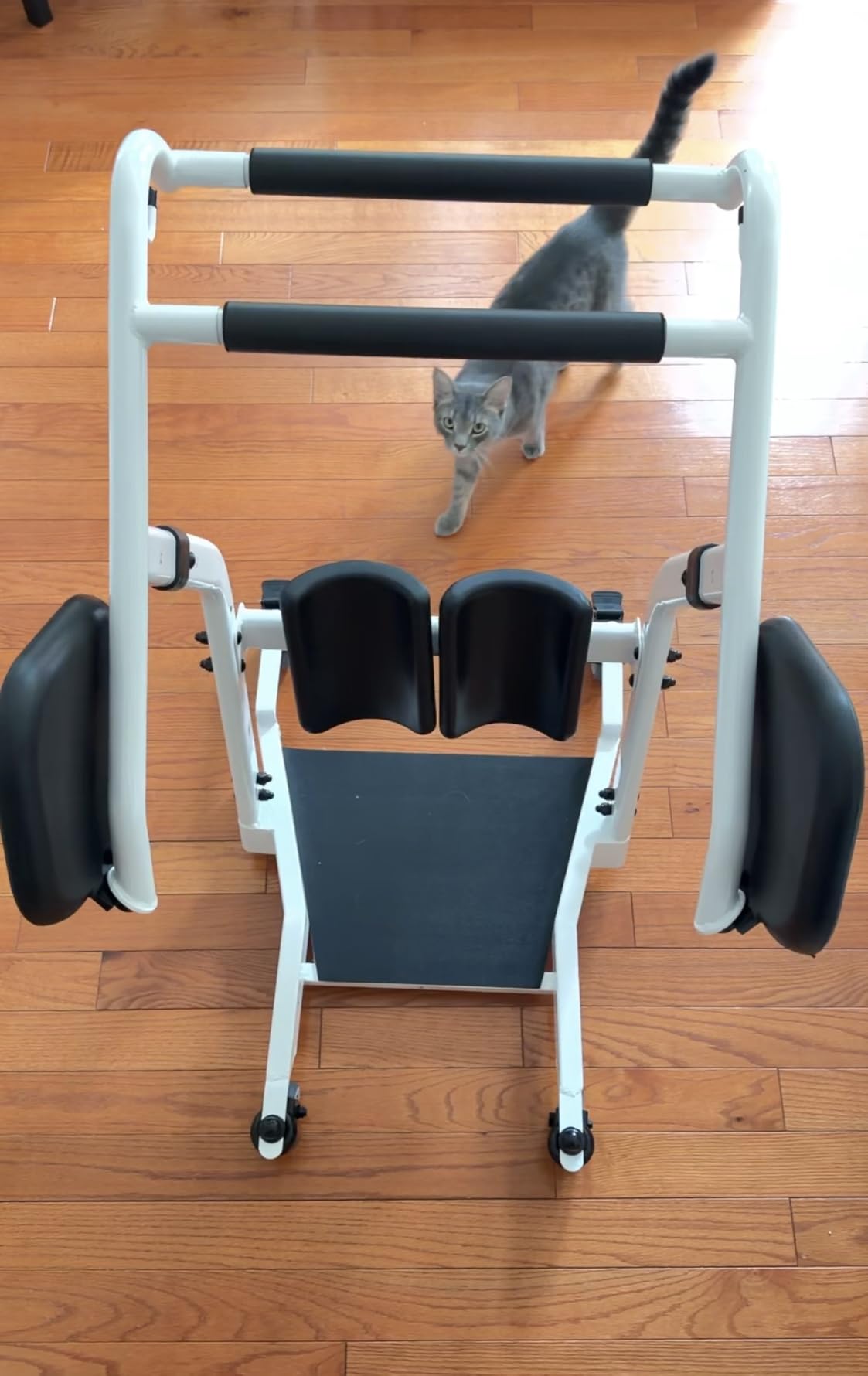
Its 6 cm base profile is the headline number. That is roughly 2.4 inches off the floor, low enough for the legs to slide under most furniture without any adjustment, which is what makes a stand assist possible in front of a low-slung recliner or a low sofa. Compare that with the taller frames elsewhere in this roundup, which need real clearance underneath.
The knee pad adjusts across two levels, from 51 to 56 cm, which lets you match it to the patient’s lower leg length. Foam-wrapped handgrips and split-seat cushions reduce hand fatigue across repeated transfers, and dual-lock braking on all four casters stops the unit sliding while the patient shifts weight.
Understand what the open design means
The manufacturer states plainly that this open design does not include a safety belt restraint and does not support one. That is a deliberate design choice for a patient who can sit up unsupported and hold their own core, and it is why the frame is light and the base is thin. It is not a cheaper version, but it is a narrower one.
For a patient with poor trunk control, that limitation matters. The same patient who would sag in a sling also cannot be held safely in a restraint-free sit-to-stand frame, and a full-body lift with a proper sling is the correct answer for them.
Where it fits in a small home
At 58 pounds, this is the lightest stand assist frame in the roundup, and moving it between the bedroom and the bathroom is genuinely manageable for one person. The aluminium frame keeps the weight down without making the unit feel flimsy in use, and the tool kit included in the box means assembly does not require a hardware store run.
8. SuperHandy GBTS024 Electric Floor Lift – Highest Capacity at 500 Pounds
SuperHandy Electric Floor Lift, 500 Lbs Capacity, Portable Design
500 lb lifting capacity
Rechargeable battery with AC backup
52.91 lb foldable unit
29 x 24 x 42 in
Pros
- Highest stated capacity in the roundup at 500 lb
- Dual power lets you run cordless with AC backup for emergencies
- Foldable design stores out of the way between uses
- Contoured sloped seat with foldable armrests and quick-release belt
- Magnetic wired remote stays within reach
Cons
- Designed for short-distance transfers rather than full floor-to-bed hoisting
- Front casters are fitted to the TX model only
Best for: a bariatric patient who needs a high capacity rating without a full institutional frame. Not for: floor-level recovery work, because this is not a floor-to-bed hoisting lift.
The 500-pound rating is the highest in this roundup, and the 4.6 average across 140 ratings with 83 percent five stars is among the strongest satisfaction rates here. This is a newer listing, so its review volume is still growing, but the early signal is good.
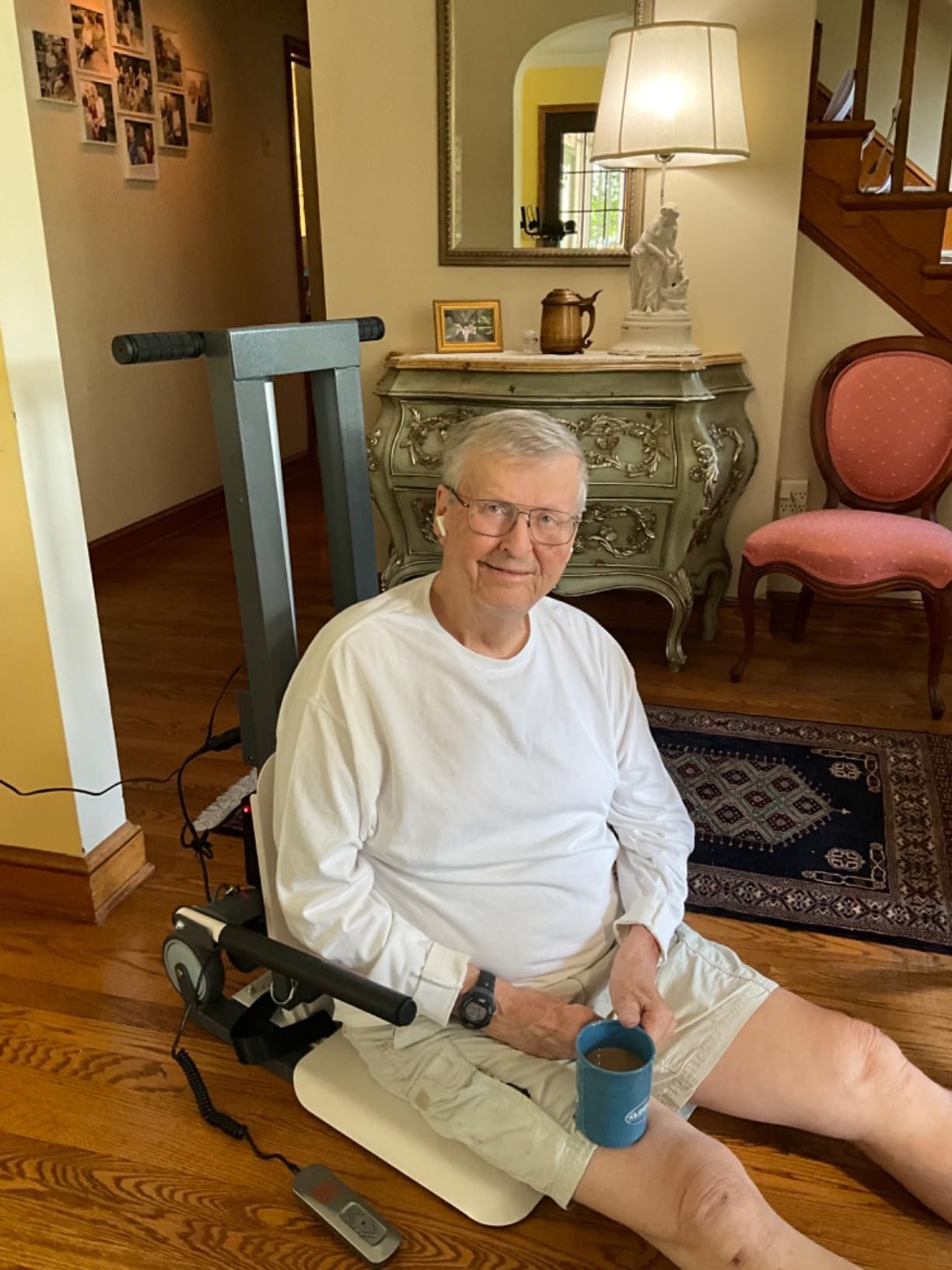
The dual power system is the feature we would highlight. It runs on a rechargeable battery for cordless use around the home, and it can be plugged into AC power when the battery is depleted or when a transfer has to happen during a power cut. For a caregiver responsible for a bariatric patient, having a backup power path removes a genuinely stressful failure scenario.
At 52.91 pounds, it is also the second-lightest powered unit here, and it folds for storage. That matters in a home where the transfer has to happen in two or three separate rooms and a permanent lift frame would block the walkway.
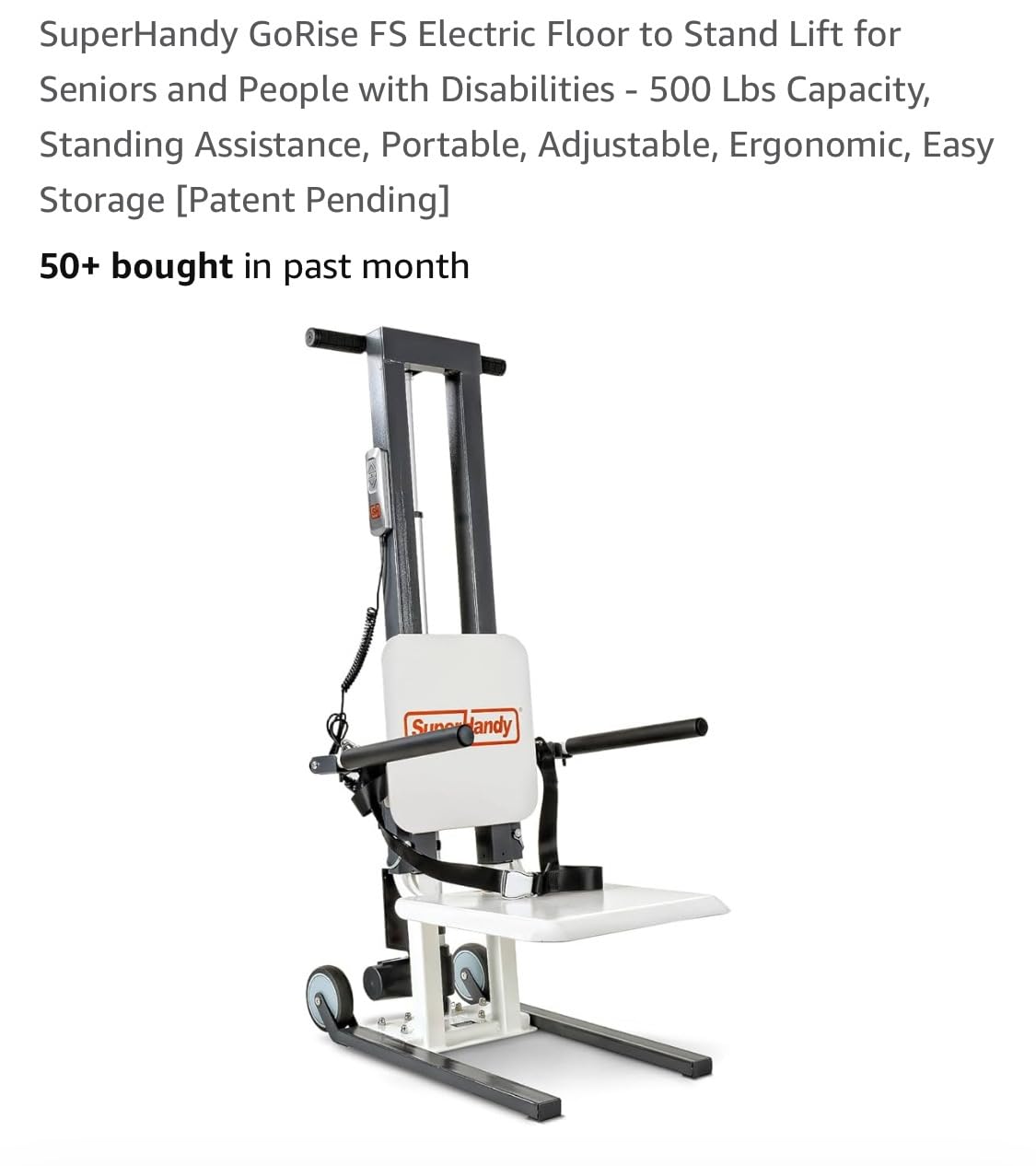
Capacity is not the same as full-body hoisting
This is the most important limitation to understand. The GBTS024 is built for standing, sitting and short-distance transfers, not for lifting a person off the floor or swinging them over a bed from a low position. If the person is non-weight-bearing and needs a sling hoist, this is the wrong category of machine despite the impressive capacity number.
Check one more detail before you buy. The front casters are fitted to the TX model, so confirm which model you are actually receiving. A configuration difference that small matters when you are rolling a 500-pound-rated frame across uneven flooring.
Who this is not for
A bariatric patient with a non-weight-bearing transfer need should look at a full-body bariatric sling lift with a wider spreader bar and reinforced base instead. The SuperHandy is a strong capacity number in a compact, portable, powered package, and it fits a specific job well, but that job is not a full hoist.
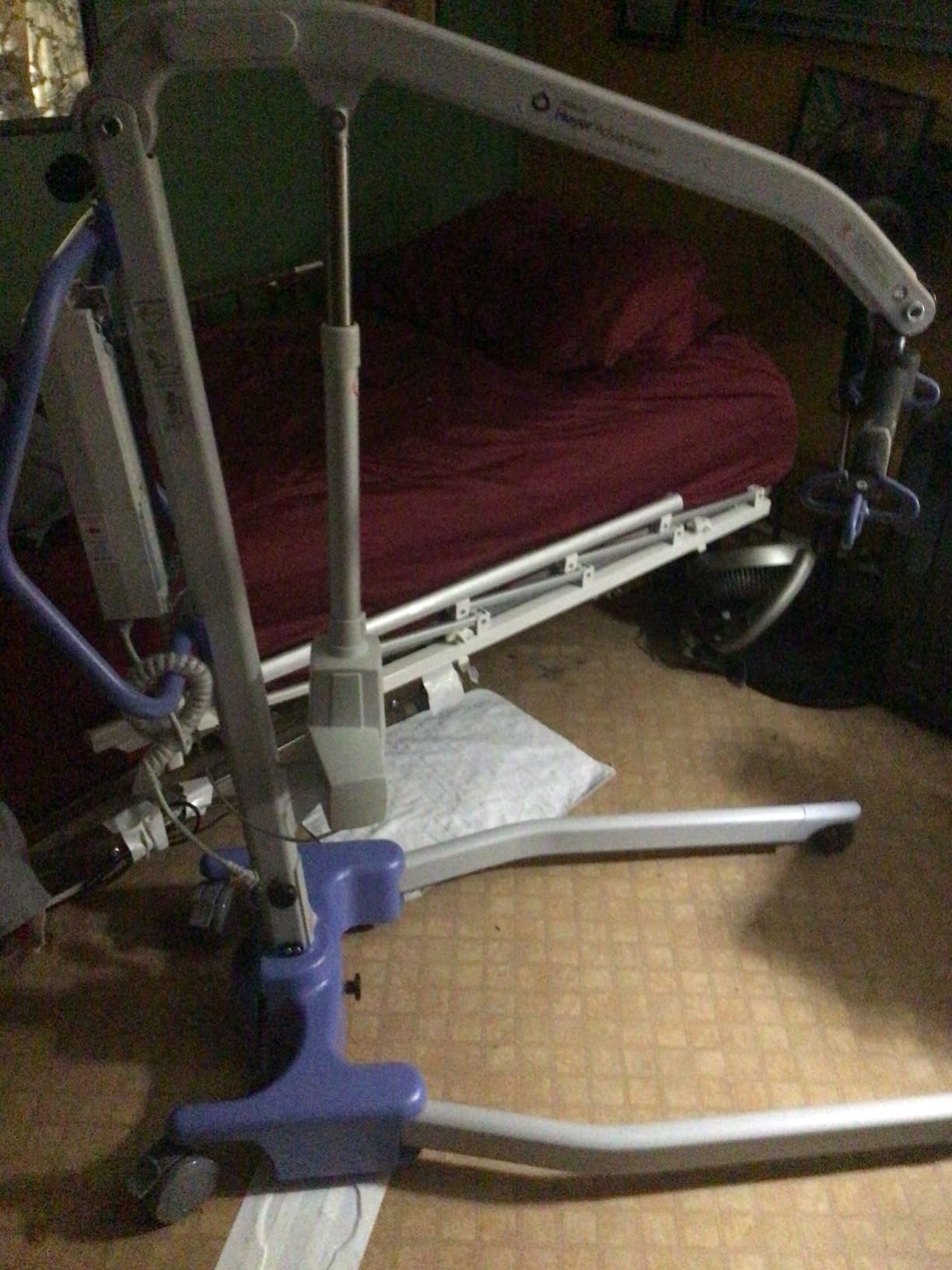
9. Joerns Hoyer Advance E340 Electric Lift – Best Folding Lift for Travel
Joerns Hoyer Advance Electric Portable Patient Lift – Foldable Lightweight 70 lbs, 340 lb Capacity, Battery Powered for Home Care, Nursing & Professional Use- E340
340 lb safe working capacity
Floor level to 66.5 in range
Tool-free folding at 69.9 lbs
EN ISO 10535 frame
Pros
- Tool-free fold at about 70 lb fits in most cars
- Swan-neck tapered legs reach closer to beds and wheelchairs
- Floor-level start allows emergency recovery
- Foot-pedal base spreader adjusts the base quickly
- 87 percent five-star share
- the highest in the group
Cons
- Sling sold separately
- adding to the total cost
- 340 lb capacity is below several rivals in this roundup
Best for: a caregiver who needs to move the lift between homes, or a patient whose care involves travel, clinics or appointments. Not for: a patient above 340 pounds, and not for a buyer on a fixed budget, because the sling is a separate purchase.
The E340 is the one to look at if the phrase tool-free folding means anything to you. It collapses without tools, weighs 69.9 pounds, and owners report it fitting in most cars. For a family caring for someone across two households, or for a patient who needs to get to outpatient appointments, that portability is the feature that justifies the rest.
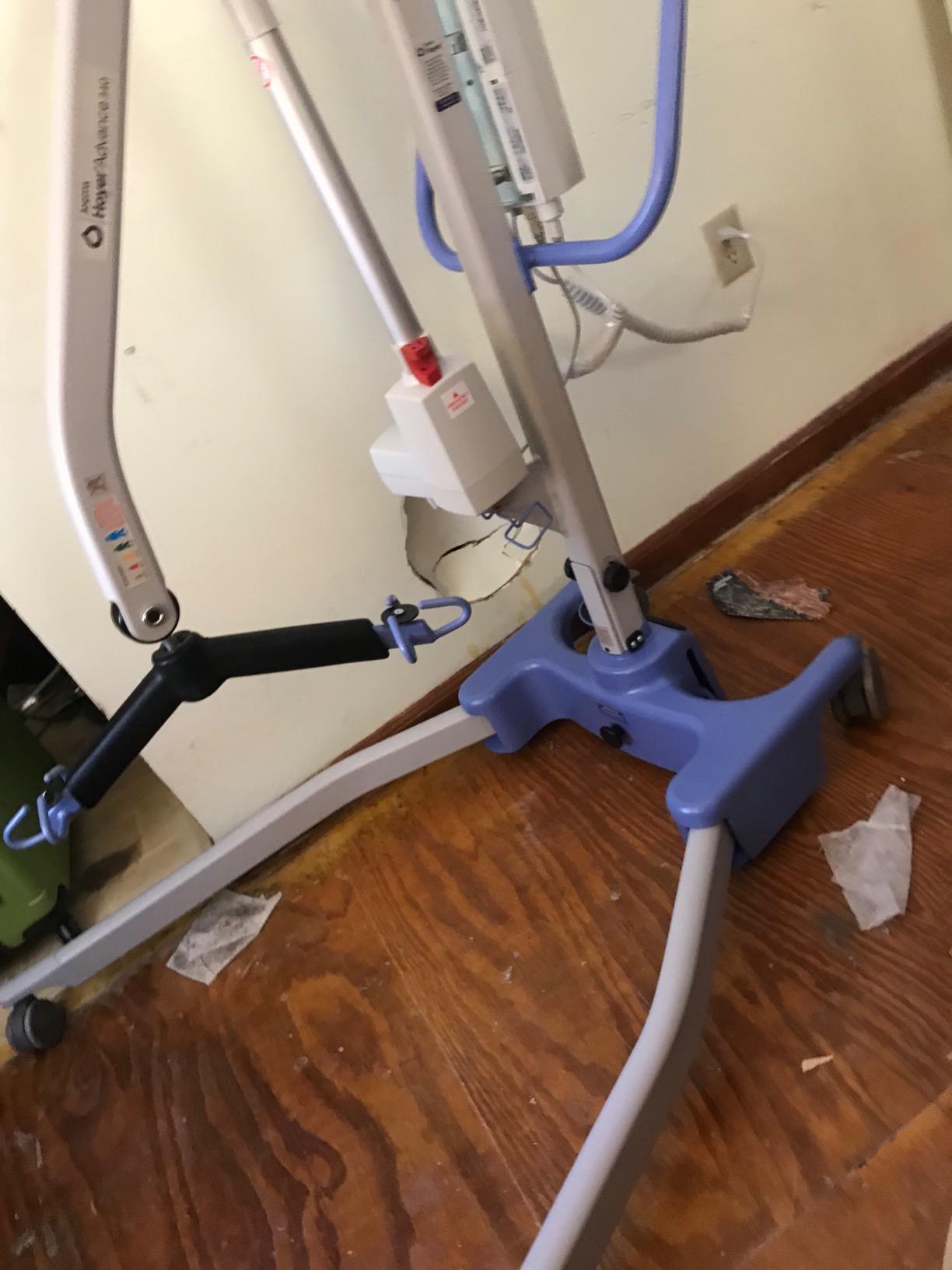
The swan-neck tapered legs are the second headline. Instead of parallel legs, the frame tapers inward, which lets the base approach a bed or a wheelchair much closer than a standard rectangular frame. Getting the base close is what makes the transfer feel stable, because the patient’s weight stays nearer the centre of the lift rather than swinging out on a long lever arm.
It also starts at floor level and reaches 66.5 inches, so it can genuinely perform a floor recovery. The aluminium frame is built to EN ISO 10535 standards, the international standard for patient hoists, which is a meaningful specification rather than marketing language.
What the 340-pound rating means for planning
Three units in this roundup carry a 400-pound or higher rating, so if the patient weighs more than 340 pounds this lift is not a candidate no matter how good the engineering is. For a patient below that weight, the 340-pound safe working load is a perfectly normal figure for a portable electric hoist and leaves a reasonable margin over typical body weight.
The foot-pedal base spreader lets the caregiver adjust the base width without leaving the patient’s side, which cuts setup time on every transfer. The oversized ergonomic handle is genuinely oversized, which is a good thing for a caregiver wearing gloves or with limited grip strength.
Budget for the sling separately
The sling is sold separately with this lift. Owners consistently flag that as the surprise line item, and it is a real safety consideration as well as a cost one, because a sling must match both the lift and the patient. Plan to buy a full-body sling sized for the patient’s weight from the start rather than attempting a transfer with something improvised.
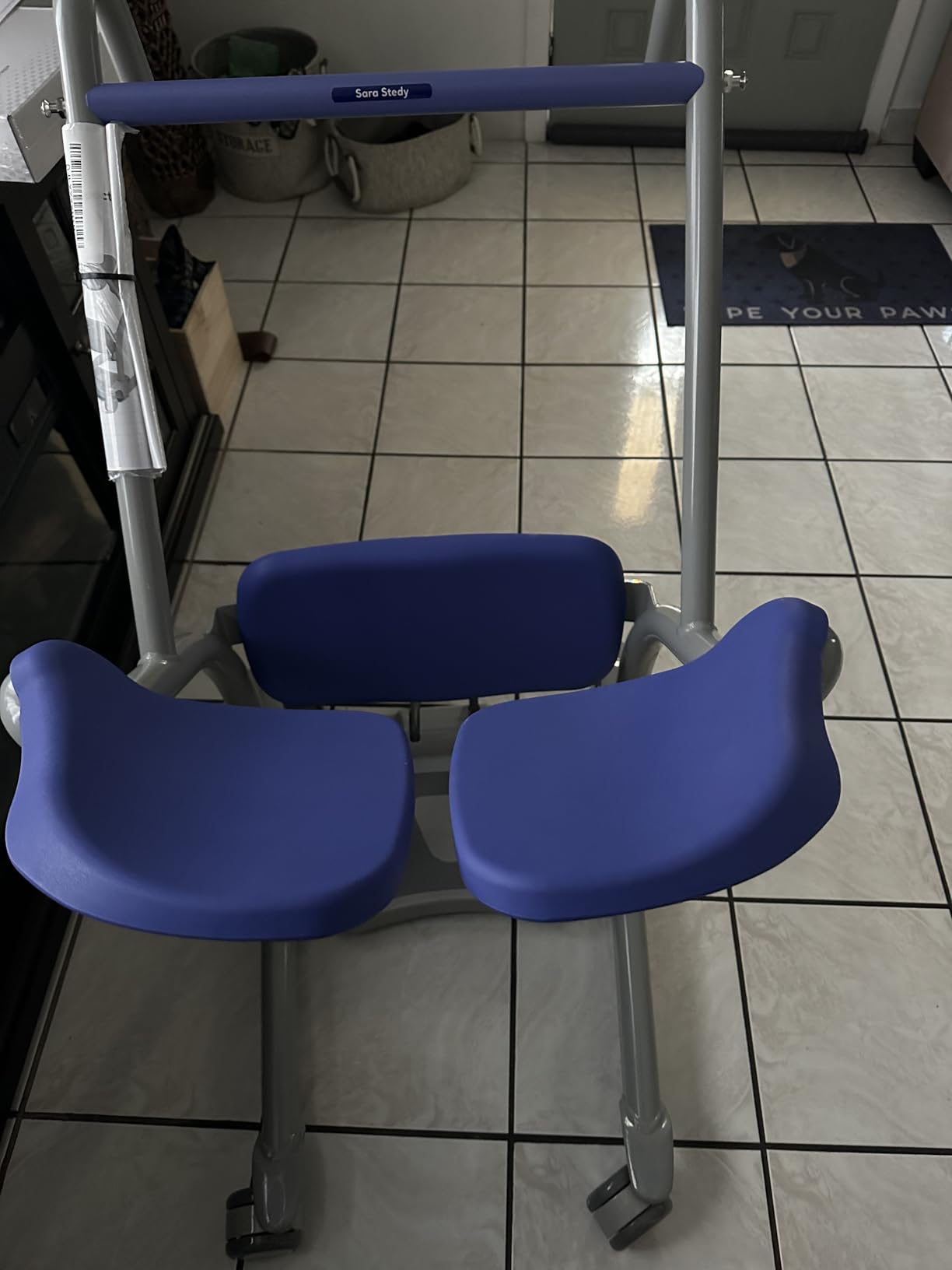
10. ArjoHuntleigh Sara Stedy – Best Ready-to-Use Sit to Stand Lift
Arjohuntleigh Compact Sara Stedy Sit to Stand Manual Patient Lift Aid | Fully Assembled Elderly Assistance Products | Holds up to 400 Pounds | Intended for Users 4’6″ – 5’8″…
400 lb capacity
Manual pumped operation
65 lb unit, ships assembled
Sized for users roughly 4 ft 6 in to 5 ft 8 in
Pros
- Highest average rating in the roundup at 4.7 stars
- Arrives fully assembled with no setup time
- 400 lb capacity on a stable clinical-grade frame
- Compact variant available for tight rooms
Cons
- Manual pumping required for every transfer
- Highest cost point in this selection
Best for: a household that wants a clinical-grade stand assist with no assembly and no troubleshooting. Not for: a patient taller than the stated range, and not for a budget-limited purchase.
The Sara Stedy holds a 4.7 average across 149 ratings, the highest score in this roundup, with 87 percent five stars and only 3 percent one stars. ArjoHuntleigh is one of the established names in safe patient handling, and this is the product where that shows most clearly.
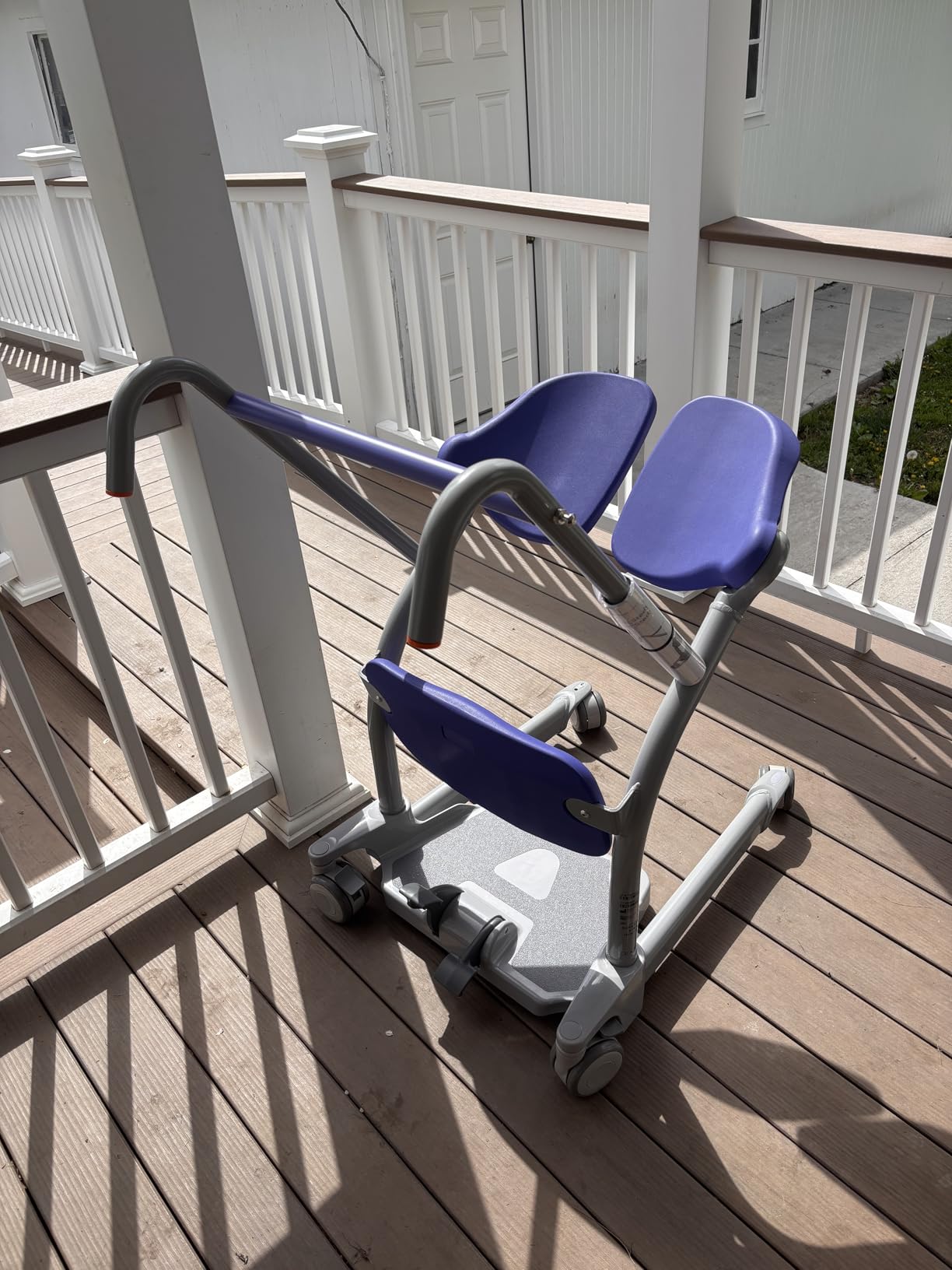
It arrives fully assembled. That is a genuine advantage over every other stand assist in this group, several of which need an afternoon and two people before the first transfer. For a household that is already overwhelmed by a new care situation, removing a build step removes a real source of friction.
At 65 pounds with a 400-pound capacity, the frame is stable without being unwieldy, and the design is specifically aimed at reducing fall risk during the sit-to-stand movement. A compact variant exists for tight spaces, which is worth asking about directly if your route to the bathroom is narrow.
Check the user height range carefully
The listing states an intended range of roughly 4 foot 6 inch to 5 foot 8 inch for this model, while the same listing also cites 4 foot 11 inch to 6 foot 6 inch for the broader Sara Stedy family. Because the numbers in the listing conflict, confirm the specific model’s height range with the manufacturer before ordering, especially for a patient near either end of the range.
If the patient is outside the range, a sit-to-stand unit will seat them incorrectly, and a bad fit in a stand assist is a fall risk rather than an inconvenience.
What you are paying for
This is the highest cost point in the selection, and the premium buys clinical-grade construction, a fully assembled delivery, and the strongest owner satisfaction score in the group. It is manual and pumped, so the same caregiver-strength consideration applies here as with the other hydraulic units. Buyers who want both the brand and a lighter caregiving workload should look at an electric alternative instead.
Patient Lift Slings: Which One You Actually Need
The sling does the actual lifting, so getting it wrong makes the lift unsafe no matter how good the machine is. A sling must match the lift type and the patient’s weight, and most home purchases go wrong because the sling is treated as an accessory rather than a component.
A full-body sling supports from the shoulders to the knees and does the whole lift for the patient. It is the right choice for anyone who cannot stand, cannot bear weight, or is recovering from surgery where weight through the legs is restricted. This is the sling that pairs with the Invacare 9805P, the Drive Medical 13023SV, the Hi-Fortune and the Joerns lifts.
A U-sling with head support is a lighter, shorter option used with electric full-body lifts for patients who have good head and neck control but still cannot bear weight. The Hi-Fortune unit in this roundup arrives with a free polyester U-sling and a four-point spreader bar, which is a useful starting point because the parts are matched to each other.
A sit-to-stand harness, sometimes called a stand assist harness, is a different shape entirely. It supports under the arms and around the knees and is used with the sit-to-stand units in this roundup, including the Lumex LF1600 and the ArjoHuntleigh Sara Stedy. The Invacare GHS350 works with Invacare multi-function slings rated to 350 pounds. A stand assist harness on a full-body floor lift, or a full-body sling on a stand assist frame, will not attach or will not behave correctly.
Size by patient weight, and check the sling’s own weight rating against the lift’s capacity rather than the patient’s weight alone. Slings wear out, stretch, and lose shape with heat and repeated laundering, so treat a faded or frayed sling as a replacement item on the same schedule as batteries. When in doubt, have the occupational therapist who assessed the patient size the sling during their visit, because it takes two minutes and prevents the most common home lifting accident we hear about.
Will Medicare or Insurance Pay for a Patient Lift?
Original Medicare does cover patient lifts as durable medical equipment when a doctor documents that the equipment is medically necessary, and the lift is supplied by a supplier that bills Medicare directly. The key mechanism is the certificate of medical necessity, which is not the same thing as a prescription, and conflating the two is the most common reason a claim is denied at the start.
A prescription tells a supplier what to provide. A certificate of medical necessity, signed by a clinician after an examination, establishes why the equipment is medically necessary. In practice the supplier collects the certificate from your doctor, and you should ask the supplier up front whether they are a Medicare-approved supplier billing on assignment, because that arrangement means you are not chasing reimbursement yourself.
Medicaid coverage varies by state and often runs through a managed-care plan with its own equipment list. Veterans may qualify for equipment through VA channels, and some state programmes have separate waiver programmes for people who would otherwise not meet the standard eligibility criteria. If you are not on Original Medicare, ask your plan directly about durable medical equipment coverage and whether a prior authorisation is required, because the answer differs substantially between plans.
One practical note: lift capacity matters for coverage. A lift rated below the patient’s weight will not be approved, which is another reason to buy a lift with headroom over the patient’s actual weight. Confirm with your clinician and your supplier before ordering, and keep every document, because the process is easier to move forward than to restart.
Buy or Rent a Patient Lift? How to Decide
Rent first if the care situation is temporary or uncertain. Post-surgical recovery that ends in a few months, or a trial while a family works out what level of care is actually needed, is exactly what a rental is for. A rental lets a household learn the transfer routine, confirm the lift fits the rooms, and test whether the patient tolerates being hoisted, before committing to a purchase.
Buy if the need is ongoing. A bedbound or long-term-limited-mobility patient will be transferred multiple times a day for years, and at that point the lift has to be reliable, serviced locally and available when you need it. Rental also means a service contact who may not know your home’s specific clearances.
Electric lifts have a running cost that the purchase price does not show. The rechargeable battery pack is a consumable item, the actuator and control box are the parts that fail most often, and slings need replacing as they wear. Electric lifts in this roundup carry electronics warranties of 6 months to 2 years, which is a meaningful difference from the 1-year and 3-year frame warranties typical of hydraulic units.
Consider a used unit carefully, or not at all. A lift has a history of carrying a specific weight, twice a day, for years, and the boom, the actuator and the casters are all wear items you cannot judge from a photograph. If a used lift is the only affordable route, have a supplier inspect it in writing first, and insist on a service history. The rest of a home care budget goes on slings, a proper mattress surface and training, and those are places where cutting corners has real consequences.
How to Use a Patient Lift Safely, Step by Step
Every lift manufacturer publishes its own operating instructions, and those instructions take priority over any general guide, including this one. Read the manual for your specific model before the first transfer, and practise the sequence with an empty sling until it is automatic.
First, check the sling. It should match the lift type, match the patient’s weight rating, and show no fraying, cuts or stretching at the strap stitching. A webbing sling that has been through many hot washes needs replacing, not repairing.
Second, lock the brakes on the bed and the wheelchair. The destination surface must not roll while the patient’s weight is being transferred onto it.
Third, position the lift before you touch the patient. The base needs to be open and stable, the boom clear of the ceiling and any furniture, and the lift close enough that you are not stretching.
Fourth, apply the sling while the patient is in the position they are already in. Cross the leg straps, connect all attachment points, and check that the sling is centred under the shoulders and thighs. A twisted sling concentrates load on one side and can tip a lift.
Fifth, attach every strap to the spreader bar, in the correct order, before taking any load. Check that the hooks are fully closed, since an open hook under load will release.
Sixth, raise the boom slowly until the sling is taut and the patient’s weight is on the lift, not on the bed. Then check the patient, not the machine. Ask how they feel, and stop if there is pain, dizziness or a complaint about a strap.
Seventh, move the lift slowly and let the patient see where they are going. Casters can catch on rugs, thresholds and bed frames, and a sudden jolt while someone is suspended is the most common way a transfer goes wrong.
Eighth, lower the patient until fully supported by the destination surface before disconnecting, and keep a hand on the sling until their weight is off it. Never leave a suspended patient unattended, and stop immediately if a sling, strap or hook looks wrong.
Frequently Asked Questions
Will Medicare pay for a patient lift?
Original Medicare can cover a patient lift as durable medical equipment when a doctor documents that it is medically necessary and a Medicare-approved supplier provides it. The document that matters is a certificate of medical necessity, signed by a clinician after an examination, which is separate from the prescription itself. Ask your supplier whether they bill Medicare directly so you are not left chasing reimbursement.
What type of patient lift is best for a home?
A full-body floor lift is best for a non-weight-bearing patient because a sling does the entire lift, a sit-to-stand lift is best when the patient can push up through their legs, and a hydraulic floor lift suits occasional transfers or a limited budget. For a single caregiver, an electric lift reduces physical effort more than any other specification choice.
What are the best patient lifts for elderly patients?
For an elderly patient at home, the deciding factors are the patient’s weight-bearing ability, the narrowest doorway on the route from bed to bathroom, and the caregiver’s own strength. A full-body hydraulic lift such as the Invacare 9805P handles non-weight-bearing patients and narrows to 22 inches, while the Lumex LF1600 suits a cooperative patient who can bear partial weight.
What patient lift sling do I need?
A full-body sling is for patients who cannot bear weight and pairs with a floor lift, a U-sling with head support suits a full-body lift for a patient with good head control, and a sit-to-stand harness pairs with a stand assist frame. The sling must match both the lift type and the patient’s weight, and a mismatched sling is unsafe.
How much weight capacity patient lift do I need?
Choose a lift rated comfortably above the patient’s actual weight rather than just above it. A patient weighing 380 pounds needs a unit rated for more than 400 pounds, since the rating has to cover the patient, clothing, and a wet sling. Most of the units in this roundup are rated between 340 and 500 pounds, with one sit-to-stand model limited to 350 pounds.
Can I use a sit-to-stand lift if the patient cannot bear weight?
No. Sit-to-stand lifts work by supporting the patient under the arms and around the knees while they push up through their legs, so a patient who cannot bear weight will simply slump or fall. Use a full-body floor lift with a full-body sling instead, and have an occupational therapist confirm the transfer plan before you buy.
Do I need a prescription for a patient lift?
A prescription is the usual starting point, but the document insurers actually require is a certificate of medical necessity signed by a clinician after an assessment. If you are paying directly rather than claiming through insurance or Medicare, you can still buy a lift yourself, and you should confirm the capacity matches the patient’s weight before you order.
How long does a patient lift battery last?
It depends far more on the number of transfers per day and the patient’s weight than on the battery itself. A lift used several times daily for a heavier patient will need its rechargeable pack replaced sooner than one used occasionally. Replace the battery when transfers become slow or the charge indicator behaves erratically, rather than waiting for a failure mid-transfer.
The Bottom Line for Home Caregivers
The decision rule is simple: match the lift to the patient’s weight-bearing ability, then match the base width to the narrowest doorway. The Lumex LF1600 is our pick for a cooperative partial-weight-bearing patient, the Invacare 9805P for a non-weight-bearing patient in a home with tight hallways, and an electric model when one person is doing every transfer alone.
Measure before you order, buy the correct sling at the same time, and confirm the plan with your patient’s clinician. We re-checked every specification on this page in 2026, and the Check Latest Price buttons give you the current figures.