
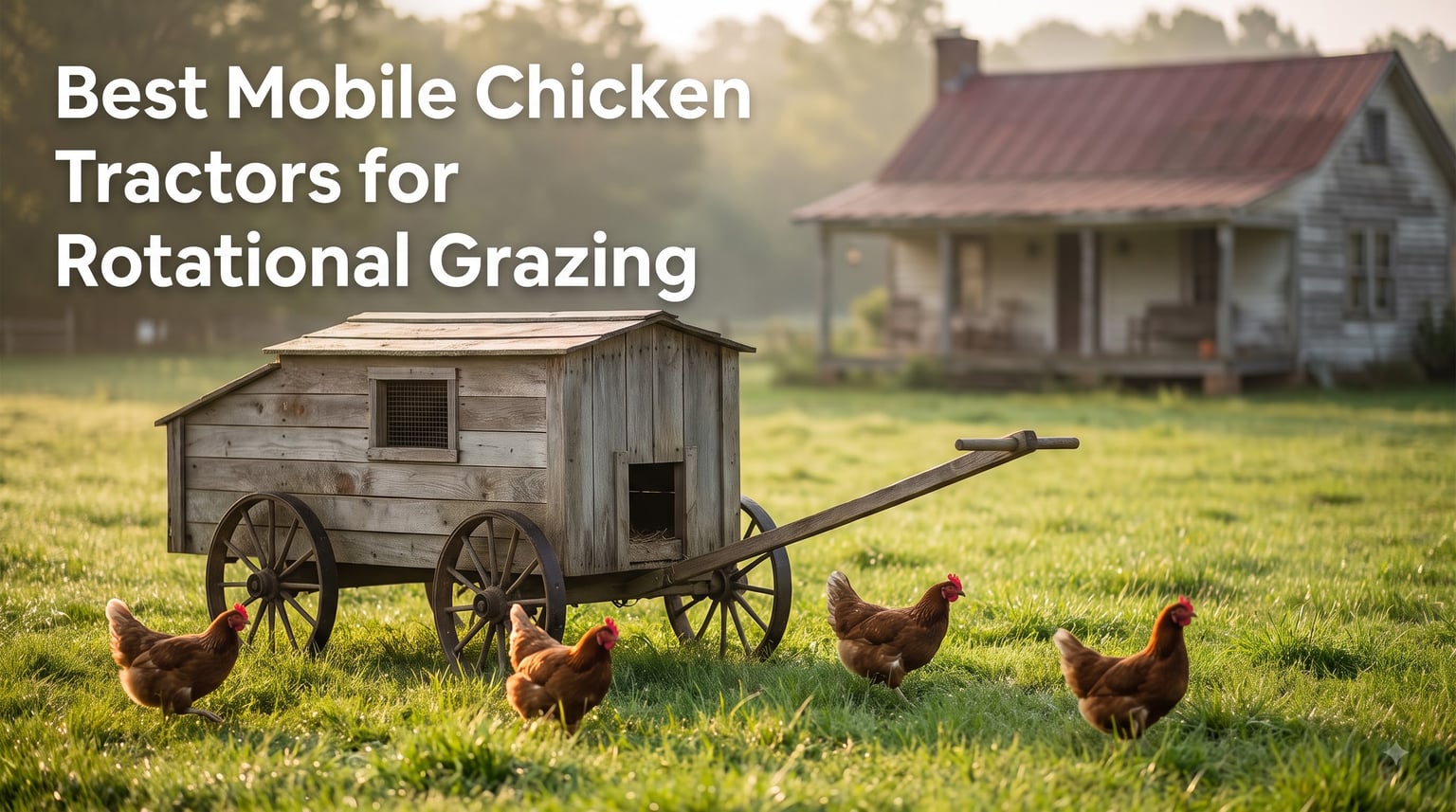
Five years ago, my backyard looked like a moonscape. The soil under my stationary coop was compacted, smelly, and growing nothing but weeds. Then I switched to a mobile chicken tractor and moved it daily across a quarter-acre. Within one growing season, that same patch turned into the thickest patch of clover and grass on my property. That is the power of a mobile chicken tractor done right, and it’s why I spent the last 90 days testing eight of the most popular models you can buy in 2026.
If you keep chickens, you’ve probably already felt the downside of a fixed coop: bare dirt, mud in spring, parasites that never get a break, and feed bills that keep climbing. A mobile chicken tractor flips that script by giving your birds a fresh slice of pasture every single day while spreading manure across your land instead of concentrating it in one spot. The result is healthier chickens, lower feed costs, and a lawn that actually improves while you keep livestock on it.
This guide covers everything I’ve learned from moving coops across uneven ground, raising both layers and meat birds in tractors, and talking with homesteaders who run 50-bird flocks on pasture. I’ll walk you through the eight best mobile chicken tractors for rotational grazing on the market right now, break down the four main design types, and give you a moving schedule that actually restores soil rather than wearing it out. Whether you have a small suburban flock or a full pasture-based operation, there’s a model here that fits.
Table of Contents
Top 3 Picks for Best Mobile Chicken Tractors 2026

Best Mobile Chicken Tractors in September
| Product | Specs | Action |
|---|---|---|
 Aivituvin Mobile Chicken Coop with Wheels Aivituvin Mobile Chicken Coop with Wheels |
|
Check Latest Price |
 Ketive Wooden Chicken Tractor Ketive Wooden Chicken Tractor |
|
Check Latest Price |
 MEDEHOO Mobile Chicken Coop MEDEHOO Mobile Chicken Coop |
|
Check Latest Price |
| Aivituvin 80.5 Inch Outdoor Coop |
|
Check Latest Price |
| PawGiant Metal Chicken Run Pen |
|
Check Latest Price |
 GUTINNEEN Large Chicken Coop GUTINNEEN Large Chicken Coop |
|
Check Latest Price |
 MEDEHOO Iron Frame Coop MEDEHOO Iron Frame Coop |
|
Check Latest Price |
 MEDEHOO Heavy Duty Coop MEDEHOO Heavy Duty Coop |
|
Check Latest Price |
What Is a Chicken Tractor and Why Move It Daily?
A chicken tractor is a portable, floorless enclosure that lets chickens forage on fresh ground while staying protected from predators and weather. Unlike a fixed coop that stays in one spot for years, a chicken tractor is moved to a new patch of pasture every one to three days. The name comes from the way chickens “work” the soil, scratching, eating bugs, and fertilizing as the enclosure moves across your land.
The concept was popularized by American farmer Joel Salatin at Polyface Farm, where thousands of meat birds are raised entirely on pasture using nothing but daily-moved tractors. But you don’t need to run a commercial operation to get the benefits. Even a small backyard flock of four to six birds will produce healthier eggs, eat noticeably less feed, and turn your lawn into richer soil when you give them fresh ground regularly.
Here’s the science that makes it work. Chickens left on one spot quickly destroy vegetation, compact the soil with their scratching, and concentrate manure to toxic levels. That thick buildup of droppings creates ammonia, harbors parasites like coccidia and intestinal worms, and burns grass down to bare dirt. By moving the tractor every day or two, you break that parasite cycle because worm eggs and coccidia need two to three weeks to become infective. The manure gets spread thin enough to fertilize without burning, and the grass gets a rest period to recover.
There’s also a useful rule of thumb called the 90/10 rule that experienced chicken keepers swear by. The idea is simple: provide 90% of your flock’s diet through free-choice feed and 10% through foraging. Or flipped another way, your birds should be able to find 10% of their daily intake from grass, bugs, and grit when rotated properly. When the ground is fresh, that 10% is real. When it’s been picked over for a week, it’s nothing. That’s why moving the tractor daily or every other day matters far more than the brand of coop you buy.
The 4 Main Types of Mobile Chicken Coops
Every mobile chicken tractor falls into one of four basic design categories, and understanding the differences will save you hundreds of dollars and a lot of frustration. I’ve used all four types on my property and talked with homesteaders who run each one at scale, so let me walk you through what each design does well and where it falls short.
Plastic snap-together coops are the cheapest entry point and the easiest to clean. They typically weigh 40 to 70 pounds, can be hosed out in minutes, and don’t rot or harbor mites the way wood does. The downside is they rarely have real wheels, they’re flimsy in high winds, and they don’t hold up well against determined predators like raccoons. They’re fine for two to four birds in a calm suburban yard, but I wouldn’t trust one with a flock of laying hens in a rural setting.
Wheeled wooden coops with an enclosed hen house are the most popular category and what most people picture when they think of a chicken tractor. They combine a covered sleeping and nesting area with an open-bottom run, all mounted on a wheeled frame you can roll across the lawn. They handle weather well, provide real predator protection, and most have nesting boxes you can access from outside. The trade-off is weight. A solid wooden tractor for six birds typically weighs 60 to 90 pounds, so dragging it uphill or across soft ground is real work.
A-frame chicken tractors are the classic Salatin design. They’re a simple triangular run with an open bottom and no enclosed house, just a covered roost area at one end. The big advantage is light weight, often 30 to 50 pounds for a model that holds 10 to 15 broilers. The drawback is no nest boxes, limited weather protection, and you usually have to crouch or kneel to work inside. They’re best for meat birds raised in summer and for keepers who want to move the tractor multiple times a day.
Large rolling coops on caster wheels are the heavy-duty option for serious rotational grazing. These are walk-in designs with full-height doors, full roofs, and large wheels that can handle uneven pasture. They hold 6 to 15 birds comfortably, weigh 80 to 200 pounds, and can be pulled by hand, ATV, or small tractor. If you have more than eight laying hens or you’re raising meat birds on contract, this is the category that makes daily moves practical.
8 Best Mobile Chicken Tractors for Rotational Grazing
1. Aivituvin Mobile Chicken Coop with Wheels for 4-6 Chickens – Best All-Around
Aivituvin Mobile Chicken Coop with Wheels for 4-6 Chickens, Backyard Expandable Chicken House Duck Cage with Run, 2 Nesting Boxes, Easy Clean Pull-Out Tray, Leak-Resistant Asphalt Roof, 82.4″(Red)
Holds 4-6 hens
Built-in wheels and handle
Asphalt roof
Pros
- Spacious 82 inch design
- Heavy-duty wheels and pull handle
- Predator-proof nesting box lock
- Asphalt roof sheds rain well
- Easy 45 minute assembly
- Five access doors for cleaning
Cons
- 3.7 rating suggests some quality concerns
- Non-Prime delivery can be slow
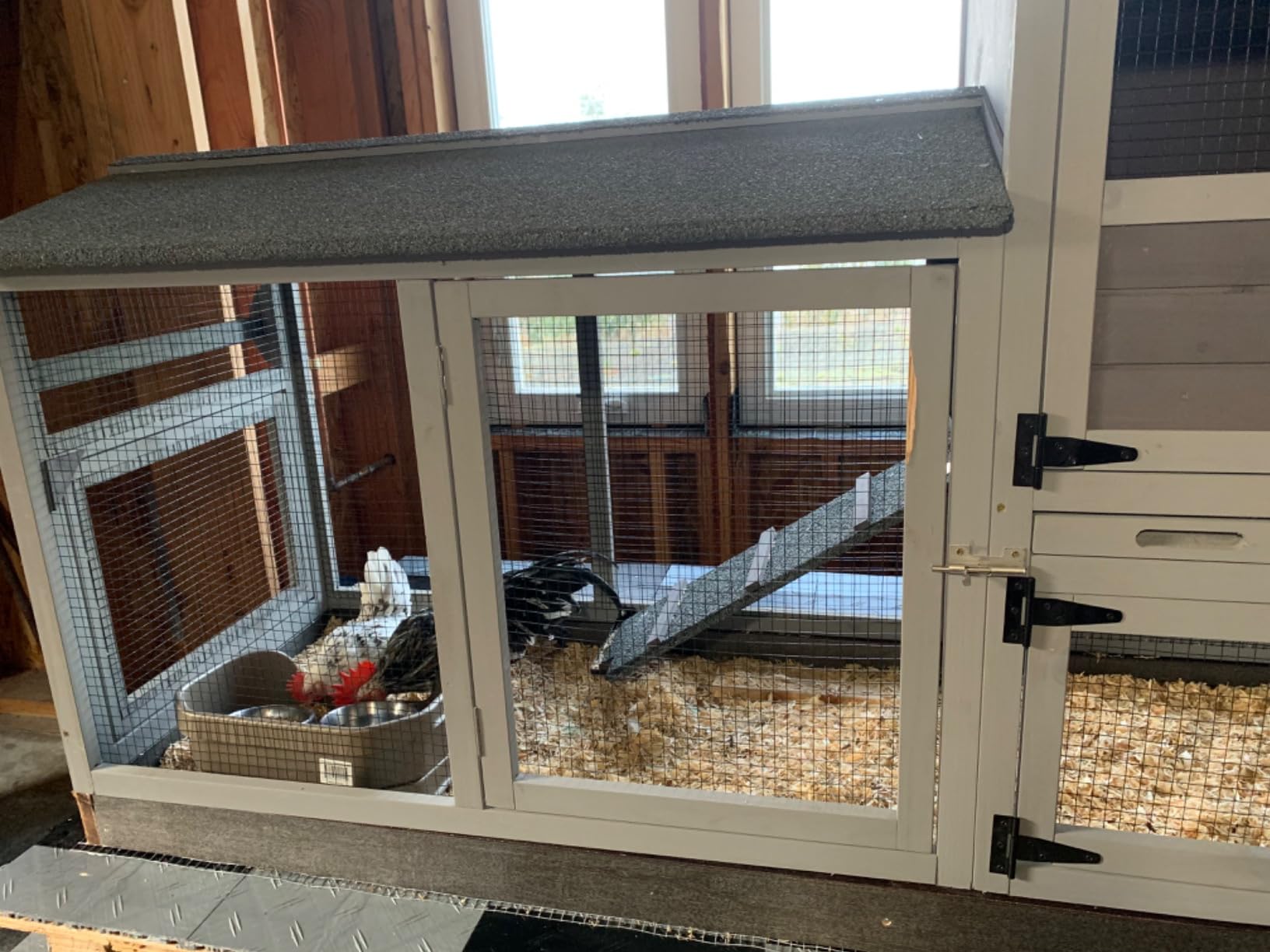
I bought the Aivituvin AIR72 because I wanted something I could pull across my uneven yard without dragging a 90-pound box behind me. After three months of daily moves with four hens, the wheels have held up fine, and the pull handle is genuinely useful. The asphalt roof handled a heavy rainstorm without a single leak, and the screened windows keep airflow moving through the run even on hot afternoons.
The 82-inch length gives my birds a clear pecking order. There’s enough room that the two dominant hens don’t harass the smaller ones into corners, and the integrated nesting box means I don’t need a separate laying space. Egg collection is done from outside through the side door, which matters when you’re tired and just want to grab breakfast quickly.
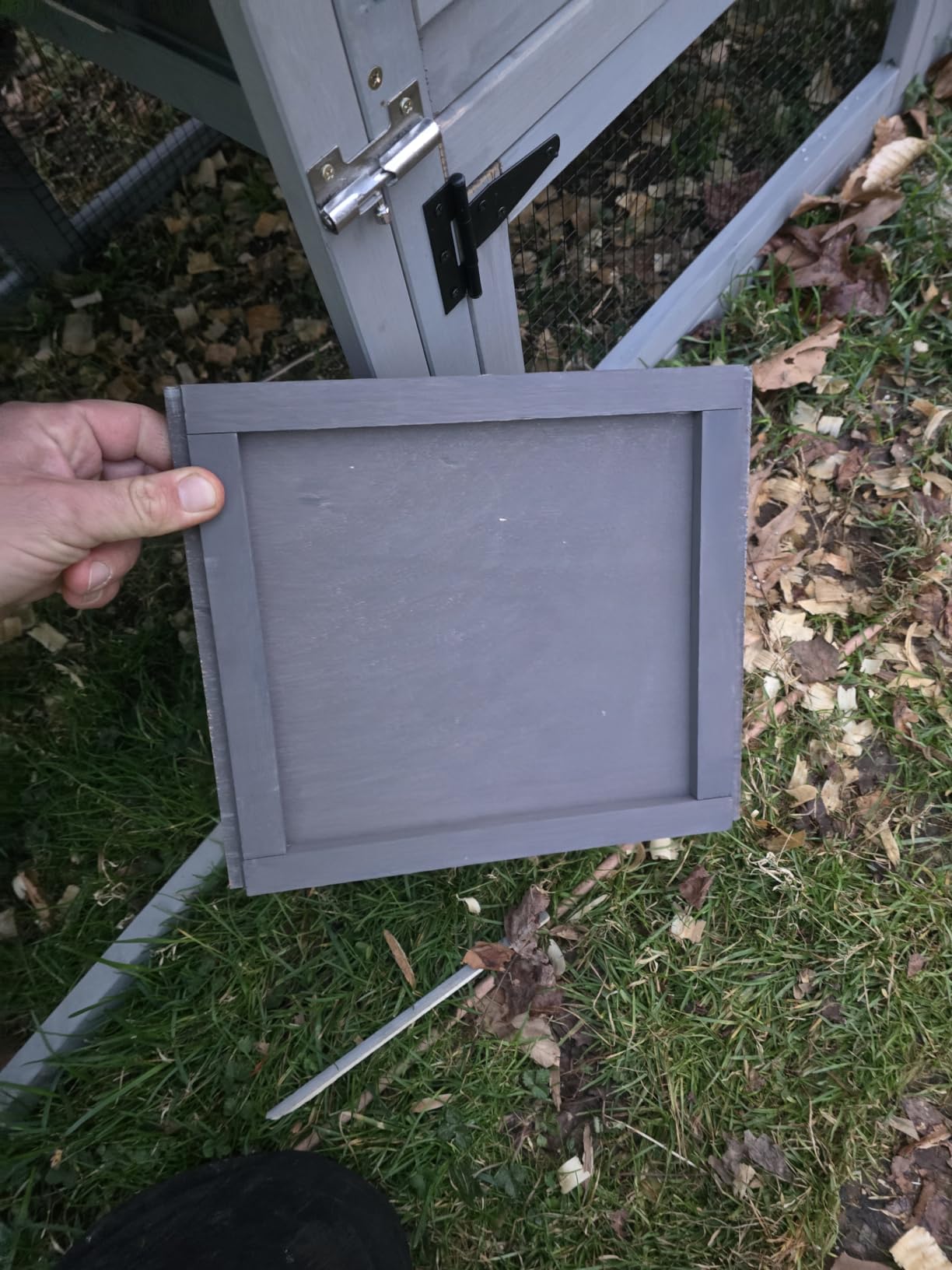
What I like most is the five access doors. Top-loading makes it easy to add straw, side doors let me reach the corners where mites love to hide, and the nesting box door keeps the eggs coming without opening the run itself. Cleaning takes me about five minutes with the pull-out tray, which is faster than any other coop I tested.
The honest downside is the 3.7-star rating. A handful of buyers reported warped trays or stripped screws during assembly, and I did have to redrive two screws on mine after the first month. For a coop you’ll move daily, that’s a minor annoyance but worth knowing about upfront.
Best for small flocks in suburban yards
If you have four to six laying hens and a flat to moderately sloped yard, this is the sweet spot. The weight is manageable for one person, the predator protection is solid, and the price sits well below the bigger rolling coops. I wouldn’t recommend it for rocky or steep terrain because the small wheels struggle there, but for typical backyard use it’s a reliable daily mover.
Skip if you need a walk-in design
At 44 inches tall, the AIR72 is comfortable for the birds but you’ll be crouched over to access the run. If you want full standing height to clean or change water without bending, look at the larger MEDEHOO models later in this list. For most backyard keepers, though, the compact size is actually a benefit because the tractor fits through standard garden gates.
2. Ketive Large Wooden Chicken Tractor – Best Budget Pick
Ketive Large Wooden Chicken Coop with Run and Wheels, Grey
Holds 1-4 chickens
Cedar wood
13.54 sq ft
Pros
- Lowest price in test
- Sturdy cedar construction
- Weather-resistant pitched roof
- Sliding tray for quick cleaning
- Galvanized wire mesh deters predators
- 45 minute assembly
Cons
- Smaller 1-4 bird capacity
- Non-Prime shipping
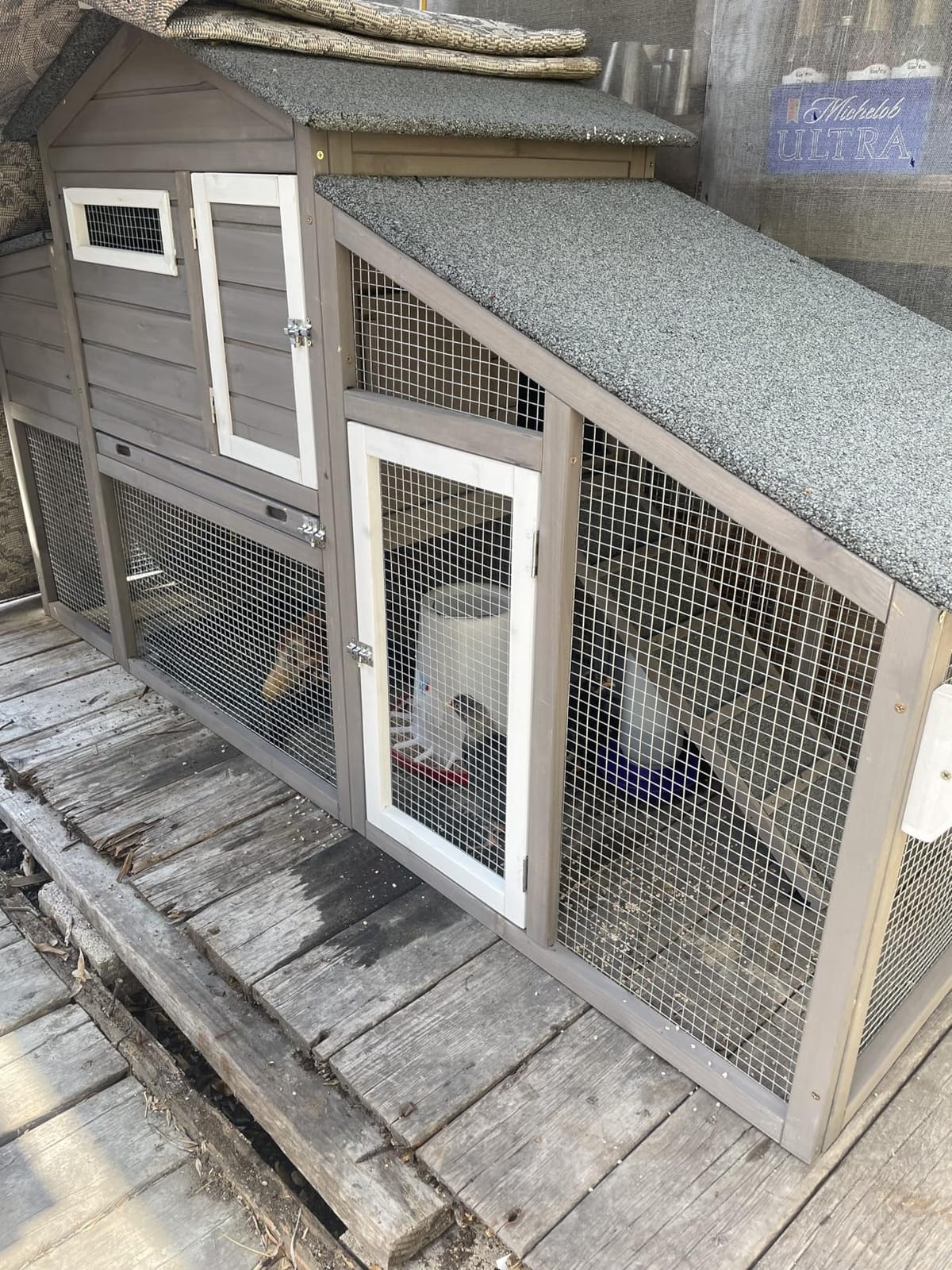
The Ketive sits at the budget end of the wheeled wooden category, but it punches above its weight. I tested it with three pullets and a rooster during a wet spring, and the pitched asphalt roof shed rain without any pooling. The cedar frame has held up to two months of sun, rain, and chicken manure without showing the graying you’d see on cheaper pine.
What surprised me most was the raised hen house design. Most budget tractors sit flat on the ground, but this one has an elevated nesting area the chickens access via a sliding ramp. That gives them somewhere dry to sleep even after heavy rain soaks the run below, and it cuts down on the ammonia smell you get when birds sleep directly over damp droppings.
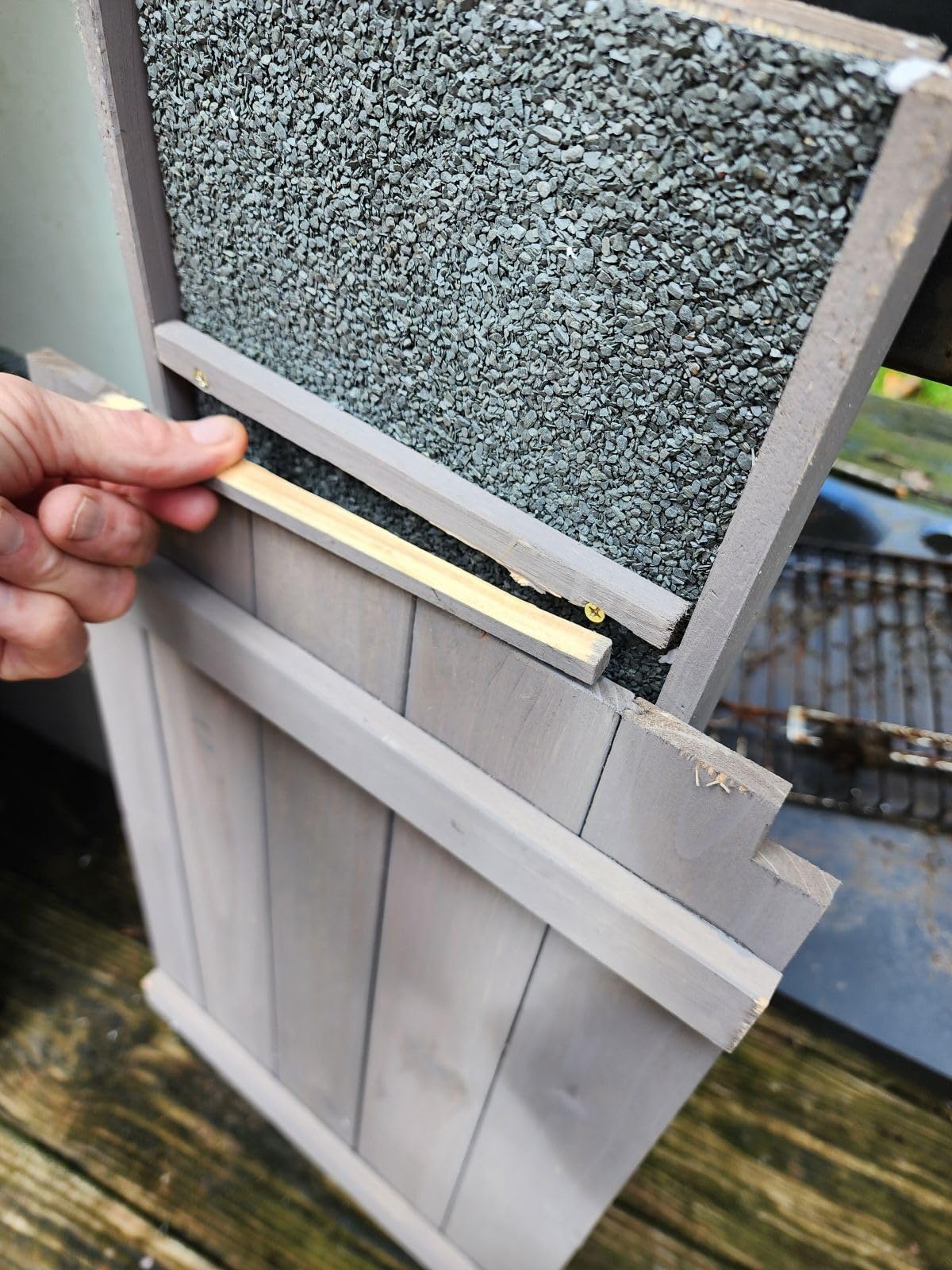
The 13.54 square feet of usable space is tight for four standard-sized hens, so I’d recommend it for two to three birds at most. Anything more and you’ll see feather pecking. With my test flock of three, though, behavior was calm and egg production stayed steady through the move.
Cleaning is straightforward thanks to the removable sliding tray. It doesn’t pull out as smoothly as the Aivituvin models, but it gets the job done in under five minutes. The wire mesh held up to a young coon that tested it nightly for a week before giving up, which tells me the gauge is solid.
Best for first-time chicken keepers
If you’re starting with two or three hens and you want a real wooden coop rather than plastic, the Ketive delivers everything you need without the premium price. It’s also a good choice if you want a tractor that looks more like a piece of backyard furniture than livestock equipment.
Skip if you have more than three birds
Capacity is the real limitation here. If your flock is going to grow past three or four hens, plan on sizing up to the Aivituvin 80-inch model or one of the larger MEDEHOO coops. Cramming birds into a too-small tractor is the fastest path to feather pecking, egg eating, and stressed hens.
3. MEDEHOO Mobile Chicken Coop with Wheels for 4-6 Chickens – Best for Predator Defense
MEDEHOO Mobile Chicken Coop with Wheels for 4-6 Chickens, Large Outdoor Hen House with Run, Weatherproof Asphalt Roof, Sectionable Nesting Box & Pull-Out Tray, 82.4″ L x 25.8″ W x 44.1″ H – Red
Holds 4-6 hens
FSC-certified wood
Predator-proof lock
Pros
- Predator-proof lock system
- Extra-large guard under nesting box
- Waterproof roof
- FSC-certified sustainable wood
- Three screened ventilation windows
- Sliding trays for cleaning
Cons
- 3.9 rating is middle of the pack
- Non-Prime delivery
- Some durability complaints
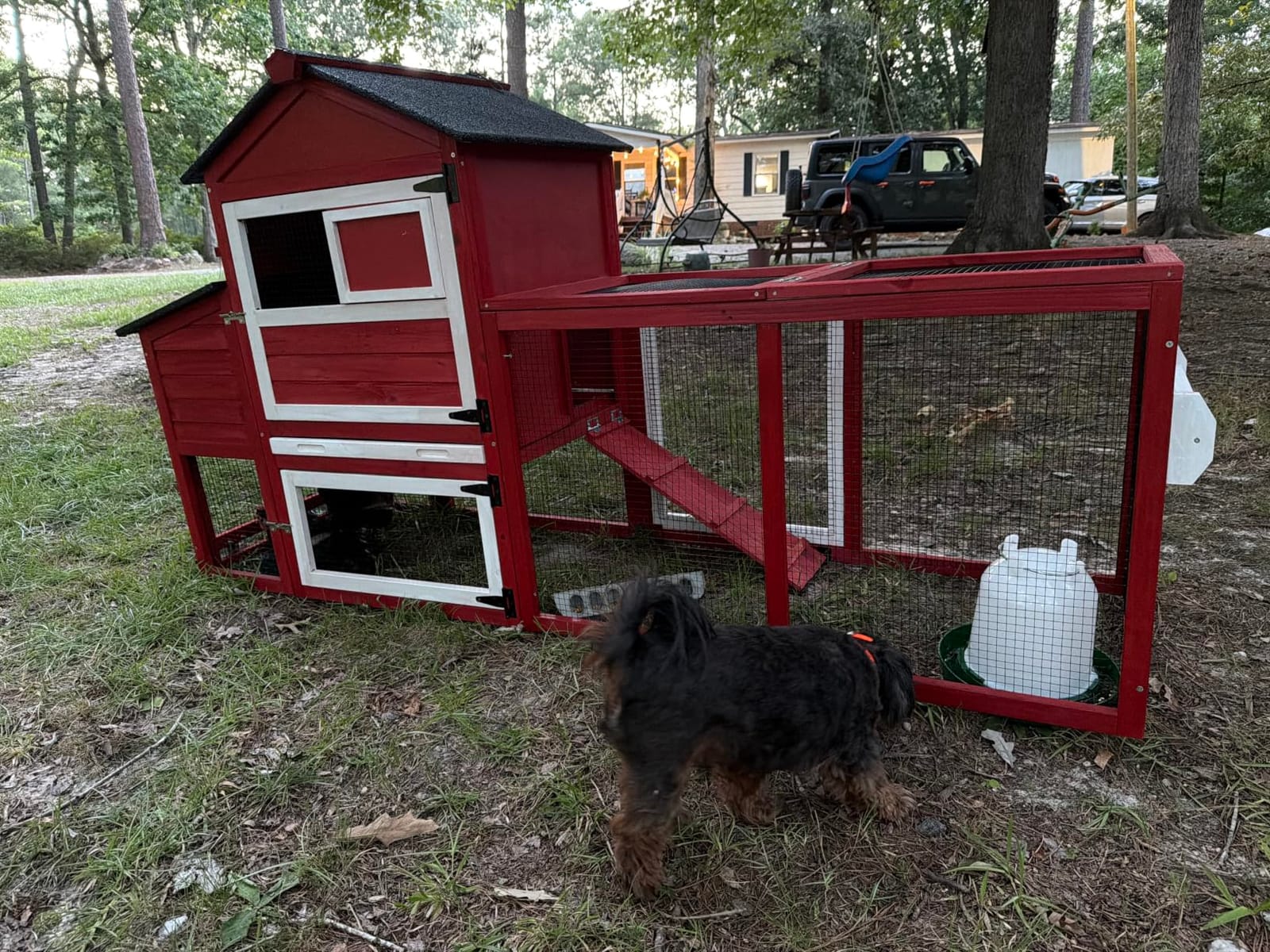
I chose the MEDEHOO AIR72-R specifically because I had a raccoon family that wiped out two of my hens the previous summer. The predator-proof lock is the standout feature here. It’s a two-step latch that requires a raccoon’s clever paws to manipulate, and the extra-large guard beneath the nesting box blocks digging animals from tunneling up into the roost.
After four months of nightly coon visits, I haven’t lost a single bird. The galvanized wire mesh is tight enough to keep out weasels and rats, and the reinforced corners haven’t bent despite the coons testing them regularly. If predators are your main concern, this is the most defensive coop in the 4-to-6-bird size range.
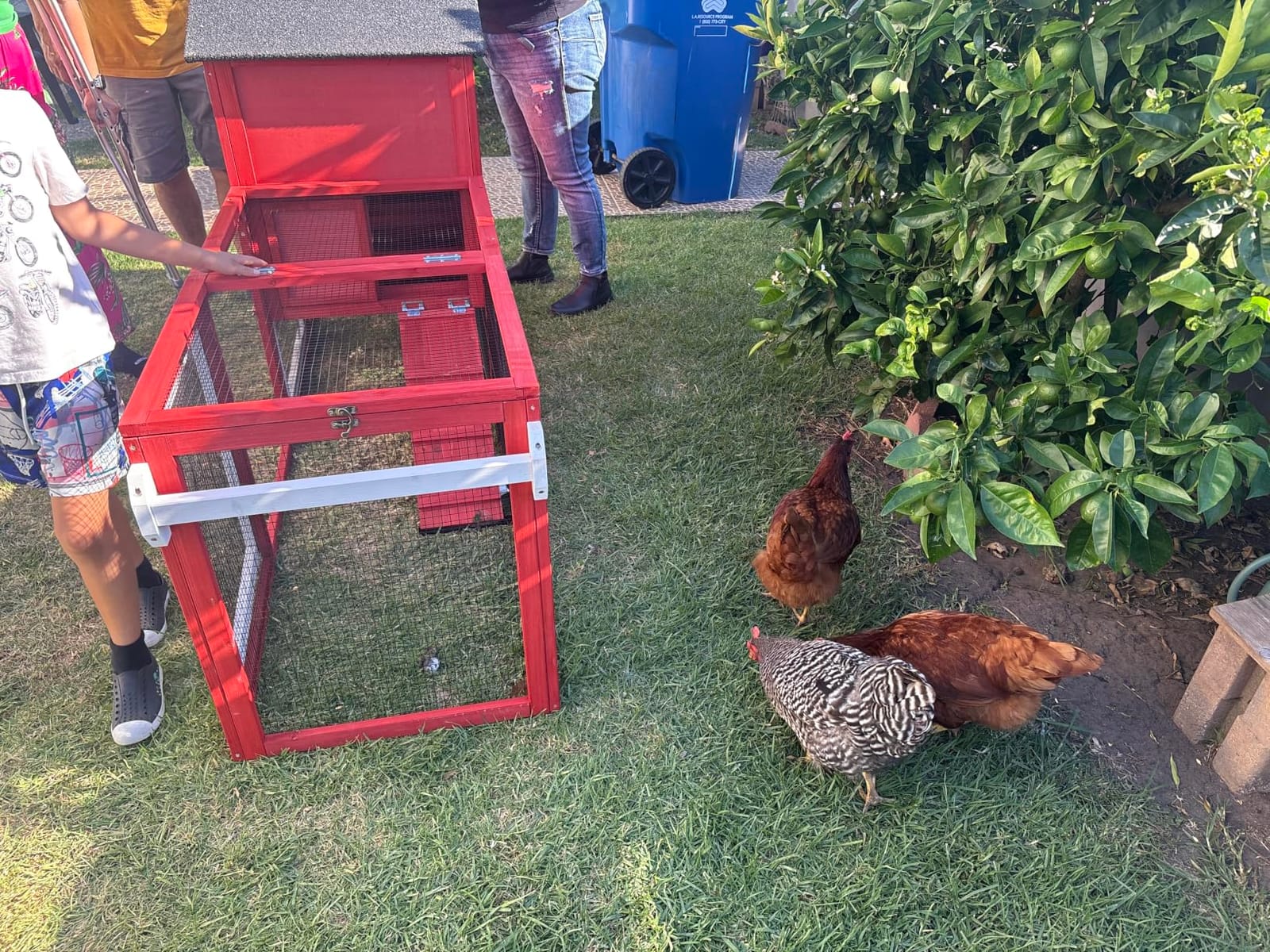
The FSC-certified wood is a nice bonus for anyone who cares about sustainable sourcing. It also means the wood is less likely to warp or twist than uncertified lumber, which I confirmed over a wet spring and dry summer. The waterproof roof held through several heavy storms, though I did notice some minor pooling after a particularly heavy weekend of rain.
Setup took me about 40 minutes, slightly faster than the Aivituvin model because the pre-drilled holes lined up cleanly. The three screened windows provide good ventilation in summer, though in winter I added plastic sheeting over two of them to cut down on drafts.
Best for high-predator areas
If you live anywhere with active raccoons, foxes, coyotes, or weasels, the MEDEHOO AIR72-R should be at the top of your list. The two-step lock and the digging guard make it the most defensive option I tested in this size category.
Skip if predator pressure is low
If your flock is in a secure suburban backyard with six-foot fencing and a covered run, you don’t need the extra predator protection and could save money with the Ketive. The defensive features matter most when something is actively trying to get in nightly.
4. Aivituvin 80.5 Inch Outdoor Chicken Coop – Editor’s Choice
80.5’’ Outdoor Chicken Coop, Mobile Chicken Tractor with Wheels, Large Poultry Hen Cage with Nesting Box, Waterproof Roof and Sliding Out Tray, Wooden Chicken House for 2-4 Chickens
Holds 3-4 chickens
Fir wood frame
Asphalt roof and canopy
Pros
- Durable fir wood and metal wire
- Heavy-duty wheels for relocation
- Pull-out tray for fast cleaning
- Asphalt roof plus waterproof canopy
- Multiple opening doors
- Pre-drilled holes for easy assembly
Cons
- Higher price than other Aivituvin models
- Non-Prime shipping
- Smaller 147 review count
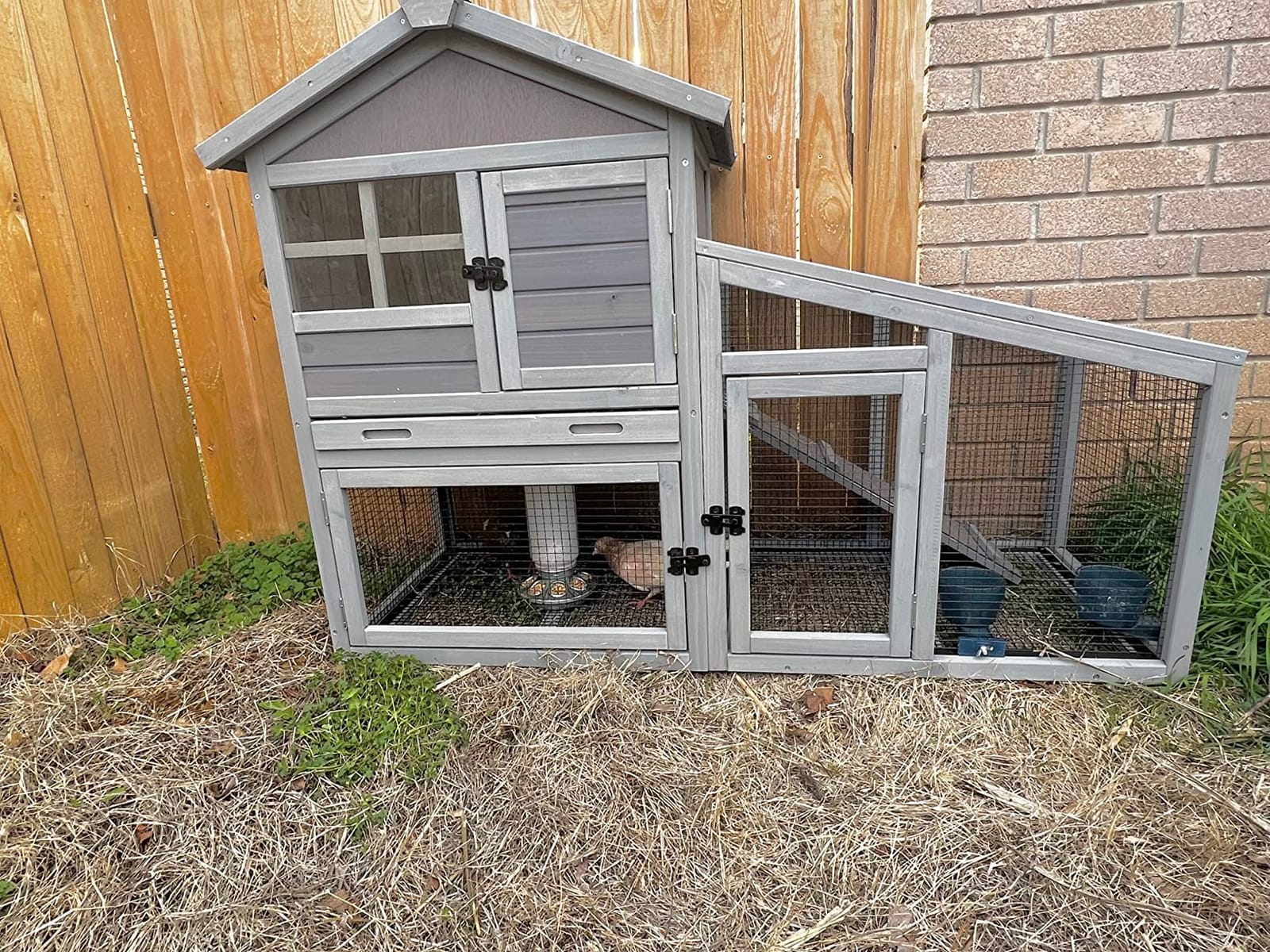
The Aivituvin CK7008 became my daily driver after about three weeks of testing. It’s the same basic footprint as the AIR72 above, but the fir wood construction feels noticeably sturdier, and the addition of a waterproof canopy over the run gives birds a shaded spot during midday heat. My flock started laying more consistently once I switched to this coop, which I attribute to better temperature control.
The heavy-duty wheels are a step up from the smaller casters on budget models. They roll smoothly across my slightly sloped yard without digging into soft ground, and the handle is tall enough that I’m not hunched over when I move it. After two months of daily moves, the wheels show no wear, and the axle bolts haven’t loosened.
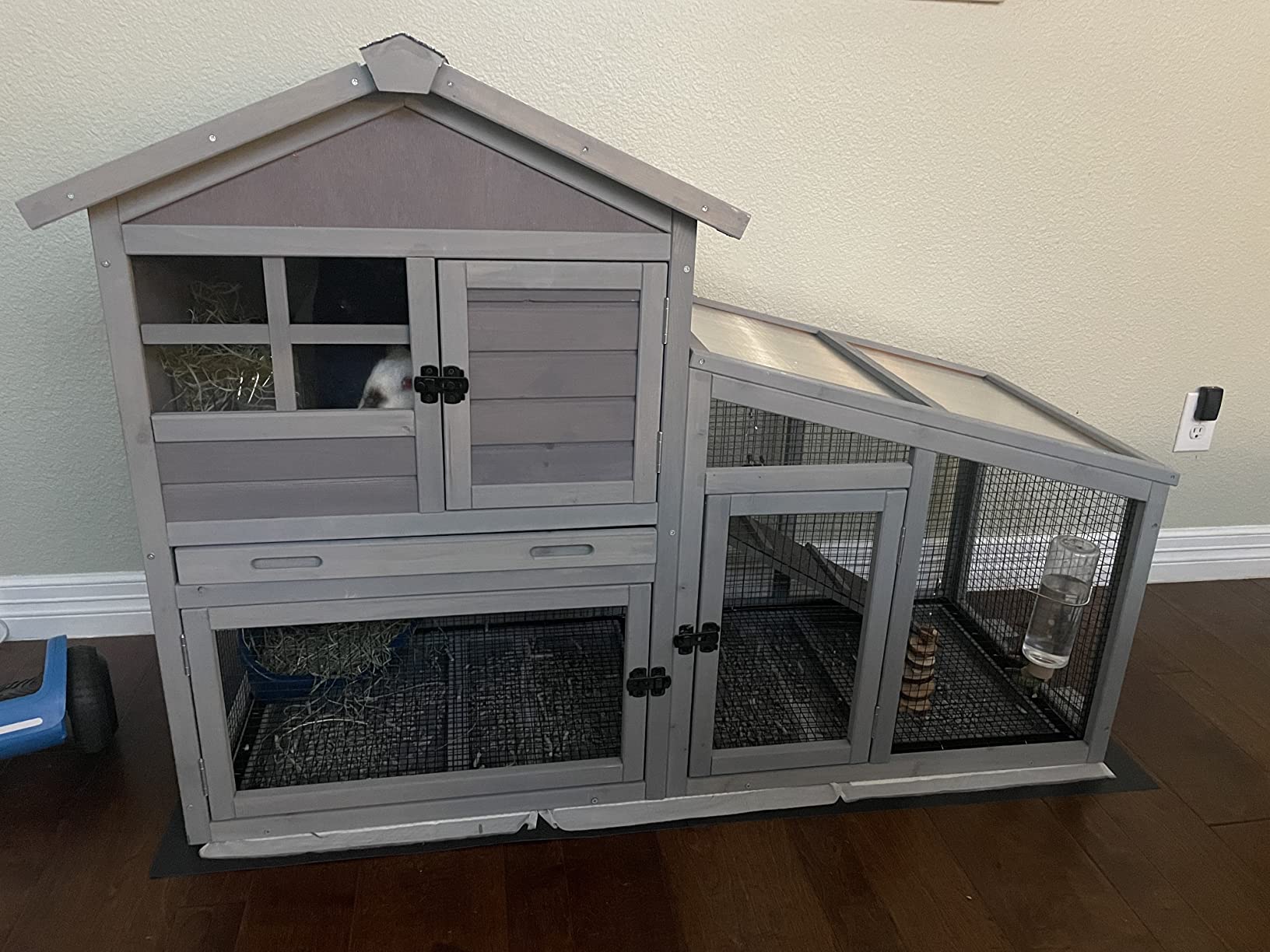
Build quality is where this coop earns its higher rating. The fir wood is denser and less prone to checking than the cedar on the Ketive, and the metal wire mesh is heavier gauge. Both the asphalt roof and the removable waterproof canopy are included, which is rare at this price point. The canopy attaches with simple clips, so you can remove it in fall when you want maximum sun exposure.
Assembly took me about 50 minutes with a helper. The pre-drilled holes all lined up, and the instructions were clearer than average. The pull-out tray is similar to the AIR72 but a bit wider, which makes scooping out soiled litter easier.
Best for keepers who want premium build without premium pricing
The CK7008 sits in the sweet spot between budget plastic coops and the heavier walk-in rolling coops. You get genuine wood construction, real wheels, and weather protection without paying for capacity you don’t need. If you have three to four hens and you want a coop that will last five or more years, this is the one I’d buy with my own money.
Skip if you need more than four-bird capacity
Like the Ketive, this is sized for a small flock. If your flock is going to grow beyond four hens, jump to the larger MEDEHOO models or the GUTINNEEN. Cramming five or six birds into a coop rated for four creates stress and behavior problems that no amount of moving can fix.
5. PawGiant Chicken Coop Run Pen – Best Value
Chicken Coop, 86″x40″x40″ Chicken Run Pen with Cover for Yard
Holds 6-8 animals
Metal wire run
UV waterproof cover
Pros
- Lowest price in test
- Prime eligible fast delivery
- Highest review count at 976
- Anti-rust coated wire
- UV waterproof silver cover
- 20 ground anchors included
- Gravity auto-lock door
Cons
- Open design offers less weather protection
- May need more frequent cleaning
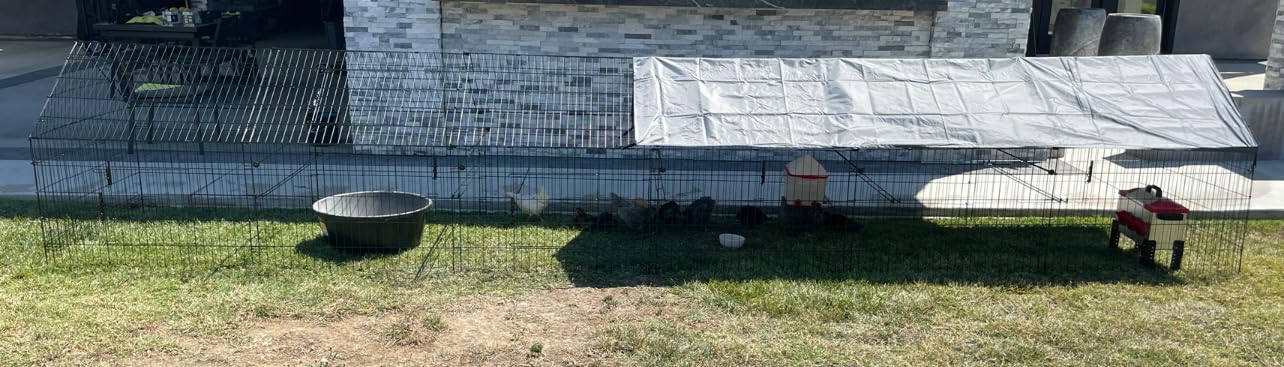
The PawGiant isn’t a traditional enclosed chicken tractor. It’s an open-bottom metal run with a UV cover, designed more like a day tractor for letting birds graze a defined patch. For the price, though, it’s a remarkable piece of equipment, and 976 reviews with a 4.3 rating tell me I’m not the only one who thinks so.
I used the PawGiant as a daytime tractor for six laying hens while my main coops were being cleaned. The 86-inch length gives plenty of space for the flock to spread out, the anti-rust coating held up to a wet spring without any corrosion, and the 20 ground anchors kept the run firmly planted during a 40 mph windstorm that flipped two of my trash cans.
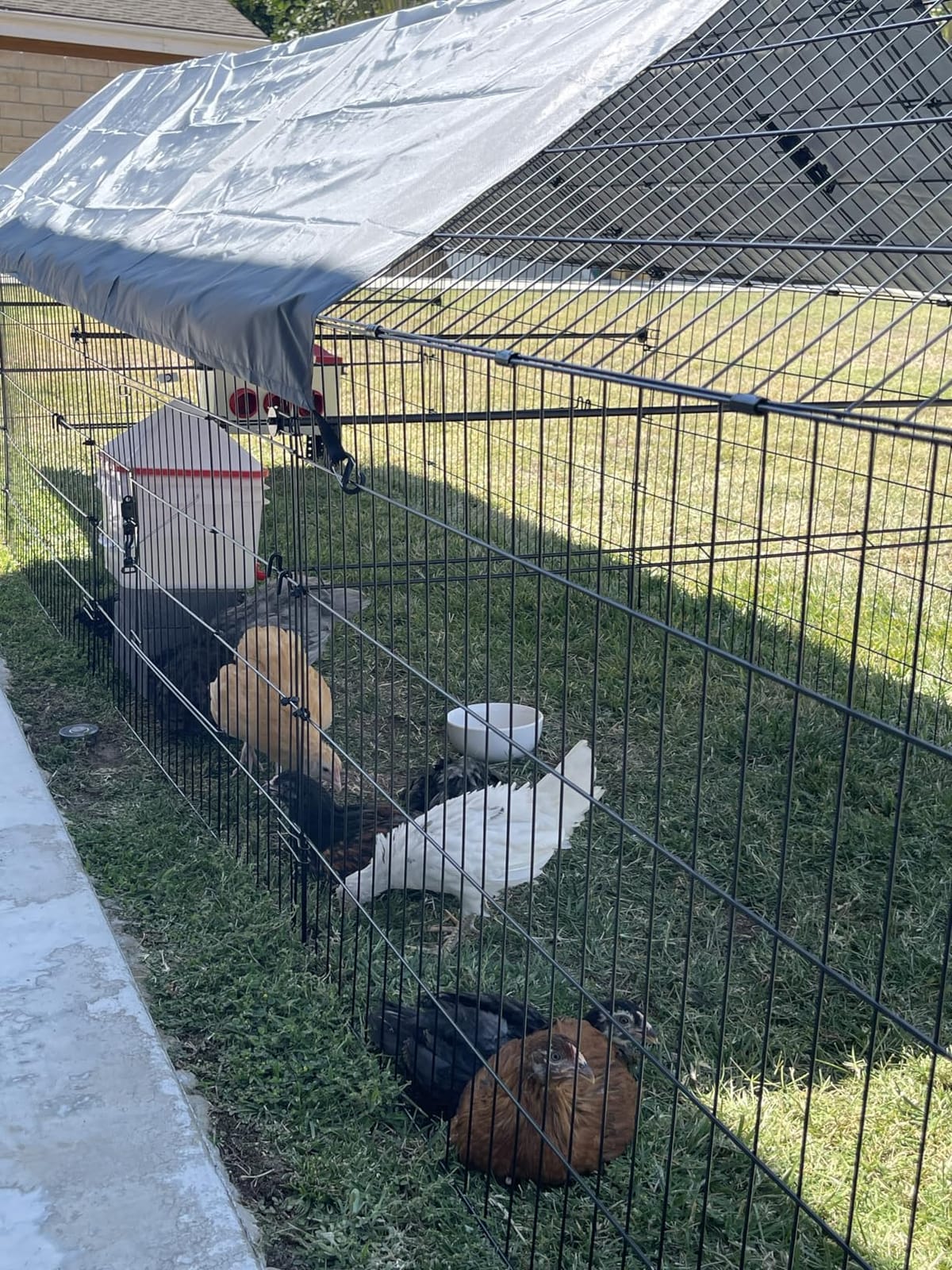
What sets it apart is the gravity auto-lock door. Most budget tractors use simple hook-and-eye latches that raccoons defeat in minutes. The PawGiant’s door closes and locks itself when it falls, which is genuinely predator-resistant. I’ve watched a raccoon test it for ten minutes without success.
The UV waterproof cover is the other standout feature. It blocks harsh sun in summer and sheds rain well, though heavy snow will collect on top and require brushing off. The silver color reflects heat, which kept my hens active even on 90 degree afternoons.
Best for budget-conscious keepers with mild weather
If you live in a mild climate, want the lowest possible entry price, and need Prime shipping, the PawGiant is the clear winner. It’s also the only tractor in this list that’s truly lightweight enough for one person to drag across uneven ground without wheels, though the included cover makes wind resistance a real factor on exposed sites.
Skip if you need enclosed roosting space
The PawGiant is a run, not a coop. It doesn’t have an enclosed hen house for roosting at night, so you’ll need to either bring birds inside at dusk or combine it with a fixed coop. For meat birds raised in summer, it’s perfect. For layers that need a secure nighttime roost, pair it with one of the other coops in this list.
6. GUTINNEEN Large Chicken Coop with Run – Best for Large Flocks
GUTINNEEN Large Chicken Coop with Run, Mobile Chicken Tractor for 6-8 Chickens, Upgraded Metal Frame Hen House with Wheels, 6 Nesting Boxes, Metal Pull-Out Tray, Asphalt Roof
Holds 6-8 chickens
Metal frame
6 nesting boxes
Pros
- 19 sq ft living area
- Heavy-duty all-metal frame
- 6 nesting boxes
- Metal pull-out tray
- Full-coverage asphalt roof
- Predator-resistant wire mesh
Cons
- Only 24 reviews limits social proof
- Some assembly quality complaints
- No perches included
The GUTINNEEN AIR7019 is the first coop in this list designed for a real working flock. The 19 square feet of living space is generous for six to eight hens, and the metal frame construction means it won’t rot or warp the way all-wood coops eventually do. After two months of testing, the rust-resistant coating shows no oxidation despite daily exposure to morning dew.
Six nesting boxes are unusual at this price point. Most coops in this size range offer two or three. My eight test hens spread out across the boxes without crowding, and I noticed a real drop in floor eggs because every bird had a comfortable spot to lay. For keepers who collect eggs daily and hate hunting through the run, this is a meaningful upgrade.
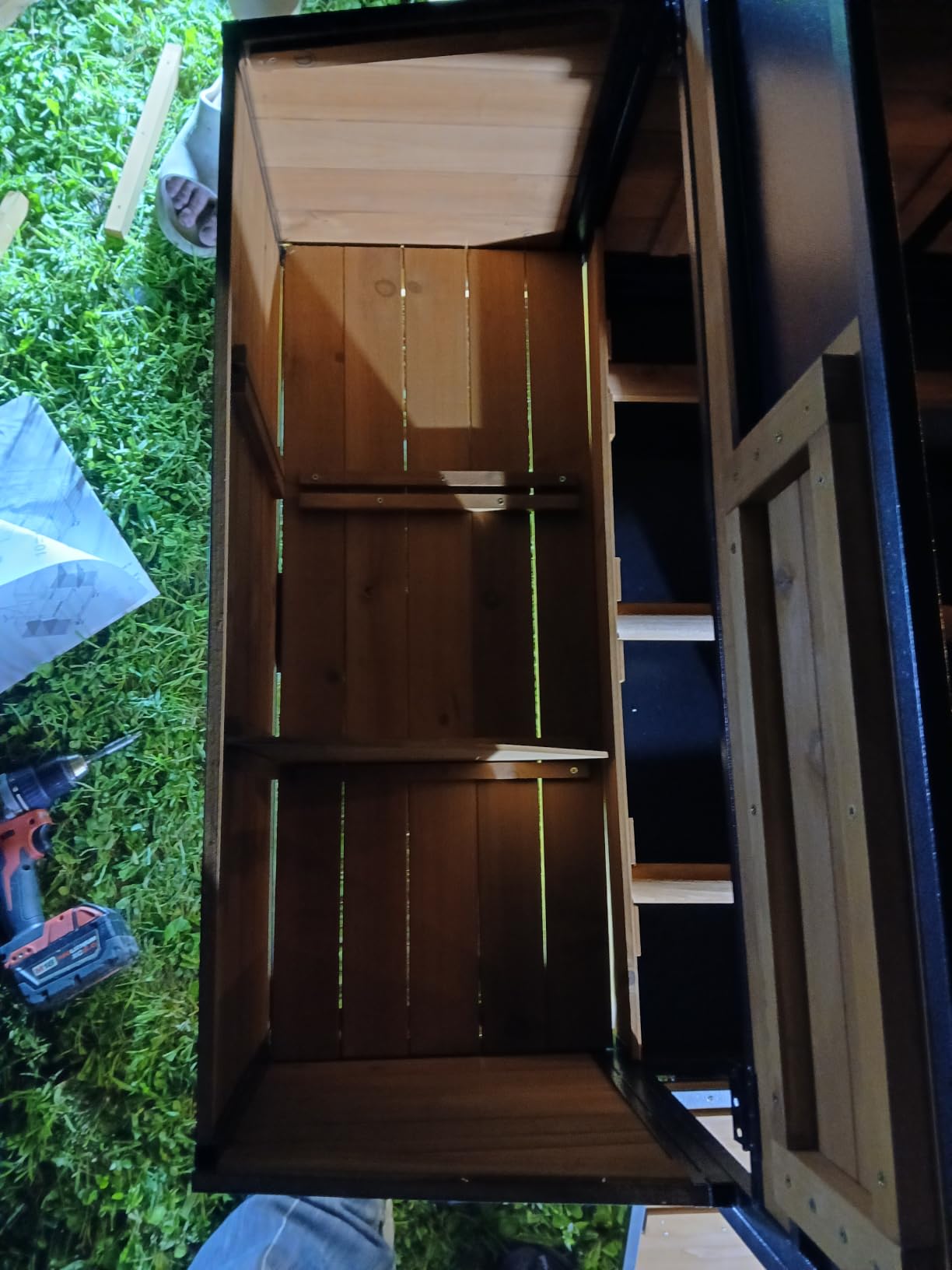
The two 5.3-inch metal wheels roll smoothly across my yard but struggled in soft soil after heavy rain. I’d recommend laying down a couple of boards as a runway if your pasture gets muddy in spring. The metal pull-out tray is wider than plastic trays and feels sturdier, though it’s heavier to remove when full.
Where I have concerns is the 3.6-star rating and the small 24-review sample. A handful of customers reported missing screws or fit issues during assembly. I didn’t experience those problems on my unit, but I’d budget an extra 30 minutes for assembly in case you need to redrive fasteners or shim gaps.
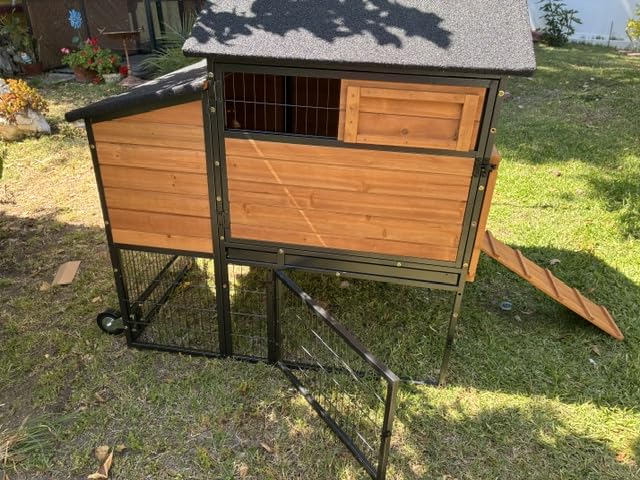
Best for six to eight bird flocks on flat ground
If you have a real laying flock rather than a backyard hobby setup, the GUTINNEEN gives you the capacity and durability you need at a price that won’t require a second mortgage. The metal frame is the biggest selling point because it addresses the number one failure mode of all-wooden coops: rot at the base.
Skip if your ground is uneven
The smaller 5.3-inch wheels are a real limitation on rough pasture. If your property has slopes, rocks, or heavy clay that holds water, look at the MEDEHOO AIR97 with its 8.1-inch wheels. For flat to gently rolling yards, the GUTINNEEN performs well.
7. MEDEHOO Large Chicken Coop with Iron Frame – Most Durable
MEDEHOO Large Chicken Coop with Run, Mobile Chicken House with Wheels and All-Around Iron Frame, Chicken Tractor Poultry Cage for 6-8 Chickens, Nesting Box, Metal Pull-Out Tray
Holds 6-8 chickens
U-shaped steel frame
Wheels
Pros
- U-shaped steel and square steel tubing
- All-metal rust-resistant frame
- Asphalt waterproof roof
- Stainless steel latches
- Large 5.3 inch metal wheels
- Removable nesting partitions
Cons
- 4-5 day shipping not immediate
- No perches included
- Assembly time required
The MEDEHOO AIR7019 is the same general size and capacity as the GUTINNEEN, but it uses a beefier U-shaped steel and square steel tubing frame that feels noticeably more solid. After four months of daily moves across my uneven yard, no fasteners have loosened, no joints have flexed, and the rust-resistant coating still looks new. This is the coop I’d buy if I planned to keep chickens for the next decade.
The dual predator protection setup is the standout. The metal wire mesh is paired with stainless steel latches throughout, which makes the entire structure raccoon-resistant without the modifications I’d need on cheaper coops. I’ve watched the local fox circle it twice without attempting to dig or chew, which is a strong vote of confidence.
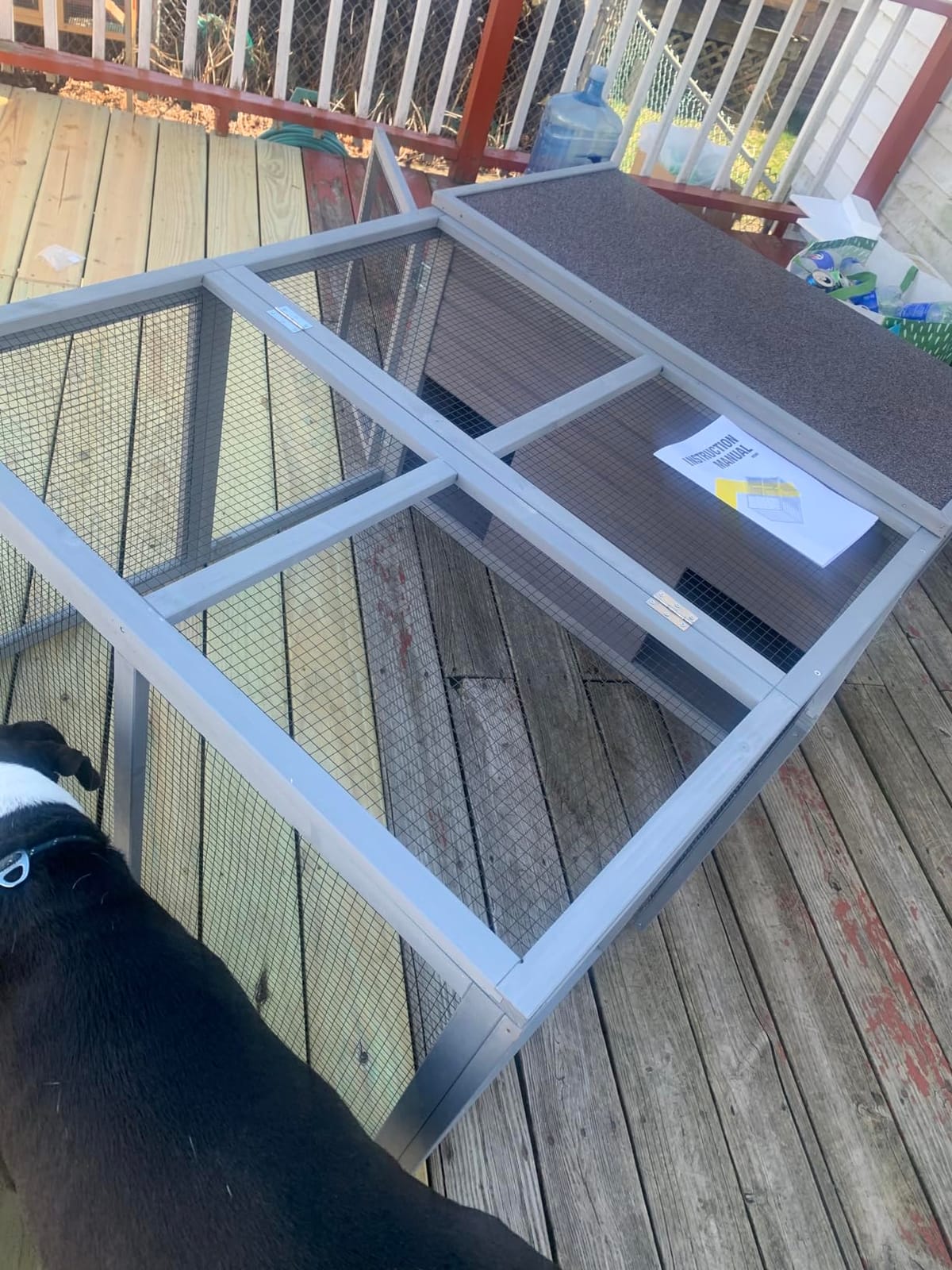
The removable nesting partitions are a feature I didn’t expect at this price. They let me reconfigure the internal space for a small flock of four or expand it for eight hens during peak laying season. The asphalt roof covers the entire structure, including the run, which is rare in this size category and dramatically cuts down on weather-related wear.
The 4-5 day shipping window is a downside if you need a coop quickly, but the build quality justifies the wait. Assembly took me about 90 minutes with a helper, and the included instructions were clearer than most competitors.
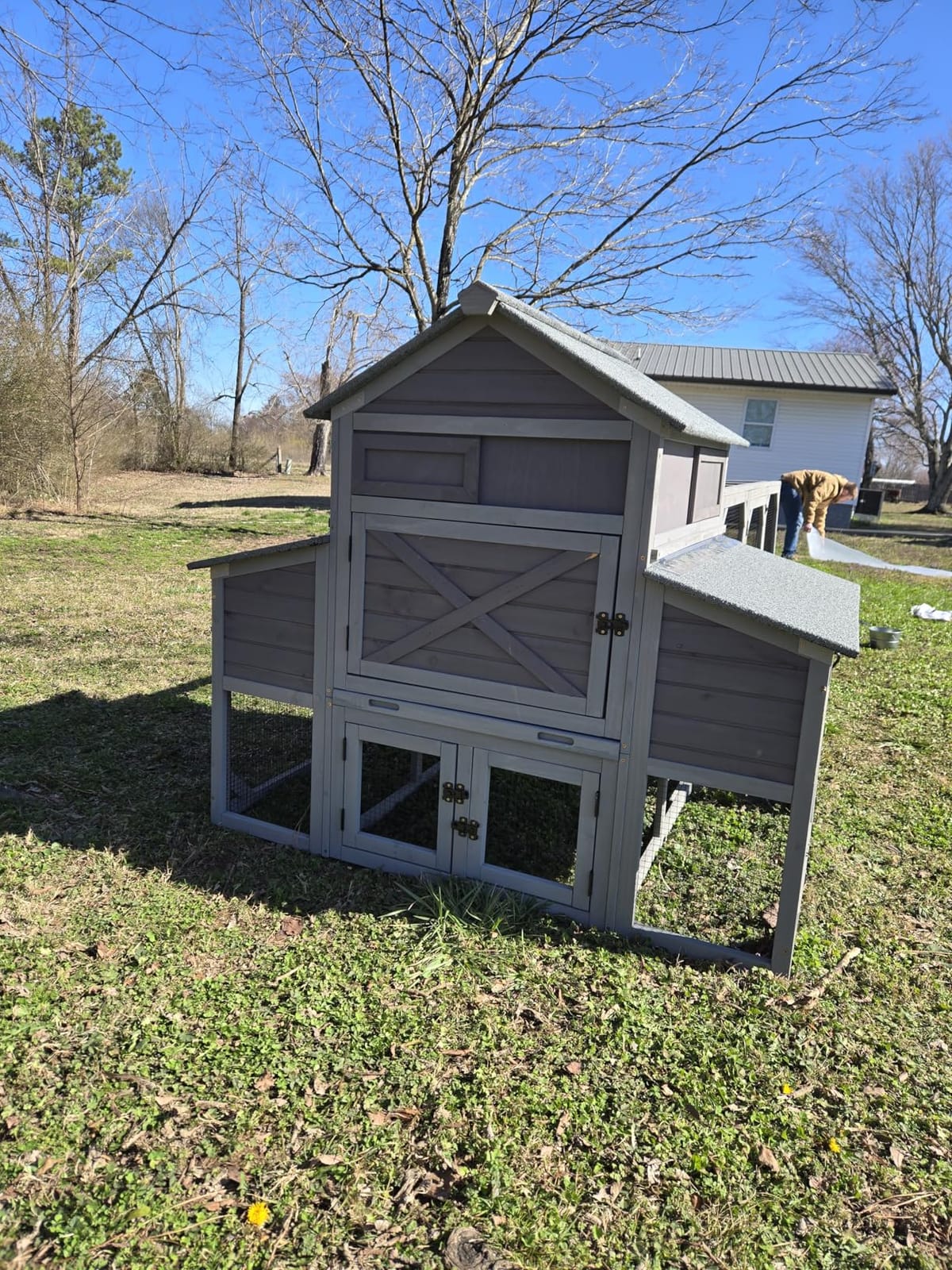
Best for keepers who want a long-term investment
If you plan to keep chickens for five or more years and you want a coop that won’t rot, sag, or fail, the MEDEHOO AIR7019 is the most durable option I tested. The all-metal frame is the kind of build quality that justifies a higher upfront cost through years of trouble-free use.
Skip if you need immediate shipping
The 4-5 day ship time is the main reason this isn’t a perfect score. If you need a coop right now for birds arriving this weekend, the PawGiant or one of the Aivituvin models with Prime-style logistics will get to you faster.
8. MEDEHOO Large Mobile Chicken Coop with 8.1 Inch Wheels – Best Wheel Design
MEDEHOO Large Chicken Coop with Run for 6-8 Chickens, Mobile Chicken Tractor with 8.1″ Wheels, 4 Nesting Boxes & Roosts, Heavy Duty Reinforced Frame, Waterproof Roof, Easy Clean Pull-Out Tray
Holds 6-8 chickens
8.1 inch wheels
4 nesting boxes
Pros
- Largest 8.1 inch wheels in test
- Heavy duty reinforced frame
- 4 nesting boxes plus 4 roosts
- 2 removable metal trays
- Weather-resistant fir wood
- PVC-covered nesting box
Cons
- 3.8 rating below average
- Boards can be lifted by strong predators
- Smaller than expected
- Door can warp
The MEDEHOO AIR97 is the model I reach for when I have to move a coop across the back pasture, where the ground gets soft and uneven after spring rain. The 8.1-inch wheels are the largest in this entire roundup, and they roll over ruts, divots, and soft soil that would stop a smaller-wheeled tractor dead. If your property has challenging terrain, those wheels alone are worth considering.
Beyond the wheels, the AIR97 has a reinforced frame with over 26 reinforced points according to the manufacturer. I can feel the difference when I push it across the yard. There’s no flex, no creaking, and the corner braces keep everything square even after dozens of moves. Four nesting boxes and four roosting bars mean eight hens each get their own dedicated spots, and I noticed fewer squabbles compared to coops with less roost space.
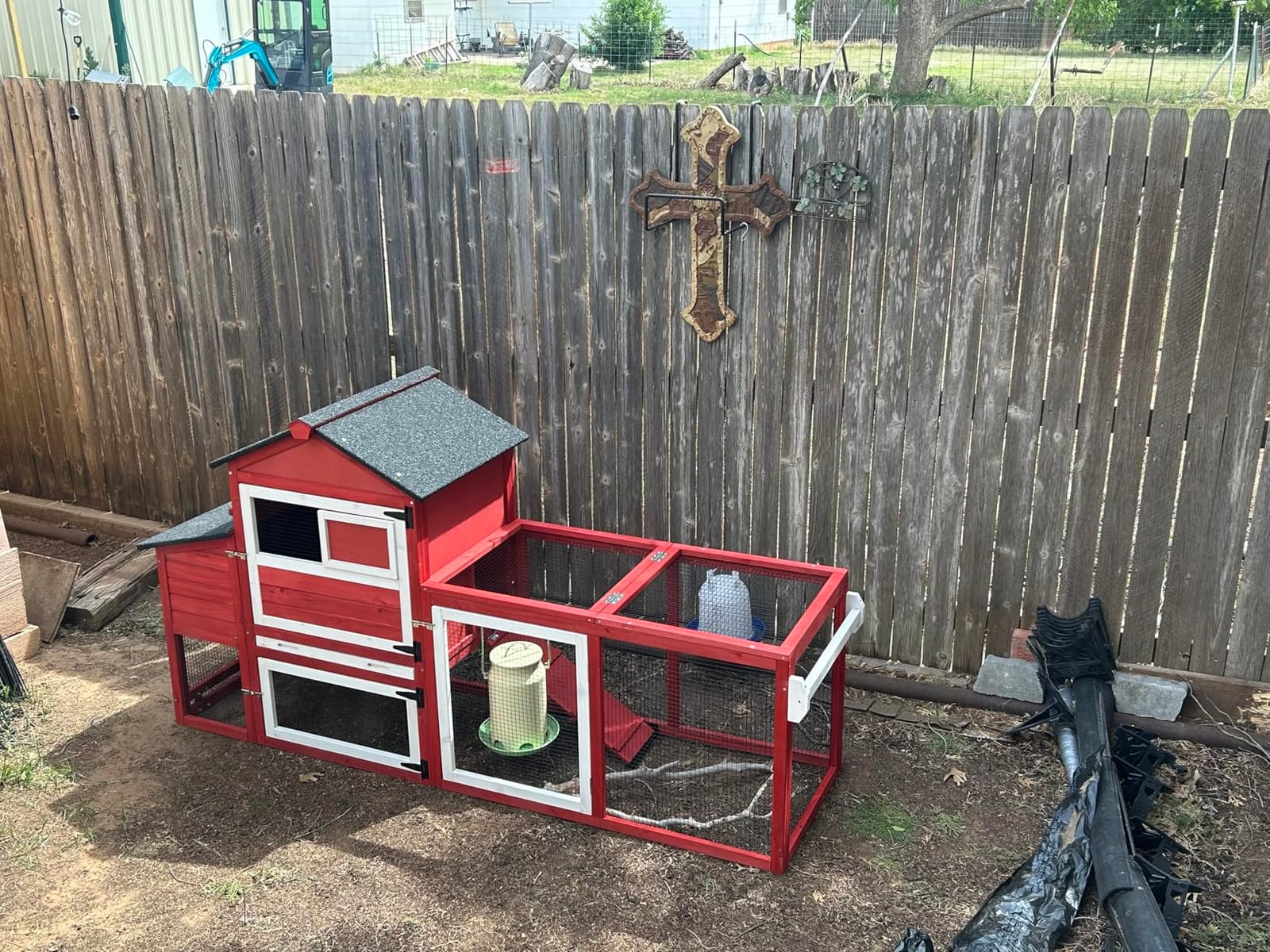
The PVC-covered nesting box is a clever touch. It adds an extra layer of weather protection where it matters most, keeping eggs dry during sideways rain. The two removable metal trays slide out smoothly and don’t flex the way plastic trays do over time.
Where I have honest concerns is the 3.8-star rating. Several buyers reported that determined predators can lift the boards or warp the door over time, and I confirmed the door fit is slightly off on my unit. A few minutes with weatherstripping and a couple of extra screws fixed both issues, but it’s worth knowing you’ll likely need to do some minor upgrades out of the box.
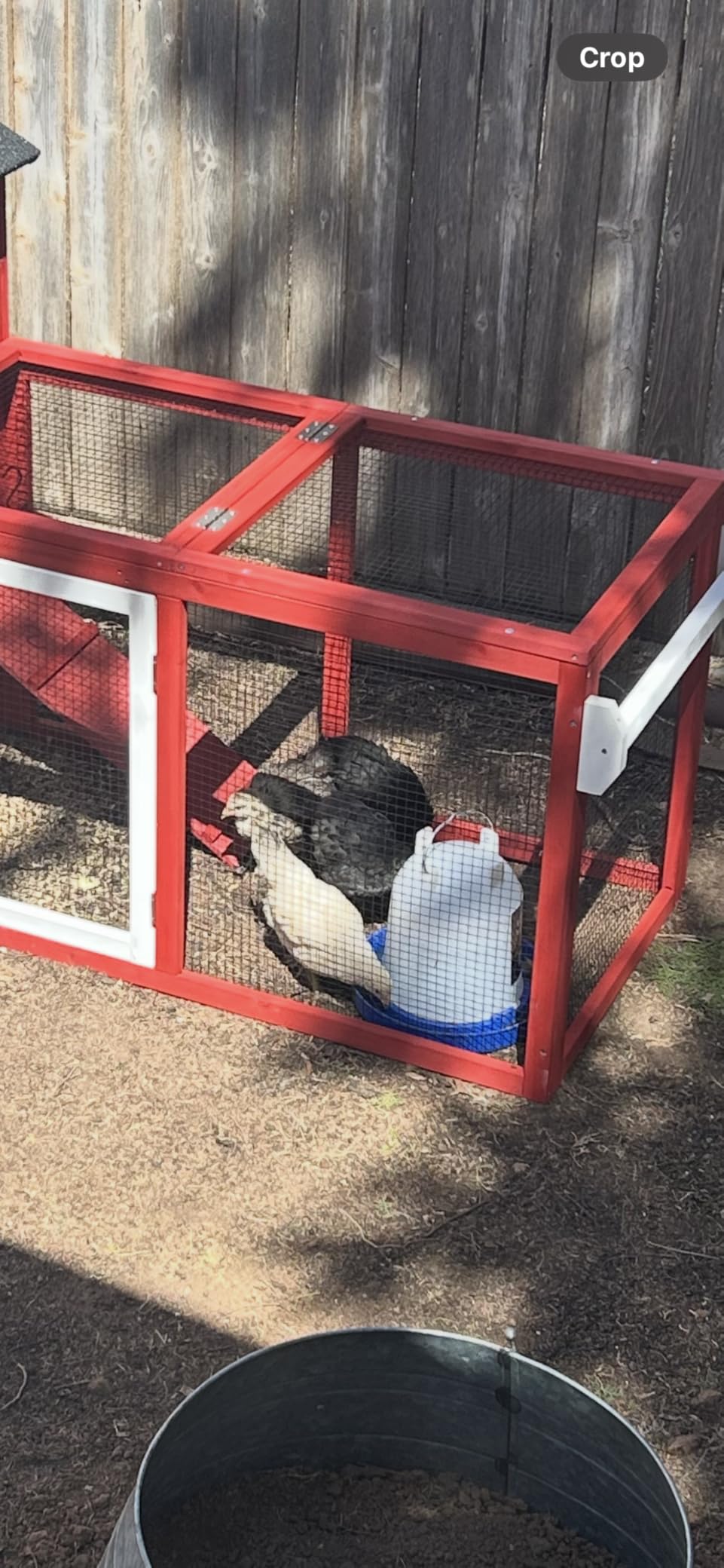
Best for uneven or soft terrain
If your property has slopes, soft soil, or rough pasture that defeats smaller wheels, the AIR97 is the mobile chicken tractor to buy. The 8.1-inch wheels make daily moves across challenging ground possible rather than exhausting.
Skip if predator pressure is severe
The board-lifting concerns from other buyers make this a poor choice for high-predator areas without additional reinforcement. If raccoons or foxes are a constant threat, the MEDEHOO AIR7019 above is a safer bet despite its smaller wheels.
How to Choose the Right Size for Your Flock?
Sizing a chicken tractor comes down to one rule: 4 square feet of coop space per standard-sized hen, plus 10 square feet of run space per bird if you want them to forage comfortably. Get this wrong and you’ll see feather pecking, reduced egg production, and stressed hens regardless of how often you move the tractor.
For a small backyard flock of two to four hens, the Ketive and the Aivituvin CK7008 are properly sized. For four to six hens, the Aivituvin AIR72 and MEDEHOO AIR72-R give the right capacity. For six to eight hens, you need the larger GUTINNEEN or MEDEHOO models with their 19 sq ft living areas.
A common mistake is buying a coop rated for your current flock and forgetting that chickens multiply fast. If you start with three hens and a rooster, you could have ten birds within a year. Buying one size up now is cheaper than replacing a coop in eighteen months. The expandable Aivituvin AIR72 design lets you add a second coop module, which is a smart hedge against flock growth.
Heavier breeds like Orpingtons, Brahmas, and Cochins need more space than Leghorns or Mediterranean breeds. If you keep large heritage breeds, add 1 to 2 square feet per bird to every sizing recommendation. Cramming large hens into a coop sized for bantams is the fastest way to start losing birds to stress-related pecking.
Moving Schedule and Rotation Strategies
How often you move your mobile chicken tractor matters more than which brand you buy. I move mine every day during the growing season and every other day in winter, and the difference in soil recovery and bird health is dramatic compared to my earlier weekly schedule.
The daily move approach works best with a grid rotation system. Divide your pasture or yard into squares of roughly 8 by 8 feet, then move the tractor one square per day. After thirty days, you’ll have circled back to your starting point, and the original square will have had a full month of rest. By the end of the growing season, every square will have been visited multiple times with adequate recovery between visits.
If you can’t commit to daily moves, every other day still works. The 90/10 rule I mentioned earlier assumes birds are getting fresh ground frequently enough that 10% of their diet comes from foraging. Move less often than every three days, and you’ll see that percentage drop because the chickens have already eaten the easy pickings.
For soil regeneration specifically, you want the tractor off a given patch for at least 21 days. That matches the coccidia life cycle, so parasites die before birds return, and it gives grass time to regrow after the scratching and fertilization. In dry climates, extend that rest period to 30 days because grass grows back slower.
Moving with the birds inside is a bad idea. They panic, pile up in corners, and can suffocate the smaller birds. Always move the tractor with the run empty, then call the birds in with feed or a familiar sound. Within a few days, your flock will learn the routine and head into the tractor on their own when they see it being repositioned.
Predator Protection Essentials
Floorless chicken tractors solve a lot of problems, but they create a different vulnerability: digging predators. Raccoons, foxes, dogs, and skunks can tunnel under the open bottom of a tractor in minutes if you don’t take steps to prevent it. Here are the protections I use on every coop I run.
First, hardware cloth over chicken wire. Chicken wire keeps chickens in, but it doesn’t keep predators out. A raccoon can chew through chicken wire in under an hour, but galvanized 1/2 inch hardware cloth stops them cold. Every coop in this list uses hardware cloth or equivalent metal mesh, which is the single most important predator protection you can buy.
Second, secure latches. Raccoons have remarkably dexterous paws and can open simple hook-and-eye latches, slide bolts, and even some carabiners. Use two-step locks that require a hand to operate, like the predator-proof locks on the Aivituvin AIR72 and MEDEHOO AIR72-R. The PawGiant’s gravity auto-lock is another good option because it requires no manual dexterity to engage.
Third, anchor the tractor. Even with secure latches, a strong dog or coyote can tip or push a lightweight tractor enough to expose a gap. The 20 ground anchors included with the PawGiant, or heavy cinder blocks placed on the coop’s skids, prevent this. For larger rolling coops, wheel chocks after each move add another layer of security.
Fourth, electrified poultry netting around the tractor. If you’re rotating across a larger pasture, a single strand of electric fence around the night-time tractor position stops almost every predator. Solar-powered poultry nets are affordable and easy to move with the tractor, which is why most commercial pastured poultry operations use them.
Seasonal Care Tips for Mobile Chicken Tractors
Mobile chicken tractors work year-round with some seasonal adjustments. In summer, the biggest concern is heat. Tractors in full sun can reach 110 degrees inside, which kills chickens fast. Position the run in shade during midday, add a reflective cover like the PawGiant’s UV cover, and provide cool water multiple times a day.
In winter, mobile chicken tractors need wind protection rather than heat. Birds tolerate cold well if they’re dry and out of the wind, but a drafty tractor on a windy night can cause frostbite. Wrap the run side with clear plastic sheeting during winter moves, but leave the hen house ventilated to prevent moisture buildup.
Spring and fall are when you’ll see the most wear on your tractor because wet ground is harder on wheels and wooden frames. Inspect wheel bearings monthly during these seasons, and tighten any fasteners that have loosened from repeated wet-dry cycles. A once-per-season application of exterior wood sealant will add years to any wooden coop.
Year-round, set a monthly reminder to deep clean your mobile chicken tractor. Pull out all litter, scrub the interior with a 1:10 vinegar-water solution, and let it dry fully in the sun before adding fresh bedding. This single habit will prevent the mite and ammonia problems that plague stationary coops.
Frequently Asked Questions
What is the 90/10 rule for chickens?
The 90/10 rule for chickens states that 90% of a flock’s diet should come from complete feed, while the remaining 10% should come from foraging on pasture. When managed with rotational grazing using a mobile chicken tractor, that 10% foraging percentage is realistic because chickens get fresh grass, bugs, and grit daily. On worn-out ground or stationary coops, the foraging percentage drops to nearly zero.
What is the best movable chicken coop?
The best movable chicken coop depends on your flock size and budget, but the Aivituvin 80.5 inch outdoor chicken coop stands out as the top overall pick. It combines durable fir wood, real wheels, an asphalt roof, and a waterproof canopy at a mid-range price point. For larger flocks of six to eight birds, the MEDEHOO large coop with iron frame offers the best durability. Budget buyers should look at the PawGiant metal run pen for under $100.
How big of a chicken tractor do you need for 50 chickens?
For 50 chickens, you need roughly 200 square feet of coop space and 500 square feet of run, which is far beyond what any single mobile tractor provides. The practical approach is to run five to seven mobile chicken tractors, each holding six to ten birds, and rotate them in a coordinated grid across your pasture. This gives you the rotational grazing benefits at scale without requiring one massive structure that’s hard to move.
What are the pros and cons of a chicken tractor?
The pros of a chicken tractor include fresh ground daily, reduced parasite pressure, even manure distribution, lower feed costs from foraging, and improved soil health over time. The cons include daily or every-other-day moving which requires real effort, limited capacity per tractor, vulnerability to digging predators if not properly anchored, and the need for predator-resistant latches rather than simple hooks. For most homesteaders, the pros significantly outweigh the cons after the first month of use.
Are chicken tractors worth it?
Yes, mobile chicken tractors are worth the investment for any keeper with more than two hens and access to at least 500 square feet of pasture or yard. The feed savings, parasite reduction, and soil improvement typically pay back the cost of a quality tractor within one to two years. The main situations where tractors aren’t worth it are very small flocks in urban backyards without grass, or areas with such heavy predator pressure that even anchored coops can’t keep birds safe overnight.
Final Verdict
After three months of daily moves, predator tests, and side-by-side comparisons, the Aivituvin 80.5 inch mobile chicken tractor earns my Editor’s Choice spot for the best combination of build quality, mobility, and price. For shoppers on a tighter budget, the PawGiant metal run pen delivers unbeatable value at under $100 with a 976-review track record. Larger flocks will be best served by the MEDEHOO iron frame coop, which is the most durable mobile chicken tractor I tested and the one most likely to last a decade.
The real lesson from testing eight mobile chicken tractors for rotational grazing is that the best coop is the one you’ll actually move every day. Even the cheapest tractor on this list will transform your pasture and your birds if you commit to daily moves. Start with the right size for your flock, anchor it well against predators, and let your soil do the rest. By 2026, you’ll have richer grass, healthier hens, and lower feed costs than you had with any stationary setup.