

The best miter saws for trim work are not the biggest or the most powerful. They are the ones that hold a square cut all afternoon, have a fence tall enough to lay base flat, and pivot to both sides so you never flip a 12-foot stick of crown. After six weeks of cutting base, casing, and crown on two remodels, the DEWALT DWS779 came out ahead for most finish carpenters, with the DWS780 close behind for anyone who cuts the same angle a hundred times a day.
Trim is where miter saws get judged hardest. A framing cut that is a fraction off still holds a wall. A crown joint that is a fraction off leaves a visible gap in a lit room, and you are back at the table with a file. That is why we scored every saw in this roundup on fence height, nested crown capacity, dual bevel access, cutline visibility, dust control, and how the thing feels at the end of a ten-hour punch-list day.
We also picked up the detail most roundups skip. There is no point owning the best miter saws for trim work if the blade is dull or the fence is out of square, so the buying guide below ends with the accuracy check we run before every trim job, plus how to cut crown flat against the fence and why the 31.6 degree question comes up in every forum thread about this tool.
Table of Contents
Top 3 Miter Saws for Trim Work (October 2026)

DEWALT DWS779 12 in. Slidin…
- 7-1/2 in. nested crown
- 6-3/4 in. base vertical
- 15 Amp 3800 rpm
- 10-stop detent plate

DEWALT DWS780 12 in. XPS…
- XPS LED cutline
- 7-1/2 in. nested crown
- 58 lb chassis
- 15 Amp 3800 rpm

The DWS779 wins on raw capacity and repeatability. The DWS780 wins on the cutline, which is the single feature trim carpenters talk about most. The SKIL is the one to buy if a full 12-inch slider is more machine than the job needs, and its LED shadow line costs a fraction of the premium saws.
All 8 Miter Saws for Trim Work Compared
| Product | Specs | Action |
|---|---|---|
| DEWALT DWS779 12 in. Sliding Dual-Bevel Compound Miter Saw |
|
Check Latest Price |
| DEWALT DWS780 12 in. Sliding Dual-Bevel with XPS Shadow Line |
|
Check Latest Price |
| SKIL MS6305-00 10 in. Dual Bevel Sliding Compound Miter Saw |
|
Check Latest Price |
 BOSCH CM10GD 10 in. Axial-Glide Dual-Bevel Miter Saw BOSCH CM10GD 10 in. Axial-Glide Dual-Bevel Miter Saw |
|
Check Latest Price |
 Makita LS1040 10 in. Compound Miter Saw Makita LS1040 10 in. Compound Miter Saw |
|
Check Latest Price |
 Makita LS1219L 12 in. Dual-Bevel Sliding Compound Miter Saw Makita LS1219L 12 in. Dual-Bevel Sliding Compound Miter Saw |
|
Check Latest Price |
 EVOLUTION R255SMS+ PLUS 10 in. Multi-Material Sliding Miter Saw EVOLUTION R255SMS+ PLUS 10 in. Multi-Material Sliding Miter Saw |
|
Check Latest Price |
 DEWALT DWS716 12 in. Double-Bevel Compound Miter Saw DEWALT DWS716 12 in. Double-Bevel Compound Miter Saw |
|
Check Latest Price |
Read the fence numbers before anything else. Nested crown capacity tells you the widest crown the saw can swallow, vertical baseboard capacity tells you the tallest base you can lay flat against the fence, and weight tells you what you are carrying up a stairwell at the end of the day.
1. DEWALT DWS779 12 in. Sliding Dual-Bevel Miter Saw – Best Overall for Trim
DEWALT Miter Saw, 12 Inch Double Bevel Sliding Compound Miter Saw, Includes Blade Wrench and Clamp, Increased Crosscut Capacity, Powerful 3800 RPM Motor 15 Amp (DWS779)
12 in. blade
15 Amp at 3800 rpm
7-1/2 in. nested crown
67.7 lb
Pros
- Tall sliding fences handle 7-1/2 in. nested crown and 6-3/4 in. base vertically
- 10-stop stainless detent plate with cam lock handle
- Cuts 2x14 at 90 degrees and 2x10 at 45 degrees
- Dual bevel with detent override for fast angle changes
- Dust system captures over 75% of generated dust
Cons
- 67.7 lb is a two-hand carry between rooms
- No integrated laser or LED cutline on this version
- Nearly 13.5 in. of rear clearance needed behind the fence
The DWS779 is the saw I kept reaching for. Owners consistently praise accuracy, power, and the tall fences for crown and base work, and the 10-stop detent plate with a cam lock handle is repeatedly called out for repeatability. At 4.8 stars across more than 9,000 reviews it also has the deepest owner base in this group, which means parts, blade info, and setup advice are easy to find.
For trim specifically, the fence is the story. Sliding fences support crown molding up to 7-1/2 in. nested and base molding up to 6-3/4 in. vertically against the fence, and they slide out of the way for bevel cuts. That vertical base number is what stops you from having to cut tall base on its side, which is the fastest way to tear out a finished face.
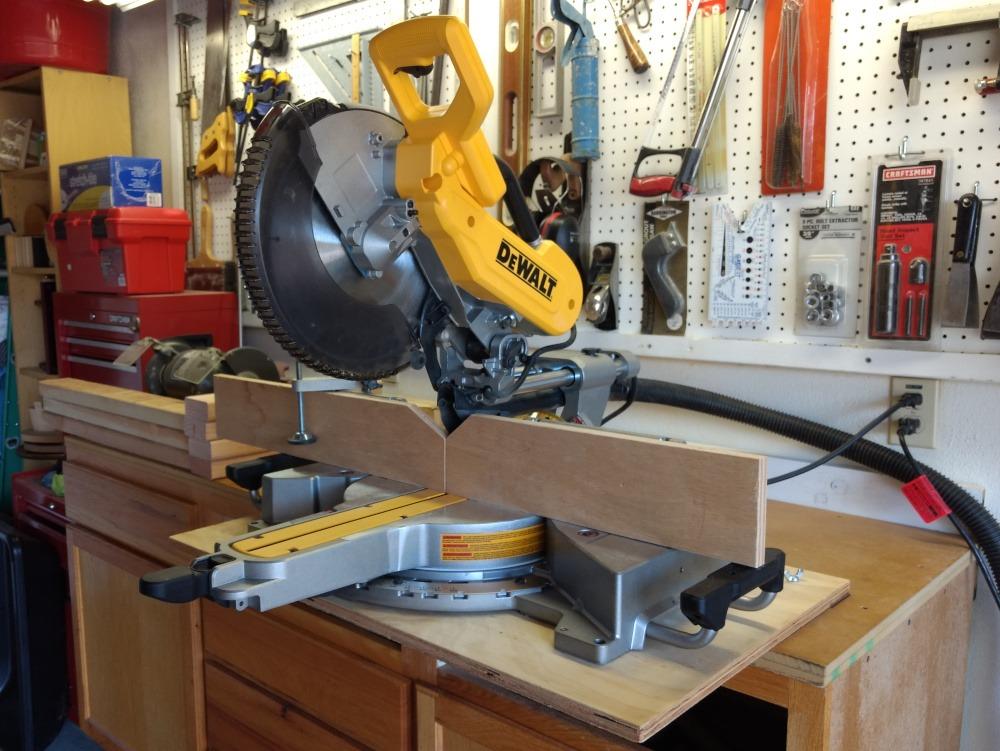
The gearbox and belt-drive layout increase vertical cutting capacity, and the machined base fence is what keeps the 45 degree miter tight. Reviewers report the cam lock handle with detent override making the same miter angle repeatable in a way cheaper saws are not. It miters 60 degrees one way and 50 degrees the other, and bevels 49 degrees either side.
The honest tradeoff is weight. At 67.7 lb this is not a saw you carry up a set of stairs twice in a morning, and it needs a stand you can move as a unit. The wide kerf also means close to 13.5 in. of clearance behind the fence for wide stock, so plan the shop layout before you buy.
Why it wins for repeat trim cuts
Ten positive stops on a stainless detent plate means the common miter angles click into the same place every time. On a run of 12-foot crown, that repeatability is worth more than any single feature on the list, because a bad joint there means re-cutting expensive molding.
The oversized bevel scale also reads clearly under a headlamp, and the dual horizontal steel rails with linear ball bearings held alignment well in our cuts. If your work is mostly 1x base and casing with the occasional trip into 2x material, this is the one I would put in the truck.
Where it disappoints
There is no cutline system on this model. You chalk the line or use a pencil and a straightedge, and on long stock a marked line is more accurate than a laser that can drift as the saw warms up. If shadow line accuracy is your deciding factor, look at the DWS780 below.
Dust still escapes around the fence line even with the bag attached, so hook up a shop vac for interior remodels. And owners of a single 12-inch saw on a small crew often report wishing they had checked the rear clearance requirement before setting up the saw against a basement wall.
2. DEWALT DWS780 12 in. XPS Shadow Line Miter Saw – Best Cutline for Repeat Cuts
DEWALT Miter Saw, 12-inch Double Bevel Sliding Compound Miter Saw with XPS LED Shadow Light System, Includes Blade Wrench, Material Clamp and Dust Bag (DWS780)
12 in. blade
XPS LED shadow cutline
7-1/2 in. nested crown
58 lb
Pros
- XPS LED shadow line needs no adjustment and cannot drift
- 58 lb chassis is light for a 12 in. dual-bevel slider
- Holds 2x14 at 90 degrees and 2x10 at 45 degrees
- Tall sliding fences and 10-stop detent plate
- Over 75% dust collection with bag included
Cons
- One of the costlier 12 in. dual-bevel saws in this class
- Still needs roughly 13.5 in. behind the fence for wide stock
- No blade brake so the blade coasts to a stop
The DWS780 is the trim saw other trim tools get measured against. The XPS LED shadow line projects a shadow on the workpiece, so the cut line is the blade itself and there is nothing to adjust and nothing to drift. Owners credit it with making repeat trim cuts faster and more accurate than a laser, and it is the reason this saw shows up so often in finish carpenter threads.
Multiple r/Carpentry posters single out the DEWALT 12-inch dual bevel with the XPS shadow line as the best for trim specifically, citing the shadow line for cut accuracy and tall fences for big crown. That matches our experience on molding runs. When you are cutting the same baseboard angle forty times in a row, a line you do not have to calibrate is worth the money.
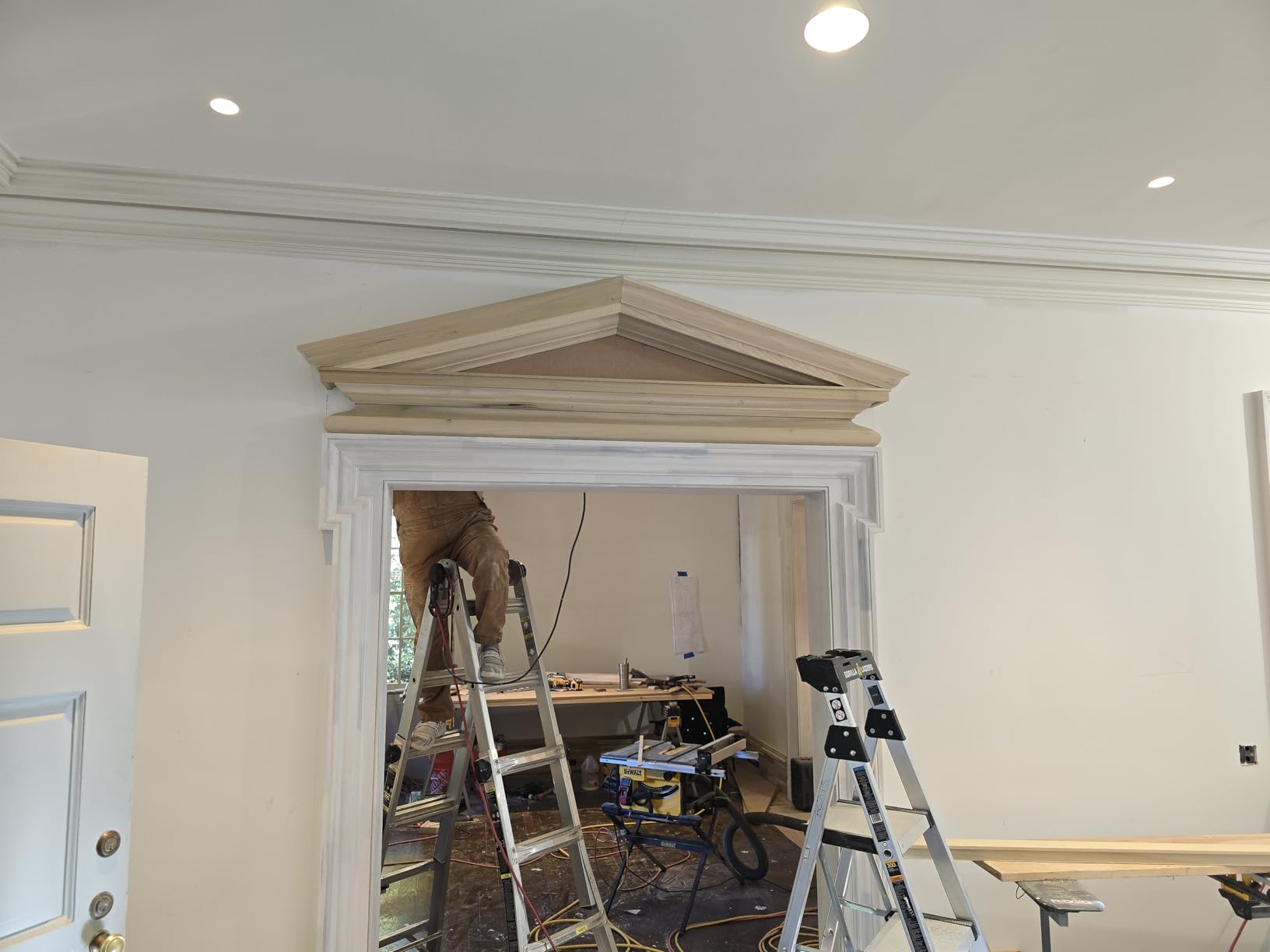
Capacity matches the DWS779. Crown molding up to 7-1/2 in. nested, base molding up to 6-3/4 in. vertically, 2×14 lumber at 90 degrees and 2×10 at 45 degrees, and miters that reach 60 degrees one way and 50 degrees the other. The 10-stop detent plate and cam lock handle carry over from the same design language.
One thing this saw does have over its sibling is weight. At 58 lb it is a noticeably lighter carry than the 67.7 lb DWS779 while keeping the same 2×14 capacity, which matters if you are moving it between rooms or up a set of stairs more than once a week.
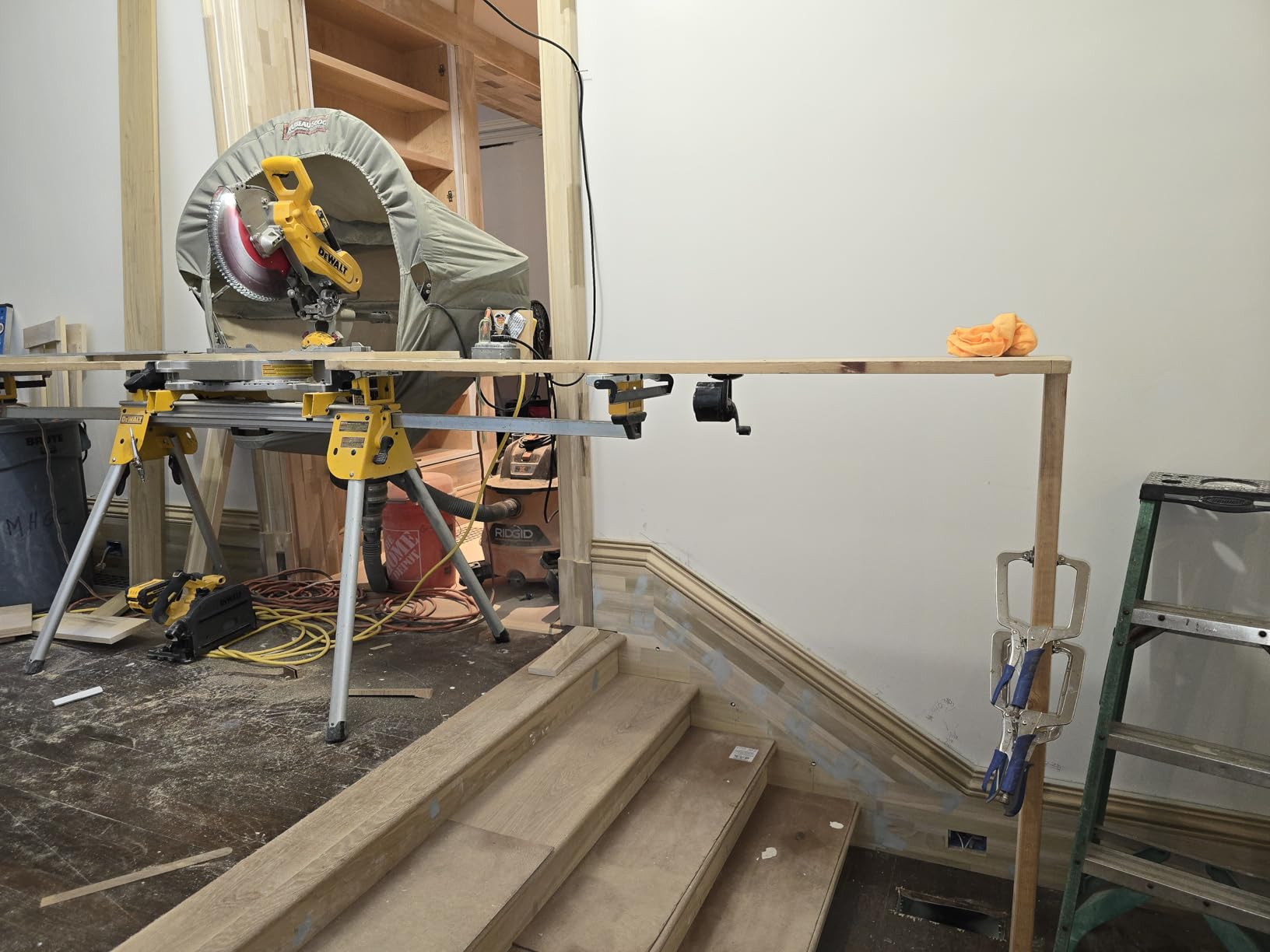
Shadow line versus laser for trim
A laser draws a thin line that is offset from the kerf and can shift as the saw heats up, so on wide crown you either compensate or accept the error. A shadow line has no offset, because the shadow is cast by the blade itself, and it stays put at any angle.
For crown held flat, a laser is close to useless since the molding face is not vertical to the blade. A shadow line works at every position. If you have ever tried to line up a laser on a 31.6 degree spring angle, you already know why the DWS780 and the SKIL both went this route.
Where it disappoints
It is one of the more expensive 12 in. dual-bevel saws in this class, and for a trim-only workload on small casing and base you would get more out of a 10-inch slider. The rear clearance requirement is identical to the DWS779, roughly 13.5 in. behind the fence for wide stock, so it does not solve a tight shop.
There is no blade brake. The blade coasts to a stop after a cut, which means you wait a few seconds before reaching in, and a brake-equipped saw like the Makita LS1219L gets that back for you.
3. SKIL MS6305-00 10 in. Dual-Bevel Sliding Miter Saw – Best Value
SKIL 10″ Dual Bevel Sliding Compound Miter Saw-MS6305-00
10 in. blade
15 Amp at 4,800 rpm
2x12 at 90 degrees
39.4 lb
Pros
- LED shadow line is more accurate and easier to see than a laser
- Owners report square on-angle cuts out of the box
- Included hold-down clamp adds real safety
- 39.4 lb is easy to mount and roll between rooms
- 11 positive stops cover the common miter angles
Cons
- Factory blade arbor nut can be severely over-torqued
- Supplied 40-tooth blade is coarse for finish work
- Weak dust collection
- No blade brake so the blade takes a while to stop
The SKIL MS6305-00 is the value leader in dual-bevel 10-inch sliders, and it is the one we recommend to trim carpenters who mostly cut 1x material and do not need 2x lumber capacity. Buyers call it accurate, feature-rich, and a fraction of the cost of the premium saws. At 4.6 stars across more than 2,200 reviews, the complaint themes are narrow and fixable.
The LED shadow line is the feature owners praise most for trim work, and it lands in the same category as the DEWALT XPS system rather than with lasers. The hold-down clamp in the box is rare at this level and adds a real safety improvement on small casing and quarter round, where a workpiece is easy to catch with a finger.
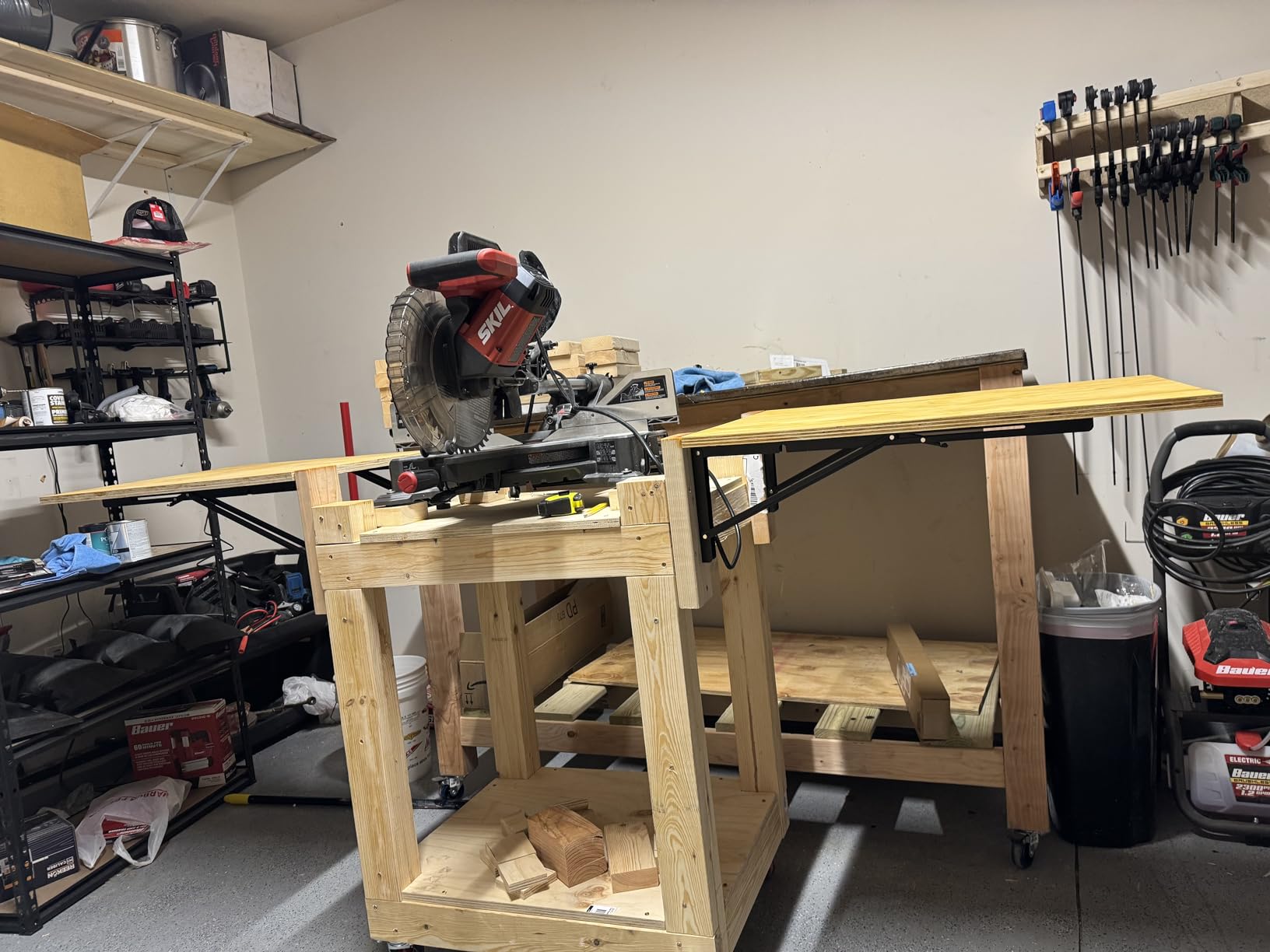
The 15 Amp motor spins 4,800 rpm, which is faster than the 12-inch saws in this roundup, and it still crosscuts 2×12 lumber at 90 degrees and 2×8 at 45 degrees. Miter range is 50 degrees in each direction with 11 positive stops, and dual bevel runs to 48 and 45 degrees on each side, so you never flip the workpiece for a compound trim cut.
Owners report cuts square and on-angle straight out of the box with no adjustment, and at 39.4 lb it is light enough to mount on a portable stand and roll between jobs without a second person. That is a genuine advantage for a punch-list contractor working in occupied homes.
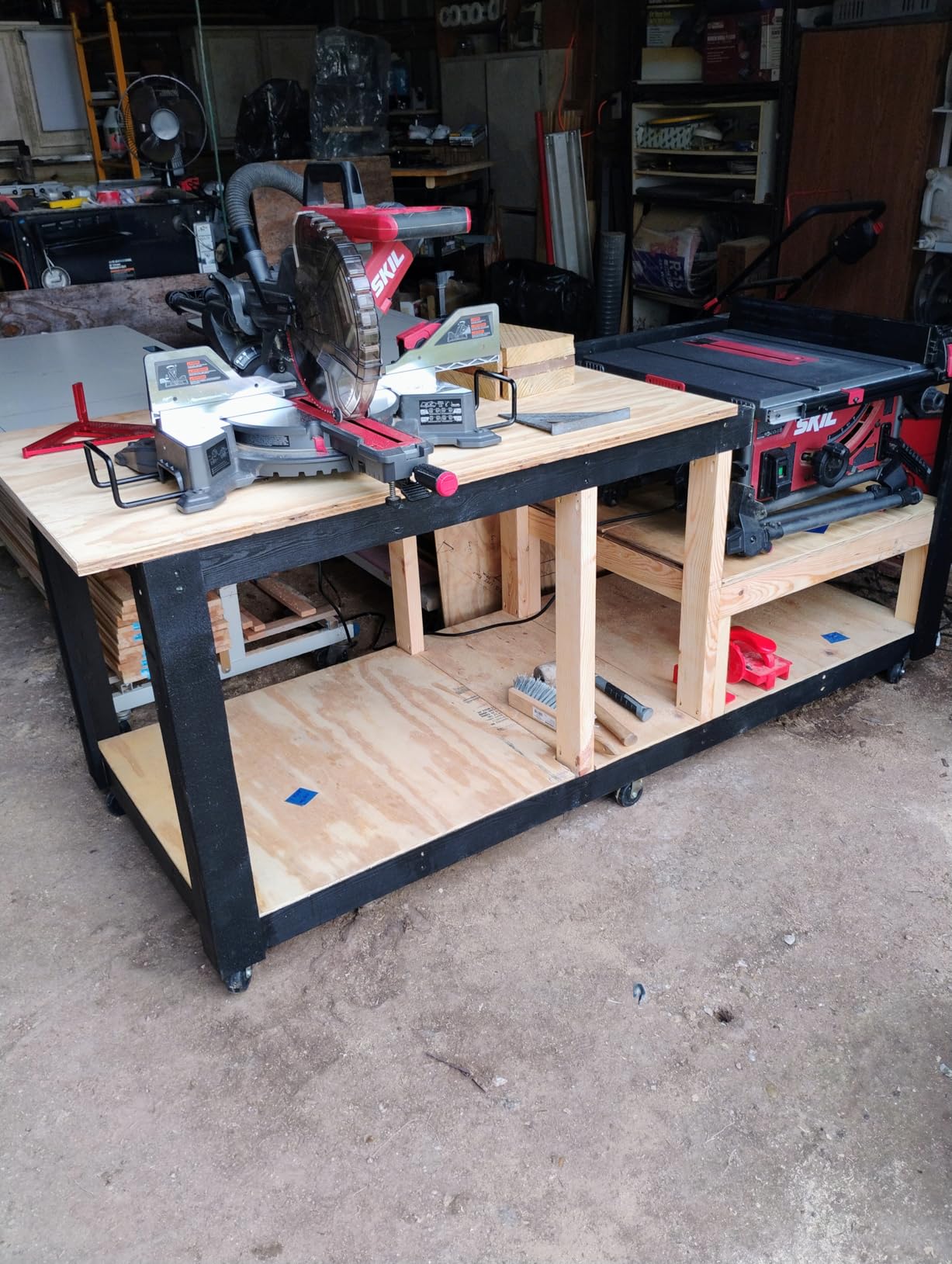
Where a 10-inch slider earns its place
A 10-inch blade that slides still handles far more than a chop saw, and for a trim carpenter cutting baseboard, casing, shoe, and cap molding all day, the capacity gap rarely appears. The 2×12 crosscut at 90 degrees covers decks and blocking, and the 2×8 at 45 degrees covers standard trim returns.
The 11 positive stops cover the miter angles you use constantly. For crown work you set the bevel and lock it, then take the miter in half for the 45 degree face cut, so the miter stops matter more than the nominal miter range on most trim days.
Where it disappoints
The factory arbor nut is the big one. Several owners needed a hardware store to free it because it ships severely over-torqued, so budget for a fresh blade change and know it is coming. The supplied 40-tooth blade is also coarse for finish work.
Dust collection is weak and best results come from hooking up a shop vac, and there is no blade brake so the blade takes a while to stop after a cut.
4. Bosch CM10GD 10 in. Axial-Glide Miter Saw – Best for Tight Shops
BOSCH 15.0 Amp CM10GD 10 In. Dual-Bevel Glide Miter Saw for Woodworking
10 in. blade
15 Amp at 4,800 rpm
6 in. nested crown
64 lb
Pros
- Articulated hinge arms cut up to 10 in. of front-to-back depth
- 12 in. horizontal cut capacity
- 31.6 degree miter detent built in
- All bevel and miter controls are up front
- 60-tooth carbide blade leaves smooth edges on hardwood trim
Cons
- No built-in laser or LED cutline
- 64 lb is awkward to move without a rolling stand
- Included dust port nozzle is weak
- No soft start so the motor jolts on trigger pull
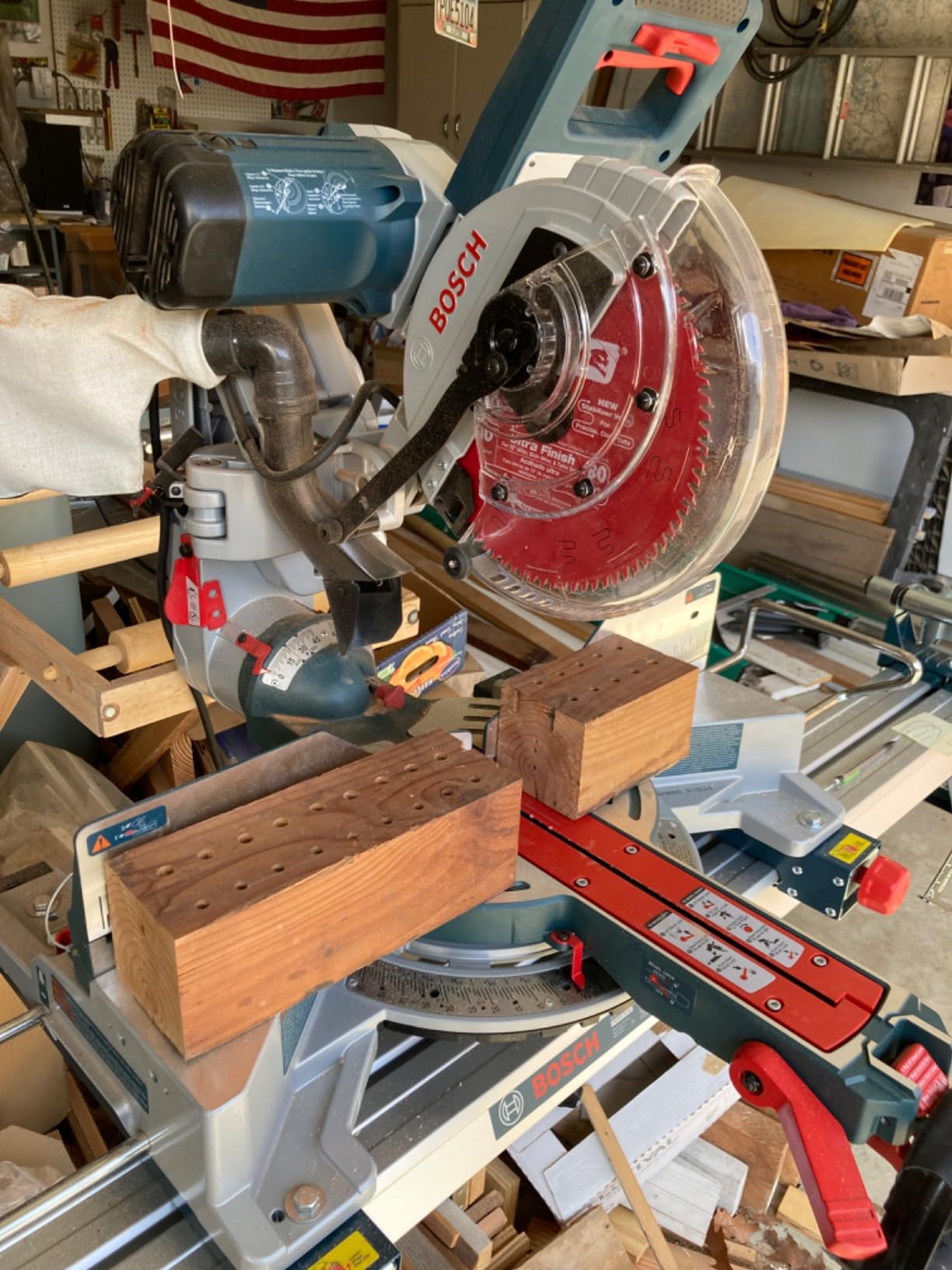
The Bosch CM10GD solves a problem that most sliders create. Articulated hinge arms reduce the front-to-back footprint by up to 10 in. compared with slide saws of similar capacity, and the Axial-Glide system is more durable and precise than side rail designs. In a basement shop or a rental garage, that difference decides whether the saw can sit near a wall at all.
A Bosch GCM12SD owner in r/Carpentry makes the argument for the articulating arm in one line, saying it beats the sliding tubes all hollow and calling it more accurate. That is the main counter-view to the DEWALT consensus in the trim forums, and it is worth weighing if shop space is tight.
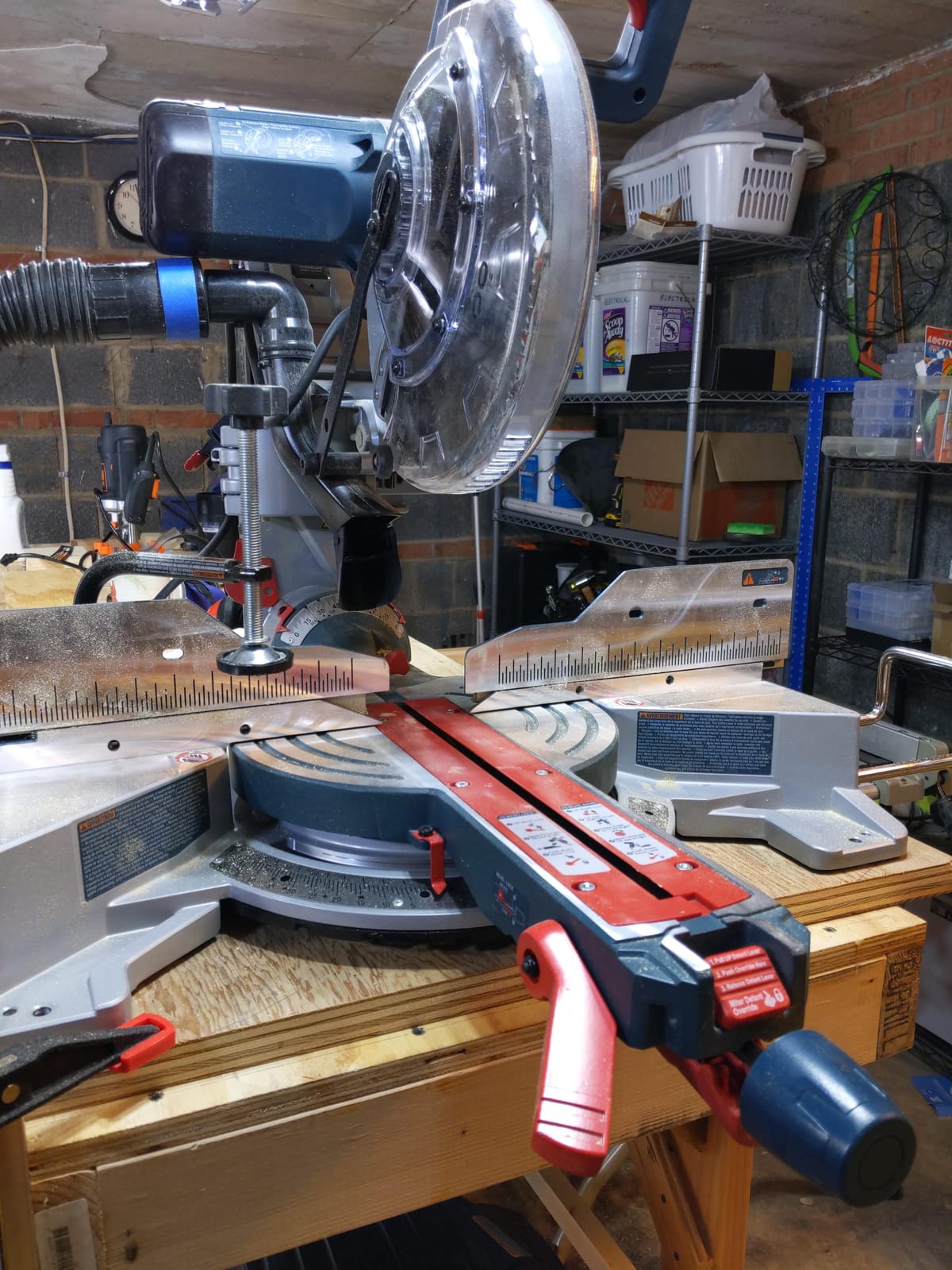
Trim capacity is respectable for a 10-inch: 12 in. horizontal cut capacity, 5-1/2 in. vertical baseboard against the fence, and 6 in. of crown nested against the fence on a 45 degree spring. Tall 4-1/4 in. sliding fences support the wider molding, and the 60-tooth carbide blade leaves smooth, splinter-free edges on hardwood trim.
The controls are where the Bosch wins on workflow. The bevel lock lever and range selector are up front instead of behind the saw, the miter detents include 31.6 degrees, and a push-button detent override gives thumb-actuated fine adjustment on held angles. ContractorTalk veterans rate Makita and Bosch at the top for crown and trim accuracy, and this is the Bosch most of them are describing.
When the articulating arm pays off
When your saw lives against a wall with no room behind it, the depth saving is the whole decision. On a 10-inch slider of similar capacity you would be standing in an 8-inch gap, and the Bosch simply does not need that gap.
The front-mounted controls matter on a long run too, because you are not walking around the saw every time you change an angle. On a job where you are setting the same bevel for hours, less movement around the machine means fewer chances to nudge it out of place.
Where it disappoints
There is no laser or LED cutline, so you are back to marked lines. At 64 lb it is a heavy carry, and the dust port nozzle is weak enough that most owners improvise or run a shop vac. There is also no soft start, so the motor jolts hard on trigger pull.
Finally, the capacity is a 10-inch capacity. If your widest regular stock is 2×12, this saw is not the answer, and the stock blade is better suited to rough cuts than fine hardwood.
5. Makita LS1040 10 in. Compound Miter Saw – Best Lightweight Trim Saw
Makita LS1040 10″ Compound Miter Saw
10 in. blade
15 Amp direct drive at 4,600 rpm
Single-bevel
Single pivot, 27 lb
Pros
- Single-pivot frame is rock solid with no side-to-side play
- Only 27 lb so it moves easily room to room
- Machined aluminum base with dual slide rails
- 9 positive miter stops plus an included triangular rule
- Metal construction throughout
Cons
- Single-bevel only so opposite-side bevels need flipping the workpiece
- Blade leaves about a 1/8 in. remnant on a 1x6 unless shimmed
- Vertical vise does not close tightly enough on 1x material
The Makita LS1040 is the one we would put on a cart for a punch list. At 27 lb it is the lightest saw in this roundup by a wide margin, and the single-pivot compound arm has none of the side-to-side play that trim carpenters complain about on compact sliding saws. That rigidity is why trim-focused buyers single it out for crown, base, shoe, and casing work.
Forum users generally argue that a plain 10-inch compound saw handles around 90 percent of the trim and deck work found in a typical home, and this is the machine that claim is describing. A 15 Amp direct drive motor at 4,600 rpm has plenty of torque for 1x trim and framing stock, and the machined aluminum base keeps it square.
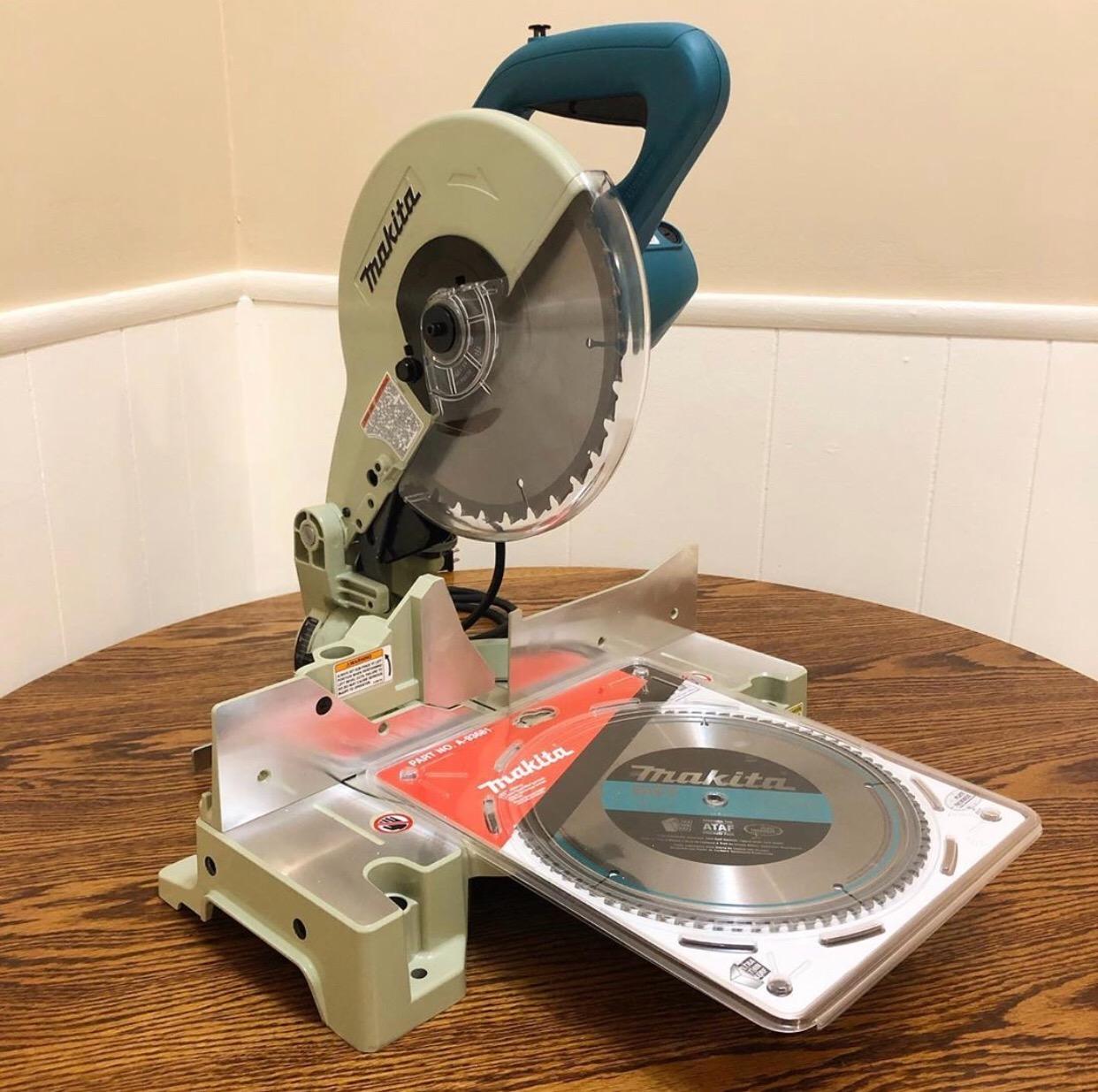
The miter range is 0-45 degrees one way and 0-52 degrees the other, with 9 positive stops including 15, 22.5, 30, and 45 degrees. Bevel is up to 45 degrees on one side, which is the trade for the light weight. The included triangular rule makes angle setup straightforward, and it comes with a vertical vise, blade, and socket wrench.
It is a dual-post compound pivoting arm with dual slide rails on a machined aluminum base, and users report handling roughly 90-95 percent of the trim found in a typical home without complaint.
Why no sliding mechanism is a feature here
A slide rail adds a second joint that can move under load, and on a lightweight saw that flex is harder to control. The single-pivot arm on the LS1040 simply does not have that joint, which is why trim carpenters who buy one tend to stop there.
There is a real workflow cost. On a single-bevel saw, an inside corner for a right-hand wall means cutting the left-hand wall, flipping the workpiece, and setting the saw back to zero. On long crown runs that adds up fast, and it is the main reason dual-bevel saws now dominate trim roundups.
Where it disappoints
Single bevel is the headline limitation, and it is the one you feel most on crown. Opposite-side bevels require flipping the workpiece every time.
The blade leaves about a 1/8 in. remnant on a 1×6 unless the board is shimmed, which is a known fix with a thin shim. The vertical vise also does not close tightly enough on 1x material without extra blocking, and there are no extension wings included. Expect it to be loud on startup.
6. Makita LS1219L 12 in. Sliding Miter Saw – Best Maximum Molding Capacity
Makita LS1219L 12″ Dual-Bevel Sliding Compound Miter Saw with Laser
12 in. blade
8 in. nested crown
15 in. crosscut at 90 degrees
81.6 lb
Pros
- Highest molding capacity here at 8 in. nested crown and 15 in. crosscut
- Two-rail slide-glide design runs flush against a wall
- Integrated laser cutline plus a blade brake
- Dual dust ports extract better than single-port saws
- In-front bevel lock avoids reaching behind the saw
Cons
- Heaviest saw in the roundup at 81.6 lb so a rolling stand is effectively required
- Lowest rating in the group at 4.4 with more 1-star reviews
- 3200 rpm is the slowest no-load speed here
- Only a 1-year warranty
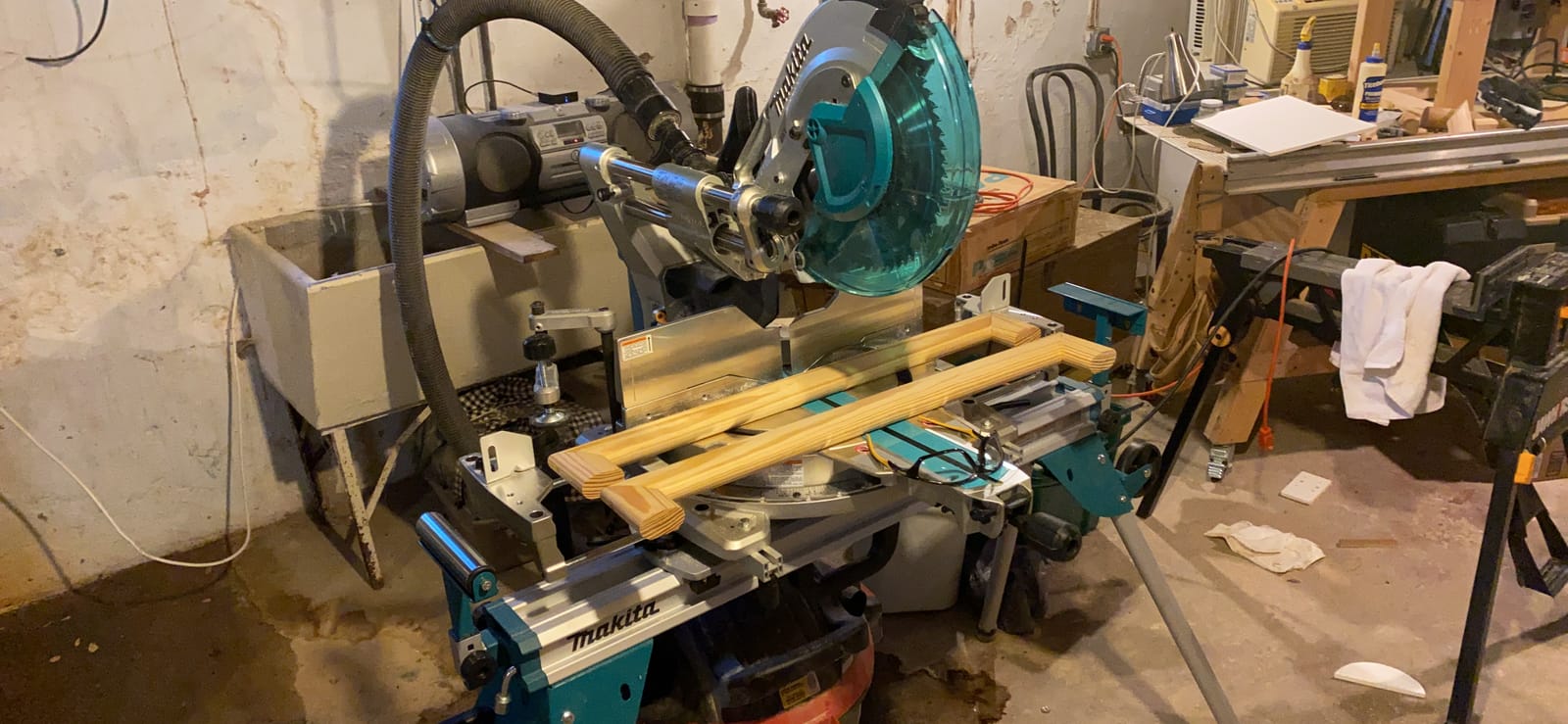
The Makita LS1219L exists for one reason, and that reason is capacity. It handles crown molding up to 8 in. vertically nested, baseboard up to 6-3/4 in. vertical, and crosscuts up to 15 in. at 90 degrees. No other saw in this roundup reaches those numbers, and if you install oversized crown for a living, that gap decides the purchase.
Owners confirm those capacity figures are real. The two-rail slide-glide system uses a single slide-glide operation, and the reduced saw footprint lets it operate flush against a wall, which is a different solution to the rear clearance problem than the Bosch articulated arm.
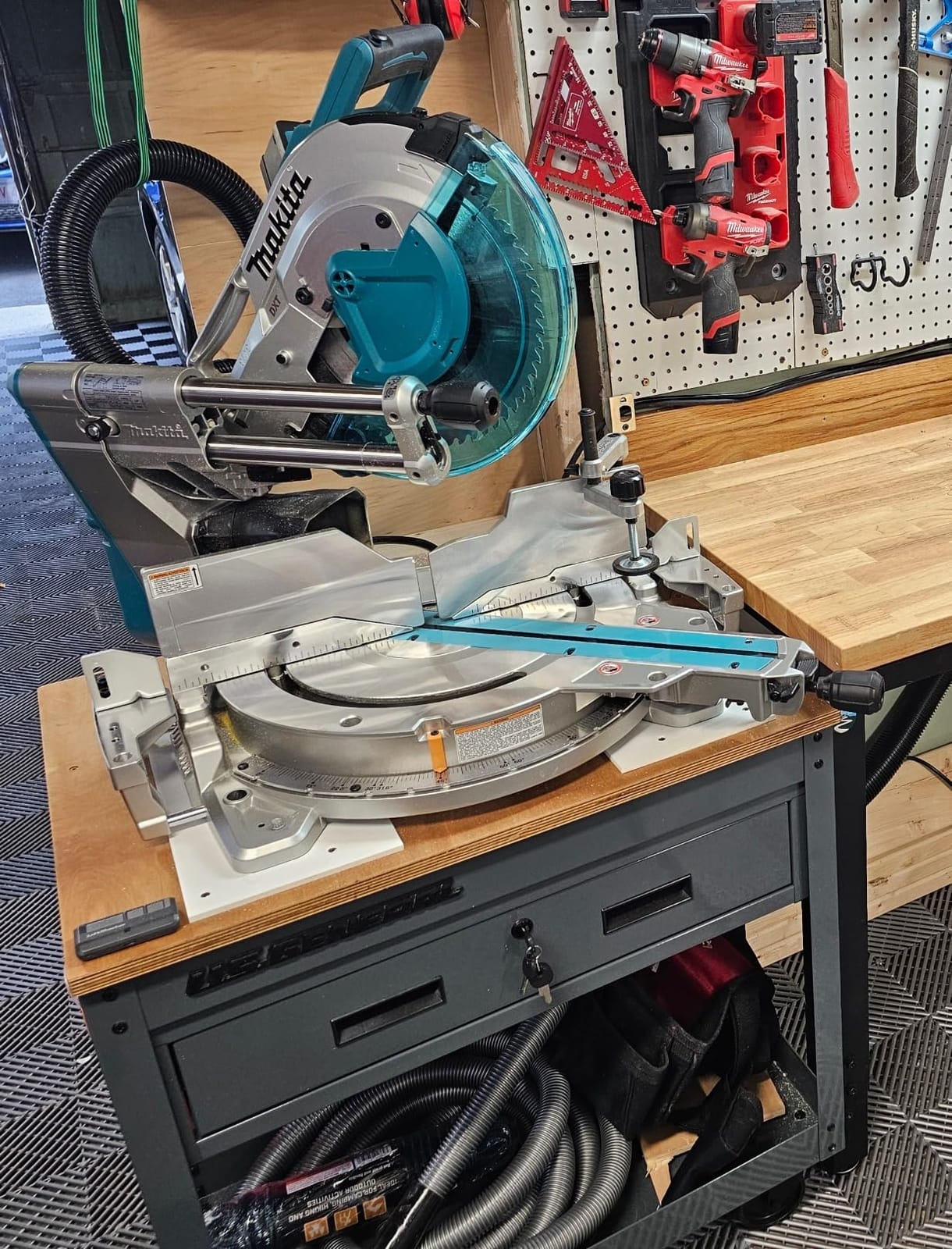
The feature list reads like a premium saw brief. There is an integrated laser cutline, a blade brake, dual dust collection ports for noticeably better extraction than single-port saws, and an in-front bevel lock. A direct drive motor and guard system are engineered to increase vertical cutting capacity.
At 4.4 stars across 412 reviews, it has the lowest average in the group, and the complaints are consistent rather than random. Weight dominates, followed by the 1-year warranty and a 3,200 rpm no-load speed that some owners notice on hardwoods.
When 8 inches of nested crown matters
Nominal crown dimensions are marketing. Forum veterans recommend matching saw size to the actual molding width, and if your widest real piece of crown is 6 in. across the face, a 7-1/2 in. nested capacity is comfortable headroom. If you are handling 7 to 8 in. wide crown, this is the saw in the group that will not make you break the molding down.
The 15 in. crosscut at 90 degrees is the other quiet benefit. It covers wide shelving, tall cabinet stock, and 2x material without breaking the cut down into two passes.
Where it disappoints
At 81.6 lb it is the heaviest saw here by a wide margin, and a rolling stand is effectively required rather than optional. r/Tools users who move between sites prefer smaller saws for exactly this reason, with lighter rails and smaller blades that deflect less.
The 4.4 average reflects that friction, and only a 1-year warranty is a step down from the 3-year terms on several competitors. If your crown is 6 in. or under, the added capacity is weight you carry for nothing.
7. EVOLUTION R255SMS+ PLUS 10 in. Multi-Material Sliding Miter Saw – Best for Multi-Material Trim Jobs
Evolution Power Tools R255SMS+ PLUS 10-Inch Sliding Miter Saw Plus Multi-Material Multi-Purpose Cutting Cuts Metal, Plastic, Wood & More 0˚ – 45˚ Bevel & 50˚ – 50˚ Miter Angles TCT Blade Included
10 in. TCT blade
Cuts wood,steel,plastic and decking
0-45 degree bevel
41.8 lb
Pros
- Only saw here that cuts mild steel
- aluminum
- plastic and composite decking with one blade
- Multi-material cuts run virtually spark-free and stay cool to the touch
- Smooth start ramps the motor and reduces jolt
- Dual quick-release clamps and taller fences included
- 3-year warranty at 41.8 lb
Cons
- Supplied blade wears quickly on metal
- Light duty hold-down clamp lets workpieces shift
- Laser guide needs adjustment and lines up only near the start of the cut
- Poor dust collection as it throws hot chips
- Numerous plastic parts make it less suited to daily jobsite use
The R255SMS+ is in this roundup for a narrow reason, and the reason is real. With one TCT blade, this saw cuts wood, wood with embedded nails, composite decking, mild steel, and plastic. It is the only saw here that can trim a door track and a piece of aluminum casing with the same machine, and the cuts are virtually spark-free and cool to the touch.
The PLUS package is unusually complete. You get dual quick release clamps, a dust bag, taller fences, a slide rail protector, a 3 m power cord, and integrated carry handles, all on a 41.8 lb saw with a 3-year limited warranty.
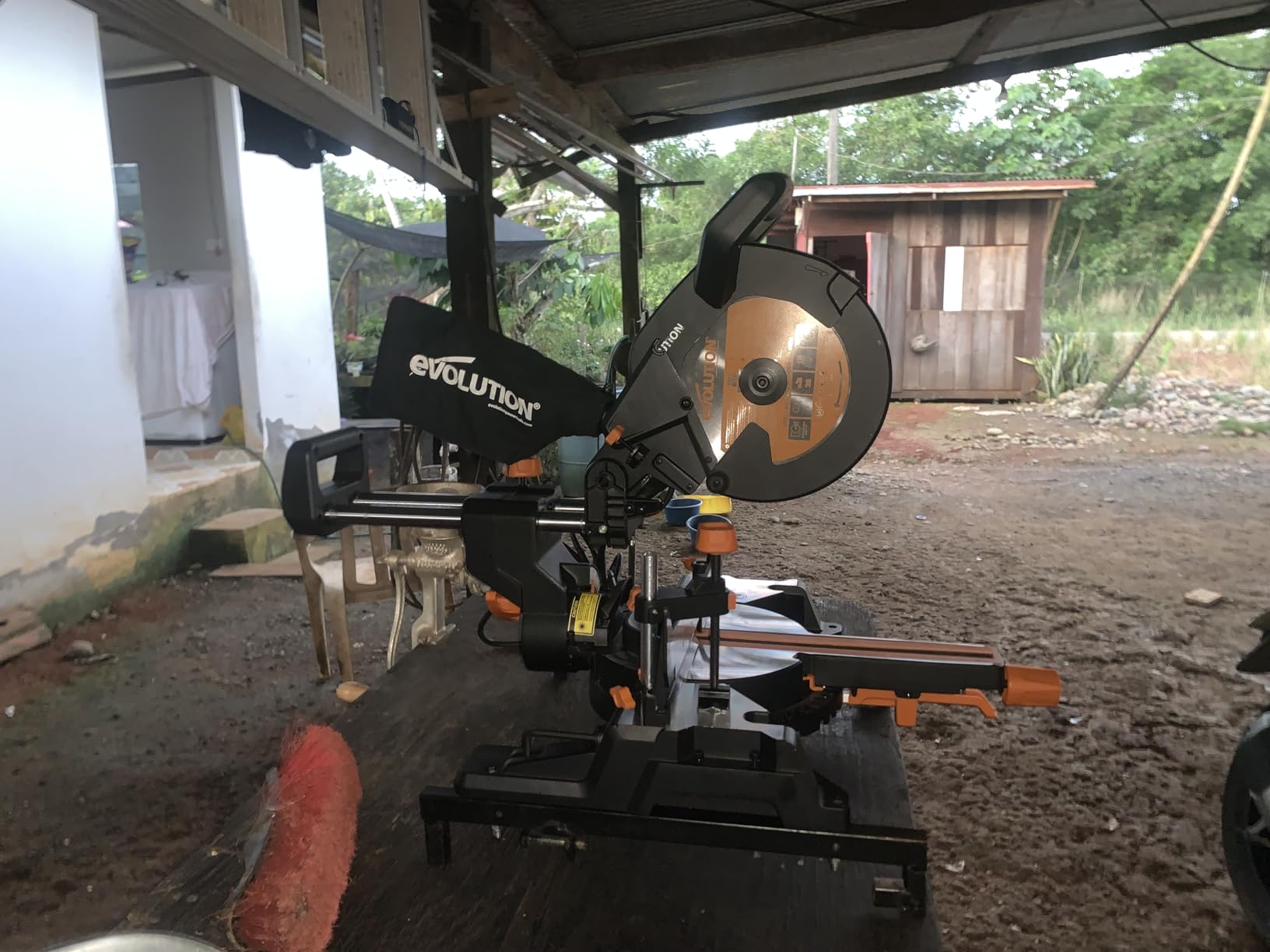
Miter angles run 50 degrees each way and bevel runs 0-45 degrees, and the smooth start ramps the motor slowly, which reduces jolt and is kinder to weak breakers in old remodel houses. Owners report clean square cuts in wood once the saw is squared up, which is the caveat that matters for trim.
One r/Carpentry recurring complaint about cheaper saws is that the blade matters more than the saw, and nearly every steel-cutting reviewer here recommends buying a dedicated TCT blade with the machine and clamping work firmly. That advice is well earned.
When multi-material cutting earns its place
Remodel work often mixes materials in the same run. Door jamb repair, metal trim angles, composite decking repairs, and plastic returns all show up on a punch list, and a single saw that handles them saves a second tool. The spark-free, cool-to-the-touch behavior is a genuine safety argument on interior work.
The taller fences and dual clamps also help with the awkward small pieces that come up in the same rooms. Integrated carry handles and 41.8 lb make it portable in a way most of the 12-inch saws here are not.
Where it disappoints
The blade is the weak point and wears quickly on metal, which defeats part of the saw purpose. The hold-down clamp is light duty, so workpieces can shift, and the laser guide needs adjustment and only lines up near the start of the cut.
The fence and blade typically need squaring out of the box, dust collection is poor because the saw throws hot chips rather than capturing them, and the number of plastic parts makes it a poor choice for daily jobsite abuse. If your trim work is all wood, a dedicated wood saw with a fine finish blade will cut cleaner.
8. DEWALT DWS716 12 in. Double-Bevel Miter Saw – Best Budget 12 in. Pick
DEWALT Miter Saw, Double-Bevel, Compound, 12-Inch, 15-Amp (DWS716)
12 in. blade
15 Amp at 3,800 rpm
6-5/8 in. nested crown
48.3 lb
Pros
- One of the few 12 in. double-bevel saws in the lower cost tier
- 14 positive stops and the most in this group
- Stainless steel detent plate and metal hardware feel durable
- Owners report 90 and 45 degree cuts accurate and quick to switch
- Blade guard retracts just before the cut and returns after
- Lighter than most 12 in. saws at 48.3 lb
Cons
- No integrated laser or LED cutline on this version
- Tall fences are shorter than the competition at 6-5/8 in. nested crown
- Needs about an hour of alignment before the stops are trustworthy
- Dust collection leaks around the fence line
The DWS716 is the pick for a trim carpenter who wants a 12-inch blade and dual bevel without paying for the premium tier. Buyers treat it as the best value 12-inch double-bevel option, and what they praise is the 14-stop stainless steel detent plate, which has more positive stops than any other model in this group.
It bevels 0-48 degrees on each side with positive stops at 0, 22.5, 33.9, and 45 degrees, and miters 0-50 degrees each way. The cam lock miter handle with detent override delivers quick and accurate angle changes, and the blade guard retracts just before the cut and returns after, limiting exposure during trim cuts.
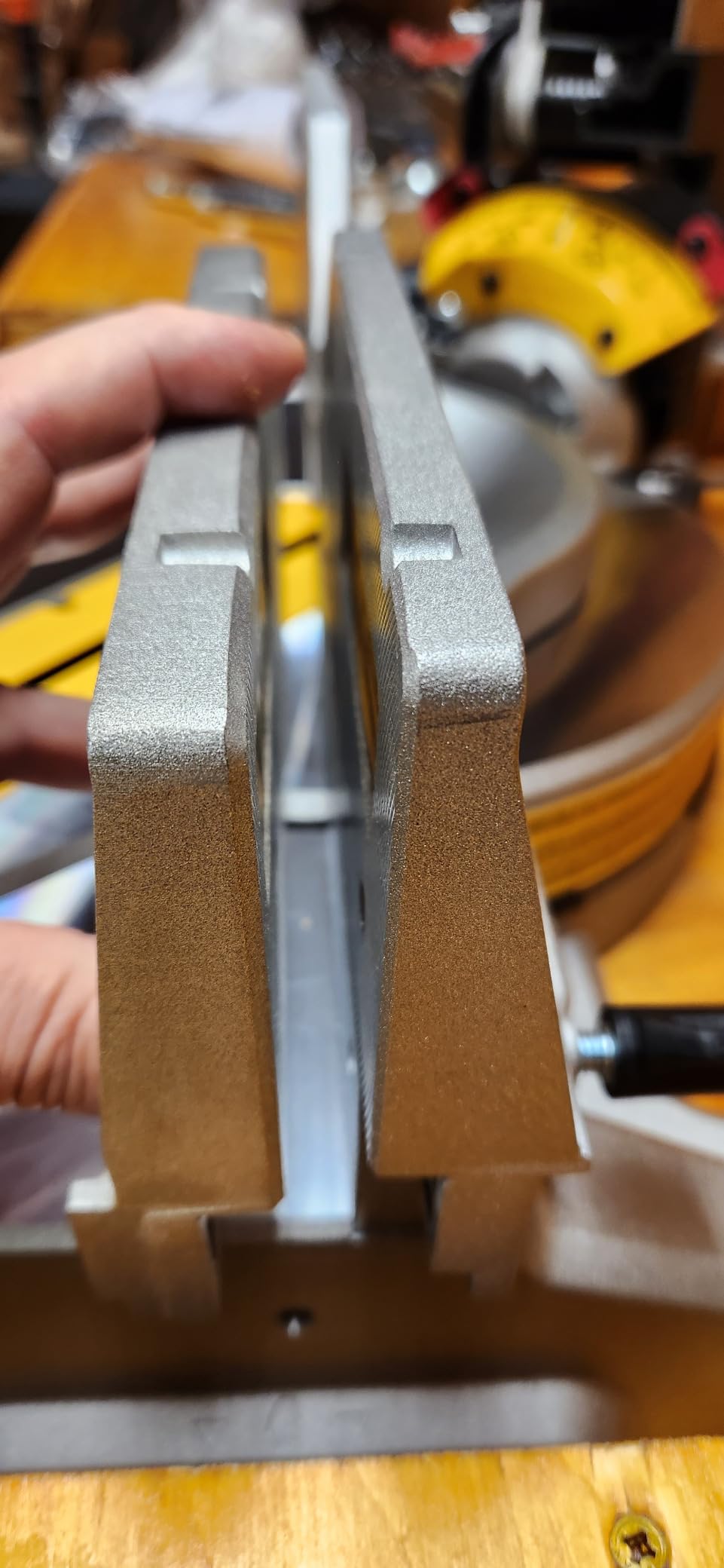
At 48.3 lb it is lighter than most 12-inch saws, and the metal detent plate and hardware feel more durable than the plastic-heavy single-bevel models. It arrives with a sharp carbide blade, a dust bag, and a vertical clamp, so you are not shopping for accessories on day one.
Owners report 90 and 45 degree cuts that are accurate and quick to switch between once the saw is set up, which brings us to the main caveat: this one needs about an hour of alignment before the angles and stops are fully trustworthy.
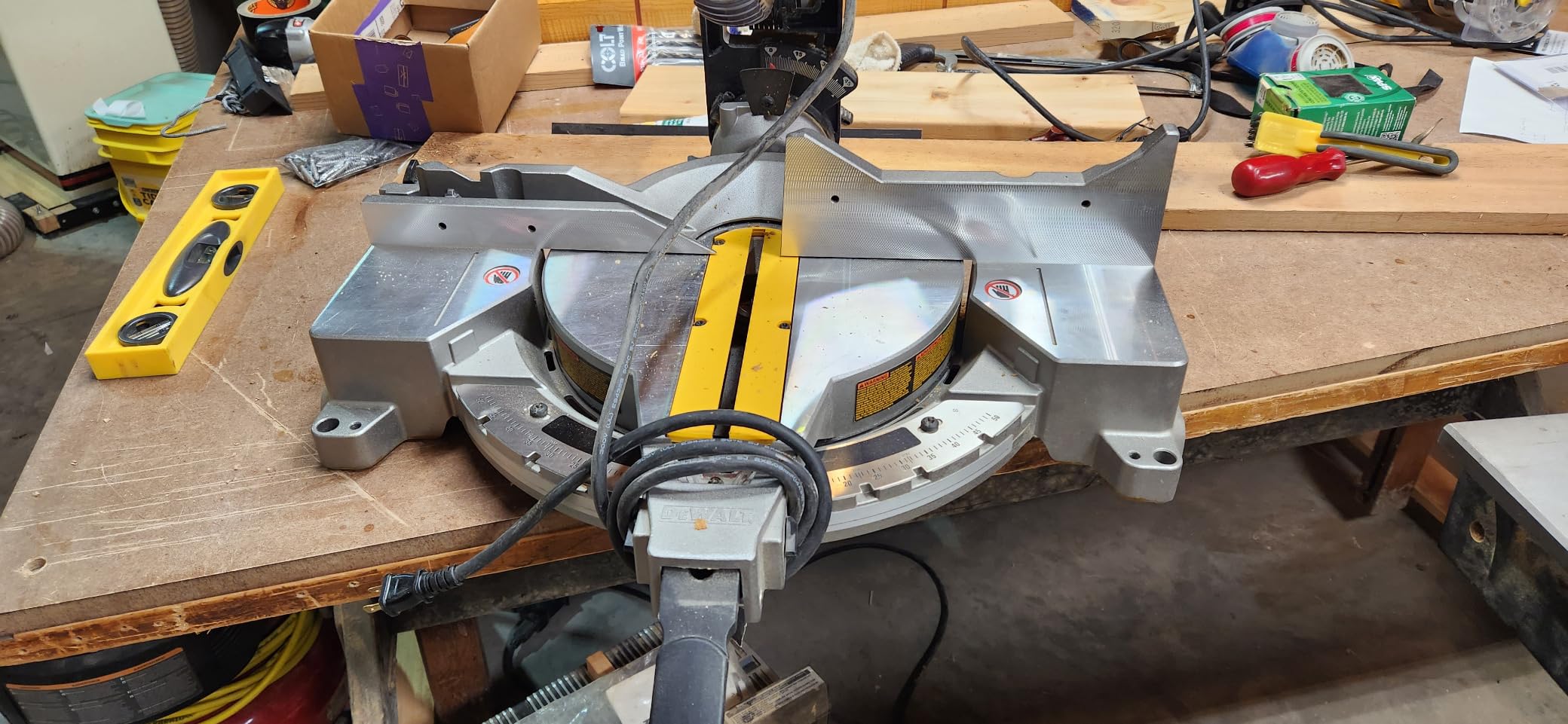
What the 14 stops actually buy you
On trim work, detent count matters more than marketing suggests, because you set and reset angles constantly. More positive stops means fewer places to nudge the saw into position and no reason to trust an eyeballed scale for a repeated cut.
The 22.5 and 33.9 degree bevel stops cover the two most common compound angles for trim returns, and the stainless plate holds those positions better than a plastic detent that creeps over a season of use.
Where it disappoints
There is no cutline system on this version. The XPS model is the cutline version, and if that feature is important to you, look at the DWS780 instead.
Fence height is the second limitation, since the tall sliding fences support crown molding up to 6-5/8 in. nested and base molding up to 6-1/2 in. vertically, which is less than the 7-1/2 in. on the DWS779. Dust still leaks around the fence line, and as an all-day professional workhorse it is lighter feeling than the heavier pro saws.
Miter Saw Buying Guide for Trim Work
10 inch or 12 inch blade for trim?
A 10-inch sliding saw handles most residential trim. A 12-inch saw handles oversized crown, tall base, and framing lumber. Choose 10 inches if your tallest base is under 8 in. and your widest crown face is under 6 in. Choose 12 inches if you install large-crown molding or crosscut dimensional lumber regularly. Nominal crown ratings are marketing, so measure the actual molding width rather than the labeled number.
Weight scales with blade size too. The 10-inch saws here run 27 to 64 lb, while the 12-inch models run 48.3 to 81.6 lb. A heavier saw cuts more and moves less, and for interior trim the moving is the part you notice.
Sliding versus non-sliding for trim
Sliding rails add crosscut capacity for wide stock. Non-sliding designs like the Makita LS1040 have a single pivot arm with no side play, which trim carpenters who use them prefer for precision. Choose sliding if you cut 2x material or stock wider than 10 in. Choose non-sliding if you cut only 1x trim and move the saw between rooms often.
Single bevel or dual bevel for baseboard
Dual bevel lets you tilt the head either direction, so a left-hand and right-hand baseboard run use the same setup and you never flip the workpiece. That matters most on long crown runs, where flipping a 12-foot stick is awkward and slow. A single-bevel saw is fine if you only ever work one side of a room and you can tolerate a second setup for the opposite wall.
Cutline indicators for repeat accuracy
Three options show up on trim saws: laser, LED shadow line, and no indicator at all. A laser draws a thin line offset from the kerf that can drift as the saw heats, and it is nearly useless on crown held flat against a fence. An LED shadow line is cast by the blade itself, so it has no offset and works at any position. For repeat trim accuracy, the shadow line wins, and the DWS780 and the SKIL MS6305-00 both have one.
Blade selection for trim materials
The blade matters more than the saw, which is the most repeated piece of advice across the trim forums. For MDF and painted MDF, use a fine-tooth blade in the 80 to 100 tooth range, because MDF edges chip easily and painted faces tear out even faster. For poplar and soft hardwood trim, 60 to 80 teeth with a fine grind leaves clean edges. For dense hardwood trim or any ripping-adjacent crosscut, drop to a 40 to 60 tooth blade with a more aggressive grind for speed.
Several saws here ship with coarse factory blades, including a 40-tooth on the SKIL, so budget for a finish blade in week one. An 80-tooth blade on a mid-range saw is the cheapest quality upgrade available in this whole category.
Dust collection for interior trim work
Dust is the number one complaint in small shops and interior remodel jobs. A dedicated shop vac on the dust port does more good than any brand marketing, and the saws rated over 75 percent capture with a bag included, such as the DWS779 and the DWS780, still benefit from a vac. For bedrooms and finished rooms, dust control should be a buying criterion, not an afterthought.
Detents, rear clearance, and the accuracy check
Positive detents are what make a held angle repeatable, and more stops means fewer eyeballed scales. Bevel stops between 0 and 45 degrees are a real quality signal on cheaper saws, and their absence is why forums complain about drift. Rear clearance is a hard constraint: most 12-inch sliders need close to 13.5 in. behind the fence for wide stock, so measure the wall before you commit.
Before your first trim job, run this check. Square the fence against a known square or a shop-made check. Confirm the 90 degree position with a combination square on a scrap cut. Then dead-head the blade straight down into a scrap and inspect the end grain for a witness line. Finally, hold each miter detent and verify the angle with a protractor before you trust a production cut.
On safety, always wait for the full blade stop before reaching in, clamp small pieces rather than freehanding them, and wear both eye and hearing protection. Small casing and quarter round are the pieces most likely to kick back, and a hold-down clamp is the cheapest insurance you can buy.
How to Cut Crown Molding on a Miter Saw
Why the 31.6 degree question comes up
Standard crown molding has a 52 degree spring angle between the face and the crown, so a flat mitered joint would need each piece set to 26 degrees. A sliding compound miter saw is normally equipped with a 31.6 degree detent, and that is not an error. The detent represents the saw tilted fully, with the miter pulled in to 31.6 degrees, which is the standard spring angle preset on most miter saws. It lets you make the compound cut in one setup instead of doing the math by hand.
Divide the miter angle in half for a flat 45 degree face cut. For crown, the saw does the compound math for you when both bevel and miter are set from the detents.
Flat versus upright cutting
Cutting crown flat against the fence with a 45 degree miter is the easier method and needs a saw with at least 13 in. of crosscut capacity for 7 in. wide crown. Cutting the crown upright, straight down at the true angle, removes the compound math entirely and works on almost any saw, but the piece is far less stable and you need a good vise or clamp to hold it.
Forum finish carpenters generally use the flat method whenever the saw has the crosscut capacity, because the workpiece is held against two faces instead of one. If your saw is a 10-inch non-slider, upright cutting is the only option for large crown.
Coping versus mitered inside corners
At inside corners, two 45 degree mitered pieces both swing into the wall and fight each other. The fix is a cope: cut the back of one piece at the same angle and back the bevel with a coping saw so it fits the profile of its neighbor. A miter saw sets the angle accurately, but the profile is cut by hand, which is why a coping saw is still the right tool for that step.
Frequently Asked Questions
What is the best saw to cut trim with?
A sliding dual-bevel compound miter saw is the right answer for trim. It pivots the blade for miter angles, tilts it for bevels on both sides, and slides forward so wide base and crown crosscut in one pass. Our top pick is the DEWALT DWS779, with the DWS780 close behind if you want a shadow cutline.
What type of miter saw for baseboards?
Choose based on your tallest baseboard and how often you flip workpieces. A 10-inch dual-bevel slider handles base up to about 6 in. and a 12-inch model reaches taller. Dual bevel matters most so you can bevel both directions without flipping the board. Check the vertical baseboard capacity, not just crosscut capacity.
What is the best miter saw blade for trim work?
For MDF and painted MDF, use a fine 80 to 100 tooth blade to reduce chipping and tear-out. For poplar and soft hardwood trim, 60 to 80 teeth with a fine grind leaves clean edges. Forum consensus is consistent that a good blade improves the cut more than an expensive saw, and several saws here ship with coarse factory blades.
Is a 10 or 12-inch miter saw better?
A 10-inch saw handles most residential trim and is lighter to move. A 12-inch saw adds capacity for oversized crown, tall base, and framing lumber, but weighs more. Choose 12 inches if you regularly cut 2x material or crown faces wider than 6 in. Otherwise a 10-inch slider is the better trim tool.
Is a dual bevel miter saw worth it?
Yes, for most trim work. Dual bevel tilts the head both directions, so left-hand and right-hand base or crown runs use the same setup and you never flip the workpiece. That matters most on long crown runs, where flipping a 12-foot stick is awkward. Single-bevel saws are lighter and cheaper, which is why the Makita LS1040 still appeals to some.
Why 31.6 degrees for crown molding?
Standard crown has a 52 degree spring angle, which would mean 26 degrees on each piece for a flat cut. A 31.6 degree detent on a sliding compound saw is the standard spring angle preset: the saw tilted fully with the miter pulled to 31.6 degrees. It makes the compound cut in one setup instead of by hand.
Which miter saw has the best dust collection?
The two DEWALT 12-inch models here rate over 75 percent dust capture with a bag included, and the Makita LS1219L uses dual dust ports for stronger extraction. In practice a shop vacuum on the port outperforms any bag. Dust is the top complaint from trim carpenters working in occupied homes, so plan for a vac regardless of saw.
What is the best miter saw for a trim carpenter?
The DEWALT DWS779 is the best overall pick for trim work because of its tall fences, 7-1/2 in. nested crown capacity, and 10-stop detent plate. The DWS780 adds a shadow cutline that speeds repeat cuts. For tight shops the Bosch CM10GD articulates forward, and for punch lists the 27 lb Makita LS1040 is easiest to move.
The Best Miter Saws for Trim Work: Final Verdict
The DEWALT DWS779 is the best miter saw for trim work overall, because fence height, nested crown capacity, and a 10-stop detent plate are what keep a joint tight across a long run. The DWS780 is the pick if your workload is heavy repeat cutting on the same angles, since the XPS shadow line removes a whole step from setup.
Below those two, the SKIL MS6305-00 is the value answer for 1x trim, the Bosch CM10GD solves shop space, the Makita LS1040 wins on weight, and the Makita LS1219L wins on capacity. Whatever you choose, verify square and 90 degree accuracy before the first cut, fit a fine finish blade, and hook up a vac if you are working in an occupied house.