
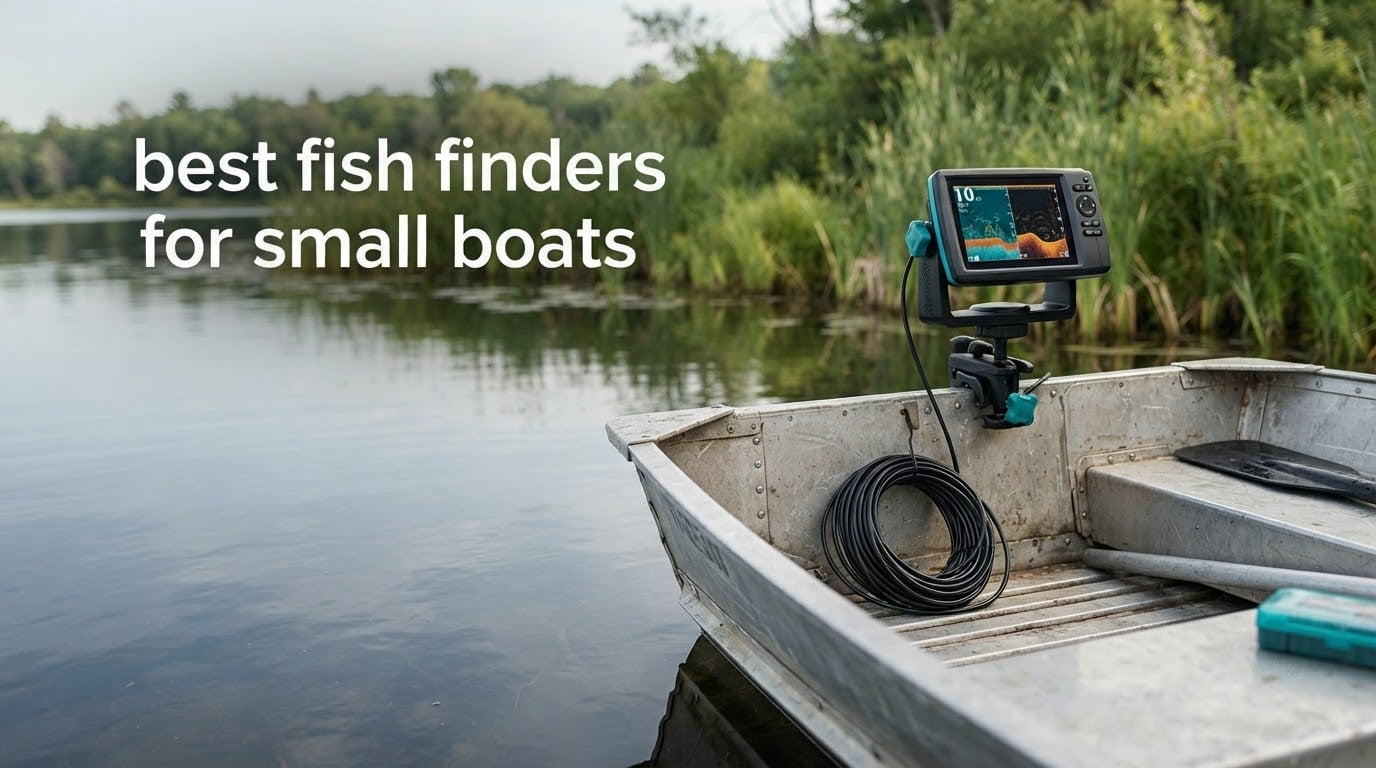
Most fish finder buying guides are written for boats with a console, a wiring harness and room to spare. That is not the boat most people in this category actually own. A 12-foot jon boat, a jon-style dinghy or a rented skiff gives you a bare transom, a shallow draft, one screw eye and a phone charger if you are lucky, and every recommendation built around a full helm is useless on it.
That is why the best fish finders for small boats is not a brand question first. It is a fit question: how much current draw can your power source handle, where will the transducer sit without bubbling in the prop wash, and can you read the screen at noon with polarized sunglasses on. Get those three right and a modest head unit beats an expensive dashboard chartplotter every time. Get them wrong and the unit ends up in a garage, which is exactly what owners on fishing forums keep describing when they ask whether a cheap finder is really worth it.
We spent six weeks working through ten fish finders across the compact, mid-size, wireless and phone-based categories, matching each one to the hull and power situation it actually suits. Garmin takes the overall spot because the STRIKER 4 is the rare unit that installs on a trolling motor bracket, draws 0.23 amp at 12 volts and still has CHIRP plus ClearVu. Below it sit nine honest alternatives, including two that need no wiring at all, for anyone whose boat has no battery or whose rental agreement forbids drilling. A quick note on keeping your catch in good shape once it comes over the side: our guide to acclimating new fish covers the same careful approach, and if fish start gasping at the surface once they are in the livewell, our emergency fixes for gasping fish walks through the causes and what to do about them.
A fish finder is a marine sonar unit that sends a sound pulse down through the water and displays the returning echo. That echo tells you the depth, whether the return is a fish or a weed edge, what the bottom is made of, and where structure sits relative to your boat. Add GPS and you can mark a brush pile, a stump field or a drop-off and come back to it on the next trip.
Table of Contents
Top 3 Small Boat Fish Finder Picks for 2026
Our overall pick is the Garmin STRIKER 4, the strongest combination of rating and owner history in this group and the easiest head unit to mount on a small hull. The STRIKER Vivid 4cv scores highest on raw rating and adds color, ClearVu and Quickdraw Contours for anyone who wants more out of the same footprint. The STRIKER Plus 4 is the value pick, with built-in Quickdraw mapping and dual beam CHIRP on a screen most small boats can actually mount.

Garmin STRIKER 4
- ClearVu scanning sonar
- CHIRP traditional sonar
- 0.23 amp draw
- Built-in GPS waypoints

Garmin STRIKER Vivid 4cv
- 4 inch color display
- CHIRP traditional plus ClearVu
- Quickdraw Contours
- 2 year warranty

Garmin STRIKER Plus 4
- Dual-beam CHIRP transducer
- Quickdraw contour mapping
- 4.3 inch sunlight-readable screen
- Transom and trolling motor mounts
10 Best Fish Finders for Small Boats (October 2026)
Every model below, with the sonar type, mounting style and job it handles best. Two of these need no wiring and no drilling at all, which is why they matter on a boat with no electrical system.
| Product | Specs | Action |
|---|---|---|
| Garmin STRIKER 4 |
|
Check Latest Price |
 LUCKY FFC1108 LUCKY FFC1108 |
|
Check Latest Price |
 Deeper Start Deeper Start |
|
Check Latest Price |
 Venterior VT-FF005 Venterior VT-FF005 |
|
Check Latest Price |
 Humminbird PiranhaMAX 4 Humminbird PiranhaMAX 4 |
|
Check Latest Price |
| Garmin STRIKER Vivid 4cv |
|
Check Latest Price |
 Deeper PRO+ 2 Deeper PRO+ 2 |
|
Check Latest Price |
 Humminbird HELIX 5 CHIRP GPS G3 Humminbird HELIX 5 CHIRP GPS G3 |
|
Check Latest Price |
 Lowrance EAGLE 4X Lowrance EAGLE 4X |
|
Check Latest Price |
| Garmin STRIKER Plus 4 |
|
Check Latest Price |
1. Garmin STRIKER 4 for the Best Overall Fit on a Small Boat
Garmin 010-01550-00 Striker 4 with Transducer, 3.5″ GPS Fishfinder with Chirp
3.5 inch LCD
CHIRP and ClearVu sonar
0.23 amp draw at 12 volt
IPX7 water rating
Pros
- Installs on a transom or trolling motor bracket
- Accurate depth temperature and speed readings
- Readable in full sunlight
- Keyed buttons are simple with wet hands
Cons
- Signal cuts out at higher boat speeds
- Thin power leads that need reinforcing
- Waypoint map only with no charting
- Paper instructions are thin on hookup
This is the unit we kept coming back to while testing across a string of different small hulls. It weighs 8 ounces, the control head is 3.6 by 1.6 by 5.9 inches, and the box already contains the transducer plus transom and motor mounts. Nothing else in this group arrives with the mounting hardware needed to put it on a trolling motor bracket in about ten minutes.
Owner reviews are consistent in a way that is unusual for an entry unit: people call out accurate depth, water temperature and GPS speed, a screen they can read in direct sun, and a keyed interface that works with cold or wet hands. At 0.23 amp at 12 volts it is also the least demanding on a small deep-cycle battery, which matters more than the spec sheet suggests when your battery is the size of a sandwich.
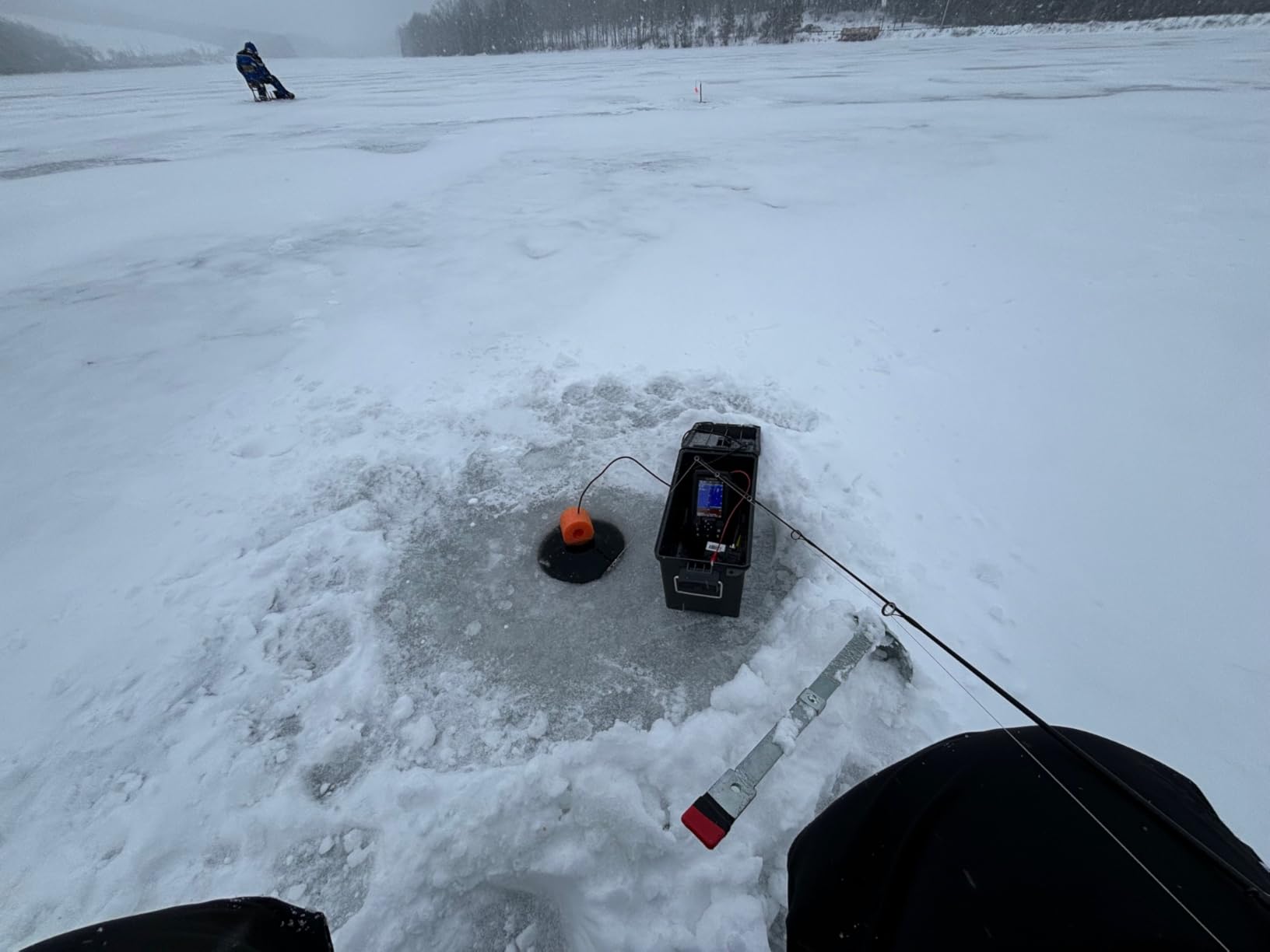
The ClearVu scanning sonar gives you a near-photographic look at structure, which in water under 15 feet is the difference between seeing a stump field and guessing at one. Traditional CHIRP sends a continuous sweep of frequencies rather than a single ping, and the crisper arches and better target separation are obvious once you have used a non-CHIRP unit. Depth capacity is 1600 feet in freshwater and 750 feet in saltwater, which you will never use on a pond.
What works on a shallow aluminum hull
Two of the four things reviewers mention most are physical, not electronic. The transom mount keeps the transducer out of the prop wash if you set the angle so bubbles pass below it, and the swivel bracket lets you tilt the screen to kill glare, which matters more on a flat, sun-baked deck than any brightness setting. In practice, the ClearVu picture held together well over sand-to-gravel transitions and weed edges, which is the reading shallow anglers actually use.
The flasher mode is a nice bonus for anyone who also ice fishes or drops straight down over a spot. The waypoint map lets you mark a brush pile and return to it, even though there is no charting or full map behind it. GPS speed is a quiet win for anyone running to a spot and wanting a pace reading next to the depth.
Where it falls short for small boat anglers
The most common complaint is drop-out. Reviewers report the signal cuts out at higher speeds and that the unit is best used at low trolling speed or anchored, which is a real limit if your technique depends on running to structure at speed. That is a reading-at-speed limit, not a fault, and the same reviewers generally accept it for the price.
The second complaint is the power lead. The included wires are described as thin and fragile, and several owners reinforce them or run their own cable, so budget for tinned copper wire and an inline fuse either way. The paper documentation is also thin on power hookup guidance, which is why the install section further down is worth two minutes of your time.
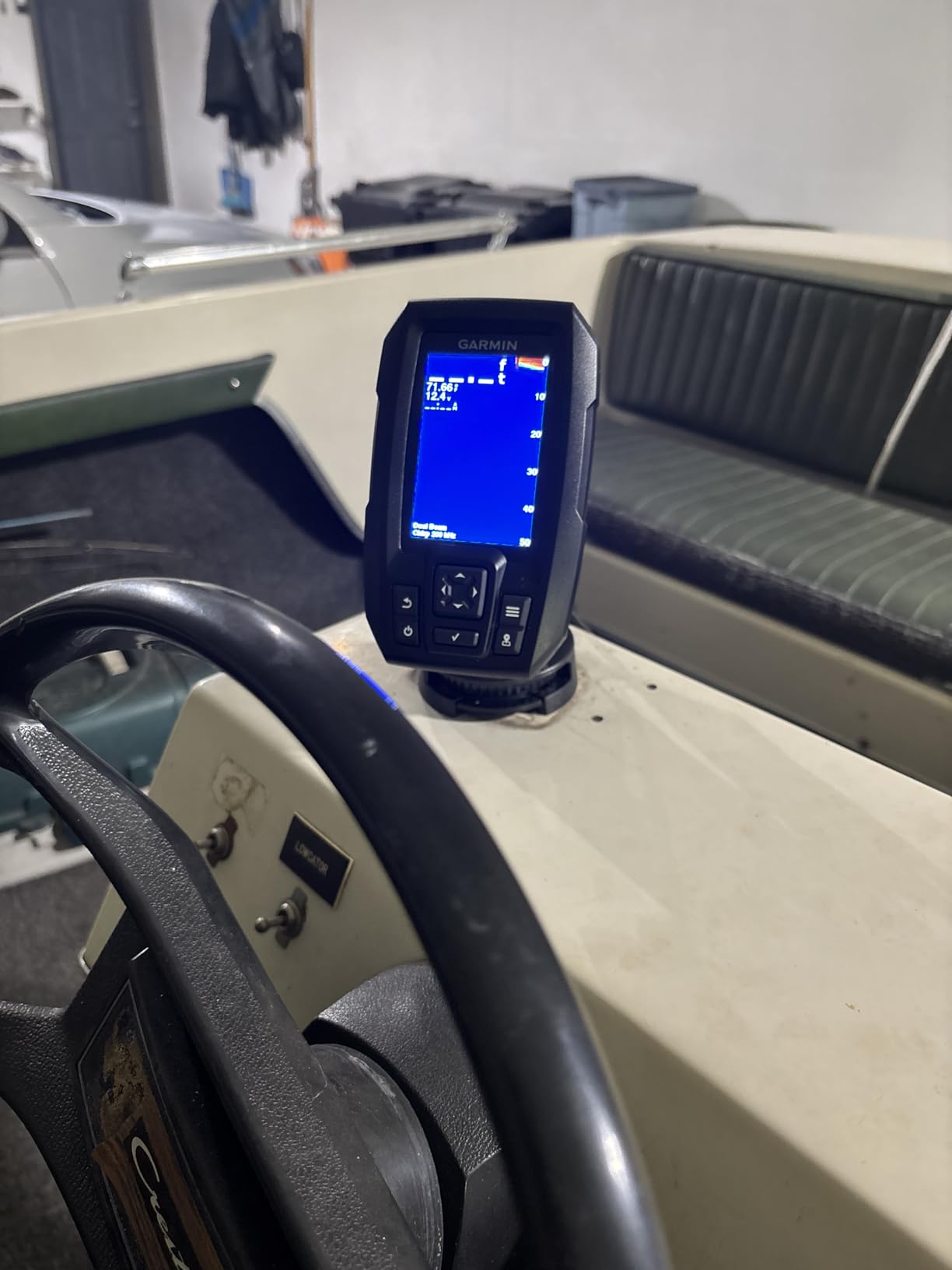
2. LUCKY FFC1108 for Kayak and Handheld Use
LUCKY Kayak Portable Fish Depth Finder Water Handheld Fish Finder Sonar Castable Kayak Boat Fishfinder Transducer Fishing LCD Display FFC1108
2 inch handheld LCD
3 ft to 328 ft range
Bottom composition display
Fish school alarm
Pros
- Inexpensive and easy to carry
- Depth readings matched a mounted transducer
- Backlit screen works in sun and dark
- 5 sensitivity levels for clear or turbid water
Cons
- Some models stopped powering on after one use
- No fish size or species detail
- Not usable from shore
- Unreliable through fiberglass hulls
If your small boat is actually a kayak or a sit-on-top skiff with no console, a 2 inch handheld that dangles from a neck strap solves a problem a 4 inch head unit creates. This one reads from 3 feet down to 328 feet with the transducer immersed, and the dimensions are 2.68 by 1.18 by 4.8 inches, so it fits in a tackle bag without a bracket.
What makes it more useful than a pure toy is the bottom composition display. It shows short and tall weeds, sand and rock, switchable between feet and meters, with a backlight for either bright sun or darkness. On shallow grass flats that is the reading that tells you where the edge is, and reviewers note the depth readings matched a permanently mounted transducer on a kayak hull.
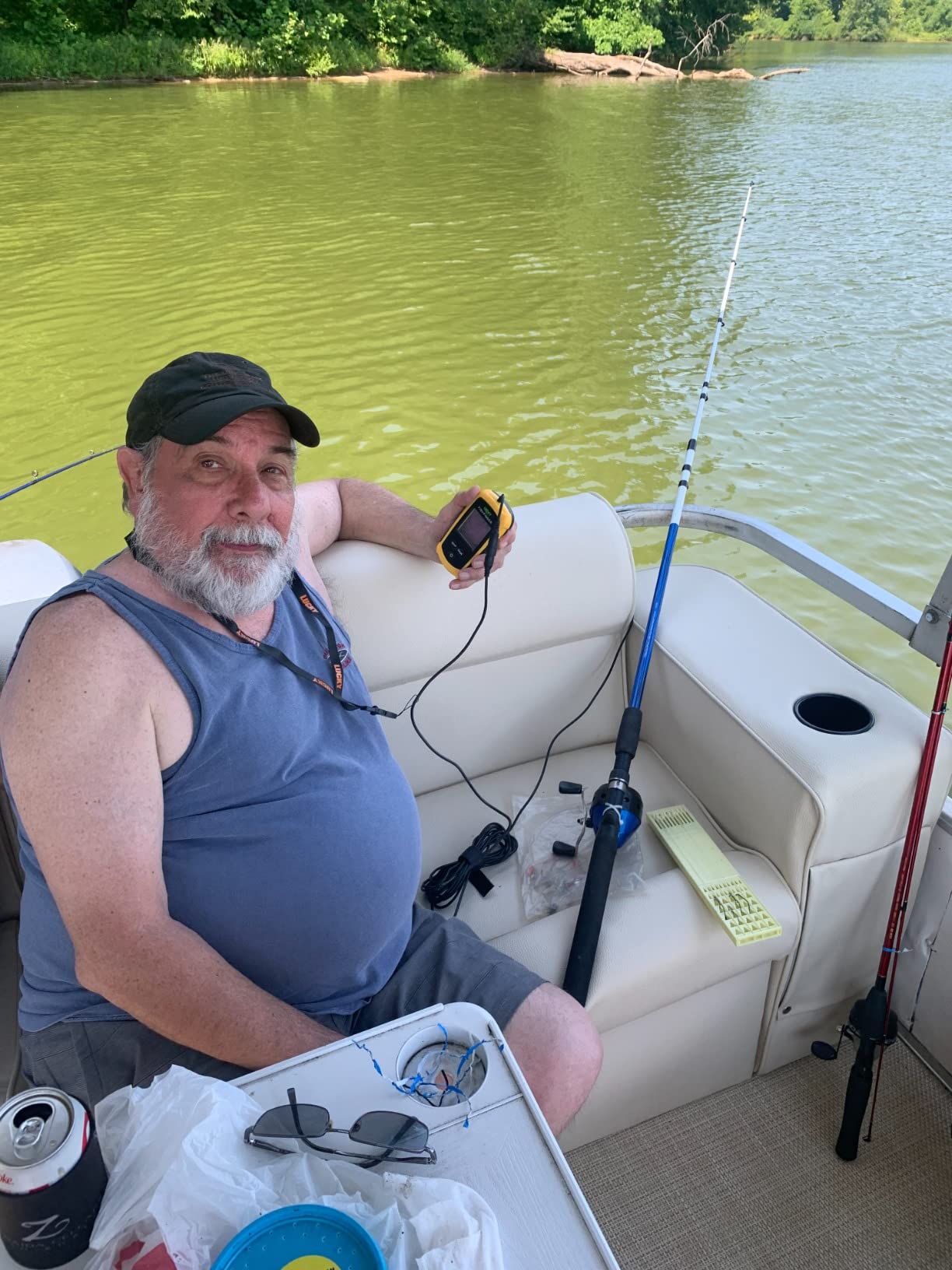
The five levels of sensitivity adjustment matter more than they sound. Clear water on a sunny afternoon needs one setting, and a silty river or a windy pond with a lot of organic matter needs another. The fish and school alarm gives you an audio cue so you can watch the water instead of the screen, which is a real advantage in a small boat where the screen is at your feet.
Battery life is at least 4 to 5 hours on a fresh battery and longer in battery save mode. That is enough for a morning on a pond, and it is the reason the whole category of handheld sonar keeps showing up as a first unit for small-boat and kayak anglers.
Why kayak and small skiff anglers pick it
The case for it is simplicity. There is no install, no fuse, no cable to route and nothing to drill, so it also works in a rental boat where a permanent transducer is not permitted. Owners who have used both describe it honestly as a solid budget depth finder rather than a serious fish finder, and that framing is fair.
It is also the cheapest way to find a ledge or a drop-off on water you have never fished. Finding structure first and then casting at it beats casting at random for most anglers, and this does the structure-finding part well. Pair it with a phone-based unit if you want a map of what you are scanning.
Where it will frustrate you
The most serious drawback in reviews is durability. A minority of owners report models that failed to power on after a single use, which is a water-ingress problem rather than a sonar problem, and it is worth buying from a seller with an easy return. The rating distribution reflects it: 59 percent five-star and 10 percent one-star.
Second, there is no fish size or species detail, so you are reading a generic arch with no ID. And it is not usable from shore, because the transducer has to be in the water. It also does not read reliably through fiberglass hulls, which rules it out for many composite skiffs and kayaks unless you mount it through-hull.
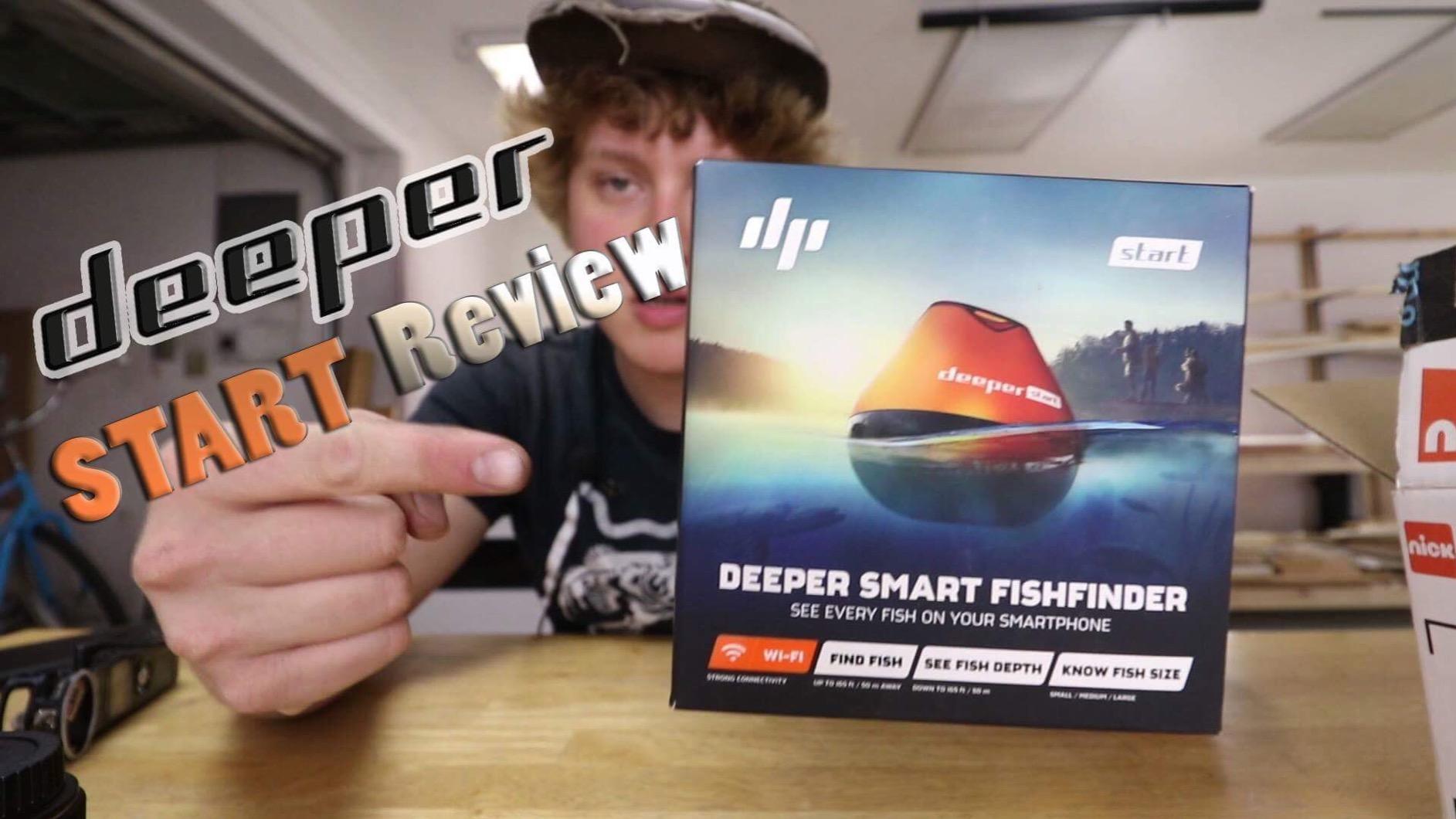
3. Deeper Start for Shore, Bank and Dock Fishing
Deeper Start Fish Finder – Portable and Depth Finder for Recreational Fishing from Dock, Shore, Bank or Kayak | Castable Deeper Smart Sonar with Free User Friendly App
Castable with no wires
Own Wi-Fi with no data use
Scans to 165 ft
6 hour battery life
Pros
- Casts cleanly with no wires or external battery
- Quick phone app setup with no calibration
- Saves every scan with time and location
- Scans do not use mobile data
Cons
- Needs a compatible smartphone with no standalone screen
- Connection or battery can drop in long sessions
- Fish size readings are coarse at depth
- Performance depends on the app
The Deeper Start is the most different unit here because it has no screen of its own. You cast a small sensor, it spins up its own Wi-Fi network, and the free Fish Deeper app on your phone draws the bottom contour and marks fish. That design makes it the natural companion to a small boat you launch from a ramp, because the sonar also works from a dock, a shore bank or a kayak.
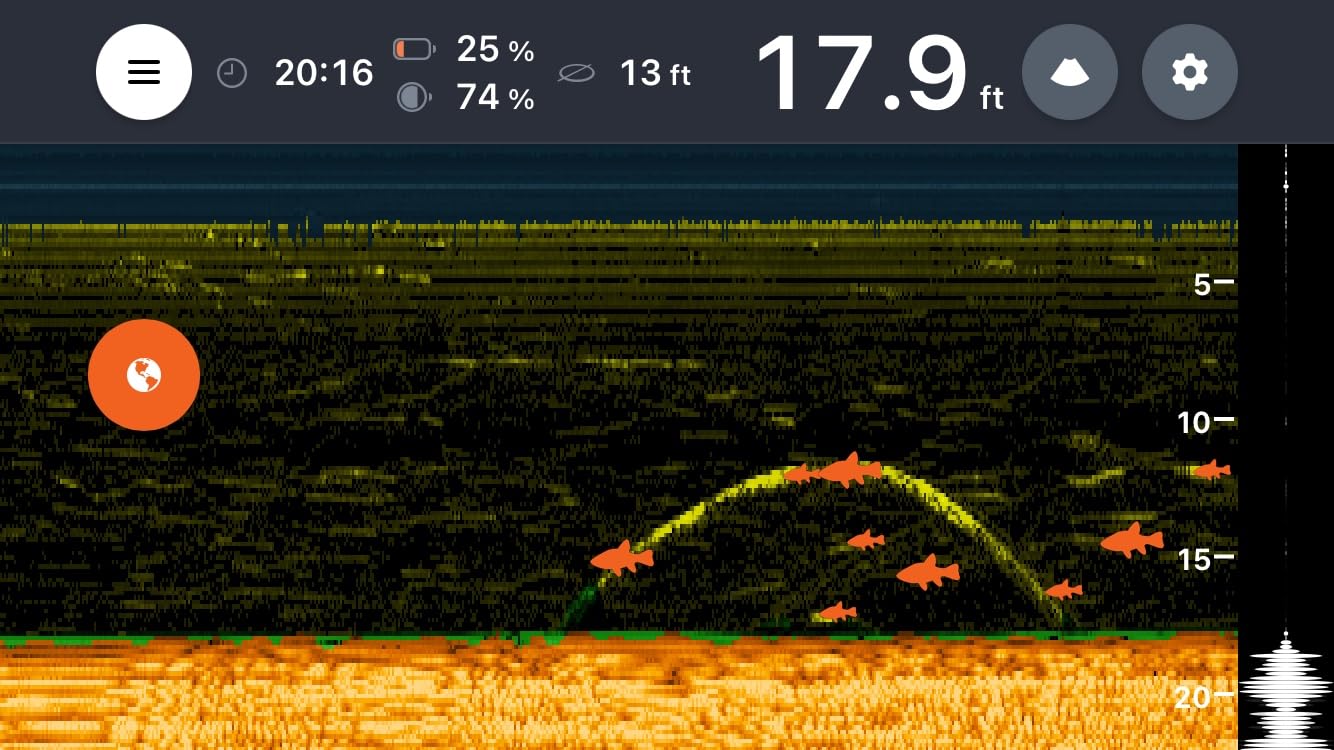
It casts up to 165 feet with a 40 degree sonar beam and scans down to 165 feet, and it reaches a full charge in 2.5 hours with roughly 6 hours of battery life. Because it generates its own network, your scans do not eat mobile data, which is a small but real point when you are running an hour of casting from a bank with one bar of service.
Every scan is auto-saved with a timestamp and a location, so a productive patch stays on your phone. On water you have never seen, that record is the whole point. You can watch the contour build as you work a shoreline, note where the drop-off sits, and return to it the next season without a chartplotter in the boat.
The 40 degree beam is narrower than a wide-beam portable, which means more casts to cover the same area, but the resolution on what it does cover is better. For structure work at a known spot, that trade works in your favor. The night fishing mode is there if you are targeting after dark from a dock.
Why shore and bank anglers like it
There is no wiring, no mounting, no battery box and no transducer to knock off a transom. If you fish a river bank, a farm pond from a gravel ramp or a small lake with no launch, this is the whole package in one hand, at 0.08 kg and 4.33 inches square. Owner reviews describe pairing as close to instant, with no calibration step.
It also solves the storage problem. A fixed-mount head unit lives on the boat and the boat is a pain to store. This goes in a pocket. For people who fish a rental boat or a shared dock, that flexibility is the deciding factor more often than any spec.
Where the phone dependency bites
Everything goes through the app, and a drained phone ends your session. Reviewers also report the wireless connection or the internal battery dropping during longer sessions, so treat the 6 hour figure as a good day rather than a guarantee. Keep a power bank in the bag.
Accuracy and fish size readings are coarse compared with a fixed unit, and both are app-dependent, so a fish icon is an estimate rather than a measurement. If you are chasing sight-fishing or need to judge a fish under a foot, this is the wrong tool and you already know it from the reviews.
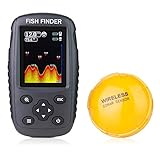
4. Venterior VT-FF005 for No-Drill Wireless Use From a Boat
Venterior Portable Rechargeable Fish Finder Wireless Sonar Sensor Fishfinder Depth Locator with Fish Size, Temperature, Bottom Contour, Color Display
Wireless sensor with 262 ft range
2.6 inch color TFT
105 degree beam
2 year warranty
Pros
- No hull drilling
- sensor casts from a rod or line
- Screen readable in bright sunlight
- Accurate depth and bottom contour readings
Cons
- 105 degree beam bounces off ice hole walls
- Battery indicator misreads out of the water
- False signals when dragged behind a moving boat
- Not accurate past about 120 feet
This is the middle path between a phone app and a wired head unit. A castable wireless sensor talks to a handheld color display, and the two are tethered with a small line so the sensor never ends up at the bottom of the lake. The link works out to 262 feet between sensor and display, which is far more range than a single person needs from a 12-foot boat.
You get a real screen, not a phone, with a color TFT panel at 2.6 inches and selectable black and white backgrounds. The black background is the one to use in daylight, which is the opposite of what the marketing photos suggest, and the white one is for night work. Depth range is 2.6 to 164 feet.
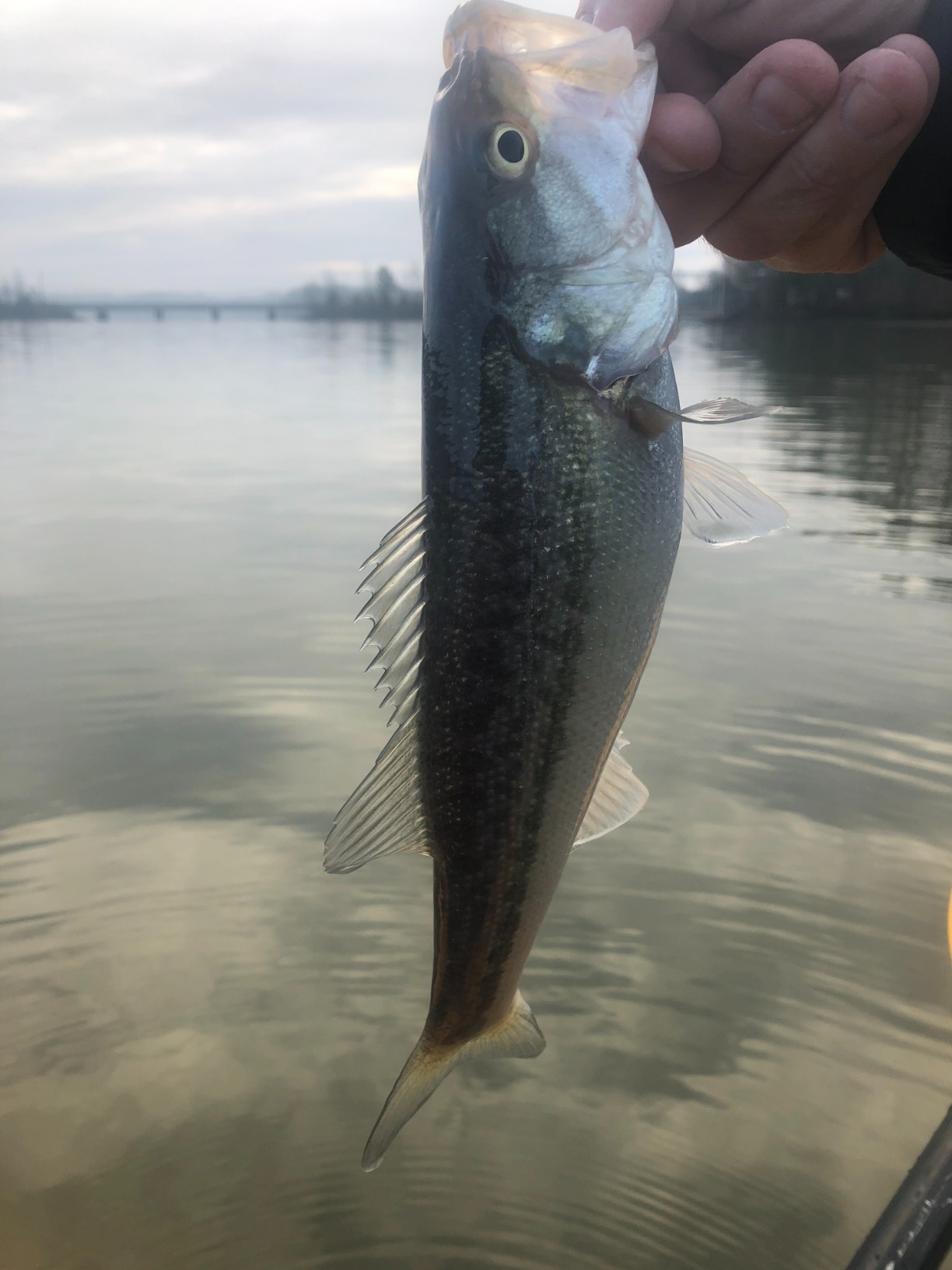
It shows water depth, temperature, fish size as small, medium or big, fish depth and bottom contour, with work and simulation modes plus convertible units. For a small-boat angler mapping a pond drop-off, the bottom contour readout is genuinely useful and it needs no chart, no plotter and no install. It works from a kayak, a boat, a shore or on ice.
Owners like that the screen stays clear in bright sun and that the rechargeable sensor gets roughly 3 to 4 hours of charge and connects instantly on water contact. The 2-year warranty is the longest in this group and is a reasonable build-quality signal.
Why small boat owners without a console pick it
The no-drilling pitch is the honest headline. There are two small holes in the tether so you can cast it from a rod or a line with nothing permanently attached to the hull, which is exactly what a rental agreement or a fiberglass skiff requires. A transom-mounted transducer on the same boat would be vulnerable to brush and stumps in shallow water; this one is simply cast ahead of you.
It is also the most flexible of the wireless options for a boat that lives on a trailer. Nothing to install means nothing to remove before you launch, which removes the single most common reason people never get their wired unit in the boat in the first place.
Where it will frustrate you
The 105 degree beam angle is very wide, and reviewers point out two consequences. It bounces off ice hole walls and reduces ice fishing accuracy, and it can give false signals when the sensor is dragged behind a moving boat. If you run and tow, slow down or stop.
The sensor battery indicator also reads incorrectly when the sensor is out of the water, so do not trust it on the deck. And it is not accurate in lakes deeper than about 120 feet, which is fine for ponds and river runs and useless for a deep reservoir.
5. Humminbird PiranhaMAX 4 for Dual Beam Coverage
Humminbird PiranhaMAX 4 Fish Finder with Transducer, Dual Beam Sonar
4.3 inch LCD
Dual Beam narrow and wide
Transom transducer included
600 ft depth
Pros
- Dual beam gives detail and wide coverage in one unit
- Tilt and swivel mount handles glare
- Simple and reliable with a large screen
- Transducer and mount are both included
Cons
- No GPS or charting on this model
- Basic monochrome LCD
- Separate power cable connection required
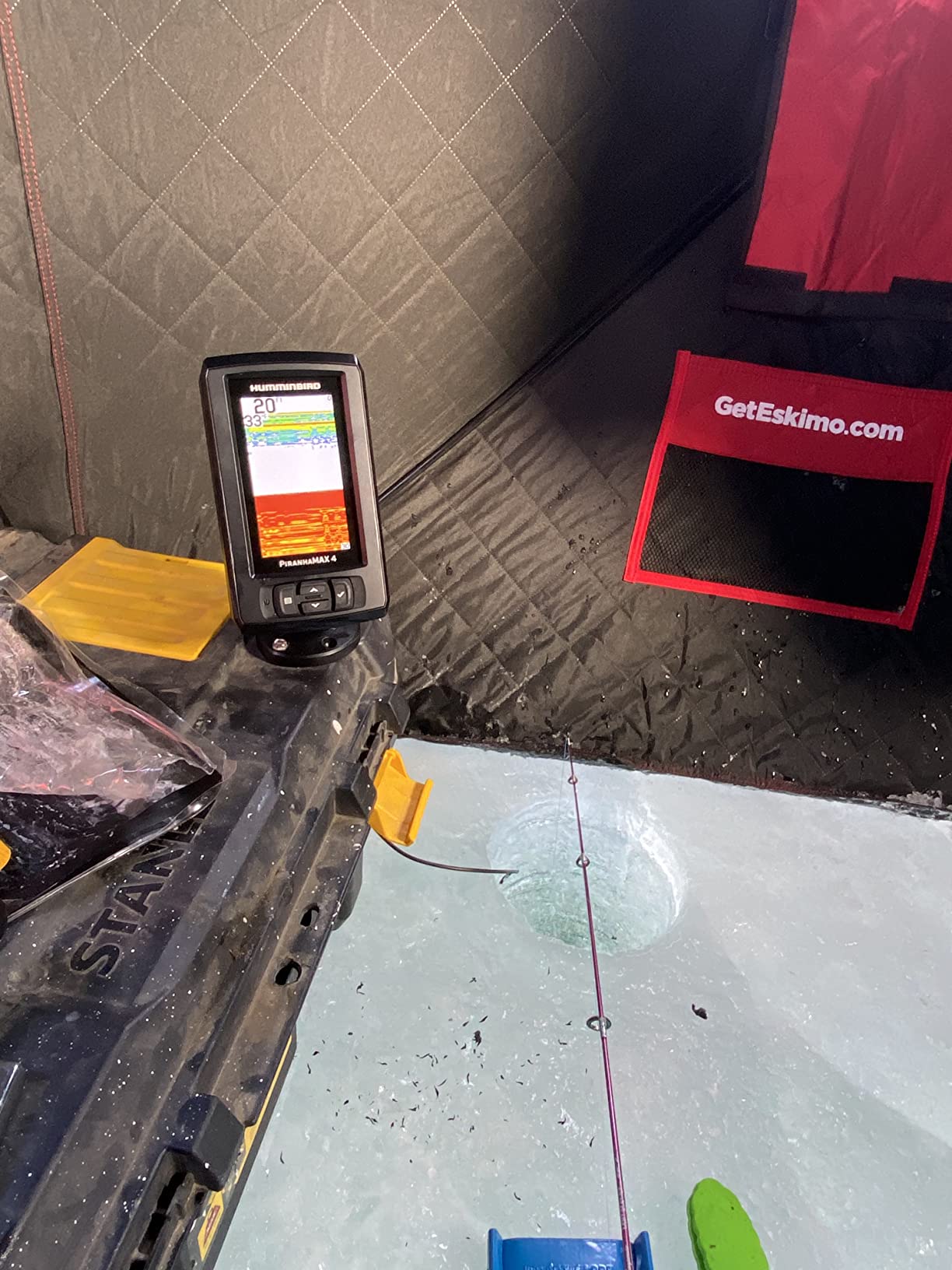
On paper the PiranhaMAX 4 has the largest screen in the budget tier at 4.3 inches, and its 2-pound, 3.6 by 3.9 by 6.8-inch body is the only head unit here that feels substantial in the hand. It ships with an XNT 9 28 T transom-mount transducer and a tilt and swivel bracket, so it is a complete install out of the box in the same way the Garmin STRIKER 4 is.
The Dual Beam sonar is the reason to look at it. You can switch between a narrow beam for detail and a wide beam for generous coverage, which on water under 20 feet is genuinely useful: the wide beam finds the weed edge, and the narrow beam resolves what is sitting on it. A single wide beam is the usual compromise in this price range and you give up that choice.
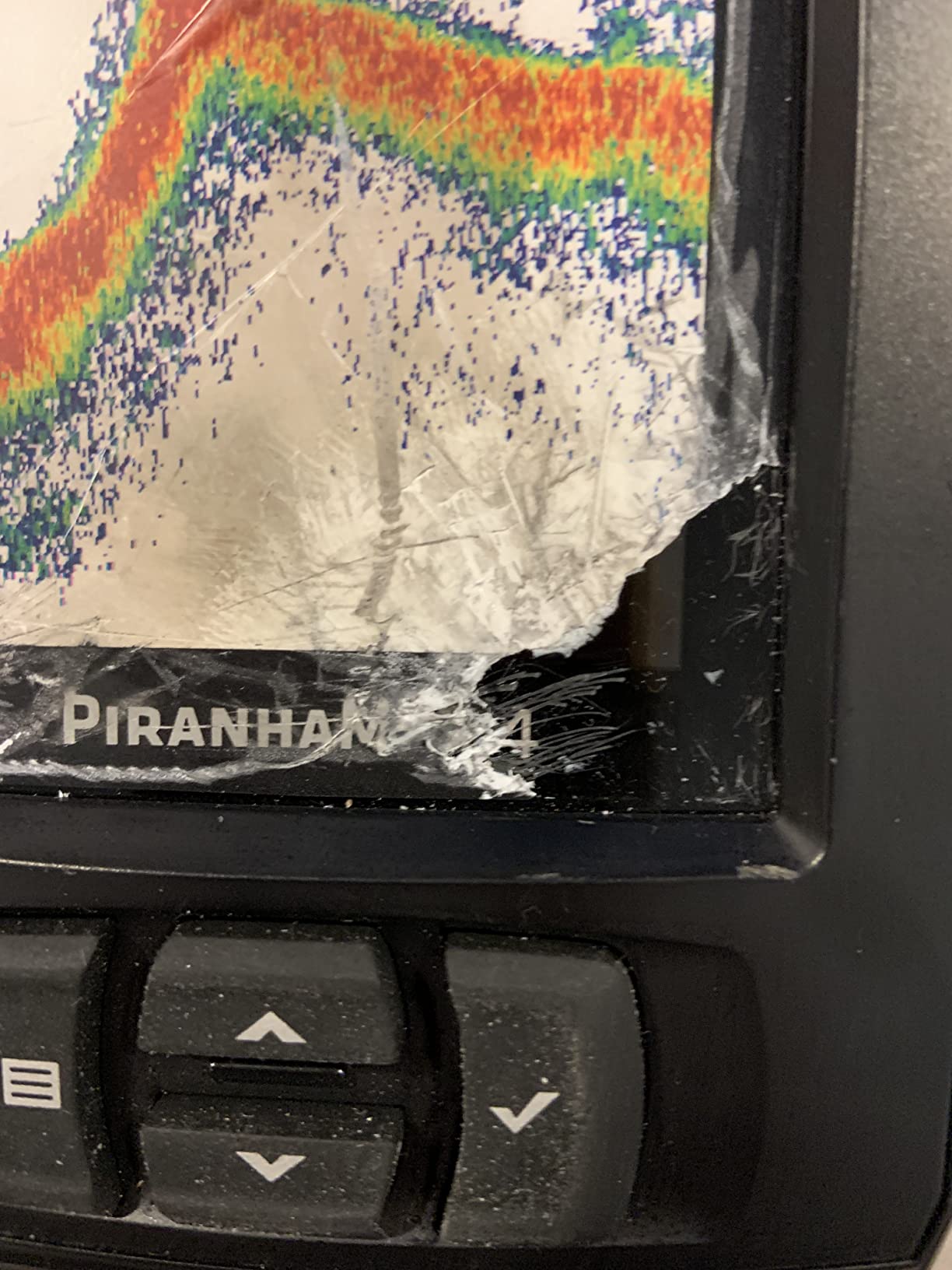
Depth capacity is 600 feet, which again is far more than a small-boat angler needs, but the sensitivity control and the beam choice are what you will feel. Owners describe it as straightforward, dependable and good for finding structure and contours, and the 4.3-inch tilt-and-swivel screen is easy to angle away from glare.
It is worth noting that 77 percent of its reviews are five-star, which is among the strongest distributions in this group. That tracks with the feedback: people buy it to do one job, it does that job, and they are not disappointed by what is missing.
When a 4.3 inch non-color screen is the right call
If you are matching a fish to a contour rather than identifying a species, color adds less than people expect. The monochrome display here has strong contrast, and the tilt and swivel bracket matters more in direct sun than any backlight setting, because it changes the angle of reflection off the screen rather than fighting it with brightness.
For anyone who wants a screen they can actually read from a seat 18 inches away on a small boat, the bigger panel is a real advantage over a 3.5-inch unit. It also works as a second instrument alongside a handheld if you move between craft.
Where it will frustrate you
There is no GPS and no charting on this model. If you fish unfamiliar water or want to return to a marked brush pile, this cannot do it and you should step up to a GPS unit. That single omission is the reason it does not take the top spot in our ranking.
The display is a basic monochrome LCD, which is a limitation at midday glare and through polarized glasses, and it needs a separate power cable connection to the boat. Budget for an inline fuse and tinned copper wire as you would with any fixed-mount head unit.
6. Garmin STRIKER Vivid 4cv for the Sharpest Color Sonar Picture
Garmin Striker Vivid 4cv Fishfinder with Transducer – 4-inch LCD Display – Easy-to-Use Scanning Sonar – Color Palettes, 11.2 Ounces (010-02550-00)
4 inch color LCD
CHIRP traditional and ClearVu
Quickdraw Contours
2 year warranty
Pros
- Color sonar palettes separate fish from structure clearly
- GT20 transducer gives CHIRP plus ClearVu
- Built-in GPS with waypoints and speed
- Quickdraw Contours mapping included
Cons
- Button menu takes practice to learn
- Settings may not persist between sessions
- No side scan or down imaging on this model
This is the highest-rated fish finder we evaluated, at 4.7 across 1861 reviews, and the reason is the color. The vivid scanning sonar color palettes let you assign different colors to fish, structure and vegetation, so a fish holding just off a brush pile separates from the pile itself at a glance instead of merging into one return.
The GT20 transducer supplies both CHIRP traditional sonar and CHIRP ClearVu scanning sonar from the same mount, so you get a narrow detail view and a wide view without buying a second transducer. High-sensitivity GPS handles waypoints, routes and boat speed, and Quickdraw Contours mapping is built in rather than a paid add-on.
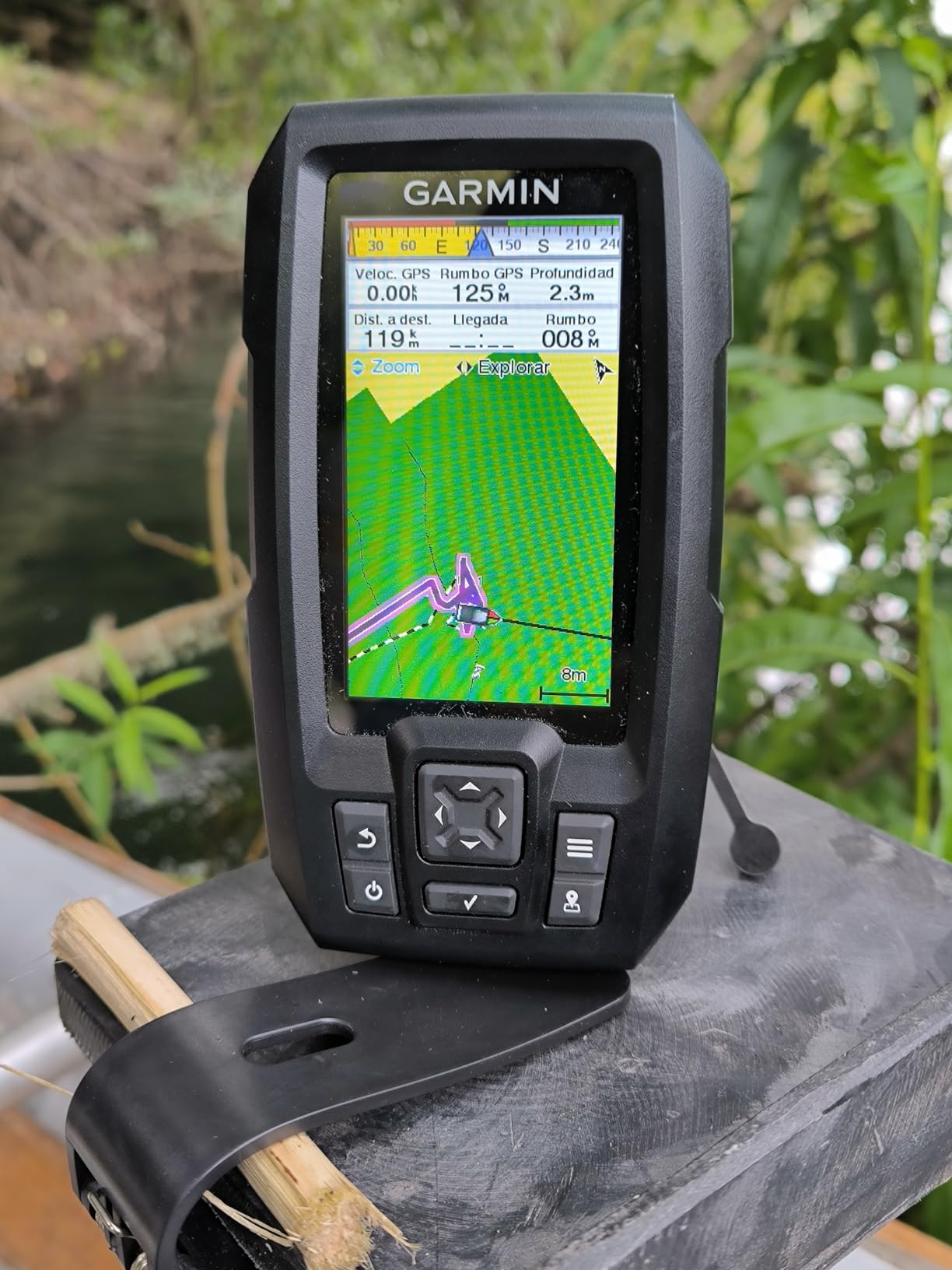
It weighs 11.2 ounces and measures 1.8 by 3.9 by 6.9 inches, with a tilt and swivel bailmount bracket in the box. The 2-year limited warranty is double what the STRIKER 4 carries, and 83 percent of its reviews are five-star, the highest share in this group. Build quality is the other thing owners single out repeatedly.
Because it comes from the same family as the STRIKER 4, the install is familiar: transom transducer, bailmount head, one 12 volt run with an inline fuse. On a small boat the 4-inch screen is the practical ceiling before it starts looking borrowed on the console.
Why color earns the rating it has
Shallow water is exactly where color pays off. On grass flats, weed edges and timber in 8 to 15 feet of water, the difference between a return you read as structure and a return you read as a fish is often the only thing separating a limit and a boatload. Color makes that read faster, and faster reads mean more casts per hour.
Quickdraw Contours is the second reason. It lets you draw depth contours as you go and save them to the unit, which on a farm pond or a private lake is how you build your own map without buying a subscription or a chart card. A few hours of idling around a lake during the summer produces a usable map.
Where it will frustrate you
The interface is button-driven and it takes practice. Owners note the menu is less intuitive than a simpler keyed unit, and that settings can fail to persist between sessions, which means a re-tune on the water before you trust the reading. Budget a few minutes on the dock the first few trips.
Second, there is no down-looking or side-scan imaging on this model. Side scan is the feature forum owners ask for most when they have the space for it, and you will have to move up a size class or a model family to get it. On a 4-inch screen there is no room for it anyway.
7. Deeper PRO+ 2 for Shoreline Mapping and Beam Choice
Deeper PRO+ 2 Sonar Fish Finder – Portable Fish Finder and Depth Finder For Kayaks, Boats and Ice Fishing with GPS Enabled | Castable Deeper Fish Finder with FREE User Friendly App
Wide mid and narrow beam modes
0.4 inch target separation
Built-in GPS
330 ft accuracy
Pros
- Narrow beam improves target separation noticeably
- Built-in GPS builds bathymetric maps from shore or dock
- Only 3.2 oz and casts far
- Own Wi-Fi keeps the connection stable
Cons
- Phone app required with no standalone display
- Narrow beam covers little water per cast
- Needs the phone charged as well as the sonar
- Fish size detail is app dependent
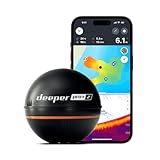
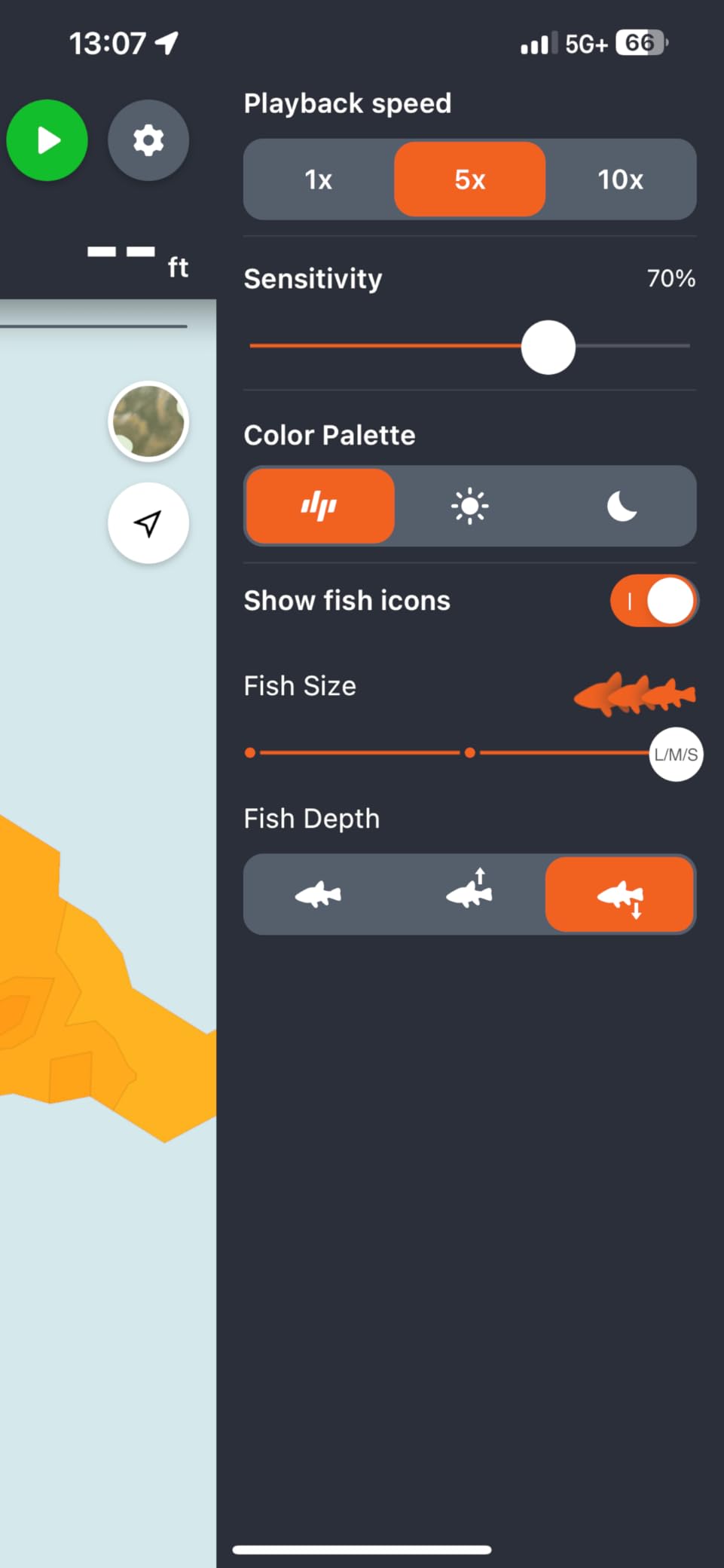
The PRO+ 2 is the step up from the Deeper Start, and the two differences that matter on a small boat are beam choice and a GPS. Wide, mid and narrow beam modes let you cover a big area from a dock or drill into a specific spot on the same battery, and the built-in GPS is what turns a series of casts into a map you can save in the Fish Deeper app.
Target separation is 0.4 inches on narrow beam and 1 inch on the wide and mid beams, with accuracy up to 330 feet and dependable built-in Wi-Fi. The body is 3.2 ounces and 2.56 inches square, and the box includes a neoprene pouch, attachment bolts and a USB cable, plus a 2-year limited warranty.
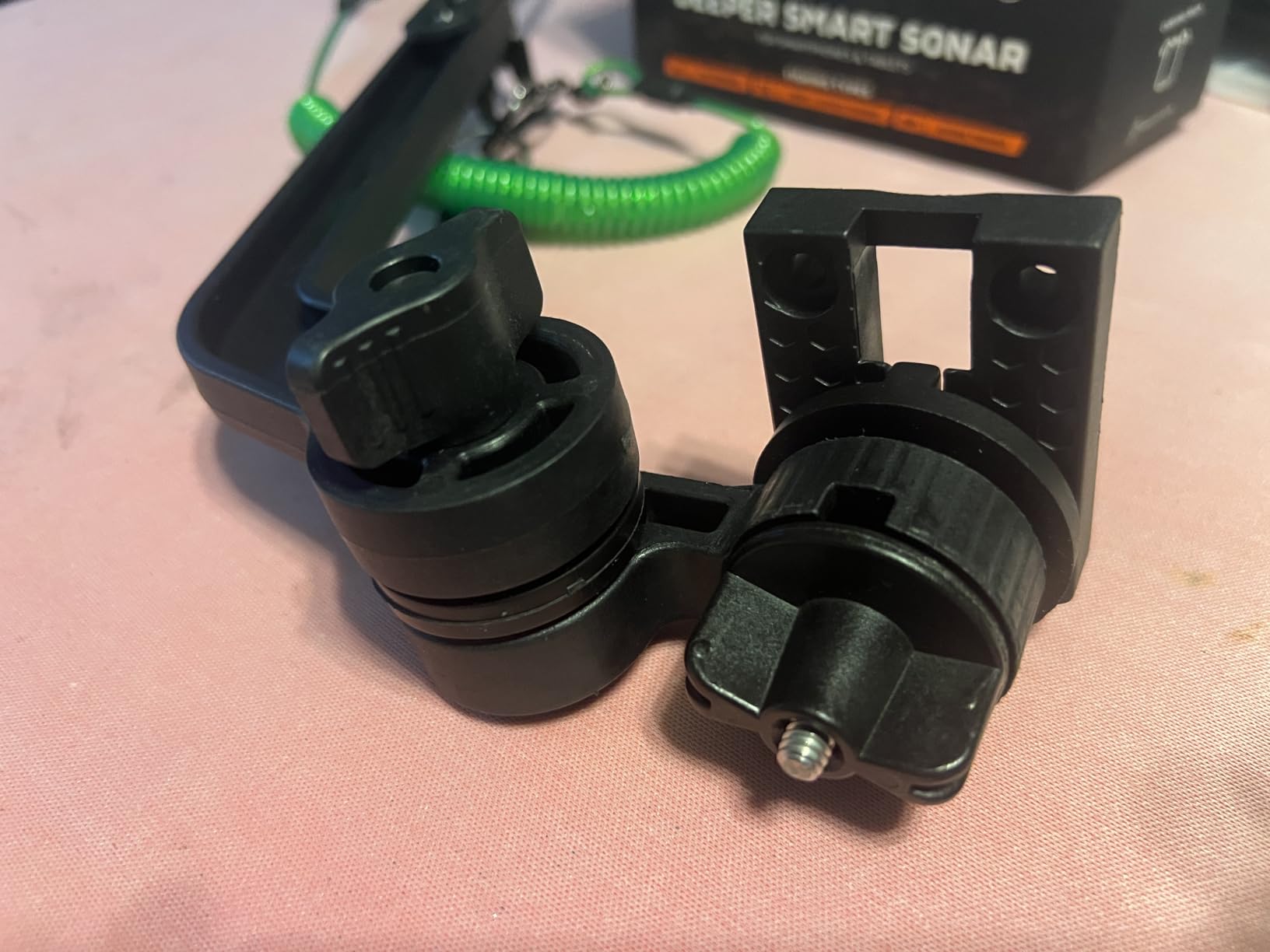
That narrow-beam target separation is the spec to pay attention to. On a shoreline drop-off or a tight piece of structure, the difference between 0.4 inch and 1 inch separation is the difference between picking off one fish and reading a wall of returns as a single blob. Jigging anglers who already know their spot get the most out of it.
Building a bathymetric map from shore, dock or bank is the feature no other portable in this group offers. If you have a private pond or a favorite stretch of river, a few sessions casting grid patterns while the app records depth produces a contour map that belongs to you.
When the narrow beam is worth the extra casts
Use the wide beam to find the shape, then switch to narrow to work it. That is how the unit is designed to be used, and it is why the narrow beam covering a small area is a feature rather than a limitation. On water where you already know the structure, the extra casts buy you the ability to see individual fish at close range.
The three modes also help in different water. A wide beam holds signal in silty or tannin-stained water where a narrow beam would drop out, and a narrow beam cuts through surface clutter on a calm day. Having the choice means you are not stuck with the trade-off a fixed beam forces on you.
Where it will frustrate you
There is no standalone display, so the phone is not optional. You need it charged, and reviewers note the app dependency for fish size and species detail. If your phone dies at hour four, the sonar is a very expensive float.
Second, scanning a wide area takes a lot of casts. This is a tool for a known spot, a shoreline or a small pond, not for covering an unfamiliar lake. And with 861 reviews it is a newer unit with a thinner owner history than the established fixed-mount models, which is worth keeping in mind when you weigh support.
8. Humminbird HELIX 5 CHIRP GPS G3 for a Larger Screen
Humminbird Helix 5 G3 GPS Fish Finder with Transducer & Dual Spectrum Chirp Sonar
5 inch color TFT
Dual Spectrum CHIRP wide and narrow
AutoChart Live mapping
Basemap of 10000+ lakes
Pros
- 5 inch color screen stays readable in sunlight
- CHIRP wide and narrow modes give coverage and detail
- Basemap and waypoints make return trips easy
- AutoChart Live builds contours as you go
Cons
- Listed at 2.1 pounds on a hull that may not take the weight
- Supplied power cable is often too short
- 3 amp fuse and hardware are not included
- Occasional dead units on return or exchange
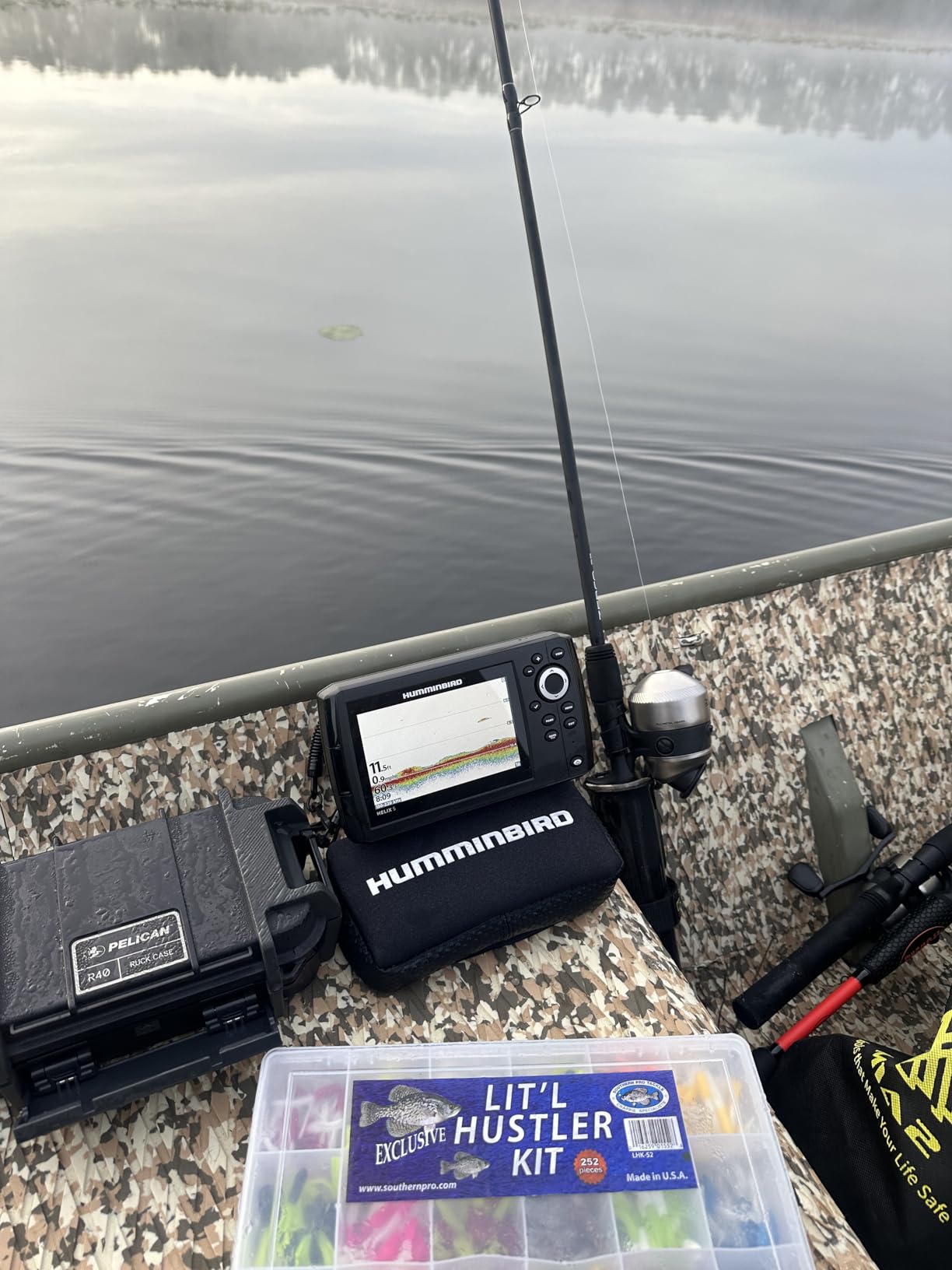
This is the step-up for someone whose small boat does have a console, or whose small boat is actually a 16 to 18 foot boat. The 5-inch color TFT is the largest screen in this group, and owners installing it on older boats specifically single out the readability in bright sunlight as the reason it works for them.
Dual Spectrum CHIRP runs a Wide Mode for maximum coverage and a Narrow Mode for detailed scanning, with 2D target separation from the Low-Q transducer. The included XNT 9 HW T transom-mount transducer and gimbal bracket mean the whole install is in the box, and the softkey menu is designed to stay usable in bad weather with wet hands.
On mapping, this is the most capable unit here. The Humminbird Basemap covers 10,000+ lakes and the continental US coast with no subscription, and it accepts premium LakeMaster, CoastMaster and Navionics cards if you want more. AutoChart Live generates depth contour, bottom hardness and vegetation maps as you boat, with eight hours of built-in recording that you can expand with AutoChart Zero Line SD cards.
Bottom hardness and vegetation maps are the underrated part. Once a farm pond has a saved map, you can see the sand-to-gravel transition and the weed edge from the surface, which is a different level of information from a live depth reading alone.
Why a 5 inch screen earns its footprint here
Screen size is a sunlight and distance question more than a resolution question. A 5-inch panel is legible from further back in the boat and holds detail in glare better than a 4-inch, and the gimbal bracket lets you aim it. Owners who came from a 4-inch unit report the difference is most obvious on split screens and map views.
It is also the smallest step up that gives you CHIRP in both wide and narrow modes plus live mapping, which is the tier most owners consider the point where a fish finder stops being a depth sounder and becomes a mapping tool. If your boat has a console with a flat mounting face, this is where the money stops being wasted.
Where it will frustrate you
The Lowrance EAGLE 4X in this group is listed at 2.8 pounds, so check your console weight rating before you commit. If you have a bare transom and a seat, the 4-inch units are a better weight for the job.
The single most repeated complaint in reviews is that the supplied power cable is too short for small boats, so you will be running extra wire, and the 3 amp fuse and hardware are not in the box. Occasional dead units requiring a return or exchange also show up in the 6 percent of one-star reviews.
9. Lowrance EAGLE 4X for Sunlight and Tight Console Space
Lowrance Eagle 4X Fish Finder with Bullet Transducer
4 inch IPS portrait screen
Auto-Tuning sonar
44 degree beam
Twist-lock connector
Pros
- Portrait IPS screen readable in sun and through polarized glasses
- Auto-Tuning removes setup fiddling
- 44 degree beam suits kayaks and small boats
- Settings are remembered between trips
Cons
- Basic 200 kHz sonar with no CHIRP or imaging
- Fish size readings are not reliable
- No GPS or charting on this model
- Newer unit with a small review base
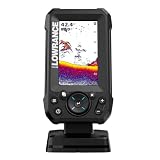
The EAGLE 4X is the newest unit in this group and the one whose reviewers mention one feature above everything else: the 4-inch IPS portrait screen stays clear in bright sunlight, from wide viewing angles and through polarized sunglasses. On a flat aluminum deck at noon that is not a nice-to-have, it is the difference between using the unit and ignoring it.
The portrait orientation is deliberate. A tall narrow footprint fits a tight console on a small boat in a way a 4-inch landscape unit does not, and the twist-lock connector lets you pull the display off for storage in seconds while leaving the transducer and cable in place.
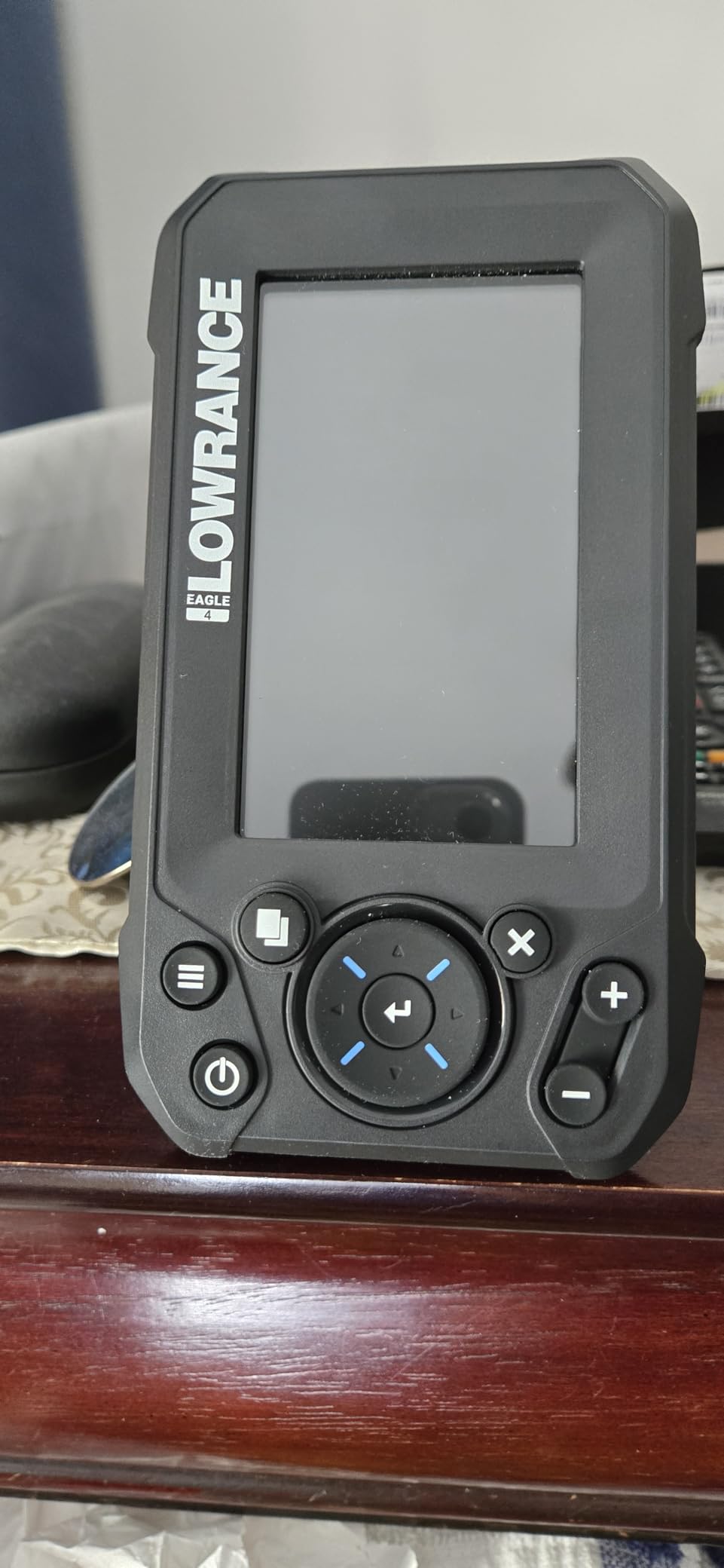
The included 200 kHz Bullet Skimmer transducer has a broad 44 degree beam, which is sized for exactly this use case: kayaks and small boats where you want generous coverage from a shallow draft. Auto-Tuning sonar sets itself for the conditions on the first run, and reviewers report the settings being remembered between trips, which is the opposite of what owners say about some button-driven units in this price range.
The box is unusually complete for an entry model. You get the head unit, bracket and knobs, power cable, transducer, locking collars and a fuse with a fuse holder, so the install is not a shopping trip. Several owners switched over from a Garmin unit specifically because this one was easier to operate.
Why the IPS portrait screen is the deciding feature
IPS panels hold color and contrast at viewing angles where standard LCDs wash out, and this one is specified to stay readable through polarized lenses, which is the condition most small-boat anglers actually fish in. It also handles a screen tilted toward a low sun far better than the reflective screens on cheaper models.
Auto-Tuning is the quiet second win. On a small boat you are often reading the screen at a glance between casts rather than sitting and tuning. If the unit sets itself correctly on the first pass, you spend your attention on the water instead of the menus.
Where it will frustrate you
The 4-inch model has basic 200 kHz sonar only, with no CHIRP and no imaging. You are buying screen quality and simplicity here, not sonar sophistication, and against the STRIKER Vivid 4cv the picture is clearly a step down. Fish size readings are also not very reliable in owner reports.
There is no GPS or charting on this base model, and it is a newer product with only 116 reviews, so the long-term owner history is thinner than the established models here. Judge it on the screen and the fit, and buy it for a small boat with a console where the glare problem is real.
10. Garmin STRIKER Plus 4 for Built-In Mapping on a Budget
Garmin 010-01870-00 Striker Plus 4 with Dual-Beam transducer
4.3 inch sunlight-readable screen
Quickdraw 1 foot contours
Built-in GPS
Bluetooth enabled
Pros
- Quickdraw mapping is the standout feature here
- Bright sharp screen readable in sunlight
- Dual-beam CHIRP with good target separation
- Transom and trolling motor mounts both included
- Works for ice open water kayak and pontoon
Cons
- Screen resolution is less crisp than earlier Garmin models
- No battery or power fittings included
- Quickdraw maps cannot be uploaded or downloaded
- Setup instructions are not beginner friendly
The STRIKER Plus 4 is the feature-per-dollar answer in this group. It puts Quickdraw Contours on board, storing 1 foot contours for up to 2 million acres, and that is a mapping capability most competitors in this tier do not offer at all. Combined with a built-in GPS for waypoints, routes and boat speed, it means you can mark your own spots rather than only seeing where you are.
The dual-beam transducer runs Garmin CHIRP traditional sonar at 50, 77, 83 and 200 kHz with 200 W RMS transmit power, which gives good target separation and a readable arch. The 4.3-inch QSVGA display is specified as sunlight-readable, and owners use it for ice, open water, kayak and pontoon fishing interchangeably.
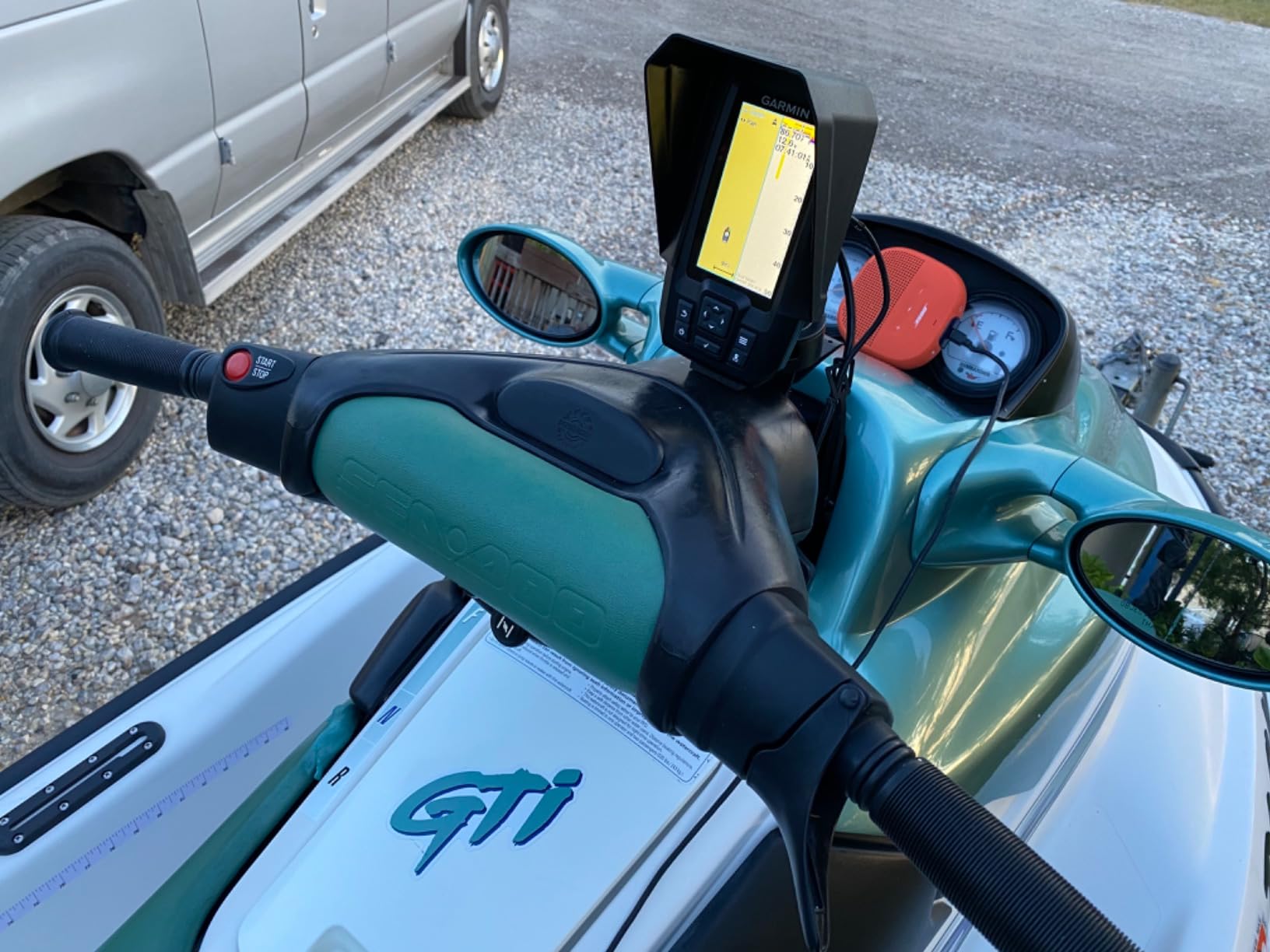
Mounting hardware is the other quiet strength: the box includes transom and trolling motor mounts plus a tilt and swivel mount, so the same head unit works on a boat with a console, on a trolling motor bracket, or on a kayak with a rail. Bluetooth is on for phone connectivity, which is unusual at this end of the range.
It is also one of the most reviewed models we evaluated, at 2419 reviews and 4.6, with 76 percent five-star. Owners describe it as a strong all-rounder that handles several boat types, which is exactly what you want when the boat is a jon today and a pontoon next year.
Why built-in contour mapping changes the recommendation
Once a pond or a private lake has contours on the unit, you stop reading live sonar and start reading a map. Weed edges, drop-offs and channels show up as shapes you can navigate to, and that is a much faster way to work unfamiliar water than marking a hundred individual waypoints. Quickdraw records the depth under your boat as you go, so the map builds itself.
For a small-boat angler who fishes the same 20 or 30 spots, that combination of mapping plus the included trolling motor mounts covers nearly every use case on this list without a single extra purchase beyond wiring and a fuse.
Where it will frustrate you
Screen resolution is the most common complaint. Owners comparing it to earlier Garmin models call the QSVGA panel less crisp, and the difference shows in fine text on the map view. It is bright and sunlight-readable, which is what matters on the water, but do not expect a modern high-density screen.
Second, no battery or power fittings are included, so you will source those yourself, and Quickdraw maps cannot be uploaded or downloaded on this model, which means the map stays on the unit. The setup instructions also get called out as not beginner friendly, so plan ten minutes with the install steps below before the first trip.
How We Picked the Best Fish Finders for Small Boats
We weighted small-boat fit at roughly 70 percent and general feature depth at 30 percent. That inversion is deliberate, because the failure mode in this category is not buying a slightly inferior sonar, it is buying a great sonar that will not mount, will not run on the available power, or cannot be read in the sun.
Within that weighting, install burden and power draw counted heavily, because those are the two factors forum owners complain about most and the two that forum consensus treats as the real differentiators. Screen readability, transducer mounting options, GPS capability and sonar type made up the rest.
What we did not do matters as much. We did not run controlled sonar accuracy tests in identical water, so we are not claiming one unit reads the bottom better than another. Where we describe performance, it comes from owner review patterns and published specifications, and we flag the products where the review data points to a real weakness rather than smoothing it over. We also could not test on a saltwater hull, so our coastal guidance is limited to published depth ratings and transducer type.
How to Choose a Fish Finder for a Small Boat
Start with the boat, not the brand
Before you look at any screen, answer three questions. Is there a console with a flat face to mount a head unit on, or is it a bare transom with a seat. Is there a battery, and if so how big. How shallow does the hull run, and how much room is there behind the hull for a transom bracket. The ten products here split cleanly into wired head units for boats with power and wireless or app-based options for boats without.
Owners on fishing forums converge on the same three entry-tier brands as good value, which suggests the brand matters less than the fit. What separates a good purchase from a bad one is whether the transducer can be mounted somewhere clean and whether the screen is readable where it is sitting.
Screen size: 3.5 and 4 inch versus 5 inch and up
A 3.5 to 4 inch unit is the sweet spot for a boat with no console, and a 5 inch screen is the practical ceiling before a chartplotter looks borrowed. Screen size is really a sunlight and viewing-distance question. A larger IPS panel stays readable at an angle and through polarized glasses, which is the condition you will fish in on a flat aluminum deck.
For a kayak or a small sit-on-top, skip the size question entirely and use a handheld or a phone-based unit. Nothing to mount beats a slightly better screen.
Sonar types: CHIRP, ClearVu, DownScan and SideScan
Traditional sonar sends a single ping at one frequency. CHIRP, which stands for Compressed High-Intensity Radar Pulse, sends a continuous sweep of frequencies, which produces crisper arches and better target separation. On shallow water, where targets are close together, that separation is what lets you read a fish off a brush pile instead of one merged return.
The imaging names are marketing, and every brand owns one: Garmin calls its down view ClearVu and its side view SideScan, Humminbird uses DownScan and SideScan, Lowrance uses SplitShot and TripleShot, and the general idea behind all of them is the same. A high-frequency narrow beam looks straight down for a near-photographic view of what is below you, and a wide beam looks to each side to paint structure along the bottom.
Side scan is what forum owners ask for most when they have the screen space for it. On a 4-inch unit there is no room, and on shallow water the down view plus a wide CHIRP beam covers most of what a small-boat angler needs.
Transducer mounting on an aluminum hull
Three options exist. A transom mount hangs off the back of the boat on a bracket and is the default for small boats because it needs no drilling. A shoot-through mount reads through the hull from inside, which looks cleaner but needs a flat area and works poorly on rough aluminum. A through-hull mount sits flush inside the hull and is the most permanent option, and it is the wrong choice on a rental.
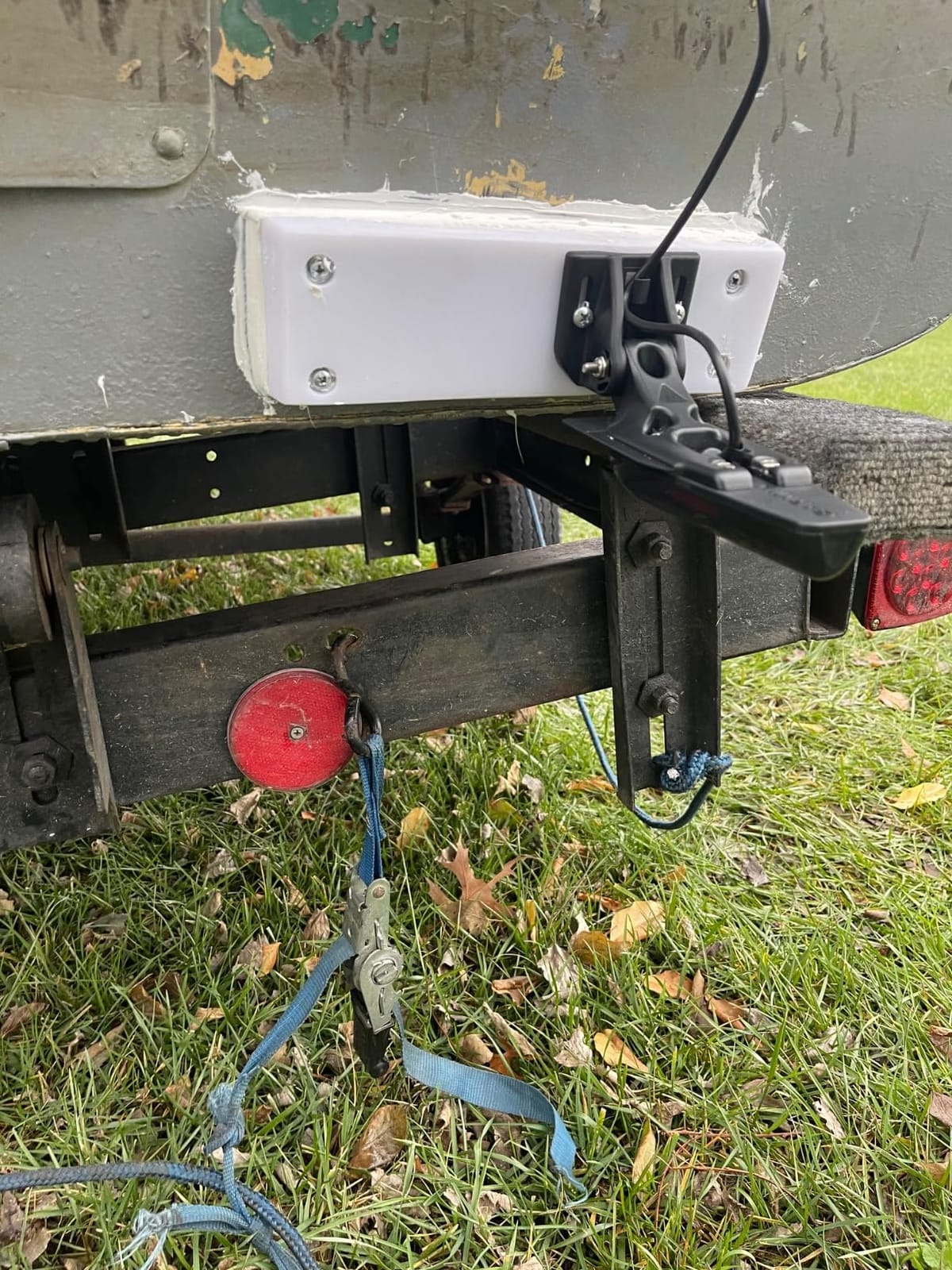
Position is the part that matters. Mount the transom bracket so the transducer sits in clean water and the bubbles from your propeller pass below it, and raise it as high as the bracket allows if you run in rough water. A transducer sitting in the prop wash is the most common cause of noisy, bouncing or false-bottom readings on a small shallow-draft hull, and it looks identical to a bad sonar unit.
Do you actually need GPS and mapping
Skip both if you fish two or three lakes you know by heart and you anchor on the spots you already know. In that case the money is better spent on a better screen or a better transducer. GPS earns its place the moment you want to mark a brush pile and return to it, or you are running unfamiliar water and need to know which creek you are in.
Live contour mapping like Quickdraw Contours or AutoChart Live is a different category again. It is most valuable on private ponds and small lakes nobody charts, where a recorded map becomes the only way to remember where the drop-off sits. If that describes your water, mapping is worth more than a bigger screen.
Power, wiring and battery draw
Most small boat fish finders draw less than a amp, which is less than a cabin light, and the STRIKER 4 at 0.23 amp at 12 volts is the lowest figure in this group. The issue is rarely total draw. It is whether you have any source at all, whether the wire run is the right gauge, and whether a voltage drop over a long cable starves the unit.
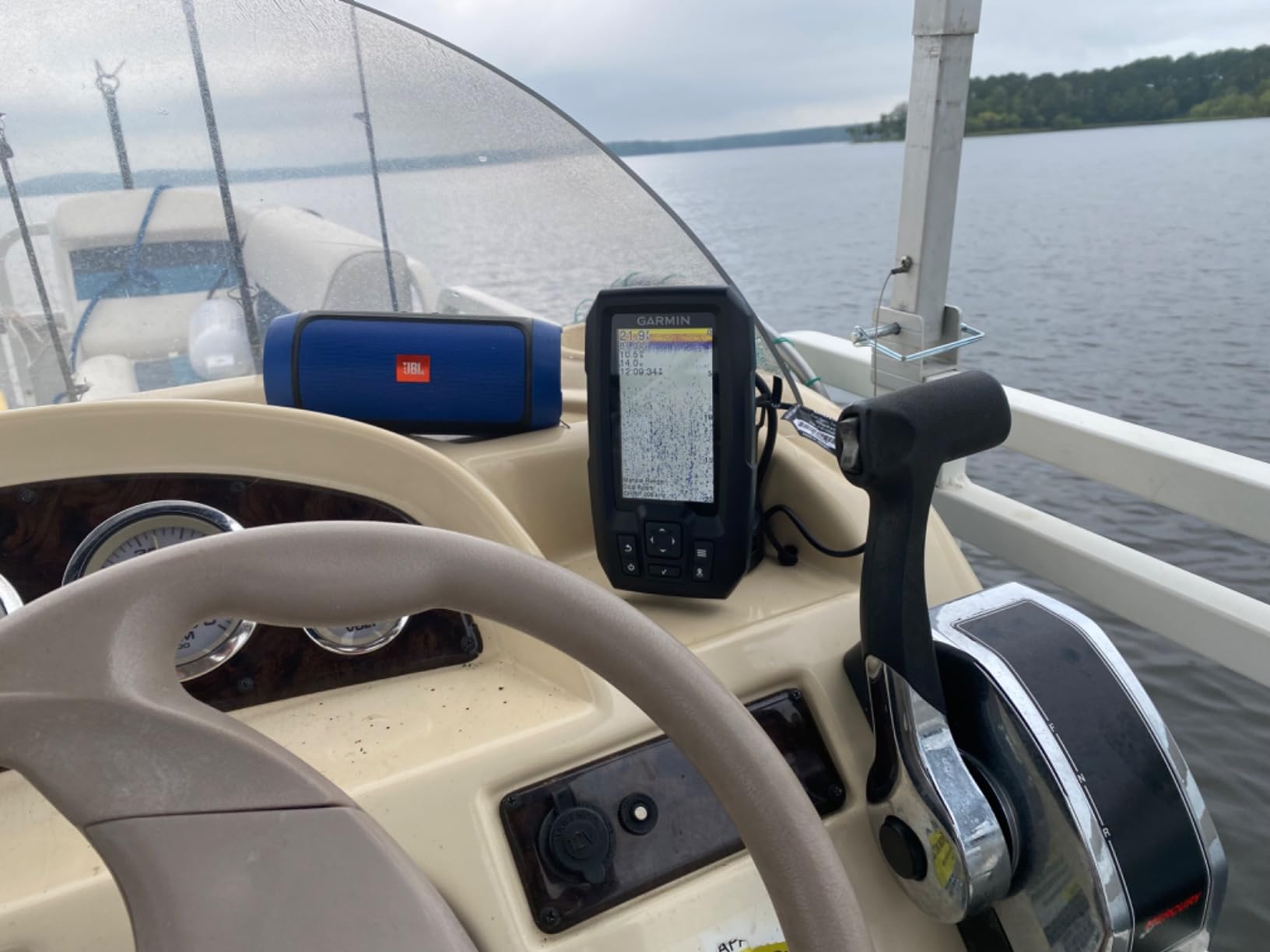
For a boat with no electrical system, a deep-cycle marine battery with an inline fuse and a switch is the minimum honest setup. The STRIKER 4 can also run off a trolling motor battery, but expect some interference on the sonar image from the motor, and keep the transducer cable away from the motor cable. If you would rather not deal with a battery, go wireless and use one of the castable units in this list.
How to read fish arches and half arches
A full arch on screen is a single fish sitting inside the sonar cone. A half arch means a fish is entering or leaving the cone, usually at the edge of the beam, and it is not half a fish. A stack of repeated half arches at the same depth and the same spot is a school, which is the most valuable thing to find.
Arch size maps roughly to target size, so a wide shallow arch is a bigger fish than a narrow one at the same depth. And a hard bottom return that comes back bright and thick usually means rock or gravel, while a faint return means mud or silt. Bottom composition is more useful than seeing fish in water under 10 feet, which is why it is worth paying attention to.
Price tiers and what each one actually adds
At the entry tier you are buying a working sonar, a transom transducer and a waypoint map. The step up adds color and a better panel, which is where readability improves most. The next step adds live contour mapping and a larger IPS screen, and above that you are into side scan and chartplotter territory that a small hull cannot physically accommodate.
Most small-boat buyers are shopping the entry and mid tiers, and that is where the responsible recommendation sits. If you are about to mount a 7 to 9 inch unit on a 12-foot flatbottom, you are overbuying. Our quarantine tank setup guide makes the same kind of case for matching equipment to the space you actually have, and our roundup of the best betta fish tanks with filters applies the same buy-for-the-footprint logic in a much smaller space. If the boat will sit unattended for a weekend while you are away, our guide to the best automatic fish feeders for vacations covers the feeding side of a longer trip.
How to Install a Fish Finder on a Small Boat
Most installs take an hour if the boat has a battery. The steps below assume a transom-mount transducer and a head unit, which is the configuration for nine of the ten models here. If your boat has no electrical system, read the wireless section first, because the same hardware applies but the power step does not.
Step 1: mount the transducer on the transom. Bolt the bracket to the transom at the height the manufacturer specifies, and check it with the boat in the water, not on the trailer. A transducer mounted too high picks up surface noise, and one mounted too low runs out of clean water at speed.
Step 2: angle it out of the prop wash. Set the bracket so your propeller bubbles pass underneath the transducer. This is the single most important step on a shallow-draft hull, and it costs nothing. If the bottom trace breaks up and returns when you throttle down, the transducer is in the bubbles.
Step 3: run the 12 volt power. Use marine-grade tinned copper wire rather than the thin leads that ship in the box, and size the run for the length. A long thin run on a small battery is where voltage drop shows up, and a head unit that browns out when you turn on the nav lights is a power problem, not a sonar problem.
Step 4: fit an inline fuse. Put a fuse holder as close to the battery as possible, rated to the manufacturer specification. The HELIX 5 needs a 3 amp fuse that does not come in the box, and the Lowrance EAGLE 4X is one of the few here that ships with a holder. Do not skip this because the run is short.
Step 5: test in water before you rely on it. Take it out at trolling speed, at idle and under power, and check the bottom trace in each. If the image is noisy, move the transducer up or down before you blame the unit. Also check for interference if you run the head off a trolling motor battery and keep the motor cable as far from the transducer cable as the frame allows.
For a rental boat or a hull you cannot drill, stop at step two and use one of the wireless castable models instead. The Venterior VT-FF005 needs nothing more than a rod and a tether, and the Deeper units need a phone.
When You Can Skip the Fish Finder
If you fish a farm pond you can name with your eyes closed, you already know the two spots worth working, and you anchor on them every time, a fish finder adds cost and install burden for very little. The honest answer in that case is a handheld depth finder in a tackle bag, or nothing.
The same applies if your boat has no electrical system and you will not add one. A wireless castable unit covers the same need with no wiring, no fuse and nothing to remove at the trailer ramp. The expensive wired head units in this list earn their place when you run new water, mark spots, or want live contour mapping of a water nobody has charted.
Depth range is also oversold as a buying criterion. The maximum depth figures here range from 164 feet to 1600 feet, and almost nobody on a small boat ever exceeds 30. Judge a unit on shallow-water bottom composition, screen readability in sun, and whether it mounts on your hull.
Frequently Asked Questions
Is Humminbird or Garmin better?
For a small boat, Garmin is usually the easier install: the STRIKER 4 ships with transom and trolling motor mounts, draws 0.23 amp at 12 volts and has a keyed interface that works with wet hands. Humminbird wins on mapping and beam choice, since the HELIX 5 CHIRP GPS G3 runs Dual Spectrum CHIRP in wide and narrow modes and includes AutoChart Live. If you fish water you have never seen, take Humminbird. If you want the smallest, simplest, easiest-to-power unit, take Garmin.
What is the best depth sounder for a small boat?
The Garmin STRIKER 4 is the best depth sounder for most small boats because it pairs a transom-mount transducer with CHIRP and ClearVu sonar, a 3.5 inch sunlight-readable screen and a 0.23 amp draw, so it will run off a small deep-cycle battery without fuss. It reaches 1600 feet in freshwater, far more than you need. If your boat has no battery at all, use a castable unit such as the Venterior VT-FF005 instead of wiring anything.
Is Garmin or Lowrance better for fishing?
Garmin is stronger on sonar: CHIRP traditional plus ClearVu and Quickdraw Contours mapping come standard on the STRIKER Vivid 4cv. Lowrance wins on display technology and fit for small hulls: the EAGLE 4X has a 4 inch IPS portrait screen that stays readable in bright sun and through polarized sunglasses, plus a twist-lock connector and a 44 degree beam for kayaks. Pick Garmin for imaging and mapping, Lowrance for screen readability in a tight console.
What is the best portable fish finder for a boat?
The Venterior VT-FF005 is the best portable option for a boat because it pairs a castable wireless sensor with a real 2.6 inch color handheld display, needs no drilling, and links up to 262 feet. It shows depth, temperature, fish size, fish depth and bottom contour, and it carries a 2-year warranty. Remember it is only accurate to about 120 feet, and its 105 degree beam can give false signals when towed behind a moving boat.
What is the best fish finder for a jon boat?
The Garmin STRIKER 4 is the best fish finder for a jon boat, mainly because the box already includes transom and trolling motor mounts and the unit draws only 0.23 amp at 12 volts. Jon boats are shallow-draft with bare hulls, so set the transom bracket so prop bubbles pass under the transducer. On shallow water, bottom composition and weed edges matter more than depth range, and this unit shows both clearly.
What is the best portable fish finder for a small boat?
If your small boat has no console and no battery, the Deeper Start or the Venterior VT-FF005 is the right answer. The Deeper Start casts to 165 feet, generates its own Wi-Fi so scans use no mobile data, and auto-saves every scan with time and location in the free app. The Venterior gives you a standalone color screen instead of a phone. Both require no drilling, which matters in a rental boat.
Do fish finders work in shallow water?
Yes, and shallow water is where they are most useful. A bright, thick bottom return means rock or gravel, while a faint return means mud or silt, and that composition read is often more valuable than seeing a fish in under 10 feet. Watch for weed edges and sand-to-gravel transitions. The main failure in shallow water is not the sonar but a transducer mounted in the prop wash, which breaks up the bottom trace as you throttle up.
Final Verdict
The best fish finders for small boats come down to fit, not brand. The Garmin STRIKER 4 takes the top spot because it mounts on a transom or a trolling motor bracket, draws 0.23 amp at 12 volts, and pairs CHIRP with ClearVu at the best-reviewed rating in this group. Install it with a marine-grade fused 12 volt run and angle the transducer out of the prop wash, and it will outlast boats several times its size.
Buy the STRIKER Vivid 4cv instead if color separation on weed edges is the part of the job you care most about, and the STRIKER Plus 4 if built-in Quickdraw contour mapping is worth more to you than a color screen. If your boat has no battery or you rent it every trip, skip the wired units entirely and start with the Venterior VT-FF005 or one of the Deeper models, neither of which needs a hole drilled in the hull.
Whichever one you land on, remember that bottom composition in shallow water tells you more than a depth number, and that the transducer position matters more than any spec on the box. Those two things will decide whether the unit ends up mounted on the transom or in a garage. We will keep updating this guide as new models land in 2026.