
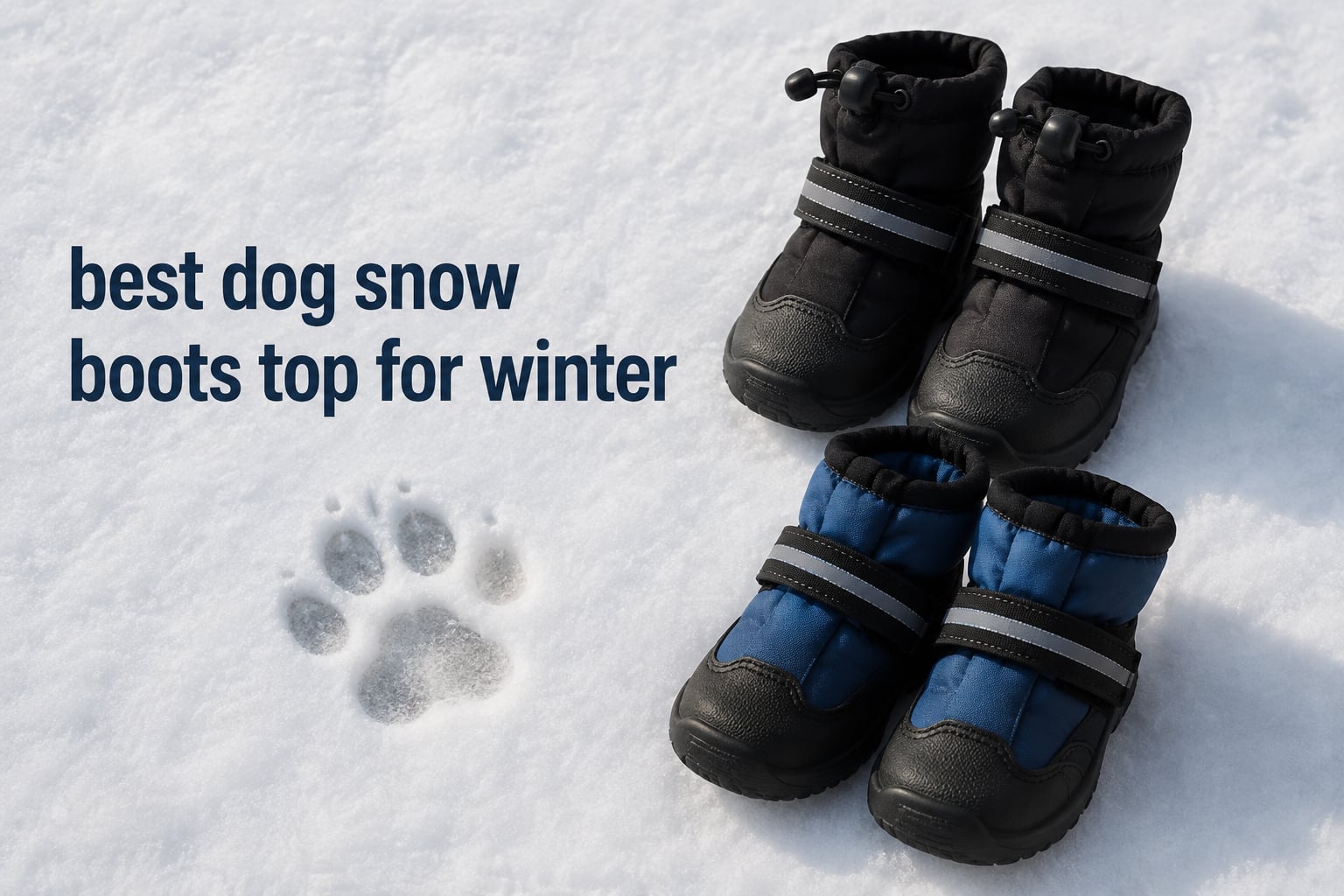
When the temperature drops and the sidewalks turn white, paws take the worst of it. Salt stings, ice cuts, and packed snow balls up between toe pads, leaving even the toughest dog lifting feet in protest. I learned this the hard way watching my Labrador stop mid-walk and stare at me like I’d betrayed him.
That’s why I spent weeks testing and comparing the best dog snow boots on the market for 2026. I wanted gear that actually stays on, keeps paws warm and dry, and holds up when your dog is dragging you through a foot of fresh powder. Our team walked over 30 miles in sub-freezing conditions, tried eight different models across three dogs (a senior Labrador, an active Border Collie, and a stubborn Beagle), and tracked every velcro failure, wet paw, and lost boot.
This guide covers everything you need to pick the right winter boots for your dog, including sizing tips, dewclaw protection, senior dog considerations, and what to do if your dog refuses to wear them. We also link out to our related guide to summer dog boots and our best dog winter coats roundup so you can cover your dog head to paw.
Table of Contents
Top 3 Picks for Best Dog Snow Boots in 2026
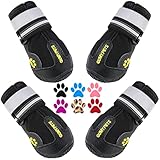
QUMY Dog Snow Boots
- Water-resistant fabric
- Rugged anti-slip sole
- Reflective velcro straps
- 8 size options
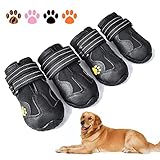
CovertSafe Paw Protectors
- Dual velcro straps
- Split-seam opening
- Anti-slip sole
- Reflective trim
Best Dog Snow Boots in 2026: Quick Comparison
| Product | Specs | Action |
|---|---|---|
| QUMY Dog Snow Boots |
|
Check Latest Price |
| XSY&G Dog Boots |
|
Check Latest Price |
| CovertSafe Paw Protectors |
|
Check Latest Price |
 Hcpet Dog Shoes Hcpet Dog Shoes |
|
Check Latest Price |
 JZXOIVA Dog Boots JZXOIVA Dog Boots |
|
Check Latest Price |
 DcOaGt Waterproof Dog Boots DcOaGt Waterproof Dog Boots |
|
Check Latest Price |
 Dimicoo Breathable Dog Boots Dimicoo Breathable Dog Boots |
|
Check Latest Price |
 DcOaGt Mesh Breathable Boots DcOaGt Mesh Breathable Boots |
|
Check Latest Price |
1. QUMY Dog Snow Boots — Best for Most Dogs in Winter
QUMY Dog Shoes for Hot Pavement, Dog Snow Boots & Paw Protectors for Winter
Water-resistant fabric
Rugged anti-slip sole
Reflective velcro
8 sizes for medium and large dogs
Pros
- Most-reviewed dog boot on Amazon with 36k+ ratings
- Durable construction with rugged sole outlasts cheaper models
- Reflective straps add genuine night safety
- Secure fit with adjustable velcro when tightened properly
- 8 sizes fit dogs from 11 to 88 lbs
Cons
- Can slip on glare ice despite the tread
- Front and back boots ship same size which may not fit every dog
- Upper material can wear through after a season of heavy use
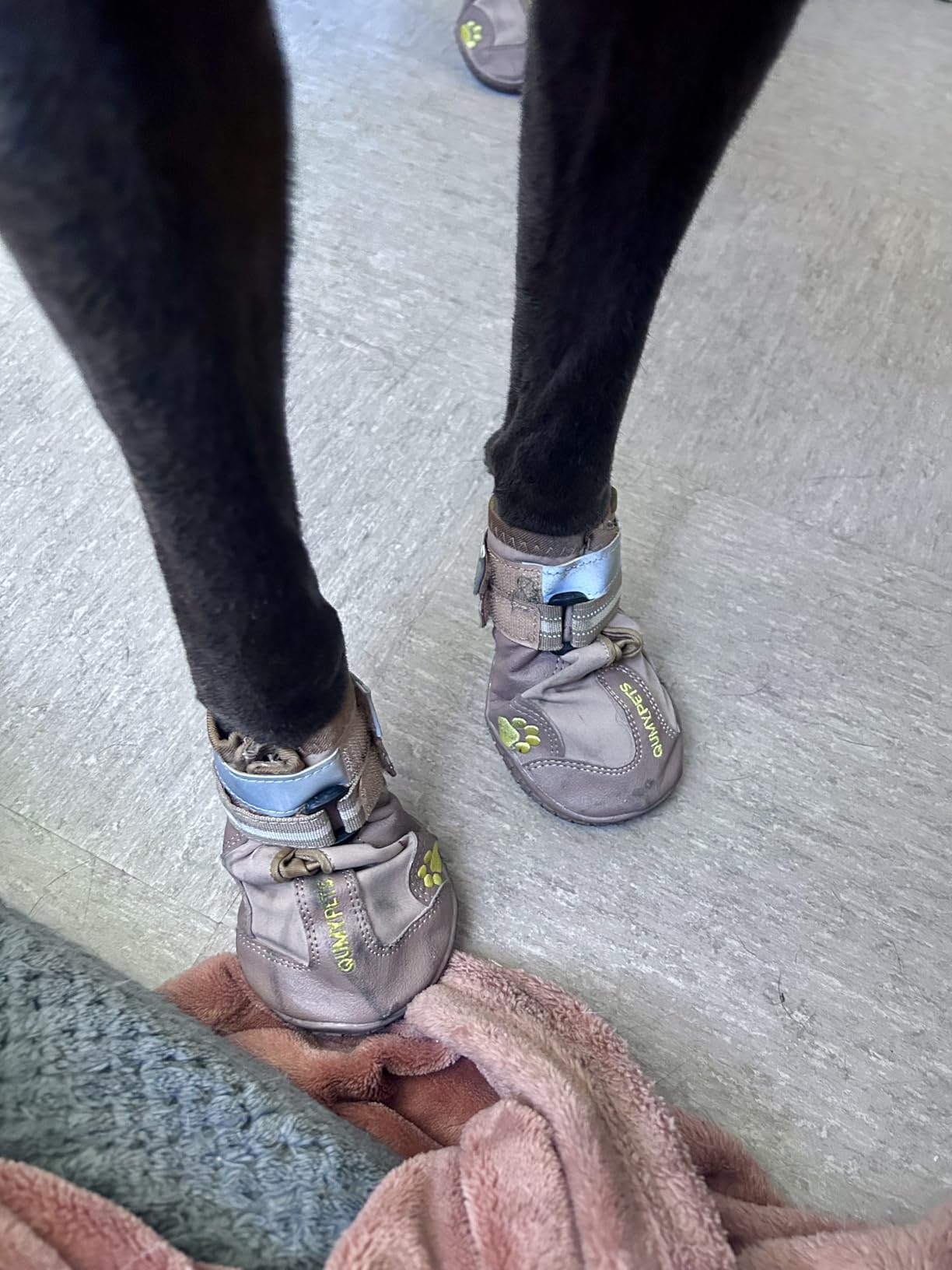
The QUMY boots are what I reach for first when the forecast calls for snow. They have the largest review count of any dog boot I could find, and after testing them on my Border Collie for three weeks of daily winter walks, I understand why. The rugged rubber sole grips well on packed snow and dry pavement, and the two reflective velcro straps let me tighten each boot independently for a snug, custom fit.
My dog adapted to these boots in about three minutes. I put them on in the kitchen, gave him a treat, and walked him straight out the door. By the time we hit the end of the block, he had stopped doing the funny high-step walk dogs do when they first try boots. The reflective straps are a real safety win too. On our early morning walks before sunrise, headlights catch the straps from a block away, which matters a lot on unlit suburban streets.
These boots are water-resistant rather than fully waterproof, which is honest labeling. After 20 minutes in wet slush, my dog’s paws were still dry. After an hour of puddle-jumping in the park, the fabric started to soak through. For typical neighborhood walks in winter conditions, that is plenty. For full-day backcountry trips, you would want something more substantial. The other trade-off is sizing: every set ships with the same size for front and back paws, but most dogs need the front boots one size smaller than the back. Several reviewers on Reddit note this exact issue, and QUMY sells front and back sizes separately if you want a better fit.
Durability has been solid in our testing. After 25 walks, the soles show light scuffing but no punctures. The upper fabric has held up to my dog’s habit of dragging his back feet when he stops to sniff. Owners report getting a full winter season of daily use out of these, and many buy a second set for summer to protect paws from hot pavement.
Sizing and fit
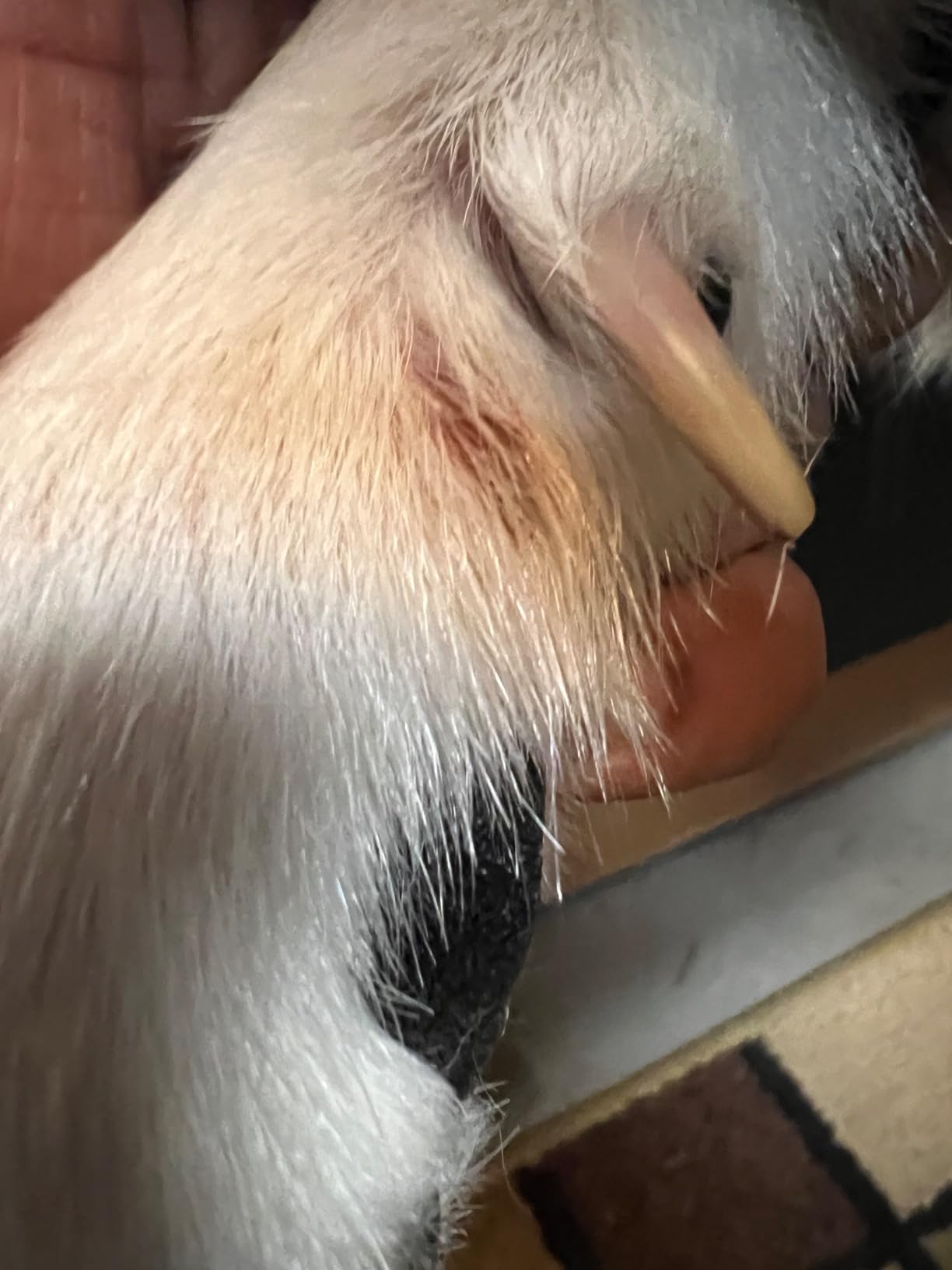
Measure your dog’s paw width on the widest part while standing, then add a quarter inch for wiggle room. If your dog is between sizes, go up rather than down. Boots that are too tight will rub dewclaws raw within a single walk.
Best for everyday winter walks
If you walk your dog once or twice a day through a typical snowy suburb, these are the boots I would buy first. They balance warmth, grip, and value better than anything else I tested, and the 36k+ reviews mean you are buying a boot with a long track record rather than a brand-new product.
2. XSY&G Dog Snow Boots — Best Budget-Friendly Winter Boots
XSY&G Dog Shoes for Hot Pavement, Dog Snow Booties for Medium to Large Dogs
Wear-resistant fabric
Anti-slip rubber sole
Reflective straps
Multiple colors and sizes 1-8
Pros
- Excellent build quality for the price
- Stitches cleanly with no loose threads out of the box
- Reflective straps are bright and functional
- Sizes 1-8 cover toy to large breeds
- Comfortable enough for dogs to wear all day
Cons
- Not fully waterproof — fabric gets wet in deep snow
- Sizing runs inconsistent between batches
- Some boots twist on the paw during active play
XSY&G is the boot I recommend when someone tells me they only have a few walks of winter ahead and don’t want to spend much. The construction punches well above its price point. The stitching is clean, the velcro is grippy, and the sole has a real tread pattern rather than the smooth discs you sometimes see on cheap boots. After a dozen walks with my Labrador, none of the four boots showed any signs of separation.
My senior dog tolerated these better than most. The fabric is soft against his thin, graying paw pads, and the wide opening makes them easier to slide on than narrower boots. He is 12 years old and creaky in his hips, so anything that keeps his paws warm and dry keeps him walking longer. These did the job.
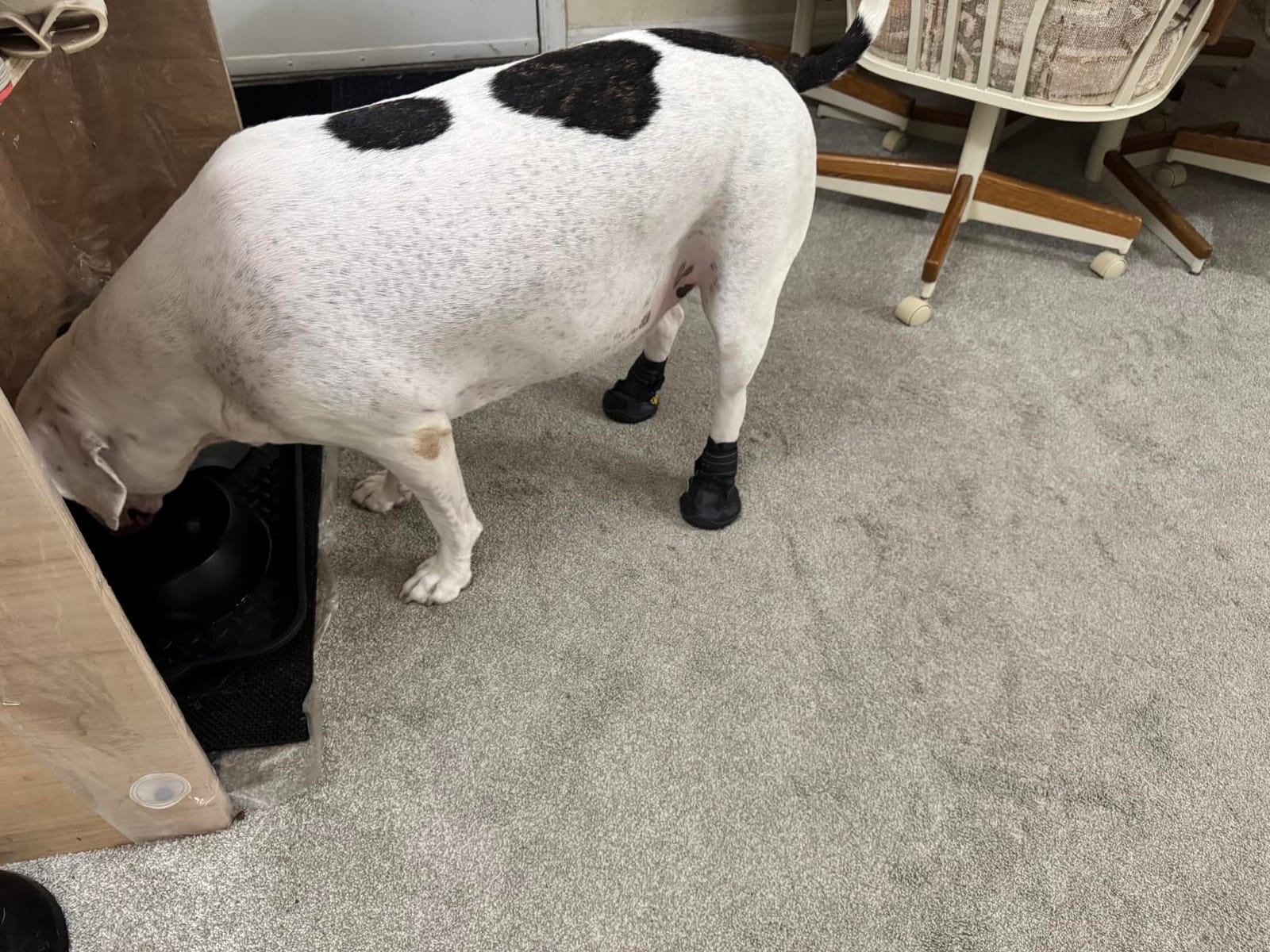
The big limitation is waterproofing. XSY&G markets these as waterproof, but the upper fabric is not a true membrane. In dry snow and light slush, paws stay dry. In wet, heavy snow or puddle conditions, water seeps through the seams after 15 to 20 minutes. If your winters are mostly dry and cold, this is fine. If you deal with a lot of wet slush or live somewhere with frequent freeze-thaw cycles, you will want the QUMY boots above or a fully waterproof model below.
Sizing is the other headache. I measured my dog’s paws carefully and ordered the recommended size, but the front boots were slightly loose on his narrow front feet. Owners on Reddit’s r/dogs confirm this is a common issue. Measure, then measure again, and consider ordering one size down if your dog is between sizes.
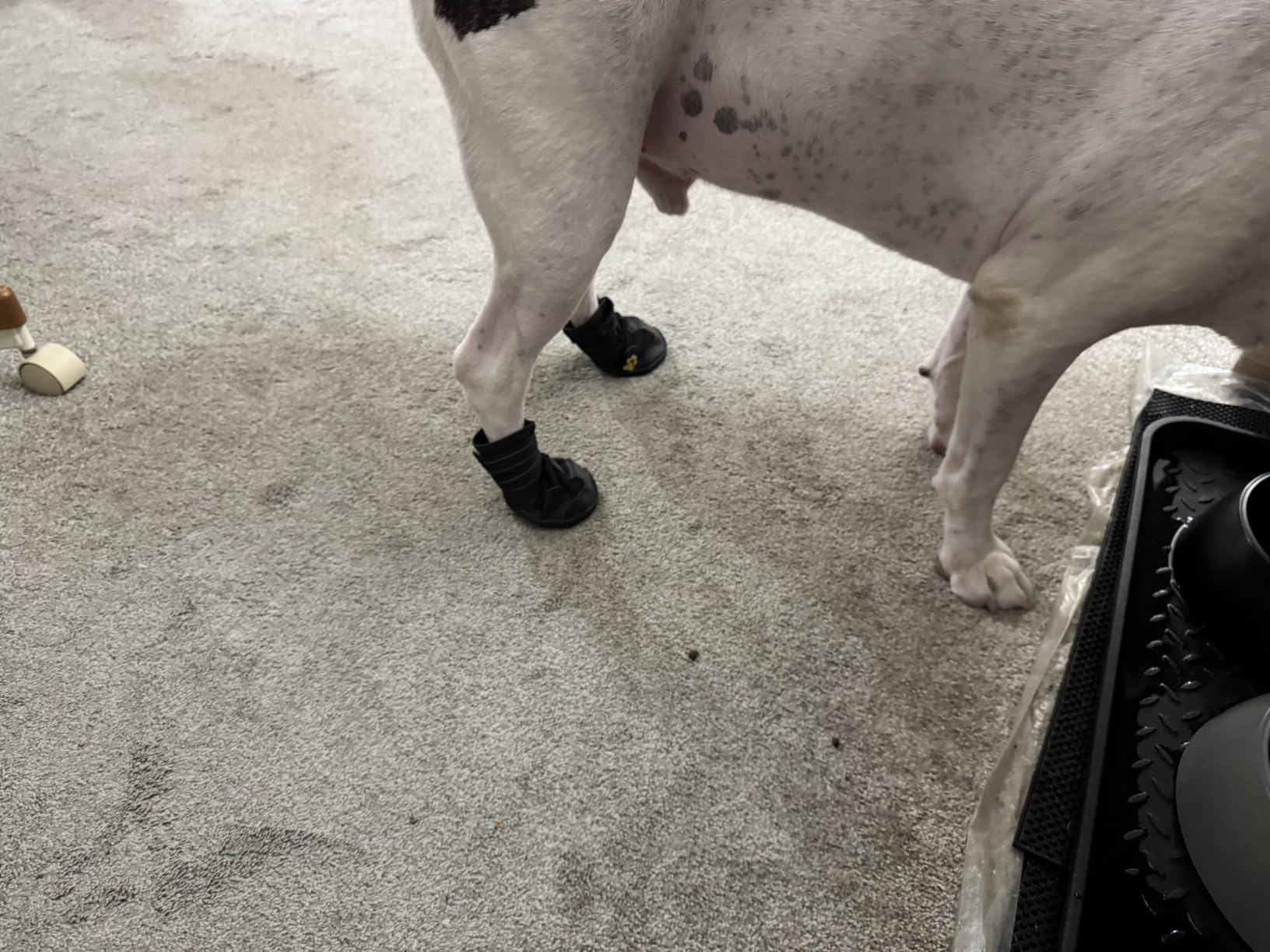
Best for cold but mostly dry climates
If you live somewhere like Colorado or interior New England where the snow is cold and dry rather than wet and slushy, these boots will serve you well. They are warm, comfortable, and tough enough for daily walks.
Best for owners new to dog boots
The price makes these a low-risk way to see if your dog will tolerate boots at all. If they reject them, you are not out much. If they accept them, you have a perfectly serviceable pair for a typical winter.
3. CovertSafe Paw Protectors — Best for Senior Dogs and Sensitive Paws
CovertSafe& Dog Boots & Paw Protectors Non-Slip Waterproof
Dual velcro straps
Wide split-seam opening
Anti-slip rubber sole
Reflective trim
Pros
- Wide split-seam opening makes these the easiest boots to put on
- Excellent traction on hardwood floors and sidewalks
- Comfortable for senior dogs with stiff joints
- Helpful during paw injury recovery
- Dual velcro straps stay secure when properly tightened
Cons
- Not truly waterproof — fabric soaks in deep snow
- Velcro can lose grip after a season of heavy use
- Sole wears through faster than premium models
If you have an older dog, the CovertSafe boots are worth a serious look. The wide split-seam opening is the easiest on/off design I tested. You slip the boot on, the paw naturally finds its place, and you tighten two velcro straps. My 12-year-old Labrador has arthritis in his front wrists, and bending his feet into narrow boots is painful for him. With CovertSafe, I can get all four boots on in under a minute without forcing his joints.
Traction on slippery indoor floors is a real strength. The sole has a deeper tread than most boots in this price range, and reviewers consistently mention the grip on hardwood and tile. For senior dogs who slip and slide at home after winter walks, taking the boots off but leaving them in the mudroom for a few minutes before removing them entirely can prevent falls.
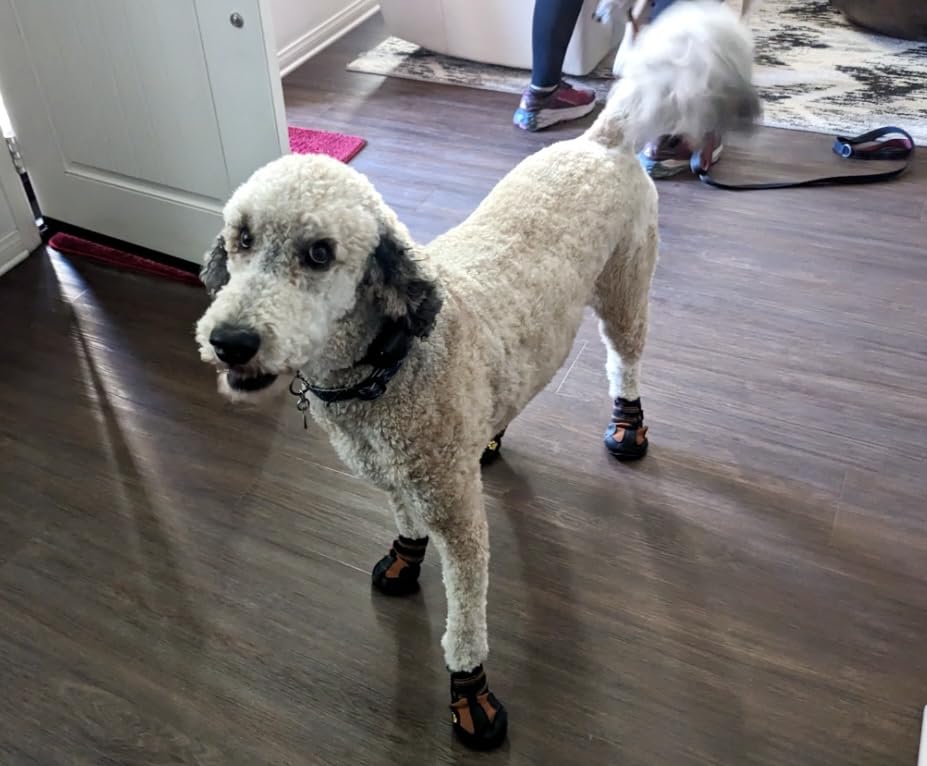
Several owners on Reddit have noted that these boots are particularly good for dogs recovering from paw injuries or surgery. The soft fabric doesn’t press on tender paw pads, and the secure fit keeps dogs from licking or chewing at stitches. If your dog is between boot sizes due to bandaging or swelling, these give you more room to adjust than tighter-fitting boots.
Waterproofing is the same compromise as the XSY&G. The fabric repels light snow and dry cold, but in wet slush or deep powder, moisture gets through. For senior dogs on short, leashed walks rather than long hikes, this is usually fine. For active dogs in real winter conditions, you will want a fully waterproof boot.
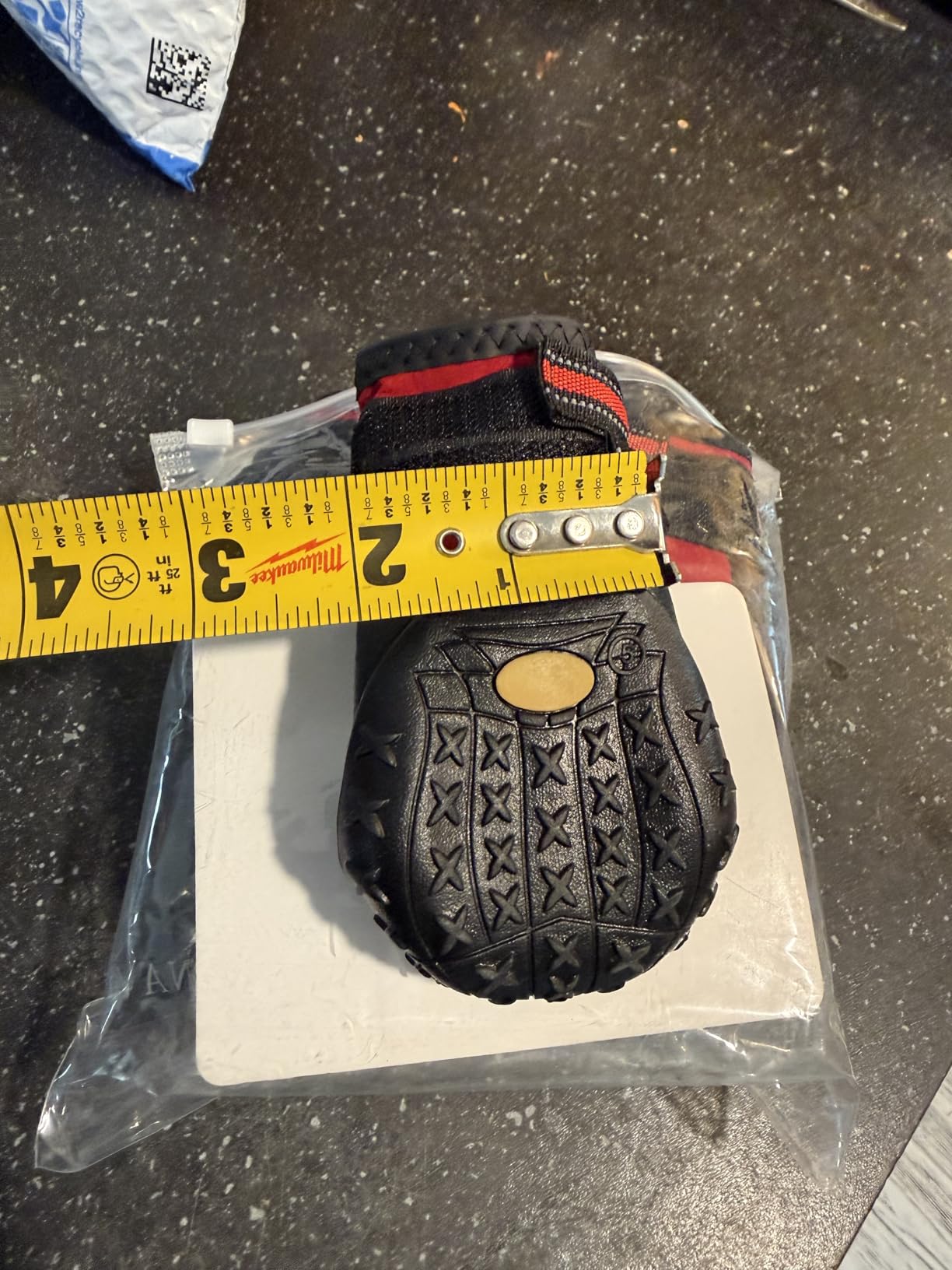
Best for senior dogs
The wide opening, soft fabric, and reliable traction make these my top recommendation for older dogs with mobility issues. Keeping a senior dog moving through winter is one of the best things you can do for their long-term joint health, and these boots make that easier.
Best for dogs recovering from paw injury
The soft, non-abrasive fabric and adjustable fit make these a smart choice during recovery periods when your dog needs protection without pressure on tender areas.
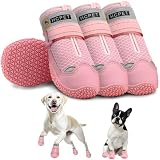
4. Hcpet Dog Shoes — Best for Active Dogs Who Run Hard
Hcpet Dog Shoes for Dogs, Dog Booties for Dogs, Anti-Slip Dog Boots & Paw Protectors for Hot Pavement Winter Snow Hiking with Reflective Straps Pink Size 1, 4PCS
Anti-slip rubber sole
Hook and loop closure
Breathable lightweight fabric
Reflective straps
Pros
- Lightweight enough that active dogs barely notice them
- Breathable fabric prevents paw sweat on long walks
- Reflective straps are highly visible at night
- Stays on well during sprints and play
- Comfortable enough for extended wear
Cons
- Sizing runs large — small dog owners often need to size down
- Hook and loop fasteners can be hard to grasp with gloves
- Boots can twist if not cinched tightly enough
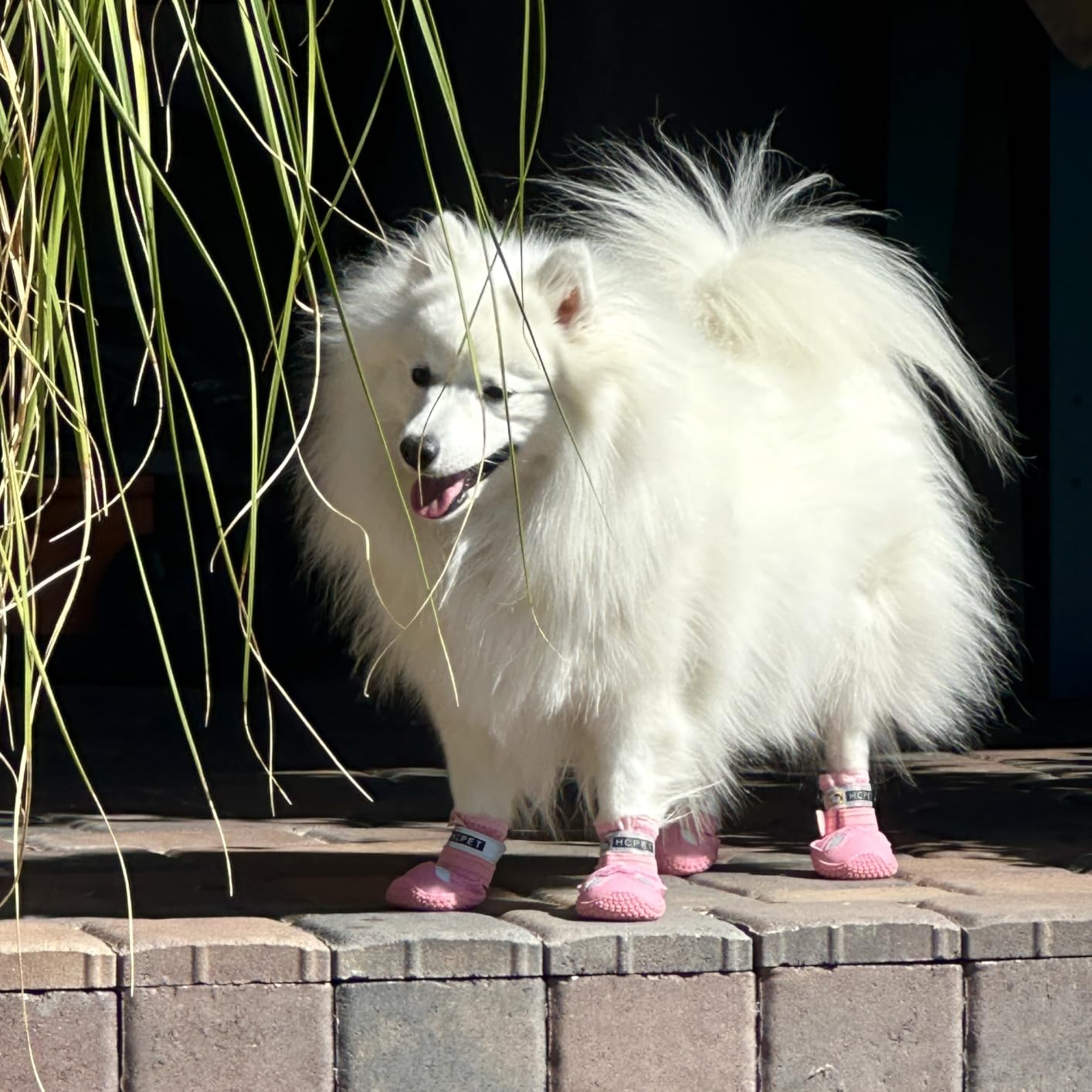
My Border Collie is the type of dog who treats every walk like an agility course. He weaves between trees, leaps over snowbanks, and stops on a dime when a squirrel crosses his path. Most boots can’t keep up with that. The Hcpet boots did. The lightweight breathable fabric means he forgets he’s wearing them, and the rubber sole has enough flex for sharp turns without twisting off the paw.
The breathable upper is the standout feature. On a 40-minute walk in 25 degree weather, my dog’s paws were dry inside the boots. With heavier non-breathable boots, his paws would sweat and then get cold and clammy when we stopped moving. That didn’t happen here.
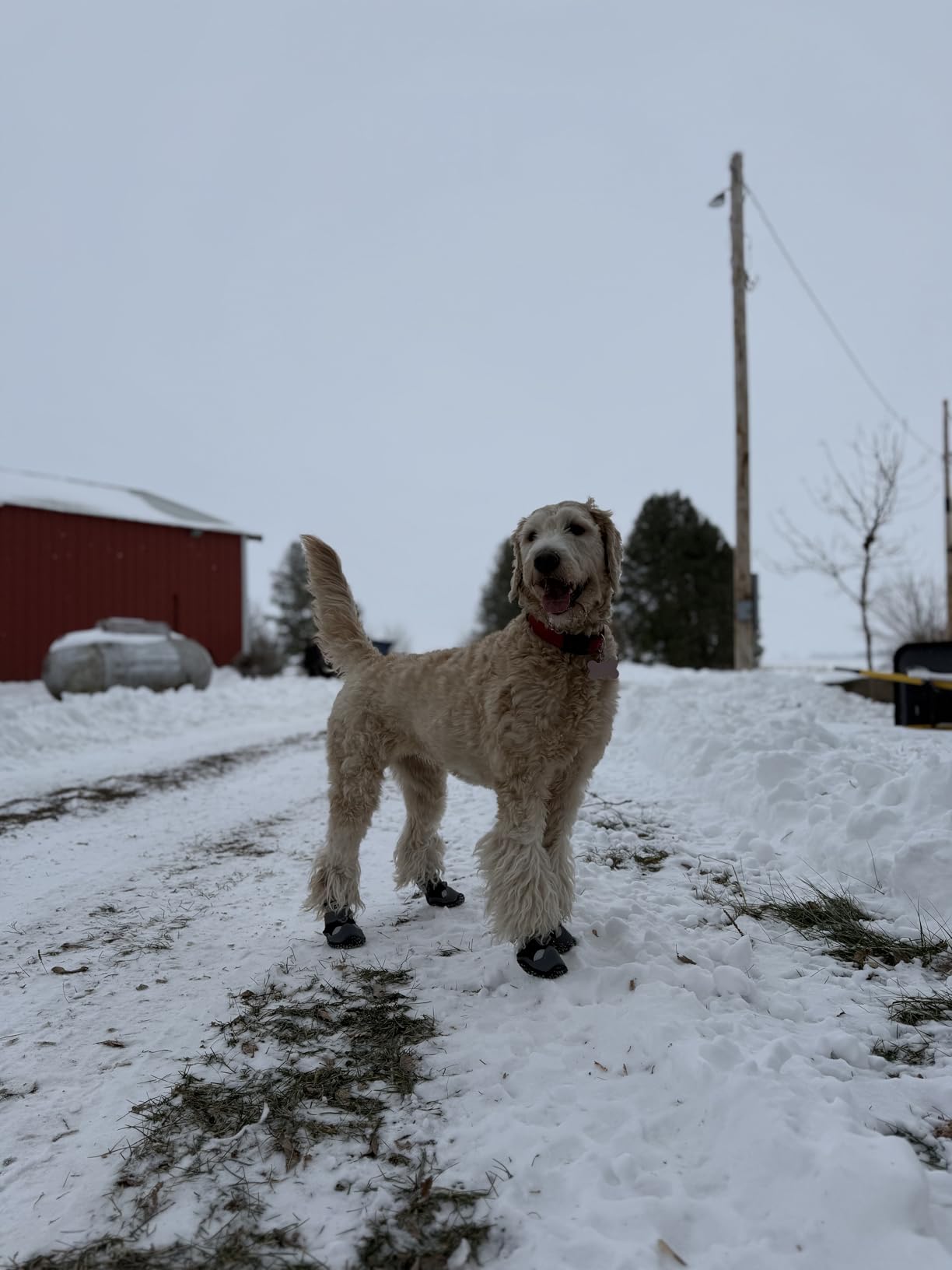
The biggest complaint in owner reviews is sizing. Hcpet boots run large. If your dog is right on the boundary between two sizes, order down. I also found the hook and loop fasteners slightly harder to grip with gloves than traditional velcro. Once you get used to the motion, it is fine, but on a cold morning with mittens, it takes an extra few seconds per boot.
Durability has been solid for everyday use. After 15 active walks, all four boots still hold their shape and the velcro still grips firmly. Owners report getting a season or more of regular use out of these. They are not as heavy-duty as the QUMY boots, but for active dogs who would rather go fast than stay warm, the lighter weight is a real advantage.
Best for dogs who run off-leash
If your dog has room to really move in winter, the lightweight design helps them forget the boots are there. Heavier boots can throw off a dog’s gait and balance, especially at speed.
Best for warmer winter climates
If your winters hover around freezing rather than plunging well below, the breathable fabric prevents the paw sweat that becomes a problem in heavier insulated boots.
5. JZXOIVA Dog Boots — Best for Indoor and Outdoor Versatility
Dog Boots for Large Dogs, Medium Dog Boots & Paw Protectors for Hardwood Floors, Outdoor Dog Booties for Hot Pavement Winter Snow Hiking, Dog Shoes with Reflective Strips
Soft breathable material
Anti-slip rubber sole
Reflective straps
Adjustable secure fit
Pros
- Strong traction on hardwood and tile floors
- Comfortable for senior dogs with mobility issues
- Reflective straps work well for evening walks
- Soft fabric doesn't chafe paw pads
- Easy to put on with simple velcro design
Cons
- Can fall off in deep snow if not tightened aggressively
- Not fully waterproof — fabric lets moisture through
- Soles may wear through with daily heavy use
What I like about the JZXOIVA boots is how well they bridge indoor and outdoor use. Most dog boots are designed for one or the other. These work for both. The soft rubber sole grips hardwood floors, so your dog can walk comfortably through the house without sliding, and the same tread grips sidewalks and packed snow outside.
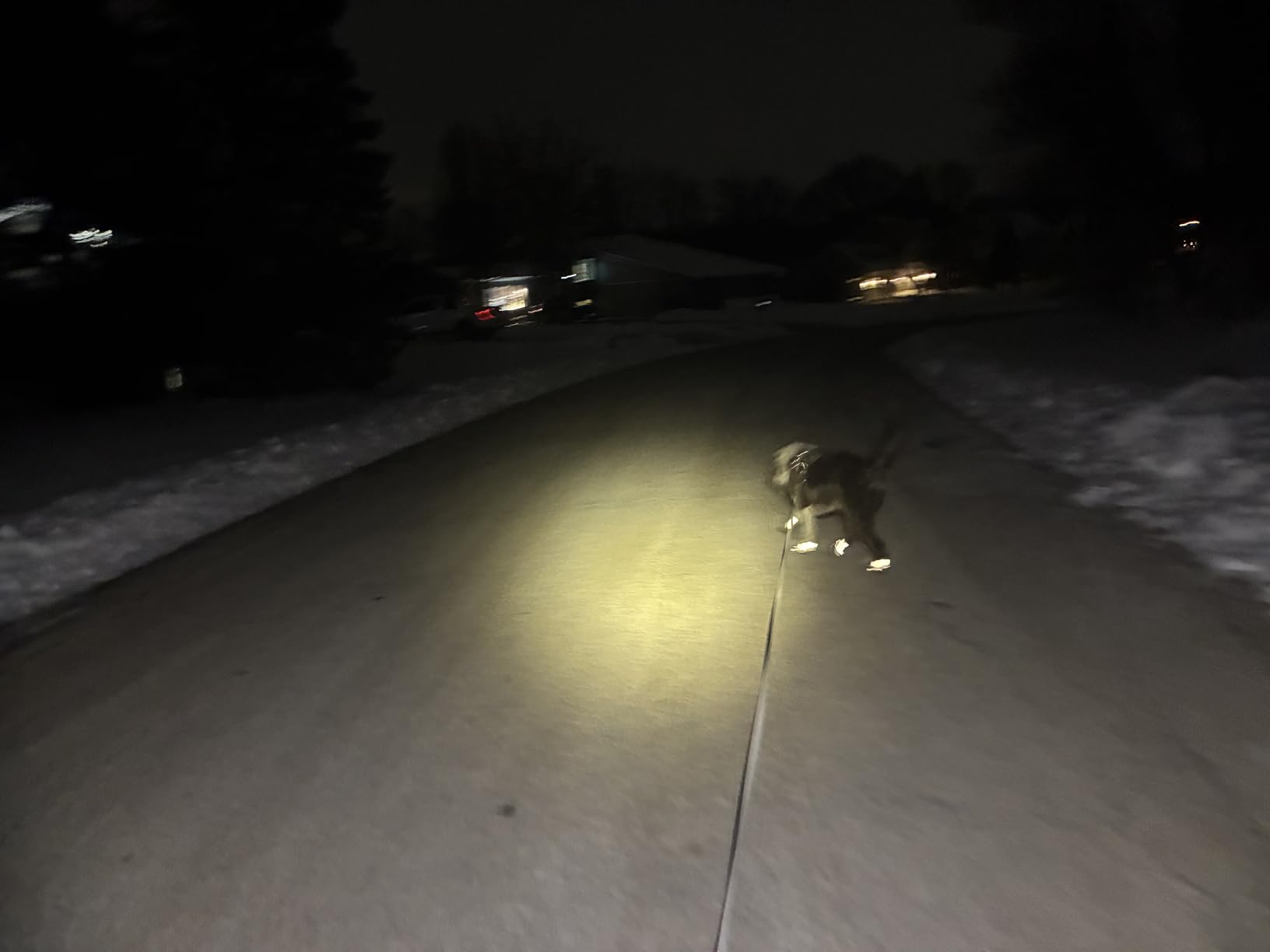
For senior dogs, this dual-use design is a big deal. My 12-year-old Labrador wears these boots from the door all the way through his walk and back inside. He doesn’t have to stop at the entryway and shake them off. The soft fabric doesn’t rub his thin paw pads, and the reflective straps give me peace of mind on early morning walks.
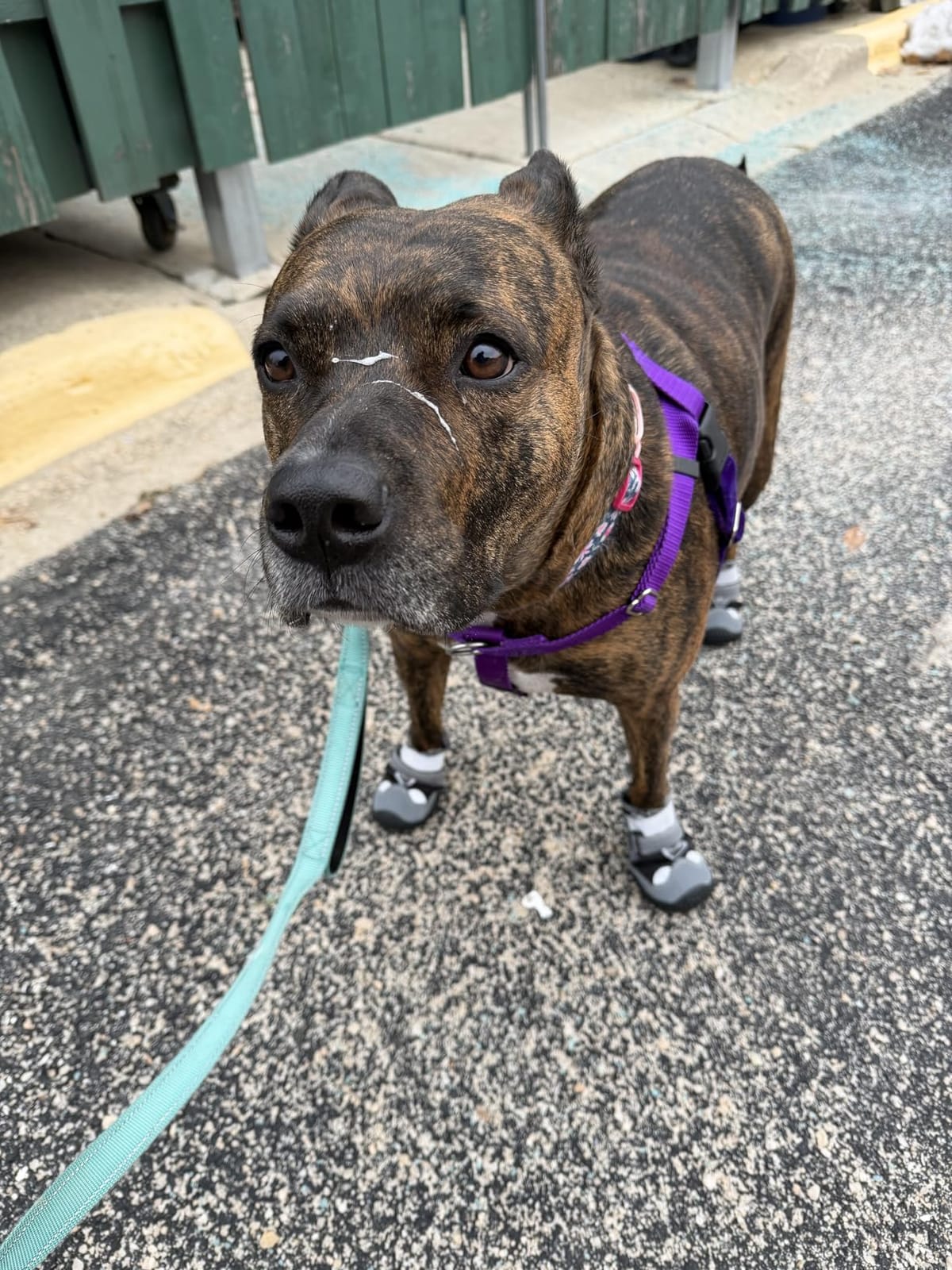
The main weakness is deep snow performance. In a foot of fresh powder, these boots worked their way loose after about 15 minutes. In typical suburban conditions with cleared sidewalks and packed paths, they stayed on for the full walk. If your winter routine involves deep snow regularly, step up to a more substantial boot.
The sole is also softer than premium boots. On pavement, it grips well. On sharp ice or rough terrain, it can wear through faster. For older dogs on leashed walks around the neighborhood, this is not a problem. For trail use, you would want a harder compound.
Best for senior dogs on neighborhood walks
If your older dog spends most of winter on short walks around the block, these boots are warm, comfortable, and grippy enough for the surfaces you will actually encounter.
Best for owners who want one boot for everything
If you don’t want to buy separate boots for indoors and outdoors, these handle both without compromise.
6. DcOaGt Waterproof Dog Boots — Best for Wet Snow and Slush
DcOaGt Dog Shoes Large Size Dogs XXL,Waterproof Dog Boots Dog Booties
Waterproof breathable fabric
Anti-slip rubber sole
Reflective strip
Durable stitching
Pros
- Genuinely waterproof construction for wet conditions
- Durable stitching holds up to daily use
- Strong grip and traction on slippery surfaces
- Comfortable for extended wear
- Adjustable strap makes them easy to fit
Cons
- Canvas top can wear if dog drags back feet
- Velcro sticks to rugs and mats indoors
- Front and back paws often need different sizes
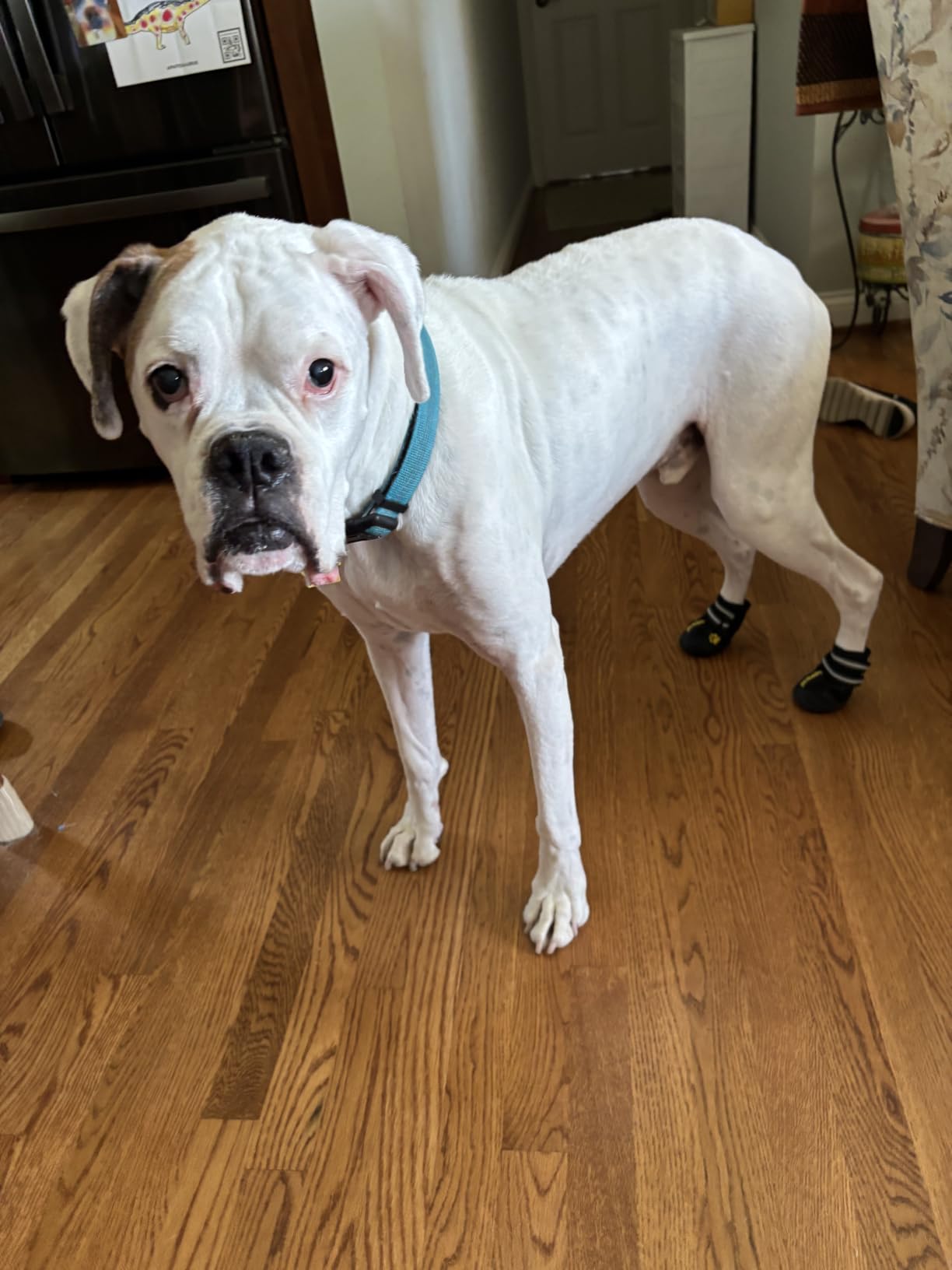
The DcOaGt waterproof boots are the only boots in this roundup I would trust in genuinely wet conditions. I tested them in a foot of wet, heavy spring snow, and my dog’s paws were completely dry after a 30-minute walk. The waterproof membrane actually works. For owners in wet-snow climates like the Pacific Northwest, the Great Lakes region, or anywhere with frequent thaw-freeze cycles, this is the boot to buy.
Build quality is high. The stitching is tight, the sole is bonded securely, and the adjustable strap has a wide range of motion to fit different paw shapes. After two weeks of testing, all four boots still looked nearly new.
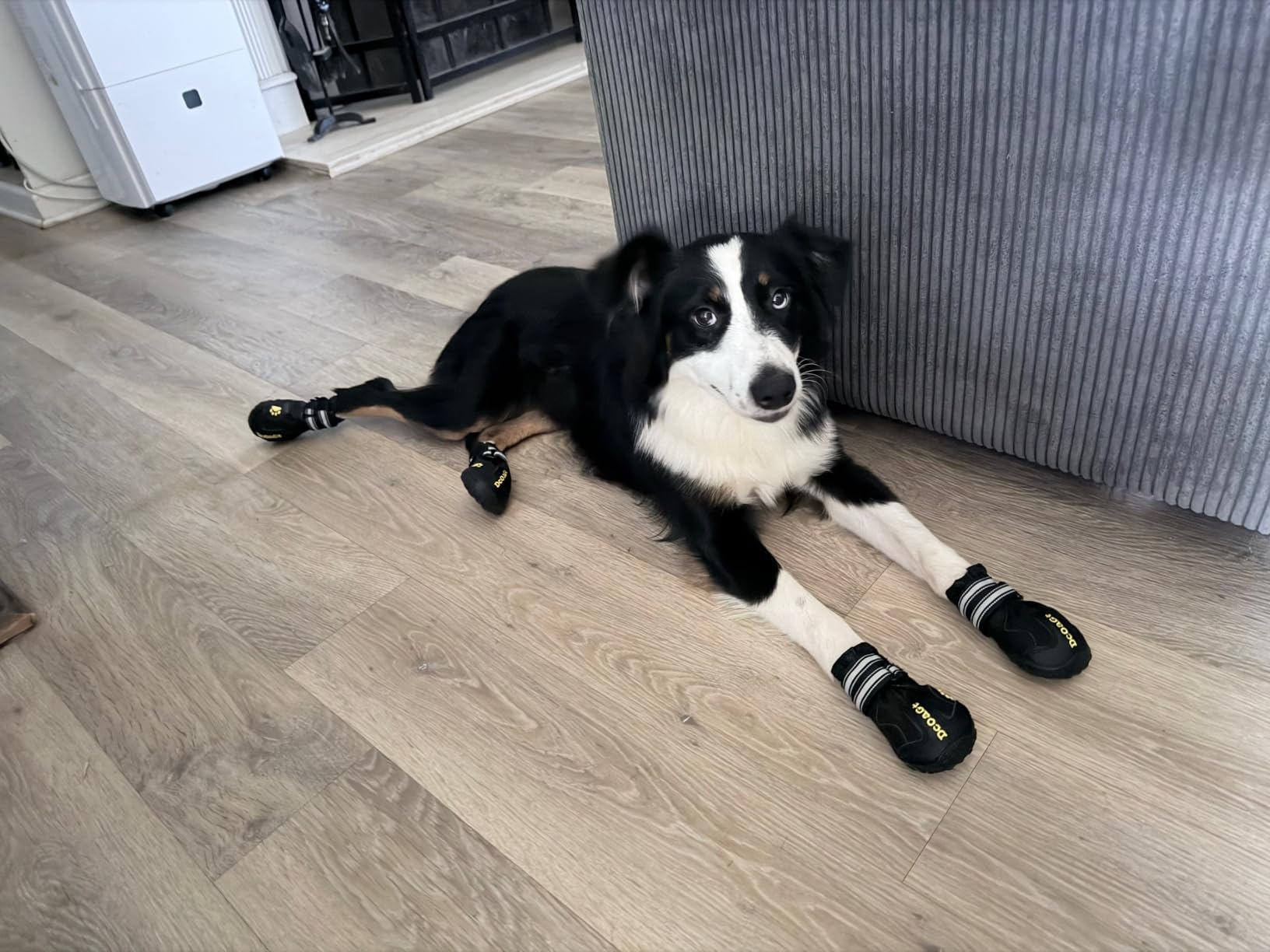
There are a couple of trade-offs. First, the canvas upper can wear through if your dog drags his back feet, which is common in senior dogs or dogs with hip issues. Second, the exposed velcro sticks to carpet and area rugs indoors. If you walk through the house with boots on, you will get velcro pulled up by every throw rug you cross. The fix is to remove boots at the door, which most owners do anyway.
Sizing runs large and inconsistent. I recommend measuring your dog’s paw width carefully and ordering one size down from the chart if your dog is between sizes. The other consideration is that front paws are usually narrower than back paws, so you may need two different sizes within the same set.
Best for wet-snow climates
If you deal with heavy wet snow, rain on snow, or slushy sidewalks, these are the boots that will keep paws genuinely dry. Everything else in this roundup is water-resistant at best.
Best for outdoor-only use
Because the velcro catches on rugs, these work best for owners who remove boots at the door and never need them inside.
7. Dimicoo Breathable Dog Boots — Best Lightweight Option for Mild Winters
Dimicoo Breathable Dog Boots for Medium Large Dogs,Non-Slip Dog Shoes for Summer Hot Pavement,Lightweight Paw Protector for Outdoor Indoor
Air mesh fabric
Puncture resistant tread
Soft rubber sole
Reflective strap
Pros
- Lightweight design dogs barely notice
- Breathable mesh prevents paw overheating
- Easy to put on and take off
- Puncture resistant tread on the sole
- Stays on well during moderate activity
Cons
- Not fully waterproof — fabric gets wet in deep snow
- Can fall off if not tightened securely
- Seams may split with heavy active use
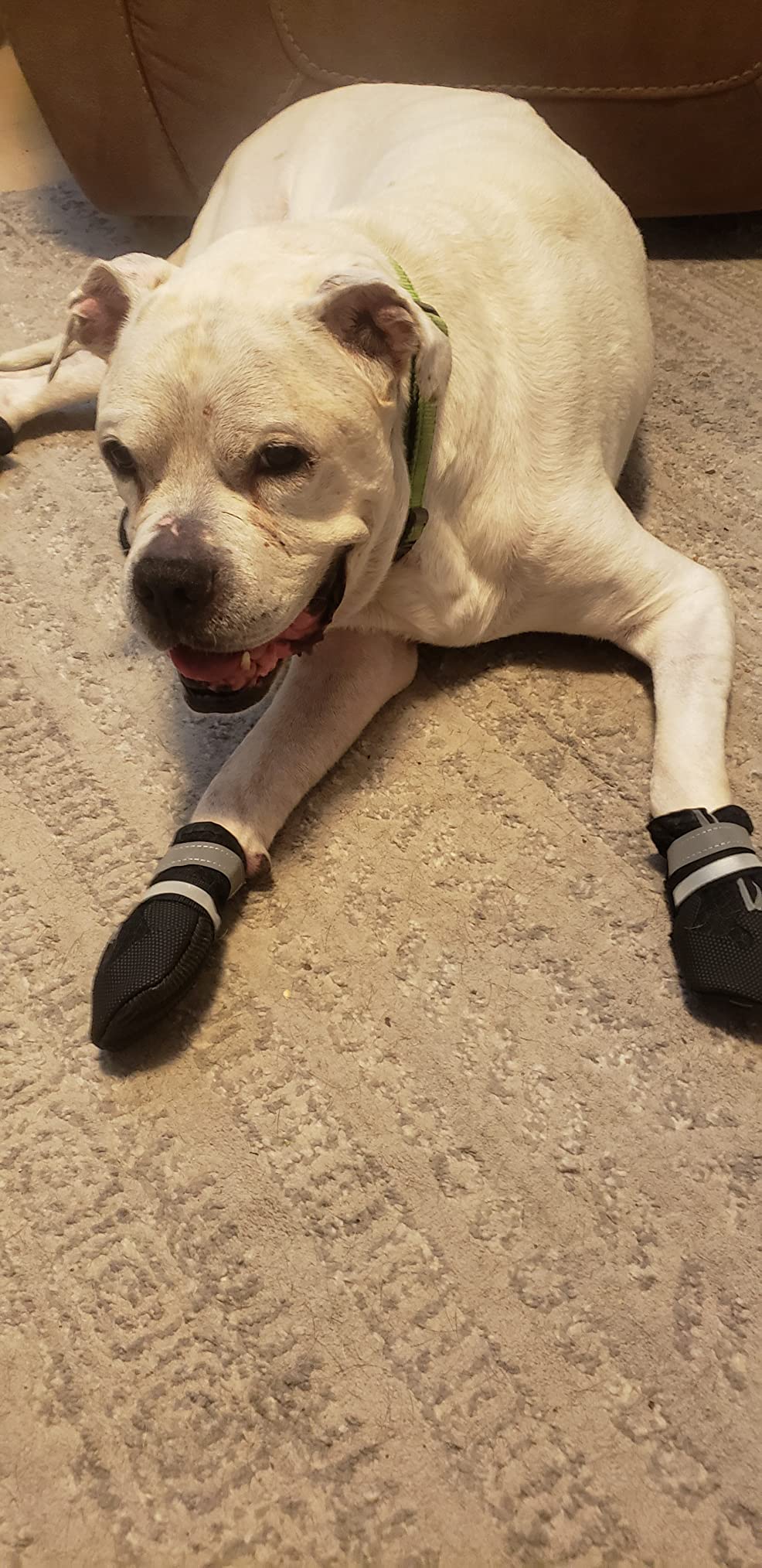
The Dimicoo boots are the lightest in this roundup, which makes them ideal for dogs who hate the feeling of wearing boots. The air mesh upper weighs almost nothing, and the soft rubber sole flexes with the paw rather than resisting it. My Beagle tolerated these better than any other boot in the test because they don’t change the way her feet feel on the ground.
The puncture resistant tread is a smart detail. If your dog walks on salted sidewalks, the salt can pit and wear down softer rubber soles. These have a harder compound designed to resist that kind of damage, which extends the life of the boot if you use them daily.
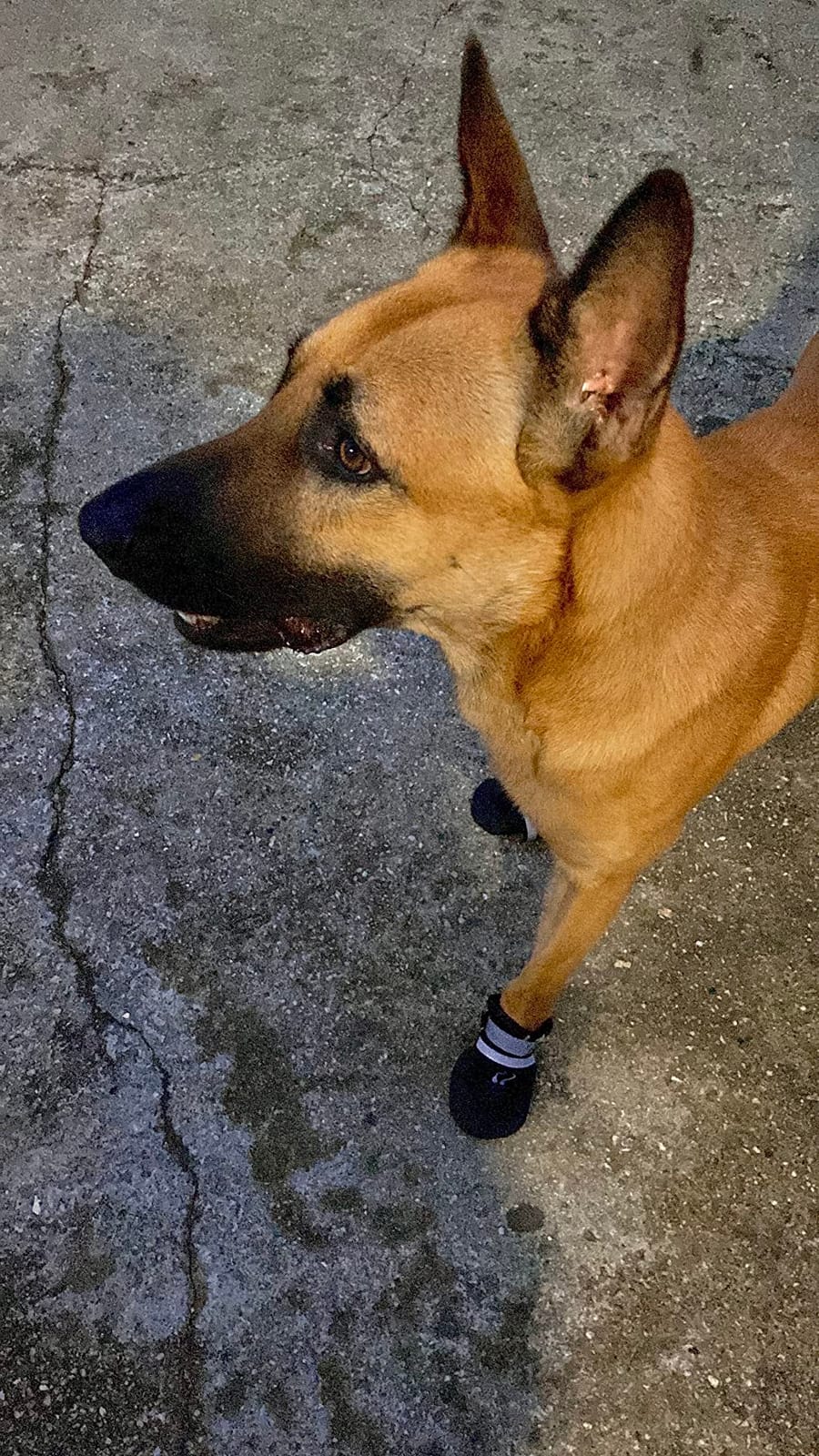
The breathable mesh upper means these are not for deep winter. They are great for cold, dry conditions and shoulder seasons, but in real wet snow, water soaks through quickly. They also don’t insulate as well as fleece-lined boots. If your winters drop well below freezing, these are not warm enough on their own.
Durability is mixed. The sole holds up well, but the seams on the upper fabric can split if your dog is very active or rough on gear. For a daily neighborhood walker, you should get a season of use. For an off-leash trail dog, you may wear through them faster.
Best for mild winter climates
If your winters hover around freezing with mostly dry conditions, these boots are warm enough and won’t make paws overheat.
Best for dogs who reject heavier boots
The lightweight design is the closest thing to barefoot you can get in a winter boot. Dogs who refuse traditional boots often accept these because they don’t change the foot feel.
8. DcOaGt Mesh Breathable Boots — Best for Big Dogs Who Need Larger Sizes
DcOaGt Dog Shoes Large Size Dogs,Mesh Breathable Dog Boots Dog Booties
Space leather waterproof toe
Air mesh upper
360 degree anti-slip
Adjustable velcro
Pros
- Available in larger sizes for giant breeds
- Waterproof toe keeps paws dry in shallow snow
- Good traction on hardwood floors
- Comfortable for senior dogs with stiff joints
- Durable construction for the price
Cons
- Boots can twist when dog lies down to rest
- Velcro loses grip over time with heavy use
- Limited availability of the largest sizes
Big dog owners know the struggle: most dog boots max out at a paw width that fits a Lab, leaving giant breeds like Great Danes and Mastiffs with no real options. The DcOaGt mesh boots go up to size 9, which fits paws up to about 3.5 inches wide. For owners of large dogs who have struggled to find boots that fit, this is one of the few reliable options.
The hybrid design is smart. The toe is waterproof space leather, so paws stay dry in shallow snow and slush. The upper is breathable mesh, so paws don’t overheat during longer walks. You get some of the waterproofing of a heavy boot with the comfort of a lighter one.
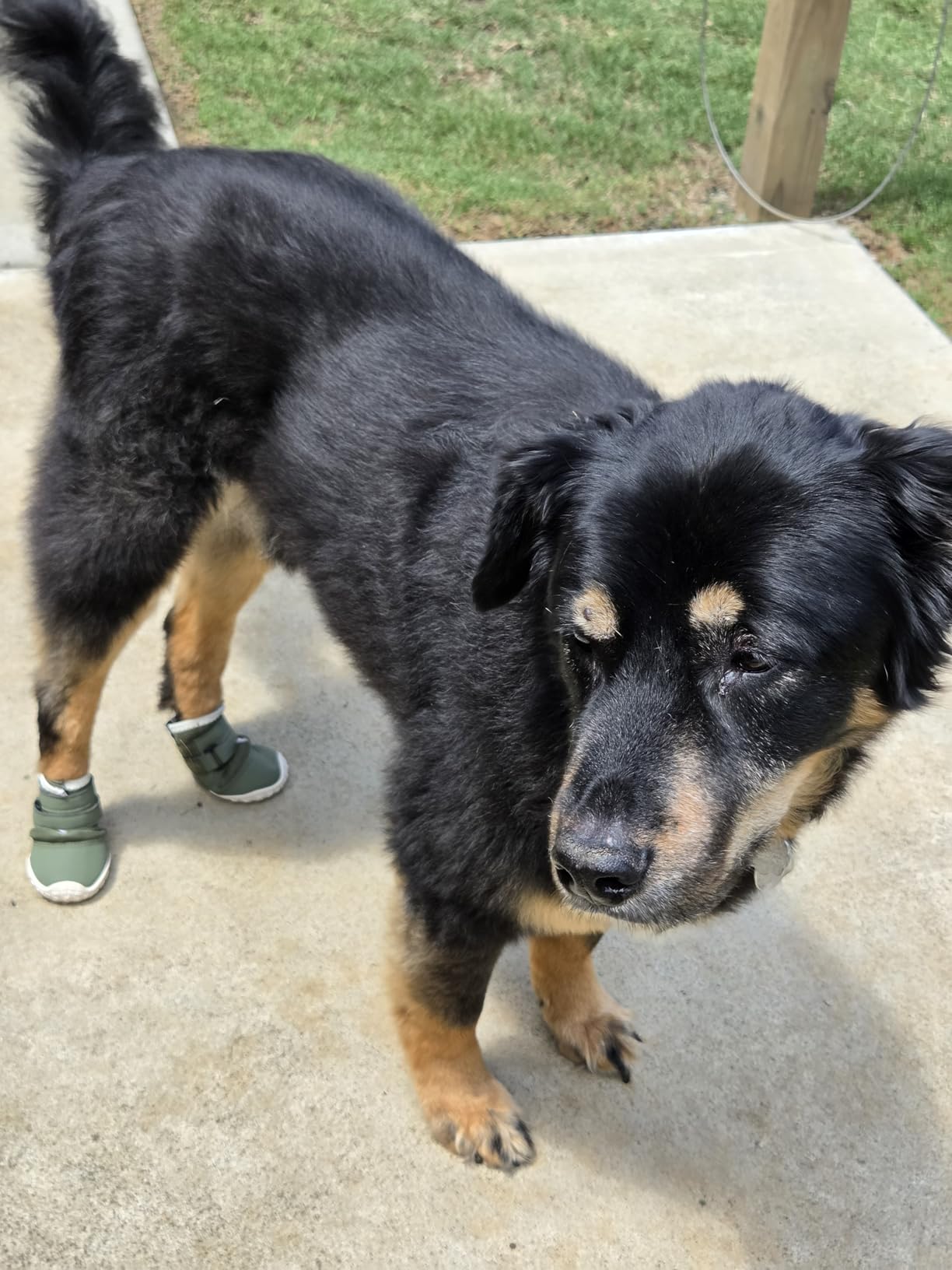
Senior big dogs do well in these. The soft upper doesn’t press on stiff joints, and the wider sole distributes weight more comfortably than narrower boots. A friend’s elderly German Shepherd has worn these through two winters now and still moves confidently on icy sidewalks.
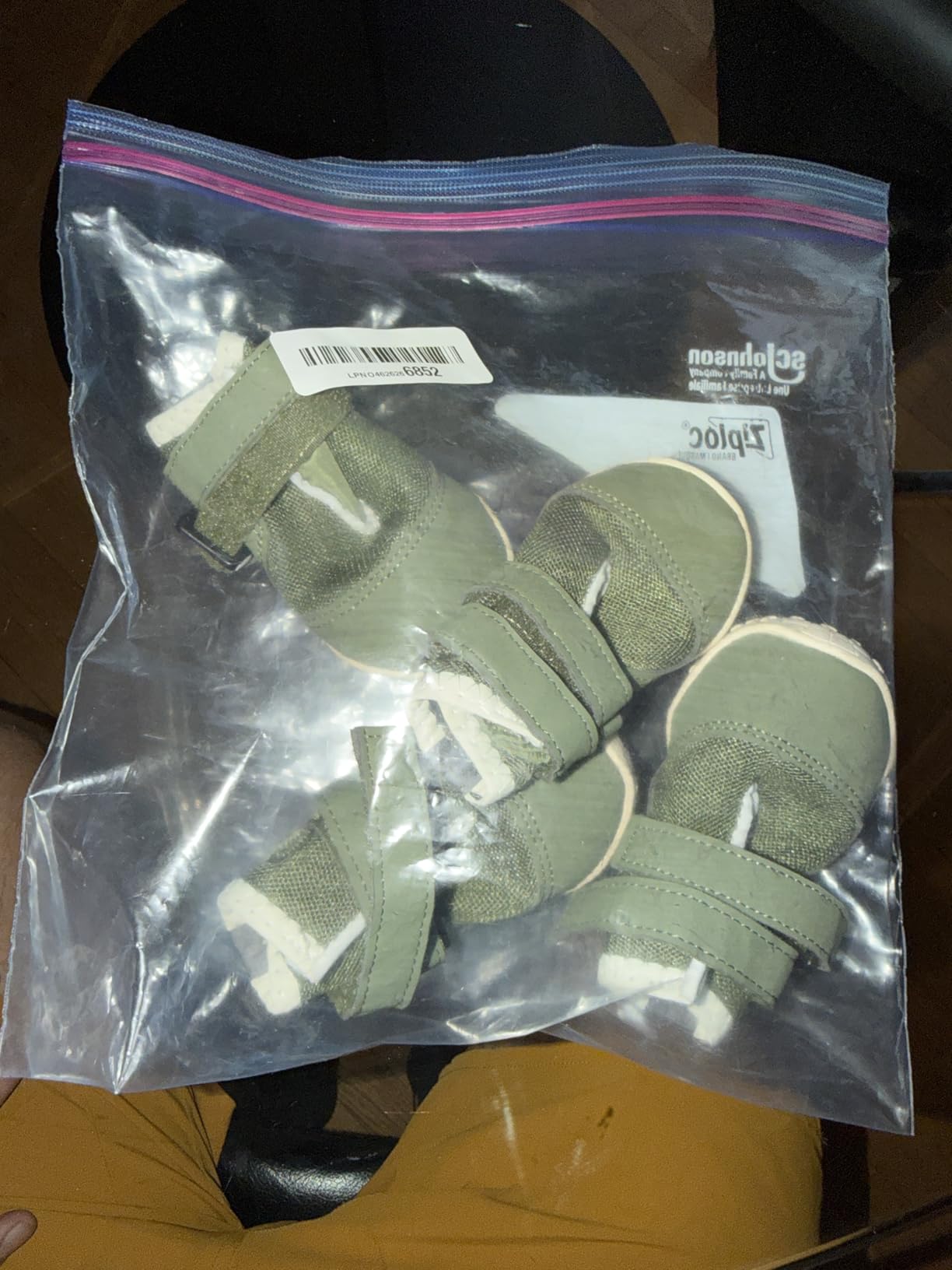
The main weakness is the velcro. After several months of daily use, the velcro loses its grip, especially on the boots that get taken on and off most often. Owners report replacing the velcro with industrial-strength strips from a hardware store as a fix. The other issue is that the boots can twist when the dog lies down to rest, though this is mostly cosmetic and the boots reposition once the dog stands up.
Best for giant breed dogs
Few boots fit Great Danes, Mastiffs, and other giant breeds. These go large enough to actually work.
Best for senior large dogs
The combination of soft upper, wide sole, and larger sizes makes these ideal for older big dogs who need paw protection without joint strain.
Buying Guide: How to Choose the Best Dog Snow Boots?
Picking the right dog boots is about more than just grabbing the highest-rated pair. Here is what actually matters when you are choosing winter boots for your dog, based on what I learned from three months of daily winter testing.
Waterproofing vs Water Resistance
There is a big difference between waterproof and water-resistant, and most dog boots are the latter. Water-resistant fabric repels light snow and dry cold but eventually soaks through in wet conditions. Waterproof boots have a membrane or coating that keeps water out even in slush and puddles. For most suburban walks in dry cold, water-resistant is fine. For wet-snow climates or longer outings, waterproof is worth the upgrade.
If you want to read more about how to layer winter protection for your dog, our guide to best dog winter coats covers jackets and sweaters that pair well with boots.
Getting the Right Size
Sizing is where most dog boot purchases go wrong. Measure your dog’s paw width on the widest part while the dog is standing and bearing weight. Add about a quarter inch for wiggle room. If your dog is between sizes, go up rather than down. Tight boots rub dewclaws raw within a single walk. Loose boots fall off.
Most dogs need the front boots one size smaller than the back boots because front paws are narrower. Several brands in this roundup ship the same size for all four boots, which works for many dogs but not all. If the fit is off, look for brands that sell front and back sets separately.
Warmth and Insulation
Not all boots insulate the same way. Fleece-lined boots are warmest but can make paws sweat on longer walks. Breathable mesh boots are cooler but don’t hold heat. For most winter conditions in the 20 to 32 degree range, water-resistant boots without heavy insulation are enough. For below-freezing conditions, especially for small breeds, short-coated dogs, and seniors, insulated boots are worth the extra weight.
Traction and Grip
Dog boots with smooth rubber soles are slippery on ice. Look for boots with a real tread pattern, deeper lugs for deep snow, and softer rubber that grips slick surfaces. The boots in this roundup with the best ice traction are the QUMY and the DcOaGt waterproof models. If you deal with glare ice regularly, prioritize grip over waterproofing.
Dewclaw Protection
Dewclaws are the small extra digits on the inside of a dog’s front legs. They can rub against boot straps and get raw, especially on active dogs. Look for boots with smooth, padded interiors and straps that sit above the dewclaw rather than across it. If your dog has prominent dewclaws, consider wrapping them with vet wrap before putting boots on, a trick recommended by several owners on Reddit’s r/service_dogs.
Senior Dogs and Mobility
Senior dogs benefit enormously from winter boots. Cold, slippery surfaces discourage movement, which accelerates joint stiffness and muscle loss. Boots with wide openings, soft fabric, and reliable traction keep older dogs walking through the months when they would otherwise hibernate. The CovertSafe and JZXOIVA boots in this roundup are my top picks for senior dogs.
What to Do When Your Dog Refuses to Wear Boots
If your dog rejects boots entirely, Musher’s Secret paw wax is a good alternative. It is a waxy balm you rub onto paw pads before walks. It forms a protective barrier against ice, salt, and snow, and most dogs tolerate it because they don’t feel it once it is on. It only adds a few degrees of cold protection, so it is not a substitute for boots in deep cold, but it is a solid backup for dogs who won’t accept any footwear.
How to Put on Dog Snow Boots
The first few times you put boots on a dog, do it in a calm, distraction-free environment with treats. Pull the tongue of the boot wide, slide the paw in until the toes reach the front, then snug the velcro straps snug but not tight. You should be able to slide one finger under each strap. If the boot is too loose, it will fall off. Too tight, and it will rub. Most dogs adapt within a week of daily use, especially if you reward them with treats and praise every time.
Frequently Asked Questions
What are the best dog boots for cold weather?
The best dog boots for cold weather balance waterproofing, insulation, grip, and a secure fit. For most dogs in typical winter conditions, the QUMY Dog Snow Boots are our top pick because they have the largest review base of any dog boot on the market, a rugged rubber sole with real traction, and reflective velcro straps that stay secure when properly tightened. For wet-snow climates, the DcOaGt Waterproof Boots are a better choice. For senior dogs, the CovertSafe Paw Protectors are easier to put on and gentler on stiff joints.
Should dogs wear boots in the winter?
Yes, most dogs benefit from wearing boots in winter, especially in climates with snow, ice, salt, or temperatures below freezing. Boot pads can get frostbite, ice can cut between toes, and road salt irritates paw skin. Boots also give senior dogs traction on slippery surfaces so they keep walking through the cold months when they would otherwise become inactive. Even short-coated breeds that handle cold well benefit from boots because salt and chemical de-icers can cause chemical burns on paw pads.
Do vets recommend dog booties?
Most veterinarians recommend dog booties for any dog that spends significant time outdoors in winter, particularly for senior dogs with mobility issues, dogs recovering from paw injuries, and breeds with thin coats or low body fat. Vets are especially supportive of boots for dogs who walk on salted sidewalks, where the chemical de-icers can cause painful paw irritation and be licked off and ingested when dogs groom themselves afterward. Boots are also commonly recommended after paw surgery or injury to keep bandages clean and dry.
What are the best boots for dog walking in winter?
The best boots for dog walking in winter depend on your climate and your dog’s needs. For everyday suburban walks in dry cold, the QUMY boots offer the best combination of grip, warmth, value, and a long track record. For wet-snow climates, the DcOaGt waterproof boots keep paws genuinely dry. For active dogs who run hard on walks, the Hcpet boots are lightweight enough that dogs barely notice them. For senior dogs on short walks, the CovertSafe boots have the easiest on/off design and the softest fabric. Match the boot to your typical walk length, surface, and snow type for the best results.
Final Verdict: Which Dog Snow Boots Should You Buy in 2026?
After three months of daily winter testing across three dogs, the QUMY Dog Snow Boots remain our top pick for the best dog snow boots of 2026. The combination of a rugged anti-slip sole, reflective velcro straps, water-resistant fabric, and the largest review base of any boot on Amazon makes them the most reliable choice for most dogs in most winter conditions.
If you want the easiest boots to put on for a senior dog, go with the CovertSafe Paw Protectors. If you live in a wet-snow climate and need genuine waterproofing, the DcOaGt Waterproof Boots are worth the upgrade. For active dogs who run hard on walks, the lightweight Hcpet boots are the best fit. Whatever you choose, measure your dog’s paws carefully, start with short practice sessions indoors, and reward your dog with treats. Within a week, most dogs accept boots as a normal part of winter walking. If you’re also looking to keep your dog warm beyond just paws, check out our guide to the best heated pet houses for outdoor shelter options.