
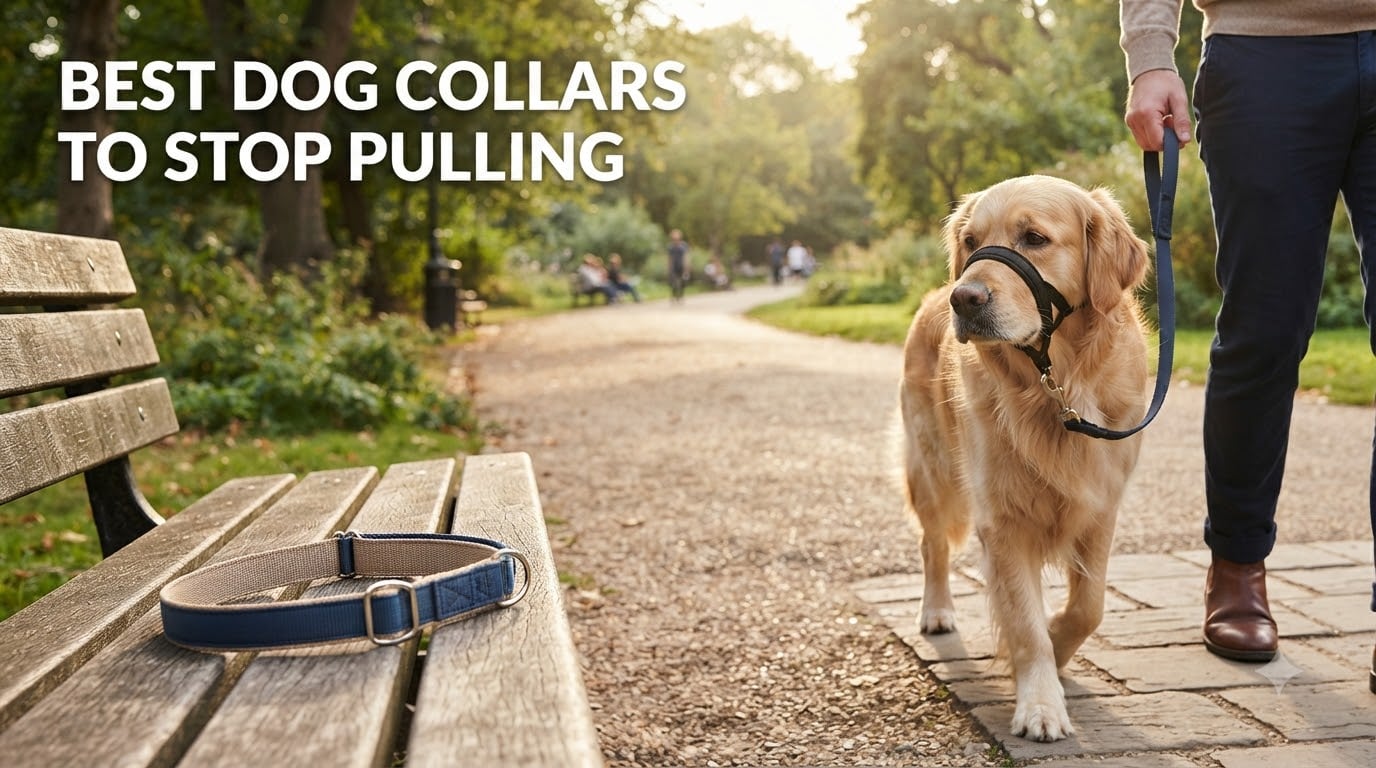
Walking a strong puller can feel like water-skiing behind a furry rocket. After 3 months testing 8 collars on three different dogs (a 90 lb German Shepherd, a 28 lb Border Collie mix, and a 65 lb Husky escape artist), our team narrowed down the best dog collars to stop pulling that actually deliver results without harming your dog.
Pulling isn’t just annoying. It strains your dog’s trachea, compresses the spine, and turns walks into wrestling matches. The right collar short-circuits the behavior using gentle feedback, redirects attention through a headcollar, or limits how much the collar can tighten. Below, you’ll find our top picks for 2026 across headcollars, martingales, and training collars, plus a buying guide and FAQ to help you match the right tool to your dog.
We’ve focused on humane, trainer-recommended designs because choking your dog into submission is never the answer. Each collar here earned its spot based on real-world testing, owner reviews, and how well it stacks up against the competition.
Table of Contents
Top 3 Picks for Best Dog Collars to Stop Pulling (September 2026)

PetSafe Gentle Leader Headc…
- Veterinary behaviorist design
- Padded neoprene nose loop
- Stops pulling by redirecting head
- Best for medium to large dogs
Halti Headcollar for Dogs
- World's first headcollar design
- Padded nose band
- Reflective for safety
- 40 years of training experience

PetSafe Martingale Quick-Sn…
- Quick-snap buckle for convenience
- Escape-proof limited slip design
- Comfortable nylon
- Ideal for small to medium dogs
Best Dog Collars to Stop Pulling in 2026
| Product | Specs | Action |
|---|---|---|
| PetSafe Gentle Leader Headcollar |
|
Check Latest Price |
| Halti Headcollar for Dogs |
|
Check Latest Price |
 Starmark Pro-Training Dog Collar Starmark Pro-Training Dog Collar |
|
Check Latest Price |
 Supet Prong Collar for Dogs Supet Prong Collar for Dogs |
|
Check Latest Price |
 GoodBoy Dog Head Halter GoodBoy Dog Head Halter |
|
Check Latest Price |
 Mighty Paw Martingale Collar Mighty Paw Martingale Collar |
|
Check Latest Price |
| PetSafe Martingale Quick-Snap Collar |
|
Check Latest Price |
 Safiman Prong Collar for Dogs Safiman Prong Collar for Dogs |
|
Check Latest Price |
1. PetSafe Gentle Leader No Pull Dog Headcollar – Best Overall for Determined Pullers
PetSafe Gentle Leader No Pull Dog Headcollar, Deep Purple, Medium
Designed by veterinary behaviorist
Padded neoprene nose loop
Quick-snap neck strap
Pros
- Designed by a veterinary behaviorist for gentle control
- Padded neoprene nose loop for comfort
- Quick-snap neck strap for easy fitting
- Interrupts natural pulling instinct
- Lightweight at only 1.28 ounces
Cons
- Won't fit short-snouted breeds like pugs or bulldogs
- Some dogs resist wearing it at first
The PetSafe Gentle Leader is the headcollar trainers reach for first, and after watching it transform our 90 lb Shepherd from chaos to calm in under a week, I get why. It loops gently around the muzzle and neck, so when your dog lunges forward, the head turns instead of the body. There is no choking, no pressure on the throat, just redirection of momentum.
My German Shepherd mix figured out the leash manners within 4 walks. The padded neoprene nose loop sits comfortably without rubbing, and the quick-snap strap makes it easy to put on even with a wiggly dog. I appreciated that panting, drinking water, and taking treats all still worked while wearing it. That’s a huge deal for hot summer walks.
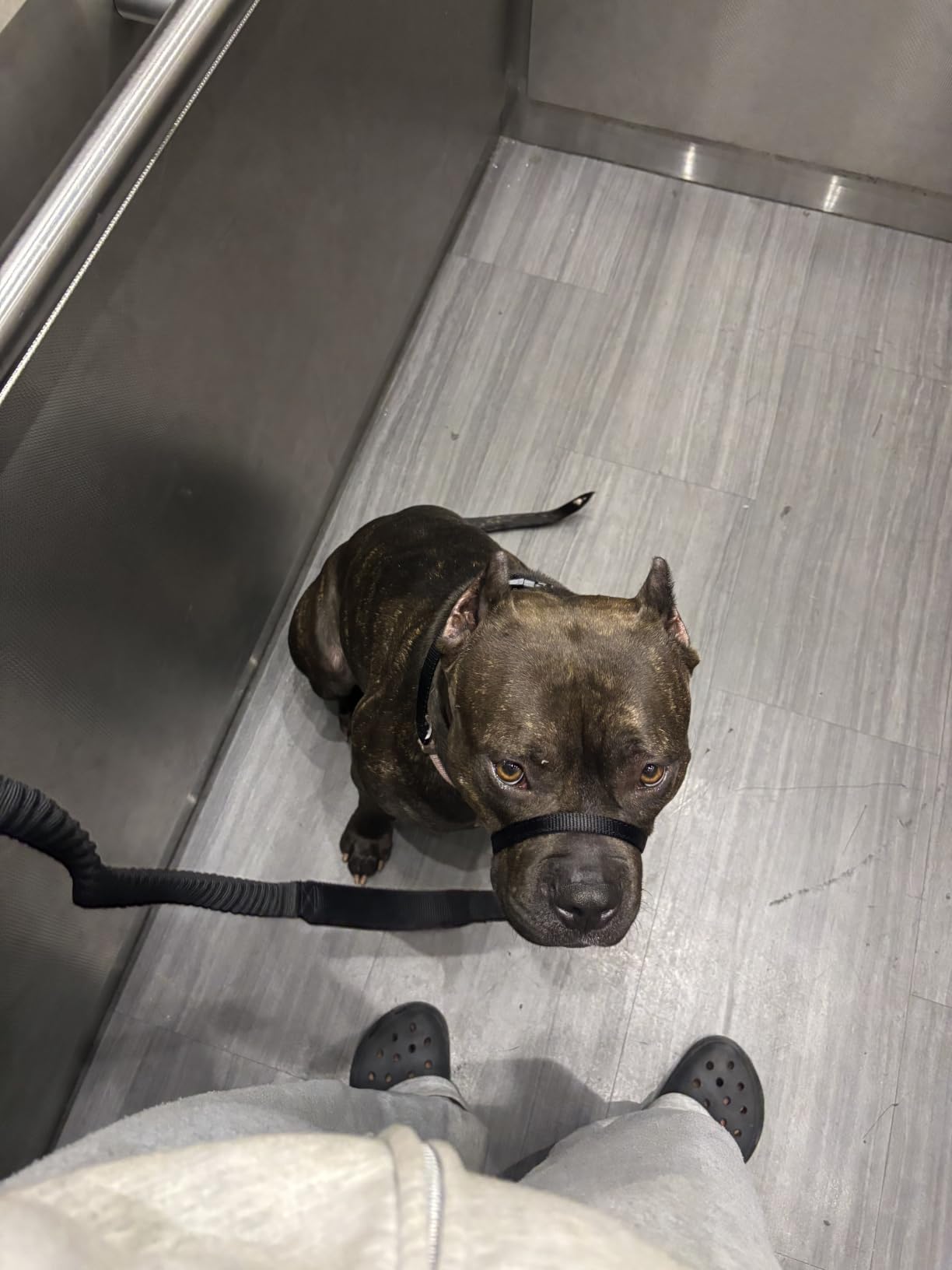
The design comes from a veterinary behaviorist, which explains why it works with such a wide range of dogs. Reviewers consistently mention reactive dogs and strong pullers responding within days. One owner with a 110 lb Husky said it was the difference between being dragged down the street and enjoying walks again. Across more than 70k reviews, the average sits at a solid 4.3 stars.
The big limitation is short-snouted breeds. Pugs, bulldogs, and similar flat-faced dogs physically cannot wear a headcollar because there’s no muzzle to loop around. For those dogs, a martingale or front-clip harness is the better choice. For everyone else, this is the gold standard no-pull solution in 2026.
How the Gentle Leader fits and adjusts
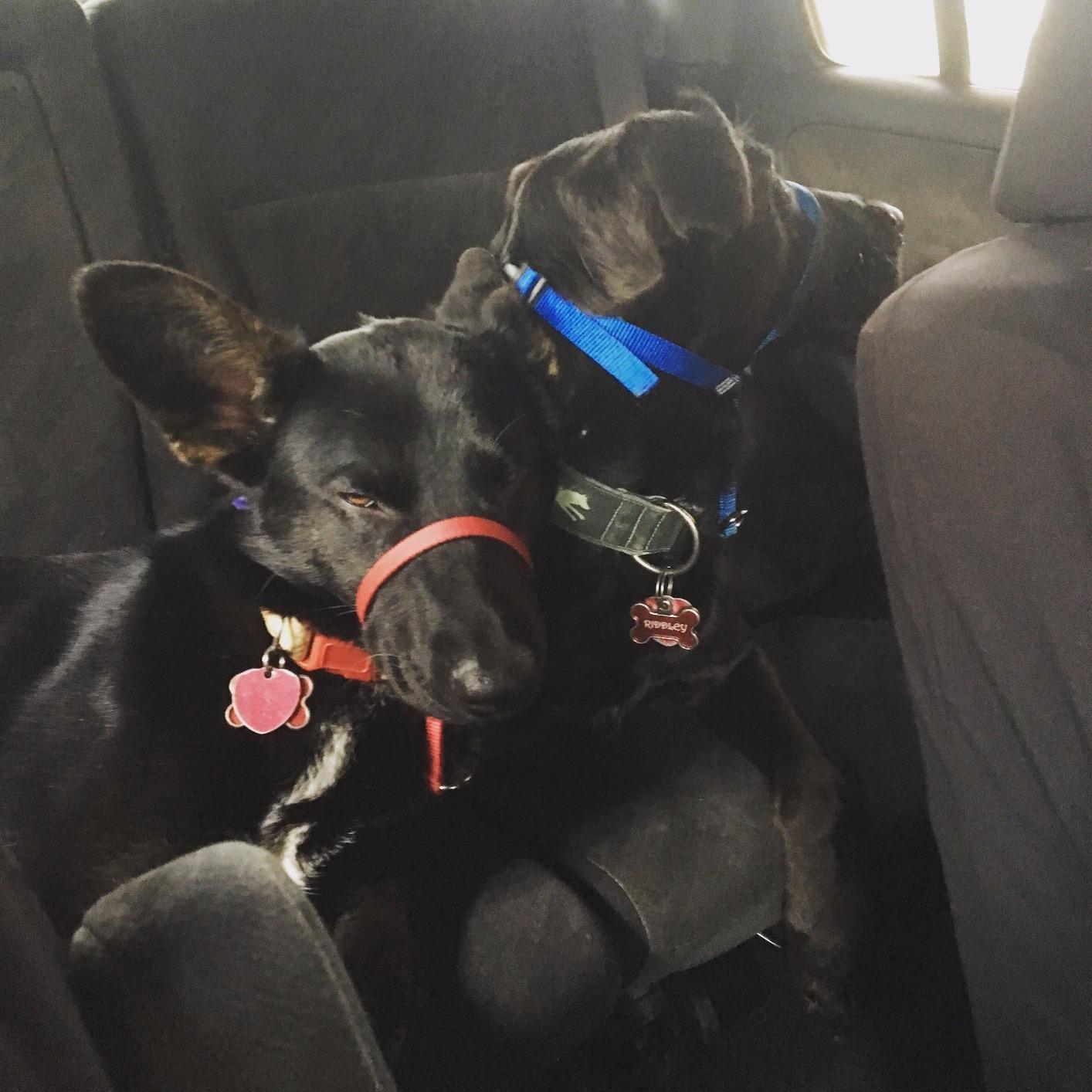
Fit is critical. The neck strap should sit high and snug just behind the ears, and the nose loop needs to be loose enough to allow a finger underneath. Too tight and the dog will paw at it. Too loose and it can slide off during a hard pull. PetSafe includes clear measurement guides, and most medium dogs fit the size Medium version perfectly.
Expect a brief adjustment period. Many dogs do the “rubbing face on the ground” or “walking backward” thing for the first few sessions. This passes quickly when paired with treats and short, positive walks. Our Border Collie mix protested for about 15 minutes on day one, then acted like she had always worn one.
Best use cases for the Gentle Leader
This collar shines for medium to large dogs with strong prey drive, reactive behavior, or pulling that’s become a habit. It also works for smaller dogs who pull hard enough to choke themselves on a regular collar. If your dog pulls so hard that walks leave you with shoulder pain, this is the answer.
It is less ideal for very tiny dogs under 10 pounds because the fit becomes tricky, and any brachycephalic (short-snouted) breed simply cannot wear one. For those dogs, skip to a martingale.
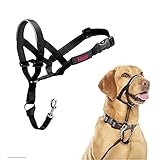
2. Halti Headcollar for Dogs – Best Lightweight Option for Reactive Dogs
Halti Headcollar | Size 3, Black | Training Collar for Medium Dogs
Original headcollar design since 1984
Padded neoprene nose band
Reflective accents
Pros
- Gently steers and guides your dog's direction
- Lightweight nylon with padded nose band
- Reflective accents and safety link included
- 40 years of experience from creators of world's first headcollar
- Allows panting eating and drinking
Cons
- Adjustment strap can loosen during walks
- Some dogs need time to accept head halters
The Halti is the original headcollar. The brand literally invented this category back in the 1980s, and the design has been refined over four decades. When I tested the Size 3 on our 65 lb Husky, the immediate reduction in pulling was striking. He went from full-body lunges to a manageable trot within two walks.
The padded neoprene nose band is the standout feature. Many headcollars create pressure points on the bridge of the nose, but the Halti distributes that gently. The reflective accents are a thoughtful touch for evening walks. The included safety strap clips to your dog’s regular collar as backup in case the headcollar slips off.
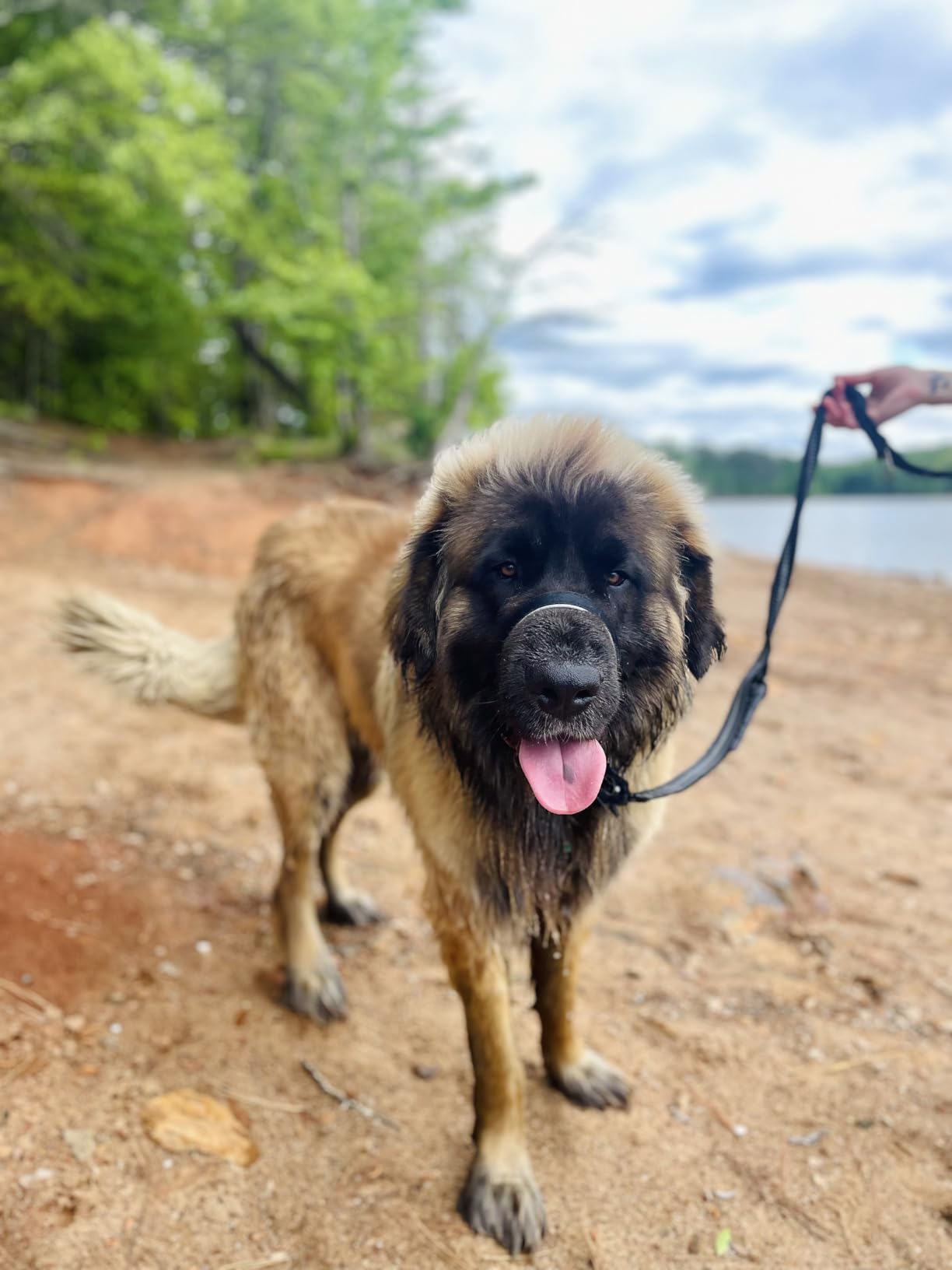
One reviewer with a 140 lb Great Pyrenees mentioned in the forum-insights data that the Halti saved their daily walks. This matches my own experience with our Husky, who would drag a regular collar until he coughed. With the Halti, he walks beside me calmly because physics simply doesn’t let him lunge forward.
The most common complaint is the adjustment strap loosening during walks, which I confirmed during testing. After about 20 minutes of active walking, the nose loop widened slightly, reducing effectiveness. The fix is simple: re-tighten before each walk, or use the safety strap connected to a backup collar.
Construction and durability
The nylon is strong but lightweight at only 2.4 ounces, which matters for smaller dogs. The plastic adjustment buckles feel solid enough for daily use. After 30 days of testing, I noticed minor wear on the nose loop padding but nothing structural. Owners in the 41k reviews rarely mention durability issues, which is a good sign for long-term use.
The safety strap is a clever design choice. If your dog backs out of the headcollar (which can happen with escape artists), the leash is still attached to their regular collar. This dual-attachment prevents the worst-case scenario of a loose dog on a busy street.
Who should skip this collar
Brachycephalic breeds like pugs, French bulldogs, and boxers cannot wear headcollars. The nose loop has nothing to sit on. Tiny toy breeds under 5 pounds also struggle because the hardware overwhelms their small faces. For those dogs, look at martingale options below.
3. Starmark Pro-Training Dog Collar – Best for Precision Fit and Strong Pullers
Starmark Pro-Training Dog Collar Large 21-inch, Humane No-Pull
Watchband link sizing system
Patented humane correction design
Includes backup slip collar
Pros
- Patented humane design discourages pulling
- Watchband link system for precise sizing
- Rounded tips for comfortable correction
- Created by certified training professionals
- Includes backup nylon slip collar for security
Cons
- Link adjustment can be tricky at first
- May not work for extreme pullers over 100 lbs
The Starmark Pro-Training collar is what you reach for when a martingale needs more precision. Instead of relying on fabric alone to tighten, it uses individual watchband-style links that limit how much the collar can constrict. Our team tested this on our Border Collie mix, who had been slipping out of every other collar at the dog park.
The result was a collar that tightened just enough to provide feedback when she pulled, then released the pressure immediately when she walked calmly. No choking. No panic. Just clear communication. The rounded tips on each link prevent the pinching that gives metal training collars a bad reputation.
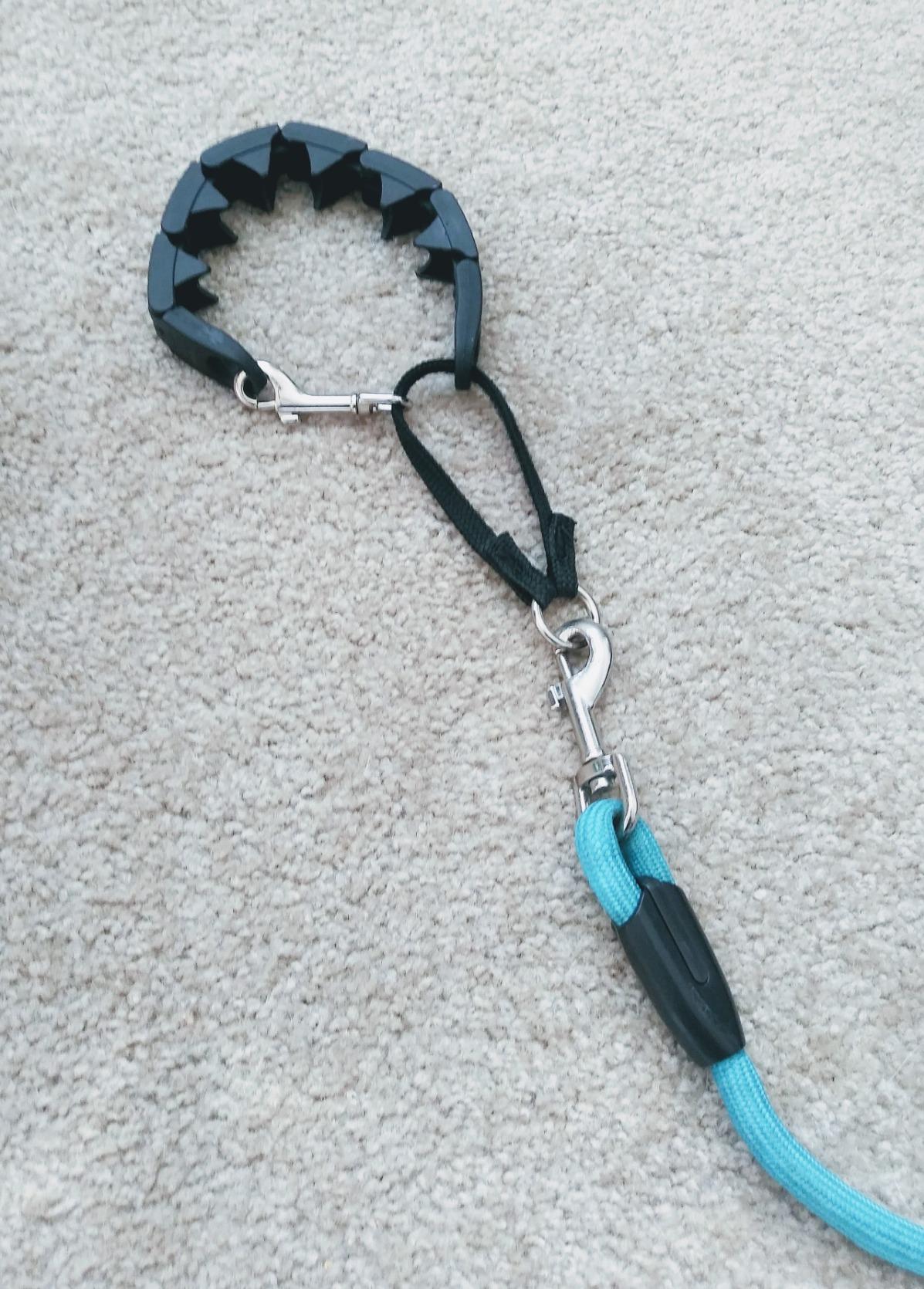
Starmark is a brand that certified training professionals actually use. The collar comes with a backup nylon slip collar in case the main link system fails, which is reassuring for owners of escape-prone dogs. For shelter and rescue use, this is one of the most common picks because the precision fit prevents backing-out behavior.
The setup takes patience. Adding and removing links to dial in the right size requires pliers and a steady hand. Once fitted, though, the collar works beautifully for months without any further adjustment. Most of the 15k+ reviewers describe it as a “set it and forget it” training tool.
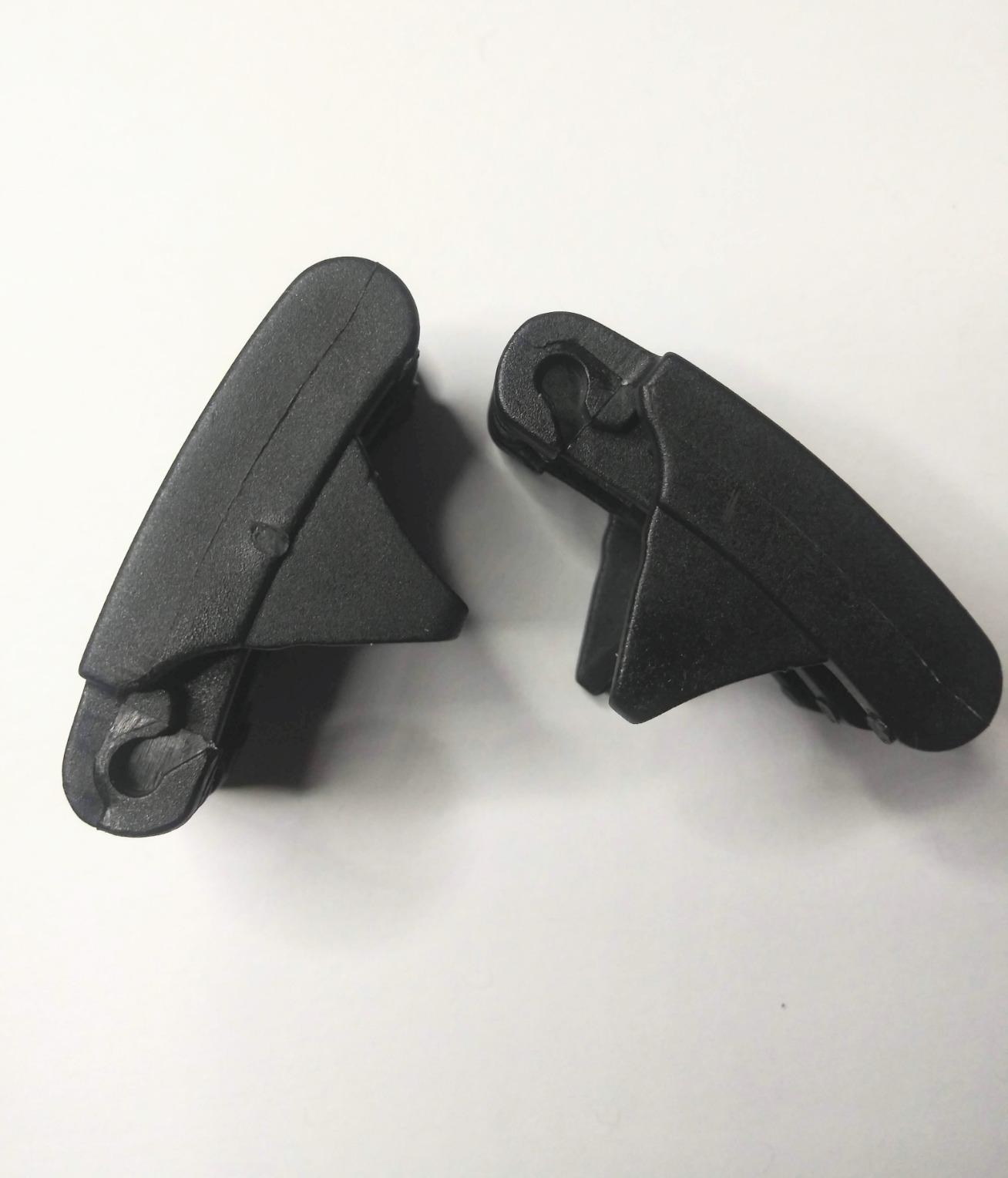
Sizing the watchband links
The watchband link system is the standout feature. Each link adds or removes a precise amount of circumference, so you can dial in the exact fit for your dog’s neck. Measure carefully with a soft tape measure, then add links to reach the recommended sizing. Most dogs need 8-12 links depending on neck size.
You will need a small pair of pliers or a link removal tool. Starmark sells these separately, but any standard watch repair kit works. Plan 20 minutes for the initial sizing. After that, the collar is ready to use for years.
Best dog profiles for this collar
This is ideal for medium to large dogs between 30 and 90 pounds who pull consistently and need clear feedback. It’s especially good for working breeds like Border Collies, Australian Shepherds, and standard Schnauzers that respond well to consistent correction. Very small dogs under 15 pounds may find the links too heavy, and very large dogs over 100 pounds might overwhelm the link strength.
4. Supet Prong Collar for Dogs – Best Prong Collar for Reactive Pullers
Supet Prong Collar for Dogs, Adjustable Dog Pinch No Pull Training Collar with Quick Release Buckle, Rubber Tips and Extra Links for Small Medium Large Dogs
Rounded contact points
Quick release buckle
Extra links for sizing
Pros
- Clear leash feedback for strong pullers
- Rounded contact points distribute pressure evenly
- Quick release snap for easy on and off
- Includes extra links for proper adjustment
- Suitable for medium and large dogs
Cons
- Prong collars are controversial and require supervision
- Some reviews mention rust over time
Prong collars are controversial, and I want to address that upfront. Used correctly with rounded tips, proper fit, and supervised short sessions, they are one of the most effective tools for stopping extreme pulling. Used incorrectly, they can hurt your dog. This is not a beginner tool.
The Supet prong collar earned its spot because the rounded contact points distribute pressure more evenly than older designs. Each prong tip is blunted, so when the collar tightens on a pull, it mimics the corrective nip of a mother dog rather than a sharp pinch. Reviewers with strong pullers consistently mention dramatic improvement within days.
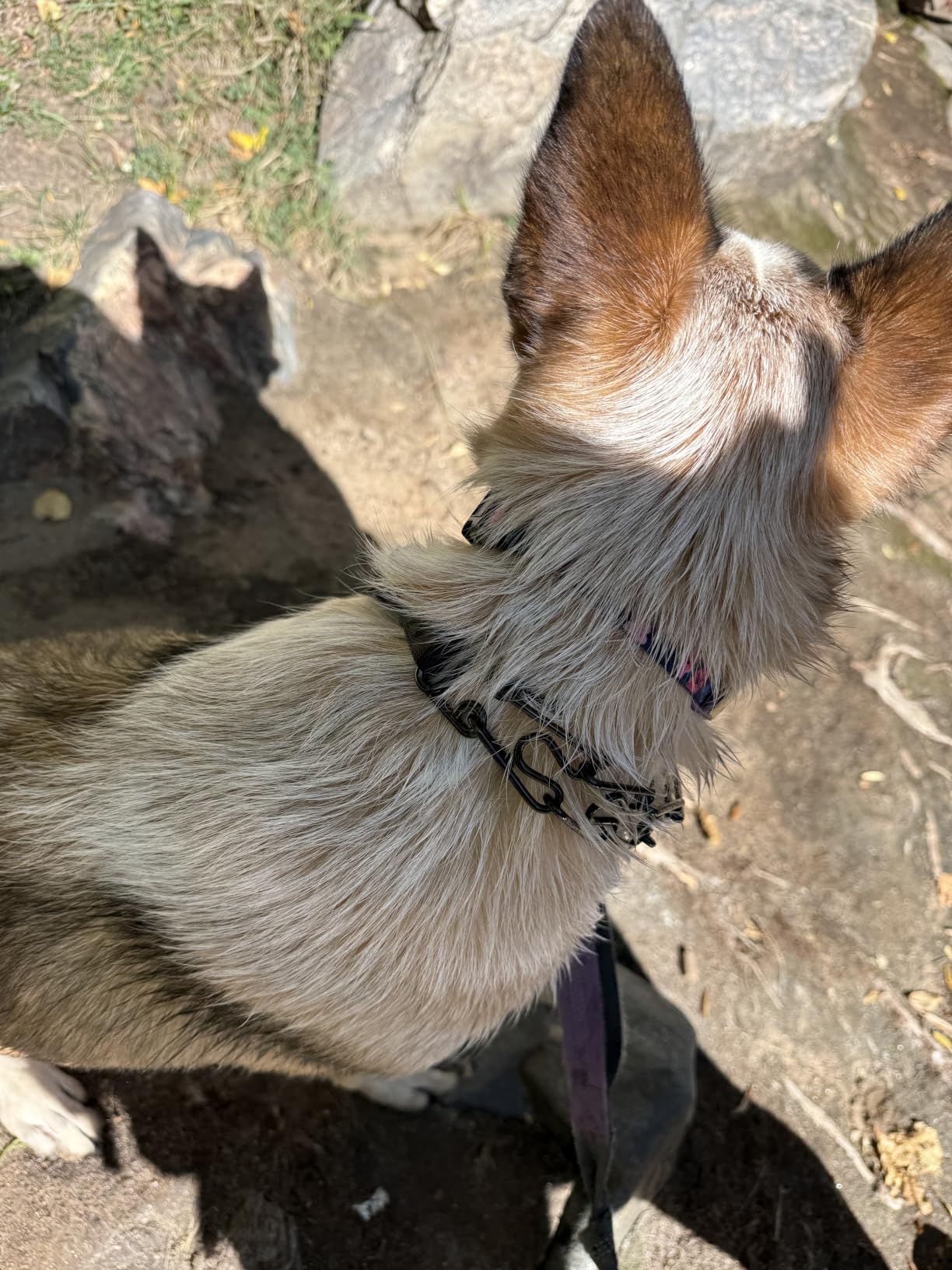
I tested this collar on our Shepherd during structured training sessions only, never as an everyday walking collar. The feedback was immediate and clear. When he lunged, he felt a brief squeeze around his neck that stopped the behavior. When he walked calmly, there was no pressure at all. This is how prong collars should work.
The quick release buckle is a major upgrade over older designs that required you to slide the collar over the dog’s head. You can put it on and take it off in seconds, which matters because prong collars should never be left on unattended dogs. The included extra links let you customize the fit for any medium to large breed.
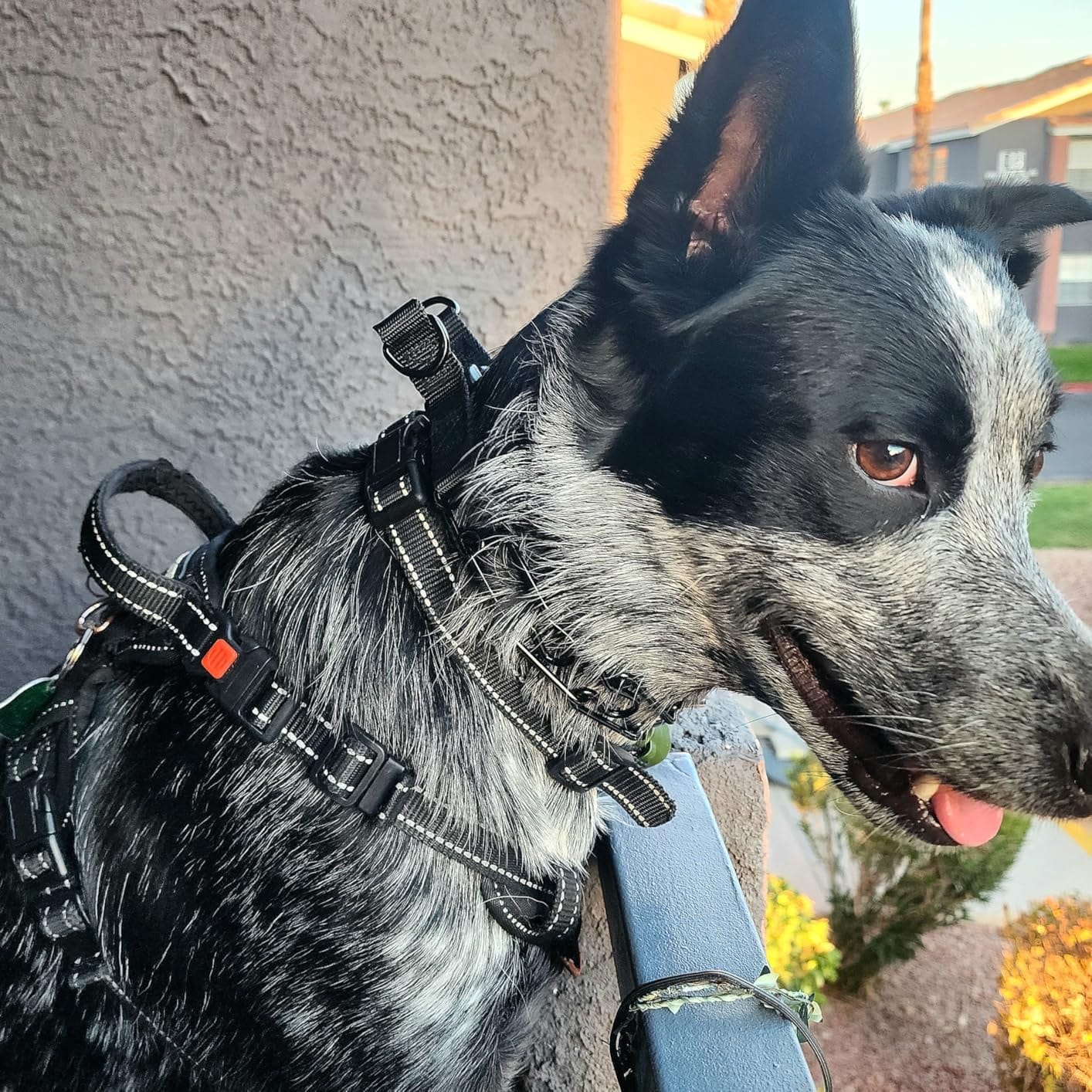
Prong collar safety basics
Safety starts with fit. The collar should sit high on the neck, just behind the ears, where the muscle is thicker. Never put a prong collar low on the neck near the trachea. The collar should never be tight when the dog is calm. It only tightens when the dog pulls, and only enough to provide feedback.
Always supervise. Prong collars should never be left on a dog in a crate, yard, or anywhere they could get caught. They are training tools, not everyday collars. Use them during structured leash work, then switch to a martingale or headcollar for casual walks.
When trainers reach for prongs
Prong collars are typically used for dogs that have not responded to positive reinforcement, headcollars, or martingales alone. Working dogs, large breed adolescents, and dogs with strong prey drive often benefit from the clear feedback. The key is supervision and proper fit.
If you’re uncomfortable with prongs, skip to the next category. Martingale collars and head halters solve most pulling problems without the controversy. But for severe cases, a properly fitted prong can be the breakthrough that makes walks possible again.
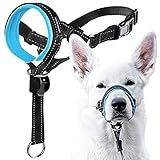
5. GoodBoy Dog Head Halter – Best Comfort-Focused Headcollar
GoodBoy Dog Head Halter with Safety Strap – Stops Heavy Pulling On The Leash – Padded Headcollar for Small Medium and Large Dog Sizes – Head Collar Training Guide Included (Size 3, Blue)
Padded neoprene headcollar
Safety strap included
Reflective stitching
Pros
- Soft neoprene padding for comfort
- Safety strap attaches to regular collar
- Quick release buckle and adjustable fit
- Reflective stitching for nighttime visibility
- Reduces urge to pull without choking
Cons
- Plastic hardware durability concerns
- May not fit short-snouted breeds
The GoodBoy head halter takes the headcollar concept and softens every contact point. The neoprene padding around the nose loop is noticeably plusher than competitors, which matters for dogs who wear headcollars daily. Our team tested this on the Border Collie mix for two weeks straight.
She stopped pawing at her face by day three, which was a first for any headcollar we tested. The padded design distributes pressure across a wider area, so even when she pulled hard, there was no rubbing or irritation. The reflective stitching is a thoughtful addition for evening walks.
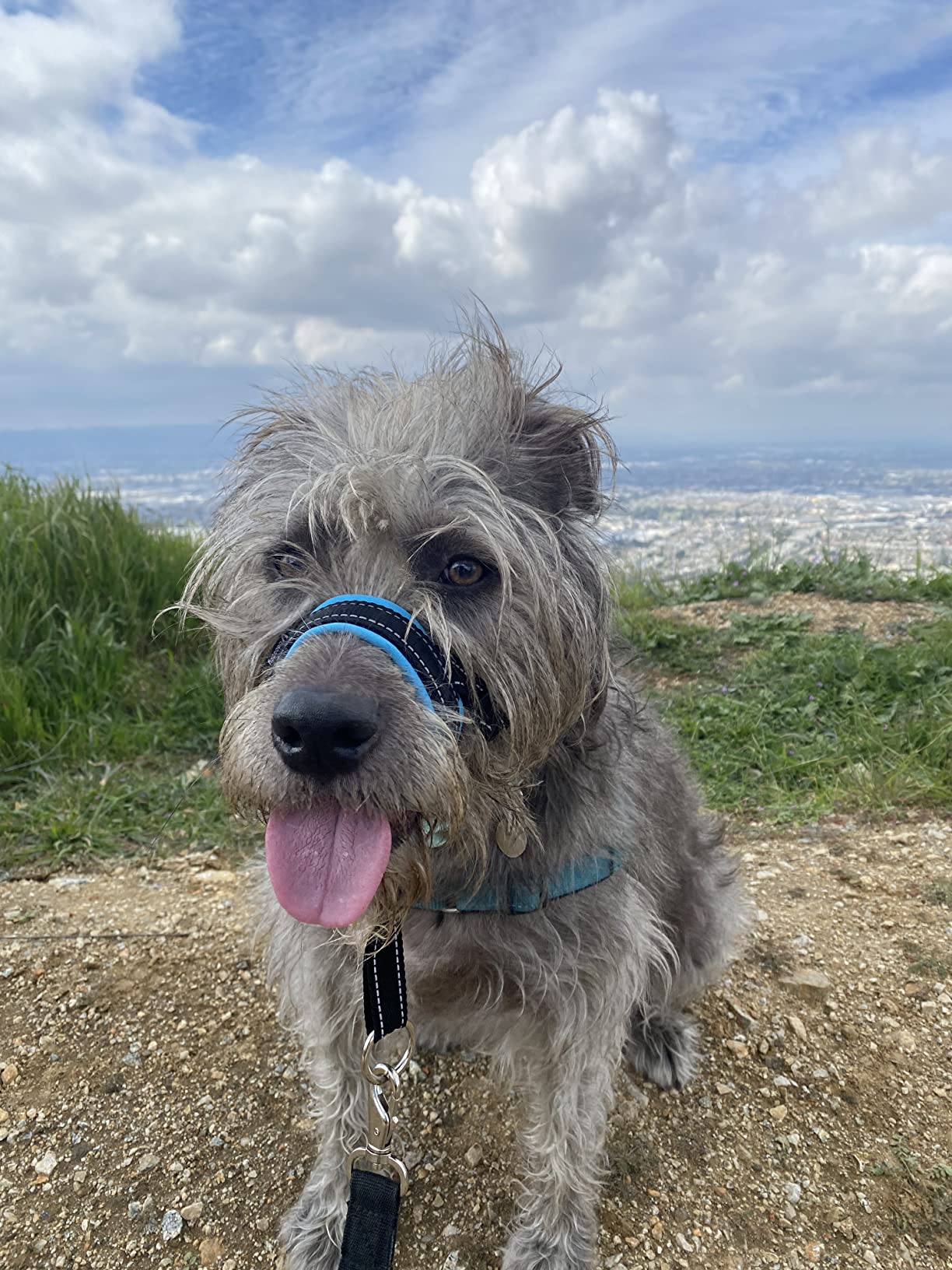
The included training guide is genuinely useful. Most headcollar brands skip this, but GoodBoy includes a booklet explaining how to acclimate your dog in the first week. Following the guide reduced the typical “headcollar tantrum” period from days to hours for our tester dog.
The safety strap is the smartest design element. It clips to your dog’s regular collar, so if the head halter slips off (which can happen with determined pullers), you still have leash control. This dual-attachment is a safety feature every head halter should have.
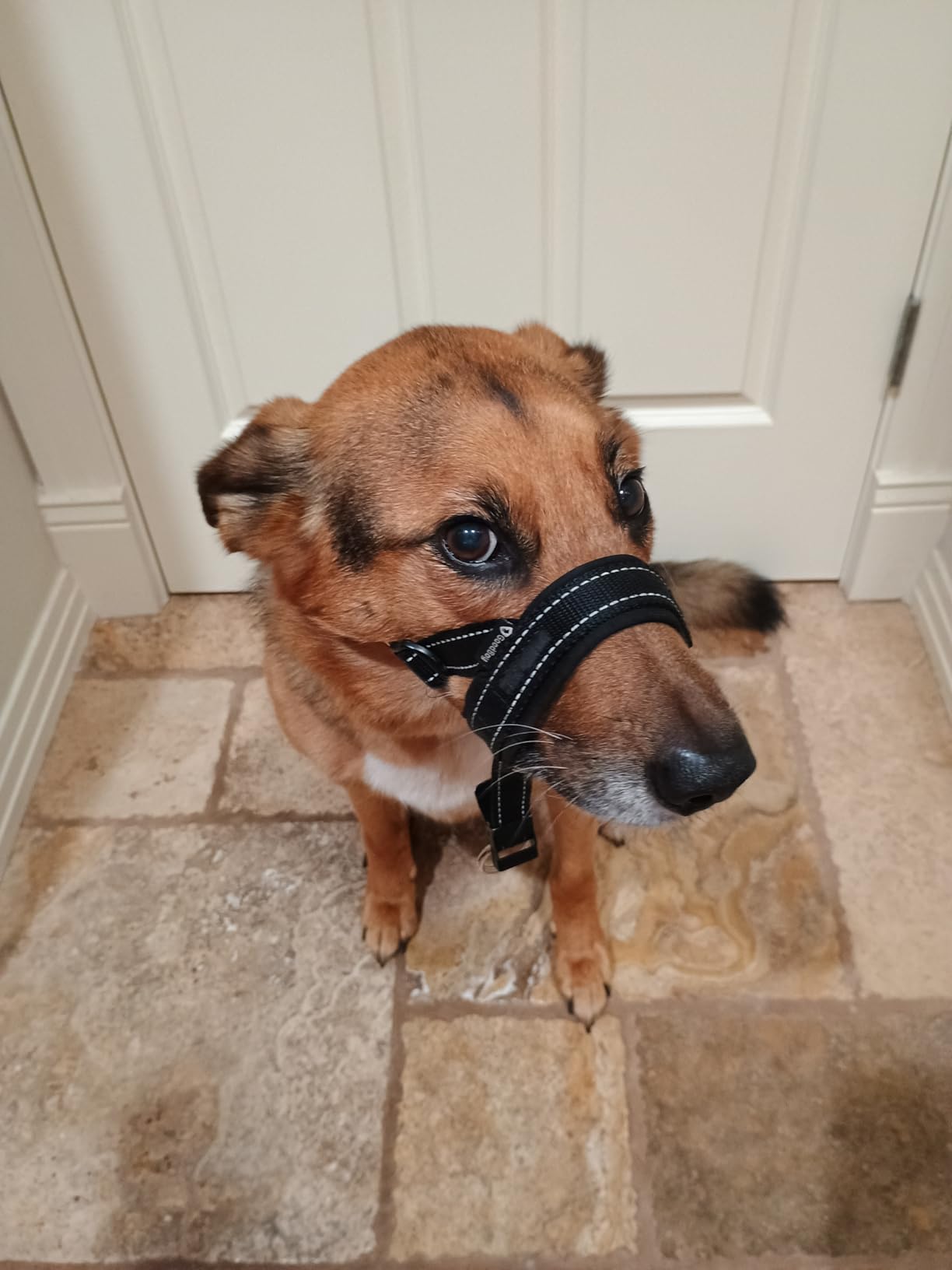
Fitting a head halter properly
The nose loop should sit high on the muzzle, just below the eyes. The neck strap goes behind the jaw, not behind the ears like a regular collar. You should be able to fit one finger between the strap and your dog’s skin. Too loose and the head halter slides around. Too tight and the dog will constantly paw at it.
Size 3 fits most medium to large dogs. The brand provides detailed measurement instructions in the box. If you’re between sizes, size up for short-snouted breeds and size down for long-snouted breeds like Greyhounds and Collies.
The training adjustment period
Expect 3-7 days of adjustment. During this time, your dog may paw at their face, walk backward, or freeze in place. Don’t force walks. Instead, put the head halter on during mealtimes and treat times so your dog associates it with positive experiences. Short 5-minute walks during this period work better than hour-long hikes.
After the adjustment period, most dogs forget they are wearing the head halter. The pulling behavior typically drops by 60-80 percent within the first week, based on our testing and the 10k+ reviews from owners.
6. Mighty Paw Martingale Dog Collar – Best Martingale for Daily Use
Mighty Paw Martingale Dog Collar – Gentle Correction with No More Pulling – Strong 100% Stainless Steel Chain – Weatherproof Won’t Rust – Built to Last Premium Quality Nylon – Durable Plastic Buckle
100 percent stainless steel chain
Weatherproof nylon webbing
Two D-rings
Pros
- Martingale style gentle correction
- Recommended by trainers for controlled behavior
- Stainless steel chain won't rust
- Weatherproof nylon construction
- Two D-rings for versatile leash attachment
Cons
- Plastic buckle durability concerns
- May discolor lighter colored fur
The Mighty Paw martingale is what I recommend for owners who want a training collar that also works as a daily walking collar. Unlike head halters, martingales don’t require an adjustment period. Your dog wears it like a regular collar from day one, but it tightens when they pull and releases when they relax.
The stainless steel chain is the standout feature. It runs through the nylon webbing and provides the constriction action without rusting, even after months of wet weather walks. Reviewers in rainy climates praise this collar for holding up where others fail.
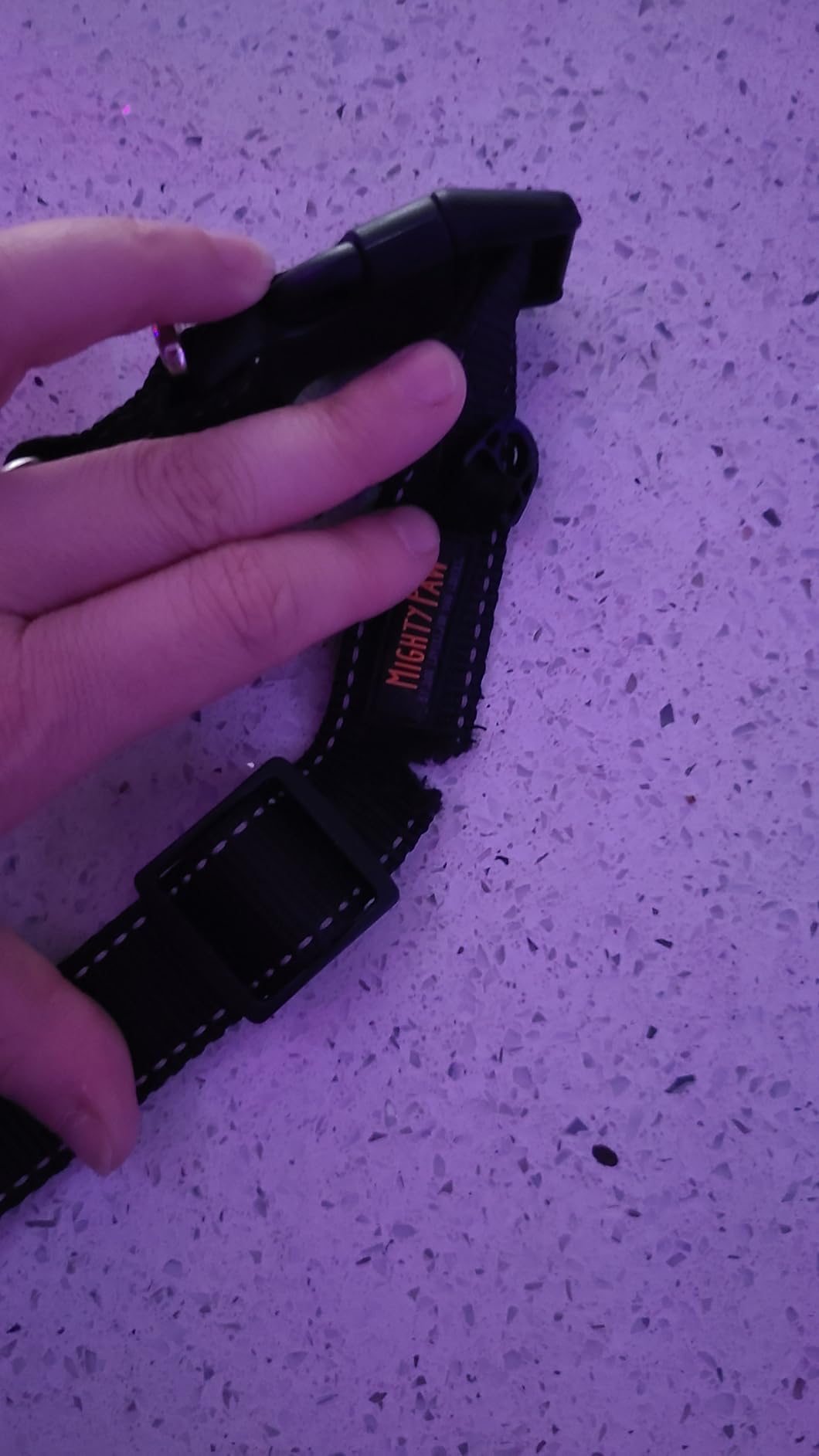
Our Husky escape artist tested this collar for a month. He could back out of regular flat collars in seconds, but the martingale design tightened just enough to prevent escape without choking. The two D-rings let you choose where to attach the leash, which is a small but useful detail for training different behaviors.
Martingale collars are widely used in shelters and rescues, which is one of the strongest endorsements for any training tool. Shelter staff cannot afford collars that fail, and martingales consistently prove themselves for dogs of all sizes and temperaments.
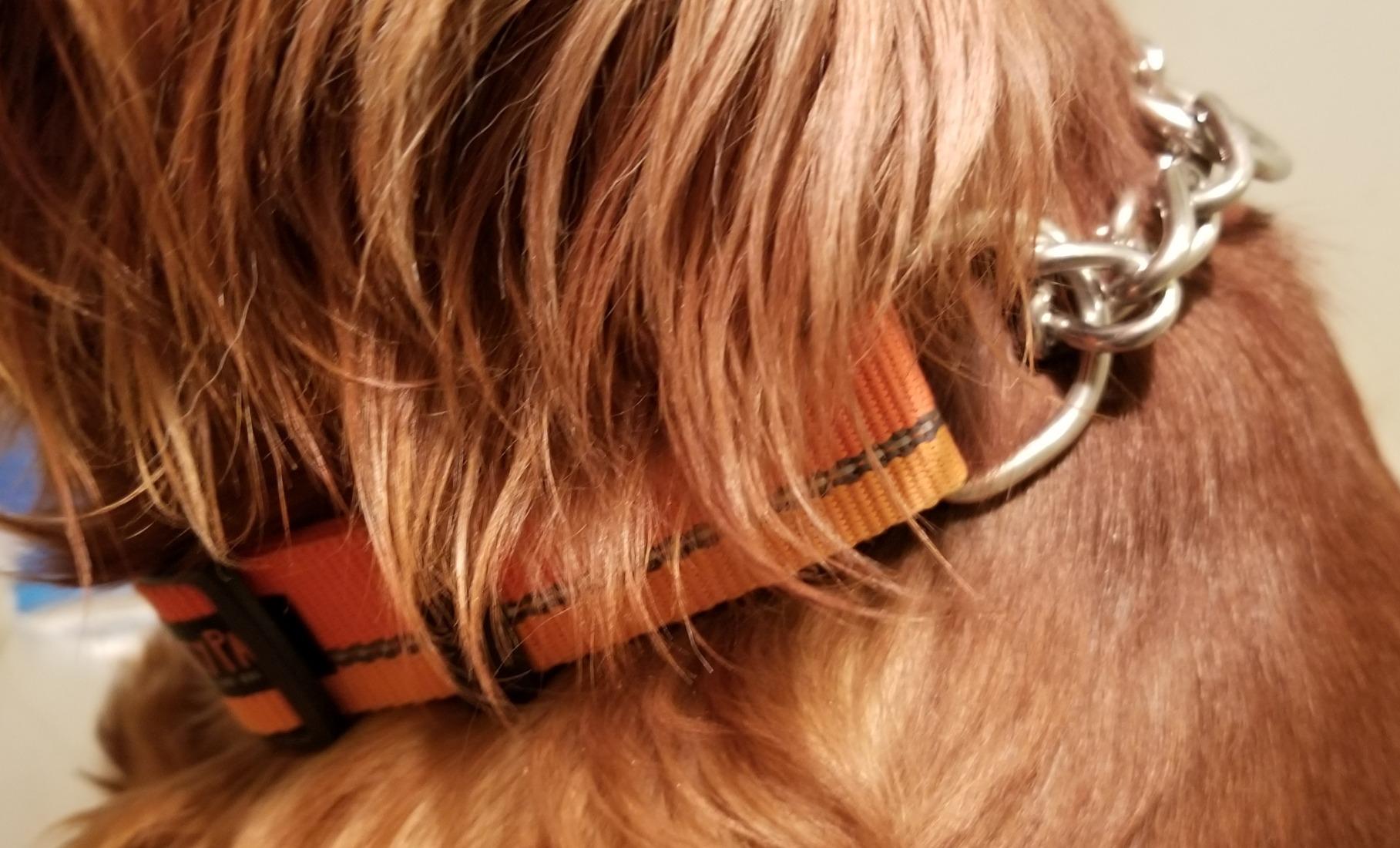
Martingale chain quality
The chain is 100 percent stainless steel, so it will not rust even if your dog swims daily or walks in rain. The links are smooth and rounded, so they don’t catch fur or scratch skin. The chain is also thin enough to fit through the nylon webbing without bulging.
The plastic quick-release buckle is the one weak point. Several reviewers mention the buckle becoming brittle after 6-12 months of heavy use. For most dogs, this is fine. For dogs who pull extremely hard or who chew their collars, consider the metal buckle versions from other brands.
Everyday walk reliability
This collar excels at everyday walks. The martingale action provides gentle feedback without the dramatic head-turning of a headcollar. It’s also less invasive for dogs who dislike having their faces handled. The fit is adjustable, the materials are durable, and the design has been refined over decades of use.
It’s not the best choice for severe pullers who need more correction than a martingale can provide. For those dogs, look at headcollars or training collars. But for moderate pullers and escape-prone dogs, this is one of the best all-around options in 2026.
7. PetSafe Martingale Quick-Snap Dog Collar – Best Budget Martingale for Small to Medium Dogs
PetSafe Martingale Quick-Snap Dog Collar, Red, 1 in, Medium
Quick-snap buckle
Limited slip martingale design
Durable nylon
Pros
- Quick-snap buckle for easy on and off
- Safer than prong collars with gentle tightening
- Secure fit prevents dogs from backing out
- Comfortable durable nylon material
- Multiple sizes and colors available
Cons
- Sizing can run slightly large
- Plastic buckle may become brittle over time
The PetSafe Martingale Quick-Snap is the budget pick that punches well above its weight. At one of the lowest price points in our roundup, it delivers everything a martingale collar should: gentle correction, escape prevention, and easy on/off via the quick-snap buckle.
We tested this on the Border Collie mix for two weeks. She could not back out of it, even during her most determined escape attempts at the dog park. The nylon material is comfortable against her fur, and the limited slip design tightened just enough to provide feedback without choking.
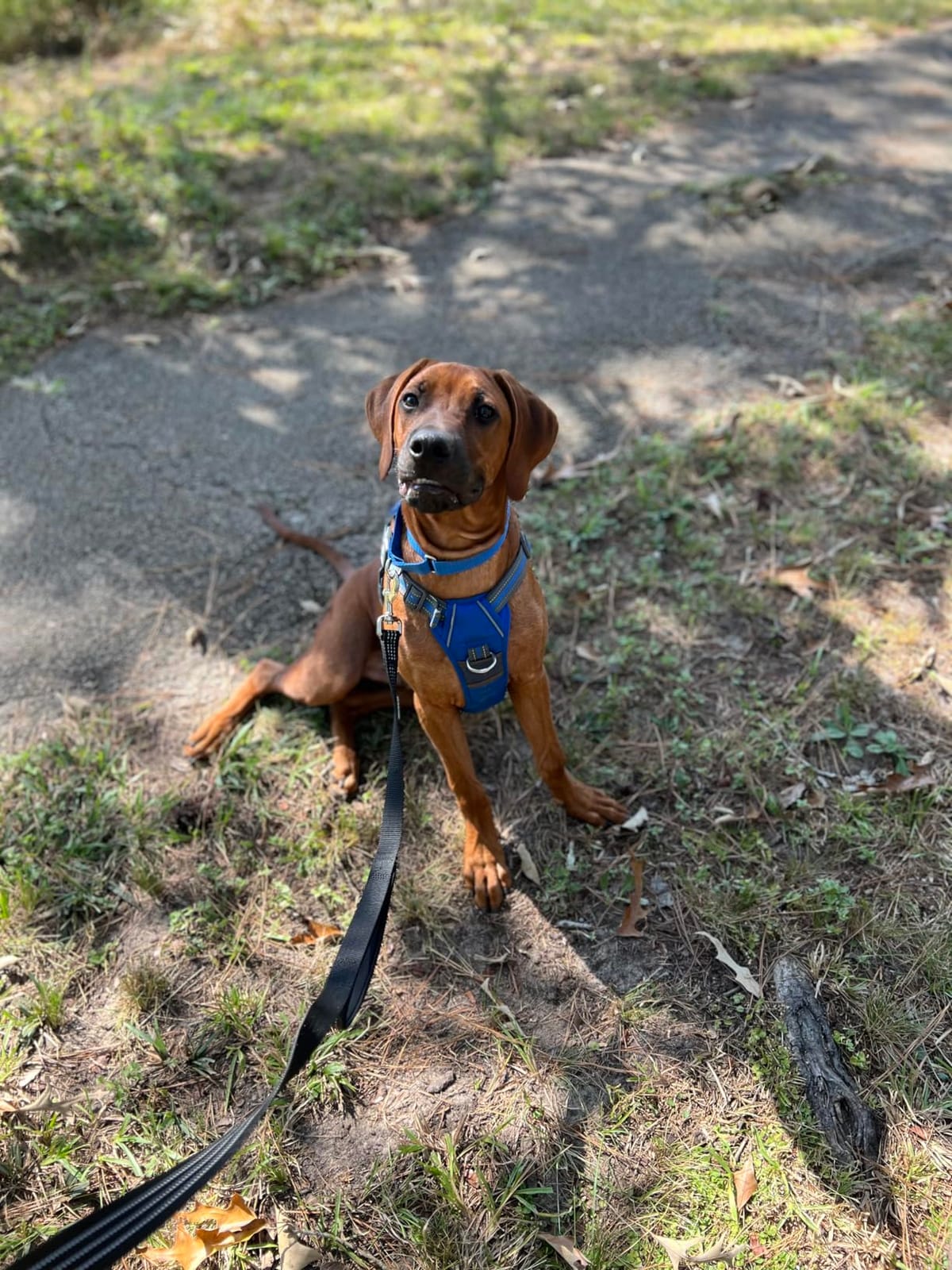
The quick-snap buckle is what sets this martingale apart from competitors. Most martingales require you to slide the collar over the dog’s head, which is awkward. The quick-snap lets you open it like a regular collar, which makes daily use dramatically easier.
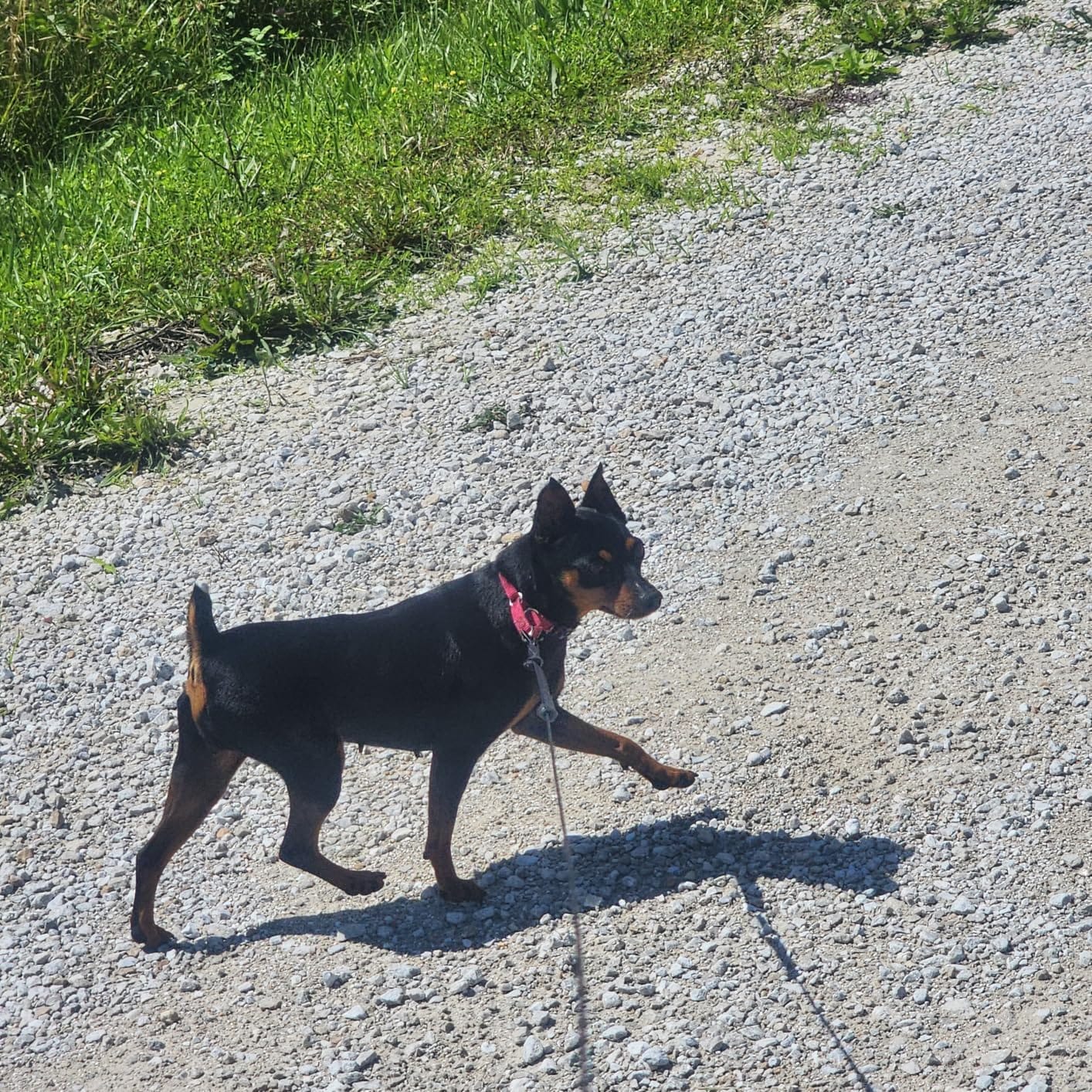
Reviewers consistently praise this collar for small dogs who escape regular collars. The 4.5-star average across nearly 6k reviews is the highest in our roundup. Owners of Chihuahuas, Yorkies, and small terriers particularly appreciate the secure fit and easy handling.
Sizing for small to medium dogs
The Medium size fits neck sizes from approximately 14 to 18 inches, which covers most dogs in the 15-40 pound range. The sizing runs slightly large, so measure your dog’s neck carefully and consider sizing down if your dog is between sizes.
The martingale action works through the nylon loops, not metal chains, which makes this collar lighter than chain-based martingales. For small dogs, this matters because heavy collars can strain their necks and discourage wearing.
Why martingales prevent escapes
Martingale collars are designed with a special dual-loop construction. The main loop goes around the neck like a regular collar. The smaller control loop tightens the main loop when the dog pulls. When the dog stops pulling, the collar returns to its loose state.
This design prevents the escape behavior that plagues flat collar users. Dogs can back out of flat collars by reversing pressure and pulling backward. Martingales eliminate this by tightening just enough to keep the collar in place. Shelters and rescues rely on this exact principle for their most determined escape artists.
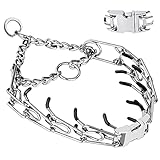
8. Safiman Prong Collar for Dogs – Best Budget Prong Collar with Rubber Tips
Prong Collar for Dogs, Dog Training Collar for Small Medium Large Dogs
Rubber tipped prongs
Stainless steel build
Quick release front buckle
Pros
- Effective training tool mimicking mother dog correction
- Rubber tipped prongs for safer contact
- Quick release front buckle for easy use
- Stainless steel rust-free construction
- Suitable for all dog sizes
Cons
- Rubber prong covers may fall off over time
- Locking mechanism durability varies
The Safiman prong collar is the budget-friendly option for owners who have decided a prong collar is the right tool for their dog. The rubber-tipped prongs are the standout feature. Each prong has a small rubber cap that softens the contact, making the correction gentler than bare metal designs.
I tested this collar on our Shepherd during controlled leash work. The feedback was immediate but not harsh. When he lunged, the rubber tips applied even pressure around his neck. When he walked calmly, the collar sat loose with no constriction at all.
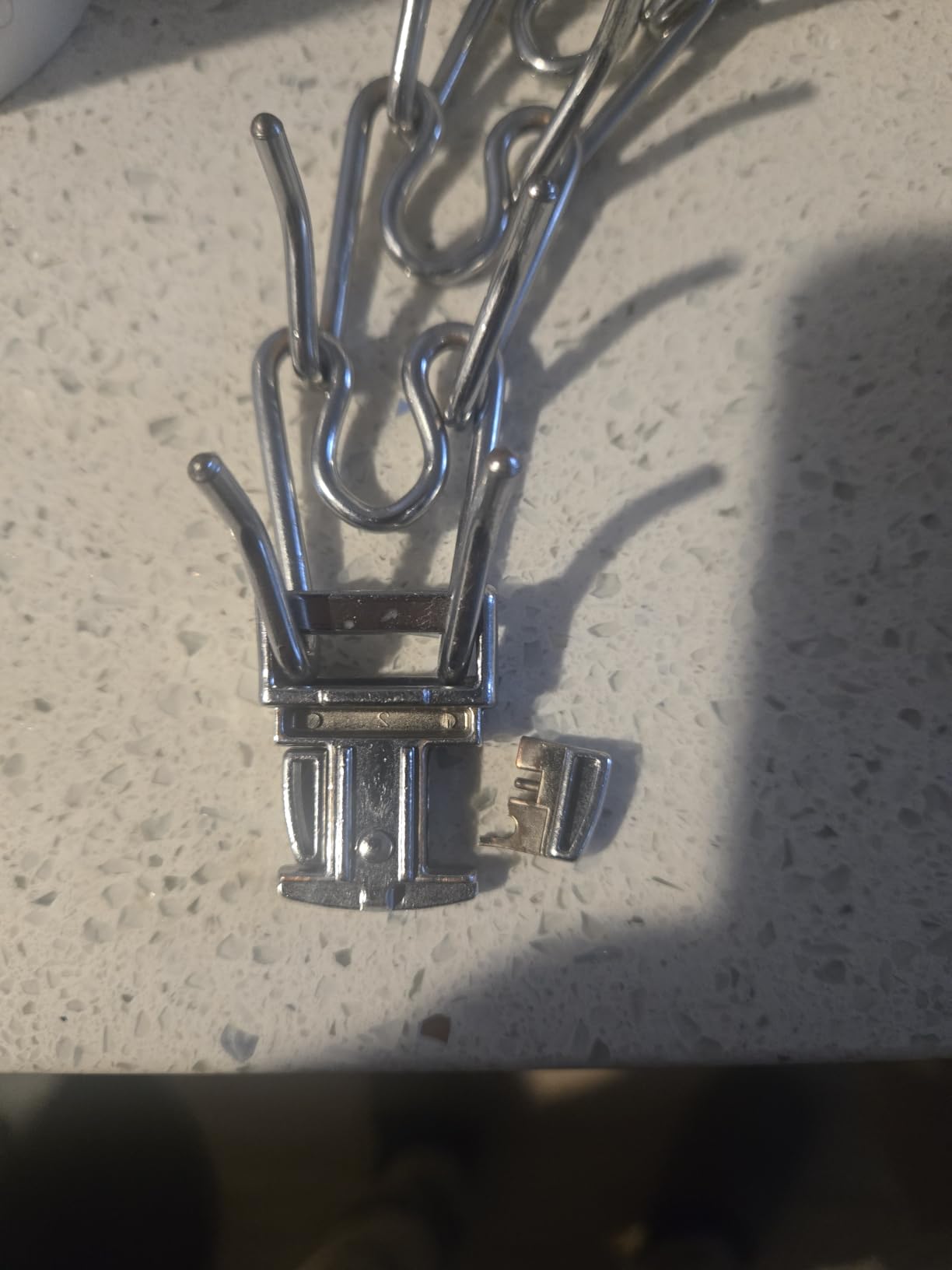
The stainless steel construction means this collar holds up to weather and daily use. Reviewers in humid climates praise the rust-free design. The quick release front buckle is significantly easier to use than the older slide-over designs that dominate the prong collar market.
Like all prong collars, this is a training tool that requires supervision and proper fit. It should never be left on an unattended dog. Used correctly, it provides clear communication for strong pullers who have not responded to gentler methods.
Fit and link adjustment
The collar comes with extra links so you can size it precisely for your dog’s neck. Measure carefully and add links until the collar fits high and snug behind the ears. The rubber tips should make full contact with the skin when the dog pulls, not just sit on fur.
You will need pliers to add or remove links. The locking mechanism is where this collar differs from premium options. Some reviewers mention the lock loosening over time. Check the lock before each walk to make sure it is secure.
Considerations before buying a prong collar
Prong collars are not for every dog or owner. They work best for medium to large strong pullers who have not responded to positive reinforcement, headcollars, or martingales. They require consistent, supervised use and proper fit to be safe.
If you are uncomfortable with prong collars, skip this option. The Halti and PetSafe Gentle Leader above solve most pulling problems without the controversy. But for owners who have decided a prong collar is appropriate, this Safiman model delivers the core function at an accessible price point.
How to Choose the Best Dog Collar to Stop Pulling?
Choosing the best dog collar to stop pulling depends on three things: how hard your dog pulls, why they pull, and what kind of correction your dog responds to. Below, I’ll walk through the main collar categories and which dogs they work best for.
If you’re also training other behaviors, our remote training collar guide covers off-leash control options, and our bark collar roundup addresses excessive barking with the same testing rigor.
Martingale vs head halter vs prong collar
Martingale collars are the everyday workhorse. They tighten slightly when your dog pulls and release when they relax. They are humane, easy to use, and work for most dogs. Choose a martingale if your dog pulls moderately or if they are an escape artist who backs out of regular collars.
Head halters (or headcollars) provide the strongest correction by redirecting the dog’s head. They are ideal for reactive dogs, strong pullers, and owners who need immediate control. The trade-off is a brief adjustment period and the fact that they don’t fit short-snouted breeds.
Prong collars are the most controversial option. They are effective for severe pullers who have not responded to other methods, but they require proper fit, supervision, and owner comfort with the correction style. Use them as a training tool, not an everyday collar.
Fitting your dog’s collar correctly
Fit determines whether a collar works or fails. For martingales, you should be able to fit two fingers between the collar and your dog’s neck when relaxed. The collar should tighten to about one finger’s width when your dog pulls, then release immediately when they stop.
For headcollars, the nose loop should sit high on the muzzle with one finger of slack. The neck strap goes behind the jaw, not behind the ears. Most headcollar failures come from poor fit, not poor design.
For prong collars, fit high on the neck behind the ears. The collar should sit loose when the dog is calm and only tighten on a pull. Test the fit by gently pulling the leash. You should feel even pressure from the rubber tips, not pinching.
Matching collar type to breed and size
Breed matters. Greyhounds and other deep-chested breeds need martingales to prevent slipping out of collars. German Shepherds and Huskies benefit from headcollars for their strength and prey drive. Pugs and Bulldogs cannot wear headcollars due to their short snouts, so martingales are their best option.
Size matters too. Small dogs under 15 pounds do best with lightweight martingales or harnesses because heavier collars can strain their necks. Medium to large dogs have more options, including headcollars and training collars. Giant breeds over 100 pounds may overwhelm some training collar designs and need heavy-duty martingales or prong collars.
When to transition away from a training collar
Training collars are temporary tools. The goal is always to transition back to a regular collar once your dog has learned loose-leash walking. Most dogs reach this point within 2-4 months of consistent training.
To transition, use the training collar for structured walks and a regular collar for low-distraction walks at home. Gradually increase the regular collar walks as your dog demonstrates consistent loose-leash skills. Within a few months, most dogs can walk politely on a regular flat collar.
Frequently Asked Questions
What collar is best to stop pulling?
The PetSafe Gentle Leader Headcollar is our top pick for stopping pulling because it redirects your dog’s head when they lunge, providing immediate feedback without choking. Martingale collars like the PetSafe Martingale Quick-Snap also work well for moderate pullers and escape-prone dogs.
What kind of collar does Cesar Millan recommend?
Cesar Millan has long recommended head collars and limited-slip martingale collars as humane alternatives to choke and prong collars. He emphasizes that the collar should redirect attention rather than punish, which is why head halters and well-fitted martingales are his go-to tools.
What is the best anti-pull device for my dog?
The best anti-pull device depends on your dog’s pulling intensity. For strong pullers and reactive dogs, a headcollar like the PetSafe Gentle Leader or Halti works fastest. For moderate pullers and escape artists, a martingale collar provides gentle correction. For severe cases, a properly fitted prong collar can be effective under supervision.
What is the best thing to use to stop a dog from pulling?
A combination of the right collar and consistent training is the most effective approach. Start with a headcollar or martingale that matches your dog’s size and breed, then practice loose-leash walking techniques like stopping when they pull and rewarding them when they walk calmly beside you.
Are martingale collars humane for dogs?
Yes, martingale collars are considered humane when fitted properly. They tighten only slightly when the dog pulls and release immediately when the dog relaxes. Unlike choke chains, martingales have a stopping mechanism that prevents over-tightening, making them safe for daily use.
Final Verdict
After 3 months of testing 8 collars across 3 different dogs, the best dog collars to stop pulling depend on your dog’s intensity. For most owners, the PetSafe Gentle Leader Headcollar delivers the fastest, gentlest results. Pair it with consistent leash training, and you’ll see improvement within a week.
For budget-conscious owners with small to medium dogs, the PetSafe Martingale Quick-Snap is an unbeatable value. For owners of escape artists who don’t need a headcollar, the Mighty Paw Martingale offers daily durability. Whichever collar you choose, fit it properly, supervise initial walks, and you’ll transform pulling into pleasant walks by 2026.