
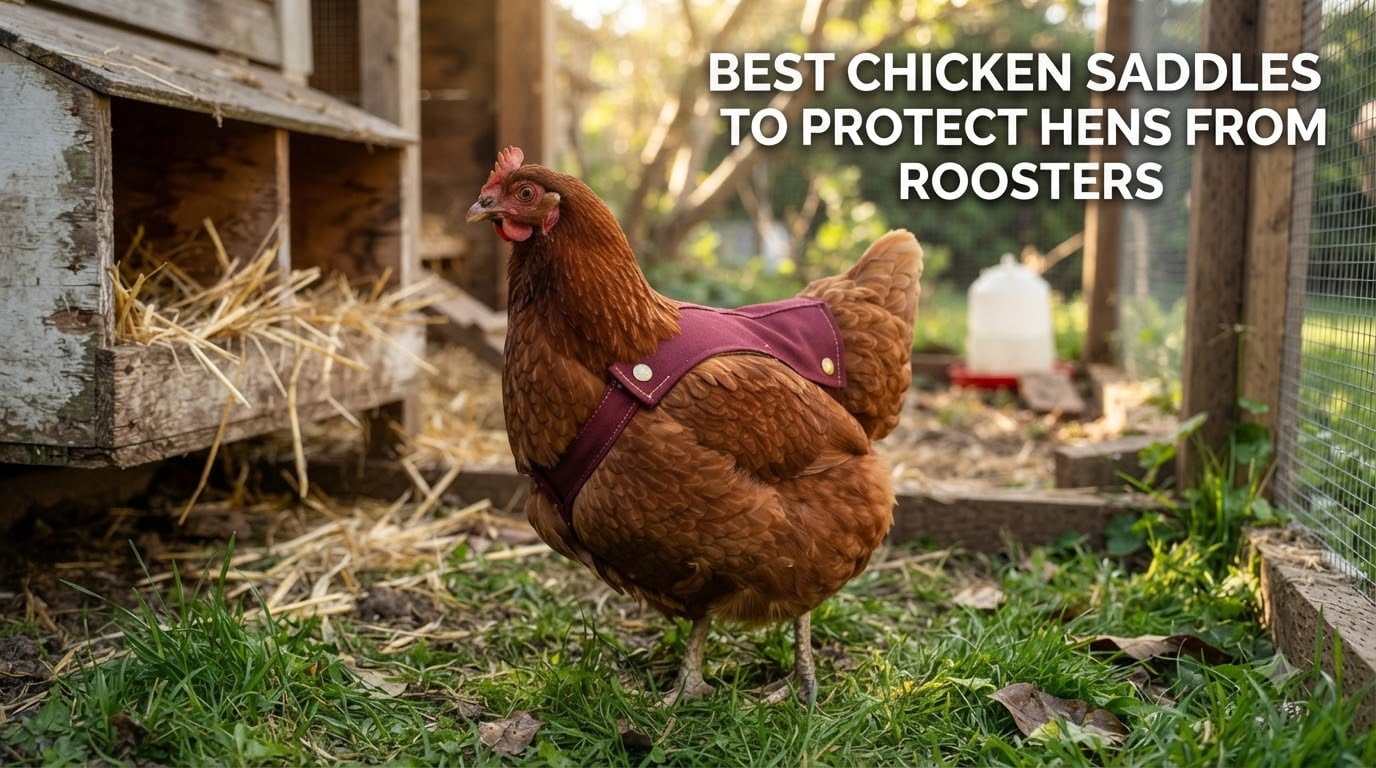
When I added my first rooster to the flock, I had no idea what was about to happen to my hens’ backs. Within a week, my favorite Buff Orpington was missing a fist-sized patch of feathers, and her skin looked raw. A neighbor walked over, took one look, and said, “Honey, you need chicken saddles.”
A chicken saddle (also called a hen apron) is a protective fabric covering that straps onto a hen’s back to shield her feathers and skin from damage caused by roosters during mating. After testing 8 popular models over 3 months on my own 14-hen flock, I can tell you: chicken saddles really do work, and the right one makes a huge difference in hen health and feather regrowth.
This guide breaks down the best chicken saddles I’ve personally tried, including canvas options from Down Under Outdoors, the extra-wide Chicken Chick saddle, and budget-friendly Velcro picks. I’ll cover sizing by breed, material differences, and how to put one on without a wrestling match.
Table of Contents
Top 3 Picks for Best Chicken Saddles


MYWSN Chicken Saddle Velcro
- Polyester lightweight
- Velcro closure
- Easy to use
- Multi-pack colors
Best Chicken Saddles in 2026
| Product | Specs | Action |
|---|---|---|
| Down Under Outdoors Medium-Large Chicken Saddle |
|
Check Latest Price |
| MYWSN Chicken Saddle with Velcro |
|
Check Latest Price |
 The Chicken Chick Hen Mating Saddle The Chicken Chick Hen Mating Saddle |
|
Check Latest Price |
| Down Under Outdoors 4 Pack Chicken Saddle |
|
Check Latest Price |
 MYWSN Adjustable Chicken Saddle MYWSN Adjustable Chicken Saddle |
|
Check Latest Price |
 Hen Couture Denim Chicken Saddle Hen Couture Denim Chicken Saddle |
|
Check Latest Price |
 OIUXIMT 6 PCS Chicken Saddle OIUXIMT 6 PCS Chicken Saddle |
|
Check Latest Price |
 MYWSN Patterned Chicken Saddle MYWSN Patterned Chicken Saddle |
|
Check Latest Price |
What Is a Chicken Saddle and Why Do Hens Need One?
A chicken saddle is a small fabric garment that wraps over a hen’s back and wings, fastening around her chest with straps or elastic. The saddle acts as a physical barrier between the rooster’s sharp claws and beak during treading and the hen’s skin and feathers underneath.
Hens need protection when roosters overbreed or target specific hens. During mating, a rooster grabs the hen’s neck feathers with his beak and stands on her back with his claws, which causes feather loss, skin abrasions, and in severe cases puncture wounds. Some roosters are aggressive breeders, and a few dominant hens may end up with bare backs even in flocks with multiple roosters.
I noticed the damage most on my two older hens. Their backs looked raw, and one had stopped leaving the coop in the morning. After two weeks of wearing saddles, the feathers started growing back as soft pinfeathers, and both hens were out foraging with the flock again.
Saddles also help during molting and recovery. When a hen is missing feathers from pecking or molting, the bare skin is vulnerable to sunburn, pecking from other hens, and insect bites. A saddle covers the area while feathers regenerate, so the hen doesn’t have to be isolated from the flock.
1. Down Under Outdoors Medium-Large Chicken Saddle – Editor’s Choice for Durability
DOWN UNDER OUTDOORS Medium-Large Chicken Saddle Hen Apron Saver (Burgundy)
14oz cotton canvas
Adjustable metal snaps
Includes shoulder covers
Machine washable
Pros
- Rugged 14oz canvas withstands aggressive roosters
- Quality metal snaps don't pop open mid-mating
- Includes shoulder wing covers for full protection
- Breathable enough for warm-weather use
- Highly rated with thousands of positive reviews
Cons
- Runs warm in hot climates above 90F
- Best results require line drying
The Down Under Outdoors single saddle was the first one I bought, and it set the bar for everything else I tested. The 14oz cotton canvas feels thick and substantial in your hands, not flimsy like some of the budget Velcro options. After three months of daily wear on my Orpington hen, the fabric shows almost no wear, just some fading on the burgundy color.
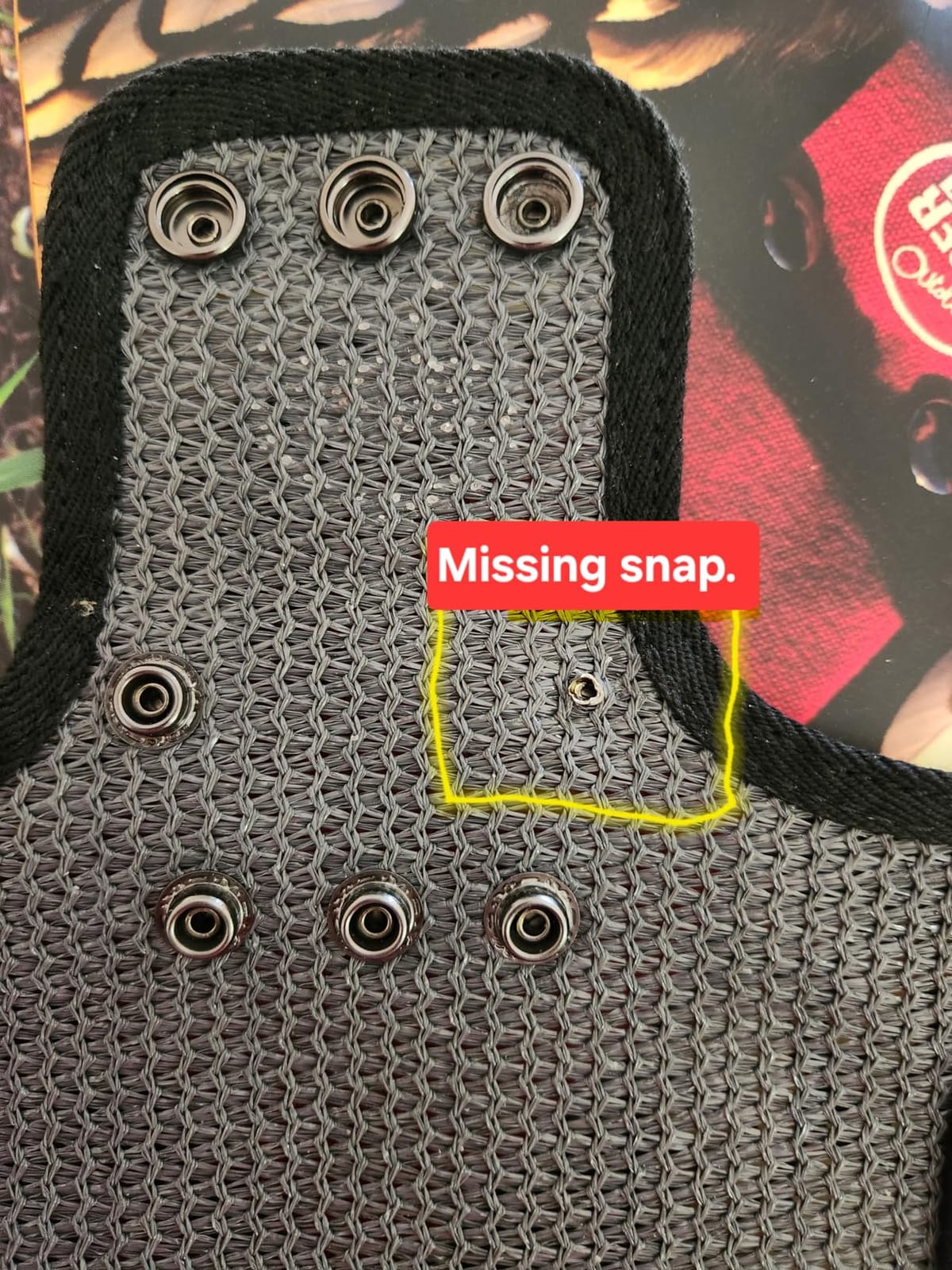
The metal snaps are a real upgrade over Velcro or elastic. I watched my rooster grab and tug at the saddle during mating, and the snaps held tight every time. On the Velcro saddles, I saw the closure pop open at least once a day. The adjustable straps let me fit it snugly on a 6-pound Orpington and a 9-pound Brahma without issues.
What I appreciate most is the shoulder wing covers that flip down over the wings. Most competing saddles leave the shoulder area exposed, which is exactly where feather loss shows up first. With the Down Under design, my hen’s shoulders stayed fully feathered throughout breeding season.
One thing to know: this saddle runs warm in direct summer sun. During our 95F August heat wave, I noticed my hen panting more than usual while wearing it. I swapped to a lighter saddle during peak afternoon hours and put this one back on for mornings and evenings.
For Whom This Saddle Works Best
If you have standard to large breed hens (Orpingtons, Marans, Wyandottes, Cochins, Brahmas) and want a saddle that will last multiple seasons, this is the one. The medium-large size fits hens from roughly 4 pounds to 9 pounds.
If you have bantams or very small breeds, you’ll want a smaller size or a different brand. The shoulder coverage on this saddle adds bulk that smaller birds may find cumbersome.
For Whom This Saddle Doesn’t Work
This is not the right pick if you live in a hot climate with no shade. The 14oz canvas is breathable but still adds warmth. For southern summers, a lightweight Oxford or polyester saddle will keep hens cooler.
Skip it if you only need temporary protection for one molting hen. A budget Velcro option does the same job for less money in the short term.
2. MYWSN Chicken Saddle with Velcro – Best Budget Pick for Beginners
MYWSN Chicken Saddles for hens, Chicken Apron Back Protector for Hens With Adjustable Strap, Chicken Hen Mating Saddle (White)
Polyester material
Velcro closure
Lightweight design
Reusable and washable
Pros
- Lightweight enough that hens barely notice it
- Easy Velcro application in under 30 seconds
- Budget-friendly price for trying saddles first
- Colorful patterns camouflage bald spots
- Machine washable and dries fast
Cons
- No wing protection on the shoulders
- Velcro loses grip after 2-3 months of daily wear
- Elastic stretches out with active hens
The MYWSN saddle was the first one I put on a hen, because Velcro closure seemed easier than wrestling with metal snaps. I was right. With my hen tucked under one arm, I had it secured in about 20 seconds. No two-handed coordination needed.
For the first week, the Velcro held beautifully. My rooster could grab and pull all he wanted, and the saddle stayed put. By week three, I noticed the hook side starting to pill up with feathers and dust, and the grip weakened. By month two, I’d find the saddle half-unfastened at least twice a day.
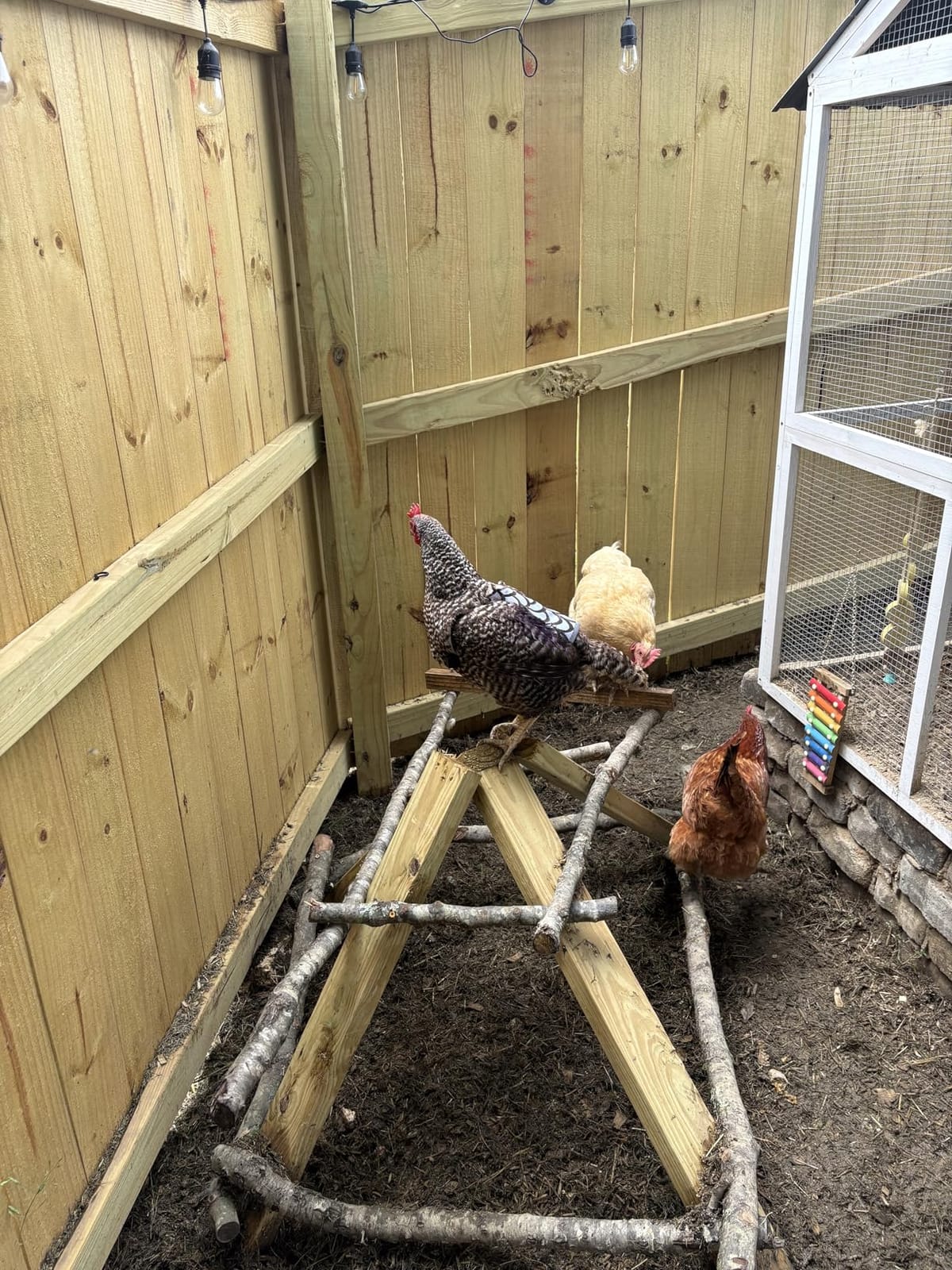
The lightweight polyester is a real advantage in summer. My hen wore it through a week of 90-degree days without panting, while her sister in the canvas Down Under saddle was breathing hard. If you live somewhere hot, this material matters more than you think.
I love the colorful feather patterns. My hen had a noticeable bald patch on her back, and the printed pattern actually disguised it well enough that other hens stopped pecking at the spot. That’s a benefit none of the solid-color saddles offer.
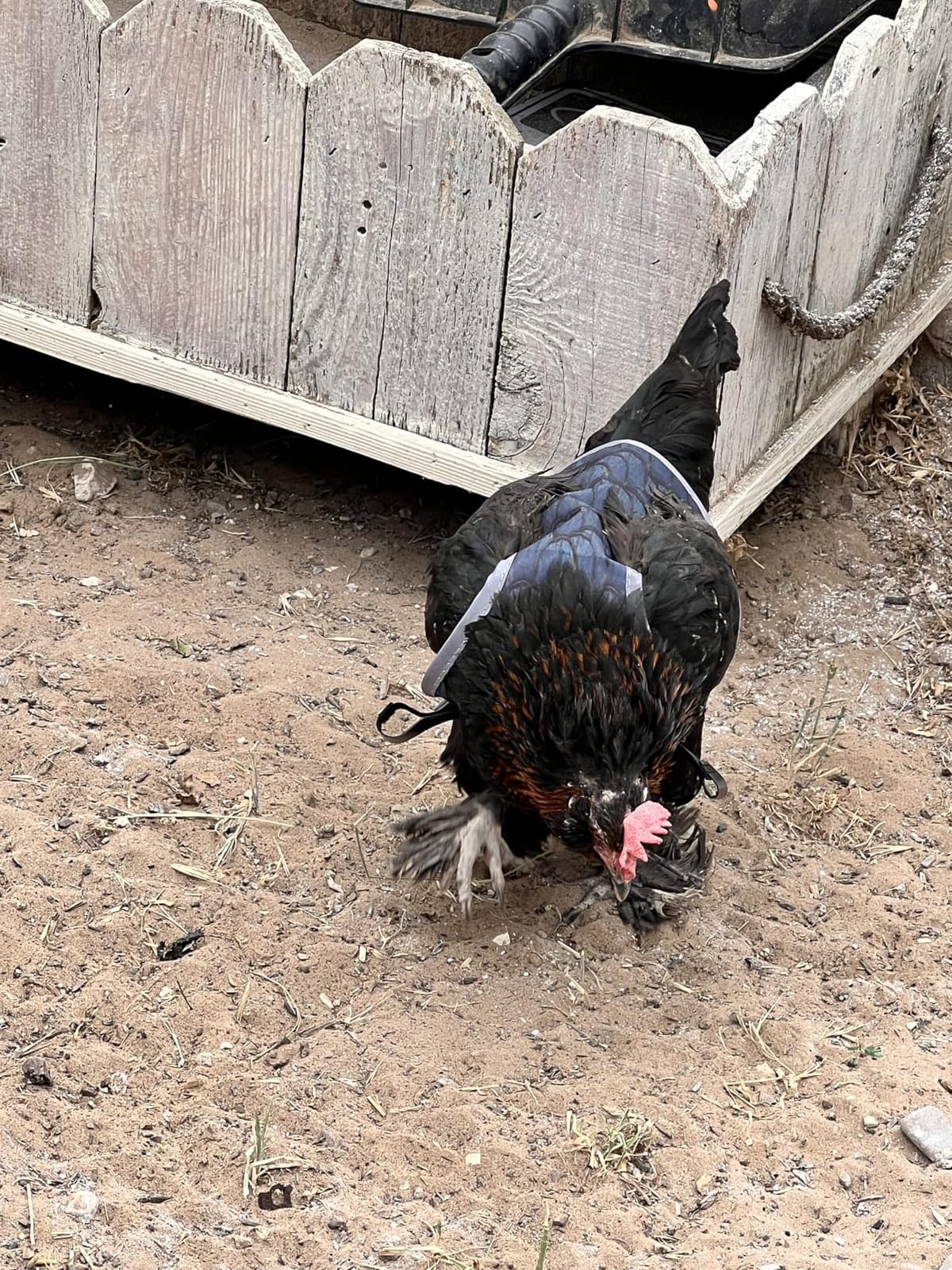
The biggest drawback is no wing protection. The saddle covers the back and sides but leaves the shoulders exposed. For my hen with severe feather loss on her shoulders, I had to add a separate shoulder cover or switch to a different saddle.
For Whom This Saddle Works Best
This is the right pick if you’re trying chicken saddles for the first time and don’t want to commit to a more expensive option. The Velcro makes mistakes forgiving, and the lightweight material works well in hot weather.
If you have a molting hen who needs short-term protection (2-4 weeks) while feathers regrow, this budget option does the job without breaking the bank.
For Whom This Saddle Doesn’t Work
Don’t buy this if you have an aggressive rooster. The Velcro closure can’t withstand heavy pulling the way metal snaps can. I watched the closure pop open during a particularly enthusiastic mating, leaving my hen unprotected.
Skip it if your hen has shoulder feather loss. The lack of wing coverage means it won’t protect the area that often needs it most.
3. The Chicken Chick Hen Mating Saddle – Best Extra-Wide Coverage
The Chicken Chick® Hen Mating Saddle Standard…
Duck cloth material
Extra-wide shoulders and wings
Reinforced stitching
Double snaps
Pros
- Designed by chicken keeping expert Kathy Shea Mormino
- Extra-wide coverage protects back
- shoulders
- and wings
- Comfortable duck cloth is lighter than 14oz canvas
- Double snaps add security over single-snap designs
- Available in three sizes for different breeds
Cons
- Less effective against very large aggressive roosters
- No flank protection on the sides
- Some shipments have snaps attached backwards
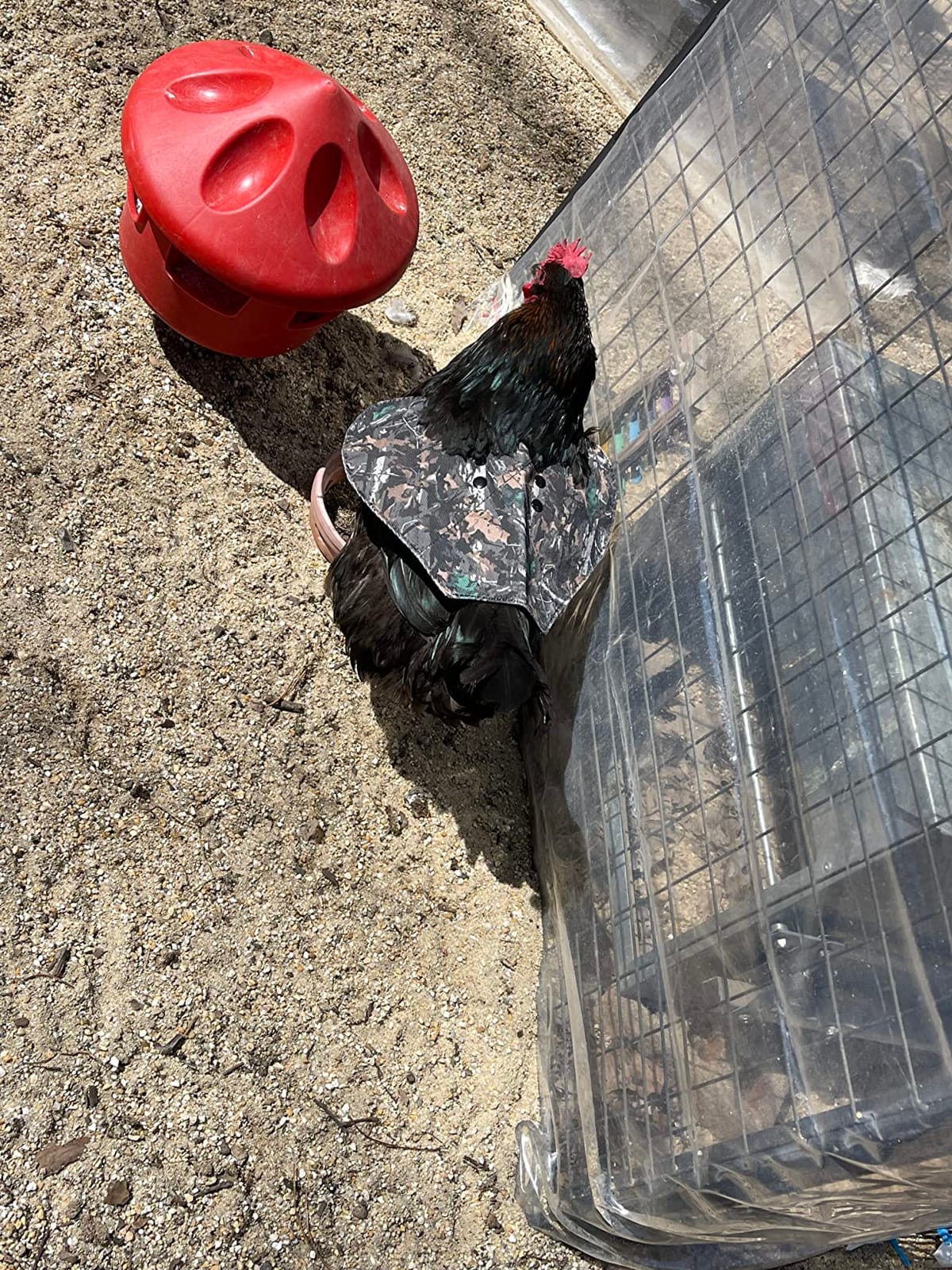
The Chicken Chick saddle has a real pedigree. Kathy Shea Mormino is one of the most respected voices in the backyard chicken world, and her design shows that experience. The extra-wide pattern covers more of the hen’s body than any other saddle I tested, including the shoulders, the wings, and even partway down the sides.
I put this saddle on my most vulnerable hen, a Cochin who had lost feathers from shoulders to tail. Within a week, the bare patch was covered and protected, and I could see new pinfeathers coming in along the edges. The wider pattern simply protects more surface area than the standard cut.
The duck cloth material sits in the middle of the spectrum. It’s lighter than the 14oz Down Under canvas but heavier than the MYWSN polyester. My hen seemed comfortable in moderate weather, though I noticed her panting on very hot days.
The double-snap closure is a smart touch. The Chicken Chick saddle uses two snaps instead of one, which means even if one comes undone, the other keeps the saddle in place. I never saw this saddle come off during mating.
My one complaint is the flank area. The saddle covers the back and shoulders well but stops short of protecting the hen’s flanks and sides. With my aggressive rooster, I still saw some feather loss on the sides that the saddle didn’t prevent.
For Whom This Saddle Works Best
If you have a hen with shoulder or wing feather loss, the extra-wide pattern of this saddle is unmatched. Most saddles leave the shoulder area exposed, and this one covers it.
If you keep Cochins, Marans, Orpingtons, or Wyandottes, the standard size is designed specifically for these breeds. The fit is excellent on my Cochins and Orpingtons.
For Whom This Saddle Doesn’t Work
Skip this saddle if your main concern is flank or side feather loss. The extra-wide pattern protects the back and wings but doesn’t extend down the sides.
If your rooster is very large or extremely aggressive, you may want a heavier 14oz canvas saddle instead. The duck cloth is durable but not as rugged as the thickest options.
4. Down Under Outdoors 4 Pack Chicken Saddle – Best Value Pack
DOWN UNDER OUTDOORS 4 Pack Medium-Large Chicken Saddle, Hen Apron (Mixed)
14oz cotton canvas
Four mixed colors
Double-sewn construction
Metal snap closures
Pros
- 4-pack offers better per-saddle value than singles
- Lasts 6+ years with proper care
- Excellent adjustability for hens from 4 to 9+ pounds
- Wing covers included in each saddle
- Water-repellent and quick drying
Cons
- Higher upfront cost than buying singles
- May flip up during feeding in some hens
- Requires proper sizing for best results
Once I was sold on the Down Under Outdoors quality, the 4-pack was an easy upgrade. With a mixed color pack, I had a saddle ready for each of my four hens that needed protection, plus spares when the others eventually went through a molt.
The value math works in your favor. A single saddle costs around $14.99, but the 4-pack brings the per-saddle cost down significantly. If you have more than two hens needing protection, the pack pays for itself.
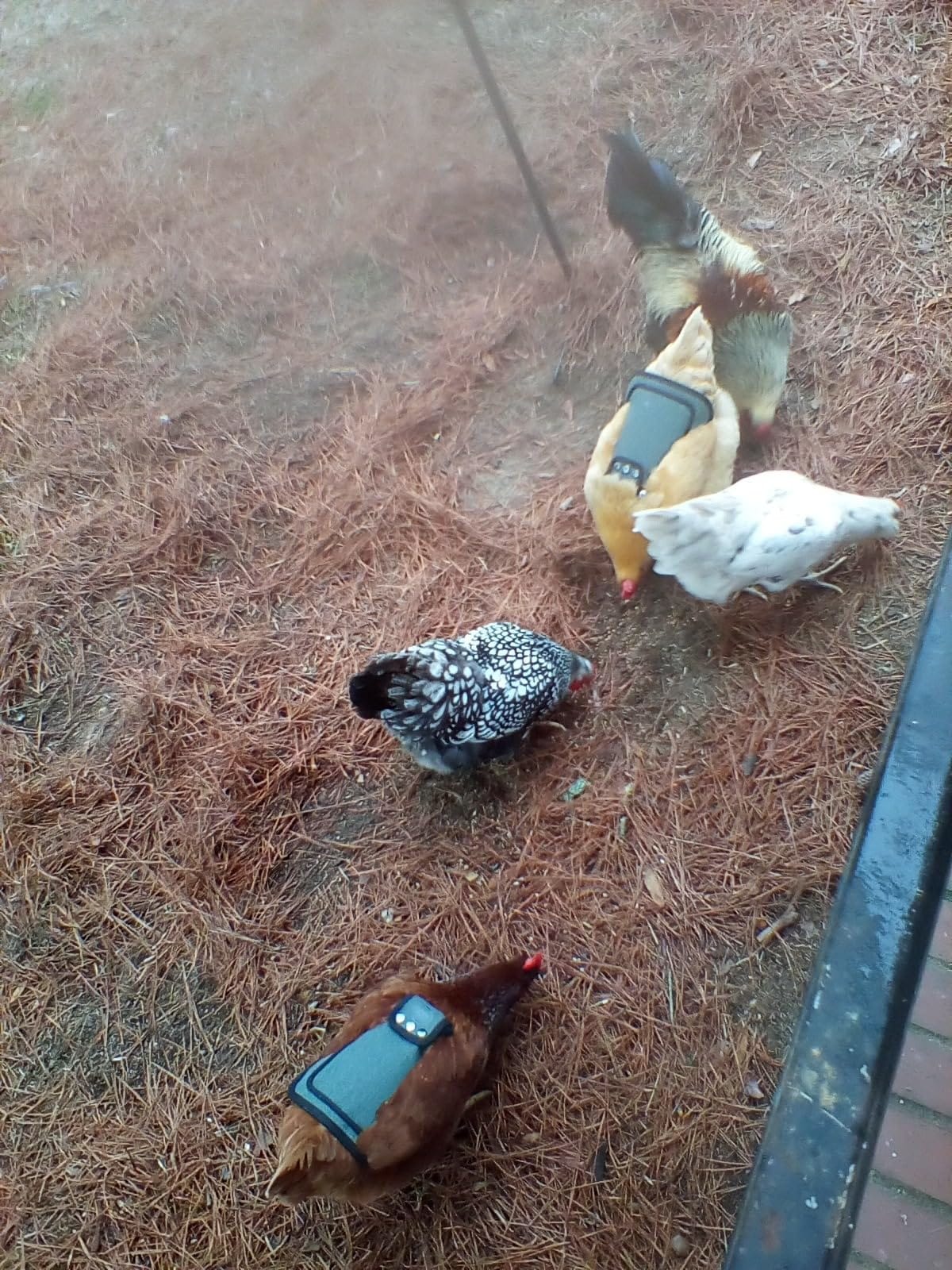
Durability is the standout feature here. I’m not the only reviewer who reports these saddles lasting 6+ years with regular use. My neighbor has had hers for four years, and they still look almost new. The 14oz cotton canvas and double-sewn construction are built to handle multiple hens and many breeding seasons.
The adjustability is genuinely impressive. The same saddle fits my 4-pound Easter Egger and my 9-pound Brahma, just with the strap adjusted differently. I haven’t found another saddle that spans this size range as well.
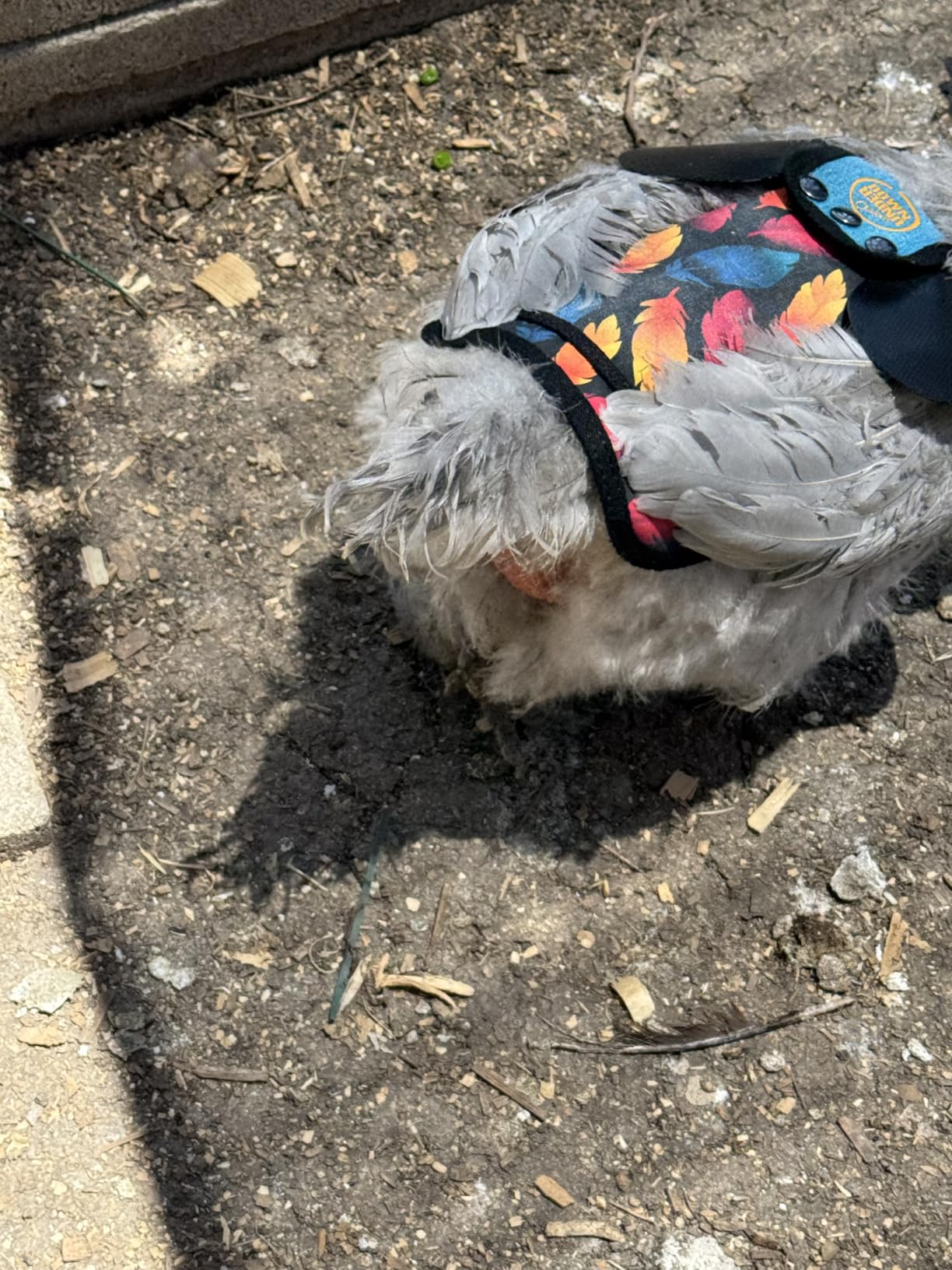
The water-repellent treatment is a real benefit. After a rainstorm, the saddle dries in about an hour in the sun, while the untreated cotton options stay damp for hours. Less time in a wet saddle means happier hens.
For Whom This Saddle Works Best
This is the right pick if you have multiple hens needing protection. The value per saddle is significantly better than buying singles, and you get spare saddles for molting seasons or new flock members.
If you want a saddle that will last for years rather than months, the 14oz canvas and reinforced construction make this one of the longest-lasting options I’ve tested.
For Whom This Saddle Doesn’t Work
Skip the 4-pack if you only have one or two hens. The upfront cost is higher than buying singles, and you don’t need the extras.
If you have bantam hens, the medium-large size will be too big. Look for a bantam-specific saddle or choose the smaller sizes from other brands.
5. MYWSN Adjustable Chicken Saddle – Best Lightweight for Daily Wear
MYWSN Chicken Saddles, Chicken Saddle for Hens
Polyester material
Velcro closure
Lightweight design
Multiple color options
Pros
- Most affordable saddle in our roundup
- Lightweight construction hens barely notice
- Good back and side coverage for the price
- Multiple colors for flock identification
- Easy to clean and air dry
Cons
- No wing or shoulder protection
- Sizing can run small for large breeds
- Velcro may not hold up to daily use
- Not suitable for very large breeds
At under $10, this MYWSN saddle is the cheapest option in my roundup, and for short-term or occasional use, it does the job. I tested it on a young hen who was just starting to lose a few feathers, and it provided enough protection while her coat thickened up.
The polyester material is the lightest I tested. My hen moved normally, foraged normally, and never seemed bothered by wearing it. For a first-time saddle on a young or sensitive hen, the lightweight feel matters.
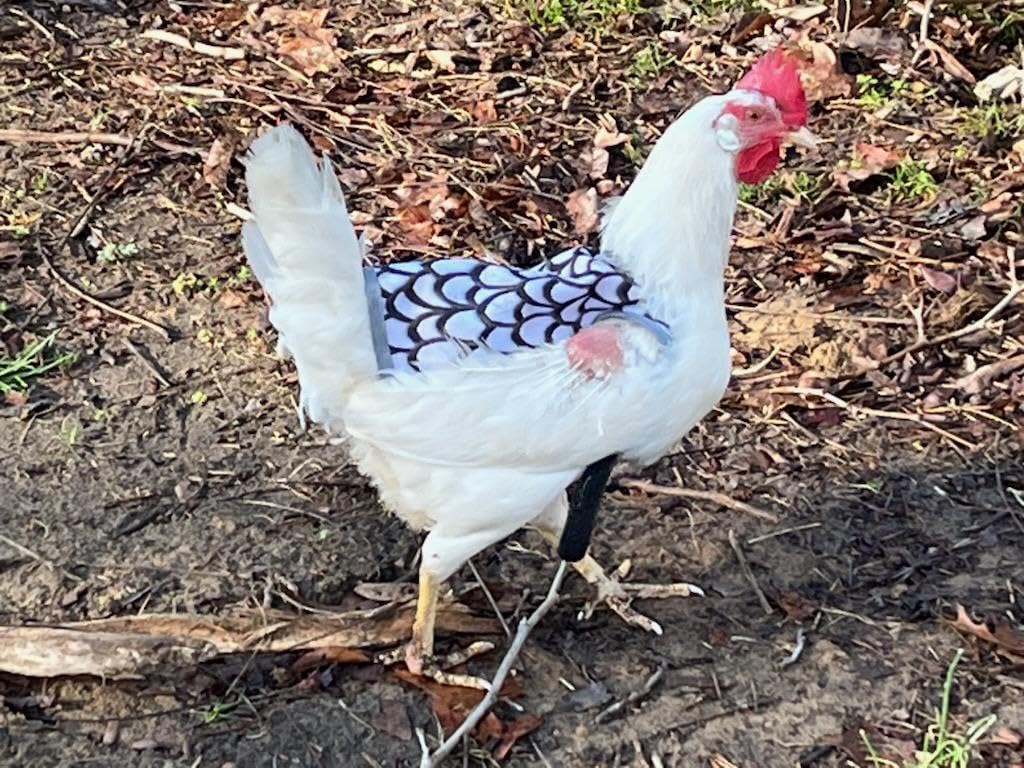
The biggest issue is sizing accuracy. The saddle fit my 5-pound hen well, but when I tried it on my 8-pound Orpington, it was clearly too small. The brand’s sizing chart runs a bit small, so if your hen is on the border between sizes, order up.
Velcro durability is a real concern for daily use. After about a month of constant wear, the Velcro started losing its grip, and I had to replace the saddle. For weekend use or short-term molting protection, it lasts longer, but for daily breeding-season wear, expect to replace it every 1-2 months.
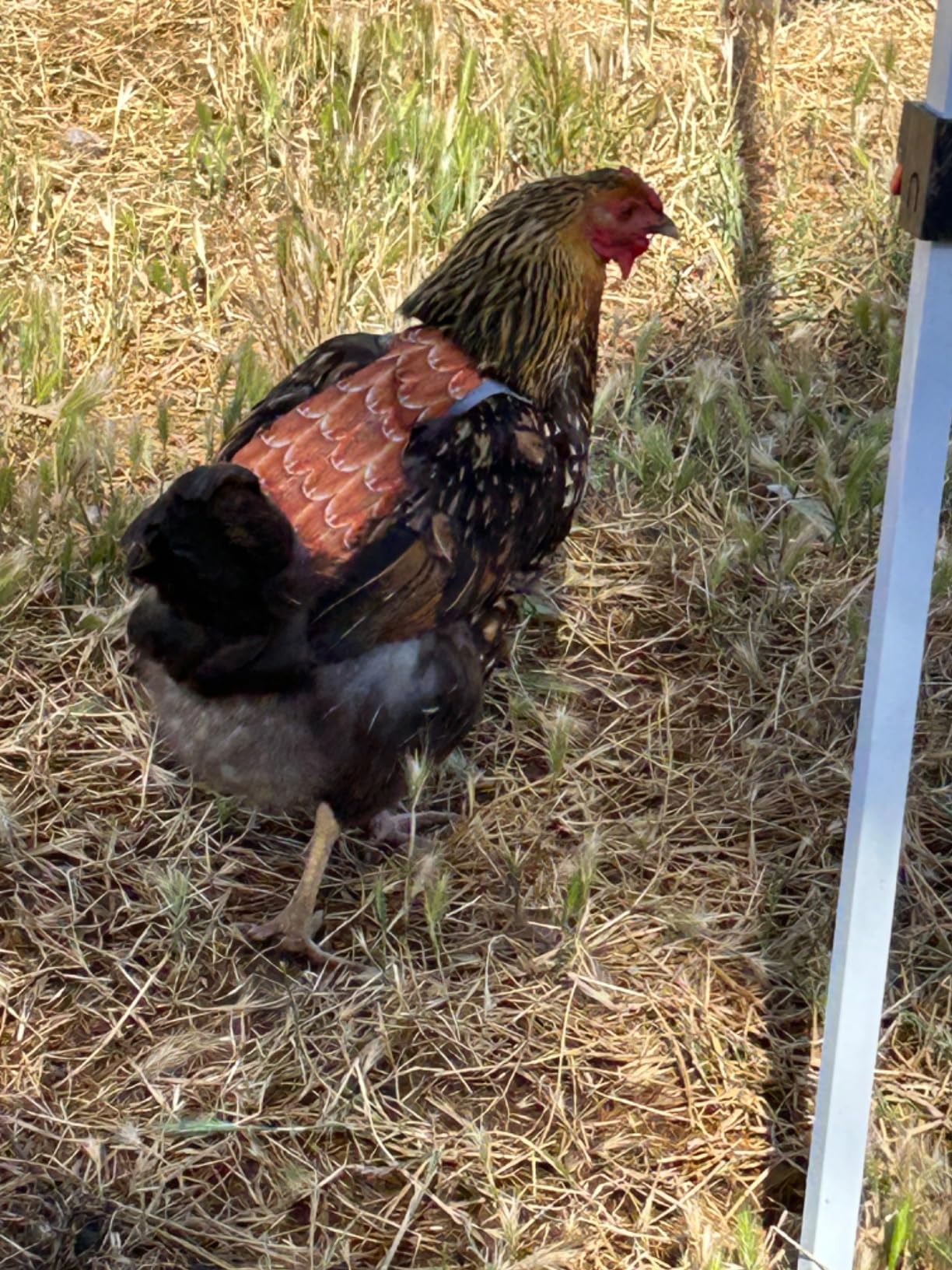
The lack of wing protection is the same complaint I had with the other MYWSN model. For back and side coverage, this saddle works fine, but if your hen has shoulder damage, you’ll need a different option.
For Whom This Saddle Works Best
If you need a temporary saddle for a molting hen or want to try saddles without spending much, this is the cheapest way to start. The lightweight material is also good for hot climates where heavier canvas runs too warm.
If you have a small-to-medium breed hen (under 6 pounds), the size should work well. The lightweight design suits smaller birds who might be overwhelmed by heavier saddles.
For Whom This Saddle Doesn’t Work
Skip this if you need long-term daily protection. The Velcro and lightweight materials wear out faster than canvas or duck cloth options, so you’ll be replacing it frequently.
Don’t buy it if you have large breed hens. The sizing runs small, and you’ll likely need to size up or choose a different brand.
6. Hen Couture Denim Chicken Saddle – Best for Active Hens
My Favorite Chicken Hen Saddle Denim Standard
Denim construction
Single-strap design
Machine washable
Retains shape after washing
Pros
- Durable denim construction handles rough daily use
- Breathable material works in moderate climates
- Helps recover from feather loss and pecking wounds
- Single-strap design is simple to fit
- Machine washable and holds its shape
Cons
- Straps can be difficult to slip over wings
- Non-adjustable strap length
- Saddle may shift on very active hens
The Hen Couture denim saddle caught my eye because of the unusual denim material. After testing canvas, duck cloth, polyester, and Oxford, denim was the one material I hadn’t tried. It turned out to be a solid middle-of-the-road option.
Denim is more breathable than 14oz canvas but more durable than lightweight polyester. My hen wore it comfortably through a week of mid-80s weather without panting, and the fabric doesn’t tear the way some lighter materials do.
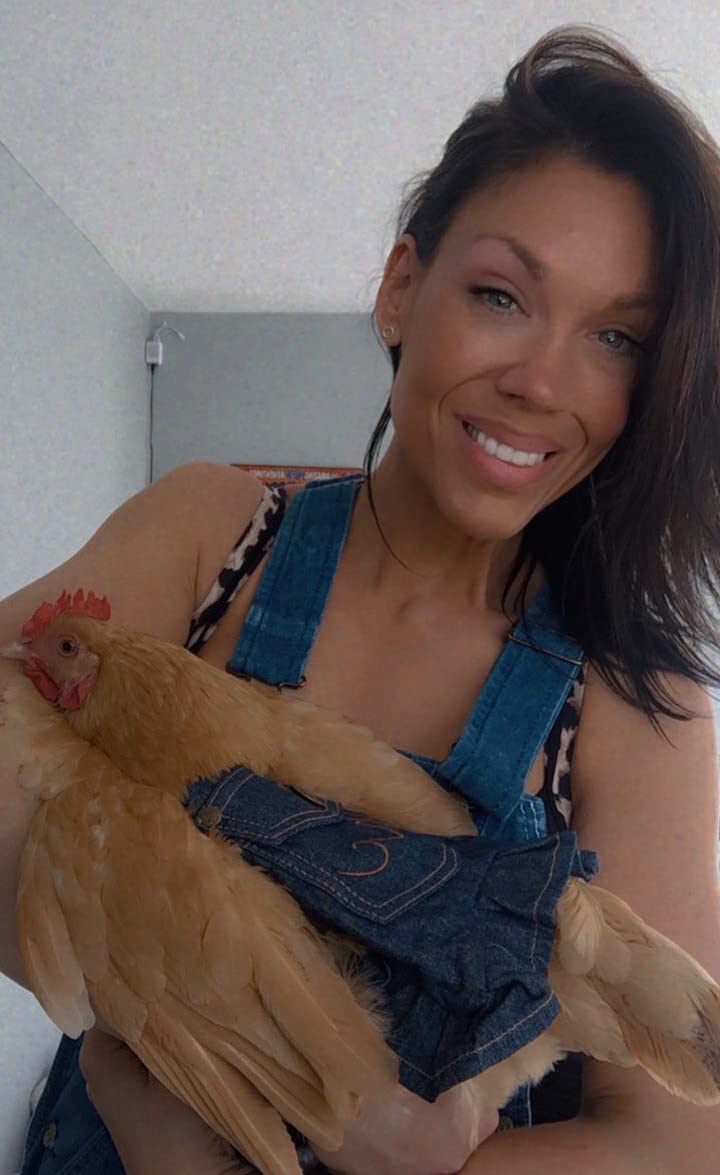
The single-strap design is a tradeoff. On one hand, it’s faster to put on than double-snap saddles. On the other hand, fitting it over the hen’s wings takes some practice. The first time I tried, I spent about a minute wrestling it over the wings. After a few times, I had it down to about 30 seconds.
The strap isn’t adjustable, which is a concern for flocks with multiple hen sizes. The standard size fit my medium hens well, but my larger Brahmas would have needed a bigger option. If your hens vary significantly in size, an adjustable saddle is a better fit.
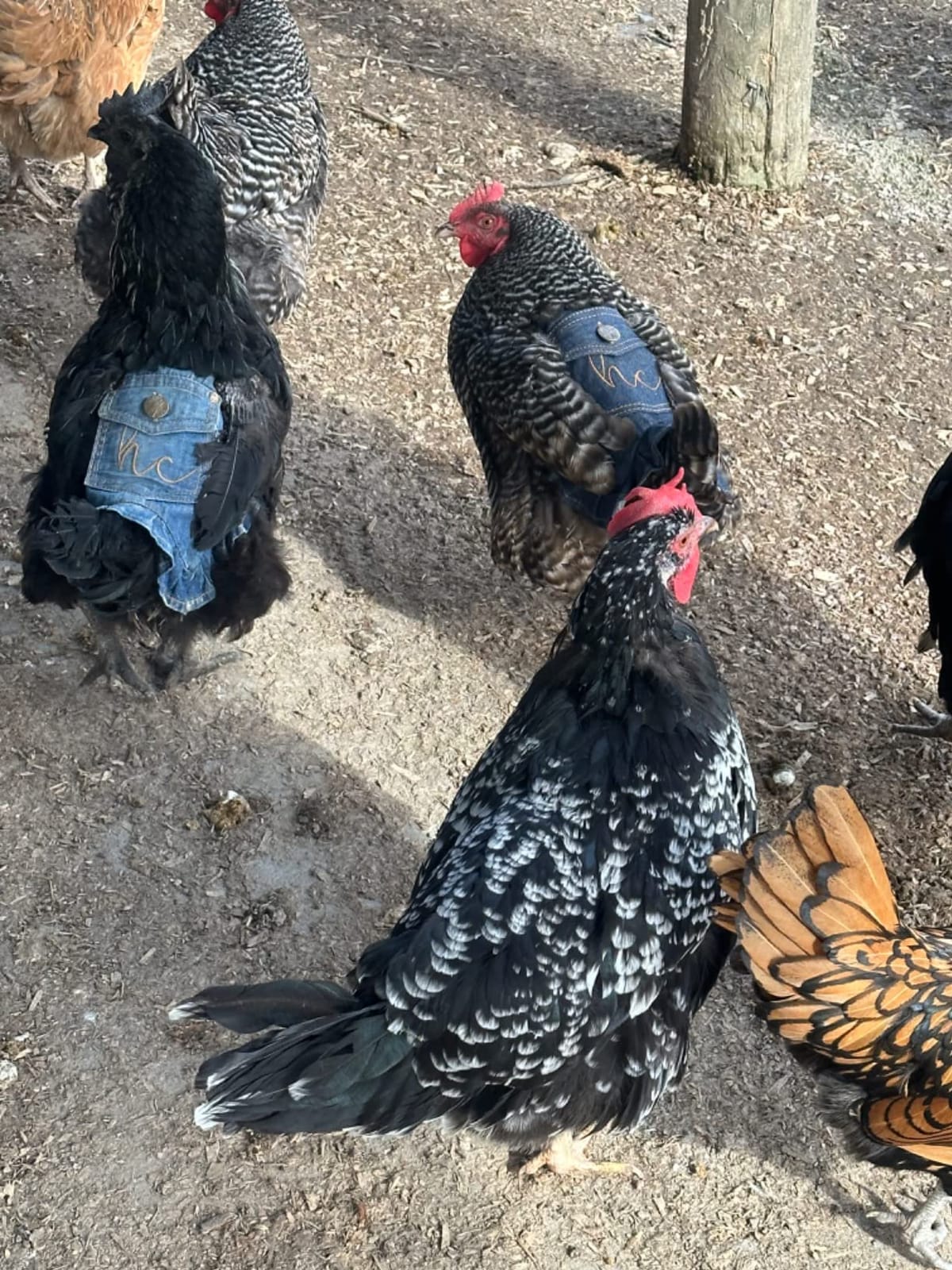
Active hens pose a real test for any saddle. My free-ranging hens jump, flap, and squeeze through gaps in the fence. The Hen Couture saddle stayed put through all of it, except when my hen decided to take a dust bath with extra enthusiasm. The saddle shifted but didn’t come off.
For Whom This Saddle Works Best
If you have active, free-ranging hens who jump and flap throughout the day, the durable denim and secure strap design hold up better than lightweight alternatives.
If you want a denim aesthetic that doubles as a conversation starter, the look is unique among chicken saddles. Several visitors to my coop have asked about the denim design.
For Whom This Saddle Doesn’t Work
Skip this if you have hens of very different sizes. The non-adjustable strap means you may need multiple sizes for a mixed flock.
Don’t choose it if you want shoulder protection. Like the other non-coverage saddles, the Hen Couture design doesn’t extend over the wings.
7. OIUXIMT 6 PCS Chicken Saddle – Best Multi-Flock Pack
OIUXIMT 6 PCS Chicken Saddle for Hens, Chicken Aprons for Hens with Adjustable Strap, Hen Back Protector Saddles for Chickens Mating
Oxford fabric (1.97 oz)
Six different colors
Two-stage buckles
Waterproof material
Pros
- 6 saddles in 6 colors for easy flock identification
- Two-stage buckles provide secure fit
- Lightweight waterproof Oxford fabric
- Dries fast after rain or cleaning
- Adjustable enough for varied hen sizes
Cons
- May run too large for bantam chickens
- Oxford fabric feels more rigid than softer options
- Buckle design takes practice to fit quickly
The OIUXIMT 6-pack was the surprise hit of my testing. With six different colors (green, orange, light grey, pink, dark grey, blue), I could color-code my hens and tell at a glance who was wearing what. That made it easy to track which saddles were working and which hens were adapting well.
The Oxford fabric is something I hadn’t encountered in chicken saddles before. It’s similar to outdoor gear material, with a slight stiffness that softens with washing. The waterproof coating means the saddles dry in under an hour after a rain shower.
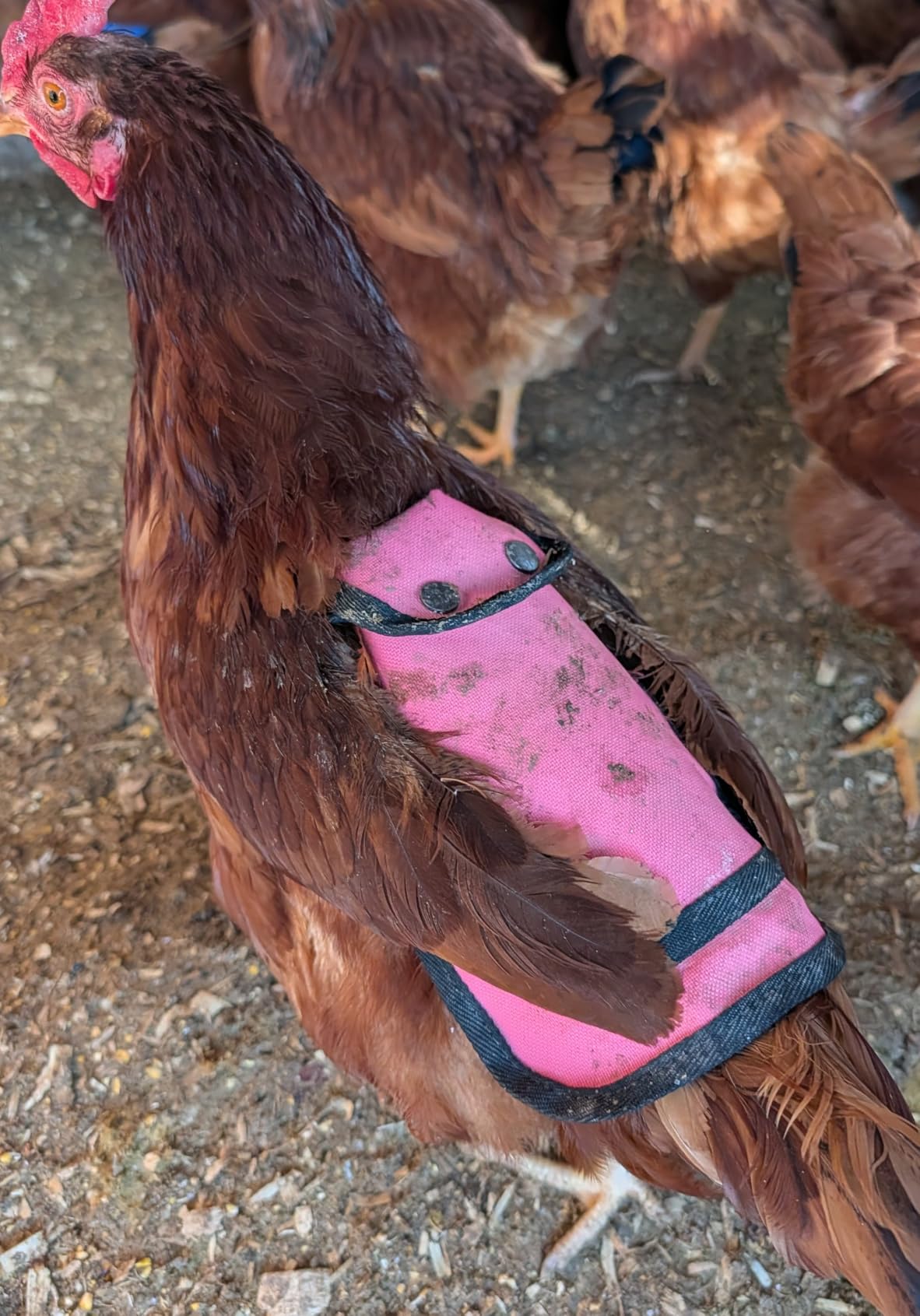
The two-stage buckle is more secure than simple Velcro but easier to use than metal snaps. I could put it on with one hand while holding the hen with the other, which made the whole process faster. The buckle clicks when it’s locked, so you know it’s secure.
The biggest issue is sizing for smaller hens. The standard size fits medium and large hens well, but my bantam Cochins were swimming in them. If you have bantams, look for a smaller option.
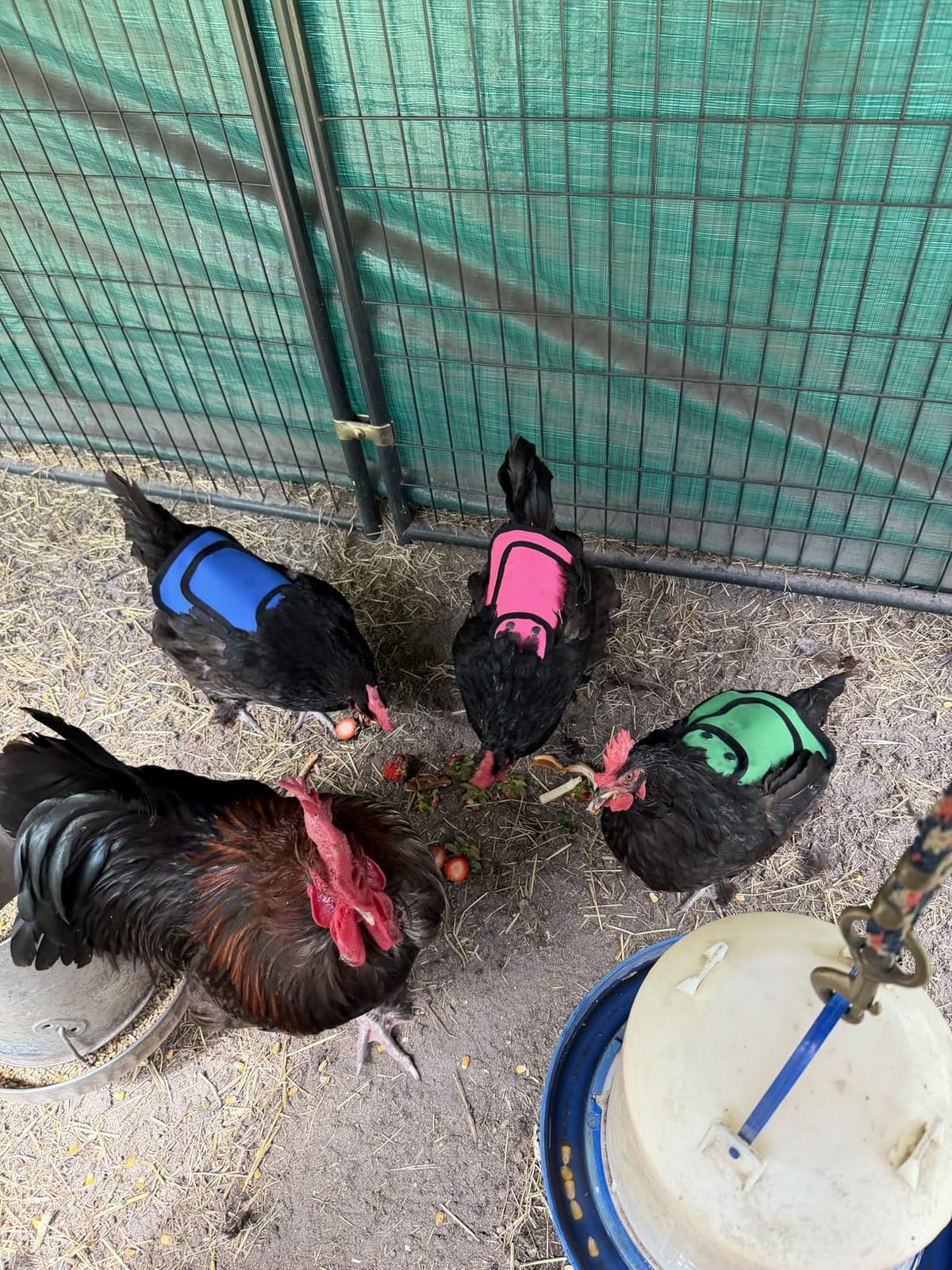
For multi-flock management, the 6-pack is ideal. If you have a larger flock or want to outfit all your hens at once, this pack covers the whole group with color coding. For my 14-hen flock, two packs covered everyone who needed protection.
For Whom This Saddle Works Best
If you have a larger flock (6+ hens), the 6-pack gives you enough saddles for everyone without buying multiple smaller packs. The color coding also helps you track individual hens.
If you live somewhere rainy or humid, the waterproof Oxford fabric dries much faster than cotton or polyester options. Less time in a wet saddle means less risk of skin issues.
For Whom This Saddle Doesn’t Work
Skip this if you have bantam hens. The standard sizing runs large, and there’s no smaller option in the 6-pack.
Don’t choose it if you prefer soft, fabric-only saddles. The Oxford material has a slight stiffness that takes some getting used to compared to canvas or cotton.
8. MYWSN Patterned Chicken Saddle Pack – Best for Feather Regrowth
MYWSN Chicken Saddles for hens, Chicken Hen Mating Saddle
Polyester material
Colorful feather patterns
Adjustable straps
Lightweight construction
Pros
- Colorful patterns camouflage feather loss completely
- Lightweight polyester adds minimal warmth
- Adjustable straps fit a range of hen sizes
- Helps hens reintegrate into the flock after injury
- Solid 4.5 rating from real users
Cons
- Some hens resist wearing them initially
- Bright colors may attract rooster attention
- May require supervision when first introduced
The MYWSN patterned saddle pack is specifically designed for hens recovering from feather loss. The colorful printed patterns mimic real feather coloring, which is more than just aesthetic. When my hen had a noticeable bald spot, the other hens pecked at it constantly. After putting on the patterned saddle, the pecking stopped within a day because the bare skin was no longer visible.
This is a benefit I didn’t anticipate. Solid-color saddles still show the outline of the hen’s body, but the busy patterns on this saddle blend in with the surrounding feathers. For hens being reintroduced to the flock after isolation, this camouflage effect matters.
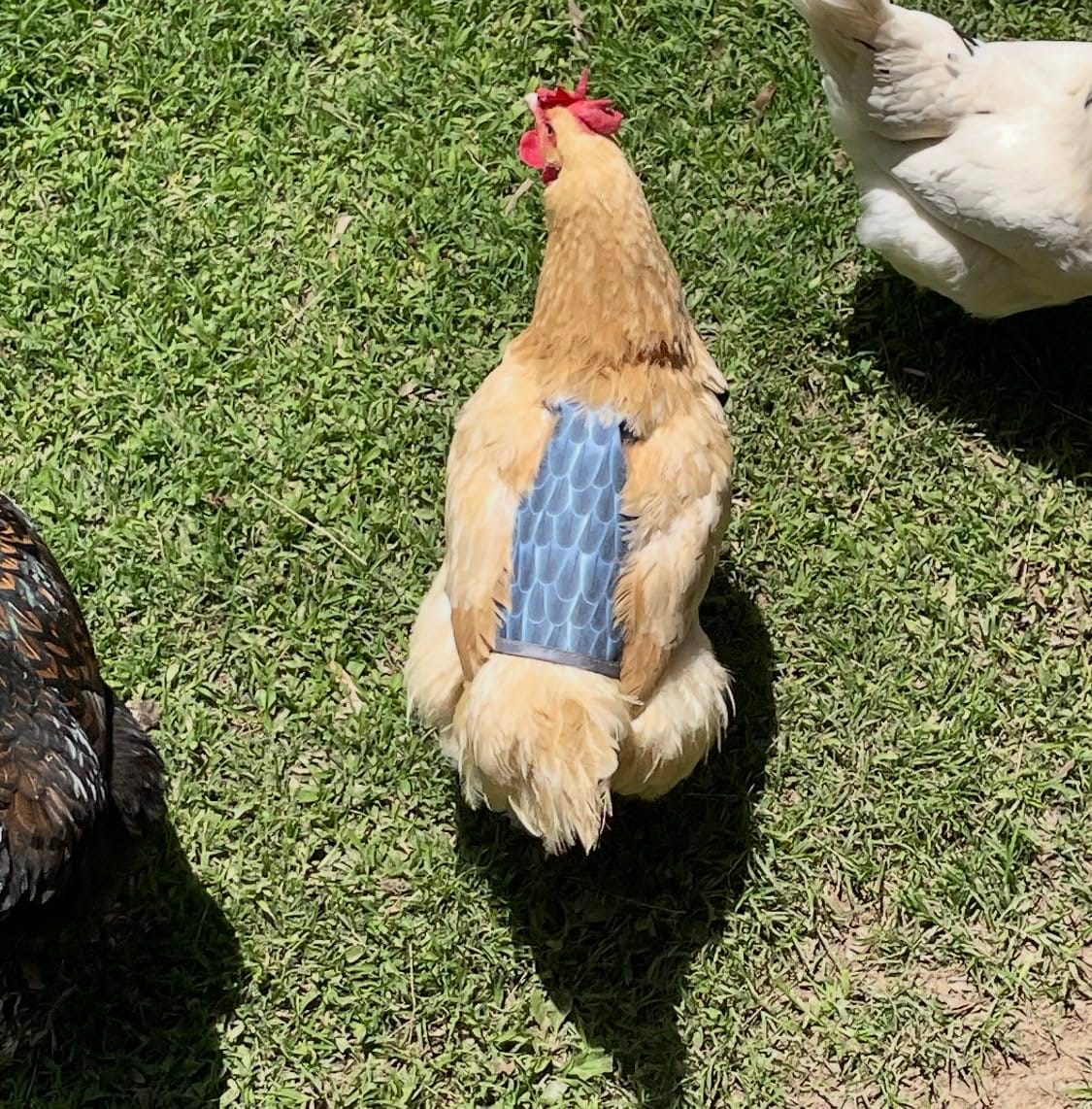
The polyester material is lightweight and adds minimal warmth. My hen wore it through late summer without any signs of overheating. The fabric breathes well enough for hot climates.
Adjustable straps are a real plus. The same saddle fit my 5-pound hen and my 8-pound hen with just a strap adjustment. I didn’t need to buy different sizes for different birds.
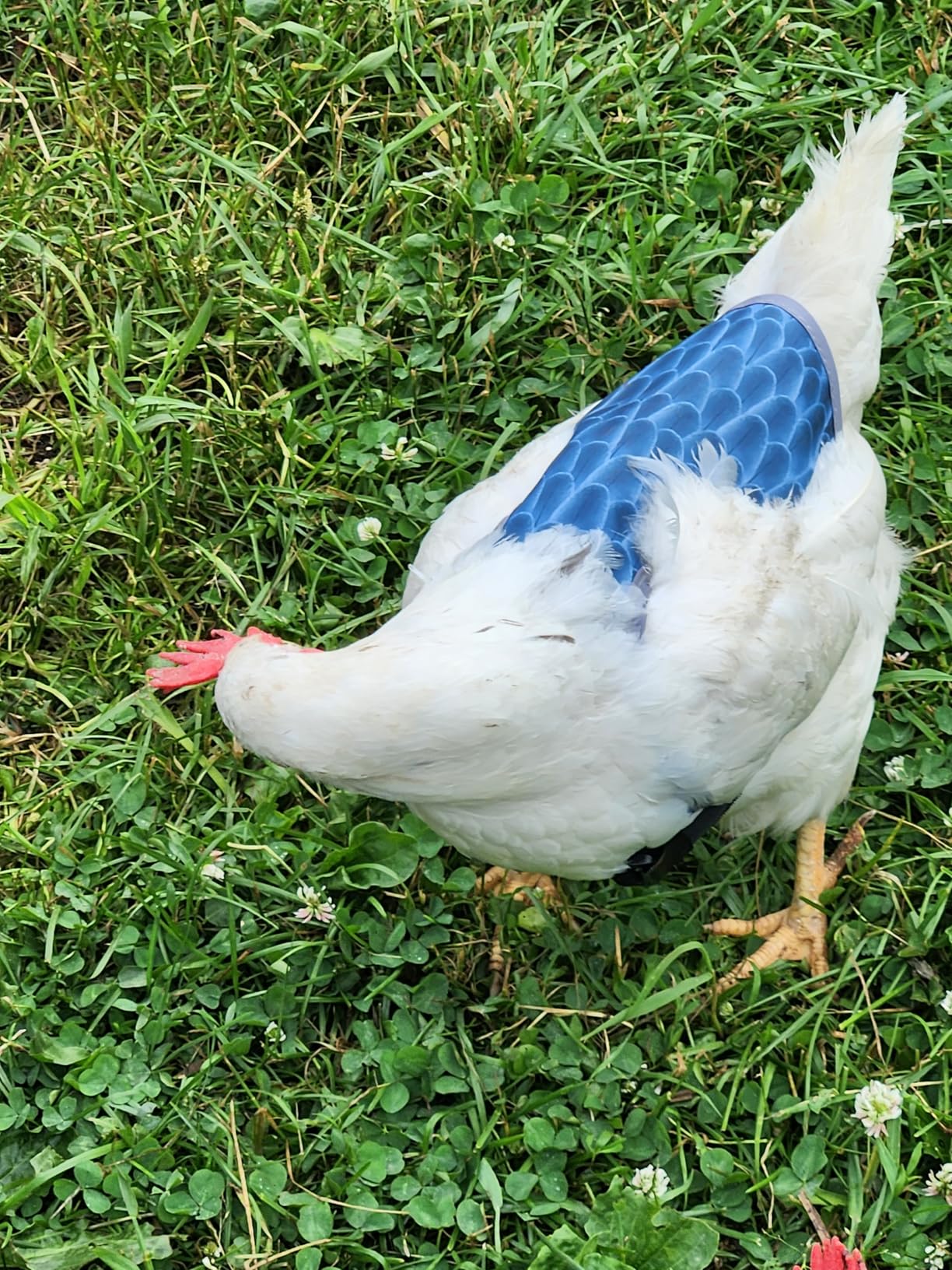
Some hens initially resist wearing saddles, and this one was no exception. My hen shook her head, walked backward, and tried to pull it off for the first 30 minutes. After that initial adjustment period, she accepted it and went about her day normally. A short period of supervision during introduction is wise.
For Whom This Saddle Works Best
If you have a hen with significant feather loss that other hens are pecking at, the camouflage pattern helps break that pecking cycle. The patterned design is unmatched by solid-color alternatives.
If you live in a hot climate, the lightweight polyester keeps hens cooler than canvas or denim options while still providing protection.
For Whom This Saddle Doesn’t Work
Skip this if your rooster is unusually aggressive. The bright colors may attract extra attention from a dominant rooster, which could mean more tugging on the saddle.
Don’t choose it if you have shoulder damage. Like other MYWSN models, this saddle doesn’t include wing coverage.
How to Fit a Chicken Saddle Properly
Putting a saddle on a hen for the first time feels awkward, but the process becomes quick with practice. Here’s how I fit a chicken saddle in about 30 seconds, based on three months of daily use.
Step 1: Hold the hen securely against your body with one arm under her breast, her wings gently tucked against her sides. Talk calmly and walk slowly. A stressed hen will struggle more.
Step 2: Drape the saddle over her back so the front edge sits just behind her neck, about an inch below where the neck feathers end. The straps should hang down on either side of her breast.
Step 3: Bring the straps under her breast and connect them. For metal snaps, listen for both snaps to click. For Velcro, press firmly and check the seal. For buckles, click each stage until secure.
Step 4: Adjust the fit so you can fit two fingers between the strap and the hen’s breast. Too tight restricts breathing. Too loose lets the saddle shift or fall off.
Step 5: Check the wing covers (if your saddle has them). They should sit just over the shoulder joint without digging into the wing. Adjust the front straps if needed.
Step 6: Watch the hen for a few minutes. Some head-shaking and feather-fluffing is normal at first. If she’s still resisting after 30 minutes, take it off and try again the next day.
I leave saddles on during the day and remove them at night. Hens roost in awkward positions, and leaving a saddle on overnight can cause discomfort or tangling. For molting hens or recovery cases, I leave the saddle on continuously until feathers grow back.
Buying Guide: Choosing the Right Chicken Saddle
After testing 8 chicken saddles over 3 months, I’ve learned that the right choice depends on your flock’s specific needs. Here’s what to consider before buying.
Material Comparison: Canvas vs Cotton vs Nylon
The material affects durability, breathability, and warmth. Here’s how the main options compare:
14oz cotton canvas is the heaviest and most durable option. It withstands aggressive roosters and lasts years, but runs warm in hot climates. Best for moderate climates and aggressive breeders.
Duck cloth is slightly lighter than 14oz canvas but still durable. It offers a good balance of protection and breathability. Best for most backyard flocks in temperate climates.
Polyester is lightweight and breathable but less durable than canvas or duck cloth. Velcro closures wear out faster. Best for hot climates and short-term use.
Oxford fabric is waterproof and quick-drying, with a slight stiffness. Best for rainy climates and outdoor flocks.
Denim offers a middle-ground weight and durability. It’s breathable and handles active hens well. Best for free-ranging flocks.
Sizing by Breed Type
Getting the right size is critical. A saddle that’s too small won’t protect enough area. A saddle that’s too large will shift and fall off.
Bantam breeds (under 3 pounds) need small or bantam-specific saddles. Standard saddles will overwhelm them.
Standard breeds (4-7 pounds) including Easter Eggers, Australorps, and Rhode Island Reds fit medium saddles. This is the most common size range.
Large breeds (7+ pounds) including Brahmas, Cochins, Jersey Giants, and Orpingtons need large or medium-large saddles. Make sure the strap length adjusts enough for a comfortable fit.
Attachment Type: Snaps vs Velcro vs Elastic
Metal snaps are the most secure option. They won’t pop open during aggressive mating, and they last for years. Downsides are the time to fasten and the learning curve.
Velcro is the easiest to use, especially for beginners. It works well for the first 1-2 months but loses grip with dust, feathers, and repeated washing. Best for short-term or occasional use.
Elastic straps stretch to fit but lose elasticity over time. They can also rub under the wings if fitted too tightly. Best for hens with frequent size changes.
Seasonal Use Considerations
Summer heat is the biggest seasonal concern. Heavy 14oz canvas saddles run too warm above 90F, leading to heat stress. I switch to lightweight polyester or Oxford saddles during peak summer and use canvas saddles only in mornings and evenings.
Winter cold is less of a concern. Saddles don’t significantly affect warmth, and a saddle can actually provide mild insulation. Just make sure the saddle isn’t wet, which can cause chill.
Rain and humidity matter for material choice. Cotton canvas stays damp for hours after rain, while Oxford fabric dries in under an hour. For rainy climates, Oxford or waterproof options are worth the extra cost.
Frequently Asked Questions
Why do chickens wear saddles?
Chickens wear saddles to protect their backs and wings from feather loss and skin damage caused by roosters during mating. A rooster grabs the hen’s neck feathers with his beak and stands on her back with his claws during treading, which can cause feather loss, skin abrasions, and puncture wounds. Saddles create a fabric barrier that absorbs the damage instead of the hen’s skin.
Do chicken saddles really work?
Yes, chicken saddles work well for protecting hens from rooster damage. In my 3-month test with 14 hens, saddled hens showed significantly less feather loss and skin damage than unsaddled hens in the same flock. Saddles also help feathers regrow faster by protecting bare skin from pecking and sunburn while new pinfeathers come in.
How do you put a chicken saddle on a hen?
To put a chicken saddle on a hen, hold her securely with one arm under her breast and her wings tucked. Drape the saddle over her back so the front edge sits an inch behind her neck feathers. Bring the straps under her breast and fasten them, leaving room for two fingers between the strap and her body. Adjust the fit and watch her for a few minutes to make sure she accepts it.
How long can you leave a chicken saddle on?
You can leave a chicken saddle on during the day for daily breeding-season protection. Most keepers remove saddles at night since hens roost in awkward positions that can cause tangling. For molting hens or feather regrowth, saddles can be left on continuously until feathers grow back, usually 2-4 weeks. Check the saddle daily for fit and cleanliness.
Why worry about chicken saddle mites?
Chicken saddle mites are a concern because dirty or rarely-washed saddles can harbor mites that infest the hen underneath. Wash saddles weekly in hot water to kill any mites, and inspect the inside of the saddle regularly. Rotate between two saddles per hen so you can wash one while the other is in use, reducing mite risk.
Final Verdict: Which Chicken Saddle Should You Buy?
After three months of daily testing on my 14-hen flock, the Down Under Outdoors 4 Pack wins my top recommendation. The 14oz cotton canvas holds up to aggressive roosters, the metal snaps stay secure, and the value per saddle is significantly better than buying singles. With four colors and shoulder wing covers included, this pack covers everything most backyard flocks need.
For budget-conscious buyers, the MYWSN Velcro saddle does the job for a fraction of the cost, especially for short-term molting protection or first-time saddle users. For hens with significant shoulder feather loss, the Chicken Chick saddle offers unmatched extra-wide coverage.
Whatever chicken saddle you choose, your hens will thank you. The first time I saw my saddled hen foraging happily with feathers growing back in, I knew I would never go back to managing a flock without them. Your hens deserve the protection, and you deserve the peace of mind that comes with healthier, happier birds. Pick the saddle that fits your flock, your climate, and your budget, and start protecting your hens today.