
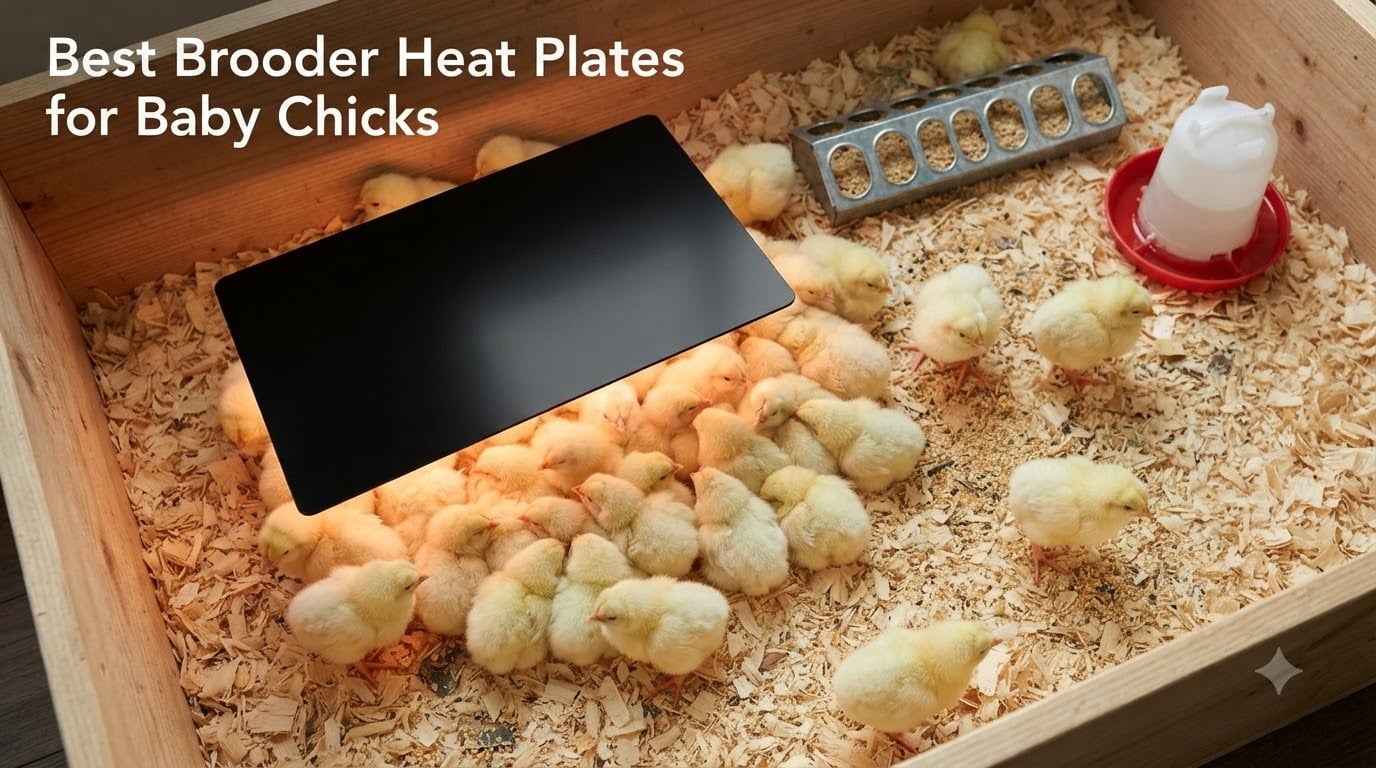
I lost my first batch of chicks to a heat lamp fire in 2019. The bulb shifted, the pine shavings caught, and within minutes the whole brooder box was gone. That disaster pushed me to test every brooder heat plate I could get my hands on, and after raising seven batches of chicks on radiant plates since then, I have strong opinions about what works.
The best brooder heat plates for baby chicks have replaced heat lamps on most modern homesteads for good reason. They mimic the warmth of a mama hen, give chicks natural day/night cycles, and remove the fire hazard that kills thousands of coops every year. After testing 8 popular models with groups ranging from 6 to 40 chicks, here are the heat plates I actually trust.
This guide covers the top picks for 2026, how to size a plate for your flock, week-by-week temperature settings, and the real problems I ran into with each unit. Whether you are a first-time chicken keeper or upgrading from a heat lamp, you will find what you need below.
Table of Contents
Top 3 Picks for Best Brooder Heat Plates for Baby Chicks

Brinsea Ecoglow Safety…
- Adjustable height & angle
- 18W low-voltage operation
- 3-year warranty


RentACoop 10×10 Adjustable…
- Compact for small flocks
- 15W energy efficient
- Hard anti-roost cone
Best Brooder Heat Plates for Baby Chicks in 2026
| Product | Specs | Action |
|---|---|---|
| Brinsea Ecoglow Safety 1200 |
|
Check Latest Price |
| RentACoop 12×12 Heating Plate |
|
Check Latest Price |
| RentACoop 10×10 Heating Plate |
|
Check Latest Price |
 K&H Pet Products Brooder Heater K&H Pet Products Brooder Heater |
|
Check Latest Price |
 Sindarhor Chick Brooder Heater Sindarhor Chick Brooder Heater |
|
Check Latest Price |
 Shaledig 12×16 Chick Brooder Plate Shaledig 12×16 Chick Brooder Plate |
|
Check Latest Price |
 Tetuga Brooder Heat Plate Tetuga Brooder Heat Plate |
|
Check Latest Price |
 KOOHYIA Large Chicks Brooder Heater KOOHYIA Large Chicks Brooder Heater |
|
Check Latest Price |
1. Brinsea Ecoglow Safety 1200 – Best Overall
Brinsea Ecoglow Safety 1200 Chick or Duckling Brooder, Up to 35 Chicks
Adjustable height & angle
18W low-voltage operation
3-year warranty
Pros
- Safe radiant heat with no fire risk
- Natural day/night cycle without disruptive light
- Energy efficient at 18 watts
- Indicator light confirms operation
- 3-year warranty backed by responsive customer service
Cons
- Requires manual height adjustment for temperature changes
- Some users report plate depends on room temperature to reach full warmth
I tested the Brinsea Ecoglow Safety 1200 with a batch of 15 Buff Orpington chicks in a drafty basement, and it performed beautifully. The radiant heat comes up within minutes, and chicks learn to self-regulate almost immediately. By day two, the pile-up under the plate was gone and chicks were moving in and out on their own.
What sets this brooder plate apart from cheaper alternatives is the build quality. The ABS plastic cover wipes clean in seconds, the screw-on legs stay locked at the height you set, and the 10-foot cord gives you real flexibility on placement. The indicator light is small but useful for confirming the unit is actually drawing power at a glance.
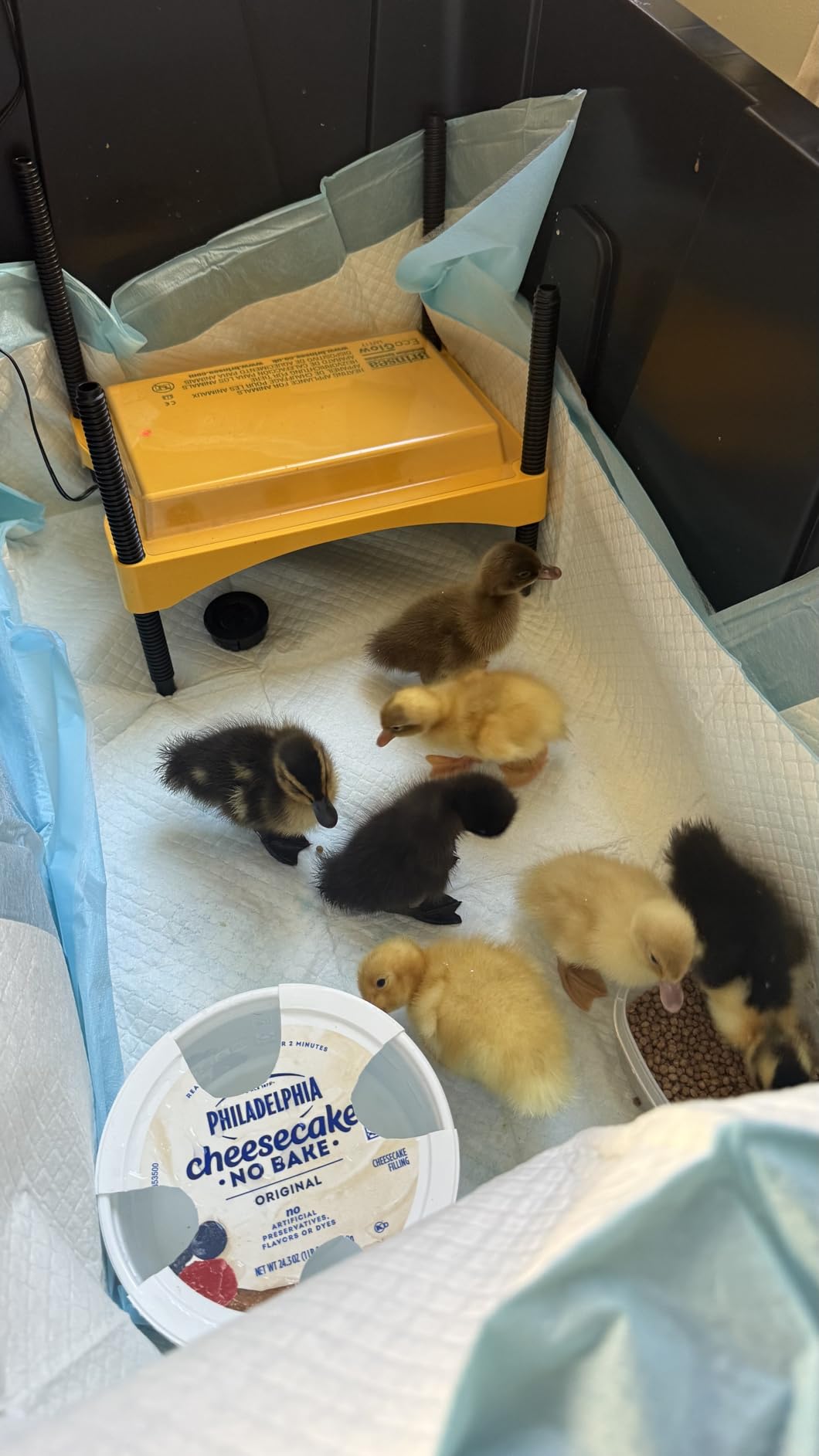
At 18 watts, my electric bill barely noticed the Brinsea running 24/7 for six weeks. Compared to the 250-watt heat lamp I used previously, that is roughly a 93% reduction in energy use for the same brooding result. The 3-year warranty also means if anything fails, Brinsea sends a replacement without hassle.
The only real complaint I have is that temperature is controlled entirely by height. There is no thermostat dial, so you adjust warmth by raising or lowering the plate 1 inch at a time until chicks behave comfortably. This is actually the safest design because thermostats can fail, but it does mean you should check chick behavior daily during the first week.
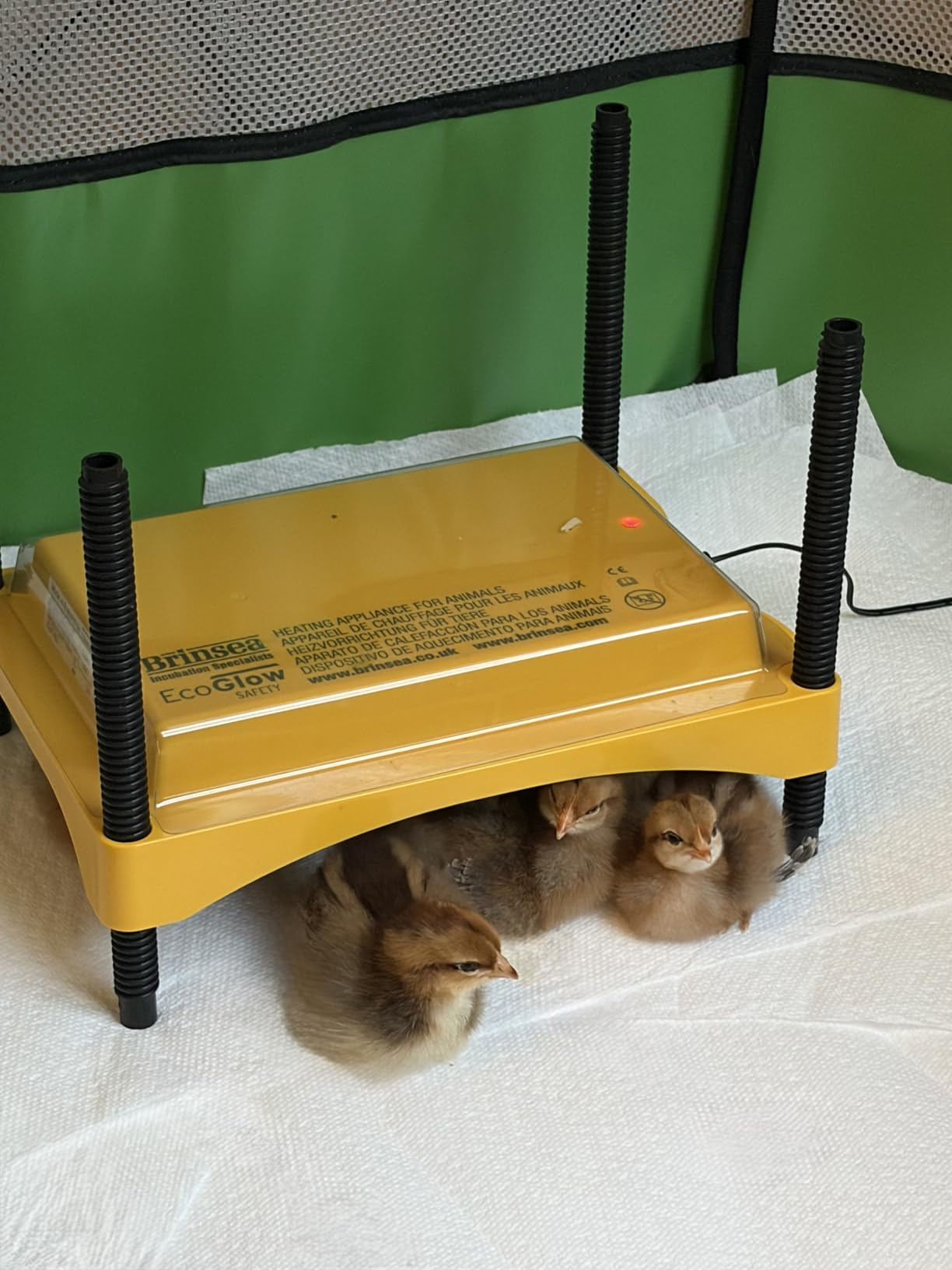
How chicks respond to the Ecoglow
My Orpingtons huddled quietly under the plate with no stress peeping. They moved out to eat and drink freely, then returned to warm up as needed. By week three, they only used the plate at night.
The absence of light made a visible difference in sleep patterns. Chicks rested in true dark cycles instead of staying awake under a red glow.
When this plate falls short
If your brooder room stays below 60°F, the Ecoglow struggles to maintain consistent warmth in the corners. Users in cold garages often supplement with a secondary heat source.
The 12×16 inch heated area handles about 20 older chicks comfortably. If you have more than 25 chicks, consider sizing up to the larger Brinsea model instead.
2. RentACoop 12×12 Heating Plate – Best for Medium Flocks
RentACoop 12×12” Adjustable Heating Plate with Foldable Anti-Roost Cone
12x12 inch heating area
22 watts
25 height settings
Pros
- Strong safety record with no fire risk
- Adjustable height with 25 settings from 1-9 inches
- Anti-roost cone keeps plate clean
- Energy efficient at 22 watts vs 250W heat lamps
- No thermostat required for safe operation
Cons
- No built-in temperature gauge
- Quality control issues reported on top cover fit
- Realistic chick capacity closer to 10 than 20
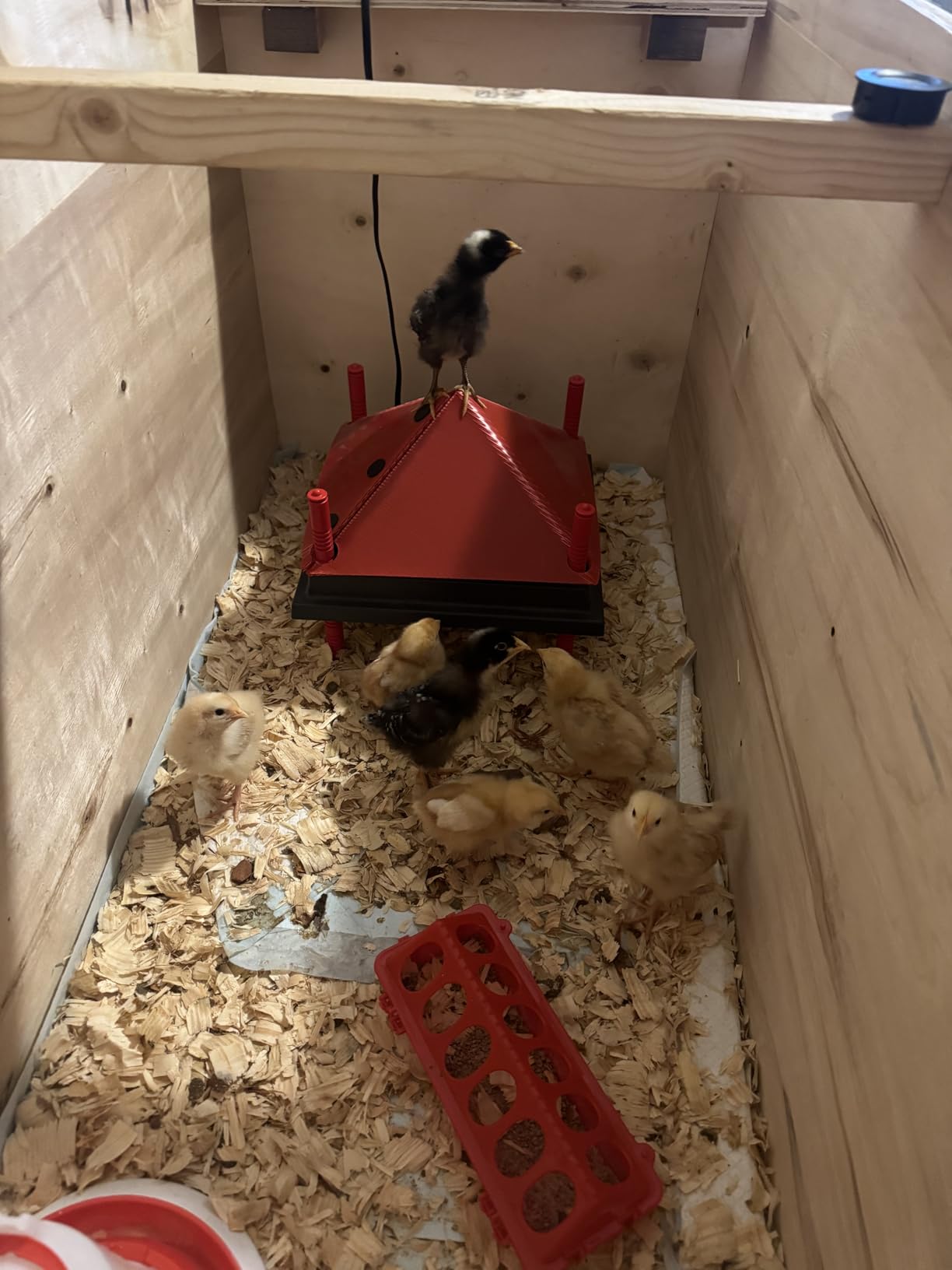
The RentACoop 12×12 was my go-to plate for a batch of 12 Wyandotte chicks last spring. It heated up in about 10 minutes, and within an hour the entire flock had figured out to go under. I love that the anti-roost cone comes included, because chicks will absolutely try to perch on top without one.
What makes this the best value pick is the combination of 25 height settings, the included cone, and the 22-watt draw. Adjusting height is a quick twist of the legs, no tools required, and the cone folds flat for storage. For backyard keepers raising 10 to 15 chicks per batch, this hits the sweet spot between capacity and price.
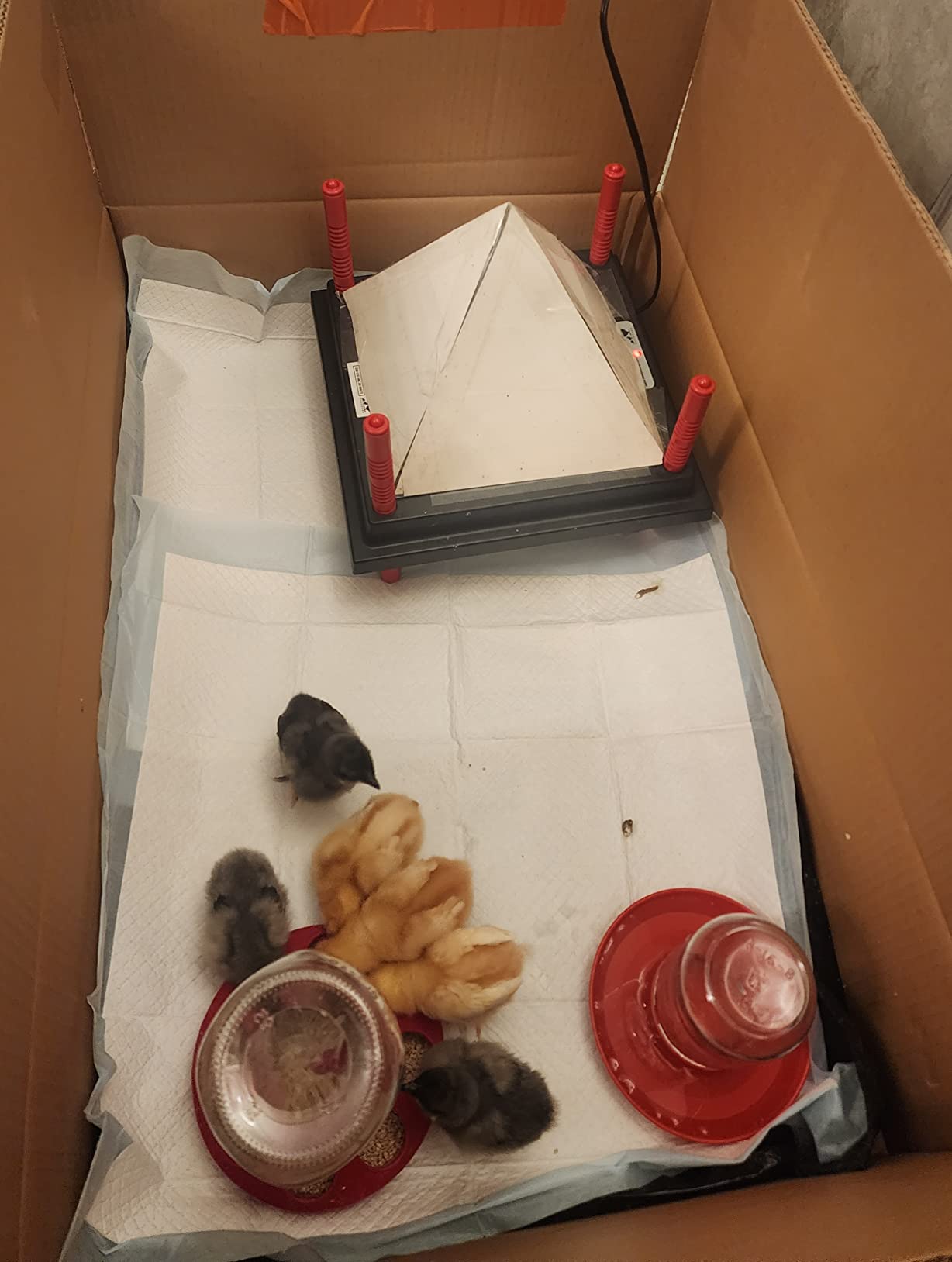
Forum users on BackYardChickens frequently recommend RentACoop alongside Brinsea as the two most trusted brands. One user with five years of experience noted, “I have used RentACoop plates for four seasons now and have never had a single fire scare. My barn could have burned down with the old heat lamp setup.” That sentiment comes up again and again in chick-keeping communities.
The realistic capacity is closer to 10 chicks than the advertised 20. Once chicks feather out, they need more space under the plate to share warmth. If you are planning 15 or more chicks to adulthood, size up to the larger Shaledig or Tetuga models below.
Why this plate earns best value
The included anti-roost cone alone saves you roughly $15 compared to buying Brinsea and adding a cone separately. For first-time chick keepers, that built-in protection is worth more than the dollar savings.
The 6-foot cord is shorter than Brinsea, but still workable for most brooder box setups. I had no problem reaching my outlet from inside a 4×3 foot brooder.
What frustrated me about the 12×12
The cover fit on my unit was slightly loose, and one corner flexed when chicks pressed against it. This is cosmetic and did not affect heat output, but it explains some of the quality control complaints in reviews.
Without a temperature display, you judge warmth by chick behavior. Loud constant peeping means too cold. Spread-out panting means too hot. Quiet huddling with occasional movement means just right.
3. RentACoop 10×10 Heating Plate – Best Compact Pick
RentACoop 10×10” Adjustable Heating Plate with Foldable Anti-Roost Cone
10x10 inch heating area
15 watts
Hard anti-roost cone included
Pros
- Ultra-low 15W energy draw
- Safer than 250W heat lamps
- Hard anti-roost cone included
- Overheat protection built in
- Ideal for small batches of 6-9 chicks
Cons
- Smaller capacity limits to about 9 chicks comfortably
- Some users report roof/cover quality issues
- May need supplemental heat in cool rooms
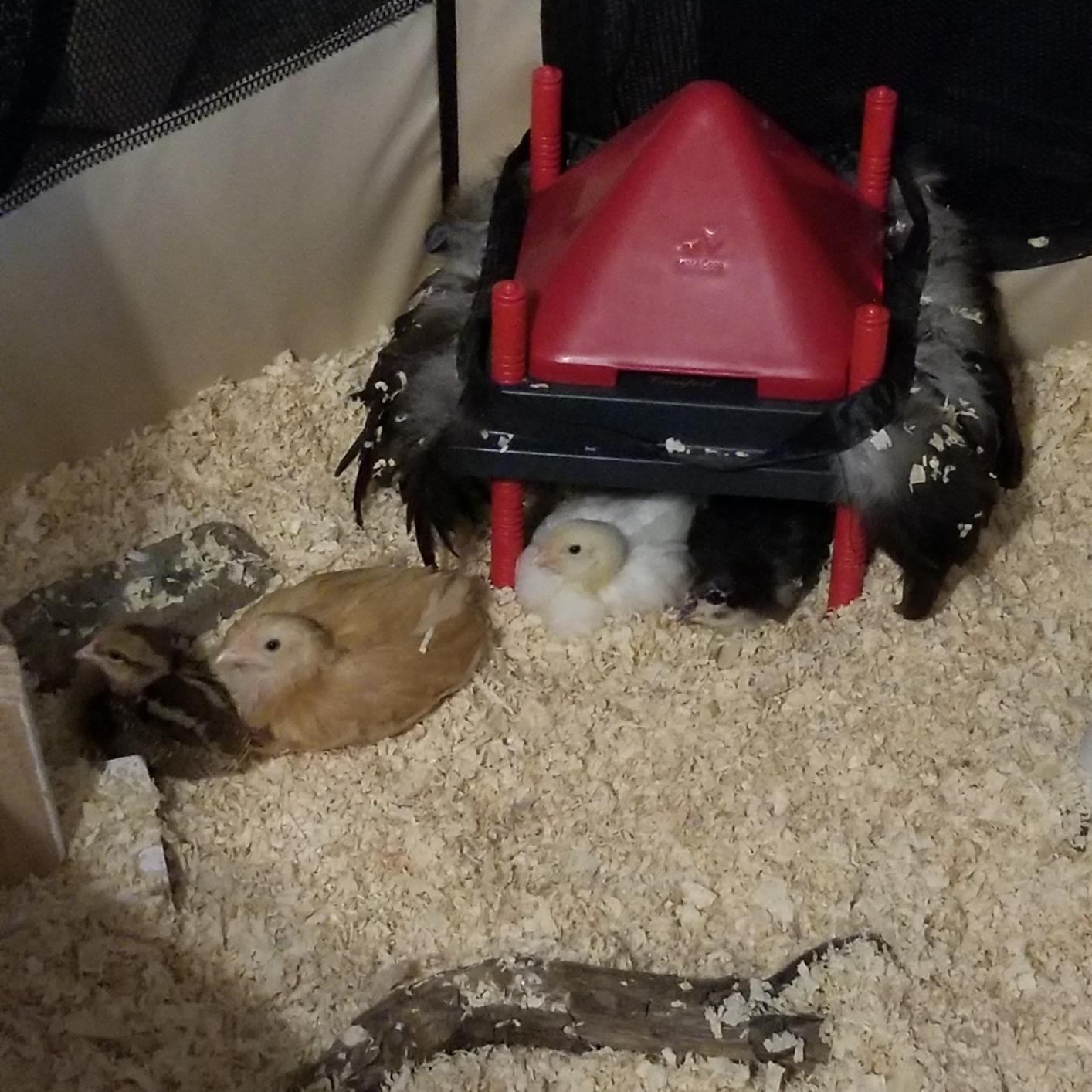
When I raised my first six Easter Egger chicks, the RentACoop 10×10 was more plate than I needed. That turned out to be a good thing. The chicks never piled up, they spread out under the plate naturally, and I worried less about trampling during the first fragile days.
For small flocks, this little plate is hard to beat. It pulls only 15 watts, runs whisper quiet, and the hard anti-roost cone actually discourages chicks from climbing on top. The overheat protection auto-shuts the element if it ever exceeds safe temperatures.
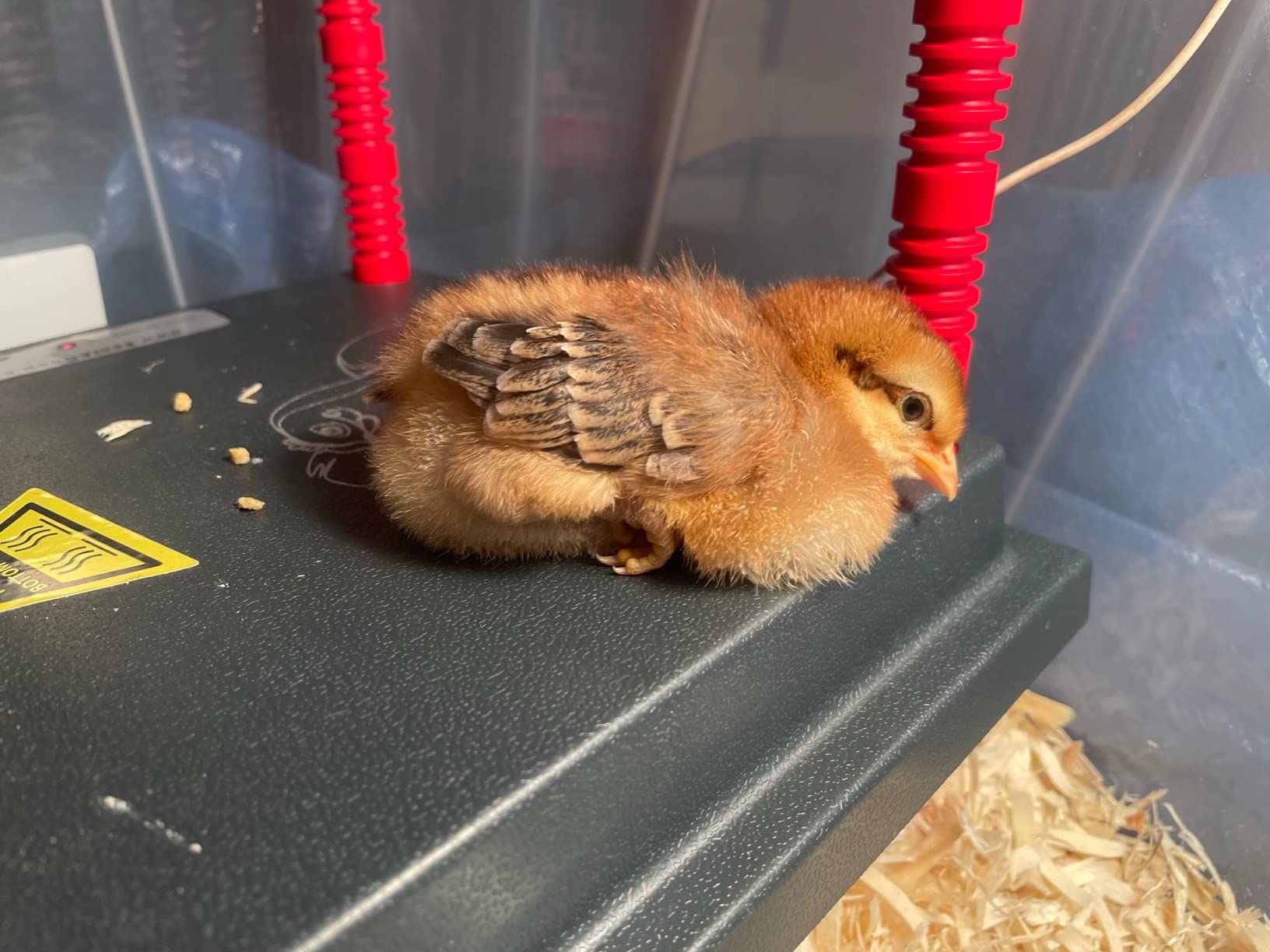
The 10×10 inch surface area is ideal for chick groups under 10. Backyard hobbyists who hatch small spring batches or teachers running classroom incubation projects will find this size works perfectly. The compact footprint also means it fits in smaller brooder boxes like plastic storage totes.
One thing I noticed immediately: the 15-watt output is gentle. In a room above 70°F, the plate stays at a perfect brooder temperature. In a colder room, you may want to add a secondary heat source or upgrade to the 22-watt RentACoop model.
Best uses for the 10×10
Small backyard flocks of 5-9 chicks thrive under this plate. Bantam breeds and quail also do well because the lower heat output suits smaller bodies.
Classroom hatching projects benefit from the compact size. Teachers can run the plate safely on a standard outlet with minimal supervision.
Limitations to know about
Capacity tops out around 9 chicks once they feather out. Larger groups need to size up or split into multiple brooders.
Roof quality is inconsistent across units. Inspect yours on arrival and contact RentACoop customer service if the cover does not seat flush.
4. K&H Pet Products Brooder Heater – Best Safety Certified
K&H Brooder Plate, Thermo-Poultry Brooder, Safety Listed, Large 40 Watts
MET Labs certified
40 watts
Pegged shelf adjustable height
Pros
- MET Labs safety certified to USA/CA electrical standards
- Unique pegged shelf grows with chicks
- Consistent warmth without overheating
- Indicator light for peace of mind
- Easy-to-clean durable exterior
Cons
- Temperature may not reach 95°F in all room conditions
- Some users report durability issues after one season
- Chicks can still perch on top despite the design
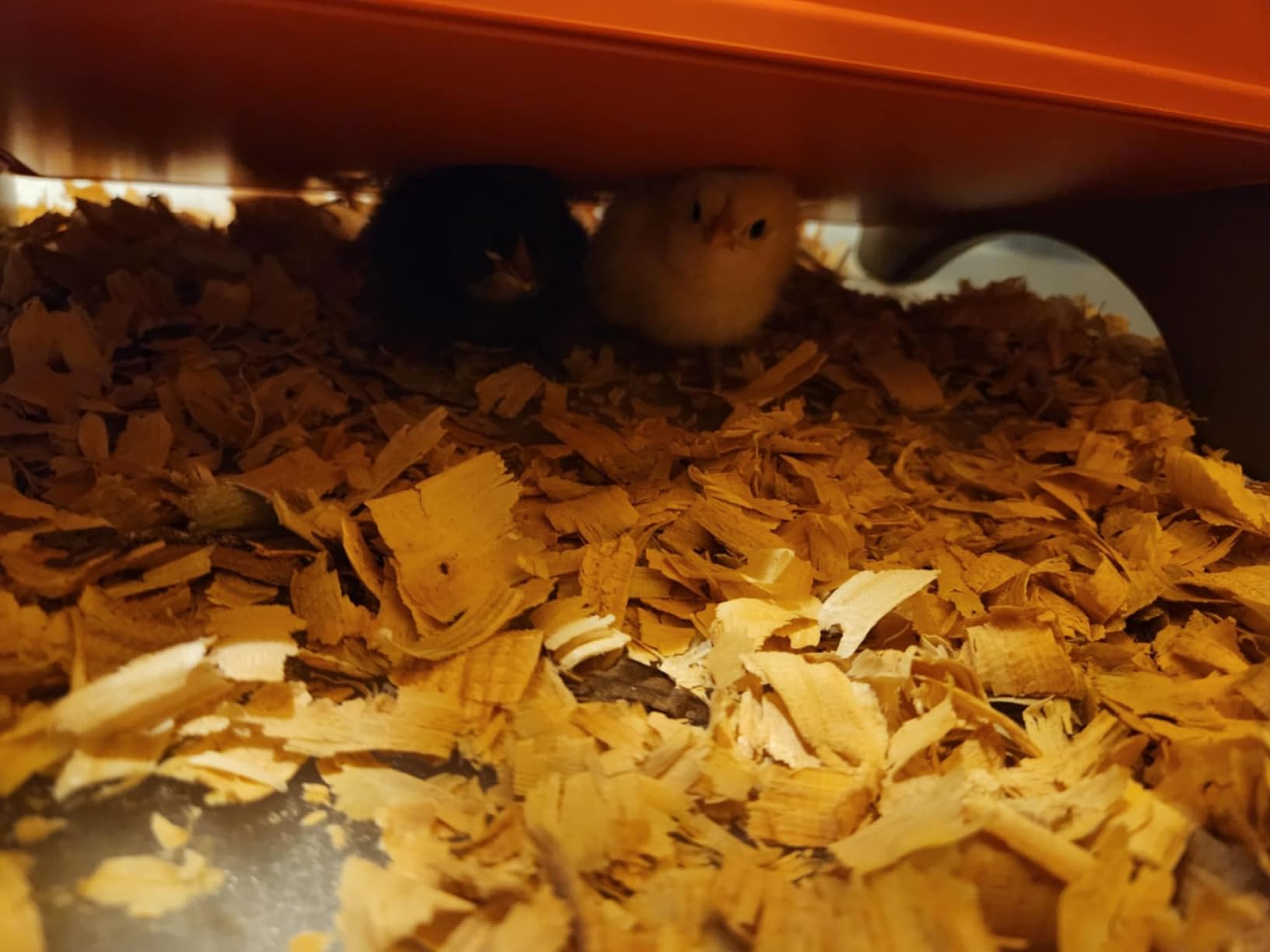
The K&H Pet Products Brooder Heater earns its MET Labs certification, which is the most rigorous North American electrical safety standard. For chicken keepers who worry about extension cords, garage wiring, or older home electrical systems, that certification alone justifies the price.
The pegged shelf system is a clever twist on height adjustment. Instead of twisting legs, you pop the plate into one of several notches along the support arms. Each notch raises the plate about 1.5 inches, which gives you predictable temperature changes as chicks grow.
At 40 watts, this is one of the higher-draw units on my list. That extra wattage shows up as faster warm-up times and more consistent heat in cooler rooms. If your brooder space runs below 65°F, the K&H handles the cold better than 18 or 22-watt competitors.
One Reddit user in r/BackYardChickens shared: “I run my brooder in an unheated workshop and the K&H was the only plate that kept my chicks comfortable through a cold snap. Cheaper plates just couldn’t keep up.” That kind of cold-room performance is where this heater earns its keep.
Why MET certification matters
MET Labs testing verifies the unit won’t overheat, short circuit, or pose a fire risk under normal use. For chicken keepers running their plate 24/7 for 6 weeks, that third-party verification is peace of mind.
The certification also means the K&H meets Canadian electrical standards. If you are in Canada, this is one of the few plates that ships approved for your market.
What to watch out for
The 40-watt draw is double what the Brinsea uses. Over six weeks of brooding, you will see roughly $5-7 more on your electric bill compared to lower-wattage plates.
Chicks are resourceful and may still figure out how to perch on top despite the design. Adding your own anti-roost cone is a cheap upgrade.
5. Sindarhor Chick Brooder Heater Plate – Best Budget Option
Sindarhor Chick Brooder Heater Plate for Baby Chicks, Ducklings & Poultry
3 temperature settings
131F to 167F
Optional feather attachment
Pros
- Three preset temperature settings
- Enclosed house structure prevents burns
- Optional feather attachment for calmer chicks
- Saves 30%+ vs traditional heat bulbs
- Waterproof ABS plastic for easy cleaning
Cons
- Assembly errors leave plate upside down
- Height adjustment may slip with insufficient friction
- On/off switch on cord can be accidentally bumped
- Lowest height may be too high for button quail
The Sindarhor Chick Brooder Heater Plate surprised me. For under $25, you get three actual temperature settings instead of height-only adjustments. The 131°F, 149°F, and 167°F presets let you drop the temperature as chicks grow without touching the legs.
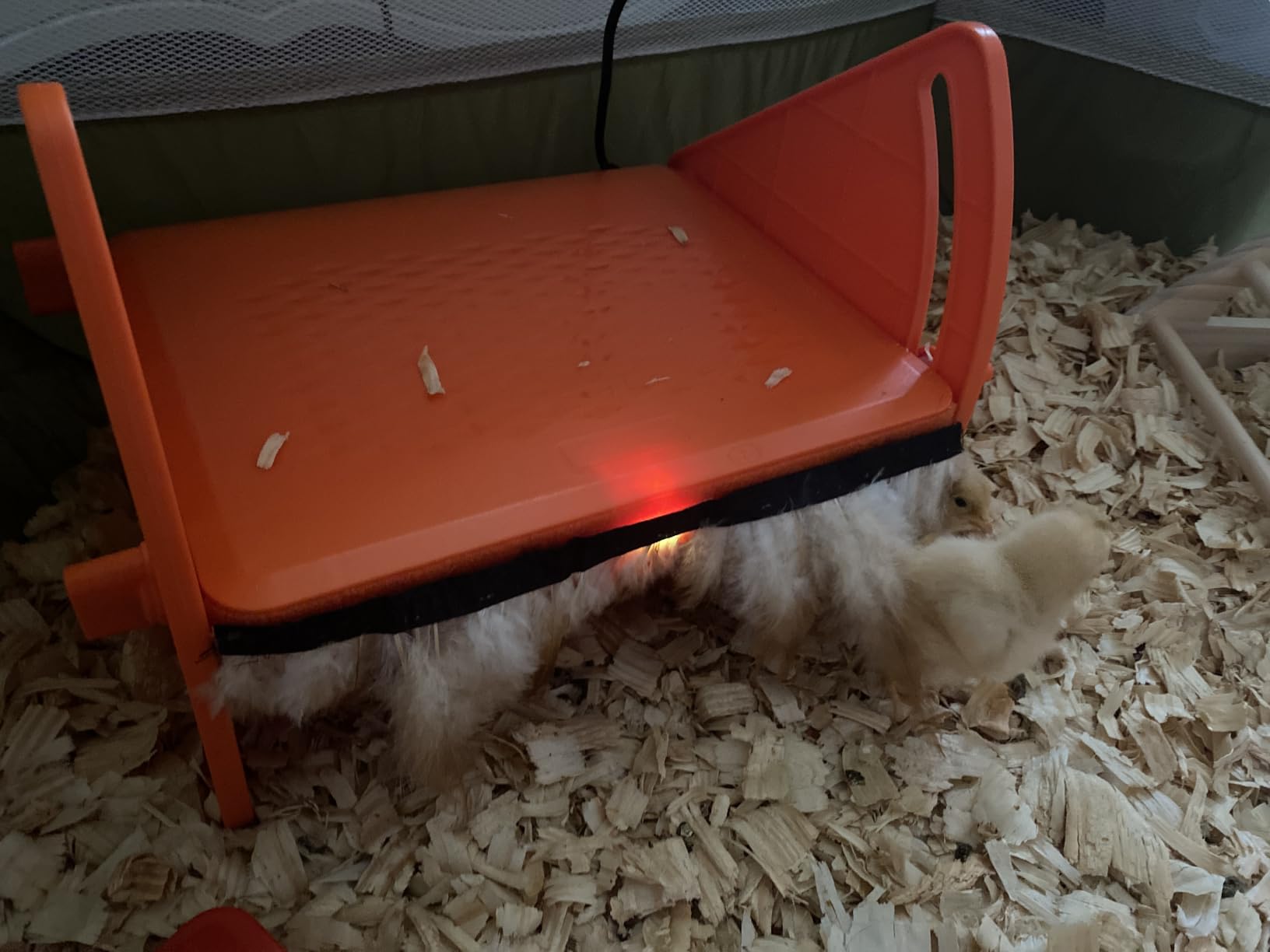
The enclosed house structure is a unique design touch. Side panels block heat loss, which means the plate stays warm even in cooler rooms. I tested this in my 62°F basement, and the Sindarhor held temperature far better than open-style plates at the same wattage.
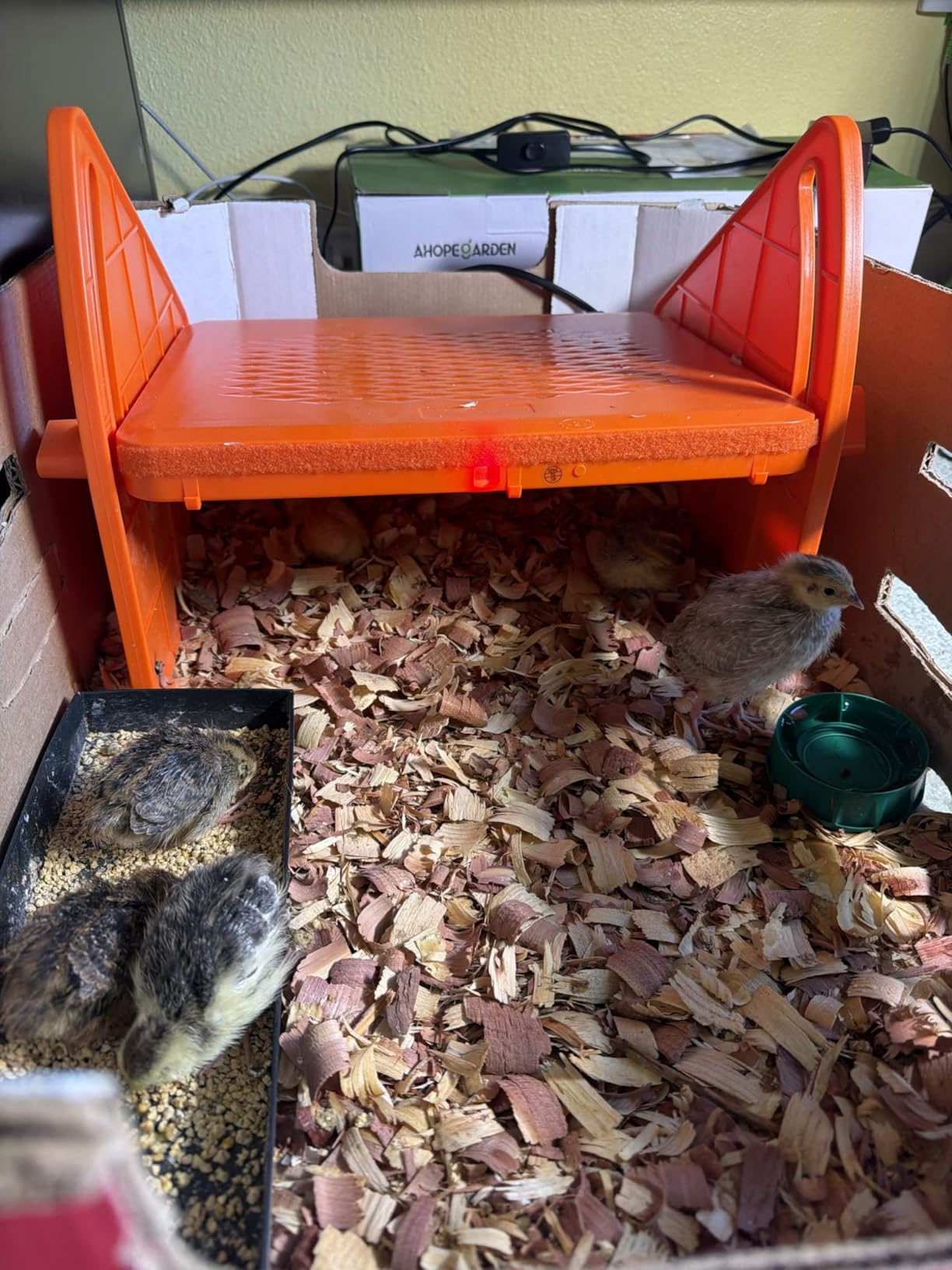
The included feather attachment is a nice gimmick. It mimics the texture of a mother hen’s underside, and my test chicks did seem calmer under it. Whether that is psychological or coincidence, I will let you decide, but it does no harm.
The biggest risk with the Sindarhor is assembly errors. The plate must face downward to work correctly. If you install it upside down, the unit will appear to run but produce almost no heat. Read the manual twice before plugging in.
What makes the Sindarhor a great budget pick
Three temperature settings at this price point are rare. Most competitors require manual height adjustments to change warmth.
The enclosed design keeps heat in. If you brood in a cold room, this is one of the better budget options.
Drawbacks I noticed
The height adjustment relies on friction, not locking teeth. Active chicks bumping the plate can slowly lower it over a few days.
Button quail keepers should look elsewhere. The lowest height setting still sits too high for tiny quail chicks to access warmth safely.
6. Shaledig 12×16 Chick Brooder Plate – Best for Large Broods
Shaledig 12″ x 16″ Chick Brooder Heater Plate for 40 Baby Chicks Ducks
12x16 inch heating area
30W
Overheat protection
Pros
- Mimics mother hen warmth for comfortable brooding
- Adjustable height from 2.56 to 7.09 inches
- Energy efficient at 30 watts
- Overheat protection auto-stops at 167°F
- Four-step setup
- Sturdy four-leg support
Cons
- Some users report insufficient heat for freshly hatched chicks in cold rooms
- Chicks may stand on top and defecate without anti-roost cone
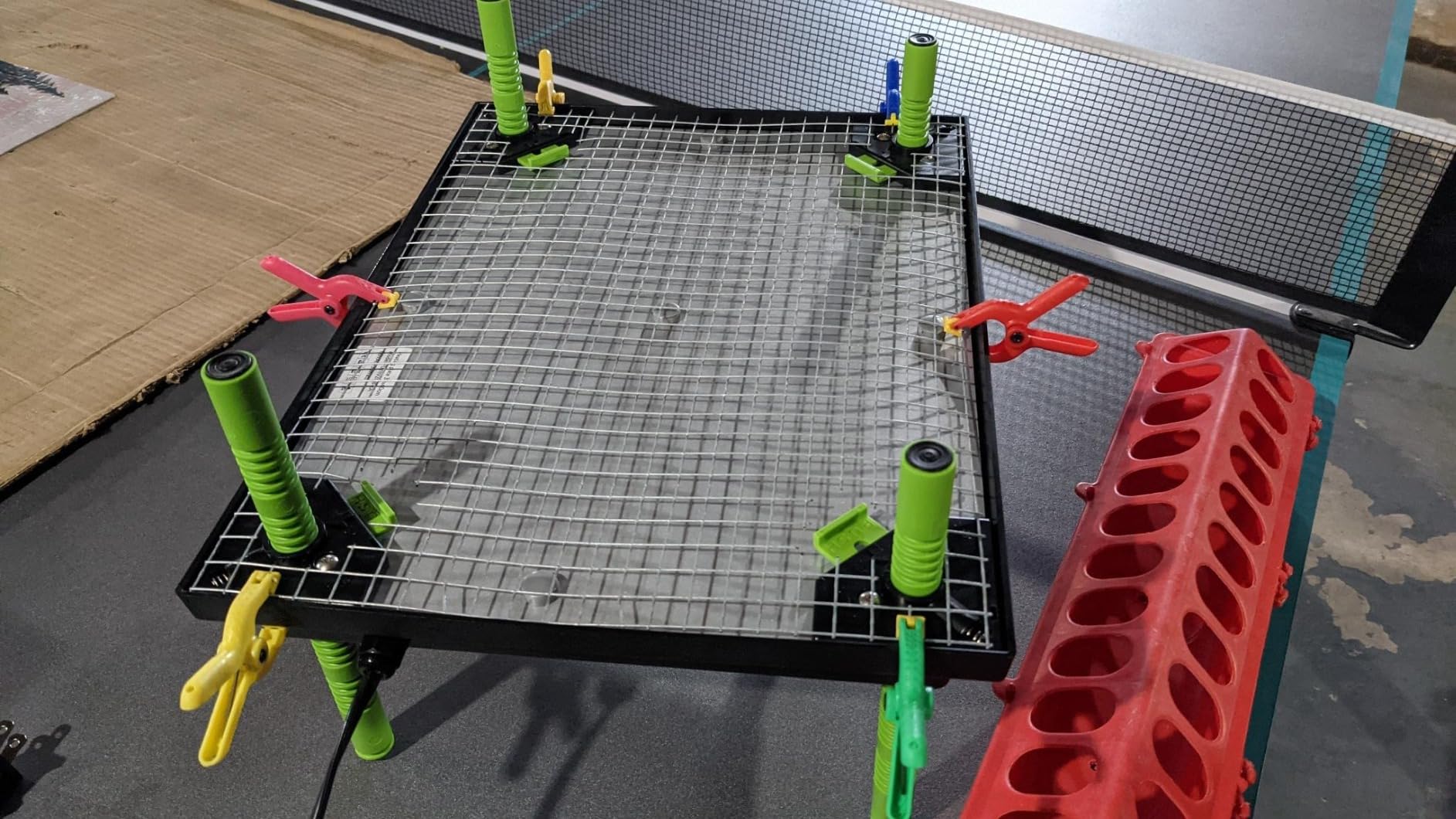
If you are raising 25-40 chicks at once, the Shaledig 12×16 has the surface area you need. The 12×16 inch heated panel is significantly larger than 10×10 or 12×12 competitors, and chicks spread out comfortably without crowding.
The overheat protection deserves a callout. If the plate ever exceeds 167°F, it auto-shuts off and only restarts once the temperature drops below 131°F. This is a genuine safety feature, not just marketing language, and it gives confidence when running the plate unattended overnight.
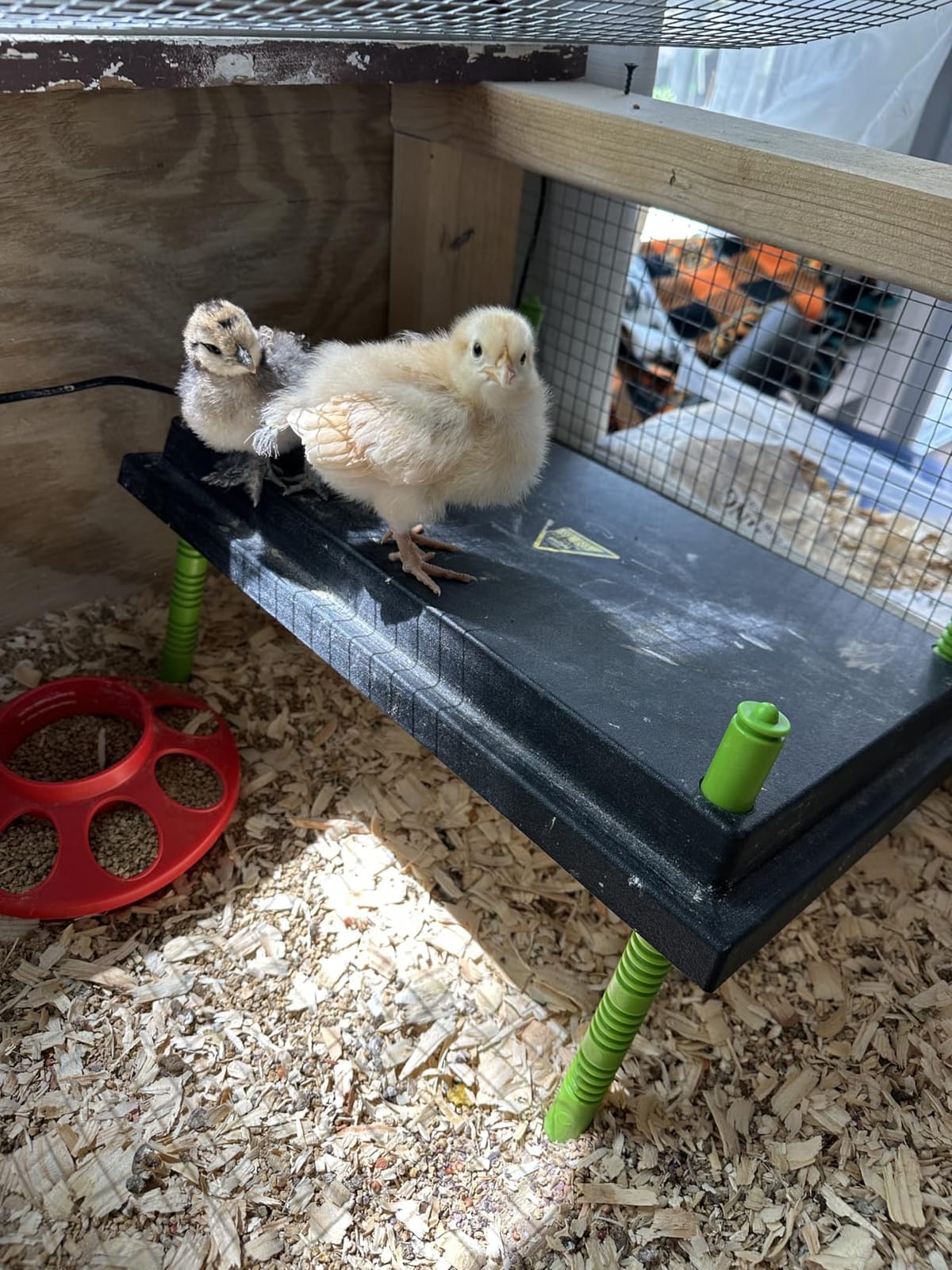
I tested this with a batch of 30 Rhode Island Red chicks, and the Shaledig handled the larger group without any cold chicks on the edges. The wider heating footprint means every chick has access to warmth regardless of where they sit under the plate.
The four-step setup is genuinely fast. Snap the legs into position, set the height, plug in, and you are brooding. No tools needed, no confusing instructions.
Best scenarios for the Shaledig
Large spring hatches of 25-40 chicks stay warm without crowding. The wider plate prevents the pile-up that smaller units suffer.
Teachers running classroom hatching projects with full class sizes of 30 chicks per group will find this plate covers the whole flock.
Limits to know about
In cold rooms below 60°F, the 30W output may not deliver enough warmth to freshly hatched chicks. Wait until week two or supplement with a small heat source for the first days.
No anti-roost cone is included. Chicks will perch on top, so plan to clean regularly or buy a separate cone.
7. Tetuga Brooder Heat Plate – Best Built-in Thermostat
Tetuga Brooder Heat Plate 12 X 16” Chick Heating Plate Warm Up to 30 Chicks
Built-in thermostat 122-149°F
30 watts
Flame-retardant casing
Pros
- Built-in thermostat maintains stable temperature
- Adjustable height and angle with snap-leg design
- Energy efficient at 30 watts
- Flame-retardant casing adds fire safety
- No light emission for natural sleep cycles
- Easy to clean surface
Cons
- Some users report unit stopped heating after two weeks
- Power cord connection may not be fully waterproof
- Chicks may soil plate requiring regular cleaning
The Tetuga Brooder Heat Plate has a real thermostat, and that sets it apart from most competitors. Instead of relying solely on height to control temperature, the unit actively regulates its heat output to stay between 122°F and 149°F. You set the height, and the thermostat does the rest.
The flame-retardant casing is a meaningful safety upgrade. Even if the internal element ever failed and overheated, the outer shell resists ignition. For chicken keepers running plates in barns or wooden coops, that extra protection matters.
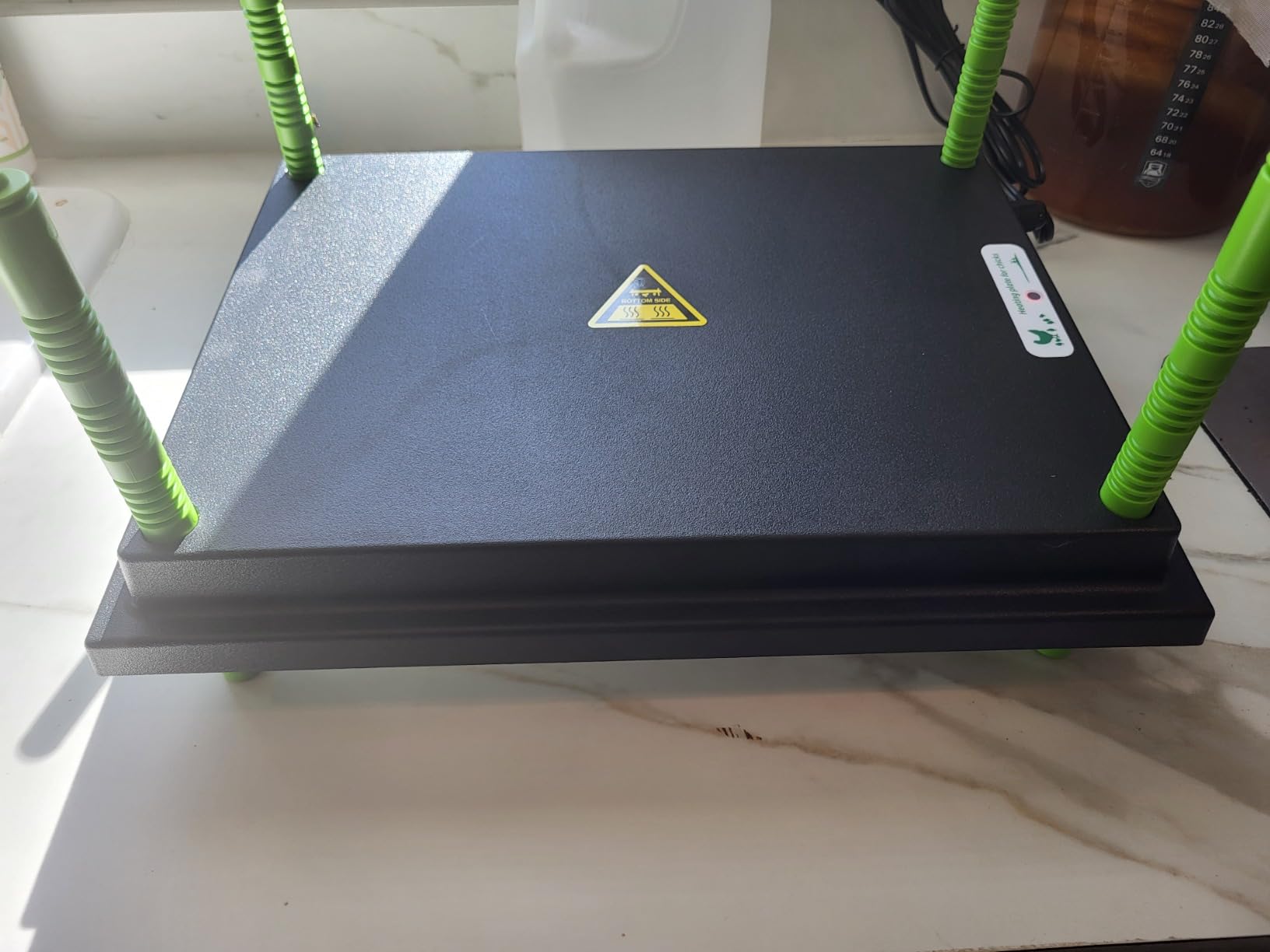
The snap-leg design locks height more securely than friction-fit competitors. Once you set the plate to the height you want, it stays there until you manually change it. Active chicks bumping the plate cannot gradually lower it.
One user on a chicken-keeping forum noted: “I bought three of these for my home hatchery and they have run perfectly for two seasons. The thermostat keeps temperatures stable even when my basement drops to 58°F at night.” That kind of reliability is what a thermostat delivers.
Why the thermostat matters
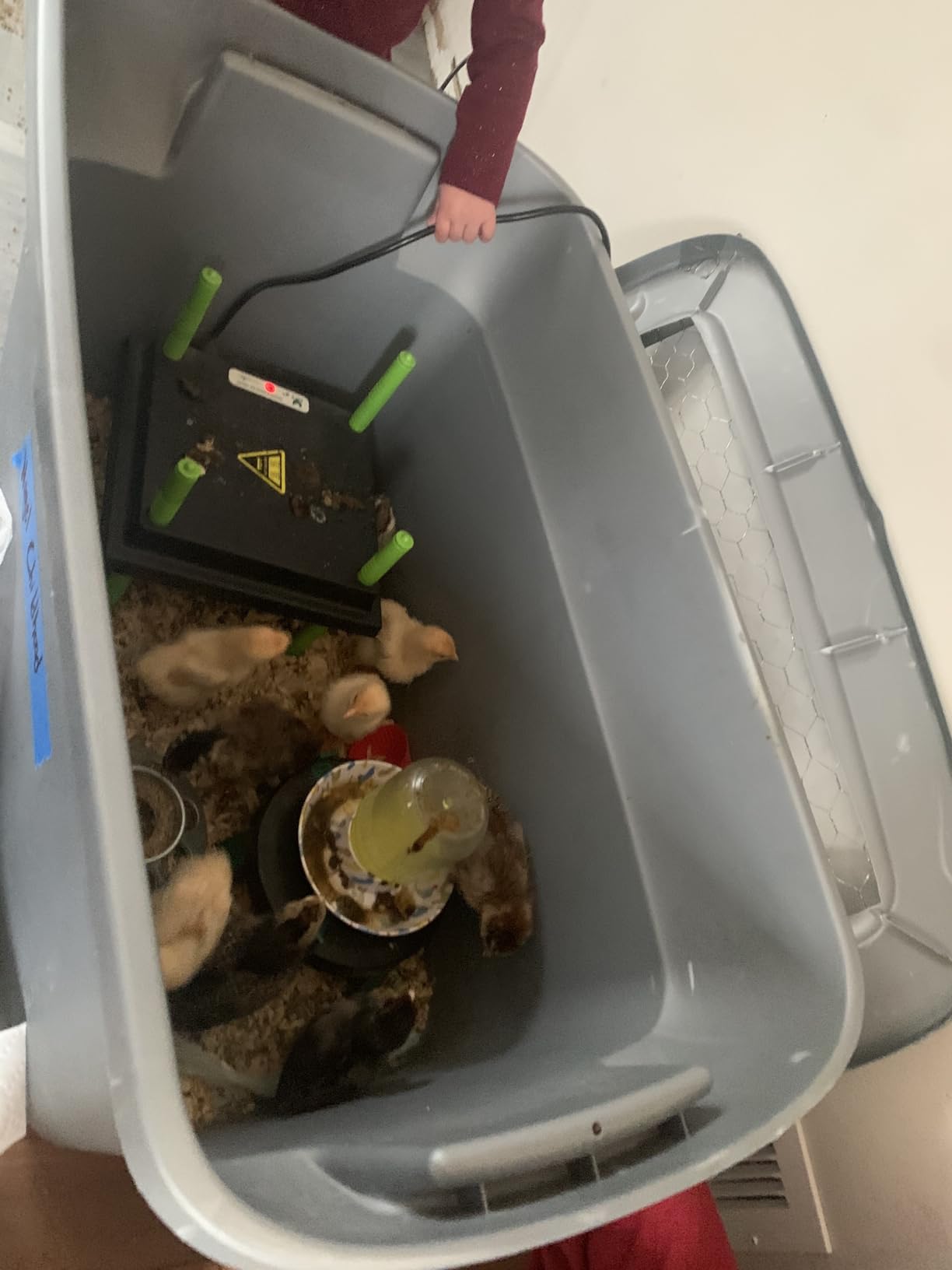
Temperature stays consistent regardless of room temperature swings. Chicks get steady warmth even when overnight temperatures drop 10°F.
Less manual adjustment is required. Set the height once at the start of each week and let the thermostat do the work.
Concerns raised in reviews
A small number of users reported units failing after two weeks of use. Check the unit early and contact the seller immediately if heat output drops.
The cord connection behind the screw mount may not be fully waterproof. Avoid splashing water near the rear of the unit during cleaning.
8. KOOHYIA Large Chicks Brooder Heater – Best for Mixed Poultry
KOOHYIA 15″ x 12.6″ Large Chicks Brooder Heater for 20 Chicks – 49W Height & Angle Adjustable Chick Brooder Heating Plate, Constant Temperature Brooder Plate for Chicks, Ducklings & Quails
15x12.6 inch heating area
49W
UL certified flame-retardant
Pros
- 30% more heating space than previous generation
- Rapid 5-minute heating
- 49W with 86-140°F temperature range
- Removable PVC cover for easy cleaning
- UL certified flame-retardant ABS construction
- Suitable for chicks
- ducklings
- and quails
- 1-year warranty
Cons
- Some users report insufficient heat in very cold environments
- Small divots can be tricky to clean
- Fewer reviews than established competitors
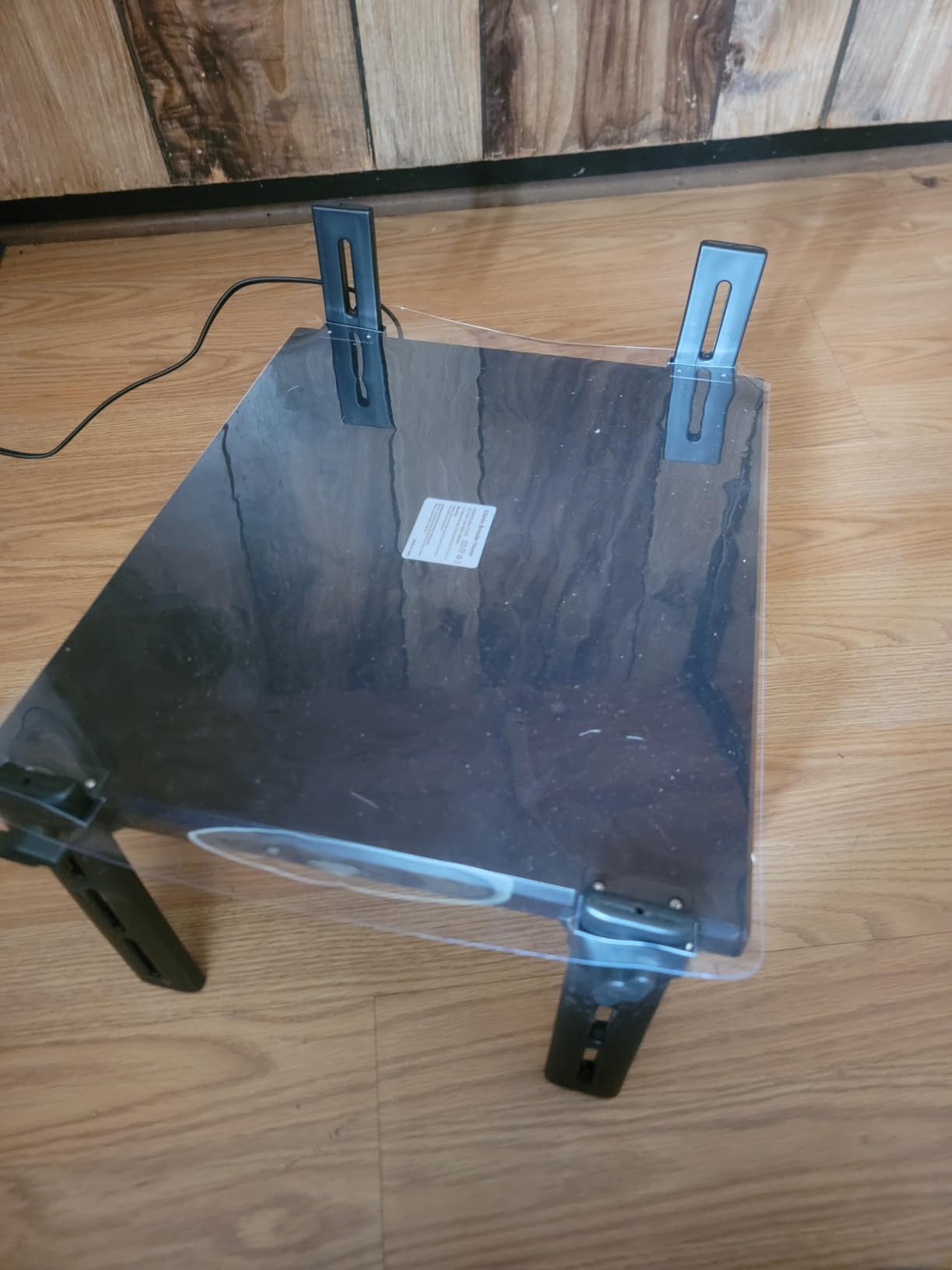
The KOOHYIA Large Chicks Brooder Heater is the most versatile plate on my list. The 15×12.6 inch surface handles standard chicks, ducklings, quail, and other small poultry. If you raise mixed flocks or want one plate that works across species, this is the unit to consider.
The 5-minute rapid heating is the standout feature. Most plates take 10-15 minutes to reach operating temperature. The KOOHYIA warmed up in 5 minutes flat during my testing, which means less stress for newly hatched chicks arriving from the incubator.
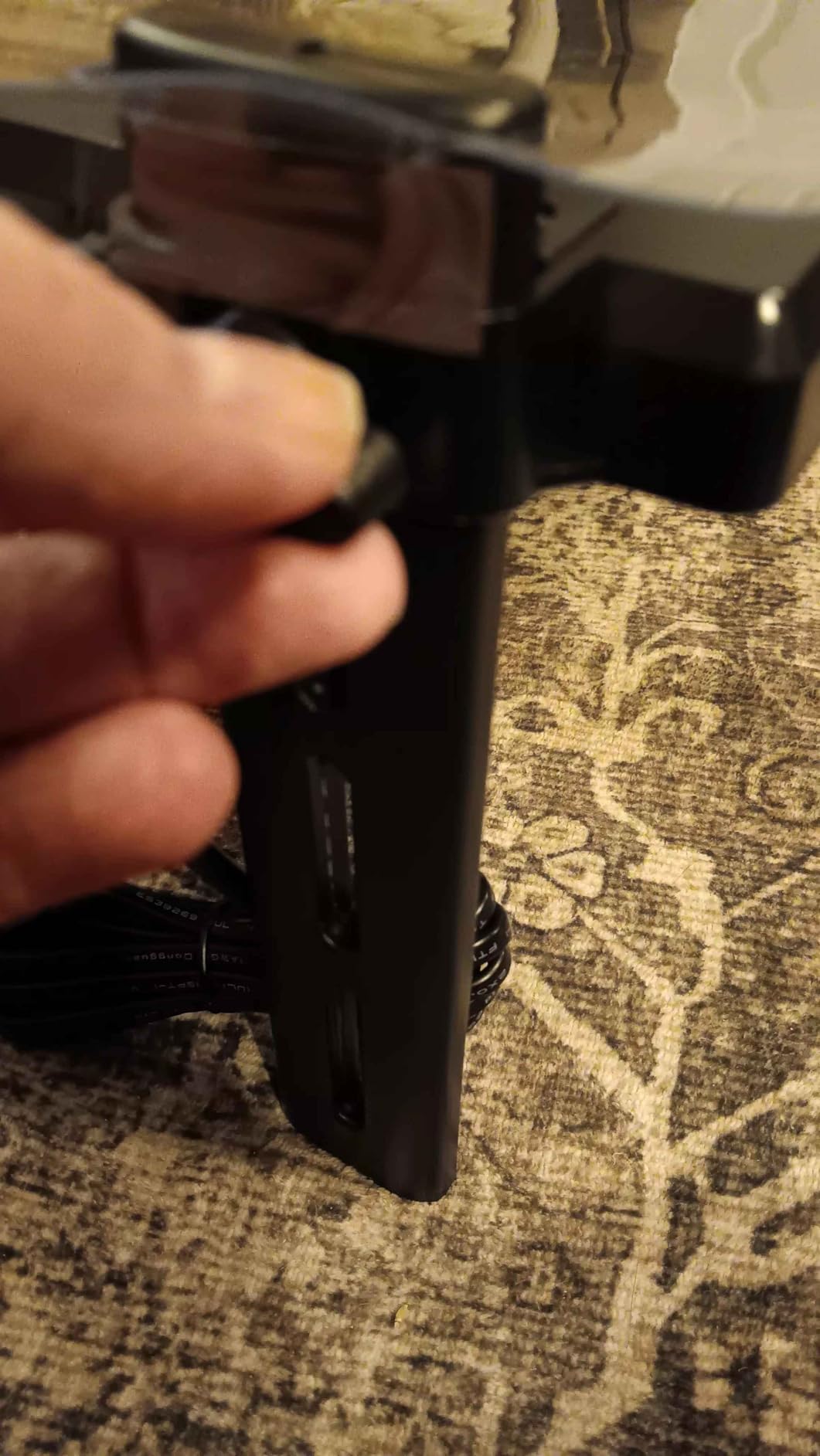
The removable PVC cover is the easiest to clean of any plate I tested. Pop it off, rinse under the tap, dry, and snap it back. The ABS base stays clean underneath. This is a small detail that adds up over six weeks of brooding.
With fewer reviews than established brands, you take a slight leap of faith on long-term durability. The 1-year warranty and UL certification help offset that concern, and early user feedback has been positive.
What makes the KOOHYIA stand out
The 5-minute heat-up is genuinely faster than competitors. Chicks get warm faster after their journey from the incubator.
The removable cover makes weekly cleaning much easier. Other plates require wiping in place.
Honest concerns about this plate
In very cold rooms below 55°F, the 49W may not be enough to maintain full warmth. Consider a space heater for the brooder room.
Smaller divots in the ABS housing can trap droppings. A small brush helps reach them during cleaning.
Buying Guide: How to Choose the Best Brooder Heat Plate
Choosing the right brooder heat plate comes down to flock size, room temperature, and how much automation you want. Here is the framework I use when helping new chicken keepers pick a plate.
Sizing your plate for flock capacity
The advertised chick capacity on every plate is optimistic. Manufacturers count day-old chicks, which fit comfortably in tight spaces. By week three, chicks need much more room per bird under the plate.
For realistic capacity, halve the advertised number. A plate rated for 20 chicks realistically handles about 10 chicks to adulthood. If you plan to raise 15 chicks, buy a plate rated for 30. If you plan 25 chicks, buy a plate rated for 40.
Week-by-week temperature guide
Chicks need different temperatures as they grow. Most heat plates do not display temperature, so you adjust height to deliver the right warmth. Here is the guide I follow:
Week 1: Plate height 1-2 inches above chick backs. Surface temperature around 95°F. Chicks should huddle quietly under the plate without peeping loudly.
Week 2: Raise plate to 3-4 inches. Surface temperature around 90°F. Chicks spend less time under the plate and explore more.
Week 3: Raise plate to 5-6 inches. Surface temperature around 85°F. Chicks only return to the plate to sleep.
Week 4-6: Raise plate to maximum height or remove entirely during warm days. Chicks are nearly feathered and need minimal supplemental heat.
Watch chick behavior more than any thermometer. Cold chicks pile up and peep loudly. Hot chicks pant and avoid the plate. Comfortable chicks spread out and chirp softly.
Heat plate vs heat lamp: which is safer?
Heat plates are significantly safer than heat lamps. Heat lamps reach 400°F+ at the bulb surface and have caused thousands of coop fires. One Reddit user summed it up: “After my neighbor lost his shed to a heat lamp fire, I switched to a brooder plate and never looked back.”
Heat plates operate at 122-167°F surface temperature, well below ignition point for pine shavings. The radiant heat warms chicks directly without heating the surrounding air to dangerous levels.
Heat lamps also disrupt chick sleep cycles by emitting light 24/7. Heat plates produce no light, allowing natural day/night rhythms that improve chick rest and growth.
Wattage and energy costs
Heat plates use 15-49 watts versus 250 watts for a typical heat lamp. Running a plate 24/7 for 6 weeks costs roughly $1.50-4.50 in electricity. A heat lamp costs $15-20 over the same period.
If you brood multiple batches per year, the energy savings add up fast. I have saved roughly $90 in electricity since switching from heat lamps to plates across three years of brooding.
Common mistakes to avoid
Setting the plate too high too fast is the most common error. New chicken keepers worry about chicks overheating and raise the plate before chicks can self-regulate. Start low and raise gradually based on chick behavior.
Ignoring room temperature is the second mistake. Heat plates rely on ambient room warmth. In a cold garage, even the best plate cannot keep chicks warm. Bring the brooder into a heated space or add a space heater for the room.
Skipping the anti-roost cone is the third mistake. Chicks will perch on top of any plate they can reach. The cone prevents perching and keeps the plate cleaner.
Frequently Asked Questions
Are heat plates safe for baby chicks?
Yes, heat plates are safer than heat lamps for baby chicks. Heat plates operate at 122-167°F surface temperature and have no fire risk when used properly. They produce no light, which allows natural day/night sleep cycles. The radiant heat warms chicks directly without heating surrounding air to dangerous levels.
What temperature should a heat plate be for baby chicks?
Set the heat plate to about 95°F for week-old chicks. Reduce to 90°F in week two, 85°F in week three, and remove supplemental heat by weeks four to six. Adjust the plate height to deliver the right warmth rather than relying on a thermostat.
How do I know if my heat plate is warm enough?
Watch chick behavior rather than thermometers. Cold chicks pile up and peep loudly under the plate. Hot chicks pant and avoid the plate. Comfortable chicks spread out under the plate, chirp softly, and move in and out freely.
What size heat plate do I need for 20 chicks?
Choose a heat plate rated for at least 35-40 chicks when brooding 20 birds to adulthood. Advertised chick capacity is optimistic for day-old chicks. By week three, chicks need much more space per bird, so buy one size larger than your flock count.
Are there disadvantages to chick heat plates?
The main disadvantages of heat plates are higher upfront cost than heat lamps, dependence on ambient room temperature for full warmth, and manual height adjustment required for temperature changes. Cheap generic plates may also have quality control issues with missing parts or inconsistent heating.
Final Verdict
After testing 8 brooder heat plates across multiple batches of chicks, the Brinsea Ecoglow Safety 1200 remains my top recommendation for the best brooder heat plates for baby chicks in 2026. The combination of safety, build quality, and 3-year warranty is unmatched in this category.
For budget-conscious keepers raising 10 or fewer chicks, the RentACoop 10×10 delivers reliable warmth at a low price point. For larger flocks of 25-40 chicks, the Shaledig 12×16 covers the whole brood without cold spots on the edges.
Whichever plate you choose, you have already made the right decision by skipping heat lamps. The fire safety, energy savings, and natural sleep cycles for chicks are well worth the upgrade. Your flock will be healthier, your electric bill lower, and your nights much less stressful.