
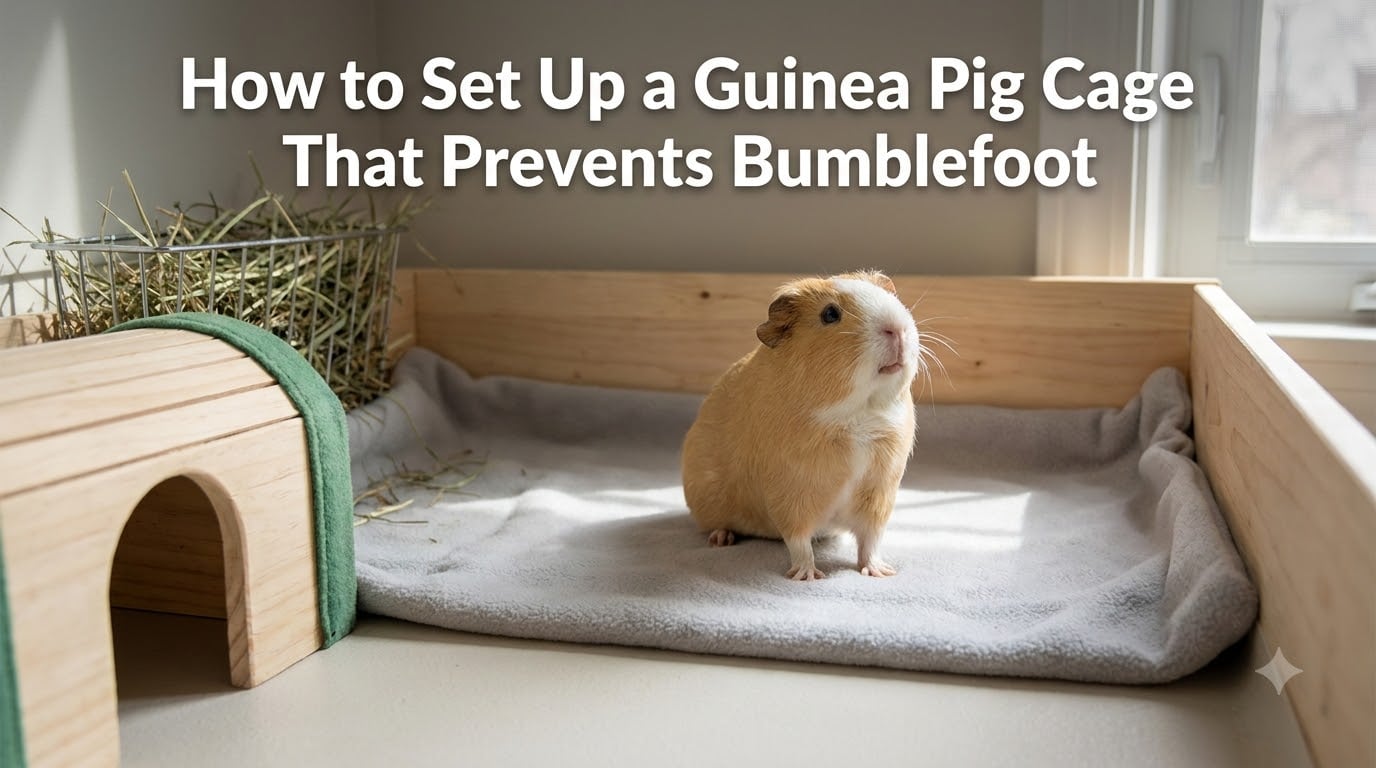
If you are setting up a home for your guinea pig, learning how to set up a guinea pig cage that prevents bumblefoot should be your top priority. Bumblefoot, also called pododermatitis, is one of the most common and painful conditions guinea pigs face, and in most cases, it is entirely preventable with the right cage setup.
I have spent years working with guinea pig owners through forums, rescue groups, and personal experience. The pattern I see over and over is clear: the cage flooring, bedding, and cleaning routine make all the difference between healthy feet and a painful infection.
This guide walks you through every step of building a bumblefoot-safe enclosure. You will learn what bumblefoot is, what causes it, which bedding materials work best, and how to maintain the cage so your guinea pig stays comfortable and healthy for years.
One quick note before we start. If you recently adopted your guinea pig, keep the 3-3-3 rule in mind: your pig needs about 3 days to decompress, 3 weeks to learn the routine, and 3 months to fully settle in. A safe, comfortable cage setup from day one helps enormously with this adjustment period.
Table of Contents
What Is Bumblefoot in Guinea Pigs?
Bumblefoot, medically known as pododermatitis, is a bacterial infection of the foot pad that causes inflammation, swelling, and painful sores. The infection is most commonly caused by Staphylococcus aureus, a bacteria that enters through small cracks or pressure sores on the bottom of the feet.
Here is how it develops. When a guinea pig stands on hard, rough, or wet surfaces for extended periods, the skin on their foot pads becomes irritated. Tiny abrasions form. Bacteria then enter through those damaged areas and cause an infection that can range from mild redness to deep, ulcerating wounds.
The condition is extremely painful. Guinea pigs put pressure on their feet with every step they take. As the infection progresses, walking becomes difficult, which can lead to reduced activity, weight gain, and even gastrointestinal stasis from lack of movement.
Bumblefoot can become life-threatening if the infection spreads to the bone or causes systemic illness. That is why prevention through proper cage setup is so important. Once bumblefoot reaches advanced stages, treatment becomes long, expensive, and stressful for both you and your pet.
Why Cage Setup Matters for Bumblefoot Prevention
Your guinea pig spends nearly their entire life standing on the surface inside their cage. Every square inch of that flooring is in constant contact with their foot pads. When the flooring is rough, damp, or improperly textured, foot pad damage begins almost immediately.
The connection between cage setup and foot health comes down to three factors: pressure, moisture, and bacteria. Hard surfaces create excessive pressure on the foot pads. Wet bedding softens the skin and makes it vulnerable. And bacteria thrive in dirty, moist environments.
Wire bottom cages are the worst offender. I have seen countless forum posts from devastated owners whose guinea pigs developed bumblefoot because of wire flooring. The wires create constant pressure points that dig into the foot pads, causing abrasions that invite infection.
A proper cage setup eliminates all three risk factors. Solid flooring distributes weight evenly. Absorbent bedding keeps feet dry. And regular cleaning removes the bacteria that cause infection. When you get these three things right, bumblefoot becomes extremely unlikely.
Signs and Symptoms to Watch For
Catching bumblefoot early makes treatment far easier. Knowing what to look for can mean the difference between a quick recovery and weeks of veterinary care.
The earliest sign is redness on the foot pad. You may notice a pink or reddish tint on the bottom of the foot where the skin looks irritated. The foot pad may also appear slightly swollen compared to normal.
As bumblefoot progresses, symptoms become more visible:
Small scabs or crusty patches form on the foot pad. Your guinea pig may limp or favor one foot. They might become reluctant to walk or move around the cage. You could see them shifting weight constantly from one foot to another.
In moderate cases, the foot pad develops visible ulcers or open sores. There may be discharge or a foul smell. By this stage, your guinea pig is in significant pain and needs immediate veterinary attention.
Severe cases involve deep tissue infection, sometimes reaching the bone. The foot may look severely swollen and deformed. At this point, the condition is a medical emergency.
Check your guinea pig’s feet at least once a week. Gently turn them over and examine each foot pad for redness, swelling, scabs, or anything that looks unusual. Early detection is your best defense.
How to Set Up a Guinea Pig Cage That Prevents Bumblefoot (Step by Step)
Setting up a bumblefoot-safe cage is a straightforward process when you know what each component needs to do. Follow these steps to build an enclosure that protects your guinea pig’s feet from day one.
Step 1: Choose the Right Cage
Start with a cage that has a solid bottom, not a wire grid floor. A C and C cage (cubes and coroplast) is one of the best options available because it gives you a solid, waterproof base that you can customize to any size. The minimum recommended size for one or two guinea pigs is 7.5 square feet, but bigger is always better.
Avoid any cage with a wire bottom floor. Even if the cage comes with a wire grid panel, remove it or never install it. Wire flooring is the single most common cause of bumblefoot in guinea pigs.
Step 2: Install Solid, Smooth Flooring
Once you have a solid-bottom cage, you need to create a smooth surface. If you are using a C and C cage, the coroplast base serves this purpose. For commercial cages with plastic bottoms, inspect the surface for any rough seams, ridges, or textured patches.
If the floor has any rough spots, you can cover them with a layer of corrugated plastic, a waterproof mattress protector, or even smooth ceramic tiles in high-traffic areas. The goal is a surface that feels smooth to the touch.
Step 3: Add Absorbent Bedding
Cover the entire floor with absorbent bedding. Fleece liners with an absorbent underlayer are the most popular choice among experienced guinea pig owners. Paper-based bedding like carefresh also works well, especially in high-moisture areas like the corners where your guinea pig tends to urinate.
Whatever you choose, the bedding needs to do two things: wick moisture away from the surface and provide a soft cushion for your guinea pig’s feet. We will cover bedding options in detail in the next section.
Step 4: Create Separate Zones
Divide the cage into functional areas. Guinea pigs tend to pick one or two corners as their bathroom spots. Use extra-absorbent bedding in those areas and spot clean them daily. The rest of the cage should stay dry and clean.
Set up a separate eating area with hay racks positioned so dropped hay falls onto bedding, not bare floor. Position the water bottle away from sleeping areas to prevent damp spots from forming under it.
Step 5: Add Enrichment Without Creating Hazards
Provide at least one hideout per guinea pig so each pig has a safe space to retreat. Wood hideouts, fleece tunnels, and cozy sacks all work well. Just make sure none of them have rough bottoms or wire components that could irritate feet.
Avoid ramps with wire surfaces. If your cage has multiple levels, cover all ramps with fleece or carpet remnants to create a soft, solid walking surface.
Step 6: Position the Cage Properly
Place the cage away from direct sunlight, drafts, and heating vents. Temperature fluctuations can stress your guinea pig and weaken their immune system, making them more susceptible to infections of all kinds, including bumblefoot.
Step 7: Establish a Cleaning Routine From Day One
Before your guinea pig even moves in, commit to a cleaning schedule. Daily spot cleaning of wet areas, weekly partial bedding changes, and monthly deep cleaning will keep bacteria levels low and foot pads healthy. We cover the full cleaning schedule below.
Your Bumblefoot Prevention Checklist
Use this checklist to confirm your cage setup is bumblefoot-safe:
– Solid bottom floor with no wire grids
– Smooth surface underneath all bedding
– Soft, absorbent bedding covering entire floor
– No rough edges, exposed seams, or textured patches
– Ramps covered with soft material
– Hay rack positioned over bedding, not bare floor
– Water bottle placed to avoid creating damp spots
– At least one hideout per guinea pig
– Daily spot cleaning routine established
– Nails trimmed regularly (every 3 to 4 weeks)
– Cage temperature stable and draft-free
Bedding Types Compared: Best Options for Bumblefoot Prevention
Choosing the right bedding is one of the most important decisions you will make for bumblefoot prevention. Forum owners and rescue volunteers consistently recommend two types of bedding: fleece liners and paper-based bedding. Here is how the options compare.
Fleece Liners (Top Recommendation)
Fleece liners are the most popular choice among experienced guinea pig owners for good reason. Quality fleece liners are soft, reusable, and highly effective at wicking moisture away from the surface. They provide a gentle, cushioned surface that protects foot pads from pressure and friction.
The key is using fleece with an absorbent underlayer, such as a pad made with U-Haul furniture pads or microfiber. The fleece on top stays dry while the underlayer absorbs liquid. This keeps your guinea pig’s feet dry and comfortable.
Fleece liners need to be brushed or shaken out daily and washed every 3 to 5 days. Never use fabric softener when washing fleece, as it ruins the moisture-wicking properties. Wash with unscented detergent and hot water.
Paper-Based Bedding
Paper bedding, such as carefresh or similar recycled paper products, is another solid option. It is soft, absorbent, and provides good cushioning for foot pads. Many owners use paper bedding in the bathroom corners and fleece in the main living area.
Paper bedding needs to be spot cleaned daily and fully replaced weekly. It can be more expensive than fleece over time since it is not reusable, but it requires less maintenance effort.
Kiln-Dried Pine Shavings (Acceptable With Caution)
Kiln-dried pine shavings are sometimes used, but they must be kiln-dried to remove harmful phenols. Never use cedar shavings, as the oils are toxic to guinea pigs. Pine shavings provide some cushioning but are less absorbent than fleece or paper.
Bedding to Absolutely Avoid
Do not use sawdust or fine wood particles. These can get stuck in your guinea pig’s eyes, nose, and foot pad crevices, causing irritation and infection. Avoid corn cob bedding, which molds quickly when wet and can cause impaction if ingested.
Never leave your guinea pig on bare plastic, bare wood, or newspaper. These surfaces offer no cushioning and trap moisture against the foot pads, creating the exact conditions bumblefoot thrives in.
Cleaning Schedule to Prevent Bumblefoot
A clean cage is a bumblefoot-free cage. Bacteria multiply rapidly in damp, soiled bedding. The longer waste sits, the higher the bacterial load your guinea pig is standing in. Here is the cleaning schedule I recommend based on what experienced owners and rescues follow.
Daily: Spot Cleaning (5 to 10 Minutes)
Every day, remove visible waste from the cage. Use a small dustpan, a dedicated scoop, or even your hands with gloves. Focus on the bathroom corners where your guinea pig tends to go most frequently.
Check for any wet patches of bedding and remove them. Damp bedding is the enemy of healthy foot pads. If you use fleece, brush it with a hand brush or pet-safe brush to remove hay and debris.
Weekly: Partial Bedding Change (30 to 45 Minutes)
Once a week, replace a significant portion of the bedding. For paper bedding, remove all soiled areas and add fresh bedding. For fleece liners, swap them out for a clean set and wash the dirty ones.
Wipe down the cage floor with a pet-safe cleaner or a 50/50 vinegar and water solution. Let the surface dry completely before adding fresh bedding. Moisture trapped underneath bedding creates a breeding ground for bacteria.
Monthly: Deep Clean (1 to 2 Hours)
Once a month, do a full deep clean of the entire cage. Remove everything: bedding, hideouts, food dishes, water bottles, and toys. Wash every surface with vinegar solution or pet-safe disinfectant.
Scrub the coroplast or plastic base thoroughly. Wash all fleece items, hideouts, and accessories. Inspect the cage structure for any damage that could create rough spots or sharp edges. Let everything dry completely before reassembling.
Here is the most important cleaning rule: always dry surfaces completely before adding fresh bedding. Putting clean bedding on a wet floor defeats the entire purpose.
Common Mistakes That Cause Bumblefoot
Even well-meaning guinea pig owners can accidentally create the conditions that lead to bumblefoot. Here are the most common mistakes I see and how to avoid them.
Using Wire Bottom Cages
This is the number one cause of bumblefoot. Wire flooring forces guinea pigs to stand on grid patterns that create constant pressure points on their foot pads. The wires dig in, cause abrasions, and bacteria enter through the damaged skin. If you have a wire bottom cage, replace it immediately with a solid-bottom alternative.
Leaving Soiled Bedding Too Long
Bacteria multiply rapidly in wet, dirty bedding. Some owners think a weekly clean is enough, but damp spots can develop in just hours. Daily spot cleaning of bathroom areas is non-negotiable for bumblefoot prevention.
Skipping Nail Trims
Overgrown nails change how weight distributes across the foot pad. Long nails force your guinea pig to walk at an unnatural angle, concentrating pressure on specific areas of the foot. Trim nails every 3 to 4 weeks to keep weight distribution even.
Ignoring Obesity and Nutrition
Overweight guinea pigs place more pressure on their foot pads with every step. Extra body weight means the foot pads compress harder against the floor, increasing the risk of pressure sores and abrasions. Combine this with a vitamin C deficiency, which weakens skin integrity and slows healing, and you have a recipe for bumblefoot.
Feed your guinea pig a balanced diet of unlimited grass hay, fresh vegetables high in vitamin C, and a small amount of quality pellets. Guinea pigs cannot produce their own vitamin C, so supplementation may be necessary if their diet falls short.
Using Rough or Abrasive Surfaces
Even some commercial guinea pig products can cause problems. Rough-textured ramp covers, splintery wood platforms, or cage accessories with rough undersides can irritate foot pads over time. Always test surfaces with your own hand before placing them in the cage.
Risk Factors: Who Is Most Vulnerable?
Not all guinea pigs face the same risk of developing bumblefoot. Certain factors make some pigs much more susceptible. Understanding these risk factors helps you take extra precautions.
Senior guinea pigs are at higher risk. As guinea pigs age, their skin loses elasticity and their foot pads become thinner and more fragile. Older pigs also tend to move less, which means they spend more time putting sustained pressure on the same spots.
Overweight guinea pigs face significantly increased risk. The extra weight places enormous pressure on foot pads with every step. If your guinea pig is overweight, talk to your vet about a gradual weight management plan.
Vitamin C deficiency is another major factor. Guinea pigs need 30 to 50 mg of vitamin C per day. Without enough, their skin becomes fragile, heals slowly, and is more susceptible to bacterial invasion. Pellets alone may not provide enough, so fresh bell peppers, leafy greens, and occasional supplements are important.
Guinea pigs with existing mobility issues, such as arthritis or old injuries, may also be at higher risk because they cannot shift their weight naturally. For these pigs, ultra-soft bedding and more frequent foot inspections are essential.
Frequently Asked Questions
How do you prevent bumblefoot in guinea pigs?
Prevent bumblefoot by using a solid-bottom cage (never wire flooring), providing soft absorbent bedding like fleece liners or paper bedding, spot cleaning the cage daily, trimming nails every 3 to 4 weeks, and feeding a vitamin C-rich diet. Keep bedding dry at all times and do a weekly partial clean plus a monthly deep clean.
What is the 3-3-3 rule for guinea pigs?
The 3-3-3 rule for guinea pigs refers to their adjustment period after adoption: 3 days to decompress from the stress of moving, 3 weeks to learn their new routine and environment, and 3 months to fully settle in and bond with their owner. A calm, properly set up cage from day one helps ease this transition.
How do I clean a guinea pig cage to prevent bumblefoot?
Clean the cage daily by removing waste and damp bedding from bathroom corners. Once a week, replace soiled bedding and wipe the floor with a 50/50 vinegar and water solution, drying it completely before adding fresh bedding. Once a month, do a full deep clean by removing everything and sanitizing all surfaces and accessories.
What is the best bedding for a guinea pig with bumblefoot?
The best bedding for a guinea pig with bumblefoot is soft, absorbent material that keeps feet dry and cushioned. Fleece liners with an absorbent underlayer are ideal because they wick moisture away and provide gentle cushioning. Paper-based bedding like carefresh is also excellent, especially layered in bathroom areas. Avoid sawdust, cedar shavings, and any rough or abrasive materials.
Can wire cage bottoms cause bumblefoot in guinea pigs?
Yes, wire cage bottoms are the leading cause of bumblefoot in guinea pigs. The wires create constant pressure points that dig into foot pads, causing abrasions where bacteria enter. Always use a solid-bottom cage and never let your guinea pig stand on wire flooring.
Conclusion
Learning how to set up a guinea pig cage that prevents bumblefoot comes down to a few simple but critical principles: solid flooring, soft absorbent bedding, and consistent cleaning. When you eliminate wire surfaces, keep bedding dry, and maintain a daily spot cleaning routine, you remove the conditions that bumblefoot needs to develop.
Remember the risk factors. Senior pigs, overweight pigs, and those with vitamin C deficiency need extra attention. Check feet weekly, trim nails regularly, and act quickly if you notice any redness or swelling.
Your guinea pig depends entirely on the environment you create. Build the cage right from the start, and you give your pet the best chance at a long, comfortable, pain-free life.