
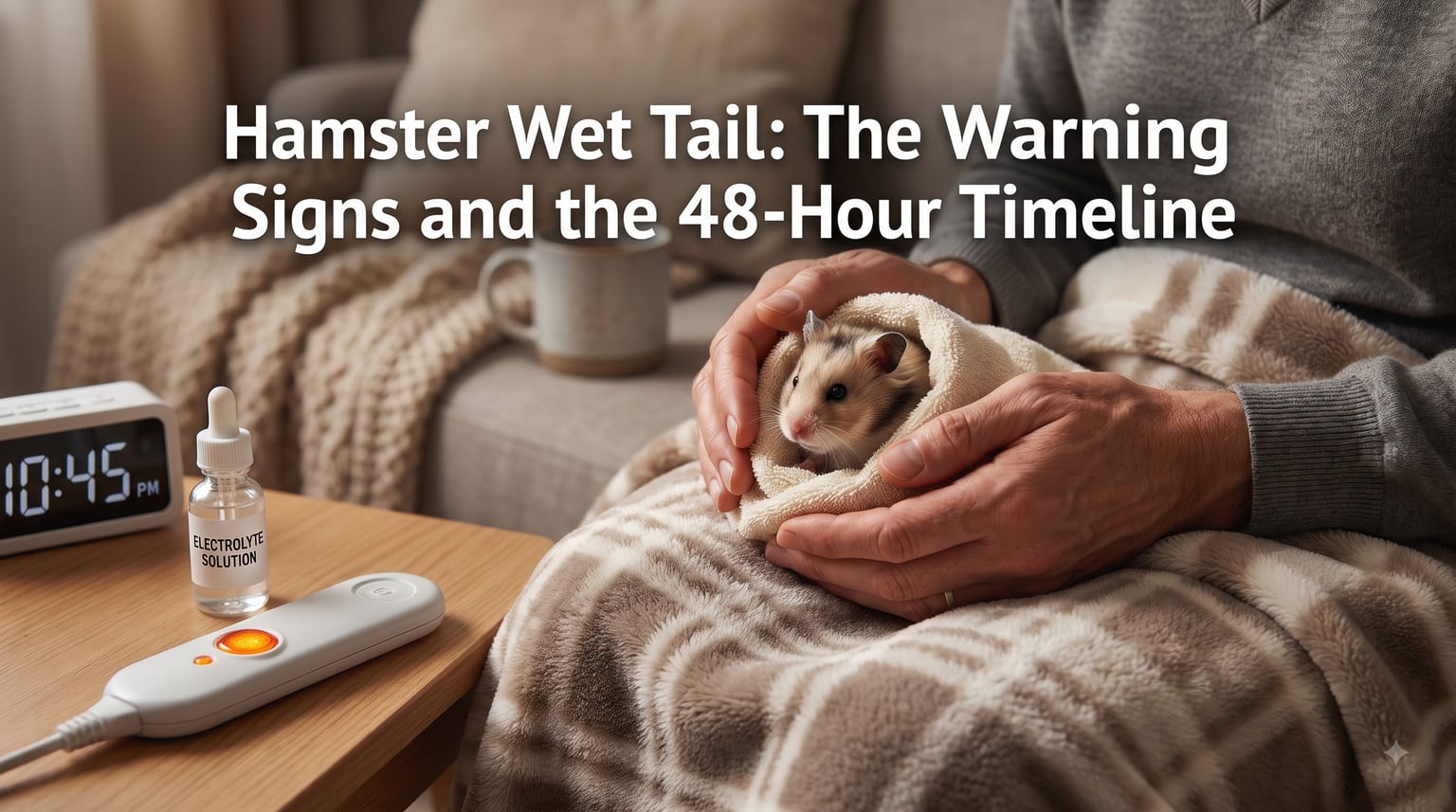
Hamster wet tail is one of the most dangerous emergencies a small pet owner can face. I have seen owners lose a young hamster within hours because they thought the diarrhea was something minor. The truth is that wet tail can kill a hamster in as little as 48 hours, even with veterinary treatment.
This guide walks you through what wet tail actually is, the warning signs you should never ignore, and how the disease progresses hour by hour. You will also learn what to do at home before you can get to an exotic animal vet. If you suspect your hamster has wet tail right now, scroll to the emergency checklist and call a vet immediately.
Table of Contents
What Is Hamster Wet Tail (Proliferative Ileitis)?
Hamster wet tail is the common name for proliferative ileitis, a severe bacterial infection of the intestines. The bacteria responsible is called Lawsonia intracellularis, the same organism that causes similar intestinal disease in pigs and foals.
Once Lawsonia intracellularis takes hold in a hamster’s gut, it damages the lining of the small intestine and colon. This damage prevents proper water absorption, which leads to the constant watery diarrhea that gives the disease its name. The hamster’s tail and rear end stay soaked, matted, and dirty because the diarrhea never stops.
The infection is not just a digestive upset. It triggers a chain reaction of dehydration, electrolyte loss, and toxin buildup that overwhelms a hamster’s small body in a matter of hours. This is why wet tail is considered the fastest killer in pet hamster medicine.
Why the 48-Hour Timeline Matters
The 48-hour figure comes from veterinary case studies and shows up consistently in Merck Veterinary Manual entries. By the time obvious symptoms appear, the bacteria have usually been multiplying for several days. Once diarrhea starts, the hamster’s condition can spiral downward so fast that treatment barely has time to work.
I want to be honest with you here. Even when owners do everything right, survival rates for confirmed wet tail cases hover around 50 percent. Waiting even 12 extra hours to start treatment drops those odds significantly. This is why understanding the warning signs is genuinely life-or-death knowledge for hamster owners.
Early Warning Signs of Wet Tail in Hamsters
The first signs of wet tail in hamsters can look small at first, which is what makes the disease so dangerous. Here are the symptoms to watch for in order of how commonly they appear.
- Watery diarrhea – the droppings are noticeably loose, pale, or mucousy, and may smell worse than usual.
- Wet, matted fur around the tail and belly – this is the symptom that gives the disease its name.
- Lethargy – the hamster sits hunched in a corner and refuses to move when disturbed.
- Loss of appetite – food is ignored, including favorite treats.
- Hunched posture – back arched, eyes squinted or half-closed, fur puffed up.
- Dehydration – skin loses elasticity and the eyes may appear sunken.
- Unusual temperament – a normally curious hamster becomes irritable or unresponsive.
One Reddit user described the moment they knew something was wrong: “He was sitting in the corner of his cage at 9 pm, totally still. By morning his tail was soaked and he would not touch his food.” That hamster did not make it to the vet in time.
Do not wait for all of these signs to appear together. By the time you see even two or three, the clock is already ticking.
Wet Tail vs Regular Diarrhea: How to Tell the Difference
This is the most common question on hamster forums, and for good reason. Diarrhea from a bad piece of fruit and diarrhea from a fatal bacterial infection look similar on paper. The differences show up in the details.
Regular diarrhea in hamsters is usually tied to a specific cause. You fed too much cucumber, switched pellets too quickly, or the hamster got into something it should not have eaten. The droppings are soft and slightly wet, but the hamster is still active, still eating, and still curious about what you are doing.
Wet tail diarrhea is constant, watery, and soaking through the fur around the tail. The hamster is noticeably subdued within hours, not days. If you see the wet tail combined with lethargy and a hunched posture, assume the worst and call a vet.
Quick Comparison Checklist
- Droppings: Wet tail produces pale, watery stool. Regular diarrhea is softer pellets or mild mush.
- Activity level: Wet tail causes immediate lethargy. Regular diarrhea leaves the hamster moving normally.
- Appetite: Wet tail kills appetite within hours. Regular diarrhea may slow eating but does not stop it.
- Onset: Wet tail escalates fast, often within 12 to 24 hours. Dietary diarrhea usually clears in a day.
- Stress factor: Wet tail often follows a stressful event like moving or weaning. Dietary diarrhea follows a food change.
When in doubt, treat the situation as wet tail. The cost of an unnecessary vet visit is far lower than the cost of waiting too long.
The 48-Hour Emergency Timeline Explained
A hamster with wet tail can die within 48 hours of obvious symptom onset, and that timeline has been documented in veterinary literature for decades. Here is how the disease typically progresses when left untreated, and how treatment changes the outlook.
Hours 0-12: First Subtle Signs
The hamster may seem slightly off. Droppings are looser than usual, but you might chalk it up to a recent diet change. The hamster is still moving around the cage, but maybe a little slower than normal. Appetite might dip slightly.
Internally, the Lawsonia bacteria are already multiplying rapidly in the intestinal lining. Damage to the gut wall is beginning, but fluid loss has not yet crossed a critical threshold.
Hours 12-24: Symptoms Intensify
Diarrhea becomes obvious and persistent. The fur around the tail and rear end looks damp and sticky. The hamster starts sitting hunched in a corner and refuses to run on the wheel. Treats are ignored. Water intake may increase as the body tries to compensate for fluid loss.
This is the window where treatment has the highest chance of success. If you can get antibiotics and fluid therapy started during this period, survival odds jump significantly. After this window, the odds drop fast.
Hours 24-48: Critical Decline
The hamster becomes unresponsive. Body temperature drops, and the hamster may feel cold to the touch. Dehydration becomes severe. The eyes appear sunken, and the fur looks rough and unkempt. Convulsions or tremors can appear in the final hours.
Even with aggressive veterinary treatment at this stage, many hamsters do not survive. The toxins and electrolyte imbalances have often progressed too far for supportive care to reverse. This is exactly why the 48-hour timeline is so often quoted, and why every hour of delay matters.
What Happens If You Cannot Reach a Vet?
In rural areas or after-hours emergencies, an exotic vet may not be available for several hours. Do these things immediately while you arrange transport.
- Move the hamster to a small, clean carrier lined with paper towels.
- Keep the environment warm at around 75 to 80 degrees Fahrenheit using a heating pad set on low under one side of the carrier.
- Offer unflavored Pedialyte on a small spoon or in a shallow dish to slow dehydration.
- Do not attempt over-the-counter antibiotics meant for other animals.
- Call multiple emergency vet clinics, including ones outside your immediate area.
These steps will not cure wet tail, but they buy time and keep the hamster stable enough for treatment to work once a vet is reached.
What Causes Wet Tail in Hamsters?
Wet tail is caused by the Lawsonia intracellularis bacteria, but the bacteria alone do not always produce the disease. Stress is the trigger that turns a latent infection into a fatal one. This is why wet tail is classified as a stress-related illness in veterinary medicine.
The most common stress triggers include:
- Early weaning – separating pups from their mother before 4 weeks of age.
- Transport stress – long car rides from a breeder or pet store.
- New environment – moving into a new cage or home.
- Overcrowding – housing hamsters together past weaning age.
- Sudden dietary changes – switching food brands abruptly.
- Dirty cage conditions – ammonia buildup from soiled bedding.
Pet store hamsters are particularly vulnerable because they experience several of these stressors in quick succession. They are weaned, transported, and rehomed within a matter of days, which is why pet store hamster wet tail is so common.
Which Hamsters Are Most at Risk?
Hamsters aged 3 to 10 weeks are at the highest risk of developing wet tail, with peak vulnerability around 4 to 6 weeks. This is the weaning window when the gut microbiome is still developing and stress tolerance is at its lowest.
Syrian hamsters are the most commonly affected species. This is partly because they are the most popular pet species and partly because breeders and pet stores handle them in high volumes. Dwarf hamsters can also develop wet tail, though the disease appears less frequently in those species.
Older hamsters are not immune, but their immune systems are usually strong enough to fight off the bacteria before symptoms escalate. A wet tail diagnosis in an adult hamster should also raise suspicion of a different underlying condition.
Is Wet Tail Contagious to Humans or Other Pets?
Wet tail is highly contagious between hamsters but does not spread to humans, dogs, or cats. The Lawsonia intracellularis bacteria is species-specific in practice, which means household members and other pets are not at risk.
That said, you should still wash your hands thoroughly after handling a sick hamster or cleaning its cage. The diarrhea itself can carry secondary bacteria that are not species-specific, and good hygiene is always the right call around a sick animal.
If you have multiple hamsters, separate the sick one immediately. Use separate water bottles, food bowls, and cleaning tools. Disinfect the affected cage with a vet-recommended cleaner before reintroducing any other hamster to it.
Treatment Options and Emergency Home Care
Wet tail treatment requires a vet. There is no home remedy that has been proven to cure this disease. That said, what you do in the first few hours can shift the odds in your hamster’s favor.
Immediate Steps Before the Vet Appointment
- Isolate the hamster from any cage mates.
- Keep the hamster warm but not hot, around 75 to 80 degrees Fahrenheit.
- Offer a few drops of unflavored electrolyte solution every hour.
- Avoid feeding treats or fresh vegetables until the vet has examined the hamster.
- Transport in a small, dark, quiet carrier to reduce stress.
What the Vet Will Do
An exotic animal vet will typically start with a physical exam and a fecal test to confirm the bacterial infection. Treatment usually includes a course of antibiotics such as tetracycline or enrofloxacin, subcutaneous fluids to correct dehydration, and anti-nausea medication if needed.
Some vets will prescribe a probiotic alongside the antibiotics to support gut flora recovery. Follow dosing instructions exactly and complete the full course even if symptoms improve quickly.
Can a Hamster Recover From Wet Tail Without Antibiotics?
The honest answer is that recovery without antibiotics is extremely rare. By the time symptoms are visible, the bacterial load in the gut is usually too high for the immune system to clear on its own. Supportive care alone, without targeted antibiotics, almost always ends in death.
Anyone telling you that a home remedy cured their hamster’s wet tail was most likely dealing with ordinary diarrhea or a mild bacterial imbalance, not a true Lawsonia intracellularis infection.
How to Prevent Wet Tail in Hamsters
You cannot eliminate every risk, but you can dramatically reduce the odds of your hamster ever developing wet tail. Most prevention comes down to stress reduction and hygiene.
- Quarantine new hamsters for at least two weeks before introducing them to your home.
- Keep the cage clean with weekly full cleans and daily spot checks.
- Avoid sudden diet changes and transition new foods over 7 to 10 days.
- Never wean pups before 4 weeks of age, and let the mother handle the transition when possible.
- House hamsters separately after weaning to reduce social stress.
- Provide hiding spots and stable temperatures to lower chronic stress.
When you first bring a hamster home, give it 3 to 5 days of quiet adjustment time before handling. Limit loud noises, other pets, and excessive cleaning during this window.
Frequently Asked Questions About Hamster Wet Tail
How long can hamsters survive with a wet tail?
Most hamsters with wet tail survive only 24 to 48 hours after symptoms become visible, and many die within the first 24 hours without treatment. With prompt antibiotics and fluid therapy, survival rates improve but still hover around 50 percent.
Will a wet tail go away on its own?
Wet tail almost never goes away on its own. The Lawsonia intracellularis bacteria multiply quickly, and the resulting dehydration and toxin buildup overwhelm the hamster without veterinary intervention.
What are the first signs of wet tail in hamsters?
The earliest signs include watery diarrhea, damp and matted fur around the tail, lethargy, hunched posture, and a sudden loss of appetite. These symptoms usually appear together rather than one at a time.
Can a hamster recover from wet tail without antibiotics?
Recovery without antibiotics is extremely rare. Once symptoms are visible, the bacterial load is typically too high for the immune system to clear on its own, and supportive care alone is usually not enough.
Is hamster wet tail contagious to humans?
No. The Lawsonia intracellularis bacteria that causes wet tail is species-specific and does not spread to humans, dogs, or cats. It is, however, highly contagious between hamsters.
What causes wet tail in hamsters?
Wet tail is caused by Lawsonia intracellularis bacteria, triggered by stress events such as early weaning, transport, overcrowding, or sudden environmental changes. The stress allows the bacteria to multiply past what the immune system can handle.
Is wet tail painful for hamsters?
Yes. The intestinal damage, cramping, and dehydration associated with wet tail cause significant discomfort. A sick hamster will often sit hunched with squinted eyes, which are classic signs of pain in small animals.
Final Thoughts on Recognizing and Responding to Hamster Wet Tail
Hamster wet tail is the kind of condition that rewards fast action and punishes hesitation. The 48-hour timeline is not a scare tactic. It is a documented pattern from decades of veterinary cases showing how quickly this disease moves once symptoms appear.
If you remember nothing else from this guide, remember this: any hamster with watery diarrhea plus lethargy needs a vet within hours, not days. Keep an exotic vet’s emergency number saved in your phone before you ever need it. The first hour of symptoms is your best window, and waiting to see if things improve is how owners lose hamsters that could have been saved.
Whether your hamster makes it or not, knowing the warning signs puts you in the best possible position to act. Share this guide with anyone who keeps hamsters, because most owners only learn about wet tail after it is too late. Your awareness might be the difference that saves a small life.