
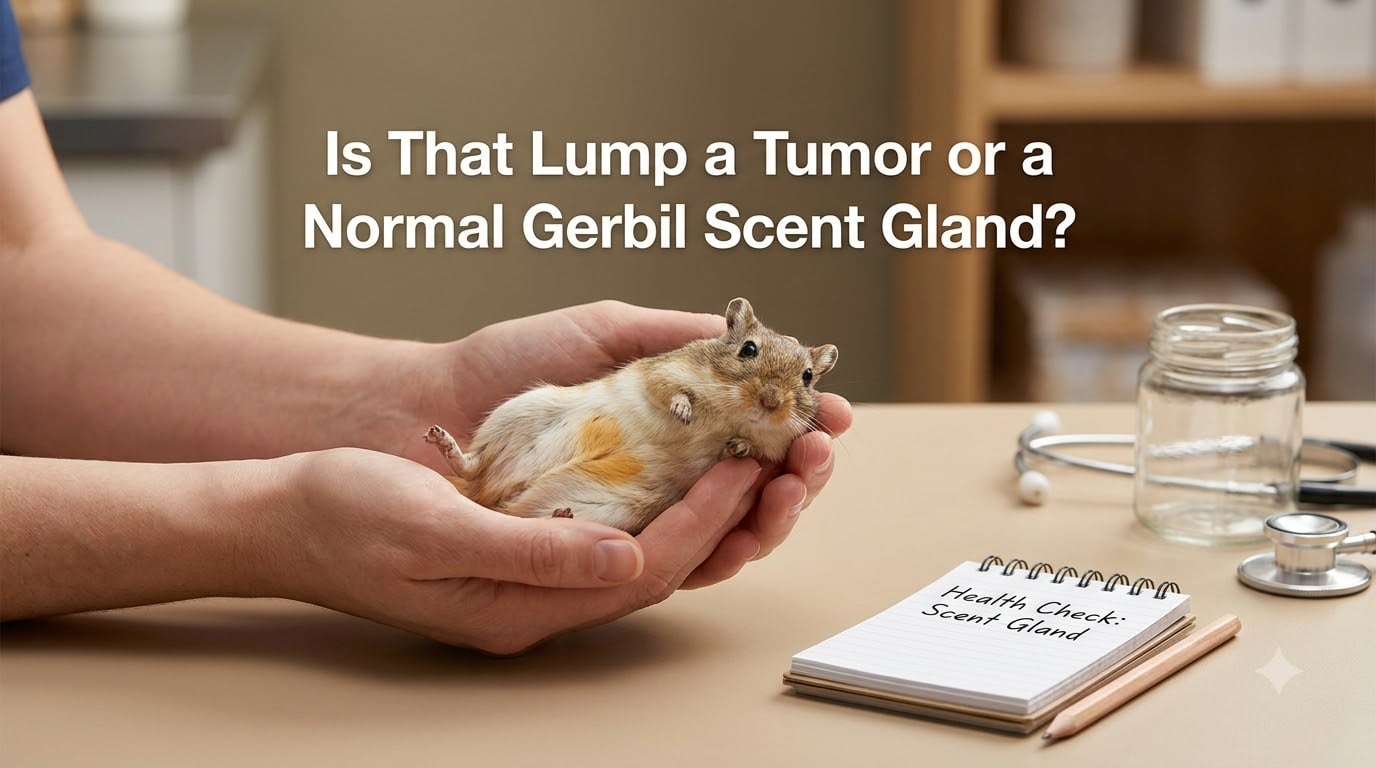
If you just flipped your gerbil over and spotted a bare patch on the belly, your first thought is probably the same one I’ve had a dozen times: “Is that a tumor?” I get it. That small oval of hairless skin looks suspicious, and the internet is full of scary stories about scent gland cancer.
Here’s the reassuring part. Gerbils have a natural scent gland right on their tummy, and a healthy gland looks a lot like a lump to owners who have never seen one. Knowing the difference between a gerbil scent gland tumor vs normal tissue can save you weeks of worry and help you catch a real problem early.
This guide breaks down what healthy glands actually look like, lists the red flags that suggest a tumor, and gives you a calm home examination routine you can do in under two minutes each week.
Table of Contents
Understanding Normal vs Tumor: What to Look For
Yes, that smooth patch on your gerbil’s belly is almost always the ventral scent gland, a perfectly normal anatomical feature. The gland sits in the midline of the abdomen, slightly toward the pelvis, and it is meant to be visible and hairless.
Owners tend to discover this gland for the first time when their gerbil is already over a year old, because the pad darkens and roughens with age. Many first-time owners mistake it for a wound, an abscess, or a tumor. The shape and texture are the easiest giveaways, and I’ll walk through them in the next section.
What a Normal Gerbil Scent Gland Looks Like
A normal gerbil ventral scent gland is a hairless oval pad roughly the size of a pencil eraser on an adult male, slightly smaller on females. The skin is usually yellow, orange, or waxy tan, and the surface feels pebbly or rough when you run a fingertip across it gently.
Males develop a more pronounced pad than females because they mark territory more aggressively. Older males often have a darker, almost leathery patch, which is still healthy as long as it stays flat and uniform. The gland may secrete a faint oily residue onto your fingers during handling.
Key features of a healthy gland:
- Symmetrical oval shape along the belly midline
- Yellow, orange, or light tan color
- Rough but flat surface, no raised bumps
- No redness, scabs, or bleeding
- Gerbil shows no pain reaction when touched
If your gerbil’s pad matches those points, you are looking at normal anatomy, not a tumor.
Signs of a Scent Gland Tumor
A scent gland tumor shows up as a hard, pea-sized lump either within the scent gland pad or just outside it. The lump does not flatten when the gerbil relaxes, and it usually grows slowly over weeks or months. Based on what I have seen in gerbil forums and what vets describe, the five warning signs below catch most problems early.
Watch for these red flags:
- A hard, raised lump within or next to the scent gland pad that you can feel under the skin
- Sudden swelling or redness around the gland, especially if it spreads beyond the normal pad area
- Open sores, scabs, or bleeding from the gland, often caused by your gerbil scratching or biting at it
- Rapid change in size, either growing visibly within days or changing shape week to week
- Behavioral changes like over-marking, constant grooming at the belly, or flinching when picked up
Mongolian gerbils over 2 years old, especially males, are the highest risk group. Scent gland neoplasms appear in roughly 25 to 40 percent of older males in some veterinary studies, so even small changes deserve attention.
Real gerbil owners on forums often describe finding a pea-sized lump by accident during a routine checkup. Many say their gerbils acted completely normal otherwise, which is exactly why a hands-on weekly exam matters so much.
Comparison Table: Normal Scent Gland vs Tumor
Side-by-side, the differences become obvious once you know what to look for. This is the comparison table every gerbil owner wishes they had on day one.
| Feature | Normal Scent Gland | Scent Gland Tumor |
|---|---|---|
| Location | Exact midline of belly, slightly toward pelvis | Inside or beside the gland pad, may shift outward |
| Shape | Flat oval pad, symmetrical, predictable outline | Raised, irregular, often asymmetrical lump |
| Texture | Rough and pebbly but flat to the touch | Hard nodule under the skin, pea-sized or larger |
| Color | Yellow, orange, or waxy tan, evenly colored | Red, inflamed, dark, or ulcerated patches |
| Size change over weeks | Stable, very gradual darkening with age | Noticeably grows or changes shape over days to weeks |
| Skin condition | Dry, flaky, but no wounds | Scabs, bleeding, missing fur from scratching |
| Reaction to touch | Gerbil stays calm, no flinch | Gerbil flinches, squeaks, or tries to scratch the area |
| Behavior | Normal marking and activity | Over-marking, constant belly grooming, or guarding |
Book a vet visit if three or more of the right-column traits are present.
Home Examination Guide for Gerbil Owners
Checking your gerbil’s belly takes about 90 seconds once a week, and it is the single best habit for catching tumors early. Pick a calm moment, ideally after your gerbil has been awake for at least 30 minutes.
Step-by-step home examination:
- Pick up and steady your gerbil. Cup one hand under the belly, support the rear with your thumb and fingers, and let the gerbil rest against your palm.
- Expose the belly gently. Tilt the gerbil so the abdomen faces you. Most gerbils relax if you stroke the back of the neck first.
- Locate the scent gland pad. Look for the yellow or orange oval on the lower abdomen, just past the rib cage toward the pelvis.
- Run a clean fingertip across the pad. Feel for the normal rough texture, then sweep slightly to either side. Any small hard bump that is not part of the pad is worth noting.
- Watch for reaction. A calm gerbil tells you the area is comfortable. Squeaking, kicking, or sudden scratching means the spot is tender.
- Log what you see. Note date, size, and color in a simple phone note so you can compare week to week.
If you find a lump, don’t squeeze or pinch it. Take a clear photo in good lighting and book a vet appointment rather than waiting to see if it grows.
When to See a Veterinarian
Any new lump on or near the scent gland is worth a vet visit, but a few situations mean you should go the same day. Bleeding from the gland, visible swelling that spreads beyond the pad, or sudden behavior changes such as refusing food all warrant urgent care.
For slower-growing lumps, a regular vet appointment within a week is fine, but bring your photos and notes. The vet will usually do a fine-needle aspirate to confirm whether the lump is a benign hyperplasia, a carcinoma, or something else entirely. Surgical removal is the standard treatment for most scent gland tumors, and outcomes are favorable when caught early, particularly in gerbils under 3 years old.
Owners often worry about anesthesia risks on such a small animal, which is a fair concern. An experienced exotics vet will use light, short-acting anesthesia, and many gerbils recover within 24 to 48 hours. Gerbils that act completely normal before surgery generally recover well, which is another reason weekly home checks pay off.
Frequently Asked Questions
What does a normal gerbil scent gland look like?
A normal gerbil scent gland is a hairless oval pad on the belly midline, yellow to orange in color, with a rough but flat surface. Males have a more obvious pad than females, and the area may darken slightly with age.
What does a tumor look like on a gerbil’s scent gland?
A scent gland tumor appears as a hard, raised, irregular lump either inside or next to the gland pad. It may be red, ulcerated, or scabbed, and it usually grows visibly over weeks. Your gerbil may scratch or flinch when the area is touched.
How can I tell the difference between a lump and a tumor?
A normal scent gland is flat, symmetrical, and feels like rough sandpaper under your finger. A tumor is a hard, raised, asymmetrical bump that does not blend into the surrounding pad and may change size over time.
Are scent gland tumors more common in male gerbils?
Yes. Scent gland tumors are most common in older male gerbils, particularly those over 2 years of age, because the gland is more active and more exposed to chronic marking behavior.
What should I do if I find a lump on my gerbil’s belly?
Stop handling the area, take a clear photo for your records, and book a vet visit within a few days. Avoid squeezing the lump and watch for fast growth, bleeding, or behavior changes that would require same-day care.
Can scent gland tumors be treated successfully?
Yes. Surgical removal by an exotics vet is the standard treatment, and outcomes are best when the tumor is caught early. Many gerbils recover quickly and return to normal activity within a couple of days after surgery.
Final Thoughts
A healthy scent gland looks weird until you know what to look for. Once you compare what you see against the normal vs tumor table above, the differences become much clearer.
Make a 90-second belly check part of your weekly routine, especially if you keep older male gerbils. You’ll learn what is normal for your pet, spot changes faster, and avoid the panic that comes from mistaking anatomy for disease. If you ever find a hard, growing, or ulcerated lump, skip the guessing and book a vet visit the same week. For everything else, you’re probably looking at a perfectly healthy scent gland doing exactly what it is supposed to do.