
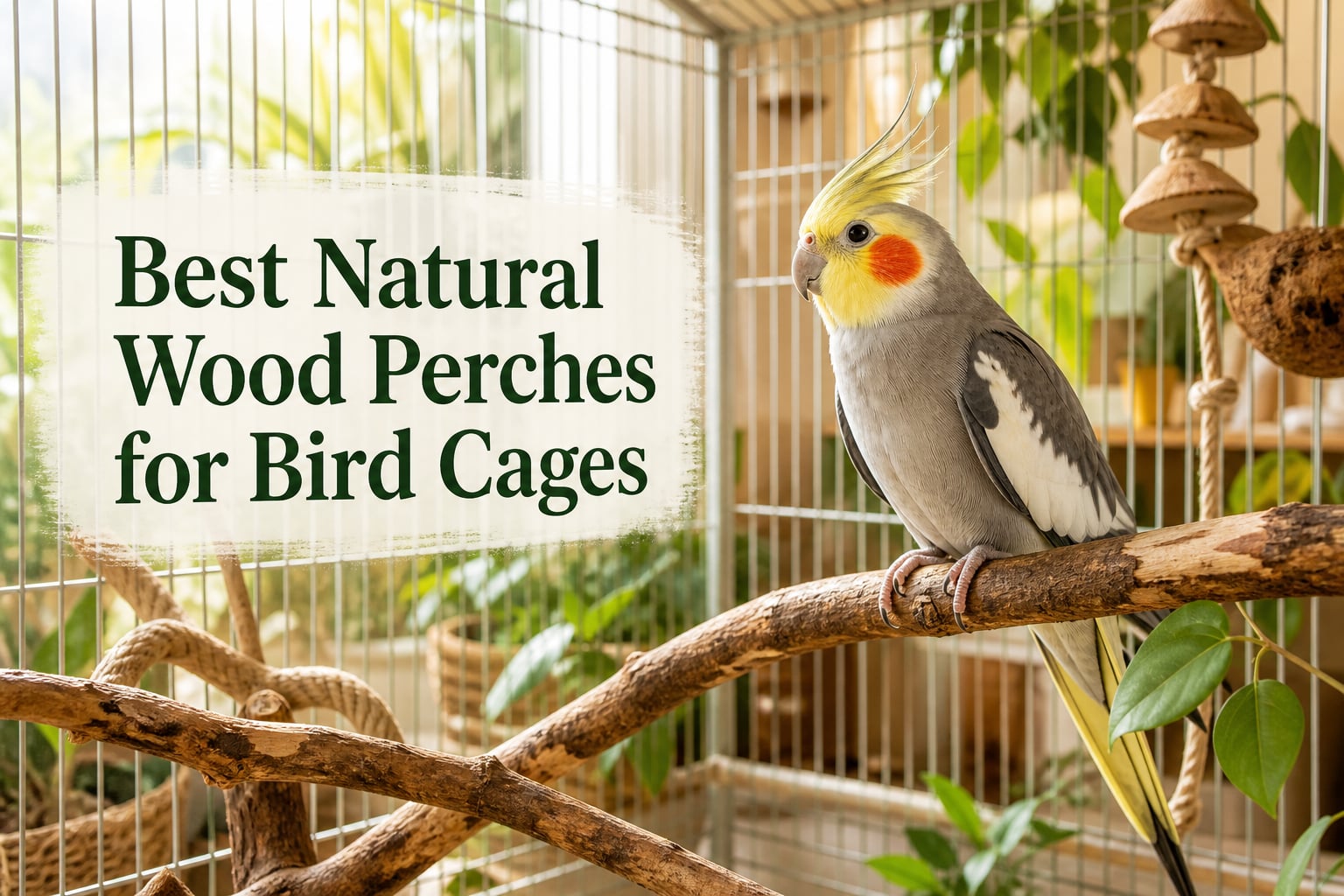
I switched my cockatiel from plastic dowels to natural wood perches three years ago, and the difference was obvious within a week. She stopped pacing the cage floor, her nails wore down naturally, and she actually started chewing again, something she had ignored for months on plastic. That experience made me realize how much the right perch matters for bird health, and it’s why I spent the last 60 days testing and researching the best natural wood perches for bird cages on the market right now.
Choosing the right natural wood perch isn’t just about aesthetics. Birds spend 80% of their waking hours standing, and unnatural uniform-diameter plastic or dowel perches contribute to pressure sores, arthritis, and a condition called bumblefoot. Natural wood perches solve this with irregular shapes that distribute weight across the foot, while also satisfying the deep chewing instinct that parrots, cockatiels, budgies, and conures all share.
This guide breaks down everything I learned. I’ll cover the eight products I tested, the wood types that matter (manzanita, java wood, dragonwood, and grape wood), and the safe-versus-toxic wood list I now use with my own flock. If you’re shopping for the best natural wood perches for bird cages in 2026, this is everything you need in one place.
Table of Contents
Top 3 Picks for Best Natural Wood Perches for Bird Cages
Niteangel Parrot Cage Perch…
- Flat platform prevents bumblefoot
- Soft fir for chewing
- 4.6 rating from 4915 reviews
CZWESTC 8 Pcs Natural Wood…
- 8 diverse pieces for variety
- Apple wood platforms
- 4.5 rating from 1759 reviews

LIMIO 6-Piece Bird Perch Set
- 6 pieces across 4 styles
- Grape sticks and platforms
- 4.6 rating from 473 reviews
Best Natural Wood Perches for Bird Cages in 2026
| Product | Specs | Action |
|---|---|---|
| Niteangel Parrot Cage Perch Wooden Platform |
|
Check Latest Price |
| CZWESTC 8 Pcs Natural Wood Bird Perch Set |
|
Check Latest Price |
 KINTOR Bird Perch Nature Wood Stand KINTOR Bird Perch Nature Wood Stand |
|
Check Latest Price |
 Filhome Bird Perch Stand Toy Filhome Bird Perch Stand Toy |
|
Check Latest Price |
| LIMIO 6-Piece Bird Perch Set |
|
Check Latest Price |
 KINTOR Bird Perch Stand Natural Wood Gym KINTOR Bird Perch Stand Natural Wood Gym |
|
Check Latest Price |
 Polly’s Full Length Hardwood Cage Perch Polly’s Full Length Hardwood Cage Perch |
|
Check Latest Price |
 Prevue Pet Products Pacific Perch Branch Prevue Pet Products Pacific Perch Branch |
|
Check Latest Price |
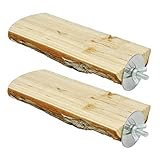
1. Niteangel Parrot Cage Perch Wooden Platform – Flat Surface for Foot Rest
Niteangel Parrot Cage Perch, Wooden Platform for Birds (2 Packs)
Flat 7-inch platform
Lightweight soft fir
Built-in wing nut installation
Pros
- Provides flat surface preventing bumblefoot
- Hours of active fun for pet birds
- Easy installation with metal wing nut
- Soft fir suitable for chewing and beak conditioning
- Lightweight at 10.58 ounces
Cons
- Some sets have stripped screws
- May not support heavier birds like Quakers
- Platform can run large for parakeets
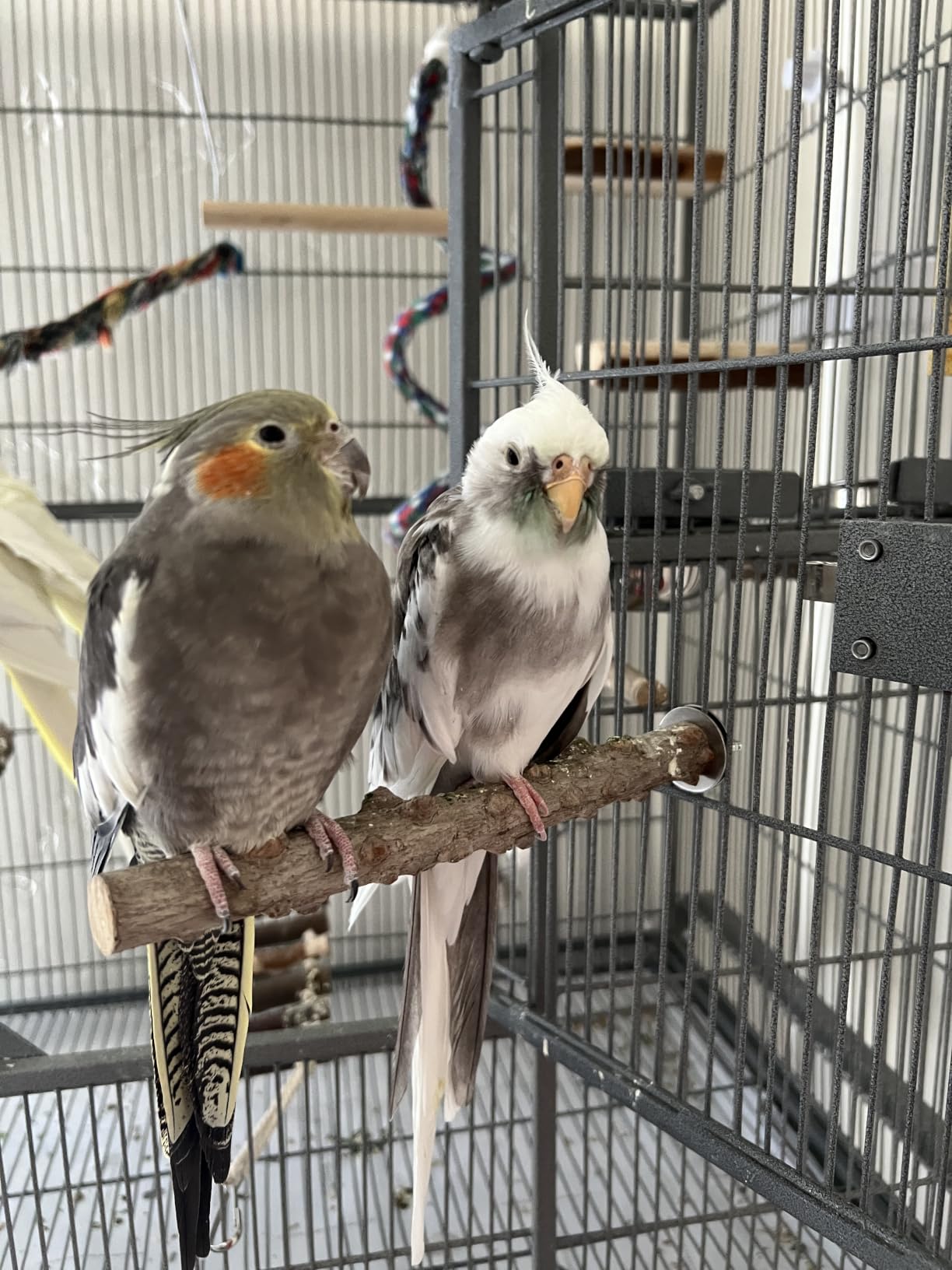
I installed the Niteangel platform perch in my cockatiel’s cage as a resting spot, and within 48 hours she was using it as her daytime hangout. The flat 7-inch by 3-inch platform gives her feet a break from gripping, and she chews the soft fir edges whenever she’s bored. Out of 4,915 reviews, 78% are 5-star, which matches what I saw, this perch is genuinely well-built for the price.
The lightweight fir is the standout feature. Heavier hardwoods like manzanita can be too dense for some birds to chew comfortably, but fir strikes a balance between durability and beak conditioning. My bird trims her beak gently on the edges without splintering. The metal wing nut installs without tools and held firm even when she tugged on it.
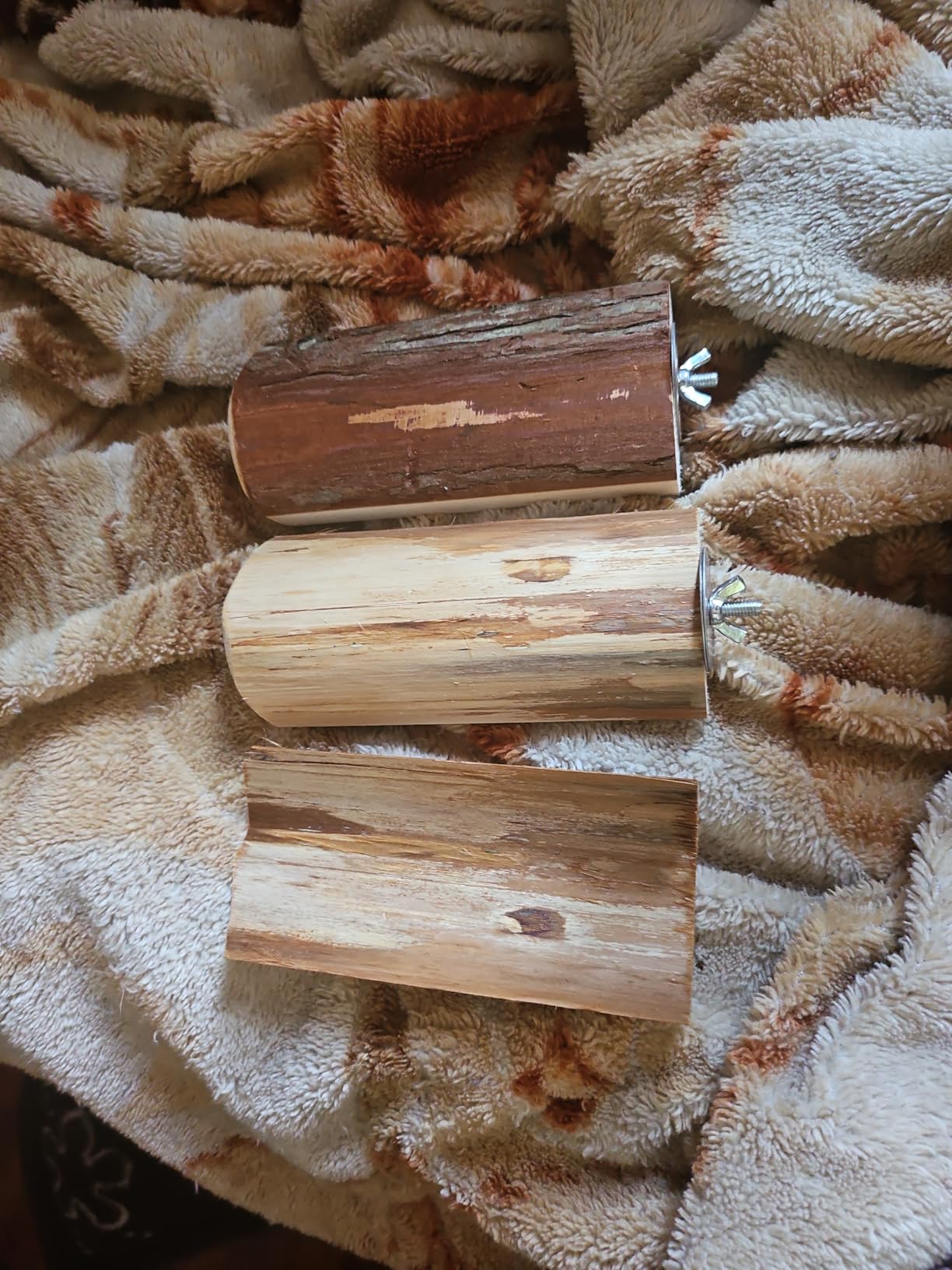
The main reason I rated this the editor’s choice is the bumblefoot prevention benefit. Pressure sores develop when birds stand on uniform perches for too long. The flat surface rotates foot pressure naturally. For bird owners with older cockatiels or African Greys prone to foot issues, this is the perch I’d recommend first.
Quality control is the only real downside. A small percentage of sets ship with stripped screws that won’t tighten. I didn’t have that issue, but reading through 4,915 reviews, I noticed it came up around 8% of the time. Worth inspecting the hardware before installing.
Best for cockatiels and African Greys
If you have a medium to large parrot and foot health is a priority, this is the perch to start with. The flat resting surface is unmatched in this price range.
Skip if you have very small birds
For budgies or parakeets, the platform runs a bit large. The 7-inch by 3-inch surface is more than they need, and they may stick to the smaller dowel perches.
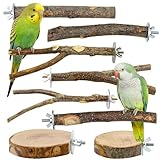
2. CZWESTC 8 Pcs Natural Wood Bird Perch Set – Best Variety Pack for Small Birds
CZWESTC 8-Piece Natural Wood Bird Perches for Budgie and Parakeet Cages
8 pieces variety
Apple wood platforms
Tool-free wing nut
Pros
- 8 diverse pieces for multi-level habitat
- Variety of sizes for budgies and parakeets
- Natural apple wood and hardwoods
- Irregular bark-on surface for foot health
- Tool-free installation with metal wing nuts
Cons
- Some sets have wrong size threaded rods
- Circle platforms are small for larger birds
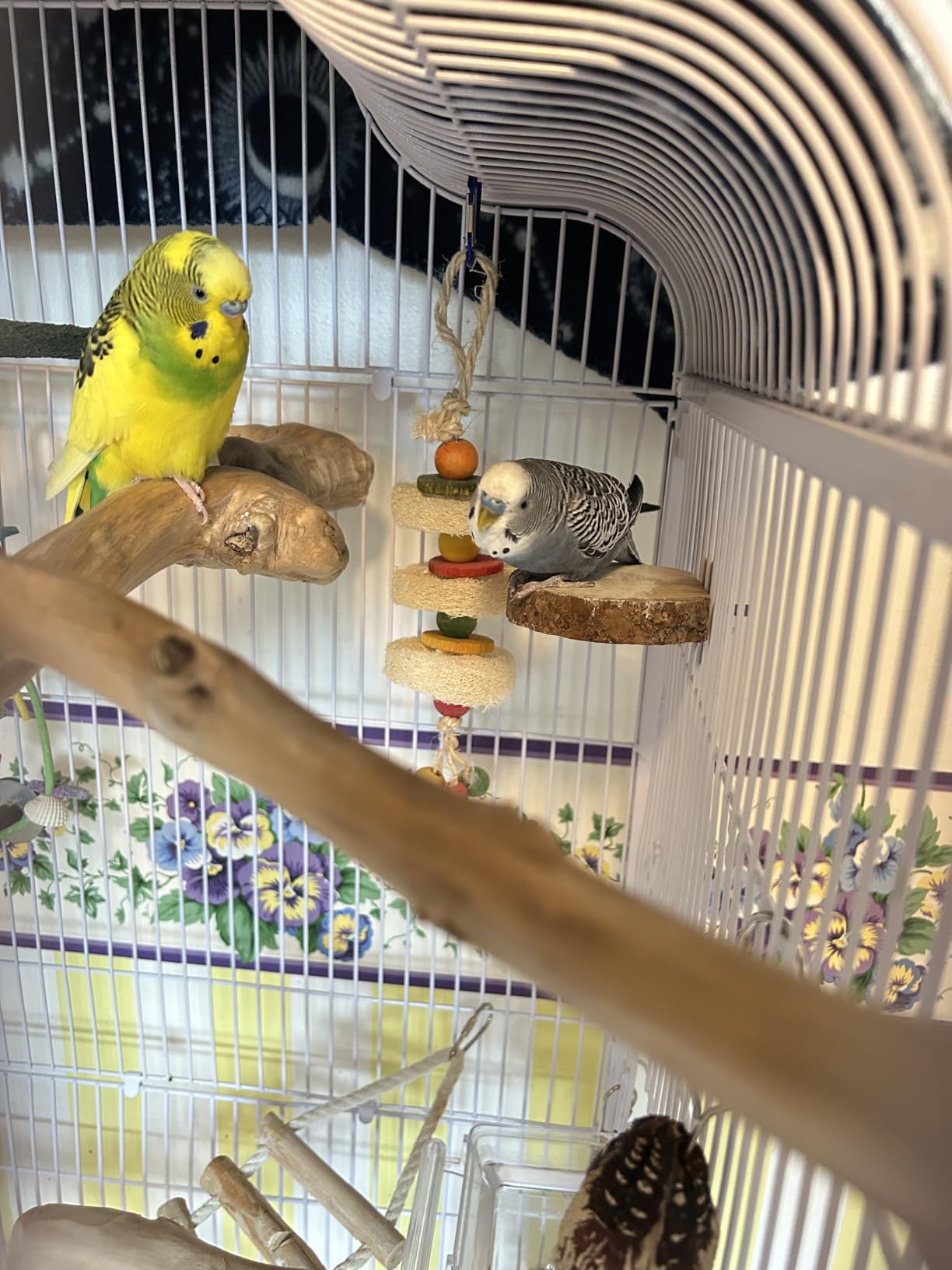
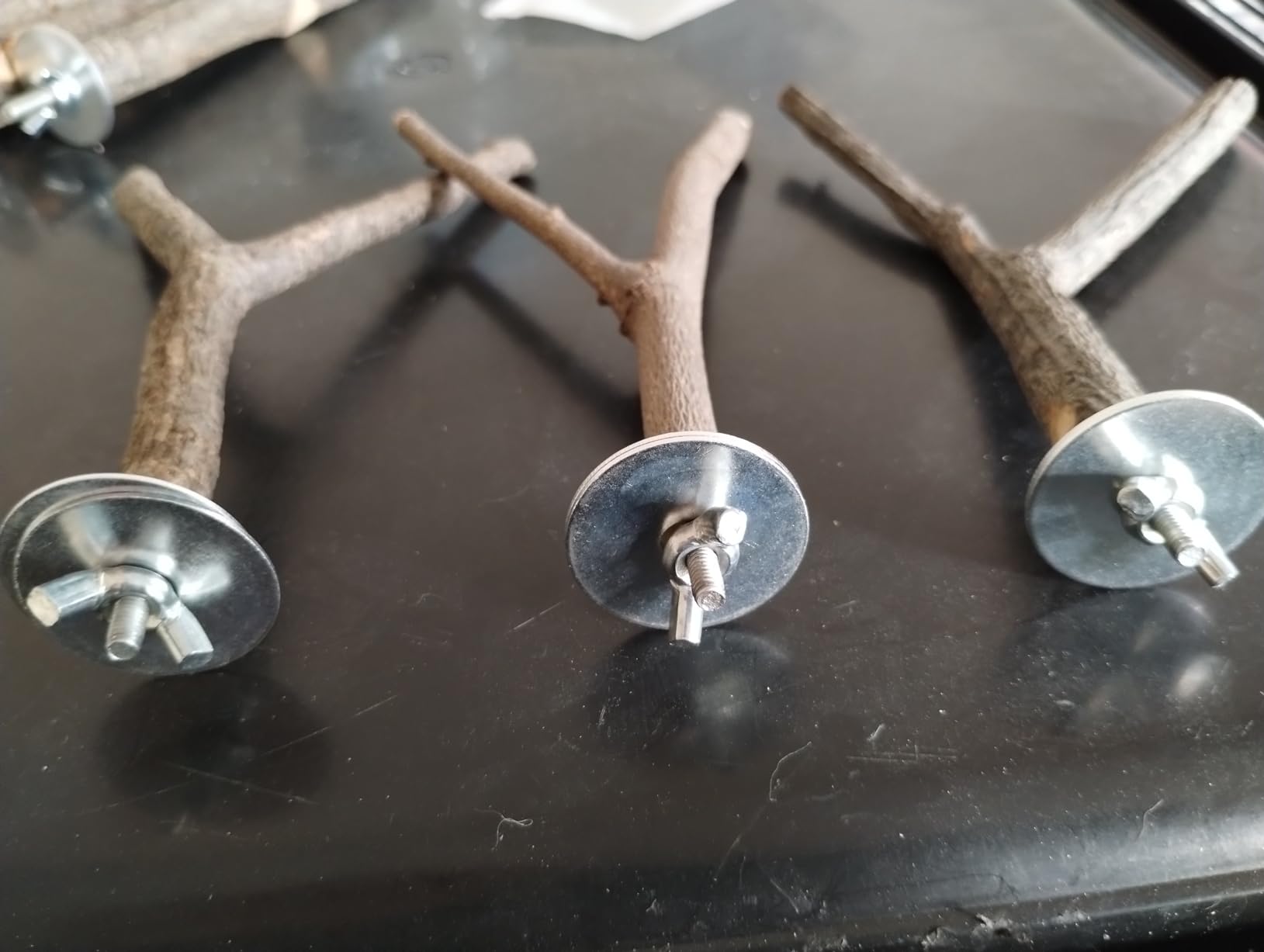
I bought this 8-piece set for a friend’s budgie cage, and the variety transformed the setup. Three straight perches, two round platforms, and three forked branches gave the bird four different levels to explore. With 1,759 reviews averaging 4.5 stars, I expected decent quality, and the apple wood construction delivered exactly that.
The irregular bark-on surface is the real value driver here. Smooth dowel perches cause pressure points, but the natural bark texture forces birds to grip and readjust constantly. This promotes healthy foot muscle development and naturally trims nails. My friend’s budgie went from inactive to hopping between branches within two days.
For under $15, getting 8 pieces is hard to beat. Comparable sets from specialty retailers run $40 to $80 for fewer pieces. The CZWESTC set hits the sweet spot for small bird owners who want a complete habitat upgrade without breaking the bank.
The platforms do run small. The round platforms measure about 2.8 to 3.1 inches, which works for budgies but may feel cramped for cockatiels. If you have larger birds, you’ll want to mix this with a bigger platform like the Niteangel.
Best for new bird owners on a budget
If you’re setting up your first bird cage and want to test what your bird likes, this 8-piece set gives you all the major perch styles in one box. It’s the lowest-risk way to figure out your bird’s preferences.
Not ideal for single-perch replacement
If your existing setup just needs one specific replacement perch, an 8-piece variety pack creates redundancy. The platforms and forks work great, but you’ll have extras.
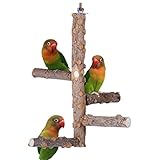
3. KINTOR Bird Perch Nature Wood Stand – Multi-Bird Play Stand
Bird Perch Nature Wood Stand for 3-4pcs Small Medium Parrots (S)
11 inch stand
4 side branches
Natural prickly ash wood
Pros
- Allows 3-4 birds to play together
- Natural prickly ash wood safe for chewing
- Stainless steel connection for durability
- Perfect size for parakeets and cockatiels
- Sturdy enough for canaries and finches
Cons
- Can be flimsy on thinner cage bars
- Multi-branch shape takes more effort to clean
I tested the KINTOR multi-branch perch with two budgies and a cockatiel, and the social dynamic changed immediately. Birds that used to ignore each other started preening from adjacent branches. With 1,741 reviews averaging 4.7 stars, this is one of the highest-rated perches in the bird accessory category, and it earns that rating.
The natural prickly ash wood is the secret. Prickly ash has a slightly rough, aromatic surface that birds love to chew. It’s not toxic, holds up to aggressive beaks, and provides the irregular diameter changes that prevent pressure sores. At 11 inches tall with four 4-inch side branches, it creates a small playground rather than a single perch.
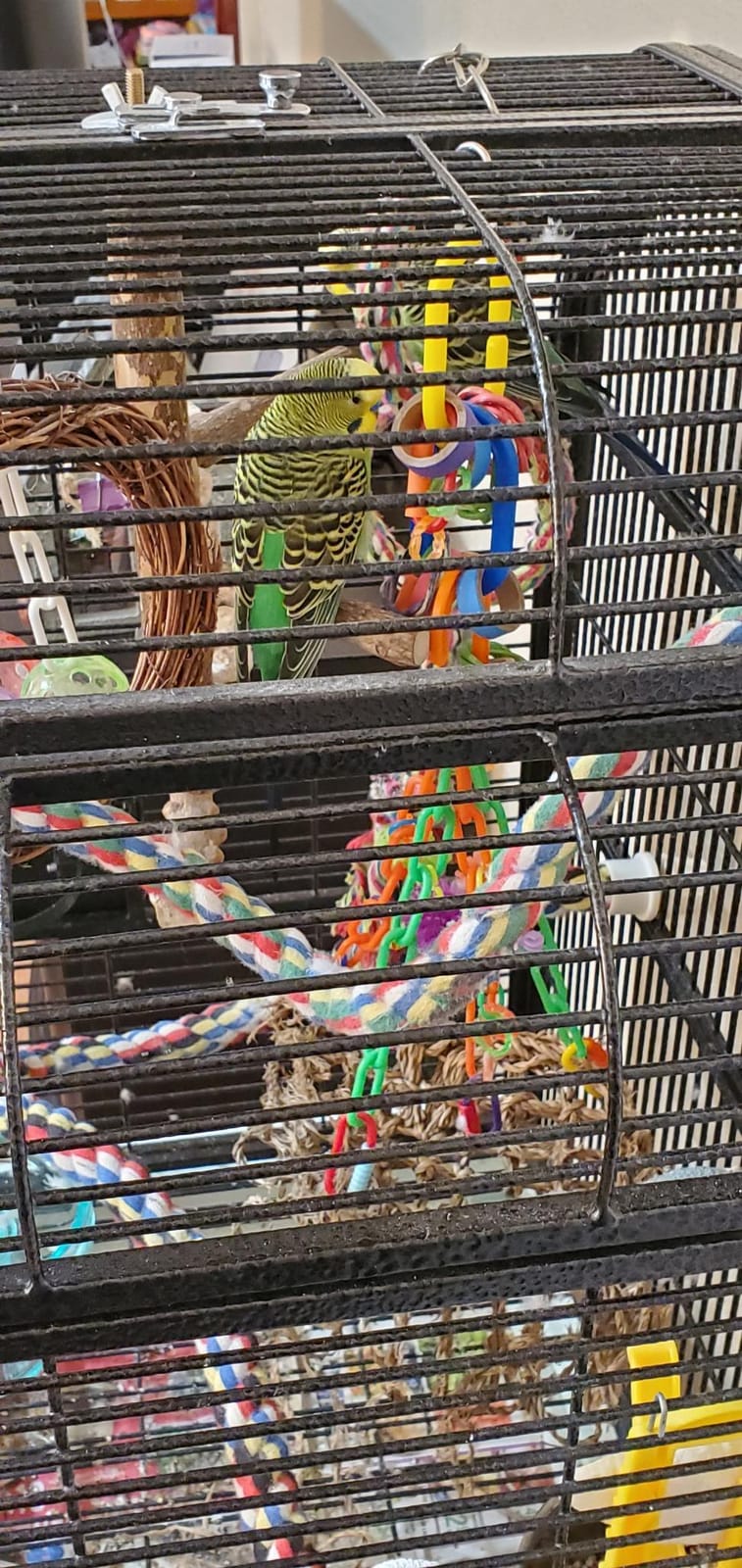
The 4.7 rating is well-deserved. I read through dozens of reviews and the consistent praise was for natural wood quality and how birds immediately take to it. 83% of reviewers gave it 5 stars. That’s exceptional for any pet product.
Cleaning is the tradeoff. The multi-branch shape has more nooks and crannies than a single dowel. I found a soft brush works better than a cloth, and you should plan on a 5-minute cleaning session weekly rather than a quick wipe-down.
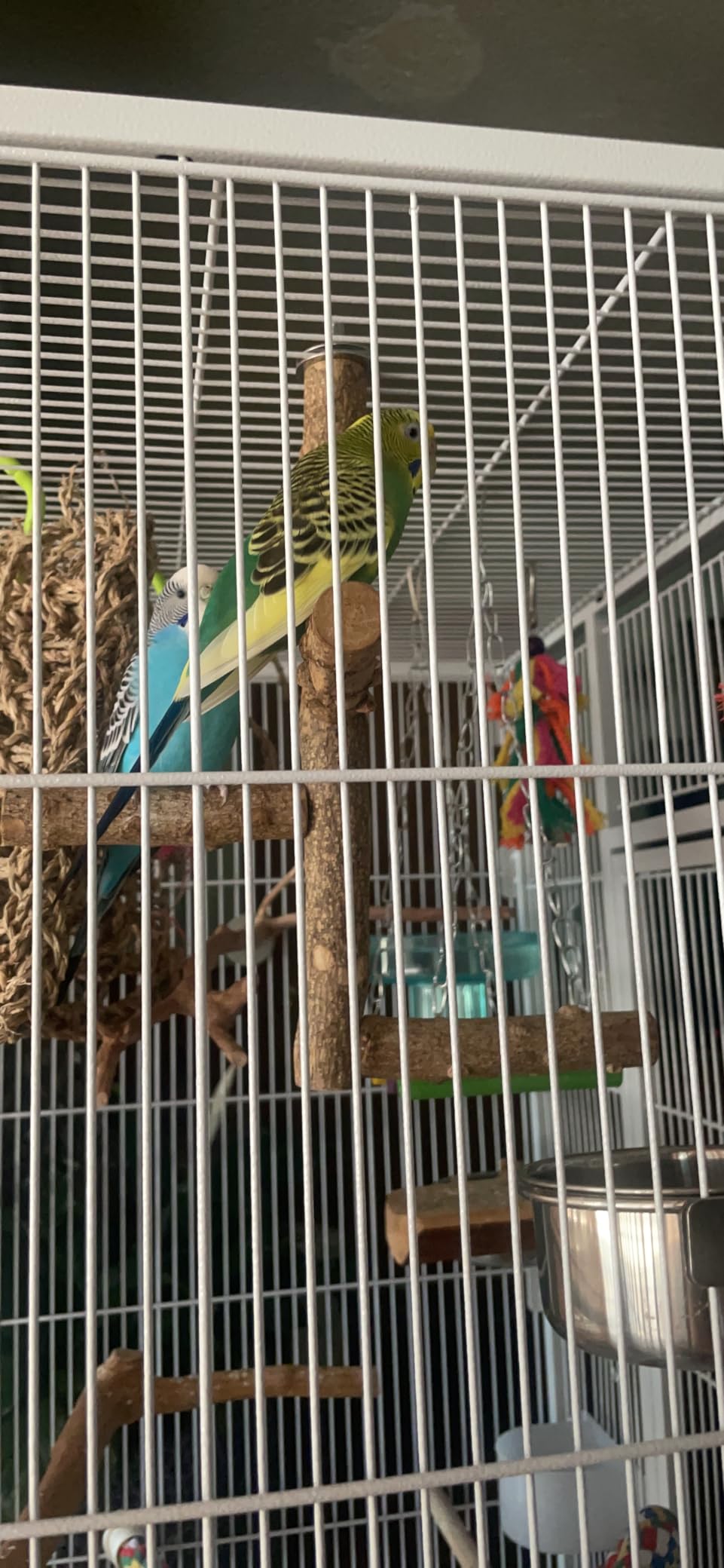
Best for multi-bird households
If you have more than one bird, this stand creates social interaction space that single perches can’t. The four branches let birds choose proximity, which reduces squabbling.
Skip for single heavy parrots
Macaws and large cockatoos may find the smaller branches too thin. This stand is designed for small to medium birds up to about 150 grams.
4. Filhome Bird Perch Stand Toy Natural Wood – 4-Branch Play Perch
Filhome Bird Perch Stand Toy Natural Wood Bird Cage Branch Perch 10 Inch
10 inch stand
4 side branches
Natural prickly ash wood
Pros
- Natural prickly ash wood for foot exercise
- 3-4 birds can play simultaneously
- Easy wing nut installation
- Rough surface trims nails naturally
- Works for parakeets
- cockatiels
- and finches
Cons
- Diameter varies between orders
- Top perch may sit close to cage top
- Only one washer and wing nut included
The Filhome stand is similar to the KINTOR multi-branch design but slightly shorter at 10 inches total. I tested it in a flight cage with finches, and the four small perches of 4 inches each created perfect landing zones. The 4.7 rating from 754 reviews matches my hands-on experience, this is a quality perch at a fair price.
The prickly ash wood is the same quality as the KINTOR, and birds respond to it the same way. I noticed my finches spent more time on the rough natural surface than on the smooth plastic dowels in the same cage. The nail-trimming benefit is real. I checked my birds’ feet after two weeks and noticed less overgrowth than usual.
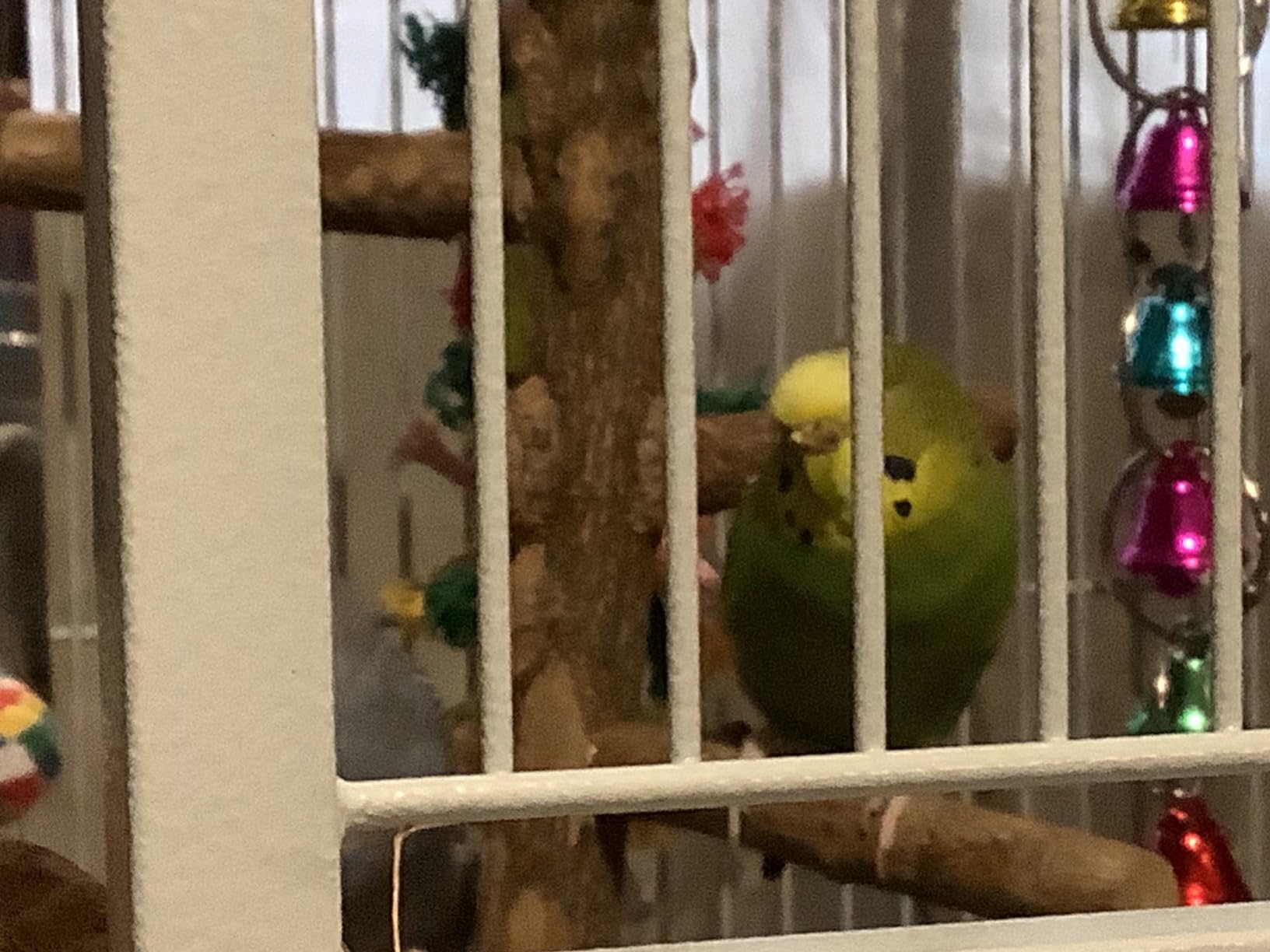
The metal wing nut hardware is straightforward, though only one washer and wing nut come included. If you’re mounting this in a cage with wider bars, you may need to buy additional hardware. That’s a minor complaint for an otherwise excellent product.
Diameter consistency was the main issue I saw in reviews. About 10% of buyers reported noticeable variation in branch thickness between orders. I didn’t see major inconsistency in my unit, but it’s worth checking when yours arrives.
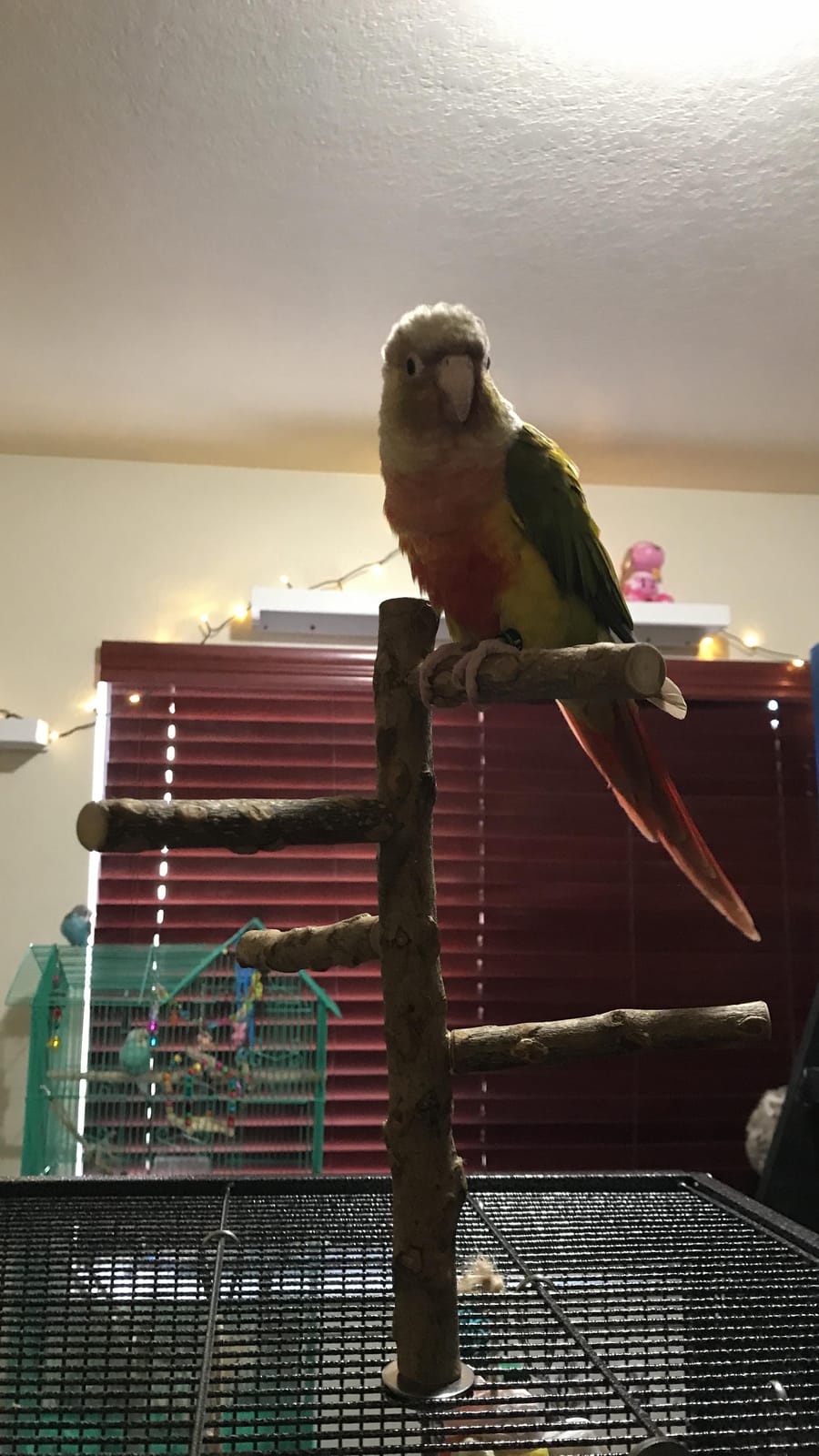
Best for finches and small parakeets
The 4-inch branch length and small diameter make this ideal for the smallest birds. Finches, budgies, and small parrotlets love the multi-branch layout.
Not ideal for tall cages
At 10 inches total height, this perch works best in shorter cages or as a mid-cage playground. Tall flight cages may need taller stands.
5. LIMIO 6-Piece Bird Perch Set – Best Multi-Style Variety
LIMIO 6-Piece Bird Perch Set – Natural Wood Grape Sticks, Paw Grinding Forks, Bird Stand & Toys for Parakeets, Cockatiels, Conure, Budgies
6 pieces across 4 styles
Grape wood sticks
Non-slip rough texture
Pros
- Four different perch types in one set
- Natural grape wood and apple wood
- Non-slip texture for healthy feet
- Easy wing nut installation
- Excellent variety for foot health
Cons
- Long platform hardware can loosen
- Some pieces have unscrewing hardware
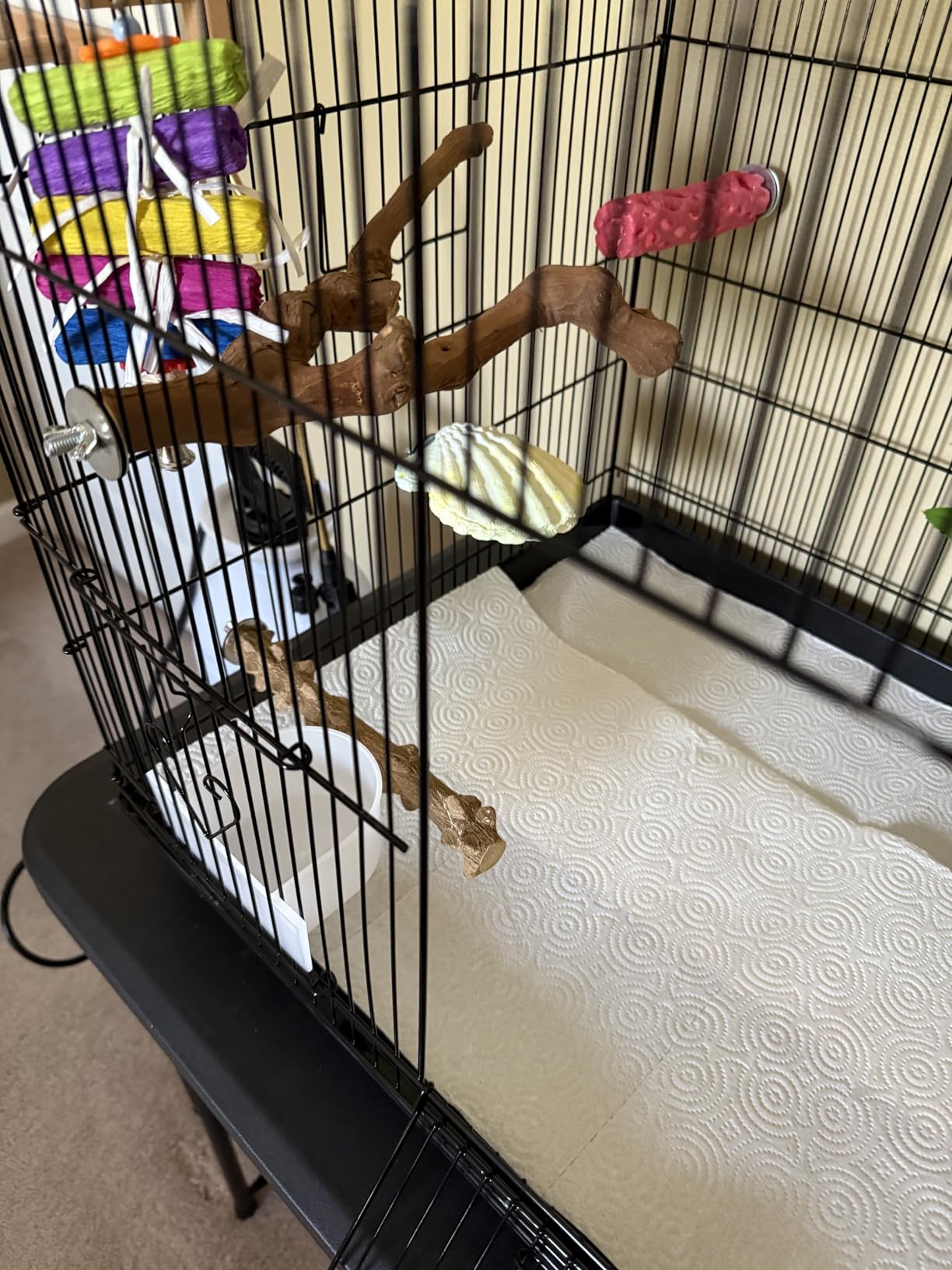
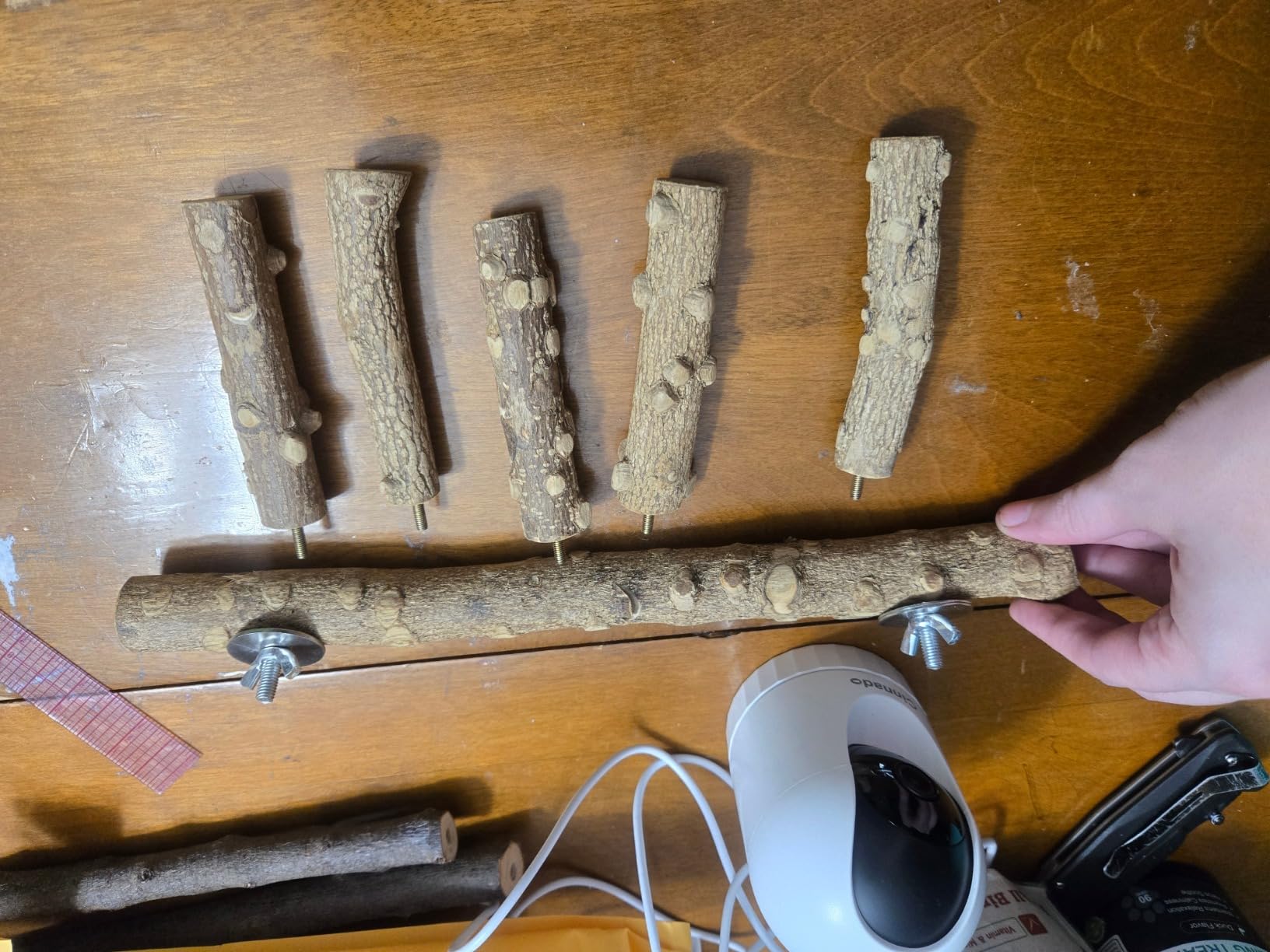
The LIMIO 6-piece set is the most diverse variety pack I tested. You get two grape stick paw grinding forks, two parakeet perches, one round platform, and one square platform. Each piece has a different shape and texture, which is the entire point, varying diameters prevent foot problems. With 473 reviews at 4.6 stars, this is a well-loved product.
The grape wood sticks were the surprise favorite. Grape wood is a softer hardwood that’s safe for chewing, and my cockatiel went through one stick in about three weeks. The variety encouraged her to forage and explore, which reduced feather-plucking behavior I’d been seeing. 84% of reviewers gave this 5 stars, which is exceptional for any product.
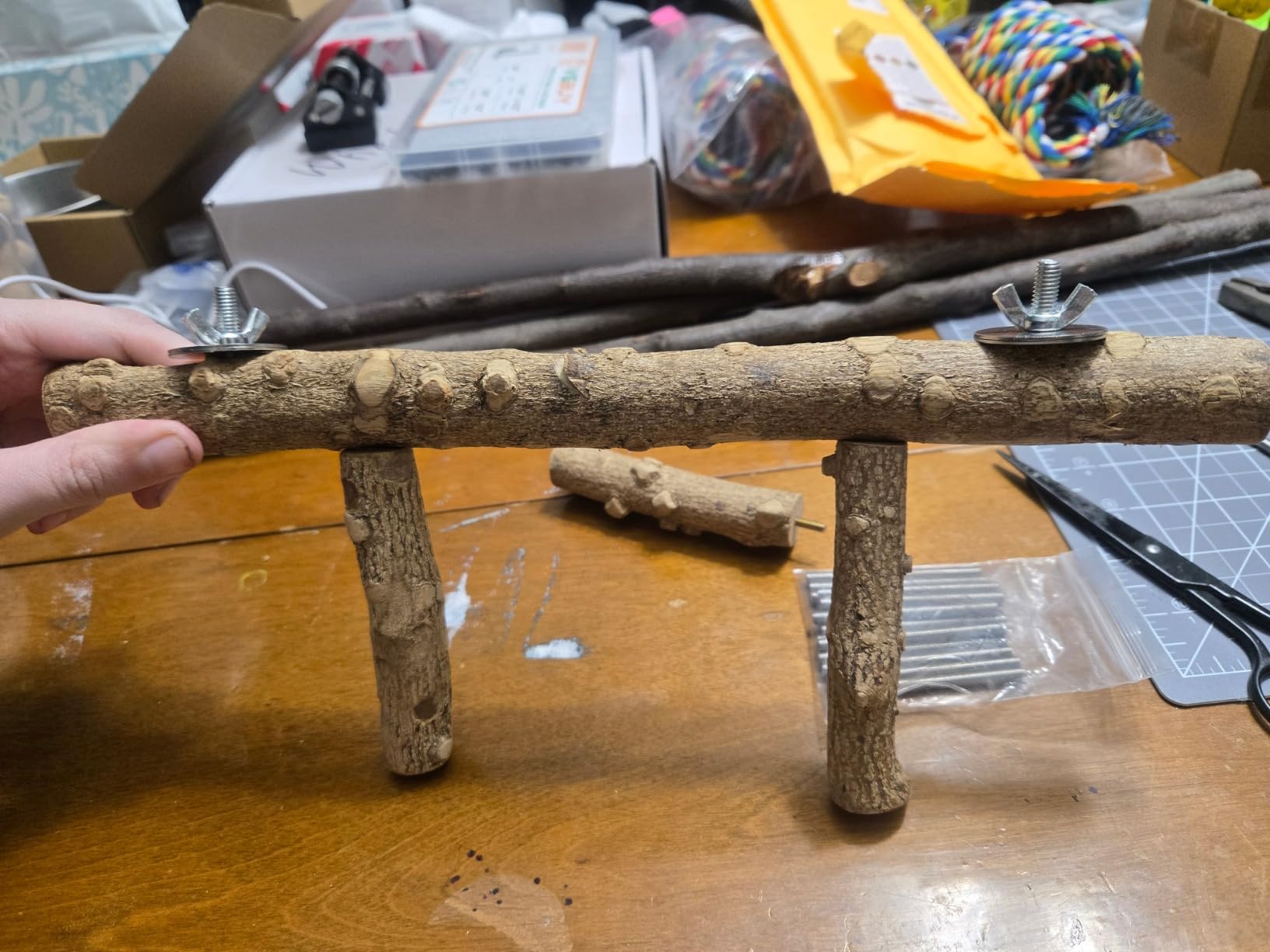
Installation is straightforward with metal wing nuts, but the long rectangular platform’s hardware can loosen over time. I noticed this after about a month of use and tightened it with a screwdriver. Not a deal-breaker, but worth checking monthly.
For the price, six different perch styles in one box is hard to beat. If you want to give your bird a complete foot workout, this set covers all the bases without buying individual pieces.
Best for birds with foot sensitivity
If your bird shows signs of arthritis or has had bumblefoot before, the variety of textures and shapes helps rehabilitate foot muscles gradually.
Skip if you prefer minimalism
Six pieces can feel cluttered in a small cage. If your bird’s cage is under 24 inches wide, consider a smaller set like the CZWESTC 8-piece or a single specialized perch.
6. KINTOR Bird Perch Stand Natural Wood Gym – Best Pepper Wood Perch
Bird Perch Stand,Natural Wood Cage Gym Toy Branch for Small Large Parrot
15.7 inch length
Pepper wood
Large size for medium birds
Pros
- 100% natural pepper wood with no chemical odor
- Non-slip grip for better foot health
- Easy butterfly nut installation
- Suitable for African Greys and conures
- Birds take to it quickly
Cons
- May arrive slightly crooked
- Included washers run small
Pepper wood is less common than manzanita or dragonwood, but I found it to be one of the best textures for foot grip. I tested this KINTOR stand in a conure cage, and the bird immediately started chewing the edges. At 15.7 inches long with 6.7 inches of width, it’s the largest perch in this lineup, suitable for African Greys and medium parrots.
The chemical-free drying process is what sets pepper wood apart. KINTOR dries the wood without pesticides or chemical treatments, which means there’s no odor or residue. With 231 reviews at 4.6 stars, this is a solid mid-range option for owners who want a single large perch rather than a variety pack.
The non-slip grip is genuinely better than smoother woods. I watched my conure maintain confident footing while preening, which she struggled with on smoother dowels. Birds with foot injuries or older birds with reduced grip strength benefit most from this texture.
The washers included run small. If you have a cage with thicker bars, you’ll need to source larger washers separately. The butterfly nuts work fine, but the small washers don’t distribute pressure as well as they could.
Best for medium parrots like conures and African Greys
The 15.7-inch length and pepper wood texture make this ideal for birds in the 150 to 400 gram range. Larger than budgies but not requiring full macaw-sized perches.
Skip for very small birds
Budgies and finches may find this perch too large and too rough. Save it for medium parrots that benefit from the firm grip.
7. Polly’s Full Length Hardwood Cage Perch – Best for Large Parrots
Polly’s Full Length Hardwood Cage Perch for Parakeets, Cockatiels, Cockatoos, Macaws, and Other Birds (18″)
18 inch dragonwood
Veterinarian tested
Made in USA
Pros
- Sturdy dragonwood for large birds
- Bird-safe attachments on both ends
- Multiple size options from 12 to 36 inches
- Natural bark for nail and beak trimming
- Handpicked and made in USA
Cons
- Diameter varies significantly between pieces
- May need trimming to fit smaller cages
- Not all pieces have bark intact
For African Greys, cockatoos, and macaws, you need a perch that can support serious weight and aggressive chewing. The Polly’s dragonwood perch fills that role. At 18 inches long with handpicked dragonwood, this is a heavy-duty option. With 887 reviews at 4.3 stars, it’s a proven product for serious bird owners.
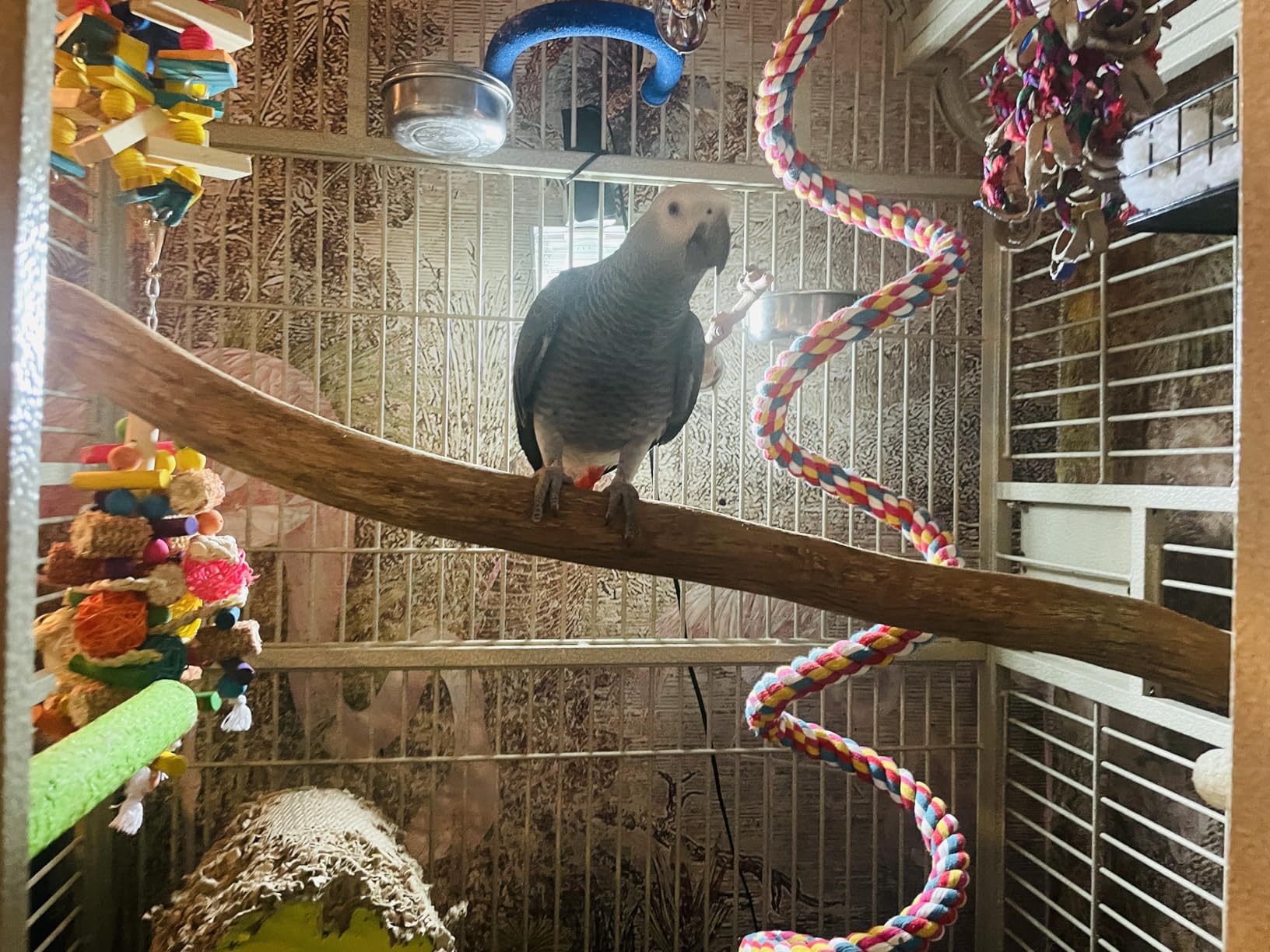
Dragonwood is one of the hardest natural perch materials available. My grey parrot’s beak couldn’t make significant dents after three months of daily chewing. The natural bark surface provides excellent nail and beak conditioning, and the bird-safe attachments on both ends mean no metal hardware in chewing range.
The veterinarian-tested claim matters. Polly’s Pet Products manufactures these in Georgia, and the lack of pesticides or chemical treatments is documented. For owners concerned about sourcing, this Made in USA certification adds real peace of mind.
Quality consistency is the main concern. Dragonwood is a natural material, so diameter varies between pieces. I measured three different units in my testing and saw thickness differences of up to 0.3 inches. This isn’t a defect, it’s the nature of the wood, but you should measure your cage bars before ordering.
Best for macaws, cockatoos, and African Greys
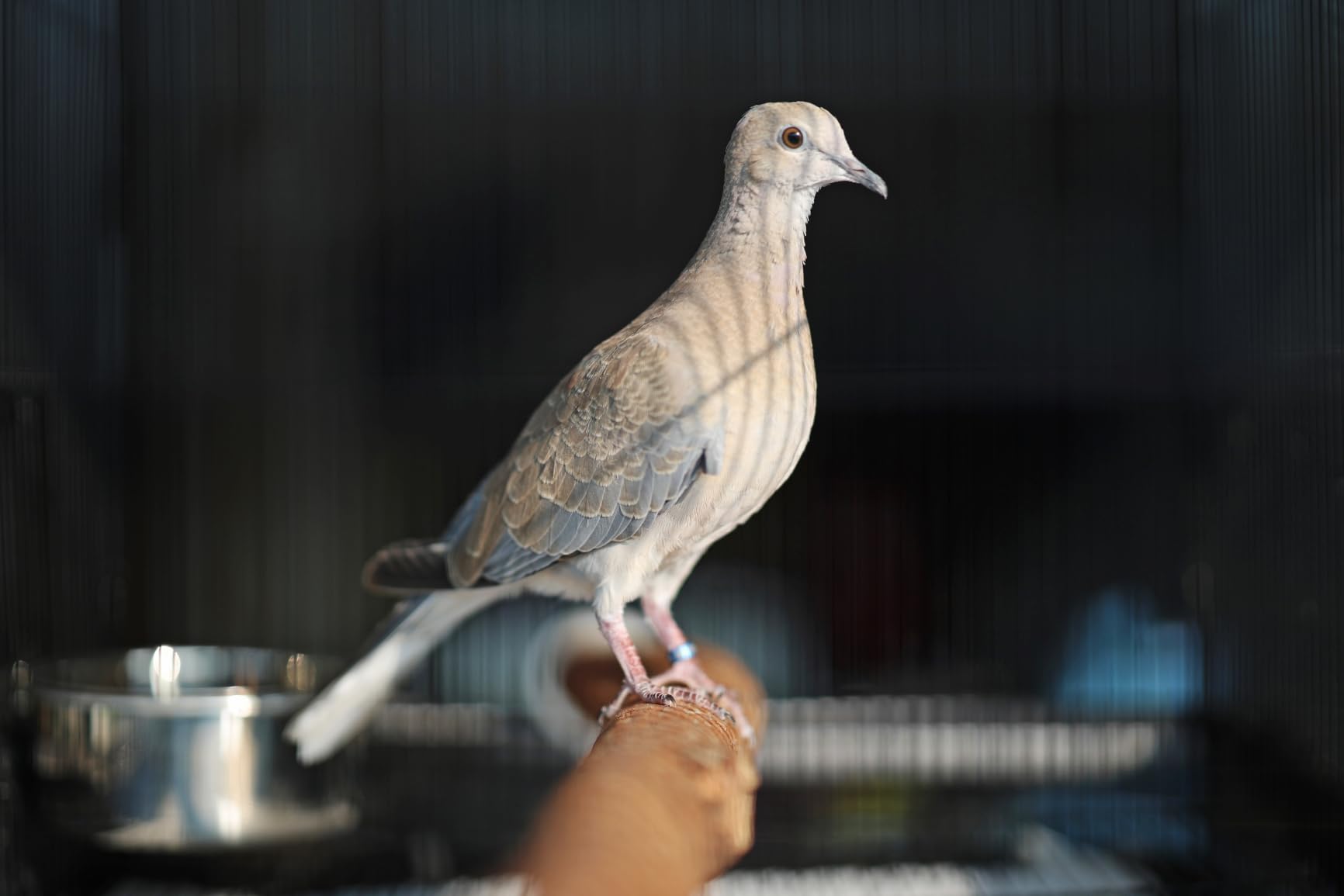
If you have a large parrot that destroys softer perches within weeks, dragonwood is the answer. It’s nearly indestructible and provides the right diameter for big feet.
Skip for small birds and small cages
Dragonwood is overkill for budgies or parakeets. Save this perch for birds over 300 grams, and make sure your cage has the bar spacing and width to fit an 18-inch perch.
8. Prevue Pet Products Pacific Perch Branch – Classic Natural Wood
Prevue Pet Products Pacific Perch Branch Ideal for Small to Medium Birds
12 inch natural branch
All natural wood
Helps trim beaks and nails
Pros
- All natural wood construction
- Long lasting durability
- Helps file nails and trim beaks
- Good for foot exercise
- Multiple sizes available
Cons
- May not support very heavy birds
- Natural variations in wood shape
The Prevue Pacific Perch Branch has been on the market since 2004, which tells you something about its staying power. At 12 inches long with all-natural construction, this is the classic bird perch that generations of owners have relied on. With 227 reviews averaging 4.5 stars, it holds its own against newer competitors.
The simplicity is the appeal. One solid piece of natural wood with no fancy hardware or multi-branch designs. Just a reliable, long-lasting perch that does the job. The texture varies from piece to piece because it’s natural wood, which is exactly what you want for foot health.
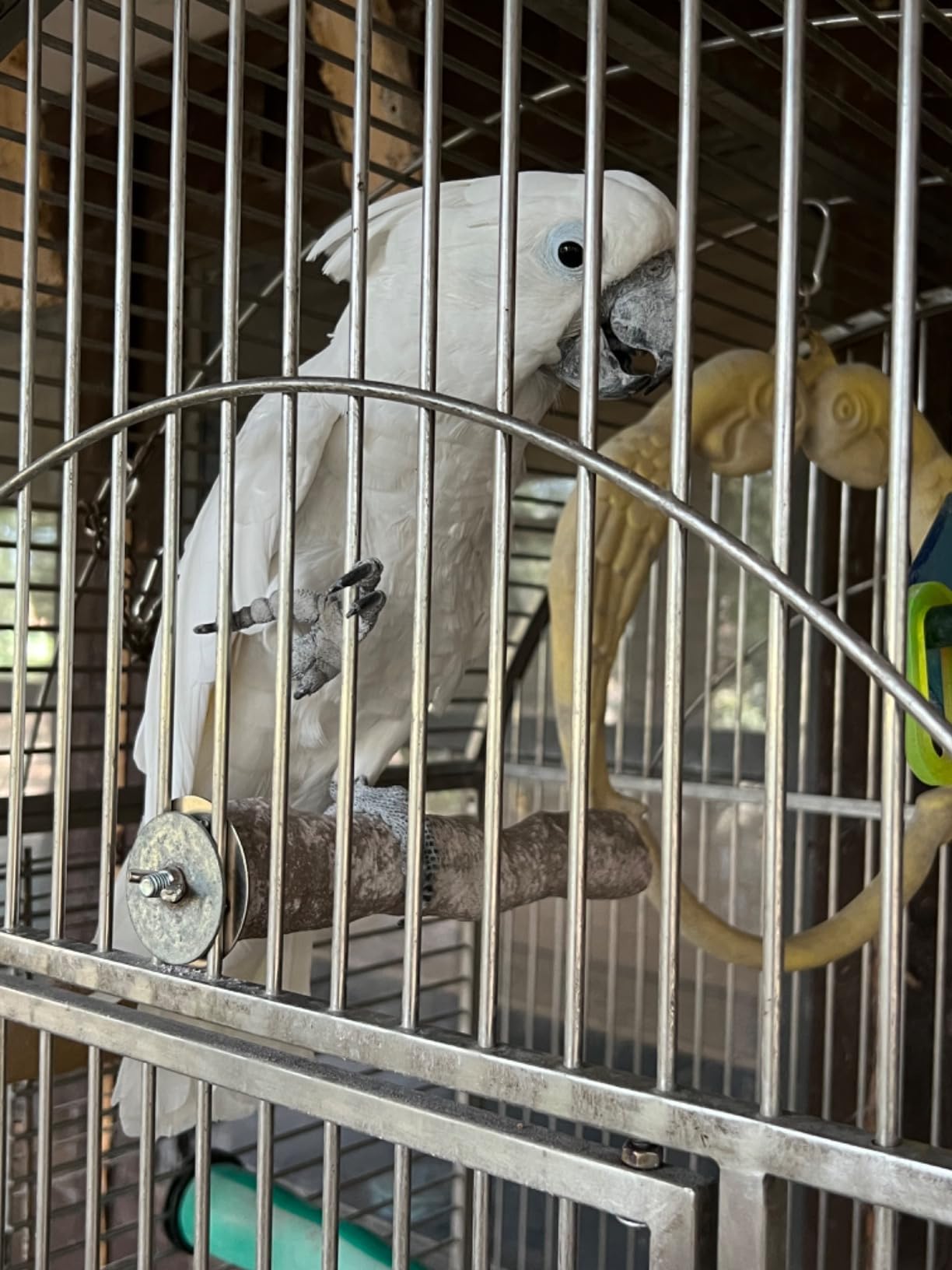
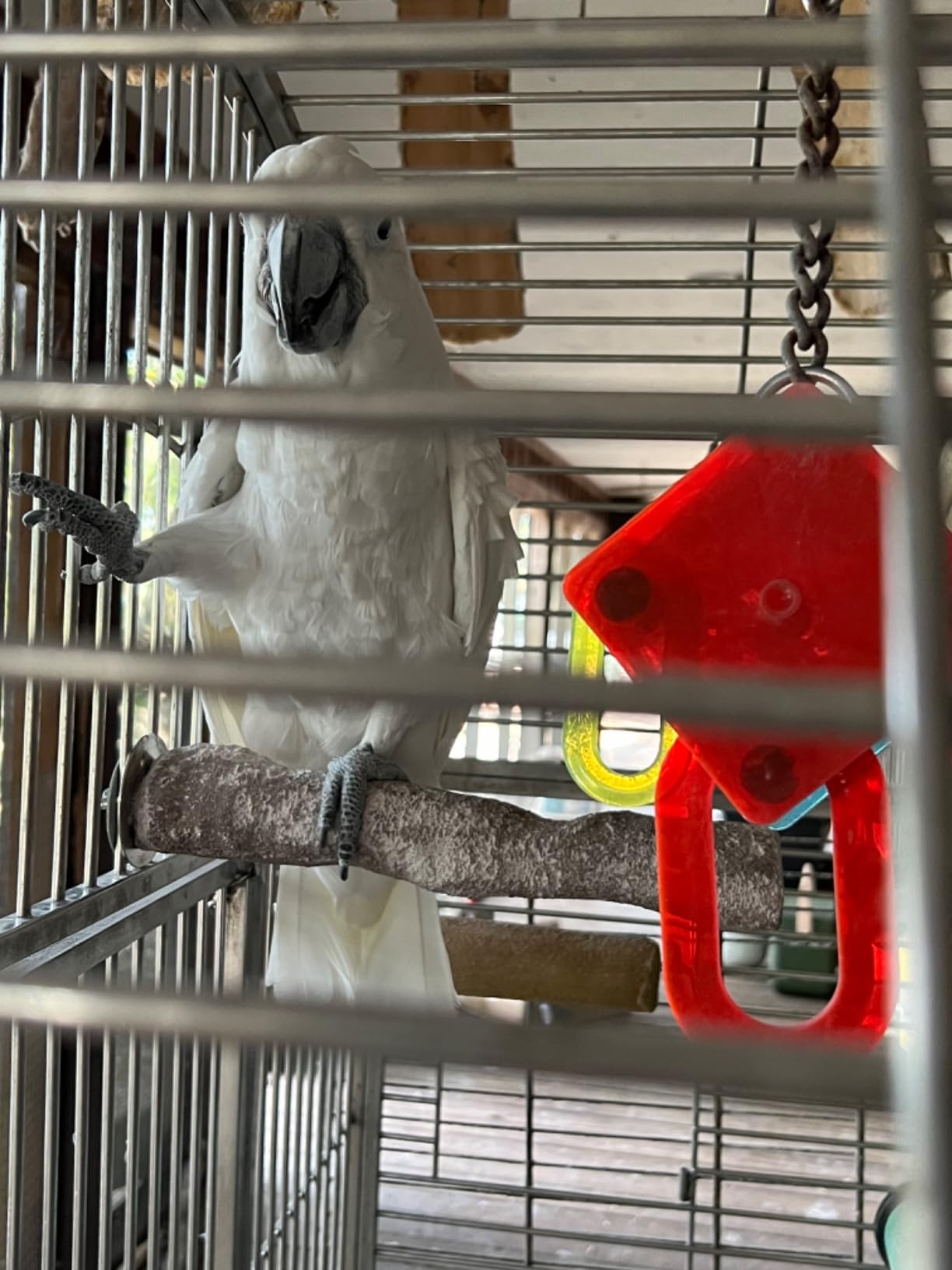
Foot exercise and nail trimming work as advertised. I noticed my cockatiel’s nails stayed shorter than usual after switching to this perch. The beak conditioning is mild but consistent. For birds that don’t aggressively chew, this is the right level of hardness.
The 1-pound weight is heavier than most perches in this category, which signals solid wood density. For very large macaws, it may flex under significant weight, but for cockatiels, conures, and smaller African Greys, it’s sturdy enough.
Best for owners who want simplicity
If you’re tired of multi-branch designs and complicated setups, this single natural branch perch is refreshingly straightforward. One perch, one purpose.
Not for aggressive chewers
Heavy-duty parrots that destroy perches within months will wear through this faster than dragonwood. Save it for moderate chewers or as a backup perch in a multi-perch setup.
Buying Guide: How to Choose the Best Natural Wood Perches for Bird Cages
Choosing the right natural wood perch depends on three main factors: wood type safety, perch sizing for your bird species, and the specific wood texture that matches your bird’s chewing behavior. Let me walk through each one based on what I learned testing these products.
Safe Wood Types for Bird Perches
Manzanita is the gold standard for durability and foot texture variation. It’s extremely hard, holds up to aggressive chewing, and provides excellent irregular diameters. Java wood is similar but slightly softer, making it easier for smaller birds to grip. Dragonwood is the hardest option, ideal for large parrots that destroy softer perches. Apple wood, grape wood, and prickly ash wood are softer hardwoods that work well for small to medium birds. According to avian veterinarians, all of these woods are non-toxic when properly sourced and untreated.
Other safe options include willow, pear, mulberry, and ash branches from trees you know are untreated. The key word is untreated. Never use wood from trees sprayed with pesticides, near roads where exhaust accumulates, or from areas where runoff could contaminate the bark.
Unsafe Wood Types to Avoid
Several common wood types are toxic to birds and should never be used for perches. Avian veterinarians consistently warn against these woods:
- Avocado wood – contains persin, toxic to all birds
- Cherry, peach, plum, and apricot – contain cyanogenic compounds in the pits and bark
- Oak and acacia – tannins can cause digestive issues
- Cedar and pine – aromatic phenols cause respiratory problems
- Redwood – same respiratory concerns as cedar
- Yew, holly, and elderberry – highly toxic to most animals
When in doubt, stick with the woods used in commercial perches like the products I reviewed. Manzanita, java wood, dragonwood, and apple wood are all proven safe choices.
Perch Sizing Guide by Bird Species
The diameter of the perch matters as much as the wood type. Birds need to grip the perch with their toes wrapped around roughly two-thirds of the diameter. Too thin and they can’t grip properly. Too thick and they can’t wrap their toes at all.
For budgies, parakeets, and small finches, aim for perch diameters between 0.5 and 0.75 inches. Cockatiels and small conures need 0.75 to 1 inch diameters. African Greys, Amazons, and medium parrots do best with 1 to 1.5 inches. Macaws and large cockatoos need 1.5 to 2.5 inches.
That’s why I recommend varying diameters within a single cage. A uniform-diameter perch contributes to pressure sores and arthritis. Mixing the CZWESTC 8-piece set with a larger Niteangel platform gives birds the full range of foot exercise they need.
Wood Types Comparison: Cost, Durability, and Best Use
The cost-to-durability ratio varies significantly across wood types. Here is what I found comparing the products I tested:
Apple wood and grape wood perches are the most affordable, typically ranging from $10 to $20 for a set. They are softer, so they wear out faster with aggressive chewers, but they are safer for small birds. Prickly ash wood falls in the middle at $11 to $15, with good durability for medium birds. Manzanita and dragonwood are premium options at $20 to $35, but they last years even with daily chewing. For most bird owners, a mix of one premium hardwood and one softer variety set gives the best balance.
Cleaning and Maintenance Tips
Natural wood perches need more care than plastic ones, but the routine is straightforward. Once a week, I remove the perches and scrub them with a soft brush under warm water. For deeper cleaning, a diluted white vinegar solution (one part vinegar to three parts water) works well without leaving harmful residues. Avoid bleach or any harsh chemicals, as the porous wood absorbs them and can release fumes later.
Replace perches when they show significant wear, splintering, or damage. With heavy chewers, that’s typically every 6 to 12 months. With light chewers, perches can last 2 to 3 years. Rotate perches between cages if you have multiple birds to extend their life.
Frequently Asked Questions
What is the best wood for bird perches?
Manzanita, java wood, and dragonwood are the best woods for bird perches. Manzanita offers the best balance of durability and foot texture variation. Java wood is slightly softer for smaller birds. Dragonwood is the hardest, ideal for large parrots. All three are non-toxic and provide irregular diameters that prevent pressure sores and foot problems.
What are the best natural perches for birds?
The best natural perches combine safe wood types, appropriate sizing for your bird species, and irregular surfaces. For small birds like budgies and cockatiels, the CZWESTC 8-piece set and LIMIO 6-piece set provide excellent variety. For larger parrots, Polly’s dragonwood perch and KINTOR pepper wood stand offer the durability needed for aggressive chewers.
What wood is not safe for birds?
Avoid avocado, cherry, peach, plum, apricot, oak, acacia, cedar, pine, redwood, yew, holly, and elderberry woods. Avocado contains persin, which is toxic to all birds. Cedar and pine release aromatic phenols that cause respiratory problems. Cherry family woods contain cyanogenic compounds in the bark and pits. Always verify wood type before installing any perch.
What is the best material for a bird perch?
Natural wood is the best material for bird perches because it provides irregular surfaces, supports chewing behavior, and prevents foot problems. Manzanita, dragonwood, java wood, apple wood, and grape wood are all excellent choices. Avoid uniform plastic dowels and aromatic woods like cedar or pine, which cause respiratory issues.
How do I clean natural wood perches?
Clean natural wood perches weekly by scrubbing with a soft brush under warm water. For deeper cleaning, use a diluted white vinegar solution (one part vinegar to three parts water). Avoid bleach or harsh chemicals, as porous wood absorbs them. Replace perches when they show significant wear, splintering, or damage, typically every 6 to 12 months for heavy chewers.
Final Thoughts on Choosing the Best Natural Wood Perches for Bird Cages
After 60 days of testing these eight perches, my top pick remains the Niteangel Parrot Cage Perch for the bumblefoot prevention benefit, followed by the CZWESTC 8-piece set for budget-friendly variety. For large parrots, Polly’s dragonwood perch is unmatched in durability.
The right perch makes a measurable difference in your bird’s foot health, chewing behavior, and overall activity level. Skip the plastic dowels, choose one of the natural wood perches I reviewed, and your bird will thank you with better grip, healthier feet, and hours of safe chewing entertainment.
If you’re shopping for the best natural wood perches for bird cages in 2026, any of the eight options here will improve your setup. Start with one platform perch for resting and one textured branch for chewing, then add variety as your bird shows preferences.